Category Archives: Roger Spottiswoode

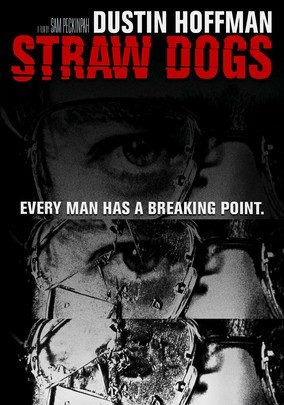
Straw Dogs-1971

Straw Dogs-1971

Director Sam Peckinpah

Starring Dustin Hoffman, Susan George

Top 250 Films #215

Scott’s Review #733
Reviewed March 19, 2018

Grade: A

Straw Dogs (1971) is famed director Sam Peckinpah’s most startling and most controversial film.  Hardly an easy watch, it will provoke disturbing and uneasy reactions, but it is a work of art, teetering on the edge of being an all-out art film.

Viewers will cringe during intense scenes but will also marvel at the film’s mastery of this classic, bringing on a whirlwind roller coaster ride as story elements spiral out of control to a frenetic, powerful climax.

Intellectual American mathematician, David Sumner (Dustin Hoffman), moves with his sexy British wife, Amy (Susan George), to a Cornish countryside, the town in which she grew up, where they proceed to encounter problems, both within their marriage, and external factors, as an angry mob of blue-collar workmen, threaten their home life.

When non-violent David is pushed to the limit, questions of morality are brought to light, as Amy faces her demons and bouts with brutality and victimization.

The film, made in 1971, pushes the envelope significantly in its display of violence.

Several years earlier, 1967’s Bonnie and Clyde and Peckinpah’s own The Wild Bunch (1969) were the films that really got the ball rolling. Still, Straw Dogs continues the trend of the brutal violence that overtook American cinema at the time.

While watching the film for the second time, I was struck hard by the feeling that I was watching something important.

Amy’s rape scene is the most brutal scene of all to watch for the sheer way in which it can be interpreted. Later, when Amy replays the scene in her mind, the audience is forced to relive the experience.

Not content to only include the rape scene, Peckinpah wants the viewer to dissect the scene- the fact that Amy is assaulted by not one, but two men, and reacts differently to each of them, is the key here.

The scene is complex in that Venner, the first assailant, is hunky and presumed to be a former beau, and she eventually relents to his advancesbut does she enjoy the act? When Scutt enters the picture, however, things turn from tender and ambiguous to violent and dirty.

Undoubtedly, an influence on director Quentin Tarantino is the final sequence of the film- a scene fraught with tension, violence, and grit.

Now trapped in their house amid a mob of angry, drunk men, hell-bent on revenge, David and Amy must both bond with each other and match antics with the men.

I experienced visions of 2015’s The Hateful Eight through the claustrophobic, cabin-like setting and the quick edits that Peckinpah uses throughout the film.

A sad scene, and at least a portion of the reason for the townsfolk’s rage, is a scene reminiscent of Frankenstein when a hulking and mentally challenged man accidentally harms a young girl. Not knowing his strength and meaning to protect the girl instead of killing her, the menfolk of the town respond in a nightmarish and witch-hunt manner.

Suddenly, David becomes the defender and protector of this man.

David’s character change is interesting, and the great Hoffman adds layer upon layer of complexity to the role. At first, a peaceful man, due to circumstances, he soon becomes the assailant, creating traps and weapons, intent on maiming his prey.

Hardly a violent man, this change of character is evident in our earlier scene, where David nurses a wounded bird.

In addition to Hoffman’s traditionally outstanding performance, Susan George delivers the perfect blend of bitchiness, spoiled-brat tantrums, and, later, guilt-ridden angst and fear.

The villains are perfectly cast and believable as bored, simple-minded, and horny, small-town boys just itching for trouble.

Lush is the gorgeous United Kingdom countryside featured in Straw Dogs, as frequent exterior scenes are shot, revealing lavish and plush mountainous areas- the sweeping beauty of the landscape counterbalancing the brutality shown in other sections of the film.

Mixing super quick editing with a dark, compelling screenplay, with underlying themes of questioning one’s manhood, Straw Dogs is a provocative and edgy tale of violence and revenge in a small town, that gives new meaning to the fear of “home invasion” and feeling vulnerable.

Thanks to a great cast and lots of other facets, Straw Dogs (1971) is a timeless (and brutal) treasure.

Oscar Nominations: Best Original Dramatic Score
Tomorrow Never Dies-1997

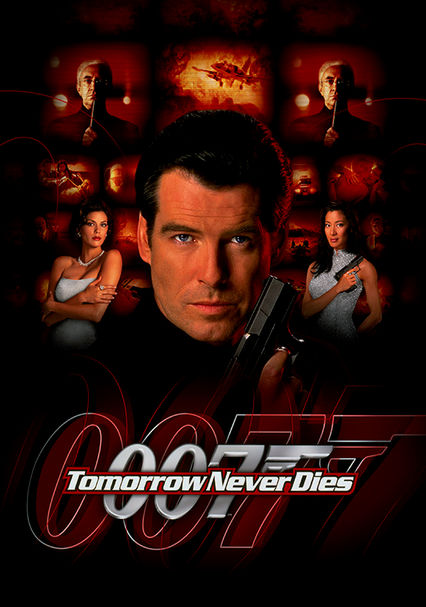
Tomorrow Never Dies-1997

Director Roger Spottiswoode

Starring Pierce Brosnan, Michelle Yeoh, Jonathan Pryce

Scott’s Review #1,394

Reviewed August 28, 2023

Grade: B

Pierce Brosnan made four appearances as the legendary film character, James Bond. While he gets a marginal thumbs up as a whole and is not my favorite Bond he has the ‘look’ and suave charisma.

This works in his favor and makes him purely believable with every ridiculous one-liner or flat dialogue.

Tomorrow Never Dies (1997) is the second chapter in the Brosnan book and is only marginally superior to GoldenEye made two years earlier in 1995. All bets are that the two subsequent Bond films starring Brosnan nosedive quickly.

All good Bond films must contain specific qualities like a good villain, a sexy yet strong ‘Bond girl’, dazzling stunts and chase scenes, a memorable theme song, and more than one exotic locale.

It’s just what the blueprint is and must never be broken.

Therefore, Tomorrow Never Dies feels more like the producers, and director, Roger Spottiswoode, and writer, Bruce Feirstein sought a check box checking off exercise rather than creating anything brilliant or memorable.

I deem this film rather ordinary. Not bad but not superior either falling middle of the road when compared to other Bond franchise films.

Media mogul Elliot Carver, played completely over the top by actor Jonathan Pryce wants his news empire to reach every country on the globe, but the Chinese government will not allow him to broadcast there.

Carver then decides to use his media empire to wreak war between the Western world and China. Thankfully, James Bond (Brosnan) is on the job and travels to China to stop him with the help of Chinese secret agent Wai Lin (Michelle Yeoh).

Anyone who knows a Bond film knows that the plot is secondary to the aforementioned necessary characteristics. The story either got too complicated as the film progressed or I lost interest because at some point all I recollect was a news media tycoon wanting to start World War III over television ratings.

Yeoh is an exceptional ‘Bond girl’ though the dose of progressivism, diversity, and female empowerment she brings to the table makes the term beneath her. Her charisma, and martial arts chops, make her a kick-ass rival though she naturally ends up head over heels for Bond.

Still, the lengthy scenes between Yeoh and Brosnan do contain strong chemistry as they decimate the bad guys and save the world together.

I expected a bit more from Teri Hatcher’s character of Paris Carver, a former girlfriend of Bond who is now Carver’s trophy wife. The setup was superior and the love triangle could have gone further than killing off her character after just a couple of scenes.

As great as an actor as Pryce is it’s tough to believe he’s the same actor who made films like Two Popes (2019) and The Wife (2017) so good. He turns Elliot into a caricature dead set on controlling the world proving that an actor can’t always bring a mediocre script to life.

Tomorrow Never Dies brings the viewers to lavish locations like Bangkok, China, Hamburg, Germany, and in and around London. The tone has a definitively Asian feel which works like You Only Live Twice did in 1967.

Finally, the title theme song and opening performed by Sheryl Crow is abysmal but oddly sounds much better in the version that plays over the ending credits.

I marginally recommend Tomorrow Never Dies (1997) mostly for those in the Brosnan camp which I am aware there are many.  Its best quality lies in the level of equality between Bond and the main female character Wai Lin which is another proof of how relevant the franchise remains.

Terror Train-1980

Terror Train-1980

Director Roger Spottiswoode

Starring Ben Johnson, Jamie Lee Curtis

Scott’s Review #1,098

Reviewed January 5, 2021

Grade: B+

Terror Train (1980) is a creepy slasher film released amid the heyday of the genre’s popularity. It embraces a familiar formula of teenage party victims. Still, it adds a helping of red herrings/whodunit twists, which catapult it above mediocrity and will keep audiences engaged until the finale.

Helpful is the casting of the “scream queen” of the time, Jamie Lee Curtis, who is the main attraction and the “final girl”. Her casting adds credibility and star power.

The film is a puzzle, with a difficult-to-predict ending and many twists and turns along the way—a perfect watch for a snowy New Year’s Eve, when it is set.

Events begin three years before the happenings in the main story, naturally, at a New Year’s Eve fraternity party, inhabited by a group of energetic pre-medical students looking for a good time.

Alana Maxwell (Curtis) is coaxed into participating in a cruel joke meant to lure an insecure pledge, Kenny (Derek MacKinnon), to a bedroom with the promise of sex.

Instead of becoming a light-hearted prank the group later laughs about, the joke spirals Kenny into insanity and a long stay at a mental institution.

Reunited for another party, this time on a train, bitterly cold and snowy New Year’s Eve is again the setting. The same group, now forgetting all about the prank, unwittingly boards the train for a night of booze, laughs, and partying.

This time, a costume party is on the menu, which is convenient for a disguised killer intending to spend the night murdering the partygoers. He first kills Ed (Howard Busgang) on the tracks and takes his Groucho Marx costume to confuse everyone else.

A mysterious magician and assistant are aboard to provide entertainment.

The film belongs to Curtis since the idea was to create “Halloween on a Train”.

While Halloween (1978) is superior and scarier, Terror Train is cleverer. Many a red herrings appear throughout the story, so that a deduction about the killer’s identity can quickly be questioned.

Curtis, a popular star with the younger set in 1980, inevitably led fans to the movie theaters to see Terror Train. The comparisons to Halloween are apt- both feature disguises, masks, costumes, and mayhem.

The casting of Ben Johnson as Carne, the train conductor, an actor making films since the 1930s, and who won an Oscar for The Last Picture Show in 1971, provides the patriarchal character as Donald Pleasance did in Halloween.

Despite the vulnerability of being on a train speeding through the middle of nowhere on a frigid winter night with a killer on board, having a father figure and a voice of reason is reassuring. And the casting agents were lucky to get him.

The vibe in Terror Train is great, and the setting works wonderfully. In an ode to Hitchcock, the train is an effective setting for suspense or murder. The victims have few places to hide and a long tube with dark seats and hidden compartments, while they disappear one by one, which is perfect horror fodder.

The gripe is that the killer’s identity is painfully obvious. Spoiler alert- it’s who you think it is!

After the film, I was left feeling tricked and bamboozled. But, just like the mysterious magician, all is not what it seems.

Newcomer director, Roger Spottiswood, casts real-life magician, David Copperfield, for good effect, and the star does a fairly good job of adding tension and looking sinister. When the big revelation is upon us, a cool gender-bender treat awaits, but the killer is predictable, nonetheless.

A quick nod to the inclusion of some diversity, few and far between in the 1980 slasher fare. One of the fraternity brothers is a black male. The character is handsome and arrogant, and he gets his comeuppance quickly, but the addition is worth noting.

Terror Train (1980) is an atmospheric and surprisingly good holiday-themed slasher film that flies under the radar. Snuggle under a warm blanket, open the midnight champagne, and enjoy the claustrophobic, frightening post-Christmas trimmings.