Category Archives: Oz Perkins

Longlegs-2024

Longlegs-2024

Director Oz Perkins

Starring Maika Monroe, Blair Underwood, Nicolas Cage

Scott’s Review #1,487

Reviewed August 1, 2025

Grade: A-

Oz Perkins, already making his mark in the modern horror genre with films like The Blackcoat’s Daughter (2015) and The Monkey (2025), offers an eerie little gift sure to creep many viewers out.

Add-ons like nuns, sacrifices, satan, and the like usually freak religious church-goers out, which is a testament to the achievement Perkins makes.

Giving credibility to Perkins is being the son of Anthony Perkins, aka Norman Bates from the 1960s Hitchcock masterpiece, Psycho.

That’s some horror legacy, and he gets more and more comfortable with the genre.

The story follows Lee Harker (Maika Monroe), a quiet FBI agent in the 1990s, who is tasked with tracking down an occultist serial killer responsible for murdering multiple families throughout Oregon.

Harker, reminiscent of Jodie Foster’s Clarice from The Silence of the Lambs (1991), is serious and grounded with a tinge of tension and insecurity. She has been through some trauma that could be a key to unlocking the mystery.

Does she have a secret connection to the tragic events that includes the victims sharing a birthday pattern? With her birthday approaching, things become more and more perilous.

Besides the disquieting tone of the film being filled with terror, Nicolas Cage, who produced, plays Longlegs (also known as Dale Kobble), an elusive Satanic serial killer.

On screen for only a short amount of time, Longlegs/Cage leaves an impression. With long hair and a pasty face, he looks like a cross between the Joker and Pennywise the Clown, with lipstick and a super-creepy, demonic voice.

There is something very off about him.

Buffalo Bill, the serial killer from The Silence of the Lambs, also bears a resemblance to Longlegs.

The first sequence leaves an indelible impression—a young girl on a snowy afternoon peers across her vast front yard to her family’s paneled station wagon. It is the 1970s.  Suddenly, Longlegs appears and charmingly announces he forgot his long legs.

The scene made the chills run down my spine.

The atmosphere makes the film as good as it is. There is a lonely, isolated feeling throughout, like events take place in a secluded, middle-of-nowhere setting. And, this consists of both interior and exterior scenes.

Set in the Pacific Northwest, United States, specifically Oregon, the geography is perfect for a rash of patriarchal killings. Mysteriously, a seemingly normal father kills his wife and kids without hesitation. A pattern develops involving an upcoming birthday of the family’s daughter.

In an effective sequence, one of the family deaths is featured on-screen, mirroring Stanley Kubrick’s The Shining (1980). A long camera shot from far away makes the viewer feel like they’re in the room and watching voyeuristically.

Blood splays, an ax impales a victim from behind, and death and destruction have never looked finer in cinema.

Perkins incorporates a visual satisfaction that makes the film work, especially given the horror genre.

The fact that Longlegs, the villain, is frightening to look at makes the film a significant win and probably Perkins’ best work.

Yes, the story has a surprise ending, including one character’s deal with the devil. The final plot summation is shocking but rather far-fetched. While gripping, it doesn’t seem possible, and a supernatural suspension of disbelief is required.

The occult and spiritual possession are the ingredients that make Longlegs startling but not realistic.

Special shout-outs to actors Kiernan Shipka and Alicia Witt, who brilliantly portray their minor yet monumental characters with top-notch acting.

What Longlegs (2024) lacks in making sense—a common theme among modern horror films with camera-heavy trimmings over storyline plausibility, if I’m being honest—it succeeds with a visual wizardry.

The mood of terror is the film’s most significant victory.

The Monkey-2025

The Monkey-2025

Director Oz Perkins

Starring Theo James, Christian Convery

Scott’s Review #1,471

Reviewed March 14, 2025

Grade: B

The Monkey (2025) is a macabre horror/comedy film based on a 1980 Stephen King short story.

The film is directed by Oz Perkins, son of legendary actor Anthony Perkins, forever famous for portraying Norman Bates in Alfred Hitchcock’s Psycho (1960).

He also wrote the screenplay proving that horror runs in his Hollywood royalty tinged blood.

Partnering with James Wan, who co-created the lethal Saw (2004-present) franchise, which The Monkey mostly resembles, adds experience and credibility to the project.

Deadly set pieces and dangling machinery just waiting to slice and dice willing victims to bits make the film a fun experience.

When twin brothers (Christian Convery/Theo James) find a mysterious wind-up monkey, a series of outrageous deaths tear their family apart, leaving them to live with their kooky aunt and uncle and ultimately estranged.

Twenty-five years later, after lying dormant, the devious monkey begins a new killing spree, forcing the siblings to reunite and confront the cursed toy.

For horror fans, the best part of The Monkey is the gruesome death scenes. Wan, well versed in eye gouging, decapitations, and torn limbs, must have inspired Perkins during the final cut.

Wonderfully wicked kills include a gorgeous bikini-clad female pool goer blown to bits, a busload of cheery cheerleaders decapitated, a shop owner disemboweled with a harpoon gun, a bowling ball decapitating another victim, and an unlikable victim being killed by a swarm of wasps.

The uproarious deaths are applaud-worthy because most of the victims are annoying or unsympathetic in some way. The audience delights in witnessing their endings in such gory fashion.

As the adult Hal/Bill Shelburn, Theo James carries the film as the charismatic, bookworm, Hal and the egotistical Bill. James, ridiculously handsome, looks even more adorable in glasses and shy awkwardness.

Hal attempts to reconnect with his son, Petey (Colin O’Brien), with whom he only spends one week per year. Rather than being an absent father, he strives to protect him from the terrible monkey.

Many supporting characters are played over the top and wacky, making the film a goofy horror/comedy. Elijah Wood appears as Ted Hammerman, Hal’s ex-wife’s new husband, while Adam Scott plays Hal’s and Bill’s absent father, with whom the monkey originated after a trip abroad.

As gory delicious as the blood and guts are, the story isn’t much of a highlight. The brother Bill is written as so much of an asshole that one wonders why Hal is so tolerant towards him.

The ending is predictable, and there is not much closure with the monkey. A half-assed explanation of whomever turns the key in the monkey’s back is immune from being killed or some such explanation didn’t wow me.

The film could be a Twilight Zone or horror series episode over a full-length production, running out of gas towards the end.

Oz Perkins is a rising director who creates a cruelly delightful film that feels like an independent production. Choosing to propel viewers into a gore fest over a scary film, The Monkey (2025) is a modest success.

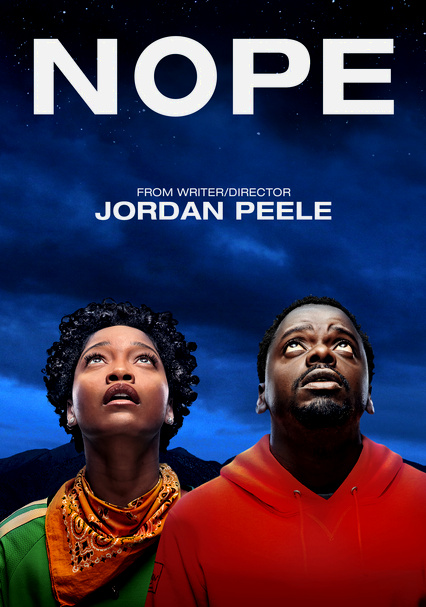
Nope-2022

Nope-2022

Director-Jordan Peele

Starring Daniel Kaluuya, Keke Palmer

Scott’s Review #1,334

Reviewed January 15, 2023

Grade: B

I excitedly anticipated the latest offering from one of my favorite modern directors, Jordan Peele. Always conjuring some type of message, intrigue, or social issues his projects are laden with meaning rather than a one-dimensional crazed killer or a one-note story.

Get Out (2017) and Us (2019) were riveting efforts able to watch over and over again for deeper meaning and the same was expected of Nope (2022). Peele’s brilliant yet short-lived The Twilight Zone series further cemented his appeal.

While there are moments of mystery, intrigue, and horror and the stories independently are good, they don’t come together cohesively at the end of the film. Nothing was clear or cemented in certainty or fulfillment.

Nope is not a dud and deserves respect for the originality of the premise as well as the sprinkling of nods to past horror films like The Shining (1980) and others.

Hollywood animal wrangler OJ (Daniel Kaluuya) and his sister Emerald (Keke Palmer) begin observing unexplained phenomena on their vast Southern California ranch. After their father is killed by a falling object they become obsessed as they plot to capture the mystery on camera.

Their next-door neighbor Jupe (Steven Yuen), a former child star turned family theme park ringmaster has his own story to tell.

Through flashbacks, we learn of a deadly incident with a chimpanzee who went berserk on the set of a television series Jupe starred in.

The 1998 events involving Jupe and the chimpanzee are the best parts. This is surprising since they are not part of the main action. Peele does wonders with chapter title cards to section the film and haunting camera angles focusing on Jupe’s point of view.

The chimp slaughters nearly everyone on set except for Jupe and tenderly reaches out to him before being shot and killed by police.

OJ and Emerald’s story also has juice. The foreboding unidentified flying object that circles and comes out at varying times provides mystique and wonderment. What could it be and why does it hover only over their land?

Peele wrote, directed, and produced the venture so presumably, he had complete creative control over the entire film.

He even convinced the appealing Daniel Kaluuya who starred in Get Out and just won an Academy Award for Judas and the Black Messiah in 2021 to return.

There are no major issues with the technical special effects, the cinematography, the cast, or the two separate stories.

My beef is with the myriad of questions I was left with when the end credits began to roll and I thought, ‘Why has Jordan Peele disappointed me for the very first time?’

Here are just a few of them.

Why is the unidentified flying object afraid of horses? Why does it viciously attack anyone who looks it in the eye? What does the vicious chimpanzee attack have to do with anything? How does Jupe’s story connect with OJ and Emerald’s? Why is the character named OJ; what is the connection to OJ Simpson?

Knowing Peele, I could venture a guess at the UFO’s anger at being looked at as having a connection to the celebrity or a society of voyeurs but the others are perplexing to me.

I was compelled and fascinated by the events throughout the film but wish the payoff happened but it never came.

Peele creates sophisticated films and Nope has sophistication and a deeper meaning. I wasn’t personally able to put the pieces together like I was for Get Out or Us.

I may not have the energy to rewatch the two-hour and fifteen-minute spectacle to see if I can get more out of it a second time but I probably should.

I will watch whatever Peele creates next with anticipation and salivation because there is always something to ponder and be entertained by but Nope (2022) at first review is inferior to his other projects and more was expected.

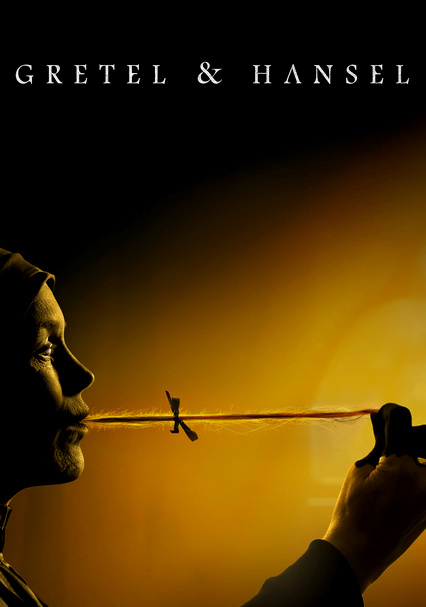
Gretel & Hansel-2020

Gretel & Hansel-2020

Director Oz Perkins

Starring Sophia Lillis, Alice Krige, Sammy Leakey

Scott’s Review #1,088

Reviewed December 5, 2020

Grade: B+

Gretel & Hansel (2020) is not a film with a plot that makes complete sense, but in this instance, that’s okay, making the experience creepier with the wonderful trimmings provided.

A horror film released in January has the cards stacked against it – most studios use the first quarter as a dumping ground for films with little box-office hope or much fanfare.

Predictably, the movie flopped, but it’s a diamond in the rough.

For fans of horror post-2010, this film immediately reminded me of The Witch, the 2015 independent film, and the directorial debut of Robert Eggers.

The slow pacing and assumed seventeenth-century remote village setting are an instant comparison. The dark sets and candle-lit scenes captivated me with their striking ambiance.

With exceptional cinematography, eerie lighting, and the prominent Brothers Grimm fairy tale theme, always a plus in horror, who cares if the t’s are all crossed. The elements supersede the story, though with a witch and two children at play, I was immediately hooked.

The follow-through is crooked and confusing, lacking a clear conclusion. Expect to be perplexed by the ending.

We are provided a quick story of a little girl wearing a pink dress who frightens the village with her special powers. Because she nearly died as a baby and was taken to an enchantress who saved her life, she has a unique history.

She makes her father commit suicide and causes other deaths, so she is taken to the middle of the forest to fend for herself or starve. She manages to find her way and makes the other children die.

Pay close attention because this story will tie into the end of the film.

In present times, we meet Gretel (Sophia Lillis) and Hansel (Sam Leakey). Gretel is sixteen years old, while Hansel is eight. Their mother goes mad, and they are forced to provide for themselves as they hit the road.

Gretel is both drawn to and fascinated by the story of the girl in the pink dress.

They eventually stumble upon a cabin with tons of lovely food, which they hungrily devour. A mysterious woman named Holda/The Witch (Alice Krige) takes them in, but is there a price the children must pay for the riches they enjoy?

Unclear is where the film is set. Is it Germany, where the folklore is derived? Is it supposed to be in the United States? The actors have American accents.

It was shot in Ireland, but this hardly matters. It’s a village and a forest in a land of anywhere, though I fantasized the setting was a northern country like Norway or Finland. Maybe the ambiguity is a good thing.

I like how Gretel & Hansel has a feminist vibe, and the perspective is from her point of view. That is why her character is older, hence the title. She is a coming-of-age teenager, so there is a more measured approach. Gretel even has a short pixie cut, almost boyish herself, giving the character a more modern look.

This serves the film well, adding an interesting take on the classic fairy tale.

There’s also a weird mommy theme played out in two different stories that end up connecting. Gretel and Hansel’s mothers are psychotic, while Holda is revealed to be a mother herself and harbors a deep secret about what she does with children who wander into her house.

Spoiler alert- it isn’t good.

The acting is outstanding, especially on the part of Sophia Lillis as Gretel and Alice Krige as Holda.

Lillis, an up-and-coming star after appearing in It (2017) and It: Chapter II (2019), is a talented commodity, while Krige gives Holda a ghastly and convincing persona. She is ambivalent, and we mostly don’t know what to make of her or what her intentions are. Lillis and Krige have delightful chemistry.

The cretins that the children meet along their journey to anywhere are worthy of any devilish story. A creepy gentleman who Gretel intends to cook and clean for to make money eyes her greedily and asks about her virginity. A bald, wailing monster chases Gretel & Hansel but is shot by a stranger.

Anyone with a hankering for a good, old-fashioned, ghostly, gothic horror film, Gretel & Hansel (2020) is a recommended watch.

The film boasts a hearty mix of horror elements, including eeriness, dark sets with illuminating lighting, and forbidding sequences in the forest, all set against a nice production design.

It may leave you scratching your head, but enjoy the ride.

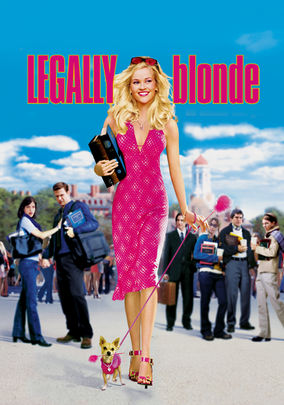
Legally Blonde-2001

Legally Blonde-2001

Director Robert Luketic

Starring Reese Witherspoon, Luke Wilson

Scott’s Review #807

Reviewed August 30, 2018

Grade: B+

Legally Blonde (2001) is a film that by all accounts should have been a hot mess, but for some reason is a great ball of fun. High art it ain’t by any means, and the plot is implausible beyond belief, and suspension of disbelief must be securely tucked away.

Despite portraying more serious roles both before and after this film, Reese Witherspoon is largely responsible for the success and is closely associated with this role.

Quite simply, all the elements manage to align with perfection in this film.

Elle Woods (Witherspoon) is president of her sorority at a Los Angeles college. Clad in fluffy pink attire and carrying her cute dog everywhere she goes, she epitomizes the stereotypical “dumb blonde”.

However, she does carry a 4.0 grade point average in fashion.

Expecting a marriage proposal from her upper-class, snooty boyfriend, Warner, Elle instead finds herself dumped due to not being serious enough.

Determined to prove herself worthy, she manages acceptance into Harvard Law School, along with Warner, and embarks on hi-jinks and adventures.

Warner’s fiancee and a potential new love interest cause turmoil for the boisterous Elle.

Legally Blonde never takes itself too seriously and is simply a fun, silly-minded, comic adventure. Audiences will likely chuckle and smile along with Elle’s adventures as she gets into one pickle after another, always determined to prove her intelligence.

To be clear, the film itself is very formulaic and could easily have been trivial and uninspired resulting in a bomb. But Witherspoon shines in the lead role adding a likable, charming quality to the character.

The actress possesses great wit and comic timing so that her character becomes more of a champion and we root for her to overcome obstacles and succeed.

By miles, she is the standout in the film.

Suspension of disbelief is at an all-time high. In “real life” there is no way Elle would ever make her way into the elitist Ivy League school brandishing a pink resume or other silly tricks to be cute and appealing.

Nor would she ever likely be so instrumental in winning a murder case so quickly. To nobody’s surprise, Elle eventually graduates with flying colors and is honored with giving a graduation speech inspiring those around her.

But as implausible as these situations are, they are also Legally Blondes’ appeal.

The supporting characters are pure caricatures, especially the main foils (Warner and Vivian- who take Elle’s place as fiancee). Both are the villains, Vivian going so far as to embarrass Elle by inviting her to a stuffy party under the guise of it being a costume party.

In the end, one of the characters “turns good”, another common element of predictable films of this nature. But again, the film is just pure and simple fun, so these stereotypes are okay.

In more modern times (not that 2001 was so long ago), the film would have not been directed by a man, but rather by a woman.

Screenwriters Kirsten Smith and Karen McCullah Lutz prepared a female-driven film that was based on a novel by Amanda Brown.

Why a man was chosen to direct is beyond me, but, alas, this is the way things were at the time.

Interestingly, another recent film that I reviewed, My Big Fat Greek Wedding (2002) would work perfectly as a now retro romantic comedy double feature along with Legally Blonde (2001).

Both are fun and light but also celebrate strong female characters.

Legally Blonde borrows much from the 1995 brilliant similar genre Clueless but is not as great as that film. Still, the film is an inspired effort due largely to the charms of its lead star.

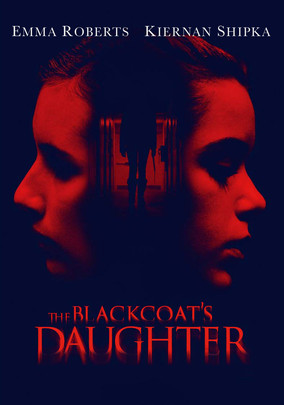
The Blackcoat’s Daughter-2017

The Blackcoat’s Daughter-2017

Director Oz Perkins

Starring Emma Roberts, Kiernan Shipka

Scott’s Review #732

Reviewed March 12, 2018

Grade: B+

The Blackcoat’s Daughter is an eerie 2017 independent horror film that combines various chilling elements to achieve its goal.

While slow at times, the film is primarily a fusion of the supernatural, the occult, and the psychological. It offers a unique experience and is unpredictable in nature.

Parts of the film are downright scary and spooky as religion meets satanism, always a safe bet for an unsettling experience.

Writer/Director Oz Perkins should be well on his way to a successful career in the industry with this, almost full-on artsy, film.

The action begins in a prestigious Catholic boarding school in a quiet, wintry area of upstate New York. As students (largely unseen) leave the school for a February break, Kat (Kiernan Shupka), and Rose (Lucy Boynton) are left behind when their parents do not arrive to pick them up.

While the girls hunker down for the night, hoping their parents show up the next day, a third girl, Joan (Emma Roberts), who may be a psychopath, is en route towards the school, enlisting the help of a strange married couple (Bill and Linda), whose daughter had died years ago and was the same age as Joan.

Also in the mix are two school nuns who are rumored to be Satanists.

Little is known about the town, but the fact that nobody is around making the setting a significant plus.

This may very well be due to budgetary restrictions associated with the film. Still, regardless, the use of very few characters or extras is a score, with the number of principal characters below ten.

The cold and bleak nature of the town and Joan’s stark journey create a very successful ambiance.

Many scenes throughout The Blackcoat’s Daughter are set during nighttime in relative seclusion. Given the icy texture of upstate New York in the middle of winter, the setting chosen by Perkins is spot on and quite atmospheric.

The overall story of The Blackcoat’s Daughter is peculiar and mysterious and does not always make complete sense.

In fact, by the time the film concludes and the credits roll, not much of the film adds up from a story perspective, leaving me somewhat unsatisfied.

Since Bill and Linda’s daughter looks identical to Rose, are we to assume that the events at the school occurred a decade before the events involving Joan? What ends up happening to Kat is perplexing, haunted by spirits, and forced to kill, is she healed at the end of the film? Or is Kat Joan?

Too many loose ends are left.

The film is heavy on the violence and the gore and dares not hold back in showcasing the victim’s pain and suffering before they cease to exist. More than one character lies bleeding and immobile as the killer calmly approaches to finish the deed.

Three characters are decapitated in horrific form as we later see their severed heads lined up in a boiler room. The demonic chanting “Hail, Satan!” may turn some viewers off, as would the overall storyline.

Those who feel that 1973’s The Exorcist is disturbing need not see this film as similar elements abound.

Also worthy of a quick mention is the cool, unique musical soundtrack created by singer/songwriter Elvis Perkins, brother of the director.

With goth/techno elements, the score is noticed (in a good way) at various points throughout the running time and adds to the film’s overall feel.

The Blackcoat’s Daughter (2017) succeeds as a disturbing and experimental piece of independent horror-making that will pique the interests of horror aficionados.

With plenty of blood-letting and squeamish parts, Oz Perkins knows what works. The story, though, would have been improved by a clear, definitive beginning, middle, and end, to avoid a confusing outcome.

Still, I look forward to more works from this up-and-coming director.