Category Archives: Thriller

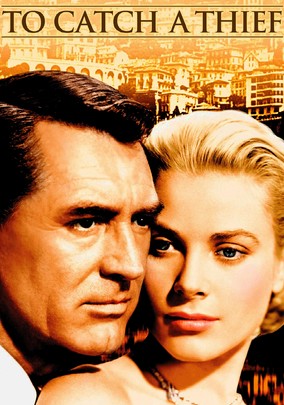
To Catch A Thief-1955

To Catch A Thief-1955

Director Alfred Hitchcock

Starring Cary Grant, Grace Kelly

Top 250 Films #73

Scott’s Review #455

60000732

Reviewed July 24, 2016

Grade: A-

Cary Grant starred in five Alfred Hitchcock films in his day, and 1955’s To Catch A Thief is right smack in the middle of Hitchcock’s prime period of masterful pictures.

Grace Kelly (her third and final Hitchcock film) co-stars, making this film a marquee treat as both actors were top-notch in their heyday and had much chemistry in this film.

While not my all-time favorite of Hitchcock films, To Catch a Thief has mystery, a whodunit, and some of the most gorgeous cinematography of the French Riviera. The breathtaking surroundings are my favorite part of this film.

Grant plays John Robie, aka. “The Cat,” an infamous jewel thief who has now gone clean. He spends his days quietly atop the French Riviera growing grapes and flowers and keeping out of trouble.

When a new jewel thief begins to strike wealthy tourists, Robie is immediately under suspicion by the police. He is forced to prove his innocence by catching the real thief in the act, as the thief uses the same style of stealing as Robie once did.

Amid this drama, Robie meets the beautiful heiress Frances (Kelly) and her interfering mother, Jessie Stevens (Jessie Royce Landis), which leads to romance.

Although Grant could be old enough to be Kelly’s father, we immediately accept Robie and Frances as the perfect couple- she is sophisticated, stylish, and rich, and he equally has a bad-boy edge.

To Catch A Thief has a strong romantic element and a glamorous and wealthy tone. After all, the subject matter at hand- jewels- equates to lavish set decorations, women dripping in expensive jewelry, and a posh resort among the gorgeous French waters.

The supporting characters are interesting, too. A triangle emerges as Frances plays catty with a young girl, Danielle, eager for Robie’s affection. Danielle, much plainer looking than Frances, though no shrinking violet, holds her own in a match of wits with Frances as they bathe in the water one afternoon.

Frances’s mother, Jessie, provides tremendous comic relief as she attempts to bring Robie and Frances together. She is always searching for a handsome suitor for her daughter.

Finally, insurance man H.H. Hughson also contributes to the comic relief by begrudgingly providing Robie with a list of wealthy visitors with jewels.

In their playfully awkward lunch- delicious quiche is the meal of the day- at Robie’s place, Robie proves how Hughson himself is a thief of sorts to accomplish what he needs to get from Hughson.

Despite all of the positive notes, something about To Catch A Thief prevents it from being among my all-time favorite Hitchcock films. Perhaps it is because I never doubted Robie’s innocence, and if dissected, the caper is a bit silly.

I get the sense that the audience is supposed to question whether Robie is truly reformed or playing a game and is back to his dirty deeds, but I wasn’t fooled.

This is a minor gripe, but To Catch A Thief is a fantastic film.

The way the film is shot is almost like being on the French Riviera. Countless coastal shots of the skyline will amaze the viewer with breathtaking awe of how gorgeous the French country is and how romantic and wonderful it is.

This is my favorite part of To Catch A Thief.

The visuals of the film rival the story as the costumes created by costume designer and Hitchcock mainstay, Edith Head, are simply lovely. And who can forget the costume ball near the conclusion?

Though the story might be the weakest and lightest element of the story,  who cares? The visuals more than make up for any of that, as To Catch A Thief (1955) will please loyal fans of Hitchcock’s vast catalog.

Oscar Nominations: 1 win-Best Art Direction, Color, Best Cinematography, Color (won), Best Costume Design, Color

(Le Boucher) The Butcher-1970

(Le Boucher) The Butcher-1970

Director Claude Chabrol

Starring Stephane Audran, Jean Yanne

Top 250 Films #74

Scott’s Review #273

Reviewed September 14, 2015

Grade: A-

(Le Boucher) The Butcher is a French thriller released in 1970 that is slow-moving at first but builds to a dramatic crescendo as the film progresses, transforming from plodding to a cerebral mind-blower.

Mirroring and inspired by director Alfred Hitchcock, The Butcher is surprisingly not quite horror (based on the title, one might assume it is), but rather an intelligent, dreamy thriller.

Gorgeous schoolteacher Helene Daville is competent, confident, and filled with a zest for life. She tutors children who need extra help, laughs with them, and even lets one sip champagne at a wedding to try it. She enjoys living and occasionally embarking on adventures.

One day, at a wedding, she meets the local butcher, Paul Thomas, and they immediately hit it off as they tenderly walk home together. Cordial and kind, they develop a friendship and laugh together.

As time goes on, a series of killings begins to occur in the town.

Helene begins to suspect Paul of the murders and wrestles with her conflict between her budding love for him and her revulsion at the thought of being in love with a vicious murderer. Her conflict is the film’s point.

The relationship between Helene and Paul is an interesting dynamic and, I now realize, the reason for the picture’s slow pace. Helene and Paul enjoy a nurturing, caring courtship, and the film successfully achieves the intended slow build.

The murder mystery is secondary and serves to support the main plot. We know little- almost nothing- about the female victims. They are strangers to the audience, and the reason for their deaths is unknown.

The killer simply kills- no motivation is revealed. This is what makes the film so cerebral and mysterious.

The Butcher is a love story intertwined with a thriller. It is not a mainstream thriller in the conventional sense, and the final twenty or thirty minutes reeled me in completely and gave me great admiration for the film, which I had been hedging about throughout.

The meat of the film might have started an additional 30 minutes earlier, in my opinion, but then again, the slow build may have been intended to make the result more powerful.

The moral conflict, love versus hate, tenderness, affection, caring, devastation, and betrayal are all explored during this relatively brief finale.

Besides, the blurry camera shots and angles from the vantage point of an automobile driver traveling down a dark, tree-lined street are highly creative and unique.

The comparisons to Hitchcock are evident.

Helene is similar to Tippi Hedren’s character, “Melanie Daniels,” in The Birds. She is glamorous, alluring, blonde, tall, well-dressed, and the heroine of the film. Attractive and blonde are traits featured in many Hitchcock films.

Paul, on the other hand, reminds me of Rod Taylor’s Mitch, also from The Birds, though not as handsome or charismatic. Still, their relationship reminds me of the two of them as the chemistry oozes from the screen and a romance and thriller are combined.

The audience perceives Helene as a wholesome, wonderful person, but is she truly?

In the end, we are left questioning her true feelings and are left with a distaste in our mouths. Her choices confuse us, or is she simply a complex human being like each of us is?

The interesting aspect of The Butcher (1970) is that it leaves one questioning how we would handle Helene’s dilemma, and more importantly, how we would channel our feelings if faced with a similar predicament.

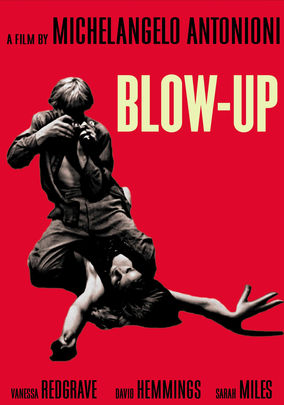
Blow-Up-1966

Blow-Up-1966

Director Michelangelo Antonioni

Starring David Hemmings, Vanessa Redgrave

Top 250 Films #75

Scott’s Review #305

60033579

Reviewed December 21, 2015

Grade: A

Blow-up is a mysterious and compelling 1966 (the spawn of more edgy films) thriller that undoubtedly influenced the yet-to-come 1974 masterpiece The Conversation, directed by Francis Ford Coppola, as both films are tense tales of intrigue focusing on technology as a tool to witness a murder.

This film is legendary director Michelangelo Antonioni’s first English-speaking film, and what a film it is.

Set in hip London in the 1960s, it is undoubtedly a fascinating portrayal of the fashion world. The story is about a fashion photographer named Thomas, who is in high demand. He revels in bedding women so they may have their photos taken by this rock star photographer and is chased around London by gorgeous women.

One day, he aborts a photo shoot because he is bored. He is not the nicest guy in the world, but an unlikable character.

But perhaps that is secondary or even intentional. One day, while walking in Maryon Park, he encounters a couple in the distance. They appear to be having a secret rendezvous and nervously kissing, so he begins photographing the woman, Jane (played by a very young Vanessa Redgrave). Jane realizes they have been snapped and is furious, demanding the film.

This sets off the mystery and the meat of the film.

The film is a tremendous achievement in cinematic intrigue. It is pretty psychological and open to much interpretation, which is its genius. The main questions are: “What exactly transpired in the park, and who is responsible?”

We feel little sympathy for Thomas, which perhaps is intentional. And what about Jane?

Talk about a mystery!

We know little about her beyond the fact that she has secrets, but is she responsible for the crime? Throughout the film, Thomas and Jane engage in a cat-and-mouse game, seemingly trying to outwit and outmaneuver each other.

The unique aspect of the film is that the viewer will often ask questions: “Was there even a crime committed?” “Are the events all in Thomas’s imagination, or has he misinterpreted the series”? One will revel in the magnificence of these questions.

I immediately recognized similarities to The Conversation (1974). Both feature one of the senses as a means of solving or realizing the crime committed—in The Conversation, it is hearing; in Blow-Up, it is sight.

In both, the main character uses these senses for a living, and both are arguably not the most likable characters. Both films feature mimes.  Both films are pretty cerebral, and both are cinema gems for the “thinking man.”

Blow-Up has weird, little intricate moments- a very tall female Russian model experiences an odd photoshoot with Thomas. Later,  a giggling pair of young girls end up in a grappling match with Thomas after asking him to take their photos.  A topless (from behind) Jane prancing around Thomas’s apartment is an unusual scene.

As a first-time viewer, I adored this film. It is a good example of a movie that requires multiple viewings to appreciate fully, and I look forward to doing just that.

A fantastic, creative achievement, Blow-Up (1966) is a masterpiece that can be dissected with each subsequent viewing.

Oscar Nominations: Best Director, Michelangelo Antonioni, Best Story, and Screenplay Written Directly for the Screen

La Femme Infidele-1969

La Femme Infidele-1969

Director Claude Chabrol

Starring Stephane Audran, Michel Bouquet

Top 250 Films #77

Scott’s Review #397

220px-UnfaithfulWifePoster

Reviewed April 23, 2016

Grade: A-

Another gem by French director Claude Chabrol, La Femme Infidel (The Unfaithful Wife) is a 1969 film later remade in the United States in 2002, directed by Adrian Lynde.

Having seen the remake a few times before watching the original, I cannot help but compare the two films, which is fun for me since they are vastly different, especially as I ponder each further.

One is more conventional- the other more psychological.

Successful insurance executive Charles Desvallees lives in the suburbs of Paris with his beautiful wife Helene and their young son.

Life is seemingly idyllic: they enjoy every luxury imaginable, a beautiful house, a stunning landscape, and a dutiful maid.

Charles has a sexy secretary, smokes, drinks, and enjoys life at work, and Helene frequently goes to Paris for shopping sprees, beauty treatments, and to attend the cinema.

What could be missing from their lives?  Helene, a bored housewife, has embarked on an affair with Victor Pegalla, a writer living in Paris.

When Charles grows suspicious of Helene, he hires a private investigator to track her activities and uncover the truth about how she spends her time.

Admittedly, I was highly influenced by Unfaithful, the 2002 remake starring Diane Lane and Richard Gere, when I viewed La Femme Infidel.

The remake is set in New York instead of Paris and is more polished and less psychological- a Fatal Attraction-type slick thriller, if you will.

The “other man” is much sexier and more passionate, and the connection is more primal than in the original. This changes the tone of the film from a sexual and lustful one to a more complex and psychological dynamic- La Femme Infidel is a more thinking man’s film.

Victor is handsome and well-groomed, but he is somewhat similar to Helene’s husband, so we wonder what the main appeal is- if she is seeking adventure.

Lane’s 2002 character’s choice is easy- her affair is based on the physical attractiveness of the man. 1969’s Helene is not having her affair for that reason-the reasons, besides boredom, are unclear, making the film more complex.

When the main action (death) occurs at the midpoint, the film takes a different direction and becomes complicated. No longer is the main plot of Helene’s adultery, but rather what Charles has done and the repercussions bound to follow.

Do we see Charles as the villain and Helene as the victim? Who do we feel sorry for? Do we root for anyone? Indeed, the character of Victor is not explored in much depth. What are his motivations? Is he in love with Helene?

Helene is an interesting character. Is she meant to be sympathetic or hated? Or just complex?  One can interpret her in different ways- the woman has it all: beauty, a faithful husband, and a wonderful home life- why does she risk sacrificing it all for a fling?

Does she dare to want more out of her life and have some adulterous fun? It does not seem that Helene is in love with Victor or has any desire to run away with him or leave her husband.

Charles is also a character worth analyzing closely.

Throughout the film’s first portion, he is seen as a victim- his gorgeous wife has mysterious contempt for him and plays him for a fool. She spends his money and cheats on him, while he adores her and resists his young, flirtatious secretary, who has a thing for Charles and wears short skirts seemingly for his benefit.

She is much younger than Helene. Later, his character’s actions and motivations shift from victim to arguably brutish and primal. A momentary outburst changes his motivations, and the texture becomes calculating.

In the end, Charles and Helene come together and resume normalcy in their lives, but will things ever be the same? Will the trust ever reappear in their lives? Is Helene now afraid of or intimidated by her husband, or rather, does she now have a newfound desire for her alpha, take-charge husband?

The 1969 version of La Femme Infidel is layered, complex, and engaging, and left me thinking about the film, which is a perfect sign.

The remake, while very good, is more of a blockbuster-style film, while the original goes more for thought.

The lack of sex appeal in Victor is a negative of the film, as are his motivations, but the character-driven nuances of the other characters make this a thought-provoking watch.

Rebecca-1940

Rebecca-1940

Director Alfred Hitchcock

Starring Laurence Olivier, Joan Fontaine

Top 250 Films #96

Scott’s Review #345

895272

Reviewed January 9, 2016

Grade: A

The only Alfred Hitchcock film to win the coveted Best Picture Oscar trophy, Rebecca is a very early offering in the famous director’s repertoire.

His heyday being well ahead of this film (the 1950s and 1960s saw his best works), Rebecca is a blueprint of fine things to come and, on its own merits, is a great film.

Shot in black and white, the film is a descent into mystery, intrigue, and madness with a gothic look.

Laurence Olivier stars as wealthy widower Maxim de Winter, whose first wife, the title character Rebecca, died sometime before the story begins. In a clever twist, the character of Rebecca is never seen but takes on a life of her own through the tellings of the rest of the cast.

Joan Fontaine plays a nameless, naïve young woman who meets the sophisticated Maxim and marries him, becoming the new Mrs. de Winter.

This development is met with disdain by the servants who work in the Grand de Winter mansion, Manderley, a character in its own right.

The housekeeper, Mrs. Danvers (Judith Anderson), is cold and distant from Maxim’s new wife. She begins to reveal an obsession with the deceased Rebecca, which creates jealousy and intimidation for Fontaine’s character, to the point where she starts to doubt her sanity and decision-making capabilities.

Thanks to Hitchcock’s direction, Rebecca is a fantastic, old-style film with layers of mystery and wonderment. The mansion, Manderley, is central to the story, as is Mrs. Danvers’s creepy obsession with Rebecca.

She keeps the dead woman’s bedroom neat, a sort of shrine to her memory, so much so that, despite the time the film was made, 1940, a lesbian element is crystal clear to attention-paying audiences.

This aspect may not have been noticed at the time, but it is apparent now.

The film is also a ghost story since the central character, Rebecca, is never seen.

Could she be haunting the mansion? Is she dead, or is this a red herring created to throw the audience off the track? Is the new Mrs. de Winter spiraling out of control? Is she imagining the servant’s menacing actions? Is Maxim in on the tormentor, simply seeking a replacement wife for his steadfast love?

The pertinent questions are asked not only of the character but also of the audience as they watch with bated breath.

The climax and finale of Rebecca (1940) are fantastic.

As the arguably haunted mansion is engulfed in flames and the sinister Mrs. Danvers can be seen lurking near the raging drapes, the truth comes to the surface, leaving a memorable haunting feeling to audiences watching.

Rebecca is a true classic.

Oscar Nominations: 2 wins-Outstanding Production (won), Best Director-Alfred Hitchcock, Best Actor-Laurence Olivier, Best Actress-Joan Fontaine, Best Supporting Actress-Judith Anderson, Best Screenplay, Best Original Score, Best Art Direction, Black and White, Best Cinematography, Black-and-White (won), Best Film Editing, Best Special Effects

Deliverance-1972

Deliverance-1972

Director John Boorman

Starring Jon Voight, Burt Reynolds, Ned Beatty

Top 250 Films #104   

Scott’s Review #324

433193

Reviewed January 5, 2016

Grade: A

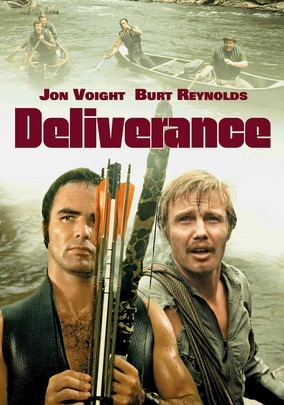
Deliverance is a disturbing, gritty, yet terrific 1972 thriller directed by John Boorman and starring a all-male cast.

The film is an adventure, albeit a dark one, with a subject matter difficult to watch; the film takes dark twists along the way, which is also its beauty. The viewer will get a harsh look at the backwoods of Georgia, not to mention gorgeous outdoor scenery.

A group of middle-aged, metropolitan businessmen, (played by Burt Reynolds, Jon Voight, Ned Beatty, and Ronny Cox), from Atlanta, decide to go rafting for a weekend getaway along a remote river in a desolate area of Georgia.

It is a guy’s weekend.

Lewis and Ed (Reynolds and Voight) are experienced canoeists and therefore the leaders of the group.

The guys are jovial, but soon come upon a strange group of very poor townspeople. The men ask for a ride to the river, and one of the men, Drew (Cox), engages a peculiar young boy in a friendly duel of banjo versus guitar, but the boy then snubs Drew.

Later, events take a dark turn when a hunter-versus-hunted game emerges between the city-dwelling men and the country rednecks.

The film is interesting as it begins as a light-hearted adventure, nearly a buddy movie. The men laugh and joke as they relish the excitement of the weekend ahead.

The film then becomes slightly eerie during the banjo scene. We know that something strange or sinister has occurred, but we cannot put our finger on it.

Does the redneck boy hate the city men, or is he mentally challenged? Why the strange looks of the poor people of the tiny town?

From this point, Deliverance takes a dark turn as a brutal event occurs involving two deaths- one under mysterious circumstances, and a male rape scene that is disturbing in its intensity and humiliation.

The rawness of these aspects of the film is unprecedented, especially when contrasted with the beautiful nature that is also at the forefront.

The acting is spot-on. In my opinion, Jon Voight makes this film and gives a layered, character-driven performance, so much so that the audience becomes invested in his life. Ed is a good guy- arguably the kindest of the bunch- and is forced to become a different person as the film progresses, far from his true self.

He struggles in one scene- one beautifully peaceful scene- to shoot and kill a deer calmly grazing in the woods. He cannot do it. I love this scene as it shows Ed’s true nature. He does not dare tell the other men of his perceived shortcomings.

Ironically, he is then forced to make another painful decision involving human life.

On the surface, it is a straightforward mainstream film, but as the film progresses, it becomes a layered masterpiece—happy, tragic, strange, depressing, peaceful, and brutal—like Deliverance (1972).

The film is a disturbing, memorable gem and needs to be viewed to appreciate the golden age of 1970s cinema.

Oscar Nominations: Best Picture, Best Director-John Boorman, Best Film Editing

The Sixth Sense-1999

The Sixth Sense-1999

Director M. Night Shyamalan

Starring Bruce Willis, Haley Joel Osment

Top 250 Films #106

Top 40 Horror Films #20

Scott’s Review #182

26797528

Reviewed October 8, 2014

Grade: A

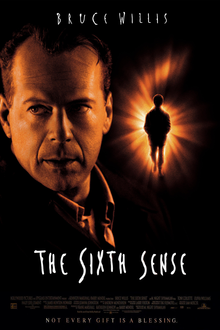
The Sixth Sense is a psychological thriller/horror film directed by M. Night Shyamalan, made in 1999, about ghosts, that was an incredible box-office and critical success at its time of release and made the line, “I see dead people” universally imitated.

Bruce Willis stars as Dr. Malcolm Crowe, a successful and admired child psychologist, who lives a perfect life with his wife Anna in Philadelphia.

Enjoying a romantic night at home, Malcolm and Anna are interrupted by a deranged former patient- played by an unrecognizable Donnie Walhberg.

Malcolm is shot by the patient, who also shoots himself, and the story picks up a year later as Malcolm takes an interest in Cole, a troubled 9-year-old boy, played by Haley Joel Osment. Cole is a peculiar boy- an outcast taunted at school, who can see the dead.

He’s worried, over-worked mother, Lynn, is played by Toni Collette. Meanwhile, Malcolm and Anna appear to be going through marital problems and lack any meaningful communication with each other.

Anna begins to be pursued by a new beau much to Malcolm’s chagrin. Malcolm and Cole develop a special bond as Malcolm convinces Cole to speak to and help the ghosts that he sees rather than be terrified of them.

As the plot slowly unfolds, Cole helps a recently deceased girl named Kyra Collins, who is around his age. Kyra gives Cole a videotape that reveals she was murdered and proves who killed her.

The subsequent scene is my favorite- there is a haunting quality to it and the camera follows the events interestingly- slowly and sedately.

The setting is a service at Kyra’s house where family and friends are gathered to pay respects and support Kyra’s parents. Malcolm and Cole arrive and present Kyra’s father with the plain videotape.

The entire scene is powerful in its simplicity yet high emotional value. It is slow, but devastating in its climax and reveals. Small nuances are revealed- why is Kyra’s mother wearing bright red when the other guests are all wearing black? Will Kyra’s younger sister be the next victim?

Superlative filmmaking.

A scene involving Cole’s teacher is riveting- being able to sense aspects of people’s pasts Cole realizes his teacher had a stuttering problem as a child. When his teacher is condescending towards Cole, the young boy explodes with rage and begins a chant of “Stuttering Stanley” which reduces the teacher to childhood traumas.

Yet another powerful scene involves Cole and his mother sitting in a car caught in traffic- Cole admits the truth of his skill of seeing dead people to her and introduces an emotional story to her as proof.

This is a scene where Toni Collette shines brightly.

Well over a decade since The Sixth Sense was released, most people know the twist and subsequent surprise ending and it is such a joy to go back, see the manipulations in the story and individual scenes, add them all up, and revel in the clever way that Shyamalan puts them all together.

The Sixth Sense is not dated and is quite fresh, holding up tremendously, and I personally still get chills during the big reveal all these years later.

But more than this pleasure, the film is written beautifully. Somewhere between horror and psychological thriller, it successfully tells a ghost story with interesting characters and jumps-out-of-your-seat thrills that are not contrived and predictable in the traditional horror film way.

From an acting perspective, Bruce Willis is amazing and under-appreciated as Malcolm- he is calm, cool, and collected and his performance is quite understated as the inquisitive and pensive psychologist.

More praise should have been reaped on Willis.

Haley Joel Osment gives an astounding performance of a lifetime- he emits an image to the audience of being strange yet sympathetic and he relays his very frightening fear of the ghosts so well that the pain and conflict he endures is evident on his face.

Toni Collette is effective as the scared, concerned, haggard mother. Collette and Osment were rewarded with Academy award nominations- sadly Willis was not.

Shyamalan was subsequently ridiculed for his later films (The Village-2001, and Unbreakable-2001) – perhaps the manipulation and trickery from The Sixth Sense angered some people.

The Sixth Sense (1999) is a film that remains with you for days, weeks, even years and can be revisited and rediscovered for an intelligent, chilling good time.

Oscar Nominations: Best Picture, Best Director-M. Night Shyamalan, Best Supporting Actor-Haley Joel Osment, Best Supporting Actress-Toni Collette, Best Screenplay Written Directly for the Screen, Best Film Editing

Reservoir Dogs-1992

Reservoir Dogs-1992

Director Quentin Tarantino

Starring Tim Roth, Harvey Keitel, Steve Buscemi

Top 250 Films #107

Scott’s Review #1,332

Reviewed January 9, 2023

Grade: A

Reservoir Dogs (1992) is the film that began an essential transition in cinema history. The 1980s saw way too many watered-down or oversaturated films with enough sappy or melodramatic thematics to make a seasoned cinema lover want to gag and run for a good television series.

The 1990s were different. It’s impossible to think of the decade in film and not speak the name Quentin Tarantino, an iconoclast who took the crime thriller genre and riddled it with violence, dark humor, comic book-style characters, and dozens of other eccentricities and spun the world on its heads.

It was needed.

But before anyone begins to assume Reservoir Dogs is the most fantastic Tarantino film, it’s not. Many list it as his weakest catalog entry. That’s open to the opinion of course but in my view, the influence of the film accounts for much of my enjoyment of it.

It’s not as developed and stylized as Django Unchained (2012) or as powerfully fucked up or odd as Pulp Fiction (1995), but the rawness, the gore, and the go-for-broke scenes that are shot like a play, and the small-budget make watching Reservoir Dogs a reminder of the genius that is Tarantino.

Countless scenes mirror sequences to come in his later films so much so that a game can be played to discover where something played out in another Tarantino film.

The film gave new recognition and merit to the independent film genre which was huge and provided doors flying open to young filmmakers everywhere who had ideas and just needed to get their films known.

The influence of Reservoir Dogs is unmeasured and a double feature of Reservoir Dogs and Pulp Fiction is suggested. Even though the latter was released later, most people saw Pulp Fiction first and then discovered Reservoir Dogs.

A group of unsavory thieves assemble to pull off the perfect diamond heist. It turns into a bloody shit show when one of the men turns out to be a police informer. But which one is it and who is responsible for the ambush?

As the group begins to question each other’s guilt, the tensions and suspicions threaten to blow up the situation before the police step in and save the day. But how many will die first?

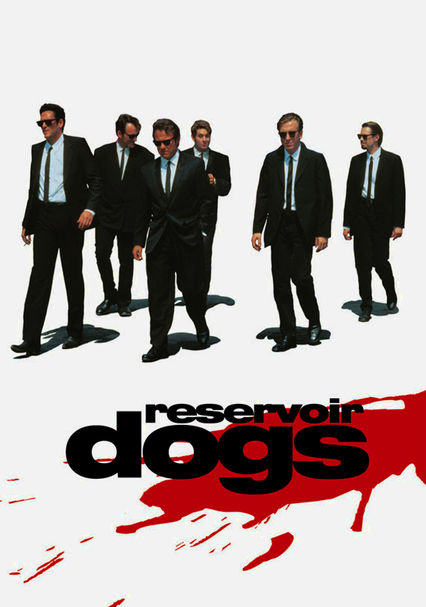
Tarantino cleverly casts himself in a small role as Mr. Brown and names all the men using the same formal title. There is Mr. White (Harvey Keitel), Mr. Orange (Tim Roth), Mr. Blonde (Michael Madsen), Mr. Blue (Edward Bunker), and finally Mr. Pink (Steve Buscemi) who is my favorite of all.

In 1992, many scenes were shocking. When sinister Mr. Blonde cuts off the ear of a cop and prepares to set him on fire the brutality and sadism are hard to watch.

The blood-soaked Mr. Orange lies in a pool of blood through nearly the entire film. As his skin turns whiter and whiter and his clothes redder and redder it’s an example of masterful cinema and creativity.

The few exterior shots are in Los Angeles which gives the film a low-budget, raw look.  It’s to be celebrated as the potent sun and grizzled veneer of the city of angels are on display.

I’m not a fan of the lack of female representation but this only enhances the muscle and masculinity of the characters. As they sit in a diner mulling over whether tipping is necessary we could easily be in a men’s locker room witnessing banter about getting laid, or watching an episode of Seinfeld.

There are no romantic entanglements to mess up the plot or no rescuing the girl from criminals to contend with. The closest we come is a couple of homoerotic moments of men embracing men amongst bullets and blood.

Reservoir Dogs succeeds as a whodunit, a heist film, and a vile look at the inhumanity of some of the characters.

The influence and relevance of Reservoir Dogs in 2023 are as abundant as they were in 1992. Cinema is like fine wine and sometimes the more time that goes by the more appreciation is warranted for a film.

It’s not perfect and is unpolished and sometimes underdeveloped but it’s been emulated so many times that it’s become a blueprint of the crime thriller.

Independent Spirit Awards: 1 win-Best Supporting Male-Steve Buscemi (won)

Dial M for Murder-1954

Dial M for Murder-1954

Director Alfred Hitchcock

Starring Ray Milland, Grace Kelly

Top 250 Films #120

Scott’s Review #995

Reviewed February 28, 2020

Grade: A

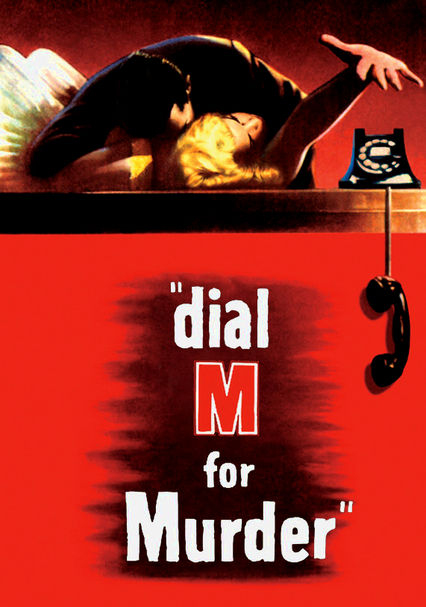
A fabulous offering by stylistic director Alfred Hitchcock, Dial M for Murder (1954) arrived on the scene when the cinematic genius was at the height of his success in the United States, following his success in England.

The late 1950s and early 1960s revealed his best offerings, but this is no slouch. The film mixes thrills, double-crosses, and murder in a way only Hitchcock can —perfectly.

It is fast-paced and shot almost like a play, using primarily one set. It is based on the Broadway hit, which came first.

An English former tennis champion, Tony Wendice (Ray Milland), hatches a scheme to kill his wealthy but unfaithful wife, Margot (Grace Kelly), who’s embroiled in a liaison with handsome writer Mark Halliday (Robert Cummings).

When Tony’s plans go awry, he attempts the second act of deceit, but events spin out of control when Margot, Mark, and a sly Scotland Yard inspector (John Williams) begin putting the pieces together.

The film is popular because of its conventional, pure Hitchcock story. The viewer immediately knows who the killer is and his motivations—his hunger for wealth and jealousy of another man.

The most fun is when hiccups begin to form, and Tony must fly by the seat of his pants to cover his tracks and think of another way to seal Margot’s fate. If he cannot murder her, why can’t he send her to prison?

Milland is perfect in the role with eye shifts and head turns.

Set pieces, such as a key and a handbag, add zest to the film. The plot gets juicier and juicier when it is revealed that there are multiple keys. The flat where Tony and Margot reside is beautifully designed with state-of-the-art furniture and decorations, making the set a character.

Lavish curtains and French doors are utilized during the late-night attempted murder scene, which is thrilling to witness, leaving the viewer with heart palpitations.

The brilliance is that the viewer does not intend to hate Tony, at least not this viewer. While he is not likable, his motivations can be somewhat understood. Conversely, Margot and Mark are not heroes; their shenanigans come back to haunt them.

I dare say that Grace Kelly has had better roles in Hitchcock films. To Catch a Thief (1955) immediately comes to mind. Margot is not a particularly strong character and is relatively weak.

Dial M for Murder has commonalities with two other Hitchcock gems. As with Strangers on a Train (1951), a tennis star is utilized as a significant character, and twisted strangulation is the game. Also, a tit-for-tat technique is used.

Like the underappreciated Rope (1948), the one-take sequence style and the film’s potential as a stage play are noticeable traits. Those films are good ones to be in the same company with.

The final thirty minutes pass at breakneck speed as we wonder what will happen next. The cat-and-mouse activities are delightful and remind us that the film is essential and stripped down compared to his later films.

One set, good actors, and a full-throttle story do wonders to satisfy a fan. The camera movements and techniques are key to the entire film, as a shot here or there is timed with flawless precision. Hitchcock used 3-D filming, which was inventive for the time.

Although perhaps not as famous as Hitchcock’s delights like Psycho (1960), Vertigo (1958), or North by Northwest (1959), Dial M for Murder (1954) serves as much more than a warm-up act for those classics.

This film is one to remember with a fast pace, twists and turns, and good British sensibilities. Its setting is a stylish London flat, and the sophistication is suitable.

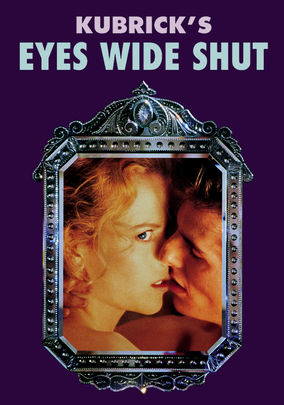
Eyes Wide Shut-1999

Eyes Wide Shut-1999

Director Stanley Kubrick

Starring Tom Cruise, Nicole Kidman

Top 250 Films #125

Scott’s Review #464

5670434

Reviewed August 14, 2016

Grade: A

Eyes Wide Shut is a film that I saw in theaters upon its release in 1999 and found fascinating, to say the least. I have watched the film twice more in the years following and it is even more fascinating today- it gets better and more nuanced with each viewing.

It is not an easy film to follow or explain but is rich in mystery and psychologically challenging.

A huge Stanley Kubrick fan, this film is an eerie, plodding, cerebral psychological/sexual thriller.

The creepy piano score is very effective, and Tom Cruise and Nicole Kidman are both excellent as affluent, yet restless, thirtysomethings living in New York City.

Cruise plays Bill, a successful doctor, and Kidman his gorgeous wife, both sexually restless and escaping into fantasy and otherwise real dalliances with other partners as they bicker about fidelity and jealousy as they lounge in their underwear and smoke pot.

It’s a film about relationships, temptation, and desire, and does not always make perfect sense, but boy will it leave you thinking.

The supporting characters are some of the most interesting I’ve ever seen as they compel and mystify and one wonders how they fit with the main characters.

The naughty Long Island orgy is as bizarre and surreal as one can imagine.

The movie reminds me somewhat of The Ice Storm (1997), Magnolia (1999), and Mulholland Drive (1992), which is the ultimate compliment as the aforementioned are film masterpieces.

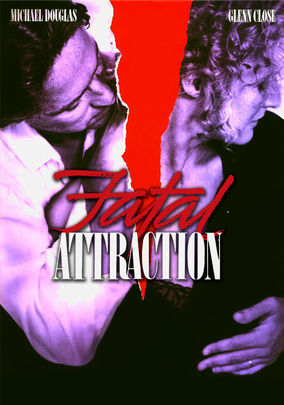
Fatal Attraction-1987

Fatal Attraction-1987

Director Adrian Lyne

Starring Michael Douglas, Glenn Close

Top 250 Films #128

Scott’s Review #329

60010341

Reviewed January 8, 2016

Grade: A

Fatal Attraction is a film that was a monster smash hit at its time of release (1987) and has all the makings of a trashy, forgettable, slick Hollywood film from a disastrous time in the film.

Guess what? It is a fantastic, gripping, thriller that still holds up well after all of these years.

Say what you will about Anne Archer, who is very good, but this film truly belongs to Michael Douglas and Glenn Close, who made it the believable thrill ride that Fatal Attraction is.

The subject matter is adultery, which made it the water-cooler topic of its day.

The plot is quite simple- Douglas plays Dan Gallagher, a successful New York City attorney, happily married to Beth (Archer), and raising a cute young daughter, Ellen.

When Beth and Ellen are away looking at new houses one rainy weekend, Dan embarks on a torrid affair with sexy, successful businesswoman, Alex (Close), not realizing that she is an unbalanced, needy woman, who is not about to let Dan out of her life.

I adore this film in large part because it’s a film that can be debated.

Many seem to blame either (mostly) Dan or Alex, but the question of monogamy can always be a topic of conversation after viewing this film, so in that regard, it is multi-faceted, rather than solely a well-acted Hollywood potboiler.

Was it okay for Dan to cheat? Does Beth overreact or does she forgive too easily? Do we sympathize with Alex? Is she a victim?

The film is unique in that many folks were rooting for Dan and Alex, despite her being the other woman.

So many memorable lines or scenes contribute to this film- who can forget the infamous “boiling pet rabbit” scene or the wonderful line that Alex utters to Dan, “I will not be ignored, Dan”.

They are so ingrained in pop culture that it brings a smile to think of these aspects of Fatal Attraction.

The real selling point, though, is the natural and honest chemistry that Douglas and Close share. Their scenes, mainly the romantic weekend they spend together, flow so nicely that they have real rooting value and I instantly bought them as a couple.

Without this undeniable chemistry, Fatal Attraction would be a standard romantic thriller- and not much else. And the smoldering sexuality during their love scenes is erotic and intense.

Surely not suffering from the dreaded “1980s look”, Fatal Attraction is a gem that holds up very well and is a slick thrill-ride, easily watched and enjoyed time and again.

Dozens upon dozens of carbon copy films cropped up in the years to follow, but none were ever as fantastic as Fatal Attraction (1987).

Oscar Nominations: Best Picture, Best Director-Adrian Lyne, Best Actress-Glenn Close, Best Supporting Actress-Anne Archer, Best Screenplay Based on Material from Another Medium

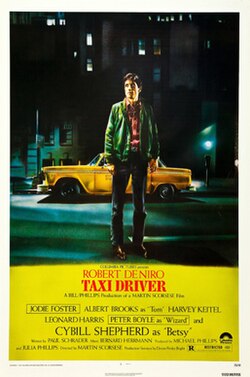
Taxi Driver-1976

Taxi Driver-1976

Director Martin Scorsese 

Starring Robert De Niro, Cybill Shepherd, Jodie Foster

Top 250 Films #130

Scott’s Review #776 

Reviewed June 20, 2018

Grade: A

It is incredibly tough to choose a favorite of all Martin Scorsese films since nearly all of them are incredibly well made.

Goodfellas (1990), Raging Bull (1980), and Taxi Driver (1976) immediately come to mind. Taxi Driver may be Scorsese’s darkest film of all.

The thriller is intense, dangerous, and ferocious led by a riveting performance by Robert De Niro- a regular in the director’s earlier films. The film is nail-biting and compelling and a great, character-driven watch.

Set in the bustling and (at that time) decrepit New York City shortly following the Vietnam War, Travis is a veteran suffering from some degree of post-traumatic stress disorder. Lonely and angry, he works as an overnight taxi driver who falls for a snooty presidential campaign worker, Betsy, (Cybill Shepherd).

He also forges a relationship of a protective nature with an underage prostitute, Iris, (Jodie Foster). As he gradually spirals out of control due to the unhappiness surrounding him, he plots to kill Betsy’s boss while protecting Iris from her pimp (Harvey Keitel).

One great aspect of Taxi Driver is the insanely good performance by De Niro. Along with the later role of Jake LaMotta in Raging Bull, that and his role of Travis Bickle are my two favorite roles of his. With Bickle, he is unpredictable, on edge, and angry, as De Niro infuses the character with those qualities in a seamless fashion.

As he teeters on the brink of insanity and is ready to snap at any given moment, the character is impossible not to watch with both fear and marvel. De Niro is that brilliant. 

While not to be outdone by the aforementioned negative and dangerous qualities, Travis also possesses a few benevolent traits making the character complex. In large part, this comes into play with the protective nature he develops towards Iris.

Almost like a big brother/kid-sister dynamic, the deranged man treats her with kindness rather than taking advantage of her as he easily could have. The diner scene the two actors (De Niro and Foster) share is rich with interesting dialogue and bonds the characters together.

Travis also harbors love and hate emotions towards Betsy (Cybill Shepherd). As she is a political volunteer for a potential presidential candidate, Travis first encounters her by way of spying on her through large glass windows where she works.

Coaxing her to accept a date, they have coffee and eventually attend a film together. Betsy is offended since the film is pornographic and their date goes south fast. After a vicious showdown between the pair at the campaign office, Travis goes off the deep end and plots revenge.

The gritty atmospheric approach that Scorsese provides when filming Taxi Driver is an enormous highlight of the film. Dingy, dark, and dangerous, the director creates ample scenes showing just how seedy New York City was in the 1970s.

Working the night shift, sure to bring out the rancid and most decaying elements of the city, Travis experiences many cretins and undesirables in his work- and arguably is one of them! Many scenes feature the notorious 42nd Street and its accompanying porn theaters that made New York City famous (or infamous!) at the time.

In one of the film’s most frightening (and best) scenes, Travis can get his hands on a gun. He practices drawing his weapon in the mirror repeatedly uttering the famous line “You talkin’ to me?” as we wonder if he will pull the trigger.

The scene is fraught with cerebral tension and quite frightening. Later, when Travis shaves his head and brandishes a mohawk, his new look is downright terrifying.

Scorsese creates a dark world that is enriched by his incredible cinematography and astounding representation of interesting characters in dangerous and unstable times.

Taxi Driver (1976) is a treasure to watch closely and appreciate as a timeless piece of art. Instead of decaying in the vaults of cinema, the film gets better and better with age.

Oscar Nominations: Best Picture, Best Actor-Robert De Niro, Best Supporting Actress-Jodie Foster, Best Original Score

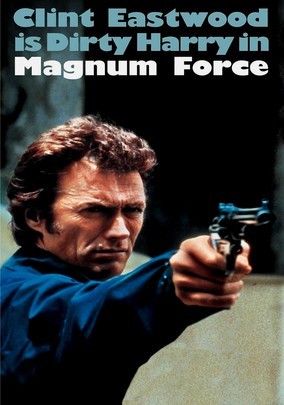
Magnum Force-1973

Magnum Force-1973

Director Ted Post

Starring Clint Eastwood, Hal Holbrook

Top 250 Films #148

Scott’s Review #336

60021588

Reviewed January 9, 2016

Grade: A

The follow-up to the original action thriller to end all action thrillers, Dirty Harry, 1973’s Magnum Force, is as good as the original in my opinion, but flies under the radar compared to the acclaimed Harry.

Both films are similar in style and grit, but Magnum Force holds sentimental memories for me, as I remember watching the film countless times on rainy Saturday afternoons as a kid.

The similarities abound between the two films, as the screenwriter and the score are by the same writer and composer, respectively.

Admittedly, Magnum Force is more conventional and less dirty than its predecessor.

Playing not just the same role of Harry Callahan, the grizzled, hard-nosed Inspector from Dirty Harry, but also Clint Eastwood plays him in quite the same manner.

Not one to blow anyone away with his dazzling acting talent, Eastwood is smart to keep to the status quo. The character is tough and no-nonsense, but has a take-prisoner vulnerability we love and admire.

In this chapter, a syndicate of vigilante cops is taking matters into their own hands by assassinating known criminals who have been let off the hook either by connections or some other form of loophole.

The pattern is for uniformed patrol officers to pull over a criminal for a mundane reason, only to shoot and kill them on the side of the road at point-blank range. They deserve it, but are the cops justified in their actions?

The appeal and mystery of the film is that the police officers wear dark helmets that hide their identities from the audience, adding a level of intrigue.

The film offers up a moral question: do the criminals get what they deserve, and do the police officers have the right to justify their actions?

Especially relevant is the final thirty minutes of the film, as Harry and the central “villain”, Lieutenant Briggs (Holbrook), have a standoff and discuss the topic.

Magnum Force is a shoot-’em-up action flick, so this debate is skirted over largely in favor of car chases and fight scenes. But the point can be thought about.

The best sequence of the film is the finale, as Callahan is lured to an abandoned garage and chased by three remaining cops. The big reveal is that Briggs is running the show, and as he drives around in his early 1970’s Ford LTD, soon to become battered and weathered, it is a great scene, especially for those who enjoy car chases.

Magnum Force (1973) is a no-frills “guy” film, but one done very well and with an interesting, semi-controversial premise.

The film is the 1970s action genre at its very best.

Surprisingly, and to the film’s credit, one can discuss the film after watching it instead of it being a generic, forgettable flick.

Torn Curtain-1966

Torn Curtain-1966

Director Alfred Hitchcock

Starring Paul Newman, Julie Andrews

Top 250 Films #149

Scott’s Review #109

70038983

Reviewed July 15, 2014

Grade: A-

Torn Curtain is an under-appreciated and largely forgotten Cold War political thriller directed by Alfred Hitchcock circa 1966.

The film is very good, but was troubled from the start, which presumably led to its poor reception and a trip to film oblivion.

The trouble with the film lies with the casting; otherwise, it is a compelling, suspenseful adventure.

Starring Paul Newman and Julie Andrews- two enormous stars when the film was made, the studio chose both, and neither did Hitchcock desire on the set.

This led to conflict, especially with Newman, who disliked the script.

His continued script “rewrites” and method of acting annoyed the famous director.

Newman plays Michael Armstrong, an American physicist who is attending a conference in Copenhagen. Andrews plays his assistant and fiancée, Sarah Sherman.

Michael mysteriously flies to East Germany, behind the Iron Curtain, unknowingly with a concerned Sarah in tow. This event sets off political intrigue and espionage as Michael attempts to secure a formula and return it to the United States.

But is he a patriot or a defector, colluding with the Germans?

Presumably, the main reason for the poor reviews of Torn Curtain is the lack of chemistry between Newman and Julie Andrews, as well as behind-the-scenes problems with the film (both stars were unhappy throughout the shoot, and Hitchcock did not want either actor in the film).

In truth, there is little chemistry between the pair, and I cannot help but think how delicious it would have been if Sean Connery and Tippi Hedren had been cast instead! After all, this duo had great chemistry in Marnie, released just two years prior.

Despite the backstage drama, the film is complex, exciting, and taut. The bus escape scene is fantastic and edge-of-your-seat.

The best scene, though, occurs in the middle of the film, when Michael is in East Germany. He is revealed to be part of a syndicate that enables him to sneak out of the country. He then goes to a remote farm, where he is involved in a torturous fight with a security officer and a farmer’s wife.

The scene is spectacular in its long length and edge-of-your-seat drama.

The scenic locales are excellent, and the film is bright, colorful, and sharp, especially on Blu-Ray. The gorgeous opening scene is aboard a cruise ship in the breathtaking Fjords of Scandinavia.

Frankly, I am surprised this film has not been rediscovered on a larger scale. Along with Topaz (1969), Torn Curtain (1966) is another forgotten gem of Hitchcock’s, worthy of praise.

Parasite-2019

Parasite-2019

Director Joon-ho Bong

Starring Song Kang-ho, Jang Hye-jin

Top 250 Films #157

Scott’s Review #963

Reviewed November 28, 2019

Grade: A

Parasite (2019) is a South Korean language film that has it all. The writing is powerful and thought-provoking, the direction is unique and intriguing, the acting is stellar, and the story is perfectly paced with dizzying twists and turns.

The film is uncomfortable and unsettling (in a good way), shifting from dark humor to horror by the time the shocking finale unfolds—an experience that will both dazzle and ravage the viewer with the emotions it instills.

The story centers on two families. The affluent Park residents live in the lap of luxury, enjoying the finer things in life, such as a lavish residence, a personal driver, and a live-in housekeeper.

Park Dong-ik is the CEO of an IT company; his beautiful wife, Park Yeong-gyo, stays at home with their two children, Park Da-hye and Park Da-Song. They are rich and, on the surface, somewhat spoiled and superficial.

The struggling Kims reside in a semi-basement that constantly floods, accept menial jobs to pay the bills, and are grifters.

Patriarch Kim Ki-taek and his wife, Kim Chung-sook, have two teenage children, Kim Ki-woo and Kim Ki-jeong. They are cagey and resourceful, devising schemes to generate money. Each is good-looking but struggles to find much success in life.

Kim Ki-woo’s friend tutors the Park family’s daughter and will soon travel abroad for further studies. He convinces Kim Ki-woo to interview for the position, who easily gets the job by charming the gullible Park Yeong-gyo.

He and the rest of the Kims devise an elaborate scheme to infiltrate the Park family by deceiving Mr. and Mrs. Park into dismissing their driver and housekeeper. The Parks are unaware that their new staff are related!

The underlying theme of Parasite is one of class distinction and social inequality. The tension builds more and more with each scene, and the monetary differences between the haves and have-nots are always on the surface.

Once the Kims get a taste of the good life, they have no intention of being satisfied merely as hired help- they want it all for themselves.

The fact that the Kims are clever and manipulative is no accident on the part of the director, Joon-ho Bong.

Conversely, the Parks are gullible and easily outsmarted by the Kims. Why are they rich, and the Kims poor? The audience wonders. Are we to root for the Kims to overtake the Parks? The Kims are no saints, as they resort to firing other people to get what they want.

Allegiances to characters will shift along the way.

As the Kims get comfy one night in the Park house, when the family goes on a weekend camping trip, the film takes off. Drunk and sparring with each other, the doorbell rings, and the haggard former housekeeper begs to be let in.

When she claims to have left something behind in the basement, this leads to a shocking secret and dramatic turn of events. I did not see the revelation coming, and events only catapult the film into something else.

The pacing and tension during this scene are outstanding.

It’s tough to rival this scene, but the film does just that with the gruesome and bloody birthday party sequence. The proverbial “sh## hits the fan” as the tensions among the characters come to life.

The scene results in several deaths, and the rage of a prominent character reaches a crescendo.

The scene is set on a gorgeous sunny day, perfect for birthday cake, balloons, and shiny wrapped presents. After a lovely start, the party becomes laden with blood, screams, and intensity.

Bong portrays the Kim patriarch as the most sympathetic character, and a montage at the end of the film reinforces this. The other characters are less benevolent and more complicated.

When Mrs. Kim shoves the family dog, she is unlikeable, but then she is kind to the former housekeeper.

Mrs. Park appears innocent at first, but then she becomes a shrew when she plans her son’s birthday party, expecting everyone to cater to her every whim. Finally, Mr. and Mrs. Park mock Mr. Kim behind his back and insinuate that poor people “smell funny”.

Do the Parks deserve their fates?

Parasite (2019) is a dark film characterized by clever writing and effective character development, taking audiences on a rollercoaster ride.

The subtitles do little to detract from the fantastic experience this film offers as Bong spins a spider web of deceit, desperation, and tragedy.

Viewers will undoubtedly be discussing this one for days to come.

Oscar Nominations: 4 wins-Best Picture (won), Best Director-Bong Joon-ho (won), Best Original Screenplay (won), Best International Feature Film (won), Best Production Design, Best Film Editing

Independent Spirit Award Nominations: 1 win-Best International Film (won)

Topaz-1969

Topaz-1969

Director Alfred Hitchcock

Starring Frederick Stafford, Karin Dor

Top 250 Films #163

Scott’s Review #108

60020562

Reviewed July 12, 2014

Grade: A-

Topaz is an intriguing, suspenseful 1969 latter-day Alfred Hitchcock film.

In the political thriller vein, the film typically suffers from being both overlooked and under-appreciated, yet receives admiration from film buffs. It is certainly not one of his better-known films, and that is quite a shame.

As with many great films, it is complex and layered, requiring close attention and even multiple viewings.

The issue with Topaz is that the film suffers from a lack of recognizable stars- a trademark of Hitchcock films in his heyday. Frederick Stafford (Andre) and Karin Dor (Juanita) are the featured romantic couple.

Despite his being married to another woman, Andre and Juanita are the couple the audience is intended to root for.

The story involves competing spies from France, the United States, and Cuba, all vying for government secrets concerning the Cuban Missile Crisis in the 1960s.

Each spy does their best to obtain the secrets, some in a sinister fashion.

The French accents, especially, can be tough to understand, but it is a thrilling film that traverses New York City, Cuba, and France. The main protagonist is Andre, and Stafford has a high level of charisma and a suave manner.

The character is quite similar to James Bond. The film itself plays out like a Bond film, with exotic locales, beautiful women, and political intrigue.

As with most Hitchcock films, the set pieces and art direction are beautiful and perfect. One highlight is a particular character’s death scene in Cuba. Throughout the film, the love story is involved, and the death is tragic yet heartfelt and shocking.

Topaz, sadly, was unsuccessful at the box office due to the lack of Hollywood names attached and limited promotion, although it made several top-ten critics’ lists in 1969.

Topaz is undoubtedly one of the more obscure of Hitchcock’s films, but an excellent one to discover and revere.

Joker-2019

Joker-2019

Director Todd Phillips

Starring Joaquin Phoenix, Robert De Niro

Top 250 Films #166

Scott’s Review #953

Reviewed November 1, 2019

Grade: A

Joker (2019) is a film that has divided audiences. Some love it, others loathe it. The experience is not your standard fun, superhero fare, with a hero’s rescue and the good triumphing over evil.

Despite the parlay into Batman territory, the film smacks the viewer across the face with its brutality, violence, and social and psychological injustices.

Joaquin Phoenix pummels the audience with an angry and bitter portrayal of the title character, easily one of the best performances of the year.

In one of the first scenes, before we even know the character, we experience a long, close-up of Phoenix laughing hysterically. We wonder what is so funny, before the revelation that he, Arthur Fleck, suffers from a nervous condition that causes inappropriate outbursts.

The year is 1981, and the fictional Gotham City, clearly a mirror image of New York City, serves as the setting. Times are tough, and crime is rampant.

Arthur lives in a dumpy apartment with his sickly mother, Penny (Frances Conroy), and visits a social worker regularly to receive his prescription medicine.

Arthur finds meager work as a party clown and aspires to be a stand-up comedian. After a gang attacks him in an alley, Arthur’s co-worker, Randall, encourages him to take a gun. Arthur invites his neighbor, single mother Sophie, to his stand-up comedy show, and they happily begin dating.

Finally, another person understands him. Segments of the population are disenfranchised and impoverished as Thomas Wayne, a billionaire philanthropist, runs for mayor of Gotham. A strange connection develops between Arthur, Penny, and Thomas, becoming central to the plot.

Can we discuss Phoenix’s bravura performance for a moment?

Suppose anyone thinks that Heath Ledger was phenomenal when he portrayed the same character in 2008’s The Dark Knight. In that case, they will be elated by Phoenix, who elevates the character to an entirely new level.

What Phoenix adds is strong sympathy for Arthur/the Joker and a care for the character. We feel sorry for him, but should we? He is a villain after all. One could easily debate whether his character can be considered the bad guy or the hero.

Regardless of the assessment, the performance is unforgettable.

A turn-off to some, which I found tremendously powerful, is the role reversal in the portrayal of the Wayne family, Bruce, and Batman characters.

Always deemed the “good guys”, in Joker, Thomas Wayne is self-centered, pompous, and embodies a sense of entitlement and snobbery.

Bruce is a young boy, but the implication is that the family is unkind, and what might the child grow up to believe?  Why is Batman/Bruce Wayne heralded as good and the Joker evil? It turns the tradition upside down into a twisted mind warp, and this is wonderfully creative and thought-provoking.

The best scene in the film, which triggers much of the subsequent violence and chaos, occurs when Arthur is invited to appear on a late-night talk show hosted by Murray Franklin (Robert De Niro). A week earlier, Franklin had played a humiliating clip of Arthur poorly performing stand-up.

Arthur decides to appear in full “Joker” attire, and the eventual discussion and words lead to tragic events. The scene is tense, intelligently written, and combative as the men spar over politics and class distinction.

Lastly, the musical score is dark, haunting, and mesmerizing without overtaking the film. Many key scenes of Arthur dancing and posturing are masterful, with the inclusion of the bombastic music.

He is a celebratory character, in his mind at least, and the music fuses into the scene with gusto and power. The combination of clowns and an incredible score adds significantly to the production.

Joker (2019) showcases a marvelous acting performance on the part of Phoenix, which combines a haunting musical score in its depth.

Providing a social commentary for people experiencing poverty and disenfranchisement, this film will divide viewers, probably based on preconceived expectations of a traditional Marvel-type superhero event.

The film offers much more than safer films like Wonder Woman (2017) or Black Panther (2018) ever could- a dark and violent character study.

Oscar Nominations: 2 wins-Best Picture, Best Director-Todd Phillips, Best Actor-Joaquin Phoenix (won), Best Adapted Screenplay, Best Original Score (won), Best Sound Editing, Best Sound Mixing, Best Cinematography, Best Makeup and Hairstyling, Best Costume Design, Best Film Editing

Les Bonnes Femmes-1960

Les Bonnes Femmes-1960

Director Claude Chabrol

Starring Bernadette Lafont

Top 250 Films #180

Scott’s Review #303

60000531

Reviewed December 19, 2015

Grade: A

Les Bonnes Femmes (1960) is a French film by Claude Chabrol, an excellent director whom I was shamefully unfamiliar with, save for the recently viewed Les Biches, made in 1968.

He has been labeled the French equivalent of Alfred Hitchcock, which is an accurate statement.

Les Bonnes Femmes is a brilliant film that came about during the experimental New Wave films of the 1960s and cannot be forgotten upon viewing it.

It has resonated with me, and I cannot stop thinking and analyzing it.

The film centers on four shopgirls living in Paris, all of whom happen to be young and beautiful and mysteriously look similar to one other.  Their names are Jane, Jacqueline, Ginette, and Rita.

They are rather bored with their lives and meander aimlessly through life and the doldrums of their job by looking forward to social occasions, which mainly include men.

The girls party (some more than others), date, go to the zoo, swim, and enjoy typical young lady festivities.

So far, the film might sound like a typical, lighthearted, nice story- think a French Sex and the City. It is, by and large, this way on the surface, but throughout the film, there is a calm sense of dread- like something bad might be lurking in the shadows of coming around the bend.

One day, while the girls are at the zoo, a mysterious individual begins following them, though the viewer has no idea why or who it is.

The film contains more than a sense of dread. Instead, a sense of chilling violence is in the air. A brooding, cold, ugly feeling transpires due to superior direction and overall mood.

Paris, one of the world’s most gorgeous cities, appears bleak, dark, and gloomy throughout the film. The black-and-white cinematography undoubtedly adds to this, as greyness envelopes every shot.

Throughout  Les Bonnes Femmes, there is plenty of foreshadowing as situations arise that give a sense of danger or that something terrible is imminent.

Early in the film, two girls are walking along the street when they are approached by two men in a car wanting to party with them. They accept, and the viewer wonders what a bad decision they may have made. The men wine and dine the women, who are looking for love.

One of the girls is quite a bit more reserved than the other and ends up spending the night with the men. Later, the shop owner tells a story about how she once acquired a serial killer’s bloody handkerchief after he was guillotined and has kept it for years.

Creepy? Yes.

The tigers snarling at the girls when they visit the zoo is laced with symbolism as is a, at first, fun game at the pool, as the men dunk the girl’s heads underwater until things escalate towards danger.

Jacqueline, the sweetest of the girls, meets a motorcycle man and spends time together. They are happy. The irony is that during these later scenes, in which an act of brutality occurs (one character is murdered), the tone is suddenly sunny, warm, and bright. A lovely afternoon in the woods quickly turns evil.

This was a shocking scene, as I was caught off guard. The ending of the film can be discussed in vast detail.

During the murder, it almost seems like the victim is welcoming death. Could this be? Additionally, is one of the shop girls his next intended victim, or is a new girl the killer’s next target?

In the final shot, we see him dancing with a girl, but it is unclear (at least to me) if it is one of the shopgirls.

Chabrol is not a happily-ever-after director. His films are known to be stormy, with dread looming. However,t they are also laced with style, sophistication, and a dark appeal.

I cannot wait to sink my teeth into more of his works.

The Manchurian Candidate-1962

The Manchurian Candidate-1962

Director John Frankenheimer

Starring Frank Sinatra, Laurence Harvey

Top 250 Films #195

Scott’s Review #852

Reviewed January 3, 2019

Grade: A

The Manchurian Candidate (1962) is an enthralling film that perfectly captures the political landscape of the time and continues to be relevant in present-day politics. Taut mysterious and filled with great twists and turns, the film flows nicely and climaxes with a shocking crescendo.

With compelling performances by all and a brilliant musical score, the film fires on all cylinders and can be watched and enjoyed repeatedly.

Events began in 1952 during the bloody Korean War. A United States platoon consisting of several men is accosted by the Soviets and sent to communist China for experimentation.

Three days later, the men return as if nothing happened, and Sergeant Raymond Shaw (Laurence Harvey) is proclaimed a hero and awarded the Medal of Honor for saving the men’s lives. When the war ended, the men returned to the United States to resume their everyday lives.

Years later, Captain Bennett Marco (Frank Sinatra) suffers from recurring nightmares in which Shaw murders two missing soldiers in front of a panel in a bizarre brainwashing demonstration. When another soldier in the platoon has the same nightmares, Army Intelligence begins an investigation.

Further complicating the plot is Raymond’s ambitious mother, Eleanor Iselin (Angela Lansbury), and her attempt to use any means necessary to guide her husband, Senator Iselin (James Gregory), to further power.

The Manchurian Candidate is a film that requires attention to appreciate and understand.

The plot is highly complex, but that is a testament to the film’s composition and hardly a complaint. The viewer must stay on course to appreciate the intricate details.

Director John Frankenheimer is fantastic at adding unique dramatic effects and imaginative film-making. A prime example is the brainwashing sequence, as dialogue is interspersed between what the soldiers think is happening (a peaceful grandmotherly horticulture demonstration) and reality (a dastardly experiment involving murder and programming).

Despite Sinatra being billed as the lead in the film, the most treasured props go to Lansbury as Eleanor and Harvey as Shaw. Raymond is the most developed character, and he has several sides. He is primarily a loner who appears cold and harsh due to his being programmed to assassinate.

A sequence involving the love of his life, Jocelyn (Leslie Parrish), and a romantic summer they share is beautiful and innocent, contrasting with the dismal and manufactured “new Raymond.”

Lansbury has never been cast in a more challenging role. Eleanor is determined to stop at nothing to ensure her husband will reach the presidency and connives and cheats her way to the top. Still, the part is written as such to avoid making her a complete one-note character despite her ways.

In an eerie scene close to the finale, she vows payback for what has been done to Raymond and then plants an incestuous kiss on his lips. An odd and disturbing moment, the scene also justifies in her mind the lengths she has gone to get what she wants.

The musical score is lovely and contradicts the dour backstabbing and espionage throughout. Romantic and sweet melodies abound, and classic hymns like The Twelve Days of Christmas and The Star-Spangled Banner are included in the film.

As a result, The Manchurian Candidate’s score feels multi-faceted, patriotic, and artistic with enchanting results.

The Manchurian Candidate (1962) is a stellar film with a perfect blend of thrills, deceit, politics, and creative filmmaking to make it a bold classic. The final sequence is jaw-dropping in its finality and brutality.

Remade in 2004 with a great cast yet a poor script, avoid that one at all costs and enjoy the power and lasting effects of the original.

Oscar Nominations: Best Supporting Actress-Angela Lansbury, Best Film Editing

The Silent Partner-1978

The Silent Partner-1978

Director Daryl Duke

Starring Elliott Gould, Christopher Plummer

Top 250 Films #196

Scott’s Review #1,120

Reviewed March 10, 2021

Grade: A-

The Silent Partner (1978) is an exceptionally thrilling film that is relatively unknown to most moviegoers but is well-regarded by cinema lovers, especially fans of 1970s relics.

Watching the film in tandem with Brian DePalma’s clever and steamy Dressed to Kill (1980) one will immediately notice some similarities and will be able to draw comparisons.

Might have DePalma even patterned his film after The Silent Partner?

Even the finest of directors borrow snippets of greatness from other directors. That’s the way it works.

It’s a shame so few realize that the film even exists.

Starring Elliott Gould and Christopher Plummer, admittedly the late 1970s was not the best-known time for Plummer but saw Gould in his heyday.

The film also is peppered with notable sequences reminiscent of Frances Ford Coppola’s 1974 masterpiece, The Conversation.

I can best describe the film as a Canadian heist film but this might imply that it’s cookie-cutter or generic in some way. It’s not. It’s not even a “guy film”- it’s way more cerebral than that.

There is a style and momentum in The Silent Partner that is individual with unique and unexpected trimmings along the way. The cat-and-mouse dynamic adds trickery and a murky nature that makes the film work.

Daryl Duke, unfamiliar to me and primarily known for television work, is at the helm as director, crafting from a screenplay written by Curtis Hanson.

Hanson adapted his work from a Danish novel and should be familiar to movie fans for his participation in the thriller The Hand That Rocks the Cradle (1992) and the neo-crime thriller L.A. Confidential (1997).

Miles Cullen (Elliott Gould) plods along during the holidays at his bank teller job at the local mall. It’s Christmastime and Miles is down because he attempted to ask out his co-worker Julie Carver (Susannah York), who is more interested in dating their married boss- for now!

After discovering a secret plot by the mall Santa Claus (Christopher Plummer)to rob the bank at which he works, Miles cunningly hides a large portion of the cash in his safe deposit box.

After the robbery, it is discovered that Santa is a deranged master criminal named Harry Reikle.  He discovers that he’s been duped by Miles and puts horrific pressure on Cullen to hand over the money.

I adore the added romantic angle that blossoms amid the cat-and-mouse antics between Miles and Harry. No sooner than Julie softens toward Miles a mysterious and gorgeous woman enters the scene claiming to know Miles’s father.

Elaine (Celine Lomez) is flirtatious and immediately wants to bed Miles but what is she up to?

From a character perspective, Miles and Harry are great studies. Related to the aforementioned films, Miles exhibits qualities similar to Harry Call in the brilliant The Conversation. Suspicious, paranoid, and intelligent, he is the perfect counterpart to Harry.

Michael Caine played a transvestite in Dressed to Kill and Harry’s mascara, long nails, and fishnet top made me feel he possessed those qualities though the film never confirms this.

Psychologically speaking, Harry is disturbed based on his treatment and the perceived hatred he expresses towards women. He picks up and beats a young prostitute unconscious.

Is there a gay vibe? Most certainly especially when Harry looks longingly at Miles during more than one scene as he watches Miles in his apartment and proclaims, “You know we are partners, right?”

Plummer is great and I can’t recall seeing any role of his being so villainous and he plays it superbly. A far cry from the musical patriarch in The Sound of Music (1965).

The Silent Partner contains one of the most gruesome murder scenes I’ve witnessed in cinema. It involves decapitation and a fish tank and is so shocking and unexpected that viewers may audibly gasp during the scene.

Nearly rivaling this is the great finale and a justified death on the mall escalator. It is fun to revisit the time when malls were flocked to, especially during the Christmas holidays.

The Santas, decorations, big crowds, and music made The Silent Partner walk down memory lane.

A great and sadly lost gem, The Silent Partner (1978) is a film for movie lovers to check out, embrace, and fall in love with. A perfect watch would be around the Christmas holidays.

Hopefully, with due word of mouth, this film will be rediscovered.

The Stepford Wives-1975

The Stepford Wives-1975

Director Bryan Forbes

Starring Katharine Ross, Paula Prentiss

Top 250 Films #197

Top 40 Horror Films #26

Scott’s Review #1,395

Reviewed September 4, 2023

Grade: A

The Stepford Wives (1975) is a film that has deservedly achieved cult status over the years and its title became iconic in meaning.

Everyone knows what a ‘Stepford wife’ is and what it depicts. Usually, a tall, leggy, brainless rich white woman from Connecticut is a sufficient enough image.

The film is a personal treasure to me since I am a resident of said state. The fact that ‘Stepford’ sounds like ‘Stamford’ where I live is uncanny and ironic. The film was shot in various areas of Connecticut so it’s fun to see the towns, grocery stores, and houses in the mid-1970s.

It also resonates quite well with my husband who lived in Manhattan for many years and then transplanted to nearby Connecticut just like the main characters do.

Besides my fondness, it’s a damned good thriller. It paces nicely and takes its time getting to the stunning conclusion.

The film was written by William Goldman (All the Presidents Men-1976), who based his screenplay on Ira Levin’s 1972 novel of the same name. Levin also wrote Rosemary’s Baby which was turned into a 1968 film.

The Stepford Wives and Rosemary’s Baby would make an outstanding double feature.

Joanna Eberhart (Katharine Ross) moves to the quiet town of Stepford, Connecticut, with her husband Walter (Peter Masterson) and children. The town seems idyllic and maybe just a little too perfect for her tastes.

Along with best friend and fellow Stepford resident Bobby (Paula Prentiss), the women notice that the other housewives are not quite ‘normal’. They obsess over housework and are willingly subservient to their husbands.

Joanna and Bobby are determined to solve the mystery especially when they realize there used to be a large women’s liberation group in Stepford.

In a lesser film, the final product could dive headfirst into campy horror. A tepid remake made in 2004 and starring Nicole Kidman did. But the original version stays the course and provides thrills and psychological facets.

The audience knows pretty soon that the men have a secret club that women are not permitted to attend. Named the Men’s Association, a major clue surfaces when Walter invites the men over to his house and they secretly look Joanna up and down.

What we don’t know is the how. Joanna, Bobby, and another neighbor Charmaine Wimperis (brilliantly played by Tina Louise) are the only ‘normal’ wives. Realizing which one of them is the next intended victim is part of the fun.

The women’s portraits are drawn by one of the men and we learn that the previous women have ‘turned’ after going away on a romantic weekend with their husbands.

What’s inside the creepy mansion that holds the Men’s Association meetings? Will Joanna sneak inside? What will happen next?

Delicious sequences occur that reveal that housewives are robots. After a minor fender bender in the local shopping center parking lot, Carol (Nanette Newman) begins acting strangely at an outdoor cocktail party. She repeatedly frets and repeats the same line over and over again.

Her husband blames her odd behavior on alcohol but the audience knows better.

Unforgettable is the stellar grocery store finale when the women are dressed to the nines and robotically shuffle through the aisles. They absent-mindedly take items off the shelves and place them into their carts while acknowledging each other with a pleasant ‘Hello, Charmaine”, or “Hello, Carol”.

My favorite scene is close to the finale between Bobby and Joanna. Horrified at Bobby’s transition to an uptight, well-dressed housewife obsessed with a clean kitchen, Joanna impulsively plunges a butcher knife into Bobby’s midsection.

With no bloodshed proving Bobby is a robot, Bobby calmly scolds Joanna by saying over and over again, “Now why would you do a thing like that?”

The scene is creepy, startling, and powerful given the close relationship between the women.

These scenes and others make The Stepford Wives (1975) part of pop culture and a reason I can watch the film several times over.

Featuring a cast of good actors led by Ross who successfully provides Joanna with both likability and sensibility the film is never over the top or ridiculous.

Diabolique-1955

Diabolique-1955

Director Henri-Georges Clouzot

Starring Simone Signoret, Vera Clouzot, Paul Meuisse

Top 250 Films #198

Top 40 Horror Films #27

Scott’s Review #878

Reviewed March 16, 2019

Grade: A

Diabolique (1955) is a masterful French thriller as compelling as frightening. It will have an insurmountable influence on future generations.

Shamefully remade and Americanized in 1996, starring Sharon Stone, a waste of time if you ask me, the original is the one to discover.

The film perfectly blends psychological intrigue, never-ending suspense, and even a good mix of horror that Hitchcock would find impressive (more about him later). Its pacing and frequent twists and turns make it brilliant.

Directed by Henri-Georges Clouzot, Les Diaboliques is set in a crumbling boarding school in Paris. Sadistic headmaster Michel Delassalle (Paul Meuisse) runs a tight ship but works for his Venezuelan wife, Christina (Vera Clouzot), who owns the school.

Michel is immersed in a torrid affair with schoolteacher Nicole Horner (Simone Signoret) and regularly abuses both women as well as his students. The two women embark on a plot to kill Michel, but when they succeed in their plan, Michel’s body goes missing.

The women panic.

In a few fun trivia tidbits, director Clouzot optioned the screenplay rights right after finishing Wages of Fear (1953), preventing Hitchcock from making the film. This movie helped inspire Hitchcock’s Psycho (1960).

Robert Bloch himself, the author of the novel version of Psycho, has stated in an interview that his all-time favorite horror film is Diabolique. If the film displays nuances incorporated in Psycho, this is undoubtedly the reason.

Clouzot also directs his wife, Vera, in the prominent role of Christina.

Hitchcock could have made the brilliance since the entire experience has his stamp and influence even though his best works lay ahead of him in 1955.

Still, from the Gothic mood to the “can’t believe your eyes” twisted, blood-curdling ending, the director immediately comes to mind every time I watch the film. The “shock” ending only exceeds expectations with a fantastic delivery.

The film takes an unusual stance on the dynamic between the two women, Christina and Nicole. Rather than take a traditional route and make the women rivals for the man’s affections, Clouzot makes the pair co-conspirators.

This only deepens their relationship as events unfold and take a darker and more dire turn.

They rely on each other as teammates rather than despise each other over their love for another man. Intelligently, they spend their energy ensuring the insipid man gets his just comeuppance for his dirty deeds.

Nicole leads Christina in the direction she needs to go.

The black-and-white cinematography is highly influential on the mood. With each unexpected twist or scene of peril, the lighting radiates suspense. The camera juxtaposes the frequent glowing of the white against the dark black, exuding a frightening, ghost-like presentation.

The entire setting of the school is laden with dark corners that provide good elements of foreboding and sinister moments to come.

As the women become more and more unnerved by the limitless possibilities that the missing body presents, many questions are asked but are impossible to answer. “Where is the body?”, “Could Michel be alive?” “If he is alive, is he hell-bent on revenge?” The viewer will also ask these questions throughout most of the final half.

When an unknown person begins to call the women, the questions multiply.

Clouzet uses frequent shots of objects to enhance the tension even further. There are close-ups of a dripping bathtub, a typewriter with a man’s hat and gloves, a woman’s feet as she removes her shoes, and a woman running in terror through the school.

These facets only enhance the overall experience as the suspense and the terror begin to mount.

Diabolique (1955) is considered one of the greatest thrillers of all time, and I concur with this assessment. A French version of Psycho (1960) that combines an acclaimed director’s ingenious subtle ideas into a giant web of delicious filmmaking.

The surprise ending is never seen coming, even if the viewer thinks they have the plot figured out. This point alone is reason enough for the film to realize its greatness.

Blow Out-1981

Blow Out-1981

Director Brian De Palma

Starring John Travolta, Nancy Allen

Top 250 Films #202

Scott’s Review #574

Reviewed December 31, 2016

Grade: A-

The follow-up to the 1980 masterpiece that was Dressed to Kill, Brian De Palma carves a web of intrigue and mystery with Blow Out, a film starring some of the same cast members from Dressed to Kill (1980) and from 1976’s Carrie.

Comparisons can be drawn to the trio as they are all in the psychological thriller/horror vein- notwithstanding, the predecessors are the superior films.

Blow Out is not quite on the level with those masterpieces but is still a worthy effort and a must-see for fans of De Palma’s work.

John Travolta and Nancy Allen are the stars of the film-recreating their chemistry from Carrie. In that film, the pair are the clear villains, but in Blow Out they are the heroes and have a rooting value.

Dennis Franz appears as a shady thug and John Lithgow is superb as the dastardly  Burke, hired to commit a crime, and enjoying it all too much.

Travolta plays Jack Terry, a sound effects technician, working and living in Philadelphia, Pennsylvania. He works on low-budget horror films and is highly respected for his craft. Alone in a remote park, recording sound, and video, he records a car careening off a bridge into a creek.

He saves Sally (Allen) from the sinking car and this is the point in the film where the intrigue takes off. The driver of the car is a governor and he has died- Sally was having an affair with the governor and his aides are intent on covering this up.

To make matters more complicated, Jack has detected a gunshot on his recording-just before the crash, leading to obvious foul play.

I adore the beginning sequence of the film- my favorite. The film begins as a slasher film, unbeknownst to the audience. A collection of dizzy college girls dance, drink, and shower, as the cameras are placed outside of the dorms.

We see all of the action through the glass windows, then the steady cam is used from the killer’s point of view. This is a highly effective scene and rather humorous too. Inevitably, a creepy killer appears in the shower to butcher one of the college girls until the real beginning of the film starts.

This aspect is clever on the part of  De Palma. Why not trick the audience early and keep them guessing?

Also compelling is the villain of the film- Lithgow. Typically playing sweet-natured characters, it was interesting to see him as a maniacal killer- and reminiscent of the crazed killer from Dirty Harry, in his harried, grotesque facial features.

One particularly chilling scene involves the murder of a prostitute at the train station. I like this scene because the audience gets to know her a bit before she meets her fate- adding a level of empathy for the victim.

Enjoyable are the location sequences of Philadelphia, which give authenticity to the film. Specifically, the train station. Grizzled, dirty, and bustling, the locales set the tone of the film.

The chemistry between Travolta and Allen is decent, though I found more chemistry between them in Carrie. I did not care for Allen’s use of an accent- intended to be a Philadelphia accent, it seemed a New Jersey one to me and simply does not work at all in the film.

This distraction is the only weak point of the film.

All in all, Blow Out is a very good film. It combines mystery, political intrigue, and the famed De Palma stamp- which in itself is worthwhile enough to watch.

Blow Out (1981) contains a dream-like element- as Carrie and Dressed to Kill before it did, which only enhances the mystique. The not so happily-ever-after ending is superb.

Spellbound-1945

Spellbound-1945

Director Alfred Hitchcock

Starring Ingrid Bergman, Gregory Peck

Top 250 Films #206

Scott’s Review #1,015

Reviewed April 24, 2020

Grade: A-

One of Alfred Hitchcock’s early American films, after his voyage from his home base in London to the United States soil, proved profitable and critically acclaimed.

Spellbound (1945) followed Rebecca’s box office and awards success (1940).

Probably the most spoofed of all the Hitchcock works in the 1977 Mel Brooks parody High Anxiety, Spellbound provides a psychological storyboard that uses enough vehicles like amnesia, hypnosis, and danger to impress any daytime soap opera writer.

Not in the director’s top arsenal or remembered well, but a stellar effort.

Youthful Doctor Anthony Edwardes (Gregory Peck) arrives one day at the sprawling Green Manors Mental Asylum as the new director.

After falling for each other immediately, the beautiful Doctor Constance Petersen (Ingrid Bergman) discovers that Edwardes is not who he claims he is. Instead, he is a paranoid amnesiac impostor, more reminiscent of a patient. This gives new meaning to the phrase “the inmates are running the asylum.”

Constance becomes obsessed with answering the following questions: What happened to the real Dr. Edwardes? If Edwardes has been kidnapped or murdered, who is responsible? Who is the gorgeous man she has just fallen head over heels for?

The intelligent psychoanalyst must practice what she preaches by becoming a sleuth and figuring out what is happening. The action occurs in bustling New York City and snowy Rochester, New York.

I love the progressive nature of the story.

To have a leading female character with a lofty professional status is admirable, given the year 1945, when female roles were beginning to evolve.

While most of the roles that Hollywood heavyweight Bette Davis portrayed in the 1930s and 1940s were vital and substantial, this was the exception and not the norm.

Bergman, quite beautiful, does not need to play sex kitten to make her character sexy. She does well with that by wearing glasses and a lab coat, using her character’s intelligence to her advantage.

In 1945, Alfred Hitchcock was still considered a “new” director by most and was only beginning to make his mark on audiences unfamiliar with his work. His cunning and masterful use of lighting and shadows to produce suspense is evident in Spellbound.

The faces of Constance and Anthony glow with a combination of warmth and suspicion, and both are wonderful at eliciting emotion through subdued facial expressions. While Peck is slightly wooden, it does add a dimension to his uncertain character.

With Hitchcock, the atmosphere is everything. The treats are magnificent, like shots of the old Penn Station and Grand Central Station, monumental parts of everyday New York City life. They provide a glimpse of bustling commuter life in the 1940s before most of us were born.

Undoubtedly, many extras and non-actors were used to enrich the scenes and offer what regular people looked like in those days.

As Constance and Anthony team up to determine what secrets lie beneath his subconscious, they board a train for the seclusion of upstate New York, where more secrets are revealed. A heavy dose of psychoanalysis and hypnotism allay the film’s best scene.

Anthony sinks into a dreamlike world where he sees strange objects fraught with symbolism: a man with no face, scissors, playing cards, eyes, and curtains. What do they all mean? Fans will have fun piecing together the clues to solve the mystery.

The works of Salvador Dali, a famous surrealist artist known for bizarre and striking images, are displayed during the dream sequence. Though limited, they envelop the scene with fright and mystique and are a perfect addition to the odd sequence.

Shot in black and white, the final scene adds a blood-red image as a character turns a revolver on themselves and commits suicide. When Anthony drinks a glass of milk, the camera is inside the bottom of the glass, creating a hallucinogenic effect.

While Peck does his best with a peculiar character, Anthony is not as interesting as Constance, Doctor Alex Brulov (Michael Chekhov), or Doctor Murchison (Leo G. Carroll). I would have loved more scenes or a backstory for Brulov, as it would have allowed me to get to know him better.

Anthony has some light annoyances, such as when he inexplicably passes out whenever events become too much for him.

Spellbound (1945) is the perfect accompaniment for a snowy winter night, with its warm and cozy look, soothing atmosphere, and musical score.

Perfect to watch in tandem with High Anxiety (1977) for a double punch of suspense and appreciation for the film, with the humor and satire it furnishes. While not the best of Hitchcock films, it stands proudly on its merits.

Oscar Nominations: 1 win-Best Motion Picture, Best Director-Alfred Hitchcock, Best Supporting Actor-Michael Chekhov, Best Scoring of a Dramatic or Comedy Picture (won), Best Cinematography, Black-and-White, Best Special Effects

Lost Highway-1997

Lost Highway-1997

Director David Lynch

Starring Bill Pullman, Patricia Arquette

Top 250 Films #211

Scott’s Review #868

Reviewed February 17, 2019

Grade: A-

David Lynch, forever known for his odd and mind-boggling productions, released what might be his most bizarre offering, Lost Highway (1997).

Dreamlike and downright hallucinogenic, the film is impossible to dissect and is open to endless interpretation. Characters morph into younger or different versions of themselves or even into different characters entirely making the film best served as an experience not to be over-analyzed.

The most enjoyment comes from the fabulous atmospheric elements.

Lost Highway is set in Los Angeles as we meet saxophonist Fred Madison (Bill Pullman), a nightclub employee who resides with his glamorous wife Renee (Patricia Arquette) somewhere in the Hollywood hills.

The couple begins receiving envelopes containing VHS tapes of footage of their house followed by more invasive tapes of them being filmed while sleeping in their bedroom.

Spooked, they enlist the help of a pair of incompetent detectives.

The events begin to grow more complex with the introduction of a menacing mystery man (Robert Blake) and sequences involving a dismembered Renee, and Fred’s subsequent incarceration for her murder.

Fred suddenly morphs into a young auto mechanic named Pete Dayton (Balthazar Getty), who is released into his parent’s care while being followed by the two detectives.

Pete embarks on an affair with Alice Wakefield, a mirror image of Renee, who is the mistress of powerful Mr. Eddy (Robert Loggia). Pete and Alice plan to escape together leaving their troubled lives behind.

Any attempt to make more sense of the story than outlined above is fruitless as a torrent of questions could be raised. The obvious ones are why does Fred turn into Pete (looking completely different) and why does Renee turn into Alice (looking similar)?

What do random scenes of a burning desert cabin mean? What does the bizarre and hazy lesbian sequence with Marilyn Manson have to do with anything?

Discerning the logic and attempting to unravel the mystery will lead to frustration.

The best advice is to escape into the film and allow it to manifest in the viewer’s mind. The terms “dreamlike” and “hallucinating” are often used to describe films but are perfect adjectives to fit Lost Highway.

The stories do run parallel, so the challenge is not being able to follow each of them, but rather how they connect. The stories also merge circularly with a rhythmic effect and a satisfying ambiance that lured me immeasurably.

My favorite characters are Alice and Pete and this is in large part because of the actors who portray them. Not appearing until the second half Getty and Arquette infuse passion and energy into the roles.

I immediately rooted for them as a couple as their tender and smoldering chemistry was immediately felt. Arquette blazes as a sexy temptress and Getty as the handsome and earnest man submitting to her prowess.

Eagle-eyed viewers may notice comparisons to Russ Meyer’s devilish sexploitation film Supervixens (1975).

The most notable are the dual character representations, the auto mechanic occupation, the locales (more than a few Los Angeles roads seem identical), and various sequences featuring a weightlifter, a gas station drive-up, or other eerily similar scenes.

Whether or not there is a direct correlation between the films is unknown but fun to observe.

The musical score and soundtrack are high points adding both mystique and aggression with the hard rock songs featured. Marilyn Manson’s “I Put a Spell on You”, Rammstein’s “Heirate Mich”, and The Smashing Pumpkins “Eye” are used in important scenes.

The soundtrack release was a huge success on modern rock radio achieving Gold record sales status.

At the time of Lost Highway’s release, the film was not well regarded by critics and dismissed as not making much sense. In the decades following the film has garnered more acclaim and as with a fine wine has aged well. The beautiful cinematic tone, creative design, and images have become more revered over time.

For a perplexing and cerebral experience look no further than Lost Highway (1997), a delicious companion piece to the Lynch masterpiece, Mulholland Drive (2001).