Tag Archives: Drama

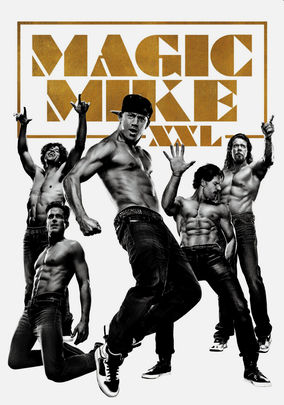
Magic Mike XXL-2015

Magic Mike XXL-2015

Director Gregory Jacobs

Starring Channing Tatum, Amber Heard 

Scott’s Review #290

80031499

Reviewed November 27, 2015

Grade: F

Magic Mike XXL might be the worst film of 2015.

In the follow-up to 2012’s Magic Mike (a predictable yet decent flick), this version has neither novelty nor the basic storyline that the original contained.

Instead, audiences are treated to a lame mess of nonsense, lack of a story that makes sense or is realistic, plot holes galore, and, to nitpick a bit given the subject matter at hand, scarcely any skin!

A road trip kind of movie, I can’t quite decide if the film was targeting frat guys looking for a buddy movie or teen girls and soccer moms looking for escapism.

Even in a less-than-adequate film, I always try to find something positive to mention, whether the characters, the story, or the cinematic elements, I cannot find any redeeming value to Magic Mike XXL.

Fortunately, Matthew McConaughey had the good sense not to sign on to appear in this drivel. The same is not the case with Channing Tatum as he is the star of this installment.

Poor guy. I hope the paycheck was worth it.

The premise is as follows: Mike (Tatum), who is out of the stripper business and now runs a furniture business, receives a call that his former boss is “gone”. Mistaking this to mean he has died, Mike returns to Florida to see his old buddies, who convince him to join a stripper convention in Myrtle Beach, South Carolina, to end their careers on a high note.

While on the road en route to the convention, problems, secrets, and past faces resurface to add to the drama.

Mike’s love interest from the first film is barely mentioned and dismissed in a weak story-dictated explanation. This is an attempt for Mike to have a new love interest in the character of Zoe, a photographer headed to New York, played by Amber Heard.

The film is messy from start to finish, but here are highlights (or low-lights). The silliness in conflict over coming up with a new routine fails miserably.

The character of Richie (Joe Manganiello) slinks into a convenience store and razzle dazzles a brooding cashier, making her burst with delight because she thinks he is dancing for her.

This scene is completely juvenile, watered down,  and unrealistic.

The stereotypes flow from Magic Mike XXL. En route to Myrtle Beach, the fellas make two stops that are the most ridiculous parts of the film and feature name actresses in silly roles.

When their van breaks down after an accident, a plot-driven way to allow the group to be sans vehicle,  Mike looks up an ex named Rome (a severely miscast and unappealing Jada Pinkett Smith), who runs a weird male stripper house for bachelorette’s in the middle of nowhere.

After a lame strip scene (PG-rated at best) to impress Rome, the boys are on their way again.

What was the point of introducing Rome to the story at all? And there is zero chemistry between Tatum and Smith. It seems like complete filler and the dancing scene is endless.

As if the film wasn’t bad enough already, one of the dancers looks up his love interest and the group winds up at her mother’s house.

Andie MacDowell plays a boozy fifty-something, sophisticate who is the mother of Nancy. With her group of cougar friends in tow, they flirt with the boys conjuring up every negative female stereotype imaginable.

The women are misunderstood by their husbands and feel needy and desperate.

And of course, they are all horny and drooling over the guys.

And what is with the lack of nudity or much skin? Is Magic Mike XXL not a stripper film?  Besides  Manganiello’s bare bum in one brief pool scene, there is nothing else and barely any stripping going on.

This truly makes the film weak.

Magic Mike XXL is a complete dud and I hope against hope that there will not be a third installment. If the target audience is giggly teen girls, the horrific bad writing does not say much for society these days.

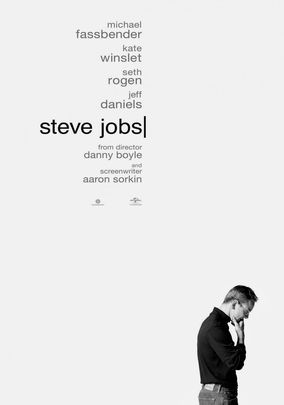
Steve Jobs-2015

Steve Jobs-2015

Director Danny Boyle

Starring Michael Fassbender, Kate Winslet

Scott’s Review #288

80049358

Reviewed November 25, 2015

Grade: B+

Steve Jobs is a name that almost everyone has heard of. Most associate him with Apple products or at least know that he is some technological genius who has influenced the modern world in some fashion.

His name is a household one.

The film Steve Jobs (2015) presents a slice of his life, mostly focusing on his professional leap to success, his damaged personal life, and his inability to stay close to people within his circle.

Michael Fassbender plays the title role. He looks nothing like Steve Jobs, but this did not bother me.

It is quickly revealed that Steve Jobs is a competitive, cut-throat, and sometimes unkind man. He is driven, ambitious, and willing to do what it takes to succeed in business. He is also complex and as the film rolls along we witness the complexities of this man, arguably deemed a “genius”.

But where he has flaws is in his personal life as the film makes abundantly clear.

Kate Winslet is excellent in the supporting role she plays. Joanna Hoffman, Jobs’s loyal marketing executive, stays in his corner through the years, enduring ups and downs, yet their relationship never goes beyond the platonic. They are colleagues and both are absorbed in their creations.

Her character is a bit under-explored as we never are exposed to much of her personal life. Winslet in a rare “dowdy” role, makes the most of Joanna as she is the type of woman who throws herself into her work at the expense of her private life.

The film is primarily set during the three important software launches and, predictably, all are filled with issues and stress.

The bulk of the first act occurs in 1984 when Jobs and Hoffman struggle and fret during an Apple Macintosh launch in front of an auditorium filled with industry types eager to see the new technology.

The scene is tense as the new computer will not say “hello” as advertised and Jobs demands lead engineer, Andy Hertzfeld, fix it.  The scene escalates in its intensity.

We immediately bear witness to the fact that Steve Jobs is a shark. He is demanding and unlikable and the film is not afraid to stress that fact as the action continues.

We are next introduced to Jobs’s personal life. A beautiful young woman arrives at his office with a young girl. They are both on the brink of being destitute and thrown out of their home, yet Jobs refuses to help them and coldly calculates the probability that the young girl (Lisa) is biologically not his.

As the film chugs along Steve Jobs has a turbulent relationship with Lisa as the film spans the period from 1984-1998.

The film is a character study of sorts and we learn the complexities of Jobs. Fassbender gives a nuanced performance allowing the audience to absorb these character traits and ultimately feel emotional sympathy for him.

I admire this character study of Steve Jobs and feel that I know him quite a bit more, on a human level, than I once did.

Perhaps the supporting characters might have been fleshed out a bit more, but in large part, Michael Fassbender’s portrayal of a real-life person makes this film successful.

Oscar Nominations: Best Actor-Michael Fassbender, Best Supporting Actress-Kate Winslet

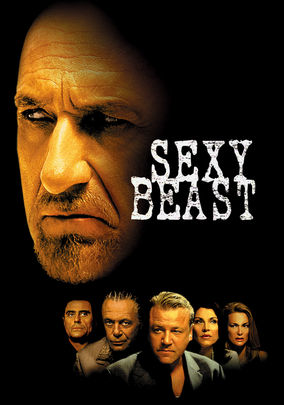
Sexy Beast-2001

Sexy Beast-2001

Director Jonathan Glazer

Starring Ray Winstone, Ben Kingsley

Scott’s Review #286

60020863

Reviewed November 13, 2015

Grade: B+

Sexy Beast is an interesting little indie gem that has garnered quite a cult following, deservedly so,  since the year of its release- 2001 and that I have recently viewed for the first time.

In large part, the film belongs to Ben Kingsley as he gives a bravura, and frightening,  performance as a crime lord attempting to convince a retired hitman, now sworn to the straight and narrow, to resurrect his career for one last heist.

The other principal characters are wonderful in their own right, as the film successfully mixes elements of Quentin Tarantino with Ocean’s Eleven- bank heist meets quirkiness, with smart and witty dialogue sprinkled in.

Gary Dove is happily retired and living a life of contentment with his ex-porn star wife, Deedee, and best friends Aitch and Jackie.  Having all been involved in “the biz”, they are long since removed from their respective careers. They now enjoy evening parties of wine and martinis, and days relaxing by the pool in their Spanish villas.

One day, a former criminal associate, Don Logan (Kingsley), who is also a sociopath, arrives to disrupt their peaceful lives and coordinate a bank heist in London, in hopes of luring Gary into the game once again.

As Gary and company nervously decide to decline Don Logan’s offer to participate in his sinister plan, a wonderful and important scene occurs early in the film. The quartet sits around the dinner table at a swanky Spanish restaurant anticipating a scrumptious meal.

Jackie reveals the news that Don has contacted her and the tone of the scene immediately changes to one of dread. All of them both fear and despise Logan.

They agonize over this sudden disruption to their lives and we, the audience, fear Don Logan before he ever appears on-screen. What fantastic story-telling.

Kingsley portrays a menacing character and brilliantly so. The character contains frightening brutality bubbling beneath his normally calm demeanor, which makes the viewer shudder when he appears on-screen.

Lest we forget, Ian McShane also gives a nuanced performance as Teddy Bass, Logan’s right-hand man, and wise businessman.

The cat and mouse scene towards the end as Teddy and Gary have an important discussion in a car is both chilling and important to the plot of the film. As Teddy slowly figured out certain events I was left intensely anticipating his reactions.

The film introduces an intriguing sub-plot involving Don’s long-ago fling with Jackie and subsequent love for her which adds layers to the plot and the dynamic and tension between Don and Gary.

Upon finishing the film, I loved the effect of foreshadowing that the film contains. I found myself rewinding the events in my mind, pleasurably so.  From the pool to the young Hispanic kid to the thunderous boulder- all of these elements were crucial to the conclusion and fit like a puzzle.

A dark comedy of sorts, I chuckled after the film as the final reveal involving a double-heart insignia and a pool that gives comeuppance to the villain and pleases the viewer.

Having alluded to viewing Sexy Beast (2001) over the years, I am glad that I finally found the time to witness a darkly comical gem that, admittedly, may take repeated viewings to absorb and therefore fully “get”, and I look forward to doing just that.

Oscar Nominations: Best Supporting Actor-Ben Kingsley

Independent Spirit Award Nominations: Best Foreign Film

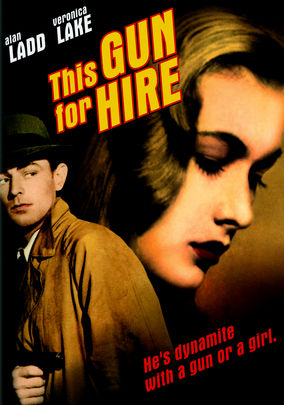
This Gun For Hire-1942

This Gun For Hire-1942

Director Frank Tuttle

Starring Veronica Lake, Robert Preston, Alan Ladd

Scott’s Review #285

70000544

Reviewed November 3, 2015

Grade: B

This Gun for Hire (1942) is an early film noir that influenced later films of a similar genre. Starring marque headliners of their day, Alan Ladd and Veronica Lake, this film is a surprisingly violent experience for its period.

Shot in black and white, the film is wonderfully lit, adding style and substance.

The film begins with a bang, as hitman Philip Raven (Ladd) murders a chemist and blackmailer in exchange for a hefty amount of loot.

His wealthy boss double-crosses him and reports him to the Los Angeles Police Department. Detective Michael Crane, aided by his sexy girlfriend and nightclub singer Ellen Graham (Lake), takes the case.

The tangled love affair between Ellen and Raven, the film’s main draw, adds a wrench to the story.

I love this film’s black-and-white shooting, as many were in 1942. This enhances the tone because it is of the crime/hitman variety.

The chemistry between Lake and Ladd smolders, and Lake is great as a femme fatale with long blonde locks and a sultry pout.

She inspires the character conceived for L.A. Confidential in 1997, as Kim Basinger portrays a Veronica Lake look-alike. Ladd is doubly brooding as the hitman with a damaged childhood and ultimately sympathetic personality.

The setting of San Francisco and L.A. is wonderfully perfect and adds depth as the warm and sunny locales are mixed in with murder, corruption, and shenanigans. Who wouldn’t make comparisons to Chinatown (1974)??

A flaw I found in the film and which I found it difficult to buy into is the implausibility of Ellen falling in love with Raven as he tries to murder her-unsuccessfully so. This point seems plot-driven and a way to incorporate a mainstream love story amid the thrilling film noir.

Indeed, she would find satisfaction in a romantic sense with her detective boyfriend since the duo has no conspicuous problems. The love between her and Raven is all the more inexplicable. Still- sparks do indeed fly on-screen.

An action-packed crime affair, This Gun for Hire (1942) laid a crisp blueprint for film noir, hitmen, and action-type films for decades to come, and I admire it for this reason.

It Felt Like Love-2013

It Felt Like Love-2013

Director Eliza Hittman

Starring Gina Piersanti

Scott’s Review #283

70268905

Reviewed October 17, 2015

Grade: B

It Felt Like Love is a small, independent film from 2013, that garnered two Independent Spirit awards for its efforts.

A coming of age story encompassing a vulnerable and naïve fourteen-year-old girl, aware of her budding sexuality and developing a crush on an older rebellious boy.

Quiet and subdued, the film tells an honest story of a young girl’s emotional struggles surrounding jealousy, loneliness, and fitting in.

Lila is a typical teenager living in New York City in what appears to be a blue-collar area of Brooklyn. Lila emulates her seemingly more mature (she is turning sixteen), and much more sexually experienced best friend, Chiara.

Never without a boyfriend, and very popular, Chiara gains the attention of almost every boy she is around.

One day on the beach, a handsome friend of Chiara’s, named Sammy, passes by, when Chiara describes him as “sleeping with anyone”, Lila becomes fixated on him. As she pursues him relentlessly, she puts herself in precarious situations and gets in way over her head.

Throughout this drama, Lila’s best male friend and neighbor, a child-like and innocent-looking kid contrasts perfectly with the rugged, older Sammy.

Lila has two “men” in her life, who could not be further opposites. The neighbor kid represents her youth, and Sammy, her adulthood, and she is stuck somewhere in the middle, wrestling between the two stages of her life.

The film is the debut of acclaimed director, Eliza Hittman, who weaves an interesting and true-to-life premise. The feelings and emotions of a fourteen-year-old girl are powerful and often involve risk-taking without any thoughts of repercussion.

Liza is extremely vulnerable as anyone her age is, especially since the film reveals that she has recently lost her mother to breast cancer. Her father is a caring yet no-nonsense type and is written well- as a typical blue-collar father would act-.

The standout to me is the actress who plays Lila, Gina Piersanti. What a marvel! The youngster brilliantly portrays a range of emotions- gloominess, insecurity, and annoyance.

She is insecure but intelligent and savvy for her age. Her obsession for Sammy, clearly from the wrong side of the tracks, is dangerous, as he smokes pot regularly, parties, and works in a pool hall.

He ultimately is not for her and I think Lila knows this deep down. But at her age, she is craving attention and sexually blooming.

All of the actors in the film are newcomers and do a fantastic job of relaying honesty. Lila’s motivations are not always clear, but then again, she is a teenager- moods and motivations change with the weather.

During one powerful scene, Lila hangs out at Sammy’s apartment (where she usually can be found and is perceived as a pest). Sammy and his two friends are smoking pot and watching basketball on television.

Somehow, the subject matter turns to oral sex. As Sammy’s friends eagerly accept Lila’s awkward offer to pleasure them, Sammy rebuffs her advances and says that his “privates” do not like her. This seems to bring acceptance to Lila to leave him alone.

The audience hopes she musters her self-esteem and goes on with her life. The showing of full-frontal male nudity was surprising to me- very seldom is this shown in American cinema.

Interestingly, we never actually see Lila engage in any sexual activity- the point of the film is that she wants to desperately, but we cringe as we fear for the worst in each dangerous sexual encounter she experiences.

Perhaps it could have been further developed or fleshed out, but, It Felt Like Love (2013) is a truthful, quiet film with powerful acting and writing from new talent sure to be around for years to come, with the wonderful skills they possess.

Independent Spirit Award Nominations: Best Cinematography

Force Majeure-2014

Force Majeure-2014

Director Ruben Östlund

Starring Johannes Bah Kuhnke, Lisa Loven Kongsli

Scott’s Review #280

80007252

Reviewed October 4, 2015

Grade: A

As a huge fan of foreign language films, I was delighted to stumble upon this inventive and thought-provoking treat Force Majeure (2014).

A Swedish film set in the Alps of eastern France, the film is a family drama that is powerful, emotional, and especially psychological. The best films leave you absorbed in thoughtful conversation or introspection, and this film successfully did both for me.

Tomas (Johannes Bah Kuhnke) and Ebba (Lisa Loven Kongsli) are an attractive couple in their mid-thirties vacationing with their two young children, Vera and Harry. Everyone is excited about the holiday as Tomas is away from work for a full week.

They are a family of affluence and sophistication based on the luxurious mountaintop hotel they stay in.

However, there is a subdued level of tension among them.

On the second day, they enjoy lunch at the hotel on an outdoor patio along the snowy mountainside. As a controlled avalanche begins to head their way there is suddenly panic as everyone flees for safety.

The avalanche is feared out of control, but thankfully only mist, and everyone safely returns to lunch.

However, Tomas’s instinctual reaction to the terror sets off a wave of debate for the remainder of the film. The family experiences a range of emotions and subsequently engages their friends in the conflict as they discuss and analyze the event.

The heart of the film is Ebba’s rage and Tomas’s guilt.

What I adore most about this film is its intelligence. It is smart and well-written. From a pacing perspective, it is slow and may turn some viewers off.

Simple scenes feature the family brushing teeth or napping- scenes in which not much happens.

But the intense psychological aspect lying beneath the surface makes up for these uneventful scenes. Smart dialogue between characters is my favorite. Ebba sits in the lobby sipping a drink with her friend, a sophisticated, promiscuous woman, who is vacationing alone to get a break from her husband and children.

She picks up men for fun and has no hang-ups about it. This particular scene is laced with interesting discussion. Ebba cannot understand her friend’s life choices and freedom and reveals that she is afraid of being left alone- she comes across as judgmental and insecure whereas the friend is confident and secure.

It is a “coffee talk” moment but reveals so much about the characters.

Later, Tomas and Ebba chat with their friends Matts and Fanni. When the discussion turns to the avalanche experience, the situation is analyzed by Matts, leading to tension for all. Matts sides with Tomas, whereas Fanni sympathizes with Ebba.

The disagreement stays with Matts and Fanni throughout the night as they reveal their conflict and put themselves in the other couple’s shoes.

Towards the end of Force Majeure events become strange as Matts and Tomas embark on a relaxing guy’s day out on the ski slope. As they sip drinks and listen to music an attractive female flirtatiously tells Tomas that her friend thinks he is the sexiest man she has ever seen.

Tomas feels like a million bucks and the audience is happy for him- however, the woman quickly returns and informs them that she was mistaken and her friend was referring to another man.

This escalates into a near fight and little dialogue is used throughout the scene. Rather, expressions are widely used. Later, a bizarre scene involves Tomas being accosted by frat boys and forced to guzzle beer- is this imagined or real?

We never find out.

Force Majeure is a spectacle. Scenes of the crisp, white, cascading snow are beautiful. The avalanche scene is amazing and creepy as the snow rapidly comes into view and gets closer and closer to the diners.

Will they be killed we wonder? The climactic scene as the departing vacationers travel by bus down a windy road is quite scary as the inept bus driver has difficulty navigating the bus. Will it crash killing everyone? Is he purposely driving recklessly on a suicide mission? The looming mountainside to the bottom is frightening and fascinating.

Intellectual, curious, and bizarre, Force Majeure (2014) is an international film worth checking out for a unique, cerebral experience.

Independent Spirit Award Nominations: Best International Film

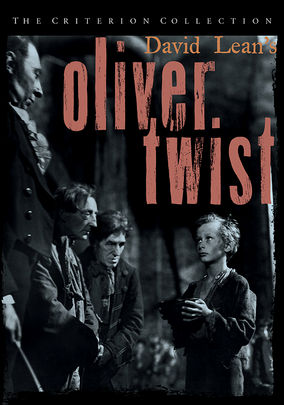
Oliver Twist-1948

Oliver Twist-1948

Director David Lean

Starring Alec Guinness, Kay Walsh

Scott’s Review #279

822333

Reviewed October 3, 2015

Grade: A-

Oliver Twist, the 1948 film version, is vastly different from the 1968 version, which turned the classic Charles Dickens novel into a musical, albeit a dark one, with colorful sets and brilliant art direction.

This version, made in black and white, is a better telling of the novel and contains masterful direction and cinematography.

Given the enormous length of the novel, some characters and details are inevitably trimmed or modified to fit a one-hour and forty-eight-minute film.

The film is a gorgeous cinematic treat, with glowing lighting and creative camera angles, thanks to the outstanding direction of legend David Lean (Lawrence of Arabia, 1963).

The film begins on a stormy night with the birth of poor little Oliver. His mother was frightened and died in childbirth, leaving him to live a life of hardship in a workhouse. His mother possesses a beautiful locket stolen by an old crone, who assists in the birth.

Now a young boy, Oliver draws the shortest straw, forcing him to utter the famous line “Please Sir, I want some more”, about desiring more bland gruel that the orphans are forced to eat.

From this point, Oliver is deemed troublesome and sold to an undertaker named Mr. Sowerberry. When this doesn’t work out, Oliver takes to the harsh streets of London to make his fortune among thieves such as Fagin, Bill Sykes, and The Artful Dodger, who become his friends but also his enemies.

Since I have seen Oliver’s musical version so many times and have also read the novel, it is difficult to watch this film without comparing it to the others.

Oliver Twist is a darker, gritty experience than Oliver! It precisely and closely resembles the novel, with details surfacing, such as the backstory of the locket, which takes on a more central role when the old crone repents on her deathbed, revealing all to the equally crooked Mrs. Corney.

Another example is the casting of less polished or average-looking actors than Oliver! Had. For example, Alec Guinness’s portrayal of Fagin is heavily disguised, with stringy hair and a prosthetic nose, a close comparison to the illustration of Fagin in the novel.

Bill and Nancy have more minor, though crucial, roles but are not as fleshed out as the other versions. The timing of particular events also plays a role —Nancy does not meet Oliver until later in the story.

The film does have light-hearted moments, which perfectly balance the heavy drama. The comic shenanigans of beadle Mr. Bumble and matron Mrs. Corney, both sinister characters but together a bickering, boorish couple who eventually marry each other, add humorous moments to the story as she becomes a domineering wife throughout their many fights and schemes.

The fact that the group of young thieves (boys) all live with Fagin in close quarters, the suggestion of child molestation is certainly implied but not pursued quite as much as in the novel.

I do not think that filmmakers in 1948 would have dared to go there in a film that was arguably meant to have a wholesome feel.

The certainty that Nancy is a prostitute and primarily sleeps in the streets is also addressed, though she is still rather glamorous and clean-looking. The class distinction is evident.

The bleakness of the workhouse and Fagin’s quarters counterbalances the rich and lush home of Oliver’s savior, Mr. Brownlow. I love his estate and housekeeper, the kindly and sweet Mrs.Bedwin.

A close retelling of the novel Oliver Twist (1948) is a fantastic film that can be enjoyed by parents and children alike and appreciated through generations of families.

Black Mass-2015

Black Mass-2015

Director Scott Cooper

Starring Johnny Depp, Joel Edgerton

Scott’s Review #278

Black_Mass_(film)_poster

Reviewed September 28, 2015

Grade: B+

A dark tale of crime, corruption, and Irish mob ties encompass Black Mass (2015), a drama based on the life and times of infamous Boston crime lord Whitey Bulger.

Set primarily in Boston, with a segue to sunny Miami during the 1970s and 1980s, the film mainly focuses on the intricate dealings between Bulger and childhood friend John Connelly. Now FBI, he uses Bulger as an “informant” to secretly bring down an Italian mafia figure, but slowly becomes more involved in Bulger’s sinister world.

Beginning in 1975, the film is authentic in its use of the styles, cars, and looks of the times in Boston during that period. Plausibility is apparent, and powerful acting is shown from top to bottom.

The stellar cast of Black Mass and the hefty cast features an array of well-known and capable actors, adding realism.

Led by Johnny Depp as Whitey, Depp gives an eerie, hypnotic performance as his bright blue eyes sparkle in a devious way.

Whitey is ruthless and will do whatever is needed to keep power and control. Like Connelly, Joel Edgerton is arguably the film’s lead character, though Depp gets top billing. Edgerton, in real life handsome, appears frumpy, and as a regular Joe type.

Supporting turns by Benedict Cumberbatch, as Whitey’s powerful Senator brother, is crafty and sleek, but corruption shrouds him.

Kevin Bacon, Dakota Johnson, Peter Sarsgaard, and Julianne Nicholson portray smaller yet pivotal roles and all do a fine job.

The screenplay is intelligently written. The story is quite dark and there are no laughs or light moments.

There are numerous deaths, the victims shot at point-blank range, but also two deaths in particular, where the victim’s suffering is prolonged and the scenes are cringe-worthy. The film is very violent and given the subject matter, is riddled with foul language.

One impressive aspect of Black Mass is the character-driven tale and that it is based on a real-life person adds to this.

Not only is Bulger fleshed out, but John Connelly is written very well. Gradually becoming immersed in the crime world as opposed to the world of law, we see Connelly sink deeper and deeper into Bulger’s world, and not so unwillingly either.

He loses his wife Marianne (Nicholson) along the way as she tires of the danger and corruption surrounding her. A chilling scene occurs when Bulger confronts Marianne in her bedroom, after observing negative vibes from her, and warns her in a flirtatious way, never to cross him.

As he caresses her face and slowly firms his grip, it is a rather frightening scene.

The dialogue is crisp. When Bulger is invited to a steak dinner at Connelly’s house, there is awkward tension at the dinner table. Jovial small talk over the preparation of the delicious marinated steak everyone is eating comes to the forefront as Bulger asks Connelly’s partner to reveal his family secret recipe for the favorite steak he has ever eaten.

When the partner eagerly confesses the recipe, he is coldly quizzed whether he would give up Bulger’s secrets as easily.

This is one of the best scenes in the film.

Comparisons to Goodfellas (1990) are evident but without the fun. I thought of The Departed (2006) throughout the viewing as well.

I think director Scott Cooper goes for and successfully achieves, good straight-forward, dark story-telling. Take the number of killings. The organized crime world is dirty, intense, and unkind and Black Mass portrays this well.

Black Mass (2015) is a success on many levels. The superior acting, detailed writing, and truthfulness create a good film. Just be sure to remember it’s a heavy one.

Grandma-2015

Grandma-2015

Director Paul Weitz

Starring Lily Tomlin, Marcia Gay Harden

Scott’s Review #275

Grandma_Movie_Poster

Reviewed September 21, 2015

Grade: B+

Grandma (2015) is clearly and deservedly, a showcase for the talented and interesting legendary Hollywood actress Lily Tomlin.

Years (twenty-seven to be precise) since she has had a starring turn in a film, the role of Grandma is custom-made for Tomlin, with the character’s sarcasm, wit, and downright bluntness emerging to the forefront.

The film is labeled a comedy/drama, which it is. It’s themed around a heavy topic of abortion and runs the risk of offending pro-life individuals, as the film undoubtedly contains a pro-choice slant.

Ellie (Tomlin) is a poet and former college professor in her seventies living in California. She is a lesbian and is mourning the recent death of her long-time partner. She has recently been dating a lovely young woman named Olivia (played by Judy Greer), whom she unceremoniously, and cruelly dumps, referring to Olivia as little more than a footnote in her life.

Afterward, Ellie breaks down in tears of guilt while showering.

One day her granddaughter, Sage, (her daughter Judy being the product of a one-night stand), appears on her doorstep asking for money for an abortion. Having just paid off her debts and destroyed her credit cards, Ellie is therefore broke.

The duo embarks on a quest for cash, and race against time to make the appointment in time for the scheduled procedure.

The film belongs to Tomlin but is enhanced by excellent supporting turns, specifically by Marcia Gay Harden as daughter Judy, and veteran actor Sam Elliot, as Ellie’s former flame Karl, to cite examples.

Judy and Ellie have experienced a tumultuous relationship their entire lives while Karl harbors resentment for Ellie for long-ago aborting their child. Harden is thrilling as a borderline, one-dimensional bitch character.

She is driven, angry, and self-centered, and it is mentioned that she has gone through numerous administrative assistants in her high-level corporate role.

I have not seen Harden in a role quite like this before. As unsympathetic as the character is, one cannot help wondering if Ellie’s mothering skills may have made Judy turn out this way.

Karl on the other hand is sympathetic. He is still wounded from his ages-ago relationship with Ellie and may still hold a flame for her, as unlikely a romance between them would be.

The film is darker than expected and is not the syrupy, mainstream, family story one might expect from the fuzzy one-word title.

Still, Tomlin’s cantankerous, sarcasm kept me in stitches and perfectly balanced the tough subject matter displayed in Grandma.

The relationships between the main characters are complex and tough to watch as they argue, swear, and insult each other.

Love is mixed in but complexities arise due to the controversial subject matter. The history of and, in many cases, painful memories are dredged up between characters.

Impressively, Grandma is not a film that debates the hot-button issue of abortion as one might assume. Sage never really considers keeping her baby and will have the procedure done as quickly as possible.  Ellie and Judy never try to persuade Sage to keep the child nor does Sage seriously contemplate keeping the baby.

The only instance of a pro-life perspective is when two ridiculous characters- a young mother and her ten-year-old daughter- suggest Sage not kill her baby. When Ellie steps in the young girl punches her in the face. Is this intended as comic relief or to make these characters appear as buffoons?

These characters are laughable.

The father of Sage’s baby is unsympathetic and a very minor blip on the radar. My theory is that the film chooses to go this route intentionally to avoid a debate over the abortion issue.

A debate is not the point, but the relationships between the characters are.

The scenes involving Ellie becoming irritated and sarcastic are priceless, successfully utilizing Tomlin. As she hilariously goes from situation to situation in an attempt to earn the $600 for Sage she resorts to various means as diverse as selling books, giving a kiss, or collecting an old debt.

This is the main draw of the witty little film, Grandma (2015).

Dear White People-2014

Dear White People-2014

Director Justin Simien

Starring Tyler James Williams, Tessa Thompson

Scott’s Review #274

70298948

Reviewed September 18, 2015

Grade: B+

Dear White People (2014) is a highly creative, independent satire that begs to be watched for no reason other than for its message of existing racism in present times, homophobia, and class distinction.

Set at an Ivy League college and written tongue and cheek, but also with a direct message from newly discovered director Justin Simien, it is a meaningful gem that challenges audiences to think and be entertained and emit an occasional chuckle at the wit and comical lines presented.

Set in the present day- assuming 2013 or 2014, and well beyond the Civil Rights era, the film features a hip, sharp look and a myriad of characters, all with differing perspectives, all Caucasian or black in racial identities.

All the characters attend the affluent and sophisticated Winchester University, a mostly white, conservative school with a small community of black students, who curiously all seem to reside in the same dorm house.

In addition, the Dean is a black man (played by Dennis Haysbert).

Sam White is a rebellious female student, of mixed race, who runs a radio show entitled “Dear White People”, which challenges the current state of racism in America, specifically at Winchester University.

Supporting characters include Lionel Higgins, a gay, bookish student with an enormous afro, excluded from almost all the sub-groups. Lionel is intrigued by Sam’s radio show.

Other characters include Coco- an attractive black girl with typically “white” mannerisms and friends, who try to fit in with the white culture. Troy, a very handsome black student (who tries to act “white”), dates a white girl (who tries to act “black”).

Finally, the film features Kirk, a white student whose father is the school president, who values an old-style way of thinking. Kirk, shockingly, hosts a blackface party, which leads to major controversy at the school and is the focus of much of the film’s drama.

The main theme is race, but different characters have different viewpoints on the subject matter, and all are explored, which makes the film unique and interesting.

Sam, for example, is a true advocate for racial equality and constantly challenges white people’s motivations and actions, blatantly so.

Coco, on the other hand, is resistant to being stereotyped as a woman of color and, in one scene is incorrectly assumed to be from the hood by a reality television producer she is auditioning for.

She is envious of white people and the advantages they have, even going so far as having straight hair and blue contact lenses. Then we have Lionel, who is both gay and black, and considered an outcast. He fits in with no group and curiously seems okay with being his own person.

What is unique and compelling about Dear White People is that it brings up a controversial issue, mixes it in satire, humorously, but presents compelling arguments against stereotypes, also bringing those stereotypes center stage, which most films avoid like the plague.

One black character is frustrated that, in their mind, most black people are content watching dumb black comedies, thereby supporting a negative racial stereotype.

One interesting aspect regarding the score is the use of lily-white classic film music- such as Barry Lyndon (1975)- the most lily-white of lily-white films (British and Irish).

Famous film director, Quentin Tarantino, is called out as being a racist director. What wonderful irony!

Dear White People (2014) is a witty, intelligent slice of inventive filmmaking that is worth seeing if only for its controversial subject of inequality and racism, which is too often forgotten.

An indie treat for those inclined to think a little.

Independent Spirit Award Nominations: 1 win-Best First Screenplay (won), Best First Feature

Venus in Fur-2013

Venus in Fur-2013

Director Roman Polanski

Starring Emmanuelle Seigner, Mathieu Amalric 

Scott’s Review #270

70275370

Reviewed August 23, 2015

Grade: C

Venus in Fur is a French-language film from 2013, directed by the enormously talented Roman Polanski, and based on the American play by David Ives.

Interesting to note that Ives’s play is itself based on a novel by Leopold von Sacher-Masoch entitled Venus in Furs.

Polanski’s film adaptation is a filmed play and takes place entirely within the walls of a theater, except for the opening shot, as the camera pans inside the doorway of the theater as if the audience were the eyes of an approaching theater-goer.

The subject matter is quite adult- sadomasochism and dominance, though there is little nudity, and is not perverse in any way.

The story surrounds Thomas, a stressed-out writer-director of a new play set to open soon in Paris. Finishing touches must be handled as well as casting the lead actress!

His play is an adaptation of Venus in Furs and a frustrated Thomas is on the phone complaining about an unsuccessful day attempting to cast the lead role of Wanda.

A disheveled actress named Vanda wanders into the theater and attempts to convince Thomas to let her read for the part, which she desperately wants.

Initially, Thomas is turned off by Vanda as she is dressed slutty and is on the middle-aged side and, in his mind, wrong for the part. When she finally does convince him to let her read for the part, she becomes Wanda and a strong, bizarre, sadomasochistic, attraction develops between the pair as they run lines together.

Roman Polanski might very well rank within my Top 10 favorite directors of all time list (Rosemary’s Baby-1968, is one of my favorite films), but this work disappointed me.

Containing a cast of only two characters, I found the story to be limiting and became tedious as the story developed. It was tough to distinguish when Thomas and Vanda were in character and when they were expressing their true selves and I did not find either particularly likable.

This may have been intentional, but confusing and dull nonetheless.

The sexual-fetish subject matter is prevalent, but not in a tasteless way. The initial roles reverse as Vanda goes from a whimpering, pleading actress needing some work to a dominatrix, who obtains control over Thomas, who in essence becomes her slave.

Thomas begins as a powerful director with an ego and ends up catering to Vanda’s every whim. They develop a deep emotional connection that they simultaneously realize.

The main issue was not feeling much connection towards either character. I detected no chemistry between them. The dominant soon becomes submissive, but who cares when you are invested in neither character?

On the plus side, I loved the basic theater set. This instantly reminded me fondly of my college days and rehearsing/performing in a theater similar to the one in Venus in Fur, complete with the rustic red audience seats and the moody ambiance of the theater.

Venus in Fur (2013) has an interesting premise as people immerse themselves in the roles they play, but a disappointing film, especially coming from one of the greats.

Whatever the exact reasons, the film did not work for me. Interesting premise, but ultimately failed for me.

A Little Chaos-2014

A Little Chaos-2014

Director Alan Rickman

Starring Kate Winslet, Matthias Schoenaerts

Scott’s Review #269

80017099

Reviewed August 22, 2015

Grade: B-

A Little Chaos (2014) is a difficult film to review. The film does not kick into high gear, or much of gear until the final thirty minutes or so as the drama hits a crescendo and past events are suddenly explained.

At this point, it becomes a very entertaining film.

Until then, it is largely a bore and slow-paced.

Starring Kate Winslet and Alan Rickman, who also directs the film, A Little Chaos is a good film with beautiful period piece costumes to marvel over, and feels great, but misses the mark with a lack of balancing the momentum throughout the length of the film.

It is also largely fictionalized, making the viewing less enjoyable.

A period drama set at the gorgeous Versailles in France, the period in the late 1600s when King Louis XIV of France is in power and lives on the illustrious estate.

Landscaper, Andre Le Notre, hires unconventional gardener Sabine (Winslet) to create one of the gardens.

Sabine is progressive and does not live in the past. Rather, she has ideas for creating a unique pattern. Sabine is instructed to incorporate a wonderful fountain within the garden. She faces hostility from staff members for simply being a woman and they refuse to work for her.

Others admire her creativity.

As the plot unfolds, Sabine has romantic feelings for Andre, a man trapped in a loveless marriage with Francoise, and they begin a tender courtship.

Sabine is haunted by the past and frequently hears cries in her dreams. The audience does not know what her past life was, only that she is widowed.

The final act of the film brings everything together nicely. We learn about Sabine’s past and her suggested dalliance with Andre comes to fruition.

After the film, I was left thinking how exceptional it was, but then remembered the majority of it had dragged.

The themes of A Little Chaos are class systems, feminism, and societal views. At first, snubbed by some for being a commoner, Sabine slowly is accepted by the royal figures, including the King himself, whom Sabrine humorously mistakes for the gardener at one point.

Ideally, it would have been lovely if a woman had been hired to create the garden.

Sadly, events do not happen this way but is someone’s fantasy.

A Little Chaos (2014) has great potential and looks beautiful- my main complaint is for most of the film nothing happens.

Also disappointing is that the film was not filmed at the historical Versailles, nor was it even shot in France. Every exterior scene was filmed in England.

This is not a deal-breaker, but some genuineness would have been nice. Another major detraction is that Sabine De Barra is not even a real-life figure, but rather is fictionalized- sort of how the past should have been but wasn’t really.

Having been a real person would have made the film more interesting. What is the investment?

From an acting standpoint, the film succeeds. Winslet, a highly talented actress, is well cast and the chemistry between her and Matthias Schoenaerts is palpable. Both actors are believable in their roles.

Stanley Tucci, typically great in whatever he appears in, plays Phillippe, a silly, slightly effeminate Duke who does more to annoy than to amuse and is a trivial character.

Throughout my viewing of the film, I kept thinking of it as the type of film that should be liked because it looks great, but something was missing.

The royal drama, sexual dalliances, and antics were fun, but I felt like the film could have been much more than it ended up being.

Two Days, One Night-2014

Two Days, One Night- 2014

Director Luc Dardenne, Jean-Pierre Dardenne 

Starring Marion Cotillard, Fabrizio Rongione

Scott’s Review #268

70297803

Reviewed August 21, 2015

Grade: B

Two Days, One Night (2014) is a French-language drama starring the wonderful and highly talented Marion Cotillard, who received an Academy Award nomination in 2015 for this role and is the main draw.

I never tire of viewing any of her film performances, however, I felt the film itself lacked something special. Adequate, but below the standards I was expecting given the award recognition.

The film is good, with an interesting tale of morality, but becomes redundant as it goes along.

Sandra, played by Cotillard, is a working-class woman living in an industrial town in Belgium. She works in a factory and struggles to make ends meet with her supportive husband, Manu. They have two young children.

It is revealed early on that Sandra has a history of suffering from depression and has recently been forced to take a leave of absence from her job due to her struggles.

Now recovered, she is ready to resume normalcy but her boss forces a vote among her sixteen colleagues who decide to either save her job or eliminate her position, thereupon each will receive a hefty bonus.

Sandra and a co-worker she feels close with, convinced the boss to allow an anonymous vote the following Monday, leaving Sandra with one weekend to convince the others to save her job.

The conflict is that during Sandra’s absence, the department was able to run successfully so why is she needed?

The plot has an interesting moral concept. Will people sacrifice personal gain to assist someone else? The fact that Sandra is a kind woman makes the decision seem easy. However, many of her colleagues struggle to put food on the table for their families and could use any extra wages manageable.

The audience is on the side of Sandra and her equally kind husband, who continually talks her out of giving up and instead encourages her to spend the weekend convincing the others to vote for her come Monday morning.

The weak point is that it contains one basic formulaic story and does not branch into anything more. The plot is simple but I expected a bit more from this film.

The action takes place throughout one weekend and the entire plot is that of Sandra traversing the town looking for colleagues to persuade them to vote for her. Most of the people she encounters are sympathetic and, if they cannot help her, they empathize with her.

Soon, we get that she needs their votes. It becomes the same scene over and over.

The character of Manu is undeveloped. We learn nothing about him except he is a devoted husband and father, but what about his feelings? How did he deal with Sandra’s depression? Strangely, many co-workers Sandra looks for are not home at the time, requiring her to go to the park, the laundromat, or the pub to track them down.

I question the authenticity of the story.

Sandra’s boss has the power to pit colleagues against each other (supposedly approved by management) and to assume the destiny of one employee.

There is no Human Resources department mentioned throughout the story until almost the final scene when a manager appears, and it is never explained why the boss can get away with this. There is also no mention of a union, which in factory work is common.

Furthermore, Sandra and Manu never mention consulting an attorney- yes, they are poor, but surely a conversation might have occurred.

The title also does not make sense- Two Days, One Night- the film begins on a Friday and ends on a Monday morning. What does the title mean?

Two Days, One Night (2014) is a film featuring an honest performance from a talented actress (Cotillard), but a tad bit slow and tedious at times, and repeats similar scenes over again.

The film is a nice, simple, quiet story, but nothing spectacular.

Oscar Nominations: Best Actress-Marion Cotillard

Maps to the Stars-2014

Maps to the Stars- 2014

Director David Cronenberg

Starring Julianne Moore, Mia Wasikowska

Scott’s Review #266

80013474

Reviewed August 14, 2015

Grade: A-

Maps to the Stars (2014) is a bizarre, unpleasant, film that is as dark and perverse as provocative and fascinating to observe and ponder.

It is more like an independent art film than a blockbuster Hollywood project and was made by an arguably mainstream director, David Cronenberg (Crash-1996, The Fly-1986), I am surprised it was able to be made on a large scale budget due to the negative portrayal of actors and celebrity types, specifically, troublesome starlet and child star.

One must be wary of biting the hand that feeds.

Maps to the Stars is a film where almost all the central characters are unlikable- difficult, unstable, self-absorbed, or all of the above.

The subject matter is ugly but fascinating to me.

The wealthy and glamorous are interesting and, at times the film is like a Greek tragedy containing Shakespearean elements- think Romeo and Juliet in an incestuous way times two. One must watch this film to see what I mean.

Hint- it contains the ick factor.

The plot centers on a Hollywood family, where the son is a famous child star and the primary breadwinner. They are the Weiss family- all struggling to either find success or hang on to it, all the while each of them is neurotic.

The father, Dr. Samuel Weiss, played by John Cusack, is a TV psychologist, hired by Havannah Legrand (Julianne Moore), a highly self-centered, aging actress, struggling to land a coveted role-playing her mother.

Her mother was a young actress in her day, who tragically died in a fire. Havannah despises her due to claimed childhood abuse.

Cristina Weiss (Olivia Williams) is Samuel’s wife. This controlling, ambitious woman strives to get the most money out of her son Benjie, a Justin Bieber-type character with a troubled streak.

Rounding out the family is Agatha Weiss, a troubled teenager, sent away for years after giving her brother pills and setting her parents’ house on fire. Though not directly related to Weiss’s, Havannah, and the limo driver, Jerome Fontana (Robert Pattinson) become heavily involved with the family as events transpire.

It reminded me of a myriad of other influential film directors in peculiar ways. I noticed elements of David Lynch’s Mulholland Drive (1992), for instance, in a dark clever mood and the obvious setting of Los Angeles- even the score is similar during parts of the film, as the moody monotone sounds played in the background.

The Ice Storm (1997), American Beauty (1999), and Magnolia (1997) also sprang to mind in their dark and strange worlds (Magnolia) and the inclusion of the dysfunctional family element (The Ice Storm and American Beauty).

Furthermore, to a lesser extent, I saw some Robert Altman ingrained in Maps to the Stars. These aspects are an enormous reason why I loved the film so much.

A prevalent theme throughout Maps to the Stars is one of burning- a victim of burning, a fire set, a character setting oneself on fire. Some characters see dead people. Havannah regularly sees her dead mother. Benjie sees a young girl whom he visited in the hospital before she died, her last wish of meeting the big star.

She suffered from non-Hodgkins lymphoma, who he foolishly thought had AIDS. He sees her in visions and tries to strangle her, instead of strangling an innocent living person.

The film is a weird trip, and the viewer will be dreading an oncoming dark moment.

When Benjie carelessly plays with a gun that he assumes is unloaded we know trouble will occur. He is showing off at an actor friend’s party along with equally obnoxious starlets while talking about poop, all selfish and wanting to party.

When Havannah belittles Agatha, her assistant, we see Agatha’s past anger come back into play as she slowly unravels with rage- Havannah is unaware of Agatha’s knowledge of her betrayal.

One small gripe is the continued use of gross toilet talk in multiple scenes including a raunchy discussion of a fan buying a well-known actor’s waste for thousands of dollars. What was Cronenberg’s motivation for this?

This was a silly, tasteless, unnecessary element of an otherwise great film.

Maps of the Stars (2014) is dirty and ugly but is also a quirky treasure about bad people in Hollywood. Unpleasant characters whom I could not take my eyes off of.

A brilliant film that delves into Hollywood shallowness and madness and does it in a daring, twisted, wonderful, sort of way.

Point Blank-1967

Point Blank-1967

Director John Boorman

Starring Lee Marvin, Angie Dickinson

Scott’s Review #263

70033963

Reviewed August 8, 2015

Grade: B+

Directed by John Boorman, (later made famous for the masterpiece Deliverance in 1972), and based on the novel The Hunter, by Donald E. Westlake, Point Blank (1967) is a tense crime drama starring Lee Marvin as a man seeking revenge on those who have wronged him.

A criminal himself and involved in the mob world of deals and drugs, he is double-crossed by his partner, who takes off with his wife.

A relatively obscure film, Point Blank features obvious influences from the classics it preceded (The Getaway, 1972; Chinatown, 1974; The French Connection, 1971; and Dirty Harry, 1971) and contains some dynamic camera work and art direction.

In its day, it must have been quite a groundbreaking film.

The film begins muddled a confusing, catching the viewer off guard. We know nothing about any of the characters, who are suddenly introduced via flashbacks, interlaced with present and future scenes, so that chaos and tension fill the story immediately.

We know that someone has stabbed someone in the back, but we do not understand why or who the players are.

The film is set partly on deserted Alcatraz Island (the meeting point for a money drop, which we later learn), then moves to Los Angeles. Early on, we realize that Marvin’s character (Walker) has been tricked, shot, and left for dead by his partner Mal (John Vernon), who takes off with Walker’s share of cash…and his troubled wife Lynne.

Hell-bent on seeking revenge (and his money) on Mal and his wife (Lynne), he attempts to track the duo down using any means necessary, leading to the introduction of pivotal and mysterious characters such as Lynne’s sister Chris (played by Angie Dickinson), and Crime Organization leaders Carter and Brewster (played by Lloyd Bochner and Carroll O’Connor, respectively).

With little blood or overt violence, the film instead uses tense action scenes and a great style, and is told in a non-linear way.

One favorite scene involves Walker taking a new car for a test drive and interrogating the salesman for information. As he terrorizes the salesman, he repeatedly slams the vehicle into a pole using the car’s reverse and drive gears, increasing in intensity with each attempt by the salesman to avoid answering Walker’s questions.

Two other scenes that stand out and deserve mention are as follows: when a naked villain is nonchalantly tossed from a penthouse apartment to his death on the street, and subsequently becomes wedged under a passing car, the scene is as startling as it is well shot, especially considering the year was 1967.

In another scene, Lynne is at the beauty salon having her makeup and hair done by a stylist. Her face is captured in the mirror, and the camera shows a dozen or so images of the mirror layered on top of one another.

This looks great, inventive, and is a good example of some superlative camera shots that occur throughout the film.

A few interesting tidbits that I pondered following the film. Was the elevator scene containing Angie Dickinson (almost meaningless to Point Blank) the inspiration for the famous elevator scene from the 1980s Dressed to Kill?

Only Dressed to Kill’s director, Brian De Palma, would know the answer to that question.

How interesting to see Carroll O’Connor (later universally famous for portraying TV’s “Archie Bunker”) as a crime lord. Even though Point Blank was made before All in the Family premiered, it was tough to find him believable in this role.

Finally, I loved the scenes set high atop Los Angeles, in a gorgeous high-rise apartment- the sophisticated living room furniture arrangement and colors are great visual treats.

Taut, intense, and engaging, though admittedly a plot not always made crystal clear nor easy to follow, the film came along at a time when edgier, more experimental films were beginning to be released, which makes Point Blank (1967) a groundbreaking and influential film that undoubtedly helped bring about other crime dramas to follow.

Fifty Shades of Grey-2015

Fifty Shades of Grey-2015

Director Sam Taylor-Johnson

Starring Jamie Dornan, Dakota Johnson

Scott’s Review #262

80013872

Reviewed August 5, 2015

Grade: B-

To quote a humorous phrase I once coined years ago, when I decided to give in and see Fifty Shades of Grey (2015), despite negative reviews, “I was not expecting Citizen Kane” fit perfectly with this film as I pondered my review after the conclusion.

Based on the titillating book series by author E.L. James, the film is sudsy, steamy, and poorly acted. However, something is charming and sexy about the badness of it.

It’s not a terrible film, but the negatives outweigh the positives.

Dakota Johnson, daughter of Melanie Griffith and Don Johnson, and granddaughter of Hollywood royalty Tippi Hedren plays a shy literature student named Anastasia Steele.

She is pretty and grounded and meets and becomes enamored with a twenty-seven-year-old billionaire named Christian Grey after driving to Seattle to interview him for a sick friend.

The chemistry between the two is palpable and an instant romance ensues.

Christian courts Anastasia mercilessly, becoming somewhat controlling, and she is willing to be his “victim” as she adores his attention.

As the two get to know each other better, it is revealed that Christian is “dominant” and desires Anastasia to sign a contract, becoming his “submissive” and “belonging” to him. Anastasia is conflicted by this notion.

She loves Christian but wants a traditional romance with flowers and chocolates, something Christian has admitted he does not do.

I confess to having gotten caught up in the kinky romanticism of it.

The film has a smoldering, dreamlike style. The scenes in the “playroom” are hot and the film does its best to make the entire production erotic, but not going so far as to make it pure smut.

Boy meets girl, girl falls head over heels, boy conquers girl.

The film makes sure to portray Anastasia and Grey as complete opposites. He is wealthy, sophisticated, calm, cool, and collected while she is a struggling, naive girl ripe for the picking.

Perhaps this was part of her appeal to Grey.

The acting is not great, especially on the part of Johnson.

I did not find Jamie Dornan (Grey) to be so bad and he is likable enough to me. For the most part, the character of Anastasia irritates me, and I find her quite unlikeable.

Anastasia becomes enamored with Christian, allows herself to be pursued, showered with gifts, considers, then more or less accepts his offer to be his “submissive”, then gets furious and dumps him.

Huh?

Fifty Shades of Grey is told from a female point of view as evidenced by the marketing and the strategic opening on Valentine’s Day weekend.

I sense that the character of Anastasia is made to be sympathetic while Grey is drawn to be the cad and the bad character.

A brief backstory is mentioned as to what turned him into a dominant male who likes to have females submit to his desires coupled with his lack of desire for any affection, but this was not too deeply explored.

The film does not want the audience to really “get him” or delve too deep into the psychological reasons, instead of going for the kinkiness and the female side of the story.

A poorly structured film that made a ton of money and will undoubtedly spawn at least another sequel, Fifty Shades of Grey (2015) is a guilty pleasure and one I shamefully confess to having somewhat enjoyed.

Oscar Nominations: Best Original Song-“Earned It”

The Judge-2014

The Judge-2014

Director David Dobkin

Starring Robert Downey Jr., Robert Duvall

Scott’s Review #261

70305896

Reviewed August 2, 2015

Grade: B+

The Judge (2014) is a formulaic, courtroom drama that we have all seen many times before, but I found the film rather enjoyable.

The main reason for this is the casting of Robert Downey Jr. and Robert Duvall in the pivotal central roles. The two actors play estranged father and son.

The clichés are numerous, but with excellent acting, the story feels fresh, fun, and compelling, if not innovative. As seen by only a few, The Judge was on my radar only because of Duvall’s Oscar nomination for his role.

Hank Palmer (Downey Jr.) is a big-shot attorney from Chicago. Highly successful, he is selfish, driven, and a downright prick. Going through a messy divorce with his gorgeous, athletic wife, he has a close bond with his daughter, despite not being home very often.

Suddenly, Hank’s mother dies tragically and he must return to small-town Carlinville, Indiana, a place he despises, not simply because the town is in the sticks, but because he has bad memories.

When he arrives he reconnects with his two brothers and his father (Duvall), the local judge. While staying at the family house, Hank once again butts heads with his father and runs into an old girlfriend (Vera Farmiga), who now owns the local diner.

On his way out of town for good, Hank is asked to defend his father when he is arrested and charged with murder.

The Judge is a family drama that contains suspense and a few twists.

The film reminds me of a slew of 1990s-era courtroom dramas based on John Grisham novels (A Time to Kill, The Client, The Firm) so I expected a bland, dated film.

I love the chemistry between Downey Jr. and Duvall, which I think is the most successful aspect of the film, and the family-style drama with numerous trials and tribulations thrown in.

Hank is smarmy and ruthless, but has a humorous side and tells it like it is. I smiled at his wry wit.

Judge Parker is equally stubborn and the battles are wonderful to watch. Conversely, the film also has tender bonding moments between the two men, which are sentimental and warm. As one man takes care of the other during sickness it is a tender and heartbreaking scene.

An interesting aspect is the small-town sense of community of Indiana, which I found charming. Everyone gravitates towards the cute diner in the center of town owned by Hank’s high school sweetheart. There is a nice wholesome, small-town appeal to the entire film.

I half expected a county fair or apple pie baking scene to be added.

The film feels wholesome and comfortable- a slick, mainstream drama. Movie comfort food if you will.

The relationships among the three brothers- Hank, Glen- a middle-aged man regretting never having moved from Carlinville, and Dale, a sweet-natured autistic man, determined to one day become a filmmaker, are interesting.

They are so different but stick together bicker, and bond. Similar to real-life families.

The negatives are that the courtroom scenes sometimes go on too long and the film brings nothing new or exciting to cinema and plays it safe throughout.

Still, I was pleasantly surprised to be treated to a film above mediocrity but not a reinvention of the wheel.

To be seen for simmering acting by the entire cast and especially film stalwarts, Duvall and Downey Jr, who bring life and wit to an otherwise traditional film.

Oscar Nominations: Best Supporting Actor-Robert Duvall

Unbroken-2014

Unbroken-2014

Director Angelina Jolie

Starring Jack O’Connell, Garrett Hedlund, Domhnall Gleeson

Scott’s Review #260

70305949

Reviewed August 1, 2015

Grade: B

Unbroken (2014) tells the true story of Olympic athlete Louis Zamperini, a runner during the World War II period, who was also serving in the military during this tumultuous time in history.

His story is one of bravery, courage, and endurance, as he survives a hellish experience in a Japanese prisoner of war camp after having crashed in the Pacific Ocean, stranded for forty-seven days as if that were not enough to break a man.

Mainstream Hollywood fare to the hilt, this film is surprisingly directed by Angelina Jolie (a woman) and written by the Coen brothers, the latter usually emitting less traditional and more quirky fare than this film.

Jolie directs what is arguably a “guys movie” that contains very few women in the cast, and the ones who do appear are either loving mothers or giggling schoolgirl types, so the big names associated with Unbroken surprise me.

I would have taken this work as a Clint Eastwood film.

Unbroken, expected to receive several Oscar nominations, was shut out of the major categories.

Visually, Unbroken is slick, glossy, and shot very well- it looks perfect. The cinematography, sound effects, and costumes look great.

The cast of good-looking young men looks handsome even while battered and bruised and half-starved. While in a way this is a compliment, it is also not one. Unbroken lacks any grittiness and plays it quite safe. Even the scenes of abuse and beatings lack an edge to them.

This is not to say that the film is not good. It is good.

I found myself inspired by the lead character of Louis, played by Jack O’Connell, for his resilience during his ordeals. O’Connell gives a very good performance as his motto, “If I can take it, I can make it” is repeated throughout, and who will not cheer at his accomplishments?

Zamperini, who has traditional Italian parents having relocated to the United States, is strict but fair. Louis’s older brother, Peter, is his best friend and is the person who has the most faith in him. At first, Louis is on the verge of becoming a punk, in trouble with the law, if not for the interference of his brother, who gets him interested in the sport of running.

As the years go by and war erupts, Louis embarks on a tour of duty in the military and his plane crashes in the water providing yet another test of courage and stamina. Louis is strong and always the leader of the group he is intertwined with.

The scenes of the three survivors stranded on the raft for days become slightly tedious, but perhaps this is the intention, as they eat raw fish and raw birds to survive. Much of the remaining action is set in two Japanese war camps as Louis (and others) struggle to survive until the massive war has ended- they do not know if they will live or die.

The central antagonist- a vicious Japanese sergeant named “Bird”, perplexed me. Blatantly targeting Louis and administering cruel beatings and heaping tests of strength upon Louis, presumably out of jealousy because Louis was an Olympic athlete, why did Bird not simply kill him?

His motivations were also odd- In one scene, Bird tearfully tells Louis that he knew they would be friends from the beginning and seems to admire him. Bird’s father, going by a photo, seems a hard, mean man. Is this why Bird is so vicious? Bird’s character is not well thought out.

Also, every single Japanese character is portrayed in a very negative light, which sadly is common in war movies. Surely, despite being a war, there had to have been a few Japanese people who were not cruel.

Character development and depth are not a strong suit of this film.

Unbroken is a good, solid, war drama with an inspiring message of triumph, faith, and determination.

Indeed, it is a positive message to viewers of all ages.

The abuse/torture scenes are tough to watch, but the result is a feel-good story.

The snippets of the real Louis Zamperini are wonderful to watch.

Oscar Nominations: Best Sound Editing, Best Sound Mixing, Best Cinematography

Love and Mercy-2015

Love and Mercy-2015

Director Bill Pohlad

Starring John Cusack, Paul Dano

Scott’s Review #258

80017274

Reviewed July 17, 2015

Grade: B+

The life and times of the Beach Boys’ famous and troubled lead singer, Brian Wilson, is finally played out on the big screen (apparently many attempts were made to make a film) as Love and Mercy (2015) chronicles his difficult upbringing, unrivaled success, and his interesting life in later years.

He suffered from schizophrenia, traveled down a paranoid, nervous path, and was manipulated by a family friend who served as his doctor and main caregiver.

Thankfully, he weathered the storm due to his future wife, and remarkably still performs and entertains in 2015.

His musical career began in the 1960s.

The biopic features many well-known Beach Boys tunes to hum along to and be entertained by. It’s not a happy film nor a downer either.

It’s somewhere in the middle of the two and the life story of a rock star.

There is a risk in this. If the film is too sentimental it will fail. Love and Mercy do it correctly.

The film is not a sing-along, trip-down-memory lane film for lighthearted film fans. Rather, it is dark, murky, and troubling at times (the psychedelic scene when a young Brian is imagining different voices and noises in his head is rather frightening).

Wilson is played by two actors, first in the 1960s and later in the 1980s.

Paul Dano stars as a young Wilson in the early stages of his career, filled with passion for life, art, music, and talent beyond belief, but clearly in the onset stages of paranoia, thanks to his critical father. He is a demanding, angry man, possibly envious of Brian’s talents as a songwriter, who always wanted more from Brian.

Wilson’s father managed Brian and his brothers success but at a huge cost, and was ready to bail when the “next big thing” came along.

Miraculously, through conflict with his father and other members, Wilson completed the Beach Boys masterpiece, Pet Sounds, a groundbreaking album from the late 1960s. The film shows the struggles faced to achieve this success.

In later years John Cusack takes over the role of Brian. By this point in his life, he is damaged and he is a full-blown neurotic, insecure, and dependent on his psychotherapist, Dr. Landy, brilliantly played by Paul Giamatti.

Landy has control of Wilson’s assets and will destroy anyone who interferes in this.

The scenes in which he screams at and berates a drugged-out Brian Wilson to create music are tough to stomach. When Wilson romances their future wife Melinda Ledbetter, played by Elizabeth Banks, she ultimately saves his life as she is determined to rescue Brian from the wicked abuse and adjust the toxic levels of medications he was kept on.

I left the movie theater unsure of the factual accuracy and pondered the following questions.

Did Brian’s wife swoop into his life and “save” him as neatly as the film explains? How instrumental was the maid in this process? Was the Wilson brothers’ father as much a monster as the movie portrayed him? Was Giamatti’s vicious psychotherapist role true to life or were the aspects of Love and Mercy embellished ever so slightly for moviemaking magic?

One wonders, but from a film perspective, Love and Mercy (2015) works well as a work that takes risks, does not go for softness or niceness, and gives a character study that is quite admirable.

Independent Spirit Award Nominations: Best Supporting Male-Paul Dano

Cake-2014

Cake-2014

Director Daniel Barnz

Starring Jennifer Aniston, Adriana Barraza

Scott’s Review #257

80017263

Reviewed July 14, 2015

Grade: B+

Cake (2014) is a film about a woman suffering from chronic physical pain and depression that she constantly battles after a terrible accident that she was involved in.

Jennifer Aniston gives a wonderful performance as Claire Simmons, a grumpy, sarcastic, bitter victim of unimaginable loss. Aniston’s performance is the best part by far.

It is interesting to note that Aniston Executive produced this film.

Similarly and somewhat sadly, Reese Witherspoon had to produce her own 2014 film (Wild) centered on a female role for both women to showcase their powerful acting chops. Too few films about women are made these days unless female star power is used, which is too bad.

Claire has been through hell and back.

As the story opens, Claire sits angrily in a support group filled with other women with problems. One of the women, Nina, (played by Anna Kendrick) has just jumped off of a freeway overpass to her death—a giant photo of her glares jarringly at the other women.

When Claire prods about the details of the death and uses sarcastic tones, she is politely asked not to return to the group by the lead counselor, Annette, (played by Felicity Huffman).

Claire returns to her well-maintained Los Angeles home and the audience is introduced to her well-meaning housekeeper and confidant, Silvana, played by Adriana Barraza. Barraza herself gives a powerful performance.

Nina appears throughout the remainder of the film in visions as Clare debates suicide.

Let me discuss Jennifer Aniston’s performance in particular. I thought it was amazing and she was shamefully overlooked for an Oscar nomination.

She was superior to at least a couple of the other Best Actress nominees from 2014 (Felicity Jones immediately comes to mind as one).

Her character of Claire starts as a bit of a shrew but gradually becomes quite sympathetic as the story becomes layered and the audience gets to know what makes her tick.

We do not know how she came to be in her predicament initially. We know she was in a terrible accident, but it slowly takes time for all of the details to emerge. We only know she is in pain and angry. Claire’s relationship with Silvana is an interesting one.

They spar, Claire takes Silvana for granted at times, but throughout the film, a close friendship emerges between the women. In a touching scene, they hold hands as they sleep.

Two scenes in particular are heartbreaking and honest. A man played by William H. Macy emerges on the doorsteps of Claire’s house and she is engulfed in rage at his appearance.

The power that Aniston emits in this scene is unrivaled. In another scene she sees a portrait hanging on her living room fireplace mantle given by a friend- she bursts into tears and sobs emotionally. At this point, the plot makes more sense and we feel Claire’s raw pain.

The subject matter of depression and suicide is not a cheery one, and Cake delves deeply into this territory. The film is a bit of a downer, slow, and, at moments, drags a bit, and teeters on the verge of a lifetime television movie (yikes!), but MUCH better than that thanks to Aniston’s compelling portrayal.

With a lesser actress, the film might have felt watered down and safe.

Some light moments fail. For instance, when Claire “blackmails” Annette and bribes her with vodka for the address of Nina, this seems very trivial and silly.

Thanks in large part to a gripping performance by one of Hollywood’s underrated talents, Cake (2014) takes a film on the border of being one-dimensional to a grander level of dynamic acting by its leading lady.

A supporting cast of similar talents helps the film rise above the mediocrity it may have been if served by lesser casting choices.

Inherent Vice-2014

Inherent Vice-2014

Director Paul Thomas Anderson

Starring Joaquin Phoenix, Josh Brolin

Scott’s Review #255

80013545

Reviewed July 7, 2015

Grade: A-

Inherent Vice (2014) is a bizarre detective film noir-type experience, set in 1970 Los Angeles.

Directed by the superb Paul Thomas Anderson (Boogie Nights-1997 and Magnolia-1999), the film has weirdness and incoherence that is a marvel to experience.

Fans of a straightforward plot will not be thrilled with this film, but for fans of Anderson, this will not disappoint. It has a complex plot, but the payoff is grand and a thinking man’s film.

The protagonist is Larry “Doc” Sportello (Joaquin Phoenix), a stoner private detective, contacted by his mysterious ex-girlfriend Shasta. She is worried about attempts by her boyfriend’s ex-wife and new lover to kidnap him and have him committed.

Mickey, Shasta’s boyfriend, is a wealthy real-estate developer.

Doc is also hired by two other people- one a former heroin addict looking for her missing husband, and the other a former convict looking for a prison mate who owes him money and is a former henchman of Mickey’s.

All of the stories intersect and such oddities as a peculiar massage parlor and a ship named the Golden Fang come into play throughout.

The intersecting stories lead to the revelation of a drug ring. I had little idea what was happening but was still enthralled by it.

There is an unpredictability surrounding Inherent Vice that is so pleasing and captivating. Joaquin Phoenix is compelling as Doc, a damaged character whose past is unclear.

When Doc is, by all accounts, framed for the murder of a convict and interrogated by the police, we wonder what history he has with them and what led him to branch out on his own as a private investigator.

Detective “Bigfoot” Bjornsen, wonderfully played by Josh Brolin, is a rival of Doc’s, though it is unclear why. “Bigfoot” is frequently seen with chocolate-covered phallic objects in his mouth and is married to a severe, overbearing woman.

Most characters are peculiar and have strange nuances, yet are never fully fleshed out, instead of remaining curious and thought-provoking.

Reese Witherspoon, Benicio Del Torro, and Owen Wilson appear in small yet pivotal roles.

Quite reminiscent of Roman Polanski’s Chinatown (1974) and Robert Altman’s The Long Goodbye (1973), in both the California setting and the plodding, slow-paced, magnificent storytelling, Inherent Vice is a confusing gem, but by all means a gem worth seeing and reveling among the intrigue.

Just don’t try to make too much sense of it all.

Oscar Nominations: Best Adapted Screenplay, Best Costume Design

Independent Spirit Award Nominations: 1 win-Robert Altman Award (won)

Wild-2014

Wild-2014

Director Jean-Marc Vallee

Starring Reese Witherspoon, Laura Dern

Scott’s Review #249

80013281

Reviewed June 21, 2015

Grade: B+

Wild (2014) is a personal story of a young woman’s 1995 challenge to hike the 2,650-mile Pacific Crest trail as a form of therapy for her divorce and her recovery from drug addiction.

The film stars Reese Witherspoon in a thoughtful biography of a real-life figure, Cheryl Strayed, and is adapted from a novel entitled Wild: From Lost to Found on the Pacific Trail.

The film depicts Cheryl’s struggles to survive in the remote area of northern California through various weather patterns, and her interesting encounters with strangers.

The film is a showcase for Witherspoon as she takes center stage, appearing in almost every frame of the film.

Her producing the project undoubtedly has something to do with this. Regardless, it is a winning turn for Witherspoon as she is excellent. She portrays the role with vigor, emotional rawness, and vulnerability, which comes across on-screen.

She deserved her Oscar nomination for this part.

What sets her apart from other actresses who may have gotten this part is that Witherspoon is a small woman, which makes her physical struggles to commandeer trails and wilderness while hauling a large backpack containing her necessities, believable.

Shot using many flashbacks of Cheryl’s life before the enormous hike, we are introduced to the character of Cheryl and her challenging life before. We know that she is a recovering addict, but we do not know what led to these events.

Living in Minneapolis, she is very close to her mother Bobbi, played by Laura Dern, who tragically dies. This leads to a path of destructive behavior for Cheryl and ultimately to her divorce from her husband Paul, who periodically sends Cheryl care packages along her journey.

The bond that Cheryl shares with her mother, a struggling woman herself, is deep. Bobbi has difficulties raising a family and striving to improve her education and life and this is explored during the flashback scenes featuring Cheryl as a teenager.

I love the encounters Cheryl faces along the trail and feel it adds depth to the film.

Few and far between are these gems of interchange since she is mostly alone with nature, and the characters are interesting. Alone in the dark and desperate for a meal, she flags down a farmer named Frank.

At first, it appears Frank may be dangerous and wielding a gun so Cheryl is wary as she goes home with him for dinner.

Happily, Frank is married to a kindhearted woman named Annette, and the three of them enjoy a lovely feast. Later, she encounters a young boy whose mother has died. They bond as the boy sings a song that his mother used to sing to him, and when the boy leaves, Cheryl sobs in emotion for her mother.

These small snippets of real-life conversations and togetherness make the film feel happy and we root for Cheryl to accomplish her enormous feat.

Thanks to a bravura performance by Witherspoon, Wild (2014) is much more than a woman surviving on her own in the wilderness. It is encased in quiet emotion and understated supporting performances that give layers to a human story.

Oscar Nominations: Best Actress-Reese Witherspoon, Best Supporting Actress-Laura Dern

Selma-2014

Selma-2014

Director Ava DuVernay

Starring David Oyelowo, Carmen Ejogo

Scott’s Review #248

80013278

Reviewed June 19, 2015

Grade: A-

An Oscar-nominated factual feast, set in the mid-1960s during the Civil Rights movement, Selma (2014) is a re-telling of the life and times of Martin Luther King Jr. and the struggles that black Americans endured during a tumultuous period in history.

The film includes dealings with then-President Lyndon B. Johnson and the famous and important 1965 Selma to Montgomery voting rights march, which led to the signing of the pivotal Voting Rights Act of 1965.

This film reminded me quite a bit of 2013’s The Butler in subject matter and style-ironic since Lee Daniels was slated to direct and instead signed on for The Butler.

Both feature a charismatic and intelligent black man struggling with racial matters.

Despite being an independent undertaking, it is glossy, polished, and reflective of the time. Both The Butler and Selma boast a huge cast, and historical political figures, in a tumultuous era in history.

Selma features a bevy of real-life figures from George Wallis to President Johnson to the obvious leader of the Civil Rights movement, Martin Luther King Jr., and his wife, Coretta Scott King, and the casting is very well thought out.

Tim Roth, David Oyelowo, Tom Wilkinson, and Carmen Ejogo portray their roles professionally and passionately. None of the above received Oscar nominations and I am okay with that.

I did not feel that any were definite standouts from a crowded field of talent, though perhaps Ejogo could have been in the running with her understated though compelling performance.

The drama surrounding the lack of expected Oscar nominations is not shared by me. The truth is, the film was included in the Best Picture category and won Best Song.

While an emotional and compelling film, neither is it a masterpiece nor will change the art of cinema, though I must stress it is good.

I find Selma to be an important film- a look back on history and the shame and humiliation placed on blacks who attempted to obtain voting rights. A heartbreaking scene depicts a determined woman (played by Oprah Winfrey) being denied this right by a cold and racist authority figure as she is asked impossible and tricky questions to prove her patriotism, which of course, she cannot possibly answer correctly.

Yes, the film is directed by a black, female director (Ava DuVernay) and yes, one might argue that it has a black point of view. However, the film successfully sympathetically portrays several white characters and avoids the assumption that all white people were racist in this period.

Let’s face it- racism still exists, especially in the South, and in the 1960s even more so. I did not find the message in black people vs. white people’s terms, but rather as a humanistic struggle for rights.

And the struggles continue as the film makes abundantly clear in the message of the film.

While King was a life changer to the black people of the United States, his life was abruptly cut short in his prime. One wonders how much more good this man could have achieved.

The song “Glory” is an emotional, powerful number, especially during the marching and subsequent slaughter scenes highly emotional and effective.

And who will not become teary-eyed as the innocent marchers are beaten and treated like cattle, simply for taking a stand? One will gasp at the senseless bombing scene that rocks a building and takes four innocent little girls’ lives away with it.

Selma successfully transplanted me to a time before my time and made me appreciate and capture the positive and negative experiences of a race of people not long ago.

This film inspires and moves me and teaches me what a movement occurred in 1965.

Oscar Nominations: 1 win-Best Picture, Best Original Song-“Glory” (won)

Independent Spirit Award Nominations: Best Feature, Best Director-Ava DuVernay, Best Male Lead-David Oyelowo, Best Supporting Female-Carmen Ejogo, Best Cinematography

St. Vincent-2014

St. Vincent-2014

Director Theodore Melfi

Starring Bill Murray, Naomi Watts, Melissa McCarthy

Scott’s Review #246

70295665

Reviewed June 5, 2015

Grade: B-

St. Vincent (2014) succeeds only due to the charming, funny appeal of its star Bill Murray, who fronts this cute, mainstream comedy.

Set in blue-collar Brooklyn, New York, it tells the story of a curmudgeonly old man (the title character, Vincent), who befriends a lonely young boy named Oliver, new to the neighborhood.

Mixed in with the cast of characters are Oliver’s struggling mother Maggie (played by Melissa McCarthy) and Vincent’s pregnant, stripper girlfriend, Daka, played by Naomi Watts.

I found intrigue in how we get to know Vincent first and then watch him evolve from a grumpy, cutting old man to a begrudging babysitter of the neighbor boy while clashing with Maggie and fighting with Daka.

Murray returns to comic wit using his now-legendary flawless dry, sarcastic humor and perfect timing and displays much of that in St. Vincent. Throughout all of this Vincent remains brutally honest with his snarky remarks (mainly aimed at Maggie) yet heartwarming and I love this aspect of the film.

Thanks to Murray, Vincent is lovable, making the film, which with lesser talent, would be overly sentimental

As the film progresses we see Vincent’s struggles- his wife suffers from Alzheimer’s, and he is indebted to bookies (primarily Terence Howard- in a bit of a throwaway role).

The film staggers with some predictability issues and is formulaic and easy to predict a warm finale.

Of course, in true form, Vincent is a Vietnam vet who drinks and gambles and is angry at the world, but has a heart of gold so, despite being temperamental, the audience falls in love with him (patriotism helps).

The character contains every cliche in the book. A mean old man- who rises to new heights and becomes a nice grandfather figure to a bullied boy is what this film is going for.

The bullying of Oliver is also contrived- during one scene Oliver, after being picked on once again by the prominent bully, flies into a seething rage and breaks the bully’s nose.

The audience is supposed to buy that the waif-ish, shy kid triumphs over the bully. If only life were that simple. Inevitably, after both serve after-school detention, they bond over bathroom cleaning and become best friends.

Who did not see that coming?

In addition, most of the characters are one-note.

Naomi Watts is a sexy, and aging Russian (not sure I bought that accent) stripper with a soft spot- she comes across as uptight but is caring- another cliche.

Melissa McCarthy is a hard-working, soon-to-be divorcee, trying to raise her kid right- one-dimensional. Even Vincent is seemingly tough as nails, but of course, has a soft spot for the neighbor kid.

The casting of Watts, McCarthy, and Howard is okay, and I surmise the film was going for casting “name” actors, but these parts might have been played by unknowns and had the same effect.

The gem is Murray.

Murray effortlessly breathes life into a character who otherwise would have been as dull as dishwater. I found the writing the weakest point of the film.

A major incident brings the cast together united as one (yawn). The film closes with the family all happily eating dinner together. I do not see this as a spoiler as this ending can be seen a mile away.

Despite the flaws and sentimentality of the film, it is admittedly sweet, and humorous at times, and sends a nice message to the audience- be kind to one another and help each other get through life.

Without Bill Murray, this film would have been completely bland and unlikeable.

St. Vincent (2014) is a feel-good film that is perhaps too feel-good.

Carrie-1952

Carrie-1952

Director William Wyler

Starring Jennifer Jones, Laurence Olivier

Scott’s Review #240

60011689

Reviewed May 3, 2015

Grade: B

Carrie, not to be confused with the 1976 horror classic Brian DePalma, is a 1952 drama starring Laurence Olivier and Jennifer Jones—two big Hollywood stars of the time.

Shot in black and white, the film tells the story of a self-titled ingénue (Jones) from a Midwest upbringing who travels to Chicago to make her fortune.

Attempting to launch her career, Carrie becomes immersed in a love triangle with Olivier, who is unhappily married and runs a restaurant with salesman Charles Drouet, played by Eddie Albert.

Directed by William Wyler, the film has a melancholy tone as one of the characters sinks into a world of despair.

The highlight of this film is Laurence Olivier’s excellent performance as George Hurstwood, who goes from being a successful restaurant manager with an affluent existence to a poverty-stricken, lonely, and broken older man.

Olivier is so effortless and believable in his performance, as he always was.

However, I felt that Jennifer Jones was miscast. While attractive, yes, I did not think that every man would lust after her on sight alone, as was needed for the character of Carrie. Her acting, while okay, is not on the level of either Albert or especially Olivier, with whom she shares much screen time.

Perhaps Vivian Leigh, Teresa Wright, or Kim Novak might have been wiser choices.

The story itself is compelling and engaging. Here we have a woman- at the turn of the twentieth century- forging ahead to make it on her own- almost unthinkable for a woman, taking menial jobs as a sewing worker in a factory to scrape by.

Carrie resists the urge to become a rich husband-seeking gal and believes in marriage and true love. That is why she is devastated when she learns that George is married.

Will true love win out for them? This seems to be the central aspect of the film.

Behind-the-scenes issues may have contributed to the problems that appear onscreen. Wyler reportedly did not want to cast Jones, Olivier did not like Jones, Olivier was injured during much of the filming, and the film’s ending was changed to provide a “happier” ending.

Initially, George was to commit suicide, which might have successfully made the film more shocking and heartbreaking.

Containing beautiful costumes and interesting cinematography, Carrie has positives but might have been much better than the final product ended up being, but for poor casting and real-life dramas that hurt the film.

Oscar Nominations: Best Art Direction, Black-and-White, Best Costume Design, Black-and-White