Category Archives: Terrence Howard

Crash-2005

Crash-2005

Director Paul Haggis

Starring Matt Dillon, Thandie Newton, Don Cheadle

Scott’s Review #799
Reviewed August 3, 2018

Grade: A-

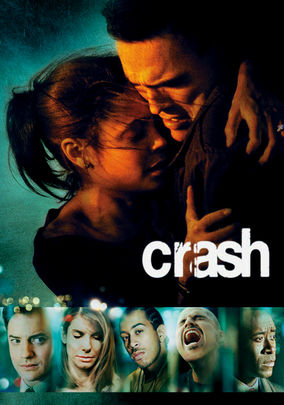
A superior film that has unfortunately suffered greatly after controversy, Crash (2005) is a story of intersecting vignettes all interrelated.

The controversy stems from the film’s very surprising Oscar win over the heavily favored Brokeback Mountain. Many thought the latter was a shoo-in, poised to set the LGBT genre ahead of the game.

Sadly, now when Crash is discussed by film lovers, it’s usually in tandem with Brokeback, and usually on the heels of its having stolen the Oscar crown.

On its own merits, the film excels as a social story exploring the many facets of race, racism, and bigotry.

The events in Crash take place within one thirty-six-hour day in metropolitan Los Angeles. Featuring a slew of characters that would even impress Robert Altman, the audience witnesses situations involving many races and backgrounds.

We meet Rick and Jean Cabot (Brendan Fraser and Sandra Bullock), a white affluent couple who are carjacked when driving home from dinner. The black men who carjack the couple then strike a Korean man and bring him to the hospital.

A racist police officer, John Ryan (Matt Dillon), cares for his troubled father who cannot afford insurance. A Persian father and daughter wish to buy a gun for protection, and a Hispanic father (Michael Pena) worries about a rash of drive-by shootings.

The stories go on and on as a myriad of the characters come into situations involving other characters.

The interconnecting stories all cascade into overlapping situations of interest. The point of Haggis’s film is racism but with a creative twist.

The director points out and shows that those who are racist have good qualities too and those who are discriminated against in turn discriminate against others themselves.

The most interesting character is Dillon’s, John Ryan. On the surface a racist, wise-ass, who in one scene embarrasses an affluent light-skinned black woman (Thandie Newton), simply because he carries a gun, then ends up saving her life in a horrific car accident.

But is he redeemed? Does he see the world as black people getting ahead and he is left behind? What about the Persian man, discriminated against, but then vowing revenge on a Hispanic man after a misunderstanding?

The black men who carjack the white couple then release a group of immigrants who will surely be sold, perhaps even for sex trafficking. Does this act make the men good?

The point that Haggis makes is that each character is neither all good nor all bad, but rather complicated and nuanced with emotions based on past experiences and discrimination themselves.

Crash is highly similar to Traffic (2000) and Babel (2006) in terms of pace, style, and the way the stories align. The film is different, however, in that the location is strictly confined to Los Angeles, making the setting of monumental importance.

How would events be different in a setting like Middle America? Or in a different country? These possibilities are worth contemplating based on the perception that Los Angeles is one of the most diverse cities in the United States. If racism occurs there it can occur anywhere.

Now more about that pesky Oscar controversy! In later years critics would largely agree that the inferior film had won that year and Brokeback Mountain lost due to a level of homophobia on the part of the voting academy.

Since the academy is filled with Hollywood liberals, albeit of an older generation, an alternative way of thinking is that perhaps Crash won because it was the “safer” film.

Everyone seems to have forgotten the other three nominated films that year. Alas, Crash is permanently marred for winning Best Picture. It would undoubtedly have more supporters had it lost.

Ranked as one of the lowest-scoring Best Picture winners, I still believe Crash has some worth- though I agree that it should not have won over Brokeback Mountain.

Taken on its own merits the film is quite good. A message film with great atmosphere, it succeeds in making the viewer think and ponder perhaps their discrimination, whether conscious or subconscious.

The ensemble acting and character representations are all very good and worthy of a second watch.

Oscar Nominations: 3 wins-Best Picture (won), Best Director-Paul Haggis, Best Supporting Actor-Matt Dillon, Best Original Screenplay (won), Best Original Song-“In the Deep”, Best Film Editing (won)

Independent Spirit Award Nominations: 2 wins-Best Supporting Male-Matt Dillon (won), Best First Feature (won)
St. Vincent-2014

St. Vincent-2014

Director Theodore Melfi

Starring Bill Murray, Naomi Watts, Melissa McCarthy

Scott’s Review #246

70295665

Reviewed June 5, 2015

Grade: B-

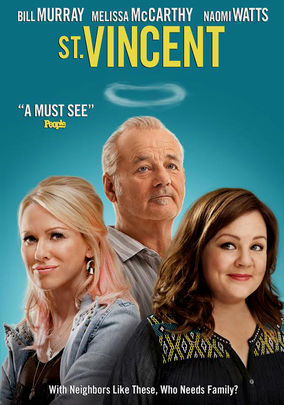
St. Vincent (2014) succeeds only due to the charming, funny appeal of its star Bill Murray, who fronts this cute, mainstream comedy.

Set in blue-collar Brooklyn, New York, it tells the story of a curmudgeonly old man (the title character, Vincent), who befriends a lonely young boy named Oliver, new to the neighborhood.

Mixed in with the cast of characters are Oliver’s struggling mother Maggie (played by Melissa McCarthy) and Vincent’s pregnant, stripper girlfriend, Daka, played by Naomi Watts.

I found intrigue in how we get to know Vincent first and then watch him evolve from a grumpy, cutting old man to a begrudging babysitter of the neighbor boy while clashing with Maggie and fighting with Daka.

Murray returns to comic wit using his now-legendary flawless dry, sarcastic humor and perfect timing and displays much of that in St. Vincent. Throughout all of this Vincent remains brutally honest with his snarky remarks (mainly aimed at Maggie) yet heartwarming and I love this aspect of the film.

Thanks to Murray, Vincent is lovable, making the film, which with lesser talent, would be overly sentimental

As the film progresses we see Vincent’s struggles- his wife suffers from Alzheimer’s, and he is indebted to bookies (primarily Terence Howard- in a bit of a throwaway role).

The film staggers with some predictability issues and is formulaic and easy to predict a warm finale.

Of course, in true form, Vincent is a Vietnam vet who drinks and gambles and is angry at the world, but has a heart of gold so, despite being temperamental, the audience falls in love with him (patriotism helps).

The character contains every cliche in the book. A mean old man- who rises to new heights and becomes a nice grandfather figure to a bullied boy is what this film is going for.

The bullying of Oliver is also contrived- during one scene Oliver, after being picked on once again by the prominent bully, flies into a seething rage and breaks the bully’s nose.

The audience is supposed to buy that the waif-ish, shy kid triumphs over the bully. If only life were that simple. Inevitably, after both serve after-school detention, they bond over bathroom cleaning and become best friends.

Who did not see that coming?

In addition, most of the characters are one-note.

Naomi Watts is a sexy, and aging Russian (not sure I bought that accent) stripper with a soft spot- she comes across as uptight but is caring- another cliche.

Melissa McCarthy is a hard-working, soon-to-be divorcee, trying to raise her kid right- one-dimensional. Even Vincent is seemingly tough as nails, but of course, has a soft spot for the neighbor kid.

The casting of Watts, McCarthy, and Howard is okay, and I surmise the film was going for casting “name” actors, but these parts might have been played by unknowns and had the same effect.

The gem is Murray.

Murray effortlessly breathes life into a character who otherwise would have been as dull as dishwater. I found the writing the weakest point of the film.

A major incident brings the cast together united as one (yawn). The film closes with the family all happily eating dinner together. I do not see this as a spoiler as this ending can be seen a mile away.

Despite the flaws and sentimentality of the film, it is admittedly sweet, and humorous at times, and sends a nice message to the audience- be kind to one another and help each other get through life.

Without Bill Murray, this film would have been completely bland and unlikeable.

St. Vincent (2014) is a feel-good film that is perhaps too feel-good.

Lee Daniels’ The Butler-2013

Lee Daniels’ The Butler-2013

Director Lee Daniels

Starring Forest Whitaker, Oprah Winfrey

Scott’s Review #81

70266686

Reviewed June 30, 2014

Grade: A

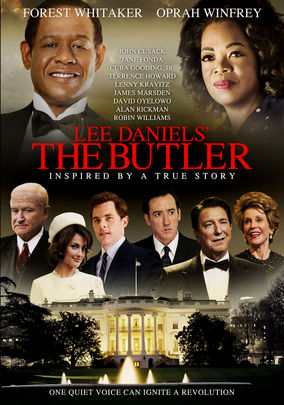
Director, Lee Daniels, is a recent favorite of mine (Precious-2009, The Paperboy-2012) and his latest The Butler (2013) is an excellent, true story, undertaking.

While the trailer looked appealing, I was concerned that the film might be overwrought or have a Hollywood sappiness.

While it’s a Hollywood film, it is also a powerful, emotional experience.

The viewer is taken on a journey from 1926 through the current president from the viewpoint of White House butler Cecil Gaines (Whitaker), who serves several presidents and is privy to the goings-on in the White House.

He is played by Forest Whitaker and his boozy, troubled wife is played by Oprah Winfrey.

Both give tremendous performances.

The Butler is a political journey through time and I love the authenticity of each decade from the sets to the costumes to the hairstyles.

The casting of the Presidents is curious (Robin Williams as Eisenhower and John Cusack as Nixon), but works nonetheless.

The rivalry between Cecil Gaines and his rebellious son is quite interesting as the viewer sides with each individual at different times.

The film is more emotional than I anticipated and much of the audience was teary during scenes of heartbreak and triumph.

I feel The Butler (2013) is a must-see for everyone.

Prisoners-2013

Prisoners-2013

Director Denis Villeneuve

Starring Hugh Jackman, Jake Gyllenhaal

Scott’s Review #75

70273235

Reviewed June 27, 2014

Grade: B+

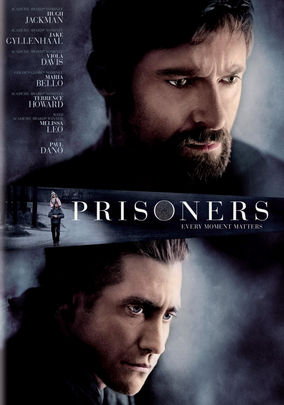
The film Prisoners (2013) weaves a gripping, taught, psychological tale amid a well-acted stellar cast of Hugh Jackman, Jake Gyllenhaal, Maria Bello, Viola Davis, and Paul Dano for starters.

That is what separates it from other similar, yet mediocre thriller types.

The gray, somber, Pennsylvania town is a perfect backdrop for a story involving child abduction and a father that seeks a confession from the presumed kidnapper.

The mood and cinematography are impressive and the bleakness is perfect for the tone- a cold Thanksgiving holiday weekend in a working-class, steel town.

At two hours and twenty-six minutes, the film is lengthy, but on the edge of your seat.

What intrigued me most was the audience conflict of whom to root for. Is the father purely innocent? Is the kidnapper guilty? Is someone else involved?

These questions go through the viewer’s mind during the film.

Prisoners possess a major drawback in the high number of plot holes and questions asked after the film.

The kidnapper’s motivations are weak and never fully explained. Portions of the story do not add up and make little sense.

The film is similar in style to Zodiac (2006) and Mystic River (2003).

Prisoners (2013) is an intense, thrill ride to be enjoyed, but not over-analyzed.

Oscar Nominations: Best Cinematography