Category Archives: Robert Pattinson

Tenet-2020

Tenet-2020

Director Christopher Nolan

Starring John David Washington, Robert Pattinson

Scott’s Review #1,149
Reviewed June 4, 2021

Grade: C

For those film lovers craving a plot that serves as a weaving puzzle that can never be figured out, Tenet (2020) is highly recommended. Others who desire a more defined and linear story and character development will be disappointed by the film.

Tenet is a visuals-only experience as I tuned in and out of the actual plot points after realizing they intersect past, present, and future elements.

I did try from the outset to understand, but ended up falling flat.

One’s enjoyment will depend on one’s cinematic desires and expectations.

I lean more towards a compelling story with excellent acting and a strong emotional connection to the project. I’m not as focused on brilliant CGI or dazzling visuals as some, but I recognize that Tenet has these elements.

However, I’m not sure I agree with the film’s Oscar win for Best Visual Effects or nomination for Best Production Design- thank goodness the terrific Mank (2020) won the latter award.

I’ll try to summarize the plot.

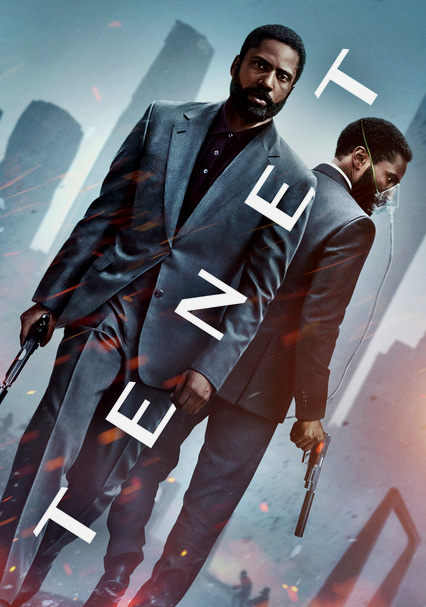
A secret agent named the Protagonist (John David Washington) embarks on a dangerous, time-bending mission to prevent the start of World War III.

The villainous Andrei Sator (Kenneth Branagh) is a Russian oligarch who communicates with the future and is intent on destroying the world. His wife, Kat Barton (Elizabeth Debicki), despises her husband and aligns with the Protagonist to stop him. They fall in love.

Along for the ride are an arms dealer, Priya Singh (Dimple Kapadia), and Robert Pattinson plays the Protagonist’s handler who may or may not be trusted.

Let’s start with the positives.

Tenet gets off to a terrific start with a scene at the Kyiv opera house in Ukraine. Though silly, the invasion of the theater and the massive sleeping effect of the theater attendees and performers is like a domino effect. The scene is fast and exciting.

Later, a daring car chase featuring a car speeding down a highway in reverse gear is pretty exciting. Add a character bound and tied in the passenger seat with no driver and no way to get out, which provides an incredible James Bond moment.

Another positive is the luscious locales like Estonia, Oslo, Norway, London, and the Amalfi coast.

That’s where the fun ends.

I have to admit that I expected more from Christopher Nolan, who wrote and directed the project. The man has churned out superlative efforts like The Dark Knight (2008) and Dunkirk (2017), but Tenet will not rank among his finest moments.

To that end, it’s a Nolan film. Sound and visuals are his trademarks, and the bombastic, booming score is tight and familiar. The mixing of loud, techy, thundering beats is commonplace, but sadly does little for the film. They almost become annoying.

The cast is seasoned and capable. With Washington, Pattinson, Branaugh, and Debicki onboard, there is a talent to be found. Even Michael Caine is cast in one wasteful scene.

Nonetheless, the actors drift through their scenes looking perplexed and stiff. Probably because they didn’t know what the hell was going on in the scenes.

Just like the viewer.

The dialogue is an issue because it’s not written well. Why would Kat want to kill a man who is already dying of terminal cancer? Why not wait out his demise? And the time travel was lost on me from the first sequence. I didn’t care.

The most laugh-out-loud line occurs when Kat exclaims to the Protagonist, “I just knew you’d have a backup plan. Wait, you do have a backup plan, right?” With juicy dialogue like this, it’s a wonder Tenet didn’t receive a Best Screenplay nomination. I jest, of course.

Minor details, such as the Protagonist and Kat having zero chemistry, despite the interracial romance having so much potential, are disappointing.

I can’t say I’d recommend Tenet (2020), but I can provide details of what you can expect from the experience. Some incredible visual moments can’t overcome the lack of any storyline, and the viewer will become lost in the tired moments.

By the final sequence, I thought I had watched a generic episode of a network television series like NCIS.

Ouch.

Oscar Nominations: 1 win-Best Visual Effects (won), Best Production Design

The Lighthouse-2019

The Lighthouse-2019

Director Robert Eggers

Starring Robert Pattinson, Willem Dafoe

Scott’s Review #987

Reviewed February 5, 2020

Grade: A-

The Lighthouse (2019) is the sophomore effort by acclaimed and novice horror director Robert Eggers.

His first film, The Witch (2015), garnered praise and independent film award nominations, and his latest offering has also received numerous accolades across the board.

This time around, he wisely secures top-notch talent, casting the incredible Willem Dafoe and Robert Pattinson to star.

The result is a well-acted, gorgeously photographed film that is odd beyond belief, requiring a second viewing even to attempt to understand it. The atmosphere of this film will draw some viewers in and push away others. It is that type of film experience.

Shot in startlingly good black and white, the time is the 1890s, set somewhere off New England.

The film stars Dafoe and Pattinson as two lighthouse keepers who start to lose their sanity when a storm strands them on the remote island where they are stationed. They spar, love, and play games, while imaginations run wild with bizarre images of mermaids, death, and claustrophobic storm conditions.

Frequent hallucinations render the plot unclear of what is fantasy and what is reality.

The technical aspects of The Lighthouse are superior to the story elements.

The gorgeous camera work, looking like either a modern film or a film from the 1940s, is superior. Seldom is a film made like this, and the black and white filming provides a cold and bleak atmosphere.

The prevalent wind and driving rain are buffeted by flying objects and mud, creating a looming and foreboding danger. The viewer can tell that sinister events are on the horizon, perfectly encrusting the increasingly dangerous storm.

The story is harrowing to figure out, with the exception that one or both men are losing their minds. Winslow (Pattinson) is the newbie, sent to assist the elder lighthouse keeper, the elderly and cranky Thomas Wake (Dafoe).

Wake forbids Winslow to ever set foot in the lantern room, insisting that the task is his job alone. This piques the interest of the young man, especially when Winslow observes Wake going up to the room at night and stripping naked.

Winslow begins experiencing visions and dreams of tentacles in the Lighthouse, tree stumps floating in the water, and distant images of a mermaid.

Peculiar scenes exist that make The Lighthouse both memorable and challenging to decipher. The presence of seagulls lends the film an authentically beach-like atmosphere, with their cawing and flying around.

Their existence soon becomes an ode to Alfred Hitchcock’s The Birds (1963) as a one-eyed gull begins to stalk Winslow.

Told it is bad luck ever to kill a gull since they harbor the souls of sailors, Winslow finally kills the attacking one-eyed gull in a fit of rage during one of the film’s most brutal scenes. Wake seethes with anger.

The film is homoerotic in many scenes, none more so than the lovely scene when the two men begin to dance and sway to the music. About to kiss, reality strikes, and the two drunk men come to blows.

The scene reminds me of an important one in the groundbreaking LGBT masterpiece Brokeback Mountain (2005).

The combustible pent-up masculine tension explodes, and we wonder if in another time the men lovers might be. This aspect is cerebral, filling The Lighthouse with psychological mystique.

A common element is the two men’s distrust of one another. Trapped by the destructive storm, they frequently drink themselves into oblivion- what else is there to do?

They sit and stare at each other, sometimes filled with rage, sometimes suspiciously. In a scene both jaw-dropping and hilarious, Winslow forces Wake into a collar and leash and leads him on his hands and knees into a muddy grave.

Unsure if the scene is fantasy or reality, it could almost be taken from a gay leather porn film.

Eggers has a bright future ahead of him, and I am eager to see his next project. I am not averse to odd or even nonsensical films if the intent is good, but I would recommend a more straightforward approach next time to see what he comes up with.

The Lighthouse (2019) successfully offers a creepy and bizarre tale of men losing their sanity in a dream-like and creative way that will assuredly divide audiences.

Oscar Nominations: Best Cinematography

Independent Spirit Award Nominations: 2 wins- Best Director- Robert Eggers, Best Male Lead- Robert Pattinson, Best Supporting Male-Willem Dafoe (won), Best Cinematography (won), Best Editing

Good Time-2017

Good Time-2017

Director Ben Safdie, Joshua Safdie

Starring Robert Pattinson, Ben Safdie

Scott’s Review #767

Reviewed June 5, 2018

Grade: B+

Every so often, an actor who is known for either making mainstream films or portraying a mediocre character risks being typecast.

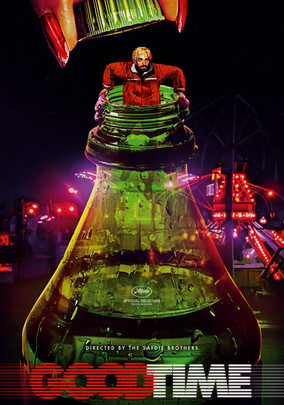
Fortunately, actor Robert Pattinson, known chiefly as the heartthrob from the trite Twilight films, has been given the best career role. The actor hits the jackpot with a challenging and edgy performance in the fast-paced, independent crime drama Good Time (2017).

The film is a perfect ride, and directors Ben and Joshua Safdie successfully provide excellent tension and compelling action scenes (Ben even gives a worthy supporting performance as a mentally challenged character).

The overall tone of the film is that of an edge-of-your-seat experience.

As enjoyable and taut as the film is, a few minor criticisms must be mentioned below.

Good Time begins with Nick Nikas (Ben Safdie) being quizzed by a therapist. They are quickly interrupted by Nick’s brother Connie (Pattinson), who removes him from the facility so that he can assist with a bank heist.

When the attempt goes awry and Nick is arrested, Connie does his best to spring his brother from jail and then from the hospital following an altercation with another inmate. All the while, Connie must also evade the police as he forms a strange connection with a sixteen-year-old girl, Crystal (Taliah Webster).

The fun part of Good Time is that the film is fast-paced and filled with twists and turns. Taking place largely over the course of one night, we are compelled by Connie’s journey and wonder if he will outrun the cops.

Although it is a standard thriller, Good Time rises slightly above this ranking due to its wonderful New York City setting and numerous exterior scenes—this is a major plus.

The film’s look also garners props. With a slick yet gritty and grainy feel, the camera angles are quick and plentiful. This is a great tool to keep the action going at lightning speed, and the editing deserves kudos, too.

The intensity and tension run rampant throughout.

A good example is the bank robbery scene—as the teller disappears into the vault to get the requested amount of money, she takes what seems like an eternity to return, leaving the audience (and Connie) wondering if she has alerted the authorities.

Otherwise, the film is helped immensely by the acting performance of Pattinson, who owns the film. Having not seen him in anything before, I was surprised at how good he was.

I thought of him as more of a matinee idol than a serious actor, but I was proven wrong. Grizzled and temperamental but a decent guy at times, Pattinson’s Connie is loyal to a fault, putting his brother first and foremost.

Fans of Captain Phillips (2013) will be delighted to see Barkhad Abdi cast in the small yet pivotal role of an amusement park security guard.

Nominated for the Best Supporting Actor award for Captain Phillips, the Somali-American actor has found steady work in film since his acclaimed debut performance. In his role in Good Time, the character is instrumental in kicking off the final act that leads to the downfall of at least one other character.

A few minor but notable flaws (somewhat unnecessary) that Good Time contains are worth mentioning.

Perplexing to me is the casting of Jennifer Jason Leigh as Connie’s girlfriend, Corey. Decades older than Connie, Corey is written pretty much as a nitwit attempting to use her mother’s credit card to bail out Nick.

The film does not mention the age difference or provide much meat to the role—Jason Leigh deserves better than a throwaway role like this.

Otherwise, none of the female characters are treated exceptionally well. Connie frequently directs or shouts at either Corey or even Crystal, eliciting a slightly off-putting “man in charge” vibe.

Also, a gay slur uttered by Connie is thrown into a scene for seemingly no reason, which surprises me in 2017. Still, something makes the audience root for Connie while we still want him to get his punishment.

Good Time (2017) provides quality entertainment in a specified genre with good acting.

With a weird Ocean’s Eleven style (only with one prominent character), the bank robbery theme will satisfy those in the mood for a good heist film.

The film’s title is a mystery (is it irony?), and I’m not sure it works, but overall, it is a perfect watch.

Independent Spirit Award Nominations: Best Director-Safdie Brothers, Best Male Lead-Robert Pattinson, Best Supporting Male-Benny Safdie, Best Supporting Female-Taliah Lennie Webster, Best Editing

Maps to the Stars-2014

Maps to the Stars- 2014

Director David Cronenberg

Starring Julianne Moore, Mia Wasikowska

Scott’s Review #266

80013474

Reviewed August 14, 2015

Grade: A-

Maps to the Stars (2014) is a bizarre, unpleasant, film that is as dark and perverse as provocative and fascinating to observe and ponder.

It is more like an independent art film than a blockbuster Hollywood project and was made by an arguably mainstream director, David Cronenberg (Crash-1996, The Fly-1986), I am surprised it was able to be made on a large scale budget due to the negative portrayal of actors and celebrity types, specifically, troublesome starlet and child star.

One must be wary of biting the hand that feeds.

Maps to the Stars is a film where almost all the central characters are unlikable- difficult, unstable, self-absorbed, or all of the above.

The subject matter is ugly but fascinating to me.

The wealthy and glamorous are interesting and, at times the film is like a Greek tragedy containing Shakespearean elements- think Romeo and Juliet in an incestuous way times two. One must watch this film to see what I mean.

Hint- it contains the ick factor.

The plot centers on a Hollywood family, where the son is a famous child star and the primary breadwinner. They are the Weiss family- all struggling to either find success or hang on to it, all the while each of them is neurotic.

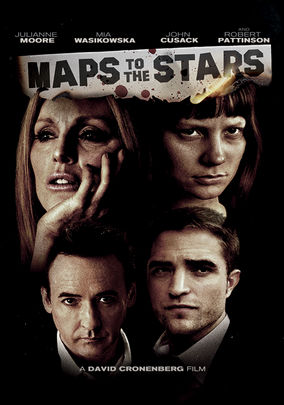
The father, Dr. Samuel Weiss, played by John Cusack, is a TV psychologist, hired by Havannah Legrand (Julianne Moore), a highly self-centered, aging actress, struggling to land a coveted role-playing her mother.

Her mother was a young actress in her day, who tragically died in a fire. Havannah despises her due to claimed childhood abuse.

Cristina Weiss (Olivia Williams) is Samuel’s wife. This controlling, ambitious woman strives to get the most money out of her son Benjie, a Justin Bieber-type character with a troubled streak.

Rounding out the family is Agatha Weiss, a troubled teenager, sent away for years after giving her brother pills and setting her parents’ house on fire. Though not directly related to Weiss’s, Havannah, and the limo driver, Jerome Fontana (Robert Pattinson) become heavily involved with the family as events transpire.

It reminded me of a myriad of other influential film directors in peculiar ways. I noticed elements of David Lynch’s Mulholland Drive (1992), for instance, in a dark clever mood and the obvious setting of Los Angeles- even the score is similar during parts of the film, as the moody monotone sounds played in the background.

The Ice Storm (1997), American Beauty (1999), and Magnolia (1997) also sprang to mind in their dark and strange worlds (Magnolia) and the inclusion of the dysfunctional family element (The Ice Storm and American Beauty).

Furthermore, to a lesser extent, I saw some Robert Altman ingrained in Maps to the Stars. These aspects are an enormous reason why I loved the film so much.

A prevalent theme throughout Maps to the Stars is one of burning- a victim of burning, a fire set, a character setting oneself on fire. Some characters see dead people. Havannah regularly sees her dead mother. Benjie sees a young girl whom he visited in the hospital before she died, her last wish of meeting the big star.

She suffered from non-Hodgkins lymphoma, who he foolishly thought had AIDS. He sees her in visions and tries to strangle her, instead of strangling an innocent living person.

The film is a weird trip, and the viewer will be dreading an oncoming dark moment.

When Benjie carelessly plays with a gun that he assumes is unloaded we know trouble will occur. He is showing off at an actor friend’s party along with equally obnoxious starlets while talking about poop, all selfish and wanting to party.

When Havannah belittles Agatha, her assistant, we see Agatha’s past anger come back into play as she slowly unravels with rage- Havannah is unaware of Agatha’s knowledge of her betrayal.

One small gripe is the continued use of gross toilet talk in multiple scenes including a raunchy discussion of a fan buying a well-known actor’s waste for thousands of dollars. What was Cronenberg’s motivation for this?

This was a silly, tasteless, unnecessary element of an otherwise great film.

Maps of the Stars (2014) is dirty and ugly but is also a quirky treasure about bad people in Hollywood. Unpleasant characters whom I could not take my eyes off of.

A brilliant film that delves into Hollywood shallowness and madness and does it in a daring, twisted, wonderful, sort of way.