Category Archives: Juno Temple

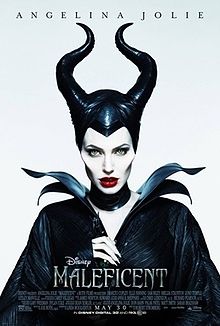
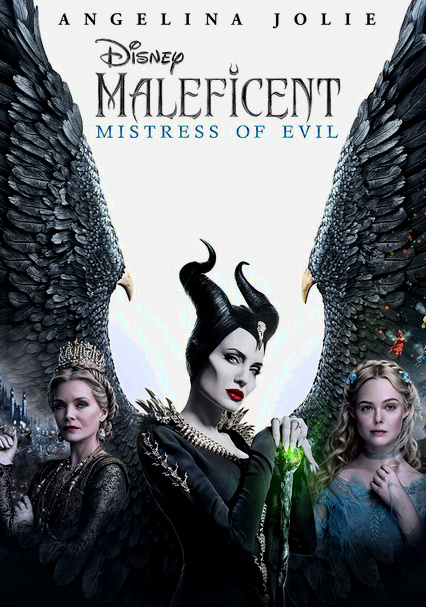
Maleficent: Mistress of Evil-2019

Maleficent: Mistress of Evil- 2019

Director Joachim Ronning

Starring Elle Fanning, Angelina Jolie

Scott’s Review #1,039
Reviewed July 14, 2020

Grade: B+

Maleficent: Mistress of Evil (2019) is the follow-up to the 2014 film, titled Maleficent, and while not a necessary sequel, it surpasses the original.

The intent was to create a significant studio effort that would generate substantial revenue, and the experiment appears to have been successful.

The production is not as frightening as the title might lead one to believe, and children over the age of ten would be a suitable target audience.

While the screenplay features traditional plot elements and a predictable ending, the real winner is the visual and cinematic treatment, which will leave viewers gasping.

The lush landscapes, odd little worlds, castles, and forests blossom with vibrant colors and exquisite shapes and objects.

It may primarily be CGI, but marvelous all the same.

To recap, the character of Maleficent debuted in the 1959 classic animated Disney film Sleeping Beauty. Maleficent is an evil fairy and the self-proclaimed “Mistress of All Evil” who, after not being invited to a christening, curses the infant Princess Aurora to “prick her finger on the spindle of a spinning wheel and die” before the sun sets on Aurora’s sixteenth birthday.

The character has since “evolved”, now portrayed as a sympathetic character, who is misunderstood in trying to protect herself and her domain from humans.

For five years, Aurora (Elle Fanning) has reigned peacefully as Queen of the Moors with Maleficent (Angelina Jolie) serving as teacher and protector. They have a rapturous relationship and flock and carry on with fairies and animals alike.

Handsome Prince Phillip (Harris Dickinson) proposes to Aurora, thereby uniting her kingdom with his, which is met with caution by his parents, specifically his mother, Queen Ingrid (Michelle Pfeiffer).

When the players gather for a celebratory dinner, Maleficent is mocked, causing her to fly into a rage, setting off a war between humans and fairies.

A key positive, and a notable shift in the story, is that Maleficent, a legendary film villain, is written sympathetically, and the plot device is effective. Rather than have her sparring with daughter Aurora, the duo team up to thwart the devious efforts of the evil Queen Ingrid, who is the real villain.

Jolie and Pfeiffer must have had fun playing the roles, and both perform their respective parts adequately. Favorable to me is Jolie, adding just enough vulnerability to balance her fierce nature and blood-red lips. Pfeiffer plays the role straight, as a caricature, with no redeeming value.

Both roles are fun.

Keeping in mind the target audience, the characters of Maleficent and Aurora are inspiring, especially to young females everywhere. The film adds more than a hint of progressive feminism as both characters are strong and no-nonsense.

This does not detract from their sensitivity or sense of fairness. Both could equally be role models of tough yet compassionate female characters.

In most Disney films, there are heroes and villains, and we all know and expect that. The standard storyline of good revolting against evil is on display, and an epic climactic battle scene gives a customary ending to the film.

Likewise, the fairy tale romance between Prince and Princess is prominently featured, and for my money, Dickinson and Fanning are tremendous in the roles.

The chemistry between the actors is apparent, and there is a nice balance between a believable romance and strong, independent characters.

Queen Ingrid, barely a mention in the original animated film, is turned into an evil shrew, all completely plot-driven. The story is what I expected it to be, but not the film’s high point.

More impressive is how the viewer can easily escape into a world of make-believe and long to stay there forever. Especially for the younger viewers, the Moors are a bevy of magical creatures and fluttering fairies rich with goodness.

The comical Knotgrass, Thistlewit, and Flittle, the red fairy, green fairy, and blue fairy, respectively, make a return appearance, though in a limited capacity. It would have been nice to give them a stronger presence, providing more wisdom, more advice, and more humor, but they serve their comic relief purpose well.

Will there be a third incarnation of Maleficent?

The filmmakers provide a strong likelihood. After Aurora and Philip wed, Maleficent returns to the Moors with the other Dark Fey, teaching the young fairies to fly. She promises to return for Aurora and Philip’s future child’s christening.

This vow seems like an easy setup to build on the original storyline, unlocking the next chapter in this engaging saga.

Oscar Nominations: Best Makeup and Hairstyling
Notes on a Scandal-2006

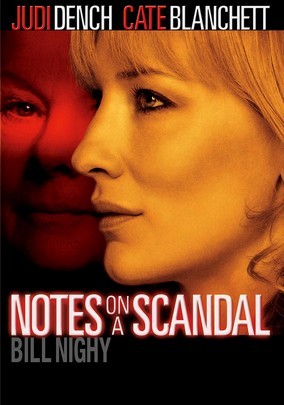
Notes on a Scandal-2006

Director Richard Eyre

Starring Judi Dench, Cate Blanchett

Scott’s Review #793

Reviewed July 23, 2018

Grade: A

A British drama centering on the world of teachers, illicit affairs, and sexuality, Notes on a Scandal (2006) is a superlative effort with thrills and drama galore.

Featuring heavyweights like Judi Dench and Cate Blanchett there is no way this film could be a dud based on the acting alone. The chemistry between the women and the carefully crafted thrills created by director, Richard Eyre, make the film a compelling joy to view- perhaps multiple times for additional entertainment.

The story is told mainly from the perspective of Barbara Covett (Dench), a rigid and bored schoolteacher nearing retirement at a comprehensive school in London, where she teaches.

Barbara is a spinster and a closeted lesbian, constantly writing in her journal for comfort- this is the main narrative of the story and is tremendously effective.

When a young and attractive art teacher, Sheba Hart (Blanchett), arrives on the scene, Barbara fancies her and is determined to get closer. After Sheba begins an illicit affair with a male student, Barbara discovers the shenanigans and uses the situation to her advantage.

The scandal results in both women’s careers being at risk as well as Sheba’s troubled home life coming to fruition.

Notes on a Scandal is a good, solid, psychological thriller/drama with enough twists and turns to compel the viewer. The film is not very long- at one hour and thirty-two minutes, there is hardly time for lagging.

The best achievements, however, are with the superior acting of the two leads. With other lesser talents, this film might have suffered from too much melodrama and not enough meat. With great acting chops, Dench and Blanchett do not let this happen and instead treat the audience to a riveting affair.

As fantastic as Blanchett is, Dench’s Barbara is the standout and takes center stage throughout the film.

Interestingly, despite both actresses being leads, Dench received an Oscar nomination for Best Actress, while Blanchett went supporting. But there is no question that both actresses deserved the praises they reaped- and then some.

Dench turns in such a delicious performance that she makes the film arguably the reason to watch it. Wearing no makeup and dressed as conservatively as imaginable, an icy stare or thoughtful gaze will run shivers up and down the viewer’s spine.

As conflict and drama unfold, Barbara proves she is nobody to be messed with. Still, the character has an underlying vulnerable quality, simply yearning for affection and love from another woman. One wonders if she has ever really had the love she deserves.

Dench is brilliant at revealing all of Barbara’s underlying nuances.

The film poses an interesting moral question that will leave some viewers undoubtedly not a fan of Sheba’s. The fact that she lusts after an underage male, Steven Connolly (Andrew Simpson), and has relations with him, while having a husband and handicapped child at home may be too much for some.

Surely, the character will not be championed by many, but I found Sheba complex and difficult to grasp. This complexity is to the filmmaker’s credit and allows for a more layered character study of both Sheba and Barbara- neither is cut and dry.

An interesting aside of the film is what if the genders of the roles were reversed? Would the film have the same effect if Sheba were a male character and Steven was a teenage girl? What if Barbara were a straight woman? What if Barbara was a gay male character?

These other possibilities left me wondering as I watched the film. Wisely, I think director Eyre got things just right.

Notes on a Scandal (2006) is a film that reminds me of a British version of Fatal Attraction (1987) meets Single White Female (1992).

The story holds elements of each and was adapted from a 2003 novel of the same name. With frightfully good performances by both Dench and Blanchett, this film is a memorable thriller not to be missed.

Oscar Nominations: Best Actress-Judi Dench, Best Supporting Actress-Cate Blanchett, Best Adapted Screenplay, Best Original Score

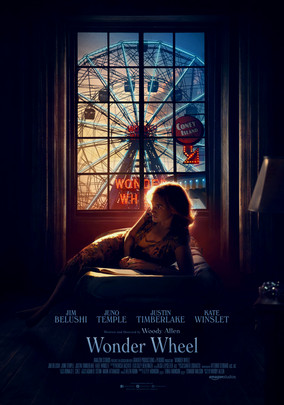
Wonder Wheel-2017

Wonder Wheel-2017

Director Woody Allen

Starring Kate Winslet, Jim Belushi

Scott’s Review #709

Reviewed December 31, 2017

Grade: B+

Woody Allen typically releases a new film each year, and 2017’s project is Wonder Wheel.

Set in 1950s Coney Island, a seaside beach in Brooklyn, New York, the film is an authentic-looking period drama, with lovely costumes and legitimate New York accents from all principal actors.

The story is pretty depressing, though, as a likable character is tough to find. However, Wonder Wheel contains fantastic acting, mainly on the part of star Kate Winslet, whose troubled character is the film’s focal point.

Winslet portrays Ginny Rannell, a struggling forty-year-old woman living in the seaside neighborhood and working as a waitress at a dingy Clam House. She despises her life and longs for a way out of the doldrums, yearning for the life she had years ago as an aspiring actress.

Her husband, Humpty (Jim Belushi), a carousel operator, has alcoholism. Together they raise Ginny’s son, Richie, a young boy who loves to start fires.

When Humpty’s estranged daughter, Carolina (Juno Temple), shows up on their doorstep, having provided information about her mobster husband, and subsequently “marked”, Ginny’s life slowly begins to unravel as she and Carolina pursue the same man, hunky lifeguard, Mickey (Justin Timberlake).

The film’s New York setting is an enormous plus and a standard of many Woody Allen films—the authenticity is apparent. The summer mood of the beach, sand, sunny boardwalk and beach scenes make the viewer feel transported in time.

The 1950s period worked as beachwear, and the amusement park sets were used to their advantage. The actors’ New York accents and the language and sayings are appropriate for the times.

The apartment that the Rannells rent is an excellent treat to the film. The set features a wonderful beach landscape during daytime and nighttime scenes so that the mood change can be noticed—these are all enticing elements to Wonder Wheel.

Enough cannot be said for Winslet’s talents, who make the character of Ginny come to life.

Undoubtedly a tough role for her to play, Winslet, who can make reading the phone book sound interesting, tackles the complex part and arguably gives one of the best performances of her career—my vote would still go to her portrayal of Hannah Schmitz from 2008’s The Reader.

Initially a sympathetic character, she longingly desires to return to the stage and perhaps find stardom as an actress and sees Mickey as her last chance. When events curtail her dreams, her character takes a sharp turn and does an unspeakable act.

I love Justin Timberlake’s acting talents. By 2017, he had successfully proven himself a major star in both the film and music worlds.

As the hunky, charismatic, yet studious and intelligent lifeguard, Mickey, he teeters between womanizer and earnest, love-stricken, young man.

Timberlake has taken on more interesting film roles beginning with the 2010s, The Social Network, and let’s hope there are more to come.

Juno Temple is just perfect as the naive Carolina. With an innocent, sweet personality, she yearns for love and a fresh start. Temple, known mainly for quirky independent film roles, fits a Woody Allen creation perfectly.

Finally, legendary actor James Belushi fills his character of Humpty with dedication, loyalty, and alcoholic rage. He adores Ginny but sometimes takes her for granted.

What a treat for fans of The Sopranos to see a couple of familiar faces appear as (what else?) mobsters. Tony Sirico and Steve Schirripa make cameo appearances as Angelo and Nick, henchmen for Carolina’s unseen husband, who is intent on tracking down and killing her.

Despite minimal parts, the actors seem to have a ball reprising similar roles that made them famous.

Wonder Wheel, shot in a similar tone to a stage production, draws comparisons to A Streetcar Named Desire, both with four principal characters- two male and two female, Ginny, Carolina, Mickey, and Humpty, all with some similarities to and some differences with storied characters Blanche, Stella, Stanley, and Mitch.

However, the comparisons can easily be studied and analyzed.

Woody Allen creates a film that can be appreciated chiefly for its top-notch acting talent, which is not surprising given the actor’s cast, and it is a compelling, never boring story.

The film is a downer, however, with no heroic characters. Thankfully, this is counterbalanced perfectly by a great New York setting, which is a high point of Wonder Wheel (2017) and cheers up the otherwise dour tone of the film.

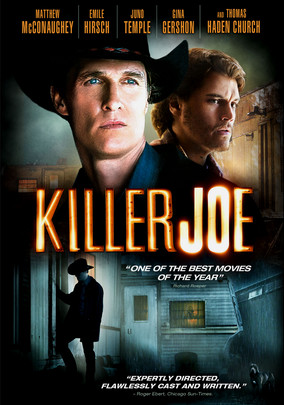
Killer Joe-2011

Killer Joe-2011

Director William Friedkin

Starring Matthew McConaughey, Emile Hirsch

Scott’s Review #450

70209632

Reviewed July 14, 2016

Grade: A-

Killer Joe (2011) is a must-see for any fan of director Quentin Tarantino because this small, independent, gem of a feature is worth checking out.

Tarantino’s films influence the film in style, characters, and violence. The violence mixed with humor, wit, and great writing is stamped on the film.

Surprisingly, given the influence of another director, Killer Joe is directed by William Friedkin, who is a very acclaimed filmmaker in his own right. Classics such as The Exorcist (1973) and The French Connection (1971) were created by this talent.

Matthew McConaughey owns Killer Joe and he has thankfully graduated from silly, fluffy, romantic comedies to smart, delicious roles in independent films of late. He has come to be a respected Hollywood actor.

His lengthy nude scene is daring for such an A-list actor.

The film is satirical, without being too campy, and the setting of a suffocating, trailer-trash, Texas town is extremely well done.

I loved the violent and gruesome fried chicken dinner table scene the best.

I especially liked the overall food references throughout the film which adds even more macabre comedy to this dark (on the surface) film.

Independent Spirit Award Nominations: Best Male Lead-Matthew McConaughey

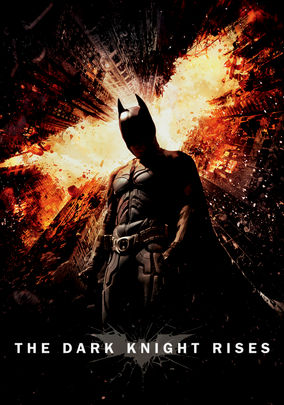
The Dark Knight Rises-2012

The Dark Knight Rises-2012

Director Christopher Nolan

Starring Christian Bale, Tom Hardy

Scott’s Review #431

70213514

Reviewed June 23, 2016

Grade: C+

The Dark Knight Rises (2012) is a sequel to the exceptional The Dark Knight from 2008 and, unfortunately,  is a complete letdown, especially compared to that film.

Perhaps my expectations were too lofty- it is a sequel after all, and sequels, typically disappoint.

To be fair, the film looks great and has a fast-paced, modern feel- slick and action-packed. A summer popcorn film.

The story, though, is uninteresting- the villains are not compelling, which is a major miss in a film like this where the villains are crucial.

Tom Hardy as Bane is miscast. Anne Hathaway’s Catwoman is underdeveloped and one-dimensional. We never really know much about what makes these characters tick.

I did enjoy the twist at the end involving Marion Cotillard, which impressed me and I did not see coming throughout the story.

I might have rated The Dark Knight Rises even lower than a C+ had it not been for the group of top-notch actors appearing in the film.

Having loved the most recent Batman film, I expected more and received less.

Black Mass-2015

Black Mass-2015

Director Scott Cooper

Starring Johnny Depp, Joel Edgerton

Scott’s Review #278

Black_Mass_(film)_poster

Reviewed September 28, 2015

Grade: B+

A dark tale of crime, corruption, and Irish mob ties encompass Black Mass (2015), a drama based on the life and times of infamous Boston crime lord Whitey Bulger.

Set primarily in Boston, with a segue to sunny Miami during the 1970s and 1980s, the film mainly focuses on the intricate dealings between Bulger and childhood friend John Connelly. Now FBI, he uses Bulger as an “informant” to secretly bring down an Italian mafia figure, but slowly becomes more involved in Bulger’s sinister world.

Beginning in 1975, the film is authentic in its use of the styles, cars, and looks of the times in Boston during that period. Plausibility is apparent, and powerful acting is shown from top to bottom.

The stellar cast of Black Mass and the hefty cast features an array of well-known and capable actors, adding realism.

Led by Johnny Depp as Whitey, Depp gives an eerie, hypnotic performance as his bright blue eyes sparkle in a devious way.

Whitey is ruthless and will do whatever is needed to keep power and control. Like Connelly, Joel Edgerton is arguably the film’s lead character, though Depp gets top billing. Edgerton, in real life handsome, appears frumpy, and as a regular Joe type.

Supporting turns by Benedict Cumberbatch, as Whitey’s powerful Senator brother, is crafty and sleek, but corruption shrouds him.

Kevin Bacon, Dakota Johnson, Peter Sarsgaard, and Julianne Nicholson portray smaller yet pivotal roles and all do a fine job.

The screenplay is intelligently written. The story is quite dark and there are no laughs or light moments.

There are numerous deaths, the victims shot at point-blank range, but also two deaths in particular, where the victim’s suffering is prolonged and the scenes are cringe-worthy. The film is very violent and given the subject matter, is riddled with foul language.

One impressive aspect of Black Mass is the character-driven tale and that it is based on a real-life person adds to this.

Not only is Bulger fleshed out, but John Connelly is written very well. Gradually becoming immersed in the crime world as opposed to the world of law, we see Connelly sink deeper and deeper into Bulger’s world, and not so unwillingly either.

He loses his wife Marianne (Nicholson) along the way as she tires of the danger and corruption surrounding her. A chilling scene occurs when Bulger confronts Marianne in her bedroom, after observing negative vibes from her, and warns her in a flirtatious way, never to cross him.

As he caresses her face and slowly firms his grip, it is a rather frightening scene.

The dialogue is crisp. When Bulger is invited to a steak dinner at Connelly’s house, there is awkward tension at the dinner table. Jovial small talk over the preparation of the delicious marinated steak everyone is eating comes to the forefront as Bulger asks Connelly’s partner to reveal his family secret recipe for the favorite steak he has ever eaten.

When the partner eagerly confesses the recipe, he is coldly quizzed whether he would give up Bulger’s secrets as easily.

This is one of the best scenes in the film.

Comparisons to Goodfellas (1990) are evident but without the fun. I thought of The Departed (2006) throughout the viewing as well.

I think director Scott Cooper goes for and successfully achieves, good straight-forward, dark story-telling. Take the number of killings. The organized crime world is dirty, intense, and unkind and Black Mass portrays this well.

Black Mass (2015) is a success on many levels. The superior acting, detailed writing, and truthfulness create a good film. Just be sure to remember it’s a heavy one.

Maleficent-2014

Maleficent-2014

Director Robert Stromberg

Starring Angelina Jolie

Scott’s Review #251

Maleficent_poster

Reviewed June 27, 2015

Grade: C+

Maleficent (2014) is an updated re-telling of the classic fairy tale “Sleeping Beauty” told from the perspective of Maleficent, the evil godmother, who in this version, it is revealed, was not always.

She is rather sympathetic towards the beginning of the film.

Later in life, becoming the antagonist, she begins life in a world of goodness, wonder, and hope until she is duped by a young man she loves and turns wicked with hatred and revenge.

The casting of Angelina Jolie as Maleficent is excellent and the main reason to watch the film.

Also worth noting is the wonderful, creative art direction and costumes that look gothic and interesting.

Otherwise, the film meanders a bit, is slightly watered down, and contains a sappy Disney-style love story. The story itself is the weakest part of Maleficent.

Maleficent, protector of the fairies in the magical land of the Moors, as a young girl is betrayed and is NOT a villain. Her male suitor (Stefan) is someone she trusts, loves, and respects, is then duped and has her wings stolen by him.

He becomes the King of the neighboring land of humans, vastly different from the peaceful world that Maleficent lives in.

These events lead her to devastation followed by revenge as she places a vicious sleeping curse on Stefan’s firstborn, Aurora.

Jolie is wickedly delicious in this role- the sultry, pouty looks, and those eyes! She plays scorned, revenge-driven to the hilt without being too over the top as lesser actresses would have.

As the actress ages, she is beginning to take on more character, villainous parts rather than sexy bad girls or heroines and I am all for that. It gives the actress something meaty to sink her teeth into. Her dark costumes perfectly give the character an edge.

The art direction is magical and the difference between the two lands is distinctive. The beauty of the Moors with gushing streams, mountains, and flowers contrasts with the stark nature of the human world.

The fairies symbolize peace and freedom with a life filled with treasures, whereas the human kingdom symbolizes ambition, greed, and coldness. The tiny fairies flittering around add zest and life to the film.

The silly love story, though is not believable nor compelling to me, especially the latter film romance between Stefan’s daughter- Aurora, and her wealthy suitor Phillip. They seem manufactured to be together without having a chance to get to know each other.

This seems contrived and produced to add something young to the story.

On a storytelling note, Maleficent’s sleeping curse is set to transpire on Aurora’s sixteenth birthday when she pricks her finger on a spindle and falls into a deep sleep that can only be remedied by love’s true kiss.

Why does he send Aurora away to live in hiding when she is a newborn? Doesn’t he have sixteen years to enjoy her?

The film then dwindles to the inevitable battle finale with lots of movement and fire and a stand-off between Maleficent and Stefan that is dull and predictable.

Overall, the first half of Maleficent (2014) is the better part and the performance of Angelina Jolie is wonderful.

Oscar Nominations: Best Costume Design

Lovelace-2013

Lovelace-2013

Director Rob Epstein, Jeffrey Friedman

Starring Amanda Seyfried, Peter Sarsgaard

Scott’s Review #133

70241594

Reviewed July 24, 2014 

Grade: B

Lovelace (2013) is an account of famous 1970’s porn star, Linda Lovelace, and her rise to stardom and inevitable fall from the spotlight, difficult family life, abusive relationships, and her attempt to escape the porn world for good.

The film portrays the story from Lovelace’s point of view based on her tell-all autobiography and spins her in a very sympathetic way.

Whether all of her abuse and struggles that Lovelace claimed are to be believed is up to the viewer.

Lovelace, the film, comes across as similar to Boogie Nights (1997)- even the 1970s soundtrack is eerily alike, but inferior to that masterpiece.

The only character whose past is fully delved into is Linda Lovelace who is the sole focal point; the others are simply an extension of her character.

One major issue I found with the film is the casting of Amanda Seyfried as Linda Lovelace.

Seyfried does not have the plain Jane or girl next door characteristics that the actual Lovelace had. She comes across as soft and gentle, much too much for this particular role.

Conversely, the casting of Sharon Stone and Peter Sarsgaard is excellent as each is dynamic in their respective roles. Stone should have received much more acclaim than she did for her role.

As Lovelace’s mother, she is gritty, steely, and unsympathetic.

The film contains a whos who of Hollywood names involved in small roles.

Another issue is the film seems like a made-for-television movie and considering the subject matter is the porn industry, it seems awfully watered down and not harsh enough.

Lovelace (2013) is entertaining enough to keep one’s interest but is not riveting or in-depth enough to be a major success.