You’ll Like My Mother-1972

You’ll Like My Mother-1972

Director Lamont Johnson

Starring Patty Duke, Rosemary Murphy

Scott’s Review #1,531
Reviewed April 29, 2026

Grade: A-

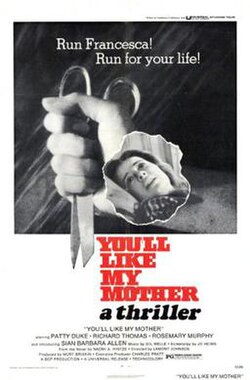
A largely forgotten 1972 horror film, You’ll Like My Mother, is a diamond in the rough.

It’s a perfect offering for a frigid wintry night since several days’ worth of activity occur amid a blustery Minnesota blizzard.

Additionally, a foreboding remote mansion with warm fireplaces, howling wind, and passageways is where most of the action takes place.

Is there any better atmosphere for a horror film?

Influenced by films like Psycho (1960), Rosemary’s Baby (1968), and even What Ever Happened to Baby Jane? (1962) and undoubtedly others, its themes are ‘mommy horror’ and being incapacitated, gaslit, and trapped in an isolated locale.

When her husband, Matthew, is killed in Vietnam, newlywed Francesca Kinsolving (Patty Duke) finds herself pregnant and alone. She travels from sunny Los Angeles to visit her in-laws in snowy Minnesota, believing, based on her late husband’s encouragement, that she’ll be welcomed with open arms.

She is mortified at what she actually finds when she arrives.

Mrs. Kinsolving (Rosemary Murphy) is an uncaring woman who refuses to accept Francesca as her daughter-in-law. Upon an introduction, she casually mentions having just drowned some kittens as a result of the family cat mating with an alleycat.

Matthew’s mentally disabled sister, Kathleen (Sian Barbara Allen), whom he never thought to mention, is kind, and Francesca forms an immediate connection with her.

Much to her displeasure, Francesca sticks around because of the blizzard, and events take a peculiar turn with the discovery of a family Bible, a mysterious resident of the mansion, and questions about the family fortune.

Patty Duke, best known for Valley of the Dolls in 1967, reportedly sought more mature roles and delivered a fantastic lead performance in You’ll Like My Mother.

The best part about Francesca is that she is a strong character and matches wits with Mrs. Kinsolving. When she is given a sleeping pill in her hot cocoa, causing her to sleep for fifteen hours, she scolds the mother and demands the hearty breakfast of bacon, eggs, and toast that she missed.

She also doesn’t mince words about her disappointment in Mrs. Kinsolving’s demeanor, admitting she expected someone a bit nicer and stating she doubts they’ll see each other again.

I wanted more scenes between the two and more bitchy sparring as the ladies play cat and mouse, dangling leverage in front of each other.

Rosemary Murphy is a standout as Mrs. Kinsolving, lending the character a cold, abrupt quality. As the onion is peeled and uncertainty about her identity is unleashed, she boldly keeps her cool.

The pacing of the film is excellent, and events never lag. At merely one hour and thirty-two minutes, the director Lamont Johnson makes the most of it, immediately showing Francesca on a bus towards snow country.

The rest is contained in and around the vast mansion and its grounds. While not haunted, the estate is a major player with long hallways, staircases, cabinets, and the attic and garage being important components.

A few plot holes are evident, such as no one realizing a newborn baby is being kept in the attic, and horror standards like Francesca’s near escapes being thwarted, but the film’s tension never wanes.

The final act is juicy as a wild chase and game of hide and seek around the mansion’s grounds ensues, which results in a shocking death. The audience will bite their nails in hopes that Francesca and the baby escape with their lives.

There is no gore, making the film more intellectual and haunting than in-your-face violence would be. Often, the danger is unseen, and shadows and noises are common.

A chilling thrill ride makes You’ll Like My Mother (1972) a delicious effort, a perfect companion for a dark, stormy night.
Anastasia-1997

Anastasia-1997

Director Don Bluth, Gary Goldman

Voices Meg Ryan, John Cusack

Scott’s Review #1,530

Reviewed April 27, 2026

Grade: B

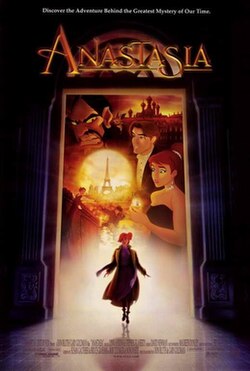
Anastasia (1997) is an animated film that explores emperors, duchesses, and the Romanov royal family of Russia, offering an important early-twentieth-century history lesson.

Surprisingly, not a Disney film, it’s the first release from Fox Animation Studios, resulting in an overall decent effort. It has potency but lacks the magic of other darling animated creations of the past.

An evil and vengeful wizard named Rasputin (Christopher Lloyd) casts a curse on the royal family as a dazzling ball commences in 1916, and young Anastasia disappears as their palace is overrun by killers, leaving most of the family dead.

She and her grandmother, whom she eventually is separated from when the Dowager Empress Marie (Angela Lansbury) flees on a train, are saved by a mysterious servant boy who whisks them to a secret room.

Years later, the Grand Duchess offers a reward for Anastasia’s return, but finally gives up amid a legion of imitators and attempted schemers, leaving her flustered and hopeless.

Two Russians, Dimitri (John Cusack) and Vlad (Kelsey Grammer), initially plan to pawn off a phony discovered through auditions, but are shocked to learn that an orphan girl named Anya (Meg Ryan) is the real Anastasia.

Dimitri, who has fallen in love with Anya, is torn between his feelings and a potentially lucrative payday.

The film’s wintry backdrop is visually exquisite, with snow, lights, and the glitz and glamour associated with Paris, setting the story in Saint Petersburg and launching the action amid fabulous costumes and palace trimmings at the ball.

A dangerous train ride from Saint Petersburg to the east, winding up in Paris, is also a high point of the film.

The central characters, Anya, Dimitri, and Vlad, escape terrible fates that the evil Rasputin is plotting against them. They slink from first class to the luggage car to finally leap from the train itself in a daring escape.

They then stowaway on a ship bound for Paris.

The trio’s adventures make the film enjoyable and edge-of-your-seat at times.

Another highlight is a compelling sequence in which Rasputin gets Anya to sleepwalk to the edge of the ship, attempting to make her jump to her death. She sees her dead siblings in a sunny pool of warmth as they invite her to dive in and join them.

The glowing, hallucinogenic interplay of summer sun and winter-driving rain aboard the ship is both majestic and frightening. It also shows the connection between her and her siblings, as well as feelings of loss.

I wasn’t entralled with the characters of Rasputin or the hapless Bartok (Hank Azaria), a minuscule albino bat sidekick, who eventually ‘turns good’.

Rasputin, stuck in a mysterious limbo until he kills off the remaining Romanov (Anya), is portrayed as cartoonish and over-the-top. His threats become redundant, as does his one-note nature.

The characters’ situation is complicated by a weird situation in which, because of foiled attempts on the lives of Dimitri, Vlad, and Anya, they are forced to return to the ‘real world’ and kill Anya there.

It makes little sense, feels juvenile, and the characters were wisely omitted from the stage version.

The musical numbers are charming, but they do not knock it out of the park. Tepidly nominated for an Oscar nomination, “Journey to the Past” is okay, but nothing memorable either.

What works best is the romance between Anya and Dimitri, who have tremendous chemistry. Since he is immediately smitten with her, it is interesting to see how the film handles the eventual revelation of his villainy and his subsequent redemption.

Since it’s clear the film will have a ‘happily ever after’ ending, the anticipation of a final showdown reduces some of the predictability.

The reunion between Anya and her grandmother is touching and sentimental without being too mushy. Even in an animated film, powerful performances can be achieved, and the characters can touch their audience as much as a live-action film.

An entertaining film with heart and a intellectually stimulating backdrop, it has enough to recommend to children and adults alike. I could have done with a better villain or perhaps no villain at all, which makes Anastasia (1997) feel more juvenile and less sophisticated than it should have been.

Oscar Nominations: Best Original Musical or Comedy Score, Best Original Song-“Journey to the Past”


Written on the Wind-1956

Written on the Wind-1956

Director Douglas Sirk

Starring Rock Hudson, Lauren Bacall, Robert Stack

Scott’s Review #1,529

Reviewed April 20, 2026

Grade: A-

The terms ‘melodrama’ and ‘soap opera’ unfortunately come with a negative connotation, conjuring up disparaging adjectives like sappy or overwrought. Mix in poor acting, and you’ve got yourself a bad film.

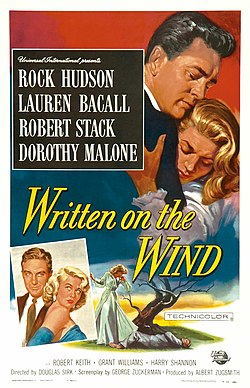
But director Douglas Sirk, well known in the 1950s for his Hollywood melodramas like All That Heaven Allows (1955), Imitation of Life (1959), and Written on the Wind (1956), crafts beautiful visual effects amid powerful performances and compelling storylines.

Casting A-list movie stars only adds to the credibility.

Written on the Wind stars Rock Hudson and Lauren Bacall as complicated characters on the cusp of a relationship, but hindered by other selfish characters determined to achieve their own romantic desires.

Hudson starred in an impressive six Douglas Sirk films while Bacall’s career was beginning to wane, leading her to accept the role.

The action makes stops in New York City and Miami before settling in oil-rich Texas, where a central dysfunctional family dynasty led by Jasper Hadley (Robert Keith) is the main focus.

Hadley’s alcoholic son, Kyle (Robert Stack), is in love with Lucy (Bacall), whom he woos and marries. At the same time, Kyle’s scheming, self-destructive sister, Marylee (Dorothy Malone), has her sights set on Kyle’s childhood best friend, the dashing Mitch (Hudson), who longs for romance with Lucy.

The foursome banter, lust after, and become involved in dramatic situations, which lead to secrets and eventually death. Subjects like alcoholism, unrequited love, miscarriage, murder, and a court trial are explored.

While the situations may sound like nothing more than a sudsy afternoon daytime drama, the acting and rich writing more than raise the film above mediocrity.

The juicy sequences alone will entice the rabid viewer.

The exceptional chemistry between Hudson and Bacall is a winning formula, and viewers easily root for them to be together, and they immediately seem destined to be.  Their scenes smolder with passion and determination, but both characters are too righteous and benevolent to let anything happen.

After all, Lucy is married to Kyle, and learns she is pregnant, though she remains terribly unfulfilled.

It’s easy to like Mitch and Lucy, especially when they’re contrasted with unsympathetic characters like Kyle and Marylee. Rich and spoiled, Kyle is a lustful playboy, a womanizer, and terribly insecure and jealous.

Marylee is a boozy nymphomaniac who is callous and never satisfied.

Kyle and Marylee are not explored as much as they might have been with a longer running time, so they have hints of being one-dimensional. But both actors’ powerful performances leave audiences mesmerized by their characters.

Marylee nearly steals the show with her fiery bedroom negligee dance to a hi-fi blaring “Temptation,” while another character dies tragically a floor below.

You might say we ‘love to hate’ both characters.

Since Sirk and Hudson were both gay, though not publicly at that time (1956), keen viewers can notice hidden clues about what situations Hudson might have been facing in real life.

We can see how Hudson would have had attractive women like Marylee fawning over him and practically begging him to bed them. Unable to be receptive to their advances, instead, he would feel guilty and lonely.

Besides wonderful writing, Sirk’s direction is inspiring. The opening sequence features a clever ‘the beginning is the ending ‘ approach that many filmmakers borrowed over the years in their cinematic works.

The audience immediately sees Kyle stagger outside the palatial mansion, brandishing a gun and finally collapsing. While the wind whistles, a desk calendar is shown with the pages quickly turning to eighteen months prior when the story really begins.

This opening scene will be recreated at the end of the film, making for instant attention.

Other spicy add-ons, like fine furniture throughout the estate, a grand dinner beginning with a fruit-cocktail appetizer, more than a few sophisticated martinis served, and modern sports cars being driven, lend a robust flair of wealth and glamour to the production.

A sequence was even patterned after a flashy Manhattan nightclub named 21 Club.

For a trip into a world of wealthy yet tortured characters, Written on the Wind (1956) is top-notch. Some cliches can be forgiven, as melodrama was hardly done any better than this film.

Oscar Nominations: 1 win-Best Supporting Actor-Robert Stack, Best Supporting Actress-Dorothy Malone (won), Best Song-‘Written on the Wind.’

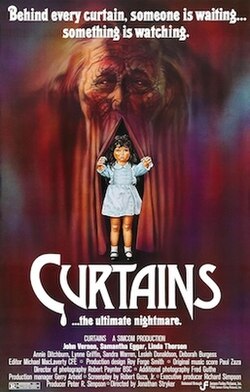
Curtains-1983

Curtains-1983

Director Richard Ciupka, Peter R. Simpson

Starring John Vernon, Samantha Eggar, Linda Thorson

Scott’s Review 1,528

Reviewed April 13, 2026

Grade: B-

Curtains (1983) is a mid-1980s horror film that sits somewhere between an intended arthouse gem akin to Dario Argento’s Suspiria (1977) and a standard slasher flick, ala Friday the 13th (1980), riddled with clichés.

To be blunt, most of the time it doesn’t know what it wants to be, which is unsurprising given the behind-the-scenes drama enveloping the project.

The plot doesn’t make a whole lot of sense and is a mess from the opening scene until the two sets of credits roll. Weakly billed as Act I and Act II, the dual set of credits is mystifying without knowing the backstage turmoil.

It’s never a good sign when a director ultimately removes his name from the project, but that’s what happened.

Producer Peter R. Simpson butted heads with director Richard Ciupka, so that, in the end, he was frustratedly forced to have his name removed from the film entirely and was reduced to being listed under a pseudonym.

I doubt the gentlemen ever exchanged Christmas cards.

Most of the cast doubted the film would ever see the light of day until, lo and behold, it was released two years after being made.

The streaming quality via Prime is horrendous, nearly making Curtains unwatchable and adding to an already chaotic trainwreck.

Nonetheless, the brief ninety-minute experience contains some clever moments and a compelling whodunit-style murder mystery amid a lonely mansion. These, right off the bat, are horror standards sure to get some credibility.

The hideously creepy ‘ugly’ mask that the killer dons is frightening, as is a strange doll that makes recurring appearances. See above and add to more horror must-haves.

In a murky opening sequence, a method actress, Samantha Sherwood (Samantha Eggar), has herself committed to an asylum to study the inmates, only to be double-crossed by her husband, Jonathan Stryker (John Vernon), who intends to keep her locked up.

She escapes to attend his casting session for six starlets whom he has invited to his prestigious and secluded mansion for a weekend retreat/audition for his new movie. Samantha’s motive is revenge and a desperate desire to play the film’s mysterious, mentally unstable star, Audra.

The ambitious female performers the unknown killer targets run the gamut from serious actress to sex kitten to stand-up comic. They are systematically killed one by one, naturally.

A clever and recurring theme is that of dreams. One victim, driving on a deserted highway en route to the mansion, stops to investigate a doll sitting in the middle of the street. A maniac then runs her down before waking up safely in her bed.

This ambiguous sequence and a riveting ice skating sequence on a frozen pond are the film’s best.

Curtains also does a good job at providing frights, as when one victim stages a kinky home intruder sequence with her boyfriend. Assumed to be there to kill her, instead, they simulate a rape before cracking up into hysterics.

The twist at the end of the film is also well done. Perhaps an early influencer to Scream (1996), there are not one but two killers in play, but are they in cahoots or kill independently?

The negatives run from a wacky cat-and-mouse scene amid mannequins, to someone placing a severed head in a toilet that is removed a minute later with no leftover blood and gore.

Neither the doll nor the mask has anything to do with the story other than creepy effects to throw in. And a hunky male hot tub soaker is introduced, then disappears for no reason.

The acting, even by heavyweights like Vernon and Eggar, is surprisingly ineffectual, saved slightly by Lynne Griffin (Black Christmas, 1974).

Despite being a cluttered, disarrayed film, Curtains (1983) does have elements that work. There are more questions than answers left to ponder, but the win, of note, is that the viewer will keep thinking about the film.

Polyester-1981

Polyester-1981

Director John Waters

Starring Divine, Tab Hunter, Edith Massey

Scott’s Review #1,527

Reviewed April 6, 2026

Grade: A-

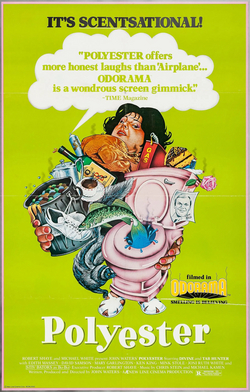
Polyester (1981) is the film that brought raunchy director John Waters to the mainstream, some well-deserved respectability, and what better timing than the 1980s, a time of conservatism.

To many, the film is vile, outlandish, raunchy, and numerous other adjectives, steering many viewers away from even seeing it. But compared to his earlier works of filth, such as Pink Flamingos (1972) and Female Trouble (1974), Polyester is quite tame and accessible.

In fact, the film is one of New Line Cinema’s earliest releases.

I see Polyester as a bridge between his early 1970s works and the sentimentality of his later works.

Waters’ stalwarts like Divine, Edith Massey, Mink Stole, and others return to the fold to wreak havoc on virgin film goers who may not be familiar with his dark comic situations.

An attention-grabbing gimmick called Odorama, in which moviegoers can smell what they are viewing on-screen using special scratch-and-sniff cards, is a unique add-on to the film.

Scents like roses, pizza, and farts are a few examples.

In the story, a frustrated middle-class housewife, Francine Fishpaw (Divine), tries to maintain her sanity while managing her dysfunctional household. Her husband, Elmer (David Samson), the owner of a controversial adult theater, is sleeping with his secretary, Sandra (Mink Stole).

Meanwhile, her delinquent teen son, Dexter (Ken King), and pregnant teen daughter, Lulu (Mary Garlington), have problems of their own.

But when Francine meets handsome and wealthy Todd Tomorrow (Tab Hunter), the owner of a theater specializing in art films, her life takes a positive turn.

The biggest change from Waters’ previous works, which were always set in his hometown of Baltimore, is that the setting is a more upscale suburban neighborhood rather than the rank slums of downtown.

The Fishpaws reside in a powder blue house with a paved driveway and shutters. While not a mansion, it’s respectable, and they forge a decent lifestyle. Francine dreams away the days while dutifully cooking and cleaning for her husband and fixing his evening cocktail, while enduring jokes about her weight.

The story is told from Francine’s perspective, and she is joined by her best friend and former maid, Cuddles (Massey), who is now wealthy after an enormous sum of money was left to her by a former client.

The ladies chat over fattening cake, discussing Francine’s numerous problems and her scheme to catch her philandering husband in the act of cheating.

Francine’s pale blue phone rings constantly with one nuisance after another.

The film is a satire of suburban life in the early 1980s, involving topics such as divorce, abortion, adultery, alcoholism, racial stereotypes, foot fetishism, and the religious right.

Naturally, in wacky form.

My favorite sequence comes when a religious right group prances around Francine’s house protesting Elmer’s pornographic theatre. When one woman smacks Francine, she proudly proclaims, ‘That’s from Jesus.

Later, when on a shopping trip to try on dresses with Cuddles, a hungover Francine pukes in her handbag to the horror of a stuffy saleswoman.

It makes a mockery of religion, particularly Catholicism, as when wicked nuns enter the story in relation to a pregnant Lu-Lu. Shown as ridiculous, they are able to ‘reform’ Lu-Lu into the straight and narrow.

Polyester is filled with terrific moments tamer than Pink Flamingos and Female Trouble, but nonetheless laugh-out-loud and raucous.

For those curious about a John Waters film, left of center from the normal yet important Hairspray (1988), but still nicely subversive, Polyester (1981) is a great choice.

Who Killed Teddy Bear?-1965

Who Killed Teddy Bear? -1965

Director Joseph Cates

Starring Sal Mineo, Juliet Prowse, Elaine Stritch

Scott’s Review #1,526

Reviewed April 5, 2026

Grade: A-

Enshrouded with groovy, almost psychedelic camera shots and black-and-white filming, Who Killed Teddy Bear? (1965) has tremendous style and cinematic creativity.

The film also shows the seedy nature of 1960s New York City, a time when crime increased, and the once culturally and artistically safe haven was suddenly shrouded in filth and danger.

This sets the stage for a film about stalking, menacing, and murder.

Frequent exterior shots of Manhattan, including 42nd Street, Central Park, and Times Square, make it feel relevant and alive. I’m glad these were incorporated over solely studio sets.

Additionally, taboo subjects like lesbianism, pornography, and incest are explored, enhancing a stark direction in cinema from the wholesome 1950s to the edgy 1960s, to the intensity of the 1970s, when the envelope in filmmaking was gloriously pushed and pushed.

Combined with the experimental visuals, the film is a measured success.

The overall story, though, disappoints due to ambiguous motivations and an unsatisfying conclusion.  Right off the bat, the cover art essentially gives away the film’s predator, which the film sets up as a whodunit of sorts.

Nonetheless, thanks to its daring, I rank Who Killed Teddy Bear? as a compelling, impressive effort despite some reservations about the writing.

The film follows Norah Dain (Juliet Prowse), a nightclub disc jockey and aspiring actress living alone in a sublet apartment in Manhattan. Norah begins to receive a series of obscene phone calls from someone who seems to be watching her every day.

She also finds a decapitated teddy bear in her apartment.

Suspects like police detective, Dave Madden (Jan Murray), whose own wife was raped and murdered, and takes a personal interest in Norah and her case, and a waiter at the nightclub, Lawrence Sherman (Sal Mineo),  who lives with and cares for his nineteen-year-old sister Edie (Margot Bennnett), who has a brain injury and has the mind of a child, are introduced.

Of course, we know from the very first scene that the stalker is a man, but we don’t know his motivations or why he targets Norah in particular.

Does he have a mental illness, merely obsessed with a pretty girl, or are his reasons more personal? What does the teddy bear have to do with anything?

In an opening scene, and what could have been influenced by Hush, Hush, Sweet Charlotte (1964), a young girl falls down the stairs, clutching a teddy bear that she ultimately drops.

Is the stalker out for revenge for a past wrongdoing, and what does Norah have to do with that? How does Marian Freeman (Elaine Stritch), the older, experienced manager of the nightclub who takes a personal interest in Norah, fit into the puzzle?

Mineo gives an impressive performance right alongside Prowse, and his character is the most interesting to dissect once the film concludes. Nearly rivaling his performance in Rebel Without a Cause (1955), his character is flawed, ruined, and emotionally scarred, and we yearn to know more about him.

Sadly, there is more left to learn.

Prowse deserves praise for carrying the film and exuding cautious rebellion and a thirst for life. Norah refuses to cower in her apartment; instead, she lives her life, yearning for freedom in the big city, and Prowse captures this wonderfully.

Aspects of Peeping Tom (1960) and Psycho (1960) regarding voyeurism and ‘mommy issues’ can be seen in Who Killed Teddy Bear? and in the yet-to-come Black Christmas (1974), which may have been influenced by the film.

I can’t find much about director Joseph Cates, but he has a masterful cutting-edge technique.

Considering the multitude of taboos and perversions the film explores, that almost no films were doing is to be celebrated. Who Killed Teddy Bear? (1965) is a messy, sometimes uneven film, but rocks the boat in all the best ways.

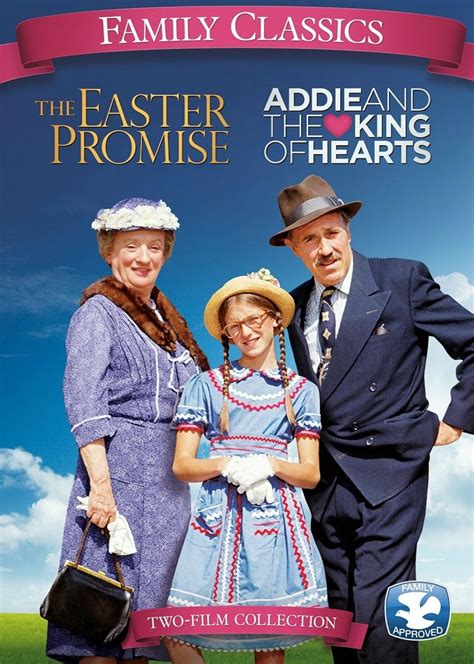
The Easter Promise-1975

The Easter Promise-1975

Director Paul Bogart

Starring Jason Robards, Jean Simmons, Lisa Lucas

Scott’s Review #1,525

Reviewed April 3, 2026

Grade: A

The Easter Promise (1975) is a television movie that is surprisingly powerful and emotional. The umbrella title ‘family classics’ was misleading to me, as I begrudgingly watched what I thought would be an overly sentimental and wholesome affair.

That is not the case at all, as The Easter Promise is laden with dark and strong themes of loneliness and alcoholism mixed with feminism and truth to oneself.

A major win and another surprise is the use of videotape rather than film. This makes the story feel like a stage play or a very good daytime television drama layered with humanity and identification.

This worked in the same successful way for the well-known PBS series Upstairs, Downstairs series, and ups the storytelling and investment in the characters.

Finally, a hint of class distinction and career success versus failure is explored. Characters struggle to decide whether to reach for the stars or be complacent and content with the daily drudgery of ordinary life.

The story is that one day, the townspeople of a small Nebraska town eagerly anticipate the return of a former resident and now famous, glamorous Broadway actress, Constance Payne (Jean Simmons). Constance has returned to town to sell her recently deceased father’s house and quickly return to the Big Apple.

Events are told from the perspective of pre-teen Addie Mills (Lisa Lucas), an aspiring artist who cannot wait to leave the folksy and dull Midwest for the lights of New York City the moment she is old enough to.

She intends to forge a connection with Constance, whom she admires for reaching heights of career success.

But when Addie and her girlfriends bombard Constance with requests for acting lessons and an appearance at a local fashion show, they begin to see a dark side of show business.

Drama also surrounds Addie’s father, Jamie (Jason Robards), a high school classmate of Constance’s, who finds her lifestyle flashy and ridiculous. He prefers the small-town mindset and folksy way of thinking, which clashes with Constance and Addie’s beliefs.

Jamie’s mother, Grandmother Mills, provides a kindly, non-judgmental presence that counters Jamie and is wonderfully portrayed by Mildred Natwick.

The character reminds me of Helen Potts, the sweet-natured older woman from Picnic (1955) who brings a sense of pride and good-naturedness to the image of the Midwest.

Serving up a freshly baked pie or muffins elicits a friendly, welcoming vibe.

Despite the heaviness of the alcohol scenes staged dramatically, the best scenes are the quiet ones over a simple meal. When Addie impulsively invites Constance to dinner at her family home, much to Jamie’s dislike, career and mindset are on the agenda.

Constance and Addie calmly question why people are expected to stay passive and unhappy in an isolated place rather than embrace the hustle and bustle of New York City or the gypsy life of a creative soul.

Culturally, Constance expects a cocktail hour before the meal, whereas the Mills family does not even have wine on hand and serves dinner immediately.

This shows the difference between a good Christian family and the edginess of more creative types and perhaps non-believers.

The scenes involving alcoholism don’t exactly treat the topic as an addiction, or any other message deeper than someone who drinks has a myriad of problems.

But the acting between Lucas and Simmons is top-notch during these scenes.

I was impressed with the scene where Constance teaches the girls about acting and techniques surrounding improvisation and being in the moment of a scene. As a former brief theater major, I found the tips rang true and served as a reminder of my own drama teacher.

A clever, artistic addition is the inclusion of drawings of the characters prior to particular sequences. The drawings come to life as real people, and the scene begins.

The Easter Promise (1975) is a wonderful early-spring made-for-television gem that can be watched year after year.