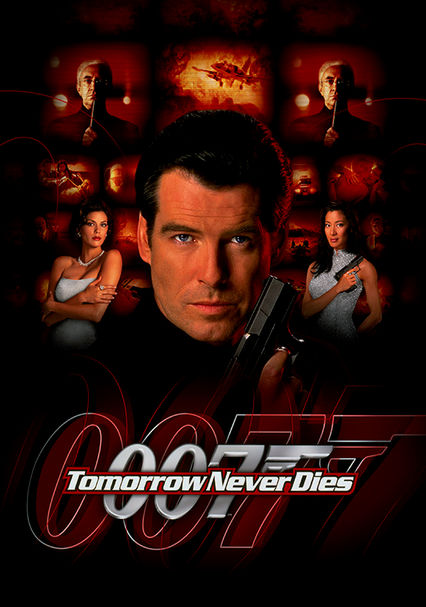
Tomorrow Never Dies-1997

Tomorrow Never Dies-1997

Director Roger Spottiswoode

Starring Pierce Brosnan

Scott’s Review #1,394
Reviewed August 28, 2023

Grade: B

Pierce Brosnan made four appearances as the legendary film character, James Bond. While he gets a marginal thumbs-up as a whole and is not my favorite Bond, he has the ‘look’ and suave charisma.

This works in his favor and makes him entirely believable, even with every ridiculous one-liner or flat line of dialogue.

Tomorrow Never Dies (1997) is the second chapter in the Brosnan book and is only marginally superior to GoldenEye, made two years earlier in 1995. All bets are that the two subsequent Bond films starring Brosnan nosedive quickly.

All good Bond films must include specific qualities such as a strong villain, a sexy yet strong ‘Bond girl’, dazzling stunts and chase scenes, a memorable theme song, and more than one exotic locale.

It’s just what the blueprint is and must never be broken.

Therefore, Tomorrow Never Dies feels more like the producers, director Roger Spottiswoode, and writer Bruce Feirstein sought a check-the-box exercise rather than creating anything brilliant or memorable.

I deem this film rather ordinary. Not bad, but not superior either, falling in the middle of the road when compared to other Bond franchise films.

Media mogul Elliot Carver, played completely over the top by actor Jonathan Pryce, wants his news empire to reach every country on the globe. Still, the Chinese government will not allow him to broadcast there.

Carver then decides to use his media empire to wage war between the Western world and China. Thankfully, James Bond (Brosnan) is on the job and travels to China to stop him with the help of Chinese secret agent Wai Lin (Michelle Yeoh).

Anyone who knows a Bond film knows that the plot is secondary to the aforementioned necessary characteristics.

The story either got too complicated as the film progressed, or I lost interest because, at some point, all I could recall was a news media tycoon trying to start World War III over television ratings.

Yeoh is an exceptional ‘Bond girl,’ though the dose of progressivism, diversity, and female empowerment she brings to the table makes the term beneath her. Her charisma and martial arts chops make her a kick-ass rival, though she naturally ends up head over heels for Bond.

Still, the lengthy scenes between Yeoh and Brosnan do convey strong chemistry as they take down the bad guys and save the world together.

I expected a bit more from Teri Hatcher’s character, Paris Carver, a former girlfriend of Bond who is now Carver’s trophy wife. The setup was superior, and the love triangle could have gone further than killing off her character after just a couple of scenes.

As great an actor as Pryce is, it’s tough to believe he’s the same actor who made films like Two Popes (2019) and The Wife (2017) so good. He turns Elliot into a caricature, dead set on controlling the world, proving that an actor can’t always bring a mediocre script to life.

Tomorrow Never Dies takes viewers to lavish locations such as Bangkok, China, Hamburg, Germany, and London. The tone has a definite Asian feel, which works as well as You Only Live Twice did in 1967.

Finally, the title theme song and opening performed by Sheryl Crow is abysmal, but oddly sounds much better in the version that plays over the ending credits.

I marginally recommend Tomorrow Never Dies (1997), mostly for those in the Brosnan camp, of which I am aware there are many.

Its best quality lies in the degree of equality between Bond and the main female character, Wai Lin, which is further proof of how relevant the franchise remains.
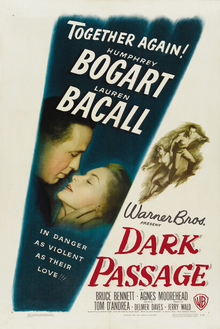
Dark Passage-1947

Dark Passage-1947

Director Delmer Daves

Starring Humphrey Bogart, Lauren Bacall

Scott’s Review #1,393

Reviewed August 25, 2023

Grade: B

In 1947, Humphrey Bogart and Lauren Bacall were big Hollywood stars. Dark Passage is the third of four films a real-life couple made together in the 1940s. It must have catapulted audiences to theaters to see the power couple perform.

To Have and Have Not (1944), The Big Sleep (1946), and Key Largo (1948).

Dark Passage is based on the 1946 novel of the same title by David Goodis.

Vincent Parry (Bogart) has just escaped from San Quentin prison near San Francisco, California, after being locked up for murdering his wife, a crime he did not commit.

He finds a plastic surgeon to give him new features. After getting a ride out of town from a stranger, Vincent meets a young woman, Irene Jansen (Bacall). She lets him stay in her apartment while he heals and continues to try to clear his name.

The duo falls madly in love and attempts to figure out the puzzle and find the real killer.

Delmer Daves is a director with whom I am unfamiliar. The film’s first portion uses superior camera angles and a point-of-view (POV) filming from Vincent’s perspective.

The audience sees what Vincent sees, which was used to justify Vincent’s plastic surgery and the knowledge that viewers wouldn’t buy a different actor from Bogart. This makes sense and adds a creative technological perspective to the film.

Something about black-and-white filmmaking always conjures up 1940s cinema for me. That Dark Passage is a thriller with film noir elements, making it all the more effective.

A personal treat for me was to see the exterior sequences of San Francisco. The Golden Gate Bridge and Union Square are easy to spot, and having spent time in both locales, I was fascinated by what both looked and felt like in the 1940s.

Notwithstanding the ‘look,’ the main draw is Bogart and Bacall. Although I have not seen their other films, their chemistry is apparent in Vincent and Irene.

The tenderness between the pair, considering the characters have only just met, is strong, especially during a quiet scene when they sip after-dinner coffee next to a window with driving California rain.

They get to know each other, and so does the audience.

Bacall, who is terrific and smolders with sensuality and confidence, easily outshines Bogart, who doesn’t deliver his best work. This could be partly because he doesn’t speak until the midway point of the film, but there is an aura that Bacall has that Bogart doesn’t.

My favorite film of his is Casablanca (1942).

The story starts tremendously with mystery and intrigue. Who killed Vincent’s wife quickly becomes who killed Vincent’s friend after he is also found murdered.

A tremendous scene between Vincent, a man he hitches a ride from and a taxi cab driver who helps Vincent increases the thrill ride with quick and engaging dialogue meant to maintain suspense.

The climax fizzles with an overly complicated and overwrought build-up to the final reveal that drags. When the villains are unmasked, their motivations are suspect and underwhelming.

One character plummeting from a high-rise window to their death is pretty cool, especially for 1947. The shrieking neighbor and the dead body displayed along the sidewalk is a highlight.

Also, a portion of the film takes place in beautiful Peru, similar to the nightclub in Casablanca.

Dark Passage (1947) is a pretty good film but will be appreciated mainly by fans of Bogart and Bacall. The plot is up and down, but the behemoth Hollywood stars are the main attraction.

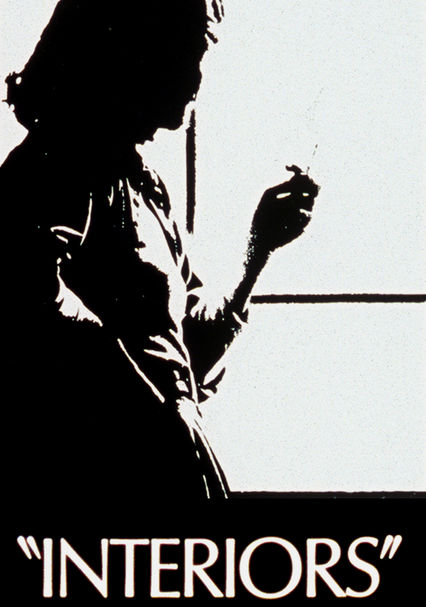
Interiors-1978

Interiors-1978

Director Woody Allen

Starring Diane Keaton, Geraldine Page, Mary Beth Hurt

Scott’s Review #1,392

Reviewed August 24, 2023

Grade: A

Woody Allen films are not everyone’s cup of tea.

Typically, offbeat or even downright wacky comedies with quick-witted dialogue and irritating characters are not everyone’s preferred taste in film.

I’ve always adored the director’s works.

Allen hits a home run with Interiors (1978), his first dramatic film and my favorite. It even rivals classics like Annie Hall (1977) and Manhattan (1979), which most people frequently consider his best.

The famous director turns down the volume and slows the pace with a dark story about mental illness and the ravaging effect it has on a family, the struggling individual, and the other extended members.

Missing from this Woody Allen film are the prevalent one-liners and gimmicks mostly associated with his comedies. The only standard is the inclusion of frequent collaborator Diane Keaton, who plays a successful poet, Renata.

The story centers on a middle-aged and upper-class couple’s disintegrating marriage. It forces their three grown daughters (Keaton, Mary Beth Hurt, and Kristin Griffith) to reveal their feelings about themselves and each other. They also have their share of difficulties.

Renata is successful, but her husband is a struggling writer with marginal talent. He lusts after Renata’s sister, Flyn (Kristin Griffith), an actress only known for her good looks. Joey (Hurt) is a restless soul unable to decide on a career and jealous of Renata.

Mental illness is only one of their trials and tribulations.

The family resides in Manhattan, Connecticut, and Long Island, most likely the Hamptons, so they are wealthy and assumed to be happy, healthy, and thriving.

They are anything but.

None of the daughters is successful at providing ample support to their devastated mother (played by Geraldine Page), who has a mental illness and is extremely fragile.

The cast is tiny, with only eight principals, each with a perspective. There are no villains. Only complicated characters with rich texture and substance.

I love the brilliant characterization and development, and the many layers most of the characters possess. Each character, especially the father, mother, two of the daughters, and the new wife, Pearl, played exceptionally by Maureen Stapleton, can be examined in depth.

One might assume that the father Arthur played stoically by E.G. Marshall might be unlikable. After all, he requests a ‘separation’ from Eve, which the audience knows is a soft-touch way of ultimately asking for a divorce.

He then meets a new woman, a different type from his wife, and plans to marry her!

This does not go over well for anyone.

But Arthur is sympathetic, and so is Pearl (the new wife). I rooted for the pair even though I felt bad for Eve.

The film culminates in a stunning sequence at the family’s Hampton residence amid Arthur and Pearl’s wedding. The family begrudgingly attends the simple, dinner-party-style wedding and pretends to be happy.

From a visual perspective, the art direction is flawless. Muted grey and brown tones perfectly complement the drab, depressing subject matter.

People have compared Interiors to an Ingmar Bergman film, and I completely understand that. The film is dark, cold, and bleak, but it contains a sophistication and thought-provoking quality mirroring Bergman’s films like Wild Strawberries (1957) and others.

Woody Allen crafts an astonishingly good screenplay with confidence and precision that only he can do. Interiors (1978) could easily have turned into a soap opera melodrama, but it remains enthralling and devastating throughout.

Oscar Nominations: Best Director-Woody Allen, Best Actress-Geraldine Page, Best Supporting Actress-Maureen Stapleton, Best Screenplay-Written Directly for the Screen, Best Art Direction

The Boys from Brazil-1978

The Boys from Brazil-1978

Director Franklin J. Schaffner

Starring Gregory Peck, Laurence Olivier, James Mason

Scott’s Review #1,391

Reviewed August 20, 2023

Grade: B+

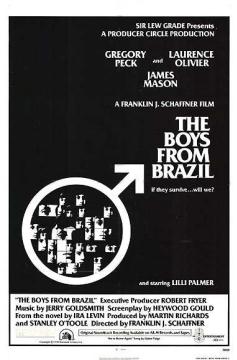
The Boys from Brazil (1978) is a taut political thriller with a neo-Nazi focus and a weird cloning subject matter. It’s a bit of a tough follow, but quite compelling all the way through, and doesn’t lag at all.

Sometimes political thrillers get overly complicated or drag, but this one doesn’t. The story is slightly hokey and impractical, even bordering on ludicrous, but since it’s so intriguing and action-packed, these adjectives can be overlooked.

Surprisingly, I wasn’t blown away by either Laurence Olivier’s or Gregory Peck’s performance, despite being a fan of both actors. Both actors overact and create stereotypes, but especially Peck’s character is a bit too cartoonish.

It took me half the film even to recognize either man, since both are heavily made up, making them hard to tell apart. It also took until the dramatic conclusion for either character to grow on me truly.

A brilliant one-scene cameo performance by Uta Hagen, a German-American actress, as a former Nazi guard now imprisoned, nearly steals the show and should have earned an Oscar nomination.

The story surrounds Doctor Josef Mengele, played by Peck, who clones Adolf Hitler ninety-five times and raises the boys in Brazil, giving them childhoods identical to Hitler’s in various parts of the world.

His goal is to create a band of Nazi leaders that can continue where Hitler left off, forming the Fourth Reich. Their fathers will be murdered, and the boys will be mothered as Hitler was.

Ezra Lieberman (Laurence Olivier), a Nazi hunter, learns of the plan from a young journalist (Steve Guttenberg) and is determined to thwart it.

The plot is a tough pill to swallow and takes some time to absorb fully, but it’s fresh and unique. I’m not sure if, in 1978, people had had enough of Nazi and World War II films, but both subjects are always worth dissecting again.

I’m not sure why it was so tough to get used to Peck as the evil doctor, but it was. It’s probably because Peck usually plays characters with a strong moral compass, and he was playing way against type.

His character looks weird, and Peck seems to be overacting sometimes, almost like he was playing a James Bond villain. It’s not exactly a role that measures up to Atticus Finch in To Kill a Mockingbird (1962).

Olivier is better and the main protagonist of The Boys from Brazil, but I’m not sure he entirely wins me over. It’s not easy immersing oneself in the prim-and-proper British aristocratic actor playing a Jewish man who kvetches so often.

Still, by the finale, when Mengele meets Lieberman in a deadly showdown involving vicious Dobermans, a gun, and a Hitler clone, I was cheering for Olivier all the way.

Supporting characters played by Guttenberg, Anne Meara (Jerry Stiller’s wife) as Mrs. Curry, one of the Hitler clones’ mothers, and the aforementioned Hagen are excellent. I wish that each character were explored better and given more screen time.

The same can be said for Rosemary Harris in a one-scene performance. While quality, I wanted more from her character of Frau Doring, the wife of one of the murdered fathers of the Hitler clones.

Finally, James Mason has little to do as Colonel Seibert other than serve as second fiddle to Peck.

But The Boys from Brazil is the Olivier and Peck show.

The locales are a big win since they add an international vibe and relevance. Geographies such as Germany, Paraguay, Austria, and rural Pennsylvania, United States, are featured, which greatly elevate the film.

The taught nature of the film provides suspense, an ode to history, and an eerie measure of Trumpism in comparison to Nazi-ism. The Boys from Brazil (1978) isn’t prime steak, but it’s not a bad watch either.

Oscar Nominations: Best Actor-Laurence Olivier, Best Film Editing, Best Original Music Score

The Notorious Landlady-1962

The Notorious Landlady-1962

Director Richard Quine

Starring Kim Novak, Jack Lemmon, Fred Astaire

Scott’s Review #1,390

Reviewed August 16, 2023

Grade: B+

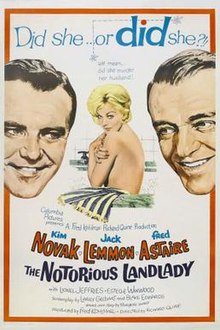
If viewers can overlook The Notorious Landlady (1962) ‘s messy nature and intermittent schizophrenic pacing, the film is enjoyable.

It’s not platinum status, but it’s a decent enough flick, especially for Kim Novak and Jack Lemmon fans, who were big stars. This is the third and final film that the duo starred in.

Like the film, their chemistry fluctuates, but it is appealing to see Novak in a comic role, whereas the genre is familiar territory for the funny Lemmon.

After her husband mysteriously disappears, Carly Hardwicke (Novak) finds renting a room in her lovely London apartment impossible because everyone assumes she’s responsible.

American diplomat William Gridley (Jack Lemmon) is new to the city and desires to live with Carly. It doesn’t hurt that Carly is easy on the eyes. William becomes smitten with her, unaware of her troubles.

When his boss, Franklyn Ambruster (Fred Astaire), learns what Gridley has stumbled into, the two men try to clear her name. A series of lies and misunderstandings catapult events into a compelling mystery.

Even though neither William nor Carly is British, the foggy locale works well and provides a foreign mystery. They reside in a courtyard-type home, from which neighbors can see in or out to other apartments. This comes into greater play towards the end of the film.

This is just one example of Alfred Hitchcock’s influence on 1954’s Rear Window, which director Richard Quine heftily borrows. He’s wise to do so since he secured Novak, fresh from her role in Vertigo (1958) two years earlier.

Shit, even the title ‘The Notorious Landlady’ borrows the title of the 1946 Hitchcock masterpiece, ‘Notorious.’

There’s also a secret locked door that Carly references and forbids anyone from entering, adding suspense and foreboding.

Despite the tepid chemistry between the stars, I ultimately enjoyed their romance. It’s a hard sell that the gorgeous Carly would fall head over heels for the everyman William, but she does.

They win me over during a dramatic scene where an attempted romantic dinner of steaks goes awry, and instead, a massive fire erupts. The burgeoning lovers cling together in a sweet embrace that cements their appeal.

The tension is supposed to be about whether Carly murdered her husband and has designs on William. Red herrings like kitchen poisons and the like make an appearance, but I was more interested in the impending mystery of said husband than really believing she’d want to kill William.

The last act introduces a threatening character, an unexpected villain, and a race to save another character in dangerous peril.

A courtroom scene also adds to the tension.

The central storyline is satisfying, edge of your seat, and suspenseful. I assume Quine was going for it.

The Notorious Landlady shifts genres a whopping three times in the story! The tone is all over the place: first, romantic comedy, then suspense and drama, and finally, slapstick.

During the finale, when Carly and William race to a retirement community and scramble to stop an out-of-control wheelchair, I half expected Laurel & Hardy or The Little Rascals to make a cameo.

Poor Fred Astaire has little to do and struggles to be relevant compared to Novak and Lemmon’s characters. At times, I even forgot he was still in the film.

The Notorious Landlady (1962) is an entertaining vehicle and a must-see for fans of Novak or Lemmon eager to see a largely forgotten film that offers something fun.

Sixteen Candles-1984

Sixteen Candles-1984

Director John Hughes

Starring Molly Ringwald, Michael Schoeffling, Anthony Michael Hall

Scott’s Review #1,389

Reviewed August 14, 2023

Grade: B

While recently re-watching a string of John Hughes-produced or directed films from the 1980s, I set upon them with fresh eyes.

Some scenes or themes that worked in the mid-1980s would be inappropriate in a more sensitive, post-Me Too! era. movement.

Hughes, of course, was the king of the teen angst, coming-of-age, romantic comedies that usually starred Molly Ringwald.

Sixteen Candles, Hughes’s first directorial effort, was released in 1984 and launched him to superstardom and immense popularity. Films like The Breakfast Club (1985) and Pretty in Pink (1986) would follow to much acclaim.

What he did so well was provide maturity and a message to the otherwise dumb and raunchy comedies that populated the decade. He brought a fresh female perspective, whereas others were typically male and hormone-driven.

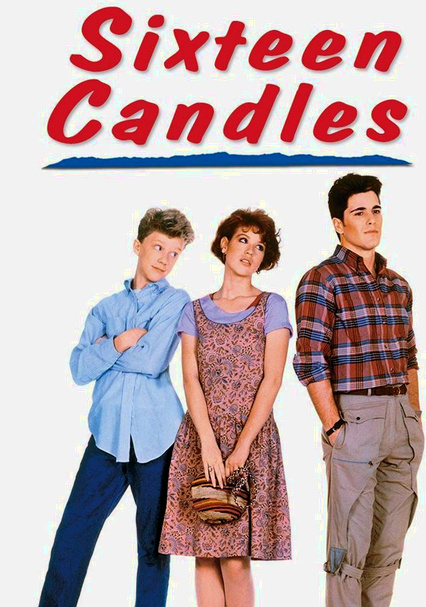
Already angst-ridden Samantha (Molly Ringwald) wakes up on the morning of her sixteenth birthday to find her busy family has completely forgotten her special day.

Samantha already pines for the handsome senior Jake (Michael Schoeffling), but worries that her dorkiness and lack of sexual experience will be a turnoff for the popular boy.

Meanwhile, Samantha must constantly rebuff the affections of nerdy Ted (Anthony Michael Hall), the only boy in the school who seems interested in her.

As enjoyable as Sixteen Candles is, I’d list it as the weakest of the Hughes films. It serves as more of a blueprint for the genius he would become.

Ringwald carries the film with ease, which is all the more impressive since this was one of her first film roles. She infuses Samantha with a blend of confidence, insecurity, and worry, so that most American teenage girls could see themselves in her.

Pretty but not a pinup blonde, Samantha is intelligent and the girl next door. She lives in a suburban neighborhood, is middle-class, has loving but distracted parents, and siblings focused on their trials and tribulations.

Most can relate to that.

A wonderful and tender moment between Samantha and her father, Jim, played brilliantly by Paul Dooley, nearly moved me to tears. His wisdom and kindness, as Samantha emotionally reveals her love for Jake to her dad, are warm and solid, epitomizing what a dad should be to his daughter.

A series of tepid misunderstandings occurs between Samantha and Jake, who, ironically, has noticed her and shares her attraction. She freezes when face-to-face with him and flees, so he naturally assumes she is a bitch and has no interest in him.

It takes so long for the lovebirds to connect that many possibilities and scenes go unexplored. The film ends as soon as they reveal their feelings, leaving the audience with little to celebrate.

We also know almost nothing about Jake. He is a rich kid whose parents are vacationing in Europe, but what makes him tick? He could have any girl in high school and date the pretty blonde girl, but what makes him so drawn to Samantha?

The casting of the four grandparents serves no purpose other than to provide comic relief and to convey an inaccurate message about how bumbling older people are.

One refers to Samantha’s ‘boobies’ while another stinks up the bathroom.

Worse yet, the inclusion of a foreign exchange Asian student named Long Duk Dong (Gedde Watanabe) is riddled with cliches and stereotypes only played for laughs.

These characters are caricatures.

Finally, the groping and taking advantage of drunk female characters now feels dated if not flat-out inappropriate. In 1984, the scenes are meant to be funny.

Still, Sixteen Candles (1984) accurately depicts the loneliness and problems that nearly every teenager has faced throughout history. With a warm message of belonging and a sweet subtext, the film is a recommended watch, but be wary of its stereotypes.

Sudden Impact-1983

Sudden Impact-1983

Director Clint Eastwood

Starring Clint Eastwood, Sondra Locke

Scott’s Review #1,388

Reviewed August 12, 2023

Grade: B+

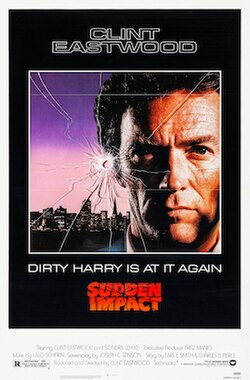
The groundbreaking and highly influential Dirty Harry, released in 1971, spawned four sequels. Sudden Impact (1983) is the third.

It is directed by, produced by, and stars Clint Eastwood (making it the only Dirty Harry film to be directed by Eastwood himself) and co-stars Sondra Locke, the star’s longtime girlfriend.

On the surface, the film is standard fare and relatively conventional, featuring slick cinematography, a predictable story, shoot ’em-ups, and cartoon villains.

It’s also quite bloody and violent, with a theme of justice being served.

Exactly what you’d expect from any action/thriller to come out in the two decades following the original.

By 1983, the clichés and story setups had been seen in so many crime-thriller films that they felt tired and stale and could be predicted in advance.

The expected Dirty Harry catchphrase in Sudden Impact is, “Go ahead, make my day,” which is probably what the film is best remembered for, though some assume the famous line appears in Dirty Harry.

This isn’t a glowing testament for Sudden Impact.

United States President Ronald Reagan embarrassingly used the “make my day” line in a March 1985 speech, threatening to veto legislation raising taxes.

The secret weapon of Sudden Impact, though, is the inclusion of Locke, who is a tour de force as an actor and elevates the film quite a bit. Her romance with Eastwood (on and off the silver screen) simmers with chemistry, making Sudden Impact feel like a much better film than it is.

Jennifer Spencer (Sondra Locke) is a thirty-something blonde bombshell who, along with her much younger sister, was gang raped, but the crime went unpunished. She now hunts down those responsible one by one and gruesomely shoots them in the testicles before killing them.

She’s not a gal to be messed with.

The murders attract the attention of Harry Callahan (Eastwood), who is on a forced vacation due to his violent approach to police work.

The case gets complicated when Harry develops a relationship with Jennifer, and it’s up to Harry to make the right decision when Jennifer’s life is threatened for a second time.

Locke and Eastwood always do well with marginal material- think Bronco Billy (1980) or Every Which Way But Loose (1978). Both of those films are more comical, so it’s riveting to see them co-star in a violence-based thriller.

Not to dwell on Locke (okay, I must), but she’s the best part of Sudden Impact. The first scene involves one of her vigilante murders, and her cold, calm steadiness is magnificent. Through icy eyes, she is filled with rage, though she is wise and calculating.

When she is not blowing balls to bits, Jennifer leads a successful life as an author and escapes to a whimsical carnival town outside San Francisco to focus on her work. She also finds time to finish killing the remaining members of the gang of rapists.

Locke mesmerizes in every scene she appears in.

Eastwood is good too, but his character is the same grizzled, sick-of-crime guy with a gun he’s had since the beginning. Harry’s arguments with the suits in the top office are tired, and the actors cast are handily stock types.

The win is Eastwood’s scenes with Locke. As they share dinner, a romantic tenderness perfectly offsets the rest of the story. We ask, will he send her to prison or let her go when he inevitably finds out she’s the killer?

Is she justified?

The rapists are cartoon-like and poorly cast, and there is no character development. The main villain, Mick (Paul Drake), shrieks, wails, and delivers his dialogue in an over-the-top fashion. He’s a poor man’s ‘Scorpio’ who he tries to emulate.

A female villain, an assumed lesbian named Ray Parkins, in a purely politically incorrect fashion, has every lesbian stereotype imaginable.

I liken Sudden Impact (1983) to a McDonald’s meal. A greasy Big Mac, fries, and a shake. It’s not fine dining, but it’s satisfying, and one knows exactly what to expect. Only in this case is Locke the special sauce.

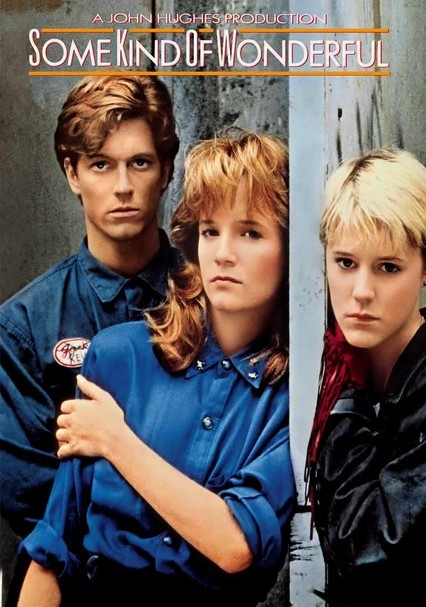
Some Kind of Wonderful-1987

Some Kind of Wonderful-1987

Director Howard Deutch

Starring Eric Stolz, Mary Stuart Masterson, Lea Thompson

Scott’s Review #1,386

Review August 4, 2023

Grade: B+

Some Kind of Wonderful (1987) is one of many John Hughes-written teenage romantic dramas to emerge in the 1980s.

It’s familiar territory in terms of storytelling and quite similar to the 1986 hit Pretty in Pink.

I’ll call it what it is: essentially a remake of Pretty in Pink.

Hughes attempts to ‘right the wrong’ of the ending of Pretty in Pink, which he was forced to rewrite because of pesky test audiences. Truth be told, I was happy with who wound up with whom in the film, but I guess I’m in the minority.

A romantic quadrangle is front and center, with differing social classes explored amidst the already tricky teenage years. Characters battle for status as they deal with powerful feelings and angst with their parents and friends.

A fun fact about Some Kind of Wonderful is that Hughes assumed his muse, Molly Ringwald, would star in the film. When she turned him down for more adult roles, he never forgave her, which led to the dissolution of their film collaboration.

But the show must go on.

Keith Nelson (Eric Stoltz) is an artistic high school outcast who bravely tries to land a date with the most popular girl in school, Amanda Jones (Lea Thompson).

His tomboy best friend, Watts (Mary Stuart Masterson) is secretly in love with him while Amanda’s rich on-again-off-again boyfriend, Hardy Jenns (Craig Sheffer), vows revenge on Keith.

Watts tries to convince Keith to stop pursuing Amanda, while his father (John Ashton) is dead set on Keith attending business rather than art school.

Before you start thinking this sounds like a corny story arc from the afternoon soap opera Days of Our Lives, it’s a pretty well-written story with many ups and downs and good, sincere acting.

Stolz is compelling as the boy-next-door/leading man. He is relatable and, therefore, easy to root for to get the girl.

The main attraction and best part of the film is the triangle between Keith, Watts, and Amanda. Hardy is merely along for the ride, serving as both a foil and necessary eye candy. Every girl wants him, so why would Amanda want Keith and not him?

When Hardy refers to Amanda as his ‘property,’ it makes him unforgivable to audiences. It might have been interesting if Hughes had made the character a viable romantic option for Amanda or Watts by softening him.

There are arguments for Keith winding up with either Amanda or Watts, and a tantalizing mention is that Watts could be gay, but this story goes nowhere.

1987 would have been too early for this quality to be featured much in mainstream film, but at least the thought is there.

Despite being popular, Amanda is not a bitch. Her best friend, Shayne (Molly Hagan), is though.

In a bit of irony, the character Keith, at the end of the film, feels rushed, jagged, and like an added-on scene. The similarities to the reshoot they did with the ending of Pretty in Pink are uncanny.

Other characters are added purely for comic relief and to offset the romantic-heavy drama. Keith’s tough guy friend Duncan (Elias Koteas) and Keith’s younger sister Laura (Maddie Corman) provide the film with some cute moments.

Teenagers, whether in 1987 or today, can relate to the well-meaning pressure Keith’s father puts on him, so the message is universally appreciated.

Nothing will surpass my top ranking of The Breakfast Club (1985) as my favorite John Hughes film, but Some Kind of Wonderful (1987) does a good job of capturing a slice of teenage angst we can all relate to.

Children of the Corn-1984

Children of the Corn-1984

Director Fritz Kiersch

Starring Peter Horton, Linda Hamilton

Scott’s Review #1,385

Reviewed August 2, 2023

Grade: B

I liken the 1980s slasher film genre to the 1980s hard rock, ‘hair metal’ scene. Both contain standard, tried-and-true elements necessary to categorize them as such within said genre.

They both tended to be derided by critics as superfluous and commercially accessible to mass consumption.

I could write an entire dissertation on the subject. Still, my focus will remain on the slasher genre and Children of the Corn, a 1984 release billed as a straightforward slasher film but with supernatural elements that set it apart from some contemporaries.

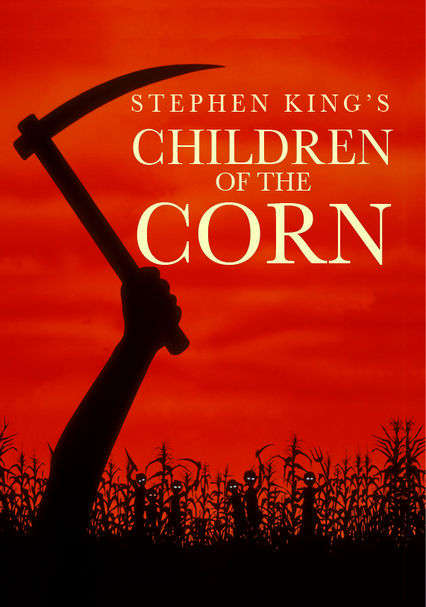
The cover art (pictured above) and promotion conjure up ideas of a knife-wielding maniac wearing overalls, stalking small-town victims in corn fields in the Midwest USA.

The film is based on a 1977 short story by horror author and brilliant storyteller Stephen King.

Set in the fictitious rural town of Gatlin, Nebraska, the film tells the story of a malevolent entity known as “He Who Walks Behind the Rows,” which entices the town’s children to murder all the town’s adults ritually. This is under the guise of ensuring a successful corn harvest.

A well-to-do city couple, Burt and Vicky, played by Peter Horton and Linda Hamilton, drive cross-country to Seattle to begin a fantastic opportunity. Burt is a physician.

When they accidentally strike a child on a desolate stretch of highway, they realize he was already dead and attempt to find help in Gatlin, only to become the child residents’ next sacrifice.

Suffice it to say that the premise and the short story are way better than the finished film product, though there is just enough to keep one entertained for an hour and a half.

Director Fritz Kiersch does a good job of providing a quality atmosphere. The loneliness of Gatlin and the foreboding corn fields where something deadly lurks amid the stalks made me feel uneasy from the get-go.

There is something about an uninhabited town in the middle of nowhere that is innately scary. Kiersch patterns the setting after the brutal Texas Chainsaw Massacre (1974), though with a much softer touch. The small farmhouses and the streets mirror that film.

I also enjoy the surprising chemistry between Horton and Hamilton. Scenes where the pair are driving, chatting, or listening to tunes are pleasant and do not merely serve as filler to get to the killings.

The yellow early-1980s Buick or Oldsmobile is shown so often that it becomes a character in its own right. For fans of large American cars of yesteryear (me!), the inclusion of the car is a treat.

Finally, the blatant questioning and disparaging of the ridiculousness of organized religion is showcased when Burt (who believes in science) scolds the children for interpreting the Bible to suit their needs.

This may go over the audience’s heads, but to me, it resonates, and I cheered wildly when the dumb-faced kids realized the idiocy of their beliefs.

The film dissipates towards the end when the supernatural aspects take center stage. Tepid and very lowbrow, they quickly take away any moments of peril and shift the momentum to comedy and cheapness.

In 1984, this may not have been noticeable, but in 2023, the special effects are at a low point.

The attempted sacrifice of Vicky doesn’t feel frightening, especially when compared to a superior film, The Wicker Man (1973), which uses the same setup but more effectively.

Children of the Corn (1984) has its moments, but by the time the film ends, I wished I had been treated to that knife-wielding, overall-wearing maniac over a silly blood ritual in the name of the ‘holy bible’.

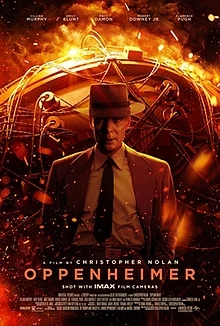
Oppenheimer-2023

Oppenheimer-2023

Director Christopher Nolan

Starring Cillian Murphy, Robert Downey Jr., Emily Blunt

Scott’s Review #1,384

Reviewed August 1, 2023

Grade: A

Knowing the films of Christopher Nolan who directed works like The Dark Knight Trilogy (2005-2012), Inception (2010), and Dunkirk (2017) I expected what I would be served with by his new film Oppenheimer (2023).

This would include a big booming soundtrack and an arguably more ‘guys’ genre film, but with intelligence, than other contemporary hits like Barbie (2023).

Dark and looming with complexities are usual for Nolan so I settled in for a three-hour epic journey centered on the atomic bomb and physics that has unexpectedly become a blockbuster.

Speaking of the pink phenomenon its simultaneous release with Oppenheimer led to the “Barbenheimer” phenomenon on social media, which encouraged audiences to see both films as a double feature.

This forever links the two vastly different films that were responsible for filling movie theaters once again.

I expected to enjoy Oppenheimer but was jarred (in a good way) by the sheer brilliance of its construction. Prepared for more mainstream fare that typically follows a biography or historical piece I was instead overly fascinated by the experimental elements enshrouding a more conventional film.

During World War II, Lieutenant Colonel Leslie Groves Jr. (Matt Damon) appoints physicist J. Robert Oppenheimer (Cillian Murphy) to work on the top-secret Manhattan Project.

Oppenheimer and a team of scientists spend years developing and designing the atomic bomb. Their work came to fruition on July 16, 1945, as they witnessed the world’s first nuclear explosion, forever changing the course of history.

The film is constructed marvelously in every way and is authentic to the eye. The first notice is that it feels like it’s the 1940s 1920s or 1960s or anywhere in between depending on where the film goes.

The art design, costumes, and makeup feel natural rather than stagey which helps its audience escape into the scientific world.

Speaking of, Nolan constructs the film in a series of pockets and goes back and forth between periods. We see Oppenheimer many times as an aspiring upstart with visions, a confident, established physicist, and in 1963 when President Lyndon B. Johnson presented him with the Enrico Fermi Award as a gesture of political rehabilitation.

His personal life is also explored.

Many, many scenes shift back and forth involving different characters at different ages. Most of the scenes in the 1940s take place in the desert at Los Alamos, New Mexico while the later years are set in a stuffy conference room where Oppenheimer is grilled for his left-leaning and suspected Communist politics.

The cinematography led by Hoyte van Hoytema provides some edgy moments especially when Oppenheimer descends into frightening and psychedelic hallucinations of those suffering the aftereffects of the atomic bomb. Images of peeling and melting faces are terrifying.

Cillian Murphy successfully makes Oppenheimer sympathetic especially after he creates the bomb and is left forgotten by his government.

Various moments in the film showcase Murphy at his best. After relinquishing his deadly bomb after a test the government callously tells Oppenheimer that ‘they’ll take it from here’. The look of dread, regret, and sadness in Murphy’s crystal blue eyes speaks volumes.

Another great scene occurs when President Harry S. Truman (Gary Oldman) a left-leaning democrat calls Oppenheimer ‘a crybaby’ when he expresses interest in returning land to the American Indians.

The supporting cast is a bevy of riches with several top-caliber actors appearing in cameos. My standouts in larger roles are Robert Downey Jr. shredding his Iron Man superhero persona as a slighted and venomous Lewis Strauss, intent on revoking Oppenheimer’s security clearance, and Emily Blunt as the boozy biologist and former communist wife of Oppenheimer.

My biggest takeaway from Oppenheimer (2023) though is a powerful one. The difference between the United States of America during and post World War II and in present times, 2023.

Then, a patriotic infrequently questioned nation brimming with pride and glory, where nationalism was rampant and expected and those with foreign respect were cast aside as traitorous.

Now, a divided country half of whom support an ideology based on hate, racism, and cultlike dedication to a corrupt ex-president, and the other focused on diversity inclusion, and equality for all.

This film resonated so powerfully well and in so many different ways.

Oscar Nominations: 7 wins-Best Picture (won), Best Director-Christopher Nolan (won), Best Actor-Cillian Murphy (won), Best Supporting Actor-Robert Downey Jr. (won), Best Supporting Actress-Emily Blunt, Best Adapted Screenplay, Best Film Editing (won), Best Cinematography (won), Best Costume Design, Best Production Design, Best Original Score (won), Best Sound, Best Makeup and Hairstyling