Legally Blonde-2001

Legally Blonde-2001

Director Robert Luketic

Starring Reese Witherspoon, Luke Wilson

Scott’s Review #807
Reviewed August 30, 2018

Grade: B+

Legally Blonde (2001) is a film that by all accounts should have been a hot mess, but for some reason is a great ball of fun. High art it ain’t by any means, and the plot is implausible beyond belief, and suspension of disbelief must be securely tucked away.

Despite portraying more serious roles both before and after this film, Reese Witherspoon is largely responsible for the success and is closely associated with this role.

Quite simply, all the elements manage to align with perfection in this film.

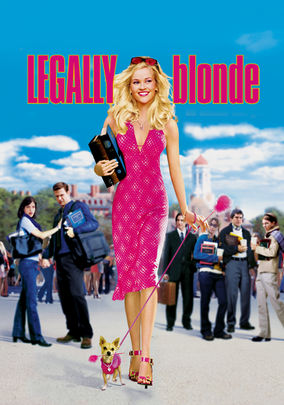
Elle Woods (Witherspoon) is president of her sorority at a Los Angeles college. Clad in fluffy pink attire and carrying her cute dog everywhere she goes, she epitomizes the stereotypical “dumb blonde”.

However, she does carry a 4.0 grade point average in fashion.

Expecting a marriage proposal from her upper-class, snooty boyfriend, Warner, Elle instead finds herself dumped due to not being serious enough.

Determined to prove herself worthy, she manages acceptance into Harvard Law School, along with Warner, and embarks on hi-jinks and adventures.

Warner’s fiancee and a potential new love interest cause turmoil for the boisterous Elle.

Legally Blonde never takes itself too seriously and is simply a fun, silly-minded, comic adventure. Audiences will likely chuckle and smile along with Elle’s adventures as she gets into one pickle after another, always determined to prove her intelligence.

To be clear, the film itself is very formulaic and could easily have been trivial and uninspired resulting in a bomb. But Witherspoon shines in the lead role adding a likable, charming quality to the character.

The actress possesses great wit and comic timing so that her character becomes more of a champion and we root for her to overcome obstacles and succeed.

By miles, she is the standout in the film.

Suspension of disbelief is at an all-time high. In “real life” there is no way Elle would ever make her way into the elitist Ivy League school brandishing a pink resume or other silly tricks to be cute and appealing.

Nor would she ever likely be so instrumental in winning a murder case so quickly. To nobody’s surprise, Elle eventually graduates with flying colors and is honored with giving a graduation speech inspiring those around her.

But as implausible as these situations are, they are also Legally Blondes’ appeal.

The supporting characters are pure caricatures, especially the main foils (Warner and Vivian- who take Elle’s place as fiancee). Both are the villains, Vivian going so far as to embarrass Elle by inviting her to a stuffy party under the guise of it being a costume party.

In the end, one of the characters “turns good”, another common element of predictable films of this nature. But again, the film is just pure and simple fun, so these stereotypes are okay.

In more modern times (not that 2001 was so long ago), the film would have not been directed by a man, but rather by a woman.

Screenwriters Kirsten Smith and Karen McCullah Lutz prepared a female-driven film that was based on a novel by Amanda Brown.

Why a man was chosen to direct is beyond me, but, alas, this is the way things were at the time.

Interestingly, another recent film that I reviewed, My Big Fat Greek Wedding (2002) would work perfectly as a now retro romantic comedy double feature along with Legally Blonde (2001).

Both are fun and light but also celebrate strong female characters.

Legally Blonde borrows much from the 1995 brilliant similar genre Clueless but is not as great as that film. Still, the film is an inspired effort due largely to the charms of its lead star.
My Big Fat Greek Wedding-2002

My Big Fat Greek Wedding-2002

Director Joel Zwick

Starring Nia Vardalos, John Corbett

Scott’s Review #806

Reviewed August 28, 2018

Grade: B+

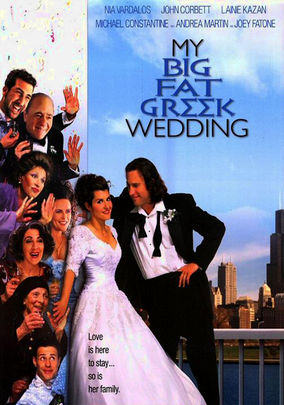
My Big Fat Greek Wedding is a romantic comedy from 2002 that became a surprising sleeper hit at the time of release. A novel story idea, the film was even recognized with a Best Original Screenplay Oscar nomination.

The film achieved success the old-fashioned way by garnering word-of-mouth buzz despite little promotion.

Good-natured, earnest, and tender, the film was nonetheless marred by an abysmal sequel and short-lived television series- a lesson learned in leaving well enough alone.

Comedian Nia Vardalos reportedly wrote the story as a one-woman play and word of mouth among Hollywood A-list celebrities led to a film version starring Vardalos herself. This casting choice adds enormous authenticity as the writer’s vision shines through on-screen.

The film has a fresh and modern feel to it. Otherwise, the supporting cast is brilliant and perfectly selected. From handsome love interest John Corbett to veterans like Lainie Kazan and Andrea Martin, everyone plays their part to the hilt and seems to be having a ball with the comic elements.

Dowdy Toula Portokalos is a lonely thirty-year-old Greek woman, considered the black sheep of her family. Of traditional roots, she is expected to marry and bear children as quickly as possible.

Toula still lives at home and works in the family restaurant in bustling Chicago, yearning for something more out of life.

When she sees dashing school teacher Ian Miller (Corbett) in the restaurant one day, she makes an embarrassing attempt to catch his attention. Through a computer class, Toula blossoms and finally lands her man, but the drama is just beginning as the couples and their individual families’ differing cultures collide.

My Big Fat Greek Wedding is written very well and, again, the authenticity is what shines through in each scene. Admittedly, it often feels like a television sitcom and many scenes play for obvious laughs, but the laughs work. The funniest of these scenes is when Toula and Ian (now engaged) decide to invite his parents to dinner at her parent’s house.

Predictably, events go awry as his parents-conservative and reserved, do not mesh well with hers-festive and bombastic.

Vardalos and Corbett may not have the greatest chemistry in film history, but the build-up and the romance are so charming that we can overlook the lack of lustful vigor or the sexual tension between the pair.

The film feels more like a PG-rated Cinderella story than anything heavier. Predictably, the couple shares a happily-ever-after ending.

As much of a jewel as My Big Fat Greek Wedding was in 2002, the risk with a film of this nature is to hold up well over time. Specifically, in the romantic comedy genre, films of this ilk have a short relevant shelf-life (if deemed relevant at all).

The humorous Windex references may be lost on audiences over time or just become stale over the years.

Some can deem My Big Fat Greek Wedding (2002) as fluff- mainly based on the romantic comedy genre it exists in. But it’s of better worth than that, mainly because of the fresh and genuine use of culture and differing backgrounds.

The film has a quality that most of the standard “rom coms” do not possess, that of authenticity. Yes, it contains Greek stereotypes, but the overall vibe of the film is that of a sunny, fun, happy experience.

An uplifting film can sometimes be just what the doctor ordered.

Oscar Nominations: Best Original Screenplay

Independent Spirit Award Nominations: 1 win-Best Debut Performance- Nia Vardalos (won)

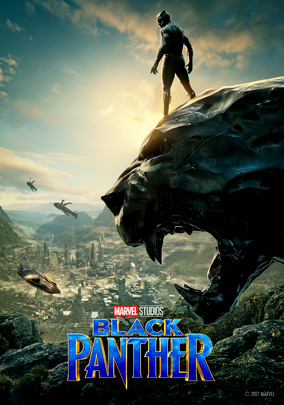
Black Panther-2018

Black Panther-2018

Director Ryan Coogler

Starring Chadwick Boseman, Michael B. Jordan

Scott’s Review #805

Reviewed August 23, 2018

Grade: B+

For the record, I am not a huge superhero fan nor an obsessive follower of the popular Marvel comic series. I see a handful of superhero films but hardly any of this particular genre, usually those (if any) receiving year-end recognition.

Having heard many positives regarding Black Panther (2018), I was looking forward to something creative and left of center from the typical genre film.

While the film has some standard superhero elements, the fact that most of the characters are ethnic is an enormous plus and worth the price of admission alone.

Admittedly, Black Panther plays out like a superhero film is “supposed” to play out: fight scenes, machismo, action, and villains, with the standard good versus evil storyline thrown in.

This is all good and will undoubtedly please the traditional Marvel comic book fan. However, the nuances that the screenwriters and director, Ryan Coogler, sneak into the film set it above a mediocre rating.

The fact that nearly all of the principal characters are black is tremendous, and the female black characters are portrayed as strong.

Furthermore, the visual treats of Africa and Korea, and multi-cultural clothing and colors are noteworthy. While I wish the actual story had steered further away from the tried-and-true, I was left happy with the other qualities.

The film begins with a quick story of how one African nation, Wakanda, came to be and proudly brought into existence the first “Black Panther” with superpowers obtained from a special plant.

As the action moves to Oakland, California, circa 1992, we learn that the King of Wakanda is visiting his brother, who works undercover.

Following the King’s death, his son T’Challa (Chadwick Boseman) takes over the throne but is soon challenged by his cousin, N’Jadaka (Michael B. Jordan), who deems himself the rightful heir.

Another subplot involves a black-market arms leader named Ulysses Klaue, who leads T’Challa, along with Nakia (Lupita Nyong’o) and Okoye (Danai Gurira), to South Korea and back to Wakanda.

Black Panther feels ambitious, like seeing something worth seeing, something inventive and cool. The film is stylized, and Coogler’s direction is spectacular, with bright, colorful visual treats, especially as he features lavish African locales.

Admittedly, in a mainstream comic book film laden with CGI effects, it is tough to know what is real or not, but as a viewer, these aspects were a treat and pleasing to the eyes.

The plot of the film itself feels admittedly mediocre, tough to follow, and a “been there, done that” evaluation. By the same token, the story seems predictable, and is it any wonder that T’Challa will reclaim the throne as King of Wakanda?

It does not matter too much after the inevitable clashes with warrior-type men who want the throne and/or feel that they are the rightful heir to it.

This is not to say the film is not good—it is, but the plot is not the highlight of Black Panther; it feels fairly standard.

The male-female roles are a fascinating study and progressive-minded. Granted, the male characters (T’Challa, N’Jadaka, and M’Baku) are all testosterone-laden and fierce with machismo.

However, despite being manly men, they also contain some sensitivity, and the characters have a unique family element.

On the other hand, the female characters are powerful and empowering- a dynamic approach for a superhero film sure to be seen by millions. One female character is even an Army General! So the portrayal of women as strong warriors rather than merely secondary or arm candy is impressive.

The comic book or superhero genre is notoriously filled with gender stereotypes and specific, often generic aspects. It is nice to see this work break down some of these barriers.

Between the recent Wonder Woman (2017) and Black Panther (2018), women and the black community have been represented positively.

Here’s to hoping that the LGBT community may be next.

Oscar Nominations: 3 wins- Best Picture, Best Original Score (won), Best Original Song-“All the Stars”, Best Sound Editing, Best Sound Mixing, Best Production Design (won), Best Costume Design (won)

12 Monkeys-1995

12 Monkeys-1995

Director Terry Gilliam

Starring Bruce Willis, Madeline Stowe, Brad Pitt

Scott’s Review #804

Reviewed August 21, 2018

Grade: B+

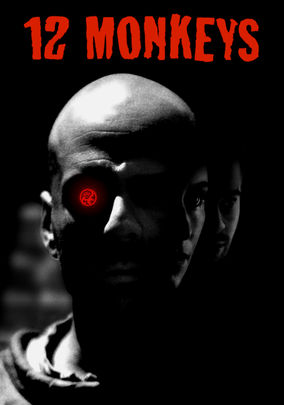
Bruce Willis stars in a 1995 science-fiction thriller named 12 Monkeys that is sure to confuse even the keenest of viewers.

With an impossible-to-follow plot (at least on a single watch), the film is quite novel and filled with edge nonetheless.

With this film, Willis came into his own and proved to some naysayers that he is more versatile than a one-note action hero. He would develop even more as the years passed- think Sixth Sense (1999).

If I may begin to summarize the complex plot, 12 Monkeys is a film about time travel (confusing enough) that traverses from the year 2035 to the year 1990, then to the year 1996, with a bevy of dreams or memories thrown in, but I am still not crystal clear on that.

The time involved threw me for a loop, and I was not able to comprehend where things shifted to……or was part of it a memory possessed by Willis’s character as a little boy?

Nonetheless, in 2035, James Cole (Willis) is a prisoner who is selected by “the powers that be” to go back in time to find a cure for a deadly virus that has wiped out a large part of the world.

He is transported to 1990 instead of 1996 and ends up in a psychiatric hospital, where he meets the fanatical Jeffrey Goines (Brad Pitt).

Dr. Kathryn Railly (Madeleine Stowe) appears in both the 1990 and 1996 stories as a respected psychiatrist and author. Both she and Goines become central to the plot, and the story twists and turns as events unfold.

The intention to make Willis and Stowe a romantic couple did not seem to quite work at first, but their chemistry grew on me.

The duo never received a “happily ever after” finale as they deserved, nor was their troubled romance ever fully realized, to say nothing of consummated.

The flirtation and bond they share felt more like a tease than anything else, or rather, having two Hollywood heavyweights forge some sort of romance.

Regardless, “romance” did not seem to be the point of this film.

Brad Pitt was nominated for Best Supporting Actor at the Oscars for the film. While he provides a quirky, showy, multirole (or multi-personality) performance, complete with tics resembling those of a Tourette’s syndrome patient, the role is not one of his best.

At this time (1995), Pitt was a rising star, and the recognition helped him tremendously. But he seems slightly overacted, making the character too over-the-top.

I much prefer his more subdued work in Seven (released the same year), or future roles in Babel (2006) and Moneyball (2011).

Appealing in parts are the frequent exterior shots of the cities of Philadelphia and Baltimore, where the film is set.

Treats include the Baltimore-Washington International Airport, the Pennsylvania Convention Center, and the Eastern State Penitentiary filming locations, as well as numerous highway and bridge shots that add tons of authenticity.

A major score for the film, and Alfred Hitchcock fans everywhere, is the incorporation of classic film clips, specifically the mysterious Vertigo (1958), into the story.

As Kathryn and James camp out in a rustic movie theater and disguise themselves as different people, they watch a marathon of Hitchcock films (as evidenced by the many titles on the marquee).

It’s clever that the characters James and Kathryn begin to mirror the actions of Vertigo’s Scottie and Judy.

Blondes anyone?

12 Monkeys (1995) does come together after the film as the dreams/memories are laid out pretty clearly. As we have witnessed these sequences throughout, it leads to a semi-satisfying conclusion.

A bit of a beautiful mess, the film has clever tidbits and is well-acted, and the bearing of both Willis’s and Pitt’s butts might get some additional viewers.

I need to watch the film again to understand, perhaps, and connect all of the dots better.

Oscar Nominations: Best Supporting Actor-Brad Pitt, Best Costume Design

BlacKkKlansman-2018

BlacKkKlansman-2018

Director Spike Lee

Starring John David Washington, Adam Driver

Scott’s Review #802

Reviewed August 14, 2018

Grade: A

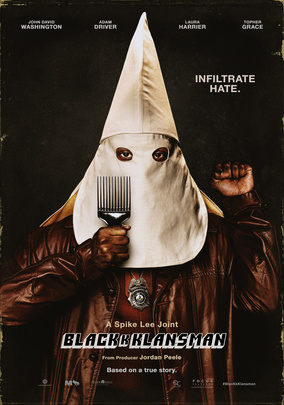
Spike Lee’s latest offering, BlacKkKlansman (2018), is a brilliant effort and oh so timely given the tumultuous political climate in the United States in 2018.

Despite the film being set in the early 1970s, the racial issues and tensions that Lee examines are sadly still an enormous problem today. Lee infuses some humor and even romance into the drama, so the film is not too preachy or heavy.

A grand and relevant effort that all should watch.

As the film commences, we are treated to a clip from the 1939 classic Gone With the Wind, and BlacKkKlansman concludes with prominent clips of racial tensions circa 2017.

The timeline is crucial and influential, as the film clearly demonstrates that racism is still alive and well.

Lee, a known liberal, clearly puts a left spin on his work. BlacKkKlansman will likely not be seen by conservative filmgoers, which is sad, as valuable lessons can be learned by viewing this piece.

The story is based on a true story memoir written by Ron Stallworth, the first black police officer to be hired by the Colorado Springs police department. He successfully infiltrates the local chapter of the Ku Klux Klan with startling results.

The film begins with a speech by a doctor (Alec Baldwin) offering a “scientific explanation” of white superiority in 1957. Fast-forward to the early 1970s, where the rest of the film occurs.

Ron is initially hired by the police force as part of a progressive initiative for diversity, but he quickly moves into a detective role. He manages to pose as a KKK member via telephone while another detective, Flip Zimmerman (Adam Driver), goes to meetings in person.

Lee’s focus is clearly on the overall content and message of the film, and therefore, little character development is achieved. I admittedly did yearn to know the “hows ” and ” whys” of many of the characters, but the film is not really about the characters individually, and I am okay with this.

Why did Ron desire so much to become a police officer? What was his childhood like? How did Patrice become President of the black student union? What was her childhood like? What upbringings did some of the KKK members have?

Indeed, not enough time would have been allowed to answer these questions—minor gripe.

Lead actor John David Washington, son of Denzel Washington, was unknown to me before watching this film. He is tremendous in his role, as is Driver in his supporting role of Zimmerman, but again, these are not character-driven roles.

Washington has tremendous chemistry with his love interest, played by Laura Harrier. Ron and Patrice discuss politics and dance the night away, but she is an activist and a cop, making their chances of a happily ever after tough to imagine. Their romance is atypical of most films as it is based on intelligence and not silly, melodramatic aspects.

On the acting front, Topher Grace as the racist David Duke is tremendous. With a kindly demeanor mixed with a bubbling under the hatred of blacks and Jewish people, Lee makes sure he is the foil.

A delicious scene towards the end of the film, when Duke gets his comeuppance of sorts, is well done and received a thunderous roar from the theater audience.

Lee is careful to ensure the bad guys get their just due and are all portrayed as complete fools. With a false sense of nationalism, many hate minorities simply because they feel they are taking over their beloved country.

Not to harp on this, but BlacKkKlansman will attract those who already agree with Lee’s beliefs and politics. If only those who disagree would give the film a chance. Unlikely.

The final five minutes of BlacKkKlansman arguably are the most pivotal experience of the entire film, but they have nothing to do with the actual story portrayed in the rest of the production.

Lee concludes the 1970s portion of the film satisfyingly, then fast forwards to the horrific events that took place in Charlottesville, Virginia, in 2017 when protesters clashed with a racist group, resulting in an innocent woman’s death.

The controversial remarks of President Trump, refusing to cast blame on the racist group, are shown. Sitting in a crowded movie theater, these clips had the most significant reaction from the audience, with some flipping Trump the finger, while others sobbed in anguish and disbelief that we have achieved so little as a nation.

Rarely has a more pertinent or meaningful film been made for the current political climate in the United States. BlacKkKlansman (2018) brilliantly ties racism spanning one hundred and fifty years together and shows how it still exists.

Amid this message, however, lies a great drama containing humor and importance.

Oscar Nominations: 1 win-Best Picture, Best Director-Spike Lee, Best Supporting Actor-Adam Driver, Best Adapted Screenplay (won), Best Original Score, Best Film Editing

Mystic River-2003

Mystic River-2003

Director Clint Eastwood

Starring Sean Penn, Tim Robbins

Scott’s Review #801

Reviewed August 10, 2018

Grade: A

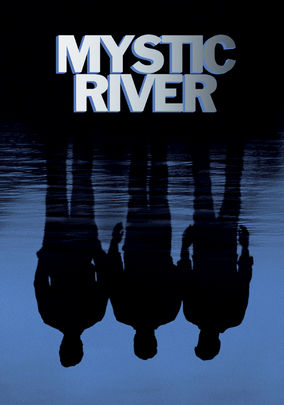
Mystic River (2003) is a film that I consider to be the second-best offering directed by Clint Eastwood.

Along with Million Dollar Baby (2004), Eastwood successfully creates two compelling back-to-back dramas, not too dissimilar from each other.

He was unquestionably the “it” director of the early 2000s, and with Mystic River, helms a gritty, mystery drama with a stellar cast, nuts-and-bolts storytelling, and enough twists and turns to keep the audience guessing and ultimately shocked.

All of these pieces result in a memorable experience.

The film is based on the novel of the same name, written by Dennis Lehane. A tremendous element is a locale of Boston, and an Irish, blue-collar/working-class theme, prevalent throughout the story.

Thanks to the cinematography, illuminating a grey and stormy look, enhances the rest of the film. I adore films shot in and around Boston as so much culture and flavor are provided.

Eastwood hardly misses a beat with some cold and grizzled touches that play into the hardships and struggles of the character’s everyday lives.

The story itself begins as we meet the central characters (Jimmy, Dave, and Sean) as young boys, a three musketeers-type scenario where they are like blood brothers. After an incident occurs where Dave is accosted by men and sexually abused, he is ultimately rescued after four torturous days, but his life is never the same.

Fast forward twenty-five years and the boys are now men, still living in a working-class Boston neighborhood. Each is now married, their lives have moved on, drifted away from each other, and contain vastly different personality types.

They reunite after a tragedy occurs.

For starters, a major win by Eastwood is the casting of each of the male characters. Sean Penn plays Jimmy, the volatile ex-con, who runs a small store, while Sean, played by Kevin Bacon, has become a Massachusetts State Police officer, putting him directly at odds with Jimmy.

Sadly, Dave (Tim Robbins), now lives a quiet life, still harboring trauma, shame, and guilt from his childhood experience. When Jimmy’s daughter (Emmy Rossum) is brutally murdered, the three friends’ lives are intertwined as they search for the killer taking the viewers down a dark path filled with secrets, some from the past.

Laura Linney and Marcia Gay Harden give tremendous performances as Jimmy’s and Dave’s wives, respectively.

Mystic River is a film where all of the great elements come together perfectly. From the acting to the components of the story to the whodunit involved, to the exciting twist and conclusion to the overall film are truly exceptional.

But what sets it apart from a standard drama or thriller are the characterizations and relationships among these characters.

Childhood memories can last a lifetime in their monumental importance and this is evidenced many times between Jimmy, Dave, and Sean. Blood brothers, yes, but when tragedy strikes, old wounds and fresh wounds together run deep.

The themes of violence and revenge are firm staples of this film, and these are commonalities for many Eastwood films. Viewers may also find themselves conflicted with whom to sympathize with or where their allegiances should lie.

Jimmy, the anti-hero, will garner sympathy for the vicious loss of his daughter- pain that can never be fully healed.

Did Dave, the obvious prime suspect, kill the girl? If so, was it on purpose or by accident? Are others, specifically his wife, involved in a cover-up? Eastwood carves the setup spectacularly, but is it a simple red herring? These events make the film unbelievably compelling.

Fabulous is the performances all around, but especially by Penn and Robbins, both awarded with Oscar wins for Best Actor and Best Supporting Actor, respectively.

Penn never delivers poor performance, but Jimmy is one of his best characters yet. As for Robbins, he fills the character of Dave with empathy- a wounded bird left damaged through no fault of his own, suffering a terrible fate due to circumstances, misunderstandings, and ultimately tragedy.

Mystic River (2003) watched alongside Million Dollar Baby (2004) would make for an excellent Saturday night for fans of Clint Eastwood’s directorial talents. These two are the best of the best with great character development and rich writing.

The direction, however, enhances the spectacular elements and takes it a bit further providing appropriate texture and a wonderful atmosphere.

Oscar Nominations: 2 wins-Best Picture, Best Director-Clint Eastwood, Best Actor-Sean Penn (won), Best Supporting Actor-Tim Robbins (won), Best Supporting Actress-Marcia Gay Harden, Best Adapted Screenplay

The Polar Express-2004

The Polar Express-2004

Director Robert Zemeckis

Starring Tom Hanks

Scott’s Review #800

Reviewed August 8, 2018

Grade: B+

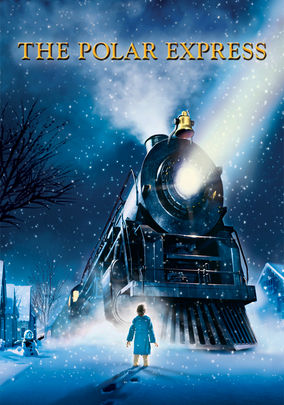
The Polar Express (2004) is a modern entry into the annals of holiday film history. Along with treasures like Rudolph, Frosty, the Grinch, and all the other standards, this film has become a popular one to watch throughout the season.

The film is not exactly like the others, since it is the first of its kind to incorporate live human characters animated using live-action motion capture animation.

The mood of the film is mysterious, edgy, and with a dark tint, so jolly it isn’t, but compelling it is, and visually is a marvel.

The story is as follows- on a snowy (naturally!) Christmas Eve, a young boy living in Grand Rapids, Michigan, is doubtful of the existence of Santa Claus. When a steam locomotive suddenly appears outside of his house, he curiously boards the train to find a mysterious conductor (Tom Hanks) manning the train.

As the train rolls away the boy meets two other children on board and stops for another one, also reluctant to get on. They begin a dazzling, frozen adventure to the North Pole with the promise of receiving the first gift of Christmas from Santa Claus himself.

The main reason to recommend The Polar Express is simply for the gorgeous visual treats offered. In 2004 the film was a unique experience and I fondly recall sitting in a dark movie theater observing the film for the first time.

There was a magical element to the surroundings, combining intrigue and fantasy that still holds up well.

For adults, I do not think the film is at all scary, but I have heard some reviewers complain that the moody ingredients are a bit frightening for children so there is that concern. 

A major component is the mixture of human beings and animated tools. The familiar actor who everybody knows is Tom Hanks as the conductor. Therefore, to sit back and observe the character is a wonderful thing- is it Tom Hanks or is it an animation?

It is ultimately both, but the fun is in the observation and wondering how the filmmakers created this experience.

And listen for Hanks in other voice performances throughout the film. 

The story (or fable) itself is warm and fairly predictable. But, of course, being largely made with kids in mind, this is to be expected. There is never a doubt that the boy (interestingly never given a name) will ultimately believe in Santa after all and live happily ever after.

The magic is in the details, though- the boy’s journey to this realization is peppered with fun and creative richness- the little girl’s floating ticket and an ornament falling off a Christmas tree are good particulars. 

Director, Robert Zemeckis, and Hanks worked closely together in Forrest Gump (1994) so the pair are familiar with each other, creatively speaking. Hanks undoubtedly had much input into the decision making and it shows. 

I do not personally rank The Polar Express (2004) among the best of the best holiday film offerings, but I support an occasional dusting off of this work for viewing pleasure.

Perhaps over time the animations may become dated or seem less dazzling, but the film is still to be appreciated for its creative elements. The story is nothing spectacular (in a way Scrooge for kids) but makes for a pleasant family viewing experience. 

Oscar Nominations: Best Song-“Believe”, Best Sound Editing, Best Sound Mixing

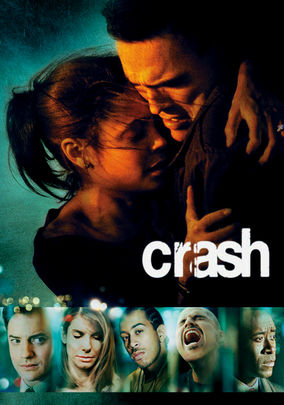
Crash-2005

Crash-2005

Director Paul Haggis

Starring Matt Dillon, Thandie Newton, Don Cheadle

Scott’s Review #799

Reviewed August 3, 2018

Grade: A-

A superior film that has unfortunately suffered greatly after controversy, Crash (2005) is a story of intersecting vignettes all interrelated.

The controversy stems from the film’s very surprising Oscar win over the heavily favored Brokeback Mountain. Many thought the latter was a shoo-in, poised to set the LGBT genre ahead of the game.

Sadly, now when Crash is discussed by film lovers, it’s usually in tandem with Brokeback, and usually on the heels of its having stolen the Oscar crown.

On its own merits, the film excels as a social story exploring the many facets of race, racism, and bigotry.

The events in Crash take place within one thirty-six-hour day in metropolitan Los Angeles. Featuring a slew of characters that would even impress Robert Altman, the audience witnesses situations involving many races and backgrounds.

We meet Rick and Jean Cabot (Brendan Fraser and Sandra Bullock), a white affluent couple who are carjacked when driving home from dinner. The black men who carjack the couple then strike a Korean man and bring him to the hospital.

A racist police officer, John Ryan (Matt Dillon), cares for his troubled father who cannot afford insurance. A Persian father and daughter wish to buy a gun for protection, and a Hispanic father (Michael Pena) worries about a rash of drive-by shootings.

The stories go on and on as a myriad of the characters come into situations involving other characters.

The interconnecting stories all cascade into overlapping situations of interest. The point of Haggis’s film is racism but with a creative twist.

The director points out and shows that those who are racist have good qualities too and those who are discriminated against in turn discriminate against others themselves.

The most interesting character is Dillon’s, John Ryan. On the surface a racist, wise-ass, who in one scene embarrasses an affluent light-skinned black woman (Thandie Newton), simply because he carries a gun, then ends up saving her life in a horrific car accident.

But is he redeemed? Does he see the world as black people getting ahead and he is left behind? What about the Persian man, discriminated against, but then vowing revenge on a Hispanic man after a misunderstanding?

The black men who carjack the white couple then release a group of immigrants who will surely be sold, perhaps even for sex trafficking. Does this act make the men good?

The point that Haggis makes is that each character is neither all good nor all bad, but rather complicated and nuanced with emotions based on past experiences and discrimination themselves.

Crash is highly similar to Traffic (2000) and Babel (2006) in terms of pace, style, and the way the stories align. The film is different, however, in that the location is strictly confined to Los Angeles, making the setting of monumental importance.

How would events be different in a setting like Middle America? Or in a different country? These possibilities are worth contemplating based on the perception that Los Angeles is one of the most diverse cities in the United States. If racism occurs there it can occur anywhere.

Now more about that pesky Oscar controversy! In later years critics would largely agree that the inferior film had won that year and Brokeback Mountain lost due to a level of homophobia on the part of the voting academy.

Since the academy is filled with Hollywood liberals, albeit of an older generation, an alternative way of thinking is that perhaps Crash won because it was the “safer” film.

Everyone seems to have forgotten the other three nominated films that year. Alas, Crash is permanently marred for winning Best Picture. It would undoubtedly have more supporters had it lost.

Ranked as one of the lowest-scoring Best Picture winners, I still believe Crash has some worth- though I agree that it should not have won over Brokeback Mountain.

Taken on its own merits the film is quite good. A message film with great atmosphere, it succeeds in making the viewer think and ponder perhaps their discrimination, whether conscious or subconscious.

The ensemble acting and character representations are all very good and worthy of a second watch.

Oscar Nominations: 3 wins-Best Picture (won), Best Director-Paul Haggis, Best Supporting Actor-Matt Dillon, Best Original Screenplay (won), Best Original Song-“In the Deep”, Best Film Editing (won)

Independent Spirit Award Nominations: 2 wins-Best Supporting Male-Matt Dillon (won), Best First Feature (won)

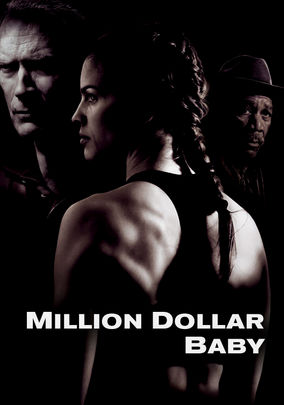
Million Dollar Baby-2004

Million Dollar Baby-2004

Director Clint Eastwood

Starring Clint Eastwood, Hilary Swank, Morgan Freeman

Scott’s Review #798

Reviewed August 2, 2018

Grade: A

Million Dollar Baby (2004) is arguably Clint Eastwood’s best-directed film of his career.

Rivaling Mystic River (2003) by a hair, the film has a raw emotional appeal, empathetic and richly carved characters and mainstream sensibility.

These combined elements resulted in huge box office success and Oscar wins for Picture, Director, Actress, and Supporting Actor in the year of its release.

Frankie Dunn (Clint Eastwood) is a hardened boxing coach who owns a run-down Los Angeles gym. He works with his best friend and assistant, Eddie (Morgan Freeman). When an aspiring female boxer, Maggie (Hilary Swank), arrives and begs Frankie to train her, he initially declines, but at Eddie’s urging, eventually relents and leads her to great success as a top female boxer.

Frankie and Maggie forge a close-knit, father/daughter relationship, a substitute for the damaged one he has with his daughter.

The final portion of Million Dollar Baby takes a very dark turn, as Maggie is illegally punched during a fight by a fellow boxer, causing her to become a quadriplegic. These events are what change the tone of the film from a very good sports drama to a great tale of morality.

Many emotions and debates transpired after this film was released and the common question of, “What would you have done?” engulfed viewers for months, all through awards season.

The heartbreaking effects of the story events raise the film head and shoulders above most typical sports films.

Too often Eastwood creates films that are palpable, but in a way generic, and very Hollywood. Grand Torino (2008) and Invictus (2009) are good examples of this- especially Invictus given the sports drama element.

Some assumed that Million Dollar Baby was to be a female Rocky (1976) and the film was indeed marketed as such. For this reason, some felt robbed or duped, but I celebrate this film as leaning a firm left of center with a refreshing, progressive approach.

The performances are amazing all around, even by Eastwood- never known for his acting talent. The characters are written as character-driven, but not caricatures. Wounded, grizzled, and flawed, in his senior years, Frankie sees his life has passed him by, having achieved nothing.

Never has Eastwood portrayed a character as complex and reserved as Frankie.

Swank deserved her second Oscar (1999’s Boys Don’t Cry was her first) for simply becoming a boxer- her pre-filming prep schedule reportedly was insane. More than the muscle and toning she achieved, are the raw acting talent and wounded emotions she possesses.

The character is written as pained and vulnerable, but also very strong. She has achieved little in her life- working as a waitress in Missouri and stealing scraps of leftovers to survive. Her family is trash through and through, only wanting her eventual riches for themselves.

The character is inevitably championed as we empathize with her plight emotionally.

Finally, Freeman deserves recognition for being the ultimate supporting actor. Eddie Dupris, a former fighter blind in one eye, is the center point of the story and frequently narrates the actions of others, oftentimes offering a glimpse into the psyche of individuals.

The voice of reason, he is observant and analytical, almost knowing Freddie better than Freddie knows himself. They quarrel and disagree, but are forever friends and loyal to a fault. Freeman possesses quite a reserve as the audience becomes curious about his past life.

Million Dollar Baby (2004) is Eastwood’s best film- Mystic River comes a close second, however. A seemingly formulaic story and genre are weaved into a web of humanism, emotions, and power.

The film is about the characters, which makes it succeed.

Eastwood has not been able to quite surpass this beautiful story, but thankfully received dripping praise and accolades for a film not soon forgotten.

Oscar Nominations: 4 wins-Best Picture (won), Best Director-Clint Eastwood (won), Best Actor-Clint Eastwood, Best Actress-Hilary Swank (won), Best Supporting Actor-Morgan Freeman (won), Best Adapted Screenplay, Best Film Editing