Category Archives: Dennis Christopher

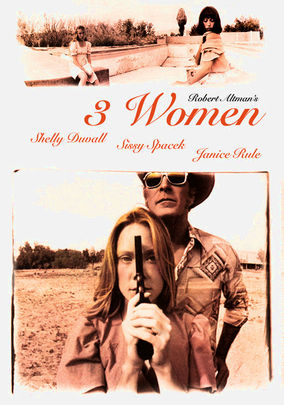
3 Women-1977

3 Women-1977

Director Robert Altman

Starring Shelley Duvall, Sissy Spacek

Top 250 Films #91

Scott’s Review #578
Reviewed January 1, 2017

Grade: A

Robert Altman is one of my all-time favorite directors and what a pleasure it is to uncover additional gems that he has directed over the years.

I have seen 3 Women (1977) before but some films (the true greats) are like fine wines and get better and better over time, in addition to being appreciated more and more with each passing viewing.

3 Women is a prime example of this. The level of psychology and the changing personalities of the characters make it a unique and brilliant experience.

3 Women is a psychological feast and the study of three complex characters, hence the title.

How fantastic how Altman claimed to have dreamed the entire film, complete with Duvall and Spacek in the roles, and then attempted to recreate the dream on film- he has done a masterful job.

The film is dream-like with an interpretive element that will leave the viewer pondering not only the relationships between the three women but who exactly each woman is- consciously and sub-consciously. Lots of questions will abound as the film concludes.

The main relationship is between the characters portrayed by Duvall and Spacek.

Duvall plays Millie Lamoreaux, a chatty and confident woman, who works at a California health spa for elderly clientele. She is statuesque and gorgeous, but surprisingly not well-liked by her colleagues, two of whom are mysterious identical twins.

New employee Pinky Rose is a shy and vulnerable mousy type, who takes an immediate liking to Millie, becoming somewhat obsessed with her. The pair eventually move in together and begin to engage in a mysterious and sometimes volatile friendship dripping in jealousy and lust.

Eventually, they switch personalities, only adding to the mystique of the film. They reside in the Purple Sage Apartments, run by Edgar and Willie Hart.

Willie is the third woman referenced in the title and is a pregnant painter, creating unsettling murals marveled at by Pinky.

It has been argued that 3 Women was an influence on the David Lynch masterpiece, Mulholland Drive (1992), and the more I ponder this the more that I agree with it.

The dream-like, surrealistic qualities are prevalent in both films.

Peculiar, strong-willed women are the central characters in both films and psychology and amnesia are the main themes. The southern California setting is identical as are the interpretive elements, and the fantastically odd characters- both lead and supporting.

When Pinky’s elderly parents are introduced, this is uncanny to a pair of grandparents featured in Mulholland Drive. Both are superior films so the comparisons are a joy to think about and ponder the complexities.

Ingmar Bergman’s 1966 psychological film Persona is most certainly a large influence on 3 Women. That film dared to explore merging personalities among women.

The final scene of 3 Women is intense and thought-provoking. The lives of the women carry on following a tragic event, but each takes on a certain persona and role within the family unit that they have forged.

Among other qualities, I view 3 Women as a feminist film, despite being directed by a male. Altman was famous for allowing his actor’s free reign in dialogue and development and this most certainly had to be the case with 3 Women.

One of Altman’s masterpieces.

Altman is a genius in nearly every film that he creates, but 3 Women is probably his most cerebral, and the film that can be talked about and analyzed more than the others.

What a pure treat for a complex film lover to explore. 3 Women (1977) is not for mainstream audiences nor is it meant to be.

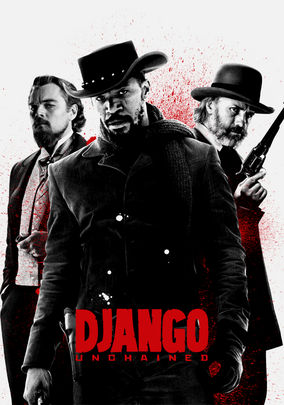
Django Unchained-2012

Django Unchained-2012

Director Quentin Tarantino

Starring Jamie Foxx, Christoph Waltz

Top 250 Films #116

Scott’s Review #699

Reviewed November 26, 2017

Grade: A

Quentin Tarantino, the brilliant filmmaker, can do very little wrong in my opinion, and he releases yet another masterpiece with 2012’s Django Unchained, a western story centering around the delicate subject matter of slavery.

As with several other talented director’s stories, the main focal point here is a revenge-driven tale with plenty of bloody scenes and stylistic ferociousness, making Django Unchained yet another masterpiece in the Tarantino collection.

Certainly not for the faint of heart, the film will please fans of film creativity and artistic achievement.

As with many Tarantino films a stellar cast is used and each actor cast to perfection- it seems almost every actor in Hollywood is dying to appear in the director’s films- this time Jamie Foxx, Christoph Waltz, Kerry Washington, Leonardo DiCaprio, and Samuel L. Jackson are the lucky ones, all featured in prominent roles- not surprisingly the acting is top-notch.

An interesting fact to note is that whoever appears in a Tarantino film seems to be having the time of their lives- what creative freedom and interesting material to experience.

A comparable director to Tarantino- as far as recruiting fine actors- is Robert Altman- also tremendously popular with talent.

The saga begins with clear Western flair as Django Freeman (Foxx) is led through the scorching heat of Texas with a group of other black slaves, presumably, to be sold by their abusive white captors- the time is 1858, and the abolition of slavery has not yet occurred the Civil War is still two years away.

Doctor King Schultz (Waltz), a former dentist and current bounty hunter, is on a mission to find and kill the Brittle brothers and realizes that Django can help him find the men.

To complicate matters, Django has been separated from his wife Broomhilda (Washington) and vows to find her and avenge her abductors.

As circumstances lead Schultz and Django to a vast Tennessee estate, the duo becomes business partners and friends. The race to rescue Broomhilda takes the pair to sunny (and equally hot) Mississippi- the home of vicious Calvin Candie (DiCaprio) and his dreaded “Candyland”.

The crackling heat and the atmospheric nature of Django Unchained combined with the revenge theme make the film an immeasurable success.

An ode to spaghetti westerns of yesteryear, the film incorporates similar music and grit so that the result is a modernized version of those films, with lots more blood and violence.

Slavery is a tough subject matter to tackle, especially when members of the Ku Klux Klan are featured, but Tarantino does so effortlessly, and as Django gains revenge on his tormentors, there is major audience satisfaction to be enjoyed.

The indignities and downright abuse that several black characters suffer can be quite tough to sit through.

The climactic dinner scene in Mississippi is splendid and the best sequence of the film. Schultz and Django dine with Calvin at his spectacular mansion. Calvin’s sinister and loyal house slave (Jackson) suspects a devious plan is about to be hatched and a vicious shoot-out erupts between the parties involved.

The ingenious and long sequence is a cat-and-mouse affair with all of the characters carefully tiptoeing around the others in fear of being revealed or discovered as fakes.

The scene is exceptional in its craft as we watch the characters dine on delectable food and drink, all the while motivations bubble under the surface.

Django Unchained is not for film-goers seeking either a linear story or a mainstream piece of blockbuster movie-making-Tarantino is not a typical Hollywood guy.

The film is exceptionally carved and constructed in a way that challenges the viewer to endure what some of the characters (specifically Django and Broomhilda) are made to go through. This discomfort and horror make the inevitable revenge all the more sweet and satisfying.

Quentin Tarantino has created masterpiece after masterpiece throughout his filmography of work.

Proudly, I can herald 2012’s  Django Unchained as one of the unique director’s very finest and will be sure to be remembered decades and decades in the future as being able to challenge, provoke thought, and satisfy legions of his fans.

Oscar Nominations: 2 wins-Best Picture, Best Supporting Actor-Christoph Waltz (won), Best Original Screenplay (won), Best Sound Editing, Best Cinematography

Fellini’s Roma-1972

Fellini’s Roma-1972

Director Federico Fellini

Starring Peter Gonzales, Britta Barnes

Top 250 Films #122

Scott’s Review #649

Reviewed June 5, 2017

Grade: A-

Fellini’s Roma (1973) is a trippy experience set in Rome across two different periods.

As with all Fellini films, the film is meant to be experienced rather than analyzed.

One must nestle into the life that Fellini offers on-screen- in this instance, the fabulous city of Rome, Italy, in both positives and negatives.

The experience was very good for me, as both a world of odd characters and of ancient Rome oozed from the screen appealingly and absurdly.

From a plot narrative- there is a rot one. Arguably, the only character portrayed is Rome herself. The film takes place in both the 1930s and the 1970s and is said to be an autobiographical tale of director Fellini’s experiences growing up in Rome.

We see little Fellini as a youngster, experiencing the vast city for the first time, and as a teenager, now living in the city. Interestingly, the film moves back and forth between the two periods with no rhyme or reason.

Throughout the film, we see both the beauty and the ugliness of Rome- the majestic Colosseum and the dirty entrails of the gloomy city. Scenes of seedy brothels, mainly in the 1930s, and a myriad of strange and scantily clad females prance before the cameras, looking for a lucky score amid the droves of men lusting after them.

Another depicts a fashion show, of sorts, taking place at the Vatican, involving nuns and priests in bizarre costumes.

The 1930’s setting is my personal favorite. Gritty, cold, and harsh, Rome’s bleakness is depicted. Unsurprisingly, this has much to do with the historical period: since Mussolini was in power and on the eve of World War II, the darkness was apparent.

In a frightening scene, bomb sirens wail while a woman shrieks in panic. The brothel scenes are downright creepy, and the subsequent theatre scenes involving drunken, rowdy, young men leering and cursing at the entertainment are a particular slice of a life sequence.

In contrast, the 1970s sequences are layered with more beautiful depictions of the city. Brighter colors predominate, and there appear to be scientists or explorers digging into ancient ruins, finding gorgeous art that is subsequently damaged by the wind. We also see hippy types basking in the sunlight.

Again, much of this film is largely open to interpretation.

I adore Fellini’s Roma in terms of an expression of the city of Rome as an art form, but the film is highly unconventional- another plus for me.

Sure, I may have wanted to learn more about the bevy of creepy and potentially interesting characters. Still, I finished the film with an appreciation for Rome unlike any I have ever known.

A startling final scene, in which legendary Italian film star Anna Magnani appears scantily clad, implied to be a prostitute, was filmed shortly before her untimely death at the age of sixty-five.

As a film, Fellini’s Roma (1972) is a wonderful history lesson, but also a lesson in interpretation and film appreciation. Most filmgoers are accustomed to a beginning, middle, and end, as well as some semblance of a plot.

Roma contains none of that; rather, it is mind-opening and still fresh many years after its release, which is a true testament.

A Wedding-1978

A Wedding-1978

Director Robert Altman

Starring Carol Burnett, Mia Farrow, Paul Dooley

Scott’s Review #539

Reviewed December 17, 2016

Grade: A

A Wedding (1978) is an obscure, brilliant gem penned and directed by Robert Altman- a film genius and one of my most adored directors.

I love most of his movies and A Wedding is no exception. The creative way that Altman weaves intersecting storylines and dialogue, thereby creating a real-life tone, gives immense realism to his films.

In A Wedding, he takes a basic life event and turns it into a well-nuanced, fascinating, comical, yet dramatic story.

He is known for having enormous casts (in A Wedding it is forty-eight principles), but every character serves a purpose.

The viewer will feel that they are a fly on the wall of a real wedding.

Altman’s actors primarily improvise the dialogue, speaking at the same time, bringing a realistic edge. I adore this quality.

The film is a satire- people either love or loathe attending weddings and Altman’s film caters to the latter. He creates a setting, from the ceremony to the reception, riddled with awkward moments, and social guffaws.

In pure satirical, soap opera fashion, two wealthy families gather at a lavish estate for the ceremony to commence. Hilarity ensues when the corpse of the matriarch of one family lies in her bed, nobody realizing she is dead.

Other hi-jinks, such as the revelation of a nude, life-size portrait of the bride, the caterer falling ill, and a tornado wreaking havoc.

Slowly, secrets are revealed by the families, as the alcohol flows and the characters become involved in the perilous situations.

Altman does it again as he creates a masterpiece based on real-life situations that most can relate to.

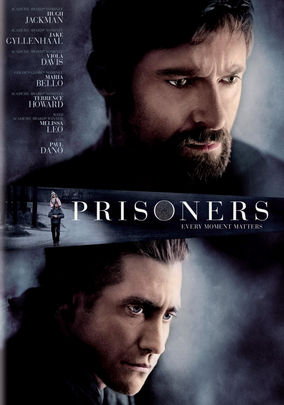
Prisoners-2013

Prisoners-2013

Director Denis Villeneuve

Starring Hugh Jackman, Jake Gyllenhaal

Scott’s Review #75

70273235

Reviewed June 27, 2014

Grade: B+

The film Prisoners (2013) weaves a gripping, taught, psychological tale amid a well-acted stellar cast of Hugh Jackman, Jake Gyllenhaal, Maria Bello, Viola Davis, and Paul Dano for starters.

That is what separates it from other similar, yet mediocre thriller types.

The gray, somber, Pennsylvania town is a perfect backdrop for a story involving child abduction and a father that seeks a confession from the presumed kidnapper.

The mood and cinematography are impressive and the bleakness is perfect for the tone- a cold Thanksgiving holiday weekend in a working-class, steel town.

At two hours and twenty-six minutes, the film is lengthy, but on the edge of your seat.

What intrigued me most was the audience conflict of whom to root for. Is the father purely innocent? Is the kidnapper guilty? Is someone else involved?

These questions go through the viewer’s mind during the film.

Prisoners possess a major drawback in the high number of plot holes and questions asked after the film.

The kidnapper’s motivations are weak and never fully explained. Portions of the story do not add up and make little sense.

The film is similar in style to Zodiac (2006) and Mystic River (2003).

Prisoners (2013) is an intense, thrill ride to be enjoyed, but not over-analyzed.

Oscar Nominations: Best Cinematography