Europa Europa-1990

Europa Europa-1990

Director Agnieszka Holland

Starring Marco Hofschneider

Scott’s Review #1,373
Reviewed June 29, 2023

Grade: A

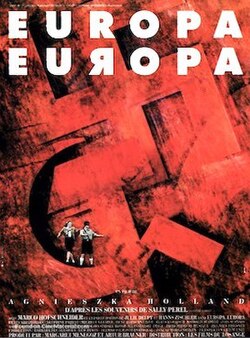
Europa Europa (1990) is a unique film that depicts a young Jewish man’s plight and experiences during a dangerous period in world history.

There have been many films made that examine German Naziism in some way, shape, or form, but the film is German, which only authenticates the story.

The secret sauce of this film is the remarkable storytelling by Agnieszka Holland, who also directed.

The fact that it is based on real-life events only adds emotion, heartbreak, and just a little hope.

It is based on the 1989 autobiography of Solomon Perel, a German-Jewish boy who escaped the Holocaust by masquerading as a Nazi and joining the Hitler Youth.

Perel himself appears briefly as “himself” in the film’s finale.

Speaking of German war films, Europa Europa doesn’t eclipse the power of the 1930 masterpiece All Quiet on the Western Front or the 2022 remake, for that matter.

It’s not as raw, but it does personalize the experience by focusing on one character and his perspectives.

The film adds a tinge of humor, homosexuality, and full nudity in a way that lightens the mood and almost makes it fun instead of pure doom and gloom.

But the concentration camp horror is never taken for granted.

Handsome Jewish teenager Salek (Marco Hofschneider) is separated from his family when they flee their home in Germany for Poland.

Salek ends up in a Russian orphanage for two years. Still, when Nazi troops reach Russia, he convinces them he is a German Aryan and becomes an invaluable interpreter and then an unwitting war hero.

While he can hide his Jewish blood on the surface, he is uncircumcised, which makes him vulnerable and at risk of being found out at any moment.

His deception becomes increasingly difficult to maintain after he joins the Hitler Youth and finds love with beautiful Leni (Julie Delpy), a staunch anti-Semite.

Hofschneider easily carries the film. With dashing good looks and a trusting smile, the audience can see how he might be able to fool the German regime.

As shown during a powerful scene where the Hitler Youth is taught how to spot a Jew, scrawny, rat-like, and mistrustful-looking are the characteristics they are told to be wary of.

Salek is the opposite.

The actor appears completely naked in several scenes, including full-frontal. This is not done frivolously because his penis is central to the plot and his potential discovery.

Delpy plays the gorgeous yet tragic character of Leni. She at first appears humane and kind, but her true colors and anti-Semitic hate soon shine through, which troubles Salek.

He is startled at how much hate a young girl could harbor for human beings she knows nothing about.

The realization hits home to the audience as the power and influence that Hitler possessed, with the ruination of human life in so many different ways.

A groundbreaking sequence occurs when a German soldier named Robert (André Wilms) attempts to molest Salek when he is privately bathing. Revealing his homosexuality to Salek while realizing Salek is Jewish makes them the best of friends.

They both have secrets that would get them instantly killed.

When Robert is mortally wounded, he and a devastated Salek share a deathbed kiss, forever cementing their bond. The human connection is more powerful than a sexual one.

A reunion with a family member at the conclusion will melt the hardest of hearts.

Europa Europa could have been a darker film than it was because of the subject matter, and perhaps should have been.

It’s not quite on par with All Quiet on the Western Front or Schindler’s List (1993) in the annals of Nazi war films, but it is not far behind, blending hate and kindness in an exploration of human feeling and emotion amid chaos.

Shamefully, due to a ridiculous decision that the film didn’t meet the eligibility requirements, Europa Europa (1990) was not nominated for the Best Foreign Language Film Oscar, but it easily won the Golden Globe.

Despite the film’s omission, it went on to be a critical and commercial success in the United States, achieving just desserts.

Oscar Nominations: Best Screenplay Based on Material Previously Produced or Published
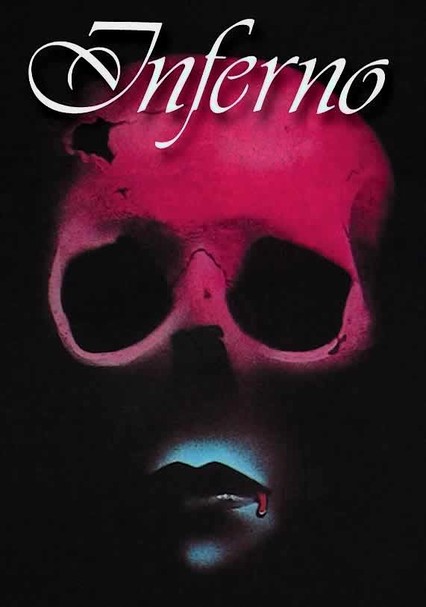
Inferno-1980

Inferno-1980

Director Dario Argento

Starring Leigh McCloskey, Irene Miracle

Scott’s Review #1,372

Reviewed June 27, 2023

Grade: B+

Any fan of the famous Italian horror director Dario Argento knows to expect a visual extravaganza from his films.

They reek of color and a weird atmosphere that makes them distinguishable from other, less crafty directors, and that’s worth a lot to a cinema fan.

Inferno (1980) is no exception, but, to be fair, the plot is brutal to follow, as the visuals easily overshadow the storytelling. On the flip side, despite being set mainly in New York City, Inferno has a definitive Italian vibe.

And why shouldn’t it, since it’s shrouded in Italian creativity?

Fans of Argento will know what I’m saying and leap into the film as I did, immersed in art direction rather than a defined plot.

The film is the second in his “Three Mothers” trilogy, and Inferno focuses on a Manhattan apartment building inhabited by a deadly spirit that murders the tenants in sadistic ways.

The other two films in the collection are Suspiria (1977) and Mother of Tears (2007).

When a poet named Rose (Irene Miracle) discovers a book suggesting she’s living in a building built for one of three evil sisters to rule the world, she begs her brother, Mark (Leigh McCloskey), to visit her from Rome.

But when he arrives, she’s disappeared without a trace. Mark encounters several creepy characters as he attempts to unravel the mystery and find his sister, either dead or alive.

It takes some time to figure out who the main character is supposed to be. Is it Rose, Mark, Mark’s friend Sara, or Rose’s neighbor, Elise? Before long, three of the four are sliced into bits.

The kills are superior, with my personal favorite being the death of one character guillotined with the glass of a broken window. This is nearly usurped by a pack of snarling cats with murder on their minds, attacking another victim.

As a cat lover, I grinned with pleasure.

As alluded to earlier, the story is too hard to follow. Therefore, the showdown between the main character and the witch is a letdown, and it is uncertain what becomes of the witch.

I also desired to see the witch more.

But maybe I wasn’t paying too close attention. The gorgeous sets caught my attention more than any plot point did.

I was especially enamored by the gothic New York City apartment set, which takes center stage during most of the film. The blue velvet curtains and dimly lit corridors, combined with desolate corners and few inhabitants, made me want to stay there.

Especially appealing is a secret hole in the wall that carries sounds throughout the behemoth building.

The colors and camerawork successfully create eerie, memorable sequences. One can easily dine on a bright green wall and gush over a deep blood-red drape or shadow.

The gloomy, downright scary underwater sequence when Rose dives to grasp a secret key is a brilliant piece of camerawork.

Alida Valli, so good as one of the witches in Suspiria, makes her return in Inferno, but in a limited part. As Carol, an employee of the apartment building, she has little to do, and adding insult to injury, Valli’s voice is dubbed by an American voice.

Sure, it’s not the best in the Argento collection, and Suspiria will always remain my number one, but Inferno (1980) is for the Argento fans only. I wouldn’t suggest it to novice fans, nor stress that one needs to see the trilogy in order.

The labyrinthine settings and elaborate deaths make the film a winner.

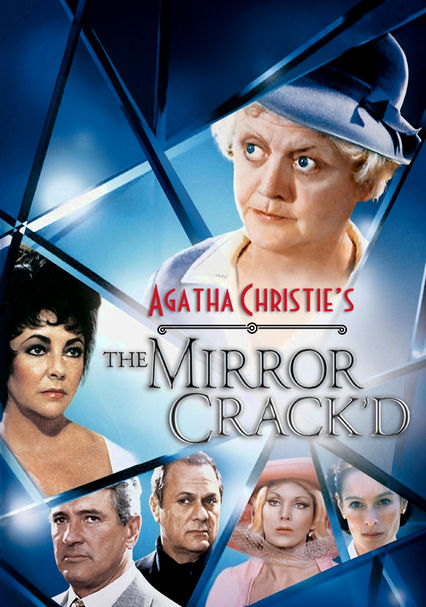
The Mirror Crack’d-1980

The Mirror Crack’d-1980

Director Guy Hamilton

Starring Angela Lansbury, Elizabeth Taylor, Rock Hudson

Scott’s Review #1,371

Reviewed June 22, 2023

Grade: B+

I’m a sucker for any sort of whodunit, especially based on an Agatha Christie novel.

Some of her treasures, like Murder on the Orient Express (1974) and Death on the Nile (1978), have made for quality crime-thriller filmmaking.

With The Mirror Crack’d (1980), director Guy Hamilton (he directed four James Bond films) gathers some of Hollywood’s finest stars and crafts an adaptation with British authenticity and a knock-it-out-of-the-park finale twist I didn’t see coming.

Fans of the long-running CBS sleuth series Murder, She Wrote from the 1980s are treated to gleeful clues that the film influenced the show. Both star the iconic Angela Lansbury.

The main character and murder solver in The Mirror Crack’d is a kindly older woman named Miss Marple, played by Lansbury. The actress is aged via makeup to look much older than she was at the time. Lansbury does a good job with the speech and mannerisms of her character’s age.

Jane Marple (Lansbury) is tickled pink when two glamorous Hollywood actresses, Marina Rudd (Elizabeth Taylor) and Lola Brewster (Kim Novak), arrive in her quaint English village to shoot a movie.

Drama is sprinkled in when it’s revealed that the two actresses despise each other.

At a film-related welcome reception, Marina engages in conversation with a longtime fan, Heather Babcock, and is momentarily distracted. Soon afterward, the fan collapses and dies, poisoned by a drink intended for Marina.

Pleasure is had by the incorporation of so many stars, some way past their prime.

My favorite is the dynamic duo of Taylor and Hudson as a married couple. Fans will recall that Hudson’s sad death due to A.I.D.S. in 1985 led to Taylor championing a crusade for research with which the government then refused to be associated.

Her efforts and star power led to tremendous progress to be made as the disease ravaged the world’s LGBTQ+ community.

So, any scene centered on Taylor and Hudson is heartfelt and a pure treat.

Otherwise, the cast of characters is arranged in a familiar pattern, revealing that almost everyone would have a reason to kill the glamorous star. Could it be her sexy blonde rival? Or the cranky producer of the film played by Tony Curtis? Or even her hubby, Jason?

Geraldine Chapman appears as Ella Zielensky, who is secretly in love with Jason and has a good reason to want Marina out of the way. Especially suspicious are her trips to a phone booth to call an unknown person, accusing them of murder.

The setting adds value as the small English village is cute and picturesque. Marple’s cottage is perfectly dressed with colors and patterns well suited to her character.

The Mirror Crack’d has a couple of misfires and sometimes a television-movie feel. The comparisons to Murder, She Wrote, while nice, are also detractors since they make the film seem like a small-screen effort.

The time is supposed to be 1953, and the characters are dressed appropriately, but it doesn’t feel authentic. The real year 1980 feels more believable despite the costumes.

While it doesn’t drag a bit, it also isn’t quite as good as the aforementioned Murder on the Orient Express (1974) or Death on the Nile (1978).

For a good old-fashioned detective story based on a storied author, one could do worse than watching The Mirror Crack’d (1980).

Sure, there are other, better-produced efforts, but the film is a solid, entertaining watch with glamorous stars incorporated.

Camelot-1967

Camelot-1967

Director Joshua Logan

Starring Richard Harris, Vanessa Redgrave, Franco Nero

Scott’s Review #1,370

Reviewed June 21, 2023

Grade: A-

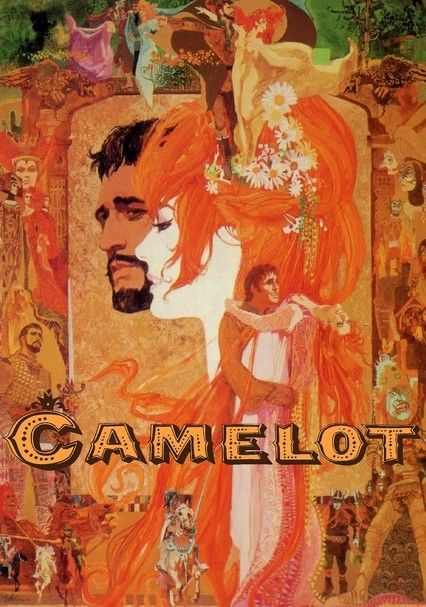
Camelot (1967) is an adaptation of the well-known Broadway spectacle that explores the creation of the Knights of the Round Table. It’s the Middle Ages, and King Arthur is the main character.

Unfortunately, the original stars of the stage, Richard Burton and Julie Andrews, declined to participate. Still, their replacements, Richard Burton and Vanessa Redgrave, are more than adequate in their prominent roles.

At an epic length of nearly three hours, not every moment is the edge of your seat, and some lagging exists, but the film does justice to the stage production, only with a big budget to add extravagance.

The setting and experience are pure magic, not only because of the far-removed time. The Shakespearean elements are strong as royalty and entitlement mesh with scheming, jealousy, and dangerous romance.

This makes for some juicy soap opera drama.

After the arranged marriage of Arthur (Harris) and Guinevere (Redgrave), the king gathers the noble knights of the realm to his Round Table. The dashing Lancelot (Franco Nero) joins but soon falls in love with Guinevere.

When Arthur’s illegitimate and conniving son, Mordred (David Hemmings), reappears in the kingdom and exposes the secret lovers, Arthur finds himself, by his own rules, trapped into taking action against his wife and closest friend.

There are some dull moments to face at epic length, especially in the first half. I tuned out once or twice, but then I was whisked back to the dramatic events.

The great moments are genuinely outstanding, with enough punch to pack a emotional wallop.

During a sequence when Lancelot is challenged to a game of jousting with some knights, events turn deadly, and one knight, Sir Dinadan, is critically injured. Horrified, Lancelot pleads for Sir Dinadan to live, and as he lays hands on him, Dinadan miraculously recovers.

The scene is fraught with emotion as a decisive moment occurs between the men. It’s also pivotal to the storyline because it links Lancelot with Guenevere and sets off a romantic chain of events.

Guenevere is so overwhelmed and humbled that her feelings for Lancelot begin to change. Despite his vows of celibacy, Lancelot falls in love with Guenevere.

More than one song is lovely in Camelot, and as the production went on, I yearned for more musical numbers.

My favorite is the coy  “The Lusty Month of May,” which appears when Guinevere and the women frolic and gather flowers to celebrate the coming of spring. Later, Lancelot and Guenevere sing of their forbidden love and how wrong life has all gone in ‘I Loved You Once In Silence.’

In the eyes of the law, the lovers are to be punished so they are aware they are not long for this world.

Visually, Camelot is a spectacle rich in style and pizazz. Whimsical colors and a ton of vibrant and fragrant flowers appear regularly amid fields of greens and forests of trees.

The castles and battlefields also support Gothic structures and masculine power, which perfectly balance the exquisiteness of the other aspects.

This more than makes up for any drudgery the story might have. It’s nice to sit back and be fulfilled by the cinematic beauty, especially considering the romance at the heart of the picture.

So when the story drags, one can enjoy the visuals and escape for a moment.

Also impressive is the story of friendship and how a woman’s affection for a man can tear apart two male friends.

Camelot (1967) is a behemoth epic that requires patience. Some parts flat-out drag. But the daring, compelling triangle among the three leads usually turns the experience into an above-average thrill ride.

Oscar Nominations: 4 wins-Best Art Direction (won), Best Cinematography, Best Costume Design (won), Best Costume Design (won), Best Original Song Score or Adaptation Score (won), Best Sound

The Hospital-1971

The Hospital-1971

Director Arthur Hiller

Starring George C. Scott, Diana Rigg

Scott’s Review #1,369

Reviewed June 11, 2023

Grade: A

An example of the freedom to craft one’s vision in cinematic works during the first half of the 1970s, The Hospital (1971) is a testament to creativity and exceptional writing, and to what can happen when studios and producers leave the creatives alone to make the film they want to make.

One can dismiss any preconceived notions of the classic medical dramas that flooded television networks during the 1970s and 1980s. The Hospital is not formulaic or contrived.

No, The Hospital is a dark work drooling with satirical examples of the politics and shenanigans within the medical community. Oftentimes, secondary activities come at the cost of reasonable care and quality medicines.

Before you imagine a doctor and nurse cavorting in a janitor’s closet, it’s a deeper film than it appears on the surface, despite the inclusion of witty comedy.

Lax patient care, staff deaths, and the dismissal of nearby residents because of a new drug rehabilitation project are explored in this fascinating film.

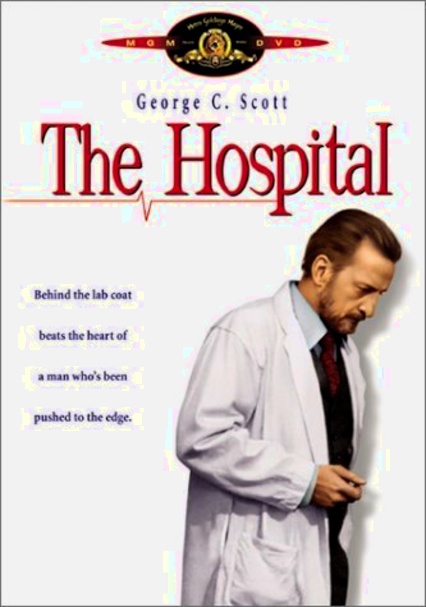
At a rundown Manhattan teaching hospital, chief of staff Herb Bock (George C. Scott) is riddled with multiple personal and professional problems after two doctors and one nurse are found dead almost simultaneously.

He assumes the rash of deaths is due to dimwitted staff who are overworked amid the chaos.

Suicidal, he meets the intelligent daughter of a patient who knocks him off his feet with her studious personality and reflections on the world. Diana Rigg plays Barbara Drummond.

The immediately noticeable, clever, well-paced screenplay is by Paddy Chayefsky, who won the Oscar for writing the film. Immediately, the chaos of a city hospital is exposed, but not in a cliched way like a series like ER or Grey’s Anatomy might show.

Nobody is going into cardiac arrest on the operating table or having convulsions in the waiting room amid lame dramatic music.

The Hospital is more cerebral than that.

Unknown patients and little-known hospital staff go about their everyday business like clockwork until confusion with daily tasks causes events to go awry.

Like real-life.

The brilliance is how director Arthur Hiller casts regular-looking actors in almost all the roles. They look and act like everyday hospital staff to set the proper tone. This is even before we meet and get to know Herb and Barbara. They answer phones, walk around with charts, and hustle after emergencies.

Chayefsky and Hiller mirror director Robert Altman in many ways, mostly in their dialogue and in how seemingly unimportant scenes can mean a whole lot.

In robust soliloquy-style scenes between Herb and Barbara, the audience ‘gets them’. They are both desperate, wounded, and unhappy yet possess the sophistication and awareness to realize how similar they are.

They immediately connect, fall in love, and nearly run off together. It’s that simple. They are willing to flee their lives after meeting for five minutes. But will they ultimately take that plunge?

A key character is revealed to be Barbara’s father, and a whodunit begins after it comes to light that the deaths are not accidents. Who is responsible and what their motivation is is the key to the story.

Scott does terrific work with his character, rivaling his excellent performance a year earlier in Patton (1970). Herb is more introspective with the world on his shoulders.

The Hospital has more than one daring scene. Herb, though impotent, basically throws Barbara down on the table and rapes her. The shocker is that she makes light of it the next day and almost seems to have enjoyed it.

Barbara and Herb are both complex characters that the audience needs to ruminate over.

My favorite part of The Hospital (1971) is the setting. That Hiller puts you inside what a real urban hospital was like in 1971 is brilliance. The satire comes into play with the writing, which questions decision-making and incompetence within the hospital walls.

The result is a scathing look at hospital practices that will resonate with anyone terrified of entering a hospital, only never to come out again.

Oscar Nominations: 1 win-Best Actor-George C. Scott, Best Original Screenplay (won)

Don’t Worry Darling-2022

Don’t Worry Darling-2022

Director Olivia Wilde

Starring Florence Pugh, Harry Styles, Chris Pine

Scott’s Review #1,368

Reviewed June 9, 2023

Grade: B+

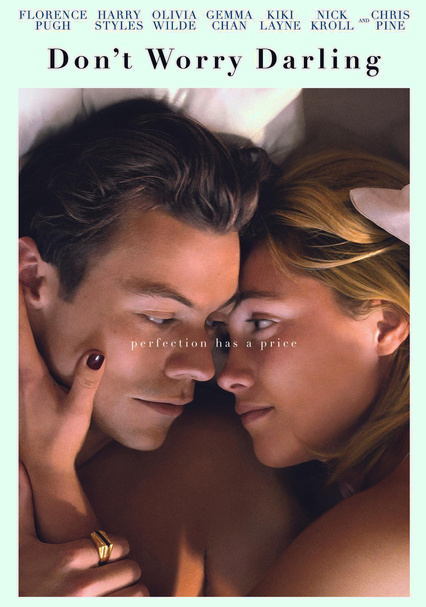
Don’t Worry Darling (2022) plays like a modern version of The Stepford Wives (1975) meets Pleasantville (1998) but with a supernatural spin and lots of much-needed modern diversity.

Not set in present times, the characters all feel very 2022 but are transplanted to a different period that only enhances an already unsettling feeling.

The sophisticated 1950s set design and art direction are a significant score, as well as the mysterious happenings that continue to shroud the central character and her surroundings.

The film never lags and, in fact, fascinates throughout. There is a continuous feeling of uncertainty, dread, and controlled chaos that assuredly will explode in the finale.

I’m not sure I quite got the conclusion right away until I read through the summary, and something about an alternate universe and different lives outside of the primary setting was revealed. Regardless, it felt unsatisfying, especially compared to the rest of the events.

But, small potatoes, I still enjoyed Don’t Worry Darling immensely.

The premise is thrilling from the start. A 1950s housewife named Alice, played by emerging star Florence Pugh, is living with her husband in a utopian experimental community. They mingle with neighbors, host lavish parties with delicious food and drink, and enjoy each gorgeous sunny day.

Daily, the men dutifully drive off to work in the distinguished Victory Headquarters while the wives cheerfully clean and scrub the windows and prepare a savory dinner, counting the minutes until their husbands return for a romp in the hay.

It all sounds too good to be true.

When a close friend Margaret (KiKi Layne) experiences a psychotic episode witnessed by Alice, she begins to worry that her husband’s glamorous company may be hiding disturbing secrets and that everything may not be as perfect as it seems.

I am becoming a big fan of Florence Pugh, who effortlessly carries the film. Impressive in both Midsommar and as Amy in Little Women, both in 2019, she possesses a specific ‘it’ factor showcased well in Don’t Worry Darling.

Pugh has many scenes with no dialogue. Ranging from a soak in the bathtub, a bizarre episode where she wraps her head in Saran Wrap, and witnessing her friend’s death, she does so much without speaking.

Successfully, the audience is taken along for the ride. We know as much as Alice does, which is nothing. It’s not that Alice hates her life; hell, she’s got it pretty good. A scrumptious roast and carrots alongside hot sex on her dining room table, the girl could do much worse.

But she knows something is off and is determined to find out what it is. Why are the women forbidden from seeing the Victory Headquarters? Why does a plane crash that only Alice sees? Why does Frank, the alpha male leader of Victory, wonderfully played by Chris Pine, keep eyeing Alice?

Impressive is the direction by Olivia Wilde, who also appears as Alice’s friend, Bunny. Along with the screenwriter, Katie Silberman, the duo crafts a piece of work with a feminist perspective turned topsy-turvy, and it’s a good angle.

Not to harp on the ending again, but the message of female empowerment, which I think is the intention of Wilde and Silberman, is unclear. A bolder message and a more finite ending would have helped cement the deal.

Still, in Wilde’s only second film, the first being the vastly different Booksmart (2019), she should only be proud of herself and the product she created.

If one is seeking an emboldened psychological thriller with twists and turns to savor, Don’t Worry Darling (2022) is a fine pick. It creeps along with appropriate plot points and a stylized visual canvas.

The Three Lives of Thomasina-1963

The Three Lives of Thomasina-1963

Director Don Chaffey

Starring Patrick McGoohan, Susan Hampshire

Scott’s Review #1,367

Reviewed June 7, 2023

Grade: B

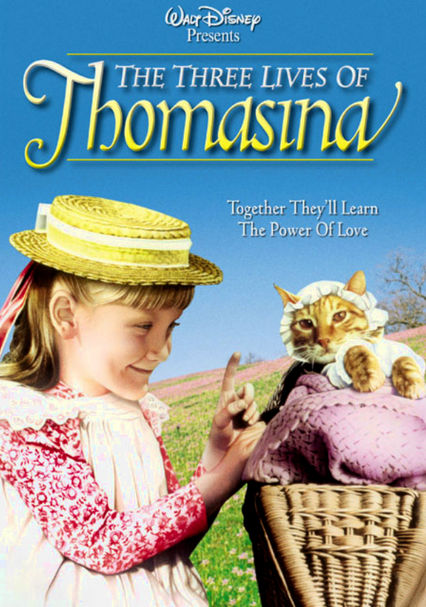
The Three Lives of Thomasina (1963) is a film in which the animal, in this case, a sleek orange tabby cat, steals the show from the humans. It’s not as if the acting by the actors is terrible, but who doesn’t love a cute feline clad in a bonnet?

The film is a Disney production but not one of the top tier nor mainly well remembered and was unknown to me before I watched it.

It’s similar to Mary Poppins (1963) in its cheery tone, and the two child stars were signed to play the Banks children after The Three Lives of Thomasina.

There are enough tender and sentimental moments to satisfy fans who may crave a more profound or darker veneer, but there is some fluff and predictability to wrestle with.

With high hopes of entertaining our cats Zeus and Thora with this film, the furry felines essentially slept through the experience and rendered it uninteresting.

Schoolgirl Mary McDhui (Karen Dotrice) lives in a small village in Scotland with her stoic veterinarian father, Andrew (Patrick McGoohan), and her cherished cat, Thomasina.

When Thomasina is injured, Andrew has the animal euthanized, which infuriates Mary, who vows never to forgive her father. Unbeknownst to everyone, Thomasina’s still-living body is rescued by Lori (Susan Hampshire), a kind animal healer who nurses the cat back to health.

The romantic intention of uniting Andrew and Lori is evident from the start, and the pair have decent chemistry. Lori is a Snow White-type character, whistling, prancing through her grade, and befriending any animal who languishes near her.

Terrified by her healing power, neighborhood kids deem her a witch, but she doesn’t look the part. With golden hair and attractive features, she is more Rapunzel than the Wicked Witch of the West.

Andrew is a masculine character we’ve seen in stories. Widowed, he has lost faith in humanity and god alike, living a sad existence with his housekeeper and kids.

To nobody’s surprise, Andrew, Lori, the kids, Thomasina, and the housekeeper ride off into the sunset as happy as clams.

Though the story is generic, other aspects of The Three Lives of Thomasina spruce things up brighter than the Scottish flowers. The landscape is magical, with lush countryside sequences and cute side streets and cottages.

A fabulous sequence occurs at the midpoint when a ‘dead’ Thomasina soul goes to a feline afterlife and meets the Egyptian cat goddess Bastet. Since Thomasina still has eight lives left, Bastet returns her to her body.

The sparkling and twinkling lights and the myriad of other felines are beautiful and filled with emotion.

Hopefully, the real-life animals were treated kindly, but in 1963, I’m not sure how much could be faked. Still, fantastic work mimicking a wounded badger is impressive.

The thrilling finale involves a tribe of gypsies setting up camp in town and opening their traveling circus. Laden, with apparent stereotypes which seem clear in 2023 but were unnoticed in 1963, the gypsies abuse their animals, causing a stir among the townspeople.

A fight, fire, and justice prevail, and all animals are spared.

A 1960s Disney film with family-friendly themes and compassion, The Three Lives of Thomasina (1963) will satisfy cat lovers or anyone fond of animals. The real-life Thomasina is worth the price of admission for her gorgeous good looks alone.

Mudhoney-1965

Mudhoney-1965

Director Russ Meyer

Starring John Furlong, Stu Lancaster, Antoinette Cristiani

Scott’s Review #1,366

Reviewed June 4, 2023

Grade: B+

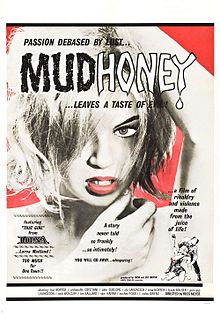
This requires an open-minded, mature audience, as with other Russ Meyer films. You should watch it late at night, and some good, quality libations make for the ideal situation and robust enjoyment.

To set the stage for those otherwise unfamiliar with the intriguing director,  he is known primarily for writing and directing a series of successful sexploitation films that featured campy humor, witty satire, and enormously large-breasted women.

The women frequently frolic around semi-nude or completely nude, with their endowments proudly bouncing around.

Gems like Faster, Pussycat! Kill! Kill! (1965), Beyond the Valley of the Dolls (1970), and Supervixens (1975) are known as his definitive works.

Mudhoney (1965) is not one of his best-remembered films, but it contains enough fun and boobs to highly recommend for either his staunch fans or newcomers seeking bombastic 1960s entertainment.

I’d be careful not to watch it with parents or conservative-leaning friends, though.

Amid the Great Depression, Calef (John Furlong) arrives from Michigan in a backwoods Missouri town looking for work en route to greener pastures in California.

He becomes a hired hand under farmer Lute (Stu Lancaster) and takes a shine to Hannah (Antoinette Cristiani), Lute’s pretty niece.

The feeling is very mutual.

Problems surface when Hannah’s abusive and frequently drunk husband Sidney (Hal Hopper) becomes aware of their attraction and it’s revealed that Calef is fresh out of prison.

With the help of an unhinged preacher, Sidney turns the locals against Calef and organizes a lynch mob to take him down.

The film is shot in black and white, which only enhances the visual of a midwestern, cornfed small town. Desolate and bleak, it is presumed to be summertime as most women bathe outdoors (naked, of course) or swim in a nearby pond.

Besides Hannah, other blonde female characters appear. The sexy Clara Belle (Lorna Maitland) is the most adventurous and fun.

As with other Meyer films, especially Supervixens, there is one character who is evil and possibly insane. In this case, it’s Sidney who eventually sets fire to a farm and rapes and murders the preacher’s wife.

The acting is hardly up to par, but Mudhoney is not about Oscar-caliber performances. The over-the-top, campy performances and the obnoxious and loud dialogue only enhance the events.

The comical moments outweigh any dark moments, and taking the film too seriously is hard. Laugh-out-loud worthy is when the preacher eyes the naked Eula as she washes on the country farm.

The visual aspects of Mudhoney impress me, especially in the opening sequence. A series of quick shots of intersecting bare feet reveal that Meyer has more to offer than sexploitation. Later, a body falling into a grave involves inventive camerawork.

Before anyone gets their knickers in a twist, while one primary female character is beaten and victimized, there is more than enough female empowerment to go around, especially Clara Belle.

She is nobody’s fool, and along with the snickering, brash Maggie Marie, deliciously played by Princess Livingston, they incorporate no-nonsense, strong female characters.

B movies never entertain better than a Russ Meyer film, and Mudhoney (1965), while not his best, has entertainment value with a dour middle-of-nowhere USA setting.  This parlays perfectly with the white-bred, fresh-faced characters who appear within.

Babylon-2022

Babylon-2022

Director Damien Chazelle

Starring Margot Robbie, Brad Pitt

Scott’s Review #1,365

Reviewed June 4, 2023

Grade: A-

Babylon (2022) is a film that will likely divide audiences broadly. Slightly late to the table, I viewed the film after the awards season hoopla had ended, and the film came up empty-handed.

Sure, a few nominations were received, but much more was expected from the epic Hollywood-themed venture.

I’m a fan of director Damien Chazelle, most famous for the similarly set Los Angeles film La La Land (2016), which I adore.

His direction style reminds me a great deal of Baz Luhrmann’s, with the incorporation of intense musical numbers during many scenes and a strong, chaotic, and frenetic nature.

I realize this style is not for everyone, so I’m not surprised that Babylon is both revered and reviled. This isn’t always a bad thing, as a good film debate can be fun.

I adore Babylon primarily for the potent silent-era Hollywood story and the terror stars of the 1920s faced with the realization that sound had entered their pictures and they were expected to keep up with the times.

Sadly, many careers ended devastatingly, sinking one-time big stars into depression and despair.

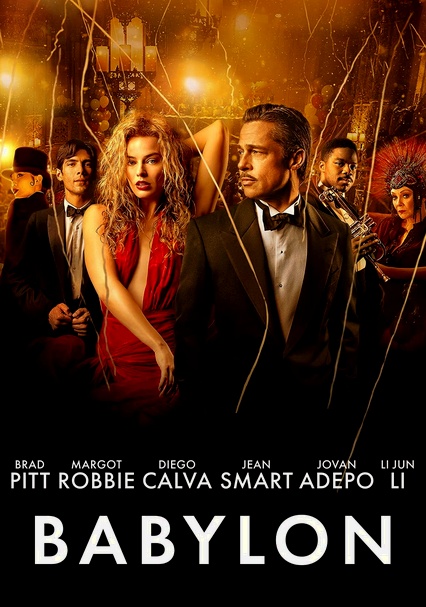
The acting is superb, and major props go especially to Margot Robbie as debaucherous film star Nellie LaRoy and newcomer (to me) Diego Calva as handsome Mexican immigrant Manny Torres.

Both actors elicit superb performances that should have landed them Oscar nominations.

The major themes that Chazelle incorporates into Babylon are those of ambition and outrageous excess, as well as belonging and acceptance. The rise and fall of multiple characters during an era of unbridled decadence and depravity in early Hollywood are explored.

As Hollywood transitions from silent films to talkies, ambitious up-and-coming actress Nellie and aging superstar Jack Conrad (Brad Pitt) each struggle to adapt to the new medium, as well as a rapidly changing world.

And Manny wants a seat at the table.

Another reason I love the film is the dedication and exposure given to pre-sound Hollywood movies, which are often forgotten. I struggle to recall ever having viewed a film from that era, with my earliest film being the 1930 film “All Quiet on the Western Front.”

The hit film The Artist (2011) may have paid tribute, but it’s not the same, and Babylon goes for the jugular in showcasing an entire movement that is now largely forgotten.

Cinema fans will respect Babylon.

Besides the film’s characters, there is much to appreciate in the movie itself. A Hollywood movie set, repeated takes, scripts, dialogue, lighting equipment, and rehearsals make for a feast of riches for any cinephile.

The weak point is the film’s excessive length. At three hours and nine minutes, an epic length, the erratic structure is a challenge to get through. A piecemeal approach can sometimes affect the continuity, and it did detract a bit in this case for me.

If one can sit still long enough, the final thirty minutes are superb. A tidy wrap-up and truthful storytelling give several characters a proper sendoff.

The film ends in 1952, so a fitting conclusion is in order.

Before we get to this point, though, a nailbiting sequence involving Manny and a fiendish Los Angeles gangster played by Toby Maguire is second to none. Fake money, a rat-eating entertainer, and pornographic dwarves make for an odd adventure that one can’t look away from.

A fascinating and bombastic experience, Babylon (2022) delves loudly into the silent film world and pays a proper head nod to a long-forgotten era.

The film has made me appreciate Hollywood and its history even more than I already do.

Oscar Nominations: Best Musical Score, Best Production Design, Best Costume Design