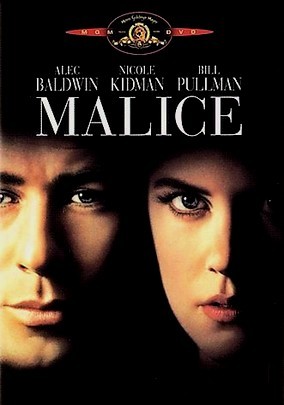
Malice-1993

Malice-1993

Director Harold Becker

Starring Alec Baldwin, Nicole Kidman, Bill Pullman

Scott’s Review #765
Reviewed May 29, 2018

Grade: B+

Malice (1993) is only one of a slew of husband and wife-themed thrillers to emerge from the early 1990’s- Unlawful Entry (1992), Sleeping with the Enemy (1991), and Deceived (1991) are other similar films that made lots of money during this time.

This slick filmmaking genre was popular as the new decade emerged and more complex storytelling graced screens.

The myriad twists and turns are both a positive and a negative for this film.

Keeping the audience guessing and on pins and needles is a key to success, eliciting a fun tone, as well as the tremendous star power of the cast (George C. Scott and Anne Bancroft are big-time heavies).

Then again, a few of the plot points become red herrings and thereby meaningless, and the overall plot and endless subplots become way more complex than they need to be.

In a plot that is dizzying to explain, Associate Dean Andy Safian (Bill Pullman) and his wife Tracy (Nicole Kidman) are embarking on a life together in Massachusetts as they purchase a grand Victorian house and plan to begin a family.

As a serial killer stalks the campus where Andy works, and implausibly results in him being the prime suspect, Tracy experiences health turmoil and is operated on by cocky yet brilliant Dr. Jed Hill (Alec Baldwin).

When dire events occur, the plot escalates, and the main characters’ motivations are called into question as truths and deceptions unravel.

When I first saw Malice in 1993 (in fact, I saw it twice the same year), I adored the multitude of plot points and devices. The film had the same effect as a speeding roller coaster ride- with endless twists and story revelations.

And to be fair, the film holds up pretty well, never seeming dated or of its time like many mainstream films.

The two startling reveals- Tracy and Jed being in cahoots and the mysterious eye witness living next door being blind- are clever bits of writing that immerse the audience on many levels.

The acting is top-notch- Kidman plays good and evil oh so well, and Bancroft’s cameo as Tracy’s mother is Oscar-worthy.

The chemistry between Pullman, Kidman, and Baldwin, and Pullman’s “nice guy” to Baldwin’s “jerk,” works quite well as the overlapping relationships play out.

Small yet meaningful roles by Bebe Neuwirth, Peter Gallagher, and Gwyneth Paltrow add layers to the wonderful casting.

And who can forget the often-parodied scene in which arrogant Dr. Jed launches into a monologue claiming to be infallible and to be God? This scene received tons of publicity and is arguably the defining moment of the film.

However, Malice’s strengths also sometimes become its weaknesses. As the events unfold, the plot becomes too confusing.

The school serial killer plot soon becomes a red herring as we realize it has little to do with the central plot- the Tracy/Jed alliance- except only to raise parenting questions.

Therefore, the big reveal of who the killer becomes is for naught. It’s the creepy janitor named Earl(Tobin Bell), hardly a surprise.

Furthermore, after the film ends and the viewer plays the events back to see if they add up, they will likely give up in frustration.

Malice is an above-average entry in a popular genre- who doesn’t like a good, solid thriller? With a talented cast and enough good medical thrills to balance with a college campus whodunit, there is plenty to please everyone who views this film.

Yes, some of the writing is preposterous and tough to believe, but Malice (1993) is a movie meant to escape with, sit back, and enjoy.
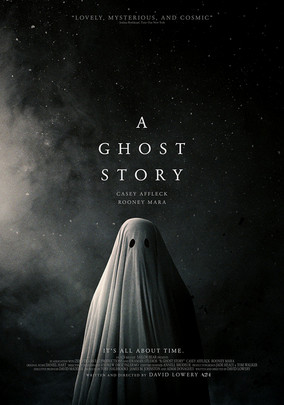
A Ghost Story-2017

A Ghost Story-2017

Director David Lowery

Starring Casey Affleck, Rooney Mara

Scott’s Review #764

Reviewed May 27, 2018

Grade: A-

It’s marvelous to support independent film. I get most of my selections via the annual Independent Spirit Award nominations, which are announced every November.

Rich, creative films that ordinarily would be overlooked are recognized and sometimes treasured instead of forgotten entirely.

A Ghost Story (2017) is a small film fortunate to land big-name stars, undoubtedly increasing its audience—I am unsure if this film ever played in theaters anywhere.

Nonetheless, the film is a thought-provoking experience that left me perplexed and fascinated but with the knowledge that I had seen something worthwhile. I may not have completely understood it, but I also adored it.

Writer and director David Lowery must be good with Hollywood A-listers Casey Affleck and Rooney Mara, who star in A Ghost Story. The pair also appeared in Lowery’s first film, Ain’t Them Bodies Saints (2013), which received critical acclaim.

Somewhere outside of Dallas, Texas, a young married couple known as “C” (Affleck) and “M” (Mara) moves into a small house. “C” is a musician with an unusual fondness for the tiny house the couple rents.

While “M” desires to leave the house, “C” wishes to stay, somehow drawn to it. After “C” is tragically killed in a car accident, his spirit returns, unable to let go of either his wife or his home, eventually stuck in time to watch generations come and go.

A Ghost Story is a cerebral experience as we watch the events from the perspective of “C.” Adding an eerie quality is that “C” is a ghost- shrouded in a plain white bed sheet with dark circles for the eyes. While “C” does not speak, we experience his perceptions and feelings through what he sees.

At first, following “M” around as she mourns his loss, eventually, she moves on and “C” is forced to watch others live in the house. Pitifully, he awaits the return of “M” as hundreds of years go by.

Lowery is good at creating an ominous and haunting tone, mainly through his classical musical score. The film is wonderfully original.

The audience feels the loss and loneliness of both “C” and “M,” but there is a scary quality, too—not in the horror genre way, but rather, we do not know what will happen next. When “M” brings a man home, “C” is furious, knocking books to the ground and turning the lights on and off.

Later, a new family is terrorized when an unhappy “C” breaks all their dishes in a rage.

A scene that gave me the creeps is when “C,” in spirit form, gazes out the window of his house and notices another ghost looking out the window next door. This ghost looks exactly like him, except it is female- we know this because her sheet has a flower pattern.

They can communicate without speaking, and “C” learns that she has been waiting for someone to come home to her, but it’s been so long that she can’t remember who it is. This scene is sad and filled with despondency.

A forewarning is that the pacing of the film is very slow—perhaps too slow for most. After “M’s” landlord brings her a pie, we watch her devour it in a very long five-minute scene, after which she vomits the contents up.

Despite its length, this scene is powerful and important, as the entire time, we view her depression and longing for “C” to return, absorbing some little comfort from the pie.

A Ghost Story reaches its creative climax towards the end as the film comes full circle, and we begin to understand the circumstances. A dynamic sequence of the passage of time occurs, showing the demolition of the house and the development of a thriving city over time. Depressed and desolate, “C” jumps off of a high rise.

However, the final scene mystified me, and I was unable to completely make A Ghost Story (2017) add up (was there a second ghost or a rebirth of “C”?), but that is also part of the film’s intrigue.

Regardless, the film is a worthy watch if only for a cerebral story that makes one think. Its central themes of loneliness and loss are depressing but also fascinating concerning the good story that Lowery creates.

Independent Spirit Award Nominations: John Cassavetes Award

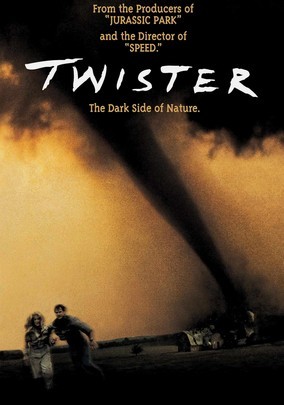
Twister-1996

Twister-1996

Director Jan de Bont

Starring Bill Pullman, Helen Hunt

Scott’s Review #763

Reviewed May 25, 2018

Grade: B+

Twister (1996) is a film with amazing, groundbreaking special effects that blew people away (pun intended!) when it was released to the masses over twenty years ago.

Moviegoers flocked to theaters everywhere to enjoy the escapist summer feel-good hit starring popular stars of the time.

The film spawned amusement park rides and lots of other fun things during its run.

The visuals are what truly deserve to be enjoyed here, not the generic, tried-and-true subplots of romance, childhood trauma, and corporate greed that are mixed in.

The film does not hold up well in the present day, as its dazzling effects now look rather dated when compared with modern blockbusters. This results in Twister being reduced to “one of those 1990’s films”.

Bill Paxton and Helen Hunt star as American storm chasers, Bill and Jo, obsessed with their craft of tracking tornadoes throughout the Midwestern United States.

Adding drama to the plot is that Bill and Jo are an estranged married couple in the midst of a divorce.

Bill brings his new fiancée, Melissa (Jami Gertz), along as numerous meteorologists converge to track storms using newly invented devices.

Predictably, a series of vicious storms commences while Bill, Jo, and Melissa play out a love triangle.

Twister gets off to a fantastic start when a wicked storm kills the five-year-old Jo’s father, prompting her to pursue her chosen career. Jo has never gotten over her father’s death, becoming fascinated by deadly storms.

The effects of this initial storm are very well done as Jo’s father’s death scene is riveting- the poor man being sucked into the deadly cyclone is memorable.

Regardless, this scene sets the tone for the ample effects to follow- most notably the terrifying sound of the swirling storm as farm tools and animals fly around onscreen.

After the initial introduction, the rest of the film mainly follows the group as they drive around and encounter storms, with Bill and Jo taking center stage.

As a child who spent many summers in the Midwest, sans tornadoes, thankfully, I felt a sense of nostalgia watching the film.

It is assumed that Twister was filmed on location (with studio help), but the authenticity is apparent. From the vastness of the plains to the dusty roads, cornfields, and the small-town U.S.A.

I enjoyed the down-home, slice-of-life feel.

The action and effects are lightning-quick and quite realistic. As mentioned, the sound effects are as strong as the visual effects, and I never doubted for a second that the twisters had a realistic quality.

This successfully merges into the summer blockbuster that Twister’s producers undoubtedly were going for. Making a ton of money, the result was successful and inspired by Hollywood.

Despite the superlative special effects, though, this is the only reason to watch Twister, and seeing the film once is enough excitement.

The writers (Michael Crichton and Anne-Marie Martin) attempt to incorporate a romance into the story, and this does nobody any good.

This negative aspect is even more apparent since the chemistry between Paxton and Hunt is non-existent, and Gertz’s Melissa is meant to be the odd woman out all along.

A large amount of suspension of disbelief is necessary to “buy” various scenes. Ludicrous are countless scenes where characters either outrun the monstrous twisters or, somehow, the storms encircle them but miraculously never touch them.

When Jo, Bill, and Melissa’s truck is captured inside the funnel cloud, the vehicle and its passengers somehow remain unharmed.  Tornadoes do not simply come out of nowhere to attack without any indication on the radar.

But alas, this is a disaster film, and liberties must be taken.

The famous “cow scene”, notoriously used twice in the film, seemed groundbreaking and cutting-edge in 1996, but in 2018 now seems hokey and unnecessary.

Times sure do change in cinema, especially with technical effects and CGI growing each year.

Admittedly, the film does contain a good, all-American rockin’ summer tune by Van Halen named “Humans Being”, which always makes me think of summertime when I hear it.

The entire Twister soundtrack was an enormous success with radio airplay, which led to further successes for the film.

Perhaps now watched as a blast from the past or a revisit to some sort of nostalgic time for folks, Twister (1996) is a great example of a once-popular popcorn movie falling into semi-obscurity.

Given another twenty years, the film will undoubtedly fall apart—a nice film for its time, but not much more.

Oscar Nominations: Best Sound, Best Visual Effects

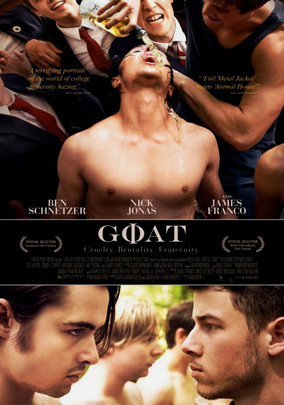
Goat-2016

Goat-2016

Director Andrew Neel

Starring Ben Schnetzer, Nick Jonas

Scott’s Review #762

Reviewed May 23, 2018

Grade: D

Goat (2016) is a film that made me angry for one hour and forty minutes. I deride it completely.

Incorporating outrageous and unnecessary scenes for no other reason than to offend, the film fails to achieve either a lesson learned or any central point.

I understand what the filmmakers were going for by portraying fraternities as evil and their members as monsters. Goat never provided logic, much character development, or any good intentions.

I was left disturbed by what I had just seen.

College student Brad Land (Ben Schnetzer) is viciously attacked by two peers following a party one summer night. As the police search for the assailants, Brad begins the fall semester at a college attended by his older brother Brett (Nick Jonas).

There, he decides to pledge a fraternity during “Hell week,” enduring one humiliation and degradation after another. When a fellow pledge dies following the fraternity’s abuse, someone rats the fraternity out, with Brad as the likely suspect.

Brad is an interesting study. The protagonist makes his first mistake by giving ominous-looking strangers a lift home. At this point, we feel sympathy for the character and should root for him throughout the film, but I didn’t.

As nasty as the fraternity brothers are, it is not until nearly the end that Brad ever stands up to any of them, and he oddly refuses to point the finger at his assailant despite being right in the police lineup.

I found the character all over the place and never knew his motivations.

Most other characters (including the victimized pledges) have little rooting value and are primarily one-dimensional “frat boys” written poorly.

The writers of the script do their best to make fraternity brothers look awful- they beat, berate, humiliate, and degrade not only the pledges, but they barely treat females or animals any better.

This isn’t comforting to witness since there is little point. The humiliation scenes continue as if we are watching the same scene repeatedly.

Ludicrous scenes of the guys drinking, acting belligerent, using anti-LGBT slurs, and taunting each other commenced almost from the get-go.

A ridiculous cameo by James Franco goes nowhere and makes little sense other than his character being a former frat boy the current members looked up to. If I had a nickel for every “bro,” “dude,” or “man” used in the film to show machismo, I’d be a rich man.

In the final segment, the film makes a feeble effort to humanize Brett, who is hot and cold towards his brother all along (this is never explained).

They also write a few of the frat boys as feeling sorry for the sudden heart attack suffered by one of the pledges, but this only fueled me with rage as unknown was whether they were genuine or wanted to save their asses (they caused his death!).

My vote goes for the latter.

The only prop I will give to Goat is that it is not a middling glossy Hollywood affair and goes for the jugular in its intensity and brutality.

But the point I thought the film was trying to make (that of a thought-provoking look at the problem of fraternities) only made me hate fraternities and develop a negative view of them.

From the despicable scenes where the frat feeds a poor goat chocolate laxatives and forces a blindfolded pledge to eat what’s thought to be excrement to the concussion they give a pledge before he succumbs to a heart attack, the film is not an easy watch.

Too many scenes feel overly hammered home and redundant, and the conclusion is unsatisfying. We are left with Brett and Brad gazing out at the spot where Brad was attacked, and this scene does nothing to wrap up the film.

From the onset, I squirmed uncomfortably during Goat and never felt connected to the film or any of the characters.

Perhaps Goat (2016) would have succeeded or appreciated more with more development and purpose, but the film failed me.

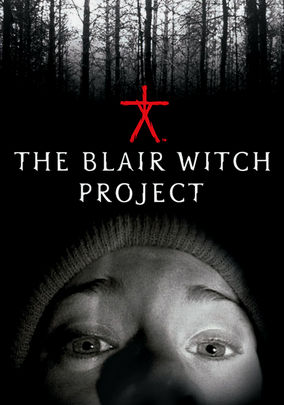
The Blair Witch Project-1999

The Blair Witch Project-1999

Director Daniel Myrick, Eduardo Sanchez

Starring Heather Donahue, Joshua Leonard, Michael Williams

Scott’s Review #761

Reviewed May 22, 2018

Grade: A

When a horror film “scares the viewer to death” then that film has superseded what it has intended to do since horror films are a dime a dozen these days.

Fondly remembering sitting in a crowded and very dark movie theater to see The Blair Witch Project (1999), I was left both mesmerized and clutching my seat for dear life. This film had an enormous impact on me.

The film wisely uses hand-held cameras (black and white 16mm film) and Hi-8 video, manipulating the audience into using their imaginations leading to terrifying results making the film one of the scariest horror films of the 1990s.

Sometimes what you don’t see is much more frightening than what is seen on screen.

In 1994 three college-aged amateur filmmakers (Heather, Michael, and Joshua) decided to hike to Burkittsville, Maryland to film a documentary about a legend known as the “Blair Witch”.

The witch is reportedly responsible for mysterious deaths and disappearances over the past two hundred years. They interview, wander, and joke around with each other as a sense of dread begins to develop.

According to the film, the trio themselves disappear, but a year later their equipment is uncovered fully intact with the film footage able to be viewed.

The 1999 film is professed to be the footage left behind by the group.

Throughout the film we watch the individuals conduct interviews with the townspeople and eventually get lost in the woods at nightfall, forced to stay the night as a mysterious entity terrorizes them.

Numerous creepy noises and rustlings scare the group.

In retrospect, with more insight and knowledge about the film, it may be easy for critics to dismiss The Blair Witch Project as either a hoax or a complete manipulation, but in 1999 audiences flocked to the theaters in droves as word of mouth spread.

I saw the film twice on the big screen and was frightened equally with each viewing. More importantly, with the onset of the reality television craze, the film was clever in capitalizing on this trend, so it is to be championed.

Timing is everything!

In the film genre, The Blair Witch Project used buzz and word of mouth to elicit interest before the film was even released- and then the craze began.

The film was highly influential to subsequent releases that also chose to utilize camcorders as their method of storytelling- think 2007’s Paranormal Activity and 2008’s Cloverfield.

The Blair Witch Project is similar in tone to older masterpieces such as 1974’s The Texas Chainsaw Massacre and 1968’s Night of the Living Dead- independent releases made on a shoestring budget that became enormously successful.

As with these films, the camerawork was tremendously important in eliciting necessary realism.

What makes The Blair Witch Project enormously authentic is the tricks used not only on the audience but also on the cast. Reportedly the film was almost entirely improvised including dialogue and situations that the characters faced.

The actors began to feel as if the events they were supposed to act were happening- their map disappeared and noises were created to frighten them.

This clever approach to Method acting elicited the perfect responses from all involved- especially as they got colder, hungrier, and more desperate.

My concern is how well 1999’s The Blair Witch Project will hold up as the years pass. Phenomenally effective and tremendously profitable at the time, dozens of imitations have arisen since the idea of the film was novel. So much so that it makes the original idea seem dated.

One thing remains true- the film gave the horror genre a much-needed breath of fresh air and influenced many films to come.

Independent Spirit Award Nominations: 1 win-Best First Feature (Under $500,000) (won)

Girls Trip-2017

Girls Trip-2017

Director Malcolm D. Lee

Starring Regina Hall, Queen Latifah, Jada Pinkett Smith

Scott’s Review #760

Reviewed May 18, 2018

Grade: D-

I am genuinely baffled by some of the positive reviews of the film Girls Trip (2017) by viewers and respected critics.

Attempts to make females as raunchy as the guys in R-rated comedies never work, in my opinion (good writing does!), and the result is a largely unfunny, crude piece of drivel.

The fact that the film, which goes for a “female empowerment” theme, is directed by a man is as disappointing as disrespectful, especially given the fact that the writers are female- they couldn’t find a black female director?

At the risk of giving a testimonial, I fully know the importance of creating good female roles in cinema-perfect female black roles.

Unfortunately, the roles in Girls Trip do nothing to further the cause as tried and true, standardized parts commence with no well-written character to be found.

Modern films look to Black Panther (2018) or Hidden Figures (2016) as examples of positive black female role models- they exist!

The weak plot involves four forty-something lifelong friends who regroup for a reunion after years apart. Famous lifestyle guru Ryan Pierce (Regina Hall) decides to take her “Flossy Posse” to a music festival in New Orleans, where they will spend the weekend partying like it’s the 1990s once again.

Ryan is married to a man who cheats on her, Sasha (Queen Latifah) runs a failing gossip site, Lisa (Jada Pinkett Smith) is a divorced, overbearing nurse, and slutty, aggressive Dina (Tiffany Haddish), who has just been fired from her job.

In predictable form- think 2009’s The Hangover or a multitude of other raunchy comedies since then, the girls get into trouble, drink too much, have sex, and partake in other hi-jinks throughout the weekend.

The central plot is Ryan’s potential investment deal with rigid and uptight Bethany (Lara Grice) and a wisecracking agent. As events unfold, Ryan’s female nemesis shows up to cause trouble and stir up drama, testing the group’s patience.

Girls Trip is a typical American comedy film (not a compliment!) that offers weak writing and instead promotes stereotypical stock characters.

Many similar comedies have come before it, and many more will come after it. Since I disliked the film so much, I decided to ask myself a few rhetorical questions as I observed the mess.

In films with a group of women, why is there always a slutty one (Dina)? Why is there always a mousy one (Lisa)? Why is there always a fat one (Sasha)? Why is it deemed funny to watch women pee or suffer bathroom issues?

The only positives to Girls Trip come in one humorous scene when Dina mixes absinthe into the girls’ drinks before a meeting, causing them to hallucinate. As the girls begin to imagine themselves talking in deep baritone voices and Ryan imagines a waitress is her arch-enemy, the hilarity briefly ensues.

A quick wrap-up speech by Ryan after the film does send a nice message about being yourself and staying true to your loved ones, but why we have to suffer through two-plus hours of crap to get to the inspiration and point of the film is beyond me.

The success of Girls Trip (2017), which will inevitably produce a sequel, leads me to believe that the masses prefer their films idiotic, redundant, and fraught with cheap, crude laughs.

The film seems to be intended to push the envelope—not to create great art, but just to make the film as crass as possible. This is presumably to prove that girls can be as nasty as boys, which the film succeeds at portraying.

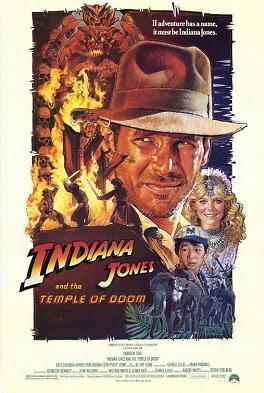
Indiana Jones and the Temple of Doom-1984

Indiana Jones and the Temple of Doom-1984

Director Steven Spielberg

Starring Harrison Ford

Scott’s Review #759

Reviewed May 17, 2018

Grade: A

The second in the trilogy (I refused to acknowledge the middling Kingdom of the Crystal Skull in 2008), Indiana Jones and the Temple of Doom (1984) is easily my favorite of the group.

Much darker than its predecessor, Raiders of the Lost Ark, it is also better, with more flair and pizzazz.

All three (1989’s The Last Crusade added) could be watched in sequence and easily enjoyed as companion pieces for a slice of 1980’s nostalgia.

A prequel to Raiders of the Lost Ark, the action picks up a few years prior as our hero narrowly escapes the clutches of a crime boss in Shanghai, China.

Indiana Jones (Harrison Ford), along with sidekick eleven-year-old Short Round (Ke Huy Quan) and nightclub singer Willie Scott (Kate Capshaw), embarks on an adventure to retrieve a stolen sacred stone.

The poor villagers have also lost their children to a lavish palace where they are forced to work as enslaved people.

Wisely in keeping with the continuity of the first story, director Steven Spielberg and writer George Lucas return to the fold. This enriches the experience, as both men are attuned to Indiana Jones’s character and do not try to change him.

His familiar wittiness and charismatic nature return, and the dashing hero shows more skin this time around with more than one shirtless scene.

To cement the good character, Harrison Ford returns to the role he created and made famous.

Indiana Jones and the Temple of Doom is layered with positive aspects and holds special childhood memories for me. I vividly recollect going to the movie theater and excitedly watching the film on the big screen, clutching a tub of buttery popcorn.

For a young boy, this is the best- an adventure story for the ages with thrills and edge-of-your-seat sequences.

The film is perfect for the entire family.

Many gorgeous exterior sequences abound throughout the film. A prime example is when the trio encounters deadly assassins on a precarious rope bridge high atop a crocodile-infested, murky river.

This scene is fraught with tension and “how will he ever get out of this?” thinking when the killers corner dear Indie.

With lightning-quick thinking, he severs the bridge, resulting in a dangling escapade. As numerous bodies fall into the river, they are chopped to bits by the hungry reptiles. The fact that the action is all shot outdoors in lush scenery only adds to the enjoyment.

The film is admittedly filled with dark and scary aspects, necessitating a PG-13 rating rather than a PG one. As Indie, Willie, and Short Round are held hostage in the evil palace, a dangerous sacrifice occurs.

One poor man is chosen to give his life by being burned alive in a roaring fire. Indie is then forced to drink the potion and presumably suffer the same fate.  Other bloody moments include a bad guy meeting his fate after being flattened like a pancake by a steamroller.

The tone of the film is much darker than that of Raiders of the Lost Ark.

To offset the blood, guts, and voodoo, the film occasionally parleys into humor, mostly at the expense of Willie, the film’s comic relief.

Accustomed to the glamour of costumes and luxurious hotels, the singer is forced to fend for herself amid snakes, elephants, and other creatures. As she hungrily sits down for what she thinks is a scrumptious dinner, she is served soup with monkey brains and bulging eyeballs, deemed Indian delicacies.

Readily apparent, watching the film now, are glaring negative stereotypes associated with the Indian culture. As I am sure the intent was not to insult, some stereotypes do abound with the hokey cuisines and the severe poverty.

The underlying image of tribal Indians as being weird or out of touch is prevalent, to say nothing of the odd religious overtones.

Kate Capshaw as Willie is the complete opposite of the central female character, Marion, in Raiders of the Lost Ark. Whereas Marion is intelligent and serious, Willie is pampered, rich, and gullible.

I find the camaraderie between Indie and Willie much more palpable than between Indie and Marion, and the romantic overtures appealing.

Who can forget the famous “bug scene” in the palace?

Conjuring up wonderful and exciting childhood memories, Indiana Jones and the Temple of Doom (1984) is a treasure for the eyes and the strongest entry in the bunch.

If you are in the mood for a good, fun-filled experience with a healthy dose of Indian culture, adventurous antics, and a slice of darkness, this one is a must-see.

Oscar Nominations: 1 win-Best Original Score, Best Visual Effects (won)

Shelter-2007

Shelter-2007

Director Jonah Markowitz

Starring Trevor Wright, Brad Rowe

Scott’s Review #758

Reviewed May 16, 2018

Grade: B+

By the mid-2000s independent LGBT films were coming fast and furious as the genre was still relatively new and ripe for the picking with good ideas.

With Shelter (2007) we have a sweet film that focuses on the new romance between two young men, one of whom is coming to terms with his sexuality.

The lead characters are not gay stereotypes and could easily pass for straight men, a characteristic impressive in LGBT film- and other mainstream films for that matter.

Rather than focusing on discrimination, the characters may face, or any obstacles from other characters (family and friends), the film wisely makes the story a character study and the demons one man wrestles with while “coming out”.

The small film is written intelligently save for one supporting character’s plot-driven decision. Also, in the modern age, we are beginning to see a bevy of similarly themed films emerge from the LGBT community, and Shelter offers nothing we have not seen before.

Set in sunny southern California, our main protagonist is Zach (Trevor Wright), an aspiring artist in his early twenties. The ultimate “good guy” he is popular with friends and girls and frequently babysits his five-year-old nephew Cody while his sister parties and has one-night stands.

When Zach meets his best friend’s older brother Shaun (Brad Rowe), the pair fall in love as Zach wrestles with his sexuality and conflicts with his plans. The sexual and family struggles of Zach are the main themes of the film.

Shelter (not sure I get the title’s meaning) is a solid slice-of-life story.

Zach initially dates a pretty girl, Tori, who is blonde, wholesome, and a girl-next-door type. This is done intentionally to show that Tori is a girl any young straight man would have an interest in.

We never see Zach show interest in any other men besides Shaun so the film leans towards a solid romantic drama once the fellas get together. Still, we see Zach’s internal struggles and accepting himself for who he is played out.

Actor Wright and director Jonah Markowitz, capture this successfully.

Shaun, arguably second fiddle to Zach, is a character that I feel is very well written. Avoiding negative stereotypes, Shaun is handsome, masculine, and charismatic. Completely confident and exuding great poise, he is a character that any gay male should look up to.

He is openly gay yet “one of the guys” as he should be. He immediately connects with Cody becoming a father or cool surrogate uncle figure for the lad. A quick concern of Zach’s sister Jeanne’s of having the boy around a gay man is trivialized in a quick form.

Another positive to the film is the multiple scenes showing Zach, Shaun, and Cody as a happy family and how normal this is. Examples of this are frolicking around the beach playing football or horseplay.

A quiet dinner of barbeque steaks and red wine for the men and macaroni and cheese for Cody elicit images of a connected family unit despite some in society still poo-pooing this idea.

The film presents the connectivity as normal.

A tiny flaw in the character of Jeanne shows her willingness (almost eagerness) to leave Cody (and her ailing father) behind when she decides to take off to Oregon with her brand new boyfriend. This point seems rushed and out of character.

While a party girl with a crappy job in a grocery store Jeanne did exhibit heart and was written as sympathetic and caring throughout the film. Surprising and unrealistic to me is that she would up and leave her life.

A paltry excuse of “Oregon not allowing kids” was left unclear and unexplained.

A part coming-of-age story, part coming out story, Shelter (2007) is an example of a little film that could with an appreciation of independent cinema.

The film tells a nice story of one man’s journey to self-discovery and the individuals he surrounds himself with.  With impressive California oceanfront and working-class principles as a backdrop, the film has a calming texture and weaves a solid experience for viewers to enjoy.

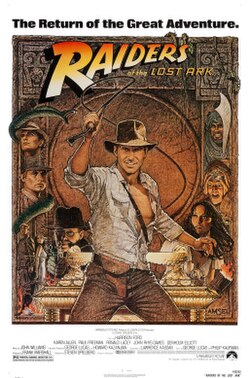
Raiders of the Lost Ark-1981

Raiders of the Lost Ark-1981

Director Steven Spielberg

Starring Harrison Ford, Karen Allen

Scott’s Review #757

Reviewed May 15, 2018

Grade: A

A film that kicked off the tremendously successful and ever-so-fun 1980s trilogy, Raiders of the Lost Ark (1981), is a treasure in the adventure genre time capsule.

Director Steven Spielberg embarks on the journey of one of the most highly visible film heroes in the form of Indiana “Indie” Jones, a swashbuckling, aw-shucks kind of guy.

Harrison Ford is perfectly cast in a role that perfectly fits him and, besides Han Solo, defined him during the decade- the best role of his career if you ask me.

Wonderful to watch in sequence with the even more superb Indiana Jones and the Temple of Doom (1984), these two films are a pure pleasure as our hero faces dangerous obstacles at every turn, either being chased by or pursuing sinister robbers and other undesirables.

All the while, Indie keeps his familiar sly grin and numerous jokes to entertain audiences.

Raiders of the Lost Ark has it all with superior writing, editing, cinematography, art direction, sound, and visual effects.

They reaped many Oscar nominations, quite uncommon for an adventure tale, but the merits were warranted. Atypical compared to other films of this type, the film is not overly saturated with phony machismo or unnecessary “guy” stuff, but rather appealing and genuine.

The time is 1936, and archaeologist Indiana Jones works as a professor at a University. Known for retrieving ancient artifacts, he is contacted by Army intelligence officers who ask him to help stop the Nazis from acquiring the Ark of the Covenant, which they believe will make their armies invincible and allow them to conquer the world in a sinister fashion.

Events lead Indie to Marion (Karen Allen), who harbors resentment towards him for a failed past romance.

The rest of the film follows the pair through Nepal and Cairo as they attempt to recover the Ark before the Nazis do.

Raiders of the Lost Ark contains all the elements of a successful “hit” movie and has “blockbuster” written all over it. This is not a slight against the film, but rather a testament to all involved.

Led by the successful Spielberg, who knows how to connect all the dots, Ford, first and foremost, infuses his character with charisma so that the audience enjoys his sensibilities and desire for the truth.

Indie is intent on protecting humankind, so Spielberg carves a “good versus bad” approach- making the villainous Nazis the antithesis of Jones, which creates a clear rooting value.

My favorite scene in the film is nicknamed the “face-melting scene” and contains state-of-the-art special effects that compelled and mesmerized me, and also led to light nightmares for any kid under the age of twelve.

The way that the bad guys see swirling, benevolent ghosts- first beautiful and peaceful, but soon turning deadly- causes their faces to melt off or shrivel. The scene is both inventive and dramatic.

Not to be dismissed as trite or fluff are the exciting and memorable scenes dubbed “the snake scene” and “the rolling boulder scene”.  In the former Indie, wryly admits his fear and trepidation of snakes as he must traverse a huge pit filled with thousands of them, and he comes face to face with a deadly King Cobra.

In the latter scene, Indie must outrun a speeding boulder as he takes an ancient artifact from a sacred spot inside a cave, causing boulders to collapse around him.

Both scenes are enormous fun and the immeasurable edge-of-your-seat sequences.

I never sensed much chemistry between actors Ford and Allen. Still, writing the characters of Indie and Marion as former lovers adds a good bit of tension and sparring between the characters- this provides some good fodder and humorous situations.

Thankfully, the romance between the two is neither the focal point of the film nor all that important, but rather, in the safety that 1980’s cinema afforded, merely a necessity.

Raiders of the Lost Ark (1981) is a superb adventure film that holds up better than it should, decades beyond its release. The film is rich with good old-fashioned action, a charismatic hero, thrills, intrigue, and a good history lesson for those interested in the build-up to World War II.

The accounts are fictional, of course, but Spielberg offers a fine 1980s cinematic experience that’s got it all.

Oscar Nominations: 4 wins-Best Picture, Best Director-Steven Spielberg, Best Original Score, Best Sound (won), Best Art Direction (won), Best Cinematography, Best Film Editing (won), Best Visual Effects (won)

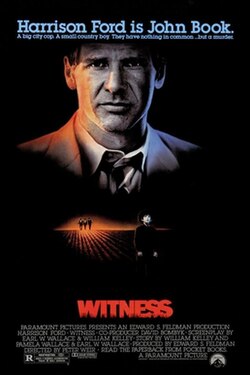
Witness-1985

Witness-1985

Director Peter Weir

Starring Harrison Ford

Scott’s Review #754

Reviewed May 7, 2018

Grade: A-

Witness (1985) is a slick crime thriller that may at first glance seem like a by-the-numbers genre film, but instead is well above average.

As the plot unfolds, there are key nail-biting, edge-of-your-seat scenes that build tension in a way that the suspense master himself, Alfred Hitchcock, would be proud of.

Decades later, it is tough to watch the film without noticing a slightly dated quality, but at the time, it was well regarded and terrifically paced.

Charismatic Harrison Ford and novice child actor Lukas Haas make the film more than it could have been.

The film’s setting is twofold, presenting two distinct cultures: rural Pennsylvania’s Amish country and bustling metropolitan Philadelphia.

The death of her husband leads Amish woman Rachel (Kelly McGillis) and her son Samuel (Haas) to the big city to see her sister. While transferring trains, Samuel witnesses a brutal murder in the men’s room- unbeknownst to the killers.

This riveting scene (explained in more detail below) sets the rest of the story in motion.

When Detective John Book (Ford) is assigned to the case and questions Samuel, he is unable to determine the assailants’ identities. After Samuel’s fingers, an unthinkable suspect, events escalate, and John uncovers a mighty corruption circuit within the police force.

John, now targeted, must assimilate into the Amish culture as he strives to protect both Samuel and Rachel (as well as keep himself alive) while embarking on a relationship with Rachel.

The story wisely focuses on the differing lifestyles of the principal characters.

What I enjoy most about Witness is the nice mix between both types of people and different cultures, and how they can learn from one another. John is so used to and desensitized by being in the midst of the rat race that he often forgets the nicer things in life- peace or even love.

Rachel and Samuel, of course, are highly sheltered, living in a bubble, and are fish out of water amid the bustling streets of Philadelphia. The counter-cultures offer a nice balance to this masculine film, bringing female sensibilities.

Not to be usurped by pure romance, Witness is, at its core, a fleshy, male-driven crime thriller. Adding some softer edges, Weir pleases both male and female audience members and appeals to the masses.

John’s precinct, filled with detectives, police officers, and criminals, gives the film appropriate “guy elements”.

So director Peter Weir offers a good balance here.

I like how Weir chooses to portray the Amish- not caricatures, stereotypes, or to be made fun of, they are sweet, stoic, and intelligent, accepting of John in their lives.

As John learns more about the Amish culture and becomes one of them, this is even more prevalent as an immersion in different cultures- a good lesson to even apply to other differences between people.

The acting is a strong component of Witness.

Charismatic and handsome, Ford is believable as a fast-paced, busy detective.

To add further substance, Ford transforms his character (often written as one-note in typical films of this nature) into a sympathetic and inspiring man as he slowly becomes a father figure to the wide-eyed youngster Samuel and falls in love with Rachel.

Ford is the standout, but the film would not work with fewer supporting actors. Both innocent and gentle characters, McGillis and Haas add layers to their roles with pronounced toughness and resilience- saving John as much as he saves them.

Two scenes are pure standouts and successfully elicit tension and dramatic effect.

As Samuel witnesses the murder in the bathroom, he is seen in a stall, peeking through a crack with only one eye exposed. When he makes a slight noise, the assailant violently goes through each stall, intent on shooting whatever he finds.

Samuel must think quickly to avoid being caught. The camera goes back and forth between Samuel’s looks of panic and the assailant getting closer and closer to catching him.

The viewer’s heart will pound during this scene.

Later, as Samuel sees a newspaper clipping framed among a case of awards, he recognizes one man as the assailant. Weir shoots it in slow motion so that the reactions of John and Samuel’s characters are palpable and effective.

The scene is tremendously done and cements the bond and trust between these characters.

Thanks to a wonderful performance by Ford and the cast surrounding him, Witness (1985) successfully widens the traditionally one-dimensional masculine crime thriller into something deeper.

Providing slick entertainment with a great story and substance, the film crosses genres and offers a substantial cinematic experience woefully needed in the mid-1980s.

Oscar Nominations: 2 wins-Best Picture, Best Director-Peter Weir, Best Actor-Harrison Ford, Best Screenplay Written Directly for the Screen (won), Best Original Score, Best Art Direction, Best Cinematography, Best Film Editing (won)

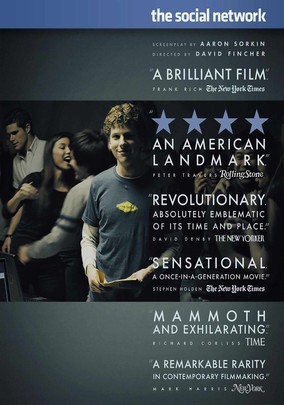
The Social Network-2010

The Social Network-2010

Director David Fincher

Starring Jesse Eisenberg, Andrew Garfield, Armie Hammer

Scott’s Review #753

Reviewed May 3, 2018

Grade: A

When released in 2010 The Social Network was a timely and brazen look into the world of social media and the powers and dangers it encompassed.

Any film of this nature that chooses to incorporate either a current event or a current fad runs the risk of either being forgotten soon after or becoming irrelevant as the years go by.

So far, almost a decade later, The Social Network is even more of an interesting film in the age of embattled political turmoil involving the social media world- with Twitter and Facebook constantly in the headlines.

Director David Fincher (Zodiac-2007, Fight Club-1999) creates a stylistic piece masked behind the biography of Facebook CEO Mark Zuckerberg (still relevant in 2018) and tells of his rise to fame from a Harvard student to an internet genius.

Throughout all of his meteoric success, the driven young man let his relationships suffer as feuds and backstabbings encircled his life resulting in bitter legal entanglements.

The film is flawless in every way- the screenplay, the score, the acting, the cinematography, and especially the editing all lend themselves to a memorable experience.

We first meet Zuckerberg (Jesse Eisenberg) as a teenager, recently dumped and bitter, he posts a scathing editorial on his blog and somehow hacks into the college site to allow the student body to read.

Along with his friends Eduardo (Andrew Garfield) and Cameron and Tyler Winklevoss  (both played by Armie Hammer), they came up with the initial concept of Facebook.

This leads to others becoming involved in the project including Napster co-founder Sean Parker (Justin Timberlake) as events spiral out of control due to deceit, jealousy, and conflicting accounts.

Fincher’s style is riveting and fast-paced with snappy edits and lightning-fast scenes giving the film a crisp and sharp look. The story is told via the Harvard events interspersed with the numerous courtroom scenes as each of the principal characters is represented by legal counsel adding drama.

The point of the film is cynical and despite being a biography of Zuckerberg’s rise to fame, the overall theme is the effects that social media has had on the entire world- in this way, the film elicits a message without being preachy.

Trent Reznor, from the industrial rock band Nine Inch Nails, creates an amazing musical score that adds a modern touch with both techno and electronic elements.

This is not so overdone as to take away from the main theme of the film nor is it too distracting, but rather provides a moody yet intensive element that is highly effective to the overall film.

What riveting acting The Social Network provides!

Young upstart Eisenberg is perfectly cast as Zuckenberg and the similarities between the two are uncanny. With his quick wit and neurotic mannerisms, intelligent yet insensitive to others, Eisenberg not only looks the part he seems to embody the character and deservedly received an Oscar nomination for the role.

Garfield and Timberlake are nearly as compelling in supporting yet important roles. Finally, Hammer portrays indistinguishable twins with a smug, cutting edge perfect for the way the parts are written.

The Social Network (2010) is a tremendous film with modern technologies and a brilliant screenplay. Beyond the spectacular writing, the film contains other top-notch qualities that make for a memorable experience.

The film holds up exceptionally well with current relevance and features a stellar cast of young actors (Eisenberg, Garfield, Hammer, and Timberlake) who all went on to become heavy hitters in the world of cinema years later.

Oscar Nominations: 3 wins-Best Picture, Best Director-David Fincher, Best Actor-Jesse Eisenberg, Best Adapted Screenplay (won), Best Original Score (won), Best Sound Mixing, Best Cinematography, Best Film Editing (won)

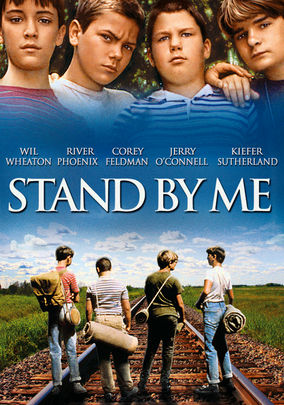
Stand By Me-1986

Stand By Me-1986

Director Rob Reiner

Starring Wil Wheaton, River Phoenix

Scott’s Review #752

Reviewed May 2, 2018

Grade: A

Stand By Me (1986) is a sweet, coming-of-age story that every male (or female, for that matter) who grew up in small-town America will undoubtedly relate to.

Set mostly outdoors in the remote Pacific Northwest, the film successfully shows the deep bonds of friendships over the course of a Labor Day weekend as four youths set out on an adventure of discovery.

In 1986, I could completely relate to the film, and today, Stand By Me holds up quite well.

Stephen King, a tremendous author known mostly for horror novels, wrote a short story titled “The Body” in 1982. Stand By Me is based on this story.

Instead of traditional horror, however, the story is more of a straight-up adventure, though in pure King style- a dead body is front and center (naturally).

Stand By Me is directed by Rob Reiner, and its success led to other mainstream achievements for Reiner (1989’s When Harry Met Sally and 1990’s Misery- also a King novel). The legendary theme song by Ben E. King plays over the closing credits and became a smash hit again in 1986.

The film starts intriguingly as the main character, Gordie, as an adult, learns that his childhood friend Chris Chambers has tragically been stabbed to death.

Gordie then narrates a flashback to the summer of 1959, when he and three other boys embarked on a childhood adventure on Labor Day weekend.

Along with Gordie (Wil Wheaton), we meet Chris (River Phoenix), a rebellious boy with a troubled home life, Teddy (Corey Feldman), who is scarred as a result of being burned by his mentally ill father, and Vern (Jerry O’Connell), an overweight kid insecure about his looks.

The wonderful aspect of Stand By Me is that each of the four central characters is flawed, whether physically or by some other insecurity, giving each character depth. Each character is highly empathetic to an audience member who may see him or herself in these characters.

This point carries through for the entire length of the film. Through conversational scenes with one another, each weakness is exposed and dissected- Teddy becomes vulnerable about his relationship with his father when a character refers to him as “loony”.

Vern’s weight bothers him, and Chris aspires to be so much more than people anticipate he will ever become.

To avoid being weighed down by too many dramatic elements, Stand By Me incorporates much-needed humor into its story. My favorite sequence is the delightful story in which Godie regales the other boys one night as they camp outdoors.

Town legend has it that a rotund man, who picked on a boy nicknamed “Lard-Ass,” enacts the perfect revenge on the townspeople one summer as he enters a pie-eating contest, resulting in a torrent of vomiting.

This scene is very well shot by Reiner and brilliantly balances the film’s differing tones, all the while nestled within a cohesive package.

The film belongs to the young actors, each of whom is cast extremely well. Of course, Corey Feldman and River Phoenix went on to major success in the 1980s.

Phoenix, who tragically died in 1993, and Feldman, who suffered numerous setbacks in his short career, are forever youthful, with promise and poise in this film.

In Phoenix’s case, he seemed most on course for leading man status with his dashing, youthful looks and clean-cut appearance. Watching in later years, it is bittersweet to watch both actors and recollect the promise of each.

Mixing drama and comedy, and at its core a true adventure story best watched on a summer evening, Stand By Me (1985) is memorable and poignant.

The setting of late summer, outdoorsy camping, and green scenery is resilient and stands the test of time.

Anyone who has embarked on a good journey as a kid or formed everlasting memories from their youth (which should be all of us) can appreciate this timeless gem.

Oscar Nominations: Best Screenplay Based on Material from Another Medium

Independent Spirit Award Nominations: Best Feature, Best Director-Rob Reiner, Best Screenplay

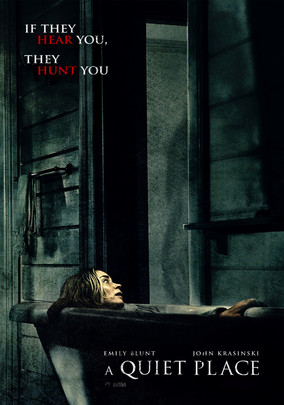
A Quiet Place-2018

A Quiet Place-2018

Director John Krasinski

Starring Emily Blunt, John Krasinski

Scott’s Review #751

Reviewed May 1, 2018

Grade: B+

A clever modern horror film, A Quiet Place (2018) offers a unique premise and novel use of sound to elicit a compelling, edge-of-your-seat story.

The film is a good offering with a science fiction slant and a “quiet” sensibility. It has ample jumps and frights that fit the story rather than being added unnecessarily.

Actor turned director, John Krasinski, shines in this film, to say nothing of the raw talents of Emily Blunt and the two child actors involved.

Only the four principles exist in the story, which is a benefit.

In the year 2020, most of the human population was decimated by vicious creatures called “Death Angels”, who have hypersensitive hearing- they cannot see but pounce on their prey at every sound made. Thus, the survivors must either whisper or communicate nonverbally.

An intelligent couple, Lee (Krasinski) and Evelyn Abbott (Blunt), an engineer and a doctor, have managed to survive with their two children, Regan and Marcus, their youngest son, Beau, having been killed after his toy rocket accidentally goes off.

The family lives on a farm in upstate New York, creating intricate ways to ward off the creatures but constantly fearing impending doom.

As Evelyn is now pregnant and due to give birth any day, in addition to Regan’s deafness, Lee attempts to create a mock ear to enable her to hear. One evening, he takes Marcus to hunt while Regan visits Beau’s grave. When Evelyn enters labor, she steps on a sharp nail, dropping a picture that alerts a nearby creature.

The remainder of the film (only ninety minutes) is spent with Evelyn alone in peril as the rest of the family tries to save her with some eventual dire results, both before and after the baby is born.

A Quiet Place immediately stands out as a unique film, especially for horror. It uses sign language and subtitles to show the characters communicating with each other and the audience. This tactic successfully absorbs the viewer into Abbott’s world and the hurdles they face.

This unconventional approach gives the film more depth than a standard horror film would usually have and is tremendously effective.

Blunt and Krasinski are such marvels, as they are protective and clever parents, that I immediately fell in love with both characters and bought them as a palpable couple. This is no stretch considering the two stars are dating in real life, but their chemistry works well in the film and makes a believable team.

Both Lee and Evelyn will do whatever it takes to protect their brood. After a lovely day of foraging for supplies in an abandoned grocery store, we feel heartbreak when the savage creature annihilates their youngest.

Lee, with Krasinski looking perfectly hunky in his beard and muscles, falls into the hero/Dad role nicely. At the same time, Blunt gives an emotional bravado performance worthy of almost an Oscar nomination if this were a different genre.

Not to be usurped by more seasoned actors, both child actors are wonderfully cast and hold their own.

Millicent Simmonds, an unknown, flawlessly portrays Regan as the young actress who is herself deaf, which translates well onto the large screen. And Noah Jupe plays sensitive yet brave to the hilt. Both assuredly have bright acting futures ahead of them.

The “creature” is a strong element of the film, but also suffers from missteps. Be careful not to be too amateurish-looking or heavy on the CGI effects; the fastness and ferocious nature are effective.

However, no apparent motivation is ever given, and no explanation of how they came to exist is mentioned. Perhaps a sequel will provide more depth. Regardless, I wanted to know more about the creature’s backstory. And how did Abbott’s hold out so long when no others did?

A Quiet Place succeeds as a frightful film with depth and intelligence. Although Paramount Pictures released the film, it may have worked better as an independent film (it could have been edgier) with more grit and less polish from the creature.

Nonetheless, Krasinski is off to a great start as a director and leading man with an impressive horror effort containing nice scares and slight gore.

Oscar Nominations: Best Film Editing