Category Archives: Independent Drama

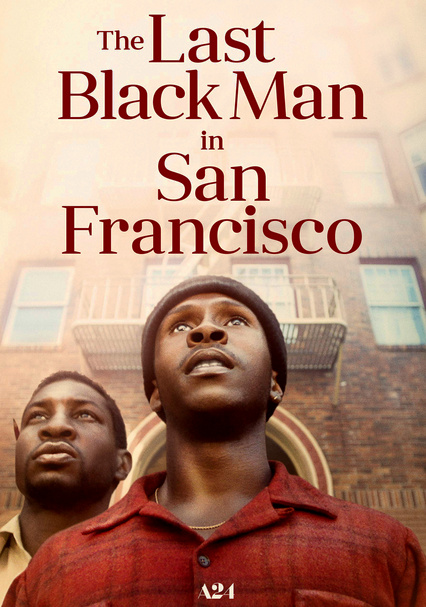
The Last Black Man in San Francisco-2019

The Last Black Man in San Francisco- 2019

Director Joe Talbot

Starring Jimmie Fails, Jonathan Majors

Scott’s Review #1,018

Reviewed May 1, 2020

Grade: A

The brilliance of The Last Black Man in San Francisco (2019) is multi-fold. The immediate call-out is that the work is the creation of up-and-coming director Joe Talbot, an artist with an excellent eye for both the visual and humanistic aspects of cinema.

Whoever influenced this young man deserves props, for he has a great future ahead of him. Given that this is his film debut and he also co-wrote it, the future is indeed bright. The film is loosely based on the life of Jimmie Fails, his childhood best friend, who also stars.

A24 is arguably the new “it” film studio for independent entertainment offerings, and this is to be celebrated.

Indie films provide creative artists with the means and time to develop their products and tell stories that are fraught with meaning, and in many cases, dare to go where other films have not ventured, at the risk of turning off a mainstream audience.

This is to be celebrated and championed, and has resulted in many fantastic and unique films. Hereditary (2018), Midsommar (2019), and The Lighthouse (2019) immediately spring to mind.

The Last Black Man in San Francisco gets off to an interesting start as two young black men, Jimmie (Fails) and Mont (Jonathan Majors), wait for the bus as men clad in protective gear appear to clean polluted waters.

The implication is clear that residents are not protected while the men are. Protesters chant while images of the changes San Francisco has experienced over the years are shown.

The two then skateboard to a Victorian house in the city’s Fillmore District, where Jimmie grew up and says it was built by his grandfather in 1946.

Their skateboard trip is cerebral and surrealistic and has ten glorious cinematic moments.

It is evident that Talbot is channeling either an autobiographic story or one of a friend- it proves to be the latter. Unclear is if Mont is supposed to be Talbot, but my guess would be in the affirmative.

Jimmie and Mont are inseparable, residing both at Mont’s grandfather’s house (played by a startlingly elderly Danny Glover) and the house that Jimmie’s grandfather built.

The friends trudge along with their daily lives by enduring insults hurled at them by a neighborhood gang and fixing up the Victorian house whose owners neglect it, only to be subsequently evicted.

Jimmie and Mont are fantastically nuanced, rich characters, each for different reasons. Jimmie is pained that his city has forgotten his grandfather and his legacy, which have been cast aside for progress and wealth.

His father (Rob Morgan) is angry, his mother, a recovering drug addict, is barely in his life, as they run into each other by chance on the city bus. Jimmie’s Aunt (Tichina Arnold) resides outside the city and serves as his confidante.

Mont is creative, yearning to write a play based on the local gang, but struggles to create the words or authentically express his voice. He works in a fish shop and frequently acts out his thoughts about others down by the water. Considered odd, he is a good guy and loyal to his grandfather.

Since a female love interest is never mentioned (another high point of the film), neither Jimmie’s nor Mont’s sexuality is ever discussed, nor is a potential relationship between the two ever mentioned.

The ambiguity works remarkably well and evokes comparisons to the groundbreaking Moonlight (2016).

When a sudden death erupts, the proceedings, Mont finally finds his voice and composes an improvised stage play which he stars in as a dedication to the fallen victim.

He elicits responses from the people in attendance (including all principal cast members) as a shocking secret erupts, resulting in disarray. This takes the already layered film in a new direction as all Jimmie thought to be true is suddenly shattered.

In a word, the film feels fresh, both visually and from a story perspective.

Fails and Majors are a top young talent with bright futures who add a patient climb to their characters amid a film that paces slowly but steadily, letting the events unfold in a thought-provoking way.

I eagerly await the next project by the talented Talbot.

In a film industry hungry for new ideas, the creator of The Last Black Man in San Francisco (2019) offers a journey into the minds of two black men, written not as stereotypes, but as interesting and intelligent individuals, who are not looking forward, but looking backward.

The film provides characters who are not standard but are so much more than that.

Independent Spirit Award Nominations: Best First Feature, Best Supporting Male-Jonathan Majors

A Dangerous Method-2011

A Dangerous Method-2011

Director David Cronenberg

Starring Keira Knightley, Viggo Mortensen, Michael Fassbender

Scott’s Review #1,009

Reviewed April 9, 2020

Grade: B+

A literal psychological-themed drama, if ever there was one, director David Cronenberg uses popular actors of the day to create a film based on a non-fiction book.

Famous psychoanalysts, Sigmund Freud and Carl Jung share a tumultuous relationship when they catch the eye of the first female psychoanalyst, who was a patient of each.

Thanks to a talented cast and an independent feel, the result is a compelling piece and a history lesson in sexual titillation, jealousy, passion, and drama, among real-life elite sophisticates.

Set on the eve of World War I in Zurich, Switzerland, a young woman, Sabina Spielrein (Keira Knightley), suffering from hysteria begins a new course of treatment with the young Swiss doctor Carl Jung (Michael Fassbender).

He uses word association, dream interpretation, and other experimental methods as part of his approach to psychoanalysis and finds that Spielrein’s condition was triggered by the humiliation and sexual arousal she felt as a child when her father spanked her naked.

They embark on a torrid affair.

Jung and friend and confidante, Sigmund Freud (Viggo Mortensen) explore various psychoanalytical methods, but cracks appear in their friendship as they begin to disagree more frequently on matters of psychoanalysis.

When Spielrein, now a student, meets Freud, she confides her relationship with Jung to him, which leads to animosity between the men. Spielrein embarks on other lovers as she attempts to reconcile the geniuses, to allow for their psychoanalysis studies to continue to develop with relevancy.

The film is intelligently written and for any viewer fascinated with psychology or sexual interest, a wonderful marvel. Since Freud and Jung are two of the most recognizable names in behavioral science and Spielrein is one of the most influential women in the field, the production is as much a historical and biographical study as it is dramatic enjoyment.

Spanking, bondage, and sexual humiliation for gratification and pleasure, strong taboos at the turn of the twentieth century, are explored and embraced in delicious and wicked style.

Given that Fassbender, Mortensen, and Knightley are easy on the eyes provide further stimulation than if less attractive actors were cast. Nonetheless, what the actors provide in eye candy is equally matched by their acting talent as each one immerses themselves into each pivotal role.

Cleverly and uniquely, the film is not a trite romantic triangle or giddy formulaic genre movie. Rather, the sets, costumes, and cinematography are fresh and grip the audience.

Carl Jung is the central figure as both his personal and professional experiences are given plenty of screen time. He wrestles between remaining committed to his wife or giving in to his deepest desires with Speilrein- we can guess how this turns out!

The early scenes between Fassbender and Knightley crackle with passion and will make many blush and smirk with naughtiness.

The title of the film is bold but doesn’t always live up to the subject matter. More sensual, fun, and intelligent than dangerous, the film is hardly raw or gritty, surprising given it’s an independent project. It is softer to the touch, especially during scenes between Jung and Speilrein than hard-edged.

Many early psychoanalytical ideas of approach and remedy are discussed and explored making the film more of a study than a thriller.

A Dangerous Method (2011) received stellar reviews and year-end awards consideration, but unsuccessful box-office returns. Hardly a popcorn film and deeply accepting of its indie roots, the film ought to be shown in high-school or academic psychology classes- whether in abnormal or general studies remains a question.

With a fascinating story that risks making the prudish blush or turn away, the film will please those independent thinkers, sexual deviants, or those aching for an expressive and satisfying film.

A Better Life-2011

A Better Life-2011

Director Chris Weitz

Starring Demian Bichir, Jose Julian

Scott’s Review #1,004

Reviewed March 26, 2020

Grade: B+

A Better Life (2011) is a heartwarming and timely project that focuses on and showcases the Hispanic culture, both positively and negatively. The subject matter of illegal immigration is studied amid a powerful family drama.

Lead actor, Demian Bichir, deservedly received a Best Actor Oscar nomination for his sensitive portrayal of a man wanting only the best for his son while having life odds stacked against him.

The film is an atypical Hollywood production, told simply and with heart.

Carlos Galindo (Bichir), is a struggling Los Angeles gardener who manicures the lawns of the rich and famous in sunny California with his partner and close friend Blasco. Carlos lives a content life but is always on guard because he is an illegal immigrant and worries about his son Luis (Jose Julian) falling in with the wrong crowd.

When one day Carlos’s sister loans him $12,000 to purchase a truck, he needs for his job, the man hits his stride, only to have the truck stolen.

Desperate, Carlos and Luis are determined to get back the truck while avoiding trouble with the law.

The title of the film, while basic and not sexy, is powerful in its simplicity.  Bold and thought-provoking, this is merely what Carlos wants for Luis and what every father wants for his son.

His trials and tribulations a constant, he strives to teach Luis to steer a positive path and avoid mistakes that Carlos has made.

Regardless of the political discussion, the film could have, what lies beneath is a heartwarming story of cherished love between a man and his son.

Cleverly, the film provides a hopeful final message for both major characters.

I adore the rich Mexican culture represented in the film. A battle of traditional appreciation of one’s roots versus immersing oneself in the American culture is examined.

Nearly the entire cast is of Hispanic descent and the numerous scenes of ethnic flavor, from restaurants and cafes to nightclubs and street life, the film is authentic and fresh.

Thankfully, the filmmakers do not try to pull off the insulting ploy of casting white actors clad in Mexican garb or a big-name actor in the role of Carlos.

Many of the characters even seem like non-actors.

The setting of Los Angeles is highly successful, especially since the low-budget independent film uses eons of exterior shots.

The camerawork is not exceptional but feels fresh, letting the warm climate marinate with viewers so that they feel implanted in the southern Californian neighborhoods. The contrast between the East Los Angeles area where Carlos lives versus where he works is a harsh reality for most landscapers.

Bichir more than deserves the accolades heaped upon him for this mesmerizing and intelligent role. He quietly portrays an empathetic man who is an unsung hero and a representative of many fathers who never get their due respect, especially if they are undocumented immigrants.

When Luis denounces Mexican music, the pain is evident on the face of Carlos as he must endure what surely breaks his heart. The realism and the truth of the characters are led by Bichir.

A Better Life (2011) is a story rich with poignancy and relevance as the plight of a good man is showcased. Now almost ten years ago, the film is arguably more important than ever since immigration has become a hot ticket item in the turbulent political climate.

Do hardworking, undocumented people deserve a break from being in the United States? The answer seems obvious and the film skews steadily to the left, but is there any other strong viewpoint?

Oscar Nominations: Best Actor-Demian Bichir

Independent Spirit Award Nominations: Best Male Lead-Demian Bichir

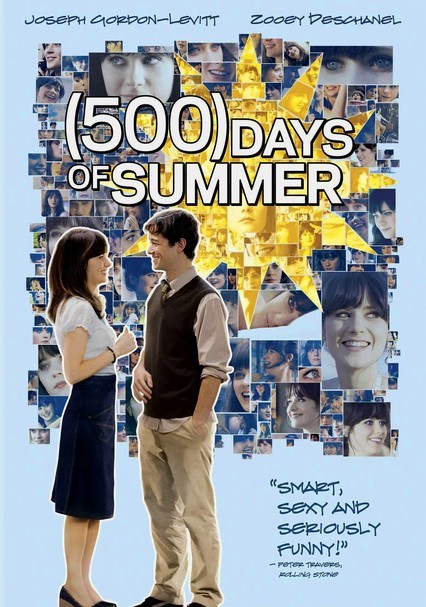
(500) Days of Summer-2009

(500) Days of Summer-2009

Director Marc Webb

Starring Zooey Deschanel, Joseph Gordon-Levitt

Scott’s Review #1,002

Reviewed March 20, 2020

Grade: B

(500) Days of Summer (2009) is an unconventional love story that deserves props for being different, but never completely catches fire as a film effort.

What it tries to do left-of-center from most conventional romantic comedies is to be admired, but I did not feel much connection to the characters and the result seemed pointless.

The independent film garnered some praise for being unique and clever, but this is out-shined by a gnawing, forced feeling, like the filmmakers are trying to be edgy for the sake of being edgy, adding in contrived story elements.

The lead characters conveniently both like an obscure band and an obscure artist, throwing them immediately together.

The film is a modest effort but will only be remembered as an indie project with a bit of unfulfilled potential.

When his girlfriend, Summer (Zooey Deschanel), unceremoniously dumps him, greeting card copywriter and hopeless romantic Tom (Joseph Gordon-Levitt) spins into depression and begins reflecting on the year-long relationship the pair spent together, looking for clues as to what went wrong.

As he rummages through the good times and the bad times, his heart reawakens to find what is most important.

The Los Angeles backdrop sets the tone for the five hundred days of Tom and Summer.

Director, Marc Webb, a first-time director at this point, now known more for The Amazing Spider-Man reboot franchise (2012-2014) steers in an experimental direction.

Shown somewhat like a “year in the life” of the young lovebirds blossoming relationship, the film is presented in a nonlinear narrative, jumping between various days within the five hundred days of Tom and Summer’s relationship. There is an on-screen timer showing the day, which is a nice addition.

Props are given for the creativity Webb infuses. The romantic comedy genre, not my favorite, is constantly saturated with formulaic films, predictable from the start.

Frequently told from the female perspective, (500) Days of Summer tells the story from the male perspective, even reversing the traditional gender stereotypes. Tom is the lovesick romantic, and Summer is the rough-and-tumble, one-night-stand type.

This is nuanced and throws the entire genre upside down.

The characters are questionable and the ablest to relate to is Tom. There is some confusion and mystery with some motivations. The audience can understand how Tom falls head over heels for Summer, immediately smitten.

His depression is deep and to be taken seriously, but he is depressed because of Summer, and any history or previous causes of depression are not mentioned. It feels like his depression is a convenient way of adding a story element.

Summer is even more perplexing and not deeply explored. Is she merely playing the field? After a song and dance scene where she explains she is not looking for anything serious and wants a casual romance, she suddenly marries another man.

She hurriedly tells Tom that she discovered her husband was her true love and that she now believes in love, whereas Tom doesn’t anymore.

Again, this feels more like storyline-dictated writing versus anything character-rich.

Despite receiving a Best Screenplay Independent Spirit Award nomination, two Golden Globe Award nominations, and oodles of praise, (500) Days of Summer (2009) is a non-conformist piece with some nice moments but feels irrelevant.

The lead actors are talented and do a decent job with the material given, but meander through the experience since it is more about the film than the acting.

The result is not a pure dud, but neither is it a pedigree winner.

Independent Spirit Award Nominations: 1 win-Best Feature, Best Male Lead-Joseph Gordon-Levitt, Best Screenplay (won)

50/50-2011

50/50-2011

Director Jonathan Levine

Starring Joseph Gordon-Levitt, Seth Rogan

Scott’s Review #1,001

Reviewed March 17, 2020

Grade: B+

The subject matter of cancer is an incredibly tricky one to portray in a film. Especially tough when any comedic bits are incorporated- the risk lies with jokes not going over well or being misinterpreted.

With 50/50 (2011), director Jonathan Levine and writer Will Reiser craft an intelligent and genuine story, based on a true one, led by upstart actor Joseph Gordon-Levitt, shining in the lead role.

Comic actor Seth Rogan is on board to cement the comedy elements.

Healthy twenty-something Seattle resident, Adam Lerner (Gordon-Levitt) experiences severe back pain and is shocked to learn he has a malignant tumor in his spine. Devastated, his world is turned upside down.

Adam is usually accompanied by his best friend Kyle (Rogan).

While Kyle is brash and outspoken, Adam is reserved and mild-mannered. They are opposites, but inseparable friends. Adam is dating artist Rachael (Bryce Dallas Howard), whom Kyle despises adding conflict to the story.

The screenplay and Gordon-Levitt’s performance are the superior aspects of 50/50. The title of the film is poignant because Adam is given the dubious news that he has only a 50/50 chance of surviving his cancer.

The young actor provides heart and soul to his challenging role and his acting is such that scenes do not feel cliched or manufactured. This, naturally, is due to the excellent writing by Will Reiser.

He crafts a sincere script that is straightforward, avoiding razzle-dazzle, but one that is also heartfelt.

My only criticism with 50/50 is that I would have liked a bit more darkness. As we all know, real-life cancer patients must endure the ravages that brutal disease inflicts. The film never really goes there and shows how devious the disease is and what happens to the human body.

I get that the film toes the line carefully, but despite shaving his head, Adam does not lose much weight or suffer other visible indignities.

The toned-down approach feels PG-rated rather than R-rated as it might have been.

This can largely be forgiven because the main message of the film supersedes this point. The film shows that love and friendship can be the best healers and the root of good, kind, humanity. This is something every viewer can take and learn from and it makes the film lovely and worthy to witness.

The romantic comedy elements do not work, and I am not even sure they are necessary. The main draw is the undying friendship between Adam and Kyle and Adam’s experiences with other cancer patients along his journey.

Combining comedy and cancer is not an easy task, but thanks to exceptional writing and a talented cast, 50/50 (2011) succeeds in its achievements.

The film and Gordon-Levitt were rewarded with Golden Globe nominations but missed out on any Oscar nominations. If the intended result of the film, is to ease cancer patient’s minds about their situations and provide some meaningful entertainment, the film is a major win.

Independent Spirit Award Nominations: 1 win-Best Feature, Best Supporting Female-Anjelica Huston, Best First Screenplay (won)

Giant Little Ones-2019

Giant Little Ones-2019

Director Keith Behrman

Starring Josh Wiggins, Darren Mann

Scott’s Review #1,000

Reviewed March 13, 2020

Grade: B+

Giant Little Ones (2019) is an independent LGBTQ film about both coming to terms with one’s sexuality and accepting and embracing other people for whom they love, and how they wish to spend their life.

It’s an honest and resilient coming-of-age story, most reminiscent (but rawer) of the recent Love, Simon (2018), told from a teenager’s perspective and the pressures and emotions of youth.

The subject matter has been explored to death in cinema, but there is still something fresh and meaningful that is offered.

High school chums Franky Winter (Josh Wiggins) and Ballas Kohl (Darren Mann) have been best friends since diapers. They joke around, go bike-riding, and knock back a six-pack together.

They are handsome, integral parts of the swim team, and popular with girls. Each has a steady girlfriend with who they anticipate soon going all the way. Any teenage girl would love to trade their life with the boys.

On the night of Franky’s seventeenth birthday party, Franky and Ballas get drunk together and spend the night crashing in the same bed. An unclear incident of a sexual nature occurs, altering and damaging their friendship.

Each boy has one sister and a set of parents, but Franky’s are more prominent, with a story of their own. His father, Ray (Kyle MacLachlan) divorced Franky’s mother, Carly (Mario Bello) after coming to terms with being gay.

While the focal point is on the teenage set, and Franky more than Ballas, it’s nice to see parents in these types of films with more to do than just pour coffee or offer unheeded advice.

MacLachlan and Bello are fascinating to watch, carefully distant from each other, but also have mutual respect. Both characters’ struggles are pointed out by Carly angrily lashing out that Ray was certainly not gay when she married him; Ray experiences guilt at wounding Franky emotionally.

The film is careful, admiringly so, to include two high school students who are already outwardly gay. The characters are not ridiculed or repressed, and one, Franky’s best friend Mouse (Niamh Wilson), is assumed to be slowly coming to terms with being transgender.

The other is a popular boy on the swim team. These representations are strong, though both characters face some level of opposition, so their plights are not easy.

The most heartfelt and poignant scene is when Franky and Ray reconnect as father and son in a treasured dialogue, where Ray explains how he met his partner. The beautiful moment blossoms because it’s Franky who asks Ray how he and his partner met.

Any LGBTQ person can attest to the powerful and heartwarming moment when they are asked about their significant other. The proud look in Ray’s eyes and the quiet cadence with which he carefully warns Franky not to label himself, but rather stick with those he connects to, is lovely and sentimental.

I like how Giant Little Ones is not a love story between the two boys and ambiguous is not only whether their friendship can be fixed, but whether one or both is gay, bi-sexual, curious, or merely experimenting with their sexuality.

The film avoids labels and boasts no clear-cut angle, steering clear of anything too preachy or defined. This supports its overall point.

A minor criticism is that, despite the boys being best friends and on equal footing, Franky becomes the central character, while Ballas is not explored thoroughly. Ballas borders on sociopathic behavior and has a ton of anger, but why? Is it only his sexuality?

The character remains mostly a mystery, and I was eager to learn more about him and what drives him.

Giant Little Ones (2019) is a heartfelt and intimate coming-of-age story about friendship, self-discovery, and the power of love without labels. The young actors are all natural, believable, and earnest, and the seasoned supporting cast lends credibility to a tiny, low-budget picture.

The LGBTQ community will embrace this film, while anyone else will be touched by its honesty and poignancy.

21 Grams-2003

21 Grams-2003

Director Alejandro G. Iñárritu

Starring Sean Penn, Naomi Watts, Benicio Del Toro

Scott’s Review #990

Reviewed February 14, 2020

Grade: A

21 Grams (2003) is an independent drama containing crisp writing, top-notch acting, and a unique directing style by Alejandro G. Iñárritu.

An early work by the acclaimed director, he delivers a powerful exposure to the human condition using intersecting storylines.

The result is a powerful emotional response that resonates among viewers taking the time to let the story evolve and marinate.

Outstanding filmmaking and a sign of things to come for the director.

The film is the second part of screenwriter Guillermo Arriaga’s and Iñárritu’s Trilogy of Death, preceded by Amores Perros (2000) and followed by Babel (2006), 21 Grams interweaves several plot lines in a nonlinear arrangement.

Viewing the films in the sequence is not required to appreciate and revel in the gorgeous storytelling and mood.

The story is told in a non-linear fashion and focuses on three main characters, each with a “past”, a “present”, and a “future” story thread. Events culminate in a horrific automobile accident, which is the overall story. The sub-story fragments delve into the lives of the principals as the audience learns more about them.

Ultimately, all three lives intersect in dramatic fashion leaving the viewer mesmerized and energized by the deep connections.

Paul Rivers (Sean Penn) is a successful, married college mathematics professor who desperately needs a heart transplant. He and his wife are considering having a baby in case he should die.

Cristina Peck (Naomi Watts) is a recovering drug addict now living a happy suburban life with a loving husband and two young children.

Jack Jordan (Benicio Del Toro) is a former convict who is using his newfound religious faith to recover from drug addiction and alcoholism and live a happy existence with his wife and kids. After the car accident, each life takes a shocking turn forever changing things.

The multiple timelines and back-and-forth storytelling are an excellent part of 21 Grams, adding layers upon layers of potential entanglements among the characters. This could be a confusing quality, but instead, it provides mystique and endless possibilities.

What worked so well in the outstanding Traffic (2000) is used by Inarritu and delivers. The recipe of clever plotting characters the audience cares about and top-notch acting is created, mixed, and served on a silver platter.

Penn, Watts, and Del Toro are stellar actors who give their characters strength, sympathy, and glory. Each has suffered greatly and faced (or faces) tremendous obstacles in life, soliciting feelings from viewers.

All three are good characters, trying to do the right thing, and grasp hold of any sliver of happiness they can find. They have moral sensibilities without being judgmental, delicious is how each character interacts with the others, but in differing ways.

The film is not happy and not for young kids, but the brilliant elements will leave the film lover agape at the qualities featured. The dark, muted lighting of the film is perfect for the morbid stories told throughout and the common themes of anguish, courage, and desperation.

The clever title refers to an experiment in 1907 that attempted to show scientific proof of the existence of the soul by recording a loss of body weight (said to represent the departure of the soul) immediately following death.

Only the second full-length film in Inarritu’s young career, 21 Grams is brilliant in human emotion and connections. The powerful director would go on to create Babel (2006) and The Revenant (2015), two vastly different films but with similar hearts.

21 Grams (2003) is a wonderful introduction to good things to come while utilizing crafty acting and layered writing to create a gem well worth repeated viewings.

Oscar Nominations: Best Actress-Naomi Watts, Best Supporting Actor-Benicio del Toro

Independent Spirit Award Nominations: 1 win-Special Distinction Award (won)

Hustlers-2019

Hustlers-2019

Director Lorene Scafaria

Starring Constance Wu, Jennifer Lopez

Scott’s Review #942

Reviewed October 3, 2019

Grade: B+

Hustlers (2019) is a film that I had no intention of seeing. It was not on my radar, and I did not know much about the movie except that it was promoted as a story about a group of strippers who bamboozle Wall Street men.

Yawn!

The experience was better than expected, thanks to the critically lauded performance by Jennifer Lopez. She astounds in a role perfectly written for her as the true story champions female empowerment, and why shouldn’t it?

The result is a feminist film with humor.

Constance Wu, famous for putting Asian actors on the map with Crazy Rich Asians (2018), does a complete one-eighty as the lead character in Hustlers.

Unrecognizable, she plays a New York City stripper named Destiny, who works at a trendy Wall Street club named Moves, in 2007. She supports her grandmother and barely gets by on meager tips, possessing the looks but not quite the style.

When she witnesses fellow dancer Ramona Vega (Lopez) perform a simmering routine, the women bond and become fast friends.

Destiny enjoys newfound wealth and a close friendship with Ramona. A year later, the financial crisis strikes, and both women find themselves struggling for cash, having squandered their fortunes.

Destiny becomes pregnant.

Her boyfriend leaves her shortly after their daughter’s birth, and she is unable to find a new job. Destiny and Ramona, along with other girls, hatch a plot to manipulate the business people they have grown to know out of desperation.

The story is based on actual events.

Had the elements not wholly come together in this film, the result would have been dreary or at best mediocre.

A current trend in modern cinema is to have a group of female characters team up in some form of heist or crime-fighting adventure- think Ocean’s Eight (2018), the Ghostbusters (2016) remake, or Widows (2018).

Some results are better than others, but hardly memorable, as the girl-buddy genre hardly has any depth.

Two critical factors stand out to me as rising Hustlers way above a mediocre or standard fare film experience. Jennifer Lopez deserves all the praise she has been showered with for her role as Ramona.

From the moment Lopez, who is listed as Executive Producer, appears on screen, she is electrifying and impossible not to be mesmerized by.

As she shakes her booty (and many other parts of her anatomy) and writhes on stage to Fiona Apple’s “Criminal,” the men in the club throw money at her.

The scene oozes sexuality, and from this moment on, Lopez owns the film.

Lopez, besides Selena (1997), has primarily chosen mainstream and fluff material like The Wedding Planner (2001) and Maid in Manhattan (2002) over the years.

She may not be the Meryl Streep of her time, but it is always nice when an actor charts challenging and dangerous waters. May she continue to choose wisely. She powers through Hustlers with gusto and is the central draw.

Not to limit Hustlers to a conventional woman using sex appeal to lure men, the film is sure to get its message across to viewers in a more sobering way.

By 2008, the United States was in a financial landslide, with Wall Street being hit particularly hard. The point is made that not a single person went to jail for causing the collapse or for causing tens of thousands of people to lose their homes, jobs, or life savings.

This makes the audience realize that what the women did pales in comparison to Wall Street types (their victims), and many of their lures got what they deserved.

The subject matter at hand, being one of the worlds of strippers, may turn off some of the prudish, but delving into the emotions and aspirations of those who exist in the industry is eye-opening and quite enjoyable.

Hustlers (2019) successfully garnered empathy from its audience and champions a female empowerment movement, resulting in the surprise hit of the season.

Independent Spirit Award Nominations: Best Director-Lorene Scafaria, Best Supporting Female-Jennifer Lopez, Best Cinematography

Nancy-2018

Nancy-2018

Director Christina Coe

Starring Andrea Riseborough

Scott’s Review #941

Reviewed October 1, 2019

Grade: B+

Part of why I love independent cinema so much is the freedom it gives the director to tell a good story of his or her choosing, usually with little studio interference or opinions.

Nancy (2018) is a good example of this, as Christina Choe writes and directs a film that is hers to share. A quiet film about loneliness, the need to belong, and connect with others is the main element in a compelling and unpredictable story.

Living in a barren small town in upstate New York, Nancy (Andrea Riseborough) endures cold, damp, and bleak weather. Working a temporary office job where the staff barely remembers her from her previous stint, Nancy spends her downtime caring for her ill mother (Ann Dowd) and playing with her cat, Pete.

When an occurrence leaves her vulnerable, she sees a news report featuring a couple whose daughter disappeared thirty years ago. She looks exactly like Nancy, which gives the sometimes dishonest woman an idea.

Riseborough carries the film with a strong performance but is not a character the audience easily roots for. Nancy is not unkind, dutifully tending to her mother’s needs when she is not pleasant. She pretends to be pregnant to meet an internet support group man who lost a child and seeks comfort in Nancy.

Hoping for a romance or at least a human connection, the two run into each other, and when the man realizes her scheme, he calls her psycho. We witness a range of subtle facial expressions revealing the complicated character, which Riseborough provides brilliantly.

Choe tells a very human story peppered with deep feelings and emotions that are easy for the audience to relate to.

Conflicted views will resound between the principal characters: Nancy, Leo Lynch (Steve Buscemi), and his wife, Ellen (J. Smith-Cameron). The Lynches, especially Ellen, are vulnerable, yearning for a glimmer of hope that their long-lost daughter, surely dead, is alive.

So, the director’s complexities work exceptionally well to keep the emotional level high.

All three principal actors do a fine job, with Smith-Cameron being rewarded with a Film Independent award nomination. She is the most conflicted of the three and the character audiences will ultimately fall in love with and feel much empathy for.

Has Buscemi ever played a nicer man? I think not, as the actor so often plays villainous or grizzled so well. With Leo, he is rational, thoughtful, and skeptical of the story Nancy spins. He adores Ellen and does not want to see her again disappointed, the pain apparent on both faces.

The cast possesses many quiet and palpable subtleties.

The locale in the film is also a high point. Presumably, the cold and angry air fills the screen in January or February, adding a measure of hopelessness that each character suffers from differently.

Numerous scenes of the outdoors are featured, and compelling moments are provided. When a pretty snowfall coats the land, this is a tease, as one character’s hopes are ultimately dashed. A cheery landscape such as California or Florida would not have worked as well in this film.

Nancy (2018) risks turning some viewers off with its unhappy nature and slow pace, but isn’t this much better than a fast-paced Hollywood popcorn film?

To me, the answer is obvious, and Nancy is a prime example of why the film industry and its enthusiasts should celebrate and revere small films.

Lies and truths cross a fine line, and the potent psychological thriller will leave viewers mesmerized as events progress.

Independent Spirit Award Nominations: Best Supporting Female- J. Smith-Cameron, Best First Screenplay

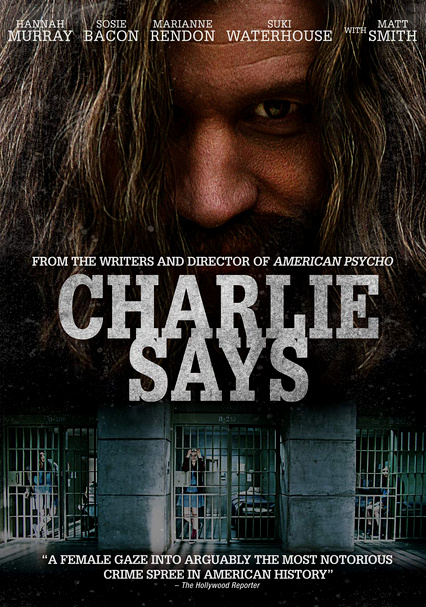
Charlie Says-2019

Charlie Says-2019

Director Mary Harron

Starring Hannah Murray, Sosie Bacon

Scott’s Review #936

Reviewed August 28, 2019

Grade: B

With the very high-profile release of Quentin Tarantino’s Once Upon a Time in Hollywood (2019) centering around the sadistic Manson murders of 1969, Charlie Says (2019) is another film that delves into the same story, though in a very different way.

The latter takes the perspective of the followers, victimizing them and examining the choices they made that affected the rest of their lives.

The angle is of interest, but the production never completely takes off, resulting in an uneven experience that requires more grit and substance.

Karlene (Merritt Wever), a female graduate student focused on women’s studies, takes an interest in three followers who were viciously killed in the name of their “god”, Charles Manson.

A few years after their arrests, they co-exist together in relative solitary confinement in a California penitentiary. They remain under the delusion that Manson is their leader and their deeds were all part of a grand cosmic plan until Karlene slowly brings them out of their haze of unreality with heartbreaking results.

The casting of the real-life figures is as follows: Charles Manson (Matt Smith), Leslie Van Houten (Hannah Murray), Patricia Krenwinkel (Sosie Bacon), and Susan Atkins (Marianne Rendon).

Each is a prominent character, with the central figure being Leslie “Lulu” and her complex relationship with Manson.

The newest to be recruited, the audience witnesses her hypnotic possession and her occasional uncertainty about the cult. For a fleeting moment, she is even tempted to leave, which the film hammers home to the audience.

Murray plays the character well, but does not resemble her enough for praise, though we read the conflict on her face very well. She is meant to be the thoughtful member of the Manson Family, whereas Patricia and Susan are more reactionary and temperamental, especially Susan.

Whether this is how things were is not known. Still, I always had a gnawing feeling throughout the running time that historical accuracy may have been secondary to the story points and dramatic effect.

Charlie Says is bothersome because of the realization that the girls were recruited and fed lies, falling for the deceit, hook, line, and sinker.

The followers were indeed brainwashed into Manson’s disturbing version of reality, and that fact is alarming, as the girls were not dumb people, only vulnerable young women.

Decades later, it is easy to think of other victims polarized by a central or controversial figure, whether it be in politics or another arena. The lesson learned is that people can be easily influenced.

The actual “murder night” and the death of Sharon Tate are featured, but up-close and personal gore is thankfully avoided. The actress, well known to have suffered a terrible fate, to say nothing of her unborn baby, is a small but crucial aspect of the film.

When one of the girls watches one of Tate’s films in her cell, another girl clamors for her to turn off the film, beginning to feel pangs of guilt and remorse.

The film questions the girl’s responsibilities for their actions, a fact that in real life many wrestled with, including the courts and parole boards. Were they merely duped in the cleverest of ways, or do they deserve their fates?

Spared of the electric chair due to a California law, a positive aspect of the film is a current update of the happenings of each girl, now over forty years later, as mature women. Lulu and Patricia remain incarcerated while Susan has died in prison.

After the film closed and a good measure of time was left to ponder the movie, I was left feeling slightly less than fulfilled and desiring a bit more.

Charlie Says (2019) feels safe and lacks enough grit or bombast, although it is well-intended. The film is clearly from a feminist point of view and is an interesting watch, though, given the subject matter, I had hoped for more substance.

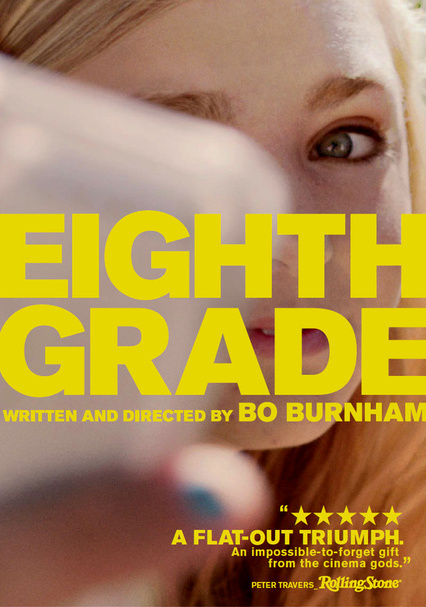
Eighth Grade-2018

Eighth Grade-2018

Director Bo Burnham

Starring Elsie Fisher, Josh Hamilton

Scott’s Review #935

Reviewed August 27, 2018

Grade: A-

Occasionally, a film rich with authenticity and pure honesty comes along, and Eighth Grade (2018) is one of those films.

Bursting with a lead character who brings a genuine sincerity to a complex role, director Bo Burnham gets the best out of emerging talent, Elsie Fisher, in an autobiographical story about teenage angst and awkwardness that nearly everyone can recollect from those hated middle school years.

The coming-of-age story follows the life and struggles of an eighth-grader, Kayla Day (Fisher), during her last week of classes before graduating from junior high school.

She struggles with severe social anxiety but produces secret YouTube videos in which she provides life advice to both herself and her audience. She has a clingy relationship with her sometimes overbearing father, Mark (Josh Hamilton), who adores her but is careful to provide Kayla with freedom and balance, her mother apparently out of the picture.

Eighth Grade feels fresh and rich with good, old-fashioned, non-cliched scenes as audiences fall in love with Kayla and her trials and tribulations.

The stereotypes would abound in a lesser film attempting to appeal to the masses, but this film is going for intelligent writing.

The scenes range from touching to comical to frightening. A tender father and daughter talking over a campfire provides layers of character development for both Kayla and Mark as an understanding is realized.

As Kayla ogles over her classmate Aiden, voted student with the nicest eyes, to Kayla’s demoralizing win for quietest student, she bravely attempts to get to know the boy.

Realizing that to win his heart, she must provide dirty pictures of herself or perform lewd acts, she hilariously watches oral sex tutorials and nearly practices on a banana in a scene rivaling any from the crude American Pie (1998).

To expand on this, the audience will experience concern for Kayla as she winds up in the backseat of a strange boy’s car, encouraged to take off her top, going rapidly from comedy to alarm.

Enough cannot be said for Fisher’s casting as Kayla. Reportedly seen on a real-life YouTube channel, Burnham plucked the fledgling young actress from the ranks of the unknown.

The bright young star will surely be the next big thing with her innocent yet brazen teenage looks- she is only sixteen! With pimples and a pretty face, she admires yet despises popular kids and resorts to telling one-off stories.

Fisher gives Kayla sass and poise mixed with her anti-socialism.

Befriended by a pretty and popular high school student assigned to be her buddy, Kayla awakens with gusto, finally seeing there may be life after middle school and maybe, just maybe, high school will not be as torturous as earlier years.

A cute add-on is an adorable relationship that develops between Kayla and just as awkward Gabe in the film’s final act. They dine over chicken nuggets and bond over a nerdy television show they love.

Hamilton deserves accolades in the more difficult role of the father of a thirteen-year-old. Smart is how the film shares his perspective on current events. He can be daring, as when he enters Kayla’s room to nearly catch her practicing her kissing technique, or creepy, as when he follows Kayla to the mall to see her new friends.

However, his deep affection and admiration for her provide a deep warmth seldom seen in teenage films.

Burnham is careful not to stifle the film with fluff or redundancy but rather makes it timely and relevant. The incorporation of the internet, text messaging, and the never-ending use of smartphones makes any older viewer realize that over ninety percent of thirteen-year-olds use these devices, and social media is the new normal.

The sobering realization is that painful teenage experiences do not end when the three o’clock school bell signals the end of the day.

When the students endure a drill to practice measures to survive a school shooting attack, the reality hits home that this is now also a part of a teenager’s everyday life. American life for the young has changed immensely since most of us were of this age, and Burnham does a bang-up job of reinforcing this importance.

Whether the viewer is elderly or middle-aged, has fond memories of middle school, or cringes at the thought, yearbooks safely packed up in boxes to bury the memories, every viewer can take something away from Eighth Grade (2018).

Excellent casting and an infusion of several cross-genres make this film a fresh and memorable independent comedy/drama deserving of a watch.

Independent Spirit Award Nominations: 1 win- Best Feature, Best Female Lead- Elsie Fisher, Best Supporting Male- Josh Hamilton, Best First Screenplay (won)

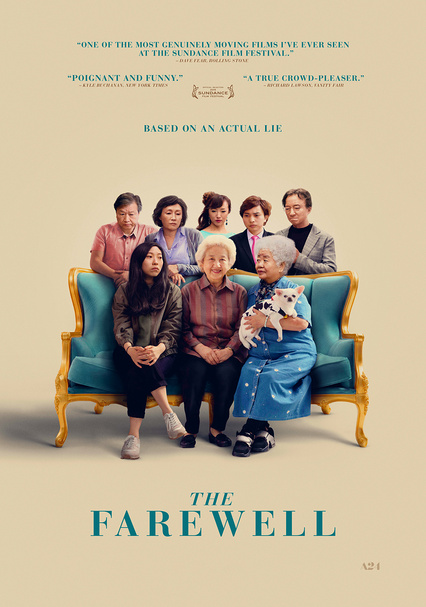
The Farewell-2019

The Farewell-2019

Director Lulu Wang

Starring  Awkwafina, Tzi Ma

Scott’s Review #927

Reviewed August 6, 2019

Grade: A-

Any film with a dark premise, such as The Farewell (2019), runs the risk of resulting in a bleak and depressing outcome, but the film is anything but a downer.

Surprisingly, to many, the film is classified as both a drama and a comedy, with snippets of humor and sadness prevalent throughout.

Met with widespread critical acclaim, the film successfully furthers the much-needed presence of quality Asian representation in modern cinema well into the twenty-first century.

Young upstart/comedienne Awkwafina, memorable for her humorous turn in Crazy Rich Asians (2018), returns to the big screen in a more subdued role, crafting a passionate and dramatic character that strongly leads the charge in an ensemble project exploring the family dynamic.

The film succeeds remarkably as a multi-generational glimpse into humanity, although it occasionally suffers from a slow pace.

A thirty-something struggling writer, Billi (Awkwafina), lives in New York City near her parents, all of whom are ex-pats from China. Billi is particularly close with her grandmother, Nai Nai (Zhao Shuzhen), who still resides in her birth land as they speak regularly via telephone.

When Billi is informed that her grandmother has terminal lung cancer and has weeks to live, the entire family reunites and decides to hold a mock wedding as an excuse to be all together.

The family makes the decision not to tell Nai Nai she is dying, preferring to let her live out her days in happiness rather than fear.

Awkwafina is the main draw of the film, and much of the action is told from her point of view.

One wonders if perhaps director Lulu Wang drew from personal experience when she wrote the screenplay. The audience is not aware of Billi’s sexuality, nor is it relevant to the film, but the vagueness was noticeable.

She does not date, nor does she look particularly interested in men. She does her laundry at her parents’ apartment and attempts, but fails, to secure a prestigious writing scholarship.

The supporting characters add tremendous depth, making the film more than just Billi’s story, and provide unique perspectives from her mother, father, and aunt, each of whom holds a distinct viewpoint about Nai Nai’s illness.

I adore this technique in rich storytelling, as it not only fleshed out secondary characters but also provides interesting ideas.  Nai Nai is not written as a doting old lady nor a victim; she is strong, witty, and full of life.

Shuzhen, unknown to me before viewing this film, brings tremendous poise to a crucial role, portraying it perfectly.

The Farewell is a quiet film that combines both comic and dramatic elements, often within the same scene, thereby providing relief from the dour subject matter.

Wang strikes the balance just right, ensuring the film does not become too heavy.

A hysterical bowing marathon ensues as the entourage decides to visit the grandfather’s grave, preparing the essentials to comfort him during the afterlife.

In stark contrast to the physical comedy, not a dry eye can be found when Billi and her parents depart China by taxi for the airport. Nai Nai tearfully waves goodbye to them, not knowing that it will undoubtedly be her final goodbye.

Any audience member with an elderly relative whom they seldom see will be deeply moved by this poignant scene. Questions such as “Would you keep a loved one unaware of a terminal disease?” will gnaw at the viewer, the central theme of the story.

Influenced by the buzz and word of mouth surrounding the film, I yearned for a single, powerful, emotional scene, but one clearly defined, bombastic moment never materialized.

Instead, the film offers small tidbits, careful not to overpower the audience or risk making the movie too sentimental or overwrought. I still think a pivotal teary scene might have been added for good measure.

A scene where Billi breaks down in front of her parents was adequate, but never catapulted the film over the top.

The Farewell (2019) is a fantastic film rich with emotion and importance.

Like Black Panther (2017), which brought Black characters to the forefront of the mainstream film genre, this film provides exposure to the Asian population, typically relegated to stereotypical roles such as doctors or Chinese takeout owners.

Wang delights with an independent film steamrolling itself across Middle America.

Independent Spirit Award Nominations: 2 wins-Best Feature (won), Best Supporting Female- Zhao Shu-zhen (won)

Gloria Bell-2019

Gloria Bell-2019

Director Sebastian Lelio

Starring Julianne Moore, John Turturro

Scott’s Review #924

Reviewed July 29, 2019

Grade: B+

An English remake of the successful 2013 Chilean film, titled Gloria, Gloria Bell (2019) stars Julianne Moore, and the setting is relocated to Los Angeles.

The film is directed by Sebastian Lelio, fresh off a Best Foreign Language Film win for A Fantastic Woman (2017), and both movies contain similar themes of oppression and loneliness.

Preferring the original by only a hair, Gloria Bell is nonetheless a worthy offering with Moore perfectly cast in the title role.

Middle-aged divorcee Gloria Bell (Moore) resides in Los Angeles, working an office job of some respectability, but is unfulfilled. She spends many nights at a nightclub, where she is considered a regular.

The club caters to middle-aged singles who dance and drink while looking for love. When she meets Arnold (John Turturro) one evening and they share a night of passion, the pair begin dating.

However, Gloria realizes that he still supports his ex-wife and grown daughters, which limits his time and commitment to her, leaving her frustrated.

Moore is honest and understated in her performance, and the highlight of the film.

With another casting choice, the character might not have worked so well. She is full of life, singing in her car, attending laughter therapy, and smoking pot in her apartment. She has a warm yet limited relationship with her millennial kids and her ex-husband and his new wife.

Moore gives the character an earnestness and likability that work and get the audience on her side during her trials and tribulations.

This is not to say that Gloria doesn’t occasionally frustrate the audience.

After inviting Arnold to meet the whole crew over dinner and wine at her son’s house, what begins as a meet-and-greet quickly turns into a reminiscing trip down memory lane and whimsical looks at Gloria and her ex’s wedding pictures.

Her disregard for Arnold’s feelings is disappointing, but there is no bad intention behind it.

Gloria has baggage and is caught up in the moment, simply reliving a happier time at the expense of the current moment.

Arnold has his demons and is both likable and unlikable to the audience. Tending to bail on Gloria when either his family requires his assistance or he feels left out, he hardly exhibits grown man behavior or anyone Gloria would want to date.

The first red flag is his confession of being enamored of Gloria over their first dinner date. From there, his on-again-off-again presence makes him the odd man out. Lelio intends to make Gloria the sympathetic one. It’s her movie after all.

Watching A Fantastic Woman sequentially is a wise idea. Numerous comparisons are apparent, beginning with the feelings shared by both central characters.

Both are searching for happiness, but are unsure of how to attain it, especially given that they once had it and it was taken away from them.

Scenes of both characters driving in their cars and singing songs are included, and the look of both films is the same.

Very few comparisons or contrasts can be made between Gloria of 2013 and Gloria Bell of 2019, as both are above average, except that the character is slightly more vivacious in the former than in the latter.

This could be attributed to the Chilean and South American free-thinking and sexual openness compared to the more reserved American way of thinking, but this is merely a suggestion.

It is interesting to note how Lelio remade his film only six years later, rather than another director putting their stamp on it.

Gloria Bell (2019) paints a vivid portrait of a modern woman dealt a bad hand who struggles to find happiness and fulfillment in any way she knows how.

Thanks in large part to Moore’s portrayal and filling the character with kindness and care, she wins over the audience. The character is written as intelligent and interesting, and not desperate in any way for a man; he needs to be the right man.

Oh Lucy!-2017

Oh, Lucy! -2017

Director Atsuko Hirayanagi

Starring Shinobu Terajima, Josh Hartnett

Scott’s Review #912

Reviewed June 20, 2019

Grade: B+

Japanese culture meets American culture, which is the underlying component of Oh Lucy! (2017), a fascinating dark comedy and feature film debut by female director Atsuko Hirayanagi.

The film was once short but progressed into a full-length project, deservedly receiving Film Independent nominations for Best Female Lead and Best First Feature.

The co-settings of Tokyo and Los Angeles and the tremendous performance by star Shinobu Terajima make this a worthy watch.

Middle-aged Setsuko (Terajima) lives an unfulfilled daily existence in Tokyo, working a drab office job and living in a cluttered one-bedroom apartment riddled with comforting junk.

She wears a protective mouth cover, which is common in her city, to avoid breathing in bad air and to avoid chain smoke. She is unpopular at work and wishes to date more but is unlucky in love.

One day, she is convinced by her niece Mika (Shiori Kutsuna) to take English lessons and falls for her handsome instructor, John (Josh Hartnett), who nicknames her “Lucy,” making her don a blonde wig and talks “American.”

A classmate, “Tom” (Koji Yakusho), seems interested in “Lucy.”

When Mika runs off with John to Los Angeles, prompting Setsuko and her bitchy sister Ayako (Kaho Minami) to follow suit, concerned for her safety, the adventure begins.

Setsuko and Mika compete for positions with John. Still, her vacation from her dreary job and growing obsession with him energize her as a rivalry between Setsuko and Ayako hits full throttle.

Setsuko begins to exhibit bizarre and unbecoming behavior.

The film delves into an interesting characteristic among Japanese females: rivalry, as the subject matter is heavily female-centered.

The trio of Setsuko, Ayako, and Mika are family and love each other unconditionally, but do they like each other?

Immediately, we learn that Setsuko stole Ayako’s boyfriend long ago, or so she claims. Eventually, Setsuko tries to steal Ayako’s man, so there is a recurring conflict between the two women.

We assume Ayako has a rebellious streak, just like Setsuko did at her age.

Despite the triangle of drama and issues, the main story and focal point belong to Setsuko and her infatuation with John. From the first moment they embrace part of a teacher-student dynamic, Setsuko is hooked. She longs to remain in his arms until he insists she let go.

This is a key moment when intrigue looms. Does she feel more comfortable and confident in her blonde wig and new persona? Does this give her the courage and the guts to flee her boring life for a chance at love in Los Angeles?

John loves Mika, but more importantly, despite her best efforts, he has no feelings for Setsuko. In a pivotal and hilarious scene, John and Setsuko smoke marijuana as he teaches her how to drive in a deserted parking lot.

As they feel the effects of the drug, Setsuko comes on to John, and before he knows it, they have sex. This only deepens her obsession with him as she decides to get the same tattoo as he has.

He realizes she may not be stable as the audience, still enamored with the character, begins to pity her.

Hirayanagi is careful not to make her film a downer, and she does a fantastic job. When Setsuko returns to her meager existence in Tokyo, she is unceremoniously fired from the job she despises but has held for decades.

Is she devastated or liberated? Perhaps a bit of each, but she has reached her breaking point and succumbs to sadness, longing for John.

Fortunately, a surprise appearance by an unexpected character uplifts her spirits and the entire film.

Oh, Lucy! (2017) is an excellent example of an independent film from an inexperienced director who is laden with good qualities. A wounded main character who is sympathetic to viewers leads a dynamic story of loneliness and melancholia, but also with witty dialogue, crackling humor, and a multicultural approach.

A hybrid Japanese and American film with location sequences in both areas, the film will satisfy those seeking an intelligent, quick-witted experience.

Independent Spirit Award Nominations: Best Female Lead-Shinobu Terajima, Best First Feature

First Reformed-2018

First Reformed-2018

Director Paul Schrader

Starring Ethan Hawke, Amanda Seyfried

Scott’s Review #870

Reviewed February 22, 2019

Grade: B+

First Reformed (2018) is a dark, independent film that has received a great deal of buzz for the raw and daring risks it takes and the brave performance by its star, Ethan Hawke.

Directed by the same man who wrote the screenplay for Taxi Driver (1976), Paul Schrader, the film is a character study of one man’s efforts for benevolence and normalcy after experiencing insurmountable tragedy. He wrestles with his demons and questions his faith in the church.

The film is a heavy, raw drama, and not for those looking for a feel-good experience.

Reverend Ernst Toller (Hawke) is an alcoholic, residing in bleak and barren upstate New York, presumably near Buffalo. He serves as a Protestant minister at a historically significant yet sparsely populated church.

Another, more modern congregation takes over the establishment with a large following. Ernst has recently been dealt a significant blow with the death of his son in the Iraq War after encouraging him to enlist.

When Mary (Amanda Seyfried), a young pregnant woman, asks Ernst to guide her radical and troubled husband, Ernst’s life spirals out of control.

Ernst is determined to keep a journal for precisely one year and then subsequently burn it. He chronicles his feelings, thoughts, and doubts as narrated by Hawke. Schrader, who directed and wrote First Reformed, succeeds at making the film feel personal and conflicted.

He creates a quiet experience, masked by underlying turmoil and even a suffocating existence. Ernst’s angry protege is an environmentalist determined to change the minister’s views and succeeds in pointing out life’s hypocrisy.

The season is winter, and the elements are cold and depressing in First Reformed. From the crisp air and the clutching small-town grasp, Schrader makes the audience feel stifled, so we relate to Ernst, even though we may not share his views or beliefs.

He is a kind man, helpful, and even-keeled, but wrestles with constant demons.  Despite his role as a minister, what the film does well is resist carving a traditional tale of religious conflict or even questioning Ernst’s sexuality.

The film is set in a much darker context and doesn’t focus on a single theme.

Where Schrader loses me is with Ernst’s questionable actions, which sometimes come out of left field. The conclusion is both perplexing and unsatisfying.

As the character prepares for a desperate act of brutality, indeed a shock for the audience who has him figured out, he suddenly changes course due to the appearance of Mary. They embrace, and the film ends, but what are his intentions towards Mary? He is fond of her, but are his feelings pure friendship or something more emotional?

Sadly, we never find out, nor do we know, where he channels all of his feelings from.

Hawke’s dynamic portrayal of Ernst is never better. The supporting characters lack much appeal or interest. Mary is nice enough but is a tad clingy, and her numerous requests to talk or have Ernst come by to visit get tedious.

Seyfried does what she can with the role, but is the second banana.

Cedric the Entertainer as Pastor Joel Jeffers lacks appeal, and the dowdy character of Esther, meant to be a potential love interest for Ernst, is instead bothersome and portrayed as a pest.

First Reformed (2018) has shades of appeal, and the main character is well-substantiated and deep, but ultimately, the film does not come together as well as it might have.

The finale underwhelms, and after the significant buildup to the character’s changing thoughts and motivations, too much was left unclear. Schrader deserves props for attempting to create an edgy experience with a unique and daring character, but could have wrapped the film up in a tidier way.

This would have served the film better.

Oscar Nominations: Best Original Screenplay

Independent Spirit Award Nominations: Best Feature, Best Director-Paul Schrader, Best Male Lead-Ethan Hawke (won), Best Screenplay

If Beale Street Could Talk-2018

If Beale Street Could Talk- 2018

Director Barry Jenkins 

Starring Kiki Layne, Stephan James

Scott’s Review #854

Reviewed January 8, 2019

Grade: A

2018 proved to be a year where filmmakers of color prided themselves in telling stories of diversity, inclusion, social injustice, and the never-ending challenges of minorities.

One of the year’s best films is If Beale Street Could Talk (2018), a lovely piece of storytelling by director Barry Jenkins. His other major work, Moonlight (2016), is a similarly poignant and melancholy experience.

The film is based on a novel by James Baldwin.

The title is explained in the first dialogue of the film. Beale Street exists in New Orleans, but thousands of streets exist in other cities. It is a metaphor for discrimination and unnecessary struggles that black folks continue to endure.

Right away, the audience knows that an important story is to be told.

The wonderful part of If Beale Street Could Talk is the combined elements that lead to brilliance.

Tish Rivers (Kiki Layne) and Fonny Hunt (Stephan James) have known each other since childhood. Growing up in a Harlem neighborhood, their families are interconnected and community-centered.

Events begin in 1973 when Tish realizes she is pregnant. Ordinarily, a happy occasion, this situation presents a major challenge because Fonny is imprisoned for a crime he did not commit.

A woman has accused him of rape and a corrupt policeman has positively identified Fonny as the rapist despite this being a logistical impossibility. Tish is determined to prove his innocence before the baby arrives with the assistance of her family.

The story is non-linear. Jenkins begins the film in the present day with Tish breaking the news of her pregnancy to him and then notifying her family.

As the film progresses, more of Fonny and Tish’s love story is explored. The couple falls in love, has romantic dinners, and nervously makes love for the first time. In this way, the film becomes a tender story of young love.

The social injustice and family drama are carefully mixed amid the central romance.

The film impresses with warm touches, ingenious cinematography, and a musical score that left me resounding with pleasure at the intricate and intimate details. The frequent use of jazz music over dinner or as the Rivers family sips celebratory wine adds sophistication to many scenes.

The film’s texture is muted and warm, giving it a subdued look that is genuine to the quiet and timeless nature of the production.

A plume of cigarette smoke can be seen in nearly every scene, as most of the characters smoke. Since the period is the 1970s, the authenticity is there, and a glamorous image is portrayed.

Smoking enhances the sophistication of the characters and adds to the tremendous cinematography.

Several scenes of simple dialogue crackle with authenticity and passion. In one of the best scenes, Fonny’s friend Daniel, a recent parolee, stays for dinner, and the friends talk while consuming beer and cigarettes.

The lengthy scene is poignant and tremendous with meaning. Daniel recounts his experience in prison and how black men are victims of the whims of white men and the terror involved in that. The scene is powerful in its thoughtfulness and a foreshadowing of Fonny’s impending trauma.

The supporting characters are stellar and add to the bravura acting troupe.

Regina King as Sharon Rivers gives an excellent performance when she bravely travels to Puerto Rico and confronts Fonny’s accuser, hoping to get her to modify her story. The scene is laden with emotion and honest dialogue.

The other notable actors are Colman Domingo and Teyonah Parris, who play Tish’s father and sister, respectively. Both do wonders in fleshing out the Rivers family as strong and kind people.

Jenkins is careful to add benevolent white characters to offset the other dastardly white characters. An example is the kindly old woman who comes to the rescue of Fonny and Tish and berates the cop.

The Jewish landlord who agrees to rent a flat to the pair is portrayed as decent and helpful, and finally, the young lawyer who takes Fonny’s case is earnest and understanding.

If Beale Street Could Talk (2018) continues talented director Barry Jenkins’s plunge into the depths of being one of the modern greats. With a beautifully visual and narrative film, he creates an experience sure to win more fans.

The ending is moving yet unsatisfying, as there are so many more miles to go in the race for prison justice. Adapting an important story of race and repression based on skin color is a powerful and detailed affair.

I cannot wait to see what Jenkins comes up with next.

Oscar Nominations: 1 win- Best Supporting Actress- Regina King (won), Best Adapted Screenplay, Best Original Score

Independent Spirit Award Nominations: 3 wins- Best Feature (won), Best Director- Barry Jenkins (won), Best Supporting Female- Regina King (won)

Beatriz at Dinner-2017

Beatriz at Dinner-2017

Director Miguel Arteta

Starring Salma Hayek, John Lithgow, Connie Britton

Scott’s Review #844

Reviewed December 18, 2018

Grade: B+

Thanks to a well-written screenplay and a thought-provoking idea, Beatriz at Dinner (2017) spins an interesting concept about politics and class systems discussed over dinner.

Salma Hayek and John Lithgow give tremendous performances as characters with opposing viewpoints, helping the film succeed, though a flawed ending and cookie-cutter supporting characters detract from the overall enjoyment.

Set in southern California, presumably around Los Angeles, Beatriz (Hayek) is a holistic health practitioner. Moonlighting as a massage therapist, she becomes stranded at the wealthy home of one of her clients, Kathy (Connie Britton), whom she views as a friend.

Kathy invites Beatriz to stay for dinner, where she encounters real-estate mogul Doug Strutt (Lithgow). The two gradually develop a feud based on their differing politics and viewpoints.

The setup and flow of Beatriz at Dinner are commendable and pace the film nicely. The film is sort of a day in Beatriz’s life. It begins as the character awakens to her pet dogs and goat noisily beginning their day and culminates late at night when the dinner party concludes, and the last glass of wine is consumed.

This way, the film has a nice packaged feel that keeps the story confined and structured.

Being an independent film, the budget is small, and most scenes are shot in a spacious modern house overlooking the Pacific Ocean, which works well. Gorgeous and vast, many rooms are used as conversations among the characters occur, many overlapping each other.

Beatriz at Dinner could have been a play, which helps with the good flow.

Hayek and Lithgow are the main draws as their initial guarded pleasantries progress to venom and violence, albeit primarily imagined.

Initially thinking that Beatriz is the household help, Doug is inquisitive about her entry into the United States and makes numerous insulting gestures, mispronouncing her Mexican hometown and mocking her profession.

Beatriz calmly endures his racism and begins discussions about how his business harms animals and people as emotions escalate. The actors play off each other wonderfully and share chemistry.

With each glass of wine, Beatriz becomes brazen and shares how people in her village lost their land to real estate development. She shares a humanistic viewpoint, while Doug sees life as to be lived while you can.

Despite their dislike for each other’s lifestyles, the film shows Beatriz and Doug at least listening to each other and attempting to understand the other’s opinions, which is more than can be said for the supporting players’ motivations or lack thereof.

Besides Kathy, while sympathetic to Beatriz’s calm demeanor and life-rich philosophies, she also realizes that Doug is her family’s meal ticket.

The other party attendees are written as polite yet uninteresting twits with nothing to talk about except a reality star’s nude photos, dinner, or a handful of other nothing topics.

Chloë Sevigny, Jay Duplass, Amy Landecker, and David Warshofsky have little to do other than stand around and react to the meatier written material that Hayek and Lithgow get to play.

Beatriz at Dinner had me in its corner until the film took a jarring turn during the final act. As Beatriz leaves the party and sets about on her way home, she hastily decides to grab a letter opener and bludgeon Doug to death as the dinner guests hysterically realize what is happening.

Instead of leaving things be, the film chooses to make this only Beatriz’s fantasy and then have her go to the ocean and walk into the waves. Does this mean she commits suicide, or is this another fantasy? This final sequence is unclear and unsatisfying.

I am not sure why Beatriz at Dinner is considered a comedy. Perhaps a mild dark comedy, I argue that the film is a straight-ahead drama and lacks the witty humor that made dinner party-themed films such as Who’s Afraid of Virginia Woolf? (1966) and The Boys in the Band (1970) masterpieces.

Beatriz at Dinner (2017) is a valiant attempt at offering social commentary at a time when discussions like these are needed in films, and the project largely succeeds.

Hayek’s impassioned yet subdued performance deservedly earned her a Female Lead Independent Film nomination. The film’s rich writing garnered a Best Screenplay nomination, too, but a big whiff at the end lowers the overall experience a notch.

Independent Spirit Award Nominations: Best Female Lead-Salma Hayek, Best Screenplay

The Favourite-2018

The Favourite-2018

Director Yorgos Lanthimos

Starring Olivia Colman, Emma Stone, Rachel Weisz

Scott’s Review #843 

Reviewed December 17, 2018

Grade: A

The Favourite (2018) is a deliciously wicked comedy about greed, jealousy, and rage during early eighteenth-century England.

The primary rivalry consists of two feuding cousins, each jockeying for position and “favor” with the Queen, both resorting to dire methods to achieve these goals.

With splendid acting and grand designs, director Yorgos Lanthimos adds to his growing collection of odd and compelling works with the dark comedy offering.

The film takes place during the British and French War of 1708, as a physically and mentally ill Queen Anne (Olivia Colman) rules the country through her confidante and secret lover, Sarah, Duchess of Marlborough (Rachel Weisz).

Though deals and modifications must be made with the ruling Parliament, Anne has the final say in all decisions, including doubling the state tax to pay for the war.

When Abigail (Emma Stone), a distant cousin of the Duchess, and former royalty herself, arrives seeking work as a servant, she quickly plots her way to the bedside of the Queen at all costs.

Lanthimos, known for such bizarre treats like Dogtooth (2009), The Lobster (2015), and The Killing of a Sacred Deer (2017), is not afraid to get down and dirty and wrestle with the macabre subject matter.

The Favourite is the director’s most mainstream affair yet and is quickly becoming one of my favorite modern-day films. As he now charts into royal territory, the possibilities are endless in a world of politics and scheming.

Some morose highlights include an abused bunny, naked tomato throwing, and pheasant shooting.

The film is not kind to animals.

Despite being mainstream for Lanthimos, The Favourite is a bizarre and brazen experience. The film’s numerous award nominations are remarkable, given that not all audiences will enjoy it.

Despite being categorized as a comedy (see more below), the film is not an easy watch, and none of the characters are likable. Abigail is initially sympathetic and quite humorous, but her true colors and motivations are exposed as the plot develops.

Conversely, Anne and Sarah are initially despicable, but garner support as the story evolves.

The comic elements are the best, and clever lines come at a deliciously rapid pace. The best dialogue is the sparring between Sarah and Abigail, as the women realize they are bitter enemies and each attempts to one-up the other in a chess game for Anne’s attention.

Anne, known for fits of emotion, stuffing her face with cake and vomiting, and berating the servants, offers her comic wit. The language is salty, bordering on vulgar, but that makes the experience so stellar and morosely enjoyable.

The musical score adds muscle, and the diabolical string arrangements give The Favourite a gruesome, morbid atmosphere.

The feeling of dread is prevalent and downright haunting at times, as the audience knows that some shenanigans will soon occur, but they do not know when or how.

This quality enhances the overall product and gives ambiance to a superior piece.

Finally, the acting in The Favourite is brilliant and worth the price of admission. This is unsurprising with heavyweights like Colman, Stone, and Weisz, but the gravy is in the individual moments.

The chemistry the women share is what works best, as every scene sparkles with exceptional delivery and a sly sense of humor. When the three women appear together, these are the best scenes.

Deserving of all the accolades lauded upon it, The Favourite is an experience that contains all elements of a fine film, though one that is quite an unconventional work.

With glistening art direction, authentic set pieces, and costumes that would make Scarlett O’Hara drool with envy, The Favourite (2018) takes all of its parts and spins a crafty tale that encompasses the entire film.

Oscar Nominations: 1 win-Best Picture, Best Director- Yorgos Lanthimos, Best Actress- Olivia Colman (won), Best Supporting Actress- Emma Stone, Rachel Weisz, Best Original Screenplay, Best Production Design, Best Cinematography, Best Costume Design, Best Film Editing

Independent Spirit Award Nominations: Best International Film

Crash-2005

Crash-2005

Director Paul Haggis

Starring Matt Dillon, Thandie Newton, Don Cheadle

Scott’s Review #799

Reviewed August 3, 2018

Grade: A-

A superior film that has unfortunately suffered greatly after controversy, Crash (2005) is a story of intersecting vignettes all interrelated.

The controversy stems from the film’s very surprising Oscar win over the heavily favored Brokeback Mountain. Many thought the latter was a shoo-in, poised to set the LGBT genre ahead of the game.

Sadly, now when Crash is discussed by film lovers, it’s usually in tandem with Brokeback, and usually on the heels of its having stolen the Oscar crown.

On its own merits, the film excels as a social story exploring the many facets of race, racism, and bigotry.

The events in Crash take place within one thirty-six-hour day in metropolitan Los Angeles. Featuring a slew of characters that would even impress Robert Altman, the audience witnesses situations involving many races and backgrounds.

We meet Rick and Jean Cabot (Brendan Fraser and Sandra Bullock), a white affluent couple who are carjacked when driving home from dinner. The black men who carjack the couple then strike a Korean man and bring him to the hospital.

A racist police officer, John Ryan (Matt Dillon), cares for his troubled father who cannot afford insurance. A Persian father and daughter wish to buy a gun for protection, and a Hispanic father (Michael Pena) worries about a rash of drive-by shootings.

The stories go on and on as a myriad of the characters come into situations involving other characters.

The interconnecting stories all cascade into overlapping situations of interest. The point of Haggis’s film is racism but with a creative twist.

The director points out and shows that those who are racist have good qualities too and those who are discriminated against in turn discriminate against others themselves.

The most interesting character is Dillon’s, John Ryan. On the surface a racist, wise-ass, who in one scene embarrasses an affluent light-skinned black woman (Thandie Newton), simply because he carries a gun, then ends up saving her life in a horrific car accident.

But is he redeemed? Does he see the world as black people getting ahead and he is left behind? What about the Persian man, discriminated against, but then vowing revenge on a Hispanic man after a misunderstanding?

The black men who carjack the white couple then release a group of immigrants who will surely be sold, perhaps even for sex trafficking. Does this act make the men good?

The point that Haggis makes is that each character is neither all good nor all bad, but rather complicated and nuanced with emotions based on past experiences and discrimination themselves.

Crash is highly similar to Traffic (2000) and Babel (2006) in terms of pace, style, and the way the stories align. The film is different, however, in that the location is strictly confined to Los Angeles, making the setting of monumental importance.

How would events be different in a setting like Middle America? Or in a different country? These possibilities are worth contemplating based on the perception that Los Angeles is one of the most diverse cities in the United States. If racism occurs there it can occur anywhere.

Now more about that pesky Oscar controversy! In later years critics would largely agree that the inferior film had won that year and Brokeback Mountain lost due to a level of homophobia on the part of the voting academy.

Since the academy is filled with Hollywood liberals, albeit of an older generation, an alternative way of thinking is that perhaps Crash won because it was the “safer” film.

Everyone seems to have forgotten the other three nominated films that year. Alas, Crash is permanently marred for winning Best Picture. It would undoubtedly have more supporters had it lost.

Ranked as one of the lowest-scoring Best Picture winners, I still believe Crash has some worth- though I agree that it should not have won over Brokeback Mountain.

Taken on its own merits the film is quite good. A message film with great atmosphere, it succeeds in making the viewer think and ponder perhaps their discrimination, whether conscious or subconscious.

The ensemble acting and character representations are all very good and worthy of a second watch.

Oscar Nominations: 3 wins-Best Picture (won), Best Director-Paul Haggis, Best Supporting Actor-Matt Dillon, Best Original Screenplay (won), Best Original Song-“In the Deep”, Best Film Editing (won)

Independent Spirit Award Nominations: 2 wins-Best Supporting Male-Matt Dillon (won), Best First Feature (won)

Transamerica-2005

Transamerica-2005

Director Duncan Tucker

Starring Felicity Huffman, Kevin Zegers

Scott’s Review #795

Reviewed July 25, 2018

Grade: A

Transamerica (2005) is a brave and topical independent drama effort. By 2005 the LGBT genre was in full force with a multitude of similarly themed films gracing silver screens everywhere.

One prominent mainstream production (Brokeback Mountain-2005) was in theaters everywhere. So in a year celebrating diversity, how wonderful and touching to witness a film focused on a transgender woman come into play.

Mixing drama with some needed humor, the film succeeds in large part because it does not take itself too seriously, never becoming too preachy, it merely tells a story. The film’s brilliant casting of Felicity Huffman in the role of a pre-op male to a female transsexual is a success as the decision to cast a female rather than a male in the important role pays off in spades.

The premise allows for a story of both adventure and humor as the film mixes an important issue.

A transgender woman, Bree (Huffman) decides to go on a road trip with her long-lost son, Toby (Kevin Zegers). The intrigue is that Toby is unaware that Bree is both transgender and his father, the fun coming by way of the relationship between the individuals. Adding to the setup is that a week before Bree’s scheduled operation, she has no idea who Toby is.

Encouraged by her therapist, Bree decides to throw caution to the wind and travel to pick up her son- however, does not realize that Bree (being transgender) is his real father. Talk about complicated material!

I love the overall message of the film; the theme being one of self-discovery and a personal journey toward happiness. These qualities do not only apply to Bree but also to Toby. Being a teenage boy, abused and neglected, he has his share of issues, which the film does not skirt over.

The areas of male prostitution and gay porn are featured and the film does its best not to shy away from these sensitive matters.

Therefore, even though the tone of the film is light and more of a coming-of-age story, there are underlying painful emotions suffered by the characters. This makes their bonding easier and more fulfilling.

Without a doubt, the film belongs to Huffman, who was honored with a Best Actress Oscar nomination. No offense to that year’s winner (Reese Witherspoon for Walk the Line (2005), but the rightful owner of the statuette should be Huffman.

The actress simply comes out of nowhere and slays this role. Known for playing a different type of role on the hit television series, ABC’s Desperate Housewives, Bree is in a different league entirely.

Huffman possesses strength, vulnerability, and sarcasm, while physically undertaking a transformation that makes her both feminine and masculine while not becoming a “joke.” All of this she pours into the character.

Transamerica (2005) is an unconventional film that on the surface feels mainstream, like many other road trip films made over the years. With a twist and thus a breath of fresh air considering the importance and relevance of the time-released, the film should be championed.

When combined with the tremendous performance by Huffman, the film is a heavyweight and should be viewed and celebrated for its influence.

Oscar Nominations: Best Actress-Felicity Huffman, Best Original Song-“Travelin’ Thru”

Independent Spirit Award Nominations: 2 wins-Best Female Lead-Felicity Huffman (won), Best First Screenplay (won), Best First Feature

The Dead Girl-2006

The Dead Girl-2006

Director Karen Moncrieff

Starring Brittany Murphy, Toni Collette

Scott’s Review #794

Reviewed July 24, 2018

Grade: A

The Dead Girl (2006) is a unique independent drama with a moody, gloomy underbelly, and is quite the downer, however is also a masterpiece.

Reminiscent of David Lynch’s Mulholland Drive (2001), the remote and dark setting perfectly counter-balances the traditional image of sunny California as a young woman’s murder is discovered.

Writer and director, Karen Moncrieff spins a delicious tale in the mysterious and sinister.

Moncrieff, (a former daytime television actress), wisely carves the film into five chapters- each focusing on a different character. The clever approach, since at first it seems as if the stories are independent of each other, is all intertwined.

The mystery of who the woman is, why she was killed, and other major questions come into play as the chapters unfold. To twist the drama even further, one of the chapters is revealed to be a complete red herring.

The five chapters are each compelling in their way.

Chapter one focuses on Arden (Toni Collette) and her relationship with her abusive mother- deliciously played by Piper Laurie. Arden has a love interest in Rudy (Giovanni Ribisi), who she confides in when she discovers the “Dead Girl”.

The film then moves to various other chapters entitled “The Sister”, “The Wife”, “The Mother”, and finally “The Dead Girl”, which is from the perspective of the murder victim when final clues are revealed.

The last chapter is the best and most heartbreaking in my opinion.

The casting is just wonderful as a myriad of top talents appear in the film. With low-budget independent films, especially before 2006, finding big stars willing to accept little pay was quite difficult.

Moncrieff, however, scores big with the actors cast in her film.

Mainly an all-female cast, talents like Collette, Laurie, Mary Beth Hurt, Brittany Murphy, and Marcia Gay Harden round out the all-star cast. Names like these could fill up a Hollywood marquee let alone a small indie like The Dead Girl.

Speaking of Murphy, this may be the very best role of her career. Sadly, meeting death shortly after this film, she gives a mesmerizing performance in the title role- also known as Krista.

With heavy, gothic-style makeup, her character is vulnerable, having had a difficult childhood and struggling to send an enormous teddy bear to her daughter on her birthday.

Tragically, events do not go as planned for Krista, but what a bravura performance by Murphy.

The overall tone of the film is a great achievement and key to its success.  The film is small and does not need explosions, car chases, or police banter to achieve the message it relays.

The Dead Girl is a quiet film about struggles, decisions, and wounded characters dealing with the life that they have been given the best they can.

The mysterious identities of the characters and the loneliness and lack of identity of some of the characters make me think Moncrieff was at least somewhat inspired by Lynch’s Mulholland Drive.

Not quite as oddball as the former, but more of a downer, The Dead Girl shows elements by way of unusual characters and a melancholy vibe.

The latter focuses more on a serial killer subject matter.

Being a huge proponent of the genre of independent film (think modern 1970s films with directors who have a clear vision), The Dead Girl is an enormous achievement.

Despite a handful of Independent Spirit Award nominations, I still feel the film is under-appreciated and a decade later is largely forgotten, if anyone knew about it, to begin with.

Let’s hope that enough young, aspiring filmmakers were inspired by Moncrieff and what she created with The Dead Girl (2006).

Independent Spirit Award Nominations: Best Feature, Best Director-Karen Moncrieff, Best Supporting Female-Mary Beth Hurt

Babel-2006

Babel-2006

Director Alejandro G. Iñárritu

Starring Brad Pitt, Cate Blanchett

Scott’s Review #791

Reviewed July 19, 2018

Grade: A

Babel (2006) is part of director Alejandro G. Iñárritu’s “Death Trilogy” films- Amores Perros (2000) and 21 Grams (2001) are the others. The director crafts a riveting drama involving intersecting stories that are a thrill ride a minute and highly compelling.

The film is at risk of being forgotten, however, largely due to Iñárritu’s subsequent successes- Birdman (2014) and The Revenant (2015), but Babel is a fantastic companion piece to either Traffic (2000) or Crash (2006), as those films hold a similar style.

The three stories are riveting in their own right and could each be a gripping short film of their own. The fact that characters within each segment are related to the others in some way takes the stories over the top.

The film switches back and forth within each story which is a huge plus, making the tension even more palpable as we begin to connect the dots. The spliced editing is a remarkable achievement in making the continuity seamless.

Each story is summarized below.

An affluent American couple, Richard and Susan (Brad Pitt and Cate Blanchett), vacation in Morocco, happily enjoying a bus tour.

When two local boys play with their father’s rifle and experiment by shooting at long-range, the American woman is shot, leading to a terrorist accusation while the couple desperately seeks medical attention in the middle of nowhere and in a foreign country.

In Japan, a wealthy businessman (and owner of the rifle), is investigated while his promiscuous teenage daughter (Rinko Kikuchi) seeks attention from young men.

The girl, deaf, is angry and depressed due to her mother’s recent suicide.

As she flirts with a local detective, she slips him a mysterious note and implores him to read the note only after he leaves her father’s gorgeous high-rise apartment, leading to a mysterious revelation.

Finally, in southern California, Richard and Susan’s Mexican nanny, Amelia (Adriana Barraza), cares for the couple’s young children. Almost like a real family member, Amelia adores the kids (and they love her.)

When she is notified that the couple will be delayed returning home, she panics and foolishly takes the kids across the border to Mexico to attend her son’s wedding.

When an incident allows the police to become involved, Amelia and the kid’s lives are in peril.

The connecting stories are only part of what makes Babel so fantastic, but an enormous aspect is the direction Iñárritu has the characters go in.

As the stories play out we care deeply for the characters which play a great role in adding meat to each story.

Sometimes the connections of the characters are immediately known, other times the audience can savor the inevitable big reveal. Not every story featured in Babel will have a happy ending, which makes the film all the more compelling and satisfying.

How incredible are the different locales and cultures featured in Babel from a geographical perspective alone?

The action traverses from the hip, modern metropolis of Tokyo, with slick nighttime sequences dance clubs, and urban hip-hop beats.

The deserts of remote Morocco with the vast and sweeping lands mix perfectly with the hot Mexican atmosphere and the cultural nuances of a real Mexican wedding.

Another key element is the different backgrounds of the characters and the conflict this sometimes leads to. As Richard frantically seeks medical attention for Susan, he is met with resistance from some while receiving aid from a local veterinarian.

At the border of Mexico and the United States, Amelia and her brother are not treated well by Border patrol. One cannot help knowing that this is because they are Mexican and carrying American children, thus discriminated against.

Wonderful call-outs are deserved for relatively unknown actors, Kikuchi and Barraza, both of whom received tremendous accolades in 2006 for their work when they could have easily been overlooked in favor of bigger, high-profile stars like Blanchett and Pitt.

I love when this happens and gritty performances find their due respect. Both actors give great performances in complex, layered characters.

Since making Babel Iñárritu has progressed to great acclaim with Oscar winners like Birdman and The Revenant, but let’s not forget that Babel received a heap of Oscar nominations, though sadly only one victory for the musical score.

Unfortunately usurped by his more high-profile works, Babel (2006) is an excellent, fast-paced, and layered film with spectacular characters, story-telling, and editing.

Oscar Nominations: 1 win-Best Picture, Best Director-Alejandro G. Iñárritu, Best Supporting Actress-Adriana Barraza, Rinko Kikuchi, Best Original Screenplay, Best Original Score (won), Best Film Editing

Sorry, Haters-2005

Sorry, Haters-2005

Director Jeff Stanzler

Starring Robin Wright

Scott’s Review #787

Reviewed July 12, 2018

Grade: A

Sorry, Haters (2005) is a small, indie film that was not well received by audiences or necessarily by many film critics, but that I am a champion of.

The film is a little-known gem and a showcase piece for star Robin Wright, who has become quite the indie queen over the years. Thankfully, the film did receive some recognition via two independent film nominations, which is how I heard of it.

Regardless, Wright gives a fantastic performance as a troubled television executive who becomes involved with a Muslim taxi driver in New York City, panic-stricken post 9/11.

Ashade (Abdel Kechiche), struggles with driving a cab and the myriad of family issues he faces, including legal troubles. When an upscale, white woman, Phoebe (Wright) enters his cab one night, she insists on forging a friendship, but what is her motivation?

She immediately seems slightly unbalanced and tense.

Reluctant, but needing her help, Ashade’s life becomes entangled with hers as Phoebe offers Ashade assistance. But when her true motivations are revealed, the audience will never see the terrific and terrifying conclusion coming.

The film is very dark in tone and hardly a feel-good film. The best facet of Sorry, Haters is the complicated relationship between Phoebe and Ashade and how this plays out within the story.

More accurate is the complex dynamic of Phoebe herself as her motivations are slowly revealed.

As great as Kechiche is, the standout is Wright, but both play well opposite each other. Her role is more developed and the centerpiece as the audience slowly becomes aware of her dark secrets and disturbing behaviors.

Phoebe immediately claims to be going through a divorce and hires Ashade to drive her to nearby New Jersey to observe her ex-husband. She talks his ear off, recounting how she has lost her family. This scene becomes the first clue that Phoebe may be unbalanced.

As the film progresses, this becomes more obvious. As Phoebe dines with colleagues, she engages in reluctant conversation as she violently cuts her leg with a fork underneath the table for some relief.

Wright can do no wrong as an actress appearing in numerous films over the years. She is not a “box office” type of actress and this is to her credit.  She chooses independent films that allow her to sink her teeth into good, meaty, complex, female roles.

The role of Phoebe is of that ilk. The character is unstable and borders on madness and has rage bubbling under the surface. Wright portrays these emotions successfully.

Let’s not forget the other leading actor- Kechiche is purely dynamic in the male leading role. The audience will undoubtedly sympathize right away with this man and the character.

Since the period is so close to the events of 9/11, and the character is Muslim (some big clues to the climactic conclusion here), the man is a prime target for discrimination.

Since his brother is imprisoned and needs a legal team, Ashade is quite vulnerable and ultimately at Phoebe’s mercy.

The interesting dynamic between Phoebe and Ashade is that they do not share a romantic relationship at all. Developing a friendship based on need, there is something not right with the situation, and director Jeff Stanzler provides the appropriate mood with many scenes occurring either at night or in the confines of Ashade’s taxi.

Dialogue frequently seems awkward between the two.

Despite not being an easy film to watch, Sorry, Haters (2005) is a film with a powerful message and great scenery of one of the most vibrant cities in the world.

The film is dark, even dour, but above all contains a powerful message with a timely subject matter. Rich in character development between the leads and the maniacal motivations of some.

I found the film to be topical, riveting, and disturbing.

Independent Spirit Award Nominations: Best Female Lead-Robin Wright Penn, Best Screenplay

Slumdog Millionaire-2008

Slumdog Millionaire-2008

Director Danny Boyle

Starring Dev Patel, Freida Pinto

Scott’s Review #786

Reviewed July 11, 2018

Grade: A-

Winner of the 2008 Best Picture Oscar (as well as seven other Academy Awards), Slumdog Millionaire (2008) arguably was the “feel good” film of the year.

While I am not sure if all of those awards are ultimately deserved, the film is nonetheless very good, offering a mixture of good culture, a young man overcoming enormous odds, and a love story.

Fans of the universal game show hit, Who Wants to Be a Millionaire, will be pleased.

Young Dev Patel (critically acclaimed for 2016’s Lion) stars as a poor young Indian man, Jamal Malik. He is detained after being a contestant on Who Wants to Be a Millionaire after he comes one question away from winning a million dollars.

The producers go on a commercial break and Jamal is whisked away to custody as suspicions are aroused and the young man is accused of cheating. Since he is a “slumdog” and poorly educated, it is assumed there is no way possible he could know all the answers.

Jamal recounts, via flashbacks, through experience, how he came to know all of the correct answers.

Director, Danny Boyle does a fantastic job directing the film. Slumdog Millionaire is edited in a fast-paced fashion and the camera angles are quick and stylized, making for an excellent flow.

The soundtrack to the film is very effective and enhances the plot. For example, the music is extremely diverse and features genres such as traditional Indian classical music, European house music, and American-style hip hop.

This is an ingenious way for Boyle to incorporate multiple cultures and he, therefore, creates a rousing crowd-pleasing experience.

Another successful aspect of the film is its use of knowledge and intelligence to tell a story. As we experience Jamal’s difficult life beginning as a five-year-old orphan, the unlikely success story and his adventures on the streets are engulfed in both life lessons and education.

The audience is learning important details about the world while Jamal simultaneously is.

The romantic, love-story featured in Slumdog Millionaire is also a highlight and extremely well-crafted. Heartbreakingly, Jamal, his older brother Salim, and the lovely Latika (later played by the gorgeous Freida Pinto) are on the run when Latika vanishes.

Her disappearance and later reappearance are vital aspects to the heart of the film and Patel and Pinto make a handsome and highly likable couple. Their reconciliation is heartfelt and beautiful and gives the film a nice emotional investment.

The incorporation of a relevant and acclaimed game show into the story is wonderful, though hopefully as the years go by, the film does not suffer from a dated feel if and when Who Wants to Be a Millionaire is long forgotten, but alas this is a risk and only time will tell.

The glossy set and for American audiences, the Indian-style version of the game show is great fun as are the Indian locales, which visually dazzle.

A slight detraction of Slumdog Millionaire is the film is unquestionably uplifting and light feeling. Even though the characters face peril and dangerous experiences, the film just “feels” safe.

So much so that qualities such as slick and mainstream resound.

Don’t get me wrong, the film is genuine and has heart and soul, but just slightly too cheery. Of course, since the film is made well and the story and the acting great, this can easily be overlooked.

Slumdog Millionaire (2008) is a wonderful piece of work and is quite simply a film that lots of people will champion.  All of the elements are perfectly in place, which is a main selling point and a prime reason for the film’s many accolades.

The romance and adventure pieces are the best parts- with a quick flow and lots of fun, educational tools utilized.

The film is a nice pleasure to experience.

Oscar Nominations: 7 wins-Best Picture (won), Best Director-Danny Boyle (won), Best Adapted Screenplay (won), Best Original Score (won), Best Original Song-“Jai Ho”, “O Saya”, Best Sound Editing, Best Sound Mixing (won), Best Cinematography (won), Best Film Editing (won)

We Need to Talk About Kevin-2011

We Need to Talk About Kevin-2011

Director Lynne Ramsay

Starring Tilda Swinton, Ezra Miller, John C. Reilly

Scott’s Review #785

Reviewed July 9, 2018

Grade: A

We Need to Talk About Kevin (2011) is a tremendously disturbing independent drama with eerie similarities to the infamous Columbine school shooting massacre.

The point of view of the film is from the perspective of Eva (Tilda Swinton), a haggard, troubled mother doubting her love for her violent teen son.

Swinton was shamefully overlooked for an Academy Award nomination despite her brilliant and breathtaking role. The overall film itself is equally astounding and powerful.

Adapted from a Lionel Shriver novel, the events of the film begin in present times after tragedy has occurred. Eva, once a successful, writer of affluent means, now lives alone in a rundown house near a prison where she frequently visits her son Kevin (Ezra Miller).

She is now reduced to working a mundane job in a travel agency while terrorized by neighbors who blame her for her son’s machinations. Chillingly, Eva ponders the warning signs Kevin exhibited throughout his childhood and tortures herself with thoughts of what she could have done differently to prevent the shootings and the death of her loved ones.

Uniquely, the film segues to before Kevin was even born. Eva and her husband Franklin (John C. Reilly), happily welcome their baby boy, but he is immediately “not right” and difficult and cold towards her.

This behavior continues over the years as Kevin is distant towards Eva, but warm and adoring towards his father, leading to mental games and the death of a pet. When Eva and Franklin have another child things get progressively worse leading to tragic events.

The film is a pure masterpiece with riveting acting performances all around (especially Swinton) and a slow, plodding pace. This is a perfect aspect of the film because there is a continuous gloomy and moody vibe.

Director, Lynne Ramsay, reveals all in the beginning moments of the film so we know how events will transpire, but the pure enjoyment is the development of the characters.

Dad, Franklin, and daughter, Celia, are around, but the film belongs to the characters of Eva and Kevin and their relationship with each other.

Many questions will be asked throughout the film (I know I asked myself these questions).

Should any blame be cast upon Eva or is she purely innocent? How about Franklin? Is Kevin just a “bad kid”? Was Eva wrong for breaking Kevin’s arm in anger, or justified? Should Eva have never had kids because of her earlier doubts? Should she have been more proactive in getting treatment for Kevin?

Swinton delivered her career-best performance and while she was recognized with a Golden Globe nomination, the ultimate gold statuette (Oscar) alluded to her. I find this to be troubling especially since she won for 2007’s Michael Clayton, a very good performance, but not on the same level as Eva.

Swinton is one of the great modern actresses and hopefully, great roles will continue to follow this treasured star.

Almost on par with Swinton is a young talent, Ezra Miller. A relative newcomer in 2011 he appeared in the indie gem The Perks of a Wallflower (2012) and in later years traversed into more mainstream fare like Trainwreck (2015) and Suicide Squad (2016).

We Need to Talk About Kevin remains his best and most challenging effort.

One of the best sequences occurs during the school massacre scene. Shot at night time (and in my adopted hometown of Stamford, Connecticut!) the sequence involves flashing police lights and chaos as Eva approaches the school in horror. With no dialogue, we see Kevin enter the school and render the doors useless as an escape route.

Terrified students are murdered as Kevin erupts with maniacal rage. The scene is downright chilling and incredibly effective.

2017’s The Killing of a Sacred Deer reminds me quite a bit of We Need to Talk About Kevin in tone and style, so much so that I wonder if the latter was watched and studied before the former.

Either way, the duo could be watched subsequently for a double-dose of teenage maniacs.

With a bleak and dark tone, We Need to Talk About Kevin (2011) offers a story that has a clear message. Never discussing the hot topic of gun control, guns are not used in the slaughter, a bow is, weapon restrictions will nevertheless be an obvious discussion point.

This film is one to be observed, savored, dissected, and thought about after the finale, and is one to be remembered as a great piece of cinema.