Category Archives: Pablo Larraín

Spencer-2021

Spencer-2021

Director Pablo Larraín

Starring Kristen Stewart, Timothy Spall

Scott’s Review #1,193

Reviewed November 7, 2021

Grade: A

In the 2020s, there has been a sudden flurry of depictions of and attention given to Princess Diana, a tragic figure in British royalty who came to an untimely death in 1997.  The Netflix series The Crown and a documentary immediately come to mind.

While they offer tremendous offerings, they often stay on the mainstream or historic course.

But Director Pablo Larraín presents a daring and rather unpleasant portrayal of a miserable Christmas weekend the Princess spent with the royal family in 1991, a time when her marriage to Prince Charles had reached the point of no return.

Spencer (2021) is a brilliant art film focused on the troubled young woman’s dealings with her children, her eating disorder, her loneliness and despair, and, of course, relationships with the royal family.

Kristen Stewart delivers a career-defining performance as Diana and bravely puts on full naked display the shocking reality of the real-life figure’s innermost thoughts and demons.

Larraín prefaces the film with the sentence ‘a fable about a real-life tragedy’ or something to that effect.

The crumbling marriage of Princess Diana (Spencer) and Prince Charles (Jack Farthing) has sparked rumors of infidelity and an impending divorce. Still, peace is demanded during the Christmas festivities at the Queen’s Sandringham Estate.

The lavish spread of magnificent food, pheasant hunting, and family photos would be the dream of many. Still, Diana is counting down the minutes until she can escape the dreary experience.

Restless, Diana imagines her life without the royal family and yearns to escape her trapped life. She fantasizes, binges, and purges while spending time with her children, clinging to her friend and Royal Dresser, Maggie (Sally Hawkins), and befriending the kindly Equerry, Major Alistair Gregory (Timothy Spall).

He leaves a book about Anne Boleyn, the tragic wife of Henry VIII, which Diana becomes obsessed with.

My two biggest takeaways are Stewart’s performance and the musical score.

Stewart has long attempted to separate herself from her household name-making performances as Bella Swan in the Twilight Saga film series (2008-2012). Several supporting roles in independent features, such as Still Alice (2014) and Cafe Society (2016), followed, but with Spencer, she hits the jackpot.

Her vulnerability and insecurity infuse themselves into Diana with ferocity and power, to the extent that I became immersed in her mannerisms as much as in the words she spoke.

A long and painful dinner scene (my favorite scene) with no dialogue features a close-up of Stewart as she angrily glares at several members of the dinner party. Her disgust at both them and the life she now leads is apparent.

Stewart displays how much Diana desired to escape from her cage, where she felt as trapped as an animal would.

Jonny Greenwood crafts a haunting and powerful musical score. He is the lead guitarist of the alternative rock band Radiohead and has scored numerous film scores.

In the sequence listed above, he employs bombastic and eerie stringed instruments, accompanied by a powerful drum beat. Later, as Diana wanders the grand halls, he expresses her frustration with his music.

It’s an essential part of the film.

To lighten the mood, the 1986 hit song “All I Need Is A Miracle” by Mike and the Mechanics is played while Diana and her boys drive in their car on a sunny day, singing along.

Spall and Hawkins play vital supporting roles as Diana’s only true allies. Spall is quiet and reserved, but reveals a great deal through his facial expressions, as his sympathy for Diana is apparent. In a surprise twist, Hawkins’s Maggie admits both her sexuality and her love for Diana as the two grow even closer.

Diana was a powerful ally to the LGBTQ+ community during a time when few were, and the film serves as a poignant reminder of her open-mindedness and heart.

Spencer (2021) is not the crowdpleaser some, including myself, would have expected, and may even turn off some viewers with its depressing and embroiled cinematic fury.

However, it’s far superior to a popcorn feature, offering a more profound emotional experience and an exceptional psychological appeal that transports us into an imaginative state.

Oscar Nominations: Best Actress-Kristen Spencer

Gloria Bell-2019

Gloria Bell-2019

Director Sebastian Lelio

Starring Julianne Moore, John Turturro

Scott’s Review #924

Reviewed July 29, 2019

Grade: B+

An English remake of the successful 2013 Chilean film, titled Gloria, Gloria Bell (2019) stars Julianne Moore, and the setting is relocated to Los Angeles.

The film is directed by Sebastian Lelio, fresh off a Best Foreign Language Film win for A Fantastic Woman (2017), and both movies contain similar themes of oppression and loneliness.

Preferring the original by only a hair, Gloria Bell is nonetheless a worthy offering with Moore perfectly cast in the title role.

Middle-aged divorcee Gloria Bell (Moore) resides in Los Angeles, working an office job of some respectability, but is unfulfilled. She spends many nights at a nightclub, where she is considered a regular.

The club caters to middle-aged singles who dance and drink while looking for love. When she meets Arnold (John Turturro) one evening and they share a night of passion, the pair begin dating.

However, Gloria realizes that he still supports his ex-wife and grown daughters, which limits his time and commitment to her, leaving her frustrated.

Moore is honest and understated in her performance, and the highlight of the film.

With another casting choice, the character might not have worked so well. She is full of life, singing in her car, attending laughter therapy, and smoking pot in her apartment. She has a warm yet limited relationship with her millennial kids and her ex-husband and his new wife.

Moore gives the character an earnestness and likability that work and get the audience on her side during her trials and tribulations.

This is not to say that Gloria doesn’t occasionally frustrate the audience.

After inviting Arnold to meet the whole crew over dinner and wine at her son’s house, what begins as a meet-and-greet quickly turns into a reminiscing trip down memory lane and whimsical looks at Gloria and her ex’s wedding pictures.

Her disregard for Arnold’s feelings is disappointing, but there is no bad intention behind it.

Gloria has baggage and is caught up in the moment, simply reliving a happier time at the expense of the current moment.

Arnold has his demons and is both likable and unlikable to the audience. Tending to bail on Gloria when either his family requires his assistance or he feels left out, he hardly exhibits grown man behavior or anyone Gloria would want to date.

The first red flag is his confession of being enamored of Gloria over their first dinner date. From there, his on-again-off-again presence makes him the odd man out. Lelio intends to make Gloria the sympathetic one. It’s her movie after all.

Watching A Fantastic Woman sequentially is a wise idea. Numerous comparisons are apparent, beginning with the feelings shared by both central characters.

Both are searching for happiness, but are unsure of how to attain it, especially given that they once had it and it was taken away from them.

Scenes of both characters driving in their cars and singing songs are included, and the look of both films is the same.

Very few comparisons or contrasts can be made between Gloria of 2013 and Gloria Bell of 2019, as both are above average, except that the character is slightly more vivacious in the former than in the latter.

This could be attributed to the Chilean and South American free-thinking and sexual openness compared to the more reserved American way of thinking, but this is merely a suggestion.

It is interesting to note how Lelio remade his film only six years later, rather than another director putting their stamp on it.

Gloria Bell (2019) paints a vivid portrait of a modern woman dealt a bad hand who struggles to find happiness and fulfillment in any way she knows how.

Thanks in large part to Moore’s portrayal and filling the character with kindness and care, she wins over the audience. The character is written as intelligent and interesting, and not desperate in any way for a man; he needs to be the right man.

A Fantastic Woman-2017

A Fantastic Woman-2017

Director Sebastian Lelio

Starring Daniela Vega, Francisco Reyes

Scott’s Review #729

Reviewed February 27, 2018

Grade: A

A Fantastic Woman is a 2017 Chilean film that is groundbreaking in subject matter and has received many accolades, including an Oscar nomination for Best Foreign Language Film.

Especially worthy of mention is the film’s lead actress, Daniela Vega, the first transgender woman to present an award at the Oscars and a dynamo performance in her represented film.

Besides the cultural achievements, the film succeeds in its own right as a compelling drama.

The film gets off to a sweet and romantic start as we meet Marina (Vega), a young waitress and aspiring singer, and Orlando (Francisco Reyes), a mature, affluent man thirty years her senior.

After surprising her with a lovely birthday cake, the pair begin to embark on a serious relationship, as Marina has recently moved in with Orlando.

When tragedy strikes and Orlando is rushed to the hospital after collapsing, Marina must face the harsh reality of her partner’s narrow-minded family and suspicions from law enforcement.

What a wonderful starring vehicle for this astounding young talent, Vega. The film shares a story that has never been told before, though the transgender genre is slowly coming into its own—like 2015’s brilliant Tangerine.

With A Fantastic Woman, though, the storytelling is more intimate, personal, and explicit from Marina’s point of view. Faced with financial issues and losing her love, she is forced to hurdle obstacles centered around her lifestyle that she had thought had been conquered through her open life with Orlando, who loved her for who she is.

Vega expresses so much with her wide-eyed stares and introspective glazed looks. A remarkably subdued performance, she does not have a traditional blowup or dramatic, emotional scene. Instead, she calmly goes from scene to scene, her anger and heartbreak brimming under the surface.

As she is verbally insulted and degraded by Orlando’s bitter ex-wife, Marina stands her ground and calmly accepts the verbal attack. Even when Orlando’s thuggish relatives physically assault her with tape, she is calm in her reaction.

This is a testament to Vega’s talents.

Perhaps the most touching subplot involves Marina’s struggle to retain the dog that Orlando kindly gave her. When Orlando’s son refuses to let her keep the dog, Marina reaches her breaking point and begins to fight dirty, refusing to hand over the keys to Orlando’s flat until she gets her way.

The tender affection she has for the animal is wonderful. Despite having a few people in her corner, the dog is her pride and joy and best friend.

As stellar as Vega is, and the film belongs to her, credit and mention must be given to the supporting players, mainly unknown actors to me.

Though we feel no sympathy for Orlando’s ex-wife or his relatives, they are competently portrayed and we do feel their anger and spite.

We do not know much about the back-story, but we do know that Orlando has revealed his involvement with a trans woman and he is proud of Marina.

Actor Reyes is a dream as Orlando and we wistfully imagine a different film centered solely on his romance with Marina. In their short time together, the audience falls madly in love with the duo.

A Fantastic Woman (2017) succeeds as a nuanced, level-headed drama with a powerful message and a timely approach. Never veering over the top or being too preachy, the film is an excellent telling of a topical subject matter.

I only hope that more stories about this genre are told in the future. It is a goldmine of uncharted story-telling with so much potential.

Oscar Nominations: 1 win-Best Foreign Language Film (won)

Independent Spirit Award Nominations: 1 win-Best International Film (won)

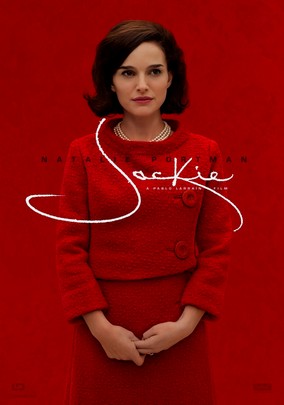
Jackie-2016

Jackie-2016

Director Pablo Larrain

Starring Natalie Portman

Scott’s Review #576

Reviewed January 1, 2017

Grade: A-

Natalie Portman carries the 2016 biographical-drama film based on the life of Jackie Kennedy and the events directly following the assassination of John F. Kennedy in 1963.

The film does not retread conspiracy theories or feature more than a few brief glimpses of JFK himself. Instead, it tells Jackie’s story and what she faced throughout the ordeal.

The film wisely uses flashbacks to show the famous tour of the White House, which Jackie gave shortly before the President’s death.

It is a bravura performance by Portman as Jackie.

Director Pablo Larrain, primarily known for achievements with foreign-language films (the Chilean film No (2012), comes to mind), rather than the American history genre, is successful in his work with direction.

The film is gloomy, both in tone and with the terrific brooding musical score composed by Mica Levi, with its loud, abrupt sound effects.

The overall feel of the film is foreboding and dark.

The main activity is told through a famous Life interview that Jackie Kennedy gave a week after the assassination. The reporter was Theodore H. White, who was slightly less than sympathetic in demeanor toward the First Lady.

Held in Massachusetts, Jackie is still pained in peaceful tranquility away from the limelight.

Portman successfully reveals two sides of Jackie Kennedy to the audience. Not simply the smiling debutante she always portrayed publicly, Jackie was also a complex, feisty woman.

She vehemently wanted the world to see how brutal the assassination was, how proud she was of her husband, and how she would not back down from holding a lavish and public funeral procession for her deceased husband.

Jackie was met with harsh criticism and defiance for her desire. A proud woman, she did not wish to run away and hide from the terrible events.

Jackie is mostly a quiet, introspective film. Much of the film is about Jackie being interviewed, and there are flashbacks of her giving the White House tour.

Typically, Portman portrays Jackie as prim, proper, and demure. She is always filled with class and grace.

In one riveting sequence, though, we see Jackie walking through the White House, smoking cigarettes and drinking vodka. She appears alone and vulnerable, having just lost her husband.

Portman embraces her pain, and the audience grieves with her. She is alone in more ways than one. We see her not only as a First Lady but also as a sad woman in her agony.

Portman is fantastic in her mannerisms and tone of voice.

I loved the continuous usage of flashbacks to tell the story. Still, the film does not delve into an unneeded history lesson. We all know what happened. The point of the film is to answer curiosity about Jackie.

What is most effective is the focus on Jackie’s reactions and how Jackie handled the events.

In a grotesque scene rivaling any horror film, we are right there with Jackie in the car that fateful day as a shot rings out, blowing JFK’s head wide open. Sinking into Jackie’s lap, she later candidly describes to the Life magazine reporter how she attempted to hold the remains of his head together.

We then see her wandering around, her beautiful pink suit smeared with blood.

A quiet yet compelling and mesmerizing film, Portman is the main draw. She channels emotions of heartbreak, sadness, and composure.

Jackie was a fantastic First Lady who was always graceful and proper, but Portman shows another side of her that very few people knew about.

In addition to this fine acting, Jackie (2016) is a dark, brooding film that successfully tells this woman’s story.

Oscar Nominations: Best Actress-Natalie Portman, Best Original Score, Best Costume Design

Independent Spirit Award Nominations: Best Feature, Best Director-Pablo Larrain, Best Female Lead-Natalie Portman, Best Editing

Gloria-2012

Gloria-2012

Director Sebastian Lelio

Starring Paulina Garcia

Scott’s Review #167

70270790

Reviewed September 10, 2014

Grade: B+

The subject matter of the film Gloria (2012) is so unusual in this day and age of the clichéd, youth-obsessed world of Hollywood that it is incredibly refreshing and pleasing to view.

Gloria tells the story of the title character, a middle-aged (50’s) divorced woman, living in Chile, who simply lives life to the fullest.

She loves and embraces new experiences. She tries smoking pot, sings along to disco songs, and dances the nights away.

Gloria is looking for love, but she is not a depressed or dowdy woman. She is stable, attractive, intelligent, and funny.

She lives!!

Gloria meets and begins a relationship with Rodolfo, a similar-aged divorced man with a family filled with baggage whom she meets in a nightclub. His ex-wife and two daughters reside with and are dependent on, him.

The film wisely does not feature Rodolfo’s family at all until the very end which adds to the mystique of the character. Gloria and Rodolfo begin a series of trials and tribulations involving both of their families.

Gloria introduces Rodolfo to her family at a birthday party in which her ex-husband and his current wife are in attendance.

Her family is very close including her relationship with her ex-husband and his new wife. They take a wine-induced trip down memory lane. This is too much for Rodolfo and he bails. He is constantly barraged with phone calls from his family during alone time with Gloria.

They continue to have ups and downs.

The audience wonders, will they find their way to a happily ever after? Is Rodolfo really a cad? Does Gloria want to settle down? A moment of bliss at an expensive hotel is ruined by an event and the audience’s heart breaks for Gloria.

How wonderful that this film dares to feature more than one explicit nude scene between these two middle-aged people in a classy, tender style. This is not common in American films so happily, foreign-language films are not as rigid or prudish in their sexuality.

Why Paulina Garcia received little recognition for this role is unfortunate to me. She deserved an Oscar nomination as she relays an enormous level of complex emotions- she feels the loss, she is betrayed, she is giddy, she is silly, and the list goes on and on.

Gloria, at times, is admittedly slow-paced, but what a breath of fresh air the film and the story is.

The film is a character-driven, tender tale centering on mature, intelligent people.

Independent Spirit Award Nominations: Best International Film

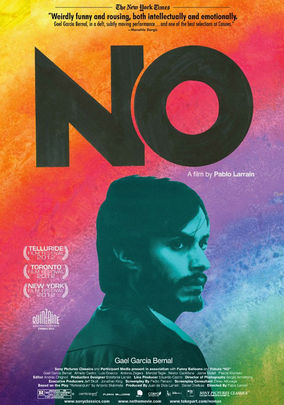
No-2012

No-2012

Director Pablo Larrain

Starring Gael Garcia Bernal

Scott’s Review #119

70243255

Reviewed July 17, 2014

Grade: B

No is a 2012 Best Foreign Language film nominee that centers around a Chilean ad executive’s campaign to oust a powerful Chilean dictator (Pinochet) from power circa 1988.

The ad executive (played by Gael Garcia Bernal) struggles to create a powerful campaign to influence the media and the voters.

The movie looks very documentary-style and is visually interesting. One will experience firsthand how difficult it was to create a successful campaign amid the political unrest occurring in Chile during this time.

The fact that the film is based on a true story adds a level of interest.

While watching the film, I felt like it was genuinely 1988 and I felt transported back to that time, unlike many period films where sets simply look dressed up for the period.

A detraction of No (2012) was its painfully slow pace, which made it drag occasionally.

Oscar Nominations: Best Foreign Language Film