Category Archives: Action

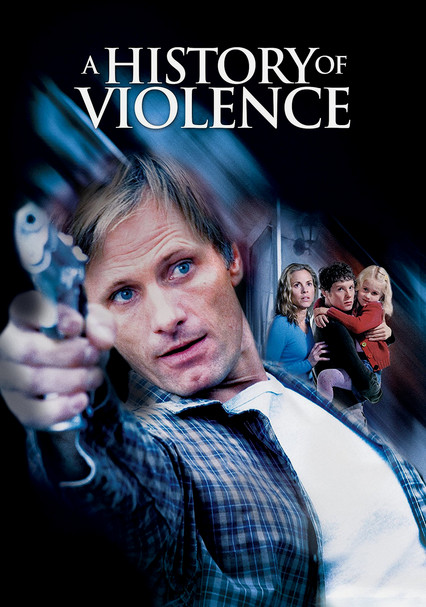
A History of Violence-2005

A History of Violence-2005

Director David Cronenberg

Starring Viggo Mortensen, Mario Bello, Ed Harris

Scott’s Review #1,016

Reviewed April 28, 2020

Grade: B+

David Cronenberg has directed films such as Videodrome (1983), The Fly (1986), and Crash (1996), stories safely classified as “off the beaten path”.

With A History of Violence (2005), he creates a film that on the surface appears conventional and even wholesome at the onset, a family drama or thriller, that turns sinister and bloody as it lumbers along.

The Christian-like small Indiana town is the perfect backdrop to quietly inflict mayhem and terror on its characters. Stars Viggo Mortensen and Ed Harris give tremendous portrayals.

Tom Stall (Mortensen) lives a quiet mid-western life and owns a quaint, little diner nestled in the center of town. He is a popular man and quite neighborly, befriending the many patrons who visit his lovely eatery. At his side are his adoring wife Edie (Maria Bello), and children, Jack and Sarah.

If they owned a golden retriever and resided in a house with a white picket fence, they would define the all-American family.

Late one night, two men attempt to rob the restaurant and when they attack a waitress, Tom kills both robbers with surprising ease and skill barely blinking at his violent tendencies. He is professed a hero by the townspeople and the incident makes him a local celebrity.

Tom is then visited by the frightening scarred gangster Carl Fogarty (Harris), who insists that Tom is a notorious gangster from Philadelphia named Joey Cusack. Tom is perplexed and vehemently denies the claims, but Fogarty begins to stalk the Stall family.

Because of the pressure, Tom’s family life hits crisis mode.

As the film ticks along the plot becomes thicker and thicker as the puzzle pieces are rife with mystery. Is Fogarty merely a liar, holding a vendetta against the person who killed his men? Does Tom suffer from amnesia, having forgotten his past life due to an accident?

Has Tom fled the criminal life seeking refuge and a new life in middle America, safely leaving his troubles behind? Does the truth lie somewhere in the middle of these possibilities?

Bello is cast in the role of Edie, Tom’s loyal wife. Bello is a stellar actor and does a wonderful job in the complicated role. Far too often, especially in thrillers, the wife role is as lacking in the challenge as it is in glamour. The ever-supportive wife must be a drag to play but pays the bills.

Edie is different, and as soon as the viewer has her figured out, she acts out of the blue which will surprise this type of character. This has a lot to do with Bello’s pizzazz and acting chops.

I adore the setting of the film. A far cry from the bustling City of Brotherly Love, Philadelphia, when the action eventually flows to the city, the rural setting of Indiana becomes even more important.

The quiet mornings, the imagined smell of fresh-brewed coffee, the crackling of sizzling bacon on the grill at Tom’s Diner, and finally, crickets chirping in the distance, all provoke the potent atmosphere and surroundings that work in this film.

A History of Violence (2005) is a superior film that contains excellent writing, the best aspect of the rich experience. A top-notch screenplay written by Josh Olson leaves the viewer not only with mounting tension but the mysterious unknown as to what will happen next and what the truth is.

Mortensen, commonplace in recent Cronenberg films, has found his niche playing complex yet humanistic characters, which must be a challenge for the actor and a splendid reward for the audience.

Oscar Nominations: Best Supporting Actor-William Hurt, Best Adapted Screenplay

10,000 B.C.- 2008

10,000 B.C.- 2008

Director Roland Emmerich

Starring Steven Strait, Camilla Belle

Scott’s Review #988

Reviewed February 11, 2020

Grade: F

10,000 B.C. (2008) is a by-the-numbers adventure/action hybrid film that attempts to be slick and modern with catchy visual elements and instead bottoms out resulting in an example of terrible filmmaking.

The CGI usurps all other qualities providing no historical accuracy, with a ridiculous 2008 feel rather than the time at hand. Those involved only had maximum box office returns in mind when the film was created.

An irritating formulaic quality and poor acting across the board leave this one dead on arrival.

Fierce, masculine mammoth hunter D’Leh (Steven Strait) sets out on an impossible journey to rescue the woman he loves, Evolet, (Camilla Belle) from an evil warlord and save the people of his village.

While venturing into the unknown and frightening territories, D’Leh and his fellow warriors discover an amazing civilization rife with possibilities.

Predictably, the warriors are attacked and slaughtered, leaving the young man to protect the remaining group while winning the heart of a princess, well above his station in life.

The story is complete schmaltz and easy to predict from nearly the very beginning of the film.

Powerful invaders force the hunters of D’Leh’s tribe into slavery and accost the princess in such a fashion that the setup is all put neatly in place for the viewer, providing nothing out of the ordinary. When the young and naive boy has an epiphany and realizes he is the only one who can save his tribe from extinction, it is all too much.

The film is riddled with cliche after cliche after cliche.

A tough ask to lead a film with summer blockbuster written all over it, newcomers Strait and Belle do their best, which only enhances how poor their acting is.

Cast for their good looks, they can offer little else. For audience delight, Strait is costumed with a bad wig, dripping sweat, and bulging muscles. Belle is also victimized as she pouts and sulks while wearing skimpy clothing.

The result is a standard boy meets a girl, the boy loses the girl, and the boy becomes a man to save the girl’s mess. Inexplicable is how they meet and fall in love before ever speaking or getting to know each other.

If only the bad acting were the only negative the film might be fair to middling, but nothing good is ever offered. All the hunters and tribesmen look like modern people dressed to look from a different period.

The endless battle scenes borrow from the legions of action and adventure films that have come before it. The animals prance across the screen in obvious timed moments providing little in the way of authenticity.

Director, Roland Emmerich, known for films such as Independence Day (1996) and The Day After Tomorrow (2004) has a knack for creating large epic adventures to please mainstream audiences.

There is nothing wrong with a conventional film if it manages to teach the viewer something or offer something of merit. With a target audience of pubescent boys and girls yearning to learn, Emmerich misses a golden opportunity to present an imaginative prehistoric moment and provide a lesson.

Complete with a bad story and bad acting, the drivel conjured up is nearly too much.

10,000 B.C. (2008) cannot be saved by the over-stylish visuals because they are so phony one cannot even fathom any credibility. The good-looking main stars look straight out of a glossy magazine and hardly from the prehistoric era presented.

With a little attempt at giving audiences anything of substance, this film is an epic fail to be missed.

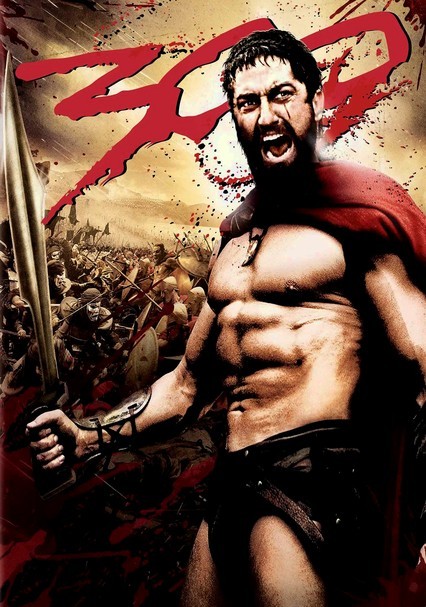
300-2007

300-2007

Director Zack Snyder

Starring Gerard Butler, Dominic West

Scott’s Review #977

Reviewed January 7, 2020

Grade: D

On paper 300 (2007) could have been a good or even a great film under different circumstances, if a historical realism or a message of some kind had existed.

Unfortunately, what sounds like an interesting premise is met with a cartoon quality, over-acting, and cheesy testosterone-laden bombast.

Little more than drivel, the film is saved slightly by a charismatic lead, male flesh, and potent homo-eroticism, but this is no Magic Mike (2012), and the content fails because it is intended to be taken seriously.

The result is a silly affair, with predictability, and cliches for miles.

The story is based on a 1998 comic series of the same name that is a fictionalized retelling of a battle within the Persian War.

The flimsy plot revolves around King Leonidas (Gerard Butler), who leads 300 Spartans into battle against the Persian “God-King” Xerxes (Rodrigo Santoro) and his invading army of more than 300,000 soldiers (hence the title).

As the battle rages on, Queen Gorgo (Lena Headey) attempts to rally support in Sparta for her husband (Leonidas) and conquer the army.

Butler is the only slight positive worth mentioning as he preens and prances in little more than a loin-cloth with chiseled abs during the battle scenes, ferociously bellowing at his enemy.

A fine-looking man, he is unarguably charismatic and poised, so the audience is strongly encouraged to root for him, and naturally for the Spartans. Leonidas makes for a powerful leader and is great to look at, but that is where any positives to this film end.

The scantily clad gimmick is not intended to draw female viewers to the film, or at least the intent doesn’t seem to be there unless the marketing is botched. There is enough male nudity to go around and the beefcake and machismo are clear in most of the characters.

Laughable is how the Spartans all have washboard abs and appear to be freshly waxed. Did they have access to state-of-the-art fitness centers in 479 BC?

The Persians are mostly face-pierced and sneering, the clear enemy, which does nothing to diminish racist overtones. Spartan-good, Persian-bad.

Zack Snyder’s (Dawn of the Dead-2004) motivation seems to be to market this film to pubescent teenage males or the low-IQ crowd so the stereotypes are not the best thing to witness nor will they cause anyone to feel very liberated or united.

The characters are either cookie-cutter or grizzled and violent, which is in tune with most of the film- bloody, but without reason, substance, or merit. One-note character after one-note character appears through each scene.

Most bothersome is the intent to stir a pro-war stance, not helpful given the target audience.

300 was filmed mostly with a superimposition chroma key technique, to help replicate the imagery of the original comic book which does nothing but make the film look like a high-energy video game.

The product is quite stylized with gloomy battleground scenes and dire bleakness and derives a graphic novel or comic book approach but lacks any subtle qualities or pretty much anything else interesting from a cinematography perspective.

The battle scene finale is by the numbers and should come as no surprise who the inevitable victor is. The film requires little thought or attention span and one can simply immerse themselves onto a cushion and absorb the nonsense couch-potato style.

Battle after battle erupts with cliched earnestness and a bevy of blood-spurting wounds and kills. This would be okay if there existed any point or good plot twist.

Any character development is missing.

300 (2007) is a weak offering and decidedly boring, a surprise since much of the events take place on the battleground where the action is produced a mile a minute. The experience is forgettable, and a legion of other action-fueled films exist with more meat and potatoes on their plate.

The sinister and stereotypical aspects make the resulting film less than fun and the big, loud, dumb product is only marginally cinematic.

We can do better.

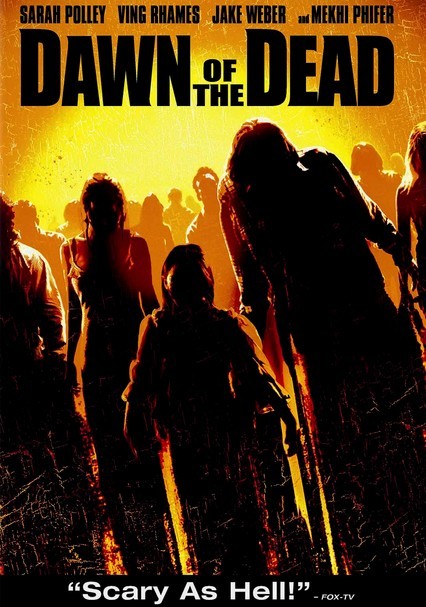
Dawn of the Dead-2004

Dawn of the Dead-2004

Director Zack Snyder

Starring Sarah Polley, Ving Rhames

Scott’s Review #956

Reviewed November 8, 2019

Grade: C+

Dawn of the Dead (2004) is a remake of the original horror-comedy-satire film by legendary George Romero. What the original provided in intrigue and concept is lacking in the much bloodier remake- the freshness is not there.

The film was made pre-television phenomenon The Walking Dead but watching it now with the zombie obsession in a steady decline, the film, while entertaining, feels tired and dated.

The film feels patterned after the successful and fresh 28 Days Later (2002).

Now set in Wisconsin (the original was in Pittsburgh, Pennsylvania), Ana (Sarah Polley), returns from a shift at the local hospital, where she works as a nurse. She soon learns that massive bulletins alert sudden zombie plague, where former human beings have turned into cannibalistic corpses.

Her husband a victim, Ana joins a small group of survivors at the local shopping mall and attempts to stay alive while being encircled by the creatures, and other not-so-nice people.

The main group includes a grizzled police sergeant, Kenneth (Ving Rhames), electronics salesman Michael, petty criminal Andre and his pregnant wife, Luda, and three guards, C.J., Bart, and Terry.  They are later joined by others who arrive via delivery truck.

The large group befriends another survivor, Andy, who is stranded in his gun store across the zombie-infested parking lot.

The rest of the film offs the characters one by one in traditional horror style, while the remaining few try to figure out an escape route.

The main problem with Dawn of the Dead is that the characters are not written well, making them either one-note or not particularly interesting, and quite stereotypical. Examples of this are the angry and defiant guards, who make trouble for the rest of the group for no other reason than as a weak plot device to create drama other than from the zombies.

Kenneth is an angry cop, a lone wolf type of character, who frequently postures and preaches. Again, there is no interesting reason behind his personality.

Finally, Steve is an oversexed playboy who keeps recordings of his sexual shenanigans for repeated viewings.

The character meant to root for is Ana. We sympathize with her for her husband’s gruesome death and her struggle to stay alive, so she is the film’s hero. Her character is likable and Polley is a worthy actress, but I wonder if a name star would have been better in this circumstance.

Polley did not last very long in the Hollywood world and this only makes the film feel more dated than it already does. Many viewers will not know who the actress is.

Another irritant is the decision to make the zombies move faster. Part of the beauty of the zombies is that they are slow and brooding, unable to think, just existing in a mummy-like haze. Suddenly, they are fast, making them tougher to flee from. This attempt at a modern approach by changing things up too much does not work at all.

Dawn of the Dead is not all dour.

Props must be given to the mall setting, updated for 2004 shopping inclusiveness. Trendy and timely stores are added, and it feels like a mall of its time. This is one aspect of the film that works and feels interesting.

Eagle-eyed viewers may spot some of their favorite stores from this decade.

The strongest part of an otherwise mediocre film is the brilliant incorporation of the heavy-metal band Disturbed’s aggressive song “Down with the Sickness” from 1999. The song is incorporated over the stylistic end credits and a summary of what happens to the survivors is provided over the lyrically brutal song.

Unfortunately, it is at the very ending of the film where it finally hits a home run.

Since this is a remake it is impossible not to compare it to the 1978 version in many ways. The characters in the original had more salt and a romance added a bit of complexity. The original also felt fun whereas the 2004 version seems hardened and angry.

The originality that made the original fresh is lacking in this retread, which limits the unique social context and thought provocation that the original contained.

With little reason to watch Dawn of the Dead (2004), unless it was still 2004, the original 1978 Romero version is far superior. A fun tip might be to watch them in sequence (I did!) to notice differences in style and pacing and for general comparison sake.

The final musical score is a win, but much of the rest is dull and dated.

Atomic Blonde-2017

Atomic Blonde-2017

Director David Leitch

Starring Charlize Theron, James McAvoy

Scott’s Review #857

Reviewed January 19, 2019

Grade: B+

Atomic Blonde (2017) is a female-empowering action/spy film directed by David Leitch, a former stuntman. The film plays similarly to James Bond, but with the genders reversed.

The film is visually stylish, featuring dynamic music and cold, crisp location sequences of Europe.

The story is not the main appeal and cannot always be followed, but thanks to a great performance by Charlize Theron in the title role, the film is pleasant and recommended for fans of either the spy or action genres.

Based on the 2012 graphic novel The Coldest City, the film is set in Berlin in 1989, and its central theme is the collapse of the Berlin Wall amid a spy story and the Cold War backdrop.

A grizzled female MI6 agent, Lorraine Broughton (Charlize Theron), is quizzed about events that occurred during her recent time spent in the German city investigating the death of a fellow spy.

She recounts her mission via flashbacks and the whereabouts of a mysterious list that reveals the names of MI6 and KGB Russian agents. Lorraine deals frequently with David Percival (James McAvoy), an odd colleague who may or may not be trusted.

The plot and subsequent story are hardly the finer points of Atomic Blonde, and the title—a play on the words “atomic bomb”—is too cute to be taken seriously.

The novice director is a former stuntman, so one should not expect high art or exceptional writing material. The largest issue besides the plot holes and implausibility of the story is that it is not engaging. After thirty minutes of trying to ascertain who had “the list,” I gave up and tried not to follow too closely, instead enjoying the film’s other qualities.

Theron is well cast as bleached blonde vixen Lorraine—harsh as nails and badass. With icy eyes and a sneer that makes the most formidable opponents cringe, the actress has the charisma to make the role her own.

The tall and fit woman endures too many fight scenes to count, but her pizzazz and wherewithal make the character believable. Her toned physique is not dissimilar to that of her character in Mad Max: Fury Road (2015).

Bisexual, Lorraine has a brief romantic escapade with Delphine Lasalle (Sofia Boutella), a young French agent, until the woman is murdered.

Any advEuropean adventurer can be enamored for, logistically speaking, the exciting locales featured heartily in Atomic Blonde.

Sleek and modern, the photography and cinematography departments do a fantastic job of giving the film authenticity and audacity to reveal the terrific nooks and crannies the best cities offer.

Given the number of high-speed car chase scenes and a fantastic underwater sequence, London, Paris, and Berlin are all given their just due.

The feminist overview that Atomic Blonde possesses is worthy of praise. Able to tangle with the best of them, Lorraine takes no prisoners and is determined to battle until the end or until she is too bloody to fight back. She is tough yet sensitive and puts up with no nonsense.

Still, she has a heart, as evidenced by not only the violent death of her girlfriend and her subsequent reaction but also her calm despair at being unable to save a drowning man’s life. Lorraine’s calm and resilience, instead of over-dramatic emotional outrage, make her a character that has developed very well and is a role model for young women everywhere.

McAvoy is cute as a button as David adds comic relief and sly witticisms to many scenes. He often appears shirtless, exposing his lean and muscular physique. As a fan of sexual dalliances, he is both combative and flirtatious with Lorraine, though he never beds her.

A yin to her yang and sparring partners throughout, David is a nice addition to a cast containing mostly serious characters.

The 1980s-themed musical score features nostalgic songs peppered throughout the film, seemingly every few moments.

Atomic Blonde plays like a bold music video with intelligently penned songs, not disposable crap. The inclusion adds a genuine celebration of the decade of decadence crafted thoughtfully.

Treats such as the masterful “Voices Carry” by ‘Til Tuesday, “London Calling” by The Clash, and “Der Kommissar” by After the Fire is placed perfectly during relevant scenes.

With a ballsy lead character and enough action to envelope a nearly two-hour action thriller Atomic Blonde (2017) is a gift in the atmosphere and great ambiance. Forget bothering to deep-dive into the complex story too much- it isn’t worth it.

Admittedly, the coveting style over substance can be forgiven because the nice elements overshadow the negatives.

Atomic Blonde (2017) best serves as a kickback and enjoy the ride experience.

Moonraker-1979

Moonraker-1979

Director Lewis Gilbert

Starring Roger Moore, Lois Chiles

Scott’s Review #770

Reviewed June 8, 2018

Grade: A-

Moonraker (1979) is an installment of the James Bond film franchise not usually well regarded and rarely appearing on critic’s top ten lists.

Perhaps a reason for this is the timing of the film, hot on the heels of the late 1970’s Star Wars craze. Plans for a different Bond film were scrapped in favor of an outer space story.

Regardless, I adore most of Moonraker, save for the final thirty minutes when the plot gets way too far-fetched for anyone’s good.

The rest of the film is a superior entry and holds up quite well in the modern age of all things Bond.

Many of the familiar elements remain intact following the successful and lavish The Spy Who Loved Me (1975). An even heftier budget featuring gorgeous locales like Venice, Rio de Janeiro, and the Amazon rain forest is featured as well as a capable, intelligently written “Bond girl”.

The villains, compelling and suave, including the return appearance of Jaws (Richard Kiel), and handy, dandy gadgets make Moonraker a treat for fans.

Therefore, I find the non-love for the film rather mystifying.

The action starts when a jumbo airplane carrying a Drax Industries Moonraker space shuttle is hijacked in midair causing the plane to crash and the shuttle to disappear.

Since the space shuttle was on loan to the United Kingdom from the wealthy and powerful Hugo Drax (Michael Lonsdale), 007 (Roger Moore) is tasked with finding its whereabouts. He visits the grand shuttle-manufacturing plant in California where he learns that Drax and his bodyguard Chang are sinister and plotting global destruction.

Bond befriends the gorgeous and highly intelligent Dr. Holly Goodhead (Lois Chiles), an astronaut who works at the facility, and Corinne Dufour (Corinne Clery), the beautiful personal pilot of Drax.

As events roll along Jaws returns to the story seeking revenge on Bond and subsequently serving as Drax’s new bodyguard.

Of course, treasured favorites like M (Bernard Lee), Q (Desmond Llewelyn), and Miss Moneypenny (Lois Maxwell), return to the fold.

To explain the weakest portion of the film first, producers were attempting to capitalize on the tremendous success of 1977’s Star Wars by featuring a space exploration theme.

Only in the final half-hour does this come into play as Bond and Goodhead, and nearly all the cast, don bright yellow spacesuits. Drax’s evil plan is to eradicate all humankind and begin a new world with only beautiful people existing and reproducing.

The inevitable final battle scenes take place in a sprawling space station amid laser guns shooting bright beams- a direct rip-off from Star Wars.

The entire sequence is too long and quite reminiscent of my criticism of the tedious finale from the otherwise brilliant The Spy Who Loved Me, Moonraker’s predecessor.

Otherwise, the film is top-notch.

Fantastic sequences involve Bond’s mid-air fight with a bad guy and a dangerous struggle for a parachute, a fight scene high atop a Cable Car during Rio Carnival, vicious sparring in a Venice museum, and a female character chased and torn to bits by Drax’s carnivorous dogs, all make for great action sequences.

The highlight though may very well be Bond’s harrowing ordeal inside an out-of-control centrifuge chamber.

The return of Jaws is certainly a highlight to Moonraker especially as the popular villain turns “good” and finds a love interest! When he sees the cute blonde girl with pigtails and glasses, both character’s eyes light up in a “love at first sight” moment.

As Jaws realizes Drax’s plans for both of them to exterminate his alliances suddenly switch resulting in a touching scene between the two over champagne.

Moore and Chiles have tremendous chemistry as the MI-6 agent teams with the capable female CIA agent. Holly Goodhead is portrayed exceptionally well: female, intelligent, gorgeous, and savvy.

Impressive (and progressive) is how Goodhead takes charge as she and 007 make a harrowing journey back to planet Earth and then work nicely together to destroy Drax’s deadly missiles.

Sure the romance is there, but also the mutual respect between the two.

Fondly recalling childhood memories of watching this film numerous times, Moonraker (1979) holds good memories for me.

More importantly, it possesses wonderful Bond qualities that will enchant many Bond fans seeking fun and entertainment.

The film contains a ludicrous plot attempting to fit the times, but thanks to lavish sets and a competent main Bond girl, the film is quite memorable.

Oscar Nominations: Best Visual Effects

GoldenEye-1995

GoldenEye-1995

Director Martin Campbell

Starring Pierce Brosnan, Sean Bean, Izabella Scorupco

Scott’s Review #717

Reviewed January 19, 2018

Grade: B

By 1995, after a record six years between films, the James Bond franchise re-emerged energetically with Pierce Brosnan assuming the role of the MI6 agent-, and breathing some fresh life into the character.

The charming and suave Irish actor gave a new direction to the role last played by Timothy Dalton-an an actor who gave Bond more of a brooding quality. The resulting GoldenEye offers mixed results, though the casting is a vast improvement over its predecessor.

GoldenEye sees other monumental roles recast- that of Judi Dench as M and Samantha Bond as Miss Moneypenny.

The film has a slick look, and a compelling story, but at times is tough to follow, and overall- despite containing all the elements- something seems missing.

Or maybe I just prefer the other Bonds more? Still, the offering is far from a bad watch.

GoldenEye kicks off with, in hindsight, a major clue to the story as Bond  (Brosnan) and fellow 00 agents, Alec Trevelyan (Sean Bean), infiltrate a Soviet facility in northern Russia in 1986, searching for chemical weapons.

Alec is tragically killed by sinister Soviet General Ourumov and Bond mourns the loss of his friend.

The action resumes in present times (1995) as, now in gorgeous Monte Carlo, Bond follows the beautiful and sadistic Xenia Onatopp, a  crime syndicate member known for crushing men with her thighs. Xenia and Ourumov travel to Siberia where they destroy a bunker holding GoldenEye satellites and kill everyone except the computer programmer, Boris (Alan Cumming), and the lone survivor, Natalya  (Izabella Scorupco).

In a clever twist, it is revealed that Alec has betrayed British Intelligence and is himself leading the crime syndicate.

In one of the quietest, and best scenes, Bond and M have an interesting exchange in her office as M (a woman) calls Bond out on his arrogance and chauvinism, and states that it is a new day.

Dench adds a ton of female modernism into the role (about time in 1995) as Bond now reports to a woman. The scene is important as it leads the two characters to achieve mutual respect and arguably parlays the franchise into a new, more female-empowering direction.

A great positive to GoldenEye is the setting, which I think does wonders for the film as a whole- the bitter, blustery, Siberian set gives a soothing feeling, especially while watching the film during the ravages of winter, snug with a warm blanket and heaters.

Regardless, the sets are realistic, never cheesy, and loaded with atmosphere- so the film itself looks wonderful.

Issues abound with the frenetic pacing of the film- at times I found myself losing track of the action or the sequence of events.

Understandably, as in many Bond films, events circle the globe and, surely London, Russia, and Monte Carlo are great locations, but especially within the film’s final climax, I suffered from sensory overload.

Furthermore, Brosnan is not one of my favorite Bonds. Sure, he has the charisma, the looks, and the charm to pull off the role, but something about him does not measure up to Sean Connery, Roger Moore, George Lazenby, or Daniel Craig- certainly he supersedes Timothy Dalton.

Don’t get me wrong- I do not despise him as Bond, but nothing stands him out against the others either.

The villains in GoldenEye are perfectly adequate if not spectacular. Sean Bean gives Alec a sly, aww shucks appeal and defines good-looking, but his motivations for switching sides are not very exciting- something about Nazis in World War II, the Cossacks, and revenge are quickly mentioned, but it doesn’t much matter.

General  Ourumov is effective- with his sinister look, he is the perfect Bond villain. Xenia is little more than a cartoon character (with the name to boot) and her gimmick quickly wears thin.

Finally, Cummings as the programmer is played only for laughs, and his final chant of “I am invincible!” as he freezes into solid ice is mildly humorous.

The title theme song, “GoldenEye”, performed by Tina Turner is forgettable at best and one of the most lackluster in the illustrious musical catalog.

GoldenEye has many of the standard Bond elements within its frames and is a decent entry in the franchise. With the debut of a new Bond, the film has a fresh and very modern and technical feel to it that, along with a fantastic setting, overlooks some flaws in the storytelling.

Filled with bombast and a crowd-pleasing method, GoldenEye (1995) is hardly the best Bond film, but not the worst.

Octopussy-1983

Octopussy-1983

Director John Glen

Starring Roger Moore, Maud Adams

Scott’s Review #716

Reviewed January 17, 2018

Grade: A-

Hardly regarded as one of the most stellar of entries in the James Bond franchise, 1983’s Octopussy is nonetheless a guilty pleasure of mine.

This is undoubtedly due to the film being the first installment that I was allowed to see in the movie theater and is filled with exciting memories.

As the film stands in current days it is perfectly fine, containing all of the enjoyable elements necessary for a good Bond film- interesting villains, solid action, and gorgeous women. Perhaps at times suffering from a bit of silliness, Octopussy is still quite the fantastic watch.

Roger Moore, admittedly looking slightly aged and sagging, returns to the fold as 007, the shaken, but not stirred action hero known as James Bond. However, he is, true to form, as witty and suave as he always is with witty one-liners and a mischievous smirk.

Moore ritualistically infuses the character with a measure of comedy- a wink of the eye or a raised eyebrow adds humor to the character so than any other actor who has portrayed Bond.

In this installment, Faberge eggs, clowns, and gorilla suits are featured. Attempting to escape from East Berlin to West Berlin, 009- dressed as a circus clown, is murdered on the estate of a British Ambassador while attempting to deliver a fake Faberge egg.

Assuming the Soviets are involved, MI6 instructs Bond to investigate the matter, and a complex smuggling ring is uncovered- featuring a gorgeous female smuggler named Octopussy (Maud Adams), along with sinister Afghan exiled prince Kamal Kahn (Louis Jourdan), and his bodyguard, Gobinda.

Watching the film in 2018, and even though it was made in 1983, Octopussy does not suffer from the dreaded “1980s look” that so many other films do and seems surprisingly clean and fresh.

The colors are vibrant- especially in the prevalent circus and clown scenes, and the best two scenes- the airplane and train scenes- still bristle and crackle with good action.

As the climax to Octopussy culminates, the inevitable heroine and main Bond girl- Adams’s “Octopussy”, has been bound and gagged and taken hostage by the baddies in a fleeing airplane, Bond grabs hold of the fuselage, and begins a harried flight over the mountains of remote India, clinging for dear life.

The scene climaxes with an exciting fight scene atop the rooftop of the speeding plane as Bond and Gobinda fight to the death as Kamal unsuccessfully attempts to twist and turn the plane and rid themselves of pesky Bond.

The scene is still compelling and loses none of its appeal over the years, never appearing dated.

The train sequence is still relevant but does suffer from a small dose of silliness. The action is plentiful as Bond races against time to prevent a Russian missile from detonating and killing thousands of American citizens, and worthy of note is the timely Cold War subject matter of the Russians versus the Americans- plentiful in American cinema during this time.

As Bond dons a phony-looking gorilla outfit- embarrassing even for the comical Roger Moore- he can successfully take off the costume and sneak out of a train car, all before the three seconds that it takes for Gobinda to turn around and slice the head off of the gorilla thinking it is Bond.

Suspension of disbelief is required.

Impressive is the female empowerment slant that is evident. From the strong businesswoman character that Adams portrays- she is decisive, intelligent, and savvy, she is neither cowering nor impressionable and cannot be bullied or pushed around.

Albeit her name, “Octopussy”, does teeter on male chauvinism. Be that as it may, her gang of feminist followers, all wielding assault rifles, are quite inspiring and, at this point, unusual for a Bond film- typically masculine leaning.

Octopussy (1983) is an overlooked, under-appreciated, too easily dismissed slice of goodness served up with a bit of comedy, plenty of action, and good solid villains- everything that makes a Bond film a Bond film.

The film is worthy of a viewing.

Dunkirk-2017

Dunkirk-2017

Director Christopher Nolan

Starring Fionn Whitehead, Tom Hardy

Scott’s Review #666

Reviewed July 24, 2017

Grade: A

Of the hundreds of war films made over the years, most have a similar style, with either a clear patriotic slant or a questioning/message-type nature.

Regardless, most have a certain blueprint—from the story to the visuals to the direction—and rarely stray from it.

The genre is not my favorite, as machismo is usually overdone, and too many films turn into standard “guy films” or “good guys versus the bad guys.”

Finally, along comes a film like Dunkirk (2017)that gives the stale genre a swift kick.

The story is both simple and historical.

In 1940, Nazi Germany, having successfully invaded France, pushed thousands of French and British soldiers to a seaside town named Dunkirk.

With slim hopes of rescue or survival, the soldiers are sitting ducks for the raid of German fighter planes, which drop bombs both on the soldiers and rescue ships.

In parallel stories, a kindly British civilian (Mark Rylance) and his son sail to Dunkirk to help rescue the soldiers, and two British fighter pilots chase the German fighter planes, attempting to thwart their deadly intentions.

One will immediately be struck by the film’s pacing, which is nonstop action from start to finish. The action, combined with very little dialogue and an eerie musical score, is what makes the film feel unique and fresh.

Directed by Christopher Nolan (The Dark Knight, 2008 and Inception, 2010), critics herald this film as his most remarkable work yet- I tend to agree.

Scenes involving such differing musical scores as screechy violins mixed with thunderous, heavy beats shake up the film and keep the audience on their toes as to what is coming next.

An interesting facet of the film, and certainly done on purpose, is that the characters’ backstories are not revealed- we know very little about them.  Do they have families? Are they married? This is a beautiful decision by the screenwriters and by Nolan.

For instance, the first scenes involve a disheveled private named Tommy (Fionn Whitehead).  Panicked, he runs through the streets in pursuit of the beach, where he meets a fellow soldier named Gibson, who is burying another soldier in the sand.

Together, they find a wounded soldier and carry him to a departing ship. The men never speak but communicate through their eyes and gestures—it is a powerful series of scenes.

Another positive to Dunkirk is the anonymity of the enemy. The German soldiers are never shown. We see many scenes of fighter planes overhead, pummeling the soldiers with bombs and pulsating gunfire in various scenes. Still, the mystique of the enemy troops is a constant throughout the film.

The faceless component of the villains adds terror and haunting uncertainty.  In this way, the film adds to the audience’s confusion about where the enemy may be at any given moment.

The visuals and the vastness of the oceanside beach are at the forefront throughout the entire film, which is one hour and forty-six minutes, relatively brief for a war film. It elicits both beauty and a terrible gloominess.

Scenes of the vastness of the beach peppered with thousands of cold and hungry men are both pathetic and powerful.

The best scenes occur on Mr. Dawson’s  (Rylance) mariner boat. Aided by his son Peter and Peter’s frightened schoolmate, the trio heads for dangerous Dunkirk to help rescue, but en route, he picks up a shell-shocked soldier determined to stay as far away from Dunkirk as possible.

This leads to compelling drama and deep characterization of all the central characters.

Many list 1998’s Saving Private Ryan as the best film in the modern war genre, but Dunkirk may very well rival that film in intensity and musical effectiveness. Dunkirk (2017) also contains shockingly little bloodshed or dismembered soldiers—it does not need this to tell a powerful story.

The film is sometimes emotional and intense, but it never lets go of its audience from the very first frame—it is a war film for the history books and a lesson in film creativity and thoughtfulness.

Oscar Nominations: 3 wins-Best Picture, Best Director-Christopher Nolan, Best Original Score, Best Sound Editing (won), Best Sound Mixing (won), Best Production Design, Best Cinematography, Best Film Editing (won)
Bullitt-1968

Bullitt-1968

Director Peter Yates

Starring Steve McQueen, Robert Vaughn, Jacqueline Bisset

Scott’s Review #660

Reviewed July 7, 2017

Grade: B+

Bullitt (1968) is one of the ultimate “guy movies”, hardly a stretch considering it stars the “regular guy” hero of the time, Steve McQueen.

With his macho, tough-guy persona and his cool, confident swagger, he was a marquee hero during the late 1960s and into the 1970s.

While the film is rife with machismo stereotypes and is not precisely a women ‘s-lib film, it is also a good old-fashioned action thriller with plenty of chase and fight scenes to make most guys (and some girls) happy.

The story is not particularly thought-provoking, but the film works as escapist fare and is an example of good late-1960s cinema.

Set in San Francisco, Lieutenant Frank Bullitt (Steve McQueen) is assigned to watch a Chicago gangster, Johnny Ross, over a long weekend, before the criminal is set to testify against his brother on Monday morning.

Robert Vaughn plays ambitious politician, Walter Chalmers, who is determined to see the case go off without a hitch and see convictions in the organized crime syndicate.

Predictably, the weekend does not go as planned, and hitmen attack Ross. This, in turn,  sets off a cat-and-mouse game of deception and intrigue. As expected, the action is virtually non-stop with many action sequences lighting up the screen.

The plot of Bullitt does not matter, and one does not need to completely understand what is going on to enjoy the film for what it is. The intent of a movie like Bullitt is not good storytelling, but rather good action.

This is not meant as a put-down, but rather good, honest critiquing. One can sit back, relax, and enjoy the testosterone-laden affair.

Bullitt contains some riveting scenes that raise it above an average, middling action flick. The muscle car chase involving a then-state-of-the-art, flashy Ford Mustang and a Dodge Charger is fantastic and one of the film’s high points.

The quick, edgy camera angles as the cars zip down the windy, narrow San Francisco roads build compelling tension.

Will one of the cars careen off the side of the road or blow up? Since one of the cars holds Frank Bullitt and the other car is the bad guy, it is not tough to guess how the sequence will end.

But it’s good fun all the same, and well filmed.

The other spectacular sequence is the finale: as Frank and company overtake a busy San Francisco airport in pursuit of a baddie about to board a transcontinental flight, the chase leads them throughout the airport, onto a taxiing plane, and finally onto the runway as a plane is about to take off.

It is action at its finest and a treat for the viewer, bringing us back to airport days, pre-9/11, when airports were just different—the luxurious flight crew, the innocence, and the glamour- all a distant memory.

The scene is such that it shows all of the airport elements- the people, the employees, the airport, and the planes, giving it a slice-of-life feel, circa late 1960s airport days.

Appealing is the period in which the film is made. 1968 was an excellent year for cinema; Bullitt capitalized on the newly liberal use of blood in films, making it an influential action film.

Dozens of imitators (some admittedly with superior writing) followed, including classics Dirty Harry and The French Connection (both 1971). These contain the exact basic blueprint that Bullitt has.

A negative of Bullitt is the trite way women are portrayed. Female characters are written as dutiful nurses, gasping in fear and helplessly running away when an assailant runs rampant in the hospital, praying for a man to save the day.

Or, they are written, in the case of Bullitt’s girlfriend, as a gorgeous yet insignificant character, given a laughable scene in which she questions whether or not she knows Frank after witnessing the violence in his job- hello?

He is in the San Francisco Police Department after all.

Bullitt is a meat-and-potatoes kind of filmmaking. An early entry into what would become the raw 1970s and the slick formulaic 1980s action genre, the film deserves credit for being at the front of the pack in style and influence.

The story and character development are secondary to other aspects of the film, and Bullitt (1968) is just OK as escapism fare.

Oscar Nominations: 1 win-Best Sound, Best Film Editing (won)
Live and Let Die-1973

Live and Let Die-1973

Director Guy Hamilton

Starring Roger Moore, Jane Seymour

Scott’s Review #646

Reviewed May 25, 2017

Grade: A-

When Live and Let Die was released in 1973, it began a new chapter in the James Bond film franchise with the introduction of a new Bond.

Sean Connery refused to do any more Bond pictures, and Roger Moore was crowned the new film hero and successfully made the role his own during his tenure.

My personal favorite Bond from top to bottom- I enjoyed the wry humor Moore added- he makes Live and Let Die more than it otherwise might have been with a less charismatic actor.

The story and the subsequent elements of the film have issues, but this installment holds a soft spot for me as it was one of my first exposures to the mountainous franchise that is Bond, and I adore the period of the mid-1970s.

Bond (Moore) is summoned to duty by his leader, M after three MI6 agents are simultaneously killed in the Caribbean, New Orleans, and at the United Nations in New York City. Bond is then tasked with figuring out who killed these agents and how the deaths are connected.

The adventure takes Bond from Harlem to an unnamed island in the Caribbean, and back to the bayous of southern Louisiana as he tangles with a heroin drug lord, Dr. Kananda.

Bond’s main love interest in the film is the virginal tarot card reader, Solitaire, played by Jane Seymour.

Live and Let Die is a breakthrough in some ways, though the film admittedly contains both positives and negatives worthy of discussion.

Since the film was made in 1973, following a successful run of “Blaxploitation” films like 1971’s Shaft and 1972’s Super Fly, the film is influenced by those in style (for better or worse).

This means that all of the villains are black, from the main villain, Kananga, to various henchmen and even background criminals growing the massive amounts of heroin shipped to the United States for distribution.

Having such representation among a minority group is fantastic and feels cutting edge, but stereotypes such as derogatory racial epithets, a pimpmobile, and the addition of weird voodoo, exist.

Another major flaw to the film, and despite my overall warmth for Live and Let Die, is the goofiness that the film turns into towards the end of the film.

At a certain point, the film feels like a different film from what it starts as, which becomes quite jarring-the introduction of Sheriff J.W. Pepper during a Louisiana chase scene turns the film into more of a cheesy Dukes of Hazzard episode, with bumbling law enforcement officials, rather than a quality film, and the southern stereotypes run rampant.

Why does a throwaway scene of a speedboat racing through an outdoor wedding feature all high society white folks with nary a black character existing other than as servants?

Some diversity in this scene would have been nice considering the film goes out of its way to feature black characters.

Still, many positives do exist. Live and Let Die has the honor of containing the first-ever black Bond girl- the CIA double agent, Rosie Carver, who sadly meets a grisly ending far too soon.

Gloria Hendry’s chemistry with Roger Moore is readily apparent, though the film chooses to make the character inept rather than a true equal. The smoldering sex scenes between the duo are wonderful and groundbreaking to watch so the film gets major props for pushing the envelope in this way.

Memorable is the terrific title theme song, “Live and Let Die”, by Paul McCartney and Wings. The success of this hit song, especially decades later, does wonders to elevate the film and keep it relevant in pop culture.

Also great to see are the location sequences and good action car chase scenes along the West Side Highway in New York City and into Harlem.

A treat for this retro fan is the inclusion of early 1970s Chevrolet Impalas and Chevy Novas throughout the entire feature film- was Chevy a financial backer?

Classic cars are a major inclusion in Live and Let Die, which as a current-day viewer is a cool treat and quite retro.

In the way of the primary villain and primary Bond girl, the film misses. Jane Seymour is a dud as Solitaire, a character that really should have been played by a black actress. Seymour and Moore have zero chemistry and her character is weak and simpering, lacking any sort of backbone.

Similarly, Yaphet Kotto as Dr. Kananga seems miscast and lacks any real qualities that make him neither devious nor dangerous, and his inevitable swan song underwhelms.

Live and Let Die (1973) is not the greatest in the Bond collection and suffers from some problematic, now-dated aspects, racial issues, and a silly overtone, but, perhaps more so as a terrific childhood memory, I hold a particular fondness toward this film despite many negatives.

Oscar Nominations: Best Song-“Live and Let Die”

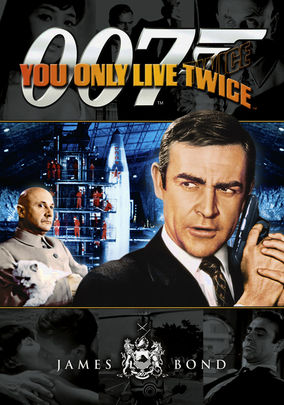
You Only Live Twice-1967

You Only Live Twice-1967

Director Lewis Gilbert

Starring Sean Connery, Akiko Wakabayashi

Scott’s Review #636

Reviewed April 23, 2017

Grade: B+

You Only Live Twice (1967) is the fifth in the James Bond film franchise and the fifth to star iconic Bond, Sean Connery, in the lead role.

Reportedly growing bored with the role and eager to move on to meatier acting challenges, Sean Connery is not quite as mesmerizing in the role this time around, but is still indisputably charismatic and sexy with his delivery of one-liners and various affairs with women.

You Only Live Twice is the last to feature Connery until he is coaxed back into the role four years later with 1971’s Diamonds Are Forever.

The film is not among my favorite Bond films of all time, nor is it even in the top ten, for that matter, but it is still quite an enjoyable watch, and the Japanese locales are undoubtedly the highlight.

The film as a whole suffers from a silly story, dated special effects, and a completely lackluster villain, but it does have Connery to rescue it and a nice little romance between Bond and the main girl, Aki, played by Japanese actress Akiko Wakabayashi- that is, until she is unceremoniously poisoned.

The plot involves the hijacking of an American NASA spacecraft by another mysterious spacecraft. The Americans suspect the Russians of the action, and the British suspect the Japanese since the aircraft landed in the Sea of Japan.

MI6 (Bond) fakes his death in Hong Kong and subsequently begins to investigate who is responsible. His search brings him to Tokyo, where he investigates Osato Chemicals and stumbles upon evidence.

He is aided by both Aki and Tiger Tanaka, leaders of the Japanese Secret Service. Soon, it is revealed that the mastermind is SPECTRE villain Ernst Stavro Blofeld, in this installment played by Donald Pleasence.

Mr. Bond must destroy his enemy and inevitably save the world from a global nuclear war.

Though a timely storyline since 1967 was in the midst of the Cold War, the plot seems somewhat forced and a bit uninteresting. The countries blame each other for the hijacked ship, but this comes across as extremely plot-driven and secondary.

The “swallowing” of the aircraft seems cheesy and preposterous, even given the year the film was made, and the writing is not as rich as in some of the preceding Bond films, like From Russia With Love or Thunderball.

The film also has an overall “cheap” look. However, the film does have plenty of positives worth mentioning.

The gadgets that James Bond fixture, Q (the MI6 technical wizard) creates are state-of-the-art and fun. The mini-flying helicopter Bond uses is creative and offers even more views.

Bond faking his death in the opening sequence is a treat (albeit having been done before), and ceremoniously being cast off into the sea in a coffin, only to be wearing a suit and an oxygen mask inside the casket, is clever and light.

Donald Pleasence, a storied, fantastic actor, is not well cast as the main villain, Stavros, and I am not entirely sure why. The fact that his face is not shown until the last act is not helpful, and the character (though seen in other Bond films) is not compelling and is underutilized.

I would have liked the character to be a bit more visible, though surprisingly, the character was highly influential in the 1990s spoof Austin Powers films. Adorable yet creepy is Stavros, only being seen clutching and stroking a gorgeous white cat.

As for the Bond women, the Aki mentioned above is the best of the bunch. Gone too soon in the story, she is replaced by Kissy Suzuki, who is rather unappealing. Mostly clad in a skimpy white bikini and heels, and wearing a black wig, the character is forgettable and serves no purpose.

Conversely, villainous Helga Brandt, SPECTRE assassin, is very well cast and shares good chemistry with Connery. After an unsuccessful attempt to kill Bond, she is fated with a date with killer Piranhas as payment for her failure.

You Only Live Twice (1967) has a myriad of ups and downs, but it is worth watching for fans of the franchise, and specifically, fans of the classic Bond films featuring Sean Connery.

Some will argue that the film feels dated and chauvinistic, and to some degree, they are correct, but it is also a large part of a treasured franchise and a fun experience.

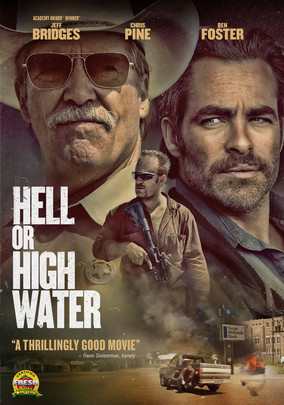
Hell or High Water-2016

Hell or High Water-2016

Director David Mackenzie

Starring Jeff Bridges, Chris Pine, Ben Foster

Scott’s Review #609

Reviewed January 16, 2017

Grade: B+

Hell or High Water (2016), a splendid tale of bank robbers chased by law enforcement officers in rural western Texas, is reminiscent of the Coen Brothers’ No Country for Old Men (2007) or a classic Sam Peckinpah film from the 1970s.

The film provides a good story with a morality tale, so the viewer is unsure who to root for—the good gr tad guys. This gives the film substance compared to the typical action-guy film, which is done to death.

Odd, quirky, minor characters are interspersed throughout the film, which adds comedy and a unique feel.

David Mackenzie directed the film, but up until now, it has been unknown to me.

Chris Pine and Ben Foster play Toby and Tanner, two brothers who embark on small-town bank robberies to save their recently deceased mother’s ranch.

Tanner (Foster) is the more seasoned criminal, having spent time in jail and being more volatile than his brother. Toby (Pine) is a family man with two kids and is more intelligent and sensible than his brother.

Two Texas Rangers, Marcus Hamilton (Bridges), a grizzled man weeks away from retirement, and his partner, Alberto Parker (Gil Birmingham), pursue them.

What I enjoyed most about this film is the authenticity of the setting.

The film was shot in New Mexico but meant to be in West Texas. This is believable, and the cinematography is gorgeous. The vastness of the land and the sticky desert heat are filmed very well.

Small-town Texas is portrayed as tiny characters introduced as townspeople, giving much credo to the film.

My favorites are the diner waitress-smitten with the handsome Toby (and her $200 tip), and t-bone waitress- grizzled and rude after forty-four years in the same place. Their sassy and abrasive behavior works and adds much to the film.

Dale Dickey is a treat in any film, and her turn as a bank employee is a joy.

How nice to see Chris Pine in a challenging role. His character is conflicted morally. Not wanting to hurt anyone, he struggles with the robberies and wants to do right by his kids and mother.

He is a decent man caught in uncertain circumstances, and Pine does an excellent job of portraying him, proving that the actor is becoming more than just a pretty face.

Bridges plays anger quite well, and it is nice to see the actor succeeding career-wise in his golden years. His Texas Ranger character is determined to uphold the law. Still, below the surface, he is more than a bit worried about his upcoming retirement, closing a chapter in his life that is undoubtedly important to him.

His relationship with his partner is jovial and buddy-like, but is there an underlying physical attraction between the men?

The film does not go there, but perhaps on a subconscious level, it is hinted at.

A fantastic scene laced with tension occurs near the film’s end when two of the main characters are killed. It is a stand-off of sorts atop a desert mountain ridge. One of the characters loses it, which results in a shoot-out and a shocking loss of life.

The scene is excellent in that it is a good, old-fashioned shoot ’em up done well.

Hell or High Water (2016) is a gritty action film with excellent elements, nice characterization, and clean fun. It’s a throwback to a long-time crime western without the standard stock characters.

This film is more layered than the traditional and intelligently written, achieving something unique.

Oscar Nominations: Best Picture, Best Supporting Actor-Jeff Bridges, Best Original Screenplay, Best Film Editing

Independent Spirit Award Nominations: 1 win-Best Supporting Male-Ben Foster (won), Best Screenplay, Best Editing

London Has Fallen-2016

London Has Fallen-2016

Director Babak Najafi

Starring Gerard Butler, Aaron Eckhart

Scott’s Review #608

Reviewed January 13, 2017

Grade: D

Save for many enjoyable, incredible London shots of mostly aerial views, London Has Fallen (2016) is a complete drivel of an experience.

The film’s attempt at being a red-blooded, patriotic film comes across as insulting and racist, with a machismo that is cringe-worthy.

The dialogue is terrible, and the “us against them” mantra has been done to death in film, mainly in the 1980s and 1990s. To quote one reviewer, “London Has Fallen is Donald Trump in film form.”

I don’t understand how the film convinced such a talented cast to appear (it must have been money), and several parts are so small (Robert Forster, Melissa Leo, Jackie Earle Haley) that they are nearly glorified extras.

The plot is painfully contrived, to say nothing of the ludicrous nature of the entire story.

To retaliate against a drone strike killing a Pakistani leader, terrorists take advantage of the death of the UK Prime Minister to assassinate several world leaders who have gravitated to London to attend funeral services.

The President of the United States (played by Aaron Eckhart) is naturally in attendance, and his murder is thwarted by top Secret Service official Mike Banning (Gerard Butler), our film’s hero.

The rest of the film involves the President and Mike running throughout London, attempting to catch the terrorists and bring them to justice while avoiding death.

The London locales are superb, but sadly, they mainly appear at the film’s beginning and end. The London Eye, the Thames River, the Underground, and various metro stations are featured.

The numerous London bridges also get some exposure.

The best part is how the film showcases London’s vastness, not just the up-close shots of historic places like Westminster Abbey or Buckingham Palace.

Undoubtedly, London is known for those gems, but the aerial views give the viewer an appreciation of all London offers.

I loved only this aspect of the film.

The supporting roles are abysmal, and given the more artistic parts they’ve received in the past; one imagines the actors cringing as they read the scripts for some of them.

I hesitate to think what possessed Leo, Forster, and Haley to accept meaningless roles save for a hefty paycheck. Each played a member of the President’s staff and was reduced mainly to reactionary shots.

As an ill-fated Secret Service Director, Angela Bassett and Radha Mitchell, as Banning’s weary-looking, pregnant wife, get more screen time but are treated to equally uninteresting roles.

Overall, the performances are forgettable. Respectable actors Butler and Eckhart merely phone in their vapid, dull lines, failing to make any of them believable.

The film never bothers with character development or anything beyond fundamental good and evil roles. Every character is either 100% good or 100% bad.

It is made crystal clear that the Americans are the good guys, and the foreigners (all Middle Eastern or Asian actors, of course) are simply the bad guys.

The motivations of the “bad guys” are never explained, and one cheesy line after another is written for the “good guys.”

During the finale, Banning professes that “we have been here for thousands of years and always will be” as he beats a lousy guy senselessly. Good grief. I’ve seen better dialogue on a network television drama.

And there is never any doubt about how the film will end. There is an American mole who has used his power to enable all of the assassinations, but when the mole is revealed, it is a character we have never seen before, so who cares?

Indeed, the film will soon be forgotten for its poor story, cliche-ridden script, and numerous stereotypes, but the fantastic London shots were inspiring and lovely.

I would have been happy with one hour and forty minutes of those.

Snakes on a Plane-2006

Snakes On A Plane-2006

Director David R. Ellis

Starring Samuel L. Jackson

Scott’s Review #607

Reviewed January 11, 2017

Grade: B

Snakes on a Plane, the surprise internet bruhaha sensation of 2006 has much to criticize.

The plot is inane, the acting way over the top, and the subject portrayed in such a dumb manner, I could see the results being horrific, but there is just something I enjoyed about the film too, as admittedly stupid as it is.

I simply could not help but sit back and enjoy it.

I enjoyed the setting of an airplane- trapped at 35, 000 feet, in peril, has always enamored me (think Airport disaster films of the 1970s).

The story involves a plot to release hundreds of deadly snakes on a passenger flight, to kill a witness to a murder trial.

Of course, innocent passengers are met with their dire fates as the cartoon-like characters are offed one by one, horror film style.

Sadly, the film did not live up to anticipated expectations, commercially or critically, and was considered somewhat of a dud after all of the hype, but I rather enjoyed it for what it was.

Hardly high art, it entertained me.

Tropic Thunder-2008

Tropic Thunder-2008

Director Ben Stiller

Starring Ben Stiller, Robert Downey, Jr.

Scott’s Review #593

Reviewed January 8, 2017

Grade: D-

Tropic Thunder (2008) was a ridiculous film that I found to be harsh, tedious, and very loud. Attempting to be a satire of sorts, it fails on almost every level.

The main issue was with the characters, who are abrasive and unlikable.

The only redeeming qualities are Robert Downey Jr.’s and Tom Cruise’s portrayals, though they both play idiotic characters.

The plot is something of an ode to 1979’s Apocalypse Now, in that the plot throws back to the Vietnam war.

A group of narcissistic actors is filming a Vietnam memoir on location in the jungles of Southeast Asia when they are abandoned and forced to fend for themselves amid a group of drug lords.

The film’s attempt at humor fell flat for me. It just seemed like a group of crazed guys running around the jungle acting wild and the film held little point for me.

Cruise’s part was interesting but way too small.

Directed by, and starring Ben Stiller, who should stick to acting (if that).

How Downey, Jr. scored an Oscar nomination for this drivel is beyond me- despite his acting being one of the better efforts in the film.

Oscar Nominations: Best Supporting Actor-Robert Downey Jr.

Sherlock Holmes-2009

Sherlock Holmes-2009

Director Guy Ritchie

Starring Robert Downey, Jr., Jude Law

Scott’s Review #575

Reviewed December 31, 2016

Grade: B-

From a technical perspective. Sherlock Holmes, a 2009 attempt at revitalizing the famous detective story into something of a modern franchise for the masses, achieves a measure of success in style and editing but ultimately fails in character development or story.

Traditionalist fans of the detective and his partner will undoubtedly be displeased with this film.

This film is very well made, with snappy editing, fast-paced wit, and attempts at humor, but it does not work all so well when put together as a film.

The re-birth of Sherlock Holmes was made to entice modern audiences.

Director Guy Ritchie even brings in superhero elements to Sherlock Holmes- suddenly he can kick ass as well as solve a complex mystery, which is so far removed from the original character.

Downey Jr. and Jude Law as Sherlock Holmes and his partner Watson, have some humorous moments, but the chemistry is not wholly there-it appears they are both trying too hard to create some magic where there is none.

All in all, though a well-made, entertaining two hours well spent, the story and characterization ultimately do not work.

Downey Jr. gives a great performance and shows why he is one of today’s most versatile actors, but this cannot ultimately make the entire film a success.

Oscar Nominations: Best Original Score, Best Art Direction

How to Train Your Dragon-2010

How to Train Your Dragon-2010

Director Dean DeBlois, Chris Chambers

Starring Gerard Butler, America Ferrera

Scott’s Review #537

70109893

Reviewed December 5, 2016

Grade: B-

How to Train Your Dragon is a  decent, but less than spectacular, animated film from 2010.

Undoubtedly targeted toward youngsters, it contains G-rated elements and I may have enjoyed it more if I were nine years old.

The film is loosely based on the British book series of the same name.

A subsequent sequel has commenced in 2014.

From a story perspective, the film does tell a story with a nice message. Young Hiccup is a teenage Viking on the cusp of becoming a man. As a ritual, he is expected to kill a dragon to prove his worth as a warrior to his tribe.

When put to the test, Hiccup finds that instead of desiring to kill the dragon, he wants to befriend it. Of course, the traditional Vikings want no part of any unity between the tribe and dragons, who are long-time enemies.

Mixed in with the main story is the inevitable love story between Hiccup and Astrid, a tough Viking girl.

There are way too many endless aerial battles between the tamed and vicious dragons, that it begins to feel more like an effort to fill time rather than furthering the main plot in any way.

This film has a nice message of kindness and togetherness but is very predictable and does not take any risks. There is nothing wrong with it, and animated fans may look at it differently, but to me, How to Train Your Dragon (2010) is quite run-of-the-mill.

Oscar Nominations: Best Animated Feature Film, Best Original Score

Salt-2010

Salt-2010

Director Phillip Noyce

Starring Angelina Jolie

Scott’s Review #522

70118402

Reviewed November 20, 2016

Grade: B+

Salt (2010) is a very good, fast-paced, political thriller starring Angelina Jolie as a woman accused of being a Russian sleeper agent, who must go on the run to clear her name, all the while being chased by officials attempting to accost her.

The film offers nothing that has not been seen countless times before in movies like this, but seeing Jolie in a role typically played by a male (the role was originally written for Tom Cruise), is cool and makes the film unique in itself.

She is great in the role.

There are some twists and surprises along the way that keep the viewer on edge- numerous action and car chase scenes abound and will keep the action flick viewer quite pleased.

It is quite fast-paced and very big budget.

On the downside, I couldn’t help but think are they making movies about the United States vs. Russia again?

They are, but I could not help but enjoy it for what it was.

Oscar Nominations: Best Sound Mixing

Machete-2010

Machete-2010

Director Ethan Maniquis, Robert Rodriguez

Starring Danny Trejo, Robert De Niro, Jessica Alba

Scott’s Review #501

70125125

Reviewed October 28, 2016

Grade: B

Machete (2010) is a clear, fun homage to exploitation films of the 1970’s movies, directed by Robert Rodriguez (a protege of Quentin Tarantino) and quite heavily influenced by his mentor.

It very much resembles a Tarantino film with the comic, over-the-top elements, and the violence, but is somewhat less compelling in the story department, and lacks the crisp, rich storytelling.

It tells the story of a Mexican ex-Federale (named Machete) involved in a plot to kill a corrupt United States Senator (played by Robert De Niro).

He attempts to flee Mexico for Texas, is shot, and spends the remainder of the film vowing revenge on his assailants.

Machete contains many celebrity cameos and is fun to watch- in a light way. The film is not intended to be looked upon earnestly.

For the interested, you also get to see Lindsay Lohan topless.

The film is a fun, violent, popcorn flick, with a nice political message, but if interested in these types of movies, rent Grindhouse: Planet Terror (2007), which is a better experience.

End of Watch-2012

End of Watch-2012

Director David Ayer

Starring Jake Gyllenhaal, Michael Pena

Scott’s Review #447

70235384

Reviewed July 8, 2016

Grade: B+

End of Watch (2012) impressed me much more than I was expecting. What I expected was a safe, by-the-numbers, buddy/action movie, since it was rather promoted as such from the previews.

It was worlds better than that and threw me for a loop, in a good way.

The film stars Jake Gyllenhaal and Michael Pena as two detectives patrolling the streets of grizzled central Los Angeles, which are riddled with drug and gang violence.

The viewer is brought along for the ride as we see a day in the life if you will, of their cop beat.

The one knock I’ll give the film is the implausibility factor of a cop videotaping everything. This seems silly and unrealistic.  Wouldn’t he be incredibly distracted? That said, some of the filmings were amazing, including the opening sequence.

The film contains a realistic, grittiness to it, and the Los Angeles locale is very effective.

End of Watch (2012) feels painstakingly real, is not always happy, and the dynamic between Jake Gyllenhaal and Michael Pena is evident and their friendship feels real.

The movie feels like a day in the life of an LA cop, sparing no edgy detail, and does not gloss over the lifestyle as many cop films choose to do.

Independent Spirit Award Nominations: Best Supporting Male-Michael Pena, Best Cinematography

The Dark Knight Rises-2012

The Dark Knight Rises-2012

Director Christopher Nolan

Starring Christian Bale, Tom Hardy

Scott’s Review #431

70213514

Reviewed June 23, 2016

Grade: C+

The Dark Knight Rises (2012) is a sequel to the exceptional The Dark Knight from 2008 and, unfortunately,  is a complete letdown, especially compared to that film.

Perhaps my expectations were too lofty- it is a sequel after all, and sequels, typically disappoint.

To be fair, the film looks great and has a fast-paced, modern feel- slick and action-packed. A summer popcorn film.

The story, though, is uninteresting- the villains are not compelling, which is a major miss in a film like this where the villains are crucial.

Tom Hardy as Bane is miscast. Anne Hathaway’s Catwoman is underdeveloped and one-dimensional. We never really know much about what makes these characters tick.

I did enjoy the twist at the end involving Marion Cotillard, which impressed me and I did not see coming throughout the story.

I might have rated The Dark Knight Rises even lower than a C+ had it not been for the group of top-notch actors appearing in the film.

Having loved the most recent Batman film, I expected more and received less.

Spectre-2015

Spectre-2015

Director Sam Mendes

Starring Daniel Craig, Christoph Waltz

Scott’s Review #401

80056799

Reviewed May 5, 2016

Grade: B+

A modern treat for James Bond fans, Spectre (2015) is a slick, costly production sure to please die-hard lovers of the storied franchise.

It contains a rich history and nods to recent installments, wrapping the story arc up, a fantastic villain, and fast-paced, compelling story-telling.

It lacks an interesting lead Bond girl, a quality that detracts from the film, and what is a must for the cherished franchise.

This is the only major flaw in an otherwise fantastic film.  In typical Bond fashion, his adventures take him to London, Rome, Mexico City, Austria, and Morocco.

Speeding along in what is now the twenty-fourth Bond film, and still feeling fresh and relevant, Spectre commences where its predecessor, Skyfall, left off, mainly hot on the heels of M’s (Judi Dench’s) shocking death.

How wonderful to see her again, albeit in a videotaped message crucial to the central plot.

The new M is a male character again and portrayed by Ralph Fiennes. In the film’s sub-plot, a new character, C, comes into play as the head of the Joint Intelligence Service, who deems the 00 section outdated.

The focal point is Bond’s avenging of the former M’s death by taking down Spectre, an organization not seen in a Bond film since 1971’s Diamonds Are Forever, but once again a strong presence.

The opening sequence in Mexico City kicks off the energy of the film.

Fast-paced, and with an awesome helicopter chase/fight sequence, it is a long sequence that thrills. We watch, engaged, as it swirls and tumbles mid-air, while hundreds of spectators in a large outdoor square flee for safety.

The film then forays into the inevitable Bond song, “Writing’s On The Wall”, this time written and performed by Sam Smith.  This particular song has received mixed reviews, but I am fond of it.

This leaves the audience geared up for a wild adventure to come.

The return of the crime organization, Spectre, to the story brings a rich history and is the most interesting part. We have a rooting value since it is familiarity.

Even more pleasing is the return of Bond’s arch-enemy Ernst Stavro Blofeld, known more forcefully as “Number 1”, who has been played by such legendary actors as Donald Pleasance, Telly Savalas, and Max Von Sydow.

In Spectre, Christoph Waltz takes over the role and a major win. Waltz, a tremendous actor, plays Blofeld in a sly, wicked manner,  taunting, yet with some comedic elements.

In a compelling scene (and the first one containing Waltz), James Bond appears, hidden, at a Spectre summit.  He recoils as he recognizes the shadowed Blofeld, realizing the detrimental repercussions this will mean.

I only hope that in subsequent Bond films, Waltz returns.

Let’s discuss the Bond girls in the film.

Ironically, the small role featuring the oldest Bond girl in franchise history (aged fifty and played by the gorgeous Monica Bellucci) is more compelling than the lead Bond girl, Dr. Madeleine Swann, played by Lea Seydoux.

As Lucia Sciarra, widow of the Italian crime lord, Sciarra, there is more chemistry between Daniel Craig and Bellucci than between Craig and Seydoux.

I would have much rather seen Sciarra as the primary focus, but she is shamefully underused, appearing in two scenes only. Seydoux seems to lack energy and I noticed zero chemistry between her and Craig.

I am not sold on the new Moneypenny either, Bond’s labored sidekick and always suggested one-sided love interest, in earlier films it used to be a fun dynamic. She was a secretary, older, and their flirtation was charming, light, and fun. She was almost a mother figure to him.

There are no flirtation or romantic hints as the character has been modernized to fit the twenty-first century.

Despite this character’s misses, the film is exceptionally well-made with loads of action. Sometimes Bond films hold up well, other times they do not.

Time will tell what fate holds for Spectre (2015), but my hunch is that it will age well.

Oscar Nominations: 1 win-Best Song-“Writing’s on the Wall” (won)

Spy-2015

Spy-2015

Director Paul Feig

Starring Melissa McCarthy, Jason Statham

Scott’s Review #386

80027379

Reviewed March 20, 2016

Grade: C+

Spy is a 2015 comedy spy spoof starring funny lady Melissa McCarthy as a loser desk CIA analyst suddenly thrown into the field and assigned to rescue a missing agent with whom she is also in love.

Carrying the film in every way, McCarthy is funny and adds to an otherwise formulaic, by-numbers, comedy.

As, admittedly, the “action-comedy” genre is not my favorite, I have seen much worse than Spy, and the premise is quite nice, but the second half of the film sinks into the ridiculous and is very loud and overly long.

McCarthy plays Susan Cooper, a frumpy forty-year-old woman with a decent job as a CIA analyst (she tracks the field agents’ cameras and warns them of impending peril), an important job, but is deemed dispensable and a loser by the higher-ups at her job, with more important duties.

She is single, overweight, and lonely, pining after her sophisticated partner Bradley Fine (Jude Law), a field agent and stylish James Bond-type.  After a mishap with Bradley thought dead, Susan goes undercover in France, Rome, and Budapest to solve the case since she will be unnoticed.

Spy is a film with a star that completely carries the film.  Being a big fan of McCarthy’s and enjoying her performance in whatever she appears in (comedy or drama), this film needs her charisma and comic timing.

Spy contains a few laugh-out-loud moments, especially when McCarthy is forced to take on the persona of one loser after another- a divorcee with multiple cats and a wardrobe to cringe over-throw in a 1980s perm and got a great SNL-type moment.

The film itself reminds me of a long SNL skit. When McCarthy delivers her one-liners they connect and amuse.

An apparent homage to spy films and James Bond films, Spy seems closer to an Austin Powers film as it goes for more silliness, but not quite as over the top.

Still, the European locales offered added elements of Bond films pleasantly. McCarthy as an apparent female James Bond is also cute.

A noticeable negative is the unnecessary two-hour running time. With a genre of this nature, a ninety to one-hundred-minute running time is all that is necessary, and any more than that the jokes wane, become redundant, and usually go into the ridiculous.

Another problem with Spy is the supporting characters. A well-known cast including Rose Byrne, Allison Janney, Jason Statham,  and Bobby Cannavale, each of these actors are cast in cartoon-like, one-note roles.

Cannavale and Byrne are the villains (Sergio and Rayna) in the plot and they play their roles in a one-dimensional way,  as evil as possible, but perhaps also over-acting the parts.

This could be the fault of the director or simply what is accepted in the genre that this is. Janney-  as the tough-as-nails CIA director and Statham as the dumb, temperamental, field agent also overplay their roles.

Why are all of these characters loud, unpleasant, insulting, or all of the above? The answer is it might allow better comedy to have caricatures instead of characters, but that is a debate for another time.

On the other hand, Miranda Hart as McCarthy’s sidekick Nancy, a very tall, awkward woman, and Susan’s best friend is great and shares equally in the comic success that McCarthy brings.

Their chemistry is evident and a recommended second pairing would be worth exploring. Unlike the other characters, I felt myself rooting for her and wished her a love interest, though the 50 Cent’s romantic introduction was strange.

The plot is more or less trivial and unimportant in a film like this. Rationally speaking, almost everything that transpires would never happen in real life, but alas, this is the movie, so one must suspend disbelief big time.

Spy is escapist fare to the max.

A hot mess if not for the wit and comic timing that McCarthy brings, Spy (2015) has an interesting premise but doesn’t deliver anything more than the silly formula that has existed for decades in the film comedy world.

I finished the film with mixed emotions.

The Revenant-2015

The Revenant-2015

Director Alejandro G. Iñárritu

Starring Leonardo DiCaprio, Tom Hardy

Scott’s Review #371

80064516

Reviewed January 27, 2016

Grade: A

The Revenant is a fantastic 2015 film filled with intensity, great visual camera work/direction, and the acting talents of one of modern cinema’s dynamic performers Leonardo DiCaprio.

He shines every minute he is on-screen.

Almost all of the filming takes place outdoors (the American frontier period), and is a revenge tale, only adding to the excitement and beauty of the film.

The film is set in the 1820s, and we are immediately introduced to a large party of hunters and trappers in remote Wyoming as the film opens.

Right off the bat, I was struck by the picturesque scenery.

We are treated to a compelling (and bloody) battle between the trappers and a tribe of Native American Indians. The Louisiana Purchase has just passed, leading to tensions between various parties causing conflict and blood to spill.

The hunters are decimated so the remaining group must flee on foot, hoping to return to safety hundreds of miles away. The main character, Glass (DiCaprio), later receives a terrible injury and the main crux of the story develops as we embark on a tale of his desperation to survive and exact revenge on the men responsible for leaving him to die.

The film is a lesson in endurance. Glass is arguably put through almost every punishment imaginable and we wonder what more he can endure.

The film belongs to two actors. Dicaprio, and Tom Hardy as the villainous John Fitzgerald, a hunter with a major rivalry with Glass.

The film parlays into a revenge tale between the two characters.

DiCaprio is a gem in this film, not only is he compelling from a physical standpoint, he also looks broken, battered, and bruised, but DiCaprio gives a performance that I am fond of.

He acts non-verbally.

In one crucial scene, Glass is unable to move or speak as a violent act is committed. He is desperate yet helpless. The range of emotions portrayed by DiCaprio is astounding. The pain, hurt, and frustration are evident on his face and we sympathize greatly.

This is a powerful performance by DiCaprio.

Tom Hardy is compelling in his own right as the scoundrel he portrays. We despise this character and all his dirty deeds and Hardy successfully pours all his energy into this grizzled role.

Hardy, quite handsome in real life, is transformed into a partially scalped, dirty man. His fate at the end of the film is a clever aspect of The Revenant that helps make it not a typical run-of-the-mill western, but something so much more.

The infamous “bear scene” is second to none. How this compelling scene was shot is beyond me, but the result is a realism I have seldom witnessed in film. The scene is so prolonged and violent that one wishes it would conclude quickly.

A surprise comes that rivals any horror film.

Directed by Alejandro G. Iñárritu he follows a vastly different type of film (Birdman-2013) and does a wonderful job.

The Revenant is arguably a “guy’s movie”.

There are almost no women featured and the ones that are not treated well, which is unfortunate, however, sadly likely true of the times.

Interesting to note though, is Inarritu decided to have a female victim enact revenge on her abuser in a satisfying (though squeamish moment for the male viewer).

I found The Revenant to have definite left-wing leanings. The age-old controversy of the white man taking the Indian’s land is explored and the film has a way of bringing this up more than once as well as not making the Indian tribes “bad”, but rather sympathetic.

Especially since the character of Glass marries an Indian woman and bears a son with her.

Gorgeous cinematography morphed with a wonderful and intriguing story and peppered with brutality. The Revenant (2015) succeeds on every level and sets an important precedent for a film about perseverance in the face of hopelessness.

Oscar Nominations: 3 wins-Best Picture, Best Director-Alejandro G. Iñárritu (won), Best Actor-Leonardo DiCaprio (won), Best Supporting Actor-Tom Hardy, Best Sound Editing, Best Sound Mixing, Best Production Design, Best Cinematography (won), Best Makeup and Hairstyling, Best Costume Design, Best Film Editing, Best Visual Effects