Category Archives: Yaphet Kotto

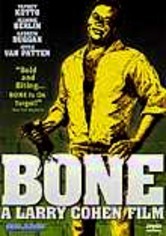
Bone-1972

Bone-1972

Director Larry Cohen

Starring Yaphet Kotto, Andrew Duggan, Joyce Van Patten

Scott’s Review #1,121
Reviewed March 12, 2021

Grade: B+

It’s tough to review a film like Bone (1972) because it’s a tough film to categorize. Is it a satire, or does it dissect racism and classism?

The truth is, it does all of the above and offers a bizarre, jagged cinematic experience that will leave the viewer perplexed, scratching their head, and ruminating about it long after the credits roll.

I was originally expecting Bone to be a 1970s exploitation film, but it’s not that at all.

One lazy sunny day, in Los Angeles’s illustrious Beverly Hills, local salesman Bill (Andrew Duggan) and his wife Bernadette (Joyce Van Patten) bicker beside their luscious pool.

They are horrified when they realize a filthy rat has become stuck in the filter. This provides some symbolism as the film chugs along. When they rush to call the exterminator, a threatening black man named Bone (Yaphet Kotto) suddenly appears.

Frightened, they first assume he is with the exterminator company, but when he terrorizes them with the now-dead rat, they offer him money to leave. While they search for banking materials, Bone realizes that Bernadette and Bill are not as wealthy as their appearances suggest.

Bone sends Bill to the bank to withdraw cash, or else he will rape and beat Bernadette. At the same time, Bernadette becomes suspicious of Bill’s financial intentions.

There are moments in the film that left me feeling like I was watching something bizarre or nonsensical. I’m still not sure what the opening scene of Bill filming a television commercial featuring cars involved in wrecks with dead bodies inside meant.

The images are bloody and horrific- artistic, but unclear is the message.

The conclusion is also unclear. When one character appears to murder another, a third character vanishes. Naming the characters would ruin the story, but suffice it to say that one may wonder whether the entire film was a dream.

The realization that Bill and Bernadette make individually is that they don’t care for one another and would happily leave the other to die. We know little about their life before, but assume, while rich, they live a life of boredom, each yearning for some spice.

How many nights does Bernadette sit alone by the pool, drowning her sorrows in Chardonnay?

Yaphet Kotto is wonderfully cast. Soon to be well-known as a James Bond villain in Live and Let Die (1973), his character in Bone starts as menacing and slowly becomes sympathetic, almost relatable.

When he reveals to Bernadette that he cannot maintain an erection unless he is raping someone, the thought is sickening, but he also appears vulnerable and feeble.

He gradually becomes my favorite character of the three, whereas in a conventional film, he would be the one not to root for.

Bill’s experiences are a mind-fuck.

Tasked with withdrawing money from his bank to save his wife, he thinks why should I? He meets a gregarious woman at a bar, played by Brett Somers, and a chatty young woman online at the bank, who beds him and makes him a salted steak.

They frolic away the afternoon as, for all he knows, his wife could be dead!

The issues of classism and racism are the meat and potatoes of Bone, and where the film succeeds. We feel the pain of Bone when he, as a black man, must stand out like a sore thumb in swanky Beverly Hills.

He has had to struggle for every crumb he has gotten, while spoiled brats like Bill and Bernadette get everything and work half as hard. It’s not fair, and the audience is meant to empathize with him.

Larry Cohen, well-known for the low-budget campy circuit, creates a perplexing project with added black comedy. The rat, the chatty girl, the X-Ray lady, everyone in the film is wacko!

Bone (1972) is a weird film that I don’t know what to make of.  I took it as a glimpse into social issues, and I loved the food references, the steak, and eggs, mostly.

The plot and conclusion will leave you wondering, but I guess that’s better than forgetting the film five minutes later. I’m still trying to make heads or tails of it.
Live and Let Die-1973

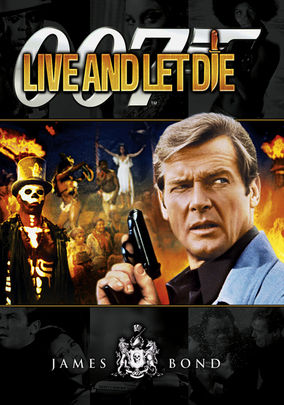
Live and Let Die-1973

Director Guy Hamilton

Starring Roger Moore, Jane Seymour, Yaphet Kotto

Scott’s Review #646

Reviewed May 25, 2017

Grade: A-

When Live and Let Die was released in 1973, it began a new chapter in the James Bond film franchise with the introduction of a new Bond.

Sean Connery refused to do any more Bond pictures, and Roger Moore was crowned the new film hero and successfully made the role his own during his tenure.

My personal favorite Bond from top to bottom- I enjoyed the wry humor Moore added- he makes Live and Let Die more than it otherwise might have been with a less charismatic actor.

The story and the subsequent elements of the film have issues, but this installment holds a soft spot for me because it was one of my first exposures to the mountainous franchise that is Bond, and I adore the mid-1970s period.

Bond (Moore) is summoned to duty by his leader, M, after three MI6 agents are simultaneously killed in the Caribbean, New Orleans, and at the United Nations in New York City. Bond is then tasked with figuring out who killed these agents and how the deaths are connected.

The adventure takes Bond from Harlem to an unnamed island in the Caribbean, and back to the bayous of southern Louisiana as he tangles with a heroin drug lord, Dr. Kananda.

Bond’s main love interest in the film is the virginal tarot card reader, Solitaire, played by Jane Seymour.

Live and Let Die is a breakthrough in some ways, though the film admittedly contains both positives and negatives worth discussing.

Since the film was made in 1973, following a successful run of “Blaxploitation” films like 1971’s Shaft and 1972’s Super Fly, it has been influenced by those films’ style (for better or worse).

This means that all of the villains are black, from the main villain, Kananga, to various henchmen and even background criminals, growing the massive amounts of heroin shipped to the United States for distribution.

Having such representation among a minority group is fantastic and feels cutting edge, but stereotypes such as derogatory racial epithets, a pimpmobile, and the addition of weird voodoo exist.

Another major flaw in the film, and despite my overall warmth for Live and Let Die, is the goofiness it takes on towards the end.

At a certain point, the film feels like a different film from what it starts as, which becomes quite jarring. The introduction of Sheriff J.W. Pepper during a Louisiana chase scene turns the film into more of a cheesy Dukes of Hazzard episode, with bumbling law enforcement officials, rather than a quality film, and the southern stereotypes run rampant.

Why does a throwaway scene of a speedboat racing through an outdoor wedding feature all high society white folks with nary a black character existing other than as servants?

Some diversity in this scene would have been welcome, given that the film goes out of its way to feature black characters.

Still, many positives do exist. Live and Let Die has the honor of featuring the first-ever black Bond girl, the CIA double agent Rosie Carver, who, sadly, meets a grisly end far too soon.

Gloria Hendry’s chemistry with Roger Moore is readily apparent, though the film chooses to make the character inept rather than a true equal. The smoldering sex scenes between the duo are wonderful and groundbreaking to watch, so the film gets major props for pushing the envelope in this way.

Memorable is the terrific title theme song, “Live and Let Die”, by Paul McCartney and Wings. The success of this hit song, especially decades later, does wonders to elevate the film and keep it relevant in pop culture.

Also great to see are the location sequences and good action car chase scenes along the West Side Highway in New York City and into Harlem.

A treat for this retro fan is the inclusion of early 1970s Chevrolet Impalas and Chevy Novas throughout the entire feature film- was Chevy a financial backer?

Classic cars are a major inclusion in Live and Let Die, which, as a current-day viewer, is a cool treat and quite retro.

In terms of the primary villain and primary Bond girl, the film misses. Jane Seymour is a dud as Solitaire, a character that really should have been played by a black actress. Seymour and Moore have zero chemistry, and her character is weak and simpering, lacking any backbone.

Similarly, Yaphet Kotto as Dr. Kananga seems miscast, with no real qualities that make him devious or dangerous, and his inevitable swan song underwhelms.

Live and Let Die (1973) is not the greatest in the Bond collection and suffers from some problematic, now-dated aspects, racial issues, and a silly overtone, but, perhaps more so as a terrific childhood memory, I hold a particular fondness toward this film despite many negatives.

Oscar Nominations: Best Song-“Live and Let Die”