Tag Archives: Independent

Spotlight-2015

Spotlight-2015

Director Thomas McCarthy

Starring Michael Keaton, Mark Ruffalo, Rachel McAdams

Scott’s Review #294

80061341

Reviewed December 9, 2015

Grade: B+

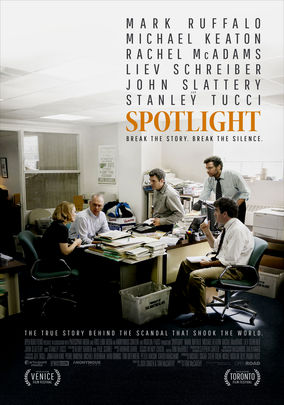
Spotlight (2015) is a film with an important story to tell.

A telling of true events that occurred within the Catholic Archdiocese for ages, Spotlight’s focus is specifically on the Boston scandals, as a team of reporters working for the Boston Globe uncovered and exposed a multitude of child molestation cases committed by priests.

They were subsequently covered up, leaving victims paid off to keep quiet. The number of proven cases in Boston alone is staggering.

Starring are a plethora of talents including Michael Keaton, Mark Ruffalo, and Rachel McAdams, who lead the pack.

They make up the “Spotlight” team at the newspaper,  an investigative unit that works on special stories as they arise.

Their new boss, Marty Baron (ironically a Jewish man), played compellingly by Liev Schrieber, takes over as head of the department. He quizzically asks why the story is not already a priority. Suddenly it is a hot-burner issue and the film delves into an investigation to uncover the facts.

Spotlight is a minimalist film. There is nothing cinematically unique or razzle-dazzle about it, but somehow that is okay.

In some aspects, the film reminds me of the 1975 thriller All The Presidents Men, starring Dustin Hoffman.

For instance, the bleak, bare news rooms-sterile in their look, are similar- cubicle after cubicle,  harsh lighting, and generic conference rooms.

This is the filmmaker’s intent.

Also, the fast, energetic pacing, successfully emitting the tight deadlines newspaper folks face, transfers perfectly on film.

The sexual abuse scandal is a cold, harsh reality and the film introduces several victims, who, now as adults, are forever scarred. Some attend support groups, some take drugs, one is sadly not “all there”. Another, now a gay man, was singled out by a priest during a vulnerable period in the then-young boy’s, life.

It is a heartbreaking reality that many victims in the film are based on real cases.

Let’s focus on Schrieber’s character for a minute.  He gives such an understated yet compelling performance there is a risk it will wind up being overlooked. He calmly, yet passionately initiates the case. It is not a showy performance and subdued but a compelling one if enough attention is paid to it. He is a standout.

Unfortunately, the film does not delve much into the defense (if any) of the Catholic church. Did they do anything but deny the allegations? Why were the victims paid off? Not much is noted from the church’s point of view.

In real life, the Catholic church did hide the abuse that transpired for decades.

A slight negative is that the film does not delve into the characters’ personal lives.

Michael Keaton’s character, Robby Robinson, is arguably the lead character, spearheading the case,  though very little is known about him.

Is he married? happily? Yes, he is a workaholic, but what else?

Ruffalo’s Michael Rezendes is separated from his wife, but little is known to the reasons.

Finally, McAdam’s Sacha is probably the most fleshed-out. She is happily married, close with her religious grandmother, and hurt by the scandal. But we do not know her in-depth either.

I found myself wanting to know more about these people.

All in all, Spotlight (2015) is a superior film deserving of the recognition it is receiving. Intense, gritty, and filled with honesty, it is a story that needed to be told and has been told well.

Oscar Nominations: 2 wins-Best Picture (won), Best Director-Tom McCarthy, Best Supporting Actor-Mark Ruffalo, Best Supporting Actress-Rachel McAdams, Best Original Screenplay (won), Best Film Editing

Independent Spirit Award Nominations: 5 wins-Best Feature (won), Best Director-Tom McCarthy (won), Best Screenplay (won), Best Editing (won), Robert Altman Award (won)

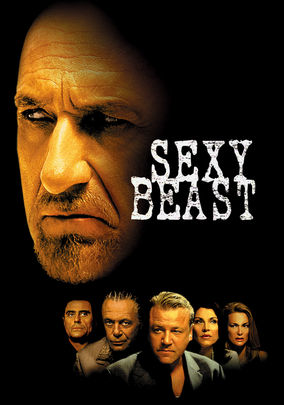
Sexy Beast-2001

Sexy Beast-2001

Director Jonathan Glazer

Starring Ray Winstone, Ben Kingsley

Scott’s Review #286

60020863

Reviewed November 13, 2015

Grade: B+

Sexy Beast is an interesting little indie gem that has garnered quite a cult following, deservedly so,  since the year of its release- 2001 and that I have recently viewed for the first time.

In large part, the film belongs to Ben Kingsley as he gives a bravura, and frightening,  performance as a crime lord attempting to convince a retired hitman, now sworn to the straight and narrow, to resurrect his career for one last heist.

The other principal characters are wonderful in their own right, as the film successfully mixes elements of Quentin Tarantino with Ocean’s Eleven- bank heist meets quirkiness, with smart and witty dialogue sprinkled in.

Gary Dove is happily retired and living a life of contentment with his ex-porn star wife, Deedee, and best friends Aitch and Jackie.  Having all been involved in “the biz”, they are long since removed from their respective careers. They now enjoy evening parties of wine and martinis, and days relaxing by the pool in their Spanish villas.

One day, a former criminal associate, Don Logan (Kingsley), who is also a sociopath, arrives to disrupt their peaceful lives and coordinate a bank heist in London, in hopes of luring Gary into the game once again.

As Gary and company nervously decide to decline Don Logan’s offer to participate in his sinister plan, a wonderful and important scene occurs early in the film. The quartet sits around the dinner table at a swanky Spanish restaurant anticipating a scrumptious meal.

Jackie reveals the news that Don has contacted her and the tone of the scene immediately changes to one of dread. All of them both fear and despise Logan.

They agonize over this sudden disruption to their lives and we, the audience, fear Don Logan before he ever appears on-screen. What fantastic story-telling.

Kingsley portrays a menacing character and brilliantly so. The character contains frightening brutality bubbling beneath his normally calm demeanor, which makes the viewer shudder when he appears on-screen.

Lest we forget, Ian McShane also gives a nuanced performance as Teddy Bass, Logan’s right-hand man, and wise businessman.

The cat and mouse scene towards the end as Teddy and Gary have an important discussion in a car is both chilling and important to the plot of the film. As Teddy slowly figured out certain events I was left intensely anticipating his reactions.

The film introduces an intriguing sub-plot involving Don’s long-ago fling with Jackie and subsequent love for her which adds layers to the plot and the dynamic and tension between Don and Gary.

Upon finishing the film, I loved the effect of foreshadowing that the film contains. I found myself rewinding the events in my mind, pleasurably so.  From the pool to the young Hispanic kid to the thunderous boulder- all of these elements were crucial to the conclusion and fit like a puzzle.

A dark comedy of sorts, I chuckled after the film as the final reveal involving a double-heart insignia and a pool that gives comeuppance to the villain and pleases the viewer.

Having alluded to viewing Sexy Beast (2001) over the years, I am glad that I finally found the time to witness a darkly comical gem that, admittedly, may take repeated viewings to absorb and therefore fully “get”, and I look forward to doing just that.

Oscar Nominations: Best Supporting Actor-Ben Kingsley

Independent Spirit Award Nominations: Best Foreign Film

It Felt Like Love-2013

It Felt Like Love-2013

Director Eliza Hittman

Starring Gina Piersanti

Scott’s Review #283

70268905

Reviewed October 17, 2015

Grade: B

It Felt Like Love is a small, independent film from 2013, that garnered two Independent Spirit awards for its efforts.

A coming of age story encompassing a vulnerable and naïve fourteen-year-old girl, aware of her budding sexuality and developing a crush on an older rebellious boy.

Quiet and subdued, the film tells an honest story of a young girl’s emotional struggles surrounding jealousy, loneliness, and fitting in.

Lila is a typical teenager living in New York City in what appears to be a blue-collar area of Brooklyn. Lila emulates her seemingly more mature (she is turning sixteen), and much more sexually experienced best friend, Chiara.

Never without a boyfriend, and very popular, Chiara gains the attention of almost every boy she is around.

One day on the beach, a handsome friend of Chiara’s, named Sammy, passes by, when Chiara describes him as “sleeping with anyone”, Lila becomes fixated on him. As she pursues him relentlessly, she puts herself in precarious situations and gets in way over her head.

Throughout this drama, Lila’s best male friend and neighbor, a child-like and innocent-looking kid contrasts perfectly with the rugged, older Sammy.

Lila has two “men” in her life, who could not be further opposites. The neighbor kid represents her youth, and Sammy, her adulthood, and she is stuck somewhere in the middle, wrestling between the two stages of her life.

The film is the debut of acclaimed director, Eliza Hittman, who weaves an interesting and true-to-life premise. The feelings and emotions of a fourteen-year-old girl are powerful and often involve risk-taking without any thoughts of repercussion.

Liza is extremely vulnerable as anyone her age is, especially since the film reveals that she has recently lost her mother to breast cancer. Her father is a caring yet no-nonsense type and is written well- as a typical blue-collar father would act-.

The standout to me is the actress who plays Lila, Gina Piersanti. What a marvel! The youngster brilliantly portrays a range of emotions- gloominess, insecurity, and annoyance.

She is insecure but intelligent and savvy for her age. Her obsession for Sammy, clearly from the wrong side of the tracks, is dangerous, as he smokes pot regularly, parties, and works in a pool hall.

He ultimately is not for her and I think Lila knows this deep down. But at her age, she is craving attention and sexually blooming.

All of the actors in the film are newcomers and do a fantastic job of relaying honesty. Lila’s motivations are not always clear, but then again, she is a teenager- moods and motivations change with the weather.

During one powerful scene, Lila hangs out at Sammy’s apartment (where she usually can be found and is perceived as a pest). Sammy and his two friends are smoking pot and watching basketball on television.

Somehow, the subject matter turns to oral sex. As Sammy’s friends eagerly accept Lila’s awkward offer to pleasure them, Sammy rebuffs her advances and says that his “privates” do not like her. This seems to bring acceptance to Lila to leave him alone.

The audience hopes she musters her self-esteem and goes on with her life. The showing of full-frontal male nudity was surprising to me- very seldom is this shown in American cinema.

Interestingly, we never actually see Lila engage in any sexual activity- the point of the film is that she wants to desperately, but we cringe as we fear for the worst in each dangerous sexual encounter she experiences.

Perhaps it could have been further developed or fleshed out, but, It Felt Like Love (2013) is a truthful, quiet film with powerful acting and writing from new talent sure to be around for years to come, with the wonderful skills they possess.

Independent Spirit Award Nominations: Best Cinematography

Grandma-2015

Grandma-2015

Director Paul Weitz

Starring Lily Tomlin, Marcia Gay Harden

Scott’s Review #275

Grandma_Movie_Poster

Reviewed September 21, 2015

Grade: B+

Grandma (2015) is clearly and deservedly, a showcase for the talented and interesting legendary Hollywood actress Lily Tomlin.

Years (twenty-seven to be precise) since she has had a starring turn in a film, the role of Grandma is custom-made for Tomlin, with the character’s sarcasm, wit, and downright bluntness emerging to the forefront.

The film is labeled a comedy/drama, which it is. It’s themed around a heavy topic of abortion and runs the risk of offending pro-life individuals, as the film undoubtedly contains a pro-choice slant.

Ellie (Tomlin) is a poet and former college professor in her seventies living in California. She is a lesbian and is mourning the recent death of her long-time partner. She has recently been dating a lovely young woman named Olivia (played by Judy Greer), whom she unceremoniously, and cruelly dumps, referring to Olivia as little more than a footnote in her life.

Afterward, Ellie breaks down in tears of guilt while showering.

One day her granddaughter, Sage, (her daughter Judy being the product of a one-night stand), appears on her doorstep asking for money for an abortion. Having just paid off her debts and destroyed her credit cards, Ellie is therefore broke.

The duo embarks on a quest for cash, and race against time to make the appointment in time for the scheduled procedure.

The film belongs to Tomlin but is enhanced by excellent supporting turns, specifically by Marcia Gay Harden as daughter Judy, and veteran actor Sam Elliot, as Ellie’s former flame Karl, to cite examples.

Judy and Ellie have experienced a tumultuous relationship their entire lives while Karl harbors resentment for Ellie for long-ago aborting their child. Harden is thrilling as a borderline, one-dimensional bitch character.

She is driven, angry, and self-centered, and it is mentioned that she has gone through numerous administrative assistants in her high-level corporate role.

I have not seen Harden in a role quite like this before. As unsympathetic as the character is, one cannot help wondering if Ellie’s mothering skills may have made Judy turn out this way.

Karl on the other hand is sympathetic. He is still wounded from his ages-ago relationship with Ellie and may still hold a flame for her, as unlikely a romance between them would be.

The film is darker than expected and is not the syrupy, mainstream, family story one might expect from the fuzzy one-word title.

Still, Tomlin’s cantankerous, sarcasm kept me in stitches and perfectly balanced the tough subject matter displayed in Grandma.

The relationships between the main characters are complex and tough to watch as they argue, swear, and insult each other.

Love is mixed in but complexities arise due to the controversial subject matter. The history of and, in many cases, painful memories are dredged up between characters.

Impressively, Grandma is not a film that debates the hot-button issue of abortion as one might assume. Sage never really considers keeping her baby and will have the procedure done as quickly as possible.  Ellie and Judy never try to persuade Sage to keep the child nor does Sage seriously contemplate keeping the baby.

The only instance of a pro-life perspective is when two ridiculous characters- a young mother and her ten-year-old daughter- suggest Sage not kill her baby. When Ellie steps in the young girl punches her in the face. Is this intended as comic relief or to make these characters appear as buffoons?

These characters are laughable.

The father of Sage’s baby is unsympathetic and a very minor blip on the radar. My theory is that the film chooses to go this route intentionally to avoid a debate over the abortion issue.

A debate is not the point, but the relationships between the characters are.

The scenes involving Ellie becoming irritated and sarcastic are priceless, successfully utilizing Tomlin. As she hilariously goes from situation to situation in an attempt to earn the $600 for Sage she resorts to various means as diverse as selling books, giving a kiss, or collecting an old debt.

This is the main draw of the witty little film, Grandma (2015).

Dear White People-2014

Dear White People-2014

Director Justin Simien

Starring Tyler James Williams, Tessa Thompson

Scott’s Review #274

70298948

Reviewed September 18, 2015

Grade: B+

Dear White People (2014) is a highly creative, independent satire that begs to be watched for no reason other than for its message of existing racism in present times, homophobia, and class distinction.

Set at an Ivy League college and written tongue and cheek, but also with a direct message from newly discovered director Justin Simien, it is a meaningful gem that challenges audiences to think and be entertained and emit an occasional chuckle at the wit and comical lines presented.

Set in the present day- assuming 2013 or 2014, and well beyond the Civil Rights era, the film features a hip, sharp look and a myriad of characters, all with differing perspectives, all Caucasian or black in racial identities.

All the characters attend the affluent and sophisticated Winchester University, a mostly white, conservative school with a small community of black students, who curiously all seem to reside in the same dorm house.

In addition, the Dean is a black man (played by Dennis Haysbert).

Sam White is a rebellious female student, of mixed race, who runs a radio show entitled “Dear White People”, which challenges the current state of racism in America, specifically at Winchester University.

Supporting characters include Lionel Higgins, a gay, bookish student with an enormous afro, excluded from almost all the sub-groups. Lionel is intrigued by Sam’s radio show.

Other characters include Coco- an attractive black girl with typically “white” mannerisms and friends, who try to fit in with the white culture. Troy, a very handsome black student (who tries to act “white”), dates a white girl (who tries to act “black”).

Finally, the film features Kirk, a white student whose father is the school president, who values an old-style way of thinking. Kirk, shockingly, hosts a blackface party, which leads to major controversy at the school and is the focus of much of the film’s drama.

The main theme is race, but different characters have different viewpoints on the subject matter, and all are explored, which makes the film unique and interesting.

Sam, for example, is a true advocate for racial equality and constantly challenges white people’s motivations and actions, blatantly so.

Coco, on the other hand, is resistant to being stereotyped as a woman of color and, in one scene is incorrectly assumed to be from the hood by a reality television producer she is auditioning for.

She is envious of white people and the advantages they have, even going so far as having straight hair and blue contact lenses. Then we have Lionel, who is both gay and black, and considered an outcast. He fits in with no group and curiously seems okay with being his own person.

What is unique and compelling about Dear White People is that it brings up a controversial issue, mixes it in satire, humorously, but presents compelling arguments against stereotypes, also bringing those stereotypes center stage, which most films avoid like the plague.

One black character is frustrated that, in their mind, most black people are content watching dumb black comedies, thereby supporting a negative racial stereotype.

One interesting aspect regarding the score is the use of lily-white classic film music- such as Barry Lyndon (1975)- the most lily-white of lily-white films (British and Irish).

Famous film director, Quentin Tarantino, is called out as being a racist director. What wonderful irony!

Dear White People (2014) is a witty, intelligent slice of inventive filmmaking that is worth seeing if only for its controversial subject of inequality and racism, which is too often forgotten.

An indie treat for those inclined to think a little.

Independent Spirit Award Nominations: 1 win-Best First Screenplay (won), Best First Feature

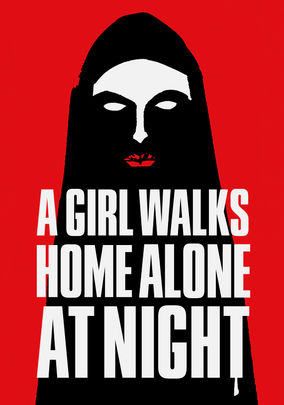
A Girl Walks Home Alone at Night-2014

A Girl Walks Home Alone At Night-2014

Director Ana Lily Amirpour

Starring Sheila Vand

Scott’s Review #271

70301280

Reviewed August 24, 2015

Grade: A-

A Girl Walks Home Alone At Night is a highly creative, unique, independent horror film from 2014.

One of the many reasons I am a fan of independent cinema is to discover and promote little-seen gems.

The dialogue is in Persian and the cinematography is in black and white, which is unique in modern film. I notice similarities between this film and Let the Right One In, 2008, (both the English and the Swedish versions) in the frigid mood and love story enveloped within.

This film is the debut of director Ana Lily Amirpour and what a marvel she could become. Despite obvious influences by other directors, A Girl Walks Home At Night has a brilliant freshness and seems original and unpredictable.

The title accurately depicts the main story. A teenage girl (Sheila Vand) walks around the dark streets of a city aptly named Bad City in the Iranian underworld.

The film is shot in southern California and could double for Detroit.

The girl, who has no name, has strange encounters with a myriad of peculiar individuals, including what appears to be a transgender prostitute, a vicious drug dealer, a nice yet mysterious young man named Arash, Arash’s father, who is hooked on drugs, and a mysterious cat.

She then embarks on a tender flirtation with Arash.

The overall plot, which I found secondary to the look of the film, centers around The Girl’s encounters with these individuals and their encounters and relationships with each other.

The Girl is a lonely vampire and feels isolated from society, but it is unclear what she is looking for. She is both destructive and sweet depending on the circumstance.

She takes her aggression out on the bad.

The most striking and impressive aspect is its dark moody atmosphere. Brooding and cold-looking, the city reeks of death and loneliness. The Girl speaks very little so her expressions are what the viewer will notice.

Her eyes delve into her soul.

She is the most interesting of the characters, but the others, specifically Arash and the transgender prostitute have potential and we are curious to explore more about them.

Arash and his father have more depth than any of the supporting characters- Arash painfully lets his drug-riddled father stay with him and attempts to assist him with his issues.

One assumes that since the father’s wife (Arash’s mother) has died suddenly, he has taken a downward spiral, but this is only suggested to the audience.

We do know for sure where she is- in one scene we see the father angrily look at a photo of a middle-aged woman and is destroyed by her absence. He believes that the woman has taken on the body of the mysterious cat.

Arash caring for his father is a fascinating role reversal.

Wouldn’t we expect the young man to have a drug problem and the father the caregiver? This is interesting in itself.

The influences are plentiful, but most notable from a director standpoint is David Lynch. The black and white filming along with the viewer’s point of view in one scene involving a car driving down a dark highway resembles the Lynch film Lost Highway (1997).

The moody background music and the slow but methodical pacing give A Girl Walks Home Alone At Night a Lynch feel. One curious element is The Girl’s interest in 1980′ pop music- her bedroom wall riddled with Madonna and similar pop stars from the 1980’s posters.

The Girl even admits to listening to a sappy Lionel Richie tune.

It is unknown if it even could BE the 1980’s as time seems unimportant. The film strangely combines edgy, alternative filmmaking with commercial pop references.

I half expected The Girl to break into a rendition of “Pour Some Sugar On Me”.

My thought is that perhaps Amir intends to portray the Girl’s desire to fit into mainstream society knowing that a vampire never can. This theory is proven when The Girl is melancholy when Arash buys her a hamburger, knowing she cannot enjoy it as he does.

Creative, with a dreary atmosphere, and intelligently thought out, A Girl Walks Home Alone At Night (2014) is a strange, murky experience in film experimentation.

Amirpour is a fresh, new director worth watching for.

Independent Spirit Award Nominations: Best First Feature, Best Cinematography

Love and Mercy-2015

Love and Mercy-2015

Director Bill Pohlad

Starring John Cusack, Paul Dano

Scott’s Review #258

80017274

Reviewed July 17, 2015

Grade: B+

The life and times of the Beach Boys’ famous and troubled lead singer, Brian Wilson, is finally played out on the big screen (apparently many attempts were made to make a film) as Love and Mercy (2015) chronicles his difficult upbringing, unrivaled success, and his interesting life in later years.

He suffered from schizophrenia, traveled down a paranoid, nervous path, and was manipulated by a family friend who served as his doctor and main caregiver.

Thankfully, he weathered the storm due to his future wife, and remarkably still performs and entertains in 2015.

His musical career began in the 1960s.

The biopic features many well-known Beach Boys tunes to hum along to and be entertained by. It’s not a happy film nor a downer either.

It’s somewhere in the middle of the two and the life story of a rock star.

There is a risk in this. If the film is too sentimental it will fail. Love and Mercy do it correctly.

The film is not a sing-along, trip-down-memory lane film for lighthearted film fans. Rather, it is dark, murky, and troubling at times (the psychedelic scene when a young Brian is imagining different voices and noises in his head is rather frightening).

Wilson is played by two actors, first in the 1960s and later in the 1980s.

Paul Dano stars as a young Wilson in the early stages of his career, filled with passion for life, art, music, and talent beyond belief, but clearly in the onset stages of paranoia, thanks to his critical father. He is a demanding, angry man, possibly envious of Brian’s talents as a songwriter, who always wanted more from Brian.

Wilson’s father managed Brian and his brothers success but at a huge cost, and was ready to bail when the “next big thing” came along.

Miraculously, through conflict with his father and other members, Wilson completed the Beach Boys masterpiece, Pet Sounds, a groundbreaking album from the late 1960s. The film shows the struggles faced to achieve this success.

In later years John Cusack takes over the role of Brian. By this point in his life, he is damaged and he is a full-blown neurotic, insecure, and dependent on his psychotherapist, Dr. Landy, brilliantly played by Paul Giamatti.

Landy has control of Wilson’s assets and will destroy anyone who interferes in this.

The scenes in which he screams at and berates a drugged-out Brian Wilson to create music are tough to stomach. When Wilson romances their future wife Melinda Ledbetter, played by Elizabeth Banks, she ultimately saves his life as she is determined to rescue Brian from the wicked abuse and adjust the toxic levels of medications he was kept on.

I left the movie theater unsure of the factual accuracy and pondered the following questions.

Did Brian’s wife swoop into his life and “save” him as neatly as the film explains? How instrumental was the maid in this process? Was the Wilson brothers’ father as much a monster as the movie portrayed him? Was Giamatti’s vicious psychotherapist role true to life or were the aspects of Love and Mercy embellished ever so slightly for moviemaking magic?

One wonders, but from a film perspective, Love and Mercy (2015) works well as a work that takes risks, does not go for softness or niceness, and gives a character study that is quite admirable.

Independent Spirit Award Nominations: Best Supporting Male-Paul Dano

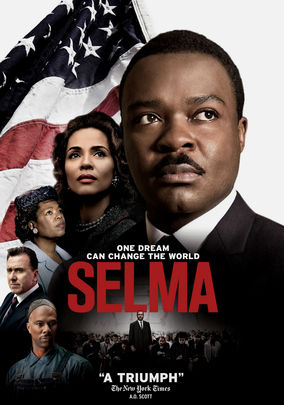
Selma-2014

Selma-2014

Director Ava DuVernay

Starring David Oyelowo, Carmen Ejogo

Scott’s Review #248

80013278

Reviewed June 19, 2015

Grade: A-

An Oscar-nominated factual feast, set in the mid-1960s during the Civil Rights movement, Selma (2014) is a re-telling of the life and times of Martin Luther King Jr. and the struggles that black Americans endured during a tumultuous period in history.

The film includes dealings with then-President Lyndon B. Johnson and the famous and important 1965 Selma to Montgomery voting rights march, which led to the signing of the pivotal Voting Rights Act of 1965.

This film reminded me quite a bit of 2013’s The Butler in subject matter and style-ironic since Lee Daniels was slated to direct and instead signed on for The Butler.

Both feature a charismatic and intelligent black man struggling with racial matters.

Despite being an independent undertaking, it is glossy, polished, and reflective of the time. Both The Butler and Selma boast a huge cast, and historical political figures, in a tumultuous era in history.

Selma features a bevy of real-life figures from George Wallis to President Johnson to the obvious leader of the Civil Rights movement, Martin Luther King Jr., and his wife, Coretta Scott King, and the casting is very well thought out.

Tim Roth, David Oyelowo, Tom Wilkinson, and Carmen Ejogo portray their roles professionally and passionately. None of the above received Oscar nominations and I am okay with that.

I did not feel that any were definite standouts from a crowded field of talent, though perhaps Ejogo could have been in the running with her understated though compelling performance.

The drama surrounding the lack of expected Oscar nominations is not shared by me. The truth is, the film was included in the Best Picture category and won Best Song.

While an emotional and compelling film, neither is it a masterpiece nor will change the art of cinema, though I must stress it is good.

I find Selma to be an important film- a look back on history and the shame and humiliation placed on blacks who attempted to obtain voting rights. A heartbreaking scene depicts a determined woman (played by Oprah Winfrey) being denied this right by a cold and racist authority figure as she is asked impossible and tricky questions to prove her patriotism, which of course, she cannot possibly answer correctly.

Yes, the film is directed by a black, female director (Ava DuVernay) and yes, one might argue that it has a black point of view. However, the film successfully sympathetically portrays several white characters and avoids the assumption that all white people were racist in this period.

Let’s face it- racism still exists, especially in the South, and in the 1960s even more so. I did not find the message in black people vs. white people’s terms, but rather as a humanistic struggle for rights.

And the struggles continue as the film makes abundantly clear in the message of the film.

While King was a life changer to the black people of the United States, his life was abruptly cut short in his prime. One wonders how much more good this man could have achieved.

The song “Glory” is an emotional, powerful number, especially during the marching and subsequent slaughter scenes highly emotional and effective.

And who will not become teary-eyed as the innocent marchers are beaten and treated like cattle, simply for taking a stand? One will gasp at the senseless bombing scene that rocks a building and takes four innocent little girls’ lives away with it.

Selma successfully transplanted me to a time before my time and made me appreciate and capture the positive and negative experiences of a race of people not long ago.

This film inspires and moves me and teaches me what a movement occurred in 1965.

Oscar Nominations: 1 win-Best Picture, Best Original Song-“Glory” (won)

Independent Spirit Award Nominations: Best Feature, Best Director-Ava DuVernay, Best Male Lead-David Oyelowo, Best Supporting Female-Carmen Ejogo, Best Cinematography

St. Vincent-2014

St. Vincent-2014

Director Theodore Melfi

Starring Bill Murray, Naomi Watts, Melissa McCarthy

Scott’s Review #246

70295665

Reviewed June 5, 2015

Grade: B-

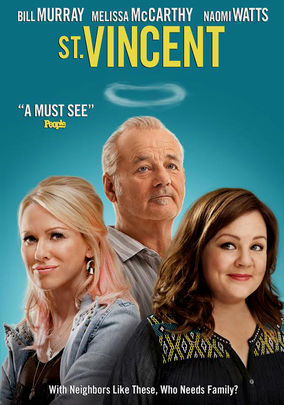
St. Vincent (2014) succeeds only due to the charming, funny appeal of its star Bill Murray, who fronts this cute, mainstream comedy.

Set in blue-collar Brooklyn, New York, it tells the story of a curmudgeonly old man (the title character, Vincent), who befriends a lonely young boy named Oliver, new to the neighborhood.

Mixed in with the cast of characters are Oliver’s struggling mother Maggie (played by Melissa McCarthy) and Vincent’s pregnant, stripper girlfriend, Daka, played by Naomi Watts.

I found intrigue in how we get to know Vincent first and then watch him evolve from a grumpy, cutting old man to a begrudging babysitter of the neighbor boy while clashing with Maggie and fighting with Daka.

Murray returns to comic wit using his now-legendary flawless dry, sarcastic humor and perfect timing and displays much of that in St. Vincent. Throughout all of this Vincent remains brutally honest with his snarky remarks (mainly aimed at Maggie) yet heartwarming and I love this aspect of the film.

Thanks to Murray, Vincent is lovable, making the film, which with lesser talent, would be overly sentimental

As the film progresses we see Vincent’s struggles- his wife suffers from Alzheimer’s, and he is indebted to bookies (primarily Terence Howard- in a bit of a throwaway role).

The film staggers with some predictability issues and is formulaic and easy to predict a warm finale.

Of course, in true form, Vincent is a Vietnam vet who drinks and gambles and is angry at the world, but has a heart of gold so, despite being temperamental, the audience falls in love with him (patriotism helps).

The character contains every cliche in the book. A mean old man- who rises to new heights and becomes a nice grandfather figure to a bullied boy is what this film is going for.

The bullying of Oliver is also contrived- during one scene Oliver, after being picked on once again by the prominent bully, flies into a seething rage and breaks the bully’s nose.

The audience is supposed to buy that the waif-ish, shy kid triumphs over the bully. If only life were that simple. Inevitably, after both serve after-school detention, they bond over bathroom cleaning and become best friends.

Who did not see that coming?

In addition, most of the characters are one-note.

Naomi Watts is a sexy, and aging Russian (not sure I bought that accent) stripper with a soft spot- she comes across as uptight but is caring- another cliche.

Melissa McCarthy is a hard-working, soon-to-be divorcee, trying to raise her kid right- one-dimensional. Even Vincent is seemingly tough as nails, but of course, has a soft spot for the neighbor kid.

The casting of Watts, McCarthy, and Howard is okay, and I surmise the film was going for casting “name” actors, but these parts might have been played by unknowns and had the same effect.

The gem is Murray.

Murray effortlessly breathes life into a character who otherwise would have been as dull as dishwater. I found the writing the weakest point of the film.

A major incident brings the cast together united as one (yawn). The film closes with the family all happily eating dinner together. I do not see this as a spoiler as this ending can be seen a mile away.

Despite the flaws and sentimentality of the film, it is admittedly sweet, and humorous at times, and sends a nice message to the audience- be kind to one another and help each other get through life.

Without Bill Murray, this film would have been completely bland and unlikeable.

St. Vincent (2014) is a feel-good film that is perhaps too feel-good.

A Most Violent Year-2014

A Most Violent Year-2014

Director J.C. Chandor

Starring Oscar Isaac, Jessica Chastain

Scott’s Review #239

_A_Most_Violent_Year__Theatrical_Poster

Reviewed May 1, 2015

Grade: B

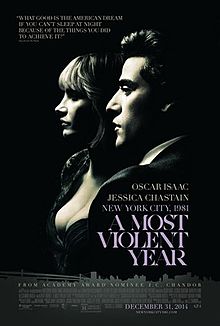
Set in New York City, throughout the notoriously violent year of 1981 and influenced, at least in part, by The Godfather (1972) A Most Violent Year (2014) is similar in texture to the elite HBO series The Sopranos (1999-2007).

A Most Violent Year is an attempt at weaving a tale of a “good guy” mixed up with the mafia and attempting to remain upstanding throughout the adversity and corruption he encounters.

Oscar Isaac and Jessica Chastain portray Abel and Anna Morales, who owned Standard Oil, an upstart business they are attempting to launch.

Due to the violent nature of the times, several trucks are hijacked, resulting in robberies and severe beatings. In desperate need of funds to expand their business and stay ahead of competitors, Abel and Anna are forced to take out loans, leading them into a world where crime and violence run rampant.

They are under investigation for apparent price fixing and tax evasion activity by the Assistant District Attorney.

The main theme is the conflict and guilt that Abel feels towards violence and the constant temptation to join the ranks of the crime world to protect his business ventures.

Abel faces pressure from Anna, who has mob ties (her father is an influential mafia boss known around town) and is all for fighting fire with fire. Abel refuses and is determined to lead a straight and narrow life.

When circumstances spin out of control, his morals are questioned.

A Most Violent Year is an interesting film yet I think I was expecting a bit more than I was given.

For starters, it is not in the same league as the mafia works of art. It is tough to put my finger on what the issue is but something is missing from the film making it lack a compelling edge.

The plot moves slowly, for sure, but the film is successful as the character study that it is, however, I was left wanting more depth to the characters and a broader vision of the film itself.

I did not find myself truly vested in either the character of Abel or Anna.

Chastain received praise for her performance, which I found adequate, but hardly a marvel. Nominated for several awards, but deemed “snubbed” for not receiving an Oscar nomination, I find this untrue.

Her performance is not brilliant and Oscar Isaac’s is superior.

This is not to say that I did not enjoy the film overall. It takes some risks, has a rich character complexity, is shot very well, and looks great. It has a smooth look and I completely bought the 1981 time period, rather than it appearing to be dressed up for the era.

There is an authenticity to it.

A mob film not on the level of The Godfather or Goodfellas (1990), A Most Violent Year is a decent contribution to the crime-thriller era. It just does not live up to the critical acclaim heaped upon it.

Independent Spirit Award Nominations: Best Supporting Female-Jessica Chastain, Best Screenplay, Best Editing

Only Lovers Left Alive-2014

Only Lovers Left Alive-2014

Director Jim Jarmusch

Starring Tilda Swinton, Tom Hiddleston

Scott’s Review #237

Only_Lovers_Left_Alive_English_film_poster

Reviewed April 24, 2015

Grade: B

Only Lovers Left Alive (2014) is a bizarre trip into the strange and unusual world of vampires.

The film, moving slowly, becomes hypnotic, grabbing me into the plot, though the plot itself seems almost secondary to the gothic mood and dark ambiance of the film.

Thanks to the wonderful Tilda Swinton, who I find mesmerizing in every film role she appears in, the methodical film never completely bored me and, at times, even fascinated me.

Set in present times, Swinton and Tom Hiddleston play vampires named Adam and Eve, who are lovers separated geographically. Adam is a musician living in a vast Victorian house in Detroit and Eve resides in Tangier.

Realizing that Adam is lonely and suicidal, Eve makes the international trek to the United States to be with her love. While they begin enjoying a quiet existence immersed in music and thoughts, Eve’s rebellious sister Ava (Mia Wasikowska) from Los Angeles adds havoc to their lives.

Also cast in the film is John Hurt, who plays Marlowe, an ancient vampire assisting Adam and Eve, who succumbs to sickness due to tainted blood.

The film is a creative, atmospheric offering from edgy independent film director Jim Jarmusch, known for such left-of-center fare as Broken Flowers (2005) and Coffee and Cigarettes (2003), which are visual and visceral achievements.

While I did not completely love this film, feeling that the actual story is the weakest area, the magical and beautiful arrangements almost make up for any shortcomings.

Set entirely at night (when vampires are awake) and featuring several shots of Adam and Eve posed naked or almost naked in lovely, artistic angles, I think the film is going for a “look” as much as for storytelling and not completely centering on the plot.

It is also a lovely romantic film, though not in the typical sense of silly misunderstandings, and comical moments, but rather in romantic artistry, as Adam and Eve connect spiritually.

Married hundreds of years ago, Adam and Eve have been inexplicably separated by thousands of miles and coasts, though the reason is not explained.

Why are they the few remaining vampires alive? Does the human race know they are vampires or think they are odd-looking people? They both have money to burn and pay a high cost for being vampires as they either pay a contact to steal blood from hospitals to survive or obtain the blood elsewhere.

They are tempted to bite humans but resist those urges. The film does not explain why they are two of the few vampires left in the world or other questions. Adam, supposedly a famous musician, is wealthy beyond words and lives in a haunted-looking mansion surrounded by music and musical instruments.

The plot holes, of course, are secondary to me. None of them matter.

The film has beautiful moments- it is musically centered and Adam and Eve on more than one occasion engage in beautiful, tender dances the film is a pure love story, but a very left-of-center one.

I admire the film’s creativity and going where most filmmakers do not dare to go. Jarmusch dares to be different and deserves much praise.

The negative for me was the pacing of the film- the story almost does not matter as the film feels more like an experience in art than a “mainstream” film containing strong plot points and focus.

Only Lovers Left Alive (2014) is a different type of film and one worth admiring.

Independent Spirit Award Nominations: Best Female Lead-Tilda Swinton, Best Screenplay

Nightcrawler-2014

Nightcrawler-2014

Director Dan Gilroy

Starring Jake Gyllenhaal, Rene Russo

Scott’s Review #225

70295182

Reviewed March 1, 2015

Grade: B+

Nightcrawler (2014) is best described as an intense crime-thriller set in Los Angeles featuring a wonderful performance by Jake Gyllenhaal as an unstable thief named Lou. He cons and manipulates his way to success videotaping accident scenes and selling them to news stations.

The film is the directorial debut of Dan Gilroy, who could become a household name in the future. Nightcrawler was deservedly awarded the Best Screenplay and the Best First Feature Independent Spirit award honors.
The film is set mainly at night as Lou courses the city in search of accidents, crimes, and violence- the bloodier the better. Later, he is told by Nina Romina, successfully played by Rene Russo that violent crimes in affluent neighborhoods are the best, as they garner the highest ratings.

Lou sells video footage of the crimes to the highest bidder and Nina becomes his main customer. Lou is eventually assisted by Rick Carey, a desperate accomplice in need of money, played by Riz Ahmed.

The interesting thing about Nightcrawler is its moody setting and dim lighting. It reminds me of the 2004 film Collateral, starring Jamie Foxx and Tom Cruise, also set in Los Angeles.

Mostly set at night time and heavily set on the streets of L.A., I found this mood excellent and a compelling aspect of the film.

It makes Nightcrawler look great.

Gyllenhaal deserves praise for his role as Lou and is largely responsible for the success. He was a co-producer.

From an acting standpoint, he is excellent and reminiscent of the frightening performance that Robert DeNiro gave in Taxi Driver (1976). With an angular face and eyes that seemingly never blink, he is intense and driven on every level.

He is a sociopath.

When he quietly threatens Nina and Rick on separate occasions one can tell he means business. Why Lou has become a thief desperate for money is never explained- does he have a family? Is he a convict? He seems highly educated, but is he? How did he land in this predicament and resort to the life that he does?

As Lou becomes more manipulative and adjusts crime scenes to make them shocking, he seems to teeter over the edge of sanity. In one scene he sneaks into a victim’s home and videotapes photos of the victims from their refrigerator to promote an empathetic angle and therefore make more money from them.

This is a brilliant performance by Gyllenhaal.

Another fascinating performance I admired is that of Rene Russo- absent from films for what seems like years, Nightcrawler is a nice return for her. Her character also has a little backstory.

We know she is a driven newswoman who has trouble maintaining success at individual news stations and moves around a lot. Nina is a cut-throat news director eager for violent stories and determined to keep her existing job. She also becomes begrudgingly fascinated and enamored with Lou.

Does she like bad boys or does she admire his talent?

The third major character is Riz Ahmed’s Rick. Rick comes across as a sweet, yet gullible guy strapped for cash. Like Lou, we do not know why he is broke, but it is hinted that he may do or have done some male prostitution- he is desperate.

As the film goes along the character develops tough skin and realizes he is attracted to this new lifestyle and excitement, but will not be bullied by Lou.

On a social level, the film presents an interesting, albeit disturbing take on the relationship between the media and the viewers. What will news channels do for a good story? How bloodthirsty are news audiences? How often is a positive news story presented? It makes the audience reflect and ponder.

Nightcrawler is a dark thriller, which deservedly garnered an Oscar nomination for Best Screenplay and a slew of Independent Spirit Awards.

Intense, rich, and visually appealing, it is one of the success stories of 2014 cinema.

Oscar Nominations: Best Original Screenplay

Independent Spirit Award Nominations: 2 wins-Best Male Lead-Jake Gyllenhaal, Best Supporting Male-Riz Ahmed, Best Screenplay (won), Best First Feature (won), Best Editing

The One I Love-2014

The One I Love-2014

Director Charlie McDowell

Starring Mark Duplass, Elisabeth Moss

Scott’s Review #221

70299863

Reviewed February 18, 2015

Grade: C+

Reminiscent of a modern-day Twilight Zone episode, The One I Love (2014) tells the story of a young married couple (Ethan and Sophie), played by Mark Duplass and Elisabeth Moss, who seek the assistance of a therapist, played by Ted Danson.

The therapist realizes the couple is out of sync and recommends a weekend away. The therapist has an excellent reputation for rekindling faltering marriages and turning them into successful ones.

He sends them to a sunny, beachfront house with a guest house, pool, and various trails along the water. It is simply a paradise.

I admire the creativity of the screenplay.

The couple meets their ideal, perfect versions of each other while basking at the vacation house. Ethan’s alter-ego is suave, athletic, and sensitive to Sophie’s needs while Sophie’s is sexy, flirtatious, and invested in Ethan’s life.

The real versions are bored, lazy, and a bit disheveled.

The flaws they once saw in each other are replaced with the perfect spouses. It is fantasy-like. As one half of the couple slowly falls in love with the fantasy version, the other half begins to get jealous and the film dives into a tale of who winds up with whom.

But is it a fantasy? Are the perfect versions real people or something reminiscent of Invasion of the Body Snatchers?

It is tough to know the intentions of the film.

A weakness I felt the film has is it plods too much. At a brief ninety minutes, the film somehow has a sleepy, slow-moving undertone and could have easily been a short film or wrapped up within forty-five or fifty minutes.

I did not feel the chemistry between Duplass and Moss as strongly as I would have liked. Individually fine actors, the spark did not ignite for me.

I wish Ted Danson had a larger role. The focal point was the young couple, but the mysteriousness surrounding the paradise was never really explained and Danson’s character could have been the key to the story. Did he contrive the entire situation? Was it fantasy? His brief part left many plot holes unexplained.

The One I Love (2014) is a creative effort and an imaginative angle, but I wanted more clarity than I was served up.

The film is mysterious, yes, but also confusing and slightly dull and uneven.

Independent Spirit Award Nominations: Best First Screenplay

The Guest-2014

The Guest-2014

Director Adam Wingard

Starring Dan Stevens

Scott’s Review #220

70300664

Reviewed February 7, 2015

Grade: C-

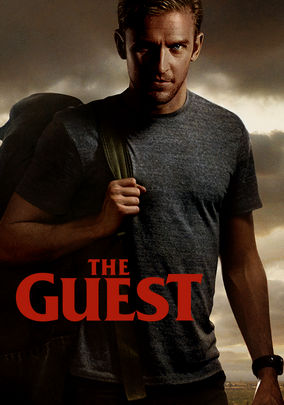
The Guest is a thriller from 2014 that can, perhaps, be classified under the adage “it’s so bad that it’s good”, though as I pondered writing this review, that could be a bit of a stretch.

As poor as the film is, there is something that I slightly enjoyed about it.

The premise is simple. A Midwestern family, the Peterson’s, is suddenly visited by a veteran soldier, named David, who claims to be a friend of the parent’s deceased son Caleb. David easily insinuates himself into their lives and the Petersons extend an invitation for him to stay a few days to rehash details about Caleb.

The family is middle-class, yet struggling financially, and consists of a mother and father, a college-aged daughter named Anna, the actress eerily resembling a young Gwen Stefani, and a bullied, timid, high school-aged son named Luke.

From the get-go, something is off with David, but his motives are unclear to the audience.

The issues with the film are aplenty.

For starters, the acting is rather poor. The most notable actors in the film are Dan Stevens (Downton Abbey) and Sheila Kelley (L.A. Law) and a collection of unknowns.

Stevens and Kelley give better performances, and I particularly thought Stevens very believable in a role opposite of his Downton Abbey alter ego.

The rest of the cast is wooden and un-compelling.

The weakest parts of The Guest are the inane plot points and the 1980s-style soundtrack. Were the filmmakers going for a retro throwback? The film is set in present times so this aspect remains a mystery.

The story starts interestingly. Is it a Fatal Attraction (1987) type of film? What is David’s motive? What was his relationship with the deceased Caleb? Does he intend to help or harm the family?

The reveal towards the end of the film is implausible, ridiculous, and disappointing. Without giving too much away, the government plays a large role in the meat of the film and it does little to provoke sympathy for any of the characters, only eliciting further confusion.

The attempted (and botched) love story between David and Anna does not work. They have little chemistry and the rooting value is not there especially as he picks up her drunken best friend at a party.

Is the audience supposed to root for David and Anna or is it merely a weak sub-plot to the thrill aspect of the film? I suspect the latter.

Despite all of these negatives, I did not despise the film as it trucked along- rather, I found it to be more of a mess than anything else.

It is not a good film, but there is something slightly appealing about it. Some of the death scenes are well done and the budding friendship between David and the bullied son is rather sweet.

The son is enamored with the strong, masculine David, and David, in turn, serves as a protector, humiliating the bullies who gave the kid a black eye. The film does not delve into a sexual angle regarding this but is a bond that is cheerful to see. It has a nice, warm element.

Another impressive point of The Guest is that it ends with a surprise that leaves room for a sequel. However, due to the success that the film did not achieve, I doubt a sequel will ever see the light of day.

A poorly written, weak-acted film, The Guest (2014) has moments of interest but fails miserably at providing a strong viewing experience.

By the end, I still had no idea of the main character’s motivations which is a huge problem.

Confusing and convoluted are the adjectives best to describe this film.

Independent Spirit Award Nominations: Best Editing

Boyhood-2014

Boyhood-2014

Director Richard Linklater

Starring Ellar Coltrane, Ethan Hawke

Scott’s Review #217

70301281

Reviewed January 19, 2015

Grade: A

Boyhood (2014) is a family drama directed by Richard Linklater that tells the story of a family’s trials and tribulations over twelve years, ranging from approximately 2002-2013.

The film uses the same actors over the entire period, enabling the viewer to see the characters change. What a novel idea! In this day and age of special effects, superheroes, and animated animals, how refreshing to see a simple tale of a family told over a while.

The film’s main character is Mason Evans, Jr. played by Ellar Coltrane.

We are introduced to Mason when he is six years old and in the first grade. He lives with his older sister Samantha, played by the director’s daughter Lorelei Linklater, and his mother Olivia, played by Patricia Arquette, in Texas.

Ethan Hawke, divorced from Olivia plays Mason’s father (Mason Sr.).

As the years go by we see situations arise and the characters grow and develop like real life.

After the film, Mason Jr. is headed off to college following years of life experience including his first relationship. The other characters develop and we see Olivia and Mason Sr. delve into relationships with partners, some successful, others less successful.

Boyhood succeeds because it is a film about real life that feels like a slice of Americana.

It’s a wonderful film.

The audience invests in the characters because we grow to love and care about their lives. It is comparable to seeing cousins or friends once a year and seeing what becomes of their lives over time.

This film fascinates me because it is so basic and real that it does not need contrived dramatic situations to warrant attention. It is simply authentic and that is what makes a great film.

The film is left-leaning politically speaking and I love that current events are brought up throughout the years by the family members.

As the film progresses we are treated to Mason Sr. commenting on his distaste of the Iraq war, the children’s anticipation of the new Harry Potter film, Mason Sr. taking the kids to a Houston Astros game, and The Beatles and Star Wars are mentioned.

Another scene sadly focuses on a returning soldier from Iraq who suffers from Post-traumatic stress disorder. These nuances make the film seem so authentic and rich.

As wonderful a job as Patricia Arquette and Ethan Hawke did neither of them had a huge, bombastic, emotional scene which would have been splendid given the talents of each, but this is a small criticism.

Both are superb as struggling parents trying to do the right thing for their children and carve out a life for themselves.

Boyhood redefines realism in the film as we see a family unit hope, struggle, and dream as it’s played out before our eyes.

The film does not need overwrought dramatics as it is simply a slice of the life of a group of people we come to know and love.

Everyone can relate to Boyhood (2014).

Oscar Nominations: 1 win-Best Picture, Best Director-Richard Linklater, Best Supporting Actor-Ethan Hawke, Best Supporting Actress-Patricia Arquette (won), Best Original Screenplay, Best Film Editing

Independent Spirit Award Nominations: 2 wins-Best Feature, Best Director-Richard Linklater (won), Best Supporting Male-Ethan Hawke, Best Supporting Female-Patricia Arquette (won), Best Editing

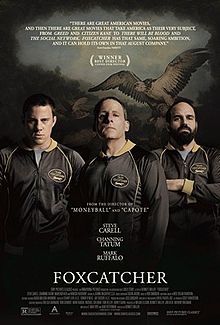
Foxcatcher-2014

Foxcatcher-2014

Director Bennett Miller

Starring Steve Carell, Channing Tatum, Mark Ruffalo

Scott’s Review #210

220px-Foxcatcher_First_Teaser_Poster

Reviewed January 2, 2015

Grade: A

Foxcatcher (2014) is a dark, disturbing, psychological thriller that achieves greatness based on its bleak look and great acting.

It is a superb character-driven story, based on true events, led by the talents of actors Steve Carrell, Channing Tatum, and Mark Ruffalo, each of whom is excellent.

It is a sports film, but hardly predictable as many in this genre typically are.

The film is set in 1987. Brothers Mark and Dave Schultz (Tatum and Ruffalo respectively) are former Olympic gold medal-winning wrestlers attempting to compete in the upcoming 1988 Olympic competitions.

Despite winning a gold medal, Mark (Tatum) lives in squalor and is reduced to giving pep rallies at elementary schools, meant to be done by Dave (Ruffalo), for very little money. Dave is the more successful brother, a family man living a happy existence.

He is more talented than Mark and very driven.

One day Mark is contacted by wealthy philanthropist John du Pont (Carrell) and invited to live with him at his expansive estate in Pennsylvania and train with other aspiring Olympic wrestlers.

John’s attempts at wooing Dave as well initially fail.

From this point in the story, the film delves into psychologically dark territory, mainly the controlling, disturbing behavior of John, as he attempts to control Mark and woo Dave.

John has a damaged relationship with his mother, Jean, wonderfully played by Vanessa Redgrave. Jean feels that John’s obsession with the wrestling world is far beneath him and their relationship is tense and unloving.

The three principal actors involved in the film are worthy of discussion as the film would not be as complex or compelling.

Let’s begin with Channing Tatum- known primarily as a hunky movie star with questionable acting ability, he proves the naysayers wrong.

I cannot help but compare him to a younger Brad Pitt. It took years and many films for him to be recognized as more than a pretty face and abs to die for.

His performance is understated and calm, but nuanced in his laid-back demeanor. Sometimes anger bubbles under the surface.

Carrell is downright creepy as the affluent yet insecure Du Pont.

Throughout the film, the character seems off. Known mostly for silly comedies he is a breakout performance that, I hope, leads to similar meaty roles. Carrell shows he has what it takes to appear in quality films.

Lastly, Mark Ruffalo, who always plays interesting, everyman-type characters, again emits much emotion from his character of Dave Schultz, a successful, driven, athlete who is also a dedicated husband and father.

With lesser casting, Foxcatcher would not have been as interesting.

Questions at the end of the film will arise. What were John du Pont’s motivations? What effect did his mother have on his actions? How could a man with all his power and wealth end up this sad? Were there inappropriate sexual overtures made towards the wrestlers by John?

Foxcatcher (2014) excels at portraying a dark, layered, moody, true story and teaches that wealth does not equate to happiness and in many instances, quite the contrary occurs.

The film is an immense success.

Oscar Nominations: Best Director-Bennett Miller, Best Actor-Steve Carell, Best Supporting Actor-Mark Ruffalo, Best Original Screenplay, Best Makeup and Hairstyling

Independent Spirit Award Nominations: 1 win-Special Distinction Award (won)

Heathers-1989

Heathers-1989

Director Michael Lehman

Starring Winona Ryder, Christian Slater

Scott’s Review #207

580335

Reviewed December 25, 2014

Grade: B

My gut tells me that Heathers was quite controversial and influential upon release in 1989 and has sustained a cult following that continues to this day- 2014.

Having seen the film for only the first time, in 2014, the film is good, but now suffers from a slightly dated look and feel. Still, it is a brave and unique expression of creativity.

It is a film that sends the message that the popular kids are bad and that the meek shall inherit the earth. The uncool kids will rise.

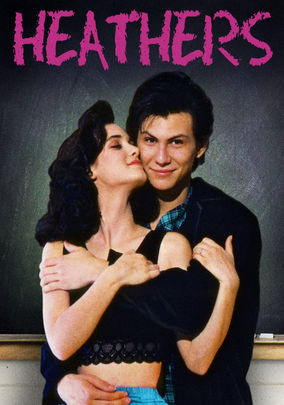
To summarize the plot, Heathers is told from the perspective of high school student Veronica Sawyer, played by a young Winona Ryder. She is a second-tier popular girl- she is lieutenant to the generals if you will.

The school is run by three popular girls named Heather. As popular as they are, they are also despised and feared by the other students but carry great influence. They enjoy playing cruel jokes on other students and ridiculing anyone beneath them.

A rebellious male student, J.D., played by Christian Slater, befriends Veronica and they hatch a plan to destroy the popular clique, including another pair of popular jocks.

Shannon Doherty plays second in command Heather.

The tone of Heather’s is surreal and dream-like. For example, in the opening scene all three Heathers- along with Veronica- are on a perfectly manicured lawn in the suburbs playing croquet.

The hierarchy is established as Veronica seems to be buried up to her neck and is the target of the croquet balls making her, without question, the lowest of the four girls. Whether or not this is a dream or real is unclear.

The film is well-written and edgy. It reminds me at times of The Ice Storm and American Beauty, which Heathers preceded, and are superior in my opinion.

Heathers is a teen angst film and quite dark at times- the various deaths are committed viciously (drain cleaner poisoning, concocting a setup for the jocks to appear to be having a love affair with each other and then passionately shooting each other), but with sly wit and humor.

Veronica is, at heart, a good girl, albeit misguided and heavily influenced by J.D., but her intentions of having a fair, just school society are noble. The character is likable.

All the parents are hilariously portrayed as buffoons and have no idea of the darkness that exists in their kid’s lives- Veronica’s parents in particular.

Fearing that Veronica has committed or soon will attempt suicide, they fret that it is their fault stemming from childhood negligence, however, their concern has more to do with themselves than with Veronica’s well-being.

Small gripes about the film are the 1980s style outfits and hairstyles, which, since made in the 1980s is not a particular fault of the films- though it does contain a slightly dated feel to it while watching in present times.

Also, Christian Slater mimicking Jack Nicholson’s voice is odd- was this a decision by the film or by the actor himself? Either way, the imitation is both distracting and confusing. What is the point?

The ending of the film is a happy and satisfying conclusion- however, different from the dark tone of the rest of the movie- rumor has it the studio had some influence in toning down the original ending.

1989 was not a stellar year for film so Heathers deserves major props for thinking outside the box and doing something dark and creative.

Brave, inventive, and unique, Heathers is a cult classic worth a look.

Independent Spirit Award Nominees: 1 win-Best Female Lead-Winona Ryder, Best Screenplay, Best First Feature (won)
Whiplash-2014

Whiplash-2014

Director Damien Chazelle

Starring Miles Teller, J.K. Simmons

Scott’s Review #192

70299275

Reviewed November 13, 2014

Grade: A

Whiplash (2014) is a film about an aspiring nineteen-year-old Jazz drummer, Andrew Neyman, played by rising star Miles Teller (known for 2013’s indie teen drama The Spectacular Now), who is attending one of the most revered musical schools in the country, the Schaffer Conservatory in New York.

He is mentored and terrorized by his intense and sometimes sadistic conductor, Terence Fletcher, portrayed by J.K. Simmons.

Andrew aspires to be the best drummer and worships Buddy Rich, a famous Jazz drummer from the 1930s and 1940s, who he constantly listens to and emulates.

While Andrew aspires to make the school orchestra that desperately needs a new drummer, he meets a cute girl, Nicole, at the concession stand of his favorite movie theater, and they bond.

Also in the mix is Andrew’s father, played by Paul Reiser. Once an aspiring writer, who never made it big, he struggles as a high school teacher. Andrew’s mother left the family when Andrew was just a toddler leaving just father and son.

The film mainly centers on the tumultuous relationship between Andrew and Terence and Andrew’s determination to be the best drummer in the world.

J.K. Simmons is mesmerizing in his role of Terence and is wonderful to see as Simmons has struggled as a character actor for years.

He gives a powerhouse performance and plows full steam ahead in his viciousness and extreme brutality towards the students, and on more than one occasion reduces a student to tears. If the tempo is not to his liking he shakes his clenched fist in disapproval.

The audience wonders if Terence is mean and sadistic or is tough on the students to make them work harder and achieve great things.

Throughout the film, I wondered if I should hate this character or sympathize with him for wanting the students to excel.

The sexuality of Fletcher is ambiguous.

He belittles and ridicules the students with fat jokes. He hatefully taunts an overweight student about Mars bars and happy meals, uses Irish digs, and inevitably gay slurs on other students, but is he hiding something in his personal life? Is he a closet case? His private life remains a mystery.

As brutal as Terence can be, there are moments of sensitivity that the character exhibits. He tearfully tells the orchestra a heartbreaking story of a former student, whom he admired, who recently died in a car accident.

In another scene, he warmly bonds with a friend’s young daughter.

As brilliant as Simmons is we must not forget to recognize the immense talent of Teller. The young actor does a fantastic job of portraying determination, drive, anger, and vengeance.

Andrew has a wonderful relationship with his dedicated father, a love/hate relationship with Terence, (are they bitter enemies or do they have the respect of a mentor/student?), and a sweet yet uneven relationship with Nicole.

He successfully portrays a myriad of different emotions throughout the film.

Paul Reiser is wonderful in an overlooked and thankless role as Andrew’s unsuccessful, yet forever faithful father.

Thankfully the film chose to center on the conductor/student dynamic. The romantic relationship with Nicole did not take center stage and usurp the main story, as I felt that the dynamic between the two was of lesser importance to the whole.

The finale, an intense concert performance scene focusing on the intensity between Terence and Andrew, is superbly done. The close-up camera shots of the two add much to the climax.

In fact, throughout Whiplash, extreme close-up shots of sweat and blood and intensity during performances and practices add to the overall rawness of the film.

Whiplash (2014) is an intense, sometimes brutal, assaulting experience, but an amazing film.

Oscar Nominations: 3 wins-Best Picture, Best Supporting Actor-J.K. Simmons (won), Best Adapted Screenplay, Best Sound Mixing (won), Best Film Editing (won)

Independent Spirit Award Nominations: 2 wins-Best Feature, Best Director-Damien Chazelle, Best Supporting Male-J.K. Simmons (won), Best Editing (won)

Birdman-2014

Birdman-2014

Director Alejandro G. Iñárritu

Starring Michael Keaton, Edward Norton, Emma Stone

Scott’s Review #190

80000643

Reviewed November 6, 2014

Grade: A

Birdman (2014) is a unique art film that, happily, has garnered major exposure and publicity because a movie like this runs the risk of receiving praise and notice only from the art-house crowd itself.

The film’s star, Michael Keaton, portrays Riggan Thomson, a former action hero superstar from the 1990s, who was made famous for the “Birdman” character he created.

Having made sequels to the film, his career has since dried up and he hopes to establish credibility and prove himself a real actor by writing, directing, and starring in his play.

The film is set in and around the Broadway theater in New York City.

As opening night approaches, he struggles to pull everything together and emit a successful production while faced with an injured terrible actor, a difficult actor, his insecurities, and a miserable theatre critic destined to ruin his big chance.

To make matters worse, his daughter Sam, played by Emma Stone is a recovering drug addict who hangs around the theatre distracting actors with her charm and good looks.

Naomi Watts and Edward Norton play Leslie and Mike, other cast members in the production. Watts is sympathetic as the emotional actress with a heart of gold who finally has her dream of performing on Broadway realized.

Norton, outstanding as Mike, is blunt yet socially awkward and can only perform truthfully on stage.

Keaton is simply a marvel as he plays a dark and vulnerable man. He hates and wishes to shed his ridiculous movie persona of yesteryear and secretly cringes when recognized by fans. He uses it with a voice inside his head when he played “Birdman” years earlier.

The uniqueness of the film is the use of what seems like one long take as the action rarely stops and is ongoing. The film belongs to Keaton, who wonderfully relays vulnerability, pain, and fear within with an outward persona of bravery and masculinity.

Throughout the film I wondered, is Riggan suicidal? What is real and what is imagined? Are certain scenes foreshadowing later events?

The film has much depth.

One marvels at how art imitates life, is Keaton portraying himself? He was the original Batman in the successful superhero franchise beginning in 1989 and his career tanked shortly after.

Birdman is a comeback film for him and he is devastatingly good.

Norton’s character Mike impressed me. He is blunt flawed, scared, and addicted to the stage.

Stone has one particularly brilliant scene as she lambasts her father and with regret, later on, tells him that the world has moved on without him and that he is irrelevant just like everyone else. It is a powerful scene.

In another, Riggan is locked outside the theater during the performance, clad only in his underwear. How on earth will he return to the stage and complete the show? The quick slights at current Hollywood superstars playing superheroes, specifically Robert Downey Jr. are deliciously naughty.

It is impossible to predict what will come next and the film is very New York theater style. Keaton’s run-in with a theater critic in a cocktail bar is the best scene in the film as the critic’s vicious critique of “You’re a celebrity, not an actor” resonates with both pain and tremendous anger for Riggan.

Riggan is a sensitive, struggling man and Keaton so wonderfully shows his vulnerability in every scene.

Oscar Nominations: 4 wins-Best Picture (won), Best Director-Alejandro G. Iñárritu (won), Best Actor-Michael Keaton, Best Supporting Actor-Edward Norton, Best Supporting Actress-Emma Stone, Best Original Screenplay (won), Best Sound Editing, Best Sound Mixing, Best Cinematography (won)

Independent Spirit Award Nominations: 3 wins-Best Feature (won), Best Director-Alejandro G. Inarritu, Best Male Lead-Michael Keaton (won), Best Supporting Male-Edward Norton, Best Supporting Female-Emma Stone, Best Cinematography (won)

Contracted-2013

Contracted-2013

Director Eric England

Starring Najarra Townsend

Scott’s Review #184

70296585

Reviewed October 12, 2014

Grade: B-

It seems that many reviewers of Contracted (2013) are looking for a deeper meaning to the film or debating whether a particular scene was a rape or a consensual sexual act.

I looked for neither and just took the 2013 independent horror film at face value. I do not view the film as particularly worth over-analyzing or delving too much beneath the surface.

The plot is rather basic. Samantha is a young woman on the outs with her girlfriend Nikki. She goes to a party where her friend Alice gets her drunk and Samantha winds up talking to a handsome stranger named BJ.

Samantha agrees to have sex with him in his car, but at one point begs him to stop. It is unclear what transpires.

The next morning Samantha wakes up feeling strange- she assumes she is hung-over, but gradually her hair, teeth, and fingernails begin to fall out and her eyes are hideously bloodshot.

Her symptoms slowly worsen as she transforms into a strange monster.

In the mix are supporting characters, Riley, who is in love with Samantha even though she is a lesbian and rebuffs all of his advances, and Samantha’s Mom, who is convinced that Samantha is using drugs again (which she is).

I did not find the film to be a metaphor for punishing women or lesbians for a one-night stand- I viewed it as a fun, Saturday late-night, horror flick.

If I were to dissect the film critically, the premise is rather absurd- a young woman turning into a zombie/monster after having sexual relations with a stranger.

Silly, but I am not expecting highbrow art from this type of film. The acting- especially of the actress portraying Samantha is below average at best- and horrid at worst.

The three central female characters (Samantha, Nikki, and Alice) are presumably all lesbians or bisexual, especially, Nikki, is irritated when a man dares to hit on her as if they should magically already know she is a lesbian.

The character of Nikki is very unlikeable- she seldom returns Samantha’s phone calls and continually pushes her away.

I did not buy any of the three as lesbians- not to be stereotypical, but they each had feminine only, qualities.

The way Samantha’s mother kept insisting that Samantha was on drugs became irritating by the fifth time she brought it up. Why did Riley pursue Samantha ad-nauseam when he was aware that she was a lesbian? What is BJ’s motivation for presumably giving Samantha a drug? She was already drunk enough to have sex with him- why did he want to turn her into a monster?

This plot point is unclear.

The film is not character-driven, is strictly plot-driven, and like most horror films, is meant to be that way. The finale of the film is quite satisfying as Samantha’s fate, along with her mother’s, is left up in the air.

The same cannot be said for Nikki or Alice as both receive their just desserts.

Contracted (2013) is not a masterpiece, but is a fun little horror film to be enjoyed. Just don’t ask too many questions.

The Skeleton Twins-2014

The Skeleton Twins-2014

Director Craig Johnson

Starring Bill Hader, Kristen Wiig

Scott’s Review #179

70299272

Reviewed October 2, 2014

Grade: A-

The Skeleton Twins (2014) is a tremendous, character-driven, family drama that focuses on character development rather than standard plot devices.

The film stars Bill Hader and Kristen Wiig from Saturday Night Live, but do not be fooled based on the actors involved that The Skeleton Twins is a light comedy- it is not.

There are laugh-out-loud scenes throughout, but this is a serious story about depression, suicide, and anger, and at times, very dark.

Wiig plays Maggie, a woman in her thirties who seemingly has it all. Lance, her handsome, loyal husband, played by Luke Wilson, adores her. She has a stable job as a dental hygienist and lives a quiet, quaint life in upstate New York- seemingly enjoying a happy middle-class existence.

Hader plays Milo, Maggie’s estranged twin brother, who lives in Los Angeles and is a struggling actor with no agent, reduced to waiting tables in a lousy restaurant. Presumably, just out of a relationship, Milo attempts suicide by slitting his wrists.

Maggie flies to Los Angeles to visit Milo in the hospital and invites him to recuperate with Maggie and Lance in New York.

Having grown up as best friends, they reconnect once Milo moves in.

The Skeleton Twins is so jam-packed with interesting stories, both current and back story, that it becomes effortless to fall in love with Maggie and Milo.

When the twins were aged fourteen, their father committed suicide by jumping off a bridge, a father they were very connected to.

Their mother, played by Joanna Gleason, was a horrible mother growing up and, in present times, is a hippie involved in an interracial marriage. She awkwardly visits Maggie and Milo and attempts to heal them through meditation.

Other character history is revealed.

Milo, who is gay, was molested by his teacher when he was fifteen years old, a teacher he is still in love with, and is wonderfully played against type by Ty Burrell.

Maggie has carried on affairs with various men throughout her marriage to Lance and is secretly using birth control pills to avoid becoming pregnant. Lance happily thinks they are trying to conceive.

The characters of Milo and Maggie are incredibly layered and well-written. They are both damaged from a difficult childhood, suffer from depression, and now only have each other.

Scenes in The Skeleton Twins range from hysterical- a scene in a dentist’s office involving laughing gas rolling on the floor funny and a lip-synching scene to the hit “Nothing’s Gonna Stop Us Now”, are both wonderful.

Dramatic and shocking scenes where Milo and Maggie go at each other with gusto, dredging up childhood wounds, are brilliantly acted by Wiig and Hader.

The chemistry between Wiig and Hader is incredible and both actors are very successful at playing hysterical comedy versus dark drama, which impressed me.

Luke Wilson is great in support as the straight-laced, nice guy married to Maggie.

A slight criticism- the character of Milo is written as stereotypically gay- man-hungry and hardly a man’s man. He has trouble clearing brush because presumably, he is too girly to handle the task.

I wish more films would steer away from these stereotypes.

Ty Burrell’s character of Rich is so complex that I wish he would have been explored a bit more- being gay how can things work with his girlfriend while harboring many secrets? Is he still in love with Milo despite repeatedly pushing him away? I would have loved more depth to this complex character.

After the film, I felt the filmmakers did not go as dark as they could have, and audiences will know what I mean following the final scene.

There is no fairy tale ending ether.

Milo and Maggie are damaged goods who only have each other making for a dynamic character-rich film.

Go for Sisters-2013

Go for Sisters-2013

Director John Sayles

Starring Edward James Olmos

Scott’s Review #177

70272916

Reviewed September 27, 2014

Grade: B-

Go for Sisters is a 2013 independent feature film about a female parole officer (Lisa Gay Hamilton) with a troubled, missing son named Rodney, feared to be mixed up with the murder of a drug dealer.

The film takes place in California and Mexico.

Hamilton plays Bernice, a middle-aged black woman, who has always done the right thing. Widowed and recently dumped by a new boyfriend, she runs into ex-convict Fontayne, played by Yolonda Ross, at her parole office.

Initially wanting nothing to do with her former high school friend, Bernice decides to use Fontayne’s criminal connections to locate Rodney.

From this point, they hire retired Mexican police officer Freddy Suarez, played by Edward James Olmos, and the trio embarks on an adventure across the border of Mexico.

I love the story involving the two female leads (Hamilton and Ross) who share a Thelma and Louise-type bond.

The characters reconnect with each other and develop independently. Straight-laced Bernice toughens up and breaks a few rules while Fontayne, determined to go straight, struggles to keep her head above water, resisting drugs and attempting to hold down a job.

The two forge a bond based on trust, respect, and loyalty, and their friendship grows throughout the film.

One gripe about Fontayne’s character- she admits to being a lesbian but then mentions she is not sure if she is or if she is not. This sexual identity crisis seems strange- why couldn’t the film make her a lesbian? Why the hedging?

The remaining aspects of the film are mediocre to weak.

Adding the character of Freddy to the mix is unnecessary. He adds little to the plot except helping the women get into Mexico and being male comic relief.

Either way, I didn’t find the character very interesting or care about him and the film would have been better off without Freddy.

What was the reasoning behind making him have poor eyesight? What was the point of Freddy taking a young woman and her daughter to breakfast and realizing they were crossing the border to find her estranged husband? Who cares?

It had nothing to do with the plot.

All the audience knows about Freddy is that he is retired due to a misunderstanding, accepts money to help Bernice and Fontayne, and tags along with them for the rest of the film.

The stereotypes should have been eliminated. The Chinese dragon lady and the corrupt Mexican police officers have been played to death in films and are rather insulting to smart and serious movie-goers.

I found the plot a bit tough to follow and I still don’t understand how or why Rodney was involved with the Chinese mob in the first place other than to help Chinese immigrants cross the border.

Was he involved in the money or wanted to help the immigrants cross to the United States?

The film mentions countless times how Rodney is a decent person so what’s his motivation? The film never wholly explains why he is kidnapped and a suspect in a murder case.

Also, countless characters are introduced to help the women on their journey with some connection to the kidnap victim but are written haphazardly with no character development.

The ending of Go for Sisters (2013) is too predictable and leaves the audience not caring about the outcome.

Despite numerous negatives, the heart of the film belongs to the talents of Hamilton and Ross and their characters’ interesting and warm friendship that develops throughout the film.

Independent Spirit Award Nominations: Best Supporting Female-Yolonda Ross

Love Is Strange-2014

Love Is Strange-2014

Director Ira Sachs

Starring John Lithgow, Alfred Molina

Scott’s Review #174

70299861

Reviewed September 24, 2014

Grade: B

Love Is Strange (2014) is sweet, though not nauseatingly sentimental, looking at many different types of relationships, at the forefront is the same-sex couple, Ben and George, played by John Lithgow and Alfred Molina respectively.

They are a successful New York City couple of a certain age, together for nearly thirty years, and finally legally wed in a low-key ceremony surrounded by friends and family.

George teaches music at a strict Catholic high school where the students and staff know and love him and his new husband. The bishop is not supportive of his marriage and he is unceremoniously fired.

This causes Ben and George to become homeless and rely on family and friends for a roof over their heads.

The film features several secondary character relationships.

Ben’s nephew and wife balance busy careers with a temperamental, rebellious, confused son; Ben’s niece from Poughkeepsie seems neurotic.

Neighbors who are gay police couples have loud parties seemingly every night. Marisa Tomei, who plays Ben’s niece by marriage, Kate, and Charlie Tahan as Joey, Ben’s great-nephew are probably the most prominently featured in the supporting cast.

While well-meaning and accommodating, Kate bottles her anger and comforts herself with nightly consumption of red wine. Joey lashes out at his great Uncle in frustration criticizing his artwork and scolding him for using his teen friend in a portrait, a friend whose sexuality is unclear.

Most other characters are not fleshed out well and are there to move the plot along. This is slightly disappointing. I would have preferred a bit more backstory regarding the rest of the cast.

Throughout the film, a few clues are dropped surrounding Joey and his friend’s sexuality, but not pursued further than on the surface.

I was curious about the cop’s back story. How long have they been together? Do they face conflict at work? Numerous scenes show both cops in uniform while running errands or visiting the hospital, which seems to be the film’s desire to emphasize that cops can be masculine and gay- a fact I love, yet the characters are only one-dimensional.

Why is Ben’s niece neurotic? This is also not pursued at all.

The film belongs to Lithgow and Molina. The two have such effortless, natural chemistry that the audience instantly believes they have been together for decades. The fact that Lithgow and Molina are lifelong friends in real life surely adds to the realism and naturalness.

Ben is the yin to George’s yang. The performances of Lithgow and Molina are so understated and calming that one might overlook how excellent they are since they are both low-key characters.

Love Is Strange (2014) is a film about strength, courage, loyalty, and perseverance through life’s challenges.

It is a sensitive and lovely film.

Independent Spirit Award Nominations: Best Feature, Best Male Lead-John Lithgow, Best Supporting Male-Alfred Molina, Best Screenplay

The Past-2013

The Past-2013

Director Asghar Farhadi

Starring Berenice Bejo, Tahar Rahim

Scott’s Review #171

70275523

Reviewed September 16, 2014

Grade: B+

The Past (2013) is an international film directed by acclaimed Iranian director Asghar Farhadi, who directed the brilliant A Separation in 2012.

Despite being directed by an Iranian director, the film is written in French and set in France.

While not quite on the level of A Separation, The Past is still a good, layered, and quite compelling film, though admittedly slow-paced in spots, similar to real life.

The film centers on a couple, Marie and Ahmad, amid a divorce. Marie lives in France with her two daughters from a relationship before Ahmad so they have no children. He lives in Iran and comes to visit and finalize the divorce proceedings.

Further complicating the situation is that Marie is in a relationship with another man, Samir, who has a son with his current wife, who is a vegetable in a coma after a suicide attempt.

What were the events that led her to attempt suicide? Did someone reveal something of importance to her? If so, who?

Questions such as these compel viewers to invest in the characters.

The Past is an excellent family drama done right- there are no needless stereotypes and the children serve more of a purpose than being cute or attractive wallpaper like in many family dramas.

Each child involved- there are 3- has real feelings and realistically expresses themselves. All three principal adult characters are mature, complicated, and have depth. Nobody is the villain and the intent is not to make the audience root for one couple over the other- the film is more mysterious than that.

Rather, the audience spends the film trying to figure out secrets that the characters keep.

Is Marie ready to divorce Ahmad or does she still love him? Does Samir blame Marie for his wife’s condition? Why does the oldest daughter hate Samir so much?

These are questions that arise more and more as The Past unfolds.

Another interesting facet of the film is there are no red herrings introduced to manipulate the viewer. The film is simply a detailed, complex drama.

All three leads (Berenice Bejo, Tahar Rahim, and Ali Mosaffa) give wonderful performances, though I’m not sure why Bejo’s performance is considered the standout.

Upon completion and thought, I noticed many similarities to A Separation.

The Past (2013) is a good, solid, family drama, with rich writing and honest, compelling situations.

Pit Stop-2013

Pit Stop-2013

Director Yen Tan

Starring Bill Heck, Marcus DeAnda

Scott’s Review #168

70268909

Reviewed September 10, 2014

Grade: B

Pit Stop is a small independent film from 2013 that centers on a group of gay men living in rural Texas, outside of Houston or San Antonio.

The plot focuses on two specific men, Gabe and Ernesto, who are not acquainted with each other. They tell of their ups and downs, mostly regarding dating and relationships.

Gabe lives with his ex-wife Shannon and they share a child they raise together as a family. They have a warm relationship and live together as friends.  Gabe was recently dumped by a married man who wants Gabe to stop calling him.

Ernesto lives with a younger man whom he used to date and is trying to convince him to move out and get his life together.

Ernesto also has a former partner who is comatose and whom he continues to visit in the hospital.

A subplot of the film is Shannon’s struggles to date. She arranges a date with a co-worker and, after drinking too much, embarrasses herself by coming on too strong to him.

The point of the film is that all of the characters are struggling to find love and companionship and most are quite lonely people, yet not unbalanced or neurotic folks.

They reside in the middle of nowhere which dims their chances of finding love.

There are no villains and all the characters are quite likable. There is a rooting value to each of them especially towards Gabe and Ernesto and all along I kept hoping that they would be brought together as they seem to be a wonderful pair fraught with potential chemistry.

Both are caregivers in their current situations so interesting is what transpires after the film.

Pit Stop (2013) is a feel-good, happily-ever-after type film, mostly screened at independent film festivals and the gay festival circuit.

The film is small and steady, but nice, uplifting experience and worth checking out.

Independent Spirit Award Nominations: John Cassavetes Award