Tag Archives: Drama

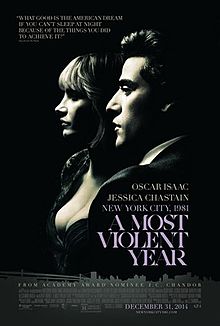
A Most Violent Year-2014

A Most Violent Year-2014

Director J.C. Chandor

Starring Oscar Isaac, Jessica Chastain

Scott’s Review #239

_A_Most_Violent_Year__Theatrical_Poster

Reviewed May 1, 2015

Grade: B

Set in New York City, throughout the notoriously violent year of 1981 and influenced, at least in part, by The Godfather (1972) A Most Violent Year (2014) is similar in texture to the elite HBO series The Sopranos (1999-2007).

A Most Violent Year is an attempt at weaving a tale of a “good guy” mixed up with the mafia and attempting to remain upstanding throughout the adversity and corruption he encounters.

Oscar Isaac and Jessica Chastain portray Abel and Anna Morales, who owned Standard Oil, an upstart business they are attempting to launch.

Due to the violent nature of the times, several trucks are hijacked, resulting in robberies and severe beatings. In desperate need of funds to expand their business and stay ahead of competitors, Abel and Anna are forced to take out loans, leading them into a world where crime and violence run rampant.

They are under investigation for apparent price fixing and tax evasion activity by the Assistant District Attorney.

The main theme is the conflict and guilt that Abel feels towards violence and the constant temptation to join the ranks of the crime world to protect his business ventures.

Abel faces pressure from Anna, who has mob ties (her father is an influential mafia boss known around town) and is all for fighting fire with fire. Abel refuses and is determined to lead a straight and narrow life.

When circumstances spin out of control, his morals are questioned.

A Most Violent Year is an interesting film yet I think I was expecting a bit more than I was given.

For starters, it is not in the same league as the mafia works of art. It is tough to put my finger on what the issue is but something is missing from the film making it lack a compelling edge.

The plot moves slowly, for sure, but the film is successful as the character study that it is, however, I was left wanting more depth to the characters and a broader vision of the film itself.

I did not find myself truly vested in either the character of Abel or Anna.

Chastain received praise for her performance, which I found adequate, but hardly a marvel. Nominated for several awards, but deemed “snubbed” for not receiving an Oscar nomination, I find this untrue.

Her performance is not brilliant and Oscar Isaac’s is superior.

This is not to say that I did not enjoy the film overall. It takes some risks, has a rich character complexity, is shot very well, and looks great. It has a smooth look and I completely bought the 1981 time period, rather than it appearing to be dressed up for the era.

There is an authenticity to it.

A mob film not on the level of The Godfather or Goodfellas (1990), A Most Violent Year is a decent contribution to the crime-thriller era. It just does not live up to the critical acclaim heaped upon it.

Independent Spirit Award Nominations: Best Supporting Female-Jessica Chastain, Best Screenplay, Best Editing

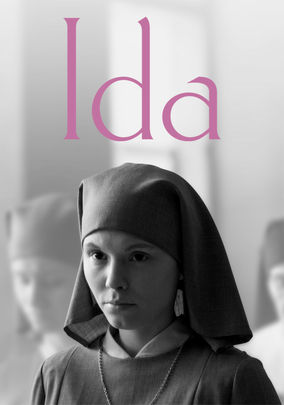
Ida-2014

Ida-2014

Director Pawel Pawlikowsi

Starring Agata Kulesza, Agata Trzebuchowska

Scott’s Review #238

70293721

Reviewed April 24, 2015

Grade: A

Ida (2014), the winner of several Best Foreign Language statuettes, including the first-ever Best Foreign Language Oscar for Poland, is a black and white film, containing beautiful cinematography. It offers a fascinating story that is both moving, sad, and very character-driven and centers around not one, but two compelling characters.

The ravages and after-effects of war have been explored in film before, but Ida brings a fresh spin to the subject matter.

The film takes place sometime in the 1960s, years after the cruelties of World War II and the brutality of the holocaust occurred, and explores the long-lasting pain and sadness that the incredible time in history left on the survivors, both mentally and physically.

The focus is on Anna (Agata Kulesza), a young nun about to take her coveted vows and begin a life serving the Lord. Quite beautiful, she was left as a toddler at a convent. Before she takes her vows she is instructed to spend time with her only known relative, Aunt Wanda (Agata Trzebuchowska).

Wanda is a former judge who battles depression and alcoholism. Her brother, Anna’s father, was murdered along with Wanda’s young son, so she is a tortured soul. As Anna (real name Ida and Jewish) and Wanda begin a road trip to find the whereabouts of their deceased family’s bodies, they both face personal demons.

What struck me most about Ida is the cinematography- the black and white is lovely, especially when Ida and Wanda travel across the Polish countryside, exquisite to look at.

The farms, land, and roads are so crisp and perfectly lit that it is easy to fall in love with them.

Many scenes resemble paintings giving the film an artistic quality. Ida is simply elegant and peaceful in style.

The story itself of Ida is wonderful. Ida- the title character nun is torn. She knows no other life than the church that saved her life. But she is a gorgeous young woman filled with desires. She sees her promiscuous aunt flaunt men and dress to the nines in flashy outfits and makeup.

Ida, almost always dressed in her nun’s garb, secretly dresses in Wanda’s dresses and makeup and is transformed. When she meets a handsome saxophone player, her desires begin to brim over and her conflict increases especially as the truth about her heritage unfolds.

As interesting a character study as Ida is, the character of Wanda is equally, if not more so, interesting. Damaged, hurt, and depressed she needs men to feel good about herself.

An alcoholic she has not gotten over the death of her young son and has become a bitter woman. Ida is about loss.

Visually and creatively enticing, Ida is as good as they get. It deserves the many awards that were bestowed upon it.

Oscar Nominations: 1 win-Best Foreign Language Film (won), Best Cinematography

Independent Spirit Award Nominations: 1 win-Best International Film (won)

Only Lovers Left Alive-2014

Only Lovers Left Alive-2014

Director Jim Jarmusch

Starring Tilda Swinton, Tom Hiddleston

Scott’s Review #237

Only_Lovers_Left_Alive_English_film_poster

Reviewed April 24, 2015

Grade: B

Only Lovers Left Alive (2014) is a bizarre trip into the strange and unusual world of vampires.

The film, moving slowly, becomes hypnotic, grabbing me into the plot, though the plot itself seems almost secondary to the gothic mood and dark ambiance of the film.

Thanks to the wonderful Tilda Swinton, who I find mesmerizing in every film role she appears in, the methodical film never completely bored me and, at times, even fascinated me.

Set in present times, Swinton and Tom Hiddleston play vampires named Adam and Eve, who are lovers separated geographically. Adam is a musician living in a vast Victorian house in Detroit and Eve resides in Tangier.

Realizing that Adam is lonely and suicidal, Eve makes the international trek to the United States to be with her love. While they begin enjoying a quiet existence immersed in music and thoughts, Eve’s rebellious sister Ava (Mia Wasikowska) from Los Angeles adds havoc to their lives.

Also cast in the film is John Hurt, who plays Marlowe, an ancient vampire assisting Adam and Eve, who succumbs to sickness due to tainted blood.

The film is a creative, atmospheric offering from edgy independent film director Jim Jarmusch, known for such left-of-center fare as Broken Flowers (2005) and Coffee and Cigarettes (2003), which are visual and visceral achievements.

While I did not completely love this film, feeling that the actual story is the weakest area, the magical and beautiful arrangements almost make up for any shortcomings.

Set entirely at night (when vampires are awake) and featuring several shots of Adam and Eve posed naked or almost naked in lovely, artistic angles, I think the film is going for a “look” as much as for storytelling and not completely centering on the plot.

It is also a lovely romantic film, though not in the typical sense of silly misunderstandings, and comical moments, but rather in romantic artistry, as Adam and Eve connect spiritually.

Married hundreds of years ago, Adam and Eve have been inexplicably separated by thousands of miles and coasts, though the reason is not explained.

Why are they the few remaining vampires alive? Does the human race know they are vampires or think they are odd-looking people? They both have money to burn and pay a high cost for being vampires as they either pay a contact to steal blood from hospitals to survive or obtain the blood elsewhere.

They are tempted to bite humans but resist those urges. The film does not explain why they are two of the few vampires left in the world or other questions. Adam, supposedly a famous musician, is wealthy beyond words and lives in a haunted-looking mansion surrounded by music and musical instruments.

The plot holes, of course, are secondary to me. None of them matter.

The film has beautiful moments- it is musically centered and Adam and Eve on more than one occasion engage in beautiful, tender dances the film is a pure love story, but a very left-of-center one.

I admire the film’s creativity and going where most filmmakers do not dare to go. Jarmusch dares to be different and deserves much praise.

The negative for me was the pacing of the film- the story almost does not matter as the film feels more like an experience in art than a “mainstream” film containing strong plot points and focus.

Only Lovers Left Alive (2014) is a different type of film and one worth admiring.

Independent Spirit Award Nominations: Best Female Lead-Tilda Swinton, Best Screenplay

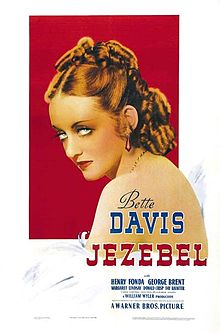
Jezebel-1938

Jezebel-1938

Director William Wyler

Starring Bette Davis

Scott’s Review #236

220px-Jesebel_movieposter

Reviewed April 18, 2015

Grade: B+

An excellent showcase for the young and lovely Bette Davis, Jezebel (1938) is a very early film role for Davis. It is similar to Gone with the Wind, a film Davis reportedly lost to Vivian Leigh.

One wonders how she would have made the character of Scarlett O’Hara her own, and Jezebel is on a journey exploring that possibility.

Acclaimed director William Wyler directed Jezebel, set in New Orleans in 1852 (pre-Civil War). Davis plays spoiled southern belle Julie Marsden, who is engaged to wealthy banker Preston Dillard, played by Henry Fonda.

After a dispute in which Julie selfishly feels her needs are unmet, she shockingly wears a red dress to a sophisticated ball where unmarried women are expected to wear white. This causes a scandal that results in Preston dumping Julie and leaving town.

Cocky Julie expects Preston to return to town and grovel for her forgiveness, but when he does return with a life-changing twist, the drama unfolds. Circumstances include a savage duel, longing for love, and atonement.

Fans of Davis will love Jezebel for the sheer excellence that she brings to the screen. Mesmerizing with those soulful, big eyes and excellent mannerisms, she exudes confidence and sophistication. Admittedly, this is my earliest Davis experience, and she shimmers on-screen.

Bette Davis is perfectly cast. Interesting to note are the innocent qualities early Davis possessed. Later afflicted with a hoarse, deep voice and ravaged beauty after years of alcohol and cigarette abuse, Davis in Jezebel is virginal and debutante-looking.

I find Julie’s wardrobe choices interesting. Her horseback riding outfit, the vixen-like red dress, the virginal white dress, and the dark raven cape at the climax of the film, as well as the various lighting techniques Wyler used to showcase Davis’s face, almost look like candlelight.

The film is similar to Gone with the Wind (preceded by a year). Julie, like Scarlett, is a rich, selfish girl who likes to manipulate men. Both films feature a love triangle prevalent in the story and broken hearts. The enslaved people in both films resemble each other, though they are a bit more glamorous in Jezebel.

The introduction of the yellow fever storyline and the sick and weak lying around in droves is similar to the wounded and dying soldier scene in Gone with the Wind, where the ill and dying lie in pain. The periods, triangle, and southern charms all heavily play in both. It is impossible not to compare the two films.

Melodrama did very well; Jezebel (1938) is to be admired as it is a film featuring a strong female character, something lacking in the film then (1938) and shamefully still lacking in cinema today! Jezebel is an actual “ambitious woman’s movie.”

Oscar Nominations: 2 wins- Outstanding Production, Best Actress-Bette Davis (won), Best Supporting Actress-Fay Bainter (won), Best Scoring, Best Cinematography

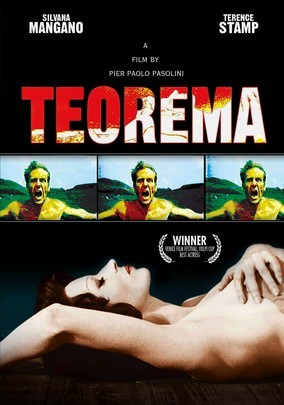
Teorema-1968

Teorema-1968

Director Pier Paolo Pasolini

Starring Terence Stamp, Silvana Mangano

Scott’s Review #234

70039263

Reviewed April 10, 2015

Grade: A-

Teorema is a 1968 Italian art film directed by Pier Paolo Pasolini, who later went on to direct the dark and disturbing 1975 masterpiece, Salò- 120 Days of Sodom.

If one is looking for a concise, mainstream plot with a fixed, to-the-point beginning and ending, one will be disappointed. Rather, Teorema is an exhibition in artistic style and interpretation, and it succeeds in mesmerizing this viewer with thought and contemplation.

A mysterious stranger, known as “the visitor”, suddenly arrives to stay with an affluent Italian family in their sprawling estate. The family consists of a father, mother, son, daughter, and maid, all of whom experience loneliness, boredom, fear, rage, or repression.

The handsome stranger successfully beds all the family members, and just as suddenly as he arrives, he disappears from the household, leaving the family members with different thoughts, feelings, and actions upon his departure.

The film is highly interpretive, and every character can be analyzed.

The stranger seduces all the characters, and the family’s wealth is examined. Is Teorema (which translates to the theorem in Italian) a commentary on the bourgeois society? The father, Paolo, owns a factory and appears to be in turmoil- is he a repressed homosexual?

The father’s story concludes with him turning his factory over to the workers, stripping naked, and roaring with anger and frustration.

Is the mother simply a wealthy, bored housewife or much more than that? This character might have been explored more thoroughly.

The maid, devoutly religious, becomes suicidal after her tryst with the stranger. The others confide in the stranger about how they feel about themselves, and at times, the film feels like a therapy session as each character delves deeper into their personal feelings.

Only the maid is a bit different from the others, but could this be because she is working-class, while the others are affluent?

The daughter, Odessa, approximately sixteen years old, becomes depressed after her liaison. The frightened, weak son appears to have a crisis and is consoled by the stranger in a loving, tender fashion.

Interestingly, the film at the time was resoundingly denounced by the Vatican, which took offense at the controversial tone of the film and its focus on “obscenity”.

Could this be because of some people’s interpretation of “the visitor” as being a Christ-like figure? One must argue for the distinction between “obscenity” and “art” after viewing this groundbreaking, visionary film. I found Teorema to be a thought-provoking film and did not feel the movie was going for shock value.

The film is lightweight in this regard compared to the hauntingly brutal Salo (1975), which followed years later.

Teorema (1968) delves into the psychological abyss and portrays an Italian family as more than wealthy- they are people with emotions, fears, desires, and complexities.

Not for mainstream audiences, but meant for lovers of interpretive film, it can be debated and discussed for ages to come.

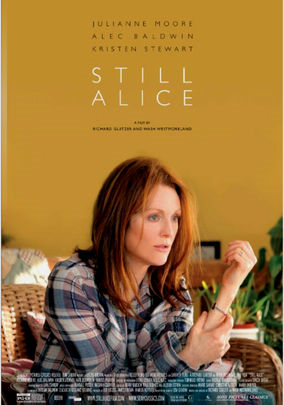
Still Alice-2014

Still Alice-2014

Director Richard Glatzer, Wash Westmoreland

Starring Julianne Moore, Alec Baldwin

Scott’s Review #224

untitled

Reviewed February 26, 2015

Grade: B+

Still Alice (2014) tells the story of a highly educated college professor who, at the young age of fifty, is afflicted with early-onset Alzheimer’s disease.

She wrestles with, not only the gloomy diagnosis but also the emotional effects of the disease and what effects they will have on her husband and three grown children.

Also explored are the hereditary aspects of the illness and the effects on the offspring of the inflicted person.

The film has a calm demeanor but is heartbreaking and a downer.

Alice Howland has always achieved success, she is a linguistics professor at the esteemed Columbia University in Manhattan and has a seemingly idyllic life. She lives an affluent lifestyle and has three grown, well-adjusted children.

Alec Baldwin plays John Howland and Kristen Stewart plays the most predominantly featured daughter, Lydia.

These points of perfection make the story and her gradual decline all the more tragic to watch. We root for Alice because she is an ideal character- kind, loving, and the perfect mother and wife.

How could a thing like this happen to her? When she goes for a jog near her campus and suddenly does not recognize her surroundings or where she is, the audience shares Alice’s confusion.

The primary reason to watch the film is for the astounding performance that Julianne Moore gives, as Alice. The film borders on a good Lifetime television movie, albeit, much better than that and arguably in the same vein.

The acting sets this one above the mediocre largely due to Moore- with a lesser actress, I ponder how the film would have succeeded.

The tender scenes are wonderful. When Alice wets her pants, the audience also feels her humiliation. When she breaks down in fear and anxiety we do the same with her.

The supporting cast also deserves praise, specifically Baldwin and Stewart. While not entirely fleshed out characters, their lending of support to their wife and mother respectively makes the characters themselves sympathetic and likable.

An important scene in an ice-cream parlor late in the film when John asks Alice if she “really wants to be here” is misunderstood by Alice making the importance of what he is asking even more profound.

A scene where a coherent Alice, early in her diagnosis, leaves instructions for herself via video, to be seen when she is further along in her illness, is suspenseful and left me rooting for the result to be one way, which could be interpreted as drastic, and left me conflicted.

Masterfully done.

My only criticism is that despite the subject matter of Alzheimer’s disease which is devastating and life-altering not only for the victim but for the family, the film has a safe feel to it.

I would have liked darker, grittier moments throughout the film to make it even more effective.

Not a happily ever after story, bleaker moments might have prevailed. And, centered on Moore, it also might have been interesting to explore more of the effects the family has and will go through, especially Baldwin’s John.

His character and Lydia could have been explored more deeply instead of merely supporting and comforting Alice.

Still Alice (2014) is worth seeing if only for the performance of Julianne Moore, a talented actress doing a brilliant job in the title role.

Oscar Nominations: 1 win-Best Actress-Julianne Moore (won)

Independent Spirit Award Nominations: 1 win-Best Female Lead-Julianne Moore (won)

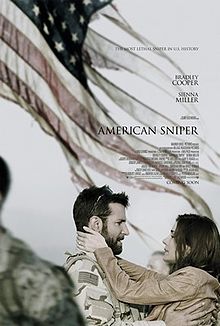
American Sniper-2014

American Sniper-2014

Director Clint Eastwood

Starring Bradley Cooper, Sienna Miller

Scott’s Review #223

American_Sniper_poster

Reviewed February 22, 2015

Grade: A-

American Sniper (2014), directed by Clint Eastwood, is a war film told from the viewpoint of a soldier- or a sniper.

A character study if you will.

Starring Bradley Cooper as Chris Kyle, deemed the deadliest marksman in U.S. military history, he has 255 kills. The film begins pre-9/11 as Kyle views coverage of the 1998 U.S. Embassy attacks and enlists in a grueling training program to become a Navy Seal sniper.

Flashbacks reveal Kyle as a child being taught to hunt deer and shoot a rifle by his demanding father. He is eventually sent to Iraq following the 9/11 terror attacks and the film continues to showcase Kyle’s military career and multiple tours of duty ending years later.

His wife Taya is played by Sienna Miller.

I am not sure the bevy of controversy that American Sniper has stirred is warranted. I see the film simply as a very good mainstream, action movie. Yes, it does have the overdone Americana machismo and Texas swagger, but it is an Eastwood film! This masculinity is at the heart of many of his films.

I do not view the film as politically charged.

The film leans neither Republican nor Democratic and seems to take a middle-of-the-road viewpoint.

It is a tale of a war hero, but it questions the wars fought and the casualties involved both American and otherwise. Sure, Kyle is a good ole, red-blooded American, but as he and Taya watch the 9/11 attacks on television, they are watching CNN, not Fox News.

His close military buddy asks “Why are we here?” referring to Afghanistan- there is inference by Eastwood to question what this is all about.

I hope audiences keep this in mind.

One concern I do face as I ponder the film is whether American Sniper will send some audience members back to a time when the world was fearful of Muslims and at risk of the recent ISIS terror situations, I hope that people are smart enough to realize that NOT all Muslims are terrorists.

It is only a minuscule portion that is evilly inspired.

The major terrorist in American Sniper, known simply as The Butcher, is despicable, but plenty of other Muslims are innocent and victims of The Butcher’s brutality.

I love how the film has depth. Cooper is as resilient as the troubled sniper. He is portrayed as human, a nice, all-American guy. He wrestles with the choice of shooting a woman and a young boy who died at the risk of them carrying a bomb and killing members of his squad- he does not want to kill them, but rather is excellent at his job.

He is a perfect shot.

In the heat of the moment, under extreme pressure, he must ask himself, “Should I pull the trigger and end their lives”? “what if they are innocent pedestrians?”.

He becomes, in a sense, addicted to his duty of going overseas to Iraq and Afghanistan and justifies his service as “protecting Americans”.

This leads to a troubled personal life as Taya becomes frustrated with his frequent tours of duty, which he readily chooses to do. He suffers from Post-Traumatic Stress disorder but refuses to acknowledge this. He almost kills the family dog in a fit of uncontrolled rage; he temporarily confuses sounds from an auto shop as military warfare.

My admiration for the acting ability of Bradley Cooper increases with each role I see him in. He is a marvel. From recent dynamic performances in American Hustle (2013) and The Place Beyond the Pines (2012) to this role, I am convinced he can play any part successfully and convincingly.

He has sure come a long way from The Hangover (2009).

American Sniper (2014) is an enormously creative and commercial success and deserves to be. Layered, and character-driven, it is worlds above the typical male-driven action film.

Oscar Nominations: 1 win-Best Picture, Best Actor-Bradley Cooper, Best Adapted Screenplay, Best Sound Editing (won), Best Sound Mixing, Best Film Editing

Boyhood-2014

Boyhood-2014

Director Richard Linklater

Starring Ellar Coltrane, Ethan Hawke

Scott’s Review #217

70301281

Reviewed January 19, 2015

Grade: A

Boyhood (2014) is a family drama directed by Richard Linklater that tells the story of a family’s trials and tribulations over twelve years, ranging from approximately 2002-2013.

The film uses the same actors over the entire period, enabling the viewer to see the characters change. What a novel idea! In this day and age of special effects, superheroes, and animated animals, how refreshing to see a simple tale of a family told over a while.

The film’s main character is Mason Evans, Jr. played by Ellar Coltrane.

We are introduced to Mason when he is six years old and in the first grade. He lives with his older sister Samantha, played by the director’s daughter Lorelei Linklater, and his mother Olivia, played by Patricia Arquette, in Texas.

Ethan Hawke, divorced from Olivia plays Mason’s father (Mason Sr.).

As the years go by we see situations arise and the characters grow and develop like real life.

After the film, Mason Jr. is headed off to college following years of life experience including his first relationship. The other characters develop and we see Olivia and Mason Sr. delve into relationships with partners, some successful, others less successful.

Boyhood succeeds because it is a film about real life that feels like a slice of Americana.

It’s a wonderful film.

The audience invests in the characters because we grow to love and care about their lives. It is comparable to seeing cousins or friends once a year and seeing what becomes of their lives over time.

This film fascinates me because it is so basic and real that it does not need contrived dramatic situations to warrant attention. It is simply authentic and that is what makes a great film.

The film is left-leaning politically speaking and I love that current events are brought up throughout the years by the family members.

As the film progresses we are treated to Mason Sr. commenting on his distaste of the Iraq war, the children’s anticipation of the new Harry Potter film, Mason Sr. taking the kids to a Houston Astros game, and The Beatles and Star Wars are mentioned.

Another scene sadly focuses on a returning soldier from Iraq who suffers from Post-traumatic stress disorder. These nuances make the film seem so authentic and rich.

As wonderful a job as Patricia Arquette and Ethan Hawke did neither of them had a huge, bombastic, emotional scene which would have been splendid given the talents of each, but this is a small criticism.

Both are superb as struggling parents trying to do the right thing for their children and carve out a life for themselves.

Boyhood redefines realism in the film as we see a family unit hope, struggle, and dream as it’s played out before our eyes.

The film does not need overwrought dramatics as it is simply a slice of the life of a group of people we come to know and love.

Everyone can relate to Boyhood (2014).

Oscar Nominations: 1 win-Best Picture, Best Director-Richard Linklater, Best Supporting Actor-Ethan Hawke, Best Supporting Actress-Patricia Arquette (won), Best Original Screenplay, Best Film Editing

Independent Spirit Award Nominations: 2 wins-Best Feature, Best Director-Richard Linklater (won), Best Supporting Male-Ethan Hawke, Best Supporting Female-Patricia Arquette (won), Best Editing

Big Eyes-2014

Big Eyes-2014

Director Tim Burton

Starring Amy Adams, Christoph Waltz

Scott’s Review #216

70095129

Reviewed January 18, 2015

Grade: B

Big Eyes (2014) tells the true story of Margaret Keane, a talented artist, famous for the “big eyes” waif collection, whose husband manipulated her and took credit for her works during the 1950s and 1960s.

A con artist, he passed himself off as a talented artist, but in truth, he scammed other artists and had no artistic talent of his own.

He was also mentally unstable.

Due to his charisma and ability to wine and dine, with influential people, combined with his marketing talents, he made millions in profits from his wife’s art.

Amy Adams and Christoph Waltz portray Margaret and Walter Keane.

Tim Burton directs the film.

Adams and Waltz are the main appeals in this film. They share tremendous chemistry, when they are courting one another and subsequently when they despise each other and fight a bitter divorce battle in court over the rights to Margaret’s paintings.

I love Christoph Waltz in whatever he appears in as his charisma and acting ability astound me.

Adams is quite effective and believable as the passive, loyal, and talented Margaret Keane.

As compelling performance as Adams gives, one issue with the film is that I did not feel as sympathetic towards Margaret Keane as the film probably intended.

I like the character very much and was rooting for her in the courthouse scenes to be awarded rights to her paintings and cheered when she escaped to Hawaii with her daughter to begin a new life.

But, she willingly went along with her husband’s plot, as they both decided a female artist would not sell like a man could (it was the 1950s), and they made millions from her art. They lived in a gorgeous house, had wonderful dinners, and were able to maintain an extravagant lifestyle- not so bad.

It was not as if Walter stole all of her money and left her homeless. She enjoyed a nice lifestyle.

So, my sympathy for her was affected.

A positive of Big Eyes is how Margaret continues to uncover Walter’s deceptions. She first learns he has taken credit for her work then finds out that he is not even an artist and has conned another painter into giving Walter credit for their work.

The buildup to these reveals is excellent.

The film is a change of pace for Tim Burton. Big Eyes is not a dark film and is quite bright and colorful. Some interesting sets and art direction are similar to his other works- Edward Scissorhands and Beetlejuice.

Big Eyes (2014) is an enjoyable film largely made successful by the talents and appeal of its two stars.

Independent Spirit Award Nominations: Best Screenplay

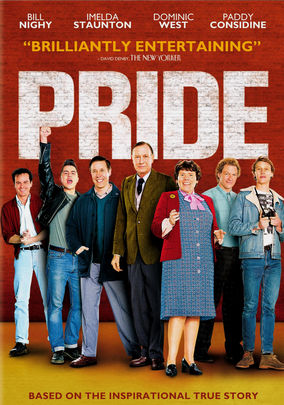
Pride-2014

Pride-2014

Director Matthew Warchus

Starring Bill Nighy, Imelda Staunton

Scott’s Review #215

80013480

Reviewed January 17, 2015

Grade: B-

Pride (2014), based on a true story, deserves props for delivering a nice message about inclusion and groups of vastly different people coming together as human beings.

While it’s a nice film, the filmmakers play it a bit too safe and it has a definite formulaic feel to it.

Surely, the real story of Pride was not as simplistic as this film felt at times.

The setting is 1984 England. A group of British miners goes on strike over wages. A group named Lesbians and Gays Support the Miners made up of gay men and women developed an interest in the strike and decided to help the miners and families.

Why they decided to take on this cause is not fully explained. The National Union of Mineworkers is hesitant to accept funds as they worry about the publicity caused by a group thought to be perverts.

The film is riddled with clichés- the macho miners resist the help from the gays, many of whom are portrayed as effeminate. The characters who are lesbians look as though the filmmakers wanted to “butch them up”, thereby overdoing the stereotype.

There is a subplot of one gay young man who has not come out to his parents, a well-to-do, pretentious couple. When inevitably the truth is revealed, the parents are angry and turn their backs on the teen.

He leaves home to join the gays and lesbians who accept him into their lives with open arms.

The female head of the committee is homophobic and vows to do everything in her power to make sure the gay and lesbian group does not succeed in aligning with the miners.

These clichés seemed way too overdone to make the film more dramatic. Some of the characters, therefore, come across as one-dimensional.

Even the story revolving around a character with AIDS seems watered down and soft.

On the plus side, casting the brilliant Imelda Staunton as the sympathetic, maternal, Hefina is a plus.

A huge supporter of gays and lesbians she comically befriends all of them and is curious about their lifestyles. Bill Nighy is also excellent as Cliff, the older miner who turns out to be gay.

Margaret Thatcher, Prime Minister at the time, is presented as greedy and selfish with little regard or use for the miners or labor unions.

Pride (2014) is an earnest, sentimental, feel-good film that deserves adoration for the coming together of different communities.

I would have liked to see more risks taken by the film.

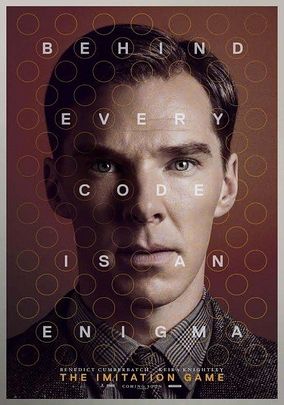
The Imitation Game-2014

The Imitation Game-2014

Director Morten Tyldum

Starring Benedict Cumberbatch, Keira Knightley

Scott’s Review #213

70295172

Reviewed January 15, 2015

Grade: A

The Imitation Game (2014) tells the story of Alan Turing, a confident and brilliant British mathematician who was responsible for cracking Nazi Germany’s Enigma code, which led to the Allied forces winning World War II.

The film also delves into Turing’s complex and sad personal life and the audience grows to know his upbringing largely told via flashbacks as a small boy at boarding school.

The film is tragic yet wonderfully made and is a powerful viewing experience in human storytelling.

The film has two aspects going on. The first is the hiring of Turing by the Government Code and Cypher School at Bletchley Park to crack the code and the numerous struggles faced in accomplishing this feat.

Turing is not easy-going. He is arrogant, quick-witted, and even smug. However, through his friendship with Joan (Keira Knightley), an intelligent woman on the team of scholars, we see a human side to him as they forge a lifelong bond.

The other is of his personal life which is a bit more mysterious and comes into play during the second half. Keeping a secret about his personal life, he is homosexual, which in the time the film is set (1940’s England), is illegal.

Alan and Joan agree to marry, in large part to appease her parents, but circumstances change these plans.

Benedict Cumberbatch, who portrays Turning, deserves praise for his impressive portrayal. He successfully gives depth and a wide range of emotions to the character.

He begins as a self-centered man but becomes layered, guarded, and protective due to his private life of which he is forced to hide a great deal.

Keira Knightley’s character supports Cumberbatch’s character of Alan as she becomes engaged to him and later in life becomes his biggest champion. Her character, besides being quite intelligent, is also kind and giving.

The ending will give the viewer many tears and cause to think of the enormity of World War II in terms of the vast amount of casualties. The facts listed just before the credits roll are awe-inspiring and gut-wrenching.

The Imitation Game is not a war movie per se since it does not deal with battle scenes. It is more of a drama dealing with the effects of war. Many figures are presented and some characters are affected.

For instance, in one scene, the group (led by Turing) must make a heartbreaking decision not to stop an impending attack, which will cause many deaths- including a character’s brother- instead of choosing to keep mum to save thousands more.

It is a powerful scene.

The Imitation Game (2014) successfully and heartbreakingly tells the story of a heroic figure who received no accolades while living, instead of being ostracized, and not until posthumously, did he receive his due.

Sadly, this was too little too late.

Oscar Nominations: 1 win-Best Picture, Best Director-Morten Tyldum, Best Actor-Benedict Cumberbatch, Best Supporting Actress-Keira Knightley, Best Adapted Screenplay (won), Best Original Score, Best Production Design, Best Film Editing

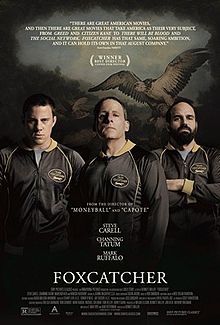
Foxcatcher-2014

Foxcatcher-2014

Director Bennett Miller

Starring Steve Carell, Channing Tatum, Mark Ruffalo

Scott’s Review #210

220px-Foxcatcher_First_Teaser_Poster

Reviewed January 2, 2015

Grade: A

Foxcatcher (2014) is a dark, disturbing, psychological thriller that achieves greatness based on its bleak look and great acting.

It is a superb character-driven story, based on true events, led by the talents of actors Steve Carrell, Channing Tatum, and Mark Ruffalo, each of whom is excellent.

It is a sports film, but hardly predictable as many in this genre typically are.

The film is set in 1987. Brothers Mark and Dave Schultz (Tatum and Ruffalo respectively) are former Olympic gold medal-winning wrestlers attempting to compete in the upcoming 1988 Olympic competitions.

Despite winning a gold medal, Mark (Tatum) lives in squalor and is reduced to giving pep rallies at elementary schools, meant to be done by Dave (Ruffalo), for very little money. Dave is the more successful brother, a family man living a happy existence.

He is more talented than Mark and very driven.

One day Mark is contacted by wealthy philanthropist John du Pont (Carrell) and invited to live with him at his expansive estate in Pennsylvania and train with other aspiring Olympic wrestlers.

John’s attempts at wooing Dave as well initially fail.

From this point in the story, the film delves into psychologically dark territory, mainly the controlling, disturbing behavior of John, as he attempts to control Mark and woo Dave.

John has a damaged relationship with his mother, Jean, wonderfully played by Vanessa Redgrave. Jean feels that John’s obsession with the wrestling world is far beneath him and their relationship is tense and unloving.

The three principal actors involved in the film are worthy of discussion as the film would not be as complex or compelling.

Let’s begin with Channing Tatum- known primarily as a hunky movie star with questionable acting ability, he proves the naysayers wrong.

I cannot help but compare him to a younger Brad Pitt. It took years and many films for him to be recognized as more than a pretty face and abs to die for.

His performance is understated and calm, but nuanced in his laid-back demeanor. Sometimes anger bubbles under the surface.

Carrell is downright creepy as the affluent yet insecure Du Pont.

Throughout the film, the character seems off. Known mostly for silly comedies he is a breakout performance that, I hope, leads to similar meaty roles. Carrell shows he has what it takes to appear in quality films.

Lastly, Mark Ruffalo, who always plays interesting, everyman-type characters, again emits much emotion from his character of Dave Schultz, a successful, driven, athlete who is also a dedicated husband and father.

With lesser casting, Foxcatcher would not have been as interesting.

Questions at the end of the film will arise. What were John du Pont’s motivations? What effect did his mother have on his actions? How could a man with all his power and wealth end up this sad? Were there inappropriate sexual overtures made towards the wrestlers by John?

Foxcatcher (2014) excels at portraying a dark, layered, moody, true story and teaches that wealth does not equate to happiness and in many instances, quite the contrary occurs.

The film is an immense success.

Oscar Nominations: Best Director-Bennett Miller, Best Actor-Steve Carell, Best Supporting Actor-Mark Ruffalo, Best Original Screenplay, Best Makeup and Hairstyling

Independent Spirit Award Nominations: 1 win-Special Distinction Award (won)

The Greatest Show on Earth-1952

The Greatest Show on Earth-1952

Director Cecil B. DeMille

Starring Charlton Heston, Betty Hutton, James Stewart

Scott’s Review #204

60034703

Reviewed December 14, 2014

Grade: B+

Considered by some critics to be one of the worst Best Picture winners of all time, The Greatest Show on Earth (1952) is quite an impressive Hollywood spectacle and tells the story of the world’s largest railroad circus as they launch a tour and travel throughout the United States, with plenty of drama to experience throughout the film.

The film stars Charlton Heston, Betty Hutton, and James Stewart as the general manager, acrobat, and clown of the show, respectively.

The film used over 1,400 real Ringling Bros. and Barnum & Bailey employees and hundreds of animals in its production, giving it an authentic circus feel.

Unfortunately, the film also has a schmaltzy quality and lacks the best acting, which surprisingly does not bother me and, strangely enough, works in a way.

Various characters have affairs with each other or fall in and out of love rather quickly- it makes for good drama, anyway.

Of course, the main appeal is the extravagant show. While the drama sometimes takes center stage, the lavish production and actual circus events shine through.

My favorite character, and arguably the only interesting character with any depth, in The Greatest Show on Earth is Buttons the Clown, played by James Stewart.

Buttons wears his clown costume, complete with full makeup, at all times. He is kind and mysterious. We learn that he “mercy killed” his dying wife and has joined the circus for protection from the police.

A wonderful human being, he was once a Doctor and tends to anyone in the circus troupe who needs assistance. Later in the film, he plays a vital role after a tragic accident.

His heartbreaking, tender conversation with his elderly mother, whom he only sees secretly once a year for seconds as she tearfully and discreetly visits him in the audience, is painfully sad to watch and is such a sweet scene.

The Greatest Show on Earth’s best scene by far still impresses today is the massive train wreck close to the conclusion.

Made in 1952, the special effects and direction of Cecil B. DeMille are brilliant. The train derails one night in a perfect way—it crashes into an approaching train and derails, highly effective in its enormity.

The scene does not look silly.

The way that all of the drama comes together in this scene—Harry, the crooked midway concessionaire and vicious elephant trainer, Klaus, who is responsible for the accident, Button’s true identity being revealed, and a significant character in peril—makes this scene top-notch and a satisfying conclusion to the film.

The stories involving Brad, Holly, Sebastian, and Angel are soapy and melodramatic and are the film’s weakest point. As a viewer, I couldn’t care less which character lusted after which or who wound up in bed together, but the movie itself is a spectacle, which is my main enjoyment.

The brightness, the revelry, and the circus performances are all wonderful.

Oscar Nominations: 2 wins-Best Motion Picture (won), Best Director-Cecil B. DeMille, Best Story (won), Best Costume Design, Color, Best Film Editing

The Theory of Everything-2014

The Theory of Everything-2014

Director James Marsh

Starring Eddie Redmayne, Felicity Jones

Scott’s Review #199

80000644

Reviewed December 2, 2014

Grade: A-

The Theory of Everything (2014) tells the uplifting true story of renowned theoretical physicist Stephen Hawking (played by Eddie Redmayne) and his lifelong battle with a debilitating illness- motor neuron disease, which he was diagnosed with in college.

He and his future wife, literature student Jane Wilde (played by Felicity Jones), meet in 1963 at the prestigious Cambridge University in England and fall madly in love.

From this point, the film focuses on their life-long love affair and Stephen’s subsequent health battles.

Redmayne is wonderful in the lead role.

Portraying a character with both speech and mobility deterioration is not an easy task, especially as the problems become worse and worse over time forcing the actor to express varying levels of disability.

Redmayne rises to the occasion with both believability and conviction making his portrayal as real as possible.

The performance fondly reminded me of another great physical performance, Daniel Day-Lewis in My Left Foot from 1989.

Redmayne is a rising star in Hollywood.

Felicity Jones is also good, though I feel many actresses could have handled the role and there is not as much meat in her part as Redmayne’s.

The remainder of the cast is British actors making the film an authentic feeling. Emily Watson, who plays Jane’s mother, shamefully receives only one scene. Was this talented actress’s role cut?

I get the sense that the filmmakers had Oscar on their minds as the film is geared towards mainstream audiences with a wholesome slant.

The film skims past the complex theories and mathematical aspects and focuses more on the inspirational tale of a person overcoming an immense challenge.

Furthermore, the subsequent quadrangle between Hawking, Jane, Jane’s choir leader (Jonathan), and Hawking’s nurse (Elaine) are toned down and safe from what transpired. Hawking’s family accused his nurse of abusing him which is never mentioned in the film.

The film presents their relationship as wonderful, so clearly, some facts have been softened or omitted altogether, an example of how the film goes for a moral feel.

The situation involving the four real-life characters is messy, but the film makes it seem sweet. Presumably, this is because all the characters are still alive.

This is an interesting aspect of the film and is not necessarily a criticism as much as a perception. Many films embellish reality for entertainment value.

The pairing of Jane and Jonathan seemed inevitable from the moment they met. They had much in common (religion), whereas Stephen and Jane were complete opposites- she was catholic, he was atheist.

The sexual chemistry between Stephen and Elaine was evident when they met. Elaine’s energetic sexiness perfectly contrasts with Jane’s at that point in the film- haggardness and weariness.

The film is not designed to be a downer as it could have been. The focus might have been more sadder than it was. Rather, it is sentimental and empowering.

The Theory of Everything (2014) is a heartwarming, conventional, human story about a man rising above adversity, and at the center of the film is one dynamic performance by Eddie Redmayne.

Oscar Nominations: 1 win-Best Picture, Best Actor-Eddie Redmayne (won), Best Actress-Felicity Jones, Best Adapted Screenplay, Best Original Score

The Normal Heart-2014

The Normal Heart-2014

Director Ryan Murphy

Starring Mark Ruffalo, Matt Bomer

Scott’s Review #198

70302186

Reviewed December 1, 2014

Grade: B+

The Normal Heart is a 2014 HBO television movie based on the true story of Ned Weeks, an openly gay AIDS activist/writer, played by Mark Ruffalo.

The film is set during the period when the epidemic first surfaced, from 1981-1984, and the challenges and frustrations faced, mostly within the gay community, to bring exposure and assistance to the disease.

Weeks was famous for establishing a group of passionate members who banded together to attempt to hurdle these struggles.

The film was produced by Brad Pitt.

This is wonderful to know as films with this content (AIDS) are often tough to produce. It’s wonderful that Pitt’s wealth and influence were used effectively.

At a vastly different time in the country to be gay, the government did very little to assist with financing funding for treatment or researching a cure for it, which is the main point of the story.

The talented cast makes this film what it is.

Matt Bomer plays Ned’s closeted gay lover, Felix Turner, one of the many casualties of the deadly disease. Bomer lost forty pounds in preparation for the role.

Julia Roberts plays polio-stricken doctor, Emma Brookner, who was instrumental in helping the sick when few others within the medical community wanted to.

Other actors providing support are Alfred Molina, who plays Ned’s supportive, powerful, attorney and brother, and Joe Mantello, who has a terrific meltdown scene as his anger and anguish over the disease not being taken seriously by the government finally bubble to the surface.

Finally, Mark Ruffalo plays Ned competently, but why the slight feminization of the character? The real Ned Weeks was masculine. A needless stereotype the film (or Ruffalo) chose to pursue.

The film shows the discrimination faced by AIDS victims, from an airline pilot refusing to fly a plane carrying a sick patient, to an electrician refusing to enter a patient’s hospital room to fix a television set.

This is sad when one realizes how ridiculous these unfounded fears proved to be.

According to the film’s statistics, a major point of the film is how the United States Government, specifically President Reagan, did very little in the way of funding or even wanting to discuss the issue for years following the initial outbreak, resulting in thousands of lost lives.

And why exactly is Reagan considered a great President?

It makes one ponder. It was only due to beloved Hollywood star Rock Hudson acquiring and dying from the disease and Elizabeth Taylor using her star power to get people involved that finally led to the topic being discussed and action taken on a federal level.

My slight criticism of the film is that it looks and feels like a television movie similar in texture to Behind the Candelabra (2013), another HBO film.

The colors are bright and vivid and look television-like. could have used darker lighting and perhaps a gloomier more dower feel, especially given the subject matter involved in the story.

Otherwise, thumbs up and respect for bringing this story to millions of viewers and hopefully educating those who were not there.

Whiplash-2014

Whiplash-2014

Director Damien Chazelle

Starring Miles Teller, J.K. Simmons

Scott’s Review #192

70299275

Reviewed November 13, 2014

Grade: A

Whiplash (2014) is a film about an aspiring nineteen-year-old Jazz drummer, Andrew Neyman, played by rising star Miles Teller (known for 2013’s indie teen drama The Spectacular Now), who is attending one of the most revered musical schools in the country, the Schaffer Conservatory in New York.

He is mentored and terrorized by his intense and sometimes sadistic conductor, Terence Fletcher, portrayed by J.K. Simmons.

Andrew aspires to be the best drummer and worships Buddy Rich, a famous Jazz drummer from the 1930s and 1940s, who he constantly listens to and emulates.

While Andrew aspires to make the school orchestra that desperately needs a new drummer, he meets a cute girl, Nicole, at the concession stand of his favorite movie theater, and they bond.

Also in the mix is Andrew’s father, played by Paul Reiser. Once an aspiring writer, who never made it big, he struggles as a high school teacher. Andrew’s mother left the family when Andrew was just a toddler leaving just father and son.

The film mainly centers on the tumultuous relationship between Andrew and Terence and Andrew’s determination to be the best drummer in the world.

J.K. Simmons is mesmerizing in his role of Terence and is wonderful to see as Simmons has struggled as a character actor for years.

He gives a powerhouse performance and plows full steam ahead in his viciousness and extreme brutality towards the students, and on more than one occasion reduces a student to tears. If the tempo is not to his liking he shakes his clenched fist in disapproval.

The audience wonders if Terence is mean and sadistic or is tough on the students to make them work harder and achieve great things.

Throughout the film, I wondered if I should hate this character or sympathize with him for wanting the students to excel.

The sexuality of Fletcher is ambiguous.

He belittles and ridicules the students with fat jokes. He hatefully taunts an overweight student about Mars bars and happy meals, uses Irish digs, and inevitably gay slurs on other students, but is he hiding something in his personal life? Is he a closet case? His private life remains a mystery.

As brutal as Terence can be, there are moments of sensitivity that the character exhibits. He tearfully tells the orchestra a heartbreaking story of a former student, whom he admired, who recently died in a car accident.

In another scene, he warmly bonds with a friend’s young daughter.

As brilliant as Simmons is we must not forget to recognize the immense talent of Teller. The young actor does a fantastic job of portraying determination, drive, anger, and vengeance.

Andrew has a wonderful relationship with his dedicated father, a love/hate relationship with Terence, (are they bitter enemies or do they have the respect of a mentor/student?), and a sweet yet uneven relationship with Nicole.

He successfully portrays a myriad of different emotions throughout the film.

Paul Reiser is wonderful in an overlooked and thankless role as Andrew’s unsuccessful, yet forever faithful father.

Thankfully the film chose to center on the conductor/student dynamic. The romantic relationship with Nicole did not take center stage and usurp the main story, as I felt that the dynamic between the two was of lesser importance to the whole.

The finale, an intense concert performance scene focusing on the intensity between Terence and Andrew, is superbly done. The close-up camera shots of the two add much to the climax.

In fact, throughout Whiplash, extreme close-up shots of sweat and blood and intensity during performances and practices add to the overall rawness of the film.

Whiplash (2014) is an intense, sometimes brutal, assaulting experience, but an amazing film.

Oscar Nominations: 3 wins-Best Picture, Best Supporting Actor-J.K. Simmons (won), Best Adapted Screenplay, Best Sound Mixing (won), Best Film Editing (won)

Independent Spirit Award Nominations: 2 wins-Best Feature, Best Director-Damien Chazelle, Best Supporting Male-J.K. Simmons (won), Best Editing (won)

Birdman-2014

Birdman-2014

Director Alejandro G. Iñárritu

Starring Michael Keaton, Edward Norton, Emma Stone

Scott’s Review #190

80000643

Reviewed November 6, 2014

Grade: A

Birdman (2014) is a unique art film that, happily, has garnered major exposure and publicity because a movie like this runs the risk of receiving praise and notice only from the art-house crowd itself.

The film’s star, Michael Keaton, portrays Riggan Thomson, a former action hero superstar from the 1990s, who was made famous for the “Birdman” character he created.

Having made sequels to the film, his career has since dried up and he hopes to establish credibility and prove himself a real actor by writing, directing, and starring in his play.

The film is set in and around the Broadway theater in New York City.

As opening night approaches, he struggles to pull everything together and emit a successful production while faced with an injured terrible actor, a difficult actor, his insecurities, and a miserable theatre critic destined to ruin his big chance.

To make matters worse, his daughter Sam, played by Emma Stone is a recovering drug addict who hangs around the theatre distracting actors with her charm and good looks.

Naomi Watts and Edward Norton play Leslie and Mike, other cast members in the production. Watts is sympathetic as the emotional actress with a heart of gold who finally has her dream of performing on Broadway realized.

Norton, outstanding as Mike, is blunt yet socially awkward and can only perform truthfully on stage.

Keaton is simply a marvel as he plays a dark and vulnerable man. He hates and wishes to shed his ridiculous movie persona of yesteryear and secretly cringes when recognized by fans. He uses it with a voice inside his head when he played “Birdman” years earlier.

The uniqueness of the film is the use of what seems like one long take as the action rarely stops and is ongoing. The film belongs to Keaton, who wonderfully relays vulnerability, pain, and fear within with an outward persona of bravery and masculinity.

Throughout the film I wondered, is Riggan suicidal? What is real and what is imagined? Are certain scenes foreshadowing later events?

The film has much depth.

One marvels at how art imitates life, is Keaton portraying himself? He was the original Batman in the successful superhero franchise beginning in 1989 and his career tanked shortly after.

Birdman is a comeback film for him and he is devastatingly good.

Norton’s character Mike impressed me. He is blunt flawed, scared, and addicted to the stage.

Stone has one particularly brilliant scene as she lambasts her father and with regret, later on, tells him that the world has moved on without him and that he is irrelevant just like everyone else. It is a powerful scene.

In another, Riggan is locked outside the theater during the performance, clad only in his underwear. How on earth will he return to the stage and complete the show? The quick slights at current Hollywood superstars playing superheroes, specifically Robert Downey Jr. are deliciously naughty.

It is impossible to predict what will come next and the film is very New York theater style. Keaton’s run-in with a theater critic in a cocktail bar is the best scene in the film as the critic’s vicious critique of “You’re a celebrity, not an actor” resonates with both pain and tremendous anger for Riggan.

Riggan is a sensitive, struggling man and Keaton so wonderfully shows his vulnerability in every scene.

Oscar Nominations: 4 wins-Best Picture (won), Best Director-Alejandro G. Iñárritu (won), Best Actor-Michael Keaton, Best Supporting Actor-Edward Norton, Best Supporting Actress-Emma Stone, Best Original Screenplay (won), Best Sound Editing, Best Sound Mixing, Best Cinematography (won)

Independent Spirit Award Nominations: 3 wins-Best Feature (won), Best Director-Alejandro G. Inarritu, Best Male Lead-Michael Keaton (won), Best Supporting Male-Edward Norton, Best Supporting Female-Emma Stone, Best Cinematography (won)

Kiss of the Spider Woman-1985

Kiss of the Spider Woman-1985

Director Hector Babenco

Starring William Hurt, Raul Julia

Scott’s Review #187

60010547

Reviewed October 24, 2014

Grade: B+

1985 was not the best year for film nor was much of the 1980s, as I think about it, but unique standouts do exist and Kiss of the Spider Woman is an unusual and artistic film.

Set in present-day South America (Brazil) two men are imprisoned for very different reasons and are cellmates in the prison where they are captives.

Complete opposites, they form an unlikely bond, centering on friendship, but also skirting toward romance, flirtation, and at times, love.

Luis Molina is outwardly homosexual and extremely flamboyant and perhaps out of touch with reality as he fantasizes and describes romantic Nazi films. He is imprisoned for not only being homosexual but for having sex with an underage male.

The other man, Valentin Arregui, is a liberal, political activist, who has been beaten, tortured, and interrogated due to his revolutionary-leaning politics. He has a rough, macho edge to him.

On the surface, the two men have nothing in common, but due to proximity, forge a close bond and mutual respect as their lives pre-imprisonment are explained to each other as well as to the audience.

The true strength of this film is the performance, very against type, of William Hurt- the best performance of his career by a mile. He completely embodies the character of Luis in his effeminacy, yearning, pain, and obsession with escaping reality through film.

Raul Julia has the same effect, though in a completely different way, as he portrays Valentin. Luis tenderly comforts Valentin, who is being poisoned by prison officials, by incorporating his stories of films into Valentin’s real life, as he yearns for his separated lover, Marta.

As Luis begins falling in love with Valentin, and one is seemingly double-crossed by the other, it leads to a test of courage and dedication to each other.

The ending of the film is a sad one, dark, yet thought-provoking, and shows love, tenderness, and bravery.

My only negative from Kiss of the Spider Woman (1985) is at moments, using the flashback series or through the film that Luis explains, it is tough to follow and surmise what is exactly going on in the story, but the performances of Hurt and Julia, and the chemistry between them, are the films major strengths.

Oscar Nominations: 1 win-Best Picture, Best Director-Hector Babenco, Best Actor-William Hurt (won), Best Screenplay Based on Material from Another Medium

Independent Spirit Award Nominations: 1 win-Best International Film (won)

Go for Sisters-2013

Go for Sisters-2013

Director John Sayles

Starring Edward James Olmos

Scott’s Review #177

70272916

Reviewed September 27, 2014

Grade: B-

Go for Sisters is a 2013 independent feature film about a female parole officer (Lisa Gay Hamilton) with a troubled, missing son named Rodney, feared to be mixed up with the murder of a drug dealer.

The film takes place in California and Mexico.

Hamilton plays Bernice, a middle-aged black woman, who has always done the right thing. Widowed and recently dumped by a new boyfriend, she runs into ex-convict Fontayne, played by Yolonda Ross, at her parole office.

Initially wanting nothing to do with her former high school friend, Bernice decides to use Fontayne’s criminal connections to locate Rodney.

From this point, they hire retired Mexican police officer Freddy Suarez, played by Edward James Olmos, and the trio embarks on an adventure across the border of Mexico.

I love the story involving the two female leads (Hamilton and Ross) who share a Thelma and Louise-type bond.

The characters reconnect with each other and develop independently. Straight-laced Bernice toughens up and breaks a few rules while Fontayne, determined to go straight, struggles to keep her head above water, resisting drugs and attempting to hold down a job.

The two forge a bond based on trust, respect, and loyalty, and their friendship grows throughout the film.

One gripe about Fontayne’s character- she admits to being a lesbian but then mentions she is not sure if she is or if she is not. This sexual identity crisis seems strange- why couldn’t the film make her a lesbian? Why the hedging?

The remaining aspects of the film are mediocre to weak.

Adding the character of Freddy to the mix is unnecessary. He adds little to the plot except helping the women get into Mexico and being male comic relief.

Either way, I didn’t find the character very interesting or care about him and the film would have been better off without Freddy.

What was the reasoning behind making him have poor eyesight? What was the point of Freddy taking a young woman and her daughter to breakfast and realizing they were crossing the border to find her estranged husband? Who cares?

It had nothing to do with the plot.

All the audience knows about Freddy is that he is retired due to a misunderstanding, accepts money to help Bernice and Fontayne, and tags along with them for the rest of the film.

The stereotypes should have been eliminated. The Chinese dragon lady and the corrupt Mexican police officers have been played to death in films and are rather insulting to smart and serious movie-goers.

I found the plot a bit tough to follow and I still don’t understand how or why Rodney was involved with the Chinese mob in the first place other than to help Chinese immigrants cross the border.

Was he involved in the money or wanted to help the immigrants cross to the United States?

The film mentions countless times how Rodney is a decent person so what’s his motivation? The film never wholly explains why he is kidnapped and a suspect in a murder case.

Also, countless characters are introduced to help the women on their journey with some connection to the kidnap victim but are written haphazardly with no character development.

The ending of Go for Sisters (2013) is too predictable and leaves the audience not caring about the outcome.

Despite numerous negatives, the heart of the film belongs to the talents of Hamilton and Ross and their characters’ interesting and warm friendship that develops throughout the film.

Independent Spirit Award Nominations: Best Supporting Female-Yolonda Ross

A Star is Born-1954

A Star is Born-1954

Director George Cukor

Starring Judy Garland, James Mason

Scott’s Review #175

995474

Reviewed September 25, 2014

Grade: B+

A Star Is Born (1954) was considered Judy Garland’s much-touted comeback film and was very expensive for Warner Bros. to produce.

Garland delivers her finest career performance, even better than her portrayal of Dorothy in The Wizard of Oz (1939). The performance is multi-faceted, complex, comical, silly, poised, emotional, dramatic, and heartfelt.

Playing Esther Blodgett- later changed to Vicki Lester for more Hollywood potential, she is a struggling lounge singer who meets a successful actor named Norman Maine, played wonderfully by James Mason.

Esther saves Norman from public humiliation at a function where he attempts to take the stage while inebriated.  They strike up a friendship, and he convinces her to pursue films. However, through a series of misunderstandings, she assumes he has ditched her.

Determined to become a star anyway, Esther forges her path to success. They reconnect, and Norman recognizes her talent and pursues her professionally and romantically. They marry, and she becomes a star while his career hits the skids, mainly due to his alcoholism.

The talented Mason and Garland are at the forefront of the film and are the reasons for its success.

A few key scenes stand out to me as powerful or essential- The scene involving a musical number over a dinner of sandwiches in their posh living room is wonderfully merry and light; a delivery boy who does not know who Norman is ruins the mood and causes jealousy to come to a head in his marriage to Esther.

Garland’s emotional scenes are excellent, especially in her dressing room, where she crumbles when she realizes Mason has hit rock bottom.

The best scene is the Academy Awards scene, where a drunken Norman causes a public spectacle as Esther receives her top honor, spoiling her night and accidentally hitting her in the face in front of millions.

What a forgiving woman Esther is for staying with him and ultimately choosing him at the risk of ruining her career.

An interesting aspect of the story is that Garland’s character is not some ugly duckling transformed into Hollywood royalty—she already has the talent. She needs a break but is not down on her luck or starving. She makes a decent living with a touring band and is torn about leaving them.

The musical numbers are inspiring and one is reminded why Garland is such a star as she belts them out of the park like nobody’s business, however, they do little to further the plot.

The film sometimes drags a bit, as is often the case in the first half, but the second half (post-intermission) is brilliant, and the ending is tragic yet heartwarming.

Will Esther’s career continue to flourish?

A major flaw with the film is the usage of still frames with dialogue overlapping due to lost footage. This makes following the story very tough, and the continuity is affected. It also looks ridiculous, and for the viewer to be captured by the story and only view a discolored still shot with audio is disappointing.

Indeed, this can be corrected.

A Star Is Born (1954) is the perfect vehicle for Garland to return to her grand position among the Hollywood treasures.

Oscar Nominations: Best Actor-James Mason, Best Actress-Judy Garland, Best Scoring of a Musical Picture, Best Song-“The Man That Got Away,” Best Art Direction, Color, Best Costume Design, Color

Love Is Strange-2014

Love Is Strange-2014

Director Ira Sachs

Starring John Lithgow, Alfred Molina

Scott’s Review #174

70299861

Reviewed September 24, 2014

Grade: B

Love Is Strange (2014) is sweet, though not nauseatingly sentimental, looking at many different types of relationships, at the forefront is the same-sex couple, Ben and George, played by John Lithgow and Alfred Molina respectively.

They are a successful New York City couple of a certain age, together for nearly thirty years, and finally legally wed in a low-key ceremony surrounded by friends and family.

George teaches music at a strict Catholic high school where the students and staff know and love him and his new husband. The bishop is not supportive of his marriage and he is unceremoniously fired.

This causes Ben and George to become homeless and rely on family and friends for a roof over their heads.

The film features several secondary character relationships.

Ben’s nephew and wife balance busy careers with a temperamental, rebellious, confused son; Ben’s niece from Poughkeepsie seems neurotic.

Neighbors who are gay police couples have loud parties seemingly every night. Marisa Tomei, who plays Ben’s niece by marriage, Kate, and Charlie Tahan as Joey, Ben’s great-nephew are probably the most prominently featured in the supporting cast.

While well-meaning and accommodating, Kate bottles her anger and comforts herself with nightly consumption of red wine. Joey lashes out at his great Uncle in frustration criticizing his artwork and scolding him for using his teen friend in a portrait, a friend whose sexuality is unclear.

Most other characters are not fleshed out well and are there to move the plot along. This is slightly disappointing. I would have preferred a bit more backstory regarding the rest of the cast.

Throughout the film, a few clues are dropped surrounding Joey and his friend’s sexuality, but not pursued further than on the surface.

I was curious about the cop’s back story. How long have they been together? Do they face conflict at work? Numerous scenes show both cops in uniform while running errands or visiting the hospital, which seems to be the film’s desire to emphasize that cops can be masculine and gay- a fact I love, yet the characters are only one-dimensional.

Why is Ben’s niece neurotic? This is also not pursued at all.

The film belongs to Lithgow and Molina. The two have such effortless, natural chemistry that the audience instantly believes they have been together for decades. The fact that Lithgow and Molina are lifelong friends in real life surely adds to the realism and naturalness.

Ben is the yin to George’s yang. The performances of Lithgow and Molina are so understated and calming that one might overlook how excellent they are since they are both low-key characters.

Love Is Strange (2014) is a film about strength, courage, loyalty, and perseverance through life’s challenges.

It is a sensitive and lovely film.

Independent Spirit Award Nominations: Best Feature, Best Male Lead-John Lithgow, Best Supporting Male-Alfred Molina, Best Screenplay

The Past-2013

The Past-2013

Director Asghar Farhadi

Starring Berenice Bejo, Tahar Rahim

Scott’s Review #171

70275523

Reviewed September 16, 2014

Grade: B+

The Past (2013) is an international film directed by acclaimed Iranian director Asghar Farhadi, who directed the brilliant A Separation in 2012.

Despite being directed by an Iranian director, the film is written in French and set in France.

While not quite on the level of A Separation, The Past is still a good, layered, and quite compelling film, though admittedly slow-paced in spots, similar to real life.

The film centers on a couple, Marie and Ahmad, amid a divorce. Marie lives in France with her two daughters from a relationship before Ahmad so they have no children. He lives in Iran and comes to visit and finalize the divorce proceedings.

Further complicating the situation is that Marie is in a relationship with another man, Samir, who has a son with his current wife, who is a vegetable in a coma after a suicide attempt.

What were the events that led her to attempt suicide? Did someone reveal something of importance to her? If so, who?

Questions such as these compel viewers to invest in the characters.

The Past is an excellent family drama done right- there are no needless stereotypes and the children serve more of a purpose than being cute or attractive wallpaper like in many family dramas.

Each child involved- there are 3- has real feelings and realistically expresses themselves. All three principal adult characters are mature, complicated, and have depth. Nobody is the villain and the intent is not to make the audience root for one couple over the other- the film is more mysterious than that.

Rather, the audience spends the film trying to figure out secrets that the characters keep.

Is Marie ready to divorce Ahmad or does she still love him? Does Samir blame Marie for his wife’s condition? Why does the oldest daughter hate Samir so much?

These are questions that arise more and more as The Past unfolds.

Another interesting facet of the film is there are no red herrings introduced to manipulate the viewer. The film is simply a detailed, complex drama.

All three leads (Berenice Bejo, Tahar Rahim, and Ali Mosaffa) give wonderful performances, though I’m not sure why Bejo’s performance is considered the standout.

Upon completion and thought, I noticed many similarities to A Separation.

The Past (2013) is a good, solid, family drama, with rich writing and honest, compelling situations.

The Red Balloon-1956

The Red Balloon-1956

Director Albert Lamorisse

Starring Pascal Lamorisse

Scott’s Review #170

220px-Red_balloon

Reviewed September 15, 2014

Grade: A

The Red Balloon (1956) is a poignant short film (thirty-four-minute running time) in its innocence and creativity.

Directed by acclaimed French filmmaker Albert Lamorisse, it tells the story of a young Parisian boy named Pascal who befriends a special red balloon that arrives and greets him one day.

Amazingly, the balloon follows him everywhere, and they become inseparable friends. The balloon has a mind of its own and protects Pascal from schoolyard bullies and others who do not understand or care about his bond with it.

The balloon does not leave his side, and he waits outside during school hours and sleeping hours.

Director Lamorisse’s children play Pascal and a little girl with a similar blue balloon.

The film is shot in Paris and features many beautiful city glimpses. Unfortunately, the neighborhood (Belleville) where most of the adventure takes place, where little Pascal and his balloon meander through the streets to and from school, no longer exists and was destroyed in the 1960s due to decay.

It is a bleak, melancholy neighborhood that perfectly contrasts the extreme brightness of the balloon.

The Red Balloon is a thought-provoking short film and contains almost no dialogue. None is needed as a powerful message of friendship, heartbreak, and loyalty is portrayed.

The climax of the film is heartbreaking yet uplifting.

The Red Balloon is a film that people of all ages can enjoy and fall in love with. In fact, for many years, educators have shown it to children.

The Red Balloon is the only short film to win the Academy Award for Best Writing (Original Screenplay).

Oscar Nominations: 1 win-Best Screenplay-Original (won)

Mandela: Long Walk to Freedom-2013

Mandela: Long Walk to Freedom-2013

Director Justin Chadwick

Starring Idris Elba, Naomie Harris

Scott’s Review #169

70278999

Reviewed September 13, 2014

Grade: B

Mandela: Long Walk to Freedom (2013) recounts the true story of the life and times of South African leader Nelson Mandela chronicling fifty-plus years of his life from 1942 to 1994, his passion for freedom and dedication to anti-apartheid, his battles with the government, and his struggles to survive in prison.

The film is shot beautifully, the cinematography gorgeous, and the South African landscape is breathtaking.

I enjoyed the chemistry between Idris Elba and Naomie Harris, who plays Nelson Mandela and his second wife Winnie respectively, and Elba, in particular, is very well cast.

He is charismatic, handsome, calm, and perfectly encompasses the famous leader’s mannerisms.

It was interesting to be exposed to a biopic that spanned such a lengthy period and, in a way, is a history lesson, especially for viewers young enough not to remember the details of Mandela’s life.

I was too young to know of all of Mandela’s trials and tribulations.

For example, I knew he was imprisoned and released, but knew not how long he had spent in prison and away from his wife and family. I got the sense that factually, some details were either embellished or skipped over entirely.

I’ve heard this criticism from moviegoers regarding Mandela: Long Walk to Freedom.

A few drawbacks- this film is VERY Hollywood. It has a glossy feel to it. I would have preferred a bit more grit.

Was there any sexual abuse while Mandela was imprisoned? Was Winnie abused while she was in prison? Why was the lack of sexuality in Mandela’s and Winnie’s marriage in later years alluded to, but never explored?

This is a negative to the film.

Since the film is rated PG-13, aspects are toned down and it has a very safe feel.

Also, for such a perfect shot and designed film, the makeup is dreadful! It was apparent that Idris Elba was wearing a glued-on, unflattering grey wig.

Furthermore, the woman playing Mandela’s mother was surely the same age if not younger than Elba, with dyed grey hair. This aspect feels poorly produced.

Overall, Mandela: A Long Walk Freedom (2013) is a good film, largely due to its acting and the look of the film, but it is not a great one.

Oscar Nominations: Best Original Song-“Ordinary Love”

Pit Stop-2013

Pit Stop-2013

Director Yen Tan

Starring Bill Heck, Marcus DeAnda

Scott’s Review #168

70268909

Reviewed September 10, 2014

Grade: B

Pit Stop is a small independent film from 2013 that centers on a group of gay men living in rural Texas, outside of Houston or San Antonio.

The plot focuses on two specific men, Gabe and Ernesto, who are not acquainted with each other. They tell of their ups and downs, mostly regarding dating and relationships.

Gabe lives with his ex-wife Shannon and they share a child they raise together as a family. They have a warm relationship and live together as friends.  Gabe was recently dumped by a married man who wants Gabe to stop calling him.

Ernesto lives with a younger man whom he used to date and is trying to convince him to move out and get his life together.

Ernesto also has a former partner who is comatose and whom he continues to visit in the hospital.

A subplot of the film is Shannon’s struggles to date. She arranges a date with a co-worker and, after drinking too much, embarrasses herself by coming on too strong to him.

The point of the film is that all of the characters are struggling to find love and companionship and most are quite lonely people, yet not unbalanced or neurotic folks.

They reside in the middle of nowhere which dims their chances of finding love.

There are no villains and all the characters are quite likable. There is a rooting value to each of them especially towards Gabe and Ernesto and all along I kept hoping that they would be brought together as they seem to be a wonderful pair fraught with potential chemistry.

Both are caregivers in their current situations so interesting is what transpires after the film.

Pit Stop (2013) is a feel-good, happily-ever-after type film, mostly screened at independent film festivals and the gay festival circuit.

The film is small and steady, but nice, uplifting experience and worth checking out.

Independent Spirit Award Nominations: John Cassavetes Award