Spider-Man: Into the Spider-Verse-2018

Spider-Man: Into the Spider-Verse-2018

Director Peter Ramsey, Rodney Rothman, Bob Persichetti

Voices Shameik Moore, Hailee Steinfeld, Lily Tomlin

Scott’s Review #881

Reviewed March 30, 2019

Grade: B+

There have been many film versions of Spider-Man.

To my recollection, the first series consisted of three installments, directed by Sam Raimi: Spider-Man (2002), Spider-Man 2 (2004), and Spider-Man 3 (2007), all starring Tobey Maguire in the title role.

These were the good old days.

Andrew Garfield took over in 2012 and 2014 to mixed reviews before the superhero was merged into Captain America and The Avengers films, as well as one or two additional solo outings. This is where I lose track.

Finally, through all the incarnations comes the very first computer-animated film based on the Marvel Comics character.

Spider-Man: Into the Spider-Verse (2018) was an enormous box-office success as well as a critical success, winning the coveted Best Animated Feature Oscar.

My choice would have been for the dark and sarcastic Isle of Dogs, but the former has impressive merits and grand animation that are astounding to the eyes.

Towards the climax, the film teeters into familiar and predictable territory from a story perspective, though admittedly, the superhero and animated genres are not my favorites.

Miles Morales is a Brooklyn teenager, bright, energetic, and likened to an average city kid. His father, Jefferson Davis, is a muscled policeman who is no fan of Spider-Man, the heroic masked man who prevents city crime, outshining the cops daily.

While close to his father, Miles is much more connected to his uncle, Aaron Davis, despite his father and uncle having a distant relationship.

When a hungry spider bites Miles, he immediately begins exhibiting Spider-Man-like abilities and stumbles upon others with similar stories.

The teen meets super-villain Wilson Frisk (a not-so-subtle Donald Trump parody if ever I saw one), who is intent on accessing a parallel universe to retrieve his deceased wife and son. Events involving a USB drive and the “real” Spider-Man, Peter Parker, also living in a parallel universe, come into play.

The overly complex story is not the best part of the experience, and I began to lose interest in the hows and whys, especially when compared to the escapist and marvelous, super-cool animations.

Spider-Man: Into the Spider-Verse deserves great praise for making the film’s central character ethnically mixed (Hispanic and Black), a first in the franchise’s history.

This diversity, evident in Black Panther (2018), is all the rage now in the superhero genre, along with gender equality, a slogan once deemed a “guy’s movie.”

This is a delight to witness, with hopefully even more of a slant towards richer diversity. Are Asian, gay, or physically impaired characters coming next?

The film looks fantastic, with creative and slick modern animation and graphics that never waver throughout the nearly two-hour running time, which is lengthy for an animated feature.

Styled and bright, the film’s most striking appeal lies in its colors, shapes, and sizes. The metropolitan New York City is a treat to witness, as the creators not only focus on Manhattan, but also on Queens and Brooklyn, boroughs that are often forgotten in favor of Manhattan’s glitz and bustle.

The clever re-titling of FedEx trucks to Red Ex is worthy of mention.

With its glitzy look, fast-paced action, and interesting villains, Spider-Man: Into the Spider-Verse (2018) is an impressive feat and a deep dive into the possibilities of combining the superhero and animated genres.

This is around the corner due to the critical, audience, and award notices that surround this film. If only the story contained more twists and turns and fewer standard genre-pleasing qualities, the possibilities would be endless.

Oscar Nominations: 1 win- Best Animated Feature Film (won)

Thoroughbreds-2018

Thoroughbreds-2018

Director Cory Finley

Starring Olivia Cooke, Anya Taylor-Joy

Scott’s Review #880

Reviewed March 26, 2019

Grade: B

Thoroughbreds (2018) is an independent dark comedy with snippets of creative filmmaking and an intriguing premise that loses steam towards the conclusion, closely mirroring too many other similarly themed indies.

An enjoyable geographical setting, but the lackluster, monotone dialogue never allows the film to stand out on its own and is therefore deemed unmemorable.

The lead actors are fine, but the experience falls short of raising the bar, suffering from an odd title that has little to do with the story.

Lily (Anya Taylor-Joy) and Amanda (Olivia Cooke) are former childhood friends whose differing levels of popularity have strained their relationship over the years. When Amanda’s mother pays Lily to socialize with Amanda under the guise of tutoring, Amanda catches on to the plot and confronts Lily.

This event brings the girls closer and, in a macabre fashion, they begin to hatch a scheme to plan the death of Lily’s stepfather, wealthy Mark (Paul Sparks), whom she perceives as abusive.

It is revealed via flashback that Amanda euthanized her crippled horse to spare his suffering which resulted in animal cruelty charges.

The setting of affluent Fairfield County, Connecticut, and presumably wealthy Greenwich is a high point of the film and an immediate comparison to the 1997 masterpiece, The Ice Storm.

Bored rich kids who perceive themselves to shoulder all the world’s problems, while subsequently attending the best boarding school imaginable, is delicious and a perfect starting point for drama and intrigue.

Lily’s domineering stepfather and her passive and enabling mother are clever additions without making them seem like caricatures.

The dynamic between the girl characters is intelligently written and believable, especially as they crack witty dialogue with each other. Lily is academic and stoic, humorously said to suffer from an unnamed condition that prevents her from feeling or showing any emotion.

Amanda is the perfect counterbalance as she is sarcastic, witty, and serves up one analytical observation after another.

From a physical perspective, the statuesque Lily is believable as the more popular of the two and the perceived leader.

As the girls elicit the participation of local drug dealer Tim (Anton Yelchin) into their plans, at first voluntary and ultimately by blackmail, the plot takes a turn for the formulaic and the redundant.

The setup seems too much like a standard dramatic story arc and becomes clichéd as the once-willing participant is subsequently thrust into the scheme. There are no romantic entanglements between the three main characters, and subsequently, there are no characters to root for, one strike against the film.

Otherwise, the “been there, done that” monotone dialogue has become standard in dark comedies so that in 2018, the element seems dated and a ploy to develop offbeat characters.

Director Cory Finley borrows heavily from fellow director Wes Anderson (The Royal Tenenbaums, 2001, and The Moonrise Kingdom) in this regard, so that the freshness of the characters and story wears thin mid-stream.

The title of the film could be better, as a quick scene featuring Amanda and a horse at the beginning, and a brief mention of horses in a dream by one character, is all there is about the animals.

I expected more incorporation between animal and human, or at least a more poignant connection.  The privileged lives of Lily and Amanda seem a perfect correlation to bring horses into the central story in a robust way.

Finley is on the cinematic map, crafting an effort that proves he possesses some talent and an eye for a wicked and solid offering.

Thoroughbreds (2018) represents a film like many others in the same genre that rises to the top of the pack, but it is not without merits and sound vision. It will be interesting to see what this up-and-coming director chooses for his next project.

Independent Spirit Award Nominations: Best First Screenplay

An American Dream-1966

An American Dream-1966

Director Robert Gist

Starring Stuart Whitman, Janet Leigh, Eleanor Parker

Scott’s Review #879

Reviewed March 19, 2019

Grade: C-

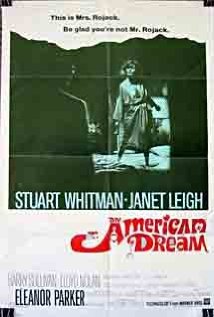
An American Dream (1966) is a film version of the Norman Mailer novel of the same name. Directed by Robert Gist, the cast includes Stuart Whitman, Janet Leigh, and Eleanor Parker, who do what they can with mediocre writing, uneven pacing, and an unsatisfying ending.

The roles suffer from miscasts and misfires. The film plays more like an episodic television detective show or a darker version of a television movie than a compelling feature.

Except for one terrific high-rise scene, the film is essentially a waste of time.

Stephen Rojack (Whitman) is a decorated war hero who returns to Los Angeles to become a journalist. He publicly criticizes the police for failing to accost a known crime lord named Ganucci (Joe De Santis), which angers the mobster.

Simultaneously, Rojack’s alcoholic wife, Deborah (Parker), flies into a drunken rage when he asks her for a divorce, resulting in her toppling from a swanky high-rise to her death. Riddled with guilt, Rojack resumes a relationship with his former girlfriend and Ganucci’s ex, Cherry (Leigh).

The best scene is the intense confrontation between Rojack and Deborah. The sweeping, expansive balcony and the open-air locale overlooking dazzling Los Angeles should be a significant clue that something dire will transpire, especially as Deborah is drunk beyond belief and filled with fury.

Her lavish apartment is adequately decorated in the latest 1960s style, giving the scene a plush sophistication. The vicious death scene is wonderfully done as the woman not only falls to her death but is subsequently run over by a car, adding insult to injury.

The scene is also the crux of the entire film.

Harboring the thrill of the climactic scene, however, is Parker’s jarring, overacting performance, making Deborah appear crazed and animal-like. The display is understood as making the character unlikable and unbalanced- the hunky gigolo in her bed also makes her unsympathetic-but the cartoon acting seems amateurish and beneath the fabulous actress.

Remember, this is the same woman who created the sophisticated and memorable character of the Baroness in The Sound of Music (1965).

The premise of the film is illogical and unbalanced as, to my eyes, it appears Deborah falls to her death accidentally, but the reasoning of the film portrays Rojack as riddled with guilt for causing her death.

He even admits his guilt to her father in one scene. His claim to the police that Deborah committed suicide is, of course, untrue, but the unnecessary guilt seems implausible and too much of a stretch at creating the main plot point.

The most significant negative aspect of An American Dream is Janet Leigh’s casting as Cherry. Wearing an unappealing and silly wig, the Hollywood star seems unbelievable and just wrong as a mob girlfriend.

Her soft features and petite frame do not fit the part, and her lip-syncing of the Oscar-nominated theme song “A Time For Love” does nothing to elicit credibility from either the character or the actress.

When An American Dream bombed at the box office, desperate distributors retitled the film See You in Hell, Darling, but to little avail. Reducing it to weekday airings on television did nothing to change the image of a low-budget, made-for-television style look or the episodic detective tint.

The intended perception of a horror film is a strikeout, as the experience is more like a tepid thriller.

For fans of Janet Leigh, An American Dream is not recommended.

The preferred suggestion is to skip this one and delve into other gems, such as the legendary Psycho (1960) or Touch of Evil (1958).

An American Dream (1966) doesn’t utilize the legendary actresses’ talents. It is a forgettable film that is best left in the bargain bin.

Oscar Nominations: Best Original Song-“A Time For Love”

Bunny Lake Is Missing-1965

Bunny Lake Is Missing-1965

Director Otto Preminger

Starring Keir Dullea, Carol Lynley

Scott’s Review #877

Reviewed March 13, 2019

Grade: B+

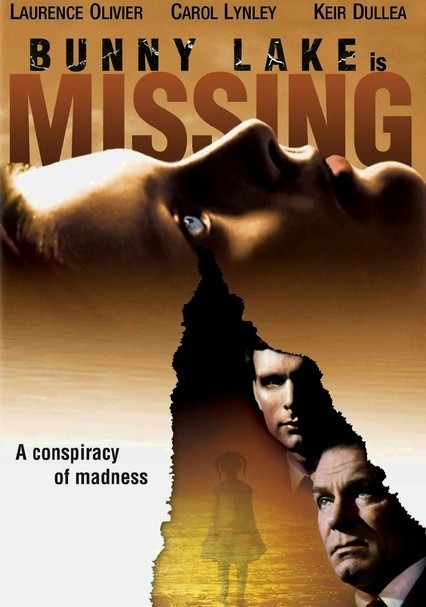
Bunny Lake Is Missing (1965) is a taut psychological thriller that feels fresh and unpredictable, containing a mysterious, almost haunting quality throughout its running time.

The film focuses on one big question: Is the main character’s interpretation of events real or imagined? The uncertainty makes the film intriguing to watch. Glimpses of London locales also make for fun viewing, as the chaotic and creepy children’s school is the film’s primary location.

Though not remembered well, the film is still worthy of a watch.

Ann (Carol Lynley) is a single mother recently transplanted to London with her well-kept brother Stephen (Keir Dullea). When she hurriedly drops off her unseen daughter, Bunny, at her new preschool and instructs the school cook to watch her, the girl soon disappears.

When the police were called to investigate, they discovered nobody on staff had any eyes on the young girl. The plot thickens when it is revealed that all of Bunny’s belongings have been removed from Ann’s residence and that Ann had an imaginary childhood friend named Bunny.

Has Ann concocted the entire scheme herself for attention, or could she be harmful or psychotic?

The film offers several subtle nuances that either work or do not work. The opening credits are a lesson in cinematic creativity as the words present as slivers of paper torn down the middle.

Though the musical score during this sequence is not necessarily eerie, the complexity and ferocity present an ominous and certainly intriguing element.

This point is a wise move because it sets the tone for such a thriller as the film presents itself.

Otto Preminger’s black-and-white style is upbeat, enhancing the overall look of the picture. The muted tones evoke an effective ghost story style with an ambivalent chilling technique.

As the mystery is ultimately resolved, the introduction of new and peculiar characters offset the tangled plot as the look of the film remains constant.

As Horatio Wilson, Ann’s landlord, and Martita Hunt, the retired school headmistress, Noel Coward lives in the attic, which does wonders for adding creepy ch. Butters, but are they meant to be red herrings or keys to the big reveal?

A few gripes are that incorporating the English rock band The Zombies serves little purpose, and the addition is perplexing.  I’m not opposed to the band’s music, but the songs have nothing to do with the plot.

Seen on the television during a pub scene and later heard on a janitor’s radio during an escape scene, the odd placement seems little more than a marketing tool product placement.

Another miss is with the casting of Sir Laurence Olivier as Superintendent Newhouse. His talents are wasted mainly with little more than a throwaway role despite arguably being considered the lead.

As the straight man handling the investigation, his performance is adequate but limited, especially given his Shakespearean stage actor talents. His performance is both phoned in and beneath the historic actor.

The other roles are well-cast, especially Lindley and Dullea in key parts. For the film’s first portion, I assumed the pair were husband and wife until it was revealed otherwise, which is a lovely, unexpected nuance. Their chemistry is sweet and easy, and both perform their respective roles with poise and charisma.

1965, both were relatively novice young actors on the brink of stardom, though sadly short-lived. Their acting chops are firmly in place with this film, which is fun to witness.

For fans of psychological thrillers with an implied ghost story enveloped within its clutches, Bunny Lake Is Missing (1965) is worthy and mysterious entertainment with a surprise ending.

The film is not stellar, with some weaknesses, and is less than a pure classic, reminiscent of a good, solid Twilight Zone television episode.

On the Waterfront-1954

On the Waterfront-1954

Director Elia Kazan

Starring Marlon Brando, Eva Marie Saint

Scott’s Review #876

Reviewed March 9, 2019

Grade: A

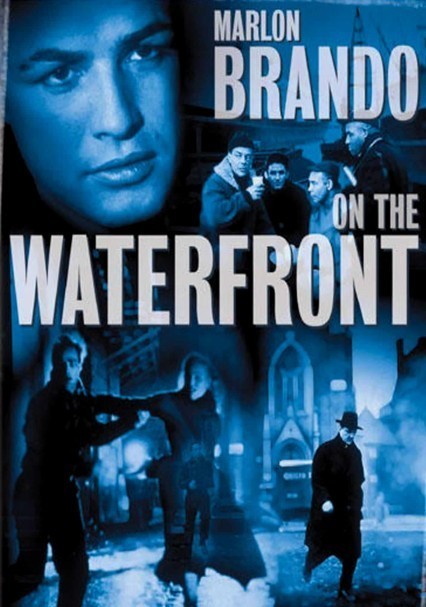
Led by one of the best acting performances of all time, On the Waterfront (1954) was an essential and relevant film when made and is still influential in the modern era.

Director Elia Kazan and newly minted Hollywood star Marlon Brando collaborate on a film spectacle as much a character study as a tale of morality and social injustice.

The musical soundtrack score composed by Leonard Bernstein only enhances an already astounding picture that is deservedly referenced as a masterpiece.

Terry Malloy (Brando) is a washed-up former local boxer who now spends his days slaving away as a dockworker on the dingy waterfronts of Hoboken, New Jersey. Terry’s brother Charley (Rod Steiger) works for a vicious mob boss, Johnny Friendly (Lee J. Cobb), who controls the area.

The police are aware of the ongoing corruption but are limited by the lack of evidence and witnesses to regular crimes. When a fellow dockworker is killed, Terry falls for the victim’s sister, Edie (Eva Marie Saint), leading him to rethink his priorities.

The positive aspects of On the Waterfront are enumerable. Meritful cinematography and location sequences, enshrined in the rich story and flawless acting, give the film authenticity. The film was shot almost entirely on location in New York and New Jersey, using actual docks and outdoor sequences.

The dingy, water-soaked locales are riddled with secrets and dark violence, brought to new levels through realism and grittiness.

Never looking more masculine or more handsome, though his portrayal of Stanley in A Streetcar Named Desire (1951) is a close second, Marlon Brando achieves riches in the world of stellar acting.

He is rugged yet compassionate, macho yet tender, and pours his heart into the role of Terry. One cannot help wondering if the self-professed method actor became Terry during filming.

With both vulnerability and strength, Brando embodies the character so well that he has become my favorite of all the film roles he has undertaken.

The supporting players dutifully flesh out the resounding cast with gusto. Special mentions go to Karl Malden as Father Barry and Steiger as Charley. Like Barry, Malden brings warmth, patience, and benevolence in a world of crime and deceit. He attempts to console and mentor the folks in his world and is eventually beaten for his honesty and earnestness.

Charley is a different story, selling his soul to the devil and accepting the cards he has been handed, choosing to join with Friendly. At a crucial moment, he makes another devastating choice that changes his life forever.

Few films can proudly boast a scene or dialogue that remains timeless and imprinted on cinematic history, but On the Waterfront contains a scene of this caliber.

During a tremendously important moment in the film, Terry has a conversation with Charley and makes an impassioned statement-“I coulda’ been somebody. I coulda been a contender”, laments Terry to his brother, “Instead of a bum, which is what I am – let’s face it.”

This line is a historic piece of writing and is true to the character.

The film is more powerful and truthful because it represents Elia Kazan’s real-life plight. In the early 1950s, the director famously informed a government committee about suspected Communists, while many of his colleagues chose to go to prison rather than name names.

Many Hollywood actors, directors, and screenwriters were blacklisted for decades to come. On the Waterfront is frequently deemed an allegory to the director’s plight and is a personal story.

On the Waterfront (1954) is sometimes violent and all-times realistic, painting a portrait of one man’s struggle to overcome the lousy life given to him to do the right thing.

Thanks to gorgeous direction, an explosive lead performance by Brando, and all the pieces fitting perfectly in unison, the film is one of the greats and will remain one that generations will discover.

Oscar Nominations: 8 wins-Best Motion Picture (won), Best Director-Elia Kazan (won), Best Actor-Marlon Brando (won), Best Supporting Actor-Lee J. Cobb, Karl Malden, Rod Steiger, Best Supporting Actress-Eva Marie Saint (won), Best Story and Screenplay (won), Best Music Score of a Dramatic or Comedy Picture, Best Art Direction, Black-and-White (won), Best Cinematography, Black-and-White (won), Best Film Editing (won)

Singin’ in the Rain-1952

Singin’ in the Rain-1952

Director Stanley Donen, Gene Kelly

Starring Gene Kelly, Debbie Reynolds

Scott’s Review #874

Reviewed March 4, 2019

Grade: A-

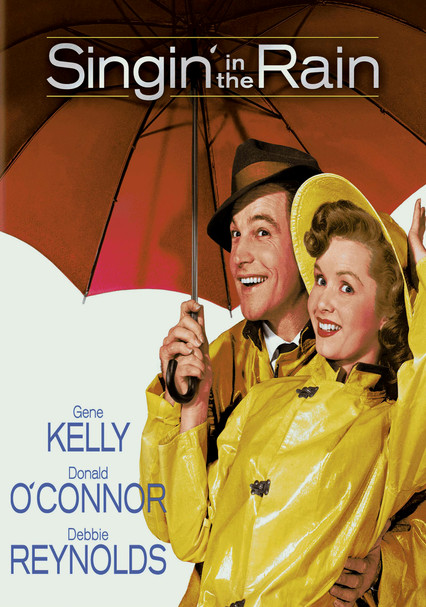
Singin’ in the Rain (1952) is most closely associated with the entertainment industry in the oversaturated field of musicals released during the mid-twentieth century.

The battle between the transition of silent pictures to “talkies” is the basis of the story, giving the film an important, along with fun, subject matter.

Likable stars and sing-along tunes make the film memorable and decidedly All-American, though perhaps not the greatest in the crowded musical field.

During the late 1920s, Don Lockwood (Gene Kelly) was a famous and well-regarded silent film star. His co-star and studio-created romantic attachment is Lina Lamont (Jean Hagen), an annoying and shallow leading lady with a harsh singing voice.

As more successful “talkies” (films with sound) are produced, Don finds himself smitten with musical chorus girl Kathy Selden (Debbie Reynolds). The plot to dub Lina’s voice with Kathy’s leads to comical chaos and an idea to create a new musical amid a blossoming romance between Don and Kathy.

The fun and frolicking Singin’ in the Rain is lightweight but never silly nor superfluous, thanks to the overriding message of the change in Hollywood priorities.

Critically acclaimed from the get-go, this is unsurprising since Hollywood loves stories about Hollywood, especially since the film was made only slightly more than two decades since sound-laden films overtook the world.

Furthermore, in 1952, television was making its debut to legions of fans, and the accessibility presented a serious threat to the cinema, making the subject matter even more relevant.

Kelly and Reynolds make a nice enough pair, but I never thought they completely knocked it out of the park from a chemistry perspective.

One slight flaw is the lack of hurdles preventing the couple from an inevitable union. Lina is the transparent foil and ultimately played for laughs, so she is not a serious threat.

The plot-driven conflict involving Kathy’s initial dislike of Don because she values stage over film is cute, but ultimately revealed to be a sham since she has been a fan of his all along.

The musical is a comedy, but better hurdles might have made for a more interesting story.

Nonetheless, Singin’ in the Rain is a pleasure and a largely non-threatening experience. The hi-jinks involved as the characters strive and struggle to put on their production are comical, and Lina’s New York accent and shrill singing voice threaten to steal the show from the more grounded central characters.

The musical numbers are a dream, and I especially like favorites like “Make ‘Em Laugh,” “Good Morning,” and the epic title song.

Through no fault of the film’s title number, “Singin’ in the Rain” will forever not be associated with this film for me but rather with the dark and cerebral A Clockwork Orange (1971). As the villain beats and rapes his victim by cheerily singing this tune, the song will forever hold a much darker association for me.

The dramatic final act is the highlight as a lavish premiere of The Dancing Cavalier is unveiled to a live theater audience hungry for something good.

When the crowd chomps at the bit for Lina to perform live, the big reveal of Kathy being the truly talented singer is displayed as the wizard in The Wizard of Oz style as Don and Kathy kiss and ride off into the sunset together in a grand show biz fashion.

In the crowded genre of the 1950s and 1960s musical productions that ravaged American cinema at the time, I mainly chose to watch West Side Story (1961), Gypsy (1962), The Sound of Music (1965), and Oklahoma! (1955) for pleasure, but Singin’ in the Rain (1952), an earlier gem, is worthy of value, especially for the memorable musical soundtrack it offers.

The story is light but also relevant and, most importantly, highly entertaining.

Oscar Nominations: Best Supporting Actress-Jean Hagen, Best Scoring of a Musical Picture

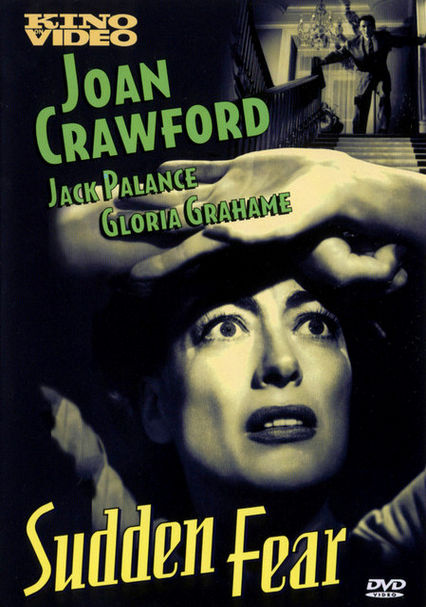
Sudden Fear-1952

Sudden Fear-1952

Director David Miller

Starring Joan Crawford, Jack Palance, Gloria Graham

Scott’s Review #873

Reviewed March 3, 2019

Grade: B+

Sudden Fear (1952) is a gripping film noir thriller. The genre became commonplace in the early 1950s.

The film is raised to lofty acclaim due to the casting of legendary Hollywood star Joan Crawford in the lead role. Her performance led to an Oscar nomination and is the main draw.

Sudden Fear suffers from cliches but is otherwise a solid watch, although largely forgotten.

Crawford stars as Myra Hudson, a successful Broadway playwright who rejects the suave and handsome Lester Blaine (Jack Palance) after he auditions for the lead role in her play.

Later, they coincidentally meet on a train headed for San Francisco as Lester manages to sweep the mature woman off her feet. When Myra impulsively marries Lester, his true intentions to manipulate and then kill her to inherit her money are revealed.

The suave Myra uncovers the plot and instead plans to kill Lester and place the blame on his scheming former girlfriend, Irene (Gloria Grahame).

As a rabid fan of Ms. Crawford and her talents, I lean towards the film’s being exclusively hers. With her expressive eyes and mannerisms, the role is tailor-made for her and not too far from the role she would later play in What Ever Happened to Baby Jane? (1966).

As a strong yet beleaguered character, Myra has been unsuccessful in the romance department. After a glimmer of hope, she is devastated when she realizes she is being played for a fool.

Thanks to Crawford, her pain and humiliation are palpable, and her subsequent paranoia is believable without overacting too much for effect.

Palance and Grahame are okay in their respective supporting roles, but Crawford outshines them, or the script becomes banal.

Regardless, the roles are one-note and not the best of either actor’s career.

The characters have little rooting value; we know their motivations and shenanigans from the start.

The conclusion produces a satisfying demise for each one as their comeuppance is in perfect form.

From a plot and pacing perspective, the film is never dull and contains many twists and surprises, which will undoubtedly keep audiences engaged. The action moves in stellar form and never tires as the viewer anticipates an incredible ending.

The final chapter is fraught with chase scenes throughout the streets of San Francisco. A terrified Myra runs through the streets clad in a black coat and a white head shawl, wearing high heels naturally, while being chased by a crazed Lester.

Sudden Fear adds clever camera angles and cinematography, making it slightly left of center and creative looking with cool shadows throughout.

Elements of Hitchcock emerge as a shaky hallway scene featuring a lumbering Lester approaches the camera. Closeups of the actors and the illuminating black-and-white lighting give the film a glowing look.

Shots of a gun, a pendulum swinging representing a clock, or a bottle labeled “poison” add elements of tension.

For fans of the illustrious Joan Crawford, Sudden Fear (1952) is a recommended watch and will please those seeking a good helping of the star. She does not disappoint and is the main draw in an otherwise by-the-numbers genre film.

The film’s conclusion is the high point, and while I wish Palance and Grahame had provided more layers and character development, Crawford shines in an otherwise forgotten offering.

Oscar Nominations: Best Actress-Joan Crawford, Best Supporting Actor-Jack Palance, Best Cinematography, Black-and-White, Best Costume Design, Black-and-White