Young Frankenstein-1974

Young Frankenstein-1974

Director Mel Brooks

Starring Gene Wilder, Peter Boyle, Teri Garr

Scott’s Review #1,347
Reviewed February 27, 2023

Grade: A

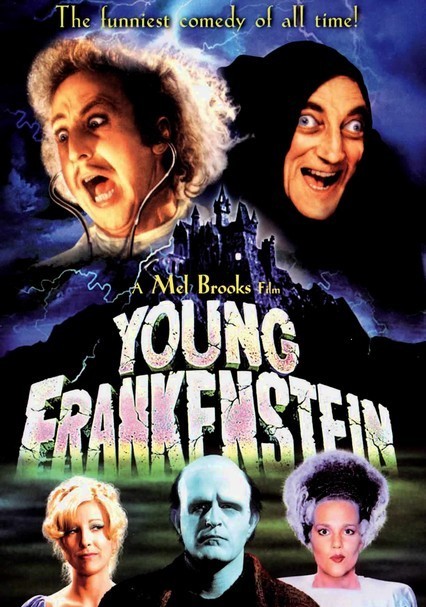
Young Frankenstein (1974) is one of the funniest, most authentic examples of slapstick comedy done right. The physical timing, facial expressions, and dialogue delivery are sheer perfection from the well-known cast.

Many of whom are stars of the comedy genre.

The fact that director Mel Brooks took a classic horror film as distinguished as Frankenstein (1931), and made a cross-genre sequel, is pure brilliance.

Even better is the incorporation of black-and-white filmmaking, resembling the 1930s masterpiece, so the setting feels similar. This is aided by the recreation of the lab equipment designed by the original set designer, Kenneth Strickfaden, from the 1931 film. 

Brooks co-wrote the screenplay with star Gene Wilder, a comic legend, and the writing is brilliant, crackling with wit and energy.

The 1970s film, watched decades later, has lost none of its original appeal, holding up astoundingly well even after most of the cast and the director have left this world. It can be watched over the Halloween season for the proper atmosphere or at any time.

Ideally, recommended to watch Frankenstein either before or after seeing Young Frankenstein for ideal pleasure.

Respected medical lecturer Dr. Frederick Frankenstein (Wilder) learns, much to his chagrin, that he has inherited his infamous grandfather’s estate in Transylvania, Romania.

The original Frankenstein’s reputation is so tarnished that Frederick wants nothing to do with the name, even going so far as to change the pronunciation of his surname to “Fronkensteen”.

Begrudgingly arriving at the castle, Dr. Frankenstein soon begins to recreate his grandfather’s experiments with the help of servants Igor (Marty Feldman), Inga (Teri Garr), and the rigid Frau Blücher (Cloris Leachman).

After he creates his monster (Peter Boyle), a new set of complications ensues with the arrival of the doctor’s fiancée, Elizabeth (Madeline Kahn), and the unleashing of the frightening beast on the small town.

Comedy and horror are worlds apart, but Brooks and Wilder pay tribute to the classic horror film by not mocking it but instead embracing it and enhancing the story in Young Frankenstein.

You could say it’s a sequel in addition to a spoof made over forty years later.

The characters are the best part, and each one is brought to fine form by its actor. Wilder, as the mad scientist, is led by ug-eyed Igor (pronounced ‘Eyegor’ naturally), who is revealed to be the grandson of Igor in Frankenstein, my personal favorite, followed by Garr as Wilder’s secret romantic interest.

My favorite scenes are when Igor reveals that he took the wrong brain for Frankenstein’s experiment, belonging to ‘Abby Normal’ instead of ‘Abnormal’ as the label read.

Inga and Frederick have instant chemistry, leaving Kahn’s Elizabeth in the dust as far as a romantic triangle. Hilarity between the pair occurs in the final sequence when, after a lobotomy, she is delighted to realize that Frederick has received the monster’s “enormous Schwanzstucker”.

This is not to diminish Boyle, Leachman, or Kahn, who each do their part to make Young Frankenstein an ensemble. Apt viewers will spot Gene Hackman as Harold, the blind man.

As an aside, Brooks brilliantly pays tribute to Bride of Frankenstein (1934) by giving Elizabeth the same hairstyle.

The double entendre is fast and furious from knockers to the male anatomy.

The only scene that didn’t wow me was the sequence where Frankenstein and his creation perform “Puttin’ on the Ritz”. The monster singing and dancing was too amateurish for me, but for some, it’s a favorite scene.

A parody that works on nearly every level and is the best of all the Brooks films (even barely usurping my forever fondness for 1977’s High Anxiety), Young Frankenstein (1974) is a treasure.

Silly, devoted, and creative, it revives a classic in the best possible way and is filmmaking 101 on how to create a proper spoof.

Oscar Nominations:  Best Adapted Screenplay, Best Sound
The Menu-2022

The Menu-2022

Director Mark Mylod

Starring Ralph Fiennes, Anya Taylor-Joy

Scott’s Review #1,345

Reviewed February 20, 2023

Grade: B+

The premise of The Menu (2022) immediately elicited my utmost pleasure. A self-proclaimed ‘foodie’ with a long way to go in being an expert, a film about a high-caliber restaurant with an extravagant and sophisticated tasting menu was impossible to ignore.

Throw in the horror and dark humor genres, and you’ve got the icing on the cake.

After all, being fortunate enough to have experienced fine dining, as depicted in the film, makes me repeatedly reminisce about those adventures. Those enchanted by such tasting menus, rich in flavor and style, must see The Menu.

Cinematically, the film reminds me of parts of Saw (2004) and Knives Out (2018), with a dash of novelist Agatha Christie’s Ten Little Indians story and a sprinkling of a Jordan Peele project for its social commentary.

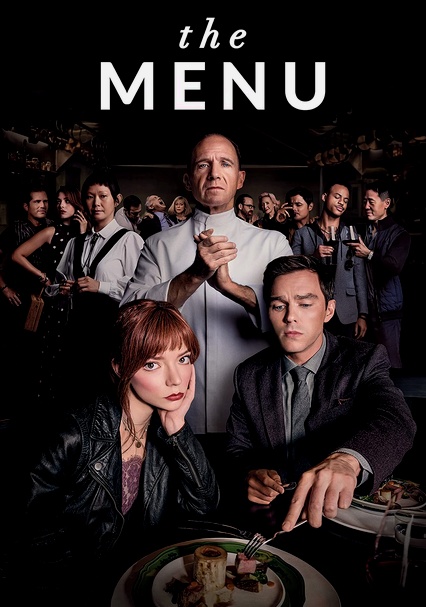
A young couple Margot (Anya Taylor-Joy) and Tyler (Nicholas Hoult) travels to a sunny coastal island to eat at an exclusive restaurant named Hawthorn, where the chef (Ralph Fiennes) has prepared a lavish menu.

They are joined by other guests, including a food critic, her editor, wealthy regulars, three business people, a washed-up movie star and his assistant, and the chef’s alcoholic mother.

As the evening commences and the dishes are served, the chef has some diabolical surprises in store for the guests. Secrets are soon revealed as it becomes apparent they have been summoned to the island for a reason.

Mark Mylod, a new director to me, peppers the film with dark, macabre humor, mostly related to the food, which is slyly placed and pairs well. Those who savor fine dining and tasty ingredients will smirk with delight.

The title and ingredients of each course are named, and by the third course, the sins of the diners are revealed on tortilla shells for all to see. The audience knows they are not innocent people, and the chef and his team are intent on punishing them a la carte style.

The revelation that Margot is not supposed to be there is satisfying because, so far, the chef, his assistant, and a guest have been eying her mysteriously. Tyler was initially scheduled to bring another woman with him.

Instead of limiting the story, this only enhances it. Could Margot be convinced to align with the chef, or does she hate him? Jealousy among the staff and guests quickly spirals out of control.

Another win for The Menu is the incorporation of class distinction. The haves and the have-nots, and how they feel about each other, is a crucial sidebar, and it is easy to understand the motivations of the characters.

The Menu loses its way during the final thirty minutes, with an unsatisfying and perplexing ending that hardly wraps up the story for the audience in a neat doggy bag.

I was left with more questions than answers regarding the plot.

The analysis can be somewhat forgiven with a deathly serving of s’mores for dessert, with the bodies of the guests as the marshmallows and their heads mirroring the chocolate tops.

A laugh-out-loud moment occurs when a spoiled guest fails to understand the quality difference between cod and halibut. Every foodie should be aware of the superiority of halibut.

It’s not all polish and high cuisine, as the preparation and consumption of a good old-fashioned greasy cheeseburger are made with such precision that I could nearly smell the wonderful indulgence.

The sizzling meat, combined with the heavenly melted American cheese, made me want to reach for my phone and order Grubhub.

Fiennes and Taylor-Joy are the standouts as their complex relationship and chemistry are palpable. Special notice must be given to Hung Chau, Judith Light, Janet McTeer, and John Leguizamo, who make the ensemble quite good.

With a terrific idea and enough tastes and smells that almost emerge from the screen, The Menu (2022) is a winner. It’s unsatisfying at the conclusion, but the experience is enjoyable and the creativity is championed.

I felt like a guest at a restaurant myself.

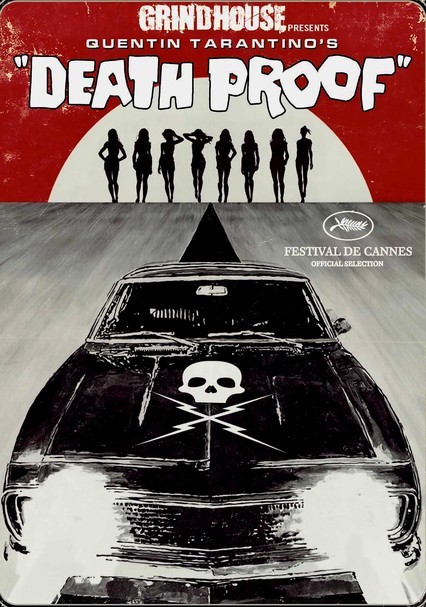
Grindhouse: Death Proof-2007

Grindhouse: Death Proof-2007

Director Quentin Tarantino

Starring Kurt Russell, Rosario Dawson, Zoe Bell

Scott’s Review #1,344

Reviewed February 13, 2023

Grade: A

It’s tough to go wrong with a Quentin Tarantino film recognizing that one needs to be a Tarantino fan. His films are for specific tastes that indulge in stylized violence, dark humor, and cartoonish characters.

Grindhouse: Death Proof (2007) is an easy victory for the director and incorporates his trademark qualities with beautiful female race car drivers and a sadistic stuntman.

As usual, revenge is the name of the game and results in a satisfying ending. The thrill is in the chase that occurs mainly midway through and plenty of B movie references and old songs are on display.

The experience is a pure pleasure for any cinema lover that appreciates aspects of the film like editing that too often falls beneath the surface. The scratchy film texture and retro title sequence all help to encompass another Tarantino opus.

The film is part of a double feature along with Robert Rodriguez’s Planet Terror and includes a series of mock exploitive trailers.

Both, specifically Tarantino’s, harken back to when exploitative films were shown in dusty movie houses with grainy video and a stale popcorn stench. The mood was immediately set for me while watching the film which enhanced my enjoyment tremendously.

Psychotic stuntman Mike (Kurt Russell) is a professional body double who likes to meet unsuspecting women at bars and take them for deadly drives for fun. He has a specially made car which he calls ‘Death Proof’ but only for the driver and not the passenger.

The first half of the film involves a group of girls out for a good time in a dive bar. Abbie (Rosario Dawson), Pam (Rose McGowan), and others ultimately fall victim to his shenanigans during a dastardly head-on collision exceptionally filmed.

Later, he meets a tough group of female race car drivers led by real-life stuntwoman Zoe Bell who vows to make him pay for causing them trouble. Their hell-bent vengeance just may be what the doctor ordered to cause Mike’s downfall.

Death Proof is often overlooked by fans of Tarantino and it might be because it’s paired with another film. But, it’s not half a movie either and at one hour and fifty-four minutes, it’s got legs. The film flies under the radar for me too but it’s a high-octane mile-minute experience.

One great part of Death Proof is the throwback to cult films of the 1960s and 1970s, especially Faster Pussycat! Kill! Kill!, a 1965 exploitative masterpiece by Russ Meyer.

These girls are no shrinking violets or damsels in distress who need a man to save the day. Quite the contrary. They kick ass and take names, especially in the flawless second half. Out for blood, the girls assuredly put Mike firmly in his place.

Juxtapositioned with the first half which has a dire ending for the group of girls, the second half is more upbeat and satisfactory. The lighting is also different in the two halves. The first takes place well beyond midnight while the second is in the bright afternoon.

Tarantino produces a brilliant piece of feminist progressivism with nasty muscle and female characters not to be messed with. Death Proof (2007) shows badass characters with hints of humor and discussions about men.

The girlie action flick blends perfectly with the 1970s race cars and the sexploitation theme Tarantino is recreating while still making the film feel modern and relevant.

Smile-2022

Smile-2022

Director Parker Finn

Starring Sosie Bacon, Jessie Usher

Scott’s Review #1,342

Reviewed February 8, 2023

Grade: B+

I was prepared to award Smile (2022), a new supernatural horror film, with an exceptional ‘A-‘ grade until it dissipated during the final act and became too confusing.

The story collapsed mightily, leaving too much ambiguity and a messy plot that turned chaotic, so my initial reaction was one of dissatisfaction.

But then I remembered that I watched some of it with my hand closed to cover my eyes, and my jaw dropped open during other parts.

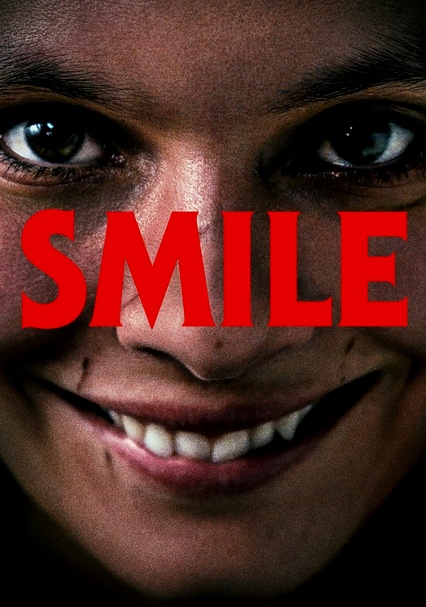
Smile is one of the scariest horror films I’ve seen in quite a while, with striking visuals and a handful of terrifying scenes. I’ll probably never see someone smirk again without thinking of this film.

Matters get off to a thumping start when Dr. Rose Cotter (Sosie Bacon) witnesses a bizarre, traumatic incident involving one of her patients. The troubled patient claims to see a haunted smile and suddenly kills herself in the presence of Rose.

Shaken, Rose starts experiencing frightening occurrences that she can’t explain as she turns to white wine to calm her nerves. As an overwhelming terror begins taking over her life, Rose must confront her troubling past to survive and escape her horrifying new reality.

But what does the link to her past have to do with the present?

That’s where Smile does a deep dive south, but I’m willing to forgive Rose’s trip to her abandoned childhood home, where her mother, who has a mental illness, offered herself while a guilt-ridden Rose did nothing to help.

There’s also Rose’s bitchy, self-centered sister, Holly (Gillian Zinser), to contend with.

The implausible storyline can be forgiven by the knowledge that Smile is director Parker Finn’s first feature film! Greats like Hitchcock and Tarantino didn’t knock it out of the park with their first releases either, but the brilliance was noticeably there.

The opening sequence, for example, is one of the best I’ve seen in horror this decade. I didn’t anticipate something so gruesome and palpable to occur right away. Rose’s patient is immediately terrified of Rose, which is a clear indication that something is seriously wrong.

The next best scene happens at Rose’s nephew’s birthday party. On an otherwise lovely afternoon, the boy’s living room is filled with brightly packaged presents from friends and family gathered nearby. He eagerly picks up his Aunt Rose’s specially wrapped gift.

What is wrapped inside is too gruesome to describe, but suffice it to say the party is ruined, the nephew traumatized, and all the party guests in agreement that Rose should be immediately sent to the loony bin.

It’s other aspects that give Smile a significant victory. Any character who dons that sinister smile (see poster art above), whether real or imagined, haunts me in my dreams.

Those who scare easily need not see this film.

An interracial aspect (the Caucasian Rose’s boyfriend is black, and Holly’s husband is Indian) scores major points from a diversity perspective, and more minor characters provide a robust helping of cultural richness as well.

Sosie Bacon, daughter of Kevin Bacon and Kira Sedgwick, may be headed for Hollywood fame of her own as she easily carries the film. She emits a combination of calm, vulnerability, and intelligence, which makes the character relatable.

The film received positive reviews from critics but was criticized for patterning itself too closely after its counterparts, The Ring (2002) and It Follows (2014), but since those films were excellent, I didn’t mind a bit.

I don’t think we necessarily need a sequel to Smile (2022), but I’m anxious to see what Parker Finn comes up with next. He’s got the jumps and the cinematography down, and hopefully, he stays in the horror genre.

Women Talking-2022

Women Talking-2022

Director Sarah Polley

Starring Rooney Mara, Claire Foy, Jessie Buckley

Scott’s Review #1,341

Reviewed February 7, 2023

Grade: B+

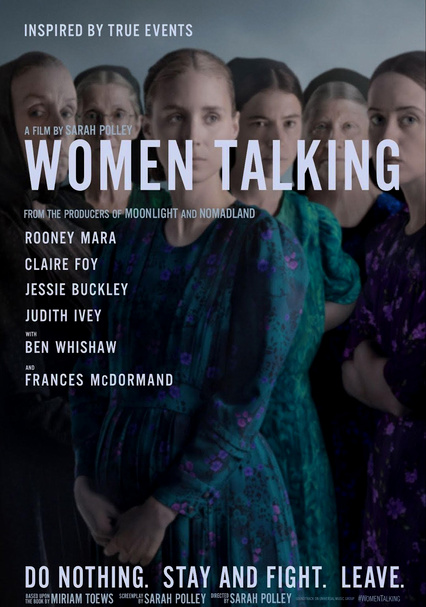
Women Talking (2022) is a quiet film faithful to its title because it is about a group of women, well, talking. But, instead of idle gossip, these women have something powerful to say. They debate and discuss their fates throughout the film’s one hour and forty-four-minute running time.

It is written and directed by Sarah Polley, a former actress, and adapted from the recent 2018 novel of the same name written by Miriam Toews.

Shockingly, the film is inspired by actual events that took place in the ultraconservative Manitoba colony in Bolivia.

For years, the women of a rural colony have been drugged and raped nightly by demons punishing them for their sins. They have, until recently, acquiesced.

But when the women discover that these “demons” are the men of their community, they boldly decide to take a vote to determine what action to take.

The year is 2010, but the woman’s dress makes it seem like it’s the 1800s. I wasn’t sure of the year going in, save for a 1960s pop tune bursting from the speakers of a pushup truck, so the viewer can easily be misled or unclear.

A male rapist is caught and imprisoned, which leads the men to conveniently be out of town while the women have two days to make a decision. They will either stay and do nothing, stay and fight, or leave.

One male remains with the females; the kind teacher, August, played by Ben Whishaw. There also exists a transgender man who has been raped by men and no longer speaks to adults.

While the film is a slow one, it has something intelligent and interesting to offer. Despite the women being repressed and abused a feminist overtone is readily apparent which uplifts the dire tone.

Hollywood heavyweights like Frances McDormand and Brad Pitt executive-produced and produced, respectively, so Women Talking has big-time backing, deservedly so.

Comparisons to a female version of the classic play, Twelve Angry Men, cannot be overlooked by the astute viewer. The women are divided and not in agreement or harmony…..at first. The lone juror would be most similar to Ona (Rooney Mara), a sensible woman who reasons and weighs the pros and cons.

McDormand also appears in a small role as the grizzled and beaten-down ‘Scarface’ Janz, who has accepted her lot in life.

Mara, Claire Foy, and Jessie Buckley are the standouts; the latter two characters are fueled with anger at the revelations and mistrust of the men.

Liberties must be taken.

It’s mentioned that the women are not taught to read or write, but the characters are wise, cagey, and well-spoken. The ambiguity of what’s to become of the women slightly let me down. A decision has been reached, but what’s next?

Polley has directed a gem and garnered considerable notice for her project, and the kudos can’t come loudly enough. I thought it wise that, besides August, the male characters are either not seen or seen only from a long distance. Some are blurred entirely.

This adds to the mystique and grotesqueness of their actions.

An accurate ensemble picture that could easily be shaped into a stage play, Women Talking (2022), led by Polley and backers, produces a compelling narrative.

The point is well-intentioned and well-received that repression and victimization are alive and well.

Oscar Nominations: 1 win-Best Picture, Best Adapted Screenplay (won)

Independent Spirit Award Nominations: 1 win-Best Feature, Best Director-Sarah Polley, Best Screenplay, Robert Altman Award (won)

When Love Comes-1998

When Love Comes-1998

Director Garth Maxwell

Starring Rena Owen, Dean O’Gorman, Simon Prast

Scott’s Review #1,340

Reviewed February 3, 2023

Grade: B+

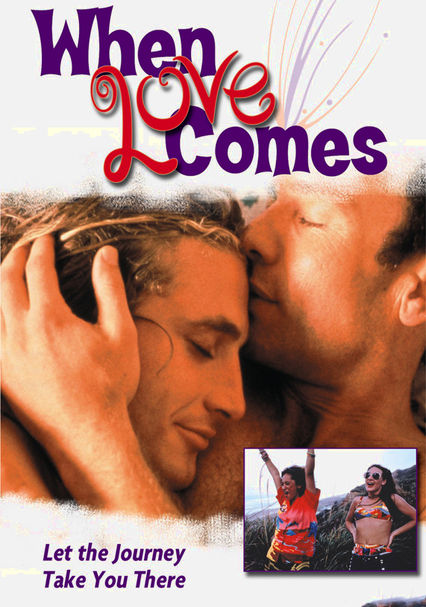
When Love Comes (1998) is a New Zealand film, spoken in English, by filmmaker Garth Maxwell.

It starts slowly and muddled, but quietly captures me with its thoughtful, humanistic tones of emotion, conflict, and sexuality.

There are no subtitles, which makes the dialogue hard to follow, given the accents, and may knock the film down a smidgen for me, but the main stories are enthralling with deep texture.

More or less an ensemble of six acquaintances, and three of the characters get the most screen time.

The main character is washed-up singer Katie Keen (Rena Owen), who struggles to create a new life for herself while coping with her absent admirer, Eddie, and living with her best friend, Stephen.

Stephen is in love with sexually confused ex-hustler Mark, while bandmates Fig and Sally, smitten with each other, yearn for success as they traipse around town and the beaches together.

The most interesting storyline is LGBTQ+ centered.

Given that the time was 1998, when gay films were starting to make their presence known, Stephen and Mark have the most depth.

Admittedly, a couple of story points are disjointed, like why the men have trouble admitting their feelings for each other and why Mark’s anger issues cause him to smash a window.

In the end, their story wraps up nicely, and Maxwell earns points for helping the audience appreciate the couple.

The lesbians get short shrift. Are they gay or bisexual? If bisexual, are they a couple, or what is their arrangement? Don’t get me wrong, they are fun to watch shred the guitar and beat mercilessly on the drums as they raucously perform, but little is known about their lives.

Even though When Love Comes is an ensemble, Katie is the lead character. I fell in love with her character because she is the most well-written. At one time, a big pop singer, her star faded, and she is at a crossroads.

As she whimsically gazes at the crashing waves, the expression on her face reveals the deep thoughts and regrets in her life.

Unfortunately, her love interest, Eddie, is heard from but does not appear in the flesh until pretty deep into the film. Therefore, there is not much rooting value for the couple, and we don’t know much about Eddie.

Surprisingly, despite this miss, I felt a connection to Katie and Eddie. Rena Owen is a terrific actress, revealing expressions and a veneer we deeply want to explore.

There is a decent amount of flesh in the sex scenes, which makes for some fun, but the wise move is to stick to the character motivations and watch them develop.

This can be said with only three of the characters, and I wished for more grit from Eddie, Fig, and Sally.

When Love Comes feels lopsided at times, but succeeds as a slow-build film. Nothing is done quickly or forcefully; instead, long scenes of dialogue are crafted, and the conversations have something to say rather than serving as filler or a bridge to more important scenes.

I respect the cinematography because it has a softer, independent-film look, which is, of course, what it is. A big budget is not needed for a film about people, and the Auckland sequences are wonderful.

Keeping the time frame in mind, I wish I had seen When Love Comes (1998) when it was released. It would have packed a harder punch than it does twenty-five years later, when plenty of similar-toned films have been made.

Pearl-2022

Pearl-2022

Director Ti West

Starring Mia Goth, David Corenswet

Scott’s Review #1,339

Reviewed February 2, 2023

Grade: A-

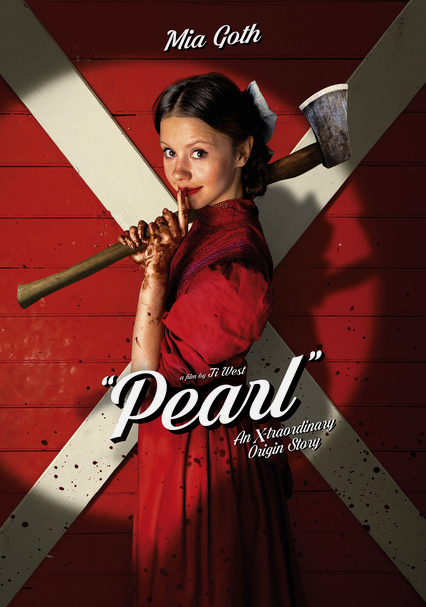
The follow-up to the superb horror film X (2022) is even better. Ti West directs and co-writes Pearl (2022) with star Mia Goth, who is quickly becoming a household name, especially in horror circles.

The duo creates a macabre and intelligent piece that pays homage to legendary films like The Wizard of Oz (1939) and Mary Poppins (1964) in the most wicked of ways. The film resembles a musical from the golden age of cinema, but it is haunting instead.

A24 is the place to be predominantly in the horror genre, as creativity is embraced and massaged rather than picked apart and recreated by too many cooks in the kitchen.

West and Goth appear to have complete creative control, and it shows in the finished product.

In the second chapter of X, we are introduced to the character Pearl as a young woman living on a farm in rural Texas. Fans recall that Pearl is the old lady in X, but we knew nothing of her backstory until now.

Pearl feels trapped on her family farm. Bored and isolated, she needs more out of life than milking cows, caregiving for her sickly father (Matthew Sunderland), or disagreeing with her rigid mother, Ruth (Tandi Wright).

She lusts for the glamorous life starring in Hollywood pictures, much to her mother’s chagrin. When a church-sponsored audition for dancers needed for a traveling troupe occurs, Pearl sees this as her way out of dodge and anticipates winning the contest. She is joined by her affluent sister-in-law Mitsy (Emma Jenkins-Burro).

The time is 1918, and Pearl’s fiancé is off fighting World War I.

It’s tough to take my eyes off Goth, quickly becoming a modern scream queen turned upside down. She’s not the victim, she’s the villain. With her wide-eyed stare and luscious red lips, she bears a striking resemblance to Dorothy Gale from Kansas.

Her descent into madness is slow yet always bubbling beneath the surface. We quickly get glimpses of her psychosis when she stares down her mother during a disagreement, showing that Pearl doesn’t merely get into a tizzy; she goes full-throttle psycho.

And anyone who has seen X knows that the old lady has some issues.

Initially, there is hope for Pearl, and we take pleasure in her company. She catches the eye of a handsome projectionist played by David Corenswet. Mutually smitten, he makes her forget her fiancé, and they bond over films and aspirations.

But once he visits Pearl’s farm and finds a maggot-covered stuffed pig and hears noises in her house, his interest wanes.  Not to be so easily dismissed, Pearl’s actual mental state is revealed.

West and Goth turn the horror genre upside down when the best and most brutal killings occur during the daytime. Standard horror films often take place at night, so this invention raises the stakes when the cinematography and lighting are as bright.

This adds to the horrific nature of the gruesome bloodletting. Pearl calmly follows her prey down the sunny driveway, holding a pitchfork, intent on killing.

She repeatedly exclaims that nothing will keep her on the farm, but we know that she will.

Returning to the Wizard of Oz comparisons, several references can be found. For starters, Goth resembles Judy Garland, mainly around the eyes. Her outfits, most notably her dresses and hair bow, pay tribute to Dorothy. Her bicycle looks like Miss Gulch’s ride.

Goth also resembles American actress Shelley Duvall, whose most notable role is that of the suffering Wendy Torrance in The Shining (1980). Both actors have a mesmerizing stare as if to say ‘I can go cuckoo at any moment now’.

Too few modern films can be watched and re-watched, but my hunch is that my first viewing of Pearl (2022) will not be my last.

A third film is in the works.

Independent Spirit Award Nominations: Best Lead Performance-Mia Goth, Best Cinematography