Beautiful Boy-2018

Beautiful Boy-2018

Director Felix Van Groeningen

Starring Steve Carell, Timothée Chalamet

Scott’s Review #835

Reviewed November 23, 2018

Grade: A-

Beautiful Boy (2018) tells a humanistic and vital story about the ravages of drug addiction and how the issue affects not only the person with an addiction but the entire family unit. Nestled within the powerful writing is a lovely father/son relationship and the duo’s trials and tribulations over the years.

The film feels pure and honest, with rich storytelling and many good acting performances.

Beginning in the present, David Sheff (Steve Carell) realizes that his son Nic (Timothée Chalamet) has been missing for two days. When Nic finally arrives at the Sheff household, he is strung out and sick.

David suspects Nic has been abusing drugs, and all parties agree that Nic needs professional help and a stint in a rehab facility. However, nobody realizes the depths of Nic’s addiction.

When Nic checks out early and goes on a bender, the film begins to segue back and forth between periods of Nic’s recovery and his many relapses. It also presents scenes of David and Nic’s relationship during their childhood years.

The best parts are the conversations and moments between father and son, and their enduring love. David’s second wife, Karen (Maura Tierney), and Nic’s mother, Vicki (Amy Ryan), are also in the mix.

The screenplay is based on memoirs written by David and Nic Sheff. The chronicles of their journey include triumph and heartbreak over many years as recovery and relapse become frequent parts of their lives, threatening to tear them apart or result in Nic’s ultimate death.

The road to recovery is not an easy path.

Carell and Chalamet wonderfully portray the primary characters, David and Nic. The fact that the actors do not resemble each other is quickly forgotten as their dynamic is emotional and palpable, and they share easy chemistry.

Carell is a strong actor, capable of infusing his character with strength and calm while slowly falling apart at the seams.

He loves his son and wants him to recover, but he finally accepts that he needs to let him go. This moving realization is Carell’s best scene.

Chalamet, boyish and innocent-looking, is perfectly cast. With kind blue eyes and a mop of raven hair, the actor could easily pass for twelve years old. This only enhances the tragedy of youth ravaged by drug abuse.

These qualities are mirrored by those of his girlfriend Lauren (Kaitlyn Dever). She also possesses a fresh-faced, clean look, which strengthens the message.

Ryan’s and Tierney’s performances in what could easily be throwaway “wife roles” must be mentioned.

For a while, I thought Tierney was in a marginal role until she finally had a wonderful scene in which her frustration reached a boiling point. Fuming with rage, she attempts a car chase with Nic, only to finally crumble into tears, realizing how the mess has changed her as a person.

Ryan also sinks her teeth into a teary role, almost blaming herself for Nic’s problems.

The film wisely presents statistics to hit home further, mainly the low percentage recovery rate of most crystal meth users. A single-digit success rate on this note is frightening; the user requires more and more substance to feel anything close to the first high they experienced.

A pivotal scene occurs at the film’s end as David and Karen attend a support group. As they tearfully listen to a woman’s story of the recent death of her addict sister, we are left to wonder if Nic has also died.

Kudos to a powerful cameo performance by actress Lisa Gay Hamilton.

The sunny California setting benefits the film and starkly contrasts the darkness of New York City, where Nic attends school. With multiple exterior shots of San Francisco and Los Angeles, the metropolitan scope is vast and cruel for drug users.

Easily accessible to anyone with the motivation to obtain drugs, the streets of San Francisco are portrayed as hard and drug-infused, mainly when David drives around desperately looking for Nic.

Featuring a story told before but rarely from the family perspective, Beautiful Boy (2018) does what it sets out to do and does it splendidly.

Careful not to soften the challenges and sufferings of the person with an addiction, the devastation they bring to their loved ones is also showcased. The sound and emotional father/son relationship may be the film’s best part.
Boy Erased-2018

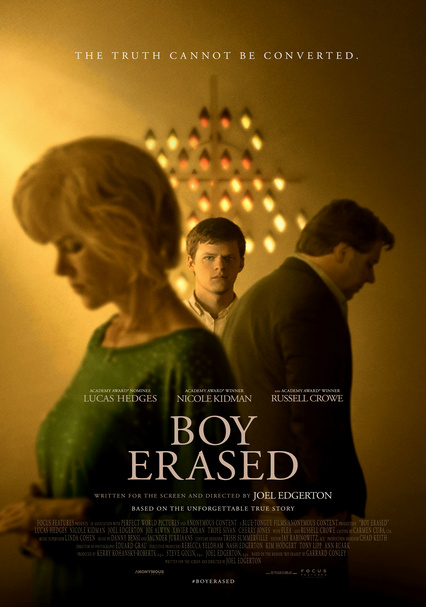
Boy Erased-2018

Director Joel Edgerton

Starring Lucas Hedges, Nicole Kidman, Russell Crowe

Scott’s Review #834

Reviewed November 22, 2018

Grade: A

Before I ventured to the movie theater to view Boy Erased (2018), I heard from more than a few folks who decided not to see the film due to the complicated subject matter.

While parts of the film are challenging and the true story stifling, the overall message is poignant and hopeful. The central character is one to be championed.

In other words, while the subject is serious, director Joel Edgerton (who also co-stars) is careful not to make the overall experience dour or wholly downtrodden.

The setting is rural Arkansas, based on Garrard Conley’s 2016 memoir of the same name and taking place as frighteningly recently as 2004.

Our main character is a handsome, popular young man, renamed Jared (Lucas Hedges) for the film.  Interspersed with numerous flashbacks, then back to present times, we see Jared as a high school kid and blossoming as a first-year college student, interested in writing.

He is expected to follow the word of god since his father, Marshall (Russell Crowe), is a respected preacher at their local church, and his mother, Nancy (Nicole Kidman), is a housewife.

Jared’s college experiences are both good and bad. He befriends fellow runner Henry, who ultimately rapes him, and embarks on an enlightening friendship with Xavier, who challenges Jared’s belief in god.

These scenes are preceded by the point of the film, in which Jared admits his thoughts about men to his parents and is sent to a Love In Action gay conversion therapy program. His experiences there are chronicled.

Many scenes involve the treatment the school provides the students (or instead makes the students endure), and Jared’s realization that he is gay and cannot change.

He ultimately questions and challenges the school. The chief therapist, Victor Sykes (Edgerton), teaches that God will not love anyone who is homosexual. In a bit of rich irony, the film reveals that Victor finally denounced his teachings and married a man.

Fellow students’ lives are featured, one suffers a terrible fate as he cannot come to terms with his sexuality, nor can he change.

A comparison to the popular film Love, Simon (2018) is fun to draw.

Both were released during the same year, and both feature a young, popular coming-of-age character who struggles with the repercussions of revealing their sexual preference.

Boy Erased is the heavier of the two, as Love, Simon has many comic elements, but it is worth noting that both are mainstream films garnering large audiences- a win for the LGBT community.

The acting in Boy Erased is flawless and perfectly cast all around.

With Hedges, Kidman, and Crowe in the mix, we know the performances will be outstanding, and all three characters possess their share of empathy.

Jared is the most important character to be concerned about, and Marshall and Nancy are support players. However, the film does not portray either as bad people, which is interesting. They are nurturing towards Jared and want him to be happy.

While Nancy is more instrumental in rescuing Jared, Marshall also comes around in the end, as his son’s sexuality is tougher for him to accept.

The main song used in the film is appropriately named “Revelation” by Troye Sivan. The singer also appears in the film as Gary, a student made to be “cleansed” of his sexuality.  The tune is sentimental, smoky, and acoustic, perfect for the southern setting.

Heartfelt and fraught with meaning, it encompasses Jared’s struggles and strong will to question the school’s motivations, powering through the school’s toxic approach.

As with many recent biographical films telling stories of real-life people, Boy Erased features a young Jared in homemade video clips as the movie begins. This immediately triggers a rooting value for the character as we see the child, cute, happy, and full of life, without a care.

Additionally, the conclusion shows the real adult Jared, Marshall, and Nancy.

Boy Erased (2018) is an important film firmly nestled in a crucial time period for the LGBT community. As LGBT awareness is now commonplace in cinema, this film does not necessarily share a gay character’s “coming out” story but rather depicts a brilliant story of how perilous and repressive being gay can still be for some people.

Jared is the main character who will undoubtedly be a hero to many young people wrestling with their identity.

Goodnight Mommy-2015

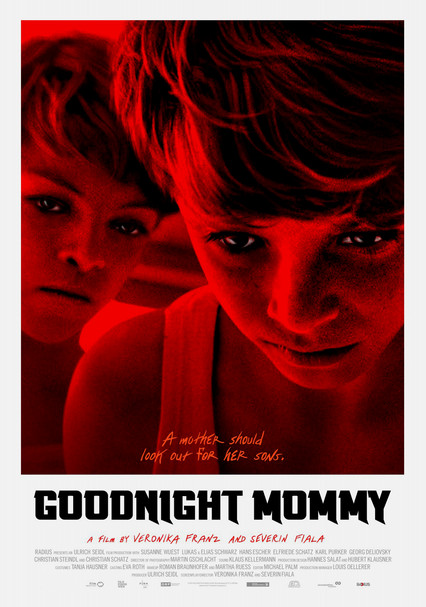
Goodnight Mommy-2015

Director Severin Fiala, Veronika Franz

Starring Susanne Wuest, Lukas Schwarz, Elias Schwarz

Scott’s Review #833

Reviewed November 21, 2018

Grade: B

Goodnight Mommy (2015) is an Austrian film not for the faint of heart nor the squeamish. Being a seasoned viewer of diverse, bizarre, and otherwise unpleasant cinematic experiences, the film was a tough watch.

Universally lauded and even submitted as Austria’s Foreign Language entry for the Academy Awards, the film is rather pointless and gratuitous in its torture scenes. Still, the film stayed with me days later, always a positive.

In a peculiar and unclear story opening, we witness a mother (Severin Fiala) and nine-year-old twin sons (Lukas and Elias Schwarz), residing in a remote lakeside location surrounded by cornfields and nature.

The mother (character unnamed) is disfigured and wrapped in bandages with only her eyes and mouth revealed, a haunting and grotesque image.

The twins, Elias and Lukas, are disturbed by her appearance and concerned when she begins acting strangely, ignoring Lukas entirely and chastising Elias repeatedly.

Through a game that the mother and twins play, the audience learns that the woman is a television personality- has she had a facelift of her choosing, or has she been in an accident? As she acts cruelly and selfishly towards the twins they begin to question whether the woman is their mother or a fake.

They become determined to find out at all costs, turning the tables on the mother, and resorting to torturous methods to get the truth out of her.

A few positives for me in Goodnight Mommy are as follows. The Austrian setting and language are huge strengths in adding to the mystique of the overall film.

The unfamiliar (to me) speech and the remote modern home that the mother uses as a sanctuary work very well.  Loneliness and isolation are infused into the film giving a measure of dread. The way the plot unfolds and the circumstances are slowly revealed is good.

The hows and the whys of the mother’s surgery come to fruition and allegiances switch from the boys to the mothers throughout the film, which I found interesting.

The major negatives are the motivations of the twins and the big reveal at the end of the film- a reveal easily figured out within the first portion of the running time.

Though not shocking, the revelation only complicates said motivations, and questions abound. Is one of the twins just plain crazy? Who is the woman in the photo with the mother dressed exactly like her?

If this is a red herring, no wonder the twins think this woman is impersonating their mother. The mother not being able to escape the twins’ clutches is a bit hard to swallow- remember they are only nine years old!

The torture scenes are brutal for the audience to endure. As Elias and Lukas tie their mother to her bedpost and demand she reveal she is not their mother the methods they resort to are devious and cringe-worthy.

Prolonged in nature so that the viewer feels they are also being tortured when the twins burn her face with a magnifying glass, the process is slow and excruciating.

Later, they decide to superglue her mouth shut and when they realize she cannot eat, they sever the glue with scissors leading to a bloody mess.

These scenes are tough to take.

The point of Goodnight Mommy (2015) seems rather, well, pointless. Torture for the sake of torture and many plot holes or story-dictated plot devices- who did not think that the Red Cross would fail in rescuing the mother?

Nonetheless, the film does contain a mystique and an unnerving, haunting quality.  The viewer will undoubtedly be kept thinking about the subject matter and the ending, specifically the final still-frame.

Ingrid Goes West-2017

Ingrid Goes West-2017

Director Matt Spicer

Starring Aubrey Plaza, Elizabeth Olsen

Scott’s Review #832

Reviewed November 16, 2018

Grade: A-

Ingrid Goes West (2017) is a deliciously wicked black comedy that boldly addresses the current obsession with social media.

Combined with a dynamite performance by young actress Aubrey Plaza and witty writing, the small independent film is a summertime treasure and has received two Spirit Award nominations.

The film is a breath of fresh air and a fine achievement by new director Matt Spicer.

The film immediately catapults the audience into the action as we are treated to a closeup of a sobbing Ingrid Thorburn (Plaza).

We immediately know that she is not well when she fumes with the realization that she has not been invited to her Instagram friend’s wedding and proceeds to interrupt the reception and attack the bride with pepper spray.

Ingrid is carted off to a mental hospital for analysis and recovery.

Once released, we learn that Ingrid’s mother has recently died, leaving her a tidy sum of money as an inheritance. Ingrid suddenly becomes obsessed with Taylor Sloane (Elizabeth Olsen), a popular and narcissistic young woman whom she follows on Instagram.

Taylor becomes Ingrid’s idol as she decides to move to Los Angeles and insinuates herself into Taylor’s life. She stalks Taylor and steals her dog only to pretend she rescued it, thereby becoming her close friend.

Gradually, Ingrid’s actions become more and more psychotic as Taylor catches wind of Ingrid’s antics.

Aubrey Plaza is perfectly cast as the unstable, manipulative title character. She possesses such strong comic timing, and with her wide eyes, nervous mannerisms, and determination to get what she wants, the audience roots for and falls in love with her.

On paper, we should dislike the character as she takes advantage of nearly everyone in her path, but Plaza embodies her with empathy and smarts. It is delightful to watch how she gets out of scrape after scrape with her quick thinking.

Plaza truly excels in the role.

Bold and calculating are words to describe Olsen’s performance as the selfish Taylor, and this may very well be why it is easy to root for Ingrid.

The character is so plastic and conniving that seeing her as the foil is intensely satisfying. Olsen usually plays good girl roles and possesses a girl-next-door quality, but in this part, she nestles nicely into a bitch role.

Olsen also uses excellent timing with her characters’ dialogue delivery, so much so that Olsen and Plaza had me in stitches during their one-on-one scenes.

I adore the Los Angeles setting. It is beyond appropriate for a film about phoniness, obsession, and plastic personas.

Beneath the sunny veneer lies darkness and tomfoolery in every direction, and besides Ingrid’s landlord/somewhat boyfriend, Dan (O’Shea Jackson Jr.), there are not many likable characters.

Attending party after party and lavish clubs, restaurants, or getaways, being involved in the “scene,” and the City of Angels is the perfect backdrop.

One gripe that knocks Ingrid Goes West down a rung is how the character of Taylor’s artist husband Ezra (Wyatt Russell) is written.

In one of the more authentic scenes, Ingrid realizes as she has a poolside heart-to-heart with the depressed Ezra that his wife is not the girl he knew when she moved to L.A. He and Ingrid seem to connect, but shortly after, it is as if the conversation never happened, and he is ferociously taking his wife’s side again.

A more admirable approach, and one I was hoping for, is that Ingrid and Ezra would ride off into the sunset, but the film misses this opportunity.

The entire film is a clever piece of work. From the performances to the dark humor and the witty dialogue, Ingrid Goes West (2018) succeeds on nearly all levels.

A modern-day Single White Female (1992) with a social media slant, the film goes for the gusto and gets there. I cannot wait to see more from up-and-coming star Aubrey Plaza, as the actress has the comic and dramatic chops to go very far.

Independent Spirit Award Nominations: 1 win-Best First Screenplay, Best First Feature (won)

Isle of Dogs-2018

Isle of Dogs-2018

Director Wes Anderson

Voices: Bryan Cranston, Edward Norton

Scott’s Review #831

Reviewed November 15, 2018

Grade: B+

Anybody familiar with a Wes Anderson production knows what they are in store for, and Isle of Dogs (2018) is par for the course.

With zany narratives and fantastic art direction, the film has a familiar stamp. Most resembling his other notable stop-motion film, Fantastic Mr. Fox (2009), Isle of Dogs offers what is to be expected- an intelligent and odd project by a visionary creative mind.

Anderson provides the film with a timely, corrupt government-type message that strongly resonates in 2018. In this way, Isle of Dogs, while animated, is so much more than a cookie-cutter story or a wholesome film for kids.

The director shows bravery in focusing on the corruption prevalent in today’s world and the fight for justice by ordinary people living under authoritarian control.

Set in dystopian Japan, a recent outbreak of canine flu causes corrupt Mayor Kobayashi to banish all dogs from society to the vast wasteland of Trash Island, where they will live out their days with other ostracized canines.

A brave twelve-year-old boy named Atari, who happens to be the mayor’s nephew, steals a plane and crash-lands on the island to rescue his beloved dog, Spots.

With help from a pack of dogs led by a former stray named Chief, the group sets out to find Spots and ultimately expose the government conspiracy. Obstacles abound as the mayor has sent a robot dog to return Atari and make mincemeat of any dog in its path.

Meanwhile, a professor, Tracy Walker, is on the cusp of discovering a serum as an outspoken American exchange student investigating the conspiracy.

Isle of Dogs is incredibly original and offers bravura visuals. From the lush and bright Japanese culture to the tired and haggard look of many dogs living on the island, the film is a treat for the eyes. The shimmering richness of the city is elegant and feels alive and powerful.

What I admire most about the film is its creativity and the blast of left-of-center storytelling, which blows away most animated offerings of today.

Many contain a robust helping of “cute”, which can turn off a mature viewer. With a target audience of the tween age, what is in it for adults? To sit there with a youngster and pretend to be jovial?

Isle of Dogs is not a crowd-pleaser; it is better than that. Anderson crafts a serious and timely message that begs to be absorbed by the careful viewer.

Assuredly, Anderson cannot escape providing a subtle allegory on an evil leader stirring the pot against the most helpless in our society. This point is timely and well thought out, especially in the tumultuous United States.
Could this be why an American character (Tracy) was added?

As dynamic as Anderson’s creativity is, the story in Isle of Dogs does not always embrace the viewer, and the jarring dialogue is tough to follow.

Standard in his films, the pacing is strange, the conversations between characters are odd, and the film lacks a truly welcoming or warm quality.

Therefore, the film is not an easy watch. And the dogs all speaking English rather than Japanese, with American accents, must be overlooked.

Critics and detractors of Wes Anderson need not see Isle of Dogs (2018) as they will be in store for typical Anderson fare. In addition, those seeking a standard mainstream animated feature will be disappointed.

Those with a more open-minded approach to cinema will revel in the film’s stunning look and the powerful message bubbling under the surface.

Oscar Nominations: Best Animated Feature Film, Best Original Score

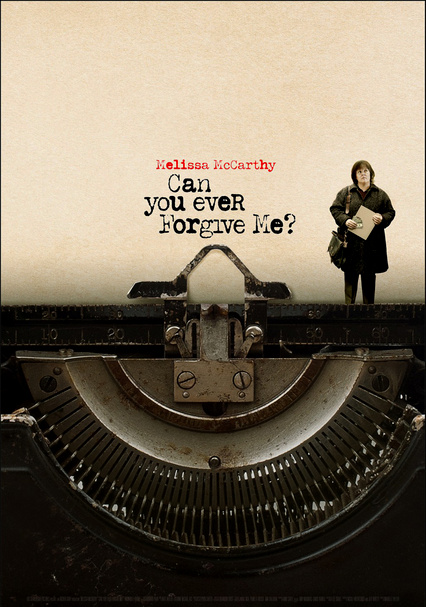
Can You Ever Forgive Me?-2018

Can You Ever Forgive Me? -2018

Director Marielle Heller

Starring Melissa McCarthy, Richard E. Grant

Scott’s Review #829

Reviewed November 13, 2018

Grade: A

Can You Ever Forgive Me? (2018) is a biographical drama that successfully provides its audience with sly writing and fruitful chemistry among the lead actors.

A rare dramatic turn for star Melissa McCarthy, she proves that she has the chops as she immerses herself in a role that showcases her acting talent when she is provided a good script. Grizzled, angry, and sometimes depressed, she infuses a character we should hate with gusts of humor and sarcasm, so much so that we fall in love with her.

That is a testament to an outstanding performance.

The film begins in the 1990s in Manhattan, where we meet a once successful but now down-on-her-luck author, Lee Israel (McCarthy). Famous for works now deemed dated, she is angry, boozy, and brazen, certainly not afraid to tell someone off for not holding the door for her or prank-calling a vicious bookstore owner.

We quickly learn that Lee is three months behind on her rent and cannot afford to take her sick, elderly cat to the vet. She fights with her publisher, Marjorie (Jane Curtin), who refuses to advance her $10,000.

As she sits in a bar contemplating her future, she reconnects with an acquaintance, Jack Hock (Richard E. Grant), a flamboyant gay man who once caused a stir at a party for urinating on rich women’s furs.

Lee and Jack are in stitches over the past incident and immediately form a deep bond, though Jack’s unreliability and dishonesty challenge Lee’s patience.

When Lee concocts a scheme to forge letters supposedly written by famous deceased literary people, Jack quickly becomes her accomplice as the two begin to profit.

The film belongs to McCarthy in a challenging role. By all accounts, we should dislike Lee—she attends Marjorie’s parties for the free booze and steals a new jacket from the coat check on her way out.

She distances herself from relationship commitments and alienates most people. But despite these flaws, we adore her and root for her.

When she embarks on a cautious date with quiet bookstore owner Anna (Dolly Wells), she gets through her meal with trepidation, unsure whether to open herself up to another potential suitor.

In McCarthy’s best and most emotionally raw scene, we see her raw collapse in tears when she finds her beloved cat under the couch, dead.

Viewing the feline as her only true friend, she is devastated beyond belief, and McCarthy will pull at the heartstrings in this poignant scene.

Grant is equally as impressive as McCarthy in the central support role. An aging party-boy in a city that can embrace the young and discard the old, he still dazzles with his dashing smile, but his best years are behind him as he still lives a young man’s life.

He flirts with a handsome waiter and still has the charm and humor that have aided him through the past few decades. However, he is also ravaged by decades of abuse, and his luster has become tarnished.

A health secret revealed at the film’s end adds further layers to the character’s complexity and richness.

Beyond the great acting performances, the screenplay, written by Nicole Holofcener and Jeff Whitty, crackles with rich dialogue and fantastic aplomb.

The writers write with confidence and smarts and provide the goods in spades. The proof is in the proverbial pudding as Lee cackles with glee as she types her latest Dorothy Parker forgery in the words of the deceased satirist, writing what she imagines the famous author would write.

These added intelligence touches and quick-witted dialogue make the film fantastic to view.

Can You Ever Forgive Me? (2018) is a fabulous undertaking made spectacular by two actors with bold chemistry. Combined with intelligent writing, a grand yet gritty New York City setting, and an authenticity unrivaled, the film succeeds on all levels.

Heart, drama, compelling situations, and dark, sardonic humor make this a dynamic film.

Oscar Nominations: Best Actress- Melissa McCarthy, Best Supporting Actor- Richard E. Grant, Best Adapted Screenplay

Independent Spirit Award Nominations: 2 wins- Best Supporting Male- Richard E. Grant (won), Best Screenplay (won)

The Grapes of Wrath-1940

The Grapes of Wrath-1940

Director John Ford

Starring Henry Fonda, Jane Darwell

Scott’s Review #828

Reviewed November 8, 2018

Grade: A

Based on the famous novel written by John Steinbeck and released only one year before the film, The Grapes of Wrath (1940) is a superlative offering by director John Ford, known chiefly for Westerns.

The work accurately depicts life for the struggling American family during the Great Depression of the 1930s.

With gorgeous cinematography and a sad yet poignant story, the film is a must-see and a timeless depiction of the perils of life for working-class people in the United States.

Set on the vast plains of Oklahoma, the Joad family has run a successful farm and lived as a thriving family unit for decades- an extended group enjoying their lives.

When the United States suffers from Depression, the Joads’ lives are turned upside down, and they are forced to sell their farm. They decide to traverse the countryside in hopes of the promise of profitable jobs and wealth in faraway California. The Grapes of Wrath depicts the family’s journey as hardship and deaths occur.

When the film was released in 1940, many studios were not interested in bringing the story to the big screen, as some aspects were deemed too left-leaning for conservatives.

The social issues the film delves into are still incredibly relevant today, and Ford wisely dissects not only the poverty that the Joad family suffers but also the psychological trauma and ruination they must endure. What a devastating effect this must have had on families.

The casting is spot-on. A young Henry Fonda was merely an upstart actor in 1940 and successfully exuded a rich, passionate performance as Tom.

Plenty of close-up shots reveal the young man’s quiet pain and desperation and the humiliation of having lost his livelihood. Fonda shares poignant chemistry with the preacher character, Jim Casy (John Carradine), who once was filled with glory but has now lost his spirit and belief in goodness.

Jane Darwell, a famous character-actress, gives a treasured performance as the family matriarch, Ma Joad. The actress won the Academy Award for Best Supporting Actress, deservedly so, as she relays a haggard woman wanting only the best for her family and attempting to hold them together.

Her determined final speech at the film’s conclusion is teary and meaningful. She says, “We’re the people… We’ll go on forever.” Speaking of Oscars, Ford also won Best Director.

The film sees no age but endures as a timeless journey alongside the Joad family. Although it stays very close to Steinbeck’s novel, the story is modified significantly. Perhaps to please studio financiers or provide a more hopeful message, the Joads are left with a positive future thanks to a government-run camp where they finally live.

In the novel, they reside at the camp first but are later reduced to starvation wages.

A monumental scene is when the family drives their battered vehicle to a squatter’s camp for needed shelter. The scene is shot documentary style, with the camera focusing both on the Joads and on the faces of the occupants of the run-down and filthy shacks that they are forced to live in.

We wonder with sadness what the lives of these unfortunate people were like before the Depression.

The Grapes of Wrath (1940) was a humanistic cinematic masterpiece. As a terrible war and otherworldly problems plagued the new decade, the film reminisced about a previous decade fraught with different issues.

The film is one for the ages and should be appreciated by all.

Oscar Nominations: 2 wins-Outstanding Production, Best Director-John Ford (won), Best Actor-Henry Ford, Best Supporting Actress-Jane Darwell (won), Best Screenplay, Best Sound Recording, Best Film Editing

The Little Princess-1939

The Little Princess-1939

Director Walter Lang

Starring Shirley Temple, Ian Hunter

Scott’s Review #827

Reviewed November 6, 2018

Grade: B+

The Little Princess (1939) is a latter-day Shirley Temple film released when the child star’s popularity declined.

The film is also Temple’s first production filmed in Technicolor and the last of her major successes. It is perfect, though not the first I would choose as a starting point in her collection. The film is saccharin, wholesome, and predictable, which are also adjectives audiences adore about the star’s cinematic projected film, looselyosely based on A Little Princess by Frances Hodgson Burnfilm, was criticized at the time release for deviatingaying too far from the original novel.

The time is the turn of the century in England, and the backdrop is the Boer War. The film’s setting is a highlight for American audiences amidst the First World War and on the cusp of World War II, allowing for a timely and relevant film quality.

In the story, Temple plays Sara, the wealthy daughter of a military Captain (Ian Hunter) who is left to reside in a well-to-do girl’s school when her father is called away to serve in the war. When he unexpectedly dies in battle, Sara is left penniless and forced to work as a servant in the school she once attended.

At first, the staff treats Sara like royalty, but her treatment gradually harbors resentment among the principals, especially the dastardly headmistress (Mary Nash). Sara keeps her chin up, insisting that her father is not dead, and she becomes determined to find him in a local hospital.

In 2018, Shirley Temple’s films mainly served as a source of nostalgia rather than critical acclaim or cinematic dissection—what was the point?

Her films are a wholesome trip back memory lane to a simpler time for many. Ironic that the film is the first color picture in the collection, this detracts from the enjoyment and adds too much of a modern element foreign to Temple fans.

My preference is for the black-and-white productions of the early and mid-1930s.

The supporting characters spice up The Little Princess quite a bit.

Most notable is Cesar Romero as neighbor Ram Dass, who fills the void Sara needs after losing her father. The chemistry between Romero and Temple is terrific, and in a tender scene, the kindly Dass leaves warm blankets for Sara.

As the main villainous, common in Temple films, Mary Nash, as Miss Minchin, does her job flawlessly. As the main foil, Nash perfectly blends rigid mannerisms and the brunt of Sara’s tension.

The overall tone of The Little Princess (1939), hence the title, contains a riches to rags, Cinderella in reverse, type of story. The film is above average but not the best in the bunch.

Venturing to say that the film is a forgotten work save for the Shirley Temple series fans, it does what it sets out to do and entertains.

With drama, musical numbers, and a happy ending, the result is a similar experience to her many other films.

Heidi-1937

Heidi-1937

Director Allan Dwan

Starring Shirley Temple, Jean Hersholt

Scott’s Review #826

Reviewed November 2, 2018

Grade: A-

During the 1930s and 1940s, Shirley Temple was the most prominent and profitable child star around, starring in dozens of films deemed “wholesome” and “cute.”

Heidi (1937) is one of her most popular and best-regarded treasures of earnest and sentimental riches.

The film is forever known in pop culture as the ruination of the 1968 Super Bowl when the Oakland Raiders and New York Jets game was interrupted at a crucial moment due to the film’s scheduled airing.

An interesting side note is that, amazingly, Temple relinquished her Hollywood title with dignity and without scars. She left the scene entirely and became a successful world diplomat.

In an era in American cinema when child stars were treated as property and sometimes like cattle, her relatively healthy exit was a remarkable feat.

The story of Heidi is based on the 1880 Swiss story of the same name. In the title role, Temple plays an orphan living in the cold mountains with her grizzled grandfather, Adolf (Jean Hersholt). At first bitter for being saddled with raising a child, Adolf finally accepts the girl, and he and Heidi become fast friends, exhibiting a warm and tender bond.

Heidi’s self-absorbed aunt ruins the dynamic and whisks the child away to live with a wealthy family. The little girl will be a companion for their disabled daughter, Klara, as Heidi and Adolf are determined to find each other.

Adding drama to the story is Klara’s evil housekeeper and her jealousy of Heidi, leading to attempts to sell Heidi off to gypsies for profit.

By 1937, Temple was beginning to be deemed “too old” for cute roles, but Heidi is one of her best-remembered films, and the actress is in top form.

As one might expect from any Shirley Temple film, musical numbers are included- a dream sequence in Holland culminates with Temple belting out the charming “In My Little Wooden Shoes.”

There are millions of Shirley Temple fans worldwide, but there are also her detractors. Some feel her films are completely dated and that the young star was not as talented as they thought she was.

Admittedly, watching her films approaching the one-hundred-year mark can be peculiar. On the surface, they seem a bit hammy and overly sentimental, but my personal experience elicits a return to childhood days.

Despite being decades before my existence, Shirley Temple films were commonplace in my childhood household.

Heidi is not a groundbreaking cinematic experience or all that deep. What the film does provide, though, is comfort. The audience assuredly must know a film like Heidi has a happy ending, as the child provides warmth and spirit to every person she meets, making their lives better.

Even during peril, the girl has an “awe-shucks” manner of being and makes the best of her lousy situation.

The strongest appeal of Heidi comes from her friendship with Klara, a disabled woman. Klara is kind and naive, unaware of her servant’s jealousy and rage. Helpless, she comes to depend on Heidi, and we root for Heidi to rescue Klara and bring her to a better life.

The film has sappily written all over it but somehow works simultaneously.

Films such as Heidi, the best of all the Temple films, can be watched and enjoyed as an ode to days gone by or a tribute to someone’s grandmother’s favorite film.

Despite being irrelevant and too sappy in today’s modern world, they undoubtedly provide comfort and support to some, which cannot be such a bad thing.

Heidi (1937) can easily be enjoyed because of the film’s popularity and its warm message.