Inherent Vice-2014

Inherent Vice-2014

Director Paul Thomas Anderson

Starring Joaquin Phoenix

Scott’s Review #255
80013545

Reviewed July 7, 2015

Grade: A-

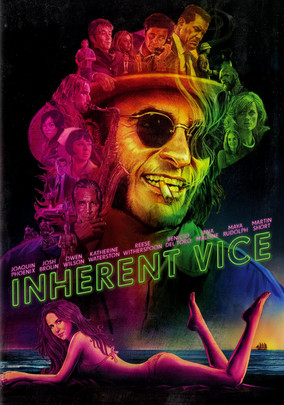
Inherent Vice (2014) is a bizarre detective film noir-type experience, set in 1970 Los Angeles.

Directed by the superb Paul Thomas Anderson (Boogie Nights-1997 and Magnolia-1999), the film has weirdness and incoherence that is a marvel to experience.

Fans of a straightforward plot will not be thrilled with this film, but for fans of Anderson, this will not disappoint. It has a complex plot, but the payoff is grand and a thinking man’s film.

The protagonist is Larry “Doc” Sportello (Joaquin Phoenix), a stoner private detective, contacted by his mysterious ex-girlfriend Shasta. She is worried about attempts by her boyfriend’s ex-wife and new lover to kidnap him and have him committed.

Mickey, Shasta’s boyfriend, is a wealthy real-estate developer.

Doc is also hired by two other people- one a former heroin addict looking for her missing husband, and the other a former convict looking for a prison mate who owes him money and is a former henchman of Mickey’s.

All of the stories intersect and such oddities as a peculiar massage parlor and a ship named the Golden Fang come into play throughout.

The intersecting stories lead to the revelation of a drug ring. I had little idea what was happening but was still enthralled by it.

There is an unpredictability surrounding Inherent Vice that is so pleasing and captivating. Joaquin Phoenix is compelling as Doc, a damaged character whose past is unclear.

When Doc is, by all accounts, framed for the murder of a convict and interrogated by the police, we wonder what history he has with them and what led him to branch out on his own as a private investigator.

Detective “Bigfoot” Bjornsen, wonderfully played by Josh Brolin, is a rival of Doc’s, though it is unclear why. “Bigfoot” is frequently seen with chocolate-covered phallic objects in his mouth and is married to a severe, overbearing woman.

Most characters are peculiar and have strange nuances, yet are never fully fleshed out, instead of remaining curious and thought-provoking.

Reese Witherspoon, Benicio Del Torro, and Owen Wilson appear in small yet pivotal roles.

Quite reminiscent of Roman Polanski’s Chinatown (1974) and Robert Altman’s The Long Goodbye (1973), in both the California setting and the plodding, slow-paced, magnificent storytelling, Inherent Vice is a confusing gem, but by all means a gem worth seeing and reveling among the intrigue.

Just don’t try to make too much sense of it all.

Oscar Nominations: Best Adapted Screenplay, Best Costume Design

Independent Spirit Award Nominations: 1 win-Robert Altman Award (won)
The Boy Next Door-2015

The Boy Next Door-2015

Director Rob Cohen

Starring Jennifer Lopez

Scott’s Review #254

80013272

Reviewed July 5, 2015

Grade: C-

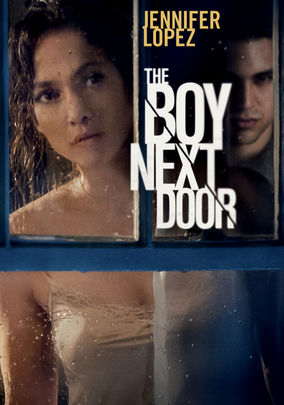
A steamy direct rip-off of the 1987 classic film Fatal Attraction, The Boy Next Door (2015) is a mainstream thriller starring Jennifer Lopez as a separated suburban Mom raising her son alone.

One day a handsome young man, Noah (Ryan Guzman), moves in next door. He makes friends with her son and develops an unhealthy obsession with her.

The film is your basic thrill ride with some jumps mixed in but predictable as they come and is safe mainstream fare.

Claire Peterson (Lopez) lives a cozy suburban existence with her socially awkward teenage son Kevin (Ian Nelson) and works as a literature teacher at the local high school.

She lives a modest yet successful life.

Her estranged husband Garrett (John Corbett) has cheated on her with his secretary.

One day a hunky twenty-year-old neighbor, Noah, moves in, takes a shine to Kevin and an attraction develops between Noah and Claire, despite him being half her age. The audience knows that there is something off.

The inevitable happens, a lonely Claire winds up in bed with Noah after a disastrous blind double date with her friend and confidant Vicky (Kristin Chenoweth), also the vice-principal of Claire’s school.

The sex scenes are titillating and sensual with lots of skin.

I went into my viewing not expecting an invigorating or thought-provoking film and was not disappointed.

The film is lightweight, predictable, and has a lifetime television movie feel. The acting is not great and the setups are seen a mile away. When Claire and Noah meet there is instant chemistry between them but there is also a sinister quality to Noah that the audience is aware of.

There is no doubt he will make trouble for Claire.

As we progress we become aware that Noah has a temper, another setup for things to come. If he feels wronged he strikes back. Once Claire realizes their passionate night was a mistake, Noah becomes obsessed with and vengeful of Claire and everyone around her.

The plot is filled with one implausibility after another. I could list silly nuances for hours, but here are a few that immediately come to mind.

I do not buy Jennifer Lopez as an intelligent, sophisticated, literature genius (despite the film hysterically having her wear nerdy glasses) nor the good-looking Ryan Guzman (Noah) as a scholarly expert in literature either.

This is done to construct the plot with no believability whatsoever.

Throughout the film, Noah can do whatever he wants, somehow hacking into Claire’s computer, arranging for printouts of his liaison with her to fly endlessly from the ceilings, tampering with brakes, and seamlessly splicing Claire’s voice into conversations.

The entire film is ridiculous and unbelievable, but, again, it’s what I expected it to be.

The ending surprised me abruptly with no cliffhanger or hint at a sequel as is common with thrillers. Perhaps the filmmakers had low expectations for audience turnout.

One jarring point is that Jennifer Lopez, clearly Latina, plays a character in a suburban neighborhood, named Claire Peterson. Nowhere is her Latina heritage mentioned. The character is about as white as you can get.

A dumb, entertaining ninety minutes of escapism, The Boy Next Door is not a good film (2015) but fun. Some thrilling moments, some fun to kick back relax, and take it for what it is.

It is comparable to a McDonald’s hamburger, you know what you will get and expect nothing more.

An American Werewolf in London-1981

An American Werewolf in London-1981

Director John Landis

Starring David Naughton, Griffin Dunne

Scott’s Review #253

Reviewed July 2, 2015

Grade: B

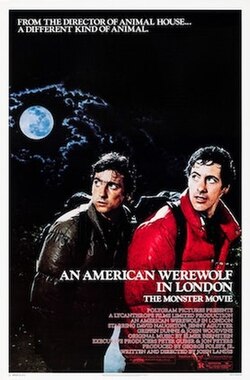
A melding of British-American horror and comedy, An American Werewolf in London (1981) provides entertainment while also being a campy and silly.

While two American buddies, Jack and David, traverse the English countryside with backpacks in tow on a spring break jaunt of sorts, one is viciously attacked and killed by a strange werewolf, setting off a series of strange occurrences that play out over the remainder of the film.

From this point, the film is told from the perspective of one of the males, as the other appears to him in visions, warning him of his inevitable transformation into a werewolf.

An American Werewolf in London does not intend to mock the horror genre, but it is certainly campy and over-the-top.

Despite the cult-classic accolades thrust upon the film, which I respect, it is not among my favorites.

I would have preferred it to tilt more towards the horror classification rather than the comedy, because it comes across as some spoof, with the main characters overacting.

The film has a silly quality. It is light fare instead of dark or morbid, and even the kills are meant to be fun, not horrific. In a way, it is almost cheesy, and that is not a compliment.

This is not to say that the film is completely subpar. It is decent, but not very believable, and I think that is a distraction and a missed opportunity.

However, my favorite characteristics of this film are the makeup/special effects and the musical score, which features such fitting treats as “Moondance”, “Bad Moon Rising”, and “Blue Moon”.

Sense an intelligent theme? The makeup, especially during the reanimation sequences, is creative and still impressive today, considering the film was made in 1981.

Besides, the best scene of the film is undoubtedly the “Slaughtered Lamb” scene when Jack and David stumble upon the aptly named pub filled with interesting, blue-collar-looking locals.

When one of the tourists inquires about a mysterious five-pointed star on the wall, the pub dwellers grow angry and cold, leaving the young men confused and intrigued.

This scene is full of interest, and I only wish the pub characters had more of a chance to shine, as they seem benevolent and have potential backstory.

I would have enjoyed learning more about the history of these folks.

Sadly, the focus is by and large on Jack and David and a poorly constructed love interest- Nurse Alex Price, who is not to be taken at all seriously and played for one-dimensional laughs.

A lighthearted, sort-of fun late-night flick, An American Werewolf in London is a cult film, though I would not agree with the “cult classic” distinction.

Oscar Nominations: 1 win-Best Makeup (won)

The Young Girls of Rochefort-1967

The Young Girls of Rochefort-1967

Director Jacques Demy

Starring Catherine Deneuve, George Chakiris

Scott’s Review #252

60020331

Reviewed June 30, 2015

Grade: B

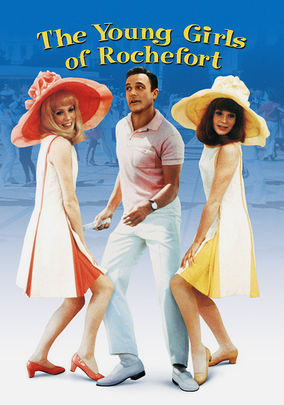
The Young Girls of Rochefort (Les Demoiselles de Rochefort) is a musical fantasy set in a small French town outside of Paris.

The story focuses on a pair of gorgeous twin sisters, Delphine and Solange, played by real-life sisters Catherine Deneuve and Françoise Dorléac, who yearn to escape their small town for the bright lights of Paris and hope for romance.

The twins can have any man they want, but enjoy the thrill and excitement of conquests and being chased and sought after by seemingly all available French men. They spend their spare time discussing and fretting over various loves.

The film is so French and pure musical fantasy, and logic is not the primary focus. Much of it does not make much sense, in fact, nor does it need to. It is pure fantasy.

The film excels by being dreamlike, bright, and sunny. The vivid, bursting colors and lovely sets enhance the film’s look.

In particular, the coffee shop set is a dream. All the central characters gravitate to the café for drinks, gossip, and song and dance.

A great deal of the action takes place here, which is a significant plus to the film.

The Young Girls of Rochefort, made in 1967, is very state-of-the-art in terms of art direction and color.

The loose plot, which is not at all a reason to watch this film, is silly. The twins, longing for love, meet several men, all possible suitors, but their true motivation is to get out of Rochefort and find genuine excitement in the big city of Paris.

One cannot help but realize that the men are a means to an end for the girls.

The heartfelt part of the story belongs to that of the twins’ mother, Yvonne, who also longs for love. Yvonne runs the café and still pines for a long-lost love whom she jilted because of a funny last name. She now regrets her decision, and the audience is rooting for her to find happiness.

She is a wholesome character, whereas Delphine and Solange are selfish and are attempting to further their careers as musical artists.

My main criticism of the film is casting Gene Kelly as one of the sisters’ love interests. Far too old and well past his prime at this point, the casting doesn’t work. Yes, he is a fantastic dancer, but the age is too great to be believable.

In the end, the main reason to watch The Young Girls of Rochefort (1967) is to escape, let loose, and enjoy a bright, cheery, fantasy film.

Certainly not to be analyzed, the film succeeds in providing good escapist, cultured French fare.

Oscar Nominations: Best Score of a Musical Picture- Original or Adaptation

Maleficent-2014

Maleficent-2014

Director Robert Stromberg

Starring Angelina Jolie

Scott’s Review #251

Maleficent_poster

Reviewed June 27, 2015

Grade: C+

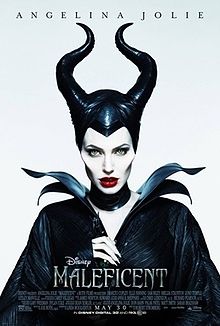
Maleficent (2014) is an updated re-telling of the classic fairy tale “Sleeping Beauty” told from the perspective of Maleficent, the evil godmother, who in this version, it is revealed, was not always.

She is rather sympathetic towards the beginning of the film.

Later in life, becoming the antagonist, she begins life in a world of goodness, wonder, and hope until she is duped by a young man she loves and turns wicked with hatred and revenge.

The casting of Angelina Jolie as Maleficent is excellent and the main reason to watch the film.

Also worth noting is the wonderful, creative art direction and costumes that look gothic and interesting.

Otherwise, the film meanders a bit, is slightly watered down, and contains a sappy Disney-style love story. The story itself is the weakest part of Maleficent.

Maleficent, protector of the fairies in the magical land of the Moors, as a young girl is betrayed and is NOT a villain. Her male suitor (Stefan) is someone she trusts, loves, and respects, is then duped and has her wings stolen by him.

He becomes the King of the neighboring land of humans, vastly different from the peaceful world that Maleficent lives in.

These events lead her to devastation followed by revenge as she places a vicious sleeping curse on Stefan’s firstborn, Aurora.

Jolie is wickedly delicious in this role- the sultry, pouty looks, and those eyes! She plays scorned, revenge-driven to the hilt without being too over the top as lesser actresses would have.

As the actress ages, she is beginning to take on more character, villainous parts rather than sexy bad girls or heroines and I am all for that. It gives the actress something meaty to sink her teeth into. Her dark costumes perfectly give the character an edge.

The art direction is magical and the difference between the two lands is distinctive. The beauty of the Moors with gushing streams, mountains, and flowers contrasts with the stark nature of the human world.

The fairies symbolize peace and freedom with a life filled with treasures, whereas the human kingdom symbolizes ambition, greed, and coldness. The tiny fairies flittering around add zest and life to the film.

The silly love story, though is not believable nor compelling to me, especially the latter film romance between Stefan’s daughter- Aurora, and her wealthy suitor Phillip. They seem manufactured to be together without having a chance to get to know each other.

This seems contrived and produced to add something young to the story.

On a storytelling note, Maleficent’s sleeping curse is set to transpire on Aurora’s sixteenth birthday when she pricks her finger on a spindle and falls into a deep sleep that can only be remedied by love’s true kiss.

Why does he send Aurora away to live in hiding when she is a newborn? Doesn’t he have sixteen years to enjoy her?

The film then dwindles to the inevitable battle finale with lots of movement and fire and a stand-off between Maleficent and Stefan that is dull and predictable.

Overall, the first half of Maleficent (2014) is the better part and the performance of Angelina Jolie is wonderful.

Oscar Nominations: Best Costume Design

Getting Go-The Go Doc Project-2013

Getting Go- The Go Doc Project-2013

Director Cory Krueckeberg

Starring Tanner Cohen, Matthew Camp

Scott’s Review #250

70288648

Reviewed June 23, 2015

Grade: C

Getting Go-The Go Doc Project (2013) is a low-budget documentary that follows a shy, awkwardly gay college student named Doc.

He is completing his thesis project by filming a documentary surrounding an online crush he has developed, via porn, on a New York City exotic dancer named Go.

When Doc finally contacts Go and inevitably meets him, the filming of Go’s life begins. From there, a relationship forms, but at what cost, and what will the turnabout be?

The film is okay but surprisingly dull as it develops, and it quickly drags toward a predictable conclusion.

The underlying themes of this documentary are loneliness and obsession, shown from two different perspectives.

Doc, the boring, lonely college student, is enamored by the gorgeous, buff, seemingly independent Go.

As the two get to know each other, more is revealed about Go, his life past and present, his hopes, dreams, and fears. The film also explores Doc psychologically, and the two form an unlikely bond.

The film succeeds in teaching the audience that there is more to a dancer than his body and more to a nerd than his brain. Both are complex individuals.

The first half of the feature is fairly interesting.

Doc’s initial courage to contact and ultimately meet Go is admirable, and I enjoyed seeing what happened next.

Will Go be receptive to Doc or callously treat him as another enamored gay man?

When Go agrees to be filmed, and his life story is slowly revealed, I feel sympathy for him and am intrigued to learn more.

What was his family life like? Was he abused or victimized as a child?

I wondered.

Getting Go- The Go Doc Project loosely explores matters like this, though it introduces no supporting characters. Go and Doc and their budding relationship are the only focus.

The film then plods for the final forty-five minutes with an uninteresting love story that lacks suspense. Are we to believe the pair will live happily ever after? Not a chance.

Unfortunately, the acting isn’t great either, especially from Go, played by Matthew Camp.

Tanner Cohen is a bit better and the more interesting character of the two, with more depth. He is not comfortable with himself, his body, or even with being gay.

However, at this age (early twenties), one wonders if the character would even be comfortable with girls had he been made to be straight.

The main problem with the film is that the two are mismatched. Even though they develop a fondness for each other, the audience knows it won’t last.

Props to the filmmakers for trying something a bit different.

In the end, Getting Go – The Go Doc Project (2013) starts well, meanders, and ultimately stalls, but it tries hard to present a different type of story, and that is not so bad.

Wild-2014

Wild-2014

Director Jean-Marc Vallee

Starring Reese Witherspoon, Laura Dern

Scott’s Review #249

80013281

Reviewed June 21, 2015

Grade: B+

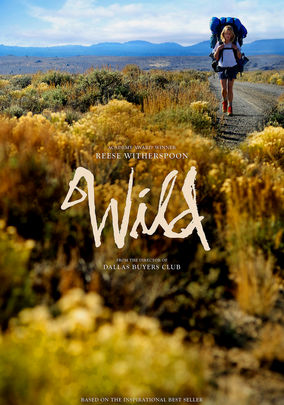
Wild (2014) is a personal story of a young woman’s 1995 challenge to hike the 2,650-mile Pacific Crest trail as a form of therapy for her divorce and her recovery from drug addiction.

The film stars Reese Witherspoon in a thoughtful biography of a real-life figure, Cheryl Strayed, and is adapted from a novel entitled Wild: From Lost to Found on the Pacific Trail.

The film depicts Cheryl’s struggles to survive in the remote area of northern California through various weather patterns, and her interesting encounters with strangers.

The film is a showcase for Witherspoon as she takes center stage, appearing in almost every frame of the film.

Her producing the project undoubtedly has something to do with this. Regardless, it is a winning turn for Witherspoon as she is excellent. She portrays the role with vigor, emotional rawness, and vulnerability, which comes across on-screen.

She deserved her Oscar nomination for this part.

What sets her apart from other actresses who may have gotten this part is that Witherspoon is a small woman, which makes her physical struggles to commandeer trails and wilderness while hauling a large backpack containing her necessities, believable.

Shot using many flashbacks of Cheryl’s life before the enormous hike, we are introduced to the character of Cheryl and her challenging life before. We know that she is a recovering addict, but we do not know what led to these events.

Living in Minneapolis, she is very close to her mother Bobbi, played by Laura Dern, who tragically dies. This leads to a path of destructive behavior for Cheryl and ultimately to her divorce from her husband Paul, who periodically sends Cheryl care packages along her journey.

The bond that Cheryl shares with her mother, a struggling woman herself, is deep. Bobbi has difficulties raising a family and striving to improve her education and life and this is explored during the flashback scenes featuring Cheryl as a teenager.

I love the encounters Cheryl faces along the trail and feel it adds depth to the film.

Few and far between are these gems of interchange since she is mostly alone with nature, and the characters are interesting. Alone in the dark and desperate for a meal, she flags down a farmer named Frank.

At first, it appears Frank may be dangerous and wielding a gun so Cheryl is wary as she goes home with him for dinner.

Happily, Frank is married to a kindhearted woman named Annette, and the three of them enjoy a lovely feast. Later, she encounters a young boy whose mother has died. They bond as the boy sings a song that his mother used to sing to him, and when the boy leaves, Cheryl sobs in emotion for her mother.

These small snippets of real-life conversations and togetherness make the film feel happy and we root for Cheryl to accomplish her enormous feat.

Thanks to a bravura performance by Witherspoon, Wild (2014) is much more than a woman surviving on her own in the wilderness. It is encased in quiet emotion and understated supporting performances that give layers to a human story.

Oscar Nominations: Best Actress-Reese Witherspoon, Best Supporting Actress-Laura Dern

Selma-2014

Selma-2014

Director Ava DuVernay

Starring David Oyelowo, Carmen Ejogo

Scott’s Review #248

80013278

Reviewed June 19, 2015

Grade: A-

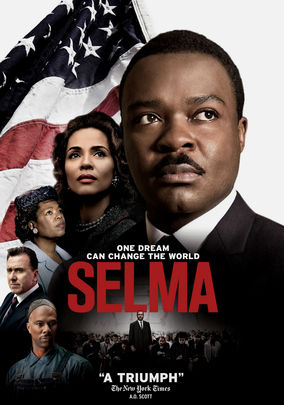
An Oscar-nominated factual feast, set in the mid-1960s during the Civil Rights movement, Selma (2014) is a re-telling of the life and times of Martin Luther King Jr. and the struggles that black Americans endured during a tumultuous period in history.

The film includes dealings with then-President Lyndon B. Johnson and the famous and important 1965 Selma to Montgomery voting rights march, which led to the signing of the pivotal Voting Rights Act of 1965.

This film reminded me quite a bit of 2013’s The Butler in subject matter and style-ironic since Lee Daniels was slated to direct and instead signed on for The Butler.

Both feature a charismatic and intelligent black man struggling with racial matters.

Despite being an independent undertaking, it is glossy, polished, and reflective of the time. Both The Butler and Selma boast a huge cast, and historical political figures, in a tumultuous era in history.

Selma features a bevy of real-life figures from George Wallis to President Johnson to the obvious leader of the Civil Rights movement, Martin Luther King Jr., and his wife, Coretta Scott King, and the casting is very well thought out.

Tim Roth, David Oyelowo, Tom Wilkinson, and Carmen Ejogo portray their roles professionally and passionately. None of the above received Oscar nominations and I am okay with that.

I did not feel that any were definite standouts from a crowded field of talent, though perhaps Ejogo could have been in the running with her understated though compelling performance.

The drama surrounding the lack of expected Oscar nominations is not shared by me. The truth is, the film was included in the Best Picture category and won Best Song.

While an emotional and compelling film, neither is it a masterpiece nor will change the art of cinema, though I must stress it is good.

I find Selma to be an important film- a look back on history and the shame and humiliation placed on blacks who attempted to obtain voting rights. A heartbreaking scene depicts a determined woman (played by Oprah Winfrey) being denied this right by a cold and racist authority figure as she is asked impossible and tricky questions to prove her patriotism, which of course, she cannot possibly answer correctly.

Yes, the film is directed by a black, female director (Ava DuVernay) and yes, one might argue that it has a black point of view. However, the film successfully sympathetically portrays several white characters and avoids the assumption that all white people were racist in this period.

Let’s face it- racism still exists, especially in the South, and in the 1960s even more so. I did not find the message in black people vs. white people’s terms, but rather as a humanistic struggle for rights.

And the struggles continue as the film makes abundantly clear in the message of the film.

While King was a life changer to the black people of the United States, his life was abruptly cut short in his prime. One wonders how much more good this man could have achieved.

The song “Glory” is an emotional, powerful number, especially during the marching and subsequent slaughter scenes highly emotional and effective.

And who will not become teary-eyed as the innocent marchers are beaten and treated like cattle, simply for taking a stand? One will gasp at the senseless bombing scene that rocks a building and takes four innocent little girls’ lives away with it.

Selma successfully transplanted me to a time before my time and made me appreciate and capture the positive and negative experiences of a race of people not long ago.

This film inspires and moves me and teaches me what a movement occurred in 1965.

Oscar Nominations: 1 win-Best Picture, Best Original Song-“Glory” (won)

Independent Spirit Award Nominations: Best Feature, Best Director-Ava DuVernay, Best Male Lead-David Oyelowo, Best Supporting Female-Carmen Ejogo, Best Cinematography

The Babadook-2014

The Babadook-2014

Director Jennifer Kent

Starring Essie Davis, Noah Wiseman 

Scott’s Review #247

70300205

Reviewed June 14, 2015

Grade: B

The Babadook (2014) is an Australian (English language) psychological horror film that tells the story of a mysterious, haunted book, that torments its owner or owners.

Touted as one of the scariest films of 2014 I kindly beg to differ, though admittedly the film does contain some genuine frights and jumps.

What has happened to the horror genre where frightening films have not been made since the 1970s?

Exceptions like The Conjuring (2008) must be mentioned.

The Babadook attempts to be scary without CGI or any extravagant effects but has a classic feel.

Amelia, the mother in the story, has tragically lost her husband, Oskar, in a terrible car crash on the way to the hospital to give birth to her son Samuel. Now six years old, Samuel begins to exhibit signs of psychological problems as he becomes terrified of an imaginary monster.

After a child’s book, Mr. Babadook mysteriously appears in their home and Amelia reads it to Samuel, even stranger events occur throughout their house.

The film has remnants of The Sixth Sense (1999)- a loner, bullied kid is haunted and a disbelieving single Mom touting along as a ghost story or who is alive or dead questions are explored.

The father, Oskar, is instrumental in the storytelling. Because of this, the viewer is often confused throughout, but that is not necessarily a knock on The Babadook.

It is not exactly clear to me if Amelia is the central character or if that honor belongs to Samuel- the interesting part of the film is the relationship between mother and son.

The Babadook is a scary story. Can a book come to life and haunt? So says the film and that is worth thinking about.

In horror, there can be some ridiculous premise that is so unrealistic it cannot even be fathomed.

Where the film suffers in my view is that it is not that scary. Having something jump out at you or some other surprise is nice, but where is the terror? The exact motivations of the book also remain unclear.

I admire The Babadook for attempting to bring back old-school horror to modern audiences and telling a solid, haunting story.

However, the film did not quite measure up to the hype surrounding it.

The great film reviews are a bit much as I do not believe The Babadook (2014) is quite on the level of one of the scariest films ever made.

St. Vincent-2014

St. Vincent-2014

Director Theodore Melfi

Starring Bill Murray, Naomi Watts, Melissa McCarthy

Scott’s Review #246

70295665

Reviewed June 5, 2015

Grade: B-

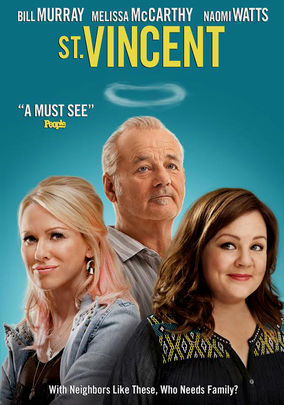
St. Vincent (2014) succeeds only due to the charming, funny appeal of its star Bill Murray, who fronts this cute, mainstream comedy.

Set in blue-collar Brooklyn, New York, it tells the story of a curmudgeonly old man (the title character, Vincent), who befriends a lonely young boy named Oliver, new to the neighborhood.

Mixed in with the cast of characters are Oliver’s struggling mother Maggie (played by Melissa McCarthy) and Vincent’s pregnant, stripper girlfriend, Daka, played by Naomi Watts.

I found intrigue in how we get to know Vincent first and then watch him evolve from a grumpy, cutting old man to a begrudging babysitter of the neighbor boy while clashing with Maggie and fighting with Daka.

Murray returns to comic wit using his now-legendary flawless dry, sarcastic humor and perfect timing and displays much of that in St. Vincent. Throughout all of this Vincent remains brutally honest with his snarky remarks (mainly aimed at Maggie) yet heartwarming and I love this aspect of the film.

Thanks to Murray, Vincent is lovable, making the film, which with lesser talent, would be overly sentimental

As the film progresses we see Vincent’s struggles- his wife suffers from Alzheimer’s, and he is indebted to bookies (primarily Terence Howard- in a bit of a throwaway role).

The film staggers with some predictability issues and is formulaic and easy to predict a warm finale.

Of course, in true form, Vincent is a Vietnam vet who drinks and gambles and is angry at the world, but has a heart of gold so, despite being temperamental, the audience falls in love with him (patriotism helps).

The character contains every cliche in the book. A mean old man- who rises to new heights and becomes a nice grandfather figure to a bullied boy is what this film is going for.

The bullying of Oliver is also contrived- during one scene Oliver, after being picked on once again by the prominent bully, flies into a seething rage and breaks the bully’s nose.

The audience is supposed to buy that the waif-ish, shy kid triumphs over the bully. If only life were that simple. Inevitably, after both serve after-school detention, they bond over bathroom cleaning and become best friends.

Who did not see that coming?

In addition, most of the characters are one-note.

Naomi Watts is a sexy, and aging Russian (not sure I bought that accent) stripper with a soft spot- she comes across as uptight but is caring- another cliche.

Melissa McCarthy is a hard-working, soon-to-be divorcee, trying to raise her kid right- one-dimensional. Even Vincent is seemingly tough as nails, but of course, has a soft spot for the neighbor kid.

The casting of Watts, McCarthy, and Howard is okay, and I surmise the film was going for casting “name” actors, but these parts might have been played by unknowns and had the same effect.

The gem is Murray.

Murray effortlessly breathes life into a character who otherwise would have been as dull as dishwater. I found the writing the weakest point of the film.

A major incident brings the cast together united as one (yawn). The film closes with the family all happily eating dinner together. I do not see this as a spoiler as this ending can be seen a mile away.

Despite the flaws and sentimentality of the film, it is admittedly sweet, and humorous at times, and sends a nice message to the audience- be kind to one another and help each other get through life.

Without Bill Murray, this film would have been completely bland and unlikeable.

St. Vincent (2014) is a feel-good film that is perhaps too feel-good.

Into the Woods-2014

Into the Woods-2014

Director Rob Marshall

Starring Emily Blunt, Meryl Streep

Scott’s Review #241

70305948

Reviewed May 8, 2015

Grade: B

Based on the stage production of the same name, Into the Woods (2014) is a feature-length Disney film that incorporates several different fairy tales into the main story.

The film is a fantasy musical with numerous songs performed by the cast, featuring a large ensemble of seasoned actors.

The classic fairy tales are modern versions of Little Red Riding Hood, Rapunzel, Jack and the Beanstalk, and Cinderella.

The action mainly revolves around a baker and his wife (James Cordon and Emily Blunt) who are sad and lonely because they cannot conceive a child due to a long-ago curse put upon the baker’s family by a witch- played by Meryl Streep.

Circumstances surrounding the baker’s father caused the once beautiful witch to be turned ugly. The witch offers a bargain to the baker and his wife- if they bring her four items (a white cow, a red cape, yellow hair, and a gold slipper) for a special potion, she will lift the curse, enabling them to conceive a child and live happily ever after.

This prompts the couple into the dark forest to obtain the requested items. From this point, the couple intersects with other characters from the fairy tales as they all question various aspects of their lives.

There are subsequent stories- the witch is Rapunzel’s adoptive mother and keeps her locked in a tower to prevent her from being hurt by the world.

Cinderella (Anna Kendrick) escapes her taunting stepsisters and attends a ball only to flee when noticed by the handsome prince (Chris Pine).

Jack attempts to sell beans to provide food for his mother- and Little Red Riding Hood brings sweets to her Grandmother but is confronted by the Big, Bad, Wolf (Johnny Depp), a strange Woman Giant is stomping through the forest searching for Jack.

All these stories revolve around the baker and his wife’s efforts to retrieve the witch’s requests.

The production and art direction in the film is great. I love the dark, gloomy forest, which translates so well on the screen and gives the magical effect of a mysterious, secret forest.

I enjoyed the songs quite a bit- especially the catchy “Into the Woods”. However, some of the songs are quite one-dimensional and bland and not discernible from each other, let alone memorable.

The duet of the Prince’s, “Agony” is silly and useless to the plot, with gyrations, and dance moves.

Meryl Streep- dynamic in anything she appears in again steals the show as the vile witch turns beautiful at the end. She has a fantastic solo number mid-story, entitled “Stay with Me”.

One drawback I found with the film is, at times it drags a bit and I was not sold on the casting of Anna Kendrick as Cinderella.  Something about her performance was lacking, perhaps she was not as sympathetic or convincing as another actress might have been.

Also, I would have enjoyed seeing Johnny Depp as the Wolf be more prominently featured and a larger role for the Woman Giant. As integral as she is to the plot, it was tough to get a clear glimpse of her face let alone anything more substantial.

An entertaining feast of fairy tales immersed in one film, Into the Woods (2014) has some compelling moments but lost opportunities that bring it far from the reaches of a masterpiece level.

A solid film, but not a great film.

Oscar Nominations: Best Supporting Actress-Meryl Streep, Best Production Design, Best Costume Design

Carrie-1952

Carrie-1952

Director William Wyler

Starring Jennifer Jones, Laurence Olivier

Scott’s Review #240

60011689

Reviewed May 3, 2015

Grade: B

Carrie, not to be confused with the 1976 horror classic Brian DePalma, is a 1952 drama starring Laurence Olivier and Jennifer Jones—two big Hollywood stars of the time.

Shot in black and white, the film tells the story of a self-titled ingénue (Jones) from a Midwest upbringing who travels to Chicago to make her fortune.

Attempting to launch her career, Carrie becomes immersed in a love triangle with Olivier, who is unhappily married and runs a restaurant with salesman Charles Drouet, played by Eddie Albert.

Directed by William Wyler, the film has a melancholy tone as one of the characters sinks into a world of despair.

The highlight of this film is Laurence Olivier’s excellent performance as George Hurstwood, who goes from being a successful restaurant manager with an affluent existence to a poverty-stricken, lonely, and broken older man.

Olivier is so effortless and believable in his performance, as he always was.

However, I felt that Jennifer Jones was miscast. While attractive, yes, I did not think that every man would lust after her on sight alone, as was needed for the character of Carrie. Her acting, while okay, is not on the level of either Albert or especially Olivier, with whom she shares much screen time.

Perhaps Vivian Leigh, Teresa Wright, or Kim Novak might have been wiser choices.

The story itself is compelling and engaging. Here we have a woman- at the turn of the twentieth century- forging ahead to make it on her own- almost unthinkable for a woman, taking menial jobs as a sewing worker in a factory to scrape by.

Carrie resists the urge to become a rich husband-seeking gal and believes in marriage and true love. That is why she is devastated when she learns that George is married.

Will true love win out for them? This seems to be the central aspect of the film.

Behind-the-scenes issues may have contributed to the problems that appear onscreen. Wyler reportedly did not want to cast Jones, Olivier did not like Jones, Olivier was injured during much of the filming, and the film’s ending was changed to provide a “happier” ending.

Initially, George was to commit suicide, which might have successfully made the film more shocking and heartbreaking.

Containing beautiful costumes and interesting cinematography, Carrie has positives but might have been much better than the final product ended up being, but for poor casting and real-life dramas that hurt the film.

Oscar Nominations: Best Art Direction, Black-and-White, Best Costume Design, Black-and-White

A Most Violent Year-2014

A Most Violent Year-2014

Director J.C. Chandor

Starring Oscar Isaac, Jessica Chastain

Scott’s Review #239

_A_Most_Violent_Year__Theatrical_Poster

Reviewed May 1, 2015

Grade: B

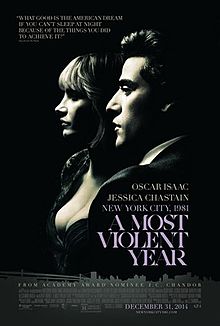
Set in New York City, throughout the notoriously violent year of 1981 and influenced, at least in part, by The Godfather (1972) A Most Violent Year (2014) is similar in texture to the elite HBO series The Sopranos (1999-2007).

A Most Violent Year is an attempt at weaving a tale of a “good guy” mixed up with the mafia and attempting to remain upstanding throughout the adversity and corruption he encounters.

Oscar Isaac and Jessica Chastain portray Abel and Anna Morales, who owned Standard Oil, an upstart business they are attempting to launch.

Due to the violent nature of the times, several trucks are hijacked, resulting in robberies and severe beatings. In desperate need of funds to expand their business and stay ahead of competitors, Abel and Anna are forced to take out loans, leading them into a world where crime and violence run rampant.

They are under investigation for apparent price fixing and tax evasion activity by the Assistant District Attorney.

The main theme is the conflict and guilt that Abel feels towards violence and the constant temptation to join the ranks of the crime world to protect his business ventures.

Abel faces pressure from Anna, who has mob ties (her father is an influential mafia boss known around town) and is all for fighting fire with fire. Abel refuses and is determined to lead a straight and narrow life.

When circumstances spin out of control, his morals are questioned.

A Most Violent Year is an interesting film yet I think I was expecting a bit more than I was given.

For starters, it is not in the same league as the mafia works of art. It is tough to put my finger on what the issue is but something is missing from the film making it lack a compelling edge.

The plot moves slowly, for sure, but the film is successful as the character study that it is, however, I was left wanting more depth to the characters and a broader vision of the film itself.

I did not find myself truly vested in either the character of Abel or Anna.

Chastain received praise for her performance, which I found adequate, but hardly a marvel. Nominated for several awards, but deemed “snubbed” for not receiving an Oscar nomination, I find this untrue.

Her performance is not brilliant and Oscar Isaac’s is superior.

This is not to say that I did not enjoy the film overall. It takes some risks, has a rich character complexity, is shot very well, and looks great. It has a smooth look and I completely bought the 1981 time period, rather than it appearing to be dressed up for the era.

There is an authenticity to it.

A mob film not on the level of The Godfather or Goodfellas (1990), A Most Violent Year is a decent contribution to the crime-thriller era. It just does not live up to the critical acclaim heaped upon it.

Independent Spirit Award Nominations: Best Supporting Female-Jessica Chastain, Best Screenplay, Best Editing

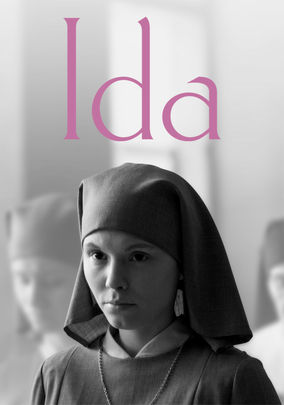
Ida-2014

Ida-2014

Director Pawel Pawlikowsi

Starring Agata Kulesza, Agata Trzebuchowska

Scott’s Review #238

70293721

Reviewed April 24, 2015

Grade: A

Ida (2014), the winner of several Best Foreign Language statuettes, including the first-ever Best Foreign Language Oscar for Poland, is a black and white film, containing beautiful cinematography. It offers a fascinating story that is both moving, sad, and very character-driven and centers around not one, but two compelling characters.

The ravages and after-effects of war have been explored in film before, but Ida brings a fresh spin to the subject matter.

The film takes place sometime in the 1960s, years after the cruelties of World War II and the brutality of the holocaust occurred, and explores the long-lasting pain and sadness that the incredible time in history left on the survivors, both mentally and physically.

The focus is on Anna (Agata Kulesza), a young nun about to take her coveted vows and begin a life serving the Lord. Quite beautiful, she was left as a toddler at a convent. Before she takes her vows she is instructed to spend time with her only known relative, Aunt Wanda (Agata Trzebuchowska).

Wanda is a former judge who battles depression and alcoholism. Her brother, Anna’s father, was murdered along with Wanda’s young son, so she is a tortured soul. As Anna (real name Ida and Jewish) and Wanda begin a road trip to find the whereabouts of their deceased family’s bodies, they both face personal demons.

What struck me most about Ida is the cinematography- the black and white is lovely, especially when Ida and Wanda travel across the Polish countryside, exquisite to look at.

The farms, land, and roads are so crisp and perfectly lit that it is easy to fall in love with them.

Many scenes resemble paintings giving the film an artistic quality. Ida is simply elegant and peaceful in style.

The story itself of Ida is wonderful. Ida- the title character nun is torn. She knows no other life than the church that saved her life. But she is a gorgeous young woman filled with desires. She sees her promiscuous aunt flaunt men and dress to the nines in flashy outfits and makeup.

Ida, almost always dressed in her nun’s garb, secretly dresses in Wanda’s dresses and makeup and is transformed. When she meets a handsome saxophone player, her desires begin to brim over and her conflict increases especially as the truth about her heritage unfolds.

As interesting a character study as Ida is, the character of Wanda is equally, if not more so, interesting. Damaged, hurt, and depressed she needs men to feel good about herself.

An alcoholic she has not gotten over the death of her young son and has become a bitter woman. Ida is about loss.

Visually and creatively enticing, Ida is as good as they get. It deserves the many awards that were bestowed upon it.

Oscar Nominations: 1 win-Best Foreign Language Film (won), Best Cinematography

Independent Spirit Award Nominations: 1 win-Best International Film (won)

Only Lovers Left Alive-2014

Only Lovers Left Alive-2014

Director Jim Jarmusch

Starring Tilda Swinton, Tom Hiddleston

Scott’s Review #237

Only_Lovers_Left_Alive_English_film_poster

Reviewed April 24, 2015

Grade: B

Only Lovers Left Alive (2014) is a bizarre trip into the strange and unusual world of vampires.

The film, moving slowly, becomes hypnotic, grabbing me into the plot, though the plot itself seems almost secondary to the gothic mood and dark ambiance of the film.

Thanks to the wonderful Tilda Swinton, who I find mesmerizing in every film role she appears in, the methodical film never completely bored me and, at times, even fascinated me.

Set in present times, Swinton and Tom Hiddleston play vampires named Adam and Eve, who are lovers separated geographically. Adam is a musician living in a vast Victorian house in Detroit and Eve resides in Tangier.

Realizing that Adam is lonely and suicidal, Eve makes the international trek to the United States to be with her love. While they begin enjoying a quiet existence immersed in music and thoughts, Eve’s rebellious sister Ava (Mia Wasikowska) from Los Angeles adds havoc to their lives.

Also cast in the film is John Hurt, who plays Marlowe, an ancient vampire assisting Adam and Eve, who succumbs to sickness due to tainted blood.

The film is a creative, atmospheric offering from edgy independent film director Jim Jarmusch, known for such left-of-center fare as Broken Flowers (2005) and Coffee and Cigarettes (2003), which are visual and visceral achievements.

While I did not completely love this film, feeling that the actual story is the weakest area, the magical and beautiful arrangements almost make up for any shortcomings.

Set entirely at night (when vampires are awake) and featuring several shots of Adam and Eve posed naked or almost naked in lovely, artistic angles, I think the film is going for a “look” as much as for storytelling and not completely centering on the plot.

It is also a lovely romantic film, though not in the typical sense of silly misunderstandings, and comical moments, but rather in romantic artistry, as Adam and Eve connect spiritually.

Married hundreds of years ago, Adam and Eve have been inexplicably separated by thousands of miles and coasts, though the reason is not explained.

Why are they the few remaining vampires alive? Does the human race know they are vampires or think they are odd-looking people? They both have money to burn and pay a high cost for being vampires as they either pay a contact to steal blood from hospitals to survive or obtain the blood elsewhere.

They are tempted to bite humans but resist those urges. The film does not explain why they are two of the few vampires left in the world or other questions. Adam, supposedly a famous musician, is wealthy beyond words and lives in a haunted-looking mansion surrounded by music and musical instruments.

The plot holes, of course, are secondary to me. None of them matter.

The film has beautiful moments- it is musically centered and Adam and Eve on more than one occasion engage in beautiful, tender dances the film is a pure love story, but a very left-of-center one.

I admire the film’s creativity and going where most filmmakers do not dare to go. Jarmusch dares to be different and deserves much praise.

The negative for me was the pacing of the film- the story almost does not matter as the film feels more like an experience in art than a “mainstream” film containing strong plot points and focus.

Only Lovers Left Alive (2014) is a different type of film and one worth admiring.

Independent Spirit Award Nominations: Best Female Lead-Tilda Swinton, Best Screenplay

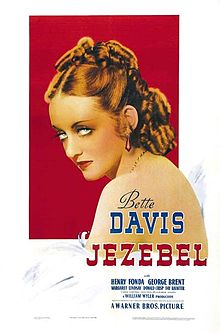
Jezebel-1938

Jezebel-1938

Director William Wyler

Starring Bette Davis

Scott’s Review #236

220px-Jesebel_movieposter

Reviewed April 18, 2015

Grade: B+

An excellent showcase for the young and lovely Bette Davis, Jezebel (1938) is a very early film role for Davis. It is similar to Gone with the Wind, a film Davis reportedly lost to Vivian Leigh.

One wonders how she would have made the character of Scarlett O’Hara her own, and Jezebel is on a journey exploring that possibility.

Acclaimed director William Wyler directed Jezebel, set in New Orleans in 1852 (pre-Civil War). Davis plays spoiled southern belle Julie Marsden, who is engaged to wealthy banker Preston Dillard, played by Henry Fonda.

After a dispute in which Julie selfishly feels her needs are unmet, she shockingly wears a red dress to a sophisticated ball where unmarried women are expected to wear white. This causes a scandal that results in Preston dumping Julie and leaving town.

Cocky Julie expects Preston to return to town and grovel for her forgiveness, but when he does return with a life-changing twist, the drama unfolds. Circumstances include a savage duel, longing for love, and atonement.

Fans of Davis will love Jezebel for the sheer excellence that she brings to the screen. Mesmerizing with those soulful, big eyes and excellent mannerisms, she exudes confidence and sophistication. Admittedly, this is my earliest Davis experience, and she shimmers on-screen.

Bette Davis is perfectly cast. Interesting to note are the innocent qualities early Davis possessed. Later afflicted with a hoarse, deep voice and ravaged beauty after years of alcohol and cigarette abuse, Davis in Jezebel is virginal and debutante-looking.

I find Julie’s wardrobe choices interesting. Her horseback riding outfit, the vixen-like red dress, the virginal white dress, and the dark raven cape at the climax of the film, as well as the various lighting techniques Wyler used to showcase Davis’s face, almost look like candlelight.

The film is similar to Gone with the Wind (preceded by a year). Julie, like Scarlett, is a rich, selfish girl who likes to manipulate men. Both films feature a love triangle prevalent in the story and broken hearts. The enslaved people in both films resemble each other, though they are a bit more glamorous in Jezebel.

The introduction of the yellow fever storyline and the sick and weak lying around in droves is similar to the wounded and dying soldier scene in Gone with the Wind, where the ill and dying lie in pain. The periods, triangle, and southern charms all heavily play in both. It is impossible not to compare the two films.

Melodrama did very well; Jezebel (1938) is to be admired as it is a film featuring a strong female character, something lacking in the film then (1938) and shamefully still lacking in cinema today! Jezebel is an actual “ambitious woman’s movie.”

Oscar Nominations: 2 wins- Outstanding Production, Best Actress-Bette Davis (won), Best Supporting Actress-Fay Bainter (won), Best Scoring, Best Cinematography

The Captive-2014

The Captive-2014

Director Atom Egoyan

Starring Ryan Reynolds

Scott’s Review #235

80013547

Reviewed April 18, 2015

Grade: C-

The Captive is a 2014 thriller that reminds me quite a bit of a 2013 thriller, Prisoners, which must have been an influence.

A similar plot involving a blue-collar, working-class family attempting to track down a missing child as the father takes matters into his own hands and is also considered a prime suspect in the crime by detectives, is used.

Set in snowy upstate New York, the film tells the tale of Matthew (Ryan Reynolds) and Tina Lane (Mireille Enos), a struggling young couple whose nine-year-old daughter, Cassandra, is snatched out of Matthew’s truck while he runs into a store to buy her a pie.

Told using flashbacks, the story picks up several years later as the defeated couple is periodically taunted by Cassandra’s abductors, who leave clues to indicate she may still be alive.

Via video cameras, the abductors watch the parent’s emotional reactions to the clues and sell this “entertainment” to subscribers.

As the film moves along we learn of a major crime syndicate involved in the kidnapping of Cassandra and other similar-aged girls.

At times the plot of The Captive is compelling with a few nice twists and surprises- other times the plot moves quite slowly and plods too much.

The film sets the story in a cold, wintry season emitting a tone of darkness, loss, and harshness. The cinematography is beautiful and deserves major recognition for the mood.

The major problem with the film, though, is the extreme plot holes throughout and the ludicrous nature of the story- I still do not understand the pivotal childhood ice-skating message at the end.

As the film progresses the plot becomes tough to follow and many questions resonate. Who is paying to watch parents emotionally tortured? How can Cassandra seemingly come and go as she pleases and remain a prisoner? Why, years later, is Matthew still a suspect?

These points seem too plot-driven for my taste and seem to be created to further the plot. The main villain- Mika- is a weird guy but what is his motivation? Why is he part of the kidnapping syndicate? What is anyone’s motivation besides Matthew and Tina striving to get their daughter back?

This is not explained.

The casting of some of the actors is problematic- I had difficulty buying Enos working as a maid in a small town- she is way too glamorous a woman for that to be believed.

Similarly, casting Rosario Dawson and Scott Speedman as central detectives in the case seems unrealistic. The film is pure fantasy- these actors are too good-looking to be believable as upstate New York, small-town, detectives.

While very handsome, Ryan Reynolds is the only actor I bought as a grizzled, broken father with a glimmer of hope that his daughter is still alive.

Besides some interesting turns, The Captive (2014) is too unrealistic and convoluted to follow closely and is a bit of a mess.

For this type of film (kidnapping thriller?), I would recommend Prisoners (2013), though the plot holes are prevalent in that film too.

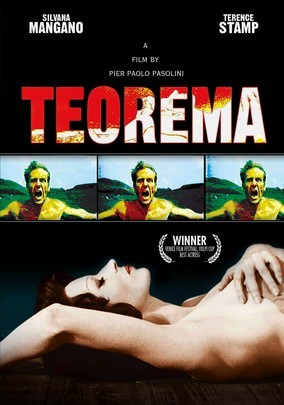
Teorema-1968

Teorema-1968

Director Pier Paolo Pasolini

Starring Terence Stamp, Silvana Mangano

Scott’s Review #234

70039263

Reviewed April 10, 2015

Grade: A-

Teorema is a 1968 Italian art film directed by Pier Paolo Pasolini, who later went on to direct the dark and disturbing 1975 masterpiece, Salò- 120 Days of Sodom.

If one is looking for a concise, mainstream plot with a fixed, to-the-point beginning and ending, one will be disappointed. Rather, Teorema is an exhibition in artistic style and interpretation, and it succeeds in mesmerizing this viewer with thought and contemplation.

A mysterious stranger, known as “the visitor”, suddenly arrives to stay with an affluent Italian family in their sprawling estate. The family consists of a father, mother, son, daughter, and maid, all of whom experience loneliness, boredom, fear, rage, or repression.

The handsome stranger successfully beds all the family members, and just as suddenly as he arrives, he disappears from the household, leaving the family members with different thoughts, feelings, and actions upon his departure.

The film is highly interpretive, and every character can be analyzed.

The stranger seduces all the characters, and the family’s wealth is examined. Is Teorema (which translates to the theorem in Italian) a commentary on the bourgeois society? The father, Paolo, owns a factory and appears to be in turmoil- is he a repressed homosexual?

The father’s story concludes with him turning his factory over to the workers, stripping naked, and roaring with anger and frustration.

Is the mother simply a wealthy, bored housewife or much more than that? This character might have been explored more thoroughly.

The maid, devoutly religious, becomes suicidal after her tryst with the stranger. The others confide in the stranger about how they feel about themselves, and at times, the film feels like a therapy session as each character delves deeper into their personal feelings.

Only the maid is a bit different from the others, but could this be because she is working-class, while the others are affluent?

The daughter, Odessa, approximately sixteen years old, becomes depressed after her liaison. The frightened, weak son appears to have a crisis and is consoled by the stranger in a loving, tender fashion.

Interestingly, the film at the time was resoundingly denounced by the Vatican, which took offense at the controversial tone of the film and its focus on “obscenity”.

Could this be because of some people’s interpretation of “the visitor” as being a Christ-like figure? One must argue for the distinction between “obscenity” and “art” after viewing this groundbreaking, visionary film. I found Teorema to be a thought-provoking film and did not feel the movie was going for shock value.

The film is lightweight in this regard compared to the hauntingly brutal Salo (1975), which followed years later.

Teorema (1968) delves into the psychological abyss and portrays an Italian family as more than wealthy- they are people with emotions, fears, desires, and complexities.

Not for mainstream audiences, but meant for lovers of interpretive film, it can be debated and discussed for ages to come.

Madhouse-1974

Madhouse-1974

Director Jim Clark

Starring Vincent Price, Peter Cushing, Adrienne Corri

Scott’s Review #233

220px-Madhouseposter[1]

Reviewed April 3, 2015

Grade: B-

Madhouse, a 1974 British horror film, stars horror icon Vincent Price, who portrays a sympathetic Hollywood actor who is unsure of his sanity after the grisly murder of his trophy fiancée, whom he may or may not have been responsible for murdering.

Mainly set in London, Madhouse also stars famed British actors in the latter stages of their careers, such as Peter Cushing, and is a treat for classic British horror fans.

The look of the film is stylistic and effective in the mood- the story, while silly, is also fun.

Paul Toombes (Price) is a renowned actor best known for his portrayal of Dr. Death in a successful film franchise. He seemingly has it all and is the envy of his contemporaries- wealth, notoriety, and a glamorous blonde fiancée named Ellen.

After Ellen is murdered by someone dressed as Dr. Death, Paul is unable to remember the circumstances or his whereabouts during the murder.

After spending years in a mental institution in a confused state, he is summoned to London to mount an acting comeback of sorts, reprising his Dr. Death alter-ego.

As the bodies begin to pile up, a whodunit commences- is Paul Toombes the killer, or is someone impersonating him?

The film itself is quite pleasing to a horror fan like me. The deaths, while silly, are fun and campy.

Mostly all female victims, a comical aspect is how the victims, when cornered by the killer, simply scream and stand there waiting to be sliced.

Wouldn’t they fight back in real life?

This film is certainly not realism at its finest, but it is a fun horror film. It is a bit exaggerated and over-the-top in a campy way, but it is also true to the 1970s style, with point-of-view scenes from the killer’s perspective.

A wonderful aspect of this film is the inclusion of real clips from old Vincent Price films (The Raven, The Pit and the Pendulum, and House of Usher), to name a few, featuring the deceased horror god Boris Karloff and Basil Rathbone.

Since the plot features Price as a former horror actor, this is a wonderful opportunity to showcase classic horror films from long ago, and it works perfectly.

I enjoyed the television scenes within the film plot as Paul revives his career and shoots a series for the BBC. The film chooses interesting, haunting sets, and Cushing’s character, Herbert Flay, and his zany wife reside in a spooky, vast mansion with eerie spiders that the wife is obsessed with.

The set pieces are great and very Halloween-like. And the spider-eating-flesh scene is excellent!

The tag team of Price and Cushing is fun to watch- both horror stalwarts connect well, and both actors play off of each other successfully.

They had a ball while making this film.

Towards the end of the film, the plot becomes confusing, and the big reveal of the killer’s identity and the surrounding motivations is a disappointment.

The conclusion to the film is silly and makes little sense, although that is secondary to a film of this genre that borders on camp.

Madhouse (1974) is an enjoyable midnight flick starring two of the classic horror genre’s top icons.

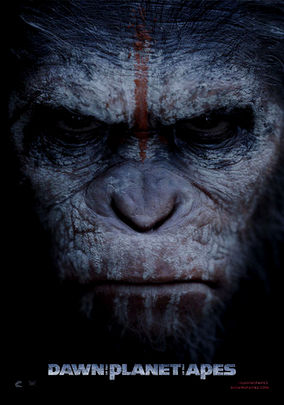
Dawn of the Planet of the Apes-2014

Dawn of the Planet of the Apes-2014

Director Matt Reeves

Starring Andy Serkis, Jason Clarke, Gary Oldman

Scott’s Review #232

70300076

Reviewed March 29, 2015

Grade: C+

Dawn of the Planet of the Apes (2014) is a summer blockbuster hit that knocks it out of the park from a visual perspective- it is magnificent to look at with creative sets and realistic images, but the story is mediocre and predictable.

I think the filmmaker’s true intent was to focus on the look of this film, which is a splendid feature. The film is a slightly better-than-average big-screen adventure with more style than substance.

Set in San Francisco, or what was once San Francisco, the film is set in futuristic times. Apes have forged a new civilization after a deadly virus has eliminated 90% of the human population.

The apes are highly intelligent and manage a happy, unified existence. Then, one day, a human is encountered and, scared, shoots one of the apes. This leads to a peaceful resolution between Caesar, leader of the apes, and the humans, to each stay in their respective territories.

However, humans need access to a dam in the Apes area to provide electricity for themselves. Mutual distrust leads to tension, but the civilized apes and humans reach a truce.

Naturally, there is further conflict as sinister humans and apes vow revenge on each other. This leads to a waging war while the peaceful apes and humans strive to work things out.

A further angle of the story is the hunger for power within the ranks of the Apes, reminiscent of Lord of the Flies. The human protagonists, Malcolm and Ellie, played by Jason Clarke and Keri Russell- are a wholesome, decent couple.

Dawn of the Planet of the Apes pales to the original 1968 masterpiece, Planet of the Apes, starring Charlton Heston. To compare the two is unfair since, sadly, this one has nothing to do with the original.

It is simply the same franchise tag.

However, Dawn of the Planet of the Apes is weaker than its predecessor, 2010’s Rise of the Planet of the Apes. We had a charismatic star, James Franco, and an interesting story. The apes are experimented on and their intelligence is a strong angle.

With the sequel, the story is rather one-note and has a machismo, us against them angle, that is not unique.

The main drawback to this film is its limitations. The characters are portrayed as a) the good and sympathetic humans, b) the evil and destructive humans, c) the good and heroic apes, or, d) the evil, bad apes.

Everyone is defined for the audience and there is no ambiguity or complexities within the characters. This is a bit limiting. The evil ape Koba is purely bad and the drunken, gun-happy, humans are bad.

This is not to say that Dawn of the Planet of the Apes is not enjoyable, it is. It’s a fun, entertaining flick. For what it is, there is a somewhat message in the film, that there is a way to find peace and love between different species and types of people.

Hopefully, the audience gets that message.

Dawn of the Planet of the Apes (2014) is a summer blockbuster action/sci-fi flick that many will enjoy, however, it is a plot-driven extravaganza that could have been superior had it contained more layers to the story and more shape to some of the characters.

It is worth seeing as a visual cinema treat, but scarcely more than that.

Oscar Nominations: Best Visual Effects

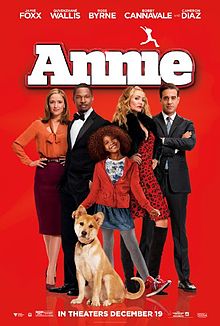
Annie-2014

Annie-2014

Director Will Gluck

Starring Quvenzhane Wallis, Jamie Foxx

Scott’s Review #231

220px-Annie2014Poster

Reviewed March 25, 2015

Grade: D-

The latest remake of the film version of Annie, the last film production in 1982, though at least one variation in television exists, and all based on the Broadway hit of the same name, is a saccharin-laden mess of a film.

Annie stars Quvenzhane Wallis, Jamie Foxx, and Cameron Diaz as Annie, William Sparks (changed from Daddy Warbucks), and Miss Hannigan, respectively, and features Rose Byrne and Bobby Cannavale in supporting roles.

Let me begin with the one redeeming quality of the film, though admittedly a bit of a stretch. I found the musical numbers okay, not great, but far from the worst parts of the film.

The numbers are remixed into hip-hop-type songs with a trendy approach, presumably to add a modern element. While not great, some songs are catchy and not dreadful, especially “It’s A Hard Knock Life” over the closing credits.

Whether the actors sing their songs is another question, which I might not want to know the answer to.

The rest of Annie is terrible.

The casting is poor. Wallis, very believable in Beasts of the Southern Wild (2012), portrays Annie as an intelligent, social-climbing child and I sensed awkwardness to the part. Regardless it did not work.

I did not buy her in the role and how she was awarded a Golden Globe nomination for Best Actress in a Musical Comedy speaks volumes for the limited choices in 2014.

Jamie Foxx completely phones in his performance as Cell-phone technical mogul, running for mayor, William Sparks. Why the film changed the character from Daddy Warbucks is a mystery. He is unbelievable as a germaphobe, an aggressive yet sensitive, powerful man who amazingly develops a soft spot for Annie.

Cameron Diaz completely overacts and turns Miss Hannigan into an obnoxious, hysterical shrew, who towards the end of the movie somehow “turns good”, with no real motivation for doing so.

Rose Byrne and Bobby Cannavale give uninteresting, very one-note performances in their respective roles of Sparks’s assistant, love interest, and right-hand man.

The film chooses to change so many aspects of the original stage version of Annie, that it is barely recognizable.

It takes place in present times rather than the Depression-era 1930s, Annie is no longer an orphan but is in foster care. Miss Hannigan’s first name is changed to Colleen instead of Agatha and now a former pop performer whose career subsequently died.

Hannigan’s brother Rooster and his girlfriend Lily are not featured at all.

The story has zero interest and zero believability.

But the worst part of the film is the corniness of it. It is so overwrought with contrived scenes that it is tough to take seriously.

At a Mayoral function, Annie (an untrained singer) suddenly leaps onstage and belts out a perfectly sung, choreographed number melting the hearts of the wealthy powerhouses in attendance.

The film is pure fantasy with no realism to speak of.

Miss Hannigan fosters an apartment full of children that she hates, to collect $150 a week, but her apartment is pretty spacious and beautiful by Manhattan standards.

The film contains one inconsistency after another and is a horrendous modern take of a long-loved treasure, the 2014 version of Annie should be seen once, snarled at, and put back on the shelf, and forgotten for good.

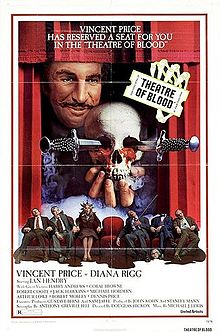
Theatre of Blood-1973

Theatre of Blood-1973

Director Douglas Hickox

Starring Vincent Price, Diana Rigg, Ian Hendry

Scott’s Review #230

220px-Theatreofbloodposter

Reviewed March 23, 2015

Grade: B

Theatre of Blood (1973) stars Vincent Price, a long-time fixture in the classic/campy horror scene, as a demented Shakespearean theatre actor who enacts revenge on critics who fail to recognize him for a coveted award he cherishes.

Price, as always, frighteningly good, delivers a campy, but not ridiculous, turn as the crazed actor.

Price’s appearance alone- tall, wiry, with sinister facial expressions- poises him perfectly to believability in any dastardly role he portrayed in his heyday, and the performance he gives as Edward Lionheart is no exception.

Not solely a campy, melodramatic horror film, Theatre of Blood rises above that categorization with humorous tributes to Shakespeare and a unique chronicle of the Shakespearean works used to systematically take out the critics one by one, about the Shakespearean story, quite frankly, in a comical and witty way.

Price eerily dresses in many different elaborate costumes to commit the murders- a wine-tasting expert, a television host, among other interesting characters, and oftentimes, taunts his victims before permanently dispensing them.

The film is quite British in tone and humor, and is done in a tongue-in-cheek manner, so that the murders are not to be taken at all too seriously.

The critics themselves- seven or eight of them- are deliciously fun. One is a loud, boisterous, fat man who always has his beloved poodles at his side.

What happens to him and the dogs is better left unsaid.

Another is an uptight, sophisticated woman (played by Price’s real-life wife Coral Browne). Several of the critics are depicted as comic villains, so their demises are not particularly devastating for the audience, as they are, to begin with, rather unlikable.

I found myself rooting for Lionheart and looking forward to the next murder!

One criticism involves Diana Rigg, who plays Price’s daughter Edwina, accomplice to his dirty deeds. Well known for her starring role in On Her Majesty’s Secret Service and the 1960s Avengers series, Rigg has little substance to do in Theatre of Blood.

Perhaps by 1973, her film career was on the decline, and she was no longer winning the coveted roles. I would have loved to see her sink her teeth into a meatier role.

A sidekick, Edwina, could have done much more.

The film belongs to Price, and the unique storytelling of Shakespeare’s works was made possible only by this great actor.

Not overly serious and played for some laughs, Theatre of Blood (1973) is successful in its telling of an interesting British horror story.

It’s a nice late-night treat for fans of the British horror genre, especially.

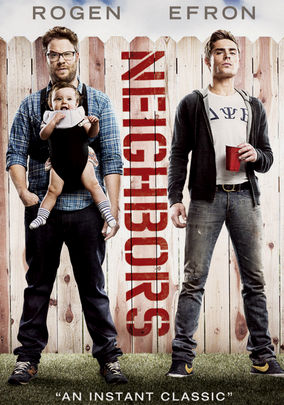
Neighbors-2014

Neighbors-2014

Director Nicholas Stoller

Starring Zac Efron, Seth Rogan

Scott’s Review #229

70297085

Reviewed March 15, 2015

Grade: F

By far one of the worst movies I have seen, Neighbors (2014) is a silly, redundant, nonsensical, and plain old bad film. Whoever thought this film was a good idea and green-lit it should be examined.

Successful comedies- even raunchy, slapstick comedy, contain perfect comic timing and likable characters that the audience roots for, and at least a shred of creativity and originality.

Neighbors has none of these qualities.

Bridesmaids (2011) is an example of a modern raunchy comedy that works and is hysterical, sadly, Neighbors is a far cry from Bridesmaids.

Neighbors stars Seth Rogan, a familiar face in the slapstick comedy genre, and Rose Byrne as Mac and Kelly Radner, a married couple in their thirties with a newborn baby named Stella.

Former party animals in their college days, the two live in a college town and attempt to raise their daughter.

One day, Delta Psi Beta, a fraternity known as one of the rowdiest of frats, moves into the house next door to the Radners and begins causing chaos with their never-ending parties.

The frat is led by Teddy (Zac Efron).

Initially striking up mutual respect, the Radner’s relationship with Teddy is ruined due to a misunderstanding involving the police being called one night.

The remainder of the film focuses on Mac and Kelly’s attempts at getting the fraternity out of their house by sabotaging parties and pitting various frat brothers against each other, causing hijinks and war between parents and college kids.

If Neighbors is an attempt to harken back to the days of delicious college comedies such as Animal House (1978) or American Pie (1999), the film fails on every level.

It is simply not funny.

It contains a plot that is so unoriginal and the jokes featured to death in similar films (bathroom humor, frat jokes, drug jokes, male and female anatomy jokes) by this point, if you have seen one Seth Rogan film you have seen them all.

He is a one-trick pony and has become what Adam Sandler became- tired and dull.

Rose Byrne’s annoying character had me believing the actress was using a poor Australian accent only to realize that the actress is Australian. This is not a testament to Ms. Byrne’s acting ability.

The protagonists are quite irritating and not likable at all. What is the rooting value? Mac and Kelly are irresponsible parents.

They presumably leave Stella at home to visit the frat house and wind up getting drunk and high, stay out late, and wake up early the next day when Kelly attempts to feed Stella using tainted breast milk, which leads us to an unfunny scene between Mac and Kelly focusing on Kelly’s vein-popping breasts, which makes no sense anyway.

Other suspensions of disbelief and logic pop up left and right. Why would the police reveal to the fraternity the names of those who had called to complain about them and after catching the Radner’s in a lie, tell them never to call the police again?

How unrealistic.

Mac and Kelly live in a college town, and the risk of a fraternity or sorority being close never occurred to them. They acted surprised that college students existed at all.

The wonderful Lisa Kudrow is cast in a ridiculous role as the college Dean but is completely wasted in a hysterical, bubble-headed, dumb role.

If I had to give a positive to Neighbors (2014), it would be that Zac Efron does a halfway decent job portraying his character Teddy and Efron does possess a good deal of acting talent (think The Paperboy from 2012).

I am being quite generous and looking for a bright side to a train wreck.

The film is poor.

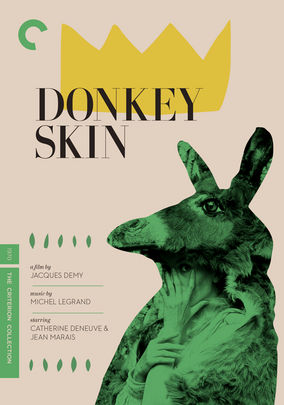
Peau d’Ane (Donkey Skin)-1970

Peau d’Ane (Donkey Skin)-1970

Director Jacques Demy

Starring Catherine Deneuve, Jacques Perrin

Scott’s Review #227

70032096

Reviewed March 11, 2015

Grade: B

Peau d’Ane (English: Donkey Skin) is a 1970 French musical film that is a fairy tale for adults- seemingly happy, but very dark beneath the surface.

To say this film is bizarre would be an understatement. The film is a strange retelling of the classic Cinderella story.

The film is set in a peculiar medieval world and centers on a dying Queen (Catherine Deneuve), her husband, the King (Jean Marais), and the heroine, the beautiful Princess (also Catherine Deneuve).

The Queen is dying. Her last wish is for the King to marry the most beautiful woman in the land. Coincidentally, that is their daughter, The Princess! Eager to produce an heir to the throne, he is determined to marry and reproduce with his daughter.

The Princess, wanting none of it, turns herself into an ugly creature by wearing the skin of a donkey and moves to a neighboring kingdom to exist in a life of exclusion and revulsion, farming pigs and being berated by those around her.

A handsome Prince decides to pursue the woman who has baked him a delicious cake, but knows not who she is. Ironically enough, it is the Princess.

I found the film to be quite interesting, albeit in a warped way. Unusual and challenging to analyze, one must watch with an open mind.

Certainly, Donkey Skin delves headfirst into the icky world of incest. It makes no apologies for its controversial nature, all the while interspersing the film with cheery tunes, singing roses, and hatching chicks.

The donkey skin that the Princess wears is fake and unbelievably laughable, and how nobody is aware that there is a beautiful Princess underneath is silly.

And yet the film somehow works. I was transported into a magical world where nothing is normal, and one surprise after another ensues.

A couple of oddities worth mentioning: some of the film’s music a contemporary and upbeat. Also, strangely, the final scene involves a helicopter, which is completely implausible given the period.

I get the sense that this film is going for absurd and unique and succeeds on both counts.

Visually, the film is gorgeous- bright and cheerful with loads of colors. The film has awe-inspiring art direction, with the castle’s set pieces odd, engaging, and colorful. I especially enjoyed the Prince’s bedroom set.

As eccentric and seemingly dark as the film is, often a character will burst into a cheerful song, as evidenced by the Princess singing a happy tune while making a meal, all the while dressed in her donkey skin, almost like a scene out of Mary Poppins (1964) or My Fair Lady (1964) or any other wholesome musical.

To be sure, a unique film, Donkey Skin (1970) is eccentric, lively, and interestingly perverse with a French flair—fantasy for adults and a journey into the weird.

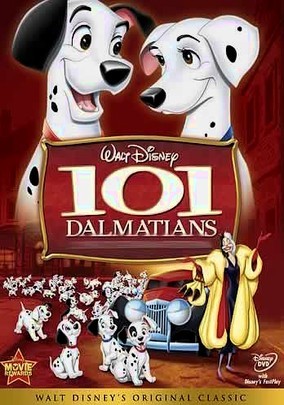
101 Dalmatians-1961

101 Dalmatians-1961

Directors Wolfgang Reitherman, Hamilton Luske, Clyde Geronimi

Voices Rod Taylor

Scott’s Review #226

205524

Reviewed March 8, 2015

Grade: A-

101 Dalmatians (1961) is a darling Walt Disney film that encompasses wholesomeness, love, and devotion.

Set in London, which adds a level of sophistication to the film, it tells the story of a lonely songwriter named Roger Radcliffe, who lives in a flat with his faithful and devoted Dalmatian, Pongo. Theirs is a happy existence, but something is missing.

Pongo, voiced by Rod Taylor (of The Birds-1963, fame), is determined to find a mate for himself and Roger and sets about to do just that by watching ladies and their dogs walk the streets in front of their homes.

He finds the perfect match for both (Anita for Roger and Perdita for him). The four of them look forward to years of happiness together until a sinister friend of Anita’s, Cruella De Vil, enters the story.

Cruella sees profit in the Dalmatians and attempts to steal and destroy them.

Cruella De Vil is a delicious villain and certainly one of the most entertaining in animated film history, but more than that, she is comically devious. Her maniacal laugh and witty language make her a perfect foil for a wholesome couple and wonderful, cute little pups.

The audience does not root for her, but there is something wicked and fun about her over-the-top character.

The 1961 film has an incredible artistic direction that animation today lacks —the scenes look like beautiful drawings.

There is a Mad Men quality to the design.

The “look” differs from current animation in that it is sleek and constructed skillfully, not loud, fast, and bombastic.

I love that the film is told from the perspective of the Dalmatian Pongo and Perdita, not from the perspective of human beings. The central characters, Pongo and Perdita, tell the story about their dogs, which adds to their empathy for the animals. We see their attempts to rescue all of the stolen dogs.

Also outstanding is how all of London’s dogs (and various other species of animals) band together in rescue. They work as a team to save and protect their own, who are being mistreated and sent to slaughter.

An enjoyable scene involves the climactic car chase between Cruella’s gaudy luxury car and a furniture van. As the pups use the van to escape, a cat-and-mouse game ensues, providing comedy and dramatic flair.

The scene is among the most suspenseful in the film, as the vehicles weave along dirt and back roads toward London.

In addition to this riveting scene are others involving the dogs tiptoeing past their captives as we cross our fingers they will not be heard and subsequently caught, and an adorable scene showcasing the dogs’ cleverness at covering their spots with soot to escape.

A heartwarming, inspirational film for the entire family to enjoy many times over, 101 Dalmatians (1961) will leave you smiling and humming.

It is a truthful, fantastic film about love for animals.

Welcome to my blog!1,552 reviews posted so far! I'm Scott Segrell and I reside in Stamford, CT. My site features hundreds of film reviews I have written since I launched the site in 2014. I hope you enjoy reading my latest reviews or searching for your own favorites to see if we agree. Please see my Recent Posts section, and don't forget to utilize the tags and category links.