I Am Sam-2001

I Am Sam-2001

Director Jessie Nelson

Starring Sean Penn, Michelle Pfeiffer

Scott’s Review #1,097
Reviewed December 30, 2020

Grade: B-

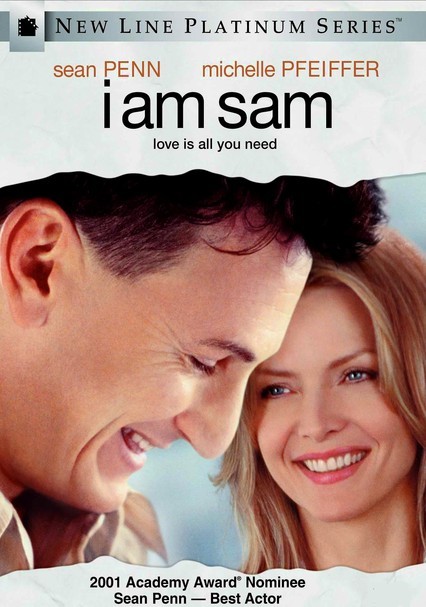
Sean Penn stars as a mentally disabled man who fathers a child and is determined to cling to the custody of her after he is deemed unfit to parent in I Am Sam (2001), a drama that garnered Penn an Oscar nomination.

The brilliant actor may have deserved the win since he breathes life into a film riddled with every cliché imaginable. Besides his performance, and that of novice Dakota Fanning, the film would be drivel.

As it is, it’s mediocre at best.

Somewhere, sometime, somehow, in cinema history, the consensus became that if an actor plays a mentally challenged character, he or she is assured an Academy Award nomination.

Juliette Lewis tried and failed with the cringeworthy The Other Sister (1999), but Penn has better credibility. Dustin Hoffman also succeeded with Rain Man (1988).

Sam (Penn) is a well-adjusted man and has a supportive group of friends with disabilities. His neighbor, Annie, (Dianne Wiest) assists with raising Sam’s daughter, Lucy (Fanning), but the eight-year-old quickly exceeds the mental capacity of her father, leading to frustration and conflict.

Lucy’s mother, a homeless woman, has vanished from the scene.

The justice system determines that Lucy must go to a foster family led by Randy (Laura Dern), which results in Sam hiring a no-nonsense attorney, Rita (Pfeiffer). Both Randy and Rita sympathize with Sam and must convince the courts that he can raise her.

Jessie Nelson, who directs I Am Sam, also directed safe films like Corrina, Corrina (1994), and Stepmom (1999), so her intention to present a warm and soft experience is easy to figure out.

This is not meant to criticize her direction style as much as to point out that the result is not a hard-edged, gritty experience. It’s a crowd-pleaser and there is never a moment where Nelson wants the audience to root against Sam keeping custody of Lucy, regardless of the reality.

Penn saves the film from being a complete stereotype. It’s apparent that Sam adores Lucy and the actor is not afraid to cry and express genuine emotion on cue. He’s a great actor and makes the most out of the role.

He does his best to insinuate that mentally challenged people are like everyone else- they can keep a job, pay bills, hire a lawyer, and fight for their kids. His task is tough, but he succeeds. That’s what raises I Am Sam as an overall product.

Fanning, who in 2001 was about to embark on a fabulously rich acting career, is wonderful. Unlike many child actors, cast because they are cute or bubbly, she has real acting chops. She is neither girly nor overly sad in her emotions. Fanning is as strong, focused, and detailed as her eight-year-old character is.

Speaking of stereotypes, Pfeiffer is awarded the grand prize in female attorney banality. She is haggard, absorbed in her work, and has no time for her son, only taking Sam’s case to prove she is a kind person since she agrees to pro bono work.

Predictably, she realizes, through Sam, that she is wasting her life away, leaving her husband, and spending more time with her son.

Dern does her best with a weak role as the one-dimensional foster parent who realizes she cannot be half the parent that Sam can.

The film’s title is derived from the opening lines “I am Sam / Sam I am” of the book Green Eggs and Ham, which is read in the movie. This makes the film showcase sentimentalism and hammers home the point that the mentally disabled are child-like and need the help, patience, and understanding of non-disabled adults as if that isn’t obvious.

The conclusion to I Am Sam is expected.

The lengthy courtroom scenes are wrapped with a nice shiny bow as Sam predictably retains custody of Lucy as the supporting cast gathers on a soccer field and dutifully gushes with delight at how great a father he is.

This is a fine tribute or fantasy, and if only real life were like this what a better world it would be. I would have preferred a story with more meat.

I Am Sam (2001) is recommended only for huge fans of Sean Penn or those who desire an oversentimental experience. It might have been better suited for Lifetime television.

Oscar Nominations: Best Actor-Sean Penn
The Witches-1967

The Witches-1967

Director Cyril Frankel

Starring Joan Fontaine, Kay Walsh, Alec McCowen

Scott’s Review #1,096

Reviewed December 29, 2020

Grade: B

Legendary film actress Joan Fontaine chose a Hammer horror film as her final role. While not high-brow art, these films are an entertaining treat for horror fans.

They are frequently macabre, clever, and make the most of a small budget.

In The Witches (1967), Fontaine leads the way, adding class and huge star quality. The film is good, but not great, with an unfulfilling ending. The cinematography and Fontaine’s involvement are the best aspects.

Also worthy of mention in the acting department is Kay Walsh, a talented British actress, who is terrific as the seemingly kind woman who becomes a crazed witch. She adds professionalism to a pivotal role. The other supporting actors play their parts well, ensuring that the craft of acting is respected.

I adore the British flair that Hammer films always have.

Fontaine plays Gwen Mayfield, an English schoolteacher who accepts a new job as the headmistress of the local school in the quaint village of Heddaby. The quiet town is exactly what Gwen needs after suffering a nervous breakdown while residing in Africa.

She experiences a small flirtation with the Reverend Alan Bax (Alec McCowen), who confesses that he is not overly religious. Stephanie is his sister, played by Walsh.

Before long, Gwen becomes immersed in the worlds of two of her students, Ronnie (Martin Stephens) and Linda (Ingrid Brett). Ronnie insists that Linda is being abused, which prompts Gwen to investigate. Meanwhile, Gwen discovers a voodoo doll and sleuths to find out what is going on in the village.

Events lead her to a sanitarium, and finally to a coven of witches, intent on human sacrifice.

The Witches has a late-1960s look and feel, which adds some sophistication. Gwen is draped in stylish clothes and jewelry and wears a cute, trendy bob haircut.

The set design is cool, with groovy, colorful furniture that makes the tight budget work to its full advantage.  Alan and Stephanie’s estate is particularly impressive with modern furniture, drapes, and various trimmings.

Another positive is the hefty amount of exterior sequences offered.

Director Cyril Frankel, who directed many episodes of the popular British television series The Avengers, provides a similar production, so The Witches feels like a long episodic series. The luxurious English village is sunny, calming, and atmospheric, brightening the film’s atmosphere.

This nicely counterbalances the themes of demons, voodoo, and witches.

Frankel builds the story momentum throughout The Witches at a good pace, but this is lost in the final act, which is way too abrupt. During the first three-quarters of the production, we are led to believe that Gwen is either crazy, imagining the strange events, or that one of the townspeople is gaslighting her.

It’s easy to deduce that the latter is what is going on, and the fun is figuring out who is doing the dirty deeds.

When the culprit is revealed (and it’s displayed on the cover art!), the conclusion is underwhelming. An attempted cemetery human ritual to remove life from Linda and infuse it into Stephanie so that she can live forever is weak.

After an odd sequence of the townspeople dancing and writhing around like nutcases in an unintentionally laugh-out-loud example of overacting, Gwen foils Stephanie’s plan. The witch succumbs to death, a victim of her heinous plan backfiring.

It is hinted that Gwen and Alan (who are revealed to be good) will forge a romance in the future, but I would have liked to have gotten a stronger sense of their budding attraction during the film. Still, it is likely the two will ride off into the sunset together, safely.

While not as gory as other Hammer films, The Witches (1967) instead features exceptional performances and tells a decent story, interesting until the low-key finale.

I expected a bit more from the ending, which simmers out instead of electrifying.

Hairspray-2007

Hairspray-2007

Director Adam Shankman

Starring Nikki Blonsky, John Travolta, Christopher Walken

Scott’s Review #1,095

Reviewed December 28, 2020

Grade: B+

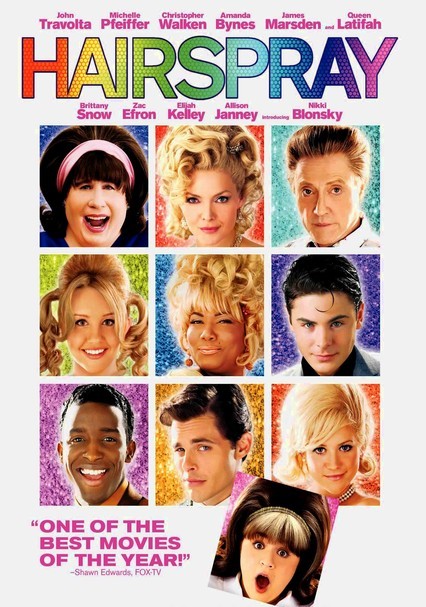
Hairspray (2007) is a fun film, without being superfluous. The third incarnation of the musical treat doesn’t disappoint, offering a brighter production.

A safer affair than the 1988 escapade directed by naughty filmmaker John Waters, it’s nonetheless not a “watered” version either. It loses none of the charm that the original had and includes plenty of big-name stars.

In short, it’s a solid summer popcorn flick with sing-along tunes and a cool vibe.

The important message of racial relations is not lost nor dismissed.

The setting is early 1960s Baltimore, Maryland, a city rife with racial problems representing the entire United States during that decade.

Our star, Tracy Turnblad (Nikki Blonsky) is a chubby, bubbly, sixteen-year-old, who wants nothing more than to trudge through the school day and come home and indulge in her favorite television show, The Corny Collins Show, a popular local dance competition.

Tracy auditions for a spot on the show, and wins. She became an overnight celebrity, a trendsetter in dance, fun, and fashion. She and her fans hope that her new status as a teen sensation is enough to topple Corny’s reigning dance queen, Amber von Tussle (Brittany Snow), and bring racial integration to the show.

Amber’s racist mother, Velma (Michelle Pfeiffer) manages the television station and thwarts Tracy’s efforts, leading to tension and a dance competition between Tracy and Amber.

The casting is a big part of the success. Blonsky, making her film debut, carries the film flawlessly. Both energetic and empathetic, she is the perfect girl next door and relatable for any young girl who is not a stick figure.

More broadly, she represents anybody who feels like a misfit or is put upon for not being classified as perfect. Her joy and sincerity as she sings and dances to “Good Morning, Baltimore” and “I Can Hear the Bells” is infectious and makes her a perfect protagonist.

The supporting cast is delightful and laden with A-list Hollywood stars having a ball with their over-the-top roles.

My favorite is John Travolta as Tracy’s mother and compadre, Edna. Fans of Hairspray know that Edna is always cast with a male actor in drag and Travolta is fantastic. His mannish body and movements only make the character more fun and fabulous.

And with his beehive hairdo and pink ribbon he is so darn cute!

Tracy’s father, Wilbur, is played by Christopher Walken. His love for his wife and daughter is sweet. Pfeiffer fuels her one-note character with venom as the racist woman gets her just due.

Director, Adam Shankman, puts the focus on the musical numbers, and that’s just fine. For added pleasure, he includes both John Waters and Rikki Lake (the original Tracy) in cameo roles, which is a treat for anyone who has seen the original.

The best numbers occur when the entire company joins in, especially the wonderful finale, “You Can’t Stop the Beat”. Besides being musically contagious, the song sends an important message of progression and embracing change.

Despite the fluffy trimmings, the important message of racial inequality is not overlooked, nor does it feel dated in the year 2007.

Racism is still an issue. Justifiably so, the racist characters like Velma and Prudence Pingleton (Allison Janney) look ridiculous with outrageous fear for anyone different than themselves.

Tracy and her friends champion causes like racism, integration, and being true to oneself, which are themes at the heart of the film, along with the merry songs.

While I still prefer the 1988 version of Hairspray for more seediness and a colder vibe, Hairspray (2007) is a colorful rendition that exposes a new generation to the chirpy and danceable tunes while maintaining the important themes.

It’s a family-friendly affair and a very funny experience without sacrificing any credibility.

Game Change-2012

Game Change-2012

Director Jay Roach

Starring Julianne Moore, Woody Harrelson, Ed Harris

Scott’s Review #1,094

Reviewed December 23, 2020

Grade: B

Sarah Palin is an idiot. John McCain is not. We didn’t know that in 2008. We do now.

Somehow their different worlds collided as partners in crime for the 2008 United States Presidential election, she was the vice-presidential nominee to his.

McCain’s people wanted a fresh face, someone with charisma, who could help defeat the surging U.S. Senator from Illinois, named Barack Obama.

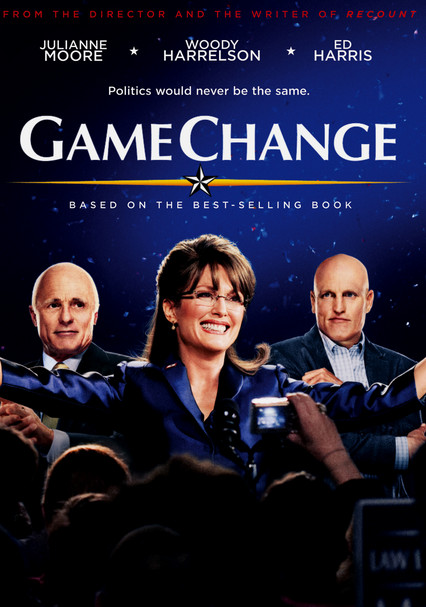
Game Change (2012), an HBO film, chronicles how an unknown female governor from Alaska was chosen as McCain’s running mate without proper vetting, leading to one of the biggest political fiascos of the twenty-first century.

The production is a well-acted, well-paced affair that makes even the most liberal viewer (me!) sympathize, ever so slightly, with Palin, who was thrust into the spotlight at lightning speed.

Julianne Moore takes center stage, giving the political figure empathy and some heart. Supporting turns by Woody Harrelson as the campaign’s senior strategist, Steve Schmidt, and Ed Harris as John McCain provide levity.

The acting is the best part of the film. Otherwise, the film might have been best served as a documentary (more about that below).

As believable as Moore, Harrelson, and Harris are, they feel like performances rather than authenticity. They try to give their best interpretations of the players instead of immersing themselves in their bodies.

Maybe that’s the point of the film?

I love how the film opens.

In 2010, after the debacle has ended, Steve Schmidt sits uncomfortably before Anderson Cooper from CNN. He asks Schmidt if Palin was chosen as the VP candidate because she would make the best vice president or because she could win the election.

The question is quite poignant and the basis for the entire film.

Another excellent sequence is set during the Republican National Convention. Palin’s speech is well received, bombastic even, and energetic, catapulting her as the potential saving grace of the party.

Sadly, for her, the campaign becomes concerned that she is ignorant about many political issues and grossly unprepared. These scenes are the weakest- the audience laughably realizes she believes Korea is one country, and many other gaffs follow.

But, unless you’ve been hiding under a rock, this is common knowledge.

Game Change makes a mistake by editing too many snippets of real-life interviews and other news media moments. This detracts from the dramatization that is the intention and makes me wonder why a solid documentary wasn’t made instead.

Jay Roach, who directs Game Change, revels in close-ups, especially of Palin, perhaps as a nod to her being thrust onto every television station in the United States.

Danny Strong screen writes the project.

The duo sets up the predictable situations nicely. Palin’s disagreements with McCain, the woman, not his choice. For reference, he wanted Joe Lieberman, a moderate from Connecticut who was considered “boring”.

Let’s give the most credit to Moore. The actress doesn’t exactly embody Palin. She is more like a dressed-up impersonator, hardly Charlize Theron flawlessly playing Aileen Wuornos.

But what she does do is successfully make the audience care about her and feel sorry for her. Palin had no idea what she was in store for, nor knew what she signed up for. Moore portrays the emotions well.

Moore carries the film. Palin became a source of venom and mockery after her embarrassing interview with Katie Couric in which she was unable to name any magazines.

She quickly became the whipping girl rather than the ‘it” girl.

The message is competent without feeling preachy or overpowering, but there is something a bit dull about Game Change. Schmidt and Nicole Wallace chose Palin, making the enormous mistake of knowing very little about the woman.

Game Change (2012) is recommended for those who want to be entertained or who desire a history lesson without seeing the real people.

I still think a documentary would have worked better.

Fahrenheit 9/11-2004

Fahrenheit 9/11-2004

Director Michael Moore

Starring Michael Moore

Scott’s Review #1,093

Reviewed December 22, 2020

Grade: B

Reviewing a political documentary about a president considered incompetent pre-Donald Trump is a tough task. Can anyone rival Trump’s incompetence?

In the United States circa 2016, the proverbial shit hit the fan as no other controversial figure had ever set foot in the White House.

Let’s hope that’s as bad as it gets.

To watch a documentary that ridicules George W. Bush knowing what we now know with the widespread notion that we would love Bush back in the office makes Fahrenheit 9/11, directed by liberal filmmaker Michael Monroe, dated and rather superfluous.

It’s still a good watch, but it was better in 2004.

But ever the professional, I will soldier on and review this documentary with gusto and try to remember the time it was made and the issue at hand.

The United States was a tragic war zone in 2001.

I am salivating at the thought of a Moore-helmed follow-up documentary about Donald Trump, considered the worst United States president of all time.

In a clever play on titles, Moore would release Fahrenheit 11/9 in 2018 and unleash a documentary tirade on the 45th president, but only at halfway through his term.

Released only halfway through Bush’s reign, Fahrenheit 9/11 (2004) focuses on the devastating events of 9/11, hence the title, while questioning the how’s and why’s Bush found himself in office. The main point is how he bungled the response to 9/11 and his selfish and inept focus on Afghanistan and Iraq.

The documentary is a good piece of work and a history lesson.

To elicit controversy, and it did, Moore bravely and brazenly calls out the reasons why the United States was the target of terrorism. The events leading up to the gruesome day are chronicled, with bombast and humor, sure to provoke debate among viewers not aligned politically.

But, Moore’s documentary is not a debate. It’s a one-sided attack on Bush. Anyone with a firm “The United States is the greatest country in the world” will not like the experience, and Moore knows this, teetering carefully around mockery.

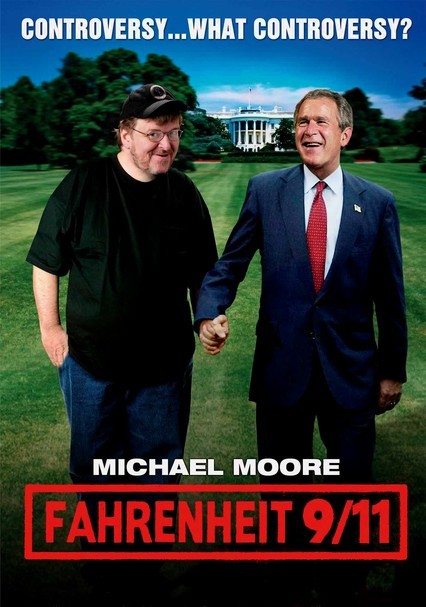
The cover art is brilliant, featuring a sly Michael Moore holding hands with a goofy-looking Bush, a shit-eating grin on his face. This implies that Bush was carried along throughout his term and helped to win the presidency.

The title in bold red emergency letters amid the White House background tells you all you need to know about the tone of the documentary.

Republicans will despise the work.

Helpful to the documentary is that Moore narrates it, adding a good dose of sarcasm and wit to the myriad of verbal insults he hurls at the former president.

If one isn’t familiar with Moore, his hoodie and baseball cap look and garish Michigan accent cement his “regular Joe” persona, though he is intelligent beyond belief.

Moore’s commentary isn’t only a way to smack Bush upside the head, but there is substance here. He angrily points out the interminable amount of time it took Bush to abort storytime on 9/11 and drag his ass to a camera and microphone to address the startled nation.

The point of Fahrenheit 9/11 is to label Bush as a dangerous and flawed president and describe why. The motivation is clear- it’s an attack on Bush pure and simple. But it’s hardly sour grapes or dark and dreary. Moore instills humor and an exposé on the multitude of gaffs Bush made and adds appearances by Donald Rumsfeld and Condoleeza Rice.

Should he be the president? Hell no! This comedy makes the fact that he was easier to absorb.

At just over two hours of running time, the documentary feels slightly long. I got the point of it quickly enough and had my fill around the ninety-minute mark- the ideal length for this genre. The rest feels like overkill and redundant, though I get Moore’s point of hammering home the necessary discussion points.

I’m not sure Fahrenheit 9/11 (2004) needs more than one viewing to absorb its point. It’s a well-made documentary slanted to Moore’s political leanings. But, the points made are relevant, thoughtful, and factual.

For a tribute to the World Trade Center attacks, this is not a good reason to watch.

For a proper dissection of why they occurred and where the United States goes from here (in 2004 anyway), the documentary is a solid watch.

Dances with Wolves-1990

Dances with Wolves-1990

Director Kevin Costner

Starring Kevin Costner

Scott’s Review #1,091

Reviewed December 14, 2020

Grade: A

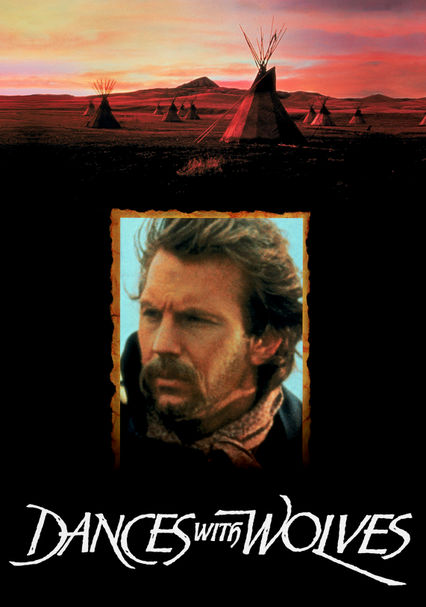
A western epic of grand proportions, Dances with Wolves (1990) is a quiet, yet bombastic story of one man’s yearning to understand and appreciate a different culture.

The liberal-leaning story is of great importance in American history, which is my main reason I love it. This project matters and is sincere and true.

The content and the gorgeous, sweeping cinematography make this a must-see on the big screen for full appreciation.

Sort of like Lawrence of Arabia (1962), in a Western style.

The lovely musical score is well-paced and simply gorgeous, only enhancing the experience and appreciation of the film.

The directorial debut of a then-inexperienced and up-and-coming star, Kevin Costner, catapulted him into the big leagues, earning him tremendous respect within the Hollywood community.

He also produced the film and used his own money when the budget ran over. The accolades were justified, leading to his becoming an A-list star.

He never achieved anything comparable to Dances with Wolves again.

The time is 1863, when the United States was embroiled in the Civil War. Union soldier John Dunbar (Kevin Costner), depressed and suicidal, is injured in battle and receives a hero’s praise. He requests a transfer to the western frontier, where he lives in solitude.

He slowly befriends the local Sioux tribe and eventually becomes an honorary member, falling in love with a white woman, Stands with a Fist (Mary McDonnell), who was raised by the tribe.

They named him Dances with Wolves.

Chaos erupts when the Union Army arrives to snatch the land at any cost.

Never the greatest actor in the world, but certainly competent, Costner has the role of a lifetime. That Dances with Wolves is Costner’s project is crucial. He had a vision and saw that vision to fulfillment.

To my knowledge, the studio didn’t interfere or seek control but gave Costner the freedom to do whatever he wanted. It shows in the final product.

The romance between Dances with Wolves and Stands with a Fist is tender, alive, and without standard obstacles. No misunderstandings or drama. Theirs doesn’t need any trimmings. The chemistry between Costner and McDonnell is strong.

At over three hours in length, the film has time to pace these brilliant moments carefully.

The film is a political vehicle to teach the audience the ravages and unfairness that Native Americans suffered at the hands of the White Man, and that is huge. Too often, the issue is skimmed over or diminished in school textbooks, so it’s nice to see the truth given its due.

Dances with Wolves serves as an educational tool, and it provides no happy ending. How great would it be if the film were shown in high schools and colleges around the United States?

I love how the film, a western, avoids the stereotypes that are always present in that genre. No good guys are wearing white or bad guys are wearing black, no shoot-em-ups at local saloons, and no cowboys to save the day.

Dances with Wolves offers a character study that explores the pivotal thoughts and motivations of the three central characters.

Graham Greene must be mentioned as an integral part of the supporting cast. His authenticity is illuminating.

Over the years, Dances with Wolves (1990) doesn’t hold up as well as other films- The Silence of the Lambs (1990) and Goodfellas (1991) are legendary contemporaries that everyone remembers better.

Dances may suffer from an “of its time” label, justifiably so, but the film is a masterpiece.

It’s recommended to dust this one off and give it a whirl, if only for old-time’s sake.

Oscar Nominations: 7 wins-Best Picture (won), Best Director-Kevin Costner (won), Best Actor-Kevin Costner, Best Supporting Actor-Graham Greene, Best Supporting Actress-Mary McDonnell, Best Screenplay Based on Material from Another Medium (won), Best Original Score (won), Best Sound (won), Best Art Direction, Best Costume Design, Best Cinematography (won), Best Film Editing (won)

Calendar Girls-2003

Calendar Girls-2003

Director Nigel Cole

Starring Helen Mirren, Julie Walters, Penelope Wilton

Scott’s Review #1,090

Reviewed December 11, 2020

Grade: B+

A clever female version of The Full Monty (1997), the middle-aged bordering on senior citizen characters, nudity comparisons notwithstanding, Calendar Girls (2003) has standard similarities.

The film is a light-hearted affair, charming and fun with positive and inspiring messages about friendship and helping with cancer research.

How can a film like this not bring a smile to the viewer’s face? It did to mine.

That said, it’s hardly high drama or material that requires much thought or dissection. I’d wager to say you only need to see it once. There lies a situational or clichéd theme as the women face the standard and guessable awkward moments, but the film entertains in style.

Calendar Girls is based on a true story adding merit, appreciation, and an endearing quality. It’s a feel-good film if there ever was one which is just fine in this case.

The film was a box-office smash, and why not? It’s a comically robust experience.

A likable group of “women of a certain age” conspire to launch a calendar, bearing their best assets for all to see. Before this sounds too scandalous or corny, the ladies do it for a good cause and not for any titillating pleasure.

The women are British and, while attractive, are average-looking gals with womanly figures. These tidbits lead to humorous and embarrassing situations as some of the women are more modest than others, especially parallel to the conservative and crusty town they live in.

This leads to shocks among the prudish townspeople.

Chris (Helen Mirren) and Annie (Julie Walters) are best friends. When Annie’s husband dies of leukemia, they conjure up the idea of creating a nude calendar, where women pose while doing traditional duties like baking and knitting. The proceeds will go to research for the deadly disease.

Unexpectedly, Chris and Annie, along with others from the Women’s Institute in which they are members, achieved worldwide success even invited to Los Angeles to appear on television’s The Tonight Show with Jay Leno.

The women clash due to their success and differing lifestyle directions, before reconciling and deciding that their ordinary lives aren’t so bad. They happily resume their nice lives away from the spotlight.

The comparisons to The Full Monty (1997) must be mentioned because they are obvious. Whereas the men in The Full Monty strip on stage, the women prefer more modesty, nestled behind calendars for safety, but both groups hail from the English countryside and are regular folk.

Since nudity is the word of the day, both groups possess average bodies and champion worthy causes. Like it or not, this setup produces giggles.

The “calendar girls” are a relatable group that is a marketing genius and allows the film to achieve much merit. Who would care if a bunch of supermodels posed nude while baking cookies?

No, the everywoman factor is sky-high, allowing the film to be appreciated and savored.

Because Mirren and Walters, two respected British actresses appear in Calendar Girls, there is an added respectability.

After all, would either choose a project less than credible? The obvious answer is they make the film better than it might have been. Penelope Wilton does too.

There is a classiness the ladies bring so that we can sink into our theater seats and revel in the good-natured comedy, assuring ourselves we are seeing something of quality too.

Calendar Girls (2003) is so like The Full Monty that they ought to be watched back to back. Perhaps a naughty night in, with a bottle of wine and some cheese, ready to embark on delights and jolly laughs.

Back to School-1986

Back to School-1986

Director Alan Metter

Starring Rodney Dangerfield, Sally Kellerman

Scott’s Review #1,089

Reviewed December 7, 2020

Grade: B

Back to School (1986) is a formulaic, mid-1980s comedy featuring obnoxiously loud funnyman, Rodney Dangerfield, the comedian you may love to hate.

On paper, this film might have been a train wreck, but some proper pacing and good casting save it from being classified as a drivel. Let’s be clear- it’s not great filmmaking, but it serves a purpose- to amuse and delight.

A vehicle for Dangerfield with a character mirroring his real personality, the film works. With a brisk one hour and thirty-six minutes, the film sticks to the script, not wasting time getting its point across, nor pretending to be some serious film with a clever message.

No, there is little special or inventive about the film, but it’s light, entertaining fun.

The premise, a middle-aged man who returns to college and tries to persevere, is a setup rife with standard situations and comedic moments.

Director Alan Metter, known for gag films, one of his most notable, and the big studio Orion, takes full advantage of the task at hand. They provide a mainstream summer popcorn-flick approach.

Presumably, the story was conjured up by a group tasked with crafting an appropriate story for Dangerfield, and they succeeded.

The film delivers what it sets out to.

This might be a nice, nostalgic watch for parents and soon-to-be college-bound kids to watch together.

Thornton Melon (Dangerfield) is a wealthy corporate tycoon who wants his son, Jason (Keith Gordon), to get the college education that Thornton was unable to receive.

While enrolled in college, Jason is unhappy and ready to quit. Thornton decides to enroll in the same college, determined to achieve his respect.

Jason tries to fit in with his peers, while Thornton falls in love with his literature professor, the sophisticated Dr. Diane Turner (Sally Kellerman), and feuds with the college dean, David Martin (Ned Beatty).

Predictably, Thornton is hardly the college type, so he pays others to write his papers for him, which is all the fuel that the dean needs to ruin him.

He also attends parties and raucous events, preferring these to study groups. Thornton is eventually found out and forced to pass an exam to prove himself.

A more straight-ahead approach would have been to make Thornton an unsuccessful man, thereby making his need to return to school more important and his son’s desire to obtain a college education more powerful, but this might have made Back to School too serious a film.

We can ponder why Thornton joining Jason in college will do anything but alienate the kid, and we can ask ourselves why Jason is bullied by the swim team. He is a nice, likable kid, and students aren’t typically bullied in college- this is more a junior high or high school torture.

There’s also little reason Diane would have a romantic interest in Thornton, and clichéd characters like the dean and Thornton’s bitchy ex-wife, Vanessa (Adrienne Barbeau), surface along the way.

But, Back to School isn’t a film to be overanalyzed either.

On the positive side, the chemistry between Dangerfield and Kellerman is a nice addition, not as forced as it might have been. They flow through their scenes with a light-hearted innocence.

The father-son relationship is a success. Gordon’s brooding nature counterbalances Dangerfield’s over-the-top nature, so they have different personalities.

I’m not sure Back to School (1986) has the legs to be remembered very well. Too similar to other successful comedies of the late 1970s and early 1980s, like Porky’s (1981) or Animal House (1978), it struggles to stand out and is for fans of Dangerfield only.

Perhaps served up as an opening act to the better and much funnier Caddyshack (1980), one of the best genre films of the decade.

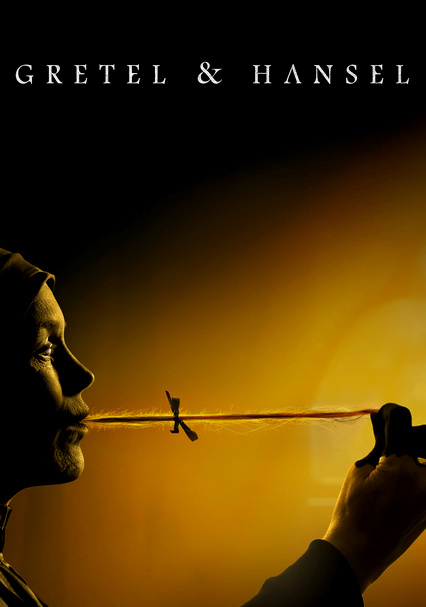
Gretel & Hansel-2020

Gretel & Hansel-2020

Director Oz Perkins

Starring Sophia Lillis, Alice Krige, Sammy Leakey

Scott’s Review #1,088

Reviewed December 5, 2020

Grade: B+

Gretel & Hansel (2020) is not a film with a plot that makes complete sense, but in this instance, that’s okay, making the experience creepier with the wonderful trimmings provided.

A horror film released in January has the cards stacked against it – most studios use the first quarter as a dumping ground for films with little box-office hope or much fanfare.

Predictably, the movie flopped, but it’s a diamond in the rough.

For fans of horror post-2010, this film immediately reminded me of The Witch, the 2015 independent film, and the directorial debut of Robert Eggers.

The slow pacing and assumed seventeenth-century remote village setting are an instant comparison. The dark sets and candle-lit scenes captivated me with their striking ambiance.

With exceptional cinematography, eerie lighting, and the prominent Brothers Grimm fairy tale theme, always a plus in horror, who cares if the t’s are all crossed. The elements supersede the story, though with a witch and two children at play, I was immediately hooked.

The follow-through is crooked and confusing, lacking a clear conclusion. Expect to be perplexed by the ending.

We are provided a quick story of a little girl wearing a pink dress who frightens the village with her special powers. Because she nearly died as a baby and was taken to an enchantress who saved her life, she has a unique history.

She makes her father commit suicide and causes other deaths, so she is taken to the middle of the forest to fend for herself or starve. She manages to find her way and makes the other children die.

Pay close attention because this story will tie into the end of the film.

In present times, we meet Gretel (Sophia Lillis) and Hansel (Sam Leakey). Gretel is sixteen years old, while Hansel is eight. Their mother goes mad, and they are forced to provide for themselves as they hit the road.

Gretel is both drawn to and fascinated by the story of the girl in the pink dress.

They eventually stumble upon a cabin with tons of lovely food, which they hungrily devour. A mysterious woman named Holda/The Witch (Alice Krige) takes them in, but is there a price the children must pay for the riches they enjoy?

Unclear is where the film is set. Is it Germany, where the folklore is derived? Is it supposed to be in the United States? The actors have American accents.

It was shot in Ireland, but this hardly matters. It’s a village and a forest in a land of anywhere, though I fantasized the setting was a northern country like Norway or Finland. Maybe the ambiguity is a good thing.

I like how Gretel & Hansel has a feminist vibe, and the perspective is from her point of view. That is why her character is older, hence the title. She is a coming-of-age teenager, so there is a more measured approach. Gretel even has a short pixie cut, almost boyish herself, giving the character a more modern look.

This serves the film well, adding an interesting take on the classic fairy tale.

There’s also a weird mommy theme played out in two different stories that end up connecting. Gretel and Hansel’s mothers are psychotic, while Holda is revealed to be a mother herself and harbors a deep secret about what she does with children who wander into her house.

Spoiler alert- it isn’t good.

The acting is outstanding, especially on the part of Sophia Lillis as Gretel and Alice Krige as Holda.

Lillis, an up-and-coming star after appearing in It (2017) and It: Chapter II (2019), is a talented commodity, while Krige gives Holda a ghastly and convincing persona. She is ambivalent, and we mostly don’t know what to make of her or what her intentions are. Lillis and Krige have delightful chemistry.

The cretins that the children meet along their journey to anywhere are worthy of any devilish story. A creepy gentleman who Gretel intends to cook and clean for to make money eyes her greedily and asks about her virginity. A bald, wailing monster chases Gretel & Hansel but is shot by a stranger.

Anyone with a hankering for a good, old-fashioned, ghostly, gothic horror film, Gretel & Hansel (2020) is a recommended watch.

The film boasts a hearty mix of horror elements, including eeriness, dark sets with illuminating lighting, and forbidding sequences in the forest, all set against a nice production design.

It may leave you scratching your head, but enjoy the ride.

Airplane!-1980

Airplane! -1980

Director Jim Abrahams, David Zucker, Jerry Zucker

Starring Robert Hays, Julie Hagerty

Scott’s Review #1,087

Reviewed December 2, 2020

Grade: A-

Airplane! (1980) is a landmark film in the spoof genre, leading the pack in the decade of silly (the 1980s), where films of this ilk and dumb comedies, in general, became a dime a dozen, oversaturating the market.

While the film is unabashedly brainless with gags for miles, the jokes work, and the tasteless brand of humor provides plenty of belly laughs.

Better yet, Airplane! never ages, holding up incredibly well long after its initial release. It’s just perfect for a Saturday late-night watch, or when one needs cheering.

It’s in my Top 10 comedies.

When it was originally released, the timing was perfect to spoof the aging world of disaster films. I refuse to believe that Jim Abraham and the Zucker brothers had malcontent on their minds since they created a friendly and benevolent yarn that’s well-timed.

Good comedy is tough to find, but this film gets it right. The monotone dialogue said with a straight face is what makes the hysterics genuine and palpable.

Not unfairly, it is to say that Airplane! is to disaster films what Mary Hartman, Mary Hartman was to daytime soap operas. A celebration and a clever wink to each, infusing much-needed light-hearted appreciation.

It’s fun to re-watch Airport (1970) and Airport ’75 with fresh eyes and a new perspective in parallel to this film.

Ted Striker (Robert Hays) is an ex-fighter pilot traumatized by the war, now working as a taxi driver. He is terrified of flying despite his previous occupation.

His girlfriend, Elaine (Julie Haggerty), conveniently a flight attendant, dumps him just before her flight from Los Angeles to Chicago.

Naturally, Ted throws caution to the wind and boards the flight in hopes of reconciling.

When several of the passengers and flight crew succumb to food poisoning, an inflatable named Otto must steer the plane toward Chicago.

The crew convinces Ted to muster up the courage to safely land the plane because Otto cannot do it, and subsequently conquer his fear of flying. A perilous yet comical landing ensues, and Ted and Elaine happily reunite.

The plot is a direct steal from Airport ’75 when poor Karen Black’s flight attendant character is famously instructed how to land the aircraft. Until, in a sexist fashion, the men arrive to take control, sending her back to serve coffee. This is intentional and spot-on to show the ridiculous nature of that plot point.

The gags are legendary, the “Surely you can’t be serious”, “I am serious…and don’t call me Shirley” exchange is the most famous one, always providing a laugh.

The effortless dialogue, as inane as it is, somehow works exceptionally well and combines brilliantly with the pacing and delivery.

It’s like a long and wonderful episode of television’s Saturday Night Live.

The chemistry between Ted and Elaine is very strong, making the audience root for their eventual reconciliation, though it’s obvious they will ride off into the proverbial sunset together.

Actors Hays and Hagerty deserve tremendous praise for aligning the characters so well. Also of note are the efforts of Leslie Nielsen and Peter Graves as Doctor Rumack and Captain Oveur, respectively.

Nielsen would subsequently become famous for spoof films, none of them as good as Airplane!

I’ll never profess to be a slapstick person, but Airplane! (1980) is one that I embrace, undoubtedly because of my love for disaster films and fondness for airplanes.

It is advisable to sit back, relax, and enjoy the zany ride that this satirical and very funny film offers.