Fantasia-1940

Fantasia-1940

Director James Algar, Various

Starring Leopold Stokowski, Walt Disney

Scott’s Review #544

Reviewed December 11, 2016

Grade: B+

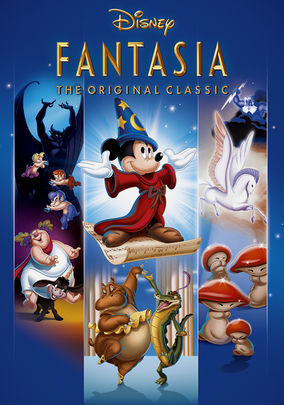
Before viewing this 1940 gem by Walt Disney, I was naive about precisely what Fantasia was about. Indeed, I had heard of it and knew it was an animated production, but I was also mystified by it. Now embarrassed, I realize what a creative treat I missed out on.

Better late than never.

I expected a Walt Disney animated story like Snow White or Pinocchio, but this assumption mistook me. While the film took me a bit to get into, it is a marvel and quite extravagant.

The combination of classical pieces and the animated story is brilliant and visually impressive. There are eight pieces in total, all with stories to tell.

Animated films are not typically my genre of choice, but this one impressed me quite a bit if nothing more than the imagination involved.

A Fantasia reboot emerged in 2000.

Lovely, Still-2008

Lovely, Still-2008

Director Nik Fackler

Starring Ellen Burstyn, Martin Landau

Scott’s Review #543

Reviewed December 11, 2016

Grade: B+

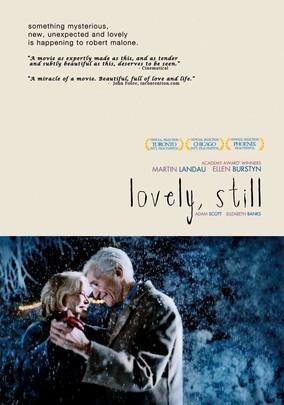
Oh, how I wish this movie had gotten more attention! Lovely, Still (2008) is a small, independent venture, that is Christmas-themed, and set in Omaha, Nebraska.

It stars Martin Landau and Ellen Burstyn as an older couple who fall in love. Landau is Robert, a lonely older man interested in dating again. He meets and falls in love with Mary, the mother of his next-door neighbor.

Before you start thinking Lifetime television movie, the last thirty minutes of the film will shock and fascinate you. A guttural reveal takes this film to a completely different place during the climax, making it a heart-wrenching, and powerful experience.

Landau and Burstyn are wonderful actors who mesmerize scenes together. They have a sweet, innocence, and are in glee, like teenagers, experiencing first love.

My only criticism is the first half of Lovely, Still is a bit slow, but this can be forgotten as the film kicks into high gear.

Also, some wonderful camera shots from novice director Nik Fackler.

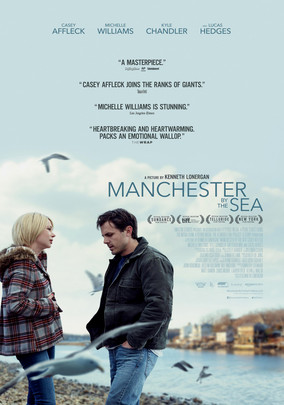
Manchester by the Sea-2016

Manchester by the Sea-2016

Director Kenneth Lonergan

Starring Casey Affleck, Michelle Williams

Scott’s Review #542

Reviewed December 11, 2016

Grade: A

Manchester by the Sea (2016) is a beautiful film.

Told from a slow build-up to a crescendo and a big reveal mid-stream about one of the character’s pasts, it takes time, which is why it is so compelling.

The audience slowly becomes familiar with the characters, making them rich with nuances. They care about them and their predicaments, just as good, solid storytelling should.

The film is a slice of life, dark drama, but I did not find it to be a downer in the least bit—instead, a film with rich writing and great characters. A good movie makes you care for the characters like real people.

Casey Affleck is excellent as the lead character, Lee Chandler. In the film, he plays a janitor who lives a mundane life in Quincy, Massachusetts, tending to apartment buildings. He calmly deals with indifferent, angry, or odd tenants.

Affleck portrays this man with reserve and occasional outbursts of rage. His anger is confusing, but as the story unfolds, we begin to understand what this man has been through and the reasoning behind his anger, even though he is a good person.

Lee receives a call one day with news that his brother, Joe, has died.

Kyle Chandler plays Joe through many flashbacks throughout the film. Upon Joe’s death, Lee returns to Manchester (where he formerly resided) and is told he will be the guardian of his sixteen-year-old nephew, Patrick (Lucas Hedges).

In the mix are the characters of Joe and Lee’s ex-wives- Elise and Randi (Michelle Williams), playing small yet pivotal roles.

The film is dark, and many characters either suffer from emotional trauma, neurosis, or some other maladies, either physical or emotional.

The slice-of-life analogy comes into play. Everyone can relate to these characters in some way, and most people have lived in towns like this and/or have suffered crappy turns of events in life.

When Lee returns to Mansfield, he is a familiar face with a hint of mystery and history. Mansfield is a small town; everyone knows each other’s business, and the characters are hardened, blue-collar, and rugged individuals.

In addition to Affleck’s compelling performance, Williams must be mentioned. She gives a tremendous, heart-wrenching performance as a good woman in pain, trying to carry on and do the right things, forging some adequate existence, as is Lee.

Anyone who has gone through pain (which is everybody) can relate to these characters.

The supporting cast, including even the tiny characters, is perfectly cast and has hearty Boston-type accents that I loved. From Joe’s wife to Patrick’s girlfriend’s mother to various other walk-on characters, each has a vulnerability mixed with toughness.

It is as if life has been challenging, and they are wary of trust, yet they help each other and stick together.

The characters are a major positive to Manchester by the Sea.

Many reflective moments abound within the film, and we are often given scenes of Lee driving down the highway deep in thought. Or long shots of the vast Atlantic Ocean, where fishing is a large part of the character’s lives.

Fishing boats and waves are monumental in the film.

These are not throwaway scenes but interesting, compelling moments rich with meaning.

During the best sequence of the film, when a startling event occurs, the scenes are mixed with classical and operatic music, giving the scenes and the shocking revelations power and meat.

It is heavy stuff but also beautiful, with a compelling musical score.

Not to be drowned by the heavy drama, Manchester has some quirky, dry humor moments. When Joe is initially told about his heart condition, he and his father unintentionally call his female Asian doctor by the wrong name.

When family friends host a party following Awaken, they awkwardly misunderstand each other when they attempt to fix Lee a plate of food. Finally, nobody can find the deceased Joe’s belongings at the hospital. These awkward moments add some comic relief to the film.

I adore well-crafted, emotional, compelling family dramas. Too often, they are cliche-ridden and highly predictable.

Manchester by the Sea (2016) has brilliant writing, top-notch acting, and intricately layered characters.

This film has it all.

Oscar Nominations: 2 wins-Best Picture, Best Director-Kenneth Lonergan, Best Actor-Casey Affleck (won), Best Supporting Actor-Lucas Hedges, Best Supporting Actress-Michelle Williams, Best Original Screenplay (won)

Independent Spirit Award Nominations: 1 win-Best Feature, Best Male Lead-Casey Affleck (won), Best Supporting Male-Lucas Hedges, Best Screenplay, Best Editing

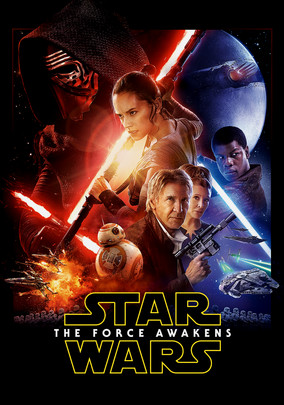
Star Wars: Episode VII: The Force Awakens-2015

Star Wars: Episode VII: The Force Awakens-2015

Director J.J. Abrams

Starring Harrison Ford, Carrie Fisher, Mark Hamill

Scott’s Review #540

Reviewed December 8, 2016

Grade: B

As a youngster who grew up exposed to the original three Star Wars films (admittedly, I cannot keep track nor care enough to learn the exact chronological order of the franchise), the 2015 reincarnation is very nostalgic.

Star Wars (1977), The Empire Strikes Back (1980), and Return of the Jedi (1983) were magical films for a kid to enjoy.

I saw each one in the movie theater.

Sadly, The Phantom Menace in 1999 was a rather forgettable endeavor and did nothing to draw new fans to the franchise, nor keep existing fans engaged.

Taking center stage in this installment are beloved stalwart characters Han Solo (Harrison Ford), Princess Leia (Carrie Fisher), and Luke Skywalker (Mark Hamill) in a nostalgic trip down memory lane.

A slight gripe is the shamefully under-use of one of these characters.

The visual effects are impressive, the main villain is okay, and the action sequences adequate, but the ode to history keeps the long-time viewer engaged the most.

In a way, Star Wars: The Force Awakens is aptly titled as it is a rebirth of sorts for the storied franchise.

Legendary actor Max von Sydow is shamefully under-utilized in a throwaway part in the film’s first sequence.

He resembles deceased actor Alec Guinness, made famous again in the 1970s when he appeared in the first Star Wars.

A coincidence?

Filmmakers are going for a modern reboot of Episode IV (the 1977 Star Wars).

The main character of Rey (Daisy Ridley) is meant to be the new Luke Skywalker, who is known as a Jedi hero in the land and has been missing for years. Rey has special powers and is accompanied by her sidekick droid, BB-8, a similar character to R2-D2.

The villain is Kylo-Ren, son of Han Solo and Princess (now General) Leia, and reminiscent of Darth Vader.

The film is a classic tale of good versus evil as the evil First Order battles the good Resistance.

I enjoyed the good storytelling most of all and prominent roles for Han Solo and Leia were good choices for the storied franchise. Newcomers Rey and her love interest, Finn, are appealing, as are fighter pilot, Poe, played by Oscar Isaac.

Reportedly, this film is the start of another trio of films so we will undoubtedly see more of these characters.

I could not help but notice the Nazi similarities of the First Order and their soldiers, the Stormtroopers. Possessing a red quality and a Nazi-like salute to their supreme leader, they even look German in appearance.

Kylo-Ren, raven-haired, pale, and clad in a dark black cape, was derived from Darth Vader, especially when he appeared in mask attire.

He almost could have been his son.

Set thirty years since the original Star Wars, the plot is more or less similar, and I think this is a wise move in introducing the franchise to a new audience while staying true to the rich history of the central characters and their offspring.

Han Solo and Leia discuss their love affair, past adventures, and their son, who has been hypnotized to the dark side. They struggle to concoct a way to rescue him and hope to persuade him that aligning with the Resistance is the only way.

Favorite scenes include the ultimate showdown between Rey and Kylo-Ren. Set in a snowy, wintry forest, with their glistening and glowing lightsabers, the scene is visually gorgeous, as are the many scenes in one battle station or another.

The re-appearance of comical C-3PO is darling.

As with the original Star Wars, humor is mixed to lighten the mood. Han Solo and his dedicated side-kick Chewbacca, gently spar, and when Han Solo takes the group to a saloon filled with interesting creatures, the scene is light and fun. 

The real drawback for me is that the film is not all that compelling save for the nostalgia aspects. It is a classic battle of two wills, but nothing new and exciting. Sure there are a few new characters, but the plot is rather basic and what one would expect. 

I am not truly invested in the franchise, despite zillions of die-hard fans being fanatics of the films and their intricacies, so that is more of an opinion than a criticism of the merits.

Star Wars: Episode VII: The Force Awakens (2015) will undoubtedly please fans and introduce new ones to a world of galaxies, and the “force”.

A satisfying trip down memory lane.

Oscar Nominations: Best Original Score, Best Sound Editing, Best Sound Mixing, Best Film Editing, Best Visual Effects

A Wedding-1978

A Wedding-1978

Director Robert Altman

Starring Desi Arnaz, Jr., Carol Burnett, Geraldine Chapman

Scott’s Review #539

Reviewed December 17, 2016

Grade: A

A Wedding (1978) is an obscure, brilliant gem penned and directed by Robert Altman, a film genius and one of my most adored directors.

I love most of his movies, and A Wedding is no exception. The creative way that Altman weaves intersecting storylines and dialogue, thereby creating a real-life tone, gives immense realism to his films.

In A Wedding, he takes a basic life event and turns it into a well-nuanced, fascinating, comical, yet dramatic story.

He is known for having enormous casts (in A Wedding, there are 48 principals!), but every character serves a purpose.

The viewer will feel like a fly on the wall at a real wedding.

Altman’s actors primarily improvise their dialogue, speaking at the same time, which lends a realistic edge. I adore this quality.

The film is a satire- people either love or loathe attending weddings, and Altman’s film caters to the latter. He creates a setting, from the ceremony to the reception, riddled with awkward moments and social gaffes.

In pure satirical soap-opera fashion, two wealthy families gather at a lavish estate for the ceremony to begin. Hilarity ensues when the corpse of the matriarch of one family lies in her bed, nobody realizing she is dead.

Other hi-jinks, such as the revelation of a nude, life-size portrait of the bride, the caterer falling ill, and a tornado wreaking havoc.

Slowly, the families reveal secrets as alcohol flows and the characters become entangled in perilous situations.

Altman does it again, creating a masterpiece based on real-life situations most can relate to.

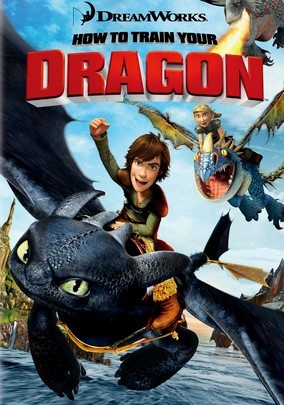
How to Train Your Dragon-2010

How to Train Your Dragon-2010

Director Dean DeBlois, Chris Chambers

Starring Gerard Butler, America Ferrera

Scott’s Review #537

70109893

Reviewed December 5, 2016

Grade: B-

How to Train Your Dragon is a  decent, but less than spectacular, animated film from 2010.

Undoubtedly targeted toward youngsters, it contains G-rated elements and I may have enjoyed it more if I were nine years old.

The film is loosely based on the British book series of the same name.

A subsequent sequel has commenced in 2014.

From a story perspective, the film does tell a story with a nice message. Young Hiccup is a teenage Viking on the cusp of becoming a man. As a ritual, he is expected to kill a dragon to prove his worth as a warrior to his tribe.

When put to the test, Hiccup finds that instead of desiring to kill the dragon, he wants to befriend it. Of course, the traditional Vikings want no part of any unity between the tribe and dragons, who are long-time enemies.

Mixed in with the main story is the inevitable love story between Hiccup and Astrid, a tough Viking girl.

There are way too many endless aerial battles between the tamed and vicious dragons, that it begins to feel more like an effort to fill time rather than furthering the main plot in any way.

This film has a nice message of kindness and togetherness but is very predictable and does not take any risks. There is nothing wrong with it, and animated fans may look at it differently, but to me, How to Train Your Dragon (2010) is quite run-of-the-mill.

Oscar Nominations: Best Animated Feature Film, Best Original Score

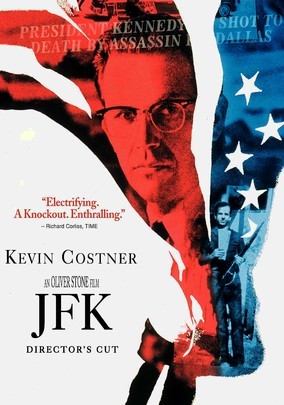
JFK-1991

JFK-1991

Director Oliver Stone

Starring Kevin Costner

Scott’s Review #536

60031474

Reviewed December 4, 2016

Grade: B+

JFK (1991) is a very well-made film. Still, it must be taken with a grain of salt, as the director, Oliver Stone, reportedly took many liberties, and the film is open to interpretation about what is true and what is embellished.

At three hours and twenty-six minutes, the film is epic in proportion.

The film recounts the events leading up to the assassination of President John F. Kennedy through the eyes of a former District Attorney from New Orleans, James Garrison, played by Kevin Costner.

Garrison filed charges against New Orleans businessman, Clay Shaw (Tommy Lee Jones), and in his view, was in cahoots with Lee Harvey Oswald to kill the president.

Stone suggested that President Lyndon B. Johnson was involved in the coup, which led to considerable controversy.

The plot is quite intricate and at times tough to follow, but the editing alone is impressive. I loved the authentic, real-life footage that Stone immerses throughout the film.

As we know, the assassination in 1963 was tragic and fraught with controversy that still abounds today.

Stone was wise to make a film of this caliber despite the lack of clarity about what is true and what is not.

I guess we may never know.

Oscar Nominations: 2 wins-Best Picture, Best Director-Oliver Stone, Best Supporting Actor-Tommy Lee Jones, Best Screenplay Based on Material Previously Produced or Published, Best Original Score, Best Sound, Best Cinematography (won), Best Film Editing (won)

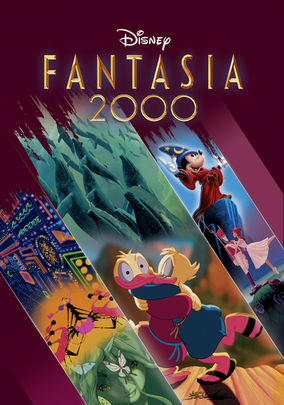
Fantasia 2000-2000

Fantasia 2000-2000

Director James Algar, Various

Starring Steve Martin, Bette Midler

Scott’s Review #535

60000436

Reviewed December 4, 2016

Grade: B+

Fantasia 2000 is a visually stunning remake of the 1940 Disney film. The modern version was produced by Roy Disney, nephew of the famous Walt Disney.

There are nine segments in total, each set to a classical music piece. Masterpieces such as Symphony No. 5 by Beethoven and Rhapsody in Blue by Gershwin are featured.

The Rhapsody piece is a gorgeous story of four individuals who dream of a better life in 1930s New York City. The four do not know each other, but their lives intersect uniquely.

Each segment is introduced by a celebrity: Steve Martin, Angela Lansbury, Bette Midler, and Quincy Jones appear, adding helpful thought and interpretation.

The final piece, in particular, is both moving and breathtaking. Firebird Suite-1919 version- by Stravinsky tells of a sprite (an ethereal entity), awoken by her companion, an elk, as a volcanic spirit has erupted in the peaceful forest, burning it down. The sprite must work to rebuild the peaceful land.

It is an earnest, heartbreaking piece.

Being somewhat of a film traditionalist, I prefer the original slightly, but this version is great.

Fantasia 2000 is wonderful to look at.

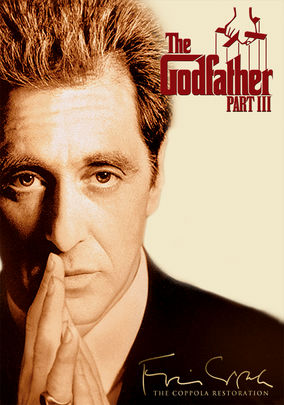
The Godfather: Part III-1990

The Godfather: Part III-1990

Director Francis Ford Coppola

Starring Al Pacino, Diane Keaton, Andy Garcia

Scott’s Review #533
60011153

Reviewed December 3, 2016

Grade: B+

The Godfather: Part III, released in 1990, has traditionally been met with unwavering criticisms for not being as great as the two preceding epics.

Sofia Coppola, who plays Mary, the daughter of Michael Corleone, in particular, has borne the brunt of the attacks.

No, The Godfather: Part III is not on the level of the others, but it is pretty damned good on its own merits and is a capable mob epic that concludes the franchise satisfyingly.

The central themes of the film are Michael’s continued desire to leave the mafia and religion, and the Catholic Church is a central theme.

Some backstory to the making of the film: Coppola had a non-expiring offer to create a third installment to the saga ever since 1974, when Part II was released.

After a financial crisis, Coppola agreed to do the follow-up in 1990.

The ever-crucial role of Mary (now a coming-of-age young lady) was to be played by Julia Roberts, who dropped out. Winona Ryder was then cast and bailed at the very last minute.

Out of necessity, Coppola’s daughter, Sofia, was cast and had little time to prepare or much acting experience (she would later become an acclaimed director, which better suited her talents).

In a similar fashion to the other epics, a major event launches the film: Michael (Pacino) is named Commander of the Order of Saint Sebastian in a lavish ceremony at St. Patrick’s Old Cathedral.

It is revealed that Michael is approaching age sixty and semi-retired, leaving his business dealings mainly to Joey Zasa in New York, who has ravaged what the Corleone family had once built.

Many characters- Kay, Mary, Tony, and Connie- are reintroduced, and new characters such as Vincent Mancini (Andy Garcia) and Don Altobello (Eli Wallach) are introduced, in a flurry of new storylines.

It is like a big, grand soap opera, with wonderful, rich writing.

I was immediately impressed by the neat cinematography- the camera captures wind-swept leaves and an artistic introduction to the film, as well as characters from the first two films, either appearing in cameo roles or appearing in cameo roles, small characters from the first two films- a great touch in continuity and history.

Coppola does a fantastic job of providing little updates on these characters during a party.

For example, we learn that Vincent is the deceased, illegitimate son of Sonny, his mother being Lucy Mancini, who appears in a scene. (Clever viewers will remember Sonny and Lucy’s torrential affair in the bathroom during The Godfather (1972)-it is suggested that this produced Vincent).

It is mentioned that Tom Hagen (Robert Duvall) has died, though his wife and son appear, and Coppola treats us to a myriad of flashbacks (Apollonia, a young Michael, and Kaye).

These nuances make The Godfather: Part III a film filled with cool little aspects that warm the loyal viewer.

The main story- Michael takes Vincent under his wing- and strives to steer the family clear of criminal ties- is interesting, if not spectacular.

Connie rises from a battered mafia wife, raising kids, to a major player in the family, just as women progressed from the 1940s to the 1980s when the story takes place.

She even feeds her godfather a poisoned cannoli!

Michael, Vincent, and Connie involve themselves with the Catholic Church, bailing it out (the real-life Papal banking scandal is linked to the story) and striking a deal with it for a major stake in the real estate company Immobiliare.

In-fighting between the major crime mob bosses leads to several bloody massacres throughout the film, on the streets, in Atlantic City, and finally, in the Sicilian Opera house.

The pairing of cousins and lovers, Vincent and Mary, never really works, nor does Bridget Fonda’s one-two-scene appearance as Grace Hamilton, a brief dalliance for Vincent.

Also, the exclusion of the loyal family attorney, Tom, is a glaring omission.

So the film does contain a few negatives.

In a nutshell, The Godfather: Part III (1990) is a very good, epic crime drama even without the Godfather name. To measure up to the glory of Parts I and II is impossible.

With the bonus of having the rich Corleone family history and the intricate relationships between the characters, this makes for a treat for fans.

There has not been a Part IV, nor should there ever need to be, as the conclusion of the film is a satisfying wrap-up to the saga.

Oscar Nominations: Best Picture, Best Director-Francis Ford Coppola, Best Supporting Actor-Andy Garcia, Best Original Song-“Promise Me You’ll Remember”, Best Art Direction, Best Cinematography, Best Film Editing
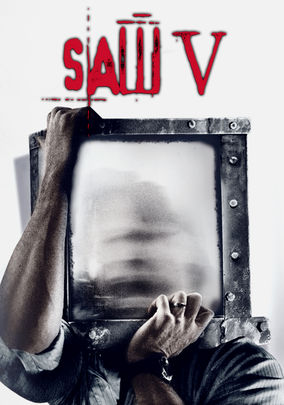
Saw V-2008

Saw V-2008

Director David Hackl

Starring Tobin Bell, Donnie Wahlberg

Scott’s Review #532

70098905

Reviewed December 1, 2016

Grade: B

The Saw franchise films are fun, bloody, late-night flicks.

It is quite helpful if you see them close together, and in sequence, as they either continue or backtrack to previous films- past knowledge is very helpful.

Saw V (2008) is no exception, as we learn the hows and the whys of serial killer Jigsaw, an apprentice, and detective Mark Hoffman.

What would possess this man to follow in the footsteps of Jigsaw?

In their heyday, the Saw films were intriguing and more cerebral than the standard slice and dice ’em offerings.

I like these films because there is usually a plot twist or some other surprise connection to an earlier entry to look forward to.

Also, the victims are not merely innocent but are in the wrong place at the wrong time, nor are they killed for the sake of killing.

They typically have embezzled someone, maimed an innocent party, or caused someone pain in some fashion, so the audience does not feel sorry for them, making their various tortures tolerable to watch, if not satisfying.

In Saw V, as far as the kills go, we are treated to somebody being sliced in half, a decapitation, another blown to bits by a detonating bomb, bloodletting, a crushing to death, and various other forms of mutilation.

This is all well and good, but by Part V in a franchise, even the most clever of stories run out of gas, and by this point, the series is feeling a little tired, although still enjoyable for the puzzle of story connections.

Saw V (2008) is a very bloody film, so not intended for the squeamish.

Exit Through the Gift Shop-2010

Exit Through the Gift Shop-2010

Director Banksy

Starring Banksy

Scott’s Review #531

70132200

Reviewed December 1, 2016

Grade: B-

Exit Through the Gift Shop is a documentary from 2010. I am a fan of documentaries if the subject matter interests me.

The topic of this documentary is street art, which is not especially appealing to me, but it is also nice to be open to new experiences and perhaps learn a thing or two.

Bansky, who both directed and stars in the documentary, is the main feature and his story is told. We meet a man from Los Angeles, who carries a camera with him wherever he goes.

Through his cousin in France, he decides to do a documentary on street artists.

He is fascinated by the mysterious and secretive, Bansky until he manages to one day meet him. He then begins to film Bansky’s street art activity.

So the documentary has some plot and is not the standard type of documentary.

Some claim that the film is staged and that a bit of a hoax has run rampant, but those allegations have not been proven.

I respect this feature as a nice, telling, documentary, but it drags a bit, which may be the result of my limited interest in the topic.

Great for anyone into street art.

Oscar Nominations: Best Documentary Feature

Independent Spirit Award Nominations: 1 win-Best Documentary (won)