Category Archives: Epic

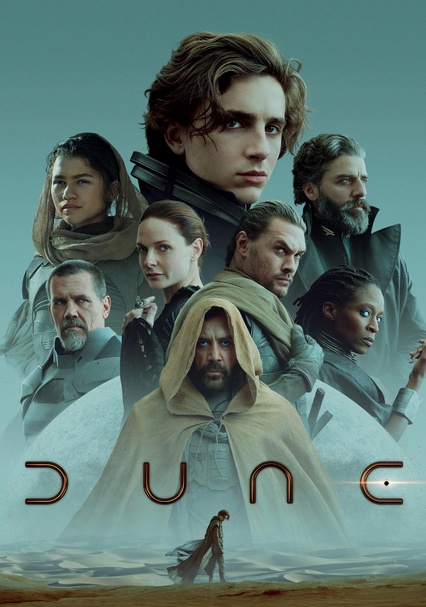
Dune-2021

Dune-2021

Director Denis Villeneuve

Starring Timothee Chalamet, Rebecca Ferguson, Oscar Isaac

Scott’s Review #1,282

Reviewed July 29, 2022

Grade: B

Dune (2021) is a film that, under normal circumstances, I would not have seen. I’m not a massive fan of blockbuster, fantasy films. If not for the slew of Oscar nominations the film received, ten to be precise, Dune probably would have flown under my radar.

I needed to see what all the fuss was about.

Paul Atreides (Timothee Chalamet), a brilliant and gifted young man born into a destiny that he doesn’t wholly understand, must travel to the most dangerous planet in the universe to ensure the future of his family and his people.

As malevolent forces explode into conflict over the planet’s exclusive supply of the most precious resource in existence, only those who can conquer their own fear will survive.

My assessment of the film before even viewing it proved correct. It’s an epic-length, science-fiction, fantasy type of adventure film all rolled into one. I liken it to the unwieldy Lord of the Rings (2001-2003) trilogy in tone and content, and it shares a peculiar reminiscence with the popular television series Game of Thrones (2011-2019).

For most of Dune, my attention was squarely glued to the story as well as the astounding cinematic grandiose trimmings. I knew if I didn’t pay close attention, I would quickly be out in a left field (I’ve made this mistake before).

Overall, I admired Dune and struggled to grade it either a B or a B+, finally deciding on the latter. The visuals are astounding and cleverly show off what can be done with enough CGI to make a film a marvelous spectacle.

But, for me, there needs to be more, and I struggled with the plot after a while.

The story is too confusing.

Why do fantasy or epic films often have overly complex plots with too many characters to keep track of? It started okay, and I was clear who Paul’s family is, and more or less who the good guys are. But then other groups like the Fremen (who I think are good) and House Harkonnen (who are all bald and I think are bad) are introduced, and a battle over valuable spice ensues.

To complicate matters, Paul suffers from strange dreams/visions mostly involving a young girl and some battle scenes involving Paul’s connection to a mysterious sword. He can also command without speaking, somehow.

I had no prior history to draw from, which in retrospect did me a disservice. Dune, a novel written by Frank Herbert in 1965, was adapted into a 1984 film directed by David Lynch, which was deemed a disaster.

I probably should have read the book.

The acting is quite good, especially by Chalamet and Isaac, utterly believable as father and son. Their connection and chemistry are pliable, but there is not enough of it; instead, the primary focus is on Paul’s relationship with his mother, played by Rebecca Ferguson.

Chalamet, already an Oscar-nominated actor for Call Me By Your Name (2017), has the chops to carry a film.

Other worthy turns are by legendary British actress Charlotte Rampling as a Reverend Mother, and Javier Bardem as Stilgar, leader of the Fremen tribe.

Despite running for over two and a half hours, Dune does not drag. The bright, sweeping desert scenes featuring a pulsating underground worm were well balanced with darker scenes in the Harkonnen’s lair.

Dune (2021) is incredibly healthy and is a clear spectacle. I found it too similar to other genre films to give it a thumbs up unless you are already a fan of the novel, but this style of cinema may not really be my cup of tea.

Villeneuve, who directed Blade Runner 2049 in 2017, knows his way around the fantasy genre and is perfectly capable. He is directing Dune: Part II to be released in 2023, so I’d expect more of the same.

Oscar Nominations: 6 wins-Best Picture, Best Adapted Screenplay, Best Original Score (won), Best Costume Design, Best Sound (won), Best Film Editing (won), Best Makeup and Hairstyling, Best Cinematography (won), Best Production Design (won), Best Visual Effects (won)

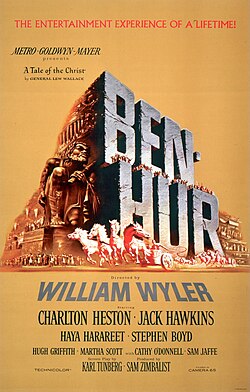
Ben-Hur-1959

Ben-Hur-1959

Director William Wyler

Starring Charlton Heston, Stephen Boyd, Haya Harareet

Scott’s Review #1,265

Reviewed June 9, 2022

Grade: A

One of the many pleasures of watching Ben-Hur (1959) is marveling at the extensive cinematic brilliance of the entire cast and crew.

Saying it’s a spectacle is not enough, and a must-see.

It had the largest budget ($15.175 million) and the most extensive sets built of any film produced at the time, allowing enormous spending to create one of cinema’s most lavish and grand films.

I shudder to think of how powerful it was to see this film on the large screen in a movie theater and the sheer mesmerizing quality it had on audiences.

I’ve anticipated viewing the film for years and finally did. Why I waited so long is beyond me. It does not disappoint, and the extravagance is immeasurable. I sat in awe at the many aspects of the film created before CGI, making it as impressive in 2022 as it was over sixty years ago.

Charlton Heston plays Judah, a Palestinian Jew who fought the Roman Empire during Christ’s time. He becomes involved in a vicious feud with his ambitious boyhood friend Messala (Stephen Boyd).

Their hatred culminates in an exciting yet vicious chariot race.

Condemned to life as an enslaved person, Judah swears vengeance against Messala. He escapes, later crossing paths with a gentle prophet named Jesus, who helps Judah save his family despite his death.

The film made a household name out of Heston and, other than its big budget, is legendary for its use of homoeroticism and an unspoken love story between two men who are at first the best of friends and who later become bitter rivals.

The film had several screenwriters, and if looking closely, some uneven storytelling is largely overlooked by the enormous spectacle of the finished product. Gore Vidal, who was openly gay, insisted on a homosexual interlude, conspicuously, of course, between Judah and Messala.

Giggle worthy to those in the know is that Boyd played his character as a spurned gay lover of Heston’s, with Heston unaware of the underlying romantic angle. This is rumored to be because Heston couldn’t handle it had he known.

This knowledge made me enjoy the subtext of the scenes between the two men even more than I should have.

To prove the above point, the written romance between Judah and Esther (Haya Harareet) lacks much chemistry, and I didn’t view them as brothers and sisters or good friends.

Other scenes of shimmering, muscular men sitting around in towels are further proof of Ben-Hur’s homoeroticism.

These juicy intrigue tidbits provide tingles, but the main draw is the famous chariot scene, which is as exciting as an action scene in a movie. The outdoor arena, packed with thousands of onlookers, provides a perfect setup for the round-and-round racetrack, as dozens of horses are whipped into a dizzying frenzy and go faster and faster.

The peril is prominent as numerous riders drop to their death, mangled into pieces from being stampeded by the horses.

Other sequences, like the leper colony and the crucifixion of Jesus, are beautiful and astounding.

Director William Wyler, a heavy hitter at the time with gems like Mrs. Miniver (1942) and The Best Years of Our Lives (1946), easily usurps those excellent films with Ben-Hur.

It won eleven of its twelve Oscar nominations and employed ten thousand extras!

Ben-Hur (1959) is the definition of an epic film. Expensive and expansive, the breathtaking chariot scene is one of the best I’ve ever seen in a film.

Not feeling dated, it’s a marvel of exquisiteness and magnificence.

Oscar Nominations: 11 wins-Best Picture (won), Best Director-William Wyler (won), Best Actor in a Leading Role-Charlton Heston (won), Best Actor in a Supporting Role-Hugh Griffith (won), Best Adapted Screenplay, Best Art Direction-Set Direction-Color (won), Best Cinematography (won), Best Costume Design-Color (won), Best Film Editing (won), Best Sound Recording (won), Best Music-Scoring of a Dramatic or Comedy Picture (won), Best Special Effects (won)

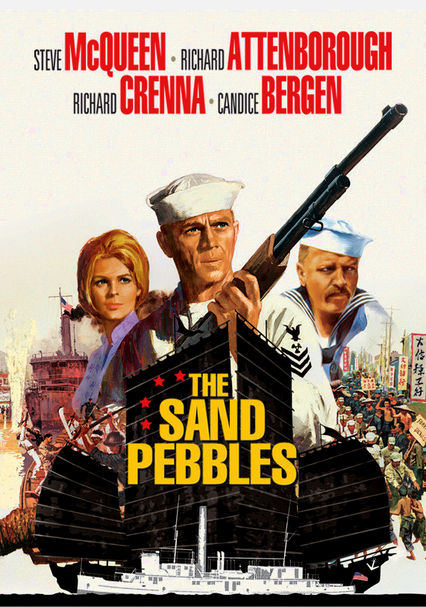
The Sand Pebbles-1966

The Sand Pebbles-1966

Director Robert Wise

Starring Steve McQueen, Candice Bergen, Richard Attenborough

Scott’s Review #1,257

Reviewed May 18, 2022

Grade: A-

The 1950s and 1960s can collectively be defined as the two decades representing the grandiose film epic, instantly recognizable cinematic sprawling, lengthy efforts, frequently encompassing a time.

The Sand Pebbles (1966) safely falls into this category, mainly because it’s a war film and one minute shy of a three-hour extravaganza.

The film was a critical and commercial success at its release and received several Academy Award nominations (see more below). Still, despite being a fantastic watch, it is not remembered as well as one might expect.

Something makes the film fly under the radar, and I’m unsure why. It might be that an anti-war message film was not as typical as it would become. In 1966, a United States movement had only begun to question the government and war in general.

It wasn’t fantastic or acceptable yet.

Robert Anderson adapted the screenplay from Richard McKenna’s 1962 novel, which is very similar.

Robert Wise, famous for directing the memorable The Sound of Music just one year prior in 1965 and the legendary West Side Story in 1961, is at the helm, resulting in superior direction, especially in the exterior and lush, oceanic sequences.

Star Steve McQueen was at the height of popularity when this film was made, which undoubtedly helped get butts in the seats to drool over the blue-eyed actor in his Navy attire.

The Sand Pebbles has a heavier touch and promotes an anti-war viewpoint from its main character. Therefore, it has a solid message that goes with the expected aspects of a war film.

It’s similar to The Bridge on the River Kwai (1957), made nearly a decade earlier.

The Asian locales and the parallels with the controversial Vietnam conflict of the time will not be lost on the viewer.

We go back to 1926 when the USS San Pablo was patrolling the Yangtze River during the clashes between Chiang Kai-shek’s communists and Chinese warlords.

Eight-year veteran machinist Jake Holman (McQueen), new to the self-named “sand pebbles” crew, immediately draws deep suspicion due to his independent streak.

Ordered to protect Americans, including schoolteacher Shirley Eckhart (Candice Bergen), Jake and the gunboat crew are unwittingly drawn into a bitter nationalistic feud that holds grim consequences.

Besides his unforgettable turn in The Getaway in 1972, the role is McQueen’s finest, and I’m not the biggest fan of his, nor do I feel he is the most outstanding actor.

He has tremendous material to work with in The Sand Pebbles and hits all cylinders throughout. The character is rootable and relatable to the audience.

The film also presents a fascinating look at Navy life with the camaraderie and depth of the supporting characters. There is comedy and drama, and the additions of Richard Attenborough and Richard Crenna are stellar.

Naturally, Bergen is McQueen’s romantic love interest, as Shirley and Jake have fledging feelings for each other.

Though the film ends abruptly, there is enough pain, death, and confusion to leave the viewer thinking afterward, and I always champion that aspect of the film.

The Sand Pebbles (1966) is an underrated production that simmers beneath some other classics from the same decade but is a terrific watch for many reasons. Despite being extremely timely, it has an old-world feel, representing a foray into the dangerous early 1970s cinema history that is yet to come.

Oscar Nominations: Best Picture, Best Actor-Steve McQueen, Best Supporting Actor-Mako, Best Art Direction-Color, Best Cinematography-Color, Best Film Editing, Best Original Music Score, Best Sound

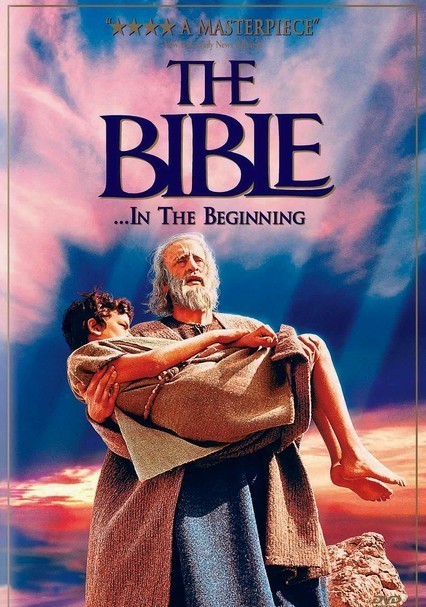
The Bible: In the Beginning-1966

The Bible: In the Beginning-1966

Director John Huston

Starring George C. Scott, Ava Gardner, Richard Harris

Scott’s Review #1,139

Reviewed May 5, 2021

Grade: A-

An epic of grand proportions that nearly rivals the magic cinematography of Lawrence of Arabia (1963), The Bible: In The Beginning (1966) embraces its definition of majestic, magnificent, and sweeping.

The story follows the chronological telling of The Bible book, beginning with Adam & Eve.

It is important to remember that one need not be Catholic, Christian, or of any religious persuasion to enjoy the film’s rapturous beauty.

The pious and non-believers alike can enjoy the experience. There is a hint of the unbelievable and suspension of disbelief in some of the stories gracing director John Huston’s “Good Book.”

He also narrates some of the stories and appears as Noah.

Nobody is mocked for their beliefs, and the film is a straight-ahead interpretation of the first twenty-two chapters of the Book of Genesis, covering the stories from Creation and Adam and Eve to Isaac’s binding.

Abraham (George C. Scott) and Sarah (Ava Gardner) are heavily featured.

The film focuses on five main sections: Creation, Garden of Eden, Cain and Abel, Noah’s Ark, and Abraham’s story. Some other stories are given less screen time and attention but are featured.

Speaking of Adam and Eve (Michael Parks and Ulla Bergyrd), they kick off the action with the fateful decision to pick and taste the luscious fruits dangling before their eyes as the Serpent fiendishly looks on. God punishes Adam and Eve for their temptations, setting off a common theme throughout the film and, indeed, the excellent book: resisting pleasures of the flesh and being penalized for caving into desires.

Aod is happy when people are unfulfilled and joyless. Sadly, some have taken this too seriously.

We could debate religion until the cows come home, and many have, but I became aware of a hint of ridicule or at least intense questioning on the part of Huston.

He creates scenes that most would deem ridiculous if not written in the words of the Bible. Again, Huston is careful not to mock anyone, shrouding any antics in good, stylized 1960s film, but a woman being turned into a pillar of salt for looking at the sky could be found amusing.

Admittedly, some chapters are better than others.

The trials and tribulations of Abraham and Sarah get off to a slow start when Abraham and company traverse miles and miles of the lonely desert so much that I was left wondering if they were on the road to nowhere.

Finally, the action takes off as Sarah realizes she is barren, which makes her maid conceive a child with Abraham. I never knew this saga had so much in common with the Hulu hit The Handmaid’s Tale, but the similarities are eerie and uncanny.

Noah and his Ark is also an excellent sequence and brings more humor than necessary, but I guess this is to counterbalance more severe stories. Noah adores animals, especially cats and lions, and treats them beautifully, choosing to save and live harmoniously with the creatures. They love him. The flooding scenes related to this chapter are exquisite and adventurous.

The film depicts God as a bit of a son of a bitch as he calls Abraham to lead his only son to a high mountain and sacrifice him. This tests Abraham’s will and is thoughtful.

If many of the actors look Italian, it’s because they do. Pupella Maggio, famous for her role in Fellini’s Amarcord (1973), plays Noah’s wife.

Much of the film was shot in and around the Italian city of Rome.

Huston not only narrates some of the sections but appears as Noah himself!

The Bible: In the Beginning (1966) is exquisite and pleasing cinematically. Many fans of religious cinema will prefer the more conventional The Ten Commandments (1956) to this one. While slow at times, by the conclusion, the film has aged like a fine wine and had me enthralled and appreciative of its achievements.

Oscar Nominations: Best Original Music Score

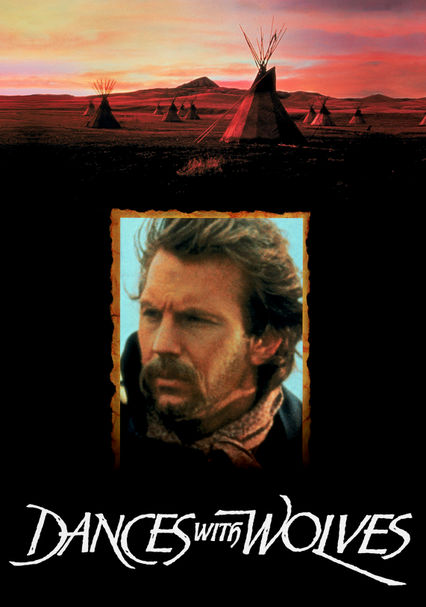
Dances with Wolves-1990

Dances with Wolves-1990

Director Kevin Costner

Starring Kevin Costner, Mary McDonnell

Scott’s Review #1,091

Reviewed December 14, 2020

Grade: A

A western epic of grand proportions, Dances with Wolves (1990) is a quiet, yet bombastic story of one man’s yearning to understand and appreciate a different culture.

The liberal-leaning story is of dire importance in American history, which is my main love of it. This project matters and it has sincerity and truth. The content and the gorgeous, sweeping cinematography make this a must-see on the big screen for full appreciation.

Sort of like Lawrence of Arabia (1962), western style.

The lovely musical score is well-paced and simply gorgeous, only enhancing the experience and appreciation of the film.

The directorial debut of a then inexperienced and up-and-coming star, Kevin Costner, success catapulted him into the big leagues, garnering tremendous respect among the Hollywood community.

He also produced the film and used his own money when the budget ran over. The accolades were justified, leading him to become an A-list star.

He never achieved anything comparable to Dances with Wolves again.

The time is 1863 when the United States was embroiled in the Civil War. Union soldier John Dunbar (Kevin Costner), depressed and suicidal, is injured in battle and receives a hero’s praise. He requests to be transferred to the western frontier, where he lives in solitude.

He slowly befriends the local Sioux tribe and eventually becomes an honorary member, falling in love with a white woman, Stands with a Fist, (Mary McDonnell), who was raised by the tribe.

They name him Dances with Wolves. Chaos erupts when the Union Army arrives to snatch the land at any cost.

Never the greatest actor in the world, but certainly competent, this is the role of a lifetime for Costner. That Dances with Wolves is Costner’s project is crucial. He had a vision and saw that vision to fulfillment.

To my knowledge, the studio didn’t interfere and strive for control but gave Costner the freedom to do whatever he wanted. It shows in the final product.

The romance between Dances with Wolves and Stands with a Fist is tender, alive, and without standard obstacles. No silly misunderstandings or drama. Theirs doesn’t need any trimmings. The chemistry between Costner and McDonnell is strong.

At over three hours in length, the film has time to carefully pace these brilliant moments.

The film is a political vehicle to teach the audience the ravages and unfairness that Native Americans suffered at the hands of the White Man, and that is huge. Too often the issue is skimmed over or diminished in school textbooks so it’s nice to see the truth given its due.

Dances with Wolves serves as an educational tool and no happy ending is provided. How great would it be if the film were shown in high schools and colleges around the United States?

I love how the film, a western, avoids the stereotypes always included in that genre. No good guys are wearing white or bad guys wearing black, no shoot ’em ups at local saloons, and no cowboys to save the day.

Dances with Wolves provides a character study with pivotal thoughts and motivations from the three central characters.

Graham Greene must be mentioned as an integral part of the supporting cast. His authenticity is illuminating.

Over the years Dances with Wolves (1990) doesn’t hold up as well as other films- Silence of the Lambs (1990) and Goodfellas (1991) are legendary contemporaries that everyone remembers better.

Dances may suffer from an “of its time” label, justifiably so, but the film is a masterpiece. Recommended is to dust this one off and give it a whirl, if even for old-time’s sake.

Oscar Nominations: 7 wins-Best Picture (won), Best Director-Kevin Costner (won), Best Actor-Kevin Costner, Best Supporting Actor-Graham Greene, Best Supporting Actress-Mary McDonnell, Best Screenplay Based on Material from Another Medium (won), Best Original Score (won), Best Sound (won), Best Art Direction, Best Costume Design, Best Cinematography (won), Best Film Editing (won)

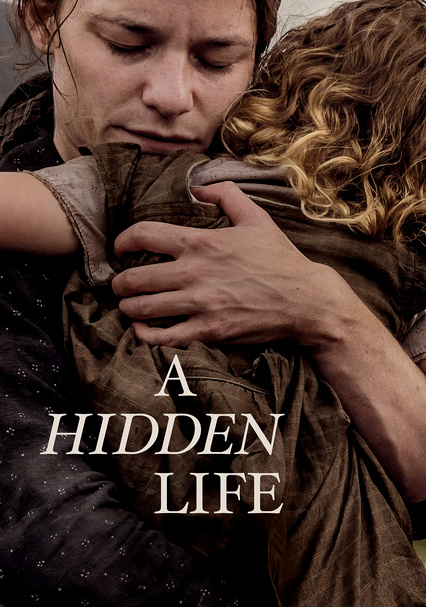
A Hidden Life-2019

A Hidden Life-2019

Director Terrence Malick

Starring August Diehl, Valerie Pachner

Scott’s Review #1,063

Reviewed September 22, 2020

Grade: A

Terrence Malick returns to the big screen with A Hidden Life (2019), a lavish, sprawling beauty with a more structured plot than many of his other films.

His recent offering, The Tree of Life (2011), though marvelous, lost some viewers with its spiritual themes and lack of pacing.

With A Hidden Life, the director presents more substantial writing and a more straightforward story. It seems we can never get enough of World War II Nazi stories and conflict in cinema, as the topic remains relevant and robust.

This one stands out to me in a powerful way because it is based on a real-life figure. Although set in 1940s Germany and Austria, it resonates with great relevance in current United States history, as Malick offers clear parallels to the Donald Trump era—frightening stuff.

He weaves the past with the present, so Trump and Hitler’s personalities are compared, and the supporters of each are portrayed as similar. Again, frightening stuff.

A peaceful peasant farmer, Franz Jägerstätter (August Diehl), lives a quiet life with his wife, Fani (Valerie Pachner), in rural Austria. Over the years, they welcomed three daughters and lived in the idyllic village, popular and well-liked by the townspeople.

Their beautiful life soon turns ugly when the German army recruits Franz for basic training.

Events escalate when he refuses to take a loyalty oath to Hitler, wanting nothing to do with a war he does not support, nor with those who align themselves with the dictator.

This leads to many conflicts for Franz and his family as they face the wrath of once kindly neighbors, and the vicious Nazis.

The artistic details are gorgeous, as frequent scenes of lush landscape erupt in a frenzy. The statuesque mountains in the background, a shot of a running stream, the characters digging, planting, and growing produce —all are exquisite, adding a grandness and spirituality.

It is advisable to watch the film on the big screen, although I did not, and I still marvel at these sequences.

Despite the camerawork, A Hidden Life is not an easy watch, but it is an important one. The film is rich with meaning, texture, and substance. You get the feeling you are watching something of worth, and that means something.

The film is not a work of fiction, and the realism is quite powerful.

To imagine a man like Franz sticking to his values and beliefs in the face of death and peril in real life is astonishing and sobering. Malick does not do glossy or downplay the ordeals that Franz endures in the hideous German prisons.

Treated barely better than Jews were in concentration camps, he was nonetheless mocked, humiliated, and eventually executed.

When Franz is repeatedly advised by a local priest and others to merely take the oath and not mean a word of it, Franz cannot do it. I was left wondering how many other German and Austrian people pretended to support Hitler to save him from death, but did not.

I couldn’t find any studies.

The comparisons to the horrific conditions in the United States present day with a wannabe dictator in the White House are sobering.

Thankfully, the United States remains the land of the brave and the free, and certainly the outspoken. But we have a voice, and Franz did not, nor do the Austrian people whom he presumably represents. He did his best and refused to succumb to the pressures, but the question can be asked if it was worth it.

Oh, how I wish A Hidden Life had a different title, though. Not exactly one that rolls off the tongue, it took me days to remember what the title was.

I kept confusing it with A Better Life (2011), a completely different type of film with a similar name. Something a bit more dynamic would have been preferred, though I get why the word “life” was included. It’s such a profound word. The correlation of titles with The Tree of Life (2011) does make sense.

Malick does it again, offering another left-of-center production that goes against the grain compared to most modern cinema. World War II films are a dime a dozen, but this film stands out for its beauty and characterization.

One needs to see Terrence Malick’s films to truly understand and appreciate what the man is going for here, and props for adding a more concise story to draw viewers.

A Hidden Life (2019) is grand and fraught with meaning, adding relevance to the current state of the United States’ political system.

Independent Spirit Award Nominations: Best Director- Terrence Malick

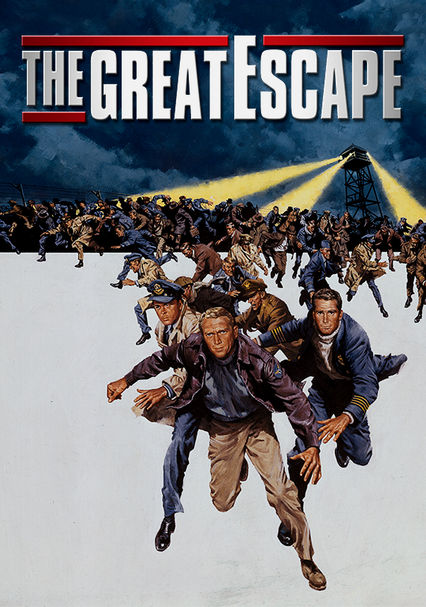
The Great Escape-1963

The Great Escape-1963

Director John Sturges

Starring Steve McQueen, James Garner, Richard Attenborough

Scott’s Review #1,053

Reviewed August 17, 2020

Grade: B

Often heralded as one of the great World War II action films of all time, there is little great about the first half of the interminable two-hour and fifty-three-minute running time.

With enough military silliness to make television’s Hogan’s Heroes seem like high drama, the first half of The Great Escape (1963) would be graded a mediocre C or a C- and that’s being generous.

The final hour is entirely different. The film kicks into high gear when the actual “great escape” is launched. Not only does the action begin, but the characters become more layered, emotional, and compelling.

Killer location shots of Germany and Switzerland occur at a zooming pace, and the comedy soon turns to tragedy.

I don’t understand why the decision was made to save all the goodies for the final act instead of dispersing them throughout the film, but I am glad it took off.

Directed by John Sturges, known for creating a similarly masculine and muscular offering from 1960, The Magnificent Seven,  he once again is lucky to cast several of Hollywood’s then hot, young stars like Steve McQueen and James Garner, and more relatable character actors like Donald Pleasence and Richard Attenborough who provide the acting grit.

While not on my list of great World War II films (Schindler’s List (1993) gets top honors), the film is recommended for the enthralling finale alone.

The film is based on Paul Brickhill’s 1950 nonfiction book of the same name, a firsthand account of the mass escape by British Commonwealth prisoners of war from German POW camp Stalag Luft III in Nazi Germany.

Unsurprisingly and shockingly, the actual events are significantly modified from the historical record, depicting a starkly fictionalized version of the escape, including Americans among the escapees.

Let’s discuss both portions, warts and all.

The changes are most irritating and done to make it more “Americanized” and, therefore, more appealing to mainstream audiences. This manipulation gnawed at me during most of the film since it’s factually incorrect.

There is a brief disclaimer at the beginning with a note saying the story is a work of fiction save for the escape portion, but this will inevitably be unnoticed or forgotten by the casual viewer.

Most of the first arc action is spent within the confinement of a massive, high-security, prisoner-of-war camp where the group of men is huddled, having escaped other camps or prisons. You would think the camp would be the equivalent of Alcatraz, but besides some barbed wire and not-so-threatening German soldiers with guns they rarely use, it’s not so intimidating.

Nonetheless, the group plots their elaborate, mostly underground escape upon arriving.

Whoever composed the musical score for the first section wanted to create a campy, situational comedy-style tone with brassy, patriotic tunes worthy of Gilligan’s Island.

This does nothing to create tension or danger, nor do the Nazi soldiers.

The men would be terrifying and rely on torture, but there is none of that to be found. Safe, but trying to be stern, this does not work as the German soldiers are played more like foils than those to be feared.

When the “great escape” is upon us, The Great Escape gets an A-plus for its thrills, action, and emotion.

A harrowing plane ride by Robert Hendley (Garner) and Colin Blythe (Pleasence) is juicy with tension and atmosphere. The plane exhibits trouble as the duo flies low across the German terrain, heading over the Swiss Alps for safety.

Meanwhile, Hilts (McQueen) steals a motorcycle and traverses the Germany/Switzerland border in a frantic chase scene while the Germans are in hot pursuit.

In a third sequence, other men flee via train in a cat-and-mouse pursuit.

Seventy-six POWs flee the camp, and a startling fifty are killed. Twenty-three are returned to the camp, and only three successfully escape.

If Sturges had built around the final hour and reduced the silly comedy style, probably attempting a contrasting theme to make the drama more imbalanced, he might have had a masterpiece.

Instead, The Great Escape (1963) is a twofold experience.

The comedy develops into a nail-biting, edge-of-your-seat thriller but suffers from too much historical inaccuracy to reach the depths of cinematic greatness.

Oscar Nominations: Best Film Editing

Exodus-1960

Exodus-1960

Director Otto Preminger

Starring Paul Newman, Eva Marie Saint

Scott’s Review #1,005

Reviewed March 30, 2020

Grade: A-

Creating a monumental epic about the modern state of Israel, director Otto Preminger’s vast project Exodus (1960) is a bold adaptation of the Leon Uris novel from 1958.

Starring stars of the day for added Hollywood spice and a romantic element, the result is a sprawling war drama with robust proportions and a hefty running time.

The film sometimes lags or even drags, but the message’s enormous importance and influence on stimulating Zionism should never be forgotten.

With the treacherous World War II barely in the rear-view mirror, Israeli resistance fighter, Ari Ben Canaan (Paul Newman), attempts to bring six hundred European Jewish Holocaust survivors from British-blockaded Cyprus into newly developed Palestine.

At the camp, he meets Kitty Fremont (Eva Marie Saint), an American volunteer nurse. The pair teams up with others to attempt to liberate the survivors.

The action eventually switches to Palestine, where other characters and motives come into play in a complex story. During this time, opposition to the partition of Palestine into Arab and Jewish states was heating up, leading to tension, bombs, and death among similar types of people.

Central to the main plot is a young love story involving spirited Dov Landau (Sal Mineo), a radical Zionist resistance group member, and Karen Hansen Clement (Jill Haworth), a young Danish-Jewish girl searching for the father from whom she was separated during the war.

Exodus has so much story going on and multiple plots to follow.

Besides the tense story, the main draw is the two love stories told amid the political turmoil.

Newman and Saint have marginal chemistry; he is an eye candy who electrifies the screen, and she seems too old for him and does not photograph well. Kitty, a widow, hedges on her romantic feelings for Ari, but they ultimately unite.

A gorgeous sequence occurs when the two share a delicious meal of fish and martinis amid a rooftop restaurant overlooking the dazzling landscape. She later dines with his parents and his mother, a classic Jewish mother who, in stereotypical fashion, cooks and fusses.

The fresh-faced pairing of Dov and Karen is reminiscent of Tony and Maria from West Side Story. Doomed from the start, the youngsters are opposites in many ways: hot-headed, sensible, and resilient. He is bronze and swarthy; she is blonde and blue-eyed.

I fell in love with the couple more than Ari and Kitty and rooted for their happily-ever-after moment, which sadly never occurred.

At nearly four hours, the film is best watched in segments, perhaps even four, to let the action marinate overnight. The sweeping cinematic photography and the lush exterior sequences aid the complex drama.

A drawback was not seeing the film on the big screen, which was almost a must in hindsight and limited by the DVD quality over Blu-Ray.

Nonetheless, the film is delicious in nearly every way. When tedium is about to occur, an event snaps the viewer back to immediate attention.

A notable fun fact is that Preminger boldly hired blacklisted screenwriter Dalton Trumbo, on the dreaded Hollywood blacklist for over a decade for communist leanings, to write the script.

Together with Spartacus (1960), made the same year, Exodus is credited with ending the practice of Blacklisting in the motion picture industry. The importance of what is written on the blank page is arguably surpassed by the man who wrote those pages.

Exodus (1960) nearly rivals the epic of all epics, Lawrence of Arabia (1962), in its cinematography of exotic and sacred landscapes in daring and forbidding lands.

Perhaps twenty minutes could be carved out when the action loses momentum. Still, with great direction, a top-tier cast, and a history lesson in the harshness of war and generations of conflict, the film resonates with the realism of the subject matter.

Oscar Nominations: 1 win-Best Supporting Actor-Sal Mineo, Best Music Score of a Dramatic or Comedy Picture (won), Best Cinematography, Color

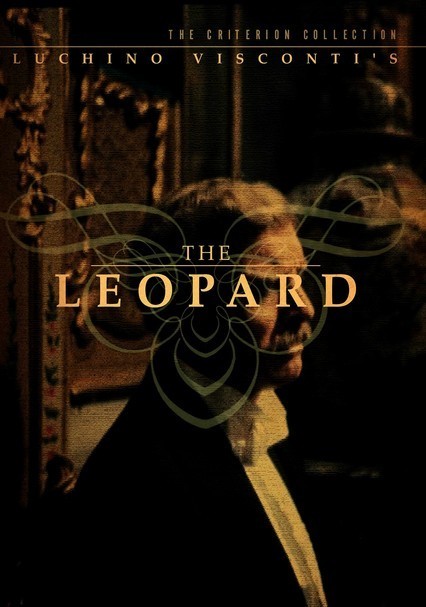
The Leopard-1963

The Leopard-1963

Director Luchino Visconti

Starring Burt Lancaster, Claudia Cardinale

Scott’s Review #991

Reviewed February 18, 2020

Grade: A

One of the great works in cinematic history, I preface this review by stating that I viewed the English dubbed version of the brilliant The Leopard (1963) starring Burt Lancaster and Claudia Cardinale.

This version is considerably shorter, at two hours and forty-one minutes, than the Italian version, which is three hours and five minutes.

As grand as the former is, my hunch is that something is lost in translation with the latter. The English version has no subtitles and is available only on DVD, so the film is difficult to follow but is rich in texture.

An interesting tidbit is that the film surgery was performed without director Luchino Visconti’s input – the director was unhappy with the editing and the dubbing. This point is valid since some voices are Italian and French, sounding too American and unauthentic.

Admittedly inferior, the English version is nonetheless extravagant and lovely on its own merits, though I would die to see the original version if it were available.

The time is during the 1860s, when the tumultuous era affected Italy and, more specifically, Sicily. Prince Don Fabrizio Salina (Lancaster) is at a crossroads between holding onto the glory he once knew and accepting the changing times, welcoming a more modern unity within the country.

A new mayor surrounds him, Don Calogero Sedara (Paolo Stoppa), who has a gorgeous daughter, Angelica (Cardinale).

He intends to marry Fabrizio’s French nephew, Tancredi Falconeri (Alain Delon).

The film dissects the changing times in Italy.

The visual treats for the viewer are astounding and by far the best part. The lovely, palatial estates are gorgeous, with decorative sets, bright and zesty colors, and meals displayed during parties that captivate audience members.

The costumes are state-of-the-art, and each frame can easily be a painting on a canvas. A tip is to pause the film, study it, and immerse yourself in its style.

Many film comparisons, both past and yet to come, can easily be made when thought about. An Italian Gone with the Wind (1939), if you will, with Angelica as Scarlett and Tancredi as Rhett (okay, the chemistry is not quite the same, but similarities do exist), and Concetta as the long-suffering Melanie, the characters can be compared.

The grand ball, the costumes, and the ravaged country are more prominent comparisons.

Nine years after The Leopard, a little film entitled The Godfather (1972) would change the cinematic landscape forever.

Director Frances Ford Coppola must have studied this film, as there are plentiful scenes of the Italian landscape and the culture in which both are immersed. Even snippets of the musical score mirror each other.

What a grand film to borrow and cultivate from!

Despite all the beautiful trimmings that make The Leopard a masterpiece, the film belongs to Lancaster in the best role of his career. The hunk in 1953’s From Here to Eternity, as the Prince, he is aged to perfection, distinguished-looking with graying sideburns.

The film is an epic extravaganza, and the actor leads the charge, carrying the film. He is a stoic man, but not without fault and emotion, wearing his heart on his sleeve, realizing that he must adapt to the changing times. We feel his quandary and embrace the character as a human being.

Attention-paying fans must be forewarned that the plot is basic and complex because of the absence of subtitles; however, the story is not highly complex.

The story is about how the Prince maneuvers his family through troubled (and changing) times to a more secure position. This is the overlying theme of the film.

Suffering from dubbing and quality control issues can do nothing to ruin a spectacular offering that is a cinematic gem and testament to the power of The Leopard’s (1963) staying power.

I eagerly await the day when the traditional Italian version can be found and discovered. It will be a treat to eat.

Until then, the film is a historical epic that can be appreciated for the dynamics and importance it so richly deserves.

Oscar Nominations: Best Costume Design, Color

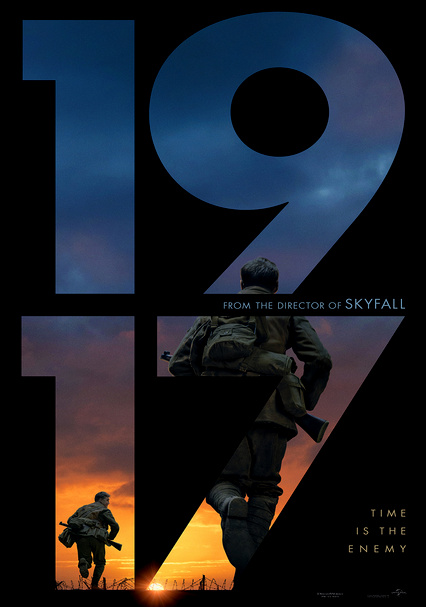
1917-2019

1917-2019

Director Sam Mendes

Starring George Mackay, Dean-Charles Chapman

Scott’s Review #979

Reviewed January 14, 2020

Grade: A

My tastes do not always lean towards the standard war film, so when I first heard about 1917 (2019), I was less than enthusiastic for no other reason than my pre-conceived perceptions.

Though it peaked with the idea of a World War I film rather than the standard World War II or Vietnam War film, I anticipated a run-of-the-mill experience or a story that had already been told.

Boldly told with incredible intensity and a brilliant technical style, director Sam Mendes creates a memorable cinematic treasure.

In April 1917, during the height of World War I, two British soldiers are tasked with a daring assignment: to hand-deliver crucial news to the 2nd Battalion of the Devonshire Regiment, calling off their planned attack on the German forces.

The Germans have faked a retreat to the Hindenburg Line and are ready to ambush the battalion, intending to kill sixteen hundred soldiers.

Schofield (George MacKay) and Blake (Dean-Charles Chapman) are chosen, with Blake’s brother Joseph among the soldiers bound to meet their fate.

As they journey, the young men face a myriad of hurdles including booby traps left by the Germans, terrain littered with dead bodies of their comrades, a precarious helicopter crash, giant rats, and the rapidly approaching deadline to deliver their message.

If they do not accomplish their mission in a timely fashion (twenty-four hours), the results will be devastating. Mendes keeps the tension high because he tells his story in real-time.

1917 is raw and emotional, hitting a hard punch.

Powerful scenes of dead bodies riddle the land, fat and pale from days spent immersed in cold water, young soldiers once handsome, now dead and bloated, remind the viewer what a terrible thing war is, and the ravages it causes.

Unlike other war films, patriotism and nationalist pride are not present.

Instead, the soldiers are weary and angry, confused as to why they are sent to fight for land as ugly as where they are, to die for land that is not even their own. They are depressed and confused.

The relationship between Schofield and Blake is excellent. Both men are weary and afraid, but have each other’s backs throughout their assignment.

It is not clear how long they have known each other, but they are at least acquaintances. They each come to the other’s rescue, and a pivotal scene occurs in a dusty hideout where they nearly die after a cave-in.

The characters possess grit and determination, but it is their humanity and connection with each other that resonate powerfully with the viewer.

An incredible scene unfolds as the day turns into night, and Schofield is well into enemy territory. To avoid a pursuing German soldier, he hides in a dusty basement area and finds a cowering young French girl. At first fearful, the pair quickly bonds, and a realization occurs to Schofield.

A newborn child accompanies the girl.

Assumed to be hers, the soldier immediately parts with his stash of food, not realizing the baby can have only milk. A ghastly realization is that the baby is not the French girl’s at all, but was instead found and rescued to prevent its death. The scene is tender and beautiful, perfectly contrasting the ugliness of the war.

The fantastic scene gives the viewer pause, prompting them to wonder what will become of the girl and the baby.

Nearly rivaling this lovely scene, another poignant moment occurs when Schofield stumbles upon a group of soldiers watching another soldier perform a rendition of the melancholy war tune, “Wayfaring Stranger”.

This moment slows the action down to a crawl, dedicated to loneliness and sadness amid the terrible battles.

The technical aspects that Mendes creates are spectacular and meant to be enjoyed on the largest screen possible. He uses a one-take approach, which keeps the action fast and furious.

The lavish and grandiose exterior scenes of immense dry land perfectly counterbalance a terrific watery scene when Schofield is chased into the river and soon embarks on wavy, grand rapids.

The camera remains on the soldier throughout the scene, as the viewer is taken on a wild adventure, sweeping every morsel of up and down motion with the tide.

To piggyback on this point, a scene occurs when one of the young men is knocked unconscious. It is daylight, but when he regains consciousness, it is night. The cinematography is brilliant, with a sharp left turn to translucent colors and blurry images of buildings.

The viewer is as disoriented as the soldier and fears what lurks in the shadows, as is found out when an unknown approaching figure begins to fire his gun.

1917 (2019) is a progressive-leaning gem with an anti-war message and a genuine approach to a “day in the life of a soldier”. It is not glossy or contrived, but a candid, realistic view of the savagery of war.

With a creative technical style, it is one of the best of its genre ever made.

Oscar Nominations: 3 wins-Best Picture, Best Director-Sam Mendes, Best Original Screenplay, Best Original Score, Best Sound Editing, Best Sound Mixing (won), Best Production Design, Best Cinematography (won), Best Makeup and Hairstyling, Best Visual Effects (won)

A Passage to India-1984

A Passage to India-1984

Director David Lean

Starring Judy Davis, Peggy Ashcroft

Scott’s Review #971

Reviewed December 24, 2019

Grade: A-

David Lean, famous for his sweeping, masterpiece epics including Lawrence of Arabia (1962) and Doctor Zhivago (1965), returns with his swan song, a grandiose and lavish film, A Passage to India (1984).

Though not quite on the same level as the two other mentions, the brilliant cinematography alone makes this one a winner.

The story is compelling with a mystery and he said/she said rape story that deepens, exploring racism and religion, assuredly switching viewer allegiances between characters.

A Passage to India is based on the famous E.M. Forster novel from 1924. Along with A Room with a View (1908) and Howards End (1910), the three make up a series that examines class differences and hypocrisy among the British.

All three are set at least partially in England and were all adapted to film with immeasurable success. While the film is potent and meaningful, it is the least brilliant of the three, but only by a hair.

Set in the 1920s, the British had control over India causing some tensions in the air. Adela Quested (Judy Davis) sails from England to India with Mrs. Moore (Peggy Ashcroft), the mother of her intended bridegroom, whom they plan to see when they arrive at their destination.

The women have a wonderful relationship and excitedly anticipate their adventure.

After Mrs. Moore meets the kindly Dr. Aziz Ahmed (Victor Banerjee), becoming enamored and enraptured, the women accompany him to an exploration of ancient caves, along with a guide.

When Adela and Ahmed are left alone, she suddenly appears frantic, accusing the Indian Doctor of attempted rape, setting off a blistering scandal that causes public debate and divides the townspeople, culminating in a trial.

The story is naturally the focal point of the film, but not the strongest part. At first left aghast at the accusations hurled at Aziz, by all appearances a wonderful man, the intention is for the viewer to be unclear of what transpires when Aziz and Adela are alone. The events, if any exist, take place off-screen, so we only see a disheveled Adela flee the caves in panic.

The rest is left to the viewer’s imagination and to wonder what happened. As the truth is eventually revealed, we wonder about the intended motivations and the ramifications the accusations will have on the central characters.

The film is successful at interestingly discussing racism and assumptions, leading major characters to disagree. Adela and Mrs. Moore wind up at odds after the events, with Moore refusing to believe Aziz did anything wrong.

This is a bold stance to take as the women are good friends and we would assume one would support the other. While Moore is liberal and open-minded, Adela is conservative and buttoned-up, making the ideological differences clearer.

Did Adela imagine the attack? Did somebody else attack her?

The cinematography is brilliant and the pure excellence of the film is. The plentiful exterior scenes are delectable and simmer with beauty within each frame. Since many of them take place in the grandiose mountains or caves the results are exquisite.

One can easily sit back and revel in the majestic sequences and many scenes are still and quiet which enhances the effects. As with other Lean epics, it advisable is to see this film on the biggest screen known to mankind.

At one-hundred and sixty-four minutes, the film is hardly non-stop action, but rather slightly laborious and lumbering. Some parts are a tad too slow, but the payoff is mighty and there is a measure of intrigue throughout, especially once the cave incident occurs.

I hate to say the film drags, but perhaps fifteen to twenty minutes could have been shaved off. When Lean is at the helm, a hefty running time is a guarantee.

A Passage to India (1984) is a film by a respected director that culminates a lengthy and inspired career boldly. While not his best film, this should not detract from the excellent experience the film provides.

Grandiose sequences and sophisticated style make the film able to be viewed more than once, a marvel for a film released in the lackluster 1980s.

Oscar Nominations: 2 wins-Best Picture, Best Director-David Lean, Best Actress-Judy Davis, Best Supporting Actress-Peggy Ashcroft (won), Best Screenplay Based on Material from Another Medium, Best Original Score (won), Best Sound, Best Art Direction, Best Costume Design, Best Cinematography, Best Film Editing

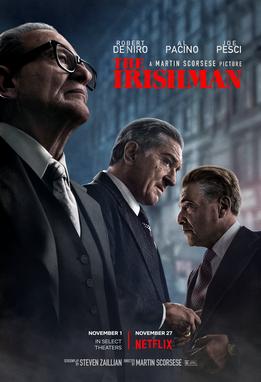
The Irishman-2019

The Irishman-2019

Director Martin Scorsese

Starring Robert De Niro, Al Pacino, Joe Pesci

Scott’s Review #960

Reviewed November 20, 2019

Grade: A

Any film created by legendary director Martin Scorsese is sure to impress legions of adoring followers and most critics.

Every project he touches results in something fantastic, and it’s easy to revel in, with good analysis and discussion about the movie moments after the closing credits have rolled.

The Irishman (2019) is a film that demands repeated viewings and thoughtful consideration to appreciate the rich and diverse cast of characters fully.

The picture may not be on the same level as Goodfellas (1990) or The Godfather (1972), which it seems patterned after, but the work is awe-inspiring and should stand the test of time, resulting in a fine wine analogy.

The years will likely be kind to the film and enrich the experience- it’s that kind of film.

With stars like Robert De Niro, Al Pacino, Joe Pesci, and Harvey Keitel on board, the viewer expects a plethora of riches, and that is precisely what is delivered.

The film spans the period from the 1950s to the 1970s.

It follows the life of Frank Sheeran (De Niro), a truck driver who becomes a hitman and becomes involved with mobster Russell Bufalino (Pesci) and his crime family, including his time working for the powerful Teamster Jimmy Hoffa (Pacino). Sheeran is dubbed “the Irishman”.

He narrates much of the story, now quite elderly and residing in a nursing home, of his time in the mafia and the mystery surrounding the death of Hoffa.

The only negatives to the film are the suspension of disbelief that De Niro is Irish – was there ever a more quintessential Italian New Yorker? However, this film is directed by Scorsese and produced by De Niro, so they could tell me the sky is green, and I would readily nod in agreement.

At three hours and twenty-nine minutes, the film is a long haul, and towards the middle, the film meanders a bit. Perhaps twenty or thirty minutes could have been sliced to the cutting room floor.

The rest of the experience The Irishman serves up is brilliance, with rich characters and a fantastic atmosphere. Have I mentioned that Scorsese directed this film? The cast of characters is endless and drips with zest, speaking volumes for what The Godfather did with casting.

Many recognizable actors appear in minor roles, like Ray Romano as attorney Bill Bufalino, Bobby Cannavale as “Skinny Razor”, and Anna Paquin as Frank’s estranged daughter, Peggy.

An endless supply of character actors fleshes out the remaining cast.

Excellent is the plethora of food references that would impress notable food director Alfred Hitchcock, known for incorporating meals into many of his scenes. The delectable early scenes, when Frank delivers meat to grocers and gets into a discussion with a gangster over a good steak, will leave viewers mouth-watering for a tender sirloin.

The conversations between characters are interesting, slowly building and adding robust grit to a packed film. They engage in good, thoughtful dialogue exchanges and discuss life and experiences matter-of-factly.

Characters are given a chance to develop and grow, and even minor characters, such as a nurse or a wife, add a comforting aura. It is evident what treasured films look like when a director can create and develop without outside interference.

The standouts in the acting department are Pacino and De Niro, the former of whom I’m crossing my fingers will receive an Oscar nomination.

The pairing is flawless, and eagle-eyed fans will recall that both actors appeared together in The Godfather Part II (1974) yet never shared a scene.

In The Irishman, they appear together in pivotal scenes. Pacino infuses Hoffa with humor and poise, as only Pacino can, in a character. He is my favorite character and is tough to look away from.

Both actors, along with Pesci, are treated to a recent marvel in cinema —the de-aging process. Each actor, well into his seventies, is transformed to appear in his mid-forties in many scenes and then aged to appear elderly later in life.

While each has a strange, unnatural look as a younger man, the process is impressive and an innovative technique that will surely become more common in film, subsequently offering limitless possibilities.

The Irishman (2019) is a cinematic gem by a storied director advancing in years, but still offering grandiose films. With stalwarts like De Niro, Pesci, and Pacino, the players are well cast, and nuanced touches add dimensions to the finished product.

Offering a gangster film with grace and style, the story is poignant and crisp, and a thoughtful approach to one of the legendary mysteries- what happened to Jimmy Hoffa?

Oscar Nominations: Best Picture, Best Director-Martin Scorsese, Best Supporting Actor-Al Pacino, Joe Pesci, Best Adapted Screenplay, Best Production Design, Best Cinematography, Best Costume Design, Best Film Editing, Best Visual Effects

The Bridge on the River Kwai- 1957

The Bridge on the River Kwai- 1957

Director David Lean

Starring William Holden, Alec Guinness 

Scott’s Review #908

Reviewed June 11, 2019

Grade: A

The Bridge on the River Kwai (1957) is a war film that is an example of character-driven storytelling from each person’s perspective.

Films of this genre frequently do not steer too far from the straight and narrow, showcasing the war event perspective. This often becomes larger than the humanity piece. A key point is the American, British, and Japanese points of view, which turn the grand epic experience into a more personal one.

The film was awarded numerous Oscar nominations, culminating with the Best Picture of the Year victory.

The time is early 1943 amid the powerful and destructive World War II when a group of British prisoners of war (POW) arrives at a Japanese camp. Colonel Saito (Sessue Hayakawa) commands all prisoners, regardless of rank, to begin work on a railway bridge that will connect Bangkok with Rangoon.

Lieutenant Colonel Nicholson (Alec Guinness), the British commanding officer, refuses manual labor, and a battle of wills erupts between the two men. Meanwhile, Commander Shears (William Holden), an American also being held at the same camp, vows to destroy the bridge to avoid a court martial.

The complexities of the relationships between the men are the main draw and an aspect that can be discussed at length. Each possesses a firm motivation, but the emotions teeter back and forth as they face various conflicts.

Each of the three principles is an analytical juggernaut in the human spirit, ranging from courageous, cowardly, and even evil. We are supposed to root for Shears and supposed to not root for Saito, but why is that not so cut and dry?

Is Shears too revenge-minded? We cheer Nicholson’s resilience, but is he too stubborn for his own good?

The film’s whistling work theme nearly became famous when the film was initially released in 1957. Ominous and peppered with a macabre depression, the prisoners go about their work in a near ode to Snow White and the Seven Dwarfs’ cheerier “Whistle While You Work” anthem.

As they continue to build the bridge dutifully, the audience feels a sense of dread and a foreboding atmosphere. What will ultimately happen? When two prisoners are shot dead while attempting to escape, the film takes a different turn.

Given that David Lean, responsible for such epic masterpieces as Lawrence of Arabia (1962) and A Passage to India (1984), directs The Bridge on the River Kwai, should be telling as far as the sweeping exterior landscape treats in store for the viewer.

The lavish Asian landscape, so picturesque and beautiful, is peaceful amid the chaos and vile treatment of the prisoners. This imbalance is wonderfully rich and poignant against the robust storytelling.

The climax is bombastic (literally!) and a nail-biting experience resulting in a stabbing, an explosion, and a heap of tension. A train carrying important dignitaries and soldiers is racing towards the newly constructed bridge as one man is intent on detonating a bomb and destroying another race against time to prevent the bloodbath.

The suspense, action, and cinematic skill are front and center during the final act.

Deserving of each one of the accolades reaped on The Bridge on the River Kwai (1957), the film is the thinking man’s war film.

Layered with an underlying humanistic approach and little violence given the subject matter, one can sink into empathy for each point of view presented instead of being force-fed a one-dimensional message film.

Fine acting and gorgeous cinematography make this film one to be forever remembered.

Oscar Nominations: 7 wins-Best Motion Picture (won), Best Director-David Lean (won), Best Actor-Alec Guinness (won), Best Supporting Actor-Sessue Hayakawa, Best Screenplay Based on Material from Another Medium (won), Best Scoring (won), Best Cinematography (won), Best Film Editing (won)

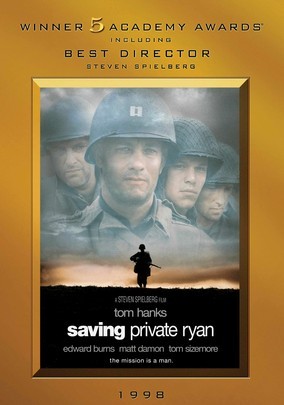
Saving Private Ryan-1998

Saving Private Ryan-1998

Director Steven Spielberg

Starring Tom Hanks, Tom Sizemore

Scott’s Review #778

Reviewed June 26, 2018

Grade: A

Famed director Steven Spielberg does not always get his due respect. This is usually because, for better or worse, he has become synonymous with the “blockbuster” film, drawing comparisons to either lightweight fare or films of “lesser” artistic merit.

His 1980’s works- Raiders of the Lost Ark (1981), E.T. the Extra-Terrestrial (1982), and Indiana Jones and the Temple of Doom (1984), were enormous commercial successes, though I enjoyed all of the films.

During the 1990s Spielberg continued to direct “popcorn flicks” such as Hook (1991) and Jurassic Park (1993), with large studio budgets, but with somewhat less critical acclaim.

Finally, he was able to change many opinions with 1993’s Schindler’s List and the war film to end all war films, Saving Private Ryan (1998), an epic, profound experience.

Both received numerous Oscar nominations and success at the box office.

The film is a tremendous treat for nothing other than the riveting opening sequence alone (more about that later). If that is not enough to impress, Saving Private Ryan is known for infusing a very graphic element into the war film- with no letting up from the brutality.

Spielberg does not water down this picture, instead shows the pain and angst of war. The film is helped tremendously by the casting of Hollywood superstar Tom Hanks, who leads an enormous cast of mainly young men.

Saving Private Ryan opens with a prologue- in present times a veteran brings his family to visit an American cemetery at Normandy. Flashbacks then take the audience back to the Omaha Beach debacle in 1944, where American troops faced deadly German artillery attacks in France.

After the horrific three-day D-Day, it is learned that three of the four Ryan sons have died in the events. Captain Miller (Hanks) is ordered to bring a team of men to Normandy and bring the fourth Ryan son (Matt Damon) to safety.

Spielberg’s opening D-day sequence is just astounding and propels the film to unforgettable status. With a running time of twenty-four minutes, the riveting and horrific slaughter of American soldiers is intensely brought to the screen.

Audiences undoubtedly sat open-mouthed (I know I did!) as bullets riddled the beach and left soldiers killed or with limbs torn off. The camera-work is brilliant as the use of a shaky technique, almost documentary style is used for effect.

Successful is this sequence at promoting an anti-war sentiment while not glorifying the combat at all. The scene will stay with its audience for years to come.

Saving Private Ryan can be compared to the decades later Dunkirk (2017) in that each film took the war genre and turned it upside down.  The similarities between the films start with the obvious- the main events in both films are during World War II, the same week, and the French beach settings making the films perfect companion pieces.

Both films feature a gray, rainy setting with many horrific moments of death and suffering. The war film is a common genre that has historically teetered on predictability and over-saturation, but both films do something completely different and unexpected, yet mirror each other in style.

To counter-balance the violence in the opening sequence, a quiet scene is created and remains one of my favorites. The scene contains almost no dialogue throughout the seven-minute duration and is pivotal to the entire film.

As a typist realizes that three letters of death are to be delivered to the same family, a woman on a mid-west farm quietly washes dishes and is calmly horrified when she sees a government car approaching.

What else can this mean but that one of her sons is dead? The poor Mrs. Ryan will be told that she has lost not one, but three sons.

How utterly unimaginable and the scene is incredibly touching!

The best part of Saving Private Ryan is that Spielberg provides a deep level of sentimental vision combined with the terrible atrocities of war. He portrays not only the violent effects of the battles on the soldiers but also the surviving families.

This is not always done in war films, at least not to the level that Spielberg chooses to.

With such a film as the startling Saving Private Ryan, Spielberg turned the war film genre inside out. Breaking barriers with a no-holds gusto, Spielberg influenced war films for years to come- Black Hawk Down and Enemy at the Gates (2001) are prime examples, and received acclaim from fellow directors for his interesting techniques.

Saving Private Ryan (1998) was an enormous financial winner at the box office, proving that great films don’t have to be watered down to find an audience.

Oscar Nominations: 5 wins-Best Picture, Best Director-Steven Spielberg (won), Best Actor-Tom Hanks, Best Screenplay Written Directly for the Screen, Best Original Dramatic Score, Best Sound Effects Editing (won), Best Sound (won), Best Art Direction, Best Cinematography (won), Best Makeup, Best Film Editing (won)

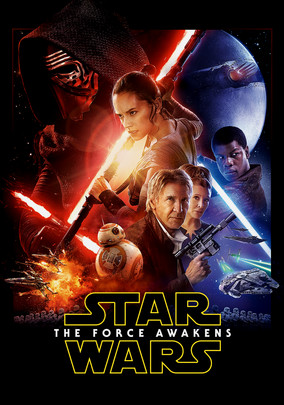
Star Wars: Episode VII: The Force Awakens-2015

Star Wars: Episode VII: The Force Awakens-2015

Director J.J. Abrams

Starring Harrison Ford, Carrie Fisher, Mark Hamill

Scott’s Review #540

Reviewed December 8, 2016

Grade: B

As a youngster who grew up exposed to the original three Star Wars films (admittedly, I cannot keep track nor care enough to learn the exact chronological order of the franchise), the 2015 reincarnation is very nostalgic.

Star Wars (1977), The Empire Strikes Back (1980), and Return of the Jedi (1983) were magical films for a kid to enjoy.

I saw each one in the movie theater.

Sadly, The Phantom Menace in 1999 was a rather forgettable endeavor and did nothing to draw new fans to the franchise, nor keep existing fans engaged.

Taking center stage in this installment are beloved stalwart characters Han Solo (Harrison Ford), Princess Leia (Carrie Fisher), and Luke Skywalker (Mark Hamill) in a nostalgic trip down memory lane.

A slight gripe is the shamefully under-use of one of these characters.

The visual effects are impressive, the main villain is okay, and the action sequences adequate, but the ode to history keeps the long-time viewer engaged the most.

In a way, Star Wars: The Force Awakens is aptly titled as it is a rebirth of sorts for the storied franchise.

Legendary actor Max von Sydow is shamefully under-utilized in a throwaway part in the film’s first sequence.

He resembles deceased actor Alec Guinness, made famous again in the 1970s when he appeared in the first Star Wars.

A coincidence?

Filmmakers are going for a modern reboot of Episode IV (the 1977 Star Wars).

The main character of Rey (Daisy Ridley) is meant to be the new Luke Skywalker, who is known as a Jedi hero in the land and has been missing for years. Rey has special powers and is accompanied by her sidekick droid, BB-8, a similar character to R2-D2.

The villain is Kylo-Ren, son of Han Solo and Princess (now General) Leia, and reminiscent of Darth Vader.

The film is a classic tale of good versus evil as the evil First Order battles the good Resistance.

I enjoyed the good storytelling most of all and prominent roles for Han Solo and Leia were good choices for the storied franchise. Newcomers Rey and her love interest, Finn, are appealing, as are fighter pilot, Poe, played by Oscar Isaac.

Reportedly, this film is the start of another trio of films so we will undoubtedly see more of these characters.

I could not help but notice the Nazi similarities of the First Order and their soldiers, the Stormtroopers. Possessing a red quality and a Nazi-like salute to their supreme leader, they even look German in appearance.

Kylo-Ren, raven-haired, pale, and clad in a dark black cape, was derived from Darth Vader, especially when he appeared in mask attire.

He almost could have been his son.

Set thirty years since the original Star Wars, the plot is more or less similar, and I think this is a wise move in introducing the franchise to a new audience while staying true to the rich history of the central characters and their offspring.

Han Solo and Leia discuss their love affair, past adventures, and their son, who has been hypnotized to the dark side. They struggle to concoct a way to rescue him and hope to persuade him that aligning with the Resistance is the only way.

Favorite scenes include the ultimate showdown between Rey and Kylo-Ren. Set in a snowy, wintry forest, with their glistening and glowing lightsabers, the scene is visually gorgeous, as are the many scenes in one battle station or another.

The re-appearance of comical C-3PO is darling.

As with the original Star Wars, humor is mixed to lighten the mood. Han Solo and his dedicated side-kick Chewbacca, gently spar, and when Han Solo takes the group to a saloon filled with interesting creatures, the scene is light and fun. 

The real drawback for me is that the film is not all that compelling save for the nostalgia aspects. It is a classic battle of two wills, but nothing new and exciting. Sure there are a few new characters, but the plot is rather basic and what one would expect. 

I am not truly invested in the franchise, despite zillions of die-hard fans being fanatics of the films and their intricacies, so that is more of an opinion than a criticism of the merits.

Star Wars: Episode VII: The Force Awakens (2015) will undoubtedly please fans and introduce new ones to a world of galaxies, and the “force”.

A satisfying trip down memory lane.

Oscar Nominations: Best Original Score, Best Sound Editing, Best Sound Mixing, Best Film Editing, Best Visual Effects

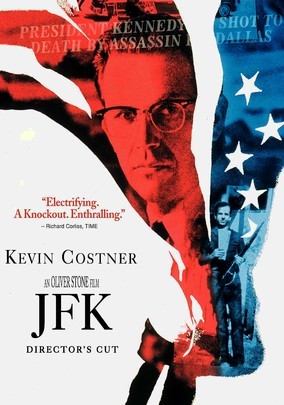
JFK-1991

JFK-1991

Director Oliver Stone

Starring Kevin Costner, Tommy Lee Jones

Scott’s Review #536

60031474

Reviewed December 4, 2016

Grade: B+

JFK (1991) is a very well-made film but must be taken with a grain of salt, as reportedly many liberties were taken by the director, Oliver Stone, and the film can be open to interpretation as to what is true and what is embellished.

At three hours and twenty-six minutes, the film is of epic proportions.

The film recounts the events leading up to the assassination of President John F. Kennedy through the eyes of a former District Attorney from New Orleans, James Garrison, played by Kevin Costner.

Garrison filed charges against New Orleans businessman, Clay Shaw (Tommy Lee Jones), and in his view, was in cahoots with Lee Harvey Oswald to kill the president.

Stone suggested that President Lyndon B. Johnson was involved in the coup, which led to much controversy indeed.

The plot is quite intricate and, at times, tough to follow, but the editing techniques alone are impressive. I loved the authentic, real-life, footage that Stone immerses throughout the film.

As we know, the assassination, in 1963, was tragic and fraught with controversy that still abounds today.

Stone was wise to make a film of this caliber despite the lack of clarity of what is true and not true. I guess we may never know.

Oscar Nominations: 2 wins-Best Picture, Best Director-Oliver Stone, Best Supporting Actor-Tommy Lee Jones, Best Screenplay Based on Material Previously Produced or Published, Best Original Score, Best Sound, Best Cinematography (won), Best Film Editing (won)

The Godfather: Part III-1990

The Godfather: Part III-1990

Director Francis Ford Coppola

Starring Al Pacino, Diane Keaton, Andy Garcia

Scott’s Review #533

60011153

Reviewed December 3, 2016

Grade: B+

The Godfather: Part III, released in 1990, has traditionally been met with unwavering criticisms for not being as great as the two preceding epics.

Sofia Coppola, who plays Mary- daughter of Michael Corleone, in particular, has bared the brunt of the attacks.

No, The Godfather: Part III is not on the level of the others, but is pretty damned good based on its own merits and is a capable mob epic to conclude the franchise satisfyingly.

The central theme is Michael’s continued desire to leave the mafia and religion, and the Catholic Church are central themes of the film.

Some backstory to the making of the film; Coppola had a non-expiring offer to create a third installment to the saga ever since 1974 when Part II was released.

Having had a financial crisis, 1990 was the time Coppola agreed to do the follow-up.

The ever-crucial role of Mary (now a coming-of-age young lady) was to be played by Julia Roberts, who dropped out. Winona Ryder was then cast and bailed at the very last minute.

Out of necessity, Coppola’s daughter Sofia was cast and had little time to prepare or much acting experience (she would later become an acclaimed director, which better suited her talents).

In a similar fashion to the other epics, a big event launches the film, as Michael (Pacino) is named Commander of the Order of Saint Sebastian in a lavish ceremony at St. Patrick’s Old Cathedral.

It is revealed that Michael is approaching age sixty and semi-retired, leaving his business dealings mainly to Joey Zasa in New York, who has ravaged what the Corleone family had once built.

Many characters- Kay, Mary, Tony, and Connie, are re-introduced, and new characters such as Vincent Mancini (Andy Garcia) and Don Altobello (Eli Wallach) are introduced, in a flurry of new storylines.

It is like a big, grand, soap opera, with wonderful, rich, writing.

I was immediately impressed by the neat cinematography- the camera captures wind-swept leaves and an artistic introduction to the film, as well as either mentioned or appearing in cameo roles, small characters from the first two films- a great touch in continuity and history.

Coppola does a fantastic job of providing little updates on these characters during a party. For example, we learn that Vincent is the deceased, illegitimate son of Sonny, his mother being Lucy Mancini, who appears in a scene. (Clever viewers will remember Sonny and Lucy’s torrent affair in the bathroom during The Godfather-it is suggested that this produced Vincent).

It is mentioned that Tom Hagen (Robert Duvall) has died, though his wife and son appear, and Coppola treats us to a myriad of flashbacks (Apollonia, a young Michael, and Kaye).

These nuances make The Godfather: Part III filled with cool little aspects that fill the loyal viewer with warmth.

The main story- Michael takes Vincent under his wing- and strives to steer the family clear of criminal ties- is interesting, if not spectacular. Connie rises from a battered mafia wife, raising kids, to a major player in the family, just as women progressed from the 1940s to the 1980s when the story takes place.

She even feeds her godfather a poisoned cannoli!

Michael, Vincent, and Connie involve themselves with the Catholic Church, bailing them out (the real-life Papal banking scandal is linked to the story) and making a deal with them for major shares of a real estate company, Immobiliare.

In-fighting between the major crime mob bosses leads to several bloody massacres throughout the film, on the streets, in Atlantic City, and finally, in the Sicilian Opera house.

The pairing of cousins and lovers, Vincent and Mary, never really works, nor does Bridget Fonda’s one-two-scene appearance as Grace Hamilton, a brief dalliance for Vincent. Also, the exclusion of the character of loyal family attorney Tom is a glaring omission.

So the film does contain a few negatives.

In a nutshell, The Godfather: Part III (1990) is a very good, epic, crime drama even without the Godfather name. To measure up to the glory of Parts I and II are impossible.

With the bonus of having the rich Corleone family history and the intricate relationships between the characters, this makes for a treat for fans.

There has not been a Part IV, nor should there ever need to be as the conclusion of the film is a satisfying wrap-up to the saga.

Oscar Nominations: Best Picture, Best Director-Francis Ford Coppola, Best Supporting Actor-Andy Garcia, Best Original Song-“Promise Me You’ll Remember”, Best Art Direction, Best Cinematography, Best Film Editing

Interstellar-2014

Interstellar-2014

Director Christopher Nolan

Starring Matthew McConaughey, Jessica Chastain

Scott’s Review #277

70305903

Reviewed September 25, 2015

Grade: B-

Interstellar (2014) is an interesting film to review.

Science-fiction/futuristic epic with a run time of nearly three hours and is complex and intricate. It is the latest offering by director Christopher Nolan.

I cannot say I loved the film, however, I did appreciate and marvel at the visual and technical aspects of it, which completely usurps the convoluted plot, made difficult to follow due to changing worlds and galaxies.

The film reminds me of Inception (2010) with an obvious homage to 2001: A Space Odyssey (1968), the former directed by Nolan, but not quite as compelling from a story point of view as Inception was.

The complexities of different entities, worlds, and layers of worlds are featured and admittedly, mind-blowing, which is the weak part of the film.

Making the film arguably too intelligent, it loses the audience’s attention.

By too intelligent, I mean too complex. As I review the film, I see two halves-the story side and the visual side. In Interstellar, both are essential components and one fails and one marvels.

The story goes something like this. Matthew McConaughey plays Cooper, a widowed, former space expert stuck in a small town in the mid-west, where he begrudgingly runs a farm, living out an unsatisfying existence.

The Earth’s food and crops are slowly running out and the planet is dying. His two children, daughter Murphy and son Tom face a bleak world.

One day, a dust pattern with coordinates leads Cooper and Murphy to a secret NASA team intent on finding other worlds and attempting to save Earth. The team is led by Dr. Brand, a college professor, and science wizard, played by Michael Caine.

Cooper, naturally, is chosen to lead the venture, which could take him away from his family for years. He accepts much to Murphy’s chagrin. Once in outer space- assisted by Amelia Brand (Dr. Brand’s daughter), the team embarks on an endless mission leading them to different planets and one strange encounter with a rebel astronaut (played wastefully by Matt Damon).

Years later (on earth anyway) Murphy and Tom (now grown and played by Jessica Chastain and Casey Affleck) assume their father Cooper is dead.

Critically, the story is way too much to comprehend. I let go of the story instead of focusing on the visual spectacle I was treated to.

The plot eventually meanders off track as the team traverses through a space wormhole created by an alien intelligence and travels fifty years without aging. Life has gone on over planet Earth. Some characters age, others do not.

To summarize, the story is convoluted and impossible to follow.

Speaking of the story side of Interstellar, the writing contains an irritating wholesomeness, especially in the early stages- pre-outer space.

McConaughey was given this tough, machismo side to him that screams of Hollywood traditionalism- almost like “I am a man- I save the family”. Haven’t we seen this too many times in film?

I also found the relationship between Cooper and his young daughter Murphy incredibly saccharine and screamed of Hollywood schmaltz.

McConaughey was given and succeeded in delivering, one great crying scene.

The visual aspect of Interstellar is a spectacle and much, much better than the story, especially during the final third of the film. The sheer grandeur is astounding. When the crew lands on Miller’s planet, an ocean world, a great tidal wave topples their space ship killing one of the team.

The massive look of the tidal wave is monumental in size and ferocity. Later, when the crew lands on an icy planet, the immense coldness and shape of the planet work perfectly and one feels like they are in outer space.

How inventive and creative is the scene where Cooper attempts to contact a character through a bookshelf. The scene is set up like a maze with different periods, colors, and shapes, seemingly blending is very impressive and artistic.

Visually speaking, Interstellar has some similarities to the 1968 epic 2001: A Space Odyssey. Grandiose, artistic, experimental, and epic along with the obvious space theme allow the two films to be compared.

However, where 2001: A Space Odyssey was about life and contains a clear and powerful message, I did not find the same with Interstellar. Instead, I did not find a message, only a confusing story, mixed with spectacular visuals.

Oscar Nominations: 1 win-Best Original Score, Best Sound Editing, Best Sound Mixing, Best Production Design, Best Visual Effects (won)

The Greatest Show on Earth-1952

The Greatest Show on Earth-1952

Director Cecil B. DeMille

Starring Charlton Heston, Betty Hutton, James Stewart

Scott’s Review #204

60034703

Reviewed December 14, 2014

Grade: B+

Considered by some critics to be one of the worst Best Picture winners of all time, The Greatest Show on Earth (1952) is quite an impressive Hollywood spectacle and tells the story of the world’s largest railroad circus as they launch a tour and travel throughout the United States, with plenty of drama to experience throughout the film.

The film stars Charlton Heston, Betty Hutton, and James Stewart as the general manager, acrobat, and clown of the show, respectively.

The film used over 1,400 real Ringling Bros. and Barnum & Bailey employees and hundreds of animals in its production, giving it an authentic circus feel.

Unfortunately, the film also has a schmaltzy quality and lacks the best acting, which surprisingly does not bother me and, strangely enough, works in a way.

Various characters have affairs with each other or fall in and out of love rather quickly- it makes for good drama, anyway.

Of course, the main appeal is the extravagant show. While the drama sometimes takes center stage, the lavish production and actual circus events shine through.

My favorite character, and arguably the only interesting character with any depth, in The Greatest Show on Earth is Buttons the Clown, played by James Stewart.

Buttons wears his clown costume, complete with full makeup, at all times. He is kind and mysterious. We learn that he “mercy killed” his dying wife and has joined the circus for protection from the police.

A wonderful human being, he was once a Doctor and tends to anyone in the circus troupe who needs assistance. Later in the film, he plays a vital role after a tragic accident.

His heartbreaking, tender conversation with his elderly mother, whom he only sees secretly once a year for seconds as she tearfully and discreetly visits him in the audience, is painfully sad to watch and is such a sweet scene.

The Greatest Show on Earth’s best scene by far still impresses today is the massive train wreck close to the conclusion.

Made in 1952, the special effects and direction of Cecil B. DeMille are brilliant. The train derails one night in a perfect way—it crashes into an approaching train and derails, highly effective in its enormity.

The scene does not look silly.

The way that all of the drama comes together in this scene—Harry, the crooked midway concessionaire and vicious elephant trainer, Klaus, who is responsible for the accident, Button’s true identity being revealed, and a significant character in peril—makes this scene top-notch and a satisfying conclusion to the film.

The stories involving Brad, Holly, Sebastian, and Angel are soapy and melodramatic and are the film’s weakest point. As a viewer, I couldn’t care less which character lusted after which or who wound up in bed together, but the movie itself is a spectacle, which is my main enjoyment.

The brightness, the revelry, and the circus performances are all wonderful.

Oscar Nominations: 2 wins-Best Motion Picture (won), Best Director-Cecil B. DeMille, Best Story (won), Best Costume Design, Color, Best Film Editing

The Searchers-1956

The Searchers-1956

Director John Ford

Starring John Wayne, Natalie Wood

Scott’s Review #148

70048803

Reviewed August 5, 2014

Grade: B+

The Searchers (1956) is a classic film considered one of the greatest ever made. It took me a few viewings to appreciate, but I now admire it more and more with each subsequent viewing.

I understand why it is on many Best Films of All Time lists.

I do not think it’s great, but I understand its outstanding qualities. And while admittedly, I am neither a fan of the Western genre nor of John Wayne, both are top-notch in The Searchers.

It tells the story of a Civil War veteran (Wayne) named Ethan Edwards, whose brother and his sister-in-law, whom Ethan is in love with, are brutally murdered by a Comanche Indian tribe.

Ethan’s two nieces are kidnapped, and for the remainder of the film, Ethan, along with his best friend, searches for the missing girls.

Two aspects that initially bothered me about the film were the overt racism involved in this film towards any Indians- the treatment of one Indian woman is cruel, and my disdain for the character of Ethan.

The fact that I am not a fan of John Wayne- way overrated in the acting department, in my opinion, may have something to do with this. But the character of Ethan is racist, and it is tough to root for a character like that.

One could make the argument that he is also self-loathing due to lusting after his sister-in-law.

Over time, though, I have come to appreciate this Western drama more and more, mainly due to John Ford’s direction, the sweeping cinematography of the Old West, and the now-understood complexity of Ethan’s character.

He is confident, masculine, and even mean but wounded and, in some way, sympathetic to viewers.

The Searchers (1956) also captures what the real West was probably once like.

An epic western that I have grown to admire.

The Wolf of Wall Street-2013

The Wolf of Wall Street-2013

Director Martin Scorsese

Starring Leonardo DiCaprio, Jonah Hill

Scott’s Review #33

70266676

Reviewed June 17, 2014 

Grade: A

Martin Scorsese’s latest offering, The Wolf of Wall Street (2013) is a tale of overindulgence, chaos, and debauchery in the world of stockbroking during the 1980s.

The film is superb.

It is a drug-filled, sex-filled, over-the-top, loud, testosterone-fueled, frenetic extravaganza that works on so many levels.

Humorous and mouth-dropping scenes occur throughout the film.

The casting is flawless- Leonardo Dicaprio and Jonah Hill deserve the praise and Oscar nominations heaped on them.

The supporting actors are perfect- Rob Reiner, Matthew McConaughey, Jean Dujardin, and Kyle Chandler.

With Scorsese, you will receive an intelligent film, though very R-rated.

Similar in style to another of his masterpieces, Goodfellas-1990, as it is narrated by the main character (Dicaprio).

Comparisons to the 1987 film Wall Street are silly. This film is much deeper, grittier, and frankly, much better.

Do not let the unfathomable running time of three hours discourage you- the time goes by very fast.

Oscar Nominations: Best Picture, Best Director-Martin Scorsese, Best Actor-Leonardo DiCaprio, Best Supporting Actor-Jonah Hill, Best Adapted Screenplay

Noah-2014

Noah-2014

Director Darren Aronofsky

Starring Russell Crowe, Jennifer Connelly

Scott’s Review #3

70295061

Reviewed June 16, 2014

Grade: B+

Learning that Darren Aronofsky, a very dark director (Black Swan-2011, Requiem for a Dream-2000, and The Wrestler-2008), would be tackling a religious film piqued my curiosity.

Those expecting an uplifting, happy film about “god” will be disappointed.

This film is generating controversy from the religious folks, which I find interesting, but nobody wants me to go off on a tangent.

The film tells the tale of the biblical figure, Noah, and his quest to do God’s will through the signs he is given.

It takes incredible talent to make a film like this not seem silly and Aronofsky, Russell Crowe, and Jennifer Connelly succeed.

The film is quite dark and at times Noah comes off as more of a madman than a savior.

The visual effects and the musical score are wonderfully effective.

Noah (2014) has a few plot holes but is a nice fantasy/apocalypse-type film.