Category Archives: Walter Matthau

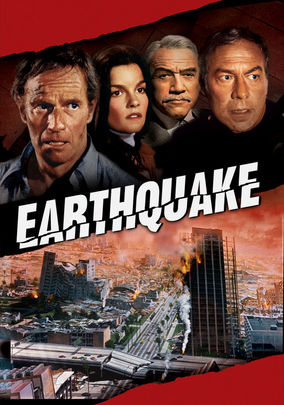
Earthquake-1974

Earthquake-1974

Director Mark Robson

Starring Charlton Heston, Ava Gardner

Top 250 Films #144

Scott’s Review #407
60030175

Reviewed June 2, 2016

Grade: B+

One of the several disaster films to populate film screens in the early to mid-1970s, Earthquake is one of the “main four” blockbusters (The Poseidon Adventure, The Towering Inferno, and Airport being the others), that still resonate with viewers in modern times and are nostalgic to watch.

One might argue that the aforementioned few largely influenced Earthquake since it was the last of the group to be filmed.

Certainly, the influence is apparent.

Earthquake is a classic, traditional, disaster film containing many stock characters (or types) and is an ensemble piece- as disaster films always are- frequently containing stars of yesteryear attempting exposure in the modern cinema.

The gender roles in Earthquake are quite mainstream for the day as the females are all clearly  “damsels in distress” types and the men are portrayed as the heroes.

The action begins as we witness a Los Angeles-based middle-aged couple (the central couple if you will) engaging in a dispute.

Charlton Heston and Ava Gardner play Stewart and Remy Graff, an affluent couple, a former football star, she a boozy socialite. Her father is the wealthy Sam Royce, played by Lorne Greene. Stewart is carrying on an affair with a young actress, Denise Marshall, creating a soap opera-style romantic triangle, adding drama to the film.

We meet other characters who round out the character’s stories- LAPD Sgt. Slade (George Kennedy) shares a flirtation with Rosa (Victoria Principal), while drunkard Walter Matthau and evil kineval character Richard Roundtree provide comic relief.

These stories are merely filler until the inevitable earthquake arrives to ‘shake’ things up.

The earthquake is the main character in the film just like the tidal wave, the fire, and the airline peril are in the other same genre films.

The character’s trivial relationships soon take a back seat to the action as the earthquake shatters the city in subsequent onsets and aftershocks, destroying buildings and resulting in many deaths.

The very lengthy main earthquake sequence is second to none and hovers around the twenty-minute mark. We see many characters in peril. The scene goes on and on but is hardly redundant.

The scene is masterful and well done. The effects, cinematography, and visuals alone hold up well today and must have been breathtaking circa 1974.

In one particularly thrilling scene, a group of office workers on the thirtieth floor of a skyscraper desperately try to scramble to the elevator as the building shakes and shimmies. One businessman shoves a secretary out of the way and selfishly immerses himself in the crowded elevator as others desperately pound on the elevator door to escape.

Things do not end well for the folks on the elevator as bolts loosen and the car crashes to the ground. An animated blood splat fills the screen in a lighthearted, comical way.

The film wisely does not take itself too seriously.

As fantastic as the destruction sequence is, Earthquake is not a film without a few flaws, mostly from a character standpoint.

Unbelievable is Heston playing Greene’s son-in-law and Gardner are assumed to be young enough to be his daughter- they appear to be around the same age.

A strange character, Jody, a store clerk, suddenly dresses as a soldier, wearing a wig, following the destruction and, assumed to be gay by thugs, is teased, which prompts him to shoot them with a machine gun. He subsequently becomes obsessed with and nearly rapes Rosa.

The sub-plot seems uneven and very unnecessary.

With spectacular special effects, Earthquake is a must-see disaster film with a slightly downcast, hopeless tone. It does its job well- it entertains, thrills, and features an all-star cast of former Hollywood elite and a few rising stars.

A fun time will be had.

Oscar Nominations: 1 win-Best Sound (won), Best Art Direction, Best Cinematography, Best Film Editing

Hello, Dolly!-1969

Hello, Dolly! -1969

Director Gene Kelly

Starring Barbra Streisand, Walter Matthau

Scott’s Review #1,273

Reviewed July 5, 2022

Grade: B+

I was surprised by my reaction to Hello, Dolly! (1969), a musical comedy starring the brilliant Barbra Streisand in only her second film role.

The songs are tailor-made for the diva’s vocals and are the follow-up to her Oscar-winning turn in Funny Girl (1968), made just a year earlier.

The film is enjoyable, with enough songs to hum along to, but it suffers mightily from miscasting Streisand in a role much too old for her and a ghastly lack of decent chemistry between the leads.

Nevertheless, the memorable and outstanding dinner scene toward the conclusion of the film makes the overall effort worth the wait and bumps it up to a generous B+, up from a tepid B.

The excellent supporting players helped save Hello, Dolly! from mediocrity, since I felt much more invested in their story than in the lead’s.

Still, based on the synopsis and talent potential, I was anticipating a solid A rating, but this was not to be, as Hello, Dolly! brought the once-reliable musical comedies of the 1950s and 1960s to a crashing halt as 1970 approached.

The time is the 1890s in New York City and Yonkers, New York, as the bold and enchanting widow Dolly Levi (Streisand) is a socialite-turned-matchmaker, though she yearns for her own love life.

Her latest client is the grumpy but wealthy Horace Vandergelder (Walter Matthau) and a young artist named Ambrose (Tommy Tune), who is in love with Horace’s niece, Ermengarde (Joyce Ames).

Dolly has secret romantic designs on Horace and is determined to land him, while Ambrose and Ermengarde have little to do.

Dolly’s meddling soon involves Horace’s employees, Cornelius (Michael Crawford) and Barnaby (Danny Lockin), who become smitten with a New York hatmaker, Irene (Marianne McAndrew), and her ditzy assistant, Minnie (E.J. Peaker).

For starters, anyone who has seen or knows the history of the 1960s stage version of Hello, Dolly! knows that Carol Channing portrayed the role and should have been in the film.

She is so well known for the role that she won a Tony and reprised it many times during her storied career, becoming far more famous than Streisand ever was for the role.

Streisand was only twenty-six when she made Hello, Dolly!, and is too youthful for the matronly role, despite the help of makeup and costumes. This isn’t very pleasant because the main reason Streisand was cast was that her career was taking off.

The other glaring problem is that there is no chemistry between Streisand and Matthau, and it’s unclear why Dolly is even romantically interested in Horace, aside from perhaps his money.

Needless to say, he is too old for her.

There is no rooting value for the couple at all, and a fun fact is that the two stars hated each other during filming. This provided a chuckle or two.

All is not lost, though, because the supporting foursome of Cornelius, Barnaby, Irene, and Minnie steals the show. The hijinks between the characters as the boys struggle to figure out how to pay for a lavish champagne dinner for the girls is physical comedy at its finest.

The lavish dinner scene set at the Harmonia Gardens Restaurant saves the film.

Dripping with a beautiful set design, bright red velvet decor, and perfect choreography, the highlight is an adorable rendition of the title song between Streisand and Louis Armstrong.

The sequence is so great that it almost makes me forget about the missteps surrounding the rest of the film.

Director and actor Gene Kelly is most known for starring in An American in Paris (1950) and knows his way around a musical or two. He does wonders with all facets of the production, but can’t be blamed for the casting choices.

Surprisingly, Hello, Dolly! (1969) received seven Academy Award nominations and won three. This assuredly is a result of a conservative tendency by the Academy members who worshipped the once-mighty musical genre.

Unfortunately, the genre limped into the edgier 1970s and would remain, for many years, more or less obscure.

Oscar Nominations: 3 wins-Best Picture, Best Art Direction (won), Best Cinematography, Best Costume Design, Best Film Editing, Best Score of a Musical Picture-Original or Adaptation (won), Best Sound (won)

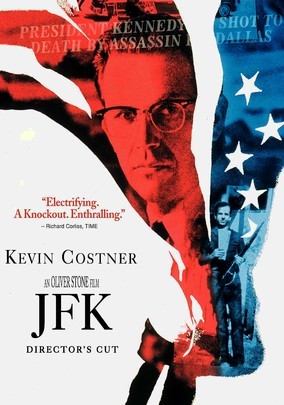
JFK-1991

JFK-1991

Director Oliver Stone

Starring Kevin Costner, Tommy Lee Jones

Scott’s Review #536

60031474

Reviewed December 4, 2016

Grade: B+

JFK (1991) is a very well-made film but must be taken with a grain of salt, as reportedly many liberties were taken by the director, Oliver Stone, and the film can be open to interpretation as to what is true and what is embellished.

At three hours and twenty-six minutes, the film is of epic proportions.

The film recounts the events leading up to the assassination of President John F. Kennedy through the eyes of a former District Attorney from New Orleans, James Garrison, played by Kevin Costner.

Garrison filed charges against New Orleans businessman, Clay Shaw (Tommy Lee Jones), and in his view, was in cahoots with Lee Harvey Oswald to kill the president.

Stone suggested that President Lyndon B. Johnson was involved in the coup, which led to much controversy indeed.

The plot is quite intricate and, at times, tough to follow, but the editing techniques alone are impressive. I loved the authentic, real-life, footage that Stone immerses throughout the film.

As we know, the assassination, in 1963, was tragic and fraught with controversy that still abounds today.

Stone was wise to make a film of this caliber despite the lack of clarity of what is true and not true. I guess we may never know.

Oscar Nominations: 2 wins-Best Picture, Best Director-Oliver Stone, Best Supporting Actor-Tommy Lee Jones, Best Screenplay Based on Material Previously Produced or Published, Best Original Score, Best Sound, Best Cinematography (won), Best Film Editing (won)