Category Archives: Luchino Visconti

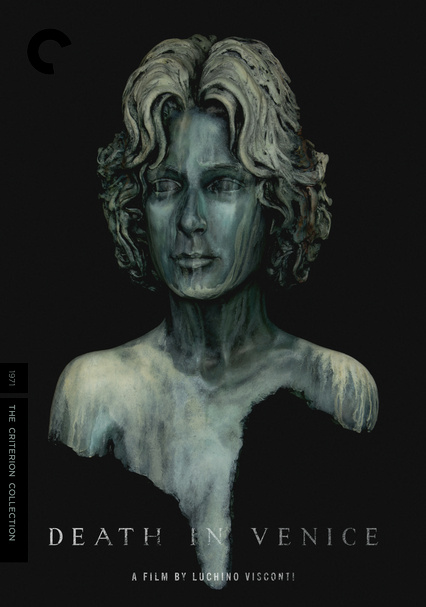
Death in Venice-1971

Death in Venice-1971

Director Luchino Visconti

Starring Dirk Bogarde, Björn Andrésen

Top 250 Films #248

Scott’s Review #1,014
Reviewed April 22, 2020

Grade: A

Death in Venice (1971) is a haunting and tragic story of a depressed middle-aged man who becomes obsessed with a fourteen-year-old Polish boy while on holiday in Venice.

The story, on the surface, is dark and dour, not for the judgmental or the closed-minded. With a deeper dive and a haunting musical score, the film provides beauty and impressionism.

The film is based on the novella Death in Venice by German author Thomas Mann, published in 1912 as Der Tod in Venedig.

Gustav von Aschenbach (Dirk Bogarde) is a lonely composer who travels to Venice for health reasons and a recipe for recovery. His maladies are unclear at the start, but are assumed to be sent to the picturesque city as a form of therapy.

While enjoying a tranquil holiday, he spots Tadzio (Björn Andrésen), a stunning, youthful beauty staying with his family at the luxurious Grand Hôtel des Bains, just as Gustav is.

Their encounters run rampant as they are viewed by the audience from afar, but never speak to each other.

This is the brilliance of Death in Venice. A more standard approach may have been to make the story more forceful.

If Gustav had approached, harassed, or even molested Tadzio, the direction of the film would have vastly changed, and he would have been deemed a pervert.

Suddenly, the film would have been about a pedophile preying on a youngster, rather than incorporating a beautiful subtext of longing and unfulfilled passion.

The masterful classical numbers that open and close the film help to achieve this mindset.

The controversial subject matter, still taboo by today’s progressive standards, is not gratuitous but is quite obsessive. Worthy of mention is that Gustav’s plight begins harmless enough as he appreciates a beautiful image, almost like gazing at a sculpture- think Michelangelo’s David- since we are in Italy.

But when he begins to follow Tadzio and see him more and more, his desperation increases as his health deteriorates. For a while, it is unclear whether the boy even realizes he is an object of affection. It is Gustav’s feelings and emotions that are most explored.

As a side story, the city of Venice is gripped by a cholera epidemic, and the city authorities do not inform the holiday-makers of the problem for fear that they will flee the vital city.

In 2020, amid the vicious COVID-19 pandemic gripping the world, this classic film takes on a whole new importance. As Venice officials downplay the epidemic while tourists increasingly fall ill, a modern realism is conjured for the audience.

Death in Venice, as the title should make clear, is not a love story; otherwise, it would be called Love in Venice. Gustav’s lust for Tadzio is unrequited. Neither is Gustav’s sexuality clear, though he is assumed to be bisexual.

In one of the film’s saddest scenes, also the finale, Gustav lounges on the sandy beach in ill health, dressed in an improper white suit. He sees Tadzio playfully frolicking with an older boy, and afterward walks away and turns back to look at Gustavo.

As Tadzio outstretched his arms toward the water, Gustav did the same as if he was enveloping the boy. The moment is breathtaking.

Many symbolic and meaningful scenes occur, like when Gustav visits a barber who insists he will return his customer to his youth. The results are ghastly.

Dyeing his grey hair black, whitening his face, and reddening his lips to make him look younger leaves a macabre, somber image of a man feebly attempting to turn back the hands of time, something we can all relate to. His heavily made-up face is meant to hide his insecurities.

Incorporating an ingenious mix of beauty, tragedy, obsession, and loneliness, Italian director Luchino Visconti crafts a brilliant and painful dissection of human emotion.

The subject matter of Death in Venice (1971) will not appeal to all viewers. Still, those brave enough to traverse the sometimes-rocky waters will find an underlying treasure and a meaningful cinematic experience.

Oscar Nominations: Best Costume Design
The Leopard-1963

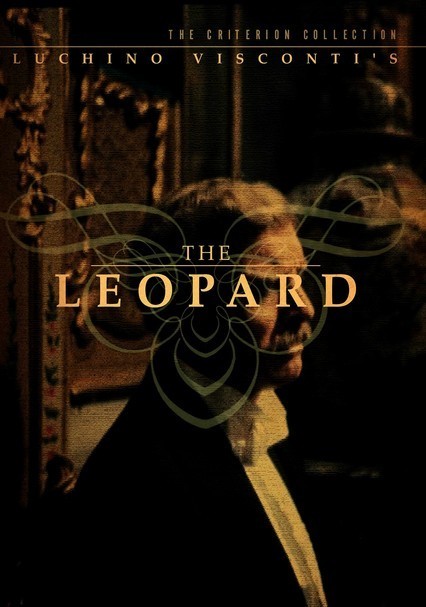
The Leopard-1963

Director Luchino Visconti

Starring Burt Lancaster, Claudia Cardinale

Scott’s Review #991

Reviewed February 18, 2020

Grade: A

One of the great works in cinematic history, I preface this review by stating that I viewed the English dubbed version of the brilliant The Leopard (1963) starring Burt Lancaster and Claudia Cardinale.

This version is considerably shorter, at two hours and forty-one minutes, than the Italian version, which is three hours and five minutes.

As grand as the former is, my hunch is that something is lost in translation with the latter. The English version has no subtitles and is available only on DVD, so the film is difficult to follow but is rich in texture.

An interesting tidbit is that the film surgery was performed without director Luchino Visconti’s input – the director was unhappy with the editing and the dubbing. This point is valid since some voices are Italian and French, sounding too American and unauthentic.

Admittedly inferior, the English version is nonetheless extravagant and lovely on its own merits, though I would die to see the original version if it were available.

The time is during the 1860s, when the tumultuous era affected Italy and, more specifically, Sicily. Prince Don Fabrizio Salina (Lancaster) is at a crossroads between holding onto the glory he once knew and accepting the changing times, welcoming a more modern unity within the country.

A new mayor surrounds him, Don Calogero Sedara (Paolo Stoppa), who has a gorgeous daughter, Angelica (Cardinale).

He intends to marry Fabrizio’s French nephew, Tancredi Falconeri (Alain Delon).

The film dissects the changing times in Italy.

The visual treats for the viewer are astounding and by far the best part. The lovely, palatial estates are gorgeous, with decorative sets, bright and zesty colors, and meals displayed during parties that captivate audience members.

The costumes are state-of-the-art, and each frame can easily be a painting on a canvas. A tip is to pause the film, study it, and immerse yourself in its style.

Many film comparisons, both past and yet to come, can easily be made when thought about. An Italian Gone with the Wind (1939), if you will, with Angelica as Scarlett and Tancredi as Rhett (okay, the chemistry is not quite the same, but similarities do exist), and Concetta as the long-suffering Melanie, the characters can be compared.

The grand ball, the costumes, and the ravaged country are more prominent comparisons.

Nine years after The Leopard, a little film entitled The Godfather (1972) would change the cinematic landscape forever.

Director Frances Ford Coppola must have studied this film, as there are plentiful scenes of the Italian landscape and the culture in which both are immersed. Even snippets of the musical score mirror each other.

What a grand film to borrow and cultivate from!

Despite all the beautiful trimmings that make The Leopard a masterpiece, the film belongs to Lancaster in the best role of his career. The hunk in 1953’s From Here to Eternity, as the Prince, he is aged to perfection, distinguished-looking with graying sideburns.

The film is an epic extravaganza, and the actor leads the charge, carrying the film. He is a stoic man, but not without fault and emotion, wearing his heart on his sleeve, realizing that he must adapt to the changing times. We feel his quandary and embrace the character as a human being.

Attention-paying fans must be forewarned that the plot is basic and complex because of the absence of subtitles; however, the story is not highly complex.

The story is about how the Prince maneuvers his family through troubled (and changing) times to a more secure position. This is the overlying theme of the film.

Suffering from dubbing and quality control issues can do nothing to ruin a spectacular offering that is a cinematic gem and testament to the power of The Leopard’s (1963) staying power.

I eagerly await the day when the traditional Italian version can be found and discovered. It will be a treat to eat.

Until then, the film is a historical epic that can be appreciated for the dynamics and importance it so richly deserves.

Oscar Nominations: Best Costume Design, Color