Celeste and Jesse Forever-2012

Celeste and Jesse Forever-2012

Director Lee Toland Krieger

Starring Rashida Jones, Andy Samberg

Scott’s Review #421

70227647

Reviewed June 19, 2016

Grade: D

Celeste and Jesse Forever (2012) was a major dud for me.

I am not a fan of romantic comedies, but since the film received a nomination for an Independent Spirit Award for Best First Screenplay, I decided to watch it.

I can’t understand why this film was nominated for that award. Perhaps someone knows someone who knows someone?

There is nothing impressive about the writing whatsoever.

It’s a tried-and-true romantic comedy formula: a couple comes together, the couple splits, the couple reunites, throw in some misunderstandings for good measure, and that is pretty much the film.

The central characters and supporting characters are either dull, annoying, or both.

There is nothing loathsome about the movie, but rather, it’s your standard-by-the-numbers romantic comedy that warrants no award nominations.

Bland.

Independent Spirit Award Nominations: Best First Screenplay

Janis: Little Girl Blue-2015

Janis: Little Girl Blue- 2015

Director Amy Berg

Starring Janis Joplin

Scott’s Review #420

80025570

Reviewed- June 19, 2016

Grade: B+

As a fan of Janis Joplin’s classic 1960s and early 1970s brand of classic, bluesy, rock n roll, viewing a documentary of the star’s life and times was a great experience.

The film sheds light on the mysterious rocker, gone way too soon and with undoubtedly much more to say. Janis was one of the most authentic, real performers of her time.

A big voice in a man’s world, impressive still, is that she wrote all her songs herself.

The documentary is well put together as it traverses Janis’s early days as an insecure teenager living in rural Texas. Never a beauty, Janis was insecure like most teenagers are.

She was always a pistol and prided herself on being different and outspoken, frequently ruffling feathers in her conservative town, especially given the period.

Janis preferred hanging out with males and being “one of the guys”.

An aspect I found interesting about this documentary is exploring Janis’s home life, well before she became a successful singer.

Taunted in school for being different because she was a painter and a thinker, she lived in a largely racist town and had a conflict with others who were not as progressive as she.

Janis’s sister and brother are heavily featured throughout the documentary and explains interesting tidbits about Janis’s home life and conflict with her parents.

Sadly, they forged a pleasant relationship, but never really mended fences before Janis’s untimely death.

Her relationships with other rockers of the time are explored and more than one festival performance is shared giving a glimpse of what type of performer she was. She improvised, and put her heart on the line, intense, and brutally honest.

A lost soul with enormous talent and raw capabilities, Janis Joplin is missed, but thankfully we still have her incredible music to carry on with.

Janis: Little Girl Blue (2015) is a great documentary that gives a cherished overview of the life and times of a tremendous artist.

Bully-2011

Bully-2011

Director Lee Hirsch

Scott’s Review #419

70181711

Reviewed June 19, 2016

Grade: B+

Bully is an informative, topical 2011 documentary on the bullying problem that has plagued the United States in recent years and, thankfully, has received more attention as a result.

Shockingly, bullying has resulted in several suicides, which the documentary addresses.

The documentary focuses on a handful of bullied students and tells their individual stories.

Unfortunately, the documentary says teachers and school administrators too often either don’t take the issue seriously or try to downplay it to avoid more attention.

Bullying is a nationwide problem in the United States.

I wish the producers had focused more attention on the actual bullies and their accountability, but surprisingly they did not.

This point was almost completely glossed over, and the film featured only the victims.

It would have been interesting to hear the bully’s perspective. Do they have issues at home causing them to bully? Do others bully them?

Despite this flaw, Bully (2011) is a well-made documentary that anyone with kids should see, especially teachers and school administrators.

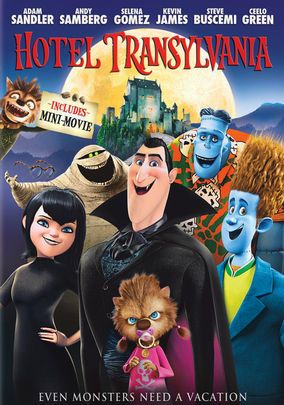
Hotel Transylvania-2012

Hotel Transylvania-2012

Director Genndy Tartakovsky

Starring Adam Sandler, Andy Samberg

Scott’s Review #418

70220028

Reviewed June 18, 2016

Grade: C-

Hotel Transylvania is a 2012 animated comedy film about an overprotective Dracula with a teenage daughter fascinated with the human world.

The premise sounded interesting to me- a gothic, spooky feature, and the animations are very well done- bright, colorful, and unique- but the plot is way too predictable, and the story is as safe as they come.

Despite the dark mood of the film, there is nothing remotely scary about Dracula or any of the other characters. Rather, they are completely cliched and quite amateurish.

The target audience is ages 10 and under, and parents might find themselves bored. I am not a parent, and I was bored to tears at one point.

It is too cutesy for my tastes.

Save for the impressive animations, Hotel Transylvania (2012) is completely mainstream fare and forgettable filmmaking.

A great story achieves mountains, and this one lacks.

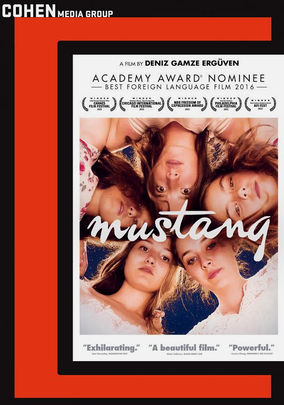
Mustang-2015

Mustang-2015

Director Deniz Gamze Erguven

Starring Güneş Şensoy

Scott’s Review #417

80058482

Reviewed June 18, 2016

Grade: A-

Mustang (2015) is a powerful, relevant, Turkish film released in 2015 and nominated for many awards, including the Best Foreign Language Film Oscar.

I fully support the nomination as I feel it is a top-notch piece.

A coming of age story but with no clichés, and a real, true-to-life feel to it. It tells of various generational beliefs and how these conflict with other viewpoints and ideas.

It also focuses on blossoming life, and sadly, tragic death.

The story tells of five beautiful young sisters living in a remote village in Turkey, a thousand long miles outside of Istanbul. The girls range in age from eight to eighteen and live with their Grandmother and Uncle Erol.

The sister’s parents had died years earlier.

The main protagonist is Lale (Güneş Şensoy), the youngest of the siblings, who is wise well beyond her years as the plot unfolds. We first meet her as she bids an emotional farewell to her teacher when she moves to Istanbul.

The film is told largely from Lale’s point of view, but each of the girls plays an important role.

As the girls play an innocent game in a lake with a group of boys, the game causes a scandal in their “old world” village, and the girls are banished inside the house by their Grandmother and Uncle, who fear their progressive ideas will hurt and shame them.

The main crux of the story is the conflict between different generations and the yearning of the girls to be free and independent, both sexually and intellectually.

Their older relatives, and others in the town, prefer the old ways and are prudish.

The oldest daughters enter into arranged marriages, while the younger ones fear the same will soon happen to them.

The film wisely does not portray these conflicts in a clichéd way or make them over-obvious.

Rather, the film feels real, fresh, and like a slice of small-town Turkish life. Istanbul is mentioned as a paradise of open-minded thinkers and progressive ways, and “the place to be”.

The girls fear life in the doldrums, cooking and cleaning for their men, married off to older men without any love.

It is unclear if the Uncle is molesting any of the girls- the film alludes to it, but the point is not made obvious. What is clear, though, is the girl’s desire for sexual freedom, experimentation, and love.

They are modern thinkers.

The young actress who plays Lale is a marvel. So natural, earnest, and clever, she befriends an older man who teaches her to drive and they embark on a sweet friendship.

The film is shown through Lale’s eyes and her reactions to situations. Knowing nothing of sex, she sneaks a peek at a sex education book and is fascinated by her older sister’s sex discussions.

The ending leaves events open to interpretation, and I believe happiness awaits those featured at the conclusion.

Mustang (2015) is a wonderful film, filled with truth, conflict, great acting, and food for thought. A must-see for foreign language film lovers.

Oscar Nominations: Best Foreign Language Film

Independent Spirit Award Nominations: Best International Film

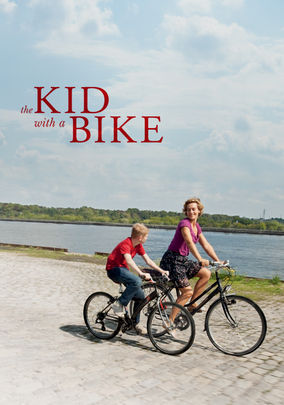
The Kid with a Bike-2011

The Kid With A Bike-2011

Directors Jean-Pierre Dardenne, Luc Dardenne

Starring Thomas Doret

Scott’s Review #416

70189306

Reviewed June 18, 2016

Grade: B

The Kid with a Bike is a small French film from 2011 that has received acclaim and recognition worldwide.

The film tells the story of a troublesome young boy abandoned by his struggling father and the various dramas that unfold.

I found the film somewhat disappointing, as I expected a bit more than I got.

Throughout the very short one hour and twenty-seven-minute run-time, the young boy broods and defies either authority or his caregivers, or fights with various people he encounters as he attempts to find his father.

The boy bonds with a local hairdresser who takes him in and is interesting, but her motivations are never made clear beyond being kind.

Why would she take in a strange kid? We don’t learn much about this character, and that is a shame.

One element toward the end of the film was shocking and well done, but overall I expected something a bit deeper from this movie, given all the praise surrounding it.

Independent Spirit Award Nominations: Best International Film

The Perks of Being a Wallflower-2012

The Perks Of Being A Wallflower-2012

Director Stephen Chbosky

Starring Logan Lerman, Emma Watson   

Scott’s Review #415

70243461

Reviewed June 18, 2016

Grade: A-

The Perks of Being a Wallflower (2012) is a coming-of-age gem of a film.

It reminds me of a strange combination of The Ice Storm (1997), Donnie Darko (1999), and American Beauty (1999), but a bit more straightforward and less weird than those films.

Perhaps with a bit of The Breakfast Club (1985) thrown in for a lighter touch.

This movie felt real to me, not like the typical high school schmaltz usually crowding cinemas these days. It’s dark at times but also humorous and well-written.

Each teen in the group of friends has demons to face, and the characters are complex and intricately written. All are insecure in some form, and many teen issues are addressed in a mature, sensitive way.

It’s nice to see Emma Watson breaking away from her Harry Potter image.

The Perks of Being a Wallflower (2012) is a character-driven treat worth seeing.

Independent Spirit Award Nominations: 1 win-Best First Feature (won)

Robot & Frank-2012

Robot & Frank-2012

Director Jake Schreier

Starring Frank Langella

Scott’s Review #414

70227654

Reviewed June 18, 2016

Grade: C

Robot & Frank (2012) is one of those films that leaves me with a “meh” reaction after I’ve seen it.

It’s not that it’s a bad movie, but there’s nothing particularly special either- it is quite ordinary and rather forgettable after the credits have rolled.

The premise, on paper,  seems novel: a future with robots that grow attached to humans. Unfortunately, the movie did not live up to the idea.

I was hoping for an interesting 2001: A Space Odyssey (1968)- type robot idea (HAL), but I got nothing like it.

I’m a big fan of Frank Langella, and I felt he was the main attraction in this movie.

On a side note, why is Susan Sarandon suddenly playing every meaningless supporting role these days? Another wasted role. She deserves better.

Several plot points had no follow-through, and the ending, while not exactly predictable, was nothing spectacular.

Meh.

Independent Spirit Award Nominations: Best First Screenplay

The Sessions-2012

The Sessions-2012

Director Ben Lewin

Starring John Hawkes, Helen Hunt

Scott’s Review #413

70209251

Reviewed June 18, 2016

Grade: B-

The Sessions (2012) is a cute, sentimental type film that is pleasant but not much more.

I found the film to be a bit safe, although Helen Hunt’s full-frontal nude scenes are surprising to me and quite brave of the actress. I’ve never been much of a Helen Hunt fan and I have always found her to be overrated, but her performance is very good.

I felt, for the subject matter, the film is too sentimental and too Hollywood, though I do admit to enjoying it.

It might have been grittier and the characters explored a bit more though.

I did not enjoy William Macy’s silly priest character. His character seems rather unnecessary to the rest of the film and has no real point except being the unnecessary moral compass.

The dynamic between John Hawkes and Helen Hunt’s characters is the best part, otherwise, The Sessions (2012) is a mediocre offering.

Oscar Nominations: Best Supporting Actress-Helen Hunt

Independent Spirit Award Nominations: 2 wins-Best Male Lead-John Hawkes (won), Best Supporting Female- Helen Hunt (won)

Life of Pi-2012

Life Of Pi-2012

Director Ang Lee

Starring Suraj Sharma

Scott’s Review #412

70213509

Reviewed June 18, 2016

Grade: B

Life of Pi (2012) is a visual masterpiece. It’s a beautiful piece of filmmaking and a pleasure to watch.

Several majestic scenes, mostly in the ocean sequences, will leave you in awe.

I did not see this movie in 3-D, so I am unsure what difference, if any, it would have made. A good portion of the film is CGI-laden, which I am typically not a fan of, but in this case, it works wonders.

What an adventure the main character has!

The actual story and the acting are nothing special and have been done before, and are slightly stereotypical, if truth be told, though I did enjoy the ending.

Life of Pi (2012) is based on a novel and is a wonderful adventure tale, one made very, very well.

The main reason to see it is its Direction (Ang Lee) and the visual spectacle.

Oscar Nominations: 4 wins-Best Picture, Best Director-Ang Lee (won), Best Adapted Screenplay, Best Original Score (won), Best Original Song-“Pi’s Lullaby”, Best Sound Editing, Best Sound Mixing, Best Production Design, Best Cinematography (won), Best Film Editing, Best Visual Effects (won)

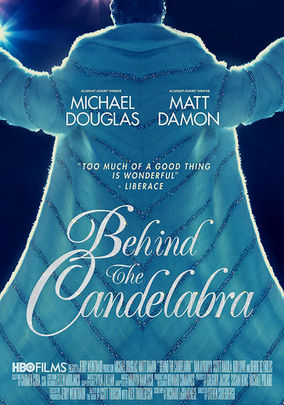
Behind The Candelabra-2013

Behind the Candelabra-2013

Director Steven Soderbergh

Starring Michael Douglas, Matt Damon

Scott’s Review #411

70274808

Reviewed June 18, 2016

Grade: A

I thoroughly enjoyed this HBO film about Liberace, whom I was too young to know much about before seeing it.

The film fully explores the excesses of his lavish lifestyle.

The standouts are Michael Douglas and Matt Damon, who are both exceptional in their portrayals of Liberace and his young lover. At times, both are unrecognizable and fully embody their characters.

I can’t attest to the story’s absolute truth, but the HBO film does a nice job of mixing joy, passion, heartbreak, sadness, and competition throughout.

The story undoubtedly bears a likeness to many Hollywood troubled relationships past and present.

Ex Machina-2015

Ex Machina-2015

Director Alex Garland

Starring Domhnall Gleeson, Alicia Vikander, Oscar Isaac

Scott’s Review #410

80023689

Reviewed June 17, 2016

Grade: B+

Ex Machina (2015) reminds me of another recent science-fiction film, Her (2013), with more of a female empowerment edge. The latter is more of a romantic drama with undercurrents of love.

In contrast, Ex Machina has a cynical tone and elements of imprisonment and psychosis, even narcissism.

The film features excellent visual effects and a futuristic mystique, making it a successful treatment.

Directed by first-timer Alex Garland, who could very well be a director to watch rise the ranks with subsequent projects.

Young, fresh-faced computer programmer, Caleb Smith (Domhnall Gleeson), wins a week-long trip to remote Alaska, to spend it with his mysterious boss, Nathan Bateman (Oscar Isaac), the CEO of a software company.

Caleb must arrive at the luxurious, sprawling estate via helicopter as it is in a deserted area of the world and exists on mile after mile of the gorgeous landscape.

Nathan, played by Oscar Isaac, is both charismatic and creepy. He lives alone save for a beautiful Asian servant named Kyoko, who speaks no English, and a female robot named Ava (played by rising star Alicia Vikander).

Caleb’s assigned task is to study Ava and determine whether he can relate to her as a human while knowing she is a robot. It is soon revealed that Nathan plans to reprogram Ava, thereby killing her. Caleb schemes to rescue Ava, but is all that it seems?

With a cast of only four principals, it is not difficult to assess each character and their relations with each other. Caleb is the least complex of the four or rather, the one with motivations readily apparent.

The others are shrouded in mystery. Caleb expects a fun getaway but instead finds himself amid experimentation. Is Nathan’s desire to perform psychological tests on Ava, by way of Caleb, genuine?

The audience can sense immediately that there is something off about Nathan. Merely in his thirties, how could he amass such financial success so soon?

Why is he, a servant, and a robot the only inhabitants? Why does the helicopter pilot refuse to venture further than the drop-off point?

Some of these questions are answered, some remain unanswered. It is part of what makes the film mysterious and complex. Could Ava be the one doing her share of experimentation or manipulation?

Alicia Vikander deserves much praise for her role as Ava and some would argue that the talented young actress should have won the Best Supporting Actress trophy for this role instead of for The Danish Girl (2015).

I’m not sure I would leap to the same conclusion, but she does amass a ton of subdued emotion as Ava. She is complex and profound. She longs for exposure to the outside world and would love to cross a crowded street to see all the faces and different types of people.

Like Nathan, there is also something not right about Ava.

Is she calculating or simply soulful? But how can she be, she is a robot.

I compared her to another famous film robot/computer- HAL from 2001: A Space Odyssey (1968).

Along with Vikander, Isaac steals the film in a role that mixes creep with genius. He sits around his estate in comfy clothes a blue-collar man might wear drinking beer and studying Ava. He has sexual relations with his servant and she is expressionless.

He does not treat her well so we do not root for his character. At the same time, his character is tough to read. Is he experimenting on Ava or Caleb?

Visually, Ex Machina has a sleek blend of modern, crisp CGI, not at all usurping the story. There is also a scene of bloodletting that chills as much as any good horror film would.

Garland was heavily influenced by 2001: A Space Odyssey and Altered States (1980) and made the film with as little budget as possible and without outside influences that might change his vision.

I commend this and wish more filmmakers would follow suit.

Ex Machina (2015), while perhaps not perfect, could be a blueprint for what is to come from this young director.

Oscar Nominations: 1 win-Best Original Screenplay, Best Visual Effects (won)

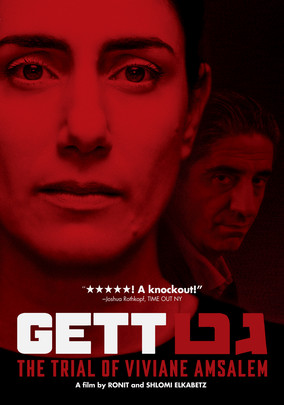
Gett: The Trial of Vivian Amsalem-2014

Gett: The Trial of Vivian Amsalem-2014

Director Ronit Elkabetz, Shlomi Elkabetz

Starring Ronit Elkabetz, Simon Abkarian

Scott’s Review #409

80013601

Reviewed June 9, 2016

Grade: B+

Gett: The Trial of Vivian Amsalem (2014) is the third in a trilogy of films focusing on the title character Vivian Amsalem and her unhappy marriage to her husband, Elisha.

The unhappiness is hers and he sees no reason to end the marriage.

It is a film about culture, religion, and modern views versus traditional ones.

I was unaware the film was a trilogy until after I finished watching and began conducting some research as I prepared to review it. It is not required to view the first two films  (To Take A Wife and Shiva) to enjoy this film as I suspect they are each a chapter not continuations.

Vivian is a tall, beautiful woman, though she is weary and haggard when we first lay eyes on her in the stifling courtroom, where she sits and spends much of her time. She has long dark hair and intense eyes- she appears driven and quite modern and of liberal thinking, a feminist perhaps.

She is frustrated because her yearning for an independent life has been thwarted by her husband. She would like a divorce after over twenty years. Having met him at age fifteen, his is the only life she has known.

Since he will not agree to the divorce, the courts will not grant her the decision she wants. Since he has not abused her and gives her everything she desires, the judges have no grounds to grant her the divorce.

This is the conflict of the film.

Gett: The Trial of Vivian Amsalem has a clear religious message, which is an interesting component for an American viewer.

How simple it is to divorce somebody in Western civilization and how different the measure is in Israel. Jewish religious law is quite restrictive.

Vivian faces an enormous ordeal. She does not love her husband yet cannot end her loveless marriage. The film is fraught with a clear conflict and one’s interpretation of right and wrong.

Almost set as a play since the film has merely one set- the courtroom- this aspect is effective at showing frustration, exasperation, and even rage.

All the while, Gett, has a sly sense of humor, and I could not help but smirk at a few of the supporting character portrayals.

I sensed a Pedro Almodovar (a famous Spanish director) influence in the quirky, sly writing, and his themes of political freedom.

Character after character is called into the courtroom to testify as witnesses to Vivian and Elisha’s happy marriage- each attorney looking for evidence to cement their client’s point of view.

In contrast, to Vivian’s fierce independence, a mature neighbor couple of Vivian and Elisha heralds them as the perfect couple. Soon, the wife is grilled revealing that she is submissive to her husband and lives in an entirely different world than Vivian.

To be critical, the film drags slightly, but I wonder if this is the director’s intent. The tone is a suffocating one- Vivian and her attorney languish in the same courtroom for five long years as delay after delay occurs.

Throughout the numerous testimonies, an accusation is raised that is an interesting component of the film and an aspect I wondered about very early on- was an affair brewing between Vivian and her attorney? It is alluded to, but never confirmed, rather shrouded in mystery.

One wonders.

From an acting perspective, Ronit Elkabetz is fantastic, I am saddened she did not receive an Oscar nomination, but some buzz about this actress was expressed when the film was released. Her scene of pure rage towards the end of the film is brilliant. All the years of bottled-up emotions come flowing out in one great performance.

Gett: The Trial of Vivian Amsalem (2014) is an intense experience in tedium, frustration, and ultimately rage, but is never stuffy or too serious as evidenced by humorous supporting characters. It is for patient film fans seeking an emotional, human experience.

The Way He Looks-2014

The Way He Looks-2014

Director Daniel Ribeiro

Starring Fabio Audi, Ghilherme Lobo

Scott’s Review #408

70307130

Reviewed June 4, 2016

Grade: B+

The Way He Looks is a foreign language film (Brazilian) from 2014 that tells a coming-of-age story about a blind high school student, who develops feelings for the new kid in town. The other boy has rapidly become his new best friend and the boys, while unsure of the other’s sexual preferences, fall in love.

The film is a charming story about a modern romance, now becoming more prevalent today.

Leonardo (known as Leo) is a blind high school student struggling to be his true self.  His close friend Giovana (Tess Amorim) is in a similar situation as neither has ever been kissed, yet they feel adolescent desires- they are lonely but share a close bond.

Regardless of his disability, Leo is quite independent, despite having parents who border on smothering. One day, a new student named Gabriel volunteers to sit behind Leo in class and strike up a friendship.

Giovana, unaware of Leo’s sexual preferences, develops a crush on Gabriel.

The film then tells a sweet story about a young, blossoming, romance. The main characters do not face particularly tough obstacles from outside sources, but rather from each other as their feelings and emotions are fragile.

In addition to romance, the film focuses on the friendships between Leo, Gabriel, and Giovana.

The Way He Looks is a warm film. It is sweet, compassionate, and tenderhearted. The viewer witnesses a budding romance between two teenagers and the fact that they are both males is secondary- that is how charming the film is.

The audience will root for Leo and Gabriel because they are nice kids. Giovana, the outsider, also has a rooting factor- she is in no way a villain, nor does she harbor resentment for either Leo or Gabriel, but rather yearns for her first romance and happiness.

The film wisely does not turn her into an emotional wreck, or a psycho. Sure, she gets drunk at a party, but this is only to escape her feelings.

I recoiled at the scene after scene of Leo’s parents either fretting about something, worried sick about Leo coming home late or worried that something may happen to their son.

Relax already. Life is not meant to be spent frazzled because your son is blind.

The parents are not the strongest written characters in the film and are rather secondary characters. The case is the same for the bullies, the slutty girl, and the teacher.

The film belongs to Leo, Gabriel, and Giovana.

The supporting characters in The Way He Looks are meant to react to the central characters.

The Way He Looks is about a same-sex, young romance. Charming, not too heavy, with likable characters, who one can root for. There are no bombs, car chases, or explosions needed.

The Way He Looks (2023) is a slice of life that is simple, pure, and true.

Legend-2015

Legend-2015

Director Brian Helgeland

Starring Tom Hardy

Scott’s Review #405

80057599

Reviewed May 24, 2016

Grade: B+

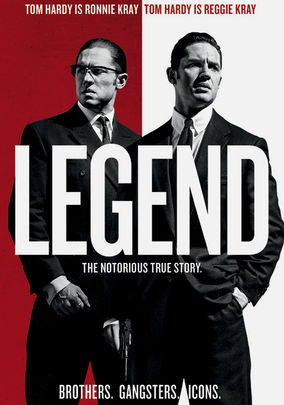
Tom Hardy is one of my favorite modern film actors (he should have won the 2015 Oscar for his riveting performance in The Revenant, in my humble opinion) and in Legend (2015) fans are treated to a dual role by the handsome Brit.

Hardy portrays Reggie and Ronald Kray, two of London’s most feared and brutal gangsters.

The film belongs to Hardy in every way, shape, and form, the locales of London are fantastic, and more than one scene is jaw-dropping violent, but the film meanders quite a bit and the vocals of Ron Kray are quite difficult to understand.

Still, impressive effort as a whole.

The time is late 1950s London. Reggie Kray, the more mainstream of the Kray brothers, is a feared member of the organized crime community.  He is coddled by his mother and can do no wrong in her eyes. This makes any relationships difficult as his mum disapproves of his mates.

He falls in love with Frances Shea, a young woman who narrates most of the film, so it is told from an outsider’s perspective. Reggie’s brother Ron has recently been released from a mental hospital and if off of his medications, is certifiably crazy, and very volatile.

He is gay and makes no bones about it.

Ron and Reggie have a love/hate relationship, and this dynamic is the most interesting aspect.

Thanks to Hardy, as the writing is not Legend’s strongest suit, we see two very different characters, even though they look alike. In the myriad of scenes shared between the brothers, it appears that two actors are playing the roles which is to Hardy’s credit.

An important scene emphasizes the relationship between the two. When a rival dares to mention Reggie’s wife’s name disparagingly, he points a gun and fires at the man’s head.

Fortunately, the gun is not loaded, so the audience breathes a sigh of relief. Yet, a worse fate awaits the victim. After the deed is done, Reggie whispers in Ron’s ear that he killed the man “because I can’t kill you”.

This means Reggie would kill Ron if he could- shocking since they are brothers. To add to this, it is implied that he would kill his brother with the same savageness as his victim.

This makes the audience ponder.

Impressive is Ron’s sexuality, especially since he is not written stereotypically. He is brutal, masculine, and hardcore. The fact that Ron Kray was a real figure is important to note. His entourage of boyfriends follows him around in dedication.

Who can blame them as his charisma oozes- think of an unstable James Bond.

The twin’s relationship is the best part of the film, but as a mob film, Legend meanders quite a bit, so much so that it becomes tough to identify what the point is, if not for Hardy.

Save for Frances, none of the supporting characters are written with interest and are all rather forgettable.

The wonderful Chazz Palminteri is wasted in the role of Angelo Bruno, head of a Philadelphia crime family and friend of the Krays. There is little meaning or interest in his role.

A mediocre story, but with leading characters with depth, makes Legend (2015) an interesting film that flies under the radar and receives little notice.

Hopefully, if nothing else, it continues the success that Tom Hardy is currently achieving in modern film.

The Girls-1968

The Girls-1968

Director Mai Zetterling

Starring Bibi Andersson, Harriet Andersson

Scott’s Review #404

Reviewed May 11, 2016

Grade: B+

The Girls is a 1968 Swedish film that is political, surreal, dreamlike, and feminist. These may seem like too many adjectives to describe a movie, but they all happen to be warranted and work to categorize it, which is tough- it is a complex film.

The film left me deep in thought about what I had just viewed- that is a positive for me.

Directed by Mai Zetterling, a woman, the film is told from a female perspective and is quite tricky to follow. However, the message portrayed is a compelling thought of a woman repressed, whether in reality or fantasy, by men.

In my attempt to describe The Girls accurately, it appears to feature a boys-versus-girls element throughout, told by the girls. The plot centers around three women: Liz (Bibi Andersson), Marianne (Harriet Andersson), and Gunilla (Gunnel Lindblom).

The women are hired to star in a touring production of Lysistrata, and each faces conflict and concern over leaving their respective families, but for differing reasons.

Liz’s husband, who is having an affair, cannot get rid of her soon enough. Marianne has recently dumped her married boyfriend. Gunilla has four children and suffers from guilt.  All of the women are very friendly with each other.

All three principal actresses are familiar to eagle-eyed Ingmar Bergman fans as each of them has appeared in numerous films of his-in very different types of roles.

Wild Strawberries and The Seventh Seal (both 1957) feature these actresses.

The women go on tour and have various surreal experiences based on the play in which they are stars. The film, made in black and white, has very overexposed cinematography. The blacks and the whites look very sharp, and this is no doubt done deliberately.

On the surface, it would appear that the women hate men and yearn to be free of them. Is that the point of the film? It seems to go in other directions as well. Do they hate their lives and feel confined with men and free without them, when they are touring their play?

How do they feel about their children? Do they miss them on tour, love them, resent them, or perhaps a bit of each? They yearn to be free of restraint.

We are treated to numerous scenes that seem to be a dreamlike state or a fantasy of one of the women. One runs through the forest and comes upon a grizzled, dirty child on the ground. Is it hers? She then sees her husband sitting in a living room chair in the middle of the forest.

The symbolism resonating through The Girls is countless. We also see the women fantasize about a handsome, young man. Are they tired of the doldrums- looks and otherwise- that their husbands have caused them?

Many political protests occur throughout the film. In one, the women march in unison- Nazi-style and chant. In another, the women lead what appears to be a charge of women-suffragette style, until the women start attacking each other and punching and kicking each other in the streets.

These scenes and countless others are tough to analyze, but perhaps this is the point. I decided to escape into the film and not try to figure out what everything meant.

Fantastic to see the exterior scenes shot in Stockholm, Sweden, which reminds us what a liberal, democratic city it is. Yet the women are repressed. Made in 1968, during the sexual revolution, the film’s timing is perfect.

The Girls (1968) left me pondering the story and the viewpoint, and I will need further viewings for the film to sink in more successfully and for me to get it, if I ever do, but I enjoyed it nonetheless.

The film is the kind of film that requires further viewing to understand. I look forward to watching this film again, which is high praise.

Bone Tomahawk-2015

Bone Tomahawk-2015

Director S. Craig Zahler

Starring Kurt Russell, Patrick Wilson, Richard Jenkins

Scott’s Review #403

80075001

Reviewed May 10, 2016

Grade: B+

Bone Tomahawk is a film from 2015 that almost nobody saw or heard of, and is a unique independent horror/western hybrid. It has strong influences on Quentin Tarantino and contains an impressive cast for such a low-profile film.

Bone Tomahawk is the proverbial diamond in the rough and is worth seeing for film fans with patience enough to sit through the slow-moving pace to get to the good stuff.

It largely comes in the final thirty minutes of the film.

Notably, the film was recognized by the Independent Film Committee and received two Spirit Awards, for Best Supporting Male (Richard Jenkins), and Best Screenplay.

It won neither.

The film does not have a “star”, but rather a myriad of heavy hitters in a clear ensemble. Kurt Russell plays Franklin Hunt, sheriff of a tiny town named Bright Hope, presumably somewhere in the west (Wyoming?) circa 1890. His deputy sheriff, Chicory,  is played by Jenkins.

When drifters kill some travelers, they accidentally stumble upon a mysterious Native American burial ground and taint its contents, leaving one brutally murdered by the tribe.

The other (played by David Arquette) stumbles into Bright Hope and is immediately deemed suspicious. When he, a female Doctor’s assistant, and a young local man disappear, it is realized that they have been abducted by the owners of the burial ground, who are feared to be cannibalistic savages.

Hunt, Chicory, a foreman named Arthur (the doctor’s assistant’s wife), played by Patrick Wilson, and a local playboy played by Matthew Fox, decide to trek long terrain to find and rescue the missing.

The pace is slow and will undoubtedly turn off some folks seeking slicker, high-tech viewing, or even some CGI, but the payoff for patience is immense.

The group’s trek through the desert in pursuit of the accosted seems endless, and I did have thoughts of what the point was, but the forthcoming turn of events makes this tedium worth it.

In defense of the long plodding journey, this aspect does make the audience get to know and begin to care about the characters- some make it out alive, others are not as lucky. The fun part is finding out who does and doesn’t.

Bone Tomahawk contains one of the most gruesome scenes that I have ever witnessed in my thousands of viewed films. A male character, nude, is brutally scalped and a spear is hammered into his throat in full view of the prisoners.

As if this is not shocking enough, he is then turned upside down, split down the middle, and chopped in half, as his insides spill to the ground. The snapping sounds of his bones and the visual horror of the guts are even tough for the non-squeamish to view.

It is uncanny that Kurt Russell plays a similar character in another 2015 film, the much higher profile, The Hateful Eight. Sure, he is a bounty hunter, but the period, setting, and costumes are almost identical.

One might wonder which was made first.

Bone Tomahawk is a guy’s movie, but not in the traditional sense- there are no explosions, no unnecessary machismo, or apparent clichés.

But at the end of the day, it is a Western and the cast is mainly male. Besides the Doctor’s assistant, the only other females are wives with small roles.

The most glaring is Sean Young- given hardly anything to do in a cameo appearance. Otherwise, the Native American females, blind, deaf, pregnant, and missing appendages are the only other females in sight.

A unique hybrid of film genres, Bone Tomahawk (2015) is a clever, different experience.

I am a champion of independent film and this film is a good example of why I am. Evidently, with a stellar cast of A-list or former A-list stars banding together to make a piece of art, it seems others champion good films too.

Independent Spirit Award Nominations: Best Supporting Male-Richard Jenkins, Best Screenplay

Les Cousins-1959

Les Cousins-1959

Director Claude Chabrol

Starring Gerard Blain, Jean-Claude Braily

Scott’s Review #402

70200457

Reviewed May 5, 2016

Grade: A-

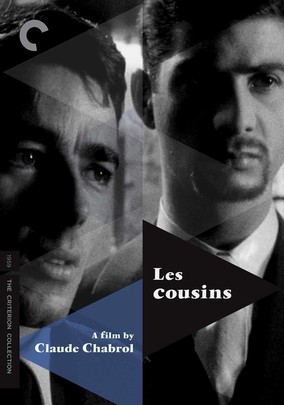
Les Cousins is a 1959 Claude Chabrol French-language film.

Made in black and white and set in Paris, the focus is on metropolitan life as seen from the perspective of one of the main characters, who is from the country and far removed from the bustle and complexities of city life.

The focal point is contrasting traits- personality, background, and otherwise. The film delves into psychological aspects that lend themselves to making the film a character-driven, thought-provoking experience.

Les Cousins is open to many interpretations. The film, therefore, has many nuances to ponder and sink one’s teeth into deep thought.

Les Cousins is about two male cousins, Charles and Paul.

They appear to be similar in age and are both law students, but they are opposites in almost every other way. Paul is the alpha male—self-centered, quick-tempered, and forceful. Living an affluent life in the heart of Paris, he has many friends, is a social butterfly, and has no filter on his criticisms and judgments of others.

On the other hand, Charles has an entirely different set of qualities. Sent by his mother to live with Paul and study for the agonizing, impending law exam, Charles is meek, quiet, and insecure.

When Charles meets Florence, a beautiful friend of Paul’s, who has a reputation for “sleeping around”, Charles falls madly in love with her, almost love at first sight, unaware of her reputation.

What follows is a strange triangle between Paul, Florence, and Charles that is laced with jealousy, revenge, and ultimately violence.

The relationships between the three principal characters are interesting to consider and are at the film’s heart.

When Paul realizes Charles is in love with Florence, does this turn of events disturb him? Does he feel sorry for Charles or elicit some perverse joy in bedding Florence in front of Charles? If so, why does he resent Charles?

Is Florence in love with Charles, or is it a guise? Does she even realize the extent of his love for her? A sexually expressive woman, she is not outlandish in her appearance and seems quite virginal to the outside viewer.

Does she enjoy the fact that the unwitting Charles sees her as pure? Does she wish that she was virginal?

Finally, the complexity of Charles’ character is mysterious. We learn that he writes letters to his mother to give updates on his studying habits and exams.

Does he harbor resentment toward his mother? Is he a “mama’s boy”? Is he overwhelmed in the city? Does he genuinely love Florence (tough to believe after one or two dates) or yearn for the freedom that she represents?

We see countless scenes of Paul and his good-looking friends engaging in various forms of merriment, usually in his modern apartment overlooking the city.

He is affluent. Is this the main reason for his popularity?

The partygoers are all well-dressed and very good-looking—sort of a fraternity party for the exceptionally tailored, if you will.

Interestingly, a female couple- appearing to be a lesbian couple- featured numerous times at the parties. Is this meant to show Paul and Parisians as open-minded and progressive?

A revolver- with only one bullet in a six-chamber gun prevalent throughout the film in a Russian roulette sequence comes into play after the film.

In the last sequence, someone is mortally wounded without ultimately revealing the ending, and we are left to ponder what is happening now.

Are the survivors lives forever changed and ruined? A knock at the door just before the credits roll leaves us wondering who is there.

My one complaint about Les Cousins is that exploring its complexities takes a long time. After the film ended, I was left pondering more than wholly engaged.

I also wondered if the pompous and over-indulgences were slightly overdone to elicit more audience reaction and contrasting elements between Paul and Charles.

A French new wave experience by one of France’s best directors, Les Cousins (1959) is a character study of three fascinating characters that leave the audience thinking about their lives past, present, and future, comparing their idiosyncrasies, actions, and thoughts to delve deeper into their psyches.

Spectre-2015

Spectre-2015

Director Sam Mendes

Starring Daniel Craig

Scott’s Review #401

80056799

Reviewed May 5, 2016

Grade: B+

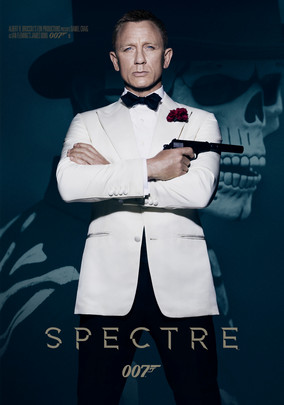
A modern treat for James Bond fans, Spectre (2015) is a slick, costly production sure to please die-hard lovers of the storied franchise.

It contains a rich history and nods to recent installments, wrapping the story arc up, a fantastic villain, and fast-paced, compelling story-telling.

It lacks an interesting lead Bond girl, a quality that detracts from the film, and what is a must for the cherished franchise.

This is the only major flaw in an otherwise fantastic film.  In typical Bond fashion, his adventures take him to London, Rome, Mexico City, Austria, and Morocco.

Speeding along in what is now the twenty-fourth Bond film, and still feeling fresh and relevant, Spectre commences where its predecessor, Skyfall, left off, mainly hot on the heels of M’s (Judi Dench’s) shocking death.

How wonderful to see her again, albeit in a videotaped message crucial to the central plot.

The new M is a male character again and portrayed by Ralph Fiennes. In the film’s sub-plot, a new character, C, comes into play as the head of the Joint Intelligence Service, who deems the 00 section outdated.

The focal point is Bond’s avenging of the former M’s death by taking down Spectre, an organization not seen in a Bond film since 1971’s Diamonds Are Forever, but once again a strong presence.

The opening sequence in Mexico City kicks off the energy of the film.

Fast-paced, and with an awesome helicopter chase/fight sequence, it is a long sequence that thrills. We watch, engaged, as it swirls and tumbles mid-air, while hundreds of spectators in a large outdoor square flee for safety.

The film then forays into the inevitable Bond song, “Writing’s On The Wall”, this time written and performed by Sam Smith.  This particular song has received mixed reviews, but I am fond of it.

This leaves the audience geared up for a wild adventure to come.

The return of the crime organization, Spectre, to the story brings a rich history and is the most interesting part. We have a rooting value since it is familiarity.

Even more pleasing is the return of Bond’s arch-enemy Ernst Stavro Blofeld, known more forcefully as “Number 1”, who has been played by such legendary actors as Donald Pleasance, Telly Savalas, and Max Von Sydow.

In Spectre, Christoph Waltz takes over the role and a major win. Waltz, a tremendous actor, plays Blofeld in a sly, wicked manner,  taunting, yet with some comedic elements.

In a compelling scene (and the first one containing Waltz), James Bond appears, hidden, at a Spectre summit.  He recoils as he recognizes the shadowed Blofeld, realizing the detrimental repercussions this will mean.

I only hope that in subsequent Bond films, Waltz returns.

Let’s discuss the Bond girls in the film.

Ironically, the small role featuring the oldest Bond girl in franchise history (aged fifty and played by the gorgeous Monica Bellucci) is more compelling than the lead Bond girl, Dr. Madeleine Swann, played by Lea Seydoux.

As Lucia Sciarra, widow of the Italian crime lord, Sciarra, there is more chemistry between Daniel Craig and Bellucci than between Craig and Seydoux.

I would have much rather seen Sciarra as the primary focus, but she is shamefully underused, appearing in two scenes only. Seydoux seems to lack energy and I noticed zero chemistry between her and Craig.

I am not sold on the new Moneypenny either, Bond’s labored sidekick and always suggested one-sided love interest, in earlier films it used to be a fun dynamic. She was a secretary, older, and their flirtation was charming, light, and fun. She was almost a mother figure to him.

There are no flirtation or romantic hints as the character has been modernized to fit the twenty-first century.

Despite this character’s misses, the film is exceptionally well-made with loads of action. Sometimes Bond films hold up well, other times they do not.

Time will tell what fate holds for Spectre (2015), but my hunch is that it will age well.

Oscar Nominations: 1 win-Best Song-“Writing’s on the Wall” (won)

Bus Stop-1956

Bus Stop-1956

Director Joshua Logan

Starring Marilyn Monroe, Don Murray

Scott’s Review #400

60004539

Reviewed April 30, 2016

Grade: C

Bus Stop is a 1956 film starring Marilyn Monroe that, while surprisingly ranking among her best roles, is, in my opinion, one of her worst films and, at present, feels dated, chauvinistic, and diminishing toward women.

Perhaps perceived as romantic and cute in 1956, the film no longer has the charm it undoubtedly had decades ago.

The film is based on a play by William Inge and, remarkably, is Monroe’s first full-fledged dramatic performance.

She plays a nightclub performer named Cherie, mispronounced “cherry” by her love interest, Beau, an immature, naïve, socially inept cowboy, unfamiliar with women, and looking for his “angel”.

He is accompanied by his friend and father figure, Virgil.

Together, they travel by bus from Montana to Phoenix, Arizona, for a rodeo. Once Beau meets Cherie, he conquers and marries her despite her resistance to his pursuits.

As a fan of Monroe’s more familiar works- Gentlemen Prefer Blondes (1953) and How to Marry A Millionaire (1953)- it is nice to see her in a dramatic role, giving her some nice range and meatier material to tackle.

In 1956, she still looked marvelous, and the sexy nightclub outfit she wore while prancing around in the film worked well.

While Monroe will never be accused of being the most excellent actress in the world, her performance in this film is to be praised. She expresses some lovely emotions.

Unfortunately, the character is poorly written, but Monroe gives it the old college try.

Another positive aspect of the film is the supporting cast.

Bus stop owner Grace (Betty Field), who has a suggested affair with the bus driver (Robert Bray), is a delight and nearly steals the show!

I found their limited screen time and limited romance more interesting and fraught with more potential than the main couple (Beau and Cherie).

Eileen Heckert is acceptable as Vera, Cherie’s waitress and confidante, though she is given little to do.

My favorite scene is at Grace’s Bus Stop as the group is stranded during a sudden winter storm. Beau and the bus driver engage in a bare-knuckles fight outdoors in the driving snow while the rest look on. The bus driver is tired of Beau’s obnoxiousness and intends to teach him a lesson.

Despite being on a soundstage, the scene feels authentic, and the snow and gusts add to its animal-like, masculine feel.

Otherwise, the film is not kind to women and, in some parts, is downright sexist. When Cherie, clearly rebuffing Beau’s advances, attempts to board a bus out of town (and alone), Beau decides to lasso her to prevent her from leaving.

In the next scene, Cherie obediently sits beside Beau on another bus to Phoenix to marry him. It is suggested that she finally gives in, temporarily, to his advances.

This film would never be made today.

Beau’s character is not well-crafted. Dumb, lower-class, and bordering on abusive to Cherie, I am perplexed as to why the audience should root for this character to obtain Cherie and ride off happily into the sunset- I certainly did not.

I would have preferred a pairing of Cherie and Virgil, who are older, sensible, and kind.

Dated, sexist, and poorly written, Bus Stop (1956) is not Monroe’s best film, but it allows an audience to see her in a dramatic role worth a viewing.

Oscar Nominations: Best Supporting Actor-Don Murray

Golden Globe Nominations: Best Motion Picture-Musical or Comedy, Best Performance by an Actress in a Leading Role-Musical or Comedy-Marilyn Monroe

Bridge of Spies-2015

Bridge of Spies-2015

Director Steven Spielberg

Starring Tom Hanks, Mark Rylance

Scott’s Review #399
80050060

Reviewed April 28, 2016

Grade: B+

Tom Hanks teams with Stephen Spielberg once again in another A-list Hollywood film.

Like Saving Private Ryan (1998), Bridge of Spies (2015) is in the historical vein. This time, the Cold War is featured; the film begins in 1957.

The camera work, the artwork, and the set decorations are second to none as the film looks and feels authentic.

As interesting as the overall result is—it felt like I was watching a well-made film—there was also something missing, which did not make it truly riveting, and that is why it received a B+ rating.

With Spielberg and Hanks on board, one will get a quality film.

Hanks portrays James B. Donovan, a Brooklyn attorney specializing in insurance law, but a wiz at negotiation and experienced with the Nuremberg trials.

He is assigned to defend suspected spy Rudolf Abel (Mark Rylance) in what is assumed to be an open-and-shut case, his guilt is considered a given.

Abel has been arrested by the FBI and is thought to be a Russian spy. They are willing to release him on the condition that he reveal Soviet contacts, but he refuses.

Meanwhile, an American pilot, Frances Powers, is captured in Soviet territory and taken hostage. To make matters more complicated, an American graduate student, Pryor, is trapped behind the Berlin Wall in East Germany and not allowed by the Germans to leave.

The pressure is on Donovan to defend Abel in the United States but to make a deal to return the three men to their respective countries.

Hanks, a great actor, is his typical stoic, capable self, and his portrayal reminds me of his role in Captain Phillips (2013), calm, well-mannered- a clear yet quiet leader.

The role is not flashy compared to other legendary Hanks roles (Forrest Gump-1994, Philadelphia-1993). The film centers around Hanks and caters to his acting style. His character is always at the forefront.

Hanks never gives a bad performance and I admire him in almost anything.

Let’s discuss the role and the portrayal by Mark Rylance in his Oscar-winning role.

Giving a very subdued, nuanced performance, he is good and low-key in what could have been an energetic, over-the-top performance if written that way, but I am not sure I would have handed him the golden statuette over a few of the other nominees in the 2015 Supporting Actor category.

This isn’t a criticism, but I am unsure if he warrants an Academy Award.

Bridge of Spies is very detail-oriented and every set piece- from late 1950s cars, clothing, hairstyles, and home furnishings is spot on.

The film was expensive to produce and no expense seems to have been spared.

The film travels from Brooklyn to the Soviet Union, to Germany, and gives off a patriotic, Americana flare, which is true to life in the given time. There was such a sense of country and community.

Nothing makes this more apparent than the distasteful glares coldness and hatred displayed by many characters towards Donovan.

To counteract this, when Donovan is ultimately more the hero, he is revered and celebrated.

As great as the film looks, there is something slightly disconnecting about it. I was left wanting more from a story perspective and feeling slightly disengaged throughout parts of it. I was never riveted or blown away despite realizing I was watching a well-made film.

This can happen if the story is less compelling than the way the film looks as with Bridge of Spies.

After I finished watching I felt that I did not need to see the film again, in contrast to truly great films where one can watch over again.

A slight mention is that Bridge of Spies is a “guy’s film”. Amy Ryan, a great actress, does all she can with the only real female role in the film in that of Donovan’s dutiful, supportive wife, a role written one-dimensionally hundreds of times.

It is a shame her character is not fleshed out. The typical worried scenes or fretting for her husband to return home to his family are purely reactionary and do not further the plot.

In this sense, the film deserves criticism for being too traditional.

Bridge of Spies is a good effort but not a tremendous film. It is the type of film I liked but did not love.

Perhaps, the names Spielberg and Hanks on the marquee had me expecting more.

Oscar Nominations: 1 win-Best Picture, Best Supporting Actor-Mark Rylance (won), Best Original Screenplay, Best Original Score, Best Sound Mixing, Best Production Design
Girlhood-2015

Girlhood-2015

Director Céline Sciamma

Starring Karidja Touré, Assa Sylla

Scott’s Review #398

80013602

Reviewed April 24, 2016

Grade: B

Girlhood (2015) is a coming-of-age foreign language, French drama that tells the story of a sixteen-year-old French girl, living in a poor area (the projects) just outside Paris.

She faces numerous conflicts and tough decisions on how to live her life. School, gangs, and romance are the main issues she tackles, as well as troubled home life.

Wisely, the film uses a female director, Céline Sciamma, which lends some authenticity to the largely female issues discussed. For all its good intentions and some interesting nuances, the film suffers from a lack of grit and has a safe feel making it less compelling than it could have been.

I felt I was watching a glossy film rather than any harsh reality.

Still, worth the effort.

Marieme is a tall, gorgeous teenager living near Paris. She struggles academically and is rejected from attending high school, instead of being sent on a vocational track to be able to find a job.

Her mother works long hours as an office cleaner, and Marieme’s abusive brother is in charge of the household. Marieme also has two younger sisters.

Upset to learn she will not be attending high school, she is approached by a gang of girls, led by Lady, who asks her to go to the city with them.

She agrees to join their gang when she realizes that her brother’s best friend, Ismael, whom she has a crush on, is friendly with the other girls. Marieme and the girls begin to while away the days by stealing, fighting, and terrorizing anyone in their path.

Partying in hotels, they make the rounds. Marieme must ultimately decide if this is the life she wants.

What I found most interesting about the film is its use of an all-black cast. Sciamma (who ironically is white) felt that the female black population in Paris is underrepresented.

This is accurate and scores point with me. I love the camaraderie among the girls. They always have each other’s backs and when Marieme fights a rival girl to defend the recently beaten Lady, there is a sense of sisterhood that is appealing and is at the heart of the film.

Friendship, loyalty, and bonding are explored.

Also worth noting is that most of the cast are either unknown actors or non-actors picked off the streets to appear in the film. To this effect, the acting is surprisingly good for most novice or non-actors.

The romance between Marieme and Ismael is another strong point. They share an undeniable attraction but are forced to spend time in secret. Marieme’s brother appears to run a gang of all boys and forbids anyone from being with his sister.

The scenes shared between Marieme and Ismael are tender, sweet, and believable. They have a rooting factor.

The positives are also the negatives to Girlhood. The film lacks real grit or dirt and the friendship and romantic elements are also played safely.

Everything is glossy and bright.

For example, two fight scenes occur, one with Lady and a rival girl, and one with Marieme and the rival girl. A group of spectators gathers in a circle egging the girls on. They are in a hot, deserted parking lot.

The scenes could have been brutal, bloody, and fierce. Instead, they are short, lack blood or bruising, and feel safe. When Marieme pulls out a knife, it is intended to cut the rival girl’s bra, not to stab her. This seems unrealistic and not how things would play out in an urban gang situation.

And on a nitpicky level, why was the mother absent from the family life? Sure she had a night job, but the film presented her as being all but out of the picture. She tried to help Marieme get a job working with her, so why so much turmoil due to her busy schedule?

Also, the silly scene of the girls playing miniature golf added nothing to the plot and should have been dropped.

Girlhood (2015) is a nice, albeit sweet, coming-of-age, female gang story, that might have been more intense, but the decision was to make a soft film rather than a harsh one.

An effort that mainly focuses on bonding, friendship, and life choices over the realistic brutality it could have dealt with.

Independent Spirit Award Nominations: Best International Film

The Look of Silence-2015

The Look of Silence-2015

Director Joshua Oppenheimer

Scott’s Review #396

80016401

Reviewed April 18, 2016

Grade: B+

An extremely grim and depressing 2015 documentary, The Look of Silence is a companion piece to 2013’s The Act of Killing.

Both focus on the brutal Indonesian genocide of 1965-1966, in which an estimated one million people were exterminated.

The documentary tells of the effects on one of the families who survived, who now must co-exist in the same village as the killers, who remain unpunished because of government corruption.

They are still in power.

The documentary is cleverly put together as the central figure watches what appears to be outtakes of the related The Act of Killing on television, and the story is manipulated so that some of the killers do not realize they are being filmed for the purposes they are.

The main point of view of the film comes from a middle-aged Indonesian man, peacefully living with his wife and daughter, as well as tending to his very elderly parents, the father is a torture victim and quite frail, who appears to suffer from dementia.

The father is rail-thin and the mother cares for him. Their life is tough. For protection,  throughout the documentary, the middle-aged man is unidentified.

Through conversation with his mother, we learn that his brother (their son) was one of the  “communists” or leftists, who were led to the nearby Snake River, tortured, and eventually murdered and thrown into the river.

The mother reveals that by some miracle, the middle-aged man was conceived shortly after his brother was killed, thereby saving the parents from suicide because of their grief.

The middle-aged man, under the guise of fitting patients with eyeglasses, goes from murderer to murderer (all still alive, very old, and living in the town) and politely quizzes them on their involvement in the Indonesian Massacre.

It is unknown whether the middle-aged man is, in fact, a Doctor, or if it is merely a ruse. Interspersed throughout, the interview clips of the murderers on television proudly describing their feats, are shown.

The Look of Silence is a true downer but shockingly realistic, sad, painful, and eye-opening.

Unlike many documentaries, we are not shown repeated clips of the events of the 1960’s- the story stays in the here and now.

The audience uses their imagination to create what they think happened. Powerful stuff. In the videos of the killers, they describe in brutal detail how they killed their victims and it is quite sickening to watch.

Two men proudly reminisce of the chopping off of a woman’s breast, comparing the ruined flesh to an open coconut,  or slicing off a man’s penis. Others tell of drinking the blood of the victims.

Painful to realize is that this is not some horror film, but a real-life event.

Quite dumbfounding to me was that little or no remorse was shown when the middle-aged man questioned the killers in the present time. Some shrugged their involvement off, some got hostile, and some denied their involvement.

Some, now quite feeble, were accompanied by younger family members unaware of their father’s or grandfather’s past doings.

Some appeared quite upset.

The documentary is not filled with spliced-together archives or flashy lights or graphics. It is slow-paced and plodding. Some may find it too slow.

The title, The Look of Silence is rather perplexing and makes little sense to the subject of the documentary so I am not sure why it has the title that it does. But that is merely an aside.

As much as citizens of the United States complain and stress about the political state of affairs or financial matters, we have it quite good, and viewing this painful documentary is a reminder of that.

The Look of Silence (2015) displays the evil of human beings in the recent past. They show no remorse. In a world filled with ISIS, the documentary is a scary reminder that something like this can easily happen again.

This is a sad and morbid reality and this film will stick with you for some time.

Oscar Nominations: Best Documentary-Feature

Independent Spirit Award Nominations: 1 win-Best Documentary Feature (won)

Cartel Land-2015

Cartel Land-2015

Director Matthew Heineman

Scott’s Review #395

80039606

Reviewed April 17, 2016

Grade: B

Cartel Land is a 2015 documentary film about the Mexican drug war, specifically focusing on vigilante groups in both Mexico and the United States.

These groups attempt to combat and thwart drug cartels by using their illegal efforts. Brutal and ugly, the documentary paints a dark picture of the drug trafficking problem and the hopelessness of the situation.

Interestingly, the hot-button issue of illegal immigration is not explored.

The great thing about documentaries, in general, is their truthfulness and ability to open one’s eyes to a situation in which one may not be aware or have limited knowledge.

Most people know there is a drug problem in the United States, but Cartel Land successfully educates the viewer on the complexity of the issue.

Various perspectives are explored throughout the documentary: the Arizona Border Recon, led by militant figure, Tim “Nailer” Foley, and the Autodefansas, led by Dr. Jose Mireles, are the vigilante groups in the U.S. and Mexico, respectively.

A third perspective, in that of one of the cartel members, the particular gentleman featured, cooks and transports the crystal meth across the Mexican border.

Additionally, some individuals feel that the police and government are responsible for solving the issues and should be left in their hands.

The documentary does not endorse one particular opinion but paints a controversial picture of the situation’s reality and presents both sides objectively. However, the majority of the screen time is dedicated to the Autodefansas story.

One of the most thought-provoking parts of the documentary, and what initially engaged me in it, is at the very beginning of the story.

Told from the perspective of one of the cartel members who is interviewed with the backdrop of a nighttime scene, where he cooks the meth he will then deliver, is poignant.

Since he transports drugs, he is perceived as a monster.

He admits he causes people’s deaths, destruction, violence, etc. He then explains that the cartel members come from poverty- what else are they going to do to make this much money? Or make a living at all? It is an opportunity- who would give that up?

This made me think of how complex a problem drug smuggling is and it also laid the groundwork for the viewer to realize that the cartel members may not be the only ones who are bad or crooked.

What is the definition of right and wrong? On whose terms?

The primary members featured are Dr. Mireles and another member of Autodefansas, Papa Smurf. They started Autodefansas to combat the corrupt Mexican police and government that allows the drug cartel to exist, presumably for profit.

Their group of vigilantes brandishes militant guns to “protect their town” and the inhabitants. An assassination attempt occurs when someone tries to crash Mireles’s plane- he goes into hiding.

But we also learn that Mireles is a womanizer, a cheat, and cannot be trusted. Is he making deals for profit on his own? Papa Smurf is in cahoots with the police. Is cash being exchanged?

The Arizona vigilante story is interesting to hear from Foley’s perspective. I observed the group to be uneducated, poor, angry, and filled with racist hatred. This is scary to think that some Americans feel the way they do and it made me sympathize with them the least and the drug cartel a bit more.

One vigilante compared different races to being like two pit bulls in a cage- separated things are fine, but released from those cages the animals will kill each other. He had no concept of two races being able to live happily amongst each other.

Parts of Cartel Land are quite gruesome and descriptive.

In one scene we see a teary mother from the town of Michoacán, who the Autodefansas protect, describe how an entire family of innocent farmworkers, including a newborn, were murdered by being hurled against rocks until they died.

They were the victims of a revenge scheme enacted against their boss. One pities her and we see the funeral for the newborn take place amid screams of despair from surviving family members. We also see decapitated heads and murdered individuals.

It is chilling to think that this goes on in today’s world.

The cinematography is splendid and countless scenes of the Mexican and Arizona landscape are prominently featured. Miles and miles of spacious, mountainous areas are shown, and the use of night vision cameras allows a feeling of being right there with the patrol groups.

The main takeaway from Cartel Land is the subject of corruption.

Throughout each story the lines are blurry. Who is corrupt? Who should we sympathize with? Who are the good guys? Who are the bad guys? The facts are shaded in gray and we know there are no good groups or bad groups.

This documentary teaches the audience that there is a major problem with the drug cartel across Mexico and the United States that has existed for years and will continue to exist for years to come.

A lesson learned.

Oscar Nominations: Best Documentary-Feature

Miller’s Crossing-1990

Miller’s Crossing-1990

Director Joel Coen

Starring Ethan Coen, Gabriel Byrne

Scott’s Review #394

60028099

Reviewed April 13, 2016

Grade: B+

Containing a mixture of The Godfather Part III, Goodfellas, and The Grifters- ironically all released in 1990- Miller’s Crossing is an old-fashioned gangster film made fresh thanks to the direction of Joel Coen.

He brings a quirky edge to the film, throwing in a blend of film noir, black humor, and edgy characters that make the film storyline feel fresh and alive in the present.

It has a definite late-1980s-era cinematic look (not a compliment).

I could immediately tell which decade it was made. Miller’s Crossing begins slowly, but during the second act, it gains steam and is the best part of the film.

The film is set somewhere in New York during the 1920s Prohibition period- it is assumed New York City, but this is never stated.

The general story involves Tom Reagan, a handsome Irish gangster and right-hand man of Leo O’Bannon (Albert Finney), who becomes involved in conflict with Leo, his lover Verna (Marcia Gay Harden), and her brother Bernie (John Turturro), who is wanted dead by rival Italian mobster, Johnny Caspar.

Johnny’s right-hand man, “Dane,” comes into play, as does another gangster, Mink, played by Steve Buscemi. Tom changes allegiances and plays one mob boss against the other as a web of deceit, tested loyalty, and murder ensues.

As the first half concluded, I was not completely sold on the film.

How many times have I seen a gangster film with all the stereotypical elements, the tough-guy shtick, and the contrivances?

I was afraid I was watching a retread of similar films.

I wondered what the point of the film was- the relationship between Tom and Leo’s struggle for power and control. A triangle between Tom, Verna, and Leo?

I noticed little chemistry among them and could not help but wonder whether a female presence was required in the film, though not all that necessary.

Regardless, I was quickly bored with Verna’s character.

But then the elements of the film began to come together, and some rather left-of-center nuances emerged, leaving me even more engrossed.

A homosexual triangle (seldom seen in traditional, crime/mob films) took shape between Mink, Dane, and Bernie. All vicious killers had no stereotypes often seen in the film, which is refreshing.

Dane was arguably the most brutal of all the characters, and the bloodletting was plenty. I found this reveal completely refreshing, not to mention unexpected.

However, the intricacies of the triangle were left unexplored. They bedded each other.

A pivotal scene set in the woods (Miller’s Crossing) is as gorgeous as it is character-driven. Tom must choose between killing Bernie and proving his loyalty to the mobsters awaiting, or secretly letting him live, faking his death, all in the name of his love for Verna.

But will his decision come back to haunt him?  Is Tom, at his core, a good man or a bad man?

The calm of the forest mixed with the brutality of the film is perfect. I was reminded of the 1970 Italian masterpiece The Conformist while viewing this beautiful scene—Tom’s conflict between good and evil and his earlier premonition of a tumbling hat come into play.

His character conflict reminded me of Michael Corleone in The Godfather films.

Look quickly, and you will see Frances McDormand, soon to be a fixture in Coen films, as a slinky, well-dressed secretary. We are reminded of great things to come by this then-unknown talent.

A nice thing that I always look forward to in Coen films is the quirky, weird, fun, minor characters, and Miller’s Crossing is no different- Johnny Caspar’s overweight wife and son, an Augustus Gloop from Willy Wonka and the Chocolate Factory lookalike, give comedy to the potentially too dark film.

From Bryan to Tic-Tac to the fat lady with the purse, all offer amusing and meaningful turns that lend the film a richness and an unusual cast of characters.

Miller’s Crossing (1990) proves to be a nice little film once it picks up steam, and the intertwining of stories and characters, with a touch of classic film noir, makes for a refreshing take on an age-old genre.

Welcome to my blog!1,552 reviews posted so far! I'm Scott Segrell and I reside in Stamford, CT. My site features hundreds of film reviews I have written since I launched the site in 2014. I hope you enjoy reading my latest reviews or searching for your own favorites to see if we agree. Please see my Recent Posts section, and don't forget to utilize the tags and category links.