Tag Archives: Thriller

Luce-2019

Luce-2019

Director Julius Onah

Starring Naomi Watts, Octavia Spencer, Kelvin Harrison, Jr. 

Scott’s Review #1,122

Reviewed March 16, 2021

Grade: B+

Often unpleasant with shifting character allegiances, Luce (2019) is a painful look at race relations. The clever nuance is the relationships between people of the same race.

Superior acting elevates the film above just a nice idea, as heavyweights like Octavia Spencer and Naomi Watts lend credibility to a small indie film.

The result is sometimes muddied waters and an unclear direction, but the effort is exceptional and a worthy subject matter in modern times.

The film is down and dirty, and no apologies are given for what is dissected. The co-writer and director, Julius Onah, a Nigerian-American man, offers glimpses of grandeur, and it is impossible to guess how it will end.

We wonder if he bases the story on his own very real experiences, and I am eager to see what projects he comes up with in the future.

I found some aspects of the film implausible, if not logically impossible, and not every point adds up or is successfully outlined. But the effort and the balance of drama, thrills, and social issues are there for the taking.

I realized I was rooting for one character, and then suddenly, I was disappointed in their actions, and my allegiance shifted to another of the principal characters. This is key and a positive aspect of a good character-driven film.

At times, though, the characters’ actions are questionable, and more than one mighty shake of the head in disbelief will be experienced.

Liberal-minded parents Amy (Watts) and Peter Edgar (Eli Roth) have adopted Luce (Kelvin Harrison Jr.), a child of a refugee from a dangerous third-world country. It is referenced that they have spent years in therapy to repair the damage he has suffered as a child.

It is implied he learned to shoot and possibly kill at a young age. Now a teenager and Americanized, Luce is popular in high school and a star scholar and track star.

Life is good. Or is it?

The film, based on J.C. Lee’s play of the same name, is shot conventionally and does not look like a play.

Luce writes and submits an alarming essay that forces the Edgars to reconsider their marriage and their family after their teacher brings it to their attention.

He challenges and makes an enemy of this teacher, Harriet Wilson (Spencer), who is extremely tough on students of color, being black herself. She snoops through one student’s locker and finds drugs, ratting on him and blowing his chances for a scholarship.

When she finds fireworks in his locker, she is appalled and makes it her mission to entangle his parents, but could she have planted them herself?

Is she out to get Luce, jealous of his success when she has had to struggle for hers? Tensions mount between Harriet and Luce as the story unfolds.

The acting is powerful all around the canvas, but Harrison and Spencer deliver a standout performance that is nearly brilliant. Watts and Roth are good, too, but with more standard portrayals.

Excellent is how we get to know each of the four principles in detail. Harriet, at first, appears a demanding shrew, but her personal life makes her sympathetic. She attempts to care for her mentally ill sister herself, but after a humiliating scene at school, she is forced to return her to her home.

Suddenly, I was a fan of Harriet. Later, I was disappointed in Luce and Amy, whom I thought I was supposed to root for. The film is topsy-turvy, and I enjoyed this juicy infusion of not knowing what was to come next.

When Luce’s female classmate, who harbors an enormous secret, takes center stage, the roller-coaster ride becomes even bumpier.

I wish there were more films like Luce (2019) to hit mainstream theaters. It provokes thought and opinion while featuring social problems, preconceived notions, and trusting one’s merits.

I wish the puzzle had been solved more satisfactorily than it was.

Independent Spirit Award Nominations: Best Director-Julius Onah, Best Male Lead-Kelvin Harrison, Jr., Best Supporting Female-Octavia Spencer

P2-2007

P2-2007

Director Franck Khalfoun

Starring Rachel Nichols, Wes Bentley

Scott’s Review #1,106 

Reviewed January 29, 2021

Grade: B

Franck Khalfoun, a French filmmaker known for the horror genre, makes his directorial debut with P2 (2007).

As a horror buff, the film has a great premise which made me immediately want to see it. Unfortunately, while the film has its moments of intrigue and plenty of gore, the climax ultimately disappoints and it turns run-of-the-mill.

Like many of its modern horror brethren, there is little that separates it from other similar films.

It’s fine Saturday night viewing fare but quite predictable.

Films set during the Christmas holiday and especially in festive New York City always enrapture me so P2 gets a leg up. The film doesn’t utilize the holiday very well save for a smattering of decorations within an office building, some snow, and one creepy holiday song.

Set on Christmas Eve, the plot follows a young businesswoman named Angela (Rachel Nichols) who becomes trapped in an underground parking garage in midtown Manhattan. She is pursued by a psychopathic unhinged security guard (Wes Bentley), who is obsessed with her.

Bentley, known for his terrific role in American Beauty (1999) is the main reason to see this film. He plays creepy and obsessed very well and is a great villain.

His piercing blue eyes are intense and frightening and his obsession with Elvis Presley and his dog is revealed. He is disturbed though for no apparent reason, which is not positive to any character development.

Why is he crazy?

When Thomas plays Elvis Presley’s “Blue Christmas” over the intercom it’s a festive and delightfully morbid highlight.

I desired to know what makes Thomas tick and why he hunts Angela. Has he been watching her for months or does he simply see an opportunity on this particular night and go for the gusto?

The plot reveals a bit of both which is unsatisfying because there is no payoff.

Does he knock out and kidnap Angela because she rebuffs his advances or would he have done this anyway if she agreed to dinner?

He is in love with her but why? It’s not that she isn’t a catch. She is pretty and a successful businesswoman with a good head on her shoulders. Does she reject him because she gets a bad vibe or because he’s a security guard?

I wanted more backstory for both main characters but once she is chained to a table it hardly matters. He’s gone too far off the deep especially after it’s revealed he has killed others. Thomas’s motivations are not satisfying.

Nichols, a novice actress, is very good at her role. She carries the film and is in a state of peril most of the time. But she neither overacts nor plays the victim.

There is a nice balance of terror and figuring out what steps to take to save her life and flee the madman.

P2 possesses a female-empowerment vibe but Angela does appear in skimpy clothing thus issuing the standard state of undress required by their female stars, a formula many horror films stick to.

Angela is smart, quick-thinking, and strong. She tries to outsmart her capturer and more often than not she does and she is victorious in the end.

Surprise!

I noticed multiple nods to the Saw (2004-present) franchise since this series introduced and embraced the torture-horror genre.

Many horror films use this technique to shock and startle viewers instead of providing clever writing or stories. The use of videotape appears in P2 which borrows heavily from Saw.

P2 (2007) is a fine effort and will satisfy horror fans. It may tread into familiar territory and back itself into a corner with limited story possibility, but I did look over my shoulder a couple of times after viewing the film when I was in my building’s parking garage.

Ironically, I was on level P2.

Maybe the film did leave an impression after all?

Air Force One-1997

Air Force One-1997

Director Wolfgang Petersen

Starring Harrison Ford, Gary Oldman, Glenn Close

Scott’s Review #1,085

Reviewed November 21, 2020

Grade: B+

If ever a straight-ahead, summer blockbuster, popcorn flick existed, Air Force One (1997) is it. Surprisingly, this is not a bad thing. It’s not cerebral, but it’s never dull.

The film has hooks and muscle and assembles a thrill ride, edge-of-your-seat action fest. Some would say this is just what the doctor ordered, and they’d be right, provided the mood is for a mind-escaping, meat-and-potatoes affair.

Air Force One is pure Americana. With a patriotic musical score and a clear hero and villain, it’s easy to know who to root for. Suspension of disbelief is mandatory since some scenes are as implausible as Santa Claus shimmying down a chimney on Christmas Eve, but the film is entertaining.

The action is non-stop.

At the tail end of his prime action star years (the 1980s and 1990s), Harrison Ford stars as the president of the United States of America, James Marshall.

After making a bombastic speech in Moscow vowing never to negotiate with terrorists, a group of them led by the dastardly Ivan (Gary Oldman) hijacked Air Force One with the president and his family on board.

Marshall, a former soldier, hides in the cabin of the plane and races against time to save his family and those aboard the flight from the terrorists.

The plot is implausible and hokey and reeks of plot points to carry the story along, but surprisingly, the film works. There is no way a president would ever race around performing stunts aboard an airplane, conquering the villains like clockwork.

But Ford has the charisma to make us believe it could happen, and his character is a family man, a Vietnam veteran, and a Medal of Honor recipient. Can this guy be any more perfect?

Oldman, always reliable as a villain, is perfectly cast. His character’s motivations are simplistic and nationalistic. Ivan believes that the collapse of the Soviet Union has ruined his country and somehow it’s the fault of the United States.

The reasoning is silly, but it’s in keeping with the patriotic nature of Air Force One- the ‘us versus them’ mentality. The United States is good; Russia is bad. It’s what middle America wants, and the target audience of this film is clear. Back to the Cold War.

Wolfgang Petersen, who directs the film, knows his way around the action genre. After all, he crafted the memorable Das Boot (1981) and Outbreak (1995). The film has a Tom Clancy-Patriot Games meets Die Hard (1988) style.

Petersen meshes the score with the quick editing style to layer the film with more action than slowed-down conversational scenes. We know how it’s going to end but enjoy the ride.

Looking closely, the film is not just for the guys.

Glenn Close is cast as a female Vice President and a strong gender-twisting presence. Kathryn Bennett is a bold, careful woman and the implication is that she is more than capable of taking over should anything happen to the president.

Her scenes mostly take place in the White House Situation Room and provide a nice calm as she is pressured by the Defense Secretary (Dean Stockwell) to declare the president incapable.

The scenes between Stockwell and Close are very strong.

Air Force One (1997) is a cliché-riddled and mainstream Hollywood creation to the max. Both the pacing and the pulsating style make the film a guilty pleasure and quite enjoyable.

When the mood strikes to kick back and relax with a fun, action-packed affair, this one is your choice. Just don’t dissect the details too much or expect real-life to mimic art.

Oscar Nominations: Best Sound, Best Film Editing

They Call Her One Eye-1973

They Call Her One Eye-1973

Director Bo Arne Vibenius

Starring Christina Lindberg, Heinz Hopf

Scott’s Review #1,061

Reviewed September 14, 2020

Grade: A-

They Call Her One Eye (1973) is a marvelously wicked revenge film that is a must-see for any Quentin Tarantino fans since it’s a blueprint for his works to come.

The famous director worked as a clerk at a video store (back when they had video stores) and stumbled upon many odd and wonderful obscure, independent films.

Through the guidance of his stepfather, he was encouraged to pursue his love of film by visiting art theaters and such.

Undoubtedly, They Call Her One Eye was one of his findings.

A young woman (Christina Lindberg) struggles to overcome her tortured past but runs into more trouble when she gets mixed up with a seemingly wonderful man (Heinz Hopf), who ends up being the exact opposite.

After she misses her bus to her job at a farm, the man picks her up and soon has her working as a prostitute and addicted to drugs. Her only chance to escape will be to learn martial arts and exact revenge on her pimp. She spends her time learning to fight and plotting a day of reckoning.

Impossible not to conjure images of Kill Bill: Volume 1 (2003) and Kill Bill: Volume 2 (2004), the film is told from a female perspective and revenge is the recipe of the day.

The main character also wears an eye-patch, following a horrific scene when her eyeball is removed as punishment for being defiant.

Any fan of Tarantino knows that the character of villainous Elle Driver (Daryl Hannah) in Kill Bill also wears an eye patch and is a force to be reckoned with.

The film is focused on the 1970s female revenge genre so the fun is witnessing how badly Madeleine is treated by her pimp and her myriad of clients because we know they will soon be dead.

Director, Bo Arne Vibenius makes no bones about what type of film this is and as a good measure of gender equality, throws in a female client who abuses Madeleine.

They Call Her One Eye is also reminiscent of I Spit on Your Grave, a disturbing 1978 American film with a similar story and more fanfare.

Those with even the slightest hint of prudishness must be forewarned. There is not only extreme nudity (the film is Swedish after all!) but contained within are several pornographic sequences of both vaginal and anal sex.

The scenes are tough to watch, and the unknown is whether the actors appeared in these moments themselves since their faces cannot be seen.

My hunch is that these scenes were spliced in from real pornographic films of the day, but are not necessary or relevant to the rest of the film.

The Swedish locales are lovely especially those of the countryside or farmland and the subtitles are nice to have. The film loses a point because my copy of the DVD is dubbed in English rather than authentically Swedish speaking.

I found this a slight detraction but other viewers may find this just fine.

The fight scenes are mostly done in slow-motion which is another Tarantino stamp. This adds some flavor as the slowed-down scenes become more effective as blood and saliva spattering is at a maximum level.

Madeleine is the clear heroine (no pun intended) of the story so the film doesn’t contain any other good characters except for Madeleine’s parents who quickly commit suicide after receiving hateful letters they think are from their daughter.

Her plight is lofty since she is raped at a young age by a filthy derelict which leaves her mute.

The girl has little luck.

Her pimp Tony is dastardly and when he picks her up on the roadside we know there is terror in her future even though he benevolently takes her for dinner.

They Call Her One Eye is so low-budget that it almost feels like someone walked around with a camcorder and videotaped the sequences. Of course, this only lends credence to the grit the film produces and works exceptionally well for offering a seedy, dirty delight.

Rumor has it that during the eye-slicing scene, recommended for only those with steel-lined stomachs, a real corpse was used. Whether or not this is an urban legend is anyone’s guess.

Fans of Tarantino or those of experimental, artsy, horror meets thriller-lined productions will adore They Call Her One Eye (1973) as it is plagued with richness, disturbing storylines, and much blood.

However, the result will leave feminists or anyone championing women with a small smile on their face after the dramatic conclusion.

The Mackintosh Man-1973

The Mackintosh Man-1973

Director John Huston

Starring Paul Newman, James Mason, Dominique Sanda

Scott’s Review #1,058

Reviewed August 31, 2020

Grade: B

The Mackintosh Man (1973) is not one of legendary director John Huston’s best films.

Known for well-remembered titles like The African Queen (1951), The Maltese Falcon (1941), and The Misfits (1961) that all movie historians and fan buffs are familiar with (or should be), this project is rather lackluster, only picking up at the very end to offer a riveting ending.

The rest is mediocre, suffering from a weighted-down plot, a lacking romance, and little in the way of answers or a good wrap-up.

If this sounds too harsh I will say that anything starring Paul Newman is worth seeing. Huston hit the jackpot in the casting department and the actor provides enough to raise The Mackintosh Man’s status to an adequate “B” ranking.

I hate the title as it took days for it to stay in my memory.

Huston attempts to make the film a taut thriller which at times is achieved especially during the climax, and mix humor, but the funnies rarely come, only getting in the way of what would have been better in a darker vein.

It feels like a weak attempt to turn Paul Newman into James Bond.

Back to Newman. With his handsome face and icy blue eyes, he makes any film compelling, but I never really bought him in the role. This could be because of how the character is written.

Newman is an American actor who plays a British secret agent pretending (sometimes) to be Australian. This is a busy ask even for an actor of Newman’s caliber. He was much better in Alfred Hitchcock’s critically panned but well-aged, Cold War thriller, Torn Curtain (1966) in a similar role.

Dominique Sanda, brilliant in The Conformist (1969), has little screen time until the finale at which time her character finally shows depth.

Newman plays Joseph Rearden, a British intelligence agent tasked with bringing down a communist spy ring. After purposely getting himself tossed in a high-security prison, he breaks out of the joint in an escape arranged by a mysterious organization.

Rearden then tries to track the group’s activities and unmask its shadowy leader played by James Mason.

On paper, the premise sounds quite appealing and with Newman, Mason, and Sanda in my pocket, my expectations were lofty, but not met.

I am not painting the film as bad by any means, just not as good as I anticipated. Certainly, some aspects work.

Reardon’s time in prison is appealing and might have influenced the not-yet-made Escape from Alcatraz (1979).

When a male prisoner makes a pass at Reardon on the lunch line asking Reardon if he’d like to dance with him, he is kindly rebuffed. Does the prisoner cleverly respond with “maybe in a year or two”?

The scene is played for laughs but also contains a sweet innocence.

The Mackintosh Man is not a film where a scene like this can be interpreted as anything more than re-affirming Reardon’s (and Newman’s) masculinity, though.

From there, we get back to business.  He meets a convicted Russian spy and the two conceive a successful prison break. How they escape so easily is hard to swallow, but they have help from an organization.

After the breakout, Reardon finds himself drugged and sent to Ireland. It turns out that the escapade was organized by Mackintosh in the hopes Reardon could infiltrate the Scarperers gather information on the group’s leader, Sir George Wheeler (James Mason), and prove him to be a Russian spy.

Just writing this out feels too confusing which is the film’s main problem.

Reardon has a flirtation with an eccentric tall, bad girl straight out of a Kubrick film before connecting better with Mrs. Smith (Sanda) and culminating in a harrowing climax aboard a luxury yacht with the gorgeous backdrop of Malta.

The sequence almost makes the rest of the film forgivable as a lot of action suddenly develops and the landscape is gorgeous. A deadly and unexpected shooting occurs after an incident involving drugged champagne or white wine.

I advise watching The Mackintosh Man (1973) with the knowledge that the slowness and the confusion of most of the film are worth watching for the fantastic finish.

Events and plot points may not necessarily all be spelled out, but the yacht scene and Malta locales are tremendous.

Newman carries the film with good acting from Mason and Sanda supporting the star.

Absence of Malice-1981

Absence of Malice-1981

Director Sydney Pollack

Starring Paul Newman, Sally Field

Scott’s Review #1,055

Reviewed August 20, 2020

Grade: A-

Absence of Malice (1981) is a terrific, slick crime thriller that while compelling and way above average in content, feels like a studio creation and a starring vehicle for its two A-list stars.

There is little wrong with this since Paul Newman and Sally Field are top-notch talents and the resulting project has tension, thrills, and a relevant concept.

I loved the Miami locales as the hot and steamy atmosphere helped set the proper tone tremendously with sizzling romance and intrigue. Despite feeling manipulated by the casting, the film nonetheless feels fresh and authentic.

The film compares to 1976’s magnificent All the President’s Men as far as story and looks go, though Absence of Malice is much more mainstream.

The former has more grit and dirt while the latter adds some romance that may or may not have been a wise decision and the chemistry between Newman and Field is mediocre, but it’s the story that works.

In rock n roll terms, Absence of Malice is the opening act to All the President’s Men’s headliner. They make a perfect double-bill.

Field plays Megan Carter, an ambitious young journalist who writes a scathing article implicating Michael Gallagher (Newman), a successful liquor wholesaler with ties to a criminal family, with the disappearance of a labor leader.

When he confronts Megan, she sees his side, and the duo team up to find the truth. Complicating matters is their mutual attraction which leads to romantic interludes.

The initial setup seems like a ploy to have Megan and Michael at odds and then fall madly in love. Fortunately, the story has more depth than that.

Any trite 1980s or 1990s romantic comedy uses the same trick. No, not only do sparks fly but the characters realize that Megan was duped to write the article. This sets off a series of events to figure out who wants to frame Michael and why. And why Megan has been “chosen” to help see this through.

There is plenty of political espionage and other things to keep the audience engaged. Similar genre films would flood movie theaters throughout the decade becoming watered down.

If Absence of Malice was released in 1988 or 1989 it would not have had the same effect as it did upon release in 1981.

The soggy 1980s style of filmmaking had not yet appeared, so I like to think of Absence as more of a 1970s film.

Sally Field is a Nancy Drew type, a sleuth determined to solve a mystery. She is assertive, yet feminine with a trendy hairstyle.

Newman is, well, Newman. Aging handsomely with his dazzling blue eyes he can charm the pants off any woman. I didn’t quite buy the romantic element and not because he is at least twenty years older than she. He is suave and charming, and she is so strait-laced that the romance doesn’t work.

The film would have been better as a buddy film with a male and a female buddy.

Supporting stars flesh the film out nicely, especially Melinda Dillon who is fabulous in the role of Teresa Perrone, the conflicted friend of Michael’s who serves as his alibi.

In a nicely crafted side story, she suffers because her abortion is revealed to the public. Teresa, a devout Catholic must decide between life and death. Admirable is it to give a supporting character a good, juicy story.

Pollack is the right director for the job and he successfully crafts a thriller that is laden with liberal beliefs and serves up a message film without losing the tension.

Absence of Malice (1981) has snippets of style and tone reminiscent of some of his other films like They Shoot Horses, Don’t They (1969), The Way We Were (1973), and The Electric Horseman (1979).

My mind wanders thinking about a potential Robert Redford/Jane Fonda pairing instead of Field and Newman, or some combination of a Barbra Streisand/Newman/Redford/Fonda mix.

I am not sure if Absence of Malice (1981) is still on anyone’s radar, but some forty years later the message couldn’t be timelier.

When journalists are regularly attacked by government officials for providing “fake news” or “alternate facts” this film is a refreshing reminder that more often what they seek is to uncover corruption and get to the truth.

Oscar Nominations: Best Actor-Paul Newman, Best Supporting Actress-Melinda Dillon, Best Original Screenplay

Uncut Gems-2019

Uncut Gems-2019

Director Ben Safdie, Josh Safdie

Starring Adam Sandler, Idina Menzel

Scott’s Review #1,049

Reviewed August 5, 2020

Grade: A-

The Safdie brothers have quickly emerged as a directing force to be reckoned with, producing two “gems” in only three years.

Co-written by Ronald Bronstein, the final product is jagged, fast-paced, and frighteningly intense.

Uncut Gems (2019) follows up the similarly themed Good Time (2017), giving star Adam Sandler his most significant role yet.

Yes, his performance even rivals the brilliant one in Punch-Drunk Love (2002), leading him to his first Independent Spirit Award win for Best Male Lead.

He was robbed of an Oscar nomination. We can’t have everything.

Playing a loud-mouthed Jew is hardly new territory for the actor. Think of most of his screwball comedies from the 1990s and 2000s before he delved into serious actor territory. In the dreadful Jack and Jill (2011), he played two of them!

But a trip down memory lane is surely not what the actor prefers; instead, he undoubtedly prefers to veer off course to more mature movies for the latter part of his film career. Uncut Gems made money, so let’s hope so.

We meet Howard Ratner (Sandler) following his first-ever colonoscopy, which leaves him anxious and irritable.

On better days, he is needier and a somewhat lovable teddy bear as he carries on an affair with his employee, Julia (Julia Fox), and his estranged wife Dinah (Idina Menzel), who has agreed to a divorce after Passover.

Howard runs KMH, an upscale jewelry store in the Diamond District section of New York City. How he manages to land and carry on with both gorgeous ladies is a mystery, but Dinah is a kept woman, and Julia’s father is in the jewelry industry, thus explaining why Howard is.

There is something particularly charismatic about Howard that draws other characters and the viewers to him.

As revealed at the beginning of the film and the main storyline, Howard has made a deal with Ethiopian Jewish miners in Africa to obtain a valuable black opal and sell it to him at a low price, presumably so that he can make a substantial profit from it in the United States.

It is also quickly established that Howard is a mess, owing $100,000 to his brother-in-law and loan shark. To complicate matters, his shady business associate brings basketball star Kevin Garnett into Howard’s shop.

After spotting the opal, he asks to borrow it for one night with his NBA Championship ring as collateral. This cannot end well, and it doesn’t.

The subsequent activity in Uncut Gems is crude, foul-mouthed, and off-putting to some. I have friends who watched eight or twelve minutes of it and either turned it off or left the theater in a huff.

If you are expecting a comedy rife with potty jokes or other juvenile humor, look elsewhere.

This is the real deal, with a deadly ending that is impossible to imagine. I loved the settings of Manhattan, Long Island, and Mohegan Sun in Connecticut the best.

The Safdie brothers have two major knacks. They can craft tense, edge-of-your-seat crime thrillers like nobody’s business with a pulsating backdrop and a herky-jerky editing style. They can also catapult A-list actors teetering on the verge of being typecast for specific roles into the deep waters of creativity and sink or swim risk.

No better example than Robert Pattinson’s risky turn as a grizzled bank robber in Good Time (2017), shedding his sterile, pretty-boy image that The Twilight (2008-2013) films brought him. This led to his fantastic turn in The Lighthouse (2019).

The soon-to-be household name directing team does not deserve all the credit, though, even though the men serve in a variety of key positions, including acting, editing, shooting, mixing sound, and producing their films.

Sandler has become an interesting and versatile actor as he forges into the drama vein. Happy to roll up his sleeves and do an indie film for little money (like he needs it!), he proves that an unlikeable character can have hints of likability, black humor, and pizzazz.

He completely embodies Howard, making the audience love and hate him. He balances two women, schemes to get rich, and neglects his kid’s school play, yet he is appealing.

Let’s ceremoniously proclaim 2019 as the year that stars previously known for generic films, determined to break out with challenging and fantastic roles, were shunned by the Academy.

Jennifer Lopez, shockingly snubbed for Hustlers (2019), is being punished for years of mediocre films such as Maid in Manhattan (2002) and Monster-in-Law (2005), which join her compadre Sandler in two of the biggest snubs of the decade, with Uncut Gems (2019).

Perhaps an Oscar will be in their future if they stay the course and remain true to the work.

Independent Spirit Award Nominations: 3 wins- Best Feature, Best Male Lead-Adam Sandler (won), Best Director-Benny Safdie and Josh Safdie (won), Best Screenplay, Best Editing (won)

Suspicion-1941

Suspicion-1941

Director Alfred Hitchcock

Starring Cary Grant, Joan Fontaine

Scott’s Review #1,029

Reviewed June 3, 2020

Grade: B+

An early American effort by the master of suspense Alfred Hitchcock (1941) follows the Oscar-winning Rebecca (1940) with a similarly themed film.

A dazzling beauty (Joan Fontaine) is manipulated by her charming husband (Cary Grant), but is he gaslighting her and plotting her death, or is it all in her mind? The puzzle unfolds with a sizzling final thirty minutes that eclipses the remainder of the film, which drags and plods along slowly.

Wealthy but insecure Lina McLaidlaw (Fontaine) meets handsome and irresponsible playboy Johnnie Aysgarth (Grant) on a train in England. He charms her into eloping despite the strong disapproval of her father, General McLaidlaw (Sir Cedric Hardwicke), who thinks Johnnie is after the family’s money.

After a lavish honeymoon and return to an extravagant new home, Lina discovers that Johnnie has no job and no income, habitually lives on borrowed money, and intends to try to sponge off her father.

She talks him into getting a job, which he embezzles from.

Lina begins to think that not only is Johnnie after her money, but he intends to kill her. She becomes aware of his financial schemes and motivations, feeling conflicted over her love for him and her survival.

Events kick into high gear after a friend’s death, an insurance policy, and discussions with an author’s friend, Isobel Sedbusk (Auriol Lee), a writer of mystery novels about untraceable poisons. A bizarre dinner conversation surrounding ways to get away with murder causes Lina to start unraveling.

Many suspensions of disbelief must be contained in frustrating measures throughout most of the film, and a bothersome level of female mistreatment is to be endured.

From the very first scene, Lina’s insecurity gnaws at me. She is gorgeous, rich, and intelligent, so why does she feel, and is perceived even by her parents, as a lonely spinster sure to become an old maid?

Despite Hitchcock’s love of glasses on female characters, brandishing Lina with gawky bifocals hardly makes her an ugly duckling. Johnnie’s nickname, “Monkeyface,” is jarring and insulting.

The determination not to make Hollywood royalty Carey Grant too bad of a guy does not work. It feels like a weak effort to suddenly change the story to thwart the perception of a character as not a villain but someone to feel sympathetic toward.

Unclear is if this was Hitchcock’s decision or the mighty studio’s (my best guess would be the latter since Hitchcock was not afraid to take risks). The audience hardly has a chance to let their emotions marinate as the big reveal quickly culminates in the end credits rolling, and the film concludes.

A significant positive to Spellbound is the hidden tidbits brewing beneath the main saga of the Hollywood glamour boy and girl (Grant and Fontaine).

A clever LGBTQ+ revelation among two supporting characters can be unearthed decades before the terminology was invented. Hitchcock loved his gay characters, who could not be openly gay, though the director did his best to offer the now-obvious idiosyncrasies.

Sophisticated Isobel seems to live alone in her quaint and lovely cottage, but during a dinner party, a blonde woman wearing a suit and tie, clearly butch, joins the conversation. As Isobel asks her to pour more wine, we realize she is hardly a servant but Isobel’s lesbian lover!

The stunning yet highly subtle revelation is prominent to eagle-eyed viewers and cagey enough to catch on. In addition to these lovely ladies, an odd-looking male dinner guest wearing glasses and discussing murder novels is an interesting character, though we see little of him.

The same can be said for Lina’s sophisticated mother, Mrs. Martha McLaidlaw (Dame May Whitty), and Lina and Johnnie’s maid, Ethel (Heather Angel). Both, playing minor roles, add subtle delights to the film.

Suspicion (1941) is an early Hitchcock film that is rarely mentioned among his best works. The film is a tough sell because of its tedious pace, the lead character’s inexplicable insecurity, and the unfulfilling story conclusion.

The suspense and activity in the final act (mostly the stunning edge of the cliff car drive) promote the film to an above-average rating, but grander works were soon to follow in the decades ahead.

The most fun is noticing the delicious peculiarities of interesting supporting characters.

Oscar Nominations: 1 win-Outstanding Motion Picture, Best Actress-Joan Fontaine (won), Best Scoring of a Dramatic Picture

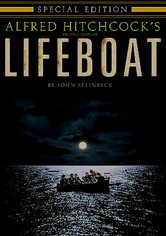
Lifeboat-1944

Lifeboat-1944

Director Alfred Hitchcock

Starring Tallulah Bankhead, William Bendix

Scott’s Review #1,020

Reviewed May 6, 2020

Grade: A-

Alfred Hitchcock, well-known for big, bouncy, suspenseful productions, creates a stripped-down, intimate story of adventures while adrift on a survival boat, leaving plenty of tension and peril.

Lifeboat (1944), now teetering on extinction from memory save for fans of the director, deserves appreciation and respect for the brilliant direction and outstanding cinematography alone.

The film was met with controversy and some derision for sympathetic depictions of a German U-boat captain (Walter Slezak) amid the horrors of World War II.

Events begin in the middle of calm Atlantic Oceanic waters after a cruel battle results in a German U-boat and a British/American ship sinking each other, leaving fewer than a dozen civilians and service members to survive in one Lifeboat.

The haughty, glamorous columnist Connie Porter (Tallulah Bankhead), clad in the finest fur coat, is irritated by a run in her stocking, a travesty in her mind.

She is slowly joined by other survivors, including a young British woman with a dead baby, a steward, a U.S. Army nurse (Mary Anderson), a wealthy entrepreneur, and other people from most walks of life.

Lifeboat plays out like a more cerebral version of a disaster film. Think- a brilliant man’s version of The Poseidon Adventure (1972), said with love since it’s one of my favorite films. But with Lifeboat, darkness and a sense of sadness are missing from the 1970s’s more lightweight disaster films.

The black-and-white camerawork helps tremendously, as do the mist, the rain, and the intense beating sun. The weather elements play an essential role, as do the characters themselves.

Speaking of characters, the individuals are plentiful and diverse, ranging from British, American, Black, German, wealthy, and working-class to eventually dead and alive with a gruesome leg amputation taking place mid-stream.

Each is well-written and exhibits fear, bravery, and suspicion of the other’s motivations. The German captain communicates with Connie in his native tongue, causing confusion among the other survivors.

Events would hardly be complete without a good melodramatic romance, and it is a treat to see two formulate. Connie and handsome John (John Hodiak) share a love/hate relationship, clearly from opposite backgrounds, while the more stable Alice and Stanley (Hume Cronyn) even decide to marry!

Genteel Alice reveals a marriage and an affair to Stanley, uncovering the layers and complexity of the character.

My favorite character is Connie, and Bankhead is a pure delight in the bitchy, no-nonsense role. She enshrouds the camera from the first scene.

Reminiscing about Bette Davis, the actress has a similar composure, stance, and trademark cigarette but slowly reveals her insecurities and desperation.

What fun she is to watch!

A tender and poignant scene occurs at the end of the film and is lovely to witness, especially given the tumultuous time of the mid-1940s. A drifting young German soldier attempts to board and shoot at the survivors but is apprehended.

Disputes occur, but instead of shooting or casting the lad overboard to drown, he is saved and presumably provided food and water. Does he inquire why they don’t kill him? The message is powerful and anti-war.

The direction methods are brilliant, and they look as realistic as possible in 1940s cinema, where CGI was decades away. Hitchcock had me fooled as I bought lock, stock, and barrel that the Lifeboat was in the middle of rough and murky waters instead of a Hollywood studio tub.

The creative method of gathering so many characters into one shot wonderfully and effectively provides a claustrophobic feel, as the lack of food and drinking water causes hysteria and emotion.

The one-set approach is marvelous and perfect for the film’s specific storyline.

After decades of underexposure and playing second or third fiddle to other Hitchcock masterpieces, Lifeboat (1944) is finally getting some notice and acclaim. The trend continues here, as the film contains enough frights and perils to keep anyone guessing which characters will sink and which will swim.

Although it may not be the best watch on a cruise ship or other watery surfaces, the escapade will delight fans of classic black-and-white thrill cinema.

Oscar Nominations: Best Director- Alfred Hitchcock, Best Original Story, Best Cinematography, Black-and-White

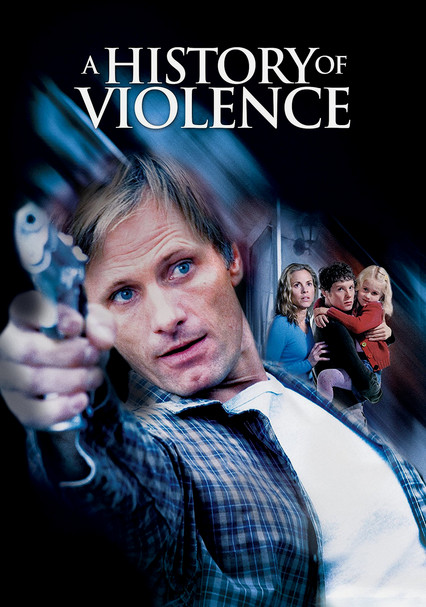
A History of Violence-2005

A History of Violence-2005

Director David Cronenberg

Starring Viggo Mortensen, Mario Bello, Ed Harris

Scott’s Review #1,016

Reviewed April 28, 2020

Grade: B+

David Cronenberg has directed films such as Videodrome (1983), The Fly (1986), and Crash (1996), stories safely classified as “off the beaten path”.

With A History of Violence (2005), he creates a film that on the surface appears conventional and even wholesome at the onset, a family drama or thriller, that turns sinister and bloody as it lumbers along.

The Christian-like small Indiana town is the perfect backdrop to quietly inflict mayhem and terror on its characters. Stars Viggo Mortensen and Ed Harris give tremendous portrayals.

Tom Stall (Mortensen) lives a quiet mid-western life and owns a quaint, little diner nestled in the center of town. He is a popular man and quite neighborly, befriending the many patrons who visit his lovely eatery. At his side are his adoring wife Edie (Maria Bello), and children, Jack and Sarah.

If they owned a golden retriever and resided in a house with a white picket fence, they would define the all-American family.

Late one night, two men attempt to rob the restaurant and when they attack a waitress, Tom kills both robbers with surprising ease and skill barely blinking at his violent tendencies. He is professed a hero by the townspeople and the incident makes him a local celebrity.

Tom is then visited by the frightening scarred gangster Carl Fogarty (Harris), who insists that Tom is a notorious gangster from Philadelphia named Joey Cusack. Tom is perplexed and vehemently denies the claims, but Fogarty begins to stalk the Stall family.

Because of the pressure, Tom’s family life hits crisis mode.

As the film ticks along the plot becomes thicker and thicker as the puzzle pieces are rife with mystery. Is Fogarty merely a liar, holding a vendetta against the person who killed his men? Does Tom suffer from amnesia, having forgotten his past life due to an accident?

Has Tom fled the criminal life seeking refuge and a new life in middle America, safely leaving his troubles behind? Does the truth lie somewhere in the middle of these possibilities?

Bello is cast in the role of Edie, Tom’s loyal wife. Bello is a stellar actor and does a wonderful job in the complicated role. Far too often, especially in thrillers, the wife role is as lacking in the challenge as it is in glamour. The ever-supportive wife must be a drag to play but pays the bills.

Edie is different, and as soon as the viewer has her figured out, she acts out of the blue which will surprise this type of character. This has a lot to do with Bello’s pizzazz and acting chops.

I adore the setting of the film. A far cry from the bustling City of Brotherly Love, Philadelphia, when the action eventually flows to the city, the rural setting of Indiana becomes even more important.

The quiet mornings, the imagined smell of fresh-brewed coffee, the crackling of sizzling bacon on the grill at Tom’s Diner, and finally, crickets chirping in the distance, all provoke the potent atmosphere and surroundings that work in this film.

A History of Violence (2005) is a superior film that contains excellent writing, the best aspect of the rich experience. A top-notch screenplay written by Josh Olson leaves the viewer not only with mounting tension but the mysterious unknown as to what will happen next and what the truth is.

Mortensen, commonplace in recent Cronenberg films, has found his niche playing complex yet humanistic characters, which must be a challenge for the actor and a splendid reward for the audience.

Oscar Nominations: Best Supporting Actor-William Hurt, Best Adapted Screenplay

I Confess-1953

I Confess-1953

Director Alfred Hitchcock

Starring Montgomery Clift, Anne Baxter

Scott’s Review #1,007

Reviewed April 2, 2020

Grade: A-

I Confess (1953) is an early effort by the brilliant Alfred Hitchcock with a decidedly religious slant but keeps the suspense and thrills commonplace like his other films.

The picture is not one of his best-remembered works but one of his least-remembered projects. This is unwarranted because the film contains all the standard elements known to the director, creating an entertaining and enthralling effort.

Montgomery Clift and Anne Baxter are featured as big Hollywood stars of the day.

Although he was not a fan of exterior shoots where he couldn’t control the elements, filming was done mainly on location in Quebec City. Numerous shots of the city landscape and interiors of its churches and other emblematic buildings, such as the Château Frontenac, were heavily featured.

This factor adds to the enjoyment as French sophistication and culture are added, and the accents provide a European influence, which is especially powerful during the final act.

A handsome Catholic priest, Father Michael Logan (Clift), wants nothing more than to be a good priest, but his calling is made complicated after someone confesses a murder to him, and he’s subsequently blamed for the death.

A World War II veteran, he harbors secrets told in the back story as a strong connection to another character comes to light. An easy way to clear his name is to reveal exactly what he knows, but doing so would break his vows as a clergyman and alienate members of his community who trust he will keep their steamy secrets very private.

Ruth Grandfort (Baxter) is a respected member of society, married to her husband Pierre (Roger Dann), a member of the Quebec legislature. They live comfortably in a lavish house with servants and regularly throw cosmopolitan parties befitting people of their stature.

Amid martinis and festive party games, Ruth keeps not one secret but two and is being blackmailed for her shenanigans. Her connection to Father Michael slowly bubbles to the surface.

Christian viewers will neither be offended nor completely embraced either. Hitchcock does not mock religion but makes sure of the conflict and demons that can encircle even a pious or righteous man.

As far back as the 1940s, Rebecca was toying with viewers and frequently adding an LGBTQ uncertainty; this can be said of I Confess.

Assumed to be in love, Father Michael offers little romantic passion or zest towards Ruth, and the connection seems one-sided. Could his descent into the Catholic Church be a front to cover up his sexuality?

Only Hitchcock will know the answer.

Eagle-eyed Hitchcock fans will undoubtedly discover similarities to his other works.

In the very first scene, an unknown man is strangled to death, collapsing to the floor. This is reminiscent of the 1948 masterpiece, Rope (1948), when an identical sequence occurs. The audience knows nothing about the stranger- yet.

In both films, even after death, the character becomes integral to the plot twists and turns in store. The tremendous use of shadows and lighting is on careful display, mirroring the look of the soon-to-come The Wrong Man (1956).

While not the cream of the crop among Hitchcock’s best film entries or even a top ten offering, I Confess (1953) deserves a viewing or two on its own merits.

Clift and Baxter have excellent chemistry and mystique, and the plot is enough to keep audiences well-occupied.

The final twenty minutes provide cat-and-mouse revelry and a shocking death, perfect for a dramatic climax to a film oozing with Hitchcock’s finest traits.

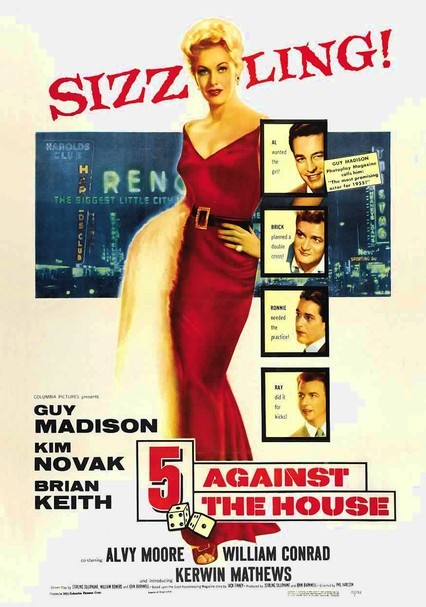
5 Against the House-1955

5 Against the House-1955

Director Phil Karlson

Starring Brian Keith, Kim Novak

Scott’s Review #998

Reviewed March 11, 2020

Grade: C-

5 Against the House (1955) is a film that may have influenced heist films such as the Rat Pack Ocean’s 11 (1960) or countless other films featuring groups of young men holding up an establishment for money.

The film is mediocre and lacks memorable content. Nothing distinguishes it from other movies with similar themes.

Star Brian Keith is charismatic in the lead, but the chemistry with Kim Novak goes nowhere with any of the actors.

The film is mildly interesting, with a few tense moments but little more. 

Four Midwestern University college pals, Brick (Keith), Al (Guy Madison), Ronnie, and Roy, devise a grand casino heist while drunk and partying one weekend in Reno. The idea is to go through with their plan and then return the cash to prove they can get away with the high-stakes prank.

But when one of the group betrays the others and plots to keep the money for himself, he imperils them all.

Novak plays Kaye, Al’s girlfriend, who recently became a singer at a local nightclub.

The standouts from the cast are Keith and William Conrad because the then-unknown actors became television stars in later years, for Family Affair and Jake and the Fat Man, respectively.

Keith is great in the lead role of Brick, the tormented and conflicted ex-veteran of the Korean War, unable to forget tragedies he saw while abroad. He is a remarkable every man with an edge, angry and out to prove something to the world. He also needs the money that the heist will provide him.

The character is interesting and empathetic.

Conrad is gruff and memorable as a cart operator who plays an essential role in the film’s finale. Sent to retrieve cash from the money room, using the prerecorded message to make him believe that there is a desperate man with a gun in the cart who will shoot him if he does not cooperate, Conrad does wonders with his eyes and facial expressions.

The luscious Novak, soon to be a household name in the stunning and cerebral Alfred Hitchcock film Vertigo (1958), is not as compelling as Kaye.

The main reason is that she has little to do but stand around and serve as window dressing. This is too bad since the actress has talent and charisma for miles, but this work is beneath her.

It was not her debut but one of her early films, What’s a Girl to Do? To add insult to injury, another singer dubbed her voice. Novak needed the paycheck.

Director Phil Karlson is unsuccessful at bringing the picture entirely- circle but does pepper in some nice exterior night scenes of Reno. The casino sequences are commendable, and the set pieces are properly zesty and flashy when appropriate.

However, trimmings never complete a film, and 5 Against the House needs more meat on the bone than it serves up.

The heist is the main attraction. Some tension does exist, but not enough, and the finale is a letdown. After the unspectacular robbery, Brick leaves the others behind and escapes with the money. A pursuit ensues. Kaye, having alerted the police, follows them, and a tepid standoff follows.

Ultimately, Brick changes his mind while Al and Kaye embrace on a crowded street. The feeble final scene is a romantic sendoff for the couple, who didn’t have much chemistry.

5 Against the House (1955) contains an adequate cast and a few positive tidbits worth mentioning, but the story is way too predictable. The conclusion, which should be the high point, disappoints, and the actors are too old to be believable as college-aged students.

Many other film noir or heist films released before or after this film are superior and better crafted.

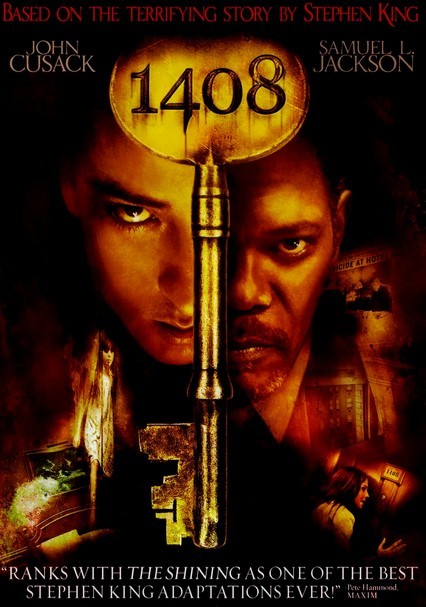
1408-2007

1408-2007

Director Mikael Hafstrom

Starring John Cusack, Samuel L. Jackson

Scott’s Review #983

Reviewed January 23, 2020

Grade: C+

A bundle of film adaptations of Stephen King novels has been birthed over the years. 1408 (2007) is one of many and while suspenseful, the project might have been better served as a quick fifty-minute episodic television event rather than a big-screen effort.

The content seems displaced and disjointed, stretched too thin.

Nonetheless, big stars like John Cusack and Samuel L. Jackson provide some stamina to a film that slowly teeters into nonsense and a confusing conclusion.

Based on Stephen King’s 1999 short story of the same name, the film follows Mike Enslin (Cusack), an author who investigates allegedly haunted houses, and rents the titular room 1408 at the Dolphin, a New York City hotel, to see what all the fuss is about.

Although skeptical of the paranormal, he is soon unable to leave the room as he experiences bizarre events.

The hotel manager, Gerald Owen (Jackson) attempts to convince Mike not to inhabit the notorious room, and intriguing is why?

The film has key success when it focuses on the atmospheric and the tense moments. The lighting and the camera techniques elicit a closed-in and claustrophobic aura because the set is mostly a hotel room.

The use of psychological tension works better than a slice-’em, dice-’em approach.

During Mike’s examination of his room, the clock radio suddenly starts playing “We’ve Only Just Begun”, a hit song by The Carpenters. Mike assumes that Olin is pulling a prank to scare him.

At 8:07, the song plays again, and the clock’s digital display changes to a countdown starting from “60:00.”

This is creepy, and the viewer is intrigued by what will happen next.

The window slams down and wounds Mike’s hand. He begins to see ghosts of the room’s past victims, followed by flashbacks of his dead daughter Katie, and his sick father. This catapults Mike into terror and he attempts to escape the room, fearing for his life.

He is unsuccessful in his escape and the room appears to have him prisoner until his wife, Lily (Mary McCormack) comes to the rescue.

What does Olin have to do with the events? Is Lily sinister or benevolent?

When Mike is out of the hotel room the film falls apart. Containing too many weird circumstances to make much sense- a surfing event on the beach, a Molotov cocktail, a fire alarm, and a return to the hotel room spin the viewer in too many directions as a hallucinogenic experience is created.

Before long the viewer will stop caring. I know I did. On paper, these oddities sound intriguing, but they did not translate to screen well.

Hafstrom directs the activity adequately and uses actors that viewers are familiar with, adding to the credibility. With fewer talents or unknowns, the film may have felt low-budget or independent, and I think the film, while not great, needs these actors to add professionalism.

The star is naturally Cusack, who enjoys the most screen time as a man who only believes what his eyes and ears tell him, and not the silliness of spirits and ghosts. The actor possesses an offbeat look which adds to the film.

From a storyline perspective, 1408 never really catches fire. The film is not pitiful, nor is it a great adaptation of a Stephen King novel. The novel is hardly a household name, which does the film a few favors.

The result is fair to middling, with a promising first half followed by a dour second. 1408 (2007) will be forgotten five years after its release.

Knives Out-2019

Knives Out-2019

Director Rian Johnson

Starring Ana de Armas, Daniel Craig

Scott’s Review #969

Reviewed December 17, 2019

Grade: B+

Knives Out (2019) is a cleverly constructed whodunit, crafted in a style not dissimilar from the famous board game Clue. This facet is mentioned by one character during a scene in the film.

With a sizable cast of film stars, both young and old (mostly old), the result is a good time, featuring intelligent writing, surprises, and a crowd-pleasing tone. The project is presented by a cast who undoubtedly had a ball during filming.

The point of the film is to try and figure out whodunit and why, in perfect murder mystery form.

It is explained through narration that wealthy crime novelist Harlan Thrombey (Christopher Plummer) has invited his family to flock to his mansion for his eighty-fifth birthday party. The next morning, Harlan’s housekeeper Fran finds him dead, apparently having slit his own throat.

An anonymous figure hires private detective Benoit Blanc (Daniel Craig) to investigate the situation. When Blanc arrives at the grand estate to interrogate family and friends, tidbits of scandal and intrigue slowly emerge as layers are revealed.

The sizable cast features Hollywood stalwarts like Jamie Lee Curtis (Linda, Harlan’s daughter), Don Johnson (Richard, Harlan’s son-in-law, and Linda’s husband), Chris Evans (Ransom, Harlan’s grandson), Michael Shannon (Walt, Harlan’s youngest son), and Toni Collette (Joni, widow of Harlan’s deceased son Neil).

Helpful is how the film takes the time to introduce and explain each prominent character, so that the viewer has a good sense of who’s who and how one character relates to the others before the tangled web unravels.

The delicious aspect of Knives Out is the numerous twists and turns it offers throughout its runtime.

Surprisingly, it was a key revelation exposed quite early on, so that the pacing is more left of center than classic whodunits of days past. Once the new story arc is revealed, the plot thickens further, and we know that more events will ultimately unfold, as the story cannot be this simple.

This successfully kept me engaged as a viewer throughout the entire experience.

Having witnessed the previews at length and the way the trailer presents a Hercule Poirot/Agatha Christie/Jessica Fletcher-type sleuth to solve, it was delightful to see one character snuggling on the couch, absorbed in an episode of the 1980s television series “Murder, She Wrote.”

Director Rian Johnson offers several sly homages to influential tidbits of pop culture that helped shape his film and retain its amusement.

Another momentous positive is the incorporation of a political discussion among the family as they brood and fret over how much money they stand to inherit from their dead patriarch.

Donald J. Trump, a man who catapulted the United States into controversy post-2016, is never mentioned by name. Still, immigration, children in cages, and expletives are carefully hurled about in his honor, so there is no question about the connotations.

Harlan’s caregiver is Marta (Ana de Armas), the heroine of the film and the standout, whose mother is an undocumented immigrant.

So political overtones abound.

Knives Out seamlessly blends dark humor with traditional mystery, ensuring it never loses its edge. The big reveal at the end is neither brilliant nor disappointing. It simply bubbles to the surface after numerous red herrings and lies.

The final sequence is palpable, and savvy viewers will wonder what one character will possibly do next to either please or anger the rest of the characters.

Might a sequel be at hand?

A film not meant to be high art or anything more than an entertaining good time, Knives Out (2019) achieves its intent by offering an experience reminiscent of an Agatha Christie tale that is fun for the audience.

The benefits are reaped, as the film received an enormous box office return. Thanks in large part to a talented cast, a gloomy mansion, and wealthy individuals faced with peril and comeuppance, these elements make for a wonderful recipe for a good, solid mystery.

Oscar Nominations: Best Original Screenplay

Ma-2019

Ma-2019

Director Tate Taylor

Starring Octavia Spencer, Diana Silvers

Scott’s Review #949

Reviewed October 22, 2019

Grade: B+

Marketed as a slasher film based on the trailers, Ma (2019) impressed me immensely as my expectations of a standard horror film were superseded by a more complex, perfectly paced psychological thriller.

A fantastic performance by Octavia Spencer, and dare I mention an Oscar-worthy one if this were a different type of film, the actress effortlessly brings a vulnerability to a not-so-easy role to play.

The finale is disappointing, and the film includes a few too many stereotypes, but it is a terrific effort nonetheless.

Set somewhere in remote Ohio, but looking more like the southern United States, teenager Maggie Thomson (Diana Silvers) and her mom Erica (Juliette Lewis) return to Erica’s hometown after her marriage fails.

Reduced to a job as a cocktail waitress at a local casino, she encourages Maggie to make friends. Maggie falls into the popular crowd as Erica reconnects with high-school friends who are mostly the parents of Maggie’s new friends.

Sue Ann (Spencer) bonds with the cool kids by purchasing them alcohol and hosting parties in her basement, much to the displeasure of her parents.

The audience soon realizes that something is amiss with Sue Ann. She forbids the kids from ever venturing upstairs and slowly develops a needy attachment to the teens.

Flashbacks begin to emerge as clues to her connection to the other parents and her plot for revenge.

The incorporation of a place in the house to avoid is a typical horror gimmick that always works well. Inevitably, someone will venture into that area of the house, and a secret will be revealed. Ma is no different in this regard.

It’s terrific to see more diversity, particularly among the African-American population, represented in the horror genre. Typically, the horror genre has been an all-white affair, with actors of color often cast as best friends or in minor supporting roles at best.

Thanks to Get Out (2017) and Us (2019), horror films have recently included all-black casts and have been tremendous hits.

Let’s hold out hope that the Asian, Latino, and LGBTQ communities will receive more inclusion and bring freshness to a key cinematic genre.

The film belongs to Spencer.

The Oscar-winning actress must have had a fun time with this role and gets to let loose during many scenes. She goes from coquettish to maniacal, sometimes within the same scene, with flawless precision and gutsy acting decisions.

My favorite, Sue Ann, is the unhinged one as she slyly threatens to cut one male character’s genitalia off. She smirks and uses her large, expression-filled eyes to her advantage. Psycho has never looked so good!

The climax, so crucial in horror or thrillers, to follow through and capitalize on the build-up, ultimately fails in Ma. Once the big reveal surfaces and a childhood prank is exposed, the trick hardly seems worthy of a killing bonanza.

A mousy Sue Ann performed fellatio on a nerd instead of her crush. Even those involved on the outskirts are blamed, and waiting twenty years to exact revenge on her tormentors (most of whom have repented) doesn’t seem plausible.

Ma (2019) contains a hefty cast of stalwarts, but it’s Spencer who brings the sometimes-generic material and trivial conclusion to crackling life with her brilliant portrayal of a damaged woman.

Allison Janney, Lewis, and others add respectability when the film teeters too close to mediocrity with its teen character cliches. Still, the film excels when it focuses on a character-rich story and unexpected plot points.

Nancy-2018

Nancy-2018

Director Christina Coe

Starring Andrea Riseborough

Scott’s Review #941

Reviewed October 1, 2019

Grade: B+

Part of why I love independent cinema so much is the freedom it gives the director to tell a good story of his or her choosing, usually with little studio interference or opinions.

Nancy (2018) is a good example of this, as Christina Choe writes and directs a film that is hers to share. A quiet film about loneliness, the need to belong, and connect with others is the main element in a compelling and unpredictable story.

Living in a barren small town in upstate New York, Nancy (Andrea Riseborough) endures cold, damp, and bleak weather. Working a temporary office job where the staff barely remembers her from her previous stint, Nancy spends her downtime caring for her ill mother (Ann Dowd) and playing with her cat, Pete.

When an occurrence leaves her vulnerable, she sees a news report featuring a couple whose daughter disappeared thirty years ago. She looks exactly like Nancy, which gives the sometimes dishonest woman an idea.

Riseborough carries the film with a strong performance but is not a character the audience easily roots for. Nancy is not unkind, dutifully tending to her mother’s needs when she is not pleasant. She pretends to be pregnant to meet an internet support group man who lost a child and seeks comfort in Nancy.

Hoping for a romance or at least a human connection, the two run into each other, and when the man realizes her scheme, he calls her psycho. We witness a range of subtle facial expressions revealing the complicated character, which Riseborough provides brilliantly.

Choe tells a very human story peppered with deep feelings and emotions that are easy for the audience to relate to.

Conflicted views will resound between the principal characters: Nancy, Leo Lynch (Steve Buscemi), and his wife, Ellen (J. Smith-Cameron). The Lynches, especially Ellen, are vulnerable, yearning for a glimmer of hope that their long-lost daughter, surely dead, is alive.

So, the director’s complexities work exceptionally well to keep the emotional level high.

All three principal actors do a fine job, with Smith-Cameron being rewarded with a Film Independent award nomination. She is the most conflicted of the three and the character audiences will ultimately fall in love with and feel much empathy for.

Has Buscemi ever played a nicer man? I think not, as the actor so often plays villainous or grizzled so well. With Leo, he is rational, thoughtful, and skeptical of the story Nancy spins. He adores Ellen and does not want to see her again disappointed, the pain apparent on both faces.

The cast possesses many quiet and palpable subtleties.

The locale in the film is also a high point. Presumably, the cold and angry air fills the screen in January or February, adding a measure of hopelessness that each character suffers from differently.

Numerous scenes of the outdoors are featured, and compelling moments are provided. When a pretty snowfall coats the land, this is a tease, as one character’s hopes are ultimately dashed. A cheery landscape such as California or Florida would not have worked as well in this film.

Nancy (2018) risks turning some viewers off with its unhappy nature and slow pace, but isn’t this much better than a fast-paced Hollywood popcorn film?

To me, the answer is obvious, and Nancy is a prime example of why the film industry and its enthusiasts should celebrate and revere small films.

Lies and truths cross a fine line, and the potent psychological thriller will leave viewers mesmerized as events progress.

Independent Spirit Award Nominations: Best Supporting Female- J. Smith-Cameron, Best First Screenplay

You Were Never Really Here-2018

You Were Never Really Here-2018

Director Lynne Ramsay

Starring Joaquin Phoenix

Scott’s Review #932

Reviewed August 19, 2019

Grade: A-

You Were Never Really Here (2018) is an independent psychological thriller that is most reminiscent in tone and texture of the legendary Scorsese film Taxi Driver (1976).

The main characters are worlds apart, but the classic influences the plot and trimmings amid a different period (the present).

A terrific and brooding performance by star Joaquin Phoenix leads the charge, as does the fantastic direction by Lynne Ramsay and the editing team. The dark film is an unusual and impressive choice for a female director.

Snippets of cinematic genius exist during a film that, with a more complete package, might have been a masterpiece.

We first meet Joe (Phoenix) somewhere in Ohio, as we learn he is a hired gun sent to rescue underage girls from sex trafficking rings. He is brutal in his methods of rescue, resorting to gruesome murders to complete his assignments, and is paid handsomely.

In New York City, he cares for his elderly mother, whom he adores, and is contacted to rescue Nina, the daughter of a New York State Senator, Albert Votto, for an enormous sum.

When Joe rescues Nina and waits for Votto, events quickly spin out of control, revealing a sinister web of deception.

When you look at the story that You Were Never Really There tells, it has been told many times before, typically in slick Hollywood conventional standards.

An angry ex-military man unleashes brutality on devious criminals, rescues the girl, and returns her safely to the open arms of her awaiting parents.

Fortunately, the film is more thoughtful than that, adding complexity to the Joe and Nina relationship and a stylistic, poetic quality featuring Joe’s relationship with his mother.

The plot is paced very well so that the events occur over only a day or two, and the film is highly unconventional and dark.

Frequent flashbacks give the film mystique as we see both Joe and his mother abused by Joe’s father, as a young Joe hides in a closet and hyperventilates. Now an adult, Joe is suicidal, frequently fantasizing or practicing his death until he is interrupted.

As grisly as the film can be, beautiful and tender moments are laden throughout as Ramsay provides gorgeous style and humanity. a homoerotic moment occurs when Joe lies next to the man who has killed his mother.

As the man is close to death at the hands of Joe, they hold hands as Joe provides comfort to the man in death. Joe then buries his mother in a pond in upstate New York, providing her with a peaceful final resting place. These are unique scenes that feel almost like an art film.

The conclusion is open-ended, leaving lots of questions. Joe and Nina appear to ride off into the sunset together, but what will they do? What is to become of them? Surely, no romantic element can be found, but where will they go from here?

Both characters appear to have nothing left to hang on to other than each other, but is this sustainable?

The film is not the type that is poised for a sequel, but I would be very curious about what Ramsay has planned for her characters.

Joe is not portrayed as wicked; he is too complex for that. Phoenix, a tremendous actor, perfectly infuses the character with brutality, anger, tenderness, and warmth.

The similarities between You Were Never Really Here and Taxi Driver—the grizzled New York portrayals, the political backdrop, and the main characters saving a woeful young girl from the depths of despair—make the two films comparable.

However, Joe and Travis Bickle are opposites, the latter having frenetic humor that the former lacks.

Ramsay has been around for a while, with We Need to Talk About Kevin (2011) being her most prominent film. She is successful at telling stories about deeply troubled individuals who are good people given awful circumstances.

With a tremendous actor like Phoenix on board, she crafts a solid work that has garnered accolades, at least among the indie critics, for You Were Never Really Here (2018). Ramsay seems poised to break out in a big way and shake up the film industry with future works.

Independent Spirit Award Nominations: 1 win- Best Feature, Best Director- Lynne Ramsay, Best Male Lead- Joaquin Phoenix, Best Editing (won)

Murder on the Orient Express-1974

Murder on the Orient Express-1974

Director Sidney Lumet

Starring Albert Finney, Lauren Bacall, Ingrid Bergman

Scott’s Review #928

Reviewed August 7, 2019

Grade: A-

Based on the 1934 novel of the same name written by famous author Agatha Christie, Murder on the Orient Express (1974) brings the story to the big screen with a robust and eccentric cast of characters all drizzling with suspicion.

The classic whodunit of all whodunits, the film adds a Hollywood flair with rich costumes and an authentic feel to a budget-blasting extravaganza that keeps the audience guessing as to who the killer or killers may be.

The film was recognized with a slew of Oscar nominations that year.

The hero of the film is Hercules Poirot (Albert Finney), a well-respected yet bumbling Belgian detective, who is solicited to solve the mysterious death of a business tycoon aboard the famous and luxurious Orient Express train.

On his way to the train’s destination, he encounters such delicious characters as the glamorous Mrs. Hubbard (Lauren Bacall), the nervous Greta Ohlsson (Ingrid Bergman), and his friend Bianchi (Martin Balsam), the director of the company who owns the enormous vessel.

Many other characters are introduced to the layered story.

As the complicated plot is unraveled, most of the characters have something to hide or a connection to another character or characters.

The fun for the viewer is to live vicariously through Poirot and await the big final reveal after the film that, unless already viewed the film or read the novel, one will not see coming.

With a film of this type, a detective thriller, the audience can be assured of a resolution, like a big murder mystery dinner theater production brought to the big screen.

Formulaic, the film never drags nor feels dull.

Amid the first few minutes of Murder on the Orient Express, the intrigue is unleashed at full-throttle speed leaving one bedazzled and hooked.

The sequence is brilliantly done and thrusts the audience into a compelling back story of plot and the wonderment of what these events have to do with a train pulling out of the Orient.

Quickly edited film clippings of a news story explain the mysterious Long Island, New York abduction and murder of the infant daughter of a famed pilot.

It is suggested that the Orient Express trip embarks from Istanbul, Turkey, and is destined for London. This means that several countries will be included in the trek, creating possibilities for both geographical accompaniments and new cultural experiences which director Sidney Lumet offers generous amounts of.

Moments following the murder, the train has the unfortunate fate of colliding with an avalanche, leaving the passengers in double peril, with a killer on the loose and cabin fever to contend with.

To the compelled viewer this is snug comfort as the atmospheric locales are gorgeous and the thought of a dozen strangers trapped together with so much to hide brings the story to a frenzy.

Who did what to the murder victim is slowly revealed as several red herrings (or are they?) are revealed. Who is the mysterious woman strutting down the corridor shortly before the murder, spotted by Poirot? Is she a staged pawn or merely an innocent victim? Could she be the murderer?

The wonderful part of Murder on the Orient Express is the number of entangled possibilities.

The conclusion of the film turns the thriller into a moralistic story, to its credit. The fact that the murder victim was hateful and diabolical is a key part of the story and makes the viewer wonder if the killer or killers are justified in their actions.

Does the fact that Ratchett was stabbed a dozen times with varying degrees of severity play into the motivation?

A very compelling, and unrecognizable Finney does a fantastic job of carrying the film among such a troupe of good actors.

Murder on the Orient Express (1974) sets out to entertain and succeeds on every level, bringing the book to the silver screen with a fresh interpretation that still honors the intent that Christie had.

Stylistic and thought-provoking, the film has gorgeous costumes, a good story, and fine acting. The knowledge of who the killer is does little to take away any enjoyment that a repeated viewing will provide.

Oscar Nominations: 1 win-Best Actor-Albert Finney, Best Supporting Actress-Ingrid Bergman (won), Best Screenplay Adapted from Other Material, Best Original Dramatic Score, Best Costume Design, Best Cinematography

Lizzie-2018

Lizzie-2018

Director Craig Macneill

Starring Chloë Sevigny, Kristen Stewart

Scott’s Review #925

Reviewed July 31, 2019

Grade: B+

Lizzie (2018) is an odd and macabre interpretation of the life and times of the infamous Lizzie Borden, who was accused and acquitted of hacking her father and stepmother to bits with a deadly ax.

This offering is shrouded in controversy because of inaccuracies and interpretations of the events, specifically Borden’s sexuality, which is called into question. The film is quiet and a tad too slow, but it thunders to a grand climax, more than making up for any negatives.

The casting of its leads is perfect and key to success.

Thirty-two-year-old Lizzie (Chloë Sevigny) lives with her domineering and affluent father, Andrew (Jamey Sheridan), and rigid stepmother, Abby (Fiona Shaw).

Despising both, she lives out a lonely and depressing existence, her only outlet being occasional evenings at the theater. When an Irish immigrant, Bridget Sullivan (Kristen Stewart), moves into the Borden residence to work as a servant, the women form a strong bond, especially after Andrew abuses her.

Sevigny, one of my favorite modern actresses, possesses an astounding range in the myriad of characters she has played in her long career.

Debuting to the masses in the critically acclaimed and depressing Boys Don’t Cry (1999), she has churned out a multitude of independent features portraying one oddball character after another and deserves the strong influence she has achieved over the years.

Director Craig Macneill makes interesting choices with his film, which may or may not please audiences expecting a numbers horror offering. He dives into psychological thriller territory with more of a character study approach that provides layers to the finished product.

Sevigny is center stage, and plenty of camera close-up shots offer an introspective analysis of her feelings rather than from her parents’ perspective. Instead of a crazed killer spontaneously committing the crime, she is careful and calculating in her plan.

Macneill presents Lizzie as the victim and Andrew and Abby as the villains. This is to assume that Borden committed the crimes, which the film never doubts.

Historically, people assume that this is the truth, but Lizzie was set free by a jury refusing to believe a woman of such means would commit such a heinous crime. I wonder if Macneill directed the film with a bit of a smirk at this ridiculous decision of the times when the woman enjoyed the murders.

At the end of the film, what happened to Lizzie and Bridget is explained, which is a good decision and wraps the film up nicely.

Powerful is the quiet subtext that gives a moody and foreboding quality. I adore slow-moving films provided the reward is worth the wait and Lizzie sucker punches once the events begin rolling along.

Another positive is the gnawing feeling of terrible things about to happen but unsure when or how the attacks will occur. Most viewers watching this film will know the context and the reported murders committed.

The atmospheric additions succeed as the late eighteenth-century costumes and daily living are believable. The lavish Borden house is well-kept and brightly lit, offering a friendly New England feel.

Finally, the creaks and noises throughout the house perfectly encompass the danger lurking behind corners, and the fun is in wondering when Lizzie will strike.

Since the film moves back and forth through time, we know she will strike.

The film’s best work is in the relationship between Lizzie and Bridget. Sevigny and Stewart dazzle together with an unleashed chemistry that nearly rivals a similar dynamic seen in 2003’s Monster.

As with Aline Wuornos and Selby, Lizzie is dominant, and Bridget is submissive, following her lead. Both women share a lesbian relationship, and neither pair achieves happiness after the film.

A film sure to fly under the radar and likely to be forgotten before long, Lizzie (2018) is worth the effort. A spooky and controversial interpretation of the events leading up to, during, and after one of the most notorious crimes in United States history is dissected and analyzed from a human perspective.

Macneill makes Borden less maniacal and more sympathetic than some may prefer. He does a fine job and deserves praise for a rich story.

Bad Times at the El Royale-2018

Bad Times at the El Royale-2018

Director Drew Goddard

Starring Jeff Bridges, Cynthia Erivo, Dakota Johnson

Scott’s Review #919

Reviewed July 10, 2019

Grade: A-

Bad Times at the El Royale (2018), directed by Drew Goddard, known for crafting the horror film The Cabin in the Woods (2012), is a gem that crosses multiple genres with sound results.

With Bad Times, he assumes writing and production duties for the thriller and steals a page from the Quentin Tarantino playbook, most notably from The Hateful Eight (2015).

The resulting feature is clever, perverse, and mysterious. It is a fantastic, edge-of-your-seat experience and a must-see for Tarantino fans.

Set in 1969, the film focuses on seven strangers of different backgrounds who go to a seedy and remote hotel on the California/Nevada border. Each harbors its share of dark secrets, culminating during a deadly macabre showdown one dark and stormy night.

In many ways, each character seeks redemption or forgiveness for a past indiscretion or is otherwise protecting someone or something else. A large sum of money is also in play for the greedier characters to tussle over.

The seven players are as follows: Jeff Bridges plays catholic priest Donald “Dock” O’Kelly, Cynthia Erivo plays struggling soul singer Darlene Sweet, and Dakota Johnson portrays Emily Summerspring, a hippie trying to save her younger sister, Rose, who is devoted to and mesmerized by sadistic cult leader Billy Lee (Chris Hemsworth).

Finally, Jon Hamm plays Dwight Broadbeck, a vacuum salesman who may have a secret identity, and hotel clerk Miles Miller (Lewis Pullman), who runs the hotel alone.

As events roll along, the complexities of the characters grow, which is my favorite aspect of the film. There are so many twists and turns involving the characters’ backstories and motivations that surprises are in store.

Some characters have strange connections to each other, while others meet for the first time and their lives intersect in interesting ways.

The dynamic between all the actors works tremendously well, with the standouts being Bridges and Erivo, who share tremendous chemistry and are the most interesting characters, to mention get the most screen time.

Their characters forge a bond during their lengthy scenes while never wholly trusting each other. Erivo, as Darlene, gets to showcase her wonderful singing voice. The highlight is the grand hotel room sequence as she belts out “This Old Heart of Mine (Is Weak for You).”

Old and burdened with memory loss, Bridges successfully grants more sympathy to his character than he deserves.

The film loses momentum towards the end when introducing the miscast Hemsworth, who is pretty but not the most remarkable acting talent. The actor overacts, playing Billy Lee as sinister and one-dimensional rather than infusing complexities into the character, which doesn’t work.

A better casting choice (and Tarantino mainstays) would have been Leonardo DiCaprio or Brad Pitt, and either actor would have assuredly brought more depth to the role.

Comparisons must be made to The Hateful Eight and the comedy Clue (1985). Godard divides the film into chapters like the former, mostly entitled as the hotel room numbers. With each subsequent room, the events going on in that room and its inhabitants are explored.

As in both films, he brings several mysterious characters with connections together. In Clue, secret passageways that lead to various parts of a building are featured, offering layers of possibilities.

The hotel itself is styled and dressed brilliantly, nearly a character with glossy decals and shiny trimmings but with a solemn and melancholy gloominess. The establishment has seen its share of heartbreak, schemes, and even death. Clever is the division of the hotel into either the sunny and cheerful “California” section or the less posh “Nevada” section, purple and costing one dollar less.

The viewer is sucked into its web within the first sequence when a man is shown hiding money under the floorboards and then subsequently shot to death.

Despite being labeled a Tarantino rip-off, this does not bother me as I was enthralled with the characters, the details, and the vast nuances offered.

Unfortunately, the film was a box-office disappointment, suffering from a lack of awards buzz and a lofty running time. Bad Times at El Royale (2018) will entertain, intrigue, and keep one guessing until the credits roll.

Be prepared for a bloody good time!

Touch of Evil-1958

Touch of Evil-1958

Director Orson Welles

Starring Charlton Heston, Janet Leigh

Scott’s Review #914

Reviewed July 2, 2019

Grade: A

Touch of Evil (1958) is a film noir directed by the legendary influential Hollywood director Orson Welles.

The film contains suspense, drama, and mystery but is to be mainly praised for visual treats to enhance the cinematic experience. The dark and foreboding thriller was revolutionary for the time of release and influenced many films of similar ilk in the years to come.

Robust and fraught with tension, the experience is marvelous and worthy of study for its many nuances.

Welles directs the work, stars in, and writes the screenplay, so his entire being is invested in the production and execution.

Known mainly for the legendary Citizen Kane (1940), a film that arguably changed the course of cinema with its direction and cinematography, Touch of Evil explores a different genre entirely. However, it keeps the excellent aspects of Welles’s loftier film intact, including the black-and-white element, resulting in a grand and dangerous crime-infused classic.

The screenplay was loosely based on the novel Badge of Evil by Whit Masterson.

The tension is ample from the onset as the humidity-drenched Mexico-United States border is the focal point. A car driven by a young couple is laced with a bomb and detonates as soon as they cross into U.S. territory.

In a hint of irony, Newlyweds Miguel “Mike” Vargas (Charlton Heston), a drug enforcement official in the Mexican government, and his wife Susie (Janet Leigh) pass the car several times on foot before the explosion.

An investigation ensues with the introduction of other characters, including Police Chief Pete Gould (Harry Shannon), District Attorney Adair (Ray Collins), and police captain Hank Quinlan (Welles), with a prime suspect being Sanchez, a young Mexican secretly married to the victim’s daughter.

Typical in the film noir genre, events are not what they seem like as layers of the plot slowly unravel. The heavyset and disheveled Captain nostalgically visits a brothel run by Tanya (Marlene Dietrich), who barely recognizes him because he’s gained so much weight since their last meeting.

Vargas forsakes his bride to spearhead the investigation but soon locks horns with corpulent Quinlan, and the duo begins to feud. Could Quinlan or Vargas have something to do with the car bombing, or could other supporting characters be behind or involved in the shenanigans?

This is an excellent part of Touch of Evil, as the film leaves the viewer guessing.

Heston and Leigh are the lead couple, and their chemistry is apparent from the first scene in which they appear together. Sexy and mysterious, she hunkers down in a dump fraught with peril while he attempts to solve the crime and keep his girl safe.

Outside factors play a significant role in keeping the lovers apart. Although Heston’s portrayal of a Mexican man is quite the stretch, the audience will nestle comfortably into the events as they reveal deeper layers.

Once a handsome man, Wells is not afraid to let it all hang out as the fat and racist Quinlan becomes one of the greatest and most complicated screen villains as his true colors emerge.

As the film’s title boldly suggests, does his character contain complexities that make him evil and keep some sympathies, or does he wreak havoc on all he touches with his devious nature only the tip of the iceberg?

Viewers await the final act to have several questions answered as motivations are finally revealed.

Touch of Evil (1958) provided delicious and pulsating material for filmmakers clever enough to study its intricacies, notably Roman Polanski for Chinatown (1974).

Nuggets were also thrown the way of Alfred Hitchcock, who got the idea for Leigh to appear in Psycho (1960) two years later, catapulting her character alone in a hotel peril and mixing in a weird hotel clerk.

The power the film had to hatch other great films from its ingenuity is the most fun part of watching it repeatedly.

Midnight Lace-1960

Midnight Lace-1960

Director David Miller

Starring Doris Day, Rex Harrison

Scott’s Review #909

Reviewed June 13, 2019

Grade: B+

Midnight Lace (1960) is a straightforward psychological thriller made in cinematic history when the genre increased in popularity.

The film was influenced by the Alfred Hitchcock craze, which was front and center at this time, and a robust departure for its lead, Doris Day, who until this time mainly was nestled securely in the romantic comedy domain.

The film is a good watch and a challenging role for Day, who proves she has the acting chops to carry the movie.

Day portrays Kit, an American heiress, newly married to British financier Tony (Rex Harrison), residing together in London. When she is terrorized by an odd voice in a London park one misty night, her panic is dismissed as rubbish, and pranksters have their way with her.

When the threats return and escalate with telephone calls, Tony alerts the authorities, who question whether Kit may be imagining things or creating a panic to gain attention from her husband.

Tony, in turn, begins to ask the same questions.

Day, an American sweetheart and forever good girl was brave enough to tackle a role that was left of center for her. Despite her acceptable acting and impressive range during scenes of peril, Doris Day is still Doris Day, and it is tough to shake the image of her playing herself.

Attractive, Day is not the sexpot type, so a few scenes of her being flirty by attempting to seduce Tony with sexy nighties do not work so well. Day has never looked lovelier than she does in this picture.

The plot rolls along with fantastic glossy production values, and I never found myself tuning out or wondering when the film would end.

The drama heightens minute by minute, turning into a whodunit, while the film wisely never disqualifies whether Kit could be staging the shenanigans herself.

Did she fall into a bus, or was she pushed? Why did she hire someone to call her? Is the menacing voice disguised? The questions become more frequent as the film progresses, which is what good thrillers should do.

I figured out only half of the big reveal, but the other half caught me off guard, and the finale was climactic and satisfying.

The film belongs to Day, but the additions of Harrison and the legendary Myrna Loy add class and flavor to a movie that could have been dismissed as only cliched in lesser hands.

Harrison is effective as the concerned but stoic husband, and the audience wonders if Tony is involved in Kit’s stalking or if he is a caring man.

Does the subplot of a discovered embezzler in Tony’s company have anything to do with it? If so, how are the stories connected?

Handsome John Gavin, a Rock Hudson type who became famous for Psycho (1960), is a welcome addition as contractor Brian. He shows up at the right time to save Kit, making him a prime suspect.

Loy plays Kit’s Aunt Bea, who comes to town for a visit; the part is nothing special, but seeing the actress in whatever role she tackles is lovely.

Finally, Malcolm Stanley (Roddy McDowell) adds drama as a money-hungry man and son of Kit’s maid.

Characters are added to the story as potential suspects.

The viewer is treated to their share of exterior shots of London, which provides the film with enough British flavor, almost to forget that Day is American. With the additions of Scotland Yard and an Inspector, the British culture is firmly placed, adding a wonderful British element.

Tony and Kit are rich, so their lavish home and exclusive neighborhood are finely placed on display.

The film’s title is represented in a cute scene when Kit seductively holds up a sexy outfit she purchased for Tony. The scene seems straight out of the 1980s slick television movie thriller genre and is primed for the Lifetime television network.

This is not a criticism because the title works well and holds tantalizing darkness.

Midnight Lace (1960) is a nearly forgotten film that is a fine watch and a lovely tribute to Doris Day’s talents. She makes the film her own and is the main reason to watch it.

Though she does not sing or play the girl next door, she does turn in an above-average performance, showing her range as an actress. The rest of the film’s trimmings, especially the locale and the supporting actors, benefit the viewing pleasure the film possesses.

Oscar Nominations: Best Costume Design, Color

Taste of Fear-1961

Taste of Fear-1961

Director Seth Holt

Starring Susan Strasberg, Ronald Lewis

Scott’s Review #901

Reviewed May 21, 2019

Grade: A-

Though Taste of Fear (1961) is a Hammer Production, a British film company known for its heavy horror offerings, it plays more like an intense and chilling thriller with a Gothic, ghostly feel than a full-throttled horror display.

The title was changed for US marketing purposes to Scream of Fear, and neither the US nor the UK title quite works, lacking the appropriate pizzazz that the film warrants.

The result is a razor-edged spellbinder with marvelous cinematography and more than a few surprise twists.

The action gets off to an exciting start as a female body is suddenly discovered in the waters of coastal Italy; a young woman has taken her own life by drowning.

Soon after, a heiress who uses a wheelchair, Penny Appleby (Susan Strasberg), arrives at her father’s estate in the lavish French Riviera to bond with her new stepmother, Jane (Ann Todd), and await her father’s return from vacation.

It is explained that the deceased woman was a close friend of Penny’s.

Penny distrusts her stepmother immensely but is unsure why since the woman is more than accommodating during her stay.

Immediately, strange events begin to occur at a rapid rate, most notably seeing her father’s corpse in odd places around the house and the grounds. The body disappears when Penny calls for help, leaving the household members questioning her sanity and Penny starting to agree.

She befriends the handsome family chauffeur, Robert (Ronald Lewis), and the pair are determined to figure out what is happening.

Cleverly, the audience knows something is amiss but not what the entire puzzle will add to, which is an excellent part of the viewing pleasure. Director Seth Holt enjoys toying with his viewers, keeping them guessing at every dark turn.

The biggest questions are these: If Penny’s father is dead, where is the body being hidden? Who is responsible and why? Why does Jane leave the house for drives every night? What does the family doctor (Christopher Lee) do with the story?

The best visual aspect of Taste of Fear is the black-and-white cinematography, which adds foreboding and brooding elements throughout the film’s short running time of eighty minutes.

The grand estate with creepy nooks and crannies provides plenty of prop potential. A grand piano that seems to play by itself is pivotal to the story, as is a murky pool, shockingly deep and unkempt for such a residence. Finally, the mansion boathouse that may or may not contain lit candles takes center stage during the film.

The storytelling is quick-paced and robust, never dragging. Layers unfold as the story progresses, but the developments are necessary instead of overkill as the conclusion comes into view.

Assumptions about which character’s motivations are devious begin to unravel. The illustrious dialogue crackles with spunk, and by the time we figure out what is going on, we scratch our heads in disbelief, finally surrendering to the film’s manipulations.

Taste of Fear falters slightly when an attempt to make the story ultimately add up is pondered. Liberties must be taken happily so, as what could be deemed silly or superfluous instead results in thrilling fun.

Once or twice, I thought the setup was too contrived, but I just as quickly tabled the inquisition instead of choosing to revel in the story.

The more than adequate cast performs their roles with professionalism and energy, always careful to make the unbelievable believable. Any film starring the legendary Christopher Lee is worthy of praise, even if the actor only has a supporting role.

Justice is eventually served, though, as his character becomes central to the plot.

A fun fact is that Lee said, “Taste of Fear was the best film I was in that Hammer ever made. It had the best director, the best cast, and the best story.” Given the actor’s catalog of treasures, this is not to be easily dismissed.

A forgotten delight, Taste of Fear (1961), is a prime example of a film that does everything correctly.

It is an excellent story, Gothic gloominess, and a foray for Hammer Production company into the new psychological thriller genre. The piece is never over-the-top and is a production sure to impress Hitchcock himself.

An American Dream-1966

An American Dream-1966

Director Robert Gist

Starring Stuart Whitman, Janet Leigh, Eleanor Parker

Scott’s Review #879

Reviewed March 19, 2019

Grade: C-

An American Dream (1966) is a film version of the Norman Mailer novel of the same name. Directed by Robert Gist, the cast includes Stuart Whitman, Janet Leigh, and Eleanor Parker, who do what they can with mediocre writing, uneven pacing, and an unsatisfying ending.

The roles suffer from miscasts and misfires. The film plays more like an episodic television detective show or a darker version of a television movie than a compelling feature.

Except for one terrific high-rise scene, the film is essentially a waste of time.

Stephen Rojack (Whitman) is a decorated war hero who returns to Los Angeles to become a journalist. He publicly criticizes the police for failing to accost a known crime lord named Ganucci (Joe De Santis), which angers the mobster.

Simultaneously, Rojack’s alcoholic wife, Deborah (Parker), flies into a drunken rage when he asks her for a divorce, resulting in her toppling from a swanky high-rise to her death. Riddled with guilt, Rojack resumes a relationship with his former girlfriend and Ganucci’s ex, Cherry (Leigh).

The best scene is the intense confrontation between Rojack and Deborah. The sweeping, expansive balcony and the open-air locale overlooking dazzling Los Angeles should be a significant clue that something dire will transpire, especially as Deborah is drunk beyond belief and filled with fury.

Her lavish apartment is adequately decorated in the latest 1960s style, giving the scene a plush sophistication. The vicious death scene is wonderfully done as the woman not only falls to her death but is subsequently run over by a car, adding insult to injury.

The scene is also the crux of the entire film.

Harboring the thrill of the climactic scene, however, is Parker’s jarring, overacting performance, making Deborah appear crazed and animal-like. The display is understood as making the character unlikable and unbalanced- the hunky gigolo in her bed also makes her unsympathetic-but the cartoon acting seems amateurish and beneath the fabulous actress.

Remember, this is the same woman who created the sophisticated and memorable character of the Baroness in The Sound of Music (1965).

The premise of the film is illogical and unbalanced as, to my eyes, it appears Deborah falls to her death accidentally, but the reasoning of the film portrays Rojack as riddled with guilt for causing her death.

He even admits his guilt to her father in one scene. His claim to the police that Deborah committed suicide is, of course, untrue, but the unnecessary guilt seems implausible and too much of a stretch at creating the main plot point.

The most significant negative aspect of An American Dream is Janet Leigh’s casting as Cherry. Wearing an unappealing and silly wig, the Hollywood star seems unbelievable and just wrong as a mob girlfriend.

Her soft features and petite frame do not fit the part, and her lip-syncing of the Oscar-nominated theme song “A Time For Love” does nothing to elicit credibility from either the character or the actress.

When An American Dream bombed at the box office, desperate distributors retitled the film See You in Hell, Darling, but to little avail. Reducing it to weekday airings on television did nothing to change the image of a low-budget, made-for-television style look or the episodic detective tint.

The intended perception of a horror film is a strikeout, as the experience is more like a tepid thriller.

For fans of Janet Leigh, An American Dream is not recommended.

The preferred suggestion is to skip this one and delve into other gems, such as the legendary Psycho (1960) or Touch of Evil (1958).

An American Dream (1966) doesn’t utilize the legendary actresses’ talents. It is a forgettable film that is best left in the bargain bin.

Oscar Nominations: Best Original Song-“A Time For Love”

Bunny Lake Is Missing-1965

Bunny Lake Is Missing-1965

Director Otto Preminger

Starring Keir Dullea, Carol Lynley

Scott’s Review #877

Reviewed March 13, 2019

Grade: B+

Bunny Lake Is Missing (1965) is a taut psychological thriller that feels fresh and unpredictable, containing a mysterious, almost haunting quality throughout its running time.

The film focuses on one big question: Is the main character’s interpretation of events real or imagined? The uncertainty makes the film intriguing to watch. Glimpses of London locales also make for fun viewing, as the chaotic and creepy children’s school is the film’s primary location.

Though not remembered well, the film is still worthy of a watch.

Ann (Carol Lynley) is a single mother recently transplanted to London with her well-kept brother Stephen (Keir Dullea). When she hurriedly drops off her unseen daughter, Bunny, at her new preschool and instructs the school cook to watch her, the girl soon disappears.

When the police were called to investigate, they discovered nobody on staff had any eyes on the young girl. The plot thickens when it is revealed that all of Bunny’s belongings have been removed from Ann’s residence and that Ann had an imaginary childhood friend named Bunny.

Has Ann concocted the entire scheme herself for attention, or could she be harmful or psychotic?

The film offers several subtle nuances that either work or do not work. The opening credits are a lesson in cinematic creativity as the words present as slivers of paper torn down the middle.

Though the musical score during this sequence is not necessarily eerie, the complexity and ferocity present an ominous and certainly intriguing element.

This point is a wise move because it sets the tone for such a thriller as the film presents itself.

Otto Preminger’s black-and-white style is upbeat, enhancing the overall look of the picture. The muted tones evoke an effective ghost story style with an ambivalent chilling technique.

As the mystery is ultimately resolved, the introduction of new and peculiar characters offset the tangled plot as the look of the film remains constant.

As Horatio Wilson, Ann’s landlord, and Martita Hunt, the retired school headmistress, Noel Coward lives in the attic, which does wonders for adding creepy ch. Butters, but are they meant to be red herrings or keys to the big reveal?

A few gripes are that incorporating the English rock band The Zombies serves little purpose, and the addition is perplexing.  I’m not opposed to the band’s music, but the songs have nothing to do with the plot.

Seen on the television during a pub scene and later heard on a janitor’s radio during an escape scene, the odd placement seems little more than a marketing tool product placement.

Another miss is with the casting of Sir Laurence Olivier as Superintendent Newhouse. His talents are wasted mainly with little more than a throwaway role despite arguably being considered the lead.

As the straight man handling the investigation, his performance is adequate but limited, especially given his Shakespearean stage actor talents. His performance is both phoned in and beneath the historic actor.

The other roles are well-cast, especially Lindley and Dullea in key parts. For the film’s first portion, I assumed the pair were husband and wife until it was revealed otherwise, which is a lovely, unexpected nuance. Their chemistry is sweet and easy, and both perform their respective roles with poise and charisma.

1965, both were relatively novice young actors on the brink of stardom, though sadly short-lived. Their acting chops are firmly in place with this film, which is fun to witness.

For fans of psychological thrillers with an implied ghost story enveloped within its clutches, Bunny Lake Is Missing (1965) is worthy and mysterious entertainment with a surprise ending.

The film is not stellar, with some weaknesses, and is less than a pure classic, reminiscent of a good, solid Twilight Zone television episode.