Tag Archives: 2016 Films

The Lobster-2016

The Lobster-2016

Director Yorgos Lanthimos

Starring Colin Farrell, Rachel Weisz

Scott’s Review #635
Reviewed April 20, 2017

Grade: A-

One thing is sure about the puzzling 2016 film The Lobster: It is a film worthy of discussion long after the end credits roll and will leave the viewer pondering its many facets—a great movie to dissect.

This in itself is worth recognition and praise for the power of the film- so many questions abound.

I was immediately struck by how heavily The Lobster contains primary subject matter influences from “message novels” (and films) such as Brave New World, 1984, and A Clockwork Orange, as well as creative, stylistic recent film influences from The Grand Budapest Hotel (2014) and the Moonrise Kingdom (2012).

The story begins outside of Dublin, where David (Colin Farrell) has recently been dumped by his wife in favor of another man.

Now single, he is whisked away by authorities to a luxurious hotel in the woods, where he (and the other guests) are given forty-five days to find a suitable romantic partner, or else they will be turned into an animal of their choice.

David is accompanied by his brother, now a dog, and has decided that he should be turned and that he will become a lobster because he loves the sea, and they tend to live to be over one hundred years old.

The hotel management adheres to strict rules- no masturbation, mandatory temptations by hotel employees, and a strange outdoor hunting game where the guests hunt other guests to win extra days extended to their stays.

As David befriends fellow hotel guests, he is conflicted and desperate to find a mate. Events take a surprising turn when circumstances allow the rules to change for him, and he becomes involved with a short-sighted woman (Weisz).

The film’s plot is strange beyond belief yet incredibly creative and thought-provoking. The subject matter is pure dystopian- a facility, presumably controlled by the government, with a rebel group intent on ruining the “status quo.”

Suddenly, an odd little secret romance between David and Shortsighted Woman appears, beginning only during the film’s final act.

One aspect of the film that I found interesting was the odd monotone dialogue the characters used. They were almost matter-of-fact in whatever they said, even while expressing anger.

This peculiarity perplexed me, but the more I think about it, the more this decision makes the film dark-humored and dry with wry wit.

Another interesting nuance to the film is the multitude of quirky characters, many of whom are mainly referred to by their nicknames. Lisping Man, Limping Man, and Nosebleed Woman, to name a few.

And what viewer would not spend the film’s duration imagining which animal he or she would desire to be turned into and why?

My favorite aspect of the film is the offbeat performance by Colin Farrell- typically a rugged sex symbol, he goes against the grain and plays a pudgy, socially awkward, insecure man, but all the while instilling the character with enough warmth and likability to make the character work- and his chemistry with Rachel Weisz is fantastic.

This turns the strange dark comedy into a peculiar romantic drama.

A beautiful forest becomes the backdrop for a large part of the film, as does the city of Dublin itself, contrasting the film in nuanced ways. Combined with the lavish hotel, the film achieves several different settings for the action, each meaningful in its own right.

Without giving anything away, the conclusion of the film- the final scene in particular- is gruesome in what goes through the viewer’s mind, and the resolution is unclear.

Does David do it, or doesn’t he? Much of the film is open to one’s interpretation and imagination.

Black humor and cynicism are significant components of The Lobster, a thinking man’s movie. I continue to think of this film as I write this review.

The film is filled with originality and thought, which is a tremendous positive. Confusing and mind-blowing? For sure. A run-of-the-mill film? Not.

The Lobster (2016) is a film that gives no answers and is not an easy watch but an achievement in film creativity- something sorely needed.

Oscar Nominations: Best Original Screenplay
Sully-2016

Sully-2016

Director Clint Eastwood

Starring Tom Hanks, Aaron Eckhart

Scott’s Review #623

Reviewed March 10, 2017

Grade: B

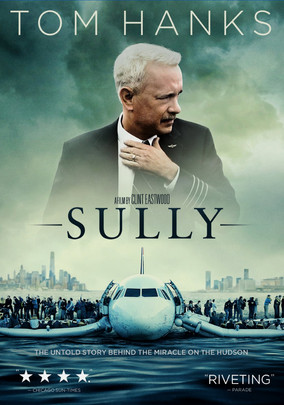
I think most film critics would agree that each modern film directed by Clint Eastwood would accurately be described as a compelling film yet safe film, and the 2016 Eastwood offering, Sully, fits into both of these categories snugly- just as Sully feels like a snug film.

Everything seems to fit into a nice package when the credits roll.

While the film is sympathetic and has leanings of a character study, it is also shrouded in a wholesomeness that is incredibly safe and “Hollywood.”

This is not a knock or a detriment to the film, as it is very good, well-made, and has a high budget. However, edginess is not its forte, and it might have been better off with a bit more grit.

The actual film recounts the lively, perilous recent United Airways flight 1549, on which the now-famous Captain Sully successfully landed in New York’s frigid Hudson River one January morning.

Tom Hanks is the subdued and unassuming hero to perfection as his calm demeanor and grounded persona make him a likable chap, to say nothing of saving 155 lives aboard the would-be doomed flight that day.

Instead of going in a purely linear direction, building up the events (gravitating passengers, takeoff) in sequential order until the inevitable crash, Eastwood wisely decides to begin directly after the crash.

Captain Sully, clearly jarred by the events, is startled awake by nightmares. He dreams of crashing into midtown Manhattan instead of safely landing the jet.

The hero is beginning to suffer from symptoms of PTSD.

He is kept in New York City for days on both a press tour, interview after interview, as well as being questioned by The National Transportation Safety Board, who wonder why Captain Sully did not return to a nearby airport for an emergency landing as simulated computer recreations show that he could have.

This leads to both Sully and First Officer Jeff Skiles (Aaron Eckhart) being put under a microscope and questioned.

I was a bit caught off guard and got slightly bored, as the film takes about thirty minutes to focus on the actual crash or show an airplane scene rather than building up the events by concentrating on Sully and Skiles’s mental health. However, in retrospect, Eastwood made a wise decision.

The entire film is barely over ninety minutes total, so the action comes fast and furious mid-stream.

Still, the film is not quite all that it could have been. Despite the potentially horrific consequences faced by an airplane blowing both engines due to the flocks of birds, I never got many extremely perilous moments during the film.

While technically well done, the danger scenes as Sully navigates the plane into the river lack much in the way of the punch.

Sure, there are a few quick shots of passengers praying or appearing frightened, but we never get to know any of the passengers very well.

A “don’t blink or you might miss it” scene of an elderly mother and her daughter shopping for a snow globe at the airport or three men rushing to catch the plane to catch a golf game in Charlotte is not enough for the audience to become too enveloped in their characters.

They almost seem thrown at the last minute as a way of personalizing the passengers.

As I mentioned above, the film’s point surrounds Sully (and arguably it should; there is nothing wrong with that) and, to a lesser degree, Skiles. The supporting characters contain no character development, and even Skiles’s personal life is not explored well.

Scully’s wife is only seen through phone conversations (played by Laura Linney), and he is happily married with two daughters. There is a brief talk about money trouble, but the wife is underdeveloped.

Additionally, the NTSB agents are portrayed as quite antagonistic towards Sully and Skiles (rumors abound that this was embellished for movie making), which makes sense.

I enjoyed the ending of the film- in tandem with the credits rolling- of seeing not only the real-life Sully but his wife and the passengers and crew of the actual United Airlines Flight 1549 through interviews and photographs.

This offering in true-life biography films is now a standard feature to look forward to as it brings a humanistic conclusion to the story just watched.

The film’s focus centers on Captain Sully, which is fine by me- the man is a hero- but as a film, and more than a biography, it might have added depth to have richer supporting characters and a more substantial background of the man that is Sully.

A few rushed childhood aviator and battle plane scenes seemed somewhat out of place.

Still, the film is pleasant and immensely watchable. It will not set the world on fire or be remembered as much more than a decent film based on a true story.

Oscar Nominations: Best Sound Editing

American Honey-2016

American Honey-2016

Director Andrea Arnold

Starring Sasha Lane, Shia LaBeouf

Scott’s Review #622

Reviewed March 6, 2017

Grade: A-

American Honey (2016) is an unconventional coming-of-age drama that deserves kudos for being shot on a shoestring budget and having something of substance to tell.

The film is mainly shot outdoors in heat-drenched Oklahoma, Nebraska, and Kansas during the summer. It follows a group of rebellious, lonely teenagers who attempt to sell magazines as part of a shady con organization.

Their female leader uses cult-like rallying techniques to achieve loyalty.

The film is shot mainly with hand-held cameras and uses only natural light, which is an admirable feat in filmmaking.

The film’s central character is an eighteen-year-old girl named Star, played by novice actress Sasha Lane.

Saddled with a deadbeat boyfriend with two young kids that she is forced to care for, she takes food from dumpsters to survive.

One day, she is approached by a charismatic, handsome bad boy, Jake (Shia LaBeouf). Jake and a group of teenagers offer her a job in Kansas.

Hesitant but realizing her dead-end existence, she accepts the mysterious job and travels with other unsavory characters across the states, where they prey on wealthy, religious types willing to lend a hand under the guise of selling them magazines.

The central story envelopes Star, her romantic feelings for Jake, and the quandaries she faces on the road. She drinks, smokes, curses, and is sexually active, yet also savvy and wise beyond her years.

The audience wonders if she will continue this lifestyle and worries when she meets older men—all rather well-mannered and affluent.

Will they pay her for her magazines or some other form of entertainment? How will Star handle propositions and scrapes in and out of precarious situations? Throughout the film, Star grows up and becomes kind and confident.

American Honey is extremely lengthy at two hours and forty-three minutes long, especially given that the film is an independent feature and does not seem to contain many concrete plot points or much of a conclusion.

It seems to go on and on and on.

Despite this, the film never bored me. I was pretty enraptured by the antics of the story’s characters, and I found myself quite fond of the surprising love story shrouded in the hip-hop and rap soundtrack.

Star and Jake (thanks mainly to the talents of Lane and LaBeouf) have genuine chemistry and likability as a couple.

The mystery surrounding Star is we know nothing about her parents or family or how she came to this existence at such a young age. At one point, she does mention her mother dying of a meth overdose, but it is unclear whether she makes this story up for the benefit of a magazine sale or if it is the truth.

Star is rebellious but brilliant and capable, all the while exhibiting kindness to strange children and her “colleagues.”

Two key aspects of American Honey are interesting to note: the film uses almost all non-actors. Director Andrea Arnold scouted and offered roles to most of the kids at local malls or various hangouts, so the film has a powerful rawness and energy, given that it is largely improvised.

Also, the film is almost entirely shot using a hand-held camera or cellphone, which creates a shaky, documentary-style feel. However, these characteristics do not give American Honey an amateurish feel; instead, they give the film an authentic quality.

The left-of-the-center approach of featuring male frontal nudity and same-sex relations gives the film much credo as an alternative film- the teens also swear and use drugs quite a bit, which could turn some off.

Receiving a heap of 2016 Independent Film award nominations (but winning none), my reason for watching American Honey (2016) breathes some fresh air into the world of independent cinema, where sometimes too many big-name stars appear in the indies to garner some credibility.

Watching a film of novices or individuals with no acting aspirations creates a good story that is worth something. And kudos to Arnold for spinning such a fresh tale.

Independent Spirit Award Nominations: Best Feature, Best Director-Andrea Arnold, Best Female Lead-Sasha Lane, Best Supporting Male-Shia LaBeouf, Best Supporting Female-Riley Keough, Best Cinematography

Hidden Figures-2016

Hidden Figures-2016

Director Theodore Melfi

Starring Taraji P. Henson, Janelle Monae, Octavia Spencer

Scott’s Review #619

Reviewed February 26, 2017

Grade: A-

Hidden Figures (2016) is a mainstream, “Hollywood” style film produced, written, and acted very well.

The film tells the story of three female African American mathematicians who faced many struggles and were somewhat overlooked in the early 1960s.

The women achieved historical success and allowed John Glenn to orbit planet Earth.

From a film perspective, the story is feel-good but not contrived. It feels quite fresh and features an excellent ensemble cast with good chemistry.

I enjoyed this film immensely.

Blessed with good smarts, Dorothy Vaughan (Spencer), Mary Jackson (Monae), and Katherine Johnson (Henson) were fortunate enough to work for the Langley Research Center – in 1961.

In those days, segregation still existed, and the women worked as temporary workers and used separate “colored” bathrooms and were largely excluded from the white workers.

The three women are best friends and drive to work together- each has an individual specialty, and the film focuses on each woman’s story.

The more prominent role and main story are about Katherine. Since the Russians had already achieved success in outer space, the race was on for the United States to follow suit. Katherine is assigned as a “computer” in the Space Task Group, led by Al Harrison (Kevin Costner).

Initially, Katherine is dismissed by her colleagues but eventually is accepted due to her smarts.

In subplots, Dorothy struggles to be given a Supervisory position. Mary aspires to be the first female engineer despite needing to enter an all-white school to take the necessary classes.

My favorite of the three performances is Taraji P. Henson.

The actress impresses with her spunky, well-mannered portrayal, specifically her fantastic scene when she has had enough of the segregation and difficulty performing her job.

She loses it in front of the entire team and rails against them- expecting to lose her job, instead, her boss Al, (a fantastic nice-guy role for Costner), sees her point and declares NASA will see no distinction of color.

Henson is the lead actress in the film and carries it well.

The chemistry between the three actresses makes Hidden Figures work so well and appear believable. The women always have each other’s backs and are friends outside of work, attending church and picnics together.

The film is wise to feature women’s lives outside of their professions.

A nice side story of single mother Katherine (her husband, who has died) meeting and being courted in lovely fashion by handsome National Guard member Jim Johnson (Mahershala Ali) is a sweet story, genuinely told.

The two also have nice chemistry together.

The film’s finale, as the attempted launch of John Glenn is met with problems, is compelling. Due to their genius of Katherine, she must save the day as Glenn trusts only her judgment and calculations of the ever-so-important numbers.

The scene is a “just desserts” moment for Katherine as the country rallies patriotically behind the events.

Hidden Figures plays it safe, and the actual struggles of the real women undoubtedly had darker and meaner situations, as the discrimination they faced had to have been more intense.

Still, the film strives to downplay some of the grit in favor of light-hearted, crowd-pleasing fare, but I fell for it hook, line, and sinker and enjoyed the film ride that I was given.

Oscar Nominations: Best Picture, Best Supporting Actress-Octavia Spencer, Best Adapted Screenplay

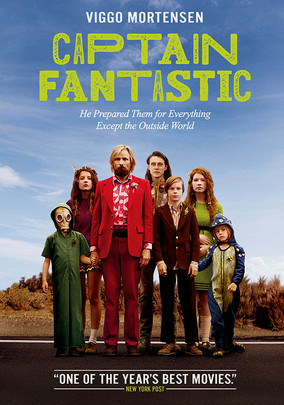
Captain Fantastic-2016

Captain Fantastic-2016

Director Matt Ross

Starring Viggo Mortensen

Scott’s Review #616

Reviewed February 10, 2017

Grade: B+

A thought-provoking story that raises a question of home-schooled, non-traditional book intelligence versus the lack of social norms and interactions and debates about which upbringings are more relevant, Captain Fantastic (2016) is a terrific film with a moral center.

The film, which stars Viggo Mortensen, is a family drama with a unique spin and edgy subject matter. Mortensen is not afraid to tackle complex and thoughtful roles.

Although it is perhaps not as gritty as it could have been and feels a bit safe, it still entertains and elicits thought, a critical aspect of film often lacking in modern cinema.

Director Matt Ross immediately treats us to aerial views of the green and mountainous Pacific Northwest, where a family of seven- one father and six children aged five to seventeen, silently prey on and kill a deer grazing in the forest. This is their dinner.

The family is unorthodox, to say the least.

Led by Ben Cash (Mortensen), he teaches the children how to fight, how to survive, and how to be ready for any situation. They are brilliant kids who can recite the Bill of Rights and the most complex literature.

Soon, it is revealed that their mother, Leslie, has committed suicide, and a battle ensues between her parents (Frank Langella and Ann Dowd), who is determined to bury her “properly” with a Christian funeral, and Ben and his children, who are determined to honor her last wishes for cremation.

Ben and the gang travel via their run-down school bus to New Mexico, meeting local townspeople as a battle of cultures occurs.

I commend Ross for creating a story that challenges the viewer to think, depending on the viewer’s religious or political views. There is a risk of people either loving or hating the film.

The film is skewed toward the left, as in the dinner and sleepover scenes with Ben’s sister. Her “Americanized” family is awkward, and the families have entirely different styles.

Ross makes it clear that Ben and his family are the intelligent ones, and his sister’s kids are pretty dumb, not even knowing what the Bill of Rights is and mindlessly playing violent video games.

The fact that they are a “typical American family” is sad and quite telling of wRoss’s perspective

Captain Fantastic wisely shows that either side is not perfect. His oldest son, Bodevan, blooming sexually, has an awkward encounter with a pretty girl, proposing marriage to her with her mother present because he knows no social norms.

A younger son is attracted to a “normal” life with his grandparents, who are a wealthy couple. The grandparents are not presented as bad people; instead, they want the best for their grandchildren and fear how their lives will turn out without better structure or what they perceive as a better upbringing.

Some of the kids blame Ben for their lack of social skills and being what they perceive as “freaks.”

The film does end safely as a happy medium is ultimately reached, but I never felt cheapened by this result. I found Captain Fantastic rich in intelligent writing and a challenging tale.

Many moments of “what would you do?” were brought to the forefront. Mortensen portrays Ben Cash flawlessly, mixing just the right vulnerability with the stubbornness of the character, and it is an excellent film for anyone fearing being intelligent is not cool because it is.

Oscar Nominations: Best Actor-Viggo Mortensen

Independent Spirit Award Nominations: Best Male Lead-Viggo Mortensen

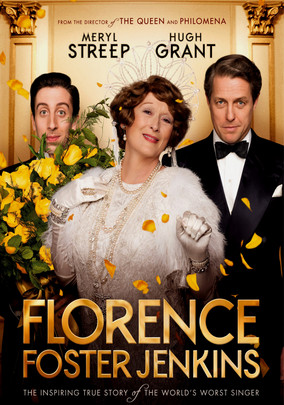
Florence Foster Jenkins-2016

Florence Foster Jenkins-2016

Director Stephen Frears

Starring Meryl Streep, Hugh Grant

Scott’s Review #613

Reviewed January 30, 2017

Grade: B

Director Stephen Frears loves to direct films starring vehicles for mature actresses. Judi Dench, Helen Mirren, and Meryl Streep have benefited vastly from his direction (all received Oscar nominations).

In Florence Foster Jenkins (2016), Frears crafts a warm-hearted tale about a famous real-life opera singer, the title character of whom is played by Meryl Streep.

The film is likable but not up to par with other Frears’ gems, specifically Philomena (2013) or The Queen (2006).

Given the subject matter, the film is too safe for my tastes and should have been darker.

Florence Foster Jenkins was a New York City socialite and heiress who flourished in 1944. She founded the Verdi Club and did a great deal of good for music, specifically opera, which she adored.

Her husband, Bayfield, played by Hugh Grant, nicknames her “Bunny.” He reveres her, but not physically—he resides elsewhere with a girlfriend.

This is due to Bunny being afflicted with long-term syphilis, causing her to be medicated and rendering her bald and unable to engage in sexual relations.

Bunny is a wretched, flat singer; despite her passion for singing, everyone convinces her how wonderful she is because she is so well-regarded in her social circle. Many people are paid off in exchange for their support.

Due to Bunny’s medication, it is assumed that she cannot hear properly, leaving her unaware of how badly she sings. Bunny is now determined to sing at Carnegie Hall, and Bayfield must scramble to make sure no critics are anywhere in sight for the big show, saving his wife from humiliation.

Any film starring Meryl Streep is assured to be fantastic from an acting standpoint, and, per usual, she does not disappoint. Streep envelopes the role of Bunny, giving her charm and a vulnerability that only Streep can do.

Although the character knows what she wants and is stubborn, she is also kind, and we see passion oozing from her pores.

Streep is the highlight and the draw of the film.

Hugh Grant deserves kudos, and I liked the chemistry between the two actors. Although seeking physical relations with another woman may make him appear a cad, Grant also gives Bayfield sensitivity and genuine care for his wife.

They have “an arrangement,” but he hides his girlfriend when Bunny shows up unexpectedly, not wanting Bunny to be embarrassed.

Grant’s and Streep’s scenes together are tender and believable.

Like Bunny’s pianist, McMoon, Simon Helberg also positively influences the film. Hired to accompany Bunny’s singing, he is initially appalled and bemused but finally understands Bunny, coming to love and respect her for who she is.

The character is clearly gay (the film never comes out and says this), but gay themes are common in Frears films, and it is a non-issue among the principal characters, excellent, but perhaps unrealistic for that time.

A flaw of the film is the lack of any purely great moments. I suppose the climax at Carnegie Hall should have been it, but I did not wholly buy the entire film.

Even the crowd’s laughter and mocking of Bunny seem to be done in a soft, light way.

Nonetheless, Florence Foster Jenkins (2016) is a decent offering, and Streep is the ultimate selling point.

The costumes are also great.

Oscar Nominations: Best Actress-Meryl Streep, Best Costume Design

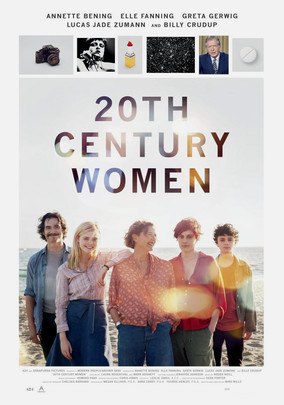
20th Century Women-2016

20th Century Women-2016

Director Mike Mills

Starring Annette Benning, Greta Gerwig, Elle Fanning

Scott’s Review #611

Reviewed January 22, 2017

Grade: A-

Annette Benning shines in her leading role in 20th Century Women (2016), a film directed by Mike Mills, a formidable independent filmmaker whose credits include 2010’s Beginners and 2005’s Thumbsucker.

In 20th Century Women, Mills serves as director and writer, so the film is his vision.

All five principal characters are quirky and well-written, though Benning’s is the most nuanced and fascinating.

The time is 1979, Santa Barbara. Despite the image of Santa Barbara as a wealthy, grand town dripping with the rich and powerful (perhaps due to the sweeping 1980s daytime soap opera of the same name), Mills does not present this film as such.

He presents Santa Barbara as a more artsy town, at least where his characters are concerned.

Benning plays Dorothea Fields, a fifty-five-year-old divorced mother of a fifteen-year-old boy, Jaimie. She is a free spirit who allows two runaways to live with her: Abbie (Greta Gerwig), a twenty-five-year-old aspiring photographer with fuchsia-colored hair recovering from cervical cancer, and William (Billy Crudup), a handyman.

They are joined by Jaimie’s good friend, Julie (Elle Fanning), a depressed neighbor.

The film nicely explores each character’s trials and tribulations and their interactions with each other in a highly quirky manner, and we fall in love with each of them.

Dorothea enlists Abbie and Julie’s help to have a positive influence after he nearly dies after a foolish teenage prank.

Mills successfully gives the period a slice-of-life feel, heavily referencing punk rock and the political climate in the film. Bands such as Talking Heads and Black Flag focus on Dorothea’s striving to learn what young people like, to remain youthful, and to stay in touch with her charges.

Dorothea is a chain smoker, and many scenes feature her pondering a situation while taking long drags. I love this aspect of the film as it showcases Benning’s cerebral performance. She is a thoughtful woman who wants her son to grow up sane and productive since his father is absent.

Sex and feminism are significant themes in the film. Abbie loans Jaimie two books by female feminist authors to help him better understand women.

When he begins to discuss orgasms and a strange conversation about sex and virginity ensues during a dinner party Dorothea is hosting, the graphic detail is a bit too much for Dorothea.

She is a conflicted character- open-minded and caring; when it comes to her son, she has a more conservative edge while trying to remain open to his new experiences as a teen.

20th Century Women is strictly a character-driven film with enormous strength. Each character is in a different place in their lives, and I adore how the film gives a conclusion to each of the characters’ lives in the years to come.

Indeed, the film follows the “happily ever after” formula, but this does not bother me. Instead, the film is so well composed that the characters’ lives enrapture me.

Admittedly, the film is slow-moving at times, but this is due to the richness of the dialogue—nothing is rushed.

Kudos to the cast. Gerwig and Fanning are incredibly excellent. Fanning’s Julie is a unique character- her mother is a psychiatrist who forces her to attend group sessions that she holds. Julie has a step-sister with cerebral palsy, so Julie frequently sleeps at Dorothea’s house as a way to escape her life.

Sexual active, Julie has a pregnancy scare during the story.

A coming of age type film set in an enjoyable time, 20th Century Women (2016) showcases the talents of a stellar cast led by Benning, takes its audience into a wonderful, character-themed world, and discusses the lives of its intriguing characters with a clear portrayal of life in the late 1970s.

Oscar Nominations: Best Original Screenplay

Independent Spirit Award Nominations: Best Female Lead-Annette Bening, Best Screenplay

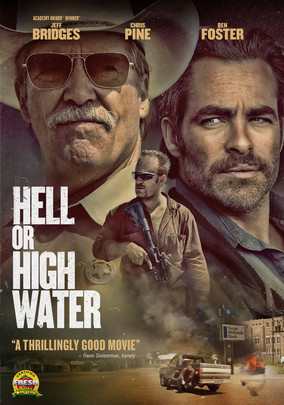
Hell or High Water-2016

Hell or High Water-2016

Director David Mackenzie

Starring Jeff Bridges, Chris Pine, Ben Foster

Scott’s Review #609

Reviewed January 16, 2017

Grade: B+

Hell or High Water (2016), a splendid tale of bank robbers chased by law enforcement officers in rural western Texas, is reminiscent of the Coen Brothers’ No Country for Old Men (2007) or a classic Sam Peckinpah film from the 1970s.

The film provides a good story with a morality tale, so the viewer is unsure who to root for—the good gr tad guys. This gives the film substance compared to the typical action-guy film, which is done to death.

Odd, quirky, minor characters are interspersed throughout the film, which adds comedy and a unique feel.

David Mackenzie directed the film, but up until now, it has been unknown to me.

Chris Pine and Ben Foster play Toby and Tanner, two brothers who embark on small-town bank robberies to save their recently deceased mother’s ranch.

Tanner (Foster) is the more seasoned criminal, having spent time in jail and being more volatile than his brother. Toby (Pine) is a family man with two kids and is more intelligent and sensible than his brother.

Two Texas Rangers, Marcus Hamilton (Bridges), a grizzled man weeks away from retirement, and his partner, Alberto Parker (Gil Birmingham), pursue them.

What I enjoyed most about this film is the authenticity of the setting.

The film was shot in New Mexico but meant to be in West Texas. This is believable, and the cinematography is gorgeous. The vastness of the land and the sticky desert heat are filmed very well.

Small-town Texas is portrayed as tiny characters introduced as townspeople, giving much credo to the film.

My favorites are the diner waitress-smitten with the handsome Toby (and her $200 tip), and t-bone waitress- grizzled and rude after forty-four years in the same place. Their sassy and abrasive behavior works and adds much to the film.

Dale Dickey is a treat in any film, and her turn as a bank employee is a joy.

How nice to see Chris Pine in a challenging role. His character is conflicted morally. Not wanting to hurt anyone, he struggles with the robberies and wants to do right by his kids and mother.

He is a decent man caught in uncertain circumstances, and Pine does an excellent job of portraying him, proving that the actor is becoming more than just a pretty face.

Bridges plays anger quite well, and it is nice to see the actor succeeding career-wise in his golden years. His Texas Ranger character is determined to uphold the law. Still, below the surface, he is more than a bit worried about his upcoming retirement, closing a chapter in his life that is undoubtedly important to him.

His relationship with his partner is jovial and buddy-like, but is there an underlying physical attraction between the men?

The film does not go there, but perhaps on a subconscious level, it is hinted at.

A fantastic scene laced with tension occurs near the film’s end when two of the main characters are killed. It is a stand-off of sorts atop a desert mountain ridge. One of the characters loses it, which results in a shoot-out and a shocking loss of life.

The scene is excellent in that it is a good, old-fashioned shoot ’em up done well.

Hell or High Water (2016) is a gritty action film with excellent elements, nice characterization, and clean fun. It’s a throwback to a long-time crime western without the standard stock characters.

This film is more layered than the traditional and intelligently written, achieving something unique.

Oscar Nominations: Best Picture, Best Supporting Actor-Jeff Bridges, Best Original Screenplay, Best Film Editing

Independent Spirit Award Nominations: 1 win-Best Supporting Male-Ben Foster (won), Best Screenplay, Best Editing

London Has Fallen-2016

London Has Fallen-2016

Director Babak Najafi

Starring Gerard Butler, Aaron Eckhart

Scott’s Review #608

Reviewed January 13, 2017

Grade: D

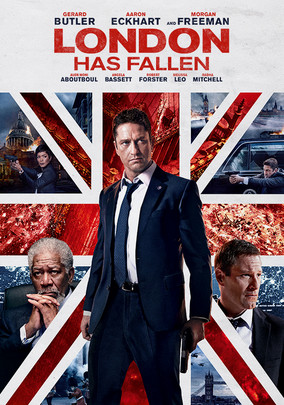
Save for many enjoyable, incredible London shots of mostly aerial views, London Has Fallen (2016) is a complete drivel of an experience.

The film’s attempt at being a red-blooded, patriotic film comes across as insulting and racist, with a machismo that is cringe-worthy.

The dialogue is terrible, and the “us against them” mantra has been done to death in film, mainly in the 1980s and 1990s. To quote one reviewer, “London Has Fallen is Donald Trump in film form.”

I don’t understand how the film convinced such a talented cast to appear (it must have been money), and several parts are so small (Robert Forster, Melissa Leo, Jackie Earle Haley) that they are nearly glorified extras.

The plot is painfully contrived, to say nothing of the ludicrous nature of the entire story.

To retaliate against a drone strike killing a Pakistani leader, terrorists take advantage of the death of the UK Prime Minister to assassinate several world leaders who have gravitated to London to attend funeral services.

The President of the United States (played by Aaron Eckhart) is naturally in attendance, and his murder is thwarted by top Secret Service official Mike Banning (Gerard Butler), our film’s hero.

The rest of the film involves the President and Mike running throughout London, attempting to catch the terrorists and bring them to justice while avoiding death.

The London locales are superb, but sadly, they mainly appear at the film’s beginning and end. The London Eye, the Thames River, the Underground, and various metro stations are featured.

The numerous London bridges also get some exposure.

The best part is how the film showcases London’s vastness, not just the up-close shots of historic places like Westminster Abbey or Buckingham Palace.

Undoubtedly, London is known for those gems, but the aerial views give the viewer an appreciation of all London offers.

I loved only this aspect of the film.

The supporting roles are abysmal, and given the more artistic parts they’ve received in the past; one imagines the actors cringing as they read the scripts for some of them.

I hesitate to think what possessed Leo, Forster, and Haley to accept meaningless roles save for a hefty paycheck. Each played a member of the President’s staff and was reduced mainly to reactionary shots.

As an ill-fated Secret Service Director, Angela Bassett and Radha Mitchell, as Banning’s weary-looking, pregnant wife, get more screen time but are treated to equally uninteresting roles.

Overall, the performances are forgettable. Respectable actors Butler and Eckhart merely phone in their vapid, dull lines, failing to make any of them believable.

The film never bothers with character development or anything beyond fundamental good and evil roles. Every character is either 100% good or 100% bad.

It is made crystal clear that the Americans are the good guys, and the foreigners (all Middle Eastern or Asian actors, of course) are simply the bad guys.

The motivations of the “bad guys” are never explained, and one cheesy line after another is written for the “good guys.”

During the finale, Banning professes that “we have been here for thousands of years and always will be” as he beats a lousy guy senselessly. Good grief. I’ve seen better dialogue on a network television drama.

And there is never any doubt about how the film will end. There is an American mole who has used his power to enable all of the assassinations, but when the mole is revealed, it is a character we have never seen before, so who cares?

Indeed, the film will soon be forgotten for its poor story, cliche-ridden script, and numerous stereotypes, but the fantastic London shots were inspiring and lovely.

I would have been happy with one hour and forty minutes of those.

Everybody Wants Some!!-2016

Everybody Wants Some!!-2016

Director Richard Linklater

Starring Blake Jenner, Zoey Deutch

Scott’s Review #585

Reviewed January 5, 2017

Grade: A-

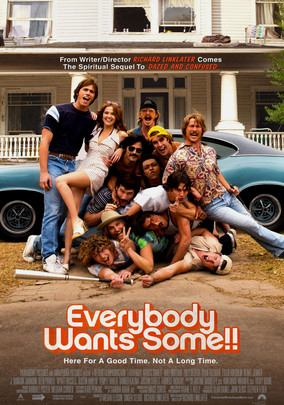
A follow-up to the successful 2014 film Boyhood, directed by Richard Linklater, Everybody Wants Some!! (2016) is another slice-of-life story with interesting characters, trials and tribulations, and a coming-of-age theme centering around the main character’s struggles to identify with themselves and each other.

Like Boyhood, a timeline is used, but instead of taking place over seventeen or so years, it takes place throughout a long weekend preceding the start of the college semester, a blissful yet melancholy time for many.

The setting is steamy Texas in the late summer of 1980.

A few freshman baseball prospects, who were superstar athletes in high school but are unknown here, move into a large house inhabited by other baseball players, hoping to make it to the majors.

The college is fictional but is a Southeast Texas Cherokee team. The main character, freshman Jake (Blake Jenner), arrives to find a bevy of drunken jocks carousing for a good time.

He bonds with the other guys but is more introspective and complex and embarks on a flirtation with a theater student, Beverly (Zoey Deutch), while also connecting with various other jocks with whom he lives.

The film is successful because it is a quiet story. Like Boyhood, Linklater focuses on relationships and good storytelling rather than big bombastic moments or cliched stereotypes. We observe many acquaintances living life, getting to know each other, and having fun rather than taking life too seriously.

At the same time, they worry about their futures and choose to live for the moment, not knowing what tomorrow will bring.

They are stuck in a moment in time.

The musical soundtrack is fantastic- interspersing 1980s bands like Van Halen (known for the title song), Pat Benatar, Devo, and many others while mixing in classic artists like Neil Young and Led Zeppelin.

The film focuses on a bonanza of rock n roll history.

Everybody Wants Some!! It is well-written and intelligent.

Fellow intellectual jock Willoughby (Wyatt Russell)and Jake do not quite fit in with the other loud and self-centered jocks, forging a close friendship, discussing intricate aspects of rock songs by Led Zeppelin and dissecting the arrangements and simply talking about life rather than guzzling beer and chasing girls.

Ironically, Linklater chooses to have Willoughby diss Van Halen as a corporate rock band despite branding the title name of the film.

One may argue that nothing happens throughout the film, but that is the beauty and what makes it work as an honest, truthful piece of filmmaking.

How novel that the film does not contain any contrived plot devices intended to create tension between the characters- the film is, and that is the beauty of it.

Everybody Wants Some!! It is intended to be observed.

The romance between Jake and Beverly is sweet and unassuming. They come from different backgrounds- he a jock, she a theater major, yet they connect innocently.

The film displays different social groups coming together, which is a significant accomplishment of the film. We witness the jocks attend a theater-style party and enjoy themselves.

The film successfully merges differing social groups as one, but the key here is that the film never does this in a contrived manner. It simply happens organically.

Some complained about the age of some of the actors, many considerably older than teenage years, donning wigs, but that did not bother me. I enjoyed the maturity of the seasoned actors in these roles.

Linklater is a modern director who dares to tell interesting stories about ordinary individuals with whom the audience can immediately identify, making him a worthy talent of today.

Jackie-2016

Jackie-2016

Director Pablo Larrain

Starring Natalie Portman

Scott’s Review #576

Reviewed January 1, 2017

Grade: A-

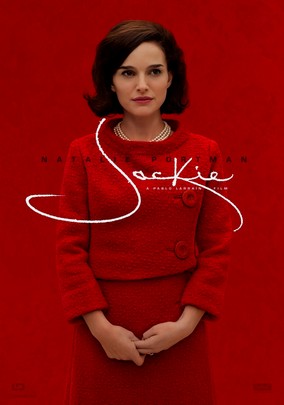
Natalie Portman carries the 2016 biographical-drama film based on the life of Jackie Kennedy and the events directly following the assassination of John F. Kennedy in 1963.

The film does not retread conspiracy theories or feature more than a few brief glimpses of JFK himself. Instead, it tells Jackie’s story and what she faced throughout the ordeal.

The film wisely uses flashbacks to show the famous tour of the White House, which Jackie gave shortly before the President’s death.

It is a bravura performance by Portman as Jackie.

Director Pablo Larrain, primarily known for achievements with foreign-language films (the Chilean film No (2012), comes to mind), rather than the American history genre, is successful in his work with direction.

The film is gloomy, both in tone and with the terrific brooding musical score composed by Mica Levi, with its loud, abrupt sound effects.

The overall feel of the film is foreboding and dark.

The main activity is told through a famous Life interview that Jackie Kennedy gave a week after the assassination. The reporter was Theodore H. White, who was slightly less than sympathetic in demeanor toward the First Lady.

Held in Massachusetts, Jackie is still pained in peaceful tranquility away from the limelight.

Portman successfully reveals two sides of Jackie Kennedy to the audience. Not simply the smiling debutante she always portrayed publicly, Jackie was also a complex, feisty woman.

She vehemently wanted the world to see how brutal the assassination was, how proud she was of her husband, and how she would not back down from holding a lavish and public funeral procession for her deceased husband.

Jackie was met with harsh criticism and defiance for her desire. A proud woman, she did not wish to run away and hide from the terrible events.

Jackie is mostly a quiet, introspective film. Much of the film is about Jackie being interviewed, and there are flashbacks of her giving the White House tour.

Typically, Portman portrays Jackie as prim, proper, and demure. She is always filled with class and grace.

In one riveting sequence, though, we see Jackie walking through the White House, smoking cigarettes and drinking vodka. She appears alone and vulnerable, having just lost her husband.

Portman embraces her pain, and the audience grieves with her. She is alone in more ways than one. We see her not only as a First Lady but also as a sad woman in her agony.

Portman is fantastic in her mannerisms and tone of voice.

I loved the continuous usage of flashbacks to tell the story. Still, the film does not delve into an unneeded history lesson. We all know what happened. The point of the film is to answer curiosity about Jackie.

What is most effective is the focus on Jackie’s reactions and how Jackie handled the events.

In a grotesque scene rivaling any horror film, we are right there with Jackie in the car that fateful day as a shot rings out, blowing JFK’s head wide open. Sinking into Jackie’s lap, she later candidly describes to the Life magazine reporter how she attempted to hold the remains of his head together.

We then see her wandering around, her beautiful pink suit smeared with blood.

A quiet yet compelling and mesmerizing film, Portman is the main draw. She channels emotions of heartbreak, sadness, and composure.

Jackie was a fantastic First Lady who was always graceful and proper, but Portman shows another side of her that very few people knew about.

In addition to this fine acting, Jackie (2016) is a dark, brooding film that successfully tells this woman’s story.

Oscar Nominations: Best Actress-Natalie Portman, Best Original Score, Best Costume Design

Independent Spirit Award Nominations: Best Feature, Best Director-Pablo Larrain, Best Female Lead-Natalie Portman, Best Editing

Manchester by the Sea-2016

Manchester by the Sea-2016

Director Kenneth Lonergan

Starring Casey Affleck, Michelle Williams

Scott’s Review #542

Reviewed December 11, 2016

Grade: A

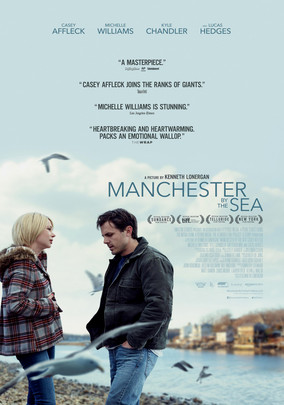
Manchester by the Sea (2016) is a beautiful film.

Told from a slow build-up to a crescendo and a big reveal mid-stream about one of the character’s pasts, it takes time, which is why it is so compelling.

The audience slowly becomes familiar with the characters, making them rich with nuances. They care about them and their predicaments, just as good, solid storytelling should.

The film is a slice of life, dark drama, but I did not find it to be a downer in the least bit—instead, a film with rich writing and great characters. A good movie makes you care for the characters like real people.

Casey Affleck is excellent as the lead character, Lee Chandler. In the film, he plays a janitor who lives a mundane life in Quincy, Massachusetts, tending to apartment buildings. He calmly deals with indifferent, angry, or odd tenants.

Affleck portrays this man with reserve and occasional outbursts of rage. His anger is confusing, but as the story unfolds, we begin to understand what this man has been through and the reasoning behind his anger, even though he is a good person.

Lee receives a call one day with news that his brother, Joe, has died.

Kyle Chandler plays Joe through many flashbacks throughout the film. Upon Joe’s death, Lee returns to Manchester (where he formerly resided) and is told he will be the guardian of his sixteen-year-old nephew, Patrick (Lucas Hedges).

In the mix are the characters of Joe and Lee’s ex-wives- Elise and Randi (Michelle Williams), playing small yet pivotal roles.

The film is dark, and many characters either suffer from emotional trauma, neurosis, or some other maladies, either physical or emotional.

The slice-of-life analogy comes into play. Everyone can relate to these characters in some way, and most people have lived in towns like this and/or have suffered crappy turns of events in life.

When Lee returns to Mansfield, he is a familiar face with a hint of mystery and history. Mansfield is a small town; everyone knows each other’s business, and the characters are hardened, blue-collar, and rugged individuals.

In addition to Affleck’s compelling performance, Williams must be mentioned. She gives a tremendous, heart-wrenching performance as a good woman in pain, trying to carry on and do the right things, forging some adequate existence, as is Lee.

Anyone who has gone through pain (which is everybody) can relate to these characters.

The supporting cast, including even the tiny characters, is perfectly cast and has hearty Boston-type accents that I loved. From Joe’s wife to Patrick’s girlfriend’s mother to various other walk-on characters, each has a vulnerability mixed with toughness.

It is as if life has been challenging, and they are wary of trust, yet they help each other and stick together.

The characters are a major positive to Manchester by the Sea.

Many reflective moments abound within the film, and we are often given scenes of Lee driving down the highway deep in thought. Or long shots of the vast Atlantic Ocean, where fishing is a large part of the character’s lives.

Fishing boats and waves are monumental in the film.

These are not throwaway scenes but interesting, compelling moments rich with meaning.

During the best sequence of the film, when a startling event occurs, the scenes are mixed with classical and operatic music, giving the scenes and the shocking revelations power and meat.

It is heavy stuff but also beautiful, with a compelling musical score.

Not to be drowned by the heavy drama, Manchester has some quirky, dry humor moments. When Joe is initially told about his heart condition, he and his father unintentionally call his female Asian doctor by the wrong name.

When family friends host a party following Awaken, they awkwardly misunderstand each other when they attempt to fix Lee a plate of food. Finally, nobody can find the deceased Joe’s belongings at the hospital. These awkward moments add some comic relief to the film.

I adore well-crafted, emotional, compelling family dramas. Too often, they are cliche-ridden and highly predictable.

Manchester by the Sea (2016) has brilliant writing, top-notch acting, and intricately layered characters.

This film has it all.

Oscar Nominations: 2 wins-Best Picture, Best Director-Kenneth Lonergan, Best Actor-Casey Affleck (won), Best Supporting Actor-Lucas Hedges, Best Supporting Actress-Michelle Williams, Best Original Screenplay (won)
Independent Spirit Award Nominations: 1 win-Best Feature, Best Male Lead-Casey Affleck (won), Best Supporting Male-Lucas Hedges, Best Screenplay, Best Editing

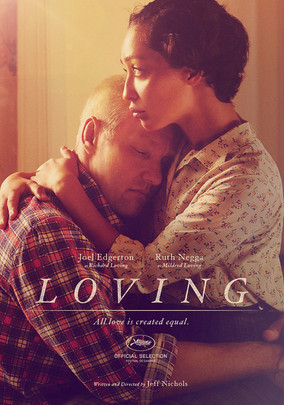
Loving-2016

Loving-2016

Director Jeff Nichols

Starring Joel Edgerton, Ruth Negga

Scott’s Review #527

80099974

Reviewed November 26, 2016

Grade: A

Loving (2016) is a quiet film.

Subdued and poignant, it is an important historical story to tell and jarring to be transported back to the 1950s Southern style, where interracial marriage was not only illegal, but children of interracial couples were barely considered human beings.

This is to say nothing of the views of their parents, specifically of law enforcement.

Sadly, circa 2016, we all should be aware that racism is still alive and well in the United States, and this film is a reminder of how much further we need to go.

The true story of the landmark 1967 Loving vs. Virginia Supreme Court case is the basis for this film.

The time is 1958 in Virginia, and a sweet, working-class couple, Richard and Mildred, are very much in love. Richard-white and Mildred-black are met with some sideways glances around town but generally have a strong, supportive family and friend structure, although both families are pretty poor.

They enjoy spending time with friends in bars and racing cars.

When Mildred becomes pregnant, Richard purchases a plot of land for them and asks Mildred to marry him. Despite the challenges this will create, they are wed in Washington, D.C. Once they return to Virginia, they are arrested for violating anti-miscegenation laws prohibiting interracial marriage.

The couple eventually sued the state of Virginia, leading to a unanimous Supreme Court ruling a decade later.

As a film, Loving is thoughtful and introspective.

The audience questions who we are to decide who someone loves. This can apply to same-sex couples as easily as interracial couples.

The film, led by director Jeff Nichols, creates many quiet scenes of thoughtfulness on the faces of leads Edgerton and Negga.

Furthermore, several scenes of peril encompass the film.

The Lovings constantly threaten to be discovered as they secretly return to their forbidden home state to give birth to their son, only wanting Richard’s mother to perform the birth. The tense scene where Mildred is dropped off on a deserted back road is well shot; the camera constantly focuses on the road and the threat of a car coming by at any moment.

Edgerton, a fantastic actor and director, performs tremendously as a quiet, stoic, blue-collar man who is madly in love with his wife and sees nothing wrong with it simply because it is not the norm.

He is poorly educated, but Edgerton gives him underlying intelligence and a basic understanding of cherished love and more than once calmly utters, “But I love my wife.”

To him, it is that simple. Richard will also use any necessary measures to protect his family, as any man would. Edgerton’s squinting blue eyes portray suspicion, warmth, and love.

Negga is equally compelling as calm and loyal Mildred.

One might expect Mildred to finally explode with rage as she faces obstacle after obstacle, raising three kids in an environment she does not want, yet she never does.

Negga embodies the character with sweetness, wide-eyed passion, and longing for a better life. Mildred tries not to get her hopes up with each impending court date, but Negga successfully portrays the character with many different emotions and complexities.

My favorite scenes of hers involve Mildred gazing at her husband, her eyes filled with love and pride.

Nichols wisely does not spend much time in the courtroom, a positive aspect of the film. Sure, we get the occasional scene of Richard and Mildred facing the court, but the film does not take a different approach than necessary.

Despite a landmark decision coming from Loving’s marriage, the film is a love story between a good man and a good woman who happens to be of different races.

What a lesson every viewer can learn from Loving (2016).

Oscar Nominations: Best Actress-Ruth Negga

Independent Spirit Award Nominations: Best Director-Jeff Nichols, Best Female Lead-Ruth Negga

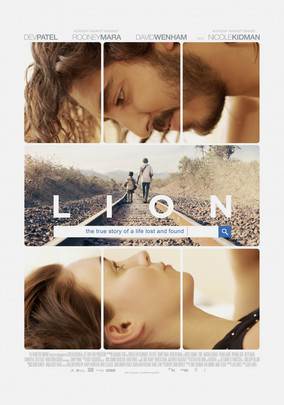
Lion-2016

Lion-2016

Director Garth Davis

Starring Dev Patel, Nicole Kidman

Scott’s Review #521

80108447

Reviewed November 19, 2016

Grade: A-

Lion (2016) is an enthralling, humanistic drama about family, lost loved ones, and the search to find them, as seen through the eyes of the same character as a child and an adult.

It features fantastic acting, specifically from stars Dev Patel (Slumdog Millionaire-2008) and Nicole Kidman, and also features lavish cinematography of the Indian and Australian countryside.

The film is based on a non-fiction book named “A Long Way Home.”

Introduced to a poor neighborhood in India in 1986, we meet five-year-old Saroo, a wide-eyed boy who idolizes his big brother. Their beautiful mother carries rocks for a living and relies on the boys to watch their younger sister.

The boys steal coal to help eliminate their mother’s hardships. Their father is absent.

Saroo accidentally gets on an empty train when he insists on accompanying his brother on a night job. He is transported thousands of miles away, losing his family in the process.

Twenty-five years later, and long since adopted by an Australian family, Saroo attempts to find his long-lost family using new technology- Google Earth.

In a lesser film, this subject matter might have been a sappy affair, predictable, and contrived.

But Lion soars with humanistic, emotional flair, and heartfelt, without any manipulations.

The first third of the film is focused on five-year-old Saroo. We witness his confusion, desperation, and scrapes with potential kidnappers, child molesters, and undesirables. We also see how resilient and intelligent he is, wisely outmaneuvering foes and savvy enough to avoid monstrous people.

As much as I enjoyed this film segment, it lasted slightly too long. I was ready to see Saroo as an adult and the encompassing problems to come, but this is a tiny gripe in an otherwise extraordinary film.

Lion takes off when Patel plays Saroo, who is now all grown up. Adopted by an Australian couple, John and Sue Brierley, he has lived a life of love, respect, and encouragement.

The Brierleys are a selfless couple who, in addition to Saroo, have adopted another Indian boy with deep emotional issues. This has caused hardship and problems in the household. Their reasoning for adopting is poignant; rather than bring their biological children into the world, why not save two children who need to be saved?

Patel and Kidman give emotional and raw performances. Patel is quite a find as he plays conflicted and haunted very well and is convincing in the lead role.

We witness his conflict as he struggles with not knowing what has become of his family in India, imagining their worry and the devastation of not knowing what has become of him. He also avoids telling Sue, his adoptive mother, who has her hands full with other emotional issues.

Kidman, who always delivers, is raw, emotional, and sympathetic.  As Sue struggles to be strong, her facial expressions are subtle and contained, yet dying inside with underlying pain is exceptionally relayed by Kidman in an award-worthy portrayal.

Director Garth Davis cleverly adds several scenes of Saroo longingly looking out into the ocean or simply gazing in the distance, imagining and self-reflective.

What makes these simple scenes great is through Saroo’s imagination, he imagines being with his birth mother; she is still young, and he is now an adult. Similarly, he imagines being with his brother; his brother is still ten, but Saroo is now an adult.

These are quiet, beautiful scenes that add layers to this film.

Lion (2016) is a wonderful experience in great storytelling, led by effective acting performances and a compelling screenplay that gives honesty in film-making to the true story that the film is based on.

The film is heartwarming and can be enjoyed by anyone.

Oscar Nominations: Best Picture, Best Supporting Actor-Dev Patel, Best Supporting Actress-Nicole Kidman, Best Adapted Screenplay, Best Original Score, Best Cinematography

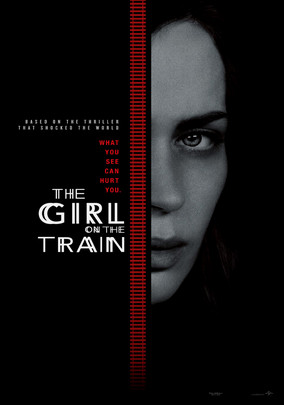
The Girl on the Train-2016

The Girl on the Train-2016

Director Tate Taylor

Starring Emily Blunt, Justin Theroux

Scott’s Review #493

80105068

Reviewed October 12, 2016

Grade: B+

The blockbuster was the apparent must-see film of the fall of 2016. Almost everyone flocked to see it, and I happily saw it shortly after its release.

While containing some flaws, The Girl on a Train (2016) is an excellent thriller and companion to Gone Girl (2014). It is similar in style, tone, and, in a way, story.

A whodunit with psychological, almost Hitchcockian elements, it navigates twists and turns to an unfortunate, disappointing finale.

Still, it is a more than adequate offering that does not bore.

Based on the hit novel of the same name, which I understand is superior to the film.

First and foremost, how gorgeous was the scenic eye candy of suburban New York City, where the train chugs along the Hudson River in breathtaking beauty?

The film’s point is that affluent houses are nestled along the river banks, hidden with secrets. Beautiful neighborhoods are often riddled with affairs, drama, and backstabbing.

The train’s setting and element—peering through windows to witness smoldering events—were perfect.

The film’s standout is Emily Blunt, who gives a compelling, sometimes heartbreaking turn as a boozy, jobless, young woman fraught with heartbreak after heartbreak.

She finds solace on the Metro-North train as she peers into a particular well-to-do house, making up stories about a young woman she re-names daily, usually inebriated.

Though The Girl on the Train is not the typical “Oscar-type film,” I’d argue that a potential nomination is warranted for Blunt, who is brilliant on her emotional roller coaster.

Rachel fantasizes about being the stranger’s friend, revealing her desperation. We quickly learn about her life circumstances and feel empathy.

I anticipated an experience like Hitchcock’s classic Rear Window (1954), in which Rachel notices a crime and somehow becomes involved. This is partly true, but it is also different.

I was, however, treated to a film that never lags or waivers, and the action is plenty, not in bombs or car-chase way, but instead a circulating array of plot twists and emotions.

How wonderful to see Allison Janney, Lisa Kudrow, and Justin Theroux in a big-budget, mainstream film rather than independent small films for a change.

All three knock the material they are given out of the park, and kudos to the writers for making Kudrow, in little more than a cameo, a significant part of the grand reveal.

Arguably, Janney’s character of Detective Riley is the weakest written and seems to change motivations depending on the story shift. This is perplexing and too plot-driven.

In a way, the same might be said for Theroux’s character of Tom Watson, but, alas, it is a thriller, which sometimes happens in this genre.

Without giving much away, the conclusion to the film is unsatisfactory. We are given an ending wrapped in a neat, tidy bow, which contradicts the rest of the film.

The film is confusing, dream-like, and muddled—in a good way. Rachel’s thoughts disturb us, and we wonder what reality is. The climax is too clear, and instead of leaving much to the imagination, we are fed a linear, straightforward story ending, almost geared toward a Hallmark television movie (gag).

Wise would have been to write Rachel as still vague about her surroundings, but this does not occur.

The Girl on the Train (2016) will not redefine cinema or go down in history as fine art, but it is not intended to be the type of film designed to keep you on the edge of your seat and does so.

The story is above average and slick, but Blunt is worth heaps of praise and is head and shoulders above the rest of the film and the cast, which is no small feat considering the talent involved.

Great acting job, but the writing could have been slightly better.

Café Society-2016

Café Society-2016

Director Woody Allen

Starring Jesse Eisenberg, Steve Carell

Scott’s Review #462

80106775

Reviewed August 11, 2016

Grade: B+

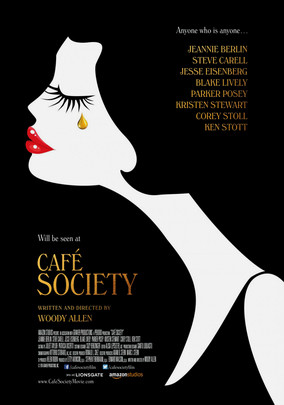
Having received sub-par reviews but wanting to see this film for myself, as it is a Woody Allen film, and I have yet to see an Allen film I did not like, I traversed to my local theater to see this flick.

I was not disappointed, though others did not share my opinion.

To love Woody Allen films is to love quirky characters who are either neurotic, damaged, or, more often than not, both.

Also notable to Café Society (2016) is the stellar cast of who’s who, many in minor cameo roles, another trademark of Woody Allen films.

Marisa Tomei, Daniel Radcliffe, and television stars Anna Camp (True Blood) have tiny roles, as do stars such as Sheryl Lee (Twin Peaks) and Tony Sirico (The Sopranos).

Additionally, Woody Allen himself narrates the film- a highlight.

The main stars of Café Society are Jesse Eisenberg and Kristen Stewart, both ideally cast.

The setting (which I adored) is 1930s Hollywood, and the action traverses between California and New York City, another common bond in Allen’s films.

Eisenberg plays Bobby Dorfman, a Jewish son of a working-class jeweler who has many siblings. Tired of New York, he flies to Los Angeles to obtain work with his hotshot Uncle Phil, played by Steve Carrell, who knows every celebrity.

There, he meets Vonnie (Stewart), and they fall in love, Bobby unaware of her on-and-off love affair with Phil.

The set and costume designs are to die for, and as a fan of this glamorous period in history, I find it an extraordinary visual treat.

Café Society is a prime example of a film that feels authentic to its time rather than appearing staged with actors merely dressed up in appropriate attire. This is tougher to achieve than one might imagine.

Despite contrary opinions, I enjoyed how most characters were wishy-washy and unsure of their motivations or feelings toward others.

Vonnie loves Phil, and then she warms to Bobby, who has been in love with her since their first meeting. She innocently shows him around Hollywood’s palatial mansions.

She is honest with Bobby but then makes a decision and becomes everything she once despised about Hollywood: a shallow, trophy wife.

Ironically, Bobby becomes involved with a stunning new woman named the same as his ex back in New York. This coincidence is crucial to the film’s point. He transfers his feelings to another woman, but is he pleased?

It did not bother me, though perhaps it should have, that several characters were introduced for a scene or two and then mysteriously dropped.

For instance, the novice hooker, Candy, having tried to make it as an actress and failed, has a heart of gold. However, after her awkward attempt at a tryst with Bobby, the character is never seen again.

Another characteristic of the film that I enjoyed is the natural, overlapping dialogue between the characters. It makes them more genuine and evokes my fondness for Robert Altman films, which used a similar technique with their actors.

The point of Café Society is that nobody ever gets what they want, and the film makes a point that nobody knows what they want.

Containing elements common to other Woody Allen films, Café Society (2016) is intended for fans of his lengthy work.

Holidays-2016

Holidays-2016

Director Anthony Scott Burns, Miscellaneous

Starring Jocelin Donohue, Sophie Traub, Seth Green

Scott’s Review #460

80096585

Reviewed August 7, 2016

Grade: A-

While perusing my Netflix streaming new release options, I stumbled upon an intriguing choice with an interesting premise.

Eight horror vignettes are all set in a holiday theme named Holidays (2016). The description of the stories harkens back to the days of the beloved Showtime Masters of Horrors series (2005-2007) that featured macabre horror shorts.

Not all eight offerings are spectacular, but the ones that stand out are dynamic, if not creepy.

Set in chronological order, Holidays begins with a story centered on Valentine’s Day- a clear homage to the horror classic Carrie (1976).

A taunted female teenager nicknamed “Maxi-Pad” by her cruel nemesis is encouraged to dive into the high school pool by her male coach to retrieve a brick, presumably to conquer her fear of swimming or water.

The coach, who Maxi is in love with, requires a heart transplant, so Maxi goes to morbid lengths to assist him and exact revenge on her tormentor.

In Father’s Day, a young female teacher receives a mysterious cassette tape from her long-estranged father, leading her on an adventure in an abandoned area to locate her father, wonderfully voiced by actor Michael Gross.

The audiotape’s voice tones and static sound add to the intrigue and suspense of the story.

Along with the Valentine’s Day story, the Christmas and New Year’s Eve segments are my favorites, as each is exceptional and creative.

On Christmas Eve, a young father (Seth Green) attempts to buy his son the last virtual reality device, but when he leaves a stranger to die to obtain it, he becomes haunted by the device.

On New Year’s Eve, a male serial killer looks for his next victim, a lonely woman desperate for an online date, but once they return to her house for sex, who becomes the hunter, and who becomes the victim?

Other holidays featured in stories that are either too bizarre to make perfect sense or less compelling but still worth mentioning are St. Patrick’s Day, Easter, Mother’s Day, and Halloween.

I adore this film’s clever holiday theme. I wonder which holiday will come next and how it will be incorporated into the story. It is terrific fun.

Specifically, the Christmas story reminds me of a classic Twilight Zone episode in which the main character betrays an unknown stranger for personal gain, which leads to guilt and conflict.

A few of the stories focus on the traditions of the featured holidays, like the legendary snakes of St. Patrick’s Day or the resurrection of Jesus on Easter Sunday, as a frightened young girl becomes terrified of the folklore involved.

This is incorporated with the legend of the Easter bunny delivering candy, as the confused girl cannot separate fairy tales from reality. This makes me wonder if the director’s point was to question the silliness of religion if one dissects it enough.

Other themes are revenge, as in the Halloween and Valentine’s Day episodes.  Both feature bullying in one way or another, each getting their due in the end.

I wish more anthologies like Holidays (2016) were made, as watching this feature was a fascinating, late-night joy.

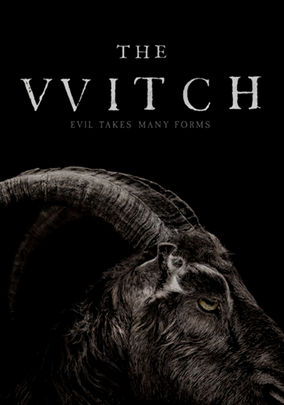
The Witch-2016

The Witch-2016

Director Robert Eggers

Starring Anya Taylor Joy, Ralph Ineson, Kate Dickie

Scott’s Review #446

80037280

Reviewed July 7, 2016

Grade: B+

The Witch is a slow-build 2016 horror film that plods with sinister wickedness and leaves viewers thinking well beyond the credits.

Is it a message movie?

Good versus evil, with a definite religious umbrella encompassing the entire film, is God against the devil. Guess which one wins out?

To be transparent, this film will undoubtedly offend the staunch religious.

Set in 1600s New England and entitled “The Witch—A New England Folktale,” the story follows a Puritan family banished from the village they inhabit.

They are forced to begin a life on their own and build a farm, struggling to survive by secretly selling family heirlooms. William and Katherine are the parents, followed by a teenage daughter, Thomasin (Anya Taylor-Joy), a son, Caleb, and youngsters, Mercy and Jonas.

Their recent addition to the family, Samuel, is snatched by a mysterious creature in the shape of a witch. We only see her draped in red as she sneaks into the woods holding the infant.

From the family’s perspective, they do not know who (or what) has taken Samuel) and tell themselves that it was a wolf, but soon they are not so convinced, and Thomasin is assumed to be a witch.

I adore the fact that this film is not set in modern times, which undoubtedly turns off some viewers. The thick English dialect is almost Shakespearean at times and challenging to follow at others, but it is also rich in culture.

The period and the absolute purity of the family are unsettling. Is it too good to be true? Unlike many horror films, much of the film is shot in the daytime, which adds to the tension.

It is combined with the creepy musical score- strings are used.

At one hour and thirty-two minutes, the very short film feels longer- it truly does move at a snail’s pace, but the final act makes up for this as something told me it would.

It has a creepy feel, and nightmarish events occur at the film’s finale.

Some of The Witch is open to interpretation. Sometimes, I suspected one family member or another of perhaps evil, but the film is not that straightforward, and some complexities arise.

For instance, do spirits possess animals? When Thomasin milks a goat and blood runs out, is this supposed to represent female menstruation?

A thinking man’s horror film, which is refreshing within the horror genre or any other genre for that matter, The Witch (2016) is unorthodox and thought-provoking, which makes it a winner in my book.

Independent Spirit Award Nominations: 2 wins-Best First Screenplay (won), Best First Feature (won)

Dirty Grandpa-2016

Dirty Grandpa-2016

Director Dan Mazer

Starring Robert De Niro, Zac Efron

Scott’s Review #432

80049285

Reviewed June 29, 2016

Grade: D-

It’s a sad day when the only interesting aspect of a film is the gratuitous nudity of one of its stars, but that is precisely the case with Dirty Grandpa (2016).

Zac Efron bravely bares all for the sake of art….or a big paycheck, whichever the case may be.

Otherwise, Dirty Grandpa is complete drivel.

It is crass, rude, mean-spirited, and blatant in its raunch. It also aspires (successfully) to be politically incorrect, quite surprising in these times of fairness and equality for all.

If the film intends to be outrageous, it succeeds in spades.

Unfortunately, there is not much comedy, and the film is quite bad, even where dumb comedies are concerned.

Starring one of the film’s most extraordinary talents of all time, Robert DeNiro, one wonders why he would sign on to appear in this film. Perhaps it has to do with playing a role he has yet to do. We will probably never know unless we ask him.

DeNiro plays Dick Kelly, a retired Army veteran, recently widowed after forty years of marriage. Faithful for decades, he embarks on a road trip to Daytona Beach, Florida, with his grandson, Jason (Efron).

Dick’s goal is to conquer a slutty college girl he and Jason meet while they are eating at a roadside diner.

Lenore (Aubrey Plaza) is a college girl with her friend Shadia (Zoey Deutch). Shadia knows Jason from school. To complicate matters, Jason is engaged to self-absorbed Meredith. This sets off a chain of circumstances in which each pair falls in love while arguing various trivial issues.

Thrown in are scenes of partying, acting silly, and outrageous crude remarks and behavior. The standard bathroom humor is not spared.

Dirty Grandpa’s subject matter is not uncharted territory; the “road trip/buddy movie” has been done many times in film history.

My gripe is not so much with the film’s raunchiness, but it is not funny. Over the top in raunch comedy, it has worked many times- think Pink Flamingos (1972) and other John Waters films.

But those films had characters to root for and who were interesting.

DeNiro’s character is the pits; Efron’s not so bad. The motivation of Dick Kelly is to have sex- almost like the guys in American Pie (1999), but with them, it was cute.

DeNiro plays a man in his 70s.

That is fine, but he is so blunt about his need for sex and whines about not having sex for fifteen years because of his wife’s cancer. So, the audience is to think of him as a nice guy because he waits for his wife to die to score on spring break.

Lame.

Efron is my favorite character. As mentioned above, he has a lot of skin, which is the most appealing aspect of this sorry film.

The chemistry between Efron and DeNiro is not terrible, and I bought them as a grandfather and grandson.

Efron is unafraid to poke fun at his beefcake image and deserves praise. He has a fantastic, chiseled body, and showing it off is good for him.

Efron has the talent. Does anyone recall The Paperboy (2012)? He was superlative in that underrated independent gem. In Dirty Grandpa, he plays the straight man and is the only “normal” character.

He is the voice of reason, if you will.

The supporting characters are as stereotypical as possible.

It is almost as if the film intends to offend but with no good reason. Dirty Grandpa has the dumb jocks, the horny teen girl, the weak, effeminate gay character, the Hispanic drug dealer, and so forth.

Danny Glover’s brief cameo appearance as a horny wheelchair-bound nursing home resident (and old buddy of Dick) is as much laughable (not in a good way) as forgettable.

Most characters are thinly written.

Dirty Grandpa (2016) appeals to unsophisticated moviegoers who find crude, mean-spirited characters funny and deem stock characters acceptable. Every other sensible person will dislike this film.

Hello, My Name Is Doris-2016

Hello, My Name Is Doris-2016

Director Michael Showalter

Starring Sally Field, Max Greenfield

Scott’s Review #390

80050896

Reviewed April 1, 2016

Grade: B

Sally Field shines in Hello, My Name Is Doris (2016), a sweet-natured indie romantic comedy that tells of a lonely Staten Island woman and her mostly fantasy-laden relationship with her colleague, a much younger, hunky man (Max Greenfield).

The film is somewhat predictable but sweet and honest and works well. It hardly reinvents the wheel, but it is a lovely character-oriented story about a woman’s reawakening from a dull life.

This is refreshing in a world of retreads and superhero flicks.

Doris Miller meanders through life at her crappy data entry job at an Advertising Agency in mid-town Manhattan. Having worked in the same role for decades, she is overlooked and more or less invisible to colleagues.

She is the “weird old lady” or the “wallflower” who goes unnoticed. Her personal life is a dud. She lives with her recently deceased mother, who is a hoarder and severely marginalized. She has no dating possibilities.

One day, on the elevator heading to the office, a kind young man named John Fremont innocently pays attention to her, and she becomes enamored with him.

Later, she is stunned to realize that John is the new Art Director at her job.

Her crush escalates as she and John become friends, and a series of misunderstandings ensue, with the added conflict of her friends thinking she is living in a fantasy world, worried she will wind up hurt.

Sally Field carries this film in every way. It is nice to see her in a lead role again, which, sadly, is a rarity these days for a seventy-year-old actress.

She convincingly plays quirky, shy, and awkward and has one melt-down scene that is a powerful testament to her continued acting ability.

The character of Doris slowly blossoms and becomes rich with zest. We discover she is much more than meets the eye, and these moments in the film are wonderful to experience, thanks to Field’s charisma.

My favorite scenes involve the lovely bond between Doris and the thirteen-year-old granddaughter of her best pal, Roz, played by Tyne Daly.

Despite the age difference, the granddaughter views her as a peer, giving daring dating advice to the inept Doris. This leads to a nice portion of the plot and some funny moments.

One unique aspect of Hello, My Name Is Doris is that it is not a film about a May-December romance between a man and a woman—at least, I did not see it that way. Instead, it is about a woman who finally decides to live regardless of age.

I felt her stifled and smothered by her brother and sister-in-law, who clearly did not understand that she hoarded “stuff” in her home to cope with her loneliness, and to be surrounded by things that gave her comfort helped her deal.

Granted, Doris clinging to one broken wooden ski from the Dark Ages was amusing in its cuteness.

Tyne Daly, who can recite the phone book, is worth a considerable note from an acting standpoint. I’d be happy to do that. She is one of those natural, confident, engaging, real actresses, and her scenes with Field glistened with raw talent and emotion.

Perhaps a female buddy movie with Field and Daly?

The remainder of the supporting characters are capable but not spectacular. They are somewhat clichéd and one-note.

For example, Doris’s colleagues view her as invisible with the classic office jokes, especially the female boss thrown into the film- possessing a hard-as-nails personality and coldness.

I have seen these characters time after time in comedy films.

Supporting actors from Orange is the New Black (2013-2019) and Mad Men (2007-2015) are featured as a couple of the colleagues.

Indie, fun, and with a freshness made in large part by Sally Field, Hello, My Name Is Doris (2016) is an innocent comedy with a romantic edge and some nice laughs.

It is far from a masterpiece but a good-natured escape, which is refreshing, especially for the middle-aged or senior crowd craving a non-stereotypical female character.

Independent Spirit Award Nominations: 1 win-Piaget Producers Award (won)

Hail, Caesar!-2016

Hail, Caesar! -2016

Director Ethan Coen, Joel Coen

Starring George Clooney, Channing Tatum

Scott’s Review #377

80074084

Reviewed February 16, 2016

Grade: B+

Hail, Caesar! (2016) is a quirky film created and directed by the Coen Brothers, who are known for offbeat films such as Fargo (1996), No Country for Old Men (2007), and Raising Arizona (1987).

Hail, Caesar is a satirical comedy about the Hollywood film industry during the post-World War II period of the 1950s.

The film features a bevy of current Hollywood talent, including George Clooney, Channing Tatum, Josh Brolin, and Scarlett Johannsen, including singing, dancing, and scandalous matters.

All give fine performances and add humor and wit to the film.

The plot centers on the character of Eddie Mannix (Brolin), a celebrity “fixer” and real-life person who works as an executive for Capitol Pictures and whose primary responsibility is to ensure that famous Hollywood stars remain out of trouble.

The period is 1951, a particularly scandalous time in pictures. One of the biggest stars of the time, Baird Whitlock (Clooney), is suddenly kidnapped and held for ransom while completing a big epic film for the studio.

Mannix must race to keep the crisis out of the news and safely get Whitlock back.

Indeed, there are interesting subplots, including handsome yet talent-less Western actor Hobie Doyle, hired by the studio to appear in a sweeping period piece directed by suave Laurence Laurentz (Ralph Fiennes), and DeeAnna Moran (Johannsen), unmarried and with a “bun in the oven,” determined to keep herself out of the tabloids.

I loved the look of the film, as numerous films occur within it. The 1950s set pieces and designs are exquisite, particularly the period piece set, lavishly designed with classic doors, a staircase, flowers, and a cast dressed to the nines.

It brings back an extravagant time.

The film is a satire, to be sure. Still, it also addresses the serious subject of communism (especially for that period), Russia, and Russian defectors, all involved in a plot to prove a valuable point.

Despite the film being a comedy, this is worth serious consideration. Many Hollywood writers make money for the studios and are rewarded with underwhelming salaries.

The same holds true in Hollywood today.

This point can spill over into other walks of life as well, and the point of the “little man gets screwed” is explored. Communism is also explored throughout the film as the central message- an important message that resonates.

Another interesting tidbit that Hail, Caesar!Mentionss, though only on the surface, is the burgeoning onslaught of television programming.

Suddenly, an increasing number of people were purchasing TVs and avoiding the glamour of films, opting instead for the comfort of their couches.

What a different time it was!

An intriguing, favorite character of mine belongs to Channing Tatum’s portrayal of Burt Gurney, a Gene Kelly-like character famous for singing and dancing numbers. A sizzling sailor dance gives edge and sexuality to the film.

A revealing scandal involving Burt and Laurence is fantastic and delicious.

My favorite scene belongs to Frances McDormand, who shamefully only appears in one scene- quite memorable. As film editor C.C. Calhoun, she diligently shows Mannix film dailies in the hopes of discovering a clue in the disappearance of Whitlock. When her scarf gets caught in the projector, hilarity and grotesqueness ensue.

It is a classic Coen Brothers comedy.

Hail Caesar! (2016) succeeds as a witty, comical throwback to a wonderful time in film history, with a political edge that historians will appreciate and Coen Brothers fans will relish.

Perhaps not their most creative or memorable, but enjoyable all the same.

Oscar Nominations: Best Production Design