Tag Archives: Aldis Hodge

Clemency-2019

Clemency-2019

Director Chinonye Chukwu

Starring Alfre Woodard, Richard Schiff

Scott’s Review #1,068

Reviewed October 7, 2020

Grade: A-

I will be candid. Clemency (2019) is not a film that will appeal to everybody’s taste.

The topics of prison, execution, and psychological conflict among its characters are pretty heavy.

After a long day of work and the desire to snuggle on a comfy couch with a tall glass of wine, this film may not be recommended. But, for those seeking a thought-provoking experience about timely and serious social issues, with racial overtones, Clemency is a riveting and powerful story.

This film is written well, and it matters.

Haggard, prison warden Bernadine Williams (Alfre Woodard) trudges along day after day, managing the multitude of tasks that her job requires of her. She is committed to overseeing the prison executions and experiences her twelfth at the start of the film.

The procedure is botched, causing the prisoner excess pain, and an investigation is launched. Bernadine is conflicted and consumed by her job, causing her marriage to Jonathan (Wendell Pierce) to deteriorate and her visits to a local watering hole to increase.

When Bernadine takes interest in Anthony Woods (Aldis Hodge) a prisoner slated for execution in a case receiving national media attention and prison protests, her conflict escalates.

Anthony’s ex-girlfriend (Danielle Brooks) and attorney (Richard Schiff) play vital roles, especially when the convicted cop killer’s innocence is called into question.

Will he or won’t he receive a last-minute pardon from the governor sparing his life?

Chinonye Chukwu, a rookie director, is a black, Nigerian female with lots of interesting things to say and a bright future ahead of her. She also penned the screenplay and tackles a weighty issue of great controversy in the United States.

The age-old debate of whether capital punishment is inhumane or even deters crime is not the focus of the film’s narrative, but neither is it about that per se.

The fact that Chukwu and her characters, Bernadine and Anthony, are both black introduces an additional racial element.

In the time of “Black Lives Matter”, this is a powerful statement.

To say that Clemency is a downer is an understatement, though it leaves the viewer with some sense of hope amid an ambiguous ending. I won’t spoil the film, but we wonder what will become of Bernadine.

Has she had enough of the prison lifestyle and decided to fly off in a new direction, or does her work so consume her that she is trapped for life, too far gone for any growth?

The final sequence is brilliant.

An impending execution, emotional goodbyes are said, and a full minute or so of a close-up scene focused on Woodard’s face taps a range of emotions that include compassion, disgust, and unbridled sadness.

The gloomy and stark atmosphere that Chukwu presents fills the film with a bleakness that is eclipsed ever so slightly by the possibility of change.

A common theme, and not only with Bernadine, is the need to be heard and the frightening perception of being invisible. Jonathan, in a strong supporting role by Pierce, is the perfect husband. A teacher, he is responsible, loyal, and even prepares a surprise dinner on their anniversary.

He feels diminished by Bernadine and resides in a motel after he has had too much. Anthony’s attorney and a priest, both of whom plan to retire soon, feel their jobs are pointless, as they are not heard and their work is neither appreciated nor noticed.

Interesting that Chukwu does not reveal which state within the United States the twelve or thirteen executions take place in, though we can only guess it’s somewhere in the south.

Clemency (2019) is a bold offering fraught with debate, questions, and character conflict. A slow build, there is much to savor and mull over, and the story feels personal.

Woodard delivers a soaring performance, backed by exceptional work from all the supporting players.

I cannot wait to see what Chukwu comes up with next.

Independent Spirit Award Nominations: Best Feature, Best Female Lead- Alfre Woodard, Best Screenplay

Hidden Figures-2016

Hidden Figures-2016

Director Theodore Melfi

Starring Taraji P. Henson, Janelle Monae, Octavia Spencer

Scott’s Review #619

Reviewed February 26, 2017

Grade: A-

Hidden Figures (2016) is a mainstream, “Hollywood” style film produced, written, and acted very well.

The film tells the story of three female African American mathematicians who faced many struggles and were somewhat overlooked in the early 1960s.

The women achieved historical success and allowed John Glenn to orbit planet Earth.

From a film perspective, the story is feel-good but not contrived. It feels quite fresh and features an excellent ensemble cast with good chemistry.

I enjoyed this film immensely.

Blessed with good smarts, Dorothy Vaughan (Spencer), Mary Jackson (Monae), and Katherine Johnson (Henson) were fortunate enough to work for the Langley Research Center – in 1961.

In those days, segregation still existed, and the women worked as temporary workers and used separate “colored” bathrooms and were largely excluded from the white workers.

The three women are best friends and drive to work together- each has an individual specialty, and the film focuses on each woman’s story.

The more prominent role and main story are about Katherine. Since the Russians had already achieved success in outer space, the race was on for the United States to follow suit. Katherine is assigned as a “computer” in the Space Task Group, led by Al Harrison (Kevin Costner).

Initially, Katherine is dismissed by her colleagues but eventually is accepted due to her smarts.

In subplots, Dorothy struggles to be given a Supervisory position. Mary aspires to be the first female engineer despite needing to enter an all-white school to take the necessary classes.

My favorite of the three performances is Taraji P. Henson.

The actress impresses with her spunky, well-mannered portrayal, specifically her fantastic scene when she has had enough of the segregation and difficulty performing her job.

She loses it in front of the entire team and rails against them- expecting to lose her job, instead, her boss Al, (a fantastic nice-guy role for Costner), sees her point and declares NASA will see no distinction of color.

Henson is the lead actress in the film and carries it well.

The chemistry between the three actresses makes Hidden Figures work so well and appear believable. The women always have each other’s backs and are friends outside of work, attending church and picnics together.

The film is wise to feature women’s lives outside of their professions.

A nice side story of single mother Katherine (her husband, who has died) meeting and being courted in lovely fashion by handsome National Guard member Jim Johnson (Mahershala Ali) is a sweet story, genuinely told.

The two also have nice chemistry together.

The film’s finale, as the attempted launch of John Glenn is met with problems, is compelling. Due to their genius of Katherine, she must save the day as Glenn trusts only her judgment and calculations of the ever-so-important numbers.

The scene is a “just desserts” moment for Katherine as the country rallies patriotically behind the events.

Hidden Figures plays it safe, and the actual struggles of the real women undoubtedly had darker and meaner situations, as the discrimination they faced had to have been more intense.

Still, the film strives to downplay some of the grit in favor of light-hearted, crowd-pleasing fare, but I fell for it hook, line, and sinker and enjoyed the film ride that I was given.

Oscar Nominations: Best Picture, Best Supporting Actress-Octavia Spencer, Best Adapted Screenplay

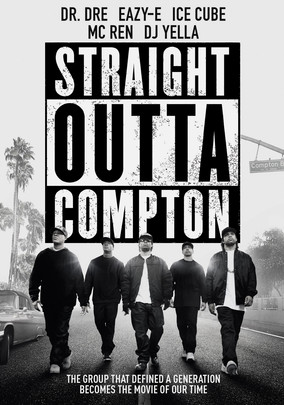
Straight Outta Compton-2015

Straight Outta Compton-2015

Director F. Gary Gray

Starring O’Shea Jackson Jr., Paul Giamatti

Scott’s Review #517

80041415

Reviewed November 12, 2016

Grade: B-

The rap group N.W.A. was a highly influential and controversial unit to emerge from Compton, California in the late 1980s and featured soon-to-be solo rap artists Ice Cube and Dr. Dre.

Another member, Eazy-E, rounds out the trio featured in this film along with their manager Jerry, played by Paul Giamatti.

Straight Outta Compton (2015) tells their story.

Ice Cube and Dr. Dre produced the film along with Eazy-E’s widow, Tomica Woods-Wright, and Ice Cube’s real-life son, O’Shea Jackson, Jr. portray Ice Cube.

The film is interesting as a way of learning about the rap group and their rise to and fall from stardom, but the film has a very slick and glossy style that detracts from the grittiness of the subject matter.

It feels very Hollywood and overly produced.

Especially, since the language is atrocious- almost overly, as if the point was being shoved down our throats.

Additionally, the acting, except for Giamatti, is not too impressive.

Lastly, the violence portrayed and the gang stuff seems a bit stereotypical for my tastes.

The film begins in 1986 and we meet a trio of friends. Determined to provide a raw, honest style of poetry to their music, they eventually meet their manager, Jerry, who takes them under his wing and leads them to their success.

Predictably, with success comes jealousy and contract disputes. The film delves into this subject matter as the partying and drug use, womanizing, and violence, all lead to the rap group’s constant struggles with the police force, especially since one of their top songs is anti-police.

Impressive is the real-life footage used of the 1991 beating of taxi driver Rodney King by the Los Angeles Police Department and the subsequent riots that occurred after the officers were found not guilty of any wrongdoing.

The racial tension in this city was interesting to revisit and palpable to the film’s subject matter.

The acting was noticeable to me and not in a good way. The young actor who plays Dr. Dre (Corey Hawkins) was fine, but the others (Jackson) and Jason Mitchell as Eazy-E were average at best. In any of their dramatic scenes where they appear to be angry, it just does not work, and the scenes lack grizzle and intensity.

Conversely, any dramatic scene that held any gusto belonged to Giamatti, who was excellent in his part. He makes the others seem better, but in other ways, their inexperience is evident compared to his.

In any event, he only makes the scenes he appears in more genuine. Early in the film, when Jerry lashes out at police officers, it is a meaty scene and forceful.

The filmmakers go for a message of violence and swearing in this film, but despite this, Straight Outta Compton still seems safe and overly produced. This may have had to do with the bright, slick cameras used.

It has a studio, high-budget appearance that does not completely work. I wanted it to look grittier and dirtier and see more of the seedy side of the business instead of merely being explained to me.

Women in this film are not treated very well and the characters who are the girlfriends are written sympathetically, but not given much substance to sink their teeth into.

Contrasting, Death Row Records CEO “Suge” Knight is portrayed as a maniacal, violent man.

Straight Outta Compton is a guy’s film.

I had difficulty relating to any of the central characters except perhaps Giamatti’s and it becomes unclear if Jerry had been ripping off the members of the rap group or if that is merely their perception. He seems to care about the members so that part is undefined.

Perhaps this film might hold more appeal for fans of N.W.A., which I never was, and rap is not my preferred style of music. I can appreciate the biographical way the film explains the trio’s story, ups and downs, reunions, death, and violence, but this film could have been much better and is flawed by its over-stylized filming.

Oscar Nominations: Best Original Screenplay