Hot Summer-1968

Hot Summer-1968

Director Joachim Hasler

Starring Chris Doerk, Frank Schobel

Scott’s Review #1,173
Reviewed August 27, 2021

Grade: B

One of the strangest films I’ve ever watched, Hot Summer (1968), deserves enormous accolades for even being filmed, produced, and existing.

You see, it’s the only film (that I know of) to come out of East Germany before the wall came down in 1989 and the unity was gained.

This is astounding in itself, despite the film’s warts.

The film’s bubblegum musical nature shatters the starkness and seriousness that envelop the German stereotype. This is an oddity in itself.

It’s patterned after the trite, summery United States beach movies of the 1950s and 1960s, when teenage characters flocked to the beaches in search of romance with their contemporaries.

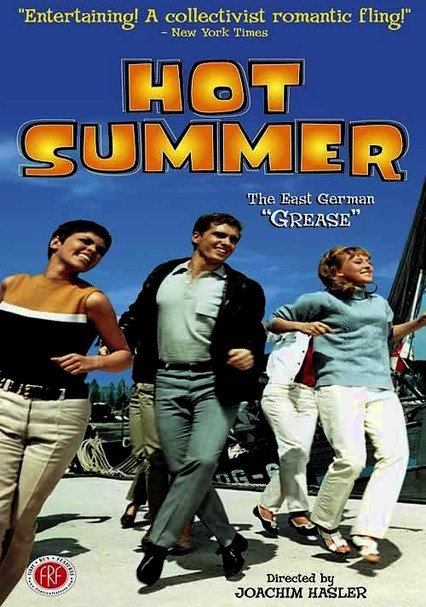
In this film, they do so through song-and-dance numbers led by two East German pop idols of the time, Chris Doerk and Frank Schobel.

The film’s genre pretty much sucks and isn’t my favorite, but Hot Summer offers a liberal helping of sun, perfect smiles, and beach bodies to keep viewers at least interested.

The acting is not great, nor is it expected to be.

As goofy as possible, the musical comedy follows a group of teenage girls heading to the Baltic coast together for their summer vacation.

Naturally, they wind up meeting a similar group of amorous teenage guys, leading to quarrels and flirtatious competitions played out in lively song-and-dance numbers as the individuals hook up.

Despite being made during the Cold War, the film contains no political or anti-war messages, which surprised me. If there were any subliminal intentions related to this, like the groups sticking together, they didn’t register with me. I think this is a positive.

Hot Summer is pure summer fun- nothing more and nothing less.

The songs are a significant win and rather hummable, especially the title track. It stuck in my head for some time after the film had ended. One character performs a lovely ballad amid a campfire that is quite beautiful and incredibly atmospheric.

The numbers are mainly professional because real-life pop stars Doerk and Schobel do the bulk of them.

Still, Hot Summer has a couple of downsides. Why the decision was made to pattern a film, especially one as groundbreaking as being the sole East German film during the Cold War, by using a subject matter as hokey as the summer beach theme is beyond me.

Indeed, better genres exist to borrow from.

My hunch is that Joachim Hasler, who directed the film, desired a release from the bleakness of his own culture and saw America as the land of freedom and fun.

The choreography is a bit stiff, if not downright amateurish, which adds to the bizarre nature of the overall product.

Indeed, nothing like the exceptional choreography of, say, Oklahoma (1955) or West Side Story (1961); instead, we get rigid dance numbers.

Kudos to the film for being made at all. Hot Summer (1968) is hardly a great film, but it does hold the viewer’s interest. It contains enough fun and frolics, along with good-looking young people, to avoid being a snooze.
Soul-2020

Soul-2020

Director Pete Docter

Voices: Jamie Foxx, Tina Fey

Scott’s Review #1,172

Reviewed August 18, 2021

Grade: B+

It’s pretty reassuring when a magical animated feature comes down the pike. Too often, the mainstream multiplex summer offerings are trite or too ‘kiddish’ for my tastes.

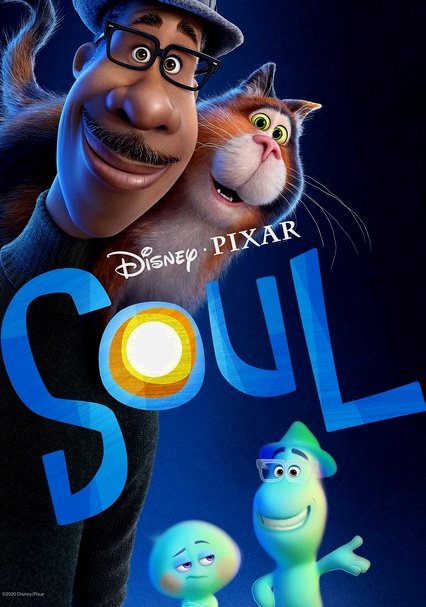
Soul (2020) is creative, colorful, and sentimental, with a terrific musical score composed by Trent Reznor (Nine Inch Nails).

The writing is fresh and inventive, with gorgeous animation that feels magical. I did not see the film on the big screen and bet it would have made the experience even more delightful.

Soul is not too dark, nor is it too trivial. It strikes a perfect balance between humanism, darkness, and hope. The title can be construed with a double meaning.

Based on the musical angle, the lead character is a piano player, the soul could mean rhythm, but I’m only half right. An out-of-body or celestial experience and the essence of a living being are also part of his soul.

While watching the film, I kept ruminating over how lovely and inspirational a film like Soul is during a crushing pandemic. It has heart and magic.

Unfulfilled music teacher Joe Gardner (Jamie Foxx) finally lands the gig of a lifetime at the best jazz club in town, supporting legendary Dorothea Williams (Angela Bassett). But his excitement gets the best of him, and he stumbles into a maintenance hole on a New York City street.

Lying in a coma, Joe enters a fantastical place: The Great Before. There, he teams up with Soul 22 (Tina Fey), and together they find the answers to some of life’s biggest questions while embarking on a journey in the switched bodies of Joe and a therapy cat.

Set in the massive Big Apple itself, the film offers a wealth of hustle, bustle, and life. I adored the setting. The smoky jazz club, with its sultry set design and creative music, made me feel immersed in the wonderful surroundings.

The story itself slightly confused me when Joe arrived in the “Great Beyond” as a soul. Assuming this meant death, I was relieved when he backtracked to the “Great Before” and met with counselors all named Jerry. The counselors, I realized, prepare unborn souls for life with the help of mentor souls.

This didn’t resonate with me as much as other aspects of the film.

Foxx and Fey are fine doing the voices for Joe and 22, respectively, but they are not the highlight either. I never really thought of either of them throughout the duration. There were better aspects to focus on.

Disney/Pixar’s feature film, which features a black central character, is worthy of mention, and it is about time. Joe’s family is black, adding an incredible mother figure and supporting characters of ethnicity to the fold.

The music, the music, the music! This makes Soul as good a film as it is.

Trent Reznor’s collaboration alone made me eager to see it. His creative use of keyboards and partnership with fellow Nine Inch Nails bandmate Atticus Ross provide proper ambiance to the metaphysical sequences.

A hallucinogenic, trance-like musical beat is unique and trippy.

Younger children may be perplexed or bewildered by much of the activity, so I’m not sure I’d recommend it for that demographic. However, music fans and admirers of rich stories with a subtext of life will likely enjoy the experience and the subsequent message that Soul (2020) provides.

Oscar Nominations: 2 wins-Best Animated Feature Film (won), Best Original Score (won), Best Sound

Jack and Jill-2011

Jack and Jill-2011

Director Dennis Dugan

Starring Adam Sandler, Al Pacino, Katie Holmes

Scott’s Review #1,171

Reviewed August 16, 2021

Grade: F

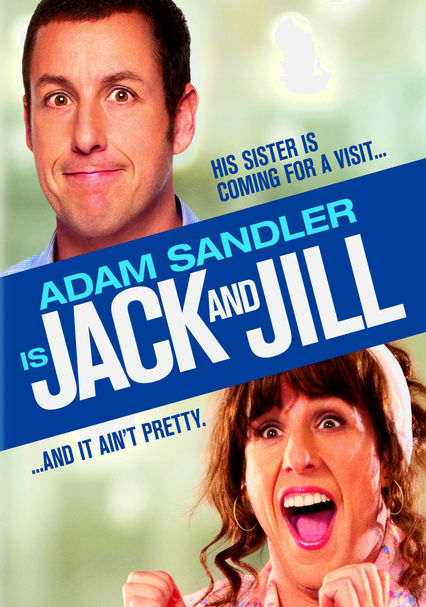
Typically, an actor playing a dual role is a challenging and rewarding experience for the actor and leads to accolades for a challenge well met. While Adam Sandler may have been challenged, it’s the audience who suffers tremendously.

I can think of no redeeming qualities to mention during this review.

Anyone who watches Jack and Jill (2011) will be made to ache for the duration of the running time or either scramble for the theater exit or pound the stop button on the remote control.

Jack and Jill (2011) is the worst film Sandler has ever made with a screeching over-the-top performance and terrible writing.

The additions of New York and Jewish stereotypes and every other stereotype in the book meant for laughs instead exude annoyance and disrespect.

To make matters worse, Al Pacino appears in a supporting role well beneath him and plays himself. And reaching an assured low, the actor is forced to rap. How embarrassing for him.

Poor Katie Holmes has little to do since she is trapped in the one-dimensional ‘wife role’.

Bad decision-making by writers, producers, and actors. Perhaps the makeup people enjoyed themselves.

The premise offers the possibility that the film could be hysterical or at least partially amusing. Well-known actors dressing in drag and put in uncompromisingly awkward situations is nothing new and has been met with success.

Some Like it Hot (1959) and Tootsie (1982) are classics resulting in kudos for Jack Lemmon, Tony Curtis, and Dustin Hoffman respectively.

The main issue with Jack and Jill is that the writing stinks.

Never a fan of the Sandler and director Dennis Dugan slapstick collaborations, let’s hope this drivel led to better acting choices for the actor.

He would later star in the superb Uncut Gems (2019) and miss out on an Oscar nomination by a whisker. I hope nobody saw Jack and Jill and revoked a vote for Sandler though I couldn’t blame them if they did.

Let’s hope Sandler learned his lesson with this film. He must have since his films vastly improved after this one.

Los Angeles advertising executive Jack (Adam Sandler) dreads the Thanksgiving holiday because his overbearing twin sister, Jill (also played by Sandler), makes her annual visit from New York City.

When Jack and his sister immediately butt heads, Jack feels guilty, and the only way to make it right is to invite her to stay through Hanukkah.

When actor Al Pacino (Al Pacino), whom Jack desperately needs to star in a commercial, becomes obsessed with Jill, Jack may be forced to extend his sister’s visit even longer to get what he wants. Jack’s gardener, Felipe (Eugenio Derbez) also takes a shine to Jill.

Everything about the film is pretty bad but let’s point out the highlights…..or lowlights.

Sandler plays Jill as obnoxiously as possible and in predictable form, Jack must disguise himself as Jill. Gee, I never saw that coming. Why any man, let alone two (Al and Felipe), would become enamored with her is beyond me.

Jack’s wife Erin (Holmes) and kids are as cookie-cutter as imaginable and possess every ‘neat and clean’ characteristic in the books. They are as white bread as wonder bread.

To match the stereotypes why does Felipe have to be Mexican? It’s as if Dugan and Sandler (who co-wrote the screenplay) wanted every cliche imaginable.

Jill conquers Los Angeles with appearances on The Price is Right, attendance at a Lakers game, and a cruise.

The film’s conclusion, after a myriad of expected misunderstandings between Jack and Jill, and Jill and Al, results in a silly New Year’s Eve high school reunion back in New York with classmates and bullies.

To confirm how bad Jack and Jill (2011) is at the 32nd Golden Raspberry Awards, it won all categories, a first in the thirty-two-year history of the annual parody event.

This is a film to be buried six feet under.

A Quiet Place Part II-2021

A Quiet Place Part II-2021

Director John Krasinski

Starring Emily Blunt, John Krasinski

Scott’s Review #1,170

Reviewed August 12, 2021

Grade: B+

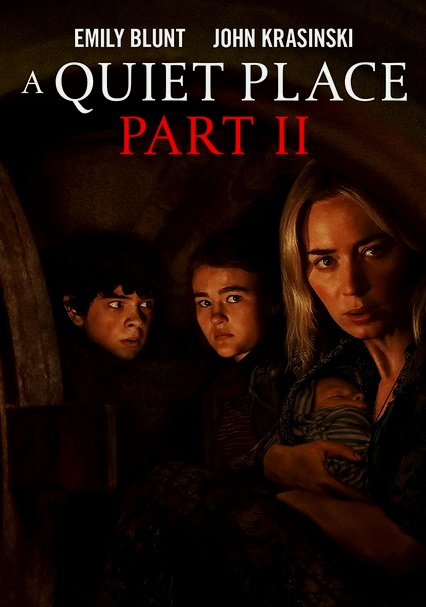
A Quiet Place Part II (2021) makes excellent use of sound, almost a character in itself, by featuring a deaf character and aliens who are blind and rely solely on their acute sense of hearing to stalk and annihilate their prey.

The big sounds and the deafening silences keep the film fresh, capitalizing on its novel approach.

The film is both a sequel and a prequel, presumably allowing director, writer, and actor John Krasinski the chance to reprise his ill-fated character, offering a neat timeline to the events of the first film, A Quiet Place (2018).

Since that film was an enormous success, a sequel was green-lit by the studio almost immediately. It offered Krasinski a great deal of freedom, which he runs within this offering.

I can’t say the plot exactly comes together as tidily as I had hoped, and there is no explanation for the alien’s actions or motivations – what is it they want, and where do they come from?

The lack of explanation gnawed at me. After all, they must have been created from somewhere. The lack of motivation of a horror character like Michael Meyers is understandable, but aliens?

The film is raised quite a bit above average thanks to a thrilling and fascinating opening sequence. This lengthy scene was astonishing with differing character points of view, meticulous filmmaking, and frights galore.

Plus, the appearance of Lee (Krasinski, who was killed in the first film) immediately piques our intrigue.

I wish the rest of the film had remained as breathtaking, but it’s not bad either. As a northeasterner, I was treated to some of the action taking place on a dilapidated Metro-North railway train. Any commuter will appreciate this nod.

And who doesn’t enjoy numerous shots of Emily Blunt playing bad-ass with a loaded shotgun? The talented actress, wife of Krasinski, adds credibility to the horror genre.

I know someone who saw A Quiet Place Part II without having seen A Quiet Place and still enjoyed it, but I think it’s helpful to see the material to appreciate the first scene.

We begin on Day one, and the Abbott family-husband, wife, and three children-enjoys a little league game on a summer afternoon. When suddenly a cloud-like object plummets to Earth, all hell breaks loose, and the town is in a terrified flight as aliens destroy all in their path.

This plot point is interesting since viewers will know that two of the family members will not survive very long.

A year later, the Abbott family-Evelyn (Blunt), Regan (Millicent Simmonds), Marcus (Noah Jupe), and a newborn must leave their farm with a calculated plan to reach safety. They realize through a never-ending song played on the radio that there is a sanctuary on a nearby island.

Clever Regan, who is deaf, can combine a microphone with her cochlear implant to kill the aliens.

Young actress Simmonds is quite a find, and alongside Jupe, emerges as the star of the film. The teenagers spent a great deal of time on the run and battling the aliens. Setting events up for another sequel, Kransinki and Blunt may want less to do with follow-ups.

Deaf in real life, she is a standout and supports a female empowerment slant, especially given her own disability. She is a unique character because she is unconventional-looking and authentic, lacking the typical characteristics that attempt to get moviegoers into theaters. She is my favorite character.

Geography is an issue here. Presumed to be located in upstate New York and shot in western New York, possibly in the Utica area, the sanctuary is situated in Long Island Sound off the coast of Stamford, Connecticut.

This would require the Abbots to travel hundreds of miles, but the film makes it seem that both areas are neighboring. This mistake may not be noticed by most, but since I live in the area, it’s apparent.

A Quiet Place Part II feels reminiscent of the television series The Walking Dead. The additions of the family traversing the countryside, a sanctuary, and ravaging humans all support this comparison.

There are some predictable plot points to endure that prevent it from straying too far from the fray, but A Quiet Place Part II (2021) also offers a film about the senses that still feels unique.

By part III, this may become redundant, but John Krasinski proves he can make a compelling sequence with enough suspense to keep his viewers engaged.

Killer Klowns from Outer Space-1988

Killer Klowns from Outer Space-1988

Director Stephen Chiodo

Starring Grant Cramer, Suzanne Snyder

Scott’s Review #1,169

Reviewed August 6, 2021

Grade: B-

A film surely only meant to be viewed late at night and/or in a hallucinated or otherwise drugged state for maximum pleasure, Killer Klowns from Outer Space (1988) is not to be taken seriously.

It does contain great imagination.

It’s kind of a take-off of Invasion of the Body Snatchers (1956) with a wretched 1980s look. It’s a fun film, but as odd and pointless as they come.

There is no explanation offered for the villain’s behavior, nor is one necessary. There is also no political message or motivation.

It’s like someone thought of the weirdest possible gimmick and made a film about it.

For a horror film, the body count is very high, but there is little gore.

Unsurprisingly, it has found a permanent home in the genre-cult-classic category, to be dusted off whenever in need of the wacky or absurd.

Teenage lovebirds Mike (Grant Cramer) and Debbie (Suzanne Snyder) see a comet crash outside their quiet, small-town home one late night.

They investigate and discover a pack of murderous aliens who look exactly like circus clowns. When they do the right thing and warn the local authorities, everyone assumes their story is a prank.

Meanwhile, the clowns attempt to harvest and eat as many people as they can. When they kidnap Debbie, Mike decides to set out on his own to rescue her and stop the bloody rampage. This leads to an epic battle between Mike and his friends and the clowns.

The Chiodo Brothers, who wrote and directed Killer Klowns from Outer Space, are primarily known for special effects, stop-motion, and clay modeling, and the film uses these techniques extensively.

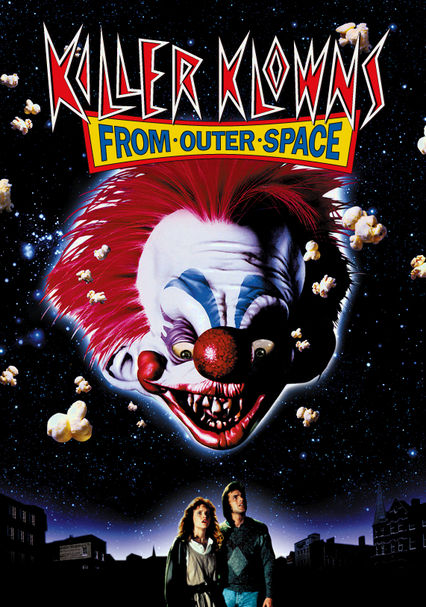
The wonky and lumbering clowns sport sinister smiles and quirky cotton-candy cocoons to keep their prey.

Hardly are they directorial or screenplay masters, so the film feels extremely experimental in many regards. The storyline is basic, and the villains have only one modus operandi. The character development is nil, and the acting is poor.

Is anyone surprised?

The key to enjoying Killer Klowns from Outer Space is that it knows it is a B-movie and embraces that classification. Avoiding all seriousness is arguably what makes it a marginal success.

One can sit back and laugh at it as one would rib an old friend. It is acceptable to both parties.

The clowns, or Klowns, are the real stars of the film. It’s fun to view these odd creatures and admire their costumes. This is the film’s creativity coming through, and the Chiodo Brothers are masterful at it.

One part scary and one part goofy, their lavish costumes are bright and colorful. The creatures themselves are ugly as sin, big and lumbering.

Predictably, the film writes the supporting characters as stereotypical as possible, and maybe that’s the fun in it all. Farmer Gene Green (cool name!) believes Halley’s comet is the strange glowing object falling to earth.

He and his dog are quickly harvested. The police officers are curmudgeons and disbelieving of the teenagers. Various friends of Mike and Debbie are cast as one would expect for a horror film.

The final climax is the best part of the film when an ice cream truck is used as a weapon against the clowns until a myriad of pies start falling from the sky.

Anyone watching the film while stoned would gleefully laugh.

Recommended for the adventurous cinema lover who wants to delve into the bizarre, late-night, campy horror territory.

Killer Klowns from Outer Space (1988) is mesmerizing in its absurdity and harkens back to 1950s science fiction.

The Omega Man-1971

The Omega Man-1971

Director Boris Sagal

Starring Charlton Heston, Rosalind Cash

Scott’s Review #1,168

Reviewed August 2, 2021

Grade: B

Watching in 2021, a film about a global pandemic, made in 1971, conjures many interesting nuances and comparisons, and brings fresh relevance to the story.

Throw in the vaccinated versus non-vaccinated debate, and the similarities are downright eerie.

Given its relevance, I wish I had found The Omega Man (1971) more engaging. It’s not a bad watch; it delivers a very progressive interracial romance and incredible exterior scenes of downtown Los Angeles, but the story doesn’t live up to the potential the premise suggests.

I kept thinking of Charlton Heston, who stars in two of his other science fiction roles- Planet of the Apes (1968) and Soylent Green (1973).

Planet is, of course, a classic.

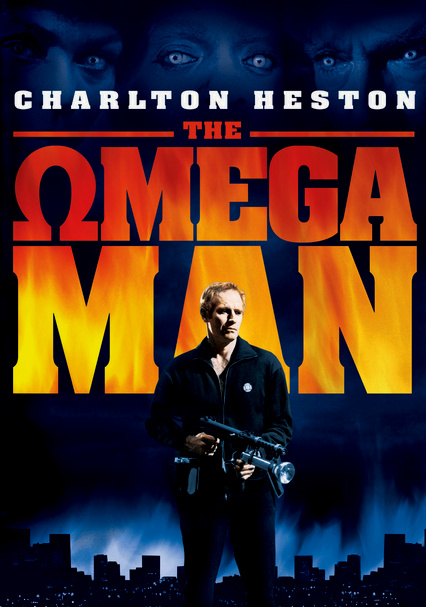
In the first scene, Robert Neville (Heston) wanders the streets of Los Angeles. We quickly surmise that he is the last man left on earth. Armed with an experimental vaccine for the disease that’s turned everyone into light-averse zombies, he fights a biological war, roaming the empty streets by day and fighting off the mutated creatures at night.

The premise immediately reminded me of a famous Twilight Zone episode.

On paper, the storyline sounds fascinating, with many possible directions and nuances to explore. Sadly, the direction Sagal chooses feels lackluster and dull.

Neville hunts and kills as many members of “the Family”, a cult of plague victims who were turned into nocturnal albino mutants, as he can. The Family, in turn, seeks to destroy all technology and kill Neville, who has become a symbol of the science they blame for humanity’s downfall.

They try to kill each other, but “the Family’s” motivations and reasoning make little sense. If they destroy technology, what will they do? And why not just get the vaccination? These bits may have been explained, but I didn’t take notice.

The parallels between the film and the Covid-19 pandemic of 2020-2021 and perhaps onward are uncanny. Maybe the unvaccinated of today will turn into creepy-looking creatures with pale, glowing eyes? One can only hope.

There is also a hokey idea that Neville believes he can extend his immunity to others by creating a serum from his blood.

I didn’t feel very engaged by the story, but I was very interested in the romance between Neville and Lisa, played by Rosalind Cash. Lisa is a black woman who arrives on the scene with her infected and dying brother.

In 1971, a mainstream interracial romance was a huge win for diversity and inclusion, though the film stops short of showing the pair consummating their relationship. This is quite conspicuous. There is also not a whole lot of chemistry between Heston and Cash, but I was rooting for them anyway.

It is considered one of the first interracial kisses in cinematic history.

Suffice it to say the conclusion isn’t very satisfying, but I’ll leave it right there to avoid spoilers.

The science fiction genre is a tough one to tackle.

The bar is set pretty high with 2001: A Space Odyssey (1968), the greatest science fiction film ever made. Too many times, the story is hokey or not imaginative enough, and that’s what makes The Omega Man lose some points.

Parts are inspiring, and parts are goofy, but the progressive slant makes The Omega Man (1971) an above-par cinema experience. The unexpected parallels to a global situation some fifty years later are remarkable in themselves.