Category Archives: Austin Pendleton

What’s Up, Doc? -1972

What’s Up, Doc? -1972

Director Peter Bogdanovich

Starring Barbra Streisand, Ryan O’Neal 

Scott’s Review #1,162

Reviewed July 20, 2021

Grade: B+

Careful trepidation is advised for filmmakers venturing into humorous or slapstick comedy waters, especially if they are better known for dramatic films.

Since we’re talking 1970s cinema here, there is only one Mel Brooks, and plenty of films with physical humor and gags fail miserably.

What’s Up, Doc? (1972) is not one of them and is a refreshing success.

Brooks’s influence can easily be seen throughout the film, and this is no surprise. Before doing any post-film research, I was immediately reminded of the popular television sitcom Get Smart, which ran from 1965 to 1970.

Buck Henry, a frequent Brooks collaborator, co-created Get Smart and wrote the screenplay for What’s Up Doc?

The antics and comedic moments scream Brooks. If one is unfamiliar, it is like watching a Mel Brooks film.

Director Peter Bogdanovich, most notably known for the 1971 masterpiece The Last Picture Show, changes course, opting for comedy with lots of screwball situations and physical comedy that are completely different from his previous work.

Speaking of Brooks, Madeline Kahn, a mainstay of his films, appears as a particularly neurotic character named Eunice Burns. It is her first film role.

I must say I was thoroughly impressed by What’s Up, Doc?, which oddly pairs two Hollywood superstars of the time, Barbra Streisand and Ryan O’Neal.

One might be surprised to think of the duo as romantic partners, and the chemistry comes and goes throughout the film, but the antics and quick dialogue are joyous and timed perfectly between the actors.

What’s Up, Doc? intends to pay homage to comedy films of the 1930s and 1940s, especially popular Warner Bros. Bugs Bunny cartoons, hence the title, but the reference doesn’t appear until the final scene.

This caused me to ponder why the specific title was used.

The premise goes something like this. Doctor Howard Bannister (O’Neal) arrives in San Francisco to compete for a research grant in music. He is accompanied by his overbearing wife, Eunice (Khan).

Already nervous and on edge because of Eunice, he meets a strange yet charming woman named Judy Maxwell, played by Streisand, at the drugstore. They are drawn to each other yet are not sure why. She both annoys and fascinates him.

In a subplot, a woman has her jewels stolen, and a government whistleblower arrives with his stolen top-secret papers. Ironically, all the players have identical red plaid bags and stay in neighboring hotel rooms, adding to the confusion and hilarity.

My favorite moments are the screwball scenes. Especially memorable are the hilarious sequences that take place in and around the hotel guest rooms as a constant in-and-out of parallel rooms unfolds. Each character has a particular motivation as they sneak around the hallways and rooms.

It is delightful fun.

When I realized that Streisand and O’Neal were the romantic leads, I was skeptical at first, but their chemistry is not bad. They are not the sort of couple that he and Ali MacGraw were in Love Story (1970), and certainly have no heavy drama to play, but they play comedy off of each other well.

The film makes a joke about the film Love Story.

Unfamiliar to me, I am glad I took the chance and watched What’s Up Doc? (1972). The film provides laughs, entertainment, and good chemistry among the cast who know how to deliver rapturous humor with perfect timing.

Rated G, the film can be enjoyed by the entire family as there is not a double entendre or otherwise offensive moment to be found—just good, old-fashioned humor. I would argue that the film influenced the 1970s as much as it paid homage to earlier comedy films.

I would see it again.
A Beautiful Mind-2001

A Beautiful Mind-2001

Director Ron Howard

Starring Russell Crowe, Jennifer Connelly

Scott’s Review #1,003

Reviewed March 25, 2020

Grade: A-

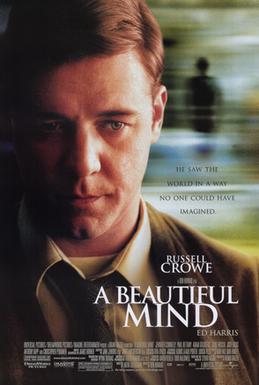
A Beautiful Mind (2001) is a superior-made film based on the life and times of American mathematician John Nash, a Nobel Laureate in Economics and Abel Prize winner.

The biography explores Nash’s battles with schizophrenia and the delusions he suffered, causing tremendous stress on friends and family.

The film is well-written and brilliantly acted, but deserves a demerit for factual inaccuracies, especially related to Nash’s complex sexuality and family life.

This leaves a gnawing paint-by-the-numbers approach for mass appeal only.

The film was an enormous success, winning four Academy Awards, for Best Picture, Best Director, Best Adapted Screenplay, and Best Supporting Actress. It was also nominated for Best Actor, Best Film Editing, Best Makeup, and Best Original Score.

Arguably one of the best films of 2001, it cemented director Ron Howard’s reputation as a mainstream force to be reckoned with in the Hollywood world.

The project was inspired by the Pulitzer Prize-nominated book of the same name.

Starting in 1947, we meet Nash (Russell Crowe) as a virginal and socially awkward college scholar, studying at Princeton University. He is a whiz at science and mathematics, coming up with unique and dynamic ideas for problem-solving.

Rising the ranks in respectability, he is given an important job with the United States Department of Defense, tasked with thwarting Soviet plots. He becomes increasingly obsessive about searching for hidden patterns and believes he is being followed, sinking further into depression and secrecy.

A Beautiful Mind is an important film because it brings to light the overwhelming issue of mental health and the struggles one suffering from it is forced to endure. Nash largely lives in a fantasy world and has imaginary friends who have followed him for decades by the time the film ends.

Nash conquers his demons with little aid of medication causing a controversial viewpoint. Amazing that the man was able to rise above, but is this a realistic message for those suffering from hallucinations?

Russell Crowe carries the film, fresh off his Oscar win the year before for his stunning turn in Gladiator (2000). He would have won for portraying Nash had he not recently received the coveted prize.

Crowe, hunky at this point in his life, convincingly brings the brainy and nerdy character, rather than the stud, to life, adding layers of empathy and warmth to the role.

We root for the man because he is as much sensitive as he is a genius.

Jennifer Connelly, in what is disparagingly usually described as the wife or the girlfriend role, does her best with the material given. My hunch is her Oscar nomination and surprising win have more to do with piggybacking off the slew of other nominations the film received.

She is competent as the supportive yet strong Alicia, the wife of Nash. In her best scene, she flees the house after a confused Nash leaves their infant daughter near a full bathtub, putting her life in danger.

The most heartfelt scene occurs during the conclusion. After many years of struggle, Nash eventually triumphs over this tragedy, and finally, late in life, receives the Nobel Prize. This is a grand culmination of the man’s achievements and a sentimental send-off for the film.

The aging makeup of all principal characters, specifically Nash and Alicia is brilliantly done.

Despite the heaps of accolades reaped on A Beautiful Mind, several factual points are reduced to non-existence. Questionable is why Howard chose not to explore Nash’s rumored bisexuality, instead of passing him off as straight.

Admittedly, the film is not about sexuality, but isn’t this a misrepresentation of truth? Nash had a second family, which is also never mentioned.

These tidbits eliminated from the film leave a glossy feel like Howard picked and chose what to tell and not to tell for the sake of the mainstream audience.

Bringing needed attention to a problem of epic proportions, A Beautiful Mind (2001) recognizes the issue of mental health in the United States.

The methods may be questionable, and the film has an overall safe “Hollywood” vibe but must be credited for a job well done in a film that is not only important but displays a good biography for viewers eager to learn about a genius who faced unrelenting issues.

Oscar Nominations: 4 wins-Best Picture (won), Best Director-Ron Howard (won), Best Actor-Russell Crowe, Best Supporting Actress-Jennifer Connelly (won), Best Screenplay Based on Material Previously Produced or Published/Adapted Screenplay (won), Best Original Score, Best Makeup, Best Film Editing

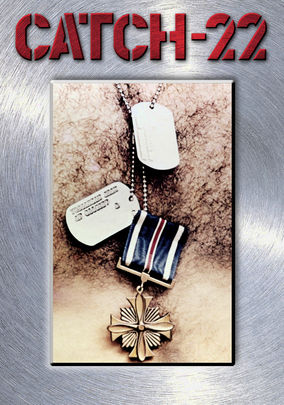
Catch-22-1970

Catch-22-1970

Director Mike Nichols

Starring Alan Arkin, Bob Balaban, Martin Balsam

Scott’s Review #41

60020883

Reviewed June 18, 2014

Grade: B

Catch-22 (1970) is a satirical film similar in subject matter to Robert Altman’s M*A*S*H, released the same year, though admittedly, I have not seen that film yet.

It does remind me of Dr. Strangelove (1964) and Slaughterhouse-Five (1972) in their anti-war theme.

This film is well-made and certainly effectively portrays the outrageousness and lunacy of war.

Most of the characters are portrayed as crazy, albeit in a darkly humorous, over-the-top way.

Alan Arkin is wonderful as the protagonist trying to find a way out of the island of Italy, where he and his fellow pilots are stationed.

At times, the film feels disjointed and hard to follow, which I understand the novel is too (I have not read the entire book), but Catch-22’s (1970) message comes across loud and clear.