Category Archives: Brian Doyle-Murray

Sixteen Candles-1984

Sixteen Candles-1984

Director John Hughes

Starring Molly Ringwald, Michael Schoeffling, Anthony Michael Hall

Scott’s Review #1,389
Reviewed August 14, 2023

Grade: B

While recently re-watching a string of John Hughes-produced or directed films from the 1980s I set upon them with fresh eyes. Some scenes or themes that worked in the mid-1980s would be inappropriate in a more sensitive and post-Me Too! movement.

Hughes, of course, was the king of the teen angst, coming-of-age, romantic comedies that usually starred Molly Ringwald.

Sixteen Candles, Hughes’s first directorial effort was released in 1984 and launched him to superstardom and immense popularity. Films like The Breakfast Club (1985) and Pretty in Pink (1986) would follow to much acclaim.

What he did so well was provide maturity and a message to otherwise dumb and raunchy comedies that populated the decade and they had a fresh female perspective whereas others were typically male and hormone-driven.

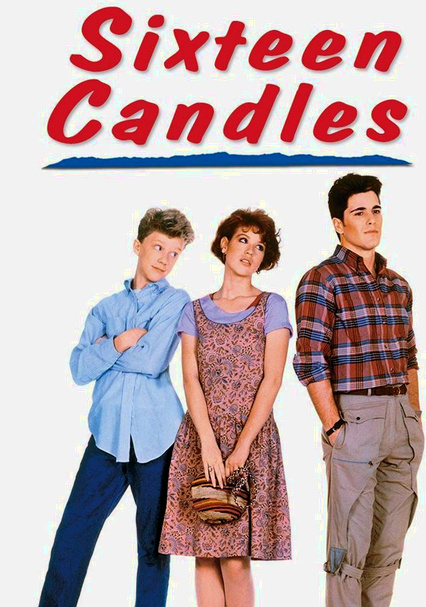
Already angst-ridden Samantha (Molly Ringwald) wakes up on the morning of her sixteenth birthday to find her busy family has completely forgotten her special day.

Samantha already pines for the handsome senior Jake (Michael Schoeffling), but worries that her dorkiness and lack of sexual experience will be a turnoff for the popular boy.

Meanwhile, Samantha must constantly rebuff the affections of nerdy Ted (Anthony Michael Hall), the only boy in the school who seems to take an interest in her.

As enjoyable as Sixteen Candles is I’d list it as the weakest of the Hughes films. It serves as more of a blueprint for the genius he would become.

Ringwald carries the film with ease made more impressive since this was one of her first film roles. She infuses Samantha with a blend of confidence but also insecurity and worry so that most American teenage girls could see themselves in her.

Pretty but not a pinup blonde, Samantha is intelligent and the girl next door. She lives in a suburban neighborhood, is middle class, has loving but distracted parents, and siblings focused on their trials and tribulations.

Most can relate to that.

A wonderful and tender moment between Samantha and her father, Jim, played brilliantly by Paul Dooley nearly moved me to tears. His wisdom and kindness as Samantha emotionally reveals her love for Jake to her dad is warm and solid epitomizing what a dad should be to his daughter.

A tepid series of misunderstandings occur between Samantha and Jake, who ironically has noticed her and shares the attraction. She freezes when face to face with him, and flees, so he naturally assumes she is a bitch and has no interest in him.

It takes so long for the lovebirds to connect that more possibilities and scenes are left unexplored. The film ends as soon as they reveal their feelings so there isn’t enough for the audience to celebrate.

We also know almost nothing about Jake. He is a rich kid whose parents are vacationing in Europe but what makes him tick? He could have any girl in high school and dates the pretty blonde girl but what makes him so drawn to Samantha?

The casting of the four grandparents serves no purpose other than comic relief and an inaccurate message of how bumbling older people are. One refers to Samantha’s ‘boobies’ while another stinks up the bathroom.

Worse yet, the inclusion of a foreign exchange Asian student named Long Duk Dong is riddled with cliches and stereotypes only played for laughs.

These characters are caricatures.

Finally, the groping and taking advantage of drunk female characters now feels dated if not flat-out inappropriate. In 1984, the scenes are meant to be funny.

Still, Sixteen Candles (1984) accurately depicts the loneliness and problems that face nearly every teenager in the history of the world. With a warm message of belonging and a sweet subtext, the film is a recommended watch but watch out for those stereotypes.

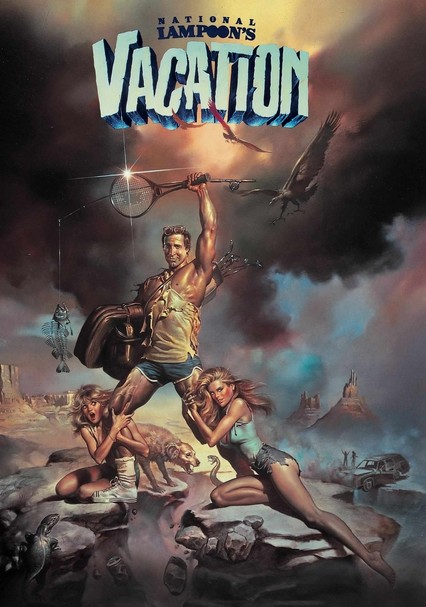
National Lampoon’s Vacation-1983

National Lampoon’s Vacation-1983

Director Harold Ramis

Starring Chevy Chase, Beverly D’Angelo

Scott’s Review #1,300

Reviewed September 19, 2022

Grade: A-

The film that spawned a slew of sequels, remakes, spoofs, and other things, National Lampoon’s Vacation (1983) had more influence on 1980s movies than it probably should have.

The slapstick road trip became overused familiar territory, a situation comedy rife with silly scenarios and possibilities.

Despite having started it all, my favorite National Lampoon will always be the Christmas Vacation installment from 1989 but for some snickers, hoots, and belly laughs, Vacation is fresh and authentic. holding up well in the nostalgia category.

So what if Chevy Chase was a douchebag in real life? His portrayal of Clark Griswold is his finest achievement and is firmly placed in the annals of slapstick comedy’s greatest characters. Endless quotes and impersonations of the bumbling dad have emerged over the years.

Great fun is looking for other comedy actors like Eugene Levy and  John Candy who later would forge their path into comedy legend.

Accompanied by their children Audrey and Rusty, played by Dana Barron and Anthony Michael Hall, Clark Griswold (Chase) and his wife, Ellen (Beverly D’Angelo), decide to drive instead of fly from Illinois to a California amusement park named Walley World to enjoy a much-needed summer break.

Clark is convinced that some togetherness is just what the family needs.

As Clark increasingly fixates on a mysterious, sexy woman (the acting debut of Christie Brinkley) driving a red sports car, the Griswolds deal with car problems and the death of a family member, Aunt Edna (Imogene Coca) as they face hi-jinks on the way to their vacation.

Exhausted, they finally reach Los Angeles, but, when Clark worries that the trip is being derailed again, he acts impulsively to get his family to the park.

National Lampoon’s Vacation is a rarity in screwball comedy where almost all of the setups and gimmicks work. Typically, the situations feel stale and tried and true but there is an authenticity brimming over its cup, and that’s largely thanks to Chase.

Don’t get me wrong. The film is hardly worthy of study in film school and the script is polished and patterned out but like other screwball comedies I love like Caddyshack (1980) and Clue (1985), it’s got something solid.

I think it’s because the characters are very relatable. Who doesn’t have a wacky Aunt Edna or a Cousin Eddie (Randy Quaid) somewhere in their family tree?

Long-suffering, suburban housewife Mom Ellen has a heart of gold and represents the classic 1970s or 1980s homemaker with a glimmer of progressiveness.

She dutifully scrambles eggs for breakfast and shops for cereal and dog food but also keeps Clark at bay before he does something ridiculous.

Chase and D’Angelo have tremendous chemistry bouncing one-liners off each other as naturally as a real-life conversation so that we buy them as husband and wife.

What kid who grew up in this period can’t relate to the horrid paneled oversized station wagon that ran rampant in suburbia? I sure remember those gas guzzlers eventually replaced by the minivan.

It’s perfection to see that style of car represented in this film as it adds to the hilarity and is a character in itself.

The fun continues because the Griswolds embark on travel across the United States. So, the film provides a slice of Americana and harkens back to a time when if you were an American you were united and bonded even if you had differences.

What National Lampoon’s Vacation (1983) does so well watching in modern times is remind us what that felt like. An adventure across the good ‘ole USA was not such a bad thing and the folks you met along the way were friendly and warm without suspicion.

The film is like a dear old friend who has emerged from the woodwork, dusty, but still full of life.

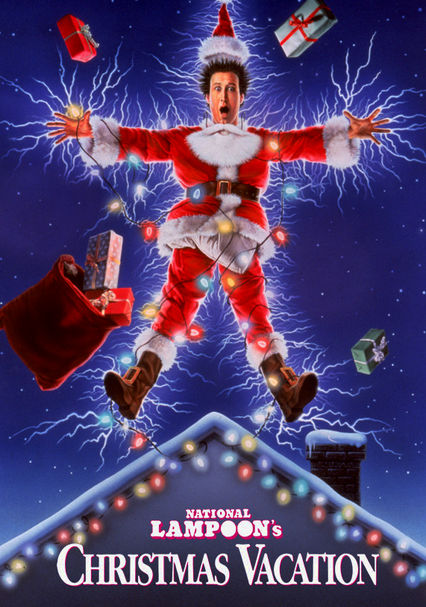
National Lampoon’s Christmas Vacation-1989

National Lampoon’s Christmas Vacation-1989

Director Jeremiah S. Chechik

Starring Chevy Chase, Beverly D’Angelo, Randy Quaid

Scott’s Review #1,248

Reviewed April 23, 2022

Grade: A-

Made several years after the first in the National Lampoon’s Vacation series (1983-2015), the inevitable production of National Lampoon’s Christmas Vacation (1989) is my personal favorite of the bunch and the most laugh-out-loud.

Silly personified but the jokes work and the enjoyment carries throughout the entire running time.

In retrospect, you knew they were going to do it. What better fodder for the bumbling Griswold family than to have them reunite with extended family on such a seasonal holiday? The gags and awkward situations are ripe for the picking as situation after setup is done exceptionally well and with grand humor.

The silliness works and the film is a recommended watch around the holidays with the family gathered around. Viewers can either relate directly to the film or inevitably know families that resemble the incompetent yet loveable Griswolds.

As the holidays approach, Clark Griswold (Chevy Chase) is determined to have a perfect family Christmas. He motivates his wife, Ellen (Beverly D’Angelo), and their children to make sure everything is in line, including the tree and house decorations.

Naturally, things quickly go awry in the greatest of humor.

His hick cousin, Eddie (Randy Quaid), and his family show up unplanned and start living in their camper on the Griswold property. Even worse, Clark’s employers renege on the holiday bonus he needs causing a great deal of stress for the family patriarch.

For starters, the film has a cool holiday vibe. The setting is wisely the midwest United States somewhere outside of Chicago, Illinois. Snow is to be found everywhere and Christmas decorations and lights are lit all over the place throughout the film. This equates to a suburban and homey atmosphere that is warming and friendly.

Most viewers can snuggle in amid a warm fireplace and delicious hot cocoa and enjoy the film. The environment is one of National Lampoon’s Christmas Vacation’s finest achievements.

A classic moment and the film’s funniest scene occurs when Clark excitedly decorates the inside and outside of the house to the nth degree and blows the town’s electric circuit as a result leading to uproar among his neighbors. Proud Clark’s ego is suddenly deflated and the man must rise above it all to somehow enjoy his family Christmas.

Watching the film decades after its release is still great fun as a nostalgia offering. The tacky Griswold Ford LTD station wagon with paneled siding is garish and unsightly (then and now) and anyone growing up in the 1980s can easily recall when suburban families would pile into this gas-guzzling car.

Not every aspect works perfectly in National Lampoon’s Christmas Vacation like the unappealing yuppie neighbors Todd and Margo (played by Nicholas Guest and Julia Louis-Dreyfus) or Eddie and his redneck family. These roles are a bit too over the top and secondary inclusions to be the major win that the film is.

The real wins from the supporting cast are Clark’s immediate family. His parents and Ellen’s parents are perfectly cast and provide excellent comic timing and seasoned wit. Special notice goes to John Randolph, Diane Ladd, and Doris Roberts.

And who won’t fall in love with Clark’s senile Aunt Bethany played with hilarity by Mae Questel (the voices for animated Betty Boop and Olive Oyl)?

Predictably, and well-intentioned, all the Griswold problems quickly fade away when Clark receives his annual Christmas bonus after all and all characters have a lovely send-off while singing ‘The Star-Spangled Banner’ just in the odd way that the Griswolds would do.

National Lampoon’s Christmas Vacation (1989) used to be a traditional Christmas viewing for me but has shamefully fallen out of favor over the years. It might be time to dust off this forever gem that provides laugh after laugh, fun, and togetherness for the whole family.

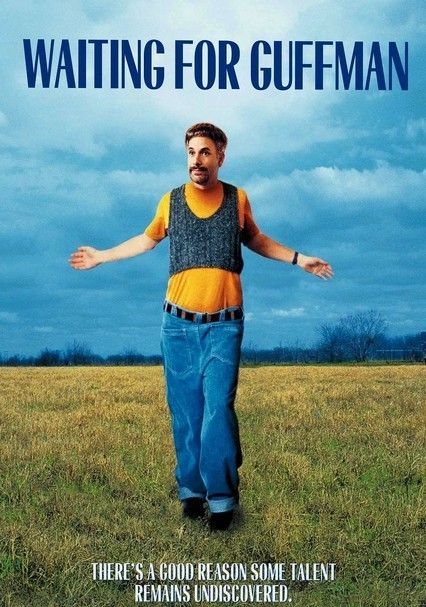
Waiting for Guffman-1996

Waiting for Guffman-1996

Director Christopher Guest

Starring Christopher Guest, Eugene Levy, Catherine O’Hara

Scott’s Review #1,145

Reviewed May 24, 2021

Grade: B+

Somehow mocking local community theater troupes with questionable talent couldn’t be funnier with the right premise and an outstanding cast.

The added fun of midwestern traditions like barbeques good manners and spot-on imitations put on display for humor works well.

They should be celebrated and appreciated in Waiting for Guffman (1996).

The hysterical Best in Show (2000) is probably my favorite Christopher Guest film but Waiting for Guffman is a hoot and hollering good time.

The ‘B+’ rating comes largely because Guffman is an opening act to the fab Best in Show. They can easily be watched back to back and perhaps should for further cherishing.

When the town of Blaine, Missouri approaches its sesquicentennial, the residents decide to celebrate by performing a musical revue called “Red, White, and Blaine.”

Flamboyant director Corky St. Clair (Christopher Guest) is determined to return to Broadway success by casting untalented but passionate individuals to perform.

Eugene Levy, Fred Willard, and Catherine O’Hara play the main cast members.

When Corky reveals that influential theater agent Mort Guffman will attend the opening, the cast is convinced that they will be rewarded with accolades and appearances on the Broadway stage if they perform successfully.

They become titillated, flustered, and manic as the pressure of opening night approaches.

I daresay, some folks from the midwest United States or those faithful to the local theater may not enjoy Wating for Guffman but I sure did. Most of the characters are written as buffoons and lacking any talent.

The hysterics come because they think that they possess what they lack.

The aforementioned Guest, Levy, Willard, and O’Hara work so well together they are the reason Waiting for Guffman is so damned funny! The comic timing between the actors is flawless and timed perfectly.

Levy and O’Hara appeared together in the Canadian television sketch comedy series SCTV in the 1970s and 1980s before hitting the jackpot with the television series Schitt’s Creek in later years so a fun thing to do is watch them in whatever they appear in together.

They are that good!

There abound many stereotypes in Waiting for Guffman since Corky is written as a walking gay stereotype with mascara and flamboyancy. The irony is that he reportedly has a wife who is never seen so the audience can draw their conclusions.

Given the casting and the director, Christopher Guest takes on acting and directing duties, the experience is largely improvisational and witty result.

Guest treats his actors, and himself, to famous Director Robert Altman’s mantra of letting his actors release and act on their terms, presumably knowing the characters better than anyone else.

The tactic works. Too often comedies are stagey and situations forced in an attempt to make the viewer laugh because he or she thinks they are supposed to laugh.

My favorite characters unsurprisingly are Ron and Sheila Albertson (Willard and O’Hara) as travel agents/amateur performers. They are zany and unpredictable and their antics cannot be superseded by anyone else.

Recommended mostly for the artistic and the improv comedy crowd. The spoofs are all over the place and fans of documentaries and talent shows can appreciate the gags.

Waiting for Guffman (1996) targets an intelligent audience craving fresh and original comedy. Being a cinema fan largely immersed in drama and horror, I was won over nonetheless.

The only drawback is the film pales in comparison to the brilliant Best in Show (2000) with largely the same cast and tone, but still should be watched.

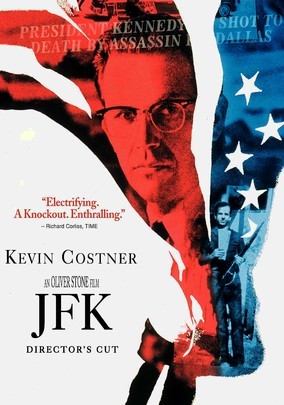
JFK-1991

JFK-1991

Director Oliver Stone

Starring Kevin Costner, Tommy Lee Jones

Scott’s Review #536

60031474

Reviewed December 4, 2016

Grade: B+

JFK (1991) is a very well-made film but must be taken with a grain of salt, as reportedly many liberties were taken by the director, Oliver Stone, and the film can be open to interpretation as to what is true and what is embellished.

At three hours and twenty-six minutes, the film is of epic proportions.

The film recounts the events leading up to the assassination of President John F. Kennedy through the eyes of a former District Attorney from New Orleans, James Garrison, played by Kevin Costner.

Garrison filed charges against New Orleans businessman, Clay Shaw (Tommy Lee Jones), and in his view, was in cahoots with Lee Harvey Oswald to kill the president.

Stone suggested that President Lyndon B. Johnson was involved in the coup, which led to much controversy indeed.

The plot is quite intricate and, at times, tough to follow, but the editing techniques alone are impressive. I loved the authentic, real-life, footage that Stone immerses throughout the film.

As we know, the assassination, in 1963, was tragic and fraught with controversy that still abounds today.

Stone was wise to make a film of this caliber despite the lack of clarity of what is true and not true. I guess we may never know.

Oscar Nominations: 2 wins-Best Picture, Best Director-Oliver Stone, Best Supporting Actor-Tommy Lee Jones, Best Screenplay Based on Material Previously Produced or Published, Best Original Score, Best Sound, Best Cinematography (won), Best Film Editing (won)

Caddyshack-1980

Caddyshack-1980

Director Harold Ramis

Starring Chevy Chase, Rodney Dangerfield

Scott’s Review #353

343044

Reviewed January 9, 2016

Grade: A

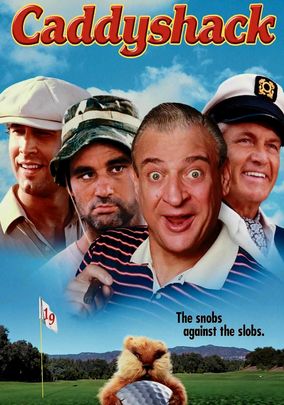
Caddyshack is one of the funniest slapstick comedies of the 1980s, arguably the decade of “mindless comedy”.

Made in 1980, the cusp of the decade, it led the pack during a time when, one after another, comedy films were churned out in a cookie-cutter style, based largely on the success of Caddyshack.

While not every aspect of the film works, the parts that do are hysterical, and its influence on film history is unquestionable.

More than merely a “dumb comedy”, Caddyshack features funnymen of the day (Bill Murray, Chevy Chase, and Rodney Dangerfield), and the talent and timing are good.

Clean-cut teenager Danny Noonan works as a caddy at a posh resort named Bushwood Country Club. An “underachiever”, he lacks direction in life while being pressured by his parents to attend college.

While spending the summer at work pondering his future, high jinks ensue as a rivalry develops between the club co-founder, Judge Smails (Ted Knight), and the outrageous Al Czervik (Rodney Dangerfield), who is a nouveau riche real estate developer.

Meanwhile, bordering on psychotic, Bill Murray as groundskeeper Carl Spackler is engrossed in his feud with a gopher running rampant on the golf course.

Mixed in with all of this are the standard teen romance themes, bathroom gags, and sexual jokes.

Caddyshack is not high art, nor does it need to, or intend to be. It is simply pure juvenile fun. It is not even that well written, but it works. The portions that work so well do not even involve the caddies who were originally set to be the focal point of the film.

Rather, the real scene-stealers are the two oldest members of the cast- Rodney Dangerfield and Ted Knight. The bickering and barbs traded between the two characters are delicious and downright funny.

When Al mocks Smail’s hat, or dances with his snobbish wife, or crashes into his new boat, each scene is rich with goofy comic timing.

Without a doubt, my favorite scene is the “doody” scene in the resort pool. It is laugh-out-loud raucous, as a candy bar tossed into the water is mistaken for something else.

The star of this scene is Lois Kibbee, who plays Judge Smail’s wife.

Her comic mannerisms and upper-crust looks make her a perfect choice for the role, and she arguably steals the show in her limited appearances.

When Al jokes that she must have been something before electricity, her facial expressions perfectly emit comic horror.

There are points of the film that really are unnecessary and do not work well- I have never understood Bill Murray’s character, Carl. Bordering on silly, with a stuffed animal as the gopher, Murray himself is fantastic- improvising, but the role does not seem necessary to the rest of the film.

More scenes between the Judge and Al, or more from Chevy Chase’s character, Ty, and the Judge’s wife, would have been preferable.

Also, the attempted teen triangle between Danny, Maggie, and Lacey is dullsville- plain Maggie cannot compete with gorgeous and slutty Lacey.

These criticisms, however, are small gripes compared to the hilarity and perfect timing of the rest of the film, which is why it ranks among my favorites.

Caddyshack, along with Animal House, paved the way for the plethora of slapstick comedies to follow- a few good, most bad, but must be recognized as the influence that it was, and a must-see for fans of golf, sports, and good, clean fun.

The elements of Caddyshack (1980) come together and work so well.