Category Archives: Michael Gothard

The Devils-1971

The Devils-1971

Director Ken Russell

Starring Oliver Reed, Vanessa Redgrave

Scott’s Review #1,403
Reviewed October 4, 2023

Grade: A

Ken Russell, most famous for directing the outstanding Women in Love (1970) and The Who’s Tommy (1975) creates a disturbing opus about perversion and scandal amid the Roman Catholic church during medieval times.

The film’s graphic portrayal of violence, sexuality, and religious blasphemy ignited shocked reactions from censors, and it originally received an X rating in both the United Kingdom and the United States. It was banned in several countries, and heavily edited for exhibition in others.

This alone will pique open-minded and curious viewer’s interests. It sure did mine.

The film is ironically entitled The Devils (1971) and stars Russell stalwart Oliver Reed who also appeared in the aforementioned films.  Reed leads the charge as a sexy, rugged man who beds many women and is the center of a convent full of nuns’ nasty and naughty thoughts.

Vanessa Redgrave also appears as a lustful and evil nun with a hunchback.

During the period of seventeenth-century France, Father Grandier (Reed) was a priest whose unorthodox views on sex and religion influenced a passionate following of nuns, including the sexually obsessed Sister Jeanne (Redgrave).

When the power-hungry Cardinal Richelieu (Christopher Logue) realizes he must eliminate Grandier to gain control of France, Richelieu vows to destroy the man. He portrays Grandier as a Satanist and spearheads a public outcry to destroy the once-loved priest’s reputation.

The Devils is outrageous and bizarre in only the best of possible ways. Who doesn’t love a healthy dose of nun orgies and simulating fellatio on a large candlestick? One nun violently masturbates as another looks on giggling sadistically.

The camera simply loves Reed and Redgrave who it’s interesting to note are not a couple in the film. These British actors were in their heyday in 1971 and both portray roles that must have challenged them tremendously.

Despite being British the film takes place in France getting off to a naughty start with a nearly nude dance performed by skinny Louis XIII (played with wacky delight by Graham Armitage). Rumored to be gay the king traipses around in colorful costumes and later shoots protestants dressed as gorillas for sport.

There are themes of exorcising and burning at the stake and mentions of the warring Catholics and Protestants so there is a seriousness amid the antics and shenanigans.

It took me a little while to become fully immersed in the chaotic land of Loudon, a town in western France where the film is set. In truth, a second viewing really helped me settle in and have a sense of what was going on.

The best films really are like fine wines.

Attempts by Russell to irritate and incite the overly religious are quite satisfying in a wicked way. As much as he mocks religion by making the traditionally sexually conservative filled with lust and animalistic sexual prowess there is much more going on.

Beneath the surface, he challenges the ridiculousness of religion which cinema lovers will embrace and delight in. There are history lessons to be had though and the film provides exceptional details of the political upheavals and tyranny that occurred.

The thunderous musical score by Peter Maxwell Davies is fabulous especially during The Devils final act when a major character endures a broiling on a wooden stake.

Those possessing the wonderful Blu-Ray version of the film can be treated to various outtakes, cast interviews, and behind-the-scenes information.

An added delight for knowledgeable film fans is the inclusion of character actor Murray Melvin, famous for playing Reverand Runt in the classic Barry Lyndon (1975). He plays Father Pierre Barre.

The Devils (1971) is a perverse and operatic extravaganza of lunacy. It’s caked with sex and nudity and blasphemy that I loved every bit of. The dangerous tone can be studied and thought about long after the film ends.
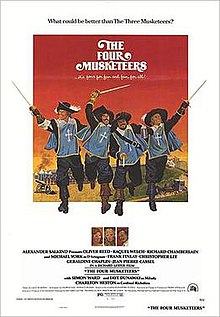
The Four Musketeers-1974

The Four Musketeers-1974

Director Richard Lester

Starring Oliver Reed, Michael York, Faye Dunaway

Scott’s Review #1,379

Reviewed July 17, 2023

Grade: B

The Four Musketeers (1974) is a sequel to the film The Three Musketeers made a mere year earlier. It takes the second half of the famous novel by French author Alexandre Dumas with the original film covering the first half.

A recommendation is to watch the sequel directly after the original so there is less struggle to figure out what is going on. I did not do that so connecting the plot points was a struggle.

A further negative is the omission of any English subtitles making hearing or ascertaining the events of the film difficult. British accents are tough.

King Louis XIII’s (Jean-Pierre Cassel) four swashbuckling heroes engage in chivalrous and daring adventures when Cardinal Richelieu (Charlton Heston) and his evil accomplice Milady de Winter (Faye Dunaway), kidnap the queen’s dressmaker, Constance (Raquel Welch).

The heroes are D’Artagnan (Michael York), Athos (Oliver Reed), Porthos (Frank Finlay), and Aramis (Richard Chamberlain).

It’s a British swashbuckler film so the adventures are prevalent and the physical comedy is fast and furious. It’s like a sitcom at times with over-the-top and outlandish fight sequences and one-liners.

The frequent low-cut tops on the female characters are intended to channel the male viewer’s thirteen-year-old boy.

The film gets darker than I anticipated in the final act which is to its credit with two deaths. This surprised me in a good way because so much of The Four Musketeers is light-hearted.

The death by the beheading of a major character is well-done. The heroes watch an executioner perform his duties to the fiendish character from across a lake. The decapitation is not exactly shown but it’s done almost in a tremendously effective silhouette and from a distance.

The costumes and attention to detail from a historic perspective are superior elements of the film. One can imagine being in the French countryside during the Anglo-French War in the 1600s. The sets and lighting are bright so the result is colorful and picturesque style.

The cast is made up of several A-list Hollywood stars of the time and each adequately does their share to light up the screen. My favorites are Dunaway as the villainess and Reed as a ‘good guy’, a refreshing change for the actor who usually appears as the heavy.

Reed and Dunaways share some scenes mostly in flashbacks that made me want to see more of their romance but this is not to be. Athos was unaware that Milady de Winter was a criminal which left a permanent branding mark.

Still, what little I got featured tremendous chemistry between the pair and I would have liked to have seen more.

Where the film loses me a bit is with the silliness which follows the same formula that made The Three Musketeers a success. Feeling redundant were the endless sword fight scenes and tongue-in-cheek winking.

The film tries hard to be a comedy but adds in darker moments too so it leaves an unbalanced quality.

Some actors get short shrift. Christopher Lee as Count De Rouchfort is a secondary villain and has little to do except prance around in a wig, uniform, and eye patch. His character is no Dracula and does not feel dangerous.

The Four Musketeers (1974) is good entertainment from a solidly professional cast. Hardly a masterpiece it’s a bang ’em up comedy adventure with a few moments of death and destruction.

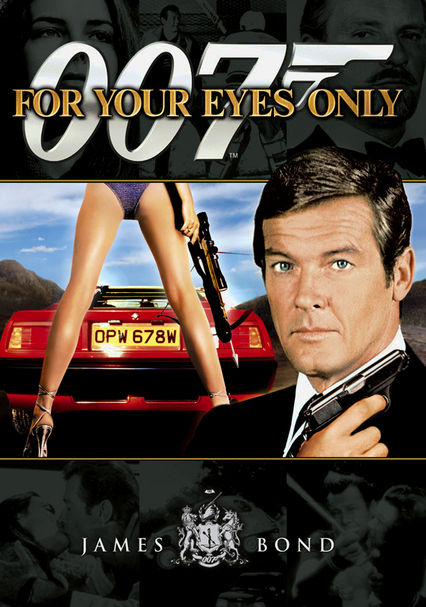
For Your Eyes Only-1981

For Your Eyes Only-1981

Director John Glen

Starring Roger Moore, Carole Bouquet

Scott’s Review #1,185

Reviewed October 10, 2021

Grade: B+

Following the outrageousness of 1979’s Moonraker, a film I nonetheless find enjoyable, the decision was made to bring James Bond back to earth in the next chapter.

For Your Eyes Only (1981) has matured well over the years and is an above-average entry among my all-time James Bond list.

The main Bond girl and the villain are not as top-notch as other Bond films but the action, suspense, and nods to Bond history are fantastic as is the grittier look and feel.

And, the locales of Italy and Greece are breathtaking.

The title song, a sleek and syrupy love ballad performed by Sheena Easton, is a favorite of mine and is instantly recognizable in association with the film. It charted at number one on the charts and sold a gazillion copies.

The plot is typical of a James Bond film.

After a British ship is sunk in foreign waters, the world’s superpowers begin a feverish race to find its cargo: a nuclear submarine control system.

And 007 (Roger Moore) is thrust into the middle of the action as he aligns with Melina Havelock (Carole Bouquet), Milos Columbo (Topol), and others to thwart the fiendish plans of the villainous Kristatos (Julian Glover).

The story is rather secondary to the enjoyment of the film and I quickly stopped trying to follow every plot point or detail. It’s not that important to know who every bad guy is or their motivations. There is a plot to take over the world and there you have it.

I adore the opening sequence when Bond visits the gravestone of his deceased wife Teresa. This tender moment immediately made me reflect on the goodness of On Her Majesty’s Secret Service (1969) and the humanistic tone that the film brought.

Bond then engages in a thrilling helicopter chase with arch-rival Blofeld which parlays into the opening credits with the title song as a backdrop.

This first sequence has nothing to do with the rest of the film but fabulous is the London shots of Big Ben and other historical treats. And it’s just dessert to see Blofeld dumped into a massive chimney and presumably to his death.

Bond historians will love this.

The film is recommended to be watched in the winter months since the snowy and icy scenes fare better in the appropriate calendar months. It could be a warmup act to On Her Majesty’s Secret Service or From Russia With Love (1963) also cold-feeling Bond films.

I didn’t perceive much chemistry between Moore and Bouquet but neither did their lack of chemistry ruin the film for me. The thirty-year age difference didn’t help matters but at least James Bond had the decency not to bed the horny underaged figure skater, Bibi Dahl (Lynn-Holly Johnson).

Her character is played for laughs and her schoolgirl crush on Bond is cute.

Kristatos isn’t the most memorable villain either. His true colors aren’t revealed until late in the game and his motivations are a stretch. I didn’t buy him as a former war hero and ally turned smuggler.

Nonetheless, Glover plays him straightforwardly and a compelling sequence occurs when he attempts to kill Bond and Melina with his massive boat and hungry sharks.

Topol, well-known for his role as Tevye in Fiddler on the Roof (1971) is great to see as one of Bond’s allies. The actor’s distinctive voice is tough to miss though I half-expected him to break into “If I Were a Rich Man” at any moment.

The final sequence atop the Monastery of the Holy Trinity, and Eastern Orthodox monastery in Greece is terrific and quite justifiably the highlight. Bond dangles for his life as a henchman slowly breaks each of Bond’s rock climbing stakes is a nail-biting and suspenseful scene even though you know that Bond will find his escape.

Flying under the radar, For Your Eyes Only (1981) is delightful for the locales and action sequences alone.

Dragging slightly midway and not featuring a memorable Bond girl or villain, it offers a darker story and contains fewer cheeky moments. This is refreshing following a silly trip to the moon.

The villains are more dangerous than cartoonish and the extreme locales and throwback to history make this an appreciated effort.

Oscar Nominations: Best Original Song-“For Your Eyes Only”

Scream and Scream Again-1969

Scream and Scream Again-1969

Director Gordon Hessler

Starring Vincent Price, Christopher Lee, Peter Cushing

Scott’s Review #899

Reviewed May 16, 2019

Grade: B+

Any film featuring horror heavyweights and great actors like Vincent Price, Christopher Lee, and Peter Cushing is well worth the price of admission for the name value alone. Each is a mainstay attraction in its own right and, combined, results in an orgy of riches.

Scream and Scream Again (1969) sputters by limiting the on-screen interaction between the actors. Still, after a reflective pause, I realize the picture is to be revered for its creativity and for its use of intersecting plotlines to build a thrilling crescendo into a surprise ending.

The audience is offered three segments of the story, each revisited periodically as a stand-alone segment that culminates in overlapping components.

An athletic runner trots along the streets of London, suddenly suffering from an attack, only to awaken in the hospital with no legs.

Elsewhere, a deadly intelligence operative reports back to his repressed Eastern European country, only to murder his commanding officer with a fatal paralyzing hold.

Finally, a London detective investigates the brutal deaths of several young women in metropolitan nightclubs.

Cushing, reduced to merely a cameo-sized role as the ill-fated officer, is barely worth mentioning and adds little to the film besides appearing in it.

Lee, like Fremont, the head of Britain’s intelligence agency, plays a straight role with not much zest.

Price, with the meatiest role as a mysterious doctor specializing in limb replacement, can give anyone the creeps with his scowl and eerie mannerisms. Still, the film misses the mark by wasting the talents of the other legendary actors.

The film is not at all what a fan of Hammer horror would expect, given the familiar horror cast and the gory-sounding title.

Heaping buckets of blood or ghoulish vampires were on the anticipated menu, but that does not mean the film fails to deliver. It may not please a fan of traditional horror films, as the genres of political espionage and science fiction come into play heavily.

However, the fantastic, peculiar nightclub-serial-killer storyline will satisfy fans eager for a good kill or two.

My initial reaction to Scream and Scream Again was that it was over-complicated and had too much going on at once, especially for a horror film.

After the film concludes and the surprise ending is revealed, I realized that the numerous tidbits are necessary to achieve the desired effect, and that the events will make the viewer ponder when the film ends.

Not to ruin the big reveal, but the filmmakers borrow a healthy dose of Invasion of the Body Snatchers (1956) in a more macabre way, naturally.

Fans of the 1960s British television series The Avengers will be pleased with Scream and Scream Again, as a similar tone exists in both.

The distinctive musical soundtrack, popular in the 1960s, works well, and the nightclub sequences and some of the detectives feel reminiscent of the show.

The feel of the film is not limited to an episodic television story but contains a similar style.

High British 1960s fashion is also prevalent and pleasing to the eye.

A couple of supporting characters strike a fascination in small and almost entirely non-verbal performances.

A sexy red-headed hospital nurse with superhuman powers and a penchant for amputating limbs, combined with a brooding, mysterious serial killer, provides dubious intrigue about who the actual characters are.

What is their motivation? Do they work for someone or something sinister? Questions like these will keep the viewer occupied and thirsty for an explanation.

Bizarrely, British film and television director Gordon Hessler crafts an implausible yet fascinating story that keeps the viewer guessing.

Featuring horror superstars Price, Cushing, and Lee would seem like an assured horror masterpiece, but the stars’ limited time on-screen brings the overall project down a notch.

Scream and Scream Again (1969) still achieves a good measure of worthy entertainment.

Lifeforce-1985

Lifeforce-1985

Director Tobe Hooper

Starring Steve Railsback, Peter Firth

Scott’s Review #516

699938

Reviewed November 11, 2016

Grade: F

Lifeforce, a film made in 1985, is a film that I did not enjoy at all.

It tells the story of a team of astronauts who find three pods of seemingly human bodies, who eventually return the bodies to Earth and turn said humans into zombies.

That is it in a nutshell.

The story makes no sense whatsoever and there is no rhyme or reason for the actions of the characters except to further the plot.

No mention or details as to why they are in outer space or anything that drives the character’s motives.

The film is way too complicated for its good and would have been wiser to go for a straightforward action film rather than what we are treated to (a combo sci-fi/horror mess).

The special effects are completely dated and very cheesy.

Lifeforce (1985) is completely plot-driven and I did not find it gripping at all and is a waste of time that deserves to be completely forgotten.