Love Is Strange-2014

Love Is Strange-2014

Director Ira Sachs

Starring John Lithgow, Alfred Molina

Scott’s Review #174
70299861

Reviewed September 24, 2014

Grade: B

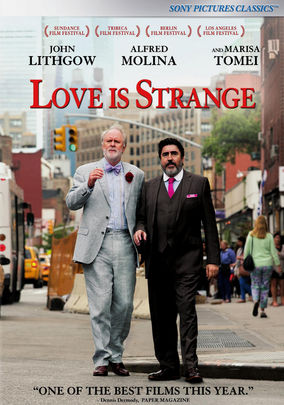
Love Is Strange (2014) is sweet, though not nauseatingly sentimental, looking at many different types of relationships, at the forefront is the same-sex couple, Ben and George, played by John Lithgow and Alfred Molina respectively.

They are a successful New York City couple of a certain age, together for nearly thirty years, and finally legally wed in a low-key ceremony surrounded by friends and family.

George teaches music at a strict Catholic high school where the students and staff know and love him and his new husband. The bishop is not supportive of his marriage and he is unceremoniously fired.

This causes Ben and George to become homeless and rely on family and friends for a roof over their heads.

The film features several secondary character relationships.

Ben’s nephew and wife balance busy careers with a temperamental, rebellious, confused son; Ben’s niece from Poughkeepsie seems neurotic.

Neighbors who are gay police couples have loud parties seemingly every night. Marisa Tomei, who plays Ben’s niece by marriage, Kate, and Charlie Tahan as Joey, Ben’s great-nephew are probably the most prominently featured in the supporting cast.

While well-meaning and accommodating, Kate bottles her anger and comforts herself with nightly consumption of red wine. Joey lashes out at his great Uncle in frustration criticizing his artwork and scolding him for using his teen friend in a portrait, a friend whose sexuality is unclear.

Most other characters are not fleshed out well and are there to move the plot along. This is slightly disappointing. I would have preferred a bit more backstory regarding the rest of the cast.

Throughout the film, a few clues are dropped surrounding Joey and his friend’s sexuality, but not pursued further than on the surface.

I was curious about the cop’s back story. How long have they been together? Do they face conflict at work? Numerous scenes show both cops in uniform while running errands or visiting the hospital, which seems to be the film’s desire to emphasize that cops can be masculine and gay- a fact I love, yet the characters are only one-dimensional.

Why is Ben’s niece neurotic? This is also not pursued at all.

The film belongs to Lithgow and Molina. The two have such effortless, natural chemistry that the audience instantly believes they have been together for decades. The fact that Lithgow and Molina are lifelong friends in real life surely adds to the realism and naturalness.

Ben is the yin to George’s yang. The performances of Lithgow and Molina are so understated and calming that one might overlook how excellent they are since they are both low-key characters.

Love Is Strange (2014) is a film about strength, courage, loyalty, and perseverance through life’s challenges.

It is a sensitive and lovely film.

Independent Spirit Award Nominations: Best Feature, Best Male Lead-John Lithgow, Best Supporting Male-Alfred Molina, Best Screenplay
The Past-2013

The Past-2013

Director Asghar Farhadi

Starring Bérénice Bejo, Tahar Rahim, Ali Mosaffa

Scott’s Review #171

70275523

Reviewed September 16, 2014

Grade: B+

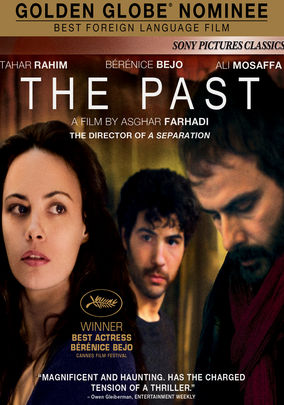
The Past (2013) is an international film directed by acclaimed Iranian director Asghar Farhadi, who directed the brilliant A Separation in 2012.

Despite being directed by an Iranian director, the film is written in French and set in France.

While not quite on the level of A Separation, The Past is still a good, layered, and compelling film, though admittedly slow-paced in spots, like real life.

The film centers on a couple, Marie (Bérénice Bejo) and Ahmad (Ali Mosaffa), amid a divorce.

Marie lives in France with her two daughters from a relationship before Ahmad, so they have no children together. He lives in Iran and comes to visit and finalize the divorce proceedings.

Further complicating the situation is that Marie is in a relationship with another man, Samir (Tahar Rahim), who has a son with his current wife, who is a vegetable in a coma after a suicide attempt.

What were the events that led her to attempt suicide? Did someone reveal something of importance to her? If so, who?

Questions such as these compel viewers to invest in the characters.

The Past is an excellent family drama done right; it has no needless stereotypes, and the children serve a purpose beyond being cute or attractive wallpaper, as in many family dramas.

Each child involved- there are 3- has real feelings and realistically expresses themselves. All three principal adult characters are mature, complicated, and have depth.

Nobody is the villain, and the intent is not to make the audience root for one couple over the other. The film is more mysterious than that.

Instead, the audience spends the film trying to uncover the secrets the characters keep.

Is Marie ready to divorce Ahmad or does she still love him? Does Samir blame Marie for his wife’s condition? Why does the oldest daughter hate Samir so much?

These are questions that arise more and more as The Past unfolds.

Another interesting facet of the film is that it introduces no red herrings to manipulate the viewer. The film is simply a detailed, complex drama.

All three leads give wonderful performances, though I’m not sure why Bejo’s stands out.

After watching and reflecting, I noticed many similarities to A Separation.

The Past (2013) is a good, solid family drama, with rich writing and honest, compelling situations.

The Red Balloon-1956

The Red Balloon-1956

Director Albert Lamorisse

Starring Pascal Lamorisse

Scott’s Review #170

220px-Red_balloon

Reviewed September 15, 2014

Grade: A

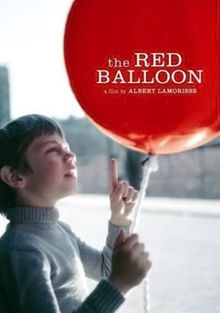
The Red Balloon (1956) is a poignant short film (thirty-four-minute running time) in its innocence and creativity.

Directed by acclaimed French filmmaker Albert Lamorisse, it tells the story of a young Parisian boy named Pascal who befriends a special red balloon that arrives and greets him one day.

Amazingly, the balloon follows him everywhere, and they become inseparable friends. The balloon has a mind of its own and protects Pascal from schoolyard bullies and others who do not understand or care about his bond with it.

The balloon does not leave his side, and he waits outside during school hours and sleeping hours.

Director Lamorisse’s children play Pascal and a little girl with a similar blue balloon.

The film is shot in Paris and features many beautiful city glimpses. Unfortunately, the neighborhood (Belleville) where most of the adventure takes place, where little Pascal and his balloon meander through the streets to and from school, no longer exists and was destroyed in the 1960s due to decay.

It is a bleak, melancholy neighborhood that perfectly contrasts the extreme brightness of the balloon.

The Red Balloon is a thought-provoking short film and contains almost no dialogue. None is needed as a powerful message of friendship, heartbreak, and loyalty is portrayed.

The climax of the film is heartbreaking yet uplifting.

The Red Balloon is a film that people of all ages can enjoy and fall in love with. In fact, for many years, educators have shown it to children.

The Red Balloon is the only short film to win the Academy Award for Best Writing (Original Screenplay).

Oscar Nominations: 1 win-Best Screenplay-Original (won)

Mandela: Long Walk to Freedom-2013

Mandela: Long Walk to Freedom-2013

Director Justin Chadwick

Starring Idris Elba

Scott’s Review #169

70278999

Reviewed September 13, 2014

Grade: B

Mandela: Long Walk to Freedom (2013) recounts the true story of South African leader Nelson Mandela, chronicling fifty-plus years of his life from 1942 to 1994.

It shows his passion for freedom and dedication to anti-apartheid; his battles with the government; and his struggles to survive in prison.

The film is shot beautifully; the cinematography is gorgeous, and the South African landscape is breathtaking.

I enjoyed the chemistry between Idris Elba and Naomie Harris, who plays Nelson Mandela and his second wife, Winnie, respectively, and Elba, in particular, is very well cast.

He is charismatic, handsome, calm, and perfectly encompasses the famous leader’s mannerisms.

It was interesting to watch a biopic that spanned such a long period and, in a way, served as a history lesson, especially for viewers young enough not to remember the details of Mandela’s life.

I was too young to know of all of Mandela’s trials and tribulations.

For example, I knew he was imprisoned and released, but I did not know how long he had spent in prison and away from his wife and family.

I got the sense that factually, some details were either embellished or skipped over entirely.

I’ve heard this criticism from moviegoers regarding Mandela: Long Walk to Freedom.

A few drawbacks- this film is VERY Hollywood. It has a glossy feel. I would have preferred a bit more grit.

Was there any sexual abuse while Mandela was imprisoned? Was Winnie abused while she was in prison? Why was the lack of sexuality in Mandela’s and Winnie’s marriage in later years alluded to, but never explored?

This is a negative for the film.

Since the film is rated PG-13, it tones down aspects a feels very safe.

Also, for such a perfect shot and well-designed film, the makeup is dreadful! It was apparent that Idris Elba was wearing a glued-on, unflattering grey wig.

Furthermore, the woman playing Mandela’s mother was clearly the same age as, if not younger than, Elba, with dyed grey hair. This aspect feels poorly produced.

Overall, Mandela: A Long Walk to Freedom (2013) is a good film, largely because of its acting and look, but it is not a great one.

Oscar Nominations: Best Original Song-“Ordinary Love”

Pit Stop-2013

Pit Stop-2013

Director Yen Tan

Starring Bill Heck, Marcus DeAnda

Scott’s Review #168

70268909

Reviewed September 10, 2014

Grade: B

Pit Stop is a small independent film from 2013 that centers on a group of gay men living in rural Texas, outside of Houston or San Antonio.

The plot focuses on two men, Gabe and Ernesto, who don’t know each other. They recount their ups and downs, mostly about dating and relationships.

Gabe lives with his ex-wife Shannon, and they share a child they raise together as a family. They have a warm relationship and live together as friends.  Gabe was recently dumped by a married man who wants him to stop calling.

Ernesto lives with a younger man whom he used to date and is trying to convince him to move out and get his life together.

Ernesto also has a former partner who is comatose and whom he continues to visit in the hospital.

A subplot is Shannon’s struggles to date. She arranges a date with a co-worker and, after drinking too much, embarrasses herself by coming on too strong to him.

The point of the film is that all the characters are struggling to find love and companionship, and most are lonely, yet not unbalanced or neurotic.

They reside in the middle of nowhere, which dims their chances of finding love.

There are no villains, and all the characters are quite likable. There is a reason to root for each of them, especially Gabe and Ernesto, and I kept hoping they would be brought together, since they seem like a wonderful pair with real chemistry.

Both are caregivers in their current situations, so what transpires after the film is interesting.

Pit Stop (2013) is a feel-good, happily-ever-after type film, mostly screened at independent film festivals and the gay festival circuit.

The film is small and steady, but a nice, uplifting experience and worth checking out.

Independent Spirit Award Nominations: John Cassavetes Award

Gloria-2012

Gloria-2012

Director Sebastián Lelio

Starring Paulina García

Scott’s Review #167

70270790

Reviewed September 10, 2014

Grade: B+

The subject matter of Gloria (2012) is so unusual in this day-and-age, clichéd, youth-obsessed world of Hollywood that it is incredibly refreshing and pleasing to watch.

Gloria tells the story of the title character, a middle-aged (50s) divorced woman living in Chile, who lives life to the fullest.

She loves and embraces new experiences. She tries smoking pot, sings along to disco songs, and dances the nights away.

Gloria is looking for love, but she is not a depressed or dowdy woman. She is stable, attractive, intelligent, and funny.

She lives!!

Gloria meets and begins a relationship with Rodolfo, a similar-aged divorced man with a family full of baggage, whom she meets in a nightclub. His ex-wife and two daughters live with him and depend on him.

The film wisely doesn’t feature Rodolfo’s family until the very end, which adds to the character’s mystique. Gloria and Rodolfo begin a series of trials and tribulations involving both of their families.

Gloria introduces Rodolfo to her family at a birthday party, where her ex-husband and his current wife are in attendance.

Her family is very close, including her relationship with her ex-husband and his new wife. They take a wine-induced trip down memory lane.

This is too much for Rodolfo, and he bails. He is constantly barraged with phone calls from his family during alone time with Gloria.

They continue to have ups and downs.

The audience wonders: will they find their way to a happily ever after? Is Rodolfo really a cad? Does Gloria want to settle down? An event ruins a moment of bliss at an expensive hotel, and the audience’s heart breaks for Gloria.

How wonderful that this film dares to feature more than one explicit nude scene between these two middle-aged people in a classy, tender style.

This is not common in American films, so happily, foreign-language films are not as rigid or prudish in their sexuality.

Unfortunately, Paulina Garcia received little recognition for this role. She deserved an Oscar nomination as she relays an enormous level of complex emotions- she feels the loss, she is betrayed, she is giddy, she is silly, and the list goes on and on.

Gloria (2012) is admittedly slow-paced at times, but the film and story are a breath of fresh air.

The film is a character-driven, tender tale centering on mature, intelligent people.

Independent Spirit Award Nominations: Best International Film

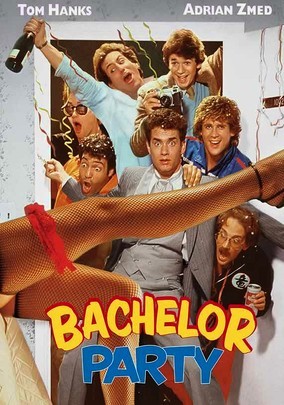
Bachelor Party-1984

Bachelor Party-1984

Director Neal Israel

Starring Tom Hanks, Adrian Zmed

Scott’s Review #163

60020725

Reviewed September 1, 2014

Grade: D

Watching Bachelor Party (1984) for the very first time, circa 2014, and the last time I plan on watching this film, I realized almost immediately how dated it is and that, at this point, it can only be enjoyed for nostalgia.

I can’t fathom anyone watching Bachelor Party for the first time and thinking it is a great film- it is not.

If not for Tom Hanks becoming a huge star, this comedy would be forgotten, as there are dozens of like-minded films from the 1980s that resemble it- think Pretty in Pink (1986), National Lampoon films, etc.

The premise is basic- Rick (Hanks) and Debbie (Tawny Kitaen) are engaged, and Rick’s friends throw a Bachelor party while Debbie goes out with the girls.

Of course, Debbie’s parents hate Rick and, along with her ex, scheme to break them up.

Every decade seems to have a similar carbon copy of this party-themed film- Animal House (1978), American Pie (1999), and The Hangover (2009), though not as entertaining as the aforementioned films.

All the characters are caricatures, one-note, and types. There is a little backstory for any of them.

The plot is silly and predictable, and the film’s 1980’s look does not hold up well.

The film contains every stereotype imaginable- the meddlesome parents, Debbie’s vicious ex-boyfriend, who is the film’s foil, various frat boys and sorority girl types, and Rick’s inept siblings.

Avoid it unless a trip down the 1980’s bad-film memory lane is needed.

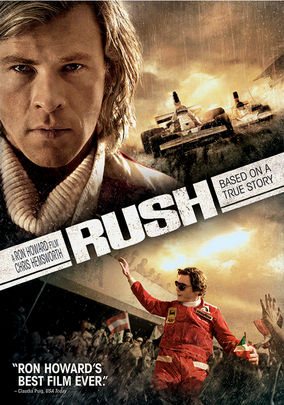
Rush-2013

Rush-2013

Director Ron Howard

Starring Chris Hemsworth, Daniel Brühl

Scott’s Review #162

70253165

Reviewed August 31, 2014 

Grade: B+

Rush (2013), a film directed by Ron Howard, delves into the world of auto racing through the true story of the 1970s rivalry between racing superstars James Hunt and Niki Lauda.

The film mainly focuses on 1970-1976 and the races and championships between the two, with some of their life trials and tribulations thrown in.

From bitter enemies, they slowly build respect and friendship over the years.

Chris Hemsworth and Daniel Brühl give excellent performances as Hunt and Lauda, respectively.

Ron Howard, a very mainstream, Hollywood-style director, carves out a nice film that isn’t edgy or particularly risk-taking. Still, it’s a solid biopic that works and keeps the viewer interested.

The film isn’t gritty and has a definite safe feel, but that is unsurprising since Ron Howard directed it and that’s characteristic of his films.

Reportedly, the feud between Hunt and Lauda is slightly embellished from the low-key real-life feud, and some events are created for effect.

Hunt never beats up a reporter in Lauda’s defense.

The racing sequences are compelling and don’t feel overdone or detract from the film’s human side. I loved seeing the real-life Hunt and Lauda at the end of the film, as is quite common these days when telling a true-life story.

Brühl, an unknown to me, received a deserving Golden Globe nomination for Best Supporting Actor.

Rush (2013) isn’t a movie to go down in history, nor will it leave you thinking about it or asking questions days after you watch it, but it is a slick, competent, entertaining story with impressive performances from the two leads.

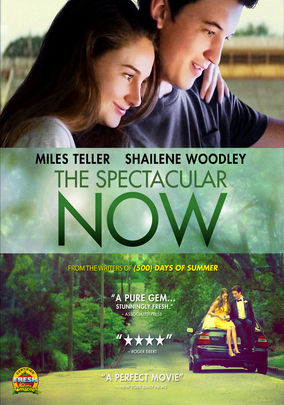
The Spectacular Now-2013

The Spectacular Now-2013

Director James Ponsoldt

Starring Miles Teller, Shailene Woodley

Scott’s Review #161

70267439

Reviewed August 29, 2014

Grade: B

The Spectacular Now (2013) is a coming-of-age independent film that follows a romance between two unlikely high school seniors.

Sutter (Miles Teller) is a popular student who takes a shine to smart loner Aimee (Shailene Woodley), and the two develop a strong bond as they each struggle with parental issues while being opposite social types.

She is college-bound and motivated; he lives in the now with no thoughts of the future. But somehow they forge a connection.

The film’s success lies with Teller and Woodley, who each deliver strong performances, and their chemistry is evident.

At first, I didn’t buy Teller as a traditionally popular kid or Woodley as the friendless recluse, but somehow the film works because each has a rooting value.

Sutter’s ex-girlfriend Cassidy, whom he still has feelings for, is played by Brie Larson, and the character is underdeveloped, unnecessary, and not much of a rooting interest for her or competition for the main couple.

Interestingly, alcohol and alcoholism are touched on as the two leads drink quite heavily and regularly for being only eighteen years old, but are glossed over.

I think the film is more about the romance between the two rather than any social issues.

Jennifer Jason Leigh, Kyle Chandler, and Mary Elizabeth Winstead deliver capable supporting performances.

Shailene Woodley received an Independent Spirit Award nomination for Best Actress, but Miles Teller received no nomination. This surprised me, as I thought he was a bit better than she was and had the meatier role.

The Spectacular Now (2013) is hardly anything groundbreaking, but a nicely told story that is authentic and admirable for a teen film.

Independent Spirit Award Nominations: Best Female Lead-Shailene Woodley, Best Screenplay
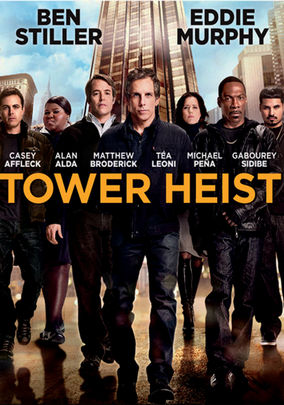
Tower Heist-2011

Tower Heist-2011

Director Brett Ratner

Starring Ben Stiller, Eddie Murphy

Scott’s Review #160

70202145

Reviewed August 29, 2014

Grade: D

Tower Heist (2011) is a completely formulaic, by-the-numbers comedy with absolutely no surprises or, frankly, creativity.

It follows Josh Kovacs, a luxury high-rise apartment manager weakly played by Ben Stiller in New York City, whose favorite tenant, a businessman Arthur Shaw (Alan Alda), is arrested for involvement in a Ponzi scheme.

The entire staff’s pensions have been squandered after Josh entrusts Shaw with the funds, and he tries to return the money to the rightful owners with a team of staff and an ex-con, played by Eddie Murphy.

They team up and attempt to locate millions of dollars hidden in Shaw’s apartment.

If this film was a starring vehicle for Ben Stiller, it was done horribly. He has been much funnier in There’s Something About Mary (1998) or Meet the Parents (2000).

Tower Heist has some similarities to Ocean’s Eleven (2001) because the score is recognizable and mirrors that film. The group of players is similar to that film, and its look reminds me of it too.

Murphy plays a silly, stereotypical role, and the group has zero chemistry as they try to keep the money.

There is also no chemistry between Stiller and Tea Leoni, who plays an FBI agent with a phony Queens accent that I found laugh-out-loud bad.

Nothing worked in this film since it was one tired gag after another and completely predictable.

I will admit two minor positives in Tower Heist: Alan Alda, who’s always great to see in films, and the interesting choice of a luxurious high-rise setting with cool, ritzy interiors taken from real buildings in New York City.

Otherwise, Tower Heist (2011) is a complete dud.

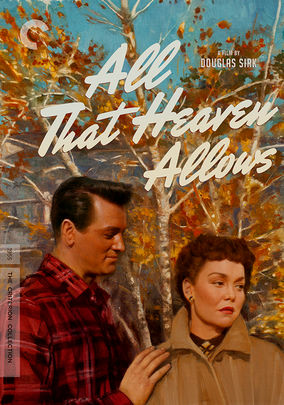
All That Heaven Allows-1955

All That Heaven Allows-1955

Director Douglas Sirk

Starring Rock Hudson, Jane Wyman

Scott’s Review #159

60020660

Reviewed August 26, 2014

Grade: B+

All That Heaven Allows (1955) is a perfect-looking film. Director Douglas Sirk famously dressed his films in a contemporary, stylish fashion. As evidenced by the story in this film, his movies traditionally contain a social aspect.

Affluent socialite Cary falls in love with handsome young gardener Ron, and they face discrimination in a town where status is everything and gossip is rampant.

I love the chemistry between Jane Wyman (Cary) and Rock Hudson (Ron). The small town in New England is so perfect looking- sets, cinematography, that it fits the subject matter perfectly- most of the townspeople live these seemingly perfect lives and look down on anyone with a different outlook or way of living.

There is a feeling oozing from these people that contrasts perfectly with Ron’s open-mindedness and freedom and the conflict Cary faces.

On the one hand, she is passionate about Ron and wants to live with him; on the other, she is unsure if she wants to give up a comfortable, affluent life with perks like a social club and a beautiful house.

The chemistry between the leads is really what makes this film unique.

All That Heaven Allows (1955) influenced one of my favorite films, the masterpiece Far from Heaven (2002), which substituted the age factor for race.

Argento’s Dracula-2012

Argento’s Dracula-2012

Director Dario Argento

Starring Thomas Kretschmann

Scott’s Review #158

70242567

Reviewed August 22, 2014

Grade: C-

As a huge fan of Dario Argento, his classic horror films such as Suspiria (1977) and Deep Red (1975) would surely land in my Top fifty of all time, not just in the horror genre; this film is a bit of a mess.

As I understand it, the story follows a young man named Harker, whom Count Dracula hires to work in his castle as a Librarian.

His wife, Mina, arrives later in the story and becomes the focal point of the film from that point on.

Another female named Tania rises from the dead to seduce and bite Harker. Dracula intervenes and wants to claim Harker as his own.

From this point on, Harker’s wife Mina attempts to look for her husband within the halls of Dracula’s castle.

The plot is hard to follow, uncompelling, and not one of Argento’s finest efforts.

An homage to Hammer horror films of the 1950s and 1960s, the film comes across as too campy, poorly performed, and miscast in places.

The actor who plays Count Dracula is not convincing and seems a strange choice for the part- too nice-looking?

It feels like Argento didn’t know whether to make the film serious or go completely over the top. Since when can Dracula change forms into a grasshopper, owl, and other creatures besides a bat?

Other characters like the Priest were introduced for no other purpose than to be killed.

On the positive side, the art direction is unsurprisingly amazing.

The film is filled with creepy sets, especially inside the mansion, and has a distinct 1970s feel. The ambiance effectively portrays a spooky, dark setting.

All in all, though, Argento’s Dracula (2012) is a disappointing experience, and much better films of the same subject matter have been covered in the past.

The Missing Picture-2013

The Missing Picture-2013

Director Rithy Panh

Scott’s Review #157

70285668

Reviewed August 21, 2014

Grade: C+

One question kept going through my mind while watching The Missing Picture (2013). Is it a documentary or a foreign language film?

It is a documentary, but strangely, the film was nominated for the Best Foreign Language Film Oscar.

I hate to say this, but after about fifteen minutes, I found the film quite dull.

I respect the creative, expressionist clay figures and enjoy the black-and-white real-life clips of the horrific events from 1970’s Cambodia.

But I found the narration as dull as dishwater.

I watched forty-five minutes of the one-hour-and-thirty-five-minute runtime and deduced that I had gotten the film’s point.

It does not take away from the importance of the subject, but the presentation could have been a bit more exciting.

This is a common occurrence in the documentary genre.

Oscar Nominations: Best Foreign Language Film

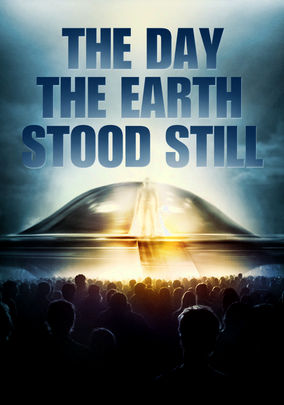
The Day the Earth Stood Still-1951

The Day the Earth Stood Still-1951

Director Robert Wise

Starring Michael Rennie

Scott’s Review #155

60026578

Reviewed August 18, 2014

Grade: B+

The Day the Earth Stood Still (1951) is one of the best, most credible, original science fiction thrillers. It has stood the test of time, considering it is over sixty years old.

Made in 1951, the film is a message movie about a spaceship that suddenly arrives on planet Earth in the United States Capitol of Washington, D.C.

Michael Rennie is fantastic as Klaatu, the calm, poised leader of the spaceship. Along with Gort, a 7-foot-tall robot, Klaatu intends to deliver a message of peace and humanity to Earth’s leaders.

The arrival sets off a panic, and Klaatu is captured, only to escape and meet local townspeople as he tries to pass himself off as human and deliver his message.

The Day the Earth Stood Still is a liberal-slanted, anti-war, pro-tolerance, and acceptance movie, but also a good, old-fashioned black-and-white science fiction thriller rolled into one.

It’s an important film.

It is an edgy, questioning film that can easily still be viewed and appreciated today (sad that not much seems to have changed in the world after all these years).

It is political, and the Washington, D.C., setting is wise and symbolic.

While a handful of humans are portrayed as intelligent and accepting, most of Earth’s human beings, especially politicians, are portrayed as war-happy, foolish individuals.

The viewer will question the world around them and, hopefully, begin to question political decisions and the horrors of war that continue unabated.

Golden Globe Nominations: 1 win-Best Original Score-Motion Picture, Best Promoting International Understanding (won)

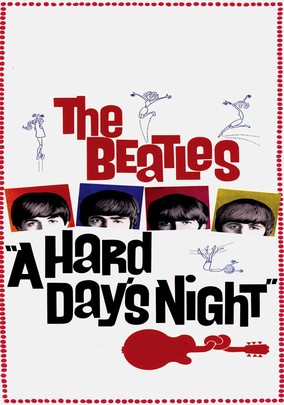
A Hard Day’s Night-1964

A Hard Day’s Night-1964

Director Richard Lester

Starring The Beatles

Scott’s Review #154

60023947

Reviewed August 18, 2014 

Grade: C

Why this rock documentary, a day in the life film, is considered among the Top 100 films of all time completely escapes me. I’m a huge fan of the band The Beatles, but this is a letdown.

The segments consisting of musical numbers performed by the band are excellent, and, humming along, I enjoyed the black and white filming of the “documentary.” Still, the film is not a documentary in the traditional sense and is very difficult to categorize.

Is it a rock opera, a comedy, a documentary, or a musical? It is somewhat of a hybrid as the viewer journeys through a typical day in the life of a Beatle.

But everything else seems fluff to the point of silliness. Countless scenes of the band running through the streets with adoring fans screaming and chasing after them become irritating. The film has little plot.

The Beatles were a huge band. We get it.

Paul, George, Ringo, and John do a capable job in the film, considering they are non-actors. I’d much rather have been exposed to a straightforward documentary focusing on the background of some of the songs or the band members themselves instead of a lightweight tale of a day in the life of The Beatles with silly attempts at humor thrown in.

A Hard Day’s Night (1964) influenced the 1960s television comedy starring The Monkees.

Oscar Nominations: Best Story and Screenplay Written Directly for the Screen, Best Scoring of Music-Adaptation or Treatment

After Tiller-2013

After Tiller-2013

Directors Martha Shane, Lana Wilson

Scott’s Review #153

70267800

Reviewed August 13, 2014 

Grade: A

After Tiller (2013) is a brilliant and thought-provoking documentary about the controversial topic of abortion.

The issue presented is not whether abortions should be performed, but rather whether they should be performed late-term (beyond twenty weeks).

The Doctor Tiller mentioned in the title was the doctor who opened the handful of clinics that perform late-term abortions and who was murdered outside of his church by fanatics before the documentary was made.

The four remaining protégés of his are doctors who now openly perform these controversial procedures and who are presented as not monsters, as some would think of them, but as sympathetic, kind professionals who put the pregnant mothers’ needs first.

As I assumed before seeing the documentary, the doctors are not strictly performing the abortions for mothers seeking a way to get rid of a “problem”, but rather, in most cases, the baby will lead a life of pain, misery, and health problems.

Typically, parents do not learn of the problem until late in the pregnancy, which adds layers to the issue.

The viewer is left wondering, what would I do?

Most of the parents struggle with the decision to terminate their pregnancies.

These doctors (and their families) constantly receive death threats from pro-life groups who do not comprehend the issue, and the doctors are harassed by people who do not want their abortion clinics anywhere near them.

As a viewer, this is painful to watch.

Any viewer who is pro-life or pro-choice ought to watch this for a better understanding of the complexities of late-term abortions.

After Tiller (2013) is riveting but has shamefully been seldom seen by audiences.

Independent Spirit Award Nominations: Best Documentary Feature

Room 237-2012

Room 237-2012

Director Rodney Ascher

Starring Bill Blakemore, Geoffrey Cocks

Scott’s Review #150

70229061

Reviewed August 6, 2014

Grade: C-

My viewing of the documentary Room 237 (2012) left me with mixed emotions.

On the one hand, it offers an interesting glimpse into the world of the classic horror masterpiece The Shining (1980), with many clips and film facts.

It also features other works by Director Stanley Kubrick and compares them, which is interesting to fans like me.

I love the passion of this film’s fans and admire how well they know every intricate detail of The Shining.

But at the heart of this documentary are conspiracy theories from fans and theorists about The Shining that are downright wacky and become redundant after about fifteen minutes.

What makes these people credible? We only hear their voices, and we never see their faces. Who are they? What walks of life are they? Most of these conspiracy theories are much ado about nothing.

Somehow a camera angle, a photo of a surfer, or an expression on Jack Nicholson’s face turns into a mythological meaning. There is also some gibberish about moon landings and the holocaust that did not interest me.

I bought very little of it, if any.

I would have been quite content with a documentary solely focused on the making of The Shining, interviews with the cast and behind-the-scenes facts, or even bloopers.

It would have been more realistic, interesting, and plausible.

As a tribute to The Shining’s excellence, this documentary succeeds; in all else, it fails.

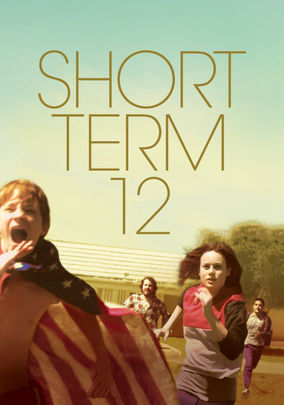
Short Term 12-2013

Short Term 12-2013

Director Destin Daniel Cretton

Starring Brie Larson

Scott’s Review #149

70272893

Reviewed August 6, 2014 

Grade: C+

Having just viewed Short Term 12 (2013), I am not sure I am getting all of the “this movie is brilliant” or “beyond amazing” or glowing praise surrounding the film.

The film is set in a group home for troubled teens and centers on the home’s supervisor, Grace (Brie Larson). Grace runs the home with her boyfriend and other twenty-somethings, mostly former troubled youths.

The film’s focal point is Grace and both her problems (she is pregnant and her abusive father is being released from prison) and her relationships with the teens currently staying in the group home.

The film is fairly engaging but seems a bit forced and not gritty enough given the subject matter.

I enjoyed the relationship between Grace and a new charge, Jayden, whom she befriends.

The group of teens is almost too perfectly cast, with a mix of races and stereotypes; the kids did not come across as genuine.

I would have liked to see more backstory for some of the kids besides the two that were given one.

Subjects were introduced but not followed through with- why was Grace’s father never introduced onscreen? Where was the mother?

Her childhood issues were mentioned only in passing. Some of Grace’s actions were unrealistic and out of character for a counseling supervisor.

Would she smash the windows of one of the teen’s father’s cars out of anger and not consider the repercussions? And what was with the constant poop jokes, especially in the first ten minutes?

That was dumb and out of place.

The film feels glossed over, and I didn’t feel the realism- almost like a CBS television drama with swear words added to seem harsher. The subject was brave, but many more details could have been explored in Short Term 12 (2013).

Independent Spirit Award Nominations: 1 win-Best Female Lead-Brie Larson, Best Supporting Male-Lakeith Stanfield, Best Editing (won)

The Searchers-1956

The Searchers-1956

Director John Ford

Starring John Wayne

Scott’s Review #148

Reviewed August 5, 2014

Grade: B+

The Searchers (1956) is a classic film considered one of the greatest ever made. It took me a few viewings to appreciate, but I now admire it more and more with each subsequent viewing.

I understand why it is on many Best Films of All Time lists.

I do not think it’s great, but I understand its outstanding qualities. And while admittedly, I am neither a fan of the Western genre nor of John Wayne, both are top-notch in The Searchers.

It tells the story of a Civil War veteran (Wayne) named Ethan Edwards, whose brother and his sister-in-law, whom Ethan is in love with, are brutally murdered by a Comanche Indian tribe.

Ethan’s two nieces are kidnapped, and for the remainder of the film, Ethan, along with his best friend, searches for the missing girls.

Two aspects that initially bothered me about the film were the overt racism involved in this film towards any Indians- the treatment of one Indian woman is cruel, and my disdain for the character of Ethan.

The fact that I am not a fan of John Wayne- way overrated in the acting department, in my opinion, may have something to do with this. But the character of Ethan is racist, and it is tough to root for a character like that.

One could make the argument that he is also self-loathing due to lusting after his sister-in-law.

Over time, though, I have come to appreciate this Western drama more and more, mainly due to John Ford’s direction, the sweeping Old West cinematography, and the now-understood complexity of Ethan’s character.

He is confident, masculine, and even mean, but wounded and, in some way, sympathetic to viewers.

The Searchers (1956) also captures what the real West was probably once like.

An epic western that I have grown to admire.

Golden Globe Nominations: 1 win-New Star of the Year-Actor-Patrick Wayne (won)

Her-2013

Her-2013

Director Spike Jonze

Starring Joaquin Phoenix, Scarlett Johansson

Scott’s Review #147

70278933

Reviewed August 5, 2014

Grade: A-

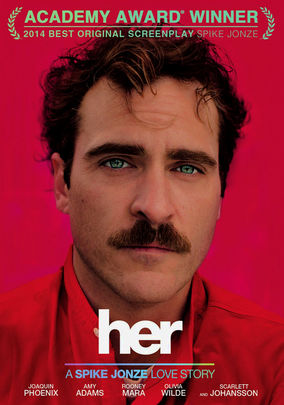
Her (2013) is a very unique film directed by Spike Jonze.

The film tells the tale of a lonely, depressed man named Theodore, played by Joaquin Phoenix, who lives in a beautiful high-rise in futuristic Los Angeles.

He works as a writer for a company that creates intimate cards for people in relationships.

After a recent divorce, he falls in love with his computerized operating system, Samantha, played by Scarlett Johansson (voice only).

Conflicts emerge as the relationship deepens and intensifies.

This is a uniquely crafted love story, but also a story of loneliness and the world of technology we now live in.

It portrays human relationships as troubled and unsuccessful, yet several characters have wonderful relationships with computers.

Is this what the future may bring for human beings? How many people have fallen in love with a fantasy or a voice on the phone?

The film ponders how technological advances have changed relationships and wonders what will happen further into the future. Technology, while wonderful, has changed our interpersonal relationships, and this film delves deeply into that.

Conversation is a lost art, and Her captures both the joys and tragedies of technology.

Visually, the film is successful because it portrays Los Angeles in a sophisticated, ultra-sleek, modern way that is fascinating.

Several technological games are featured (the Alien child is brilliantly comical), and the “Mom points” are fascinatingly ironic.

Her is a deep film that raises questions, and I applaud this in modern cinema.

Her is a slow-moving film, but a questioning one.

It won the 2013 Best Original Screenplay Oscar, and I am so glad the Academy recognized the film’s originality.

Oscar Nominations: 1 win-Best Picture, Best Original Screenplay (won), Best Original Score, Best Original Song-“The Moon Song”, Best Production Design

Texas Chainsaw 3D-2013

Texas Chainsaw 3D-2013

Director John Luessenhop

Starring Alexandra Daddario

Scott’s Review #145

70242803

Reviewed July 31, 2013

Grade: B-

If you are a horror buff (as I am), the reality that one must accept is that classic horror films will be remade, or some incarnation of them will be made over time.

That is the harsh reality. They will never hold a candle to the originals. That is also a reality. One can either accept them for what they are or resist them.

Once again, another version of the classic 1974 Texas Chainsaw Massacre comes upon us.

It is present times (2013), and the main character, Heather (Daddario), takes a road trip with her friends to Texas to collect an inheritance from a long-lost Grandmother she has never known.

An interesting twist is that the film begins where the original left off- the fact that sequels were made in between seems to be forgotten.

I enjoyed how the film picks up where the original left off and brings history to the story.

Unfortunately, the timeline makes no sense and is a complete impossibility. Chronologically, the heroine would be thirty-nine years old, but the character is in her early twenties.

In typical horror fashion, the characters are all one-dimensional (sex-starved), and a token minority is thrown in for good measure, which has become standard in modern horror.

The Texas police are portrayed as corrupt.

Happily, two original cast members (Gunnar Hansen and Marilyn Burns) make brief cameos from the 1974 version, which is a great touch.

Otherwise, this is a by-the-numbers modern horror film and quite forgettable, yet enjoyable for the ninety-minute length.

Texas Chainsaw 3D (2013) does not hold a candle to the original, but what would?

The Evil Dead-1981

The Evil Dead-1981

Director Sam Raimi

Starring Bruce Campbell

Scott’s Review #144

484369

Reviewed July 31, 2014

Grade: B+

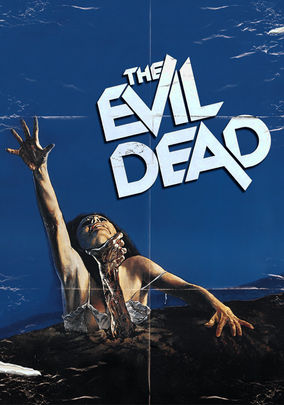
For its time, The Evil Dead (1981) was a unique, creative, visually impressive horror classic, far different from the wave of mediocre slasher films of the era.

In the story, five teenagers head to a remote cabin in Tennessee for spring break.

From the beginning of the trip, there is trouble: they are almost killed in a head-on collision, their car almost falls off a rickety bridge, and, finally, at the cabin, they stumble upon a haunted book.

From this point, even stranger events unfold, and the haunting, crazy action begins.

Director Sam Raimi does an excellent job from a visual standpoint- the camera racing through the woods from the demon’s point of view is very effective and scary.

The ambiance is creepy- fog, mist, smoke, and the lighting is great.

The film has all the elements- darkness, a remote cabin, and woods coming alive for a genuinely scary horror flick.

Yes, the film seems a bit campy to watch now, but at the time, the special effects were brilliant.

My personal favorite is the long shot of the twitching, dismembered body and the various, hysterically funny chattering and gibberish among the demons.

The ending of the film is very well done.

The Grand Budapest Hotel-2014

The Grand Budapest Hotel-2014

Director Wes Anderson

Starring Ralph Fiennes, F. Murray Abraham

Scott’s Review #143

70295915

Reviewed July 30, 2014

Grade: B+

The Grand Budapest Hotel (2014) is a witty and unique film by director Wes Anderson, who has also directed similarly quirky films,  notably Monsoon Kingdom (2012) and The Royal Tenenbaums (2001).

The famous story of the history of the Grand Budapest Hotel is recounted, over dinner, by the current owner Zero (played by F. Murray Abraham), and an inquisitive guest (Jude Law).

The film then goes back to the 1930s and shares the story of the actual history of the hotel.

The main story centers on the head concierge, Gustave, (Ralph Fiennes), and his antics involving older wealthy blonde women, a murder, stolen art, and a missing will.

Gustave is a ladies’ man, and bisexual, who spends time with the rich women who stay at the hotel.  Fiennes does an excellent job as the quick-witted, almost manic Gustave.

This sets off a series of interesting, mysterious events for the remainder of the film that turns into a whodunit yarn.

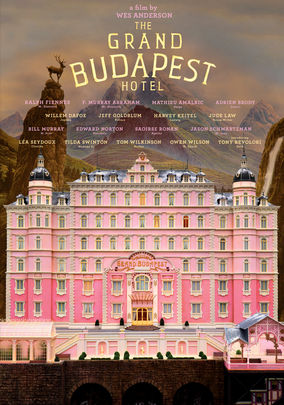
The visual aspects usurp the story. The art direction is amazing. The sets are constructed so perfectly and ingeniously that they almost look like animated sets or like a dollhouses.

The costumes and makeup are flawless.

The story tends to be tough to follow at times and is just not as strong as the other aspects of the film, although this is not to be interpreted as the story is not good- it is entertaining, but nothing more.

It’s just that the other aspects of the film are magnificent and the story is secondary. It’s an odd film, certainly, but unique and interesting.

Well-known Hollywood stars appear- Tilda Swinton, Edward Norton, Adrien Brody, Willem Defoe, and Harvey Keitel.

Oscar Nominations: 4 wins-Best Picture, Best Director-Wes Anderson, Best Original Screenplay, Best Original Score (won), Best Production Design (won), Best Cinematography, Best Makeup and Hairstyling (won), Best Costume Design (won), Best Film Editing

The Great Gatsby-2013

The Great Gatsby-2013

Director Baz Luhrmann

Starring Tobey Maguire, Leonardo DiCaprio, Carey Mulligan

Scott’s Review #142

70244437

Reviewed July 29, 2014

Grade: A

Despite mixed reviews, I loved this movie.

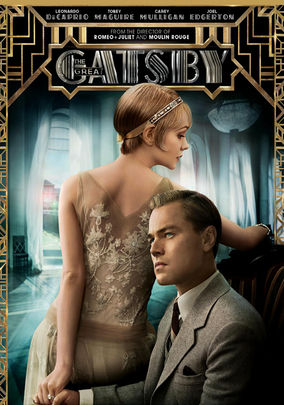
Having read the classic novel The Great Gatsby by F. Scott Fitzgerald, I was familiar with the story of excess and scandal during one sweltering summer in the well-to-do Long Island, NY, community in the 1920s.

Directed by Baz Luhrmann (Moulin Rouge), I found the film’s look lavish, realistic, and gorgeous—with perfect ambiance and a dreamlike quality.

I loved the casting of Leonardo DiCaprio as Gatsby, Carey Mulligan as Daisy, and Tobey Maguire as Nick Caraway.

The chemistry among the three leads is apparent, and the film is visually spectacular, from the costumes to the gorgeous sets. The speech patterns of the era- “old sport” and “row”- are used frequently and seem authentic.

Many complained about the mixing of modern rap music with a film set in the 1920s, which does sound strange on paper, but I enjoyed that aspect of it and feel it gave a contemporary edge to the film.

There are slight adjustments from the novel, but I thought it was a very successful transition to the big screen.

Oscar Nominations: 2 wins-Best Production Design (won), Best Costume Design (won)

How To Survive a Plague-2012

How To Survive a Plague-2012

Director David France

Starring Bill Bahlman, David Barr

Scott’s Review #141

70229270

Reviewed July 29, 2014

Grade: A

A wonderful thing about documentaries is that they can be a learning experience and a teaching tool.

How to Survive a Plague (2012) is one such type of documentary. It is an authentic, real, gritty piece of work, and that’s what makes it so powerful.

The AIDS epidemic in the 1980s was a monumental and devastating time in social history, and this documentary chronicles a group of advocates.

They tirelessly fought to convince the Government (at that time less than sympathetic towards victims of the disease) to approve and administer drugs to combat AIDS.

This organization was called ACT UP, and it brought the gay community together, along with sympathetic members of the straight community.

Good people fighting against the establishment for change.

Nearly all the footage from the film is from the period in question, and the activism is both heartbreaking and inspiring to witness.

The Pope, Ronald Reagan, and George H.W. Bush are not portrayed in a positive light, but rather as uncaring and unwilling to help those dying from the disease.

A moving, inspirational film that teaches you never to give up or back down from what you stand for.

How to Survive a Plague (2012) was deservedly nominated for the 2013 Best Documentary Oscar.

Oscar Nominations: Best Documentary-Feature

Independent Spirit Award Nominations: Best Documentary Feature

Welcome to my blog!1,552 reviews posted so far! I'm Scott Segrell and I reside in Stamford, CT. My site features hundreds of film reviews I have written since I launched the site in 2014. I hope you enjoy reading my latest reviews or searching for your own favorites to see if we agree. Please see my Recent Posts section, and don't forget to utilize the tags and category links.