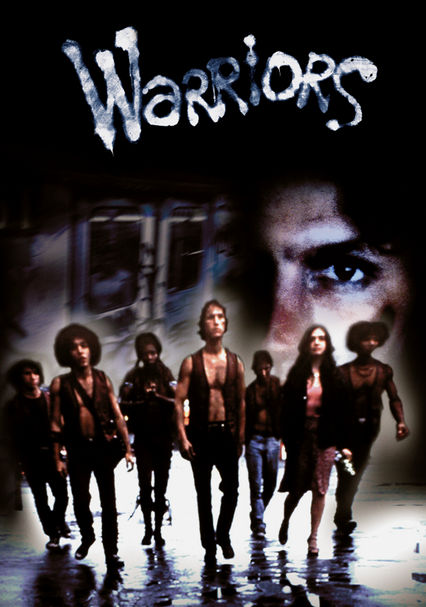
The Warriors-1979

The Warriors-1979

Director Walter Hill

Starring Michael Beck, James Remar, Deborah Van Valkenburgh

Scott’s Review #1,383
Reviewed July 31, 2023

Grade: B+

The Warriors (1979) is an entertaining gang-themed action-thriller that is a perfect watch for a late Saturday night.

Reportedly, it caused friction and outbreaks of fights in movie theaters when it was released, but decades later, it doesn’t feel as dangerous as it might have then.

The film does terrific work with its art direction, which melds live action with colorful character drawings. This infuses an artistic experience and elevates the results far above dumb action flicks like Rambo (1982), Death Wish (1974), and countless others.

In a perhaps peculiar comparison, The Warriors reminds me a bit of John Carpenter’s Escape from New York, which came two years later. The isolated Manhattan streets and other areas with a post-apocalyptic feel merge the two films, in my mind anyway.

The film suffers a bit from a dated, obscure categorization and is not remembered as well as it perhaps should be. The acting isn’t terrific either, but strangely, this makes the experience a bit more raw and enjoyable.

After being wrongly accused of killing a charismatic gang leader named Cyrus, a Coney Island street gang known as the Warriors must hoof their way home, which is miles from where the death occurred.

They are pursued by both police and enemy gangs, one of which framed them for Cyrus’s execution.

The ambiance and atmosphere are the best aspects of the film. So many Big Apple treats can be found, especially in the infamous Central Park, which takes center stage. The lavish and picturesque park wasn’t as safe and pristine in the late 1970s as it was in 2023, and the film uses this to its advantage.

Characters never know who or what might be lurking behind a bench or a tree. A particularly fun scene features a young Mercedes Ruehl being groped by a gang member, only to be revealed to be a sexy policewoman who quickly puts the perp in handcuffs.

The other featured locales include Van Cortlandt Park, Union Square, 96th Street and Broadway, and Riverside Park. The beauty of this is that the action doesn’t include only Manhattan but also other boroughs like the Bronx and Brooklyn, showing the vastness of NYC.

The main romance is between Swan (Michael Beck) and Mercy (Deborah Van Valkenburgh). The pair have a sliver of chemistry, but I wasn’t watching the film for doleful young people.

One scene was exceptionally well done when the couple laid eyes on some well-dressed, upstanding teenagers on the subway who could easily be their doppelgängers.

Maybe them in another life? The forlorn look on the faces of Swan and Mercy reveals much as the couple’s all eyes each other, perhaps thinking the same thing.

Walter Hill directs the film and is well-versed in the action genre, creating the popular film 48 Hours (1982). He paces and choreographs the action sequences so well that it’s as if the viewer is watching a dance routine occur.

The opening sequence gets the tone of the film out in the open as the storied Wonder Wheel on dusty Coney Island is on full display. Even the bright and windy shore feels gloomy and ominous as leather-clad gang members make it their turf.

The finale salutes the Warriors with a song, ‘In the City by Joe Walsh, which I particularly enjoyed because it’s a great song.

Though unrealistic for the time, it’s nice to see gang members of different ethnicities team up, showcasing diverse representation.

The film is a perfect watch for cinema fans thirsty for old New York City locales and greasy, dirty subway stations because the real Manhattan wasn’t too different from what The Warriors (1979) showcases.
Private Resort-1985

Private Resort-1985

Director George Bowers

Starring Rob Morrow, Johnny Depp

Scott’s Review #1,382

.

Reviewed July 26, 2023

Grade: B

Depending on what type of film you are looking for, Private Resort (1985) may be just what the doctor ordered.

A version of Animal House (1978) or Porky’s (1981) shifted to a sunny beach resort is the perfect summer setting for a sex romp with enough g-strings, boobs, and bare butts to make even non-prudish viewers blush a little.

Suffice it to say, director George Bowers, mostly known as a film editor, and screenwriter Alan Wenkus weren’t seeking any Academy Award nominations.

Though silly, thoughtless, and caked with terrible acting, Private Resort is a fun flick.

Shamelessly, since its 1985 release, the distributors have callously billed mega Hollywood star Johnny Depp as the ‘star’ of this film. Someone even dared to add his photo to the film’s cover art, which I nearly used when creating my film review.

In reality, Depp plays second fiddle to Rob Morrow, who is the film’s real star and proudly displays more bare flesh than Depp does.

Morrow also proudly dons a dress and wig for a lengthy drag performance.

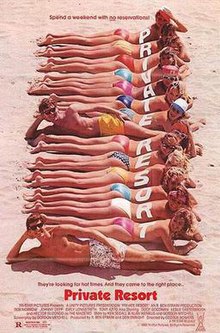
Thankfully, another source cleverly depicts a lineup of bronzed, toned beach bodies, each donning the letters that spell ‘Private Resort’ (see above), across different cover art.

Horny teenage buddies, Ben and Jack (Morrow and Depp), decide to spend a weekend in a swanky Miami beach resort chasing the flock of equally horny and scantily clad women they encounter.

How they have the money to afford a room is never explained.

Their fun is parlayed when they cross paths with a shifty jewel thief played by Hector Elizondo and his leggy girlfriend Bobbie Sue (Leslie Easterbrook). Throw in a romance with all-American-looking waitress Patti (Emily Longstreth) and sultry Dana (Karyn O’Bryan), and you’ve got a plot.

Bowers throws in enough physical comedy and antics to keep the action moving along in a speedy one-hour and twenty-two-minute running time.

The gags follow films like Caddyshack (1980) or any of the other countless 1980s slapstick comedies, and you can pretty much bank on what you’ll be served up.

Why, the opening scene follows a parade of sexy female sunbathers slathering suntan lotion on or suggestively bending over for all to see.

Many were uncredited, so my hunch is that adult film stars were used.

Morrow is the standout, and his boyish charisma lights up the screen, especially when he becomes smitten with Patti. The fresh-faced pair make a perfect match and exude young love, becoming the heart of the film.

Elizondo and Easterbrook dutifully perform their parts as one-dimensional foils and MILF roles, respectively. Decent actors are worlds above any of the other supporting actors in terms of talent.

Even comic actress Dody Goodman (Grease, 1978) goes way over the top in her role as Dana’s wealthy grandmother.

Andrew Dice Clay, then known as Andrew Clay, also appears.

Private Resort gets a severe wrist-slapping for two crass fat-shaming scenes not worth giving time to other than to mention it’s not kind to plump girls.

I first saw Private Resort (1985) as a teenager when it was first released and loved it. This was before I blossomed into a snobby film critic.

Seeing the film a million years later with more sophisticated tastes, I still find it fun, especially on a scorching summer night.

That’s got to count for something, right?

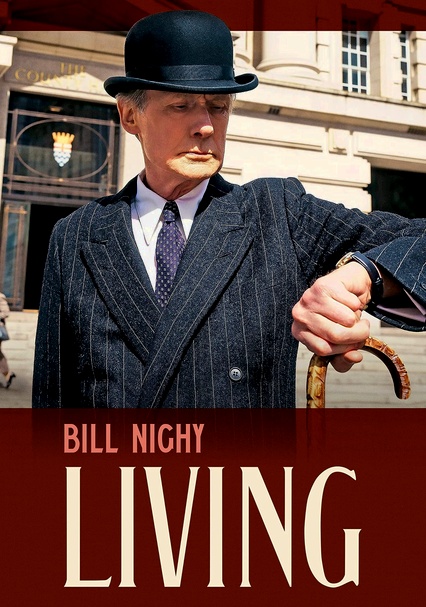
Living-2022

Living-2022

Director Oliver Hermanus

Starring Bill Nighy, Aimee Lou Wood

Scott’s Review #1,380

Reviewed July 20, 2023

Grade: B+

Living (2022) is a British film remake of a Japanese movie named Ikiru, made in 1952. That screenplay was partly inspired by Leo Tolstoy’s 1886 novella The Death of Ivan Ilyich. I have not seen that film, but my best bet is that it is either equal to or superior to Living.

The remake is quiet yet powerful. It teaches a poignant lesson about living life to its fullest and not wasting time on trivial and meaningless things that most people stress over.

Before you know it, life is over.

The brilliance of this message is that it can be applied to anyone’s life at any age and in any given situation. At least that is what I took from the film, and therefore, the film is inspiring to me personally.

In this particular case, the focus is on an older man who has just been diagnosed with terminal cancer and given a maximum of six months to live.

With high reliability, Living tells the story of an ordinary man named Rodney Miller (Bill Nighy) who has so far lived years of dull office work and a careful routine. In other words, he has led a bland existence and rarely does anything exciting.

To be clear, he is not a loser but is quite polished, prim, and proper. Well-dressed, has a good job, and is highly responsible. He resides with his son and daughter-in-law.

Once his doctor gives Mr. Miller his diagnosis, he becomes determined to turn his dull life into something extraordinary with the help of a young office worker, Miss Margaret Harris, played by Aimee Lou Wood.

While the supporting actors are fine, they are not given much to do or explored deeply, except perhaps Wood. She is compelling as a girl-next-door type who bonds with her much older boss. We root for her to find happiness, and she does.

Living works best as a character study, and Nighy quietly takes charge with a ferociously understated performance that justifiably landed him with an Academy Award nomination.

The actor has a gorgeous voice, so very poised, deep, and oozing with polish and sophistication. I fell in love with the character right away, even before his diagnosis with deadly cancer.

He’s not an evil man, just a boring one, and Nighy is successful at showing his appeal. This is evident in his personal life, where he is unable to communicate with his son, despite his desperate desire to do so.

His life has so far avoided any ruffling of feathers that he cannot even adequately express himself.

The film avoids exploring much of Mr. Williams’s personal life, and he has no designs on Miss Harris other than his envy of her joy and passion for life. He does not seem to be gay, but nothing is said about a wife or ex-wife.

The film’s overall pace is slow, which may not appeal to some viewers. Since the running time was merely one hour and forty-two minutes, I wasn’t bored, though I wasn’t energized either, until the ending, which I found moving.

The experience is not a downer despite the subject matter, and no scenes of Mr. Williams dying a painful death or any hospital scenes are featured.

Instead, it portrays life.

The filmmaking is clean and polished, much like Mr. Williams, and there is a rich London texture. Rainy days, a sophisticated swagger, and crisp, structured sets and art design are what I mainly notice.

The title “Living” (2022) is apt for the lesson being presented to the audience. Spend an enormous amount on that savory dinner, eat a giant ice cream sundae, or help someone before looking the other way.

Because one day it will be too late.

Oscar Nominations: Best Actor-Bill Nighy, Best Adapted Screenplay

The Four Musketeers-1974

The Four Musketeers-1974

Director Richard Lester

Starring Oliver Reed, Michael York, Faye Dunaway

Scott’s Review #1,379

Reviewed July 17, 2023

Grade: B

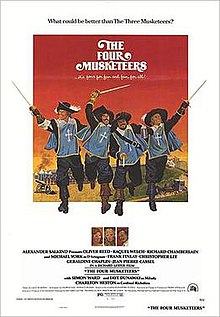
The Four Musketeers (1974) is a sequel to the film The Three Musketeers, made a mere year earlier. It takes the second half of the famous novel by French author Alexandre Dumas, with the original film covering the first half.

A recommendation is to watch the sequel directly after the original, so there is less struggle to figure out what is going on. I did not do that, so connecting the plot points was a struggle.

A further negative is the omission of English subtitles, making it difficult to hear or understand the events of the film. British accents are tough.

King Louis XIII’s (Jean-Pierre Cassel) four swashbuckling heroes engage in chivalrous and daring adventures when Cardinal Richelieu (Charlton Heston) and his evil accomplice, Milady de Winter (Faye Dunaway), kidnap the queen’s dressmaker, Constance (Raquel Welch).

The heroes are D’Artagnan (Michael York), Athos (Oliver Reed), Porthos (Frank Finlay), and Aramis (Richard Chamberlain).

It’s a British swashbuckler film, so the adventures are prevalent and the physical comedy is fast and furious. It’s like a sitcom at times, with over-the-top and outlandish fight sequences and one-liners.

The frequent low-cut tops on the female characters are intended to channel the male viewer into a thirteen-year-old boy.

The film gets darker than I anticipated in the final act, which is to its credit, with two deaths. This surprised me in a good way because so much of The Four Musketeers is light-hearted.

The death by the beheading of a major character is well done. The heroes watch an executioner perform his duties to the fiendish character from across a lake. The decapitation is not shown directly, but it’s conveyed through a tremendously effective silhouette from a distance.

The costumes and attention to detail from a historic perspective are superior elements of the film. One can imagine being in the French countryside during the Anglo-French War in the 1600s. The bright sets and lighting create a colorful, picturesque style.

The cast is made up of several A-list Hollywood stars of the time, and each adequately does their share to light up the screen. My favorites are Dunaway as the villainess and Reed as a ‘good guy’, a refreshing change for the actor who usually appears as the heavy.

Reed and Dunaways share some scenes, mostly in flashbacks, that made me want to see more of their romance, but this is not to be. Athos was unaware that Milady de Winter was a criminal who left a permanent branding mark.

Still, what little I got featured tremendous chemistry between the pair, and I would have liked to have seen more.

Where the film loses me a bit is with the silliness, which follows the same formula that made The Three Musketeers a success. Feeling redundant were the endless sword fight scenes and tongue-in-cheek winking.

The film tries hard to be a comedy but also includes darker moments, leaving it feeling unbalanced.

Some actors get short shrift.

Christopher Lee as Count De Rouchfort is a secondary villain and has little to do except prance around in a wig, uniform, and eye patch. His character is no Dracula and does not feel dangerous.

The Four Musketeers (1974) is good entertainment, thanks to a solidly professional cast. Hardly a masterpiece, it’s a bang ’em up comedy adventure with a few moments of death and destruction.

The Monster Club-1981

The Monster Club-1981

Director Roy Ward Baker

Starring Vincent Price, Donald Pleasence, John Carradine

Scott’s Review #1,378

Reviewed July 16, 2023

Grade: B

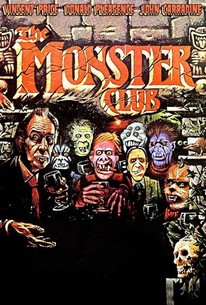
Any horror feast, including Vincent Price and Donald Pleasence, is worth a watch, and The Monster Club (1981) features both actors, though not in any scenes together.

The British horror anthology is uneven and a tad too silly, with only two of the three chapters recommended. They are based on the works of the British horror author R. Chetwynd-Hayes.

The graphics and art direction are surprisingly superior for such a low-budget production.

In between chapters, there is a jarring and unnecessary musical performance by one of the creatures. While sort of fun, it takes away from continuity and feels like it’s been thrown in rather than serving any real purpose.

Below is a summary, review, and rating of each vignette.

Prologue: B

Author R. Chetwynd-Hayes (John Carradine) is approached on a city street by a strange man (Vincent Price) who turns out to be a starving vampire named Eramus.

He bites the writer and takes the confused man to an odd club. It’s a haven for supernatural creatures as they dance, drink, and carry on together.

Eramus introduces three stories about his fellow creatures of the night.

This chapter is relevant to tie the chapters together, and any scene involving Price is good in my book. It also serves as a learning experience to explain the different types of creatures, but little more than that.

The Shadmock: A-

Angela (Barbara Kellerman) is a financially struggling woman who takes a job at a secluded mansion owned by Raven (James Laurenson), a creature called a Shadmock.

Along with her greedy boyfriend (Simon Ward), they hatch a plot to steal Raven’s great wealth after he proposes to Angela. When she is caught unlocking Raven’s safe, his demonic whistle comes into play at the expense of Angela and her boyfriend.

This chapter has a great setup and an unrequited love vibe. With a Beauty and the Beast comparison, the audience sympathizes with Raven. All he wants is love, and the ultimate climax is heartbreaking with the knowledge that he is being duped.

I longed for Angela to come to her senses, dump her boyfriend, and be carried away by Raven, but it’s horror after all, and not romance.

Starting slowly, the grotesquely exquisite gothic mansion and the fine luxuries contained are fun to feast one’s eyes on, and the sinister conclusion is not to be missed.

The Vampires: B-

A shy young boy (Warren Saire) from a kind family of vampires leads a lonely life, bullied at school, while his father (Richard Johnson) spends little time with him.

The father is hunted by a team of vampire killers led by Pickering (Donald Pleasance), who attempt to drive a stake through the father and kill him. But the tables are soon turned.

This chapter is cute but uninspired, adding more humor than horror. Pleasance isn’t given a great role, and neither is former ‘Bond girl’ Britt Eklund as the supportive mother.

It pales sharply against ‘The Shadmock’ and ‘The Ghouls.

The Ghouls: A

A movie director (Stuart Whitman) scouting locations for his next film pays a visit to an isolated village, Loughville, where the sinister residents refuse to let him leave.

While imprisoned by the ghouls, he meets Luna (Lesley Dunlop), the daughter of a ghoul father (Patrick Magee), who agrees to help him escape. But can Luna or the resident police be trusted?

The Ghouls is my favorite because it feels the most unpredictable, and I love the early shots of a movie production studio. The ghostly-looking creatures are appealing because there is an ambiguity about their motives and the secrets held in the village.

It’s also fun balancing the sophisticated style of the movie producer against the drudgery of the villagers. Also, the inclusion of actor Magee from A Clockwork Orange (1971) is a win.

Epilogue: B 

At the end of the film, Eramus cheerfully tells the other club members about all the imaginative ways humans are horrible to each other and declares that humans are the most despicable monsters of all.

Thus, Chetwynd-Hayes is made an honorary monster and member of the club.

The quick chapter is a clever wrap-up to the story and culminates as a bit of a ‘message’ about kindness and humanity.

Through a Glass Darkly-1961

Through a Glass Darkly-1961

Director Ingmar Bergman

Starring Harriet Andersson, Gunnar Björnstrand, Max von Sydow

Scott’s Review #1,377

Reviewed July 15, 2023

Grade: A

I recently acquired a robust Ingmar Bergman collection featuring over three dozen of the great director’s works, so I have much introspective filmmaking to look forward to.

Considered visionary, influential, and many other stellar adjectives, his films are personal and human. They are frequently dark and not easy to watch, but the payoff is significant for the patient cinephile.

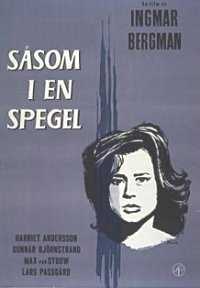
His 1961 work, Through a Glass Darkly (1961), tells the story of a schizophrenic young woman, Karin (Harriet Andersson), vacationing on a remote island with her husband Martin (Max von Sydow), novelist father David (Gunnar Björnstrand), and frustrated younger brother Minus (Lars Passgård).

She has been released from the hospital and plans to enjoy the summer tranquility at the family’s quaint cottage.

She slowly unravels as the reality sets in that she may not get better, and the family is aware of this.

The story is told in a brisk twenty-four-hour period and consists of only four characters. It is structured as a three-act play that runs for ninety-one minutes.

Let’s remember that mental illness was not as advanced in 1961 as it is decades later. Most who suffered from it were tossed away into a ‘loony bin’ and quickly discarded from society.

Delving into such controversial and unpleasant territory in 1961 deserves enormous accolades.

The brilliance of Through a Glass Darkly is how Karin realizes her mental illness and its fateful ravages. She is aware of what’s happening to her and that she will never recover. After all, the hen’s mother also had a mental illness.

Her rich characterization is powerfully played by Andersson, who stands out in the film. This could be because of Sven Nykvist’s cinematography, but sometimes Karin looks like a little girl and, at other times, a haggard older woman.

I wonder if Bergman was trying to show the parallel between Karin and her mother.

Speaking of the camerawork, as in Bergman’s films, the black-and-white style only enhances the quality of the picture. The contrast between black and white and the frequent close-ups of the characters reveal glowing and ghostlike facial images.

I champion shots like this because they enrich the visual perspective and shift away from the story.

Andersson is not the only excellent actor; second place belongs to Björnstrand as the father. His character is a writer and deeply pained. Revealed to have tried to commit suicide,e he is riddled with guilt, regret, and desperation.

Von Sydow is decent as Karin’s husband, but the actor has much better Bergman roles to reflect on. Any cinema lover will associate the great actor with The Seventh Seal (1957).

Towards the end of Through a Glass Darkly, I didn’t quite connect the dots when the characters go into detail about how god is equated with love.

I focused on Karin and the other characters coming to terms with the fact that she would go to an asylum and never return.

What Bergman does so well in Through a Glass Darkly is making the audience envelop the characters, accepting and feeling their pain. I despair with Karin when she imagines a spider emerging from the walls and crawling on her.

Of course, the audience doesn’t see what Karin imagines, which makes the scene much scarier than if Bergman had shown a giant spider.

One’s imagination is always worse than what is on the screen.

Requiring patience and a deep dive into despair, Through a Glass Darkly (1961) is worth the work. Lovely beachside images and beautiful sunlight mix perfectly with anguish and depression, creating an intimate experience.

Oscar Nominations: 1 win-Best Foreign Language Film (won), Best Original Screenplay

Pretty in Pink-1986

Pretty in Pink-1986

Director Howard Deutch

Starring Molly Ringwald, Andrew McCarthy, Jon Cryer

Scott’s Review #1,376

Reviewed July 10, 2023

Grade: B+

A ‘B+’ grade may surprise some who know that I’m not a big fan of generic 1980s films, romantic comedies, or dramas.

Formulaic or nostalgic doesn’t always sit well with me, but I was baited hook, line, and sinker for an implausible coming-of-age sweet story.

Pretty in Pink (1986) and its writer, John Hughes, epitomize the 1980s and teen-angst films in general, but beneath the surface, the film has a lot of heart.

Star Molly Ringwald was the ‘it’ girl of the decade, perfectly portraying the girl next door facing the trials and tribulations of ordinary sixteen-year-olds.

Of course, my favorite Hughes film is The Breakfast Club (1985), also starring Ringwald, but Pretty in Pink is hardly as daring as that film. It’s softer and kinder with a lovely message of individuality and romance.

The film’s secret weapon is the spectacular musical soundtrack featuring, among other songs, the groovy title track by Psychedelic Furs and the mega-hit ballad ‘If You Leave’ by Orchestral Maneuvers in the Dark.

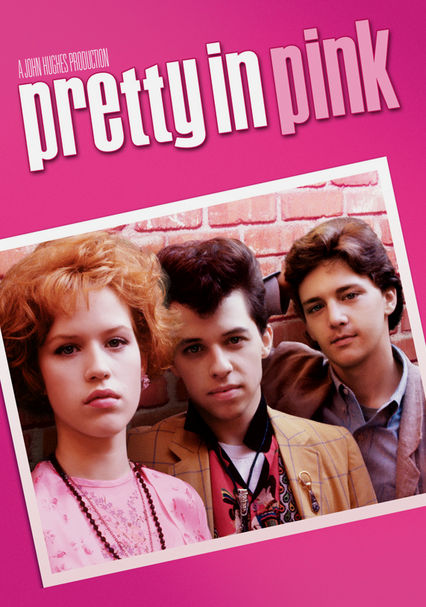
Andie (Ringwald) is an outcast at her high school in the American Midwest. From a working-class household with an unemployed father (Harry Dean Stanton) and an absent mother, she makes her clothes and has an individual fashion sense.

She’s not exactly popular with the bitchy and materialistic cheerleaders.

She works at a record store for her older boss and friend, Iona (Annie Potts), and is usually seen with her best friend and fellow outcast, Duckie (Jon Cryer), who has a crush on her.

When one of the rich and famous kids at school, Blane (Andrew McCarthy), asks Andie out, it seems too good to be true. As Andie starts falling for Blane, she realizes that dating someone from a different social class comes with its challenges.

Pretty in Pink has a few different angles, including a social sphere, a romantic triangle, and themes of conformity.

The triangle is ultimately divisive. Should Andie choose a best friend and confidante, Ducky or Blane, the boy she is truly smitten with? Her choice has divided audiences since the film was released decades ago.

She has so much in common with Ducky, who also has blue-collar roots, but her heart belongs to Blane, who could offer her so much more. Andie is headed for University and couldn’t Blane be the proper sophistication for her?

I’m on team Blane.

Strangely and off-putting is Ducky. Meant to be cute, he all but harasses Andie, smothering her and pressuring her. His repeated phone calls would make me run the other way.

Social class is a wise topic explored and one that many audiences can relate to. The classic upper-class boy falls in love with a working-class girl, and family and friend pressures develop.

Hughes doesn’t delve much into the upper-middle-class parents, focusing only on the students, which I find interesting. The character of Steff (James Spader) is the villain, antagonizing Andie because he can’t get her into bed.

Andie has inspired, and continues to inspire, teenage girls everywhere who refuse to conform to norms and standards. The film offers a strong female character with real emotions and hopes, fears, and dreams.

Thanks to an outstanding performance by Ringwald, we see all her emotions, and a beautiful dynamic forms between father and daughter.

The conclusion of the film (related to the triangle) occurs at the high school prom, where a jilted Andie attends alone. A quick sequence where she reconnects with a character is very rushed, and the film ends quickly.

Unsurprisingly, this is the result of the finale being rewritten at the last minute after the original ending didn’t go over well with test audiences.

There is something to be said for the writer and director having complete creative control, but sadly, this isn’t the case in Pretty in Pink, and the audience can see the void.

Pretty in Pink (1986) may scream ‘1980s film’ and the tacky hairstyles and outfits that go along with the decade and the genre, but the messages relayed hit their mark.

Though dated in some ways, the film is timeless in others.

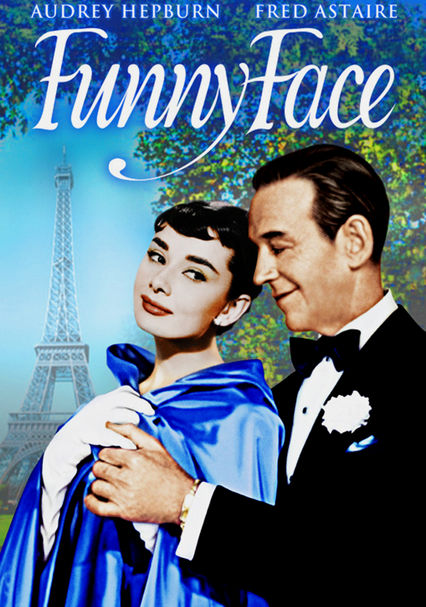
Funny Face-1957

Funny Face-1957

Director Stanley Donan

Starring Audrey Hepburn, Fred Astaire

Scott’s Review #1,375

Reviewed July 7, 2023

Grade: B

The results of Funny Face (1957) are mixed, and the word ‘cute’ pops to mind on more than one occasion.

On the one hand, audiences are served a sophisticated look at the fashion industry and the sleek style of Paris, France, in the 1950s. The outfits and set design are fab, revealing the cultured and colorful modeling world, while the makeup and hairstyles match the time with fragrant gusto.

The screenplay is riddled with plausibility issues bordering on offensiveness and silliness. It also provides a good look at the patriarchal mindset of the time. The message is twofold: The fashion industry and Hollywood equally embraced these norms when the film was made.

In a word, the overall film is dated.

New York City fashion photographer Dick Avery (Fred Astaire) is tasked with finding a model for a new assignment. Discouraged, he is struck by the beauty of Jo Stockton (Audrey Hepburn), an intellectual bookstore employee he photographed by accident.

He convinces Jo to accompany him to France, where he continues photographing her against Parisian backdrops. At the same time, they scramble to pull together a fashion show along with crusty Maggie Prescott (Kay Thompson), a fashion magazine publisher.

Dick and Jo fall for one another, only to find hurdles to overcome along the way.

The musical numbers are plentiful but second-tier. Bouncy songs like ‘Funny Face’ and ‘On How to Be Lovely’ are decent but not memorable. The highlight is ‘S, Wonderful,’ which appears during the finale and perfectly wraps the Paris experience and the film in a shiny bow.

Comparisons can be made to An American in Paris (1951), not just because both are set in Paris, use the same tune (S Wonderful), and were composed by George Gershwin. There’s more buried beneath the surface that ties the two films together.

Both lead characters, Jerry and Jo, wind up with the wrong partners, who are, in reality, inappropriate for each other. Jerry should be with the comparable Milo, while Jo should be with the dashing and artistic Flostre (Michael Auclair). Instead, Jerry chooses the waifish Lise while Jo lands the ancient Dick.

Astaire is old enough to be Hepburn’s grandfather, which makes the romance odd.

Of course, Milo and Flostre are made to be the foils in An American in Paris and Funny Face. They are merely obstacles to be overcome by the preferred couple.

Another irritant is the demeaning nickname that Dick calls Jo, ‘funny face.’ Hardly a dog, Hepburn is quite beautiful, although the film makes the audience assume she is wrong for the modeling world. She fits right in, looking perfect in every dress or costume she dons or photograph she appears in.

A better casting choice would not have been classically beautiful singers or actors such as Barbra Streisand or Bette Midler, though admittedly, neither had surfaced at that point.

Though shot on a soundstage, Funny Face rebounds from implausibility with gorgeous ariel views of historic Parisian landmarks that envelope the glitter of the theme.

Shots of the Eifel Tower, Arc de Triomphe, and the broad Champs-Elysees are robust and made me rewatch this sequence again.

In parallel, the Greenwich Village, New York City setting, where other events in the film take place, is an intelligent choice to define the artistic and bookish characters.

The opening titles of Funny Face (1957) are creative and polished, reflecting the maturity of the subject matter and style of the 1950s.

With no chemistry, Hepburn and Astaire carry the film as best they can with a dated and tame screenplay.

Oscar Nominations: Best Writing, Story, and Screenplay-Written Directly for the Screen, Best Costume Design, Best Cinematography, Best Art Direction-Set Direction

Triangle of Sadness-2022

Triangle of Sadness-2022

Director Ruben Östlund

Starring Harris Dickinson, Charlbi Dean, Woody Harrelson

Scott’s Review #1,374

Reviewed July 2, 2023

Grade: A

When I realized the director of Triangle of Sadness (2022) had directed Force Majeure (2014) and The Square (2017), I became very interested in seeing it.

I’m not sure I ultimately ‘got’ The Square, but Force Majeure was a thought-provoking slice of cinematic brilliance that I still think about from time to time.

Sure, Triangle of Sadness was rewarded with three Academy Award nominations, which it deserved. Still, Ruben Östlund has a knack for challenging his audience to think outside the box, both cinematically and otherwise, with a robust examination of social classes.

He crafts a subject matter about class systems and the haves and have-nots that has been explored in film many times before. But, in Triangle of Sadness, it feels fresh and fraught with many different possible directions.

The wicked dark comedy explores political talking points such as capitalism, communism, and socialism, and challenges conventional ways of thinking.

It’s on par with the popular HBO series The White Lotus, but on steroids.

I cannot recommend the film more highly, primarily geared toward those seeking expressive and deeply textured films with some meaning.

Despite the dreary title, it’s far from a dour experience. There are quite a few laugh-out-loud moments, especially in scenes featuring severe vomiting amid seasickness.

The rich and famous embark on a luxury cruise with fine dining and servants galore. But after a devastating storm leaves several passengers and staff stranded together on a deserted island, the power exchange begins to shift, and the social hierarchy is turned upside down.

Events mainly surround a celebrity model couple, Carl (Harris Dickinson) and Yaya (Charlbi Dean), who are invited on the luxury cruise for promotional purposes. Yaya is a social media influencer.

They are joined by a Russian oligarch, Dimitry, and his wife, Vera, as well as an elderly couple, Clementine and Winston, who have made their fortune manufacturing grenades and other weapons. Therese, a wheelchair user only capable of speaking a single phrase in German following a stroke, and Jarmo, a lonely tech millionaire who flirts with Yaya.

Besides possibly Therese, there is no a sympathetic rich character to be found.

The yacht staff are more sympathetic, although we don’t get to know all the characters very well.

Highlights include the head of staff, Paula, who demands that the staff obey the guests without question, Abigail, a cleaning woman, and the yacht’s captain, Thomas Smith (Woody Harrelson), who spends his time drunk in his cabin and despises the absurdity of the guests’ wealth.

The main events on the ship take a while to get to, and the film is divided into chapters. Part 1: Carl and Yaya, Part 2: The Yacht, and Part 3: The Island.

I realized after the fact that the point of the slow build is to show the dynamic between Carl and Yaya, the main characters. Both models and living life based on their looks, they are wildly insecure, bickering over money and gender roles.

While not likable nor complete assholes either, enjoyable is a chance to get a fleshed-out perspective on where they are coming from.

My adoration for the film largely stems from not knowing what is going to happen but knowing that at some point the shit is going to hit the fan.

The setup is perfect, especially the put-upon staff. While they are not abused, the relationship is clear. The passengers are in a position of power; the staff is not.

This will soon change.

Late in the game, I unexpectedly found myself rooting for a minor character who takes center stage in the last chapter, turning events upside down.

Comparisons can also be found in the recent Best Picture winner Parasite (2019) and classic international films such as Swept Away (1974) and L’Avventura (1960).

These are all brilliant films, and my hunch is that Triangle of Sadness (2022) will hold up well, perhaps achieving even greater acclaim as the years go by.

Oscar Nominations: Best Picture, Best Director-Ruben Östlund, Best Original Screenplay