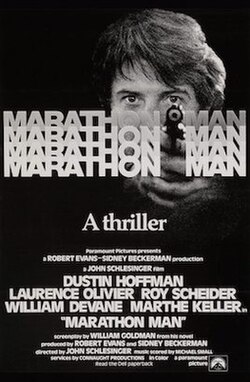
Marathon Man-1976

Marathon Man-1976

Director John Schlesinger

Starring Dustin Hoffman, Laurence Olivier, Roy Scheider

Scott’s Review #1,359
Reviewed April 29, 2023

Grade: A-

Writer William Goldman was involved in two politically charged, taut thrillers released in 1976 that can easily be watched back-to-back.

Fast-paced, rapidly edited, action-packed offerings are on the menu.

The Academy Award-winning All the President’s Men (1976) and Marathon Man (1976) are highly recommended, as they are in the same vein.

They are part of why I love 1970s cinema so much. Freedom and rich character development, combined with a sole vision, are admirable traits.

John Schlesinger, famous for Midnight Cowboy (1969) and other films, directs.

Both films are written by Goldman, and each stars actor Dustin Hoffman, so the similarities are endless. And yet, each has its own identity.

In Marathon Man, Thomas “Babe” Levy (Hoffman) is a Columbia graduate student and long-distance runner, residing in New York City. His older brother, Doc (Roy Scheider), is a government agent chasing down a Nazi war criminal named Szell (Laurence Olivier).

Babe does not know Doc’s career until a tragic event draws him into a plot involving stolen gems and sadistic madmen. Even his girlfriend, Elsa (Marthe Keller), becomes a suspect as everything Babe believes is suddenly turned upside down.

At over two hours, there is not a slow moment in the film.

We meet Babe as he runs through New York City, so the audience learns that his obsession with running may be linked to his need to escape something.

This proves to be true when we learn the brother’s father committed suicide after being investigated during the Joseph McCarthy era, when civilians were suspected and accused of being communists.

So, the backstory made me sympathize with Babe and Doc and fleshed them out as characters. Hoffman and Scheider are superb and show the nuances in the brothers’ personalities. Doc is sophisticated, and Babe is common, though highly intelligent.

The musical score, created by Michael Small, must be mentioned. Oftentimes in film, the score serves as more or less ‘background music’ and can go unnoticed. This is not the case in Marathon Man, and I noticed several times the music-enhancing sequences, especially when peril was involved.

I was pleased to learn that the iconic Laurence Olivier plays the villain, Szell, in the film. He is believable as a vicious German Nazi who specializes in a unique brand of dental work.

First blonde and then bald, the physical nature of the role is showcased. He also calmly performs torturous tactics using dental tools.

Marathon Man is made up of a series of scenes that will either enthrall, make the audience squirm, or, in some cases, both.

Speaking of dental work, any viewer who has a phobia or dislike of going to the dentist may want to fast-forward past the sequence in which Babe is forced to endure some stylized poking and prodding. Szell and his henchmen are convinced that Babe knows more than he is letting on and are determined to make him reveal all.

Early on, a terrifying scene centering on road rage in Manhattan is as good as it gets and reveals the gist of the plot. Nazis, anti-semitism, and a fiery gasoline truck encompass a speedy and argumentative car chase scene.

The sequence is heart-racing, nail-biting, and revealing.

Others flesh out the film like a quiet lunch at a lovely French restaurant. Doc takes Babe and Elsa out where they dine on lavish courses of creamy, sophisticated cuisine and wine. The richness of the food and culture enhances the earlier scenes set in Paris.

The final thirty minutes of Marathon Man are the best part. A series of shootouts in the suburban rural farmland and foot chases in downtown Manhattan culminate in a showdown between Babe and Szell near a water tank in Central Park.

A strong appeal for viewers is experiencing scene after scene in New York City, as many exteriors were shot there.

The plot of Marathon Man (1976) is sometimes too complicated, and not all events add up satisfactorily. The who’s who and realism are a tough sell, but it hardly matters. The film entertains and is a high-energy thrill ride, and that is more than enough for me.

Oscar Nominations: Best Supporting Actor-Laurence Olivier
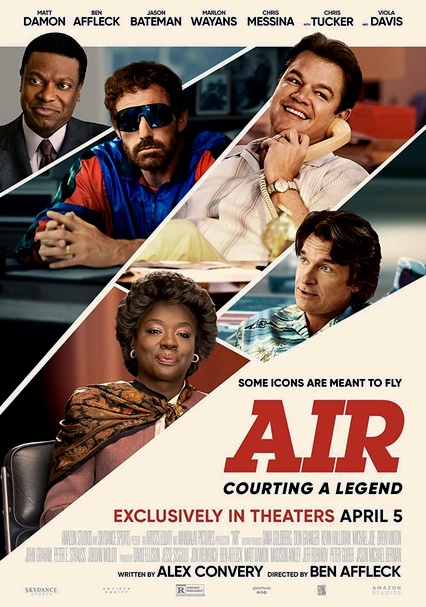
Air-2023

Air-2023

Director Ben Affleck

Starring Matt Damon, Ben Affleck

Scott’s Review #1,358

Reviewed April 19, 2023

Grade: B+

Ben Affleck both directs and co-stars in Air (2023), a sports drama that is surprisingly neither cliched nor enshrouded in a big climactic showdown at the conclusion. This happens in way too many sports-centered films.

Other than basketball game clips occasionally playing in the background the action takes place within boardrooms rather than on the court.

Being a basketball fan is not required.

There is a measure of predictability in Air which I didn’t mind, again surprising. Anyone superficially familiar with National Basketball Association superstar Michael Jordan knows about his famous  Air Jordan sneakers. His colorful footwear overtook the nation during the 1980s and 1990s.

This film is based on the true story of its origin and the circumstances surrounding it.

Air is a crowd-pleaser in every sense of the word with energy and affection and not a slow moment to be found.

An unlikely partnership develops between a then-rookie Michael Jordan and Nike’s struggling basketball division revolutionizing the world of sports and contemporary culture with the Air Jordan brand.

A Nike basketball talent scout Sonny Vaccaro (Matt Damon) comes up with an unusual and risky offer to land Jordan, a rising college star who would become the most successful NBA player in history.

His parents, Deloris and James (Viola Davis and Julius Tennon) cleverly negotiate for their son to earn his share of the pie usually saved only for executives and business people rather than the sports star. Deloris knows the worth of her son’s immense talent and unmovingly sticks to her guns.

A treat for anyone who grew up in the 1984 era, countless pop songs and pop culture references are included. Every few minutes, snippets of upbeat tunes emote from the screen adding pleasure and nostalgia to the film.

Peppered throughout also include automobiles, office telephones, fax machines, and basic computers. There’s even an early car cell phone included.

Other famous sneaker brands of the time like Adidas and Converse are represented during a time when celebrities and the like were starting to align with sneakers to make large profits.

I’ve said this too many times but in films set during a different time it either looks authentic or it looks like modern actors dressed for the times.

Affleck as a director knows his stuff in this regard. He is a good actor but a very good director.

Damon is the film lead and does so convincingly. Either wearing a padded suit or chunking up to fit the character of Sonny, it’s unclear which, the actor appears as a ‘regular guy’ rather than a Hollywood movie star. This is tricky to pull off for a big star but here it works.

Sonny’s earnestness to save Nike and his connection to the Jordan family feels fresh and unassuming. He’s painted as a good guy and counterbalances other scheming and bloodthirsty sports agents like David Falk, impressively played by Chris Messina.

Jason Bateman also shines brightly as Sonny’s colleague, Robby Strasser, a man revealed to be lonely. In a touching moment, Sonny brings Robby a birthday cake on a working Sunday, when his special day would otherwise have been forgotten.

Davis can never do wrong but is the anchor of the film and the role of common sense.

Finally, the character of Michael Jordan is portrayed in the film, though his face is not seen, and has limited dialogue.

Thanks to a crackling screenplay and genuine sincerity, Ben Affleck’s Air (2023) has gotten butts back in movie theater seats. It proves that people do love the theater when served a satisfying offering.

Puss in Boots: The Last Wish-2022

Puss in Boots: The Last Wish-2022

Director Joel Crawford

Voices: Antonio Banderas, Salma Hayek Pinault

Scott’s Review #1,357

Reviewed April 14, 2023

Grade: B

There is a connection between the Shrek film series and Puss in Boots, which I didn’t realize until researching this review.

The title character appears in Shrek 2 (2004) and a film called Puss in Boots (2011), which I think I’ve seen but don’t remember well, precedes the 2022 film Puss in Boots: The Last Wish.

I’m not a big enough fan.

The film is an entertaining adventure, laden with bright, colorful animations and Skittles- or rainbow-type colors, marred by blacks and greys. This works well and provides energy.

There is also a cool incorporation of familiar fairy tale characters. The names are reintroduced mostly as scheming people intent on capturing Puss in Boots, which accelerates the fun and my interest.

The result is a good but not a great film. I’m not sure what would have made Puss in Boots: The Last Wish a masterpiece, but the target audience is firmly set on young viewers.

My two cats glanced at the screen once or twice before deciding on a cozy nap instead. They were not engaged.

Even the darker subject matters of death and dog abuse somehow fall by the wayside in favor of the other cute, adventurous, and fight sequences.

Surprisingly, they do not pack a deeper punch.

Puss in Boots (Antonio Banderas) returns as the daring outlaw who discovers that his passion for danger and disregard for his safety have taken their toll, and he is forced to consider retirement.

As a cat, he is on his ninth and last life!

He tries to get those lives back by returning to the Black Forest to find the mythical Wishing Star on his grandest quest yet. At the risk of death, Puss will have to ask for help from his former partner and nemesis, Kitty Softpaws (Salma Hayek Pinault).

They are joined in their journey by a chatty and cheerful mutt named Perro (Harvey Guillén). Together, they try to stay one step ahead of the fairy tale villains, including Goldilocks and the Three Bears, ‘Big’ Jack Horner, and the Big Bad Wolf.

I didn’t know the character histories of Shrek or Puss in Boots, despite having seen them, but I’m not sure that’s imperative to one’s enjoyment of the film. I quickly caught on that Puss in Boots and Kitty Softpaws were meant to be an ‘item’.

The story is a compelling enough adventure, but it becomes meandering a some point. I knew the troupe would ultimately emerge on the Wishing Star and all would end well. It did, and the characters rode swiftly off into the sunset.

That’s how a film like Puss in Boots: The Last Wish is supposed to end, and I respect that. Best not to tarnish youngsters too early, especially when reality can sometimes be quite dark.

The fun for me was the visuals and specific moments. Puss in Boots’s stunning, gleaming green eyes are astounding and balance nicely with Kitty’s blue ones.

‘Big’ Jack Horner is patterned after Donald Trump. Bullying, fat, and loud, he is a feared pastry chef and a crime lord who plans to use the Wishing Star to gain control of all magic. Snubbed as ‘Little’ Jack Horner as a kid, he vows revenge and exhibits a pouty, snotty vibe.

The writers must have fun with that character.

Finally, a darling sequence featuring Mama Luna, an elderly cat lady who initially takes Puss in, is excellent. Puss in Boots, more like a human being eating human food and using the toilet, is reduced to cat chow and a litter box, like all the other cats.

Director Joel Crawford and screenwriters Paul Fisher and Tommy Swerdlow carefully tone down the violence and darker themes in favor of a robust adventure and largely succeed.

Perfect for kids, it’s not bad for adults either.

Oscar Nominations: Best Animated Feature

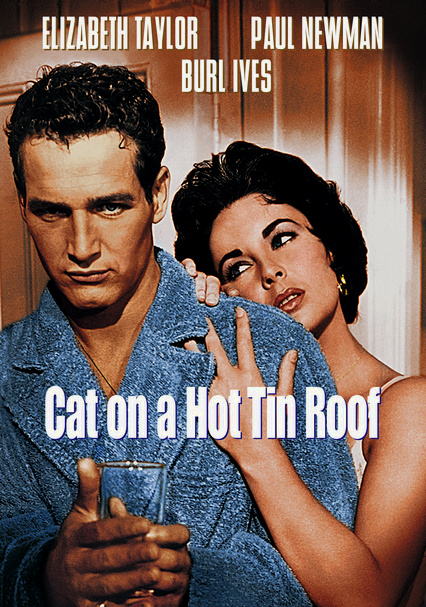
Cat on a Hot Tin Roof-1958

Cat on a Hot Tin Roof-1958

Director Richard Brooks

Starring Paul Newman, Elizabeth Taylor

Scott’s Review #1,356

Reviewed April 12, 2023

Grade: B+

If not for a drastically modified ending that completely changes the scope and message of the film version of Cat on a Hot Tin Roof (1958), it has ranked a solid ‘A.’

Instead, it is reduced to a grade of ‘B+,’ which is a shame because the film, for the most part, is fabulous-themes such as greed, jealousy, and heartbreak are explored.

Director Richard Brooks, who never shied away from controversial subject matters in later films like In Cold Blood (1967) and Looking for Mr. Goodbar (1977), created the screenplay with James Poe as a collaborator.

The film is based on Tennessee Williams’s 1955 Pulitzer Prize-winning play of the same name. It stars the titular talented actors  Elizabeth Taylor, Paul Newman, Burl Ives, Jack Carson, Madeleine Sherwood, and Judith Anderson.

After Brick Pollitt (Newman) injures himself while drunkenly revisiting his high school sports-star days, he and his tempestuous wife, Maggie (Taylor), visit his family’s Mississippi plantation for the sixty-fifth birthday of his aggressive father, Big Daddy (Ives).

In declining health, Big Daddy demands to know why Brick and Maggie haven’t given him a grandchild, unlike Brick’s brother, Gooper (Carson), and his overbearing wife, Mae (Sherwood).

The accusations result in shadowy secrets involving an unseen ‘football buddy’ and best friend of Brick’s that brim close to the surface but are never wholly unleashed.

In 1958, Newman and Taylor were each at the top of their game, and their talent, good looks, and chemistry nearly smoldered off the screen. Easy on the eyes, to say the least, one can relax with the comfort of witnessing good-looking people with tremendous acting talent hash it out.

The rest of the cast, especially Ives and Anderson, give bravura performances as fury and family drama emote most of the film’s running time.

Nearly rivaling the ferocity of the bitter scenes between Brick and Maggie is a lengthy and ultimately tender scene between Brick and his father. The sequence is for the ages and infuses some sympathy for the materialistic Big Daddy, who tearfully admits to loving his father. This drifter loved his son more than life itself.

Ives should have won the Best Supporting Actor Oscar but missed a nomination for Cat on a Hot Tin Roof entirely. Instead, the actor won the Academy Award for a film called The Big Country.

Shot like a play because it’s based on one. Cat on a Hot Tin Roof feels claustrophobic and stuffy despite the glamour of the family estate where most of the action takes place.

Servants serve and scamper after the four little rascals belonging to Gooper and Mae, nicknamed ‘Sister Woman, ‘ while cutting the cake and dealing with party favors of the rich and powerful.

Sadly, the film is nearly ruined with a piss-poor and severely botched wrap-up reuniting Brick and Maggie, cementing their sexual union and ascertaining the fact that they are a straight couple.

You see, in the original play, Brick’s sexuality is in question heavily, but the film removes almost all of the homosexual themes.

The hated Hays Code limited Brick’s portrayal of sexual desire from Skipper and diminished the original play’s critique of homophobia and sexism.

These items are the basis of the story, and their removal leaves a massive void in the film. We assume that Brick had erectile difficulties due to his injuries and drinking, but the point is weak and uneven, and also makes the continued mention of Skippy irrelevant.

Newman, in particular, was unhappy with the film.

Brooks wonderfully portrays Southern traditions and the hot summer atmosphere, making the characters feel suffocated and anxious. Doom and gloom hover over the film.

However, a stark change in the writing and Williams’s original concept is unforgivable, save for all the other elements of Cat on a Hot Tin Roof (1958).

After seeing the film twice, I yearn for the authenticity of seeing or reading the play.

Oscar Nominations: Best Picture, Best Director-Richard Brooks, Best Actor-Paul Newman, Best Actress-Elizabeth Taylor, Best Screenplay-Based on Material from Another Medium, Best Cinematography-Color

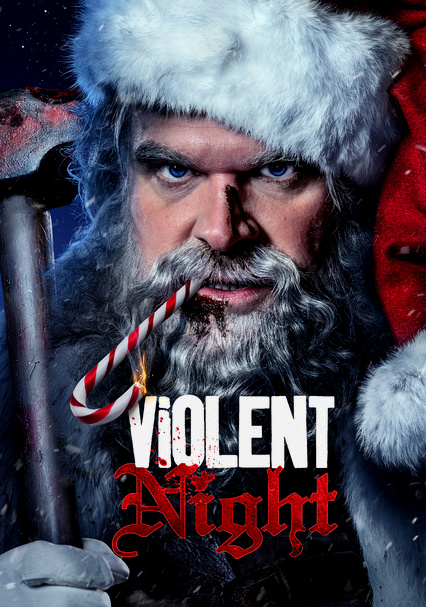
Violent Night-2022

Violent Night-2022

Director Tommy Wirkola

Starring David Harbour, John Leguizamo

Scott’s Review #1,355

Reviewed April 9, 2023

Grade: B

Violent Night (2022) isn’t the straight-ahead slasher flick with a holiday theme that I thought it might be. Part magic, part action, and part dark comedy make the film a peculiar yet strangely satisfying experience.

In a warped way, of course.

I’m not sure what director Tommy Wirkola was specifically going for, but Violent Night is an entertaining one-hour-and-fifty-two-minute experience. Best watched around the Christmas holidays, I watched the film on a cross-country flight from Los Angeles to New York City in April and still enjoyed it.

It’s a cool concept with lots of gore, a ritzy mansion as the primary setting, and a pleasing interracial element that adds diversity. The film is also a strange take on a jovial Christmas message, like a Lifetime television movie.

A lot is going on in Violent Night, and it openly patterns itself after Home Alone (1990), which one character has just watched for the first time.

David Harbor plays a not-so-jolly Santa Claus who guzzles beer in a London pub on Christmas Eve just before he is set to traverse the world distributing toys to children.

Depressed at the state of the world and the overwhelming amount of naughty people on his list, Santa arrives in upper-crust Greenwich, Connecticut, and witnesses a team of mercenaries breaking into a wealthy family compound and taking everyone inside hostage.

Led by Scrooge (John Leguizamo), the bad guys, dressed as Christmas characters, take the family hostage, demanding money they know is hidden on the estate. St. Nick must save the day and kick some ass to maintain the spirit of Christmas.

The characters, though mostly over-the-top, are my favorite part of Violent Night.

The audience is meant to like seven-year-old Trudy (Leah Brady), a darling innocent with interracial parents who are separated. Jason (Alex Hassell) is part of a wealthy family, and his wife, Linda (Alexis Louder), is a kind woman who has her daughter’s best interests at heart.

All Trudy wants for Christmas is for her parents to be back together.

The other characters are played for laughs, especially grand dame Gertrude, deliciously played by Beverly D’Angelo. She’s terrific as the queen, rich bitch whose family kisses her ass at every turn, hoping to keep in her good graces.

Leguizamo pairs well with Harbour’s Santa, who is effective as the beefy, boozy man. He is a good fellow, but has lost his belief in the magic of Christmas. The relationship between Santa and Trudy also works well.

A couple of belly chuckles exist, which is always a good thing. As Santa takes off on his reindeer-led sleigh to deliver toys, he promptly vomits on the pub bartender’s head. Soaked with barf, she proudly exclaims, ‘He is Santa!’

Violent Night is good fun, though severely unrealistic. The film gets a bit too hammy towards the conclusion when the bad guys get their comeuppance on the spacious mansion’s snowy exterior. One character’s decision to burn money to keep warm is too far-fetched, and the villains quickly disintegrate into caricatures.

The happily-ever-after conclusion and the resurrection of a character are underwhelming and worthy of a Hallmark television-movie send-off.

The Connecticut mansion is a cool set, and the Christmas trimmings make it flourish with strong design. The plentiful rooms and secret attics are fun to watch.

I’ve never seen the film Bad Santa (2003), but from what I know of it, Violent Night (2022) seems on par. Be forewarned, the ‘violent’ in the title is true to form, and the violence is fast and furious at times, with a snug message wrapped within.

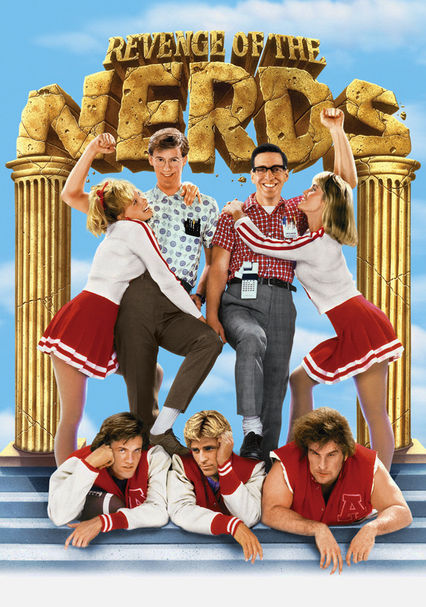
Revenge of the Nerds-1984

Revenge of the Nerds-1984

Director Jeff Kanew

Starring Robert Carradine, Anthony Edwards

Scott’s Review #1,354

Reviewed April 8, 2023

Grade: B+

Released in 1984, Revenge of the Nerds is in a similar vein to other raunchy comedies like Police Academy (1984), Animal House (1978), or Porky’s (1981).

Goofy slapstick elements and the portrayal of unpopular or marginalized groups rising above are the thematic commonalities these genre films share.

To say the film is dumb fun is quite apt, and watching it again, almost forty years past the release date, the stereotypes and gags are ever so noticeable. The term ‘date rape’ was not known then, but it is known presently, leaving a slightly uncomfortable feeling during one scene.

Also dated is the classification of what a nerd is. In 1984, the last name one would like to be called was a nerd.” Today, it’s a term of endearment or even something to aspire to be!

Anyone under the age of forty will not appreciate Revenge of the Nerds or even get it. It was made at a very different time, but it will be appreciated by the older folks and provide a burst of uproarious nostalgia.

Revenge of the Nerds is one of my favorite selections when I think of the 1980s and yearn for a slice of mind-numbing entertainment.

Geeky college students Gilbert (Anthony Edwards) and Lewis (Robert Carradine) are excited to leave their repressed small town and venture off to the mind-opening University where, in their minds, they are bound to score with countless women.

Once there, they are ridiculed mercilessly by the jocks and evicted from their dormitory when the Alpha Betas, who recently burned down their own fraternity house by accident, confiscate the building.

When the college forces first-year students to live in the gym, Gilbert, Lewis, and their fellow dorks relocate to a run-down house. When the Alpha Betas, led by jock Stan (Ted McGinley), repeatedly humiliate them, the nerds plot revenge.

Naturally, in an attempt at gender parity, there is a nerd sorority named Omega Mu featuring Judy (Michelle Meyrink), who becomes Gilbert’s girlfriend.

And as a fabulous addition, there is one equivalent to Alpha Beta, consisting of cheerleader types who are bitchy and mean to the nerds, led by Betty Childs (Julie Montgomery), the object of Lewis’s affections.

Revenge of the Nerds succeeds well because it’s easy to root for the Nerds to exact their revenge on the jocks. But this would not be the case without the characters of Gilbert and Lewis.

Edwards and Carradine infuse them with likability and a flavor of fairness. More than just horny nerds, they choose their brethren from all walks of life.

There is a gay nerd, a black nerd, an Asian nerd, and even a nerd who picks his nose and is effectively named Booger (Curtis Armstrong).

Despite the subject matter, it’s easy to see that the producers were attempting some early diversity and inclusion. They exist within the confines of stereotypes, but at least the representation was visible.

McGinley as Stan is the perfect foil. The actor is a blonde and a surfer dude, so he is the perfect ‘big man on campus’ type. The secondary jocks are all loud and obnoxious, but are happy to be second bananas to Stan.

Adorable is how the distinction bubbles up to the school dean, played by David Wohl, who is at first intimidated by but finally gets the better of loud Coach Harris (John Goodman). And Lewis’s father, Mr. Skolnick (James Cromwell), is his doppelganger.

Revenge of the Nerds is successful at bringing out the thirteen-year-old boy in all of us with its incorporation of mooning scenes, belching, and a hilarious Peeping Tom scene in the hated popular girls’ sorority.

It’s not film art or anything in the way of classy, cinematic camerawork or visual effects, but Revenge of the Nerds (1984) does provide some good-humored laughs.

It’s well-intentioned and holds up surprisingly well on its own merits, while some 1980s ‘quality’ films do not.

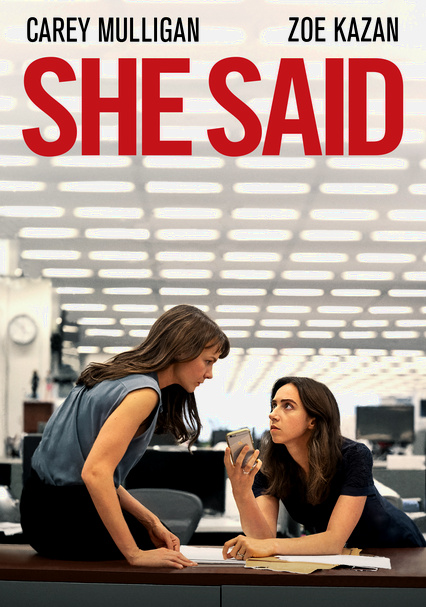
She Said-2022

She Said-2022

Director Maria Schrader

Starring Zoe Kazan, Carey Mulligan

Scott’s Review #1,353

Reviewed April 7, 2023

Grade: B

Telling a highly relevant story that also happens to be topical, She Said (2022) is a film I champion people to see for its powerful message. The importance of its mere creation, with the added urgency of a female director being tied to it, is critical.

The #MeToo movement and uncovering sexual harassment in liberal-minded workplaces like Hollywood only make this project more relevant.

As dynamic as the story is, the overall package could have been a bit better in my evaluation of the encompassing project. Director Maria Schrader mostly goes the safe route, choosing to craft the message carefully, but hardly in a dark way.

The film, at times, feels almost wimpy and lacks some crucial elements that might have made it more impactful. The screenwriter is Rebecca Lenkiewicz, who deserves much credit but plays softball rather than hardball.

The film is good but not great, and unsurprisingly, it completely whiffed of any Academy Award nominations. There are a few transparent misses that leave She Said with a courageous yet unfulfilling feeling.

Carey Mulligan and Zoe Kazan star as New York Times reporters Megan Twohey and Jodi Kantor, respectively, who together break one of the most important stories in a generation. This story helped propel the # MeToo movement.

The revelations and eventual conviction of multi-millionaire film production mogul Harvey Weinstein shattered decades of silence around the subject of sexual assault in Hollywood and altered American culture forever. This led to a needed examination of the industry.

Mulligan and Kazan are terrific, delivering strong, charismatic lead performances as female reporters with a vested interest in getting to the truth.

It’s tough to say who the lead is, since both characters’ personal lives and their sympathetic husbands run parallel.

I’m a bigger fan of Mulligan’s, and I’m still smarting from her Best Actress loss for Promising Young Woman in 2020. Hers is the more hardened of the two characters, and her one gritty scene in a local bar, when she angrily rebuffs the advances of a jock, is excellent.

Another impressive aspect of She Said is Ashley Judd’s appearance as herself. News junkies will recall that Judd was instrumental in coming forward and telling her story, even though she could have kept it hidden, as other victims did.

Finally, the jarring first sequence sets the tone quite well as disgraced former President Donald J. Trump is examined pre-2016 election, when sexual harassment allegations were hurled at him.

The point of this is to show that powerful men have historically gotten away with sexual abuse against women.

She Said tones down too considerably when it never shows Trump, Weinstein, or the pivotal actress Rose McGowan. Only their voices and the back of Weinstein’s head are used.

This sparks a peculiar feeling and a watered-down approach. It’s unclear why real video footage or actors couldn’t or wouldn’t be used, but it gives off a weird vibe.

It’s nice to see the legendary Patricia Clarkson in any film, but her role as news reporter Rebecca Corbett is limited and one-dimensional.

Finally, the climactic wrap-up, when finally one of Weinstein’s abused victims agrees to go public, feels anti-climactic and is better served for a Hallmark Movie of the Week moment.

Ouch!

The film is overall good, with the message being the most important takeaway. She Said might serve as a warm-up act to the much meatier, yet similarly themed, All the President’s Men from 1976, or the recent Bombshell from 2019.

Based on the vitality of the real-life events that She Said (2022) was created from, I expected something much more than I was served. It’s like trying for a grand slam home run and instead flying out to the shallow center field.