Tag Archives: Drama

The Grapes of Wrath-1940

The Grapes of Wrath-1940

Director John Ford

Starring Henry Fonda, Jane Darwell

Scott’s Review #828

Reviewed November 8, 2018

Grade: A

Based on the famous novel written by John Steinbeck and released only one year before the film, The Grapes of Wrath (1940) is a superlative offering by director John Ford, known chiefly for Westerns.

The work accurately depicts life for the struggling American family during the Great Depression of the 1930s.

With gorgeous cinematography and a sad yet poignant story, the film is a must-see and a timeless depiction of the perils of life for working-class people in the United States.

Set on the vast plains of Oklahoma, the Joad family has run a successful farm and lived as a thriving family unit for decades- an extended group enjoying their lives.

When the United States suffers from Depression, the Joads’ lives are turned upside down, and they are forced to sell their farm. They decide to traverse the countryside in hopes of the promise of profitable jobs and wealth in faraway California. The Grapes of Wrath depicts the family’s journey as hardship and deaths occur.

When the film was released in 1940, many studios were not interested in bringing the story to the big screen, as some aspects were deemed too left-leaning for conservatives.

The social issues the film delves into are still incredibly relevant today, and Ford wisely dissects not only the poverty that the Joad family suffers but also the psychological trauma and ruination they must endure. What a devastating effect this must have had on families.

The casting is spot-on. A young Henry Fonda was merely an upstart actor in 1940 and successfully exuded a rich, passionate performance as Tom.

Plenty of close-up shots reveal the young man’s quiet pain and desperation and the humiliation of having lost his livelihood. Fonda shares poignant chemistry with the preacher character, Jim Casy (John Carradine), who once was filled with glory but has now lost his spirit and belief in goodness.

Jane Darwell, a famous character-actress, gives a treasured performance as the family matriarch, Ma Joad. The actress won the Academy Award for Best Supporting Actress, deservedly so, as she relays a haggard woman wanting only the best for her family and attempting to hold them together.

Her determined final speech at the film’s conclusion is teary and meaningful. She says, “We’re the people… We’ll go on forever.” Speaking of Oscars, Ford also won Best Director.

The film sees no age but endures as a timeless journey alongside the Joad family. Although it stays very close to Steinbeck’s novel, the story is modified significantly. Perhaps to please studio financiers or provide a more hopeful message, the Joads are left with a positive future thanks to a government-run camp where they finally live.

In the novel, they reside at the camp first but are later reduced to starvation wages.

A monumental scene is when the family drives their battered vehicle to a squatter’s camp for needed shelter. The scene is shot documentary style, with the camera focusing both on the Joads and on the faces of the occupants of the run-down and filthy shacks that they are forced to live in.

We wonder with sadness what the lives of these unfortunate people were like before the Depression.

The Grapes of Wrath (1940) was a humanistic cinematic masterpiece. As a terrible war and otherworldly problems plagued the new decade, the film reminisced about a previous decade fraught with different issues.

The film is one for the ages and should be appreciated by all.

Oscar Nominations: 2 wins-Outstanding Production, Best Director-John Ford (won), Best Actor-Henry Ford, Best Supporting Actress-Jane Darwell (won), Best Screenplay, Best Sound Recording, Best Film Editing
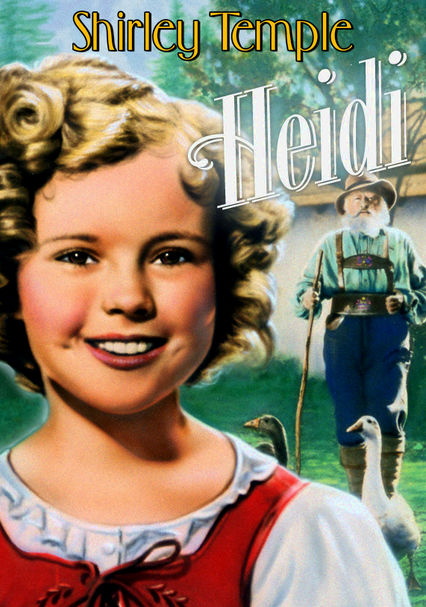

Heidi-1937

Heidi-1937

Director Allan Dwan

Starring Shirley Temple, Jean Hersholt

Scott’s Review #826

Reviewed November 2, 2018

Grade: A-

During the 1930s and 1940s, Shirley Temple was the most prominent and profitable child star around, starring in dozens of films deemed “wholesome” and “cute.”

Heidi (1937) is one of her most popular and best-regarded treasures of earnest and sentimental riches.

The film is forever known in pop culture as the ruination of the 1968 Super Bowl when the Oakland Raiders and New York Jets game was interrupted at a crucial moment due to the film’s scheduled airing.

An interesting side note is that, amazingly, Temple relinquished her Hollywood title with dignity and without scars. She left the scene entirely and became a successful world diplomat.

In an era in American cinema when child stars were treated as property and sometimes like cattle, her relatively healthy exit was a remarkable feat.

The story of Heidi is based on the 1880 Swiss story of the same name. In the title role, Temple plays an orphan living in the cold mountains with her grizzled grandfather, Adolf (Jean Hersholt). At first bitter for being saddled with raising a child, Adolf finally accepts the girl, and he and Heidi become fast friends, exhibiting a warm and tender bond.

Heidi’s self-absorbed aunt ruins the dynamic and whisks the child away to live with a wealthy family. The little girl will be a companion for their disabled daughter, Klara, as Heidi and Adolf are determined to find each other.

Adding drama to the story is Klara’s evil housekeeper and her jealousy of Heidi, leading to attempts to sell Heidi off to gypsies for profit.

By 1937, Temple was beginning to be deemed “too old” for cute roles, but Heidi is one of her best-remembered films, and the actress is in top form.

As one might expect from any Shirley Temple film, musical numbers are included- a dream sequence in Holland culminates with Temple belting out the charming “In My Little Wooden Shoes.”

There are millions of Shirley Temple fans worldwide, but there are also her detractors. Some feel her films are completely dated and that the young star was not as talented as they thought she was.

Admittedly, watching her films approaching the one-hundred-year mark can be peculiar. On the surface, they seem a bit hammy and overly sentimental, but my personal experience elicits a return to childhood days.

Despite being decades before my existence, Shirley Temple films were commonplace in my childhood household.

Heidi is not a groundbreaking cinematic experience or all that deep. What the film does provide, though, is comfort. The audience assuredly must know a film like Heidi has a happy ending, as the child provides warmth and spirit to every person she meets, making their lives better.

Even during peril, the girl has an “awe-shucks” manner of being and makes the best of her lousy situation.

The strongest appeal of Heidi comes from her friendship with Klara, a disabled woman. Klara is kind and naive, unaware of her servant’s jealousy and rage. Helpless, she comes to depend on Heidi, and we root for Heidi to rescue Klara and bring her to a better life.

The film has sappily written all over it but somehow works simultaneously.

Films such as Heidi, the best of all the Temple films, can be watched and enjoyed as an ode to days gone by or a tribute to someone’s grandmother’s favorite film.

Despite being irrelevant and too sappy in today’s modern world, they undoubtedly provide comfort and support to some, which cannot be such a bad thing.

Heidi (1937) can easily be enjoyed because of the film’s popularity and its warm message.

The Insult-2017

The Insult-2017

Director Ziad Doueiri

Starring Adel Karam, Kamel El Basha

Scott’s Review #815

Reviewed October 1, 2018

Grade: B

A Lebanese film nominated for the Best Foreign Language Film Academy award, The Insult (2017) offers its audience what I would categorize as a message film.

A battle of cultures and religions leads to chaos and controversy, culminating in an embattled court case as we also get to know supporting characters.

While the film is above average, it is also too glossy and sometimes plays out more like a television series- with dramatic effects and plot developments for miles.

Still, the film is a worthy watch.

The main character, Tony Hanna (Adel Karam), lives with his pregnant wife, Shirine, in a small Lebanese village. Tony works as an automobile mechanic but is a proud member of the Christian community, attending rallies and events.

His village employs Palestinian refugees to perform maintenance repairs, which irritates Tony. When a verbal altercation with middle-aged refugee Yasser (Kamel El Basha) occurs over a broken gutter, a failed apology results in physical violence as the situation rapidly escalates.

The courtroom drama, while compelling, seems a very familiar story.

Other recent foreign-language films, such as A Separation (2011) and Gett: The Trial of Vivian Amsalem (2014), use similar plot devices of family conflict that end up in the courtroom.

Those films are better written and feel more authentic and raw than The Insult. Throughout the film, I kept telling myself I was not watching a Middle Eastern version of Law & Order, but that is what it felt like.

I felt little sympathy for Tony, and I was unsure if we were supposed to feel anything for him. With his brooding nature and populist attitude, he is initially written as downright unlikeable.

I assume the intent was to soften the character over the film’s length when he briefly comes to Yasser’s aid and helps start the man’s car. However, Tony soon reverts to his original stubborn nature.

Yasser is a much more likable fellow, albeit with a temper. Hurling curse words at Tony is why the tension between the two men begins in the first place, and attempted apologies only lead to miscommunication between everyone.

But Yasser gets my vote for the most compassionate character.

In the supporting roles, an interesting (though perhaps not completely necessary) side story exists as the embattled lawyers are revealed to be father and daughter.

The major problem with The Insult is that the entire story seems plot-driven, and each step is created to create a way to build or add tension.

For example, a speeding motorcycle angrily side-swipes Tony and his wife.  The partners are then in peril because their daughter is born prematurely due to stress.

Situations and tensions could have been quickly resolved or smoothed under different circumstances. Therefore, despite some good drama, the tone of the films feels less than authentic and manipulative.

Still, the writing team introduces the audience to the turbulent world of Middle Eastern politics in a way that undoubtedly results in thought-provoking views and exposure to opposing ideas.

The film also provides a distinct hopeful slant at the conclusion to avoid sending a dour message. The direction is that people can come together as one peaceful group, but it will not be easy.

The Insult (2017) is not a bad watch. It compels the viewer to witness a fascinating story of differing cultures and warring religious beliefs churning two men inside out when faced with conflict.

The film also does a fine job of emitting a peaceful message of coming together as human beings.

An overall rating of “B” is a nice score. Still, given the dozens of potential Best Foreign Language finalists, I am not sure the film entirely “cuts the mustard” for me- indeed, there were superior entries.

But then, this Oscar category’s nominating process has always been a mystery.

Oscar Nominations: Best Foreign Language Film

The Square-2017

The Square-2017

Director Ruben Östlund

Starring Claes Bang, Elisabeth Moss

Scott’s Review #814

Reviewed September 28, 2018

Grade: B+

The Square (2017) is an eccentric, highly interpretive Swedish-language film that does not always make perfect sense, as a more mainstream film would.

This is both a positive and a negative, as the film’s ultimate message is admirable, though some parts are perplexing and downright bizarre.

The film was undoubtedly commended for its bravery and cutting-edge approach and received an Oscar nomination for Best Foreign Language Film—subsequently, it lost to A Fantastic Woman (2017).

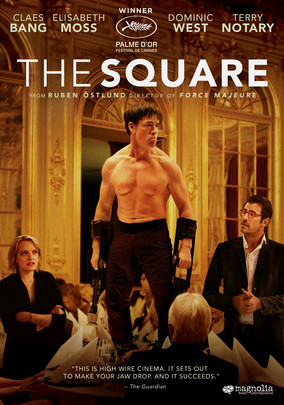
The film’s primary setting is the X-Royal Art Museum in Stockholm, Sweden. The action centers mainly around the museum’s new creative director, Christian (Claes Bang), attempting to introduce a new installation called “The Square.”

A misunderstanding with a youthful public relations firm hired to make the exhibit as accessible as possible leads to controversy.

The film also interjects various subplots that are generally interesting but do not always make logical sense.

Bang is quite compelling in the lead role and the film’s best part for me. He is charismatic and a good father to his two daughters. He helps people experiencing homelessness- even going so far as to help a young woman when nobody else will, only to find his wallet stolen- an unfortunate victim of a scam.

Furthermore, Christian’s desire to create “The Square” is humane and admirable- a safe zone for trust and compassion. The character is a good guy but is also concerned with his status.

Common themes of satire and human beings’ natural hypocritical nature abound. For example, in one scene, Christian, proud to drive his flashy Tesla car and give money to the homeless, is afraid to be seen in a run-down apartment house.

Later, a man with Tourettes syndrome disrupts an interview at the museum and is looked down on by “open-minded people” as a result. The latter scene is quite amusing as the man erupts with various expletives at the most inopportune times.

My favorite sequence occurs approximately midway through the film. As bizarre as the scene, it is riveting in its momentum and bravery.

When a group of well-dressed museum members gathers for a lavish dinner to watch a human art show, a bare-chested man who only grunts emerges and slowly antagonizes guests.

He begins pulling one woman’s hair while chasing an angry man from the hall. This scene is shocking, intense, and thought-provoking.

But what the scene means is perplexing.

A treat for me was viewing the famous Stockholm museum’s frequent interior and exterior scenes- which I was privy to have visited in 2016.

This experience was so fresh that it brought back wonderful memories of not only the museum but also the gorgeous city of Stockholm itself.

The chemistry between Christian (who is Swedish) and an American reporter, Anne (Elisabeth Moss), does nothing for the film. It feels wholly disjointed and unnecessary, and there is little connection between the two characters.

Engaging in a one-night stand, the duo has a dispute about a used condom. Does Christian think that Anne is desperate enough to use his sperm and impregnate herself? The resulting spat between the two seems meaningless.

The Square (2017) is a very tough film to review.

Oftentimes disjointed and impossible to make heads or tails of, one would be wise to simply “experience” the film on its own merits. I am not sure.

I mainly need to view it again and try to figure out the plot because I am uncertain if that was the intent of director Ruben Oslund.

Having directed the wonderful Force Majeure (2014), a more straightforward and superior film, The Square is worth a watch in its own right.

Oscar Nominations: Best Foreign Language Film

The Wife-2018

The Wife-2018

Director Bjorn Runge

Starring Glenn Close, Jonathan Pryce

Scott’s Review #809

Reviewed September 8, 2018

Grade: A

Swedish director Bjorn Runge crafts a nearly flawless film in The Wife (2018), which elicits a perfect performance from its star, Glenn Close.

The film may be a standard drama, but the performances are the star attraction here. Along with Close, Jonathan Pryce, along with many of the supporting players, deserves his share of kudos.

But the film unquestionably belongs to Close as she plays an overlooked wife with subtle intelligence and enough simmering fury and resentment to astound and compel audiences.

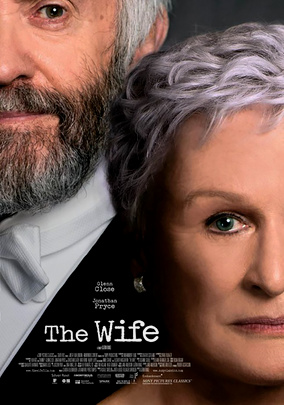
Professor Joe Castleman (Pryce) and his wife, Joan (Close), live charmingly in upscale Connecticut. Joe is an acclaimed author and has just been notified that he will soon be awarded the Nobel Prize in Literature.

As Joe and Joan excitedly jump up and down on the bed in celebration, there is something not altogether joyous about Joan.

Parties are thrown, and Joe and Joan, along with their son David (Max Irons), an aspiring author himself, fly to Stockholm, Sweden, for the coveted ceremony. Joe is flocked with attention while Joan is cast on the sidelines—secrets eventually bubbling to the surface through a nosy reporter, Nathaniel Bone (Christian Slater), who digs into Joe and Joan’s past.

The prime setting of Stockholm is a great plus, adding a cultural and cold vibe to the story. The snowy and blustery Scandinavian locale, with some characters of European descent, brings richness to the film.

The scenes of characters sipping brandy or other warming spirits while a bristling fireplace erupts in the background add good texture.

Close is one of the finest actresses of our time and portrays Joan with refined restraint at every turn. Yes, we know that something is bothering Joan, but we do not know what that is. Close is one of those talents whose face tells so much while she can utter so little, and for a good one-third of the film, this is all we have.

What is wrong with her? Why does she act happy for her husband and do her tasks seamlessly, but harbor rage bubbling beneath the surface?

Slowly, with the help of numerous flashback scenes, we learn how Joe and Joan met- he a young professor in the early 1960s, and she a naive student with delusions of grandeur of becoming a female novelist. She quickly learns how difficult this will be to achieve as she babysits Joe’s young kids, slowly falling in love with the married man.

From flashbacks, we learn more about Joe and Joan’s emotions, aspirations, and limitations. We also learn that Joe has always had a wandering eye for other women—after all, wasn’t Joan “the other woman”?

Back in the present day, a restless Joan needs a day to herself in the bustling city before she explodes at Joe. Before she can head out, she is talked into a drink by Nathaniel, who cagily reveals much of what he knows to Joan.

The scenes between Close and Slater crackle with passion. Is he flirting with her or attempting to get her to buckle under from compliments and booze? Close is purely in control of Joan’s emotions here, but so much is written on the actress’s face.

It is mesmerizing to watch her calm demeanor border on cold and calculated in her responses to Nathaniel’s questions.

Joe and Joan’s son David play key roles in all of this. As with Joan, David harbors resentments towards his father, but his rage is more blatant. He yearns for his father’s approval of a newly written story and is angry with every comment his father makes.

Is he simply experiencing jealousy over his father’s talents?

When David learns a secret, events get good, culminating in a fantastic blowup scene between the three characters in a hotel room, at simply the worst possible time.

Pryce must be given props for playing Joe with much complexity. Partially sympathetic and partially unforgivable, he elicited a mixed reaction from me. Not one to mistreat Joan, he sings her praises from one toast to another.

A cad, he is also a narcissist, yet he does adore and think the world of Joan, so they share a complex love.

The Wife (2018) is an excellent film that appreciates the talents of its cast.

Stalwarts such as Pryce, Slater, and newcomer Max Irons flesh out the supporting roles, which only enhances Queen Bee Close’s bravura performance.

I have always thought there would never be any way Close could rival her breathtaking portrayal of dastardly Alex in Fatal Attraction (1987), but she sure comes close in The Wife.

Oscar Nominations: Best Actress-Glenn Close

Independent Spirit Award Nominations: 1 win- Best Female Lead-Glenn Close (won)

BlacKkKlansman-2018

BlacKkKlansman-2018

Director Spike Lee

Starring John David Washington, Adam Driver

Scott’s Review #802

Reviewed August 14, 2018

Grade: A

Spike Lee’s latest offering, BlacKkKlansman (2018), is a brilliant effort and oh so timely given the tumultuous political climate in the United States in 2018.

Despite the film being set in the early 1970s, the racial issues and tensions that Lee examines are sadly still an enormous problem today. Lee infuses some humor and even romance into the drama, so the film is not too preachy or heavy.

A grand and relevant effort that all should watch.

As the film commences, we are treated to a clip from the 1939 classic Gone With the Wind, and BlacKkKlansman concludes with prominent clips of racial tensions circa 2017.

The timeline is crucial and influential, as the film clearly demonstrates that racism is still alive and well.

Lee, a known liberal, clearly puts a left spin on his work. BlacKkKlansman will likely not be seen by conservative filmgoers, which is sad, as valuable lessons can be learned by viewing this piece.

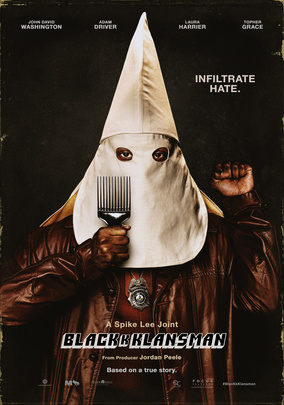
The story is based on a true story memoir written by Ron Stallworth, the first black police officer to be hired by the Colorado Springs police department. He successfully infiltrates the local chapter of the Ku Klux Klan with startling results.

The film begins with a speech by a doctor (Alec Baldwin) offering a “scientific explanation” of white superiority in 1957. Fast-forward to the early 1970s, where the rest of the film occurs.

Ron is initially hired by the police force as part of a progressive initiative for diversity, but he quickly moves into a detective role. He manages to pose as a KKK member via telephone while another detective, Flip Zimmerman (Adam Driver), goes to meetings in person.

Lee’s focus is clearly on the overall content and message of the film, and therefore, little character development is achieved. I admittedly did yearn to know the “hows ” and ” whys” of many of the characters, but the film is not really about the characters individually, and I am okay with this.

Why did Ron desire so much to become a police officer? What was his childhood like? How did Patrice become President of the black student union? What was her childhood like? What upbringings did some of the KKK members have?

Indeed, not enough time would have been allowed to answer these questions—minor gripe.

Lead actor John David Washington, son of Denzel Washington, was unknown to me before watching this film. He is tremendous in his role, as is Driver in his supporting role of Zimmerman, but again, these are not character-driven roles.

Washington has tremendous chemistry with his love interest, played by Laura Harrier. Ron and Patrice discuss politics and dance the night away, but she is an activist and a cop, making their chances of a happily ever after tough to imagine. Their romance is atypical of most films as it is based on intelligence and not silly, melodramatic aspects.

On the acting front, Topher Grace as the racist David Duke is tremendous. With a kindly demeanor mixed with a bubbling under the hatred of blacks and Jewish people, Lee makes sure he is the foil.

A delicious scene towards the end of the film, when Duke gets his comeuppance of sorts, is well done and received a thunderous roar from the theater audience.

Lee is careful to ensure the bad guys get their just due and are all portrayed as complete fools. With a false sense of nationalism, many hate minorities simply because they feel they are taking over their beloved country.

Not to harp on this, but BlacKkKlansman will attract those who already agree with Lee’s beliefs and politics. If only those who disagree would give the film a chance. Unlikely.

The final five minutes of BlacKkKlansman arguably are the most pivotal experience of the entire film, but they have nothing to do with the actual story portrayed in the rest of the production.

Lee concludes the 1970s portion of the film satisfyingly, then fast forwards to the horrific events that took place in Charlottesville, Virginia, in 2017 when protesters clashed with a racist group, resulting in an innocent woman’s death.

The controversial remarks of President Trump, refusing to cast blame on the racist group, are shown. Sitting in a crowded movie theater, these clips had the most significant reaction from the audience, with some flipping Trump the finger, while others sobbed in anguish and disbelief that we have achieved so little as a nation.

Rarely has a more pertinent or meaningful film been made for the current political climate in the United States. BlacKkKlansman (2018) brilliantly ties racism spanning one hundred and fifty years together and shows how it still exists.

Amid this message, however, lies a great drama containing humor and importance.

Oscar Nominations: 1 win-Best Picture, Best Director-Spike Lee, Best Supporting Actor-Adam Driver, Best Adapted Screenplay (won), Best Original Score, Best Film Editing

Mystic River-2003

Mystic River-2003

Director Clint Eastwood

Starring Sean Penn, Tim Robbins

Scott’s Review #801

Reviewed August 10, 2018

Grade: A

Mystic River (2003) is a film that I consider to be the second-best offering directed by Clint Eastwood.

Along with Million Dollar Baby (2004), Eastwood successfully creates two compelling back-to-back dramas, not too dissimilar from each other.

He was unquestionably the “it” director of the early 2000s, and with Mystic River, helms a gritty, mystery drama with a stellar cast, nuts-and-bolts storytelling, and enough twists and turns to keep the audience guessing and ultimately shocked.

All of these pieces result in a memorable experience.

The film is based on the novel of the same name, written by Dennis Lehane. A tremendous element is a locale of Boston, and an Irish, blue-collar/working-class theme, prevalent throughout the story.

Thanks to the cinematography, illuminating a grey and stormy look, enhances the rest of the film. I adore films shot in and around Boston as so much culture and flavor are provided.

Eastwood hardly misses a beat with some cold and grizzled touches that play into the hardships and struggles of the character’s everyday lives.

The story itself begins as we meet the central characters (Jimmy, Dave, and Sean) as young boys, a three musketeers-type scenario where they are like blood brothers. After an incident occurs where Dave is accosted by men and sexually abused, he is ultimately rescued after four torturous days, but his life is never the same.

Fast forward twenty-five years and the boys are now men, still living in a working-class Boston neighborhood. Each is now married, their lives have moved on, drifted away from each other, and contain vastly different personality types.

They reunite after a tragedy occurs.

For starters, a major win by Eastwood is the casting of each of the male characters. Sean Penn plays Jimmy, the volatile ex-con, who runs a small store, while Sean, played by Kevin Bacon, has become a Massachusetts State Police officer, putting him directly at odds with Jimmy.

Sadly, Dave (Tim Robbins), now lives a quiet life, still harboring trauma, shame, and guilt from his childhood experience. When Jimmy’s daughter (Emmy Rossum) is brutally murdered, the three friends’ lives are intertwined as they search for the killer taking the viewers down a dark path filled with secrets, some from the past.

Laura Linney and Marcia Gay Harden give tremendous performances as Jimmy’s and Dave’s wives, respectively.

Mystic River is a film where all of the great elements come together perfectly. From the acting to the components of the story to the whodunit involved, to the exciting twist and conclusion to the overall film are truly exceptional.

But what sets it apart from a standard drama or thriller are the characterizations and relationships among these characters.

Childhood memories can last a lifetime in their monumental importance and this is evidenced many times between Jimmy, Dave, and Sean. Blood brothers, yes, but when tragedy strikes, old wounds and fresh wounds together run deep.

The themes of violence and revenge are firm staples of this film, and these are commonalities for many Eastwood films. Viewers may also find themselves conflicted with whom to sympathize with or where their allegiances should lie.

Jimmy, the anti-hero, will garner sympathy for the vicious loss of his daughter- pain that can never be fully healed.

Did Dave, the obvious prime suspect, kill the girl? If so, was it on purpose or by accident? Are others, specifically his wife, involved in a cover-up? Eastwood carves the setup spectacularly, but is it a simple red herring? These events make the film unbelievably compelling.

Fabulous is the performances all around, but especially by Penn and Robbins, both awarded with Oscar wins for Best Actor and Best Supporting Actor, respectively.

Penn never delivers poor performance, but Jimmy is one of his best characters yet. As for Robbins, he fills the character of Dave with empathy- a wounded bird left damaged through no fault of his own, suffering a terrible fate due to circumstances, misunderstandings, and ultimately tragedy.

Mystic River (2003) watched alongside Million Dollar Baby (2004) would make for an excellent Saturday night for fans of Clint Eastwood’s directorial talents. These two are the best of the best with great character development and rich writing.

The direction, however, enhances the spectacular elements and takes it a bit further providing appropriate texture and a wonderful atmosphere.

Oscar Nominations: 2 wins-Best Picture, Best Director-Clint Eastwood, Best Actor-Sean Penn (won), Best Supporting Actor-Tim Robbins (won), Best Supporting Actress-Marcia Gay Harden, Best Adapted Screenplay

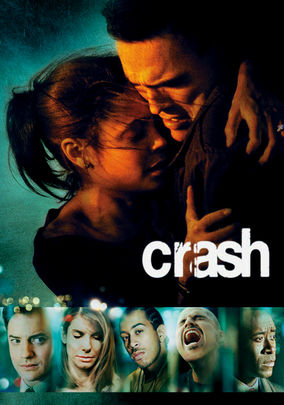
Crash-2005

Crash-2005

Director Paul Haggis

Starring Matt Dillon, Thandie Newton, Don Cheadle

Scott’s Review #799

Reviewed August 3, 2018

Grade: A-

A superior film that has unfortunately suffered greatly after controversy, Crash (2005) is a story of intersecting vignettes all interrelated.

The controversy stems from the film’s very surprising Oscar win over the heavily favored Brokeback Mountain. Many thought the latter was a shoo-in, poised to set the LGBT genre ahead of the game.

Sadly, now when Crash is discussed by film lovers, it’s usually in tandem with Brokeback, and usually on the heels of its having stolen the Oscar crown.

On its own merits, the film excels as a social story exploring the many facets of race, racism, and bigotry.

The events in Crash take place within one thirty-six-hour day in metropolitan Los Angeles. Featuring a slew of characters that would even impress Robert Altman, the audience witnesses situations involving many races and backgrounds.

We meet Rick and Jean Cabot (Brendan Fraser and Sandra Bullock), a white affluent couple who are carjacked when driving home from dinner. The black men who carjack the couple then strike a Korean man and bring him to the hospital.

A racist police officer, John Ryan (Matt Dillon), cares for his troubled father who cannot afford insurance. A Persian father and daughter wish to buy a gun for protection, and a Hispanic father (Michael Pena) worries about a rash of drive-by shootings.

The stories go on and on as a myriad of the characters come into situations involving other characters.

The interconnecting stories all cascade into overlapping situations of interest. The point of Haggis’s film is racism but with a creative twist.

The director points out and shows that those who are racist have good qualities too and those who are discriminated against in turn discriminate against others themselves.

The most interesting character is Dillon’s, John Ryan. On the surface a racist, wise-ass, who in one scene embarrasses an affluent light-skinned black woman (Thandie Newton), simply because he carries a gun, then ends up saving her life in a horrific car accident.

But is he redeemed? Does he see the world as black people getting ahead and he is left behind? What about the Persian man, discriminated against, but then vowing revenge on a Hispanic man after a misunderstanding?

The black men who carjack the white couple then release a group of immigrants who will surely be sold, perhaps even for sex trafficking. Does this act make the men good?

The point that Haggis makes is that each character is neither all good nor all bad, but rather complicated and nuanced with emotions based on past experiences and discrimination themselves.

Crash is highly similar to Traffic (2000) and Babel (2006) in terms of pace, style, and the way the stories align. The film is different, however, in that the location is strictly confined to Los Angeles, making the setting of monumental importance.

How would events be different in a setting like Middle America? Or in a different country? These possibilities are worth contemplating based on the perception that Los Angeles is one of the most diverse cities in the United States. If racism occurs there it can occur anywhere.

Now more about that pesky Oscar controversy! In later years critics would largely agree that the inferior film had won that year and Brokeback Mountain lost due to a level of homophobia on the part of the voting academy.

Since the academy is filled with Hollywood liberals, albeit of an older generation, an alternative way of thinking is that perhaps Crash won because it was the “safer” film.

Everyone seems to have forgotten the other three nominated films that year. Alas, Crash is permanently marred for winning Best Picture. It would undoubtedly have more supporters had it lost.

Ranked as one of the lowest-scoring Best Picture winners, I still believe Crash has some worth- though I agree that it should not have won over Brokeback Mountain.

Taken on its own merits the film is quite good. A message film with great atmosphere, it succeeds in making the viewer think and ponder perhaps their discrimination, whether conscious or subconscious.

The ensemble acting and character representations are all very good and worthy of a second watch.

Oscar Nominations: 3 wins-Best Picture (won), Best Director-Paul Haggis, Best Supporting Actor-Matt Dillon, Best Original Screenplay (won), Best Original Song-“In the Deep”, Best Film Editing (won)
Independent Spirit Award Nominations: 2 wins-Best Supporting Male-Matt Dillon (won), Best First Feature (won)

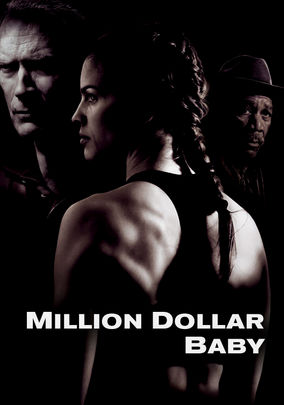
Million Dollar Baby-2004

Million Dollar Baby-2004

Director Clint Eastwood

Starring Clint Eastwood, Hilary Swank, Morgan Freeman

Scott’s Review #798

Reviewed August 2, 2018

Grade: A

Million Dollar Baby (2004) is arguably Clint Eastwood’s best-directed film of his career.

Rivaling Mystic River (2003) by a hair, the film has a raw emotional appeal, empathetic and richly carved characters and mainstream sensibility.

These combined elements resulted in huge box office success and Oscar wins for Picture, Director, Actress, and Supporting Actor in the year of its release.

Frankie Dunn (Clint Eastwood) is a hardened boxing coach who owns a run-down Los Angeles gym. He works with his best friend and assistant, Eddie (Morgan Freeman). When an aspiring female boxer, Maggie (Hilary Swank), arrives and begs Frankie to train her, he initially declines, but at Eddie’s urging, eventually relents and leads her to great success as a top female boxer.

Frankie and Maggie forge a close-knit, father/daughter relationship, a substitute for the damaged one he has with his daughter.

The final portion of Million Dollar Baby takes a very dark turn, as Maggie is illegally punched during a fight by a fellow boxer, causing her to become a quadriplegic. These events are what change the tone of the film from a very good sports drama to a great tale of morality.

Many emotions and debates transpired after this film was released and the common question of, “What would you have done?” engulfed viewers for months, all through awards season.

The heartbreaking effects of the story events raise the film head and shoulders above most typical sports films.

Too often Eastwood creates films that are palpable, but in a way generic, and very Hollywood. Grand Torino (2008) and Invictus (2009) are good examples of this- especially Invictus given the sports drama element.

Some assumed that Million Dollar Baby was to be a female Rocky (1976) and the film was indeed marketed as such. For this reason, some felt robbed or duped, but I celebrate this film as leaning a firm left of center with a refreshing, progressive approach.

The performances are amazing all around, even by Eastwood- never known for his acting talent. The characters are written as character-driven, but not caricatures. Wounded, grizzled, and flawed, in his senior years, Frankie sees his life has passed him by, having achieved nothing.

Never has Eastwood portrayed a character as complex and reserved as Frankie.

Swank deserved her second Oscar (1999’s Boys Don’t Cry was her first) for simply becoming a boxer- her pre-filming prep schedule reportedly was insane. More than the muscle and toning she achieved, are the raw acting talent and wounded emotions she possesses.

The character is written as pained and vulnerable, but also very strong. She has achieved little in her life- working as a waitress in Missouri and stealing scraps of leftovers to survive. Her family is trash through and through, only wanting her eventual riches for themselves.

The character is inevitably championed as we empathize with her plight emotionally.

Finally, Freeman deserves recognition for being the ultimate supporting actor. Eddie Dupris, a former fighter blind in one eye, is the center point of the story and frequently narrates the actions of others, oftentimes offering a glimpse into the psyche of individuals.

The voice of reason, he is observant and analytical, almost knowing Freddie better than Freddie knows himself. They quarrel and disagree, but are forever friends and loyal to a fault. Freeman possesses quite a reserve as the audience becomes curious about his past life.

Million Dollar Baby (2004) is Eastwood’s best film- Mystic River comes a close second, however. A seemingly formulaic story and genre are weaved into a web of humanism, emotions, and power.

The film is about the characters, which makes it succeed.

Eastwood has not been able to quite surpass this beautiful story, but thankfully received dripping praise and accolades for a film not soon forgotten.

Oscar Nominations: 4 wins-Best Picture (won), Best Director-Clint Eastwood (won), Best Actor-Clint Eastwood, Best Actress-Hilary Swank (won), Best Supporting Actor-Morgan Freeman (won), Best Adapted Screenplay, Best Film Editing
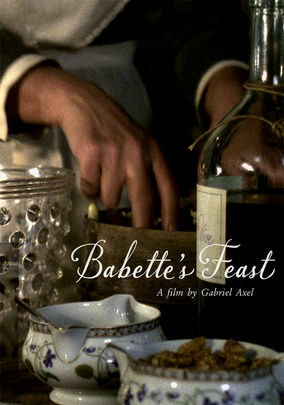
Babette’s Feast-1987

Babette’s Feast-1987

Director Gabriel Axel

Starring Stéphane Audran

Scott’s Review #796

Reviewed July 27, 2018

Grade: A

Babette’s Feast (1987) is a pure delight for any viewer who is a foodie, particularly of stylish French cuisine.

In fact, during the final thirty minutes or so I was salivating with pleasure as a final multiple-course meal was presented before me. The film is rich with “flavor” and tells a wonderful tale of self-sacrifice, benevolence, and good human nature.

The film won the Oscar for Best Foreign Language Film- the very first Danish film to do so.

Adapted from a 1958 short story, Babette’s Feast tells of two elderly and deeply religious Protestant sisters, Martine (Birgitte Federspiel) and Phillipa (Bodil Kjer), who exist in a small village in Denmark.

The sisters have lived there all their lives and, through flashbacks, it is revealed that each had an opportunity for romance with men decades earlier, as young and fresh young ladies. Each resisted the temptation due to the deeply religious beliefs of their disapproving father.

When a delightful French woman, Babette (Stephane Audran), appears on their doorstep with a note from Phillipa’s potential beau, the kindly women take her in.

Babette is a refugee fleeing Paris and offers to serve as the sister’s housekeeper. Babette is filled with life and a passion for cooking and art- largely contrasting the townspeople, who frequently shun pleasures and harbor reserved and repressed feelings for joy.

When Babette wins the lottery and is assumed to depart back to Paris, she instead offers to make the town a lavish, classic french meal.

The film is a pure treat, especially in the final act when Babette decides to prepare an exquisite meal. This is the true highlight of the film and the menu simply must be listed below to wholly appreciate the film.

As each course is served, the film depicts the cooking process, as spices, salts, wines, and reductions are featured, so much so that we wonder, who made such a gorgeous meal when filming transpired? Audran, known to be a gourmet, must have adored this fabulous and creative role!

In order, Babette’s delicious feast consists of turtle soup served with Amontillado sherry, buckwheat pancakes with caviar and sour cream served with Veuve Cliquot Champagne, quail in a puff pastry shell with foie gras and truffle sauce served with Clos de Vougeot Pinot Noir, an endive salad, rum sponge cake with figs and candied cherries served with Champagne, assorted cheeses and fruits served with Sauternes, coffee with Vieux marc Grande Champagne Cognac.

My mouth is watering and my stomach growling as I write this!

Wisely and poignantly, the film heralds the return of Martine’s longtime admirer, Swedish officer Lorens, who escorts his elderly aunt to the dinner. The other dozen or so dinner guests agree not to fuss or voice any reactions to the meal, but Lorens is different.

With each serving, he comments in explicit detail the pleasures of the tastes and fondly recollects an experience with each course. He speaks for the rest of the guests as we see their reactions and the pleasures they exhibit non-verbally.

Tenderly, Lorens confessed that he had never forgotten Martine, and she the same for him. Despite not having seen nor heard from each other in decades, their connection has never wavered, and thus have spent their lives as one.

What a lovely and powerful scene this is and adds romanticism and elegance to the overall film.

The lighting is effective as many scenes seem to bask in an illuminating glow. The whimsical village is well lit with many soft or muted scenes exuding elegance and grace in the tiny living community.

The costumes and styles are meaningful and make the period of the 1800’s realistic. This adds a tremendous amount to the look and texture of Babette’s Feast.

The overall themes of Babette’s Feast (1987) are ones of kindness, forgiveness, enjoyment, and honesty. The characteristics are brought to life by the characters in the film, rich with flavor and taste, and all experienced through the importance and pleasures of food.

What a magnificent piece of film making this work is and the enormity of riches through good dining.

Oscar Nominations: 1 win-Best Foreign Language Film (won)

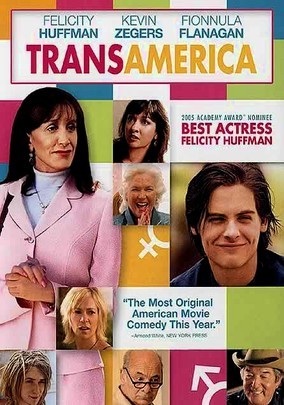
Transamerica-2005

Transamerica-2005

Director Duncan Tucker

Starring Felicity Huffman, Kevin Zegers

Scott’s Review #795

Reviewed July 25, 2018

Grade: A

Transamerica (2005) is a brave and topical independent drama effort. By 2005 the LGBT genre was in full force with a multitude of similarly themed films gracing silver screens everywhere.

One prominent mainstream production (Brokeback Mountain-2005) was in theaters everywhere. So in a year celebrating diversity, how wonderful and touching to witness a film focused on a transgender woman come into play.

Mixing drama with some needed humor, the film succeeds in large part because it does not take itself too seriously, never becoming too preachy, it merely tells a story. The film’s brilliant casting of Felicity Huffman in the role of a pre-op male to a female transsexual is a success as the decision to cast a female rather than a male in the important role pays off in spades.

The premise allows for a story of both adventure and humor as the film mixes an important issue.

A transgender woman, Bree (Huffman) decides to go on a road trip with her long-lost son, Toby (Kevin Zegers). The intrigue is that Toby is unaware that Bree is both transgender and his father, the fun coming by way of the relationship between the individuals. Adding to the setup is that a week before Bree’s scheduled operation, she has no idea who Toby is.

Encouraged by her therapist, Bree decides to throw caution to the wind and travel to pick up her son- however, does not realize that Bree (being transgender) is his real father. Talk about complicated material!

I love the overall message of the film; the theme being one of self-discovery and a personal journey toward happiness. These qualities do not only apply to Bree but also to Toby. Being a teenage boy, abused and neglected, he has his share of issues, which the film does not skirt over.

The areas of male prostitution and gay porn are featured and the film does its best not to shy away from these sensitive matters.

Therefore, even though the tone of the film is light and more of a coming-of-age story, there are underlying painful emotions suffered by the characters. This makes their bonding easier and more fulfilling.

Without a doubt, the film belongs to Huffman, who was honored with a Best Actress Oscar nomination. No offense to that year’s winner (Reese Witherspoon for Walk the Line (2005), but the rightful owner of the statuette should be Huffman.

The actress simply comes out of nowhere and slays this role. Known for playing a different type of role on the hit television series, ABC’s Desperate Housewives, Bree is in a different league entirely.

Huffman possesses strength, vulnerability, and sarcasm, while physically undertaking a transformation that makes her both feminine and masculine while not becoming a “joke.” All of this she pours into the character.

Transamerica (2005) is an unconventional film that on the surface feels mainstream, like many other road trip films made over the years. With a twist and thus a breath of fresh air considering the importance and relevance of the time-released, the film should be championed.

When combined with the tremendous performance by Huffman, the film is a heavyweight and should be viewed and celebrated for its influence.

Oscar Nominations: Best Actress-Felicity Huffman, Best Original Song-“Travelin’ Thru”

Independent Spirit Award Nominations: 2 wins-Best Female Lead-Felicity Huffman (won), Best First Screenplay (won), Best First Feature

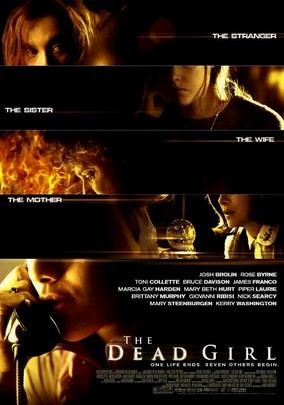
The Dead Girl-2006

The Dead Girl-2006

Director Karen Moncrieff

Starring Brittany Murphy, Toni Collette

Scott’s Review #794

Reviewed July 24, 2018

Grade: A

The Dead Girl (2006) is a unique independent drama with a moody, gloomy underbelly, and is quite the downer, however is also a masterpiece.

Reminiscent of David Lynch’s Mulholland Drive (2001), the remote and dark setting perfectly counter-balances the traditional image of sunny California as a young woman’s murder is discovered.

Writer and director, Karen Moncrieff spins a delicious tale in the mysterious and sinister.

Moncrieff, (a former daytime television actress), wisely carves the film into five chapters- each focusing on a different character. The clever approach, since at first it seems as if the stories are independent of each other, is all intertwined.

The mystery of who the woman is, why she was killed, and other major questions come into play as the chapters unfold. To twist the drama even further, one of the chapters is revealed to be a complete red herring.

The five chapters are each compelling in their way.

Chapter one focuses on Arden (Toni Collette) and her relationship with her abusive mother- deliciously played by Piper Laurie. Arden has a love interest in Rudy (Giovanni Ribisi), who she confides in when she discovers the “Dead Girl”.

The film then moves to various other chapters entitled “The Sister”, “The Wife”, “The Mother”, and finally “The Dead Girl”, which is from the perspective of the murder victim when final clues are revealed.

The last chapter is the best and most heartbreaking in my opinion.

The casting is just wonderful as a myriad of top talents appear in the film. With low-budget independent films, especially before 2006, finding big stars willing to accept little pay was quite difficult.

Moncrieff, however, scores big with the actors cast in her film.

Mainly an all-female cast, talents like Collette, Laurie, Mary Beth Hurt, Brittany Murphy, and Marcia Gay Harden round out the all-star cast. Names like these could fill up a Hollywood marquee let alone a small indie like The Dead Girl.

Speaking of Murphy, this may be the very best role of her career. Sadly, meeting death shortly after this film, she gives a mesmerizing performance in the title role- also known as Krista.

With heavy, gothic-style makeup, her character is vulnerable, having had a difficult childhood and struggling to send an enormous teddy bear to her daughter on her birthday.

Tragically, events do not go as planned for Krista, but what a bravura performance by Murphy.

The overall tone of the film is a great achievement and key to its success.  The film is small and does not need explosions, car chases, or police banter to achieve the message it relays.

The Dead Girl is a quiet film about struggles, decisions, and wounded characters dealing with the life that they have been given the best they can.

The mysterious identities of the characters and the loneliness and lack of identity of some of the characters make me think Moncrieff was at least somewhat inspired by Lynch’s Mulholland Drive.

Not quite as oddball as the former, but more of a downer, The Dead Girl shows elements by way of unusual characters and a melancholy vibe.

The latter focuses more on a serial killer subject matter.

Being a huge proponent of the genre of independent film (think modern 1970s films with directors who have a clear vision), The Dead Girl is an enormous achievement.

Despite a handful of Independent Spirit Award nominations, I still feel the film is under-appreciated and a decade later is largely forgotten, if anyone knew about it, to begin with.

Let’s hope that enough young, aspiring filmmakers were inspired by Moncrieff and what she created with The Dead Girl (2006).

Independent Spirit Award Nominations: Best Feature, Best Director-Karen Moncrieff, Best Supporting Female-Mary Beth Hurt

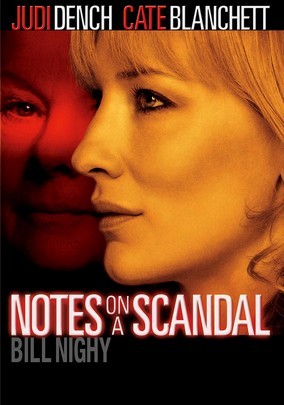
Notes on a Scandal-2006

Notes on a Scandal-2006

Director Richard Eyre

Starring Judi Dench, Cate Blanchett

Scott’s Review #793

Reviewed July 23, 2018

Grade: A

A British drama centering on the world of teachers, illicit affairs, and sexuality, Notes on a Scandal (2006) is a superlative effort with thrills and drama galore.

Featuring heavyweights like Judi Dench and Cate Blanchett there is no way this film could be a dud based on the acting alone. The chemistry between the women and the carefully crafted thrills created by director, Richard Eyre, make the film a compelling joy to view- perhaps multiple times for additional entertainment.

The story is told mainly from the perspective of Barbara Covett (Dench), a rigid and bored schoolteacher nearing retirement at a comprehensive school in London, where she teaches.

Barbara is a spinster and a closeted lesbian, constantly writing in her journal for comfort- this is the main narrative of the story and is tremendously effective.

When a young and attractive art teacher, Sheba Hart (Blanchett), arrives on the scene, Barbara fancies her and is determined to get closer. After Sheba begins an illicit affair with a male student, Barbara discovers the shenanigans and uses the situation to her advantage.

The scandal results in both women’s careers being at risk as well as Sheba’s troubled home life coming to fruition.

Notes on a Scandal is a good, solid, psychological thriller/drama with enough twists and turns to compel the viewer. The film is not very long- at one hour and thirty-two minutes, there is hardly time for lagging.

The best achievements, however, are with the superior acting of the two leads. With other lesser talents, this film might have suffered from too much melodrama and not enough meat. With great acting chops, Dench and Blanchett do not let this happen and instead treat the audience to a riveting affair.

As fantastic as Blanchett is, Dench’s Barbara is the standout and takes center stage throughout the film.

Interestingly, despite both actresses being leads, Dench received an Oscar nomination for Best Actress, while Blanchett went supporting. But there is no question that both actresses deserved the praises they reaped- and then some.

Dench turns in such a delicious performance that she makes the film arguably the reason to watch it. Wearing no makeup and dressed as conservatively as imaginable, an icy stare or thoughtful gaze will run shivers up and down the viewer’s spine.

As conflict and drama unfold, Barbara proves she is nobody to be messed with. Still, the character has an underlying vulnerable quality, simply yearning for affection and love from another woman. One wonders if she has ever really had the love she deserves.

Dench is brilliant at revealing all of Barbara’s underlying nuances.

The film poses an interesting moral question that will leave some viewers undoubtedly not a fan of Sheba’s. The fact that she lusts after an underage male, Steven Connolly (Andrew Simpson), and has relations with him, while having a husband and handicapped child at home may be too much for some.

Surely, the character will not be championed by many, but I found Sheba complex and difficult to grasp. This complexity is to the filmmaker’s credit and allows for a more layered character study of both Sheba and Barbara- neither is cut and dry.

An interesting aside of the film is what if the genders of the roles were reversed? Would the film have the same effect if Sheba were a male character and Steven was a teenage girl? What if Barbara were a straight woman? What if Barbara was a gay male character?

These other possibilities left me wondering as I watched the film. Wisely, I think director Eyre got things just right.

Notes on a Scandal (2006) is a film that reminds me of a British version of Fatal Attraction (1987) meets Single White Female (1992).

The story holds elements of each and was adapted from a 2003 novel of the same name. With frightfully good performances by both Dench and Blanchett, this film is a memorable thriller not to be missed.

Oscar Nominations: Best Actress-Judi Dench, Best Supporting Actress-Cate Blanchett, Best Adapted Screenplay, Best Original Score

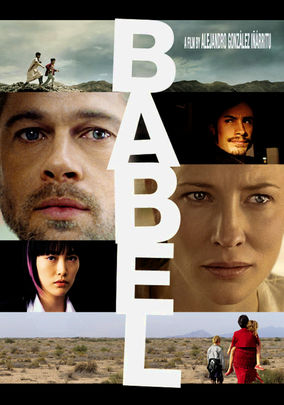
Babel-2006

Babel-2006

Director Alejandro G. Iñárritu

Starring Brad Pitt, Cate Blanchett

Scott’s Review #791

Reviewed July 19, 2018

Grade: A

Babel (2006) is part of director Alejandro G. Iñárritu’s “Death Trilogy” films- Amores Perros (2000) and 21 Grams (2001) are the others. The director crafts a riveting drama involving intersecting stories that are a thrill ride a minute and highly compelling.

The film is at risk of being forgotten, however, largely due to Iñárritu’s subsequent successes- Birdman (2014) and The Revenant (2015), but Babel is a fantastic companion piece to either Traffic (2000) or Crash (2006), as those films hold a similar style.

The three stories are riveting in their own right and could each be a gripping short film of their own. The fact that characters within each segment are related to the others in some way takes the stories over the top.

The film switches back and forth within each story which is a huge plus, making the tension even more palpable as we begin to connect the dots. The spliced editing is a remarkable achievement in making the continuity seamless.

Each story is summarized below.

An affluent American couple, Richard and Susan (Brad Pitt and Cate Blanchett), vacation in Morocco, happily enjoying a bus tour.

When two local boys play with their father’s rifle and experiment by shooting at long-range, the American woman is shot, leading to a terrorist accusation while the couple desperately seeks medical attention in the middle of nowhere and in a foreign country.

In Japan, a wealthy businessman (and owner of the rifle), is investigated while his promiscuous teenage daughter (Rinko Kikuchi) seeks attention from young men.

The girl, deaf, is angry and depressed due to her mother’s recent suicide.

As she flirts with a local detective, she slips him a mysterious note and implores him to read the note only after he leaves her father’s gorgeous high-rise apartment, leading to a mysterious revelation.

Finally, in southern California, Richard and Susan’s Mexican nanny, Amelia (Adriana Barraza), cares for the couple’s young children. Almost like a real family member, Amelia adores the kids (and they love her.)

When she is notified that the couple will be delayed returning home, she panics and foolishly takes the kids across the border to Mexico to attend her son’s wedding.

When an incident allows the police to become involved, Amelia and the kid’s lives are in peril.

The connecting stories are only part of what makes Babel so fantastic, but an enormous aspect is the direction Iñárritu has the characters go in.

As the stories play out we care deeply for the characters which play a great role in adding meat to each story.

Sometimes the connections of the characters are immediately known, other times the audience can savor the inevitable big reveal. Not every story featured in Babel will have a happy ending, which makes the film all the more compelling and satisfying.

How incredible are the different locales and cultures featured in Babel from a geographical perspective alone?

The action traverses from the hip, modern metropolis of Tokyo, with slick nighttime sequences dance clubs, and urban hip-hop beats.

The deserts of remote Morocco with the vast and sweeping lands mix perfectly with the hot Mexican atmosphere and the cultural nuances of a real Mexican wedding.

Another key element is the different backgrounds of the characters and the conflict this sometimes leads to. As Richard frantically seeks medical attention for Susan, he is met with resistance from some while receiving aid from a local veterinarian.

At the border of Mexico and the United States, Amelia and her brother are not treated well by Border patrol. One cannot help knowing that this is because they are Mexican and carrying American children, thus discriminated against.

Wonderful call-outs are deserved for relatively unknown actors, Kikuchi and Barraza, both of whom received tremendous accolades in 2006 for their work when they could have easily been overlooked in favor of bigger, high-profile stars like Blanchett and Pitt.

I love when this happens and gritty performances find their due respect. Both actors give great performances in complex, layered characters.

Since making Babel Iñárritu has progressed to great acclaim with Oscar winners like Birdman and The Revenant, but let’s not forget that Babel received a heap of Oscar nominations, though sadly only one victory for the musical score.

Unfortunately usurped by his more high-profile works, Babel (2006) is an excellent, fast-paced, and layered film with spectacular characters, story-telling, and editing.

Oscar Nominations: 1 win-Best Picture, Best Director-Alejandro G. Iñárritu, Best Supporting Actress-Adriana Barraza, Rinko Kikuchi, Best Original Screenplay, Best Original Score (won), Best Film Editing
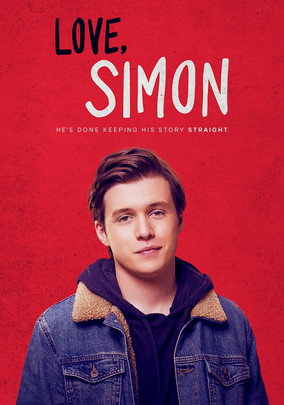
Love, Simon-2018

Love, Simon-2018

Director Greg Berlanti

Starring Nick Robinson

Scott’s Review #789

Reviewed July 17, 2018

Grade: B+

Love, Simon (2018) is a friendly, mainstream, LGBT film focused on a likable central character. Given the myriad dark films within this genre, the film is refreshing, usually ensconced in the independent genre.

Finally, a wholesome, family-oriented “coming out” story is upon us, and the film succeeds in spades. Perhaps a shade too “happily ever after” with a couple of stereotypes among the supporting characters, Love. Simon is a film to be heralded and certainly recommended.

Popular high school senior Simon (Nick Robinson) has a close circle of friends, hip parents, and an affluent existence in the suburban USA. Seemingly “having it all,” he is nonetheless filled with angst and harbors a deep secret—he is gay.

Closeted, he finds solace with a similarly closeted male student through the school website.

Determined to find out who his classmate is, he embarks on a way to discover his secret crush’s identity while being blackmailed by another schoolmate.

Young newcomer Nick Robinson is an absolute gem and carries the movie successfully. This is in stark contrast to another 2018 release starring a newcomer who failed (A Wrinkle in Time). Alas, Robinson has charm, charisma, wholesome looks, and an earnest persona, which are perfect traits for a coming-of-age film such as Love, Simon.

The audience will instantly root for the teen to find happiness and come to terms with the dreaded coming out to family and friends, which any gay person can relate to.

An enormous positive to the film is that Simon is okay with being gay- it’s the telling of other people that bothers him. He daydreams about starting fresh next year as an out and proud college freshman.

He worries that coming out will ruin his final year of high school and change his relationships with his circle of friends. But he is never ashamed or self-harming in his preference for men.

Lesser, but still significant, high points to the film are the rich diversity among the supporting players.

Several of Simon’s friends are black, and his parents are liberal, open-minded, and well-rounded. Of course, they will be accepting of their son’s chosen lifestyle.

Love, Simon also features diversity among the teachers. The theater teacher is not only black but also a champion for LGBT fairness. These qualities are always a breath of fresh air in film, especially when the target audience undoubtedly is younger.

The filmmakers succeed at breaking a key barrier with Love, Simon. As often is the case, LGBT-themed films target the LGBT audience, which makes sense.

In the case of Love, Simon, the film is an experience that the entire family can watch together, regardless of anyone’s sexual preferences. This detail is critical, as LGBT matters should be considered daily.

At the risk of pigeon-holing, the fact that Simon is masculine and popular and not the slightest bit effeminate or girly is undoubtedly a key to the film’s success.

On that note, the film does add an extremely effeminate and outgoing supporting character named Ethan. I am not sure this character is necessary other than to contrast with Simon.

Perhaps to drive the point home, Simon is a cool, macho guy, and Ethan is not. In one scene, it is assumed that Simon and Ethan are boyfriends, and Simon seems mildly disgusted by this. I’m not sure this subplot works or serves the film’s overall message very well.

Love, Simon contains frequently seen supporting character types that bring us seasoned filmgoers back to the days of the 1980s teen coming-of-age films like Pretty in Pink (1986) and Sixteen Candles (1984).

Several subplots involving characters having crushes on other characters, while another character likes them, are added to the mix for fun and a little drama.

The conclusion is sweet as the initial mystery of “who is the other gay student?” is finally revealed amid a lovely scene of Simon waiting on a Ferris wheel for his online admirer to arrive.

In a purely inclusive moment, the entire school surrounds the newly united couple and beams with pride as the duo tenderly kisses. Mass audience members are exposed to a heartfelt moment and an enormous lesson in dignity and spirit.

Director Greg Berlanti creates a lovely Hollywood film that is rich with diversity, a powerful story, and an inclusive element.

Sure, the film is not heavy and either skims over or misses discussions of powerful emotions that many gay youngsters face, but it is nonetheless a brave and necessary story in its own right.

Love, Simon (2018) is classy, tender, and quite a pleasant experience.

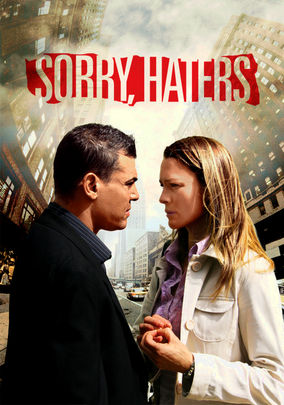
Sorry, Haters-2005

Sorry, Haters-2005

Director Jeff Stanzler

Starring Robin Wright

Scott’s Review #787

Reviewed July 12, 2018

Grade: A

Sorry, Haters (2005) is a small, indie film that was not well received by audiences or necessarily by many film critics, but that I am a champion of.

The film is a little-known gem and a showcase piece for star Robin Wright, who has become quite the indie queen over the years. Thankfully, the film did receive some recognition via two independent film nominations, which is how I heard of it.

Regardless, Wright gives a fantastic performance as a troubled television executive who becomes involved with a Muslim taxi driver in New York City, panic-stricken post 9/11.

Ashade (Abdel Kechiche), struggles with driving a cab and the myriad of family issues he faces, including legal troubles. When an upscale, white woman, Phoebe (Wright) enters his cab one night, she insists on forging a friendship, but what is her motivation?

She immediately seems slightly unbalanced and tense.

Reluctant, but needing her help, Ashade’s life becomes entangled with hers as Phoebe offers Ashade assistance. But when her true motivations are revealed, the audience will never see the terrific and terrifying conclusion coming.

The film is very dark in tone and hardly a feel-good film. The best facet of Sorry, Haters is the complicated relationship between Phoebe and Ashade and how this plays out within the story.

More accurate is the complex dynamic of Phoebe herself as her motivations are slowly revealed.

As great as Kechiche is, the standout is Wright, but both play well opposite each other. Her role is more developed and the centerpiece as the audience slowly becomes aware of her dark secrets and disturbing behaviors.

Phoebe immediately claims to be going through a divorce and hires Ashade to drive her to nearby New Jersey to observe her ex-husband. She talks his ear off, recounting how she has lost her family. This scene becomes the first clue that Phoebe may be unbalanced.

As the film progresses, this becomes more obvious. As Phoebe dines with colleagues, she engages in reluctant conversation as she violently cuts her leg with a fork underneath the table for some relief.

Wright can do no wrong as an actress appearing in numerous films over the years. She is not a “box office” type of actress and this is to her credit.  She chooses independent films that allow her to sink her teeth into good, meaty, complex, female roles.

The role of Phoebe is of that ilk. The character is unstable and borders on madness and has rage bubbling under the surface. Wright portrays these emotions successfully.

Let’s not forget the other leading actor- Kechiche is purely dynamic in the male leading role. The audience will undoubtedly sympathize right away with this man and the character.

Since the period is so close to the events of 9/11, and the character is Muslim (some big clues to the climactic conclusion here), the man is a prime target for discrimination.

Since his brother is imprisoned and needs a legal team, Ashade is quite vulnerable and ultimately at Phoebe’s mercy.

The interesting dynamic between Phoebe and Ashade is that they do not share a romantic relationship at all. Developing a friendship based on need, there is something not right with the situation, and director Jeff Stanzler provides the appropriate mood with many scenes occurring either at night or in the confines of Ashade’s taxi.

Dialogue frequently seems awkward between the two.

Despite not being an easy film to watch, Sorry, Haters (2005) is a film with a powerful message and great scenery of one of the most vibrant cities in the world.

The film is dark, even dour, but above all contains a powerful message with a timely subject matter. Rich in character development between the leads and the maniacal motivations of some.

I found the film to be topical, riveting, and disturbing.

Independent Spirit Award Nominations: Best Female Lead-Robin Wright Penn, Best Screenplay

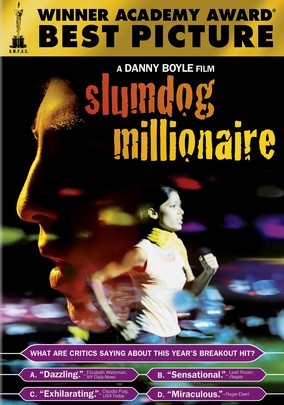
Slumdog Millionaire-2008

Slumdog Millionaire-2008

Director Danny Boyle

Starring Dev Patel, Freida Pinto

Scott’s Review #786

Reviewed July 11, 2018

Grade: A-

Winner of the 2008 Best Picture Oscar (as well as seven other Academy Awards), Slumdog Millionaire (2008) arguably was the “feel good” film of the year.

While I am not sure if all of those awards are ultimately deserved, the film is nonetheless very good, offering a mixture of good culture, a young man overcoming enormous odds, and a love story.

Fans of the universal game show hit, Who Wants to Be a Millionaire, will be pleased.

Young Dev Patel (critically acclaimed for 2016’s Lion) stars as a poor young Indian man, Jamal Malik. He is detained after being a contestant on Who Wants to Be a Millionaire after he comes one question away from winning a million dollars.

The producers go on a commercial break and Jamal is whisked away to custody as suspicions are aroused and the young man is accused of cheating. Since he is a “slumdog” and poorly educated, it is assumed there is no way possible he could know all the answers.

Jamal recounts, via flashbacks, through experience, how he came to know all of the correct answers.

Director, Danny Boyle does a fantastic job directing the film. Slumdog Millionaire is edited in a fast-paced fashion and the camera angles are quick and stylized, making for an excellent flow.

The soundtrack to the film is very effective and enhances the plot. For example, the music is extremely diverse and features genres such as traditional Indian classical music, European house music, and American-style hip hop.

This is an ingenious way for Boyle to incorporate multiple cultures and he, therefore, creates a rousing crowd-pleasing experience.

Another successful aspect of the film is its use of knowledge and intelligence to tell a story. As we experience Jamal’s difficult life beginning as a five-year-old orphan, the unlikely success story and his adventures on the streets are engulfed in both life lessons and education.

The audience is learning important details about the world while Jamal simultaneously is.

The romantic, love-story featured in Slumdog Millionaire is also a highlight and extremely well-crafted. Heartbreakingly, Jamal, his older brother Salim, and the lovely Latika (later played by the gorgeous Freida Pinto) are on the run when Latika vanishes.

Her disappearance and later reappearance are vital aspects to the heart of the film and Patel and Pinto make a handsome and highly likable couple. Their reconciliation is heartfelt and beautiful and gives the film a nice emotional investment.

The incorporation of a relevant and acclaimed game show into the story is wonderful, though hopefully as the years go by, the film does not suffer from a dated feel if and when Who Wants to Be a Millionaire is long forgotten, but alas this is a risk and only time will tell.

The glossy set and for American audiences, the Indian-style version of the game show is great fun as are the Indian locales, which visually dazzle.

A slight detraction of Slumdog Millionaire is the film is unquestionably uplifting and light feeling. Even though the characters face peril and dangerous experiences, the film just “feels” safe.

So much so that qualities such as slick and mainstream resound.

Don’t get me wrong, the film is genuine and has heart and soul, but just slightly too cheery. Of course, since the film is made well and the story and the acting great, this can easily be overlooked.

Slumdog Millionaire (2008) is a wonderful piece of work and is quite simply a film that lots of people will champion.  All of the elements are perfectly in place, which is a main selling point and a prime reason for the film’s many accolades.

The romance and adventure pieces are the best parts- with a quick flow and lots of fun, educational tools utilized.

The film is a nice pleasure to experience.

Oscar Nominations: 7 wins-Best Picture (won), Best Director-Danny Boyle (won), Best Adapted Screenplay (won), Best Original Score (won), Best Original Song-“Jai Ho”, “O Saya”, Best Sound Editing, Best Sound Mixing (won), Best Cinematography (won), Best Film Editing (won)

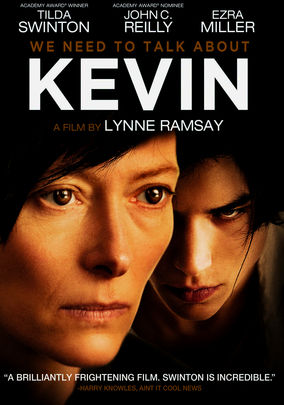
We Need to Talk About Kevin-2011

We Need to Talk About Kevin-2011

Director Lynne Ramsay

Starring Tilda Swinton, Ezra Miller, John C. Reilly

Scott’s Review #785

Reviewed July 9, 2018

Grade: A

We Need to Talk About Kevin (2011) is a tremendously disturbing independent drama with eerie similarities to the infamous Columbine school shooting massacre.

The point of view of the film is from the perspective of Eva (Tilda Swinton), a haggard, troubled mother doubting her love for her violent teen son.

Swinton was shamefully overlooked for an Academy Award nomination despite her brilliant and breathtaking role. The overall film itself is equally astounding and powerful.

Adapted from a Lionel Shriver novel, the events of the film begin in present times after tragedy has occurred. Eva, once a successful, writer of affluent means, now lives alone in a rundown house near a prison where she frequently visits her son Kevin (Ezra Miller).

She is now reduced to working a mundane job in a travel agency while terrorized by neighbors who blame her for her son’s machinations. Chillingly, Eva ponders the warning signs Kevin exhibited throughout his childhood and tortures herself with thoughts of what she could have done differently to prevent the shootings and the death of her loved ones.

Uniquely, the film segues to before Kevin was even born. Eva and her husband Franklin (John C. Reilly), happily welcome their baby boy, but he is immediately “not right” and difficult and cold towards her.

This behavior continues over the years as Kevin is distant towards Eva, but warm and adoring towards his father, leading to mental games and the death of a pet. When Eva and Franklin have another child things get progressively worse leading to tragic events.

The film is a pure masterpiece with riveting acting performances all around (especially Swinton) and a slow, plodding pace. This is a perfect aspect of the film because there is a continuous gloomy and moody vibe.

Director, Lynne Ramsay, reveals all in the beginning moments of the film so we know how events will transpire, but the pure enjoyment is the development of the characters.

Dad, Franklin, and daughter, Celia, are around, but the film belongs to the characters of Eva and Kevin and their relationship with each other.

Many questions will be asked throughout the film (I know I asked myself these questions).

Should any blame be cast upon Eva or is she purely innocent? How about Franklin? Is Kevin just a “bad kid”? Was Eva wrong for breaking Kevin’s arm in anger, or justified? Should Eva have never had kids because of her earlier doubts? Should she have been more proactive in getting treatment for Kevin?

Swinton delivered her career-best performance and while she was recognized with a Golden Globe nomination, the ultimate gold statuette (Oscar) alluded to her. I find this to be troubling especially since she won for 2007’s Michael Clayton, a very good performance, but not on the same level as Eva.

Swinton is one of the great modern actresses and hopefully, great roles will continue to follow this treasured star.

Almost on par with Swinton is a young talent, Ezra Miller. A relative newcomer in 2011 he appeared in the indie gem The Perks of a Wallflower (2012) and in later years traversed into more mainstream fare like Trainwreck (2015) and Suicide Squad (2016).

We Need to Talk About Kevin remains his best and most challenging effort.

One of the best sequences occurs during the school massacre scene. Shot at night time (and in my adopted hometown of Stamford, Connecticut!) the sequence involves flashing police lights and chaos as Eva approaches the school in horror. With no dialogue, we see Kevin enter the school and render the doors useless as an escape route.

Terrified students are murdered as Kevin erupts with maniacal rage. The scene is downright chilling and incredibly effective.

2017’s The Killing of a Sacred Deer reminds me quite a bit of We Need to Talk About Kevin in tone and style, so much so that I wonder if the latter was watched and studied before the former.

Either way, the duo could be watched subsequently for a double-dose of teenage maniacs.

With a bleak and dark tone, We Need to Talk About Kevin (2011) offers a story that has a clear message. Never discussing the hot topic of gun control, guns are not used in the slaughter, a bow is, weapon restrictions will nevertheless be an obvious discussion point.

This film is one to be observed, savored, dissected, and thought about after the finale, and is one to be remembered as a great piece of cinema.

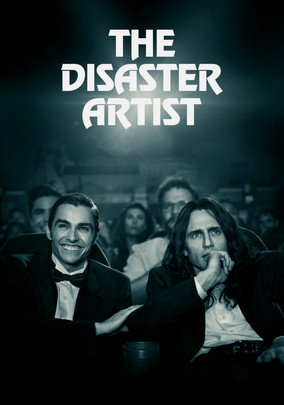
The Disaster Artist-2017

The Disaster Artist-2017

Director James Franco

Starring James Franco, Dave Franco

Scott’s Review #781

Reviewed July 2, 2018

Grade: B

The Disaster Artist (2017) is a biography-comedy that I found to be middle of the road to primarily good if I’m judging in overall terms- most I liked with a bit of criticism.

Due to the many accolades, I confess to having anticipated a bit more from the finished product and hardly finding it a masterpiece.

Still, I was both impressed and unimpressed by James Franco’s performance in the lead role. I was awed at the actor’s emergence as a director, and the Los Angeles setting is great.

At times the film teeters almost into bad slapstick or shtick, and a bit silly, and as much as I respect his performance, this criticism is directed at Franco. Nobody can deny his acting talent if he chooses the right films.

His attempt to make his character peculiar is noticeable within seconds, so it seems Franco also makes him a bit of a goof, and I was not able to take the character seriously all of the time.

And the weird accent threw me.

This film is based on the nonfiction book The Disaster Artist. The book chronicles the making of 2003’s The Room, not to be confused with the 2015 film Room. The Room was considered amateurish and one of the worst movies ever made.

Told repeatedly that his acting stinks, oddball Tommie Wiseau (James Franco), a European-American aspiring actor, decided to screw Hollywood and produce, direct, and star in his film.

Wiseau has an endless amount of bank funds, which he uses towards the film. Roommate and friend Greg Sestero (Dave Franco) stars in the movie and thus gets his big break. The duo and various others pitch in to create the project, which suffers from ineptness on the part of Wiseau.

The Los Angeles setting resonates with me, as does the recurring theme of struggle in the Hollywood scene. These are significant pluses of the film as a whole.

Los Angeles can appear to be a sunny and glamorous town, but beneath its shiny exterior, it always has a gloomy, dark underbelly.

The film realistically depicts struggle and success, from the central characters to the supporting players, making it resemble an ensemble.

Thousands struggle daily for a break, and no respect or appreciation is given. The Disaster Artist scores a win by focusing on this.

When Tommie brazenly approaches an influential producer in a restaurant, he is unceremoniously dismissed for having no talent and told he will never get anywhere. In addition to Tommie, several actors associated with the film struggle.

In a fantastic scene, an older actress states that being on a bad movie set beats any other job by miles. The message here is that people in Hollywood are there because they genuinely love it.

The sweet, empowering theme of friendship and empowerment is also to be celebrated, especially given the cutthroat backdrop. Tommie and Greg are best friends and have each other’s backs through thick and thin.

Neither gives up on the other, even during the initial audience reaction to The Room premiere.

Could the film have been slightly darker? Yes, indeed, as very few scenes of drug destruction or the porn that many hopeful talents turn to are mentioned. But the film is not about that. It’s an enchanting tale of hope and fun.

It is interesting to note, and not evident to me while watching the film, that brothers James and Dave Franco play opposite one another. While there is somewhat of a physical resemblance, the chemistry works between the two actors as best friends.

James delivers a worthy portrayal of an unusual character with a strange dialect, long, stringy brown hair, and seemingly cross-eyed. The role is comedic and ideally suited for an unusual actor like Franco- he must have had a ball with the part.

Movies about movie-making always fascinate me. What goes on behind the scenes?

The Disaster Artist (2017) provides enough good film meat to make it an overall good experience. It stays true to some fine Hollywood history—the famous James Dean is referenced, and the spot where he died is even visited—nice touch! Franco is both good and disappointing in the main role.

All in all, this one is worth watching for those who enjoy filmmaking, Hollywood, or L.A.-set films.

Oscar Nominations: Best Adapted Screenplay

Independent Spirit Award Nominations: Best Male Lead-James Franco

That Hamilton Woman-1941

That Hamilton Woman-1941

Director Alexander Korda

Starring Laurence Olivier, Vivien Leigh 

Scott’s Review #779

Reviewed June 27, 2018

Grade: B+

That Hamilton Woman (1941) is an obscure, black, and white gem that stars legendary actors and real-life couple Vivien Leigh and Laurence Olivier.

Providing a story of an old-fashioned style romance, war battles, and dazzling cinematography, the film succeeds as a classic film that should be better remembered than it is.

The overall theme here is a tragic love story with a sad ending.

One of the best aspects of That Hamilton Woman is witnessing the super-couple team of Leigh and Olivier act opposite one another. The actor’s talents are reason enough, but it makes a fascinating viewing experience.

The curiosity of the pairing of big stars in their heyday is a delight and highly appealing, and both actors do not disappoint. One wonders whether they were acting or otherwise enjoying the experience.

Lady Hamilton begins with a jarring scene in which the title character, Emma Lady Hamilton (Vivien Leigh), is thrown into debtor’s prison after stealing booze in France.

The rest of the story is told via flashbacks as she regales her fellow prisoners with how she ended up in her current state. Her former life starkly contrasts Emma’s appearance as a young woman with hope, promise, and riches.

It is hard to imagine how her life turned out so severely, which gives the film quality of intense intrigue.

The film then has a “riches to rags” element as the story is reversed. Full of energy, British Emma moves with her mother to the Kingdom of Naples, where she marries the affluent (and much older) Sir William Hamilton (Alan Mowbray), presumably for his money.

When handsome Admiral Horatio Nelson (Olivier) appears on the scene, the pair fall madly in love. They face tremendous hurdles, however, as the war rages on and each is unfaithful to their respective spouses.

Since the film was made scarcely two years after the epic romance Gone with the Wind (1939), one cannot help but compare Leigh’s portrayal of Emma to Scarlett O’Hara.

Emma comes across as a British version of the southern lass, especially as she is clad in gorgeous gowns or romancing men.

However, as the film develops, she becomes a much more sympathetic character and certainly less of a vixen. Still, there are plenty of similarities for viewers to draw from.

The role of Lady Frances Nelson (Gladys Cooper) is completely one-note, so the rooting value is never doubted. The film intends for the audience to be in the corner of Emma and Horatio, and that said, Cooper does a fantastic job of making her character completely unlikeable. Her icy, vengeful spirit perfectly complements the sympathetic lead characters. The fact that Horatio and Emma are adulterers, especially for the year the film was made, is not fully explored.

To be critical, the video quality is not the greatest, presumably because the film is old. If the film had been in color, the gorgeous Italian landscapes and Leigh’s lovely costumes would have appeared even more lavish and picturesque.

However, due to the film’s age, not much can be done about it unless it is decided to repackage the disc or make it a Blu-ray offering.

Still, the film frequently features southern Italy’s luminous mountains and lush oceans, which is a real treat.

Purely a showcase for newlyweds Olivier and Leigh to dish their real-life romance for mainstream audiences, That Hamilton Woman (1941) must have been a big deal at the release.

While suffering from lackluster film quality, the story is quite hearty, featuring romantic scenes, loud, bombastic battle scenes, and a bit of British and Italian history.

Sadly, this film is largely forgotten, but it is a good watch for fans of the legendary stars.

Oscar Nominations: 1 win-Best Sound Recording (won), Best Art Direction-Interior Decoration, Black-and-White, Best Cinematography, Black-and-White, Best Special Effects

Saving Private Ryan-1998

Saving Private Ryan-1998

Director Steven Spielberg

Starring Tom Hanks, Tom Sizemore

Scott’s Review #778

Reviewed June 26, 2018

Grade: A

Famed director Steven Spielberg does not always get his due respect. This is usually because, for better or worse, he has become synonymous with the “blockbuster” film, drawing comparisons to either lightweight fare or films of “lesser” artistic merit.

His 1980’s works- Raiders of the Lost Ark (1981), E.T. the Extra-Terrestrial (1982), and Indiana Jones and the Temple of Doom (1984), were enormous commercial successes, though I enjoyed all of the films.

During the 1990s Spielberg continued to direct “popcorn flicks” such as Hook (1991) and Jurassic Park (1993), with large studio budgets, but with somewhat less critical acclaim.

Finally, he was able to change many opinions with 1993’s Schindler’s List and the war film to end all war films, Saving Private Ryan (1998), an epic, profound experience.

Both received numerous Oscar nominations and success at the box office.

The film is a tremendous treat for nothing other than the riveting opening sequence alone (more about that later). If that is not enough to impress, Saving Private Ryan is known for infusing a very graphic element into the war film- with no letting up from the brutality.

Spielberg does not water down this picture, instead shows the pain and angst of war. The film is helped tremendously by the casting of Hollywood superstar Tom Hanks, who leads an enormous cast of mainly young men.

Saving Private Ryan opens with a prologue- in present times a veteran brings his family to visit an American cemetery at Normandy. Flashbacks then take the audience back to the Omaha Beach debacle in 1944, where American troops faced deadly German artillery attacks in France.

After the horrific three-day D-Day, it is learned that three of the four Ryan sons have died in the events. Captain Miller (Hanks) is ordered to bring a team of men to Normandy and bring the fourth Ryan son (Matt Damon) to safety.

Spielberg’s opening D-day sequence is just astounding and propels the film to unforgettable status. With a running time of twenty-four minutes, the riveting and horrific slaughter of American soldiers is intensely brought to the screen.

Audiences undoubtedly sat open-mouthed (I know I did!) as bullets riddled the beach and left soldiers killed or with limbs torn off. The camera-work is brilliant as the use of a shaky technique, almost documentary style is used for effect.

Successful is this sequence at promoting an anti-war sentiment while not glorifying the combat at all. The scene will stay with its audience for years to come.

Saving Private Ryan can be compared to the decades later Dunkirk (2017) in that each film took the war genre and turned it upside down.  The similarities between the films start with the obvious- the main events in both films are during World War II, the same week, and the French beach settings making the films perfect companion pieces.

Both films feature a gray, rainy setting with many horrific moments of death and suffering. The war film is a common genre that has historically teetered on predictability and over-saturation, but both films do something completely different and unexpected, yet mirror each other in style.

To counter-balance the violence in the opening sequence, a quiet scene is created and remains one of my favorites. The scene contains almost no dialogue throughout the seven-minute duration and is pivotal to the entire film.

As a typist realizes that three letters of death are to be delivered to the same family, a woman on a mid-west farm quietly washes dishes and is calmly horrified when she sees a government car approaching.

What else can this mean but that one of her sons is dead? The poor Mrs. Ryan will be told that she has lost not one, but three sons.

How utterly unimaginable and the scene is incredibly touching!

The best part of Saving Private Ryan is that Spielberg provides a deep level of sentimental vision combined with the terrible atrocities of war. He portrays not only the violent effects of the battles on the soldiers but also the surviving families.

This is not always done in war films, at least not to the level that Spielberg chooses to.

With such a film as the startling Saving Private Ryan, Spielberg turned the war film genre inside out. Breaking barriers with a no-holds gusto, Spielberg influenced war films for years to come- Black Hawk Down and Enemy at the Gates (2001) are prime examples, and received acclaim from fellow directors for his interesting techniques.

Saving Private Ryan (1998) was an enormous financial winner at the box office, proving that great films don’t have to be watered down to find an audience.

Oscar Nominations: 5 wins-Best Picture, Best Director-Steven Spielberg (won), Best Actor-Tom Hanks, Best Screenplay Written Directly for the Screen, Best Original Dramatic Score, Best Sound Effects Editing (won), Best Sound (won), Best Art Direction, Best Cinematography (won), Best Makeup, Best Film Editing (won)

God’s Own Country-2017

God’s Own Country-2017

Director Francis Lee

Starring Josh O’Connor, Alec Secareanu

Scott’s Review #773

Reviewed June 13, 2018

Grade: B+

God’s Own Country (2017) is a British, romantic, LGBT-themed drama directed by Francis Lee, making his directorial film debut.

The setting is farming land in the Yorkshire (northern England) territory, making the film quite lovely to watch, and the pace is slow. Lee does not rush the story’s pace either, so it mirrors the slow life that farmers must endure.

The film is somewhat autobiographical of Lee’s own life.

The connection and chemistry between the two leads are palpable, and the love story is endearing. It is awe-inspiring to see two cultures come together and merge as one.

The film is a nice watch and an above-average story, making it worthy of LGBT audiences worldwide. Those who believe in true love and find their soulmate will be deeply satisfied.

Twenty-something Johnny (Josh O’Connor) lives a dull existence on his father’s farm in remote Yorkshire, England. His grandmother (Gemma Jones) also lives there, and due to his father’s recent stroke, the farm’s success is in question. Johnny is depressed, drinking regularly, and engaging in sexual encounters with men.

Romanian migrant worker Gheorghe (Alec Secareanu) is hired to help, and the two young men eventually fall in love. After some ups and downs in their relationship, they decide to live on the farm together and presumably live happily ever after.

God’s Own Country is a rich story of romance, and the only real obstacles that Johnny and Gheorghe face are internal struggles.

In a unique fashion for LGBT films, neither of the men are necessarily unhappy with their sexual identities, nor do they face hurdles by other characters because of their sexuality. Gheorghe faces harassment because he is Romanian and deemed an “outsider”.

Besides Johnny’s grandmother and perhaps his father, no characters seem aware that the men are a couple.

The cinematography is gorgeous and a perfect backdrop for the love story. The farm is lush with spacious green rolling hills for miles and miles.

The family raises lamb and cattle, and more than one scene features a beautiful birth and the nuzzling of the parent to the newborn baby. Sadly, one birth is also a breach, which is tough to watch.

The themes of life and birth perhaps mirror the feelings and emotions that Gheorghe and Johnny experience- new love.

Throughout God’s Own Country, I frequently drew comparisons to arguably the most mainstream and revolutionary film in LGBT history- that of 2005’s Brokeback Mountain.

Both films feature similar elements of animals, farming, and the outdoors. Additionally, commonalities like loneliness and loss are heavily featured. Finally, the rough-and-tumble, machismo-fueled wrestling scenes that result in rough sex between the men are used in both Brokeback Mountain and God’s Own Country.

Both films could be companion pieces.

The film does not delve too much into the back story of the main characters; at least, I did not catch many mentions. Admittedly, viewing the movie on DVD with no closed captioning or subtitle capability made capturing all of the dialogue difficult.

Especially with English and cockney accents, this was made doubly challenging. Regardless, both men are lonely, even despondent, but why? What happened to Johnny’s mother? Where are Gheorghe’s parents or his family?

Upstart Francis Lee carves a quiet, thoughtful, yet compelling story of unexpected love that develops between two lonely men in a remote area of the United Kingdom.

God’s Own Country (2017) paints a nearly perfect experience, slow, yes, but featuring exceptional acting from both leads and the two supporting turns.

The film is recommended for those seeking a poignant and fulfilling love story.

Vanity Fair-2004

Vanity Fair-2004

Director Mira Nair

Starring Reese Witherspoon, James Purefoy

Scott’s Review #772

Reviewed June 12, 2018

Grade: B

An adaptation of the classic 1848 novel written by William Makepeace Thackeray, Vanity Fair (2004) softens the traditionally unlikable and roguish character of Becky Thatcher quite a bit.

This proves not to be the smartest move as the character, now more of a heroine is watered down and forever changed, as is this film adaptation.

Reese Witherspoon (Becky) drew harsh criticism for her starring turn, but I do not think she is so bad, and the costumes and set designs are wonderful and quite the highlight of the resulting period piece.

In 1802 England, we meet Becky Sharp, a young woman who has just graduated from a School for Girls and been sent to work as a governess. Because her father, a talented painter, is impoverished, Becky is cast aside as lower class and deemed undesirable to anybody upper class- the men she is most interested in.

Despite her reputation as a tart, Becky aspires to marry rich and frequently gets into trouble with her shenanigans and smart tongue while romance blooms with the handsome Rawdon Crawley (Purefoy).

The story is supposed to encompass Becky’s life from approximately age eighteen through her mid-thirties (though Witherspoon never appears to age) and displays her trials and tribulations, her loves and losses through the years.

We follow her from rural England to London and Belgium, eventually residing in Germany, reduced to working in a casino, where the film concludes.

The film is a treat as the various countries as they appeared in the nineteenth century, and the wars and battles occurring during this period are featured making for an interesting history lesson.

The main appeal should be Becky Thatcher since the film revolves around her, and numerous criticisms were thrown around accusing the film of casting Reese Witherspoon in the important and demanding role based on her star power at the time.

In 2004 Witherspoon was experiencing enormous film success after 2001’s Legally Blonde and 2002’s Sweet Home Alabama- admittedly fluff films- but securing her box office power nonetheless. These films undoubtedly led to her being cast in the pivotal role, but I thought the star was perfectly adequate and gave Becky appropriate humor and zest.

Based on Witherspoon’s “girl next door” persona and the fact that she just looks like a good character- perplexing the decision to cast her if filmmakers wanted to be true to the character.

Witherspoon was delicious in 1999’s Election as villainous Tracy Flick, a role of a lifetime. But that is the exception and not the standard.

But I digress- the bottom line is that while she is a capable actress, she does not give the gritty performance that many were expecting to be true to the character in the novel.

The rest of Vanity Fair is just mediocre as far as the story goes.

While the antics of Becky are both humorous and dramatic, her rooting value in the romance department does not come across in the 2004 film offers- not enough chemistry exists between the leads to warrant much support.

Opinions abound that other incarnations of Vanity Fair are far more superior and compelling than this film is, but I have yet to see any.

Compliments must be reaped on the costume department and the art direction- both are superior. Such threats are the lavish and colorful costumes and gowns that mark the time. From the classic style hats and highfalutin dresses featured in ball after ball, this aspect is nearly enough to recommend a watch over the dull story and immeasurably the highlight of the entire film.

Vanity Fair (2004) is considered a messy travesty to those well-read enough to have turned the pages of the classic novel. Since I have not yet read the book, perhaps I enjoyed the film slightly more than I should have, but alas, I did not find the casting of Witherspoon as Becky nor the overall product to be drivel as many did.

I recommend the film for the gorgeous visual treats if nothing else.

Gook-2017

Gook-2017

Director Justin Chon

Starring Justin Chon, Simone Baker

Scott’s Review #771

Reviewed June 11, 2018

Grade: B+

Gook (2017) is an independent film drama starring and directed by the rising talent Justin Chon.

Although the film is made on a very limited budget, it delivers a powerful story with a particularly jaw-dropping final sequence that I did not see coming.

If I am being an honest critic, the film drags at times and is not wholly attention-grabbing, but the wrap-up is exceptionally done.

The film’s use of black-and-white filming and a poor, ethnic Los Angeles set is winning, and it is proof that Chon is becoming someone to watch in the years to come.

The time is 1992 amid the soon-to-be-ending Rodney King police brutality trial- news stations and radio programs are abuzz with developments.

The intensity and racial strife are in the air as the trial is reaching its controversial conclusion, resulting in tumultuous riots across Los Angeles.

Two Korean American brothers, Eli (Chon) and Daniel (David So), attempt to keep their deceased father’s shoe store alive in a predominantly African American neighborhood.

The twenty-something men bond uniquely with eleven-year-old Kamilla (Simone Baker), the younger sister of their nemesis, Keith (Curtiss Cook Jr).

I was immediately struck (and impressed!) by the clever use of black-and-white cinematography, which I was not expecting from a film with such a small budget. This technique added grittiness and texture to the spread-out city and enhanced the film’s beauty.

There is something so lovely and peaceful about the juxtaposition of the shoe store’s location in a rather remote area with the looming violence and brutality of some of the film’s roughest scenes.

The harshness of the apparent racial slur title that Chon chooses, Gook, is both shocking and brave, immediately grabbing one’s interest and piquing curiosity.

This wisely sets the tone for the entire film, and viewers will certainly not mistake it for a feel-good affair. Sure, there are some light moments of banter between Kamilla and the brothers, but the conclusion of the film brings a painful reminder of how precious life really is.

Yes, the film is uneven, but that should not be a surprise with a movie that teeters around student filmmaking territory. This is hardly a slight, but merely a mention since Chon is so new at his craft.

For example, the pacing is very bizarre. While most of the film moves at a sleepy, whimsical pace, the aforementioned final sequence moves in breakneck fashion. When a terrible, accidentally self-inflicted gunshot wound sends one character to the emergency room, the speed at which the scene occurs is strange in comparison to the rest of the film.

The highlight of Gook is a tremendous, humanistic element.

The earnest and endearing relationship between Eli and Kamilla really shines through the ugliness of other components. Since the young girl comes from a broken home led by her tyrannical older brother, Keith, she has no father figure to speak of.

To compensate for what she lacks, she spends a great deal of time with the brothers helping out at the store.

Naturally, she bonds closely with Eli, whose father (presumably murdered) is not on the scene either, so they really embrace each other. Eli serves as Kamilla’s big brother, and their scenes are crisp with good dialogue and emotional pizzazz.

Another nice touch that Chon provides with his creation is an instance where the first scene is the same as the last scene- Kamilla doing a ceremonial dance amid the burning storefront.

The final scene is more meaningful and powerful than the opening scene since, by this time, the audience knows Kamilla’s fate.

It is another shining example of Chon’s artistic talent.

Props must be given to a talented up-and-comer in the cinematic scene. Justin Chon is an actor, director, creator, and all-around talented performer.

Gook (2017) is far from perfect and suffers from choppy story-telling and erratic elements, but is impressive in the good qualities it brings to the big screen.

Celebrating young filmmakers is fun, encouraging, and necessary to ensure that ambitious ideas are embraced.

Independent Spirit Award Nominations: 1 win-Kiehl’s Someone to Watch (won)

Good Time-2017

Good Time-2017

Director Ben Safdie, Joshua Safdie

Starring Robert Pattinson, Ben Safdie

Scott’s Review #767

Reviewed June 5, 2018

Grade: B+

Every so often, an actor who is known for either making mainstream films or portraying a mediocre character risks being typecast.

Fortunately, actor Robert Pattinson, known chiefly as the heartthrob from the trite Twilight films, has been given the best career role. The actor hits the jackpot with a challenging and edgy performance in the fast-paced, independent crime drama Good Time (2017).

The film is a perfect ride, and directors Ben and Joshua Safdie successfully provide excellent tension and compelling action scenes (Ben even gives a worthy supporting performance as a mentally challenged character).

The overall tone of the film is that of an edge-of-your-seat experience.

As enjoyable and taut as the film is, a few minor criticisms must be mentioned below.

Good Time begins with Nick Nikas (Ben Safdie) being quizzed by a therapist. They are quickly interrupted by Nick’s brother Connie (Pattinson), who removes him from the facility so that he can assist with a bank heist.

When the attempt goes awry and Nick is arrested, Connie does his best to spring his brother from jail and then from the hospital following an altercation with another inmate. All the while, Connie must also evade the police as he forms a strange connection with a sixteen-year-old girl, Crystal (Taliah Webster).

The fun part of Good Time is that the film is fast-paced and filled with twists and turns. Taking place largely over the course of one night, we are compelled by Connie’s journey and wonder if he will outrun the cops.

Although it is a standard thriller, Good Time rises slightly above this ranking due to its wonderful New York City setting and numerous exterior scenes—this is a major plus.

The film’s look also garners props. With a slick yet gritty and grainy feel, the camera angles are quick and plentiful. This is a great tool to keep the action going at lightning speed, and the editing deserves kudos, too.

The intensity and tension run rampant throughout.

A good example is the bank robbery scene—as the teller disappears into the vault to get the requested amount of money, she takes what seems like an eternity to return, leaving the audience (and Connie) wondering if she has alerted the authorities.

Otherwise, the film is helped immensely by the acting performance of Pattinson, who owns the film. Having not seen him in anything before, I was surprised at how good he was.

I thought of him as more of a matinee idol than a serious actor, but I was proven wrong. Grizzled and temperamental but a decent guy at times, Pattinson’s Connie is loyal to a fault, putting his brother first and foremost.

Fans of Captain Phillips (2013) will be delighted to see Barkhad Abdi cast in the small yet pivotal role of an amusement park security guard.

Nominated for the Best Supporting Actor award for Captain Phillips, the Somali-American actor has found steady work in film since his acclaimed debut performance. In his role in Good Time, the character is instrumental in kicking off the final act that leads to the downfall of at least one other character.

A few minor but notable flaws (somewhat unnecessary) that Good Time contains are worth mentioning.

Perplexing to me is the casting of Jennifer Jason Leigh as Connie’s girlfriend, Corey. Decades older than Connie, Corey is written pretty much as a nitwit attempting to use her mother’s credit card to bail out Nick.

The film does not mention the age difference or provide much meat to the role—Jason Leigh deserves better than a throwaway role like this.

Otherwise, none of the female characters are treated exceptionally well. Connie frequently directs or shouts at either Corey or even Crystal, eliciting a slightly off-putting “man in charge” vibe.

Also, a gay slur uttered by Connie is thrown into a scene for seemingly no reason, which surprises me in 2017. Still, something makes the audience root for Connie while we still want him to get his punishment.

Good Time (2017) provides quality entertainment in a specified genre with good acting.

With a weird Ocean’s Eleven style (only with one prominent character), the bank robbery theme will satisfy those in the mood for a good heist film.

The film’s title is a mystery (is it irony?), and I’m not sure it works, but overall, it is a perfect watch.

Independent Spirit Award Nominations: Best Director-Safdie Brothers, Best Male Lead-Robert Pattinson, Best Supporting Male-Benny Safdie, Best Supporting Female-Taliah Lennie Webster, Best Editing