10 Rillington Place-1971

10 Rillington Place-1971

Director Richard Fleischer

Starring Richard Attenborough, Judy Geeson, John Hurt

Scott’s Review #1,424
Reviewed March 22, 2024

Grade: A

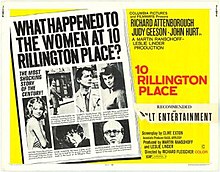
Richard Fleischer has directed films such as Dr. Doolittle (1967) and Soylent Green (1973) that are remembered better than 10 Rillington Place (1971).

That’s a shame, because the film is one I hadn’t seen or heard of, yet it’s chilling, macabre, and masterful in its bleakness and atmosphere.

It’s also wonderfully acted.

One can’t help but notice the stark similarities to Frenzy, an equally disturbing and great 1972 film by Alfred Hitchcock.  Did this film influence the master of suspense to create that one? Only he knows the answer to that question.

Primarily set in one dreary apartment building in London named 10 Rillington Place, it tells the true story of the British serial killer John Christie (Richard Attenborough), who committed many of his crimes in the tall terraced house, and the miscarriage of justice involving his neighbor, the simple-minded Timothy Evans (John Hurt).

John used Timothy as a scapegoat for the murders.

John is a seemingly model citizen but a killer, as the audience witnesses in the first scene. He poses as a kindly doctor who convinces naive women that he can cure whatever ails them, whether it’s aches and pains or a pesky pregnancy.

He usually strangles them to death and buries them in a makeshift graveyard in the pretty garden in front of his residence.

The main story in 10 Rillington Place follows John as he cons a pregnant bride (Judy Geeson) who is struggling financially to use his help and medical methods. John’s dutiful, clueless wife, Ethel (Pat Heywood), slowly discovers her husband’s shenanigans, but will she fall victim as his next target?

Of course, Richard Attenborough steals the show as the demented killer with a calm, cool, and collected exterior. As an average-looking Joe type, he can use his trusting appearance to his advantage.

I’d trust him.

Attenborough became an Academy Award-winning director for 1982’s Gandhi, so he knows his craft well. He also directed Cry Freedom in 1987 and Chaplin in 1992.

In actor mode, he is phenomenal as a crazed killer. His most excellent skill is his demeanor. Thoughtful and pondering, he never plays the psycho or the nut. He is careful, but that’s part of his creepiness. With every noise, he peers out the window, drawing the living room curtain ever so slightly, revealing his face.

Hurt and Geeson are terrific as the young couple with the cards stacked against them. They are simply looking for tranquility and the means to raise their child.

Simplicity is a winning formula, and most of the film is subdued thanks to Fleischer’s laid-back direction techniques.

The look of 10 Rillington Place is perfection. The colors are muted and faded, giving a dank and depressing look. Even a bright red velvet sofa appears dark and dreary.

As Timothy and Beryl agree to lease the top-floor flat, it will not bode well for them, and we can sense it.

Towards the end of the film, it is almost too much to bear with the knowledge that John strangles a toddler to death and unceremoniously stuffs the child, wrapped in a blanket, in a washroom.

Brilliantly, the murders rarely happen on screen and involve none of the principal characters. That’s what’s so haunting about the film and reminds me of Hitchcock’s Frenzy.

Remember the scene where the necktie killer lures a female victim upstairs to her death? There is silence and a shot of the staircase for seemingly an eternity until the killer descends the stairs.

We know what’s happened.

What we don’t see is sometimes much more frightening than what we do see.

The ghastly reveal at the end of 10 Rillington Place that the story is based on real-life events packed a punch since I didn’t have this knowledge going into the film.

Thankfully, 10 Rillington Place (1971) has received its just desserts in recent years, with praise and recognition. This proves that great films are like cream and rise to the top…..eventually.
The Color Purple-2023

The Color Purple-2023

Director Blitz Bazawule

Starring Fantasia Barrino, Danielle Brooks, Taraji P. Henson

Scott’s Review #1,423

Reviewed March 16, 2024

Grade: B+

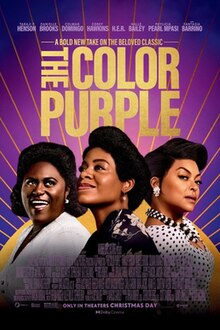
In 2023, director Blitz Bazawule recreated the famous 1985 cinematic version of The Color Purple by Steven Spielberg with mostly good results though it won’t be remembered like Spielberg’s is.

Bazawule is also a visual artist, rapper, singer-songwriter, and record producer so his version differs greatly from Spielberg’s in style and production design.

The ‘new’ version feels closer to what a feel-good Broadway stage version might feel like with incorporated musical numbers breaking up the drama and sometimes the comedy.

The Color Purple was a stage version and before that a much bleaker novel by Alice Walker so I’m not averse to comparing the 2023 version to all that preceded it.

Since we are talking cinema, although I’m more partial to the 1985 version mostly because that one packed a much greater emotional punch I think the numbers are a wise move and are choreographed well.

My favorite by far is ‘Hell No!’ an aggressive and anthemic stomp performed by a defiant Sofia (Danielle Brooks) and later reprised when mousy Celie (Fantasia Barrino) finds a set of balls.

We all probably know the story but here is a brief synopsis for those unfamiliar with the plot.

Set in the Deep South (Georgia) from the early 1900s until the 1940s, the main story follows the shy and put-upon Celie. She is raped and forced to bear the children of her father who then sells the babies. She is sent to marry and live with ‘Mister’ (Colman Domingo) who beats her and sets his sights on Celie’s sister Nettie (Halle Bailey).

Nettie and Celie are the best of friends but through circumstance lose touch for years.

The decades march on as Celie finds her voice and independence thanks to Sofia, jazz singer Shug Avery (Taraji P. Henson), and other kind folks.

The Color Purple is a lovely look at perseverance, extraordinary strength, and hope in the unbreakable bonds of sisterhood during a difficult time in history.

Black women especially were not always treated well.

The casting is uneven. I wasn’t completely won over by Barrino as Celie. The one-time ‘American Idol winner can sing and was Celie on Broadway in 2007 but I kept musing how exceptional Whoopi Goldberg was in the part in 1985.

Speaking of Goldberg, she appears in a cameo role early on as a midwife.

Henson, as Shug, has a tremendous voice and confidence providing the glamour and outrageousness needed for the role. However, she is supposed to be a drop-dead gorgeous woman who Celie is madly in love with and Henson doesn’t have the looks.

As my apt husband announced, Beyonce Knowles would have been a brilliant casting choice.

The standout is Brooks as Sofia, justifiably receiving the sole Academy Award nomination. The instant she appears on screen bullying her meek husband Harpo she has the audience wrapped around her finger giving as good a performance as Oprah Winfrey did in 1985.

While the musical numbers incorporate more of the Broadway-style they also contain a musical rock video vibe that takes away a bit of the cinematic production.  The dance moves are so perfect that they make the film feel ‘fun’ when it should feel ‘tragic’.

Even though Spielberg’s version was accused of excessive sappiness, it’s downright raw compared to the 2023 version. The finale is overly sentimental and the reunion of Celie and Mister, Mister now suddenly converted to a saint, is unrealistic.

Everything ends up so perfect for Celie and that’s all well and good but the fairy tale ending offsets some of the anguish she goes through early in the film.

Finally, Sofia’s big scene when she punches the mayor and other white townsmen lack the emotional heartbreak that the 1985 version did.

Held on its own merits, the film is a success. The Color Purple (2023) never drags and entertains from the first scene to the last. It’s a crowd-pleaser so those looking for a gooey experience will enjoy this version.

It’s safe waters without languishing towards dull or ineffectual.

Oscar Nominations: Best Supporting Actress-Danielle Brooks

Anatomy of a Fall-2023

Anatomy of a Fall 2023

Director Justine Triet

Starring Sandra Hüller, Milo Machado-Graner

Scott’s Review #1,422

Reviewed March 4, 2024

Grade: B+

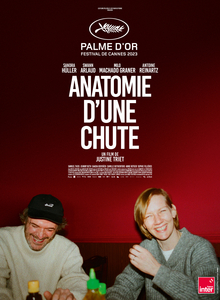
The taut legal thriller, Anatomy of a Fall (2023) is rich with mystery and almost immediately offers the viewer a character’s surprising death. The rest of the film is spent trying to figure out how the death occurred as a trial surfaces.

The mountainous puzzle made me as the viewer anticipate a shocking conclusion or at least a cemented ending leaving nothing to the imagination.

In plain terms, I wanted to know why the character died, at whose hand, and how the act was done.

As good as the film is the ending underwhelmed me. I was left wanting more than I was offered. This is undoubtedly a result of the enormous buildup.

However, the effort is spectacular, and some of the year’s best acting is showcased by Sandra Hüller and Milo Machado-Graner, who give rich and dramatic performances. They stay believable and nuanced in challenging, teary scenes. 

Sandra (Sandra Hüller), her husband Samuel (Samuel Theis), and their eleven-year-old son Daniel ( Milo Machado-Graner) live a secluded life in a remote town in the French Alps.

Tension develops when Sandra, who is a writer, is interviewed by a reporter at home as they sip and enjoy wine. Samuel ruins the moment by blasting an obnoxious song loop causing the interview to be aborted.

Suddenly, Samuel is found dead in the snow by Daniel! The police question whether he was murdered or possibly committed suicide. Samuel’s suspicious death is ultimately presumed murder, and Sandra becomes the prime suspect.

As the trial begins, the events of Samuel’s death are uncovered while the complexities increase. A disturbing journey into Sandra and Samuel’s troubled relationship is explored with Daniel being at the center of the drama.

Anatomy of a Fall is a slow-moving vehicle but that’s a large part of its appeal for me. After Samuel’s death, the film features quiet scene after quiet scene of Sandra and Daniel being interviewed by either their lawyers or others involved in the case.

While not action scenes, the dialogue reveals an incredible amount of backstory. An incident that occurred years earlier is key and the remnants of that unfortunate activity are vital to the entire reveal.

With tremendous acting the film is also significant in scoring Justine Triet an Oscar nomination for Best Director when shamefully few female directors have ever been given this distinct honor.

Unfortunately, Triet’s nomination comes at the expense of Greta Gerwig NOT being nominated for the ginormous blockbuster hit Barbie. I’d give the nomination to Gerwig but why couldn’t they both be nominated?

Triet also wrote the screenplay and wisely crafted an unpredictable vehicle. Since Sandra is on trial the writing could have felt forced or generic but it doesn’t. There are also no silly television drama moments of unnecessary legal jargon or canned shocking tense moments.

What Triet serves up is genuine and humanistic.

The cold and snowy atmosphere reminds me of a Swedish film from 2014 called Force Majeure with a similar story of uncovered secrets and backstory. They are both set in the French Alps ironically enough.

I expected more from the ending but Anatomy of a Fall (2023) mesmerizes and keeps one guessing never feeling boring like some legal dramas can.

While Triet’s Oscar nomination may be questionable, Hüller’s is not and I’d even argue she deserves to win.

Oscar Nominations: 1 win-Best Picture, Best Director-Justine Triet, Best Actress-Sandra Hüller, Best Original Screenplay (won), Best Editing

Independent Spirit Award Nominations: 1 win-Best International Film (won)