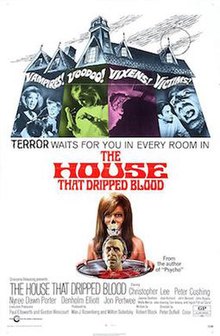
The House That Dripped Blood-1971

The House That Dripped Blood-1971

Director Peter Duffell

Starring Christopher Lee, Peter Cushing

Scott’s Review #1,408
Reviewed October 31, 2023

Grade: B+

Any horror project featuring Christopher Lee and Peter Cushing is worth a watch, and The House That Dripped Blood (1971) includes both actors, though, sadly, not in any scenes together.

The British horror anthology is spooky and perfect for the Halloween season. The action surrounds a hulking house where bad events occur regardless of who inhabits it.

The film is divided into four short stories explaining the circumstances surrounding the individual inhabitants.

The production is low budget, which is perfect for a film like this, but the title makes it seem bloodier and gorier than it is.

All of the stories were initially written and later adapted into scripts by Robert Bloch.

Below is a summary, review, and rating of each vignette.

Framework: B+

Shortly after renting an old country house, a well-known film star, Paul Henderson, mysteriously disappears, and a local Sergeant calls Inspector Holloway (John Bennett) from Scotland Yard to investigate.

When he inquires at the local police station, he is told some of the house’s history.

He soon learns how four tenants met macabre fates.

The ‘Framework’ sequence sits between the vignettes and provides good context, but it’s largely just the interplay between Inspector and Sergeant.

This serves as an introduction to each chapter and ties the events together.

Method for Murder: A-

Charles Hillyer (Denholm Elliott) is a struggling writer who specializes in horror stories. He and his wife Alice (Joanna Dunham), move into the house thinking it will serve as inspiration. Charles creates a devious character named ‘Dominic’ after he ‘imagines’ seeing him outside a window.

Charles soon starts to see Dominic, who begins stalking and tormenting him.

My second favorite of the four chapters, I all but guessed the ‘twist’ from the get-go, but I was surprised by the ‘twist on top of a twist,’ which pleased me.

It’s great when a villain thinks they’ve gotten away with murder, only to be murdered themselves.

Waxworks: B+

Retired stockbroker Philip Grayson (Cushing) moves into the house with plans to read, garden, and relax. Though initially he occupies himself with his hobbies, he quickly becomes lonely. One day, while wandering around town, he happens upon a wax museum.

Grayson explores the museum and finds a sculpture of a dead woman he had loved. The museum’s proprietor explains that he based the likeness of the sculpture on his late wife, who had been executed after murdering his best friend.

Despite featuring Cushing, it’s a moderately good story but lacks the compelling nature of a couple of the other vignettes.

It’s less about the house itself and more about the wax museum and obsession as the subject matter.

While decent, Waxworks didn’t blow me away either.

Sweets to the Sweet: A

Widower John Reid (Lee) moves into the house next door along with his odd young daughter Jane (Chloe Franks). John hires former teacher Ann Norton (Nyree Dawn Porter) to tutor Jane. Ann bonds with Jane and helps her overcome a fear of fire.

Ann suspects John of abusing Jane, but is there more to the story? Why doesn’t he let Jane play with other children or with toys, and why does he do his best to keep her isolated?

Is there something wrong with Jane?

This is the best installment and has a resemblance to The Innocents (1961), featuring a governess and a spooky child. Viewers will find themselves switching allegiances to the characters as the story moves quickly.

The Cloak: B+

Finally, horror film actor Paul Henderson (Jon Pertwee) moves into the house while starring in a vampire film being shot nearby.

Irritated by the cast and crew’s lack of maturity or talent, he decides to buy a realistic cloak for his character (who happens to be a vampire). The shop he makes his purchase from is run by the enigmatic Theo von Hartmann (Geoffrey Bayldon), who eerily offers him a black cloak.

This one plays like a Hammer Horror Dracula installment and is good but not great. Less happens within the confines of the house than I’d like, and Paul is an unlikable character.

The action on the movie set and in the shop are the best parts.
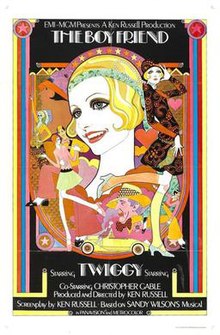
The Boy Friend-1971

The Boy Friend-1971

Director Ken Russell

Starring Twiggy, Christopher Gable

Scott’s Review #1,407

Reviewed October 27, 2023

Grade: B+

With each Ken Russell film, I expect something wacky, and I sit back for a schizophrenic roller coaster ride.

His finest efforts, such as Women in Love (1970), The Devils (1971), and Tommy (1975), offer bombast and weirdness in their own way.

The British director decided to take on The Boy Friend (1971), a reworking of a 1953 traditional musical of the same name by Sandy Wilson, and turn it upside down on its ass. Those expecting a conventional affair with cheery sing-along numbers in perfect symmetry will be disappointed.

The messy project has its ups and downs and meanders off course on more than one occasion. With jagged storytelling and dragging sequences, it makes up for ground with sizzling visuals and costumes. It offers the audience a glimpse of theatrical drama and shenanigans both onstage and offstage.

On its own merits and given that the director is Russell, it gets a marginal thumbs-up, but it is nowhere near as fantastic as his other works.

The plot is a bit confusing, divided into three levels. Level one tells the main story: in the 1920s, in the south of England, a struggling theatrical troupe is performing a musical about romantic intrigues at a finishing school for young women in the south of France.

The cast awkwardly strives to impress a visiting, famous movie director, hoping for fame and fortune. They giggle, improvise, and scheme to get noticed, risking upstaging the other cast members.

Next, there is the musical itself. Four of the girls at the school are very forward and have boyfriends, but Polly, played by 1960s supermodel Twiggy, is shy and has no one to take her to the carnival masked ball that night.

Tony (Christopher Gable), a messenger boy from a dress shop, brings her a costume, and they fall in love.

Finally, the film features extensive fantasy sequences in which the characters’ dreams and hopes are enacted through music and dance, without dialogue.

Glenda Jackson, who won an Oscar for Russell’s Women in Love, returns in an uncredited appearance as the theatre star whom Polly must fill in for when she breaks her leg.

The crux of the film is the romance between Polly and Tony. While there is some chemistry between the duo, they never fully take off as the centerpiece.

The cleverness lies in the reveal of the twist on stage, cementing the pair’s connection as characters in the play.

Nonetheless, there are too many other things going on to care about the lovebirds for very long.

The musical numbers got my attention, especially towards the end of the film. My personal favorite, ‘It’s Nicer in Nice’, kicks off with high-caliber energy and shout-outs to other cities compared to Nice, France. It’s a fun regional experience with great culture and an upbeat rhythm.

The chirpy ‘It’s Never Too Late to Fall in Love’ follows soon after, offering a gleeful ending.

The fantasy sequences waste the story’s potential and offer no plot direction, yet are fun to watch anyway. Dripping with colors and razzle-dazzle, the chaotic events are dreamlike and foot-stomping.

Twiggy, with little to no prior film experience, is quite impressive in the lead role. Her voice is strong, and her acting skills are more than adequate. What might have been a disaster is not, thanks to her talents.

Although other Ken Russell films are tighter and more linear, The Boy Friend (1971) is worth watching, especially for his die-hard fans.

Oscar Nominations: Best Music, Adaptation, and Original Song Score

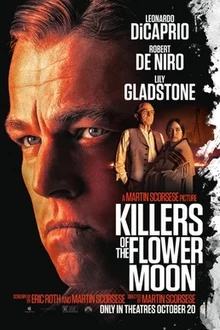
Killers of the Flower Moon-2023

Killers of the Flower Moon-2023

Director Martin Scorsese

Starring Leonardo DiCaprio, Robert De Niro, Lily Gladstone

Scott’s Review #1,406

Reviewed October 22, 2023

Grade: A

One great thing about legendary director Martin Scorsese, and there are plenty I could mention, is that he continues to challenge his audience with his films well into his eighties.

Any aspiring filmmaker, or any cinephile, should study his films.

Before I knew too much about his new picture, Killers of the Flower Moon (2023) I knew I wanted to see it because I trust Scorsese as a director.

His most recent films, The Wolf of Wall Street (2013) and The Irishman (2019) are not easy watches but the payoff is tremendous.

Scorsese is not the kind of filmmaker to create feel-good fluff but leaves the audience pondering what they’ve seen long after leaving the theater.

Leonardo DiCaprio and Robert De Niro, two frequent Scorsese collaborators and great actors appear in Killers of the Flower Moon assuring something of quality.

Be forewarned that at an enormous running time of three hours and twenty-six minutes, the film is long! Like a fine wine, it took me about an hour or so to immerse myself in the texture and storytelling but this only defends the richness of the experience.

Based on David Grann’s broadly lauded best-selling book, “Killers of the Flower Moon” is set in 1920s Oklahoma and depicts the serial murder of members of the oil-wealthy Osage Nation, a string of brutal crimes that came to be known as the Reign of Terror.

In 1918, Ernest Burkhart (DiCaprio) returns from World War I to his uncle, rancher William “King” Hale (De Niro), who lives with Ernest’s brother Byron (Scott Sheperd) on the reservation. Hale pretends to be a friendly supporter of the Osage people, but he secretly schemes to murder them and steal their wealth.

Lily Gladstone who has starred mainly in independent films makes her breakthrough performance as Mollie Burkhart, a wealthy Native American woman who is the love interest of Ernest.

The cast is unwieldy and features stalwarts like Brendan Fraser and John Lithgow in small roles but the notable mentions are DiCaprio, De Niro, and Gladstone.

Each scene between the three crackles with phenomenal acting and attention to their craft. Gladstone quietly yet expressively emotes her character’s feelings and emotions. Mollie is a proud woman but not gullible as she presents a strong feminist quality.

Her scenes with DiCaprio resonate the most. His character of Ernest is complicated and possesses good and bad qualities. As Mollie professes early on he is handsome but not too smart.

Her statement comes further into play at the end of the film.

Amid the schemes and murders Killers of the Flower Moon embraces a sweet romantic story between Ernest and Mollie. They love each other and he adores her and their children but is it ultimately enough?

Any aspiring actors should hone in on scenes between DiCaprio and De Niro for inspiration. Each scene and line within the scene is delivered with naturalness. Carefully yet authentically executed their conversations are mesmerizing.

De Niro reportedly and unsurprisingly modeled his character after the callous and dastardly reality star turned-politician Donald Trump.  Pretending to be well-intentioned but instead bullying and scheming his way to fortune by bamboozling the weak, De Niro channels his inner asshole with precision.

I immediately recognized what the actor was going for concerning the hateful politician.

In what only enhances the film, Scorsese appears at the beginning and end with impassioned moments about the importance of telling this story.

Filmed in Oklahoma, many sequences of open land, fields, streams, and other natural elements appear. Scorsese often uses the same film crews which enhances the authenticity.

The cinematography is filled with early 1900s facets and real Native American people are featured. The colors and tribal outfits offer culture and a glimpse into their way of life.

Killers of the Flower Moon (2023) is an important film because it teaches and reminds the audience that oppression and tragedy have existed in the United States and still do today.

The telling of one group of people is sound and a stark reminder of how many more stories exist each needing the help of a great filmmaker to bring exposure.

Scorsese does it again.

Oscar Nominations: Best Picture, Best Director-Martin Scorsese, Best Actress-Lily Gladstone, Best Supporting Actor-Robert De Niro, Best Film Editing, Best Cinematography, Best Costume Design, Best Production Design, Best Original Score, Best Original Song-“Wahzhazhe (A Song For My People)

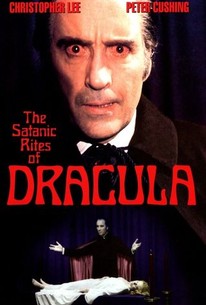
The Satanic Rites of Dracula-1973

The Satanic Rites of Dracula-1973

Director Alan Gibson

Starring Christopher Lee, Peter Cushing, Joanna Lumley

Scott’s Review #1,405

Reviewed October 16, 2023

Grade: B+

The Satanic Rites of Dracula (1973) is the eighth film in the Hammer Horror Dracula series, and the seventh and final one to feature Christopher Lee in the starring role. It also unites legendary horror actor Peter Cushing with Lee for the third time.

So, the territory and storyline are hardly uncharted, and a film like this is for a targeted audience.

For those unclear, Hammer Horror films are a series of low-budget British films produced by the London-based company, featuring gothic and fantasy themes.

Their heyday was from the mid-1950s until the 1970s.

The Satanic Rites of Dracula comes at the end of the horror genre reign of terror, but is enjoyable nonetheless. It’s redundant in a way because I’ve seen so many of them by now that there’s little intrigue anymore.

It’s no longer a surprise what’s going to happen in the film.

I love these films mostly because of their low budget and the creative, sophisticated sets and art design. But the main selling point is the Lee/Cushing pairing.

After a Secret Service agent barely escapes an English country estate where satanic rituals are being held and later dies, Van Helsing (Cushing) is asked to investigate.

He seeks the seven-hundred-year-old count (Lee), who is dead and living in London with his vampire bride and a breed of other undead women dressed in red robes.

Van Helsing’s granddaughter, Jessica, played by Joanna Lumley, is introduced, as is another Secret Service agent, Murray (Michael Coles).

The team naturally winds up at the English estate, where they discover shenanigans led by a female Chinese vampire (Barbara Yu Ling). They grapple with fire and brimstone as they determinedly attempt to take down Dracula once and for all (yeah, right!).

The film is silly but in the best of ways. I enjoyed the very beginning and ending most of all. When the Secret Service agent runs down the vast estate driveway in the darkness, the mysterious motorcycle-riding men add intrigue, and the plot is hatched.

As fans know, the finale will result in a fiery showdown between good and evil, and the benevolent Van Helsing drives a stake through the heart of the villainous Dracula.

This technique is used a few times during The Satanic Rites of Dracula, and comically, a stake and hammer always seem to be at the ready.

But the fun is good, besting evil after all, and delightful is seeing a vampire’s fangs come into view as the unsuspecting victim gasps in shock or shrieks in terror.

By 1973, Cushing and Lee could probably deliver their dialogue in their sleep, and the motivation doesn’t seem to be there. Lee barely appears until the final act.

The introduction of Lumley, well-known to Absolutely Fabulous fans, is wise and breathes new life into the familiar characters. She brings a Nancy Drew-type appeal, especially as she sneaks into the estate’s basement to investigate peculiar noises.

A hoot for Hammer Horror fans or fans of British horror, but it’s not one of the best in the series. Enjoyable mostly for additional tidbits like howling wind, creepy noises, and lavish drapes, furniture, and various set pieces.

The Satanic Rites of Dracula (1973) is a nice watch in October around Halloween.

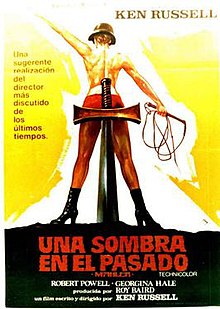
Mahler-1974

Mahler-1974

Director Ken Russell

Starring Robert Powell, Georgina Hale

Scott’s Review #1,404

Reviewed October 15, 2023

Grade: A

Anyone brave and open-minded enough to expose themselves to a Ken Russell film is in for an experience in great cinema. The British director frequently fuses music, odd visual sequences, and vivid colors into his art.

There is a specific mood one must be in to flourish in the moment and the dream-like perplexities of a film of this ilk, but the result will be an appreciation for creativity in filmmaking.

My personal favorite Russell film, and I’m still getting my feet wet in all things Russell, is Women in Love (1970), followed by The Devils (1971), a journey into madness.

Hardly straight-laced, Mahler (1974) conceptualizes the music of the famous Austro-Bohemian composer and delves into the life and times of the man.

Gustav Mahler (Robert Powell) is returning to his home in Vienna, Austria, following a stint conducting at the Metropolitan Opera in New York. Traveling via train with his wife, Alma (Georgina Hale), he reflects on pivotal moments in his life.

Mahler dwells on memories of his overbearing father, of his once powerful but now failing relationship with Alma, and of the anti-Semitism that forced him to convert to Catholicism.

A garish sequence also reveals the death of his child.

A side story on the train features Alma’s lover, Max (Richard Morant), also on the train, urging her to leave Mahler and get off with him a couple of stops before Vienna.

Russell shifts time quite often, so that at first it’s tough to figure out what is happening and, more specifically, if events are in the past or the future.

But once acclimated, it’s easy to reflect on the stages of life and the various players. Better still is to ruminate on the happenings after the credits roll.

The best films require some pondering after they end, rather than being forgotten fifteen minutes later, and Mahler is one of those films.

Knowing Russell (has anyone seen The Devils?), one sometimes finds religion incorporated into his work. Mahler, a Jew, is forced to relegate his religion to get his work showcased. So, there is religious conflict and debate.

Mahler’s conversion to Catholicism is expressed by a wacky fantasy sequence in which he undergoes a baptism of fire and blood on a mountaintop, presided over by Cosima Wagner (the second wife of the composer, Wagner).

The character wears horrid black lipstick and other odd attire, such as a Prussian helmet and a bathing suit with a cross on the front and a swastika on the back.

The sequence is one of the best and technically brilliant, with fire, rocks, and mountains on display. It’s also choreographed amazingly well and features unique musical compositions.

The style of Mahler (the film) is visual and artistic, but it also offers classical music fans a chance to appreciate the compositions. Also, for novice fans eager to be introduced to quality music, the film is equally important.

I love my rock n roll like any other red-blooded American, but the chance to soak in classical pieces from Mahler and Wagner is a pure treat in cultural goodness.

British actor Robert Powell is cast exceptionally well, bearing a stark resemblance to the real Mahler. Oftentimes morose and sullen, he is a tortured artist. But the expressions in his work, such as the song cycle Songs on the Death of Children, reveal his complexity.

Powell is successful at exposing the audience to the emotional nuances that often pair with great artists.

Georgina Hale as Alma is just as good. Staunchly supporting her husband but yearning for her slice of the happiness pie, she is also conflicted.

Mahler (1974) is a film about filmmaking and art appreciation. Thanks to Russell’s vision, he challenges the conventional viewer with a unique journey through the weird and wild, but more importantly, the chance to revel in something brilliant.

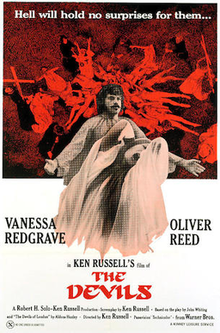
The Devils-1971

The Devils-1971

Director Ken Russell

Starring Oliver Reed, Vanessa Redgrave

Scott’s Review #1,403

Reviewed October 4, 2023

Grade: A

Ken Russell, best known for directing the outstanding Women in Love (1970) and The Who’s Tommy (1975), creates a disturbing opus about perversion and scandal within the Roman Catholic Church in medieval times.

The film’s graphic portrayal of violence, sexuality, and religious blasphemy ignited shocked reactions from censors, and it initially received an X rating in both the United Kingdom and the United States.

It was banned in several countries and heavily edited for exhibition in others. This alone will pique the interest of open-minded, curious viewers.

It sure did mine.

The film is ironically entitled The Devils (1971) and stars Russell regular Oliver Reed, who also appeared in the aforementioned films.

Reed leads the charge as a sexy, rugged man who beds many women and is the center of a convent full of nuns’ nasty and naughty thoughts.

Vanessa Redgrave also appears as a lustful and evil nun with a hunchback.

During the period of seventeenth-century France, Father Grandier (Reed) was a priest whose unorthodox views on sex and religion influenced a passionate following of nuns, including the sexually obsessed Sister Jeanne (Redgrave).

When the power-hungry Cardinal Richelieu (Christopher Logue) realizes he must eliminate Grandier to gain control of France, Richelieu vows to destroy the man. He portrays Grandier as a Satanist and spearheads a public outcry to destroy the once-loved priest’s reputation.

The Devils is outrageous and bizarre in the best possible way. Who doesn’t love a healthy dose of nun orgies and simulating fellatio on a large candlestick?

One nun violently masturbates as another looks on, giggling sadistically.

The camera loves Reed and Redgrave, who, interestingly, are not a couple in the film. These British actors were at the height of their careers in 1971, and both portrayed roles that must have been tremendously challenging.

Despite being set in France, the film opens in a naughty way with a nearly nude dance performed by skinny Louis XIII (played with wacky delight by Graham Armitage). Rumored to be gay, the king traipses around in colorful costumes and later shoots protestants dressed as gorillas for sport.

There are themes of exorcising and burning at the stake, and mentions of the warring Catholics and Protestants, so there is a seriousness amid the antics and shenanigans.

It took me a little while to become fully immersed in the chaotic land of Loudon, a town in western France where the film is set. In truth, a second viewing really helped me settle in and have a sense of what was going on.

The best films really are like fine wines.

Russell’s attempts to irritate and incite the overly religious are quite satisfying in a wicked way. As much as he mocks religion by making the traditionally sexually conservative filled with lust and animalistic sexual prowess, there is much more going on.

Beneath the surface, he challenges the ridiculousness of religion, which cinema lovers will embrace and delight in. There are history lessons to be had, though, and the film provides exceptional details of the political upheavals and tyranny that occurred.

The thunderous musical score by Peter Maxwell Davies is fabulous, especially during The Devil’s final act, when a central character endures a broiling on a wooden stake.

Those who own the wonderful Blu-Ray version of the film can enjoy various outtakes, cast interviews, and behind-the-scenes information.

An added delight for knowledgeable film fans is the inclusion of character actor Murray Melvin, famous for playing Reverend Runt in the classic Barry Lyndon (1975). He plays Father Pierre Barre.

The Devils (1971) is a perverse and operatic extravaganza of lunacy. It’s caked with sex and nudity and blasphemy that I loved every bit of.

The dangerous tone can be studied and thought about long after the film ends.