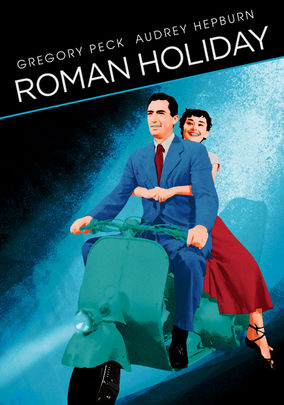
Roman Holiday-1953

Roman Holiday-1953

Director William Wyler

Starring Gregory Peck, Audrey Hepburn

Scott’s Review #694
Reviewed October 26, 2017

Grade: B+

Roman Holiday, released in 1953, was a box office hit, pleasing legions of fans at the time, and a critical darling.

The film reaped Academy Award nominations, including the coveted Best Actress statuette for a young Audrey Hepburn.

A happy, uplifting story, the film is not diminished by Cinderella in the reverse storyline but rather is a charming, romantic experience immersing itself in pleasing locales of the cultural city of Rome.

Admittedly, Roman Holiday is an example of a film in which I preferred the latter half to the former, but it set the bar high in the romantic comedy genre.

Our heroine, Princess Ann (Hepburn), has it all glamorous life, gorgeous clothes, and assistants tending to her every need and want. However, she is unhappy and trapped in a rigid life that lacks freedoms or decisions, to say nothing of the fun. She catches glimpses of party-goers reveling in each night from her expansive palace window.

Simply put, she is lonely and unfulfilled.

When she sees an opportunity to escape her life for a night, she snatches it and stumbles upon an American reporter, Joe Bradley (Peck). Despite their differing backgrounds, they fall madly in love.

At first, I found something missing in the film, and the chemistry between Peck and Hepburn did not immediately embrace me. As the duo meets Ann, who is drunk from sleeping pills, and Joe is the ultimate nice guy who allows her to sleep in his apartment, the story seems lagging and lacks a good punch.

The pair drives around Rome on a scooter and acts childish and silly. Ann acts girlish because fun is an entirely new concept to her. At this point, the film is reasonable but little more than a farce.

As Roman Holiday progresses, primarily through the final act, the film sheds some of its light skin and becomes much more poignant and meaningful.

Ann and Joe, while in love, realize they will not and cannot embark on a fairy tale ending, which truthfully, would have made Roman Holiday little more than a standard romantic comedy we have all seen before- you know the type- boy meets girl, roadblocks persist, boy whisks girl away and rides off into the sunset together.

While not a dark film, it goes deeper than a transparent, predictable ending.

Related to this point is that Roman Holiday contains a realness that sets it apart from many films undoubtedly drawn from it. Still, unlike this film, it leans into contrived or predictable situations.

As Joe and Ann fall in love, the audience falls in love with them. The main plot hurdle—Joe’s temptation to profit from Ann once he realizes her true identity after a sought-after interview—is earnestly handled without pretension.

Other similar films ought to take note of this.

Indeed, the historic and culturally relevant locales of Rome are a significant selling point of the film, and if these scenes had been shot on a movie set, a lack of authenticity would undoubtedly have emerged.

Instead, we are treated to such fabulous location sequences as the Colosseum, the Tiber River, the Trevi Fountain, and Piazza Venezia. Such a delight is the long sequence of Roman escapades as Joe and Ann traverse the city in giddy bliss.

It is enjoyable to see how Roman Holiday contains no real villain.

There are no physical hurdles to the duo’s relationship—no outside forces plotting to keep Joe and Ann apart, other than their lifestyles. Ann lives in a world of royalty and pampering, but Joe is an everyman, so the chances of living happily ever after are slim.

Film lovers intent on discovering one of the early romantic comedies—one could argue that It Happened One Night (1934) was the first—should watch a feel-good Hollywood classic from 1953. It is rich in honesty, good humor, and raw emotion without being too heavy a melodrama.

After a mediocre start, the film finishes with gusto.

Oscar Nominations: 3 wins-Best Motion Picture, Best Director-William Wyler, Best Actress-Audrey Hepburn (won), Best Supporting Actor-Eddie Albert, Best Screenplay, Best Story (won), Best Art Direction, Black and White, Best Cinematography, Black and White, Best Costume Design, Black-and-White (won), Best Film Editing

Grindhouse: Planet Terror-2007

Grindhouse: Planet Terror-2007

Director Robert Rodriguez

Starring Rose McGowan, Freddy Rodriguez

Scott’s Review #692

Reviewed October 15, 2017

Grade: B-

The umbrella title of “Grindhouse” is part of a 2007 double-feature, one film directed by Quentin Tarantino (Death Proof), and the other directed by Robert Rodriguez (Planet Terror).

The gimmick was part of an attempt at something novel and also book-ending fictional trailers within the films. The term “grindhouse” refers to a cinematic specialty of either B movies or exploitation films- largely during the 1970s.

While Planet Terror gets credit for being unique and fun, it is oftentimes too cartoon-like and rather over the top throughout.

The premise of Planet Terror is not one to be taken seriously- as our heroine, Cherry Darling (Rose McGowan), quits her stripper job vowing to move on to bigger and better things, she runs into her ex-boyfriend, El Wray (Freddie Rodriguez), and the two teams up to lead a group of rebels, who are fleeing for their lives after a vicious zombie outbreak.

The attack was caused by a group of military officials, led by the vicious Lieutenant Muldoon (Bruce Willis).

The film contains an undeniable retro feel- the sets and the props traverse back to the 1970s in style and look, however, characters do use cellular phones.

Rodriguez attempts to make the film an homage or a throwback to a different time in cinema- this feat is quite impressive and the film is a marvel from a stylized perspective.

Another positive is that the film is reminiscent, by the camera styles and angles, of an actual 1970s film, with grainy elements and a comforting old-style texture, which works.

The plot, though, is the source of frustration, and many aspects of the film are just plain silly. The actors play way over the top as they were probably directed by Rodriguez to do, but the result is too much like watching a cartoon rather than a piece of art.

Rodriguez appears to be copying many aspects of Quentin Tarantino films- specifically, the mixture of violence with camp, although these attempts do not always work.

The acting and casting are fine. Bruce Willis shines in the lead villain role and plays demented to the hilt. Unquestionably “borrowed” by Rodriguez through Tarantino, Willis, who was dynamic in Pulp Fiction, knows how to do his thing well in films such as this.

Muldoon is quite a different character than boxer Butch Coolidge in 1994’s masterpiece, Pulp Fiction, but the acting style is the same.

Stars such as Josh Brolin, Kurt Russell, and Rosario Dawson also make appearances so the film is assuredly a star-studded affair.

The casting of McGowan and Freddy Rodriguez as the leads is acceptable and the pair make a decent screen coupling. Still, her artificial leg which doubles as a deadly machine gun, and his maniacal persona seem somewhat forced and, again, way over the top.

Planet Terror was a moderate box office success upon release in 2007, but watching the film in 2017, ten years later, unfortunately, some of the clusters have been tarnished and the gimmick is not as catchy as at the time of release.

Still, a decent offering in the horror, cartoon, and campy genres, but much better films exist, like anything by Tarantino.

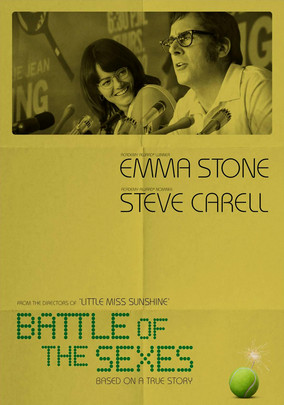
Battle of the Sexes-2017

Battle of the Sexes-2017

Director Jonathan Dayton, Valerie Faris

Starring Emma Stone, Steve Carell

Scott’s Review #691

Reviewed October 11, 2017

Grade: A

Battle of the Sexes (2017) is a film worth watching on many levels. Equal parts sports film, drama, and biography, it excels across all genres with exceptional acting and crowd-pleasing storytelling.

To boot, the film is a true story based not only on the very famous pro tennis match of 1973, termed the “Battle of the Sexes,” but also a story of the sexual identity conflict of one of the opponents in a time where being ones true self was not easy, especially for a public figure.

Emma Stone might have given her best portrayal of her young career as Billie Jean King, the talented tennis pro featured in the film.

She was kind and fair but a fierce proponent of women’s rights in the United States when feminism began taking shape and women and their male supporters demanded equal treatment.

Although initially uncertain whether Stone could pull the role off (not because of a lack of talent, but because the women seem so different), she truly shines as the tomboy athlete with shaggy, feathered locks and a toothy grin.

Equally worthy of praise is Steve Carell, who bolsters his film credo by tackling the role of King’s opponent and foe in the big match, Bobby Riggs.

Portrayed as a certifiable “jerk” and a sexist pig, Carell somehow pours the perfect amount of sympathy and likability into the part.

We witness scenes of Riggs’ playfulness with his young son and tender yet troubled relationship with his wife, Priscilla (Elisabeth Shue in a well-cast role), that never seem trite or contrived but rather quite genuine.

The acting in Battle of the Sexes is, across the board, good.

Sarah Silverman drips with confidence and humor as Gladys Heldman, founder of World Tennis magazine and leader of the troupe of female tennis players who parade around southern California seeking the same respect and pay as their male counterparts.

Bill Pullman makes the most of his one-dimensional role as Jack Kramer, a wealthy and male chauvinistic promoter, while the talented Andrea Riseborough is brilliant as Marilyn, Billie Jean’s bisexual, closeted lover—giving her role a blend of vulnerability and toughness.

The romantic scenes between Stone and Riseborough smolder with tenderness and heart as they forge ahead with their forbidden romance.

The film makes clear that a same-sex romance in those days, while accepted by those around them, would be met with shame and rejection by a large part of King’s legions of fans- this is a heartbreaking reality.

One of the most tear-jerking scenes comes at the end of the film when a victorious King is unable to acknowledge Marilyn. Her openly gay male dresser earnestly whispers to her that one day, she will be free to love who she truly loves.

The scene is poignant.

Directors Dayton and Faris carve a finale that is careful not to fall into the cliched territory. Given that Battle of the Sexes is a sports film, this is a real risk, as typically, these genre films teeter into the “good guys beat bad guys” fairy tale land.

While the film does champion King in the end, the moment is laced with good humor, drama, and sentimentality that does not seem forced but rather honest and real—I enjoyed the final act immensely.

As the film progressed, I found myself drawing parallels to the ever-dramatic and historic 2016 Presidential election—sure to have films made in years ahead- and King, in many ways, mirrors Hillary Clinton, while Riggs resembles Donald Trump in the sexist department.

The political and sports “Battles of the Sexes” warrants much analysis.

My point is a sad one. As much as I love the film, I was left with a cold feeling that forty-five years after the famous Billie Jean King versus Bobby Riggs match, male superiority, and chauvinism are alive and well in the United States—we still have so much progress to make.

Battle of the Sexes (2017) is a film with fantastic acting, stellar casting, passion, excitement, and a telling of a historical, true story.

The film contains all the elements of a compelling cinematic experience.

O.J.: Made in America-2016

O.J.: Made in America-2016

Director Ezra Edelman

Starring Various

Scott’s Review #690

Reviewed October 8, 2017

Grade: A

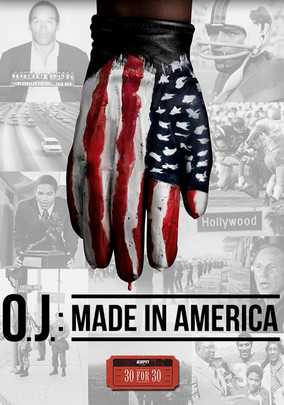
Simply put, O.J.: Made in America (2016) is one of the greatest documentary films I have ever seen- if not the best.

The level of detail thoroughly explored without being overinflated is to be marveled at. It is much more than a documentary; it is a chronicle of one of the most talented professional athletes and one of the most controversial figures of our time.

The piece dissects not only O.J. Simpson and his tumultuous life but also how race, wealth, and celebrity factored into the infamous trial that took over the world in 1994. This story tells of the examination of the rise and fall of an American sports hero.

At seven hours and forty-three minutes, I had no intention of actually committing to watching the entire saga. I assumed I could quickly grasp it after watching only one disc, but it needs to be viewed in its entirety to be fully realized and appreciated.

The documentary is an ESPN production, and part of the 30 for 30 series plays like a mini-series, with multiple chapters (five in total) encompassing the entire chronicle.

The title of O.J.: Made in America is vital and a powerful reason for the documentary’s success, as filmmakers question whether many factors were instrumental in making O.J. Simpson what he became rather than merely creating an overview of the events.

An immediate positive that intrigued me is how the documentary begins in present times. O.J. Simpson, now imprisoned and presumably at a parole hearing, is asked about his duties and how old he was when he was first arrested.

The answer was age forty-six when he was accused of murdering his wife, Nicole, and her friend, Ron Goldman.

The documentary then immediately returns to Simpson’s humble upbringing in the ghettos of San Francisco and how, through scholarships, she could attend and become a major star at the University of Southern California in the mid-1960s.

What I adore most about O.J.: Made in America is its multi-faceted nature. Instead of a straight-up biography about the troubled celebrity, the filmmakers balance the documentary with related stories about racial tensions.

A chronological approach is taken when it comes to Simpson- yes, we learn about his skyrocketing trip to super-stardom as a college football player and then professionally as a Buffalo Bill.

We are educated about achievements in commercials, films, and various endorsements, but the documentary relates this to what America made O.J. Simpson into- a beloved star.

Finally, the documentary explains his relationship and marriage to Nicole Brown and the dreaded death and subsequent trial that was sensationalized beyond belief.

Time is spent with oodles of interviews ranging from the prosecution- Marsha Clark, Gil Garcetti, and numerous friends and relatives of both Simpson and Nicole Brown. An astounding seventy-two interviews were conducted.

Surprising to me at first, but making total sense in retrospect, is how the issue of race relations, especially in Los Angeles, has an enormous amount to do with the O.J. Simpson murder case.

Filmmakers draw many wise comparisons to the history of poor relations between the black community and the Los Angeles Police Department, and indeed, the documentary explores the Rodney King incident from the late 1980s and poses a crucial question- was O.J. Simpson found “not guilty” as a way of making up for Rodney King?

More than one juror has admitted she refused to find O.J. Simpson guilty and send a black man to prison.

O.J.: Made in America (2016) is a superb, well-rounded, concise, and brilliant study of a troubled man deemed a hero with a dark side.

The excellent documentary wholly explores his life and provides a fair, unbiased assessment of the events and the thoughts and opinions of those surrounding the case.

It is a sad story, but one that is told brilliantly.

Oscar Nominations: 1 win-Best Documentary-Feature (won)

Independent Spirit Award Nominations: 1 win-Best Documentary Feature (won)

Black Orpheus-1959

Black Orpheus-1959

Director Marcel Camus

Starring Breno Mello, Marpessa Dawn

Scott’s Review #689

Reviewed October 8, 2017

Grade: A

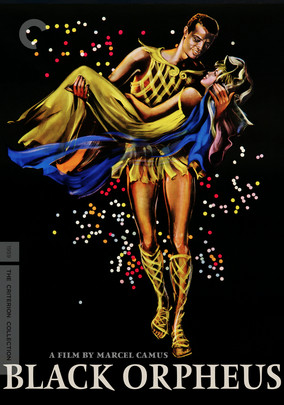
Black Orpheus is a 1959 French film made in Brazil, honored with a win in the coveted Best Foreign Language Film Academy Award category in 1960, considered somewhat of a surprise to win.

The film is adapted from the well-known Greek legend of Orpheus and Eurydice. It is now set in Rio de Janeiro during the festive celebration of Carnaval.

Black Orpheus, starring almost all black actors and providing a look at life on the streets of Brazil, is vibrant and filled with lively songs and dances.

The setting is key to the film as the beauty and merriment are mixed with loss and tragedy- loads of exterior shots of Rio de Janeiro flesh out with many shots high atop a hill in a quaint village where all of the characters live most in very close proximity to each other.

Like Shakespeare’s Romeo and Juliet, the film is romantic and lovely, but the story is also mired in jealousy and drama amid the dancing and many celebrations.

Many of the actors, lead Breno Mello and Marpessa Dawn, are non-actors, cast undoubtedly because of their gorgeous, authentic looks. Still, surprisingly, both are phenomenal in their roles and perfectly cast.

Wholesome Eurydice (Dawn) arrives in Rio de Janeiro by trolley driven by Orpheus (Mello), intent on visiting her cousin, Serafina. There is an instant attraction between the young man and the woman as he provides directions to her cousin’s village, which is also his.

Orpheus, however, is engaged to be married to his possessive and demanding fiance, Mira. He is less enthused about the impending marriage and would rather fix his guitar than buy Mira an engagement ring.

As the Carnival festivities get underway, Orpheus and Eurydice give in to their mutual attraction and dance the night away while subsequently trying to avoid the wrath of Mira and avoid a mysterious costumed man who has been stalking Eurydice since she escaped her village and fled to Rio.

Eurydice is terrified that the man may want to kill her, and his motivations are unknown. His character is particularly frightening as he is known as “Death” and dons a tight skeleton costume.

The tragic conclusion, culminating in an incredible chase scene in Orpheus’s trolley station, is fantastic. The morbid ending, based on the legendary Greek tale, is unsurprising. However, the Romeo and Juliet comparisons are still heartbreaking and challenging to experience, most notably the final scene atop a cliff.

The scene is shocking and brutal as the lovelorn couple topples down a hill together at the hands of another central character. However, as they are intertwined in each other’s arms, the scene is also gorgeous and a confirmation of true love and artistic beauty.

Some accusations of racial stereotypes within this film have abounded over the years, mainly the depiction of Brazil being inhabited by party-going, sex-crazed people.

I find the film a masterpiece and the type of cinematic experience to be enjoyed rather than over-analyzed.

The almost nonstop musical score created by Luiz Bonfa and Antonio Carlos Jobim is to die for and is an enormous part of what makes the film so engaging and entertaining.

Perfectly capturing the spirit of a jovial, cultural environment, Black Orpheus (1959) spins a riveting, heartbreaking tale of love amid a musical.

Tragedy, art, true love, romance, and death are all elements captured in this excellent film.

Oscar Nominations: 1 win-Best Foreign Language Film (won)

Mother!-2017

Mother! -2017

Director Darren Aronofsky

Starring Jennifer Lawrence, Javier Bardem, Ed Harris, Michelle Pfeiffer

Scott’s Review #687

Reviewed October 4, 2017

Grade: A

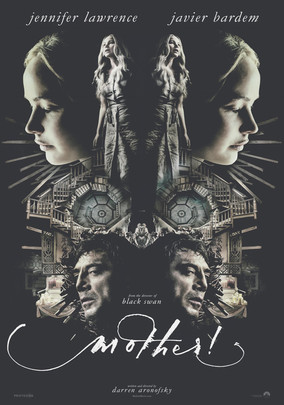
Mother! is an intense, disturbing, and brilliant 2017 work by acclaimed director Darren Aronofsky.

Having crafted left-of-center works such as 2000’s Requiem for a Dream, 2008’s The Wrestler, and 2010’s Black Swan, I shudder to think this film rivals the other in the insanity department.

With four principal characters portrayed by Hollywood mainstays, this film generated much buzz upon its release.

The film is thought-provoking and analytical, and we will discuss it after the conclusion. I appreciate the complex watches and Mother! succeeds in spades.

The film is set entirely within the confines of one enormous house in the middle of a vast field of land. Aronofsky never reveals the location, adding mystery to the already intriguing premise.

A young couple known only as Him (Javier Bardem) and Mother (Jennifer Lawrence) cheerfully enjoy married life together and seem very much in love. He is a renowned author suffering from writer’s block, and his mother fixed the house after it had burned long ago.

One day, a Man (Ed Harris) arrives looking for a place to stay. While Him is delighted by the visitor and encourages Man to stay, the mother is not as pleased.

When Man’s wife, Woman (Michelle Pfeiffer) arrives, the houseguests turn Him and mother’s lives upside down. This is merely the beginning of a complex puzzle.

As the plot unfolds, Mother! is oozing with one bizarre event after the other. Mother witnesses unsettling images such as a beating heart within the walls and a bloodstain on the floor that will not go away.

When relatives of a Man and a Woman overtake the house, and a violent event occurs, things go from dark to downright chaotic.

Giving too many plot points away would ruin the element of surprise, making Mother! a difficult film to review. The film is polarizing and mesmerizing, and each of the principal characters’ motivations can be analyzed and questioned.

Why do he and his mother react differently to the visitors? What manifests their resentment towards the mother?

Each actor gives a compelling turn, and Aronofsky admits that the mother’s character is the one he most relates to. Logically, one might assume that Bardem’s Him might receive that honor since the character is a famous writer. How strange, and this revelation by the director will only result in more character analysis.

How wonderful to see Michelle Pfeifer back in the forefront of a Hollywood film—it seems eons have passed since we last saw her grace the silver screen, and she is back with a vengeance.

Her bitchy portrayal is purely delicious, and she encompasses Woman with the perfect amount of venom, toughness, and mystery. As she icily quizzes mother about her intentions of starting a family, she slowly immerses herself in mother’s life without missing a beat.

The film is unconventional and layered with symbolism and differing interpretations. Is Aronofsky’s message biblical? Is it political? Or could it reference the obsessions everyday folk have with celebrities?

After much pondering, all three possibilities came to mind. The biblical message seems the most solid and plausible explanation, but with Aronofsky films, the pleasure is in the analysis.

The film’s final act is particularly macabre, as the action has exclusively focused on the four principal characters until this point, and the setting is mainly bright.

A slow burn, if you will, suddenly, all hell breaks loose as mobs, blood, fire, death, and darkness take over. The brutality and cannibalism involved will churn anyone’s stomach.

Quickly note the lurid closeups of Jennifer Lawrence’s face during most scenes. Indeed, the camera loves her, but more is happening here. Is the intention to make the viewer focus more on her character or to sympathize more with her character?

Mother! has stirred controversy among film-goers. Some have ravished its elements and themes, while others have reviled and revolted against it.

Time will tell if Mother! (2017) holds up well, but my hope and guess would be that it will become a film studied in film schools everywhere.

Toni Erdmann-2016

Toni Erdmann-2016

Director Maren Ade

Starring Peter Simonischek, Sandra Hüller

Scott’s Review #686

Reviewed October 1, 2017

Grade: A-

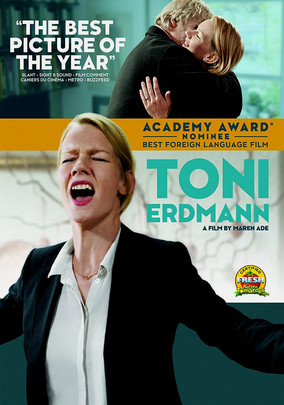
Reaped with a slew of award nominations in 2017, mainly in the Foreign Language film categories, Toni Erdmann is a unique film that I must champion, but for its imagination and humanistic perspective alone.

It can be watched in segments—almost a miniseries—at two hours and forty-two minutes. The film is set in Bucharest, Romania, so viewers are treated to several exterior scenes of the bustling city and fascinating European culture.

However, the film is German and Austrian-produced.

Winfried Conradi (Peter Simonischek) is a hippie-type man in his sixties. Divorced and working as a music teacher, his dog suddenly dies, resulting in his decision to reconnect with his corporate, power-hungry daughter, Ines (Sandra Hüller). She is forging her career in business consulting and is currently on assignment in Bucharest.

Winfried insinuates himself into Ines’s busy life as she wants little to do with him or the petty practical jokes he continues to play on her.

Gradually, involving a few hysterical antics and embarrassing situations, father and daughter reunite and forge the loving relationship they once shared.

Toni Erdmann is unusual because one will not know what to expect from it or what direction it will go as we get to know and love the characters. We know that Ines is a driven career woman, busy beyond belief, with no time for her father.

Yet, in all of the scenes that Ines and Winfried share, due to fantastic and believable acting by the two leads (Simonischek/Hüller), there is an underlying love and appreciation for each other that comes across.

This chemistry made me root for the father-daughter reunion and reconnection.

When Winfried dons his garish wig and horrid false teeth and names himself “Toni Erdmann,” a series of hilarious scenes ensue. Winfried is noticed at essential corporate functions and dinners, and he follows Ines, too. He also attends a ladies’ dinner with Ines and her friends and explains to the women that he is in Bucharest for a funeral that a friend is having for his pet turtle.

Simonischek fills his character with earnestness and dry wit, making these scenes hilarious.

My favorite scene that will indeed be talked about for years to come is the “naked party” scene.

Not only is the scene comical, but it is also fraught with meaning as it is a turning point for the character of Ines. Hosting a team-building party for her birthday, the party is set to begin, except Ines cannot get her dress on, and her shoes do not match.

Frustrated, with a guest already at the door, Ines strips naked and decides to turn the party into a naked team-building experience.

Some guests are disgusted and leave. Others reluctantly agree to strip nude. It is when Ines sheds her clothes and her stodgy, rigid persona and begins to appreciate and enjoy life again, thanks to her father.

Toni Erdmann is a unique and unpredictable film by a female director (Maren Ade) with an interesting and strong perspective on the female psyche. She carves a thoughtful tale about a damaged father and daughter with characters to root for and realism.

The film is a fun, laugh-out-loud romp that goes into dramatic territory, careful to remain playful and not be too overwrought.

I enjoyed it tremendously.

Oscar Nominations: Best Foreign Language Film

Independent Spirit Award Nominations: 1 win-Best International Film (won)