Category Archives: Romantic Drama

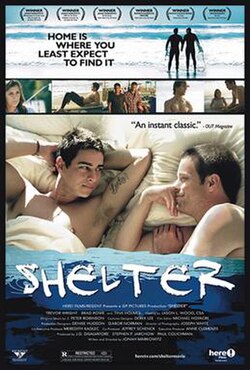
Shelter-2007

Shelter-2007

Director Jonah Markowitz

Starring Trevor Wright, Brad Rowe

Scott’s Review #758

Reviewed May 16, 2018

Grade: B+

By the mid-2000s independent LGBT films were coming fast and furious as the genre was still relatively new and ripe for the picking with good ideas.

With Shelter (2007) we have a sweet film that focuses on the new romance between two young men, one of whom is coming to terms with his sexuality.

The lead characters are not gay stereotypes and could easily pass for straight men, a characteristic impressive in LGBT film- and other mainstream films for that matter.

Rather than focusing on discrimination, the characters may face, or any obstacles from other characters (family and friends), the film wisely makes the story a character study and the demons one man wrestles with while “coming out”.

The small film is written intelligently save for one supporting character’s plot-driven decision. Also, in the modern age, we are beginning to see a bevy of similarly themed films emerge from the LGBT community, and Shelter offers nothing we have not seen before.

Set in sunny southern California, our main protagonist is Zach (Trevor Wright), an aspiring artist in his early twenties. The ultimate “good guy” he is popular with friends and girls and frequently babysits his five-year-old nephew Cody while his sister parties and has one-night stands.

When Zach meets his best friend’s older brother Shaun (Brad Rowe), the pair fall in love as Zach wrestles with his sexuality and conflicts with his plans. The sexual and family struggles of Zach are the main themes of the film.

Shelter (not sure I get the title’s meaning) is a solid slice-of-life story.

Zach initially dates a pretty girl, Tori, who is blonde, wholesome, and a girl-next-door type. This is done intentionally to show that Tori is a girl any young straight man would have an interest in.

We never see Zach show interest in any other men besides Shaun so the film leans towards a solid romantic drama once the fellas get together. Still, we see Zach’s internal struggles and accepting himself for who he is played out.

Actor Wright and director Jonah Markowitz, capture this successfully.

Shaun, arguably second fiddle to Zach, is a character that I feel is very well written. Avoiding negative stereotypes, Shaun is handsome, masculine, and charismatic. Completely confident and exuding great poise, he is a character that any gay male should look up to.

He is openly gay yet “one of the guys” as he should be. He immediately connects with Cody becoming a father or cool surrogate uncle figure for the lad. A quick concern of Zach’s sister Jeanne’s of having the boy around a gay man is trivialized in a quick form.

Another positive to the film is the multiple scenes showing Zach, Shaun, and Cody as a happy family and how normal this is. Examples of this are frolicking around the beach playing football or horseplay.

A quiet dinner of barbeque steaks and red wine for the men and macaroni and cheese for Cody elicit images of a connected family unit despite some in society still poo-pooing this idea.

The film presents the connectivity as normal.

A tiny flaw in the character of Jeanne shows her willingness (almost eagerness) to leave Cody (and her ailing father) behind when she decides to take off to Oregon with her brand new boyfriend. This point seems rushed and out of character.

While a party girl with a crappy job in a grocery store Jeanne did exhibit heart and was written as sympathetic and caring throughout the film. Surprising and unrealistic to me is that she would up and leave her life.

A paltry excuse of “Oregon not allowing kids” was left unclear and unexplained.

A part coming-of-age story, part coming out story, Shelter (2007) is an example of a little film that could with an appreciation of independent cinema.

The film tells a nice story of one man’s journey to self-discovery and the individuals he surrounds himself with.  With impressive California oceanfront and working-class principles as a backdrop, the film has a calming texture and weaves a solid experience for viewers to enjoy.

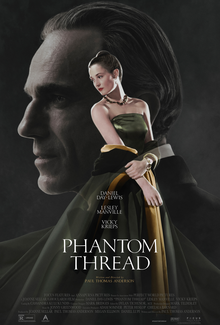
Phantom Thread-2017

Phantom Thread-2017

Director Paul Thomas Anderson

Starring Daniel Day-Lewis, Vicky Krieps, Lesley Manville

Scott’s Review #722

Reviewed January 31, 2018

Grade: A

Phantom Thread is a 2017 gem that should ideally be studied in film schools and remembered for decades to come, or at the very least discussed and dissected among those fortunate enough to see it currently.

Set in England during the 1950s and centering on the dress-making industry, the film mixes romance with a bizarre psychological element that leaves the viewer breathless as the final act comes to a dramatic and startling conclusion.

Daniel Day-Lewis brilliantly portrays Reynolds Woodcock, an esteemed and famous dressmaker who lived and worked in London in the 1950s.

He creates lavish dresses for the members of high society, including the wedding gown for the famous Belgian princess. Masterful at his work, he is also controlling and demanding, requiring plenty of support and attention from his equally controlling sister, Cyril (Lesley Manville).

When he meets Alma Elson, a waitress from a countryside resort, the pair fall into a relationship. She acts as his assistant, muse, and lover. Complexities develop between Reynolds, Alma, and Cyril as the plot progresses in cerebral and nail-biting fashion.

The film is ravishing and a feast for the eyes if only for the classic costumes alone.  Each dress that Reynolds creates is exceptional and at the height of glamour. His domineering nature only makes this realistic as perfection is his modus operandi and his dresses are evidence of this.

In one particularly fantastic sequence, Reynolds begrudgingly creates a dress for the boozy Barbara Rose, a rich and mature woman who promptly falls asleep drunk at her wedding and soils the garment.

A livid Reynolds, along with Alma, strips Barbara of the dress, rather than see her sleep in and tarnish it.

However, the main draw to the film is the excellent, intricate main plot involving Reynolds, Cyril, and Alma.

This weaving of personalities and their nuances must be attributed to the fabulous direction of Paul Thomas Anderson,  known for edgy, dark films such as 1997’s Boogie Nights and 1999’s Magnolia.

He comes up with a masterpiece in Phantom Thread.

The three principal characters are pretty unlikeable and the viewer’s allegiances may change throughout the tale. Appearing to be the innocent, debutante character of the film, the character of Alma will be surprised, especially in the film’s final act.

A successful nuance is the scenes involving characters breaking bread with others as events unfold over Danishes, omelets, and crisp asparagus. Sometimes the banter involves discussions and debates about the preparation of the food.

This characteristic is a dream for any foodie and the meals aid in the progression of the plot.

Earlier in the film, Alma is scolded by a maid for nearly picking poisonous mushrooms, which later becomes a major clue and part of the film’s conclusion.

During a pivotal scene between Reynolds and Alma, she prepares a delicious mushroom omelet for her love as motivations, secrets, and desires surface.

The grand twist that Anderson reveals at the end of the film will only leave the viewer open-mouthed and quickly reviewing the events and circumstances of the entire movie.

Anderson’s close-up scenes are magical, and each actor is allowed to be very expressive. The camerawork in several breakfast scenes—Alma and Cyril gazing at each other, revealing emotions that border between hatred and mutual respect—is effectively done.

Manville, in particular, does so much with her blue eyes as she sips coffee and peers over her cup with venomous indignation at her foe.

How splendid is the comparison of Cyril to the famous Hitchcock villainous Mrs. Danvers from the classic 1940 film in her cold and creepy mannerisms?

I hope that Phantom Thread will eventually be appreciated and analyzed as a cinematic work of art.

Deservedly honored with a 2017 Best Picture, Best Actor, Best Supporting Actress, Best Director, and Best Costume Academy Award nomination, the film is a lesson in excellent writing, bizarre angles, and essential effects.

Let’s hope that this film will be recognized as the great work it is.

Oscar Nominations: 1 win-Best Picture, Best Director-Paul Thomas Anderson, Best Actor-Daniel Day-Lewis, Best Supporting Actress-Lesley Manville, Best Original Score, Best Costume Design (won)

The Shape of Water-2017

The Shape of Water-2017

Director Guillermo del Toro

Starring Sally Hawkins, Richard Jenkins, Michael Shannon

Scott’s Review #705

Reviewed December 16, 2017

Grade: A

Director Guillermo del Toro created a lovely Beauty and the Beast-style film, The Shape of Water (2017). It is gorgeous to look at, and the story is intelligent and sweet to experience.

Thanks to a talented cast led by Sally Hawkins, the film is part drama, part science fiction, even part thriller, but touching to one’s heart and a lesson in true love regardless of outward appearances.

Vanessa Taylor co-wrote the story, giving it a needed female perspective to perfectly balance the traditional male machinations.

The setting is Baltimore, Maryland, in the early 1960s. The Cold War is ongoing, pitting the United States and the Soviet Union against each other.

Both sides are mistrustful of the other.

Kindly and mute, Elisa Esposito (Hawkins) is a curious and whimsical young woman who works as a cleaning lady at an Aerospace Research Center.

When she stumbles upon a mysterious “shape” being held prisoner for experimentation, she slowly communicates with and befriends the creature, eventually falling madly in love with him.

The “asset,” as the scientists like to call him, is an amphibian/humanoid that needs saltwater to survive. Elisa sees an opportunity to help her love escape captivity, and off she goes.

Hawkins exudes warmth and fills Elisa with courage and astounding determination. Not uttering a word is a tricky feat for an actor to challenge, but instead of words, Hawkins successfully provides a vast array of emotions to reveal how Elisa feels.

Despite her “handicap,” she is a strong woman who speaks her mind on more than one occasion, using sign language to express her frustration. Hawkins gives a fantastic and believable performance.

In excellent and vital supporting roles are Richard Jenkins as Elisa’s friend and neighbor, Giles, a closeted gay man who works as a commercial artist. Jenkins fills this character with intelligence, heart, and empathy as he struggles with his issues of alcoholism and loneliness- unable to be accepted for who he is.

Octavia Spencer shines as witty and stubborn Zelda Fuller, Elisa’s best friend and co-worker. Zelda has her domestic problems but is forever there for her friend, and Spencer gives her character zest, humor, and energy.

Finally, Michael Shannon plays the dastardly and menacing Colonel Richard Strickland, the man who found the “asset” in the rivers of South America and has a lovely family.

Each character is written exceptionally well and has a storyline rather than simply supporting Hawkins’s character.

The audience becomes involved in Giles, Zelda, and Strickland’s private lives, and we get to know and care for them—or hate them, as the case may be.

Giles, harboring a crush on a handsome pie shop owner, is afraid to reveal his feelings. Zelda, with a lazy husband, dutifully takes care of her man, though she is as sassy as they come. And Strickland lives in an all-American family with a pretty wife and two kids, unaware of his shenanigans.

The film is a gorgeous and lovely experience with a magical element. The opening and closing sequences, shot underwater, resound in beauty as objects float along in a dreamy way.

The narrator (Jenkins) takes us on a journey to explain the events of the story.

At its core, The Shape of Water is a romantic love story, and my favorite scenes—those of Hawkins and the “asset”—are to be treasured. Yes, the two do make love, which may be too much for some, but the scenes are tasteful and important, showing the depth of the characters’ love for one another.

Cherishing is how Elisa uses music and hard-boiled eggs to communicate with the “asset.” When Elisa imagines the two characters dancing, the sequence is an enchanting experience reminiscent of Beauty and the Beast.

Other underwater scenes involving Elisa and the “asset” are tender, graceful, and filled with loveliness.

A key part of the film involves a story of intrigue between the Americans and the Soviets. While both are portrayed negatively, the Americans are arguably written as more unsympathetic than the Soviets.

Thanks to Strickland—abusive and vicious—and his uncaring superior, General Holt, we do not root for the government officials at all but rather for ordinary folks like Elisa, Zelda, and Giles, who are outcasts.

Interestingly, Dmitri (Michael Stuhlbarg), a Soviet spy scientist, is the only character working at the center who wants to keep the “asset” alive and is written sympathetically.

My overall assessment of The Shape of Water is that it is a film to be enjoyed on many levels and by particular varied tastes- the film will cater to those seeking an old-style romance, complete with some tasty French music.

Then again, the film can be considered a political espionage thriller, with a cat-and-mouse chase and other nail-biting elements.

Overall, the film has heart and truth and will appeal to vast audiences seeking an excellent movie.

Oscar Nominations: 4 wins-Best Picture (won), Best Director-Guillermo del Toro (won), Best Actress-Sally Hawkins, Best Supporting Actor-Richard Jenkins, Best Supporting Actress-Octavia Spencer, Best Original Screenplay, Best Original Score (won), Best Sound Editing, Best Sound Mixing, Best Production Design (won), Best Cinematography, Best Costume Design, Best Film Editing

A Room with a View-1986

A Room with a View-1986

Director James Ivory

Starring Helena Bonham Carter, Julian Sands

Scott’s Review #695

Reviewed November 3, 2017

Grade: B+

A Room with a View (1986) is one of four major films to be based on famed British author E.M. Forster’s novels- Howards End (1992) and A Passage to India (1986), and Maurice (1987) being the other three.

The foursome shares common elements, such as the vast English countryside and class distinctions, which lead to heartaches and passion.

In the case of A Room with a View, the film traverses from artistic Florence, Italy, to a cozy village in England.

The film is a period drama mixed with lots of authentic, unforced good humor, and at its core is a solid romantic drama, though, compared with the aforementioned other films, it is not quite on par.

It is still an entertaining watch, given the dismal year of cinema circa 1986.

The film was considered one of the best releases that year and received a handful of Oscar nominations, winning for Costume Design, Adapted Screenplay, and Art Direction.

Cultured and oftentimes brooding, Lucy Honeychurch (Helena Bonham Carter), goes on holiday to Florence with her rigid and conventional older cousin Charlotte (Maggie Smith), who also serves as her chaperone.

While enjoying the artistry of the European city, Lucy meets and falls madly in love with free-spirited George Emerson (Julian Sands), who is also visiting Florence with his easy-going father, Mr. Emerson (Denholm Elliott).

The men seem oblivious to Lucy’s (and Charlotte’s) Victorian-era upbringing, which attracts Lucy and appalls Charlotte.

Months later, the would-be lovers reunite in England and spend time overcoming obstacles that threaten their love, while admitting to themselves that it is blossoming.

As Lucy has become engaged to snobbish Cecil Vyse (Daniel Day-Lewis), a sophisticate deemed suitable by her family to marry Lucy, the pair lacks the romantic connection that she shares with George.

Day-Lewis, on the cusp of becoming a breakout star and a brilliant talent, gives Cecil a somewhat comical yet endearing persona that makes him the main foil while also breathing sympathy into the character. This is especially evident during the Lucy/Cecil break-up scene.

The standout performance in A Room with a View is the comic brilliance of Smith as the manipulative and witty Charlotte Bartlett, evident throughout.

Smith injects vigor and comic wit into her character, as Charlotte seemingly makes one blunder after another, using her self-deprecating manner to her advantage to humorously manipulate other characters into doing things her way.

A risqué and quite hysterical all-male frontal nudity scene occurs mid-way through the film and, while not advancing the plot in any way, steals the entire film in its homoerotic and free-spirited way.

As the Reverend, young George, and Lucy’s energetic brother, Freddy, walk along a beautiful path, they decide to skinny-dip in a pond, where they horseplay and wrestle completely in the buff.

As they chase each other around the pond, grab each other, and lightly smack bottoms, one cannot help but wonder if this scene set the tone for 1987’s gay-themed period piece based on another E.M. Forster novel, called Maurice.

A coincidence? I think not. As the trio of rascals comes upon the properly dressed girls on the path, hilarity ensues.

The art direction and costumes are of major excellence in A Room with a View, as the film “looks” like a 1910 rather than 1986, with the actors donning early twentieth-century styles.

Every scene is a treat from this perspective, as we wonder who will wear what next.

As with the other aforementioned E.M. Forster films, class distinctions and expectations are a major element in A Room with a View and make Lucy and George all the more likable as a couple.

Still, overall, there is something slightly amiss in the story department.

I did not find Helena Bonham Carter, an actor I like, overall very compelling as Lucy, and I think this leads to the story being slightly less than it might have been with another in the role.

We may root for Lucy and George, but if the pair do not wind up together, it is more of a pity rather than a travesty.

To summarize A Room with a View, the story is good, not great, and other key components to the film are much better than the central love story of Lucy and George, but are therefore secondary to the main action.

Given a Charlotte romance, the film’s best character would have catapulted it to an exceptional grade. Imagine the possibilities.

Or more of the two, Miss Alan’s and their gossipy nature, or even a story of the rugged nude horseplay among men.

Many of the aspects that could have made A Room with a View (1986) great were too often on the sidelines.

Oscar Nominations: 3 wins-Best Picture, Best Director-James Ivory, Best Supporting Actor-Denholm Elliott, Best Supporting Actress-Maggie Smith, Best Screenplay Based on Material from Another Medium (won), Best Art Direction (won), Best Cinematography, Best Costume Design (won)

My Cousin Rachel-2017

My Cousin Rachel-2017

Director Roger Michell

Starring Rachel Weisz, Sam Claflin

Scott’s Review #685

Reviewed September 25, 2017

Grade: B-

My Cousin Rachel (2017) has the advantage of providing wonderful, scenic locales in Florence, Italy, and lovely scenes filmed around England, which make the film a joy to watch from a cinematic perspective.

The acting, especially by seasoned veteran Rachel Weisz,  is also stellar and noteworthy.

The plot, however, is a big negative to the film as My Cousin Rachel suffers from weak dramatic storytelling, an anti-climactic conclusion, and missed opportunities with the plot.

The film is based on Daphne du Maurier’s 1951 novel of the same name. I have yet to read the book, but I am certain the film does it no justice. The overall tone of the film contains little mystique, to say nothing of lacking any sort of haunting elements as one might expect to receive with titillating anticipation.

The story begins well enough as, through narration, we learn that a young man named Philip, having been orphaned as a child and raised by his older cousin, Ambrose, returns home from school to his childhood home in lavish Cornwall.

Through a letter, he learns that Ambrose has married his widowed cousin, Rachel, and has moved to Florence. He also cryptically writes that he is in fear for his life and suspects Rachel of poisoning him.

The main plot starts after Philip finally meets Rachel and astonishingly falls madly in love with her.

To be fair, the film is shot beautifully and glimmers with interesting camera angles. In a few hallucination scenes, the filmmaker uses a blurry, almost magical film-making style.

The aforementioned locales give My Cousin Rachel a sophisticated, graceful look. On the negative side of this filming evaluation, the lighting is much too bright, appearing more like an episode of the PBS series Downton Abbey rather than the mysterious, cryptic film that My Cousin Rachel is promoted as.

The best thing about the film is the outstanding acting performance by Rachel Weisz as the title character, Rachel. While not played quite as mysterious, Weisz envelopes her character with a passionate, earnest quality that sells the character as enchanting.

With a winning smile and a polite, dutiful manner, Rachel is tough to imagine as a murderess, which helps the lackluster plot just a bit. She happily makes a “special” tea or performs other household tasks with cheerful, uniform pizzazz.

Without Weisz in the role, I shudder to think how bleak the result might have been.

Early on in the story, Philip’s wealthy family, the Kendalls, are surprised that Ambrose married, as he was never known to be in or enjoy the company of women. It also must be noted that in flashbacks, Ambrose is portrayed as somewhat effeminate or, at most, less than manly.

This seems a blatant attempt to question the character’s sexuality, yet the film chooses never to pursue this topic again. I know how the novel handled this plot item, but it seems like a wasted opportunity.

Chemistry, or lack thereof, is also an issue with My Cousin Rachel. No connection between Weisz and Claflin exists throughout, nor is there any between either character and Philip’s intended love interest, Louise Kendall, played by Holliday Grainger.

The actress is acceptable in a role given little meat or substance.

Uneven at best, My Cousin Rachel is a beautiful-looking period piece, but it is mostly just mediocre filmmaking. The ending is quite sudden and definitively answers none of the main plot questions.

Released in 2017, the film will likely be forgotten by 2018.

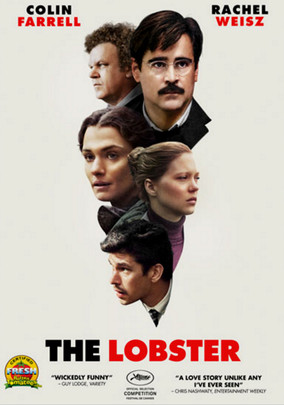
The Lobster-2016

The Lobster-2016

Director Yorgos Lanthimos

Starring Colin Farrell, Rachel Weisz

Scott’s Review #635

Reviewed April 20, 2017

Grade: A-

One thing is sure about the puzzling 2016 film The Lobster: It is a film worthy of discussion long after the end credits roll and will leave the viewer pondering its many facets—a great movie to dissect.

This in itself is worth recognition and praise for the power of the film- so many questions abound.

I was immediately struck by how heavily The Lobster contains primary subject matter influences from “message novels” (and films) such as Brave New World, 1984, and A Clockwork Orange, as well as creative, stylistic recent film influences from The Grand Budapest Hotel (2014) and the Moonrise Kingdom (2012).

The story begins outside of Dublin, where David (Colin Farrell) has recently been dumped by his wife in favor of another man.

Now single, he is whisked away by authorities to a luxurious hotel in the woods, where he (and the other guests) are given forty-five days to find a suitable romantic partner, or else they will be turned into an animal of their choice.

David is accompanied by his brother, now a dog, and has decided that he should be turned and that he will become a lobster because he loves the sea, and they tend to live to be over one hundred years old.

The hotel management adheres to strict rules- no masturbation, mandatory temptations by hotel employees, and a strange outdoor hunting game where the guests hunt other guests to win extra days extended to their stays.

As David befriends fellow hotel guests, he is conflicted and desperate to find a mate. Events take a surprising turn when circumstances allow the rules to change for him, and he becomes involved with a short-sighted woman (Weisz).

The film’s plot is strange beyond belief yet incredibly creative and thought-provoking. The subject matter is pure dystopian- a facility, presumably controlled by the government, with a rebel group intent on ruining the “status quo.”

Suddenly, an odd little secret romance between David and Shortsighted Woman appears, beginning only during the film’s final act.

One aspect of the film that I found interesting was the odd monotone dialogue the characters used. They were almost matter-of-fact in whatever they said, even while expressing anger.

This peculiarity perplexed me, but the more I think about it, the more this decision makes the film dark-humored and dry with wry wit.

Another interesting nuance to the film is the multitude of quirky characters, many of whom are mainly referred to by their nicknames. Lisping Man, Limping Man, and Nosebleed Woman, to name a few.

And what viewer would not spend the film’s duration imagining which animal he or she would desire to be turned into and why?

My favorite aspect of the film is the offbeat performance by Colin Farrell- typically a rugged sex symbol, he goes against the grain and plays a pudgy, socially awkward, insecure man, but all the while instilling the character with enough warmth and likability to make the character work- and his chemistry with Rachel Weisz is fantastic.

This turns the strange dark comedy into a peculiar romantic drama.

A beautiful forest becomes the backdrop for a large part of the film, as does the city of Dublin itself, contrasting the film in nuanced ways. Combined with the lavish hotel, the film achieves several different settings for the action, each meaningful in its own right.

Without giving anything away, the conclusion of the film- the final scene in particular- is gruesome in what goes through the viewer’s mind, and the resolution is unclear.

Does David do it, or doesn’t he? Much of the film is open to one’s interpretation and imagination.

Black humor and cynicism are significant components of The Lobster, a thinking man’s movie. I continue to think of this film as I write this review.

The film is filled with originality and thought, which is a tremendous positive. Confusing and mind-blowing? For sure. A run-of-the-mill film? Not.

The Lobster (2016) is a film that gives no answers and is not an easy watch but an achievement in film creativity- something sorely needed.

Oscar Nominations: Best Original Screenplay

Holding the Man-2015

Holding the Man-2015

Director Neil Armfield

Starring Ryan Corr, Craig Stott

Scott’s Review #612

Reviewed January 24, 2016

Grade: B+

Holding the Man (2015) is a brave love story centering on two young men and spanning fifteen years as the men begin as high school sweethearts and progress into adulthood and sadly both contract AIDS.

This is a pivotal aspect of the film as it is set during the 1970s and 1980s- a time when this disease was dreadful and more or less a death sentence.

The film is tender and poignant, but despite these characteristics, I felt something with more vigor was missing. I did not have the exact emotional reaction I thought I might have.

The film is set in Australia and adapted from a 1995 memoir of the same name.

The action begins in 1976 as we meet Tim and John, both high school students. They are from opposite social groups, Tim a theater student, and John captain of his soccer team.

Surprisingly, they connect romantically as Tim asks John out on a date.

The pair receive little hassle and are quite open with their relationship. Certainly, they face a bit of opposition from officials at the school, but this is not the main aspect that the film goes for.

Instead, the main problems come from John’s family- specifically, his father, but this is played safely. Tim’s family is much more accepting.

Over the next fifteen years, the couple encounters death directly when they are simultaneously told they have acquired HIV.

The film is mostly told chronologically but goes back and forth at times. Specifically, we are reminded of John’s youthful good looks in flashbacks, when he is close to death, bald and sickly looking.

The main point is the men’s enduring love for each other, which is a nice message.

Otherwise, the film (2015 and long since the AIDS plague), goes for a reminder of how harsh those times were for gay men, though there is a softness to the film that I felt instead of the brutal reality.

The actors playing John and Tim (Craig Stott and Ryan Corr, respectively) have decent chemistry, but this may have been stronger than my perception was, and the reason I did not feel emotionally invested in the film.

The film was nice and sweet-the romance part, but when one of the men succumbs to AIDS I should have been a puddle of tears and I just wasn’t.

I did enjoy how the film does not focus too much on the opposition by John’s father (Anthony LaPaglia). He would wish his son’s sexuality differently but is more concerned with how his son’s relationship with a male looks to Dad’s friends and neighbors.

The deeper story was the love between the men who knew no barriers.

It was nice to see Geoffrey Rush and Guy Pearce in supporting turns as a drama teacher (Rush) and as Tim’s father, Dick (Pearce). Both do well with limited roles and I adore how the film portrays Dick as a supportive father- even dancing a slow dance with his son at a wedding- free of embarrassment.

Also notable is the sweet ending where a photo of the real Tim and John is shown during a narrative from an interview with the real Tim before his death.

Holding the Man (2015) is a nice film, but does not have the power that other LGBT films in recent decades had. Brokeback Mountain (2006) immediately comes to mind as a similar film, but one that was more emotional and engaged me much more.

An honest effort, though.

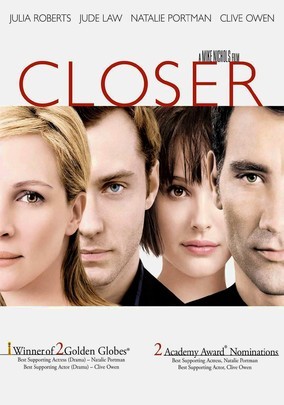
Closer-2004

Closer-2004

Director Mike Nichols

Starring Julia Roberts, Jude Law, Natalie Portman

Scott’s Review #605

Reviewed January 11, 2017

Grade: B+

Closer (2004) is a very odd, offbeat sort of film, yet it is strangely fascinating and reels you in as the story unfolds and more is revealed. One will become engrossed in the characters as the film is rich in nuanced character development.

Closer is very adult and not for everyone, but if you enjoy character-driven films this one is worth checking out.

Based on a play of the same name and featuring a star-studded cast to go along with several Oscar nominations, Closer tells the story of companionship, isolation, and betrayal.

It centers on four characters, (Anna-Julia Roberts, Dan-Jude Law, Alice-Natalie Portman, and Larry-Clive Owen), each of whom spends the film either bedding, scheming, or jealous of each of the others.

Purely a character study, we see many different emotions from each, which is the film’s strength.

To the film’s credit, it is shot much like a play, however, is just a tad on the slow-moving side.

However, I adored the London locales, and the film’s successful attempt at making the viewer uncomfortable and just a tinge disturbed.

Oscar Nominations: Best Supporting Actor-Clive Owen, Best Supporting Actress-Natalie Portman

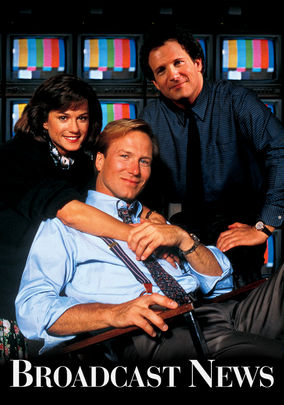
Broadcast News-1987

Broadcast News-1987

Director James L. Brooks

Starring William Hurt, Albert Brooks, Holly Hunter

Scott’s Review #602

Reviewed January 11, 2017

Grade: B

Broadcast News is a 1987 feature film that is admittedly an intelligently written romantic comedy.

It was rewarded with several Academy Award nominations, in what has been a bleak year for the film industry.

That said, I found the film’s overall result to be a decent experience, but certainly nothing fantastic. I was left with the feeling that it was “okay”.

I do not think it was good enough to warrant Oscar nominations, but it was enjoyable all the same.

The principal characters are interesting enough, albeit safe.

The film centers around three television news people- a neurotic news producer (Holly Hunter), a reporter (Albert Brooks), and his rival (William Hurt).

All of them are ambitious and determined to climb the ladder of success in their Washington, D.C., base.

The film explores the relationships between the characters.

As stated, there is nothing wrong with the film. I would have expected a bit more- perhaps a deeper or darker story- instead, despite some witty dialogue, the film is largely a safe, predictable journey.

Oscar Nominations: Best Picture, Best Actor-William Hurt, Best Actress-Holly Hunter, Best Supporting Actor-Albert Brooks, Best Screenplay Written Directly for the Screen, Best Cinematography, Best Film Editing

Revolutionary Road-2008

Revolutionary Road-2008

Director Sam Mendes

Starring Leonardo DiCaprio, Kate Winslet

Scott’s Review #598

Reviewed January 10, 2017

Grade: A

Revolutionary Road (2008) is an outstanding film- what superior, human, raw acting by stars Leonardo DiCaprio and Kate Winslet.

The duo reunites in film over ten years after the monstrous success of Titanic (1997).

The trailers might lead one to believe that this film is a romantic comedy or some type of love story- it is a love story, but a very real, dark one.

Both characters are flawed.

Set in affluent New England, somewhere in Connecticut to be precise, April and Frank seemingly have it all. He is a successful doctor, and she is the perfect housewife, they live a happy existence free of problems- or do they?

Slowly, the audience sees their lives spin out of control and varying emotions between the pair emerge to the surface.

Great supporting turns by Kathy Bates and Michael Shannon as characters presenting roadblocks to April and Frank’s happiness.

If you are looking for a film with true, gritty, layered acting, this is it. Revolutionary Road (2008) is a much more complex film than the previews would allow you to think.

It shows the depth of DiCaprio’s and Winslet’s acting ability. Some might feel it is a bit slow-moving, but the payoff is worth it.

Oscar Nominations: Best Supporting Actor-Michael Shannon, Best Art Direction, Best Costume Design

An Education-2009

An Education-2009

Director Lone Scherfig

Starring Carey Mulligan, Peter Sarsgaard

Scott’s Review #584

Reviewed January 4, 2017

Grade: B+

An Education, a British film released in 2009, is a small, little gem of a film. The story-telling and the acting are very good.

Since it is a British film, the accents can be a little distracting for some, but I enjoyed it very much.

It tells the story of an intelligent, college-driven teenager, named Jenny (Mulligan), who falls in love with an older, charismatic man (Sarsgaard). She is faced with conflict from her family and teachers, most notably her father, played by Alfred Molina.

The individuals in her life have differing opinions on which path Jenny should choose in her life. This leads to the main conflict in the film.

The setting is rainy, cold, London in 1961. Headed for Oxford and a successful career (not common for a female in those days), Jenny is willing to risk it all for love, but is she being taken advantage of?

The film is romantic, comical, and serious all rolled into one. The story is nothing original, to be frank, but specifically, the excellent acting makes it worth seeing.

An Education (2009) proves filmmakers can take a good story, told before, and make it compelling to an audience.

Carey Mulligan deservedly received an Oscar nomination for this film and made her debut as a high-caliber young actress to watch.

Oscar Nominations: Best Picture, Best Actress-Carey Mulligan, Best Adapted Screenplay

Independent Spirit Award Nominations: 1 win-Best Foreign Film (won)

A Single Man-2009

A Single Man-2009

Director Tom Ford

Starring Colin Firth, Julianne Moore

Scott’s Review #577

Reviewed January 1, 2017

Grade: B+

A Single Man (2009) is a dark film fraught with meaning and honesty-it is a very good movie. It is a melancholy film and a bit surreal, but worth seeing.

The acting, especially from star Colin Firth, is first-rate.

The subject matter involves being gay in the 1950s and 1960s and the ramifications of living a forbidden and secretive life.

The intelligent film is based on the novel of the same name, written by Christopher Isherwood.

The film is written as a sad tale of a day in the life of a gay man living in the 1960s.

Firth portrays George Falconer, a British college professor living in liberal-minded Los Angeles. When his much younger lover (presumably a student) dies, George plans to commit suicide.

Moore plays his best friend and confidante, Charley, who is dealing with her demons.

Through flashbacks, we learn about George and his lover Jim’s secret life together and the challenges that ensued. George also had a strange relationship with a male prostitute.

We learn the path of life George leads following Jim’s tragic death- we also see them happy at one time.

A Single Man (2009) is a bit of a downer containing a definite dream-like feel and is heavy on the flashbacks, but this is intriguing to the picture and not a complaint.

A very good, but not an uplifting film.

Oscar Nominations: Best Actor-Colin Firth

Independent Spirit Award Nominations: Best Male Lead-Colin Firth, Best First Screenplay, Best First Feature

Up in the Air-2009

Up in the Air-2009

Director Jason Reitman

Starring George Clooney, Vera Farmiga, Anna Kendrick

Scott’s Review #573

Reviewed December 30, 2016

Grade: A

Up in the Air is a fantastic film, but for some odd reason, circa its release to theaters in 2009 it was categorized as a romantic comedy. While there is a bit of romance involved, the film is a dark romantic drama.

The content is perfect for this period in history- the terrible economy, and the unemployment rate rising sky-high.

The acting by the principles is excellent and is worth watching, but do not expect a happy, uplifting film.

George Clooney plays Ryan Bingham, a corporate “downsizer”, who travels the country firing employees from companies that hire him. Ryan has no qualms about what he does and enjoys traveling around the country.

He mentors a young employee, Natalie, played by Anna Kendrick, who is more sympathetic to the people whose lives she changes.

Ryan meets another frequent flyer, businesswoman Alex (Vera Farmiga), and they begin an affair. He becomes a more sympathetic character as he develops real feelings for Alex, but will Alex return the affections?

The tone of the film is sarcastic and sardonic, and Clooney is dynamic in the lead role- carrying the film. He is charismatic and energetic, performing his work duties in an emotionless way.

We slowly get to know him better and realize, through Alex, that he does have a heart. Alex is a more mysterious character, and Farmiga is equally as engaging in the role. When a big reveal is learned about Alex, the audience does not see it coming.

As the years go by, I hope that Up in the Air is remembered for being a film that was released at the perfect time, given the difficulties many were going through.

I love how the film carries smart dialogue- the characters questioning each other’s motivations and becoming intertwined.

Jason Reitman and the screenwriter craft an exceptional film.

Oscar Nominations: Best Picture, Best Director-Jason Reitman, Best Actor-George Clooney, Best Supporting Actress-Vera Farmiga, Anna Kendrick, Best Adapted Screenplay

The Last Station-2009

The Last Station-2009

Director Michael Hoffman

Starring Christopher Plummer, Helen Mirren

Scott’s Review #569

Reviewed December 28, 2016

Grade: A-

The Last Station (2009) is a wonderful film.

It contains many worthwhile elements- history, culture, good drama, and great acting. Starring seasoned veterans such as Christopher Plummer and Helen Mirren, the fantastic acting is as good as it gets.

The film tells the story of the final year in the life of famous Russian author Tolstoy and the relationship he has with his family- specifically his wife, Sofya, and his disciples.

The year is 1910 and Tolstoy is ailing. He has had a stormy yet passionate relationship with his wife for decades, which is explored in the film.

The film’s main point is greed and in-fighting for control of a great literary figure’s legacy and money.

The main strong point of The Last Station is the relationship between Tolstoy and Sofya- both characters are headstrong and opinionated, but also madly in love, which leads to many sessions of battle.

This is a film of substance.

Director Michael Hoffman also mixes some humor with the heavy drama.

In conclusion, you might need to use some hankies.

Oscar Nominations: Best Actress-Helen Mirren, Best Supporting Actor-Christopher Plummer

Independent Spirit Award Nominations: Best Feature, Best Director-Michael Hoffman, Best Female Lead-Helen Mirren, Best Supporting Male-Christopher Plummer, Best Screenplay

Women in Love-1969

Women in Love-1969

Director Ken Russell

Starring Glenda Jackson, Jennie Linden

Scott’s Review #553

Reviewed December 20, 2016

Grade: A

Women in Love is a shamefully, by and large, forgotten gem- except for the obscure cinema lover- made in 1969.

The film is a British art film and is way ahead of its time. Despite the title, it is anything but a romantic comedy- quite dark in content. The film is adapted from a D.H. Lawrence novel of the same name.

The story is of two sisters, Gudrun and Ursula, living in a small mining town. They gather for a friend’s wedding, and each becomes enamored of a member of the wedding party.

Later, at a swanky dinner party, the girls meet the men. The film tells of the sisters’ relationships with each of the men (played by Alan Bates and Oliver Reed) and of the men’s relationship with each other.

All of the relationships are very complex and filled with tender emotion, and some are pretty violent.

Women in Love is one of the first films to feature extensive nudity, but not in a gratuitous way.

The film explores themes of love, hatred, and the trials and tribulations of the English upper class. The film is a love of mine because it is character-driven, told from each character’s perspective, and is quite an intense experience.

Glenda Jackson won the 1970 Best Actress Oscar- deservedly so.

Oscar Nominations: 1 win-Best Director-Ken Russell, Best Actress-Glenda Jackson (won), Best Screenplay Based on Material from Another Medium, Best Cinematography

Loving-2016

Loving-2016

Director Jeff Nichols

Starring Joel Edgerton, Ruth Negga

Scott’s Review #527

80099974

Reviewed November 26, 2016

Grade: A

Loving (2016) is a quiet film.

Subdued and poignant, it is an important historical story to tell and jarring to be transported back to the 1950s Southern style, where interracial marriage was not only illegal, but children of interracial couples were barely considered human beings.

This is to say nothing of the views of their parents, specifically of law enforcement.

Sadly, circa 2016, we all should be aware that racism is still alive and well in the United States, and this film is a reminder of how much further we need to go.

The true story of the landmark 1967 Loving vs. Virginia Supreme Court case is the basis for this film.

The time is 1958 in Virginia, and a sweet, working-class couple, Richard and Mildred, are very much in love. Richard-white and Mildred-black are met with some sideways glances around town but generally have a strong, supportive family and friend structure, although both families are pretty poor.

They enjoy spending time with friends in bars and racing cars.

When Mildred becomes pregnant, Richard purchases a plot of land for them and asks Mildred to marry him. Despite the challenges this will create, they are wed in Washington, D.C. Once they return to Virginia, they are arrested for violating anti-miscegenation laws prohibiting interracial marriage.

The couple eventually sued the state of Virginia, leading to a unanimous Supreme Court ruling a decade later.

As a film, Loving is thoughtful and introspective.

The audience questions who we are to decide who someone loves. This can apply to same-sex couples as easily as interracial couples.

The film, led by director Jeff Nichols, creates many quiet scenes of thoughtfulness on the faces of leads Edgerton and Negga.

Furthermore, several scenes of peril encompass the film.

The Lovings constantly threaten to be discovered as they secretly return to their forbidden home state to give birth to their son, only wanting Richard’s mother to perform the birth. The tense scene where Mildred is dropped off on a deserted back road is well shot; the camera constantly focuses on the road and the threat of a car coming by at any moment.

Edgerton, a fantastic actor and director, performs tremendously as a quiet, stoic, blue-collar man who is madly in love with his wife and sees nothing wrong with it simply because it is not the norm.

He is poorly educated, but Edgerton gives him underlying intelligence and a basic understanding of cherished love and more than once calmly utters, “But I love my wife.”

To him, it is that simple. Richard will also use any necessary measures to protect his family, as any man would. Edgerton’s squinting blue eyes portray suspicion, warmth, and love.

Negga is equally compelling as calm and loyal Mildred.

One might expect Mildred to finally explode with rage as she faces obstacle after obstacle, raising three kids in an environment she does not want, yet she never does.

Negga embodies the character with sweetness, wide-eyed passion, and longing for a better life. Mildred tries not to get her hopes up with each impending court date, but Negga successfully portrays the character with many different emotions and complexities.

My favorite scenes of hers involve Mildred gazing at her husband, her eyes filled with love and pride.

Nichols wisely does not spend much time in the courtroom, a positive aspect of the film. Sure, we get the occasional scene of Richard and Mildred facing the court, but the film does not take a different approach than necessary.

Despite a landmark decision coming from Loving’s marriage, the film is a love story between a good man and a good woman who happens to be of different races.

What a lesson every viewer can learn from Loving (2016).

Oscar Nominations: Best Actress-Ruth Negga

Independent Spirit Award Nominations: Best Director-Jeff Nichols, Best Female Lead-Ruth Negga

45 Years-2015

45 Years-2015

Director Andre Haigh

Starring Charlotte Rampling, Tom Courtenay

Scott’s Review #488

80040147

Reviewed October 1, 2016

Grade: B+

In the case of 45 Years (2015), acting is the clear highlight of the film and the main reason to view it.

Seasoned veterans take center stage and give tremendous performances and lessons in acting.

Tom Courtenay and Charlotte Rampling carry the film.

The subject of 45 Years is an enduring marriage tested by an outside revelation that escalates in importance into conflict and mixed emotions.

The film moves at a slow pace and can be challenging to the most patient of viewers, but the slow pace is warranted as the longevity of the character’s marriage is the key to the film.

Geoff and Kate Mercer, a happy couple living in rural England, are excitedly planning their 45th wedding anniversary (the 40th was canceled due to Geoff’s heart condition). They are a popular couple within their town, both kind and decent people, and the event will be attended by many.

One day Geoff receives a letter from authorities in Switzerland- a young woman (Katya) he was once involved with, and presumed dead in 1962, has been found. Having fallen into an icy glacier, her body is preserved and looks the same as she did then.

Not knowing the extent of their relationship, Kate is riddled with multiple feelings including jealousy, curiosity, and guilt. Geoff and Kate’s marriage is tested.

45 Years is a mature film involving mature characters. Geoff and Kate are still in love decades into their relationship, but the introduction of Katya becomes an unwelcome conflict.

The film plays out gradually, but realistically, as marriage moves along slowly. Many scenes of Geoff and Kate’s day-to-day activities are shown- they walk their dog together, travel into town to shop, relax, and read the newspaper.

Like real people do.

This is an asset to the film. Real life is sometimes mundane and dull, but these little tasks are pleasurable and soothing.

Geoff and Kate’s marriage contrasts with the relationship Geoff and Katya briefly had all those years ago (excitement, risk, youth) and one can understand Kate’s point of view.

As details reveal themselves, Kate feels inferior. She is not young anymore and thinks of Geoff and Katya and the life they may have had together if the accident had not occurred. Despite being dead, Katya becomes an obstacle in Kate’s mind.

The film wisely does not write Kate as a jealous shrew or one-dimensional. She fights her jealousy every step of the way and tries to be strong and realistic.

Charlotte Rampling gives such a good, subtle, understated performance that it is easy to overlook how good she is. She does not have hysterical moments or a scene where she loses control. Rather, Rampling shows a series of complex emotions with her facial expressions.

Let’s not forget to mention Tom Courtenay. Imagine being in the golden years of your life and a long-lost lover (in spirit anyway) returns to the fold. Geoff cannot help but imagine a life with Katya if she remained alive. Kate asks Geoff if he would have married Katya and he cannot deny that he would have.

Several scenes show the couple engaging in “old people” issues- awkward lovemaking for example, which enhances the differences between when Geoff and Katya were in their prime. Geoff cannot help but be whisked back in time with thoughts and what-ifs.

A standout scene is when Kate and Geoff dance at their anniversary party. Having professed his love during a speech they causally dance. Kate is both touched and pained and as the scene goes along unravels. She explodes internally.

Sometimes perhaps a tad too slowly paced, I get the point of pacing 45 Years this way. After all, nearly 50 years of marriage is a long time and similar days will pass with few important moments. Thanks to great acting, I overlooked this and was astounded at the complexities both Rampling and Courtenay bring to the table.

Oscar Nominations: Best Actress-Charlotte Rampling

Hope Springs-2012

Hope Springs-2012

Director David Frankel

Starring Meryl Streep, Tommy Lee Jones

Scott’s Review #434

70230548

Reviewed June 30, 2016

Grade: B

Hope Springs (2012) is a cute, lighthearted romantic comedy-drama with enormous talent (it is tough to go wrong with heavyweights like Meryl Streep and Tommy Lee Jones).

The story tells of a middle-aged, married couple who reach the point of boredom in their long marriage. They decide to go away on a retreat to repair their marriage and add some spark.

That’s the movie in a nutshell.

There are no surprises to speak of and I expected a bit more from this film given the talent involved. It has safely written all over it, and while nice, it could have been much more.

What’s the reason for the conflict? They suddenly reach a point of boredom for no reason.

Props to Steve Carell for an against-type performance.

Hope Springs (2012) has great acting all around, but too safe of a story.

Celeste and Jesse Forever-2012

Celeste and Jesse Forever-2012

Director Lee Toland Krieger

Starring Rashida Jones, Andy Samberg

Scott’s Review #421

70227647

Reviewed June 19, 2016

Grade: D

Celeste and Jesse Forever (2012) was a major dud for me.

I am not a fan of romantic comedies, but since the film received a nomination for an Independent Spirit Award for Best First Screenplay, I decided to watch it.

Why this film was nominated for that award I cannot understand. Perhaps someone knows someone who knows someone?

There is nothing impressive about the writing whatsoever. It’s a tried and true romantic comedy formula: couple together, the couple splits, the couple reunites, throw in some misunderstandings for good measure and that is pretty much the film.

The central characters and supporting characters are either dull, annoying, or both.

To be fair, there is nothing loathsome about the movie, but rather, it’s your standard-by-the-numbers romantic comedy that warrants no award nominations.

Bland.

Independent Spirit Award Nominations: Best First Screenplay

The Way He Looks-2014

The Way He Looks-2014

Director Daniel Ribeiro

Starring Fabio Audi, Ghilherme Lobo

Scott’s Review #408

70307130

Reviewed June 4, 2016

Grade: B+

The Way He Looks is a foreign language film (Brazilian) from 2014 that tells a coming-of-age story about a blind high school student, who develops feelings for the new kid in town. The other boy has rapidly become his new best friend and the boys, while unsure of the other’s sexual preferences, fall in love.

The film is a charming story about a modern romance, now becoming more prevalent today.

Leonardo (known as Leo) is a blind high school student struggling to be his true self.  His close friend Giovana (Tess Amorim) is in a similar situation as neither has ever been kissed, yet they feel adolescent desires- they are lonely but share a close bond.

Regardless of his disability, Leo is quite independent, despite having parents who border on smothering. One day, a new student named Gabriel volunteers to sit behind Leo in class and strike up a friendship.

Giovana, unaware of Leo’s sexual preferences, develops a crush on Gabriel.

The film then tells a sweet story about a young, blossoming, romance. The main characters do not face particularly tough obstacles from outside sources, but rather from each other as their feelings and emotions are fragile.

In addition to romance, the film focuses on the friendships between Leo, Gabriel, and Giovana.

The Way He Looks is a warm film. It is sweet, compassionate, and tenderhearted. The viewer witnesses a budding romance between two teenagers and the fact that they are both males is secondary- that is how charming the film is.

The audience will root for Leo and Gabriel because they are nice kids. Giovana, the outsider, also has a rooting factor- she is in no way a villain, nor does she harbor resentment for either Leo or Gabriel, but rather yearns for her first romance and happiness.

The film wisely does not turn her into an emotional wreck, or a psycho. Sure, she gets drunk at a party, but this is only to escape her feelings.

I recoiled at the scene after scene of Leo’s parents either fretting about something, worried sick about Leo coming home late or worried that something may happen to their son.

Relax already. Life is not meant to be spent frazzled because your son is blind.

The parents are not the strongest written characters in the film and are rather secondary characters. The case is the same for the bullies, the slutty girl, and the teacher.

The film belongs to Leo, Gabriel, and Giovana.

The supporting characters in The Way He Looks are meant to react to the central characters.

The Way He Looks is about a same-sex, young romance. Charming, not too heavy, with likable characters, who one can root for. There are no bombs, car chases, or explosions needed.

The Way He Looks (2023) is a slice of life that is simple, pure, and true.

Obvious Child-2014

Obvious Child-2014

Director Gillian Robespierre

Starring Jenny Slate

Scott’s Review #387

70301275

Reviewed March 22, 2016

Grade: C+

Obvious Child is a 2014 independent comedy/drama nominated for a couple of independent spirit awards, that has mixed results.

It works on some levels but has an irritating underbelly and some unneeded components that ultimately give it a thumbs down.

The major success is star Jenny Slate, a real-life Brooklyn stand-up comic with immeasurable comic timing, who will hopefully become a rising star.

Slate starred in a 2009 short film of the same name before said film graduated to a full-length feature.

Slate stars as a twenty-eight-year-old Brooklyn-ite, who moonlights as a stand-up comic in a dingy bar while working in a desolate bookstore that is soon closing.

Conversely, her parents are successful- her mother is a famed professor. When she is unceremoniously dumped by her steady, she takes up with a handsome young man for a one-night stand filled with fun.

Predictably, she winds up pregnant and forges ahead with a plan to abort their child.

The abortion story is quite interesting since there is never a doubt about what will happen. Unlike films that make abortion the main focus of conflict, Obvious Child wisely does not- every character supports, and even encourages her to have the procedure, including her mother and best friend.

Having been written and directed by women, this is intentional and a way of empowering women, which is one of the high points. If one is on the fence about the topic of abortion or is a pro-life stance, this film may be very tough to watch as its slant is made crystal clear.

Slate is the other high point of the film.

She exudes confidence and comic range. Jewish and slightly awkward looking, she is not the leading-lady type and this arguably makes her wit and sarcastic language all the more comical. She is a natural in the comedy department and hope she will go far.

Two slight props for me worth mentioning are the wonderful mention of the classic film Gone with the Wind (1939) and the setting of Brooklyn. This was a great nod to film history and the setting gave Obvious Child an authentic New York City feel.

On the other hand, an utter annoyance about Obvious Child is the shameless and constant use of blatant and off-putting bathroom humor- not just once or twice, but numerous times.

How is this necessary to the plot? I can’t say, but surmise that it was deemed necessary by the filmmakers to show that females can give as good as males can.

Almost saying, “men can make poop jokes, why can’t women”? Why this is necessary for any film is beyond me and it gives Obvious Child a crass, ugly feel.

The film also has an unrealistic quality to it. Max is portrayed as prince charming. He can do no wrong, supports Donna in any decision she makes, is enamored by her sole being, and loves her unconditionally after only a one-night stand.

This would not happen in real life.

The fact that Donna is Jewish and quirky and Max is Christian and straight-laced is not explored. What conflicts would they undoubtedly face? Why were his parents not featured?

Highly uneven, with a great premise and an interesting slant on a still-controversial social issue, Obvious Child (2014) succeeds in the story department but fails in its uncalled-for use of potty humor to elicit cheap laughs.

Independent Spirit Award Nominations: Best Female Lead-Jenny Slate, Best First Feature

Daisy Miller-1974

Daisy Miller-1974

Director Peter Bogdanovich

Starring Cybill Shepherd, Cloris Leachman 

Scott’s Review #383

DaisyMillerPoster

Reviewed March 6, 2016

Grade: B

Daisy Miller is a largely forgotten 1974 film based on a Henry James novella of the same name, directed by Peter Bogdanovich and starring then-girlfriend Cybill Shepherd in the title role.

I admire the film in certain respects, but ultimately rank it as good, not spectacular. I pondered the film afterward and had a feeling that something was missing from it.

The story, set in the late 1800s, tells of a wealthy upstate New York family, led by the naïve Daisy Miller (Shepherd), visiting Europe in hopes of becoming more cultured and worldly, but instead is largely met with defiance and snobbery from European sophisticates. Daisy attempts to find love with her numerous potential suitors.

The film is largely shot in Switzerland and Italy.

The romantic story between Daisy and upper-class Frederick Winterbourne is the focal point. Daisy, a chatterbox and flirt, captures Winterbourne’s fancy, and he gradually woos her. Still, he is conflicted by social norms and by her innocent involvement with other men, most notably the dashing Italian Giovanelli.

This leads to conflict. I noticed some chemistry between Daisy and Winterbourne.

Bogdanovich, who only directed a handful of films, including the masterpiece The Last Picture Show (1971), uses several great actors in both films.

In addition to Shepherd, Cloris Leachman, and Eileen Brennan appear in supporting roles. Leachman as Daisy’s equally chatty and naïve mother, and Brennan as the vicious socialite Mrs. Parker.

Brennan, in particular, shines. Outstanding at playing snobs and unique character roles, this was right up Brennan’s alley, and she almost steals the show.

I adored the cinematography and the costumes featured in the production and thought both were the film’s main strengths.

The clothing the characters wear is both gorgeous and believable for the period. The backdrop in the hotel garden scene is exquisite and picturesque, with the lake, sky, and mountain all in full view, creating a unique viewing experience.

I also found the subject of cultural class distinctions quite interesting. The Millers are rich but uneducated and unlikable- they live in Schenectady and are considered far beneath the clever, intelligent figures of Europe.

They do not measure up and lack the same breeding and class as many of the other characters.

Adding to this is the fact that the Millers never really seemed all that interested in being in Europe, almost taking the opportunity for granted, so I was never completely captured by the Millers or found them particularly sympathetic as a group.

Given that she is the focus, I found Daisy Miller a bit unlikable, which could be due to the casting of Shepherd. Daisy’s endless rants, largely about herself, teetered on annoying, to say nothing of her irritating little brother.

Sure, Daisy is sweet and kindhearted, but there is something that did not compel me about her. She was a less charismatic, northern version of Scarlett O’Hara.

I kept wondering if other actresses might have brought more to the character and given her more muscle. Was this role a showcase for Shepherd because of her relationship with Bogdanovich?

The conclusion of the film surprised me, featuring a downcast ending I did not expect, given the sunny mood of the rest of the film, and this is to Bogdanovich’s credit.

He certainly did not make a mainstream film, and I admire that.

Daisy Miller (1974) is a mixed bag for me. I admire some aspects, but the story and the casting could have used a bit of work.

Oscar Nominations: Best Costume Design

The Danish Girl-2015

The Danish Girl-2015

Director Tom Hooper

Starring Eddie Redmayne, Alicia Vikander

Scott’s Review #310

80058477

Reviewed December 29, 2015

Grade: A-

The Danish Girl (2015) tells the loosely based story of Danish painters and married couple Lili Ebe and Gerda Wegener and Lili’s struggles as the first known recipient of sex reassignment surgery, unheard of at the time that it was (1930).

The film showcases terrific acting (Eddie Redmayne and Alicia Vikander especially) and a journey of one person’s struggle with gender identity.

The subject matter is important and timely as the recent transgender movement has emerged at the forefront of social issues today.

A happy, young couple living in Copenhagen, and married for six years, Gerda and Einar are inseparable and madly in love. They are best friends and help each other with their art. Because of a female model’s tardiness, Gerda convinces Einar to stand in for the female model.

This event triggers a lifelong identification as a female named Lili Elbe. Lili has emerged sporadically since childhood.

Through painful self-assessment and encouragement from progressive loved ones, Lili decides to go through with a highly experimental and risky sex change operation.

Gushing with sensitivity and tenderness and groundbreaking, though I bet even more so if made ten years ago, one feels for both lead characters as it is important to note that they both go through emotional turmoil.

It would be easy to lessen Gerda’s emotions and, perhaps with a lesser actress this might have happened, but Vikander (unknown to me before seeing this film) gives an emotional performance that is raw and exudes empathy.

One can imagine how they would feel if their spouse identified as the opposite sex. Confusion, blame, anger, and sorrow, would all be common reactions. Gerda is strong, brave, and helpful while crumbling beneath the surface.

Vikander brings all of this to the screen flawlessly.

Similarly, Redmayne brings depth and empathy to his role.  Redmayne’s Einar is masculine, but there is something sensitive and slightly feminine to him from the start.

Was this purposely done to soften the blow? He also appears to be very slightly built. Redmayne lost weight to portray this role and have a softer appearance.

Actors can easily dress up in drag, but the emotional investment needs to be there and Redmayne makes the viewer care about Lili. One is teary-eyed along with Lili as she sees no other choice but to undergo the risky operation. We see the desperation in Lili’s eyes thanks to Redmayne’s acting skills.

I loved how supportive the characters are in the film. Granted, Einar/Lili and Gerda travel in liberal and progressive circles, but for 1930, this was wonderful to see.

Of course, Copenhagen and Paris are open-minded cities, but Lili’s childhood friend Hans, a sophisticated, macho guy, offers support. The same goes for the Doctor taking on Lili’s surgery.

These aspects lend to a delicate, peaceful film of encouragement.

To be clear, Lili is not gay, and this is made crystal clear during the film as she meets a gay man, and the distinction between them is made. She does, however, identify and feel that she is a woman. She was born with the wrong parts.

The greatest aspect of The Danish Girl is its powerhouse acting and compelling subject matter. One’s gender is a given for most, but watching a riveting drama about someone who is unrestful with their gender is eye-opening and still rather taboo.

2015 was a year of progressive transgender films and The Danish Girl is towards the top in its class and graceful in dealing with the subject matter in a judgmental-free way.

Oscar Nominations: 1 win-Best Actor-Eddie Redmayne, Best Supporting Actress-Alicia Vikander (won), Best Production Design, Best Costume Design

Brooklyn-2015

Brooklyn-2015

Director John Crowley

Starring Saoirse Ronan

Scott’s Review #298

80037688

Reviewed December 12, 2015

Grade: A

Brooklyn (2015) is a classic-style Hollywood film that I adored watching. It has a genuine innocence to it with wonderful, powerful acting and perfect cinematography/art direction.

The film is conventional and mainstream, but never sappy.

Based on Colm Toubin’s popular novel, Brooklyn takes place in the early 1950s and is set in Ireland and New York City.

Eilis Lacey, played by Saoirse Ronan, is a young Irish girl with good morals and traditional values. She is faithful and Catholic, with a good upbringing. Not rich by any means, she is intelligent and uses good sense, working hard on weekends in a grocery run by an unkind woman, to save money.

Thankfully, her older sister Rose, whom Eilis adores, has scrimped and saved enough for her to study in the United States, via a church program. Rose does not want Eilis to be trapped in the small Irish town.

While in New York City, an event occurs that necessitates Eilis’s return to Ireland. While home she develops a romantic dilemma that causes her to ponder whether to return to her new life in New York City or stay in Ireland.

Eilis is conflicted, which is the main focus of the story.

On paper, one might assume that Brooklyn is sappy, “chick flick” or a trite romance with predictability for miles- it isn’t. Everything about the film is perfect and is very detail-oriented.  The pieces somehow fit together- good direction, good camerawork, good acting, and good story-telling.

Throughout the film, I found myself in an emotional state.

When Eilis meets the young and charming Tony, a working-class Italian American, who becomes infatuated with her, I worried how their different backgrounds will be handled. Their courtship is sweet and tender and I cheered for them as their slow romance builds.

She is taught to eat pasta correctly to impress his traditional parents. He walks her home every night. Tony and Eilis have a sweetness and purity that is tough not to fall in love with as an onlooker.

On the other hand, when dramatic events unfold, the excellent acting makes Brooklyn a delight and quite emotionally powerful. One might find themselves in a flood of tears by the end.

Thanks to Ronan, an impressive talent since my discovery of her work in 2007’s Atonement, she elicits in Eilis a strength and stoicism that is tested when she breaks down at one point in the film.

Important to mention is the awe-inspiring performances by Fiona Glascott as Eilis’s sister Rose, and Jane Brennan as Eilis’s mother.

Unknown actresses (to me), both give dramatic and dynamic performances in their respective roles.

Wonderful to see are veteran character actors Jim Broadbent and Julie Walters as Father Flood and Madge, respectively.

What a visual treat Brooklyn is! As the title reveals, most of the action does take place in this New York City borough, and the influx of Irish and Italian immigrants during this period of history is apparent in the clothing and the cinematography.

The lush green and vast landscape of Ireland makes this divine to view.

A story of bravery, romance, and kindness, Brooklyn (2015) is a wholesome and feel-good film, but, I was immersed in the story and the look of the film from the very first shot.

Oscar Nominations: Best Picture, Best Actress-Saoirse Ronan, Best Adapted Screenplay

The Immigrant-2013

The Immigrant-2013

Director James Gray

Starring Marion Cotillard, Joaquin Phoenix

Scott’s Review #293

70275521

Reviewed December 5, 2015

Grade: A-

The Immigrant (2013) is a lovely, classic, old-style Hollywood film set in early 1920’s New York City.

The film is a classic tale of a poor Polish immigrant who travels to America in hopes of a better life, only to be met with hardship, manipulation, and conflict.

However, The Immigrant is not a downer. Rather, a powerful and intriguing story of life and the clichéd pursuit of happiness with a compelling love story mixed in.

Nominated for Best Actress for Two Days, One Night, eligible the same year as The Immigrant, this is a good example of how the Academy got it wrong as Marion Cotillard should have been nominated for this performance instead of the other.

The actress was, however, recognized with an Independent Spirit Award nomination for Best Actress for this role. A true talent, she gives a wonderful performance.

Little is known about Ewa’s (Cotillard) life before she arrives on Ellis Island with her sister Magda in tow. We meet them as they disembark a ship and wait in line on the immigration line, weary from their escape from war-torn Poland.

They have escaped their native country in hopes of a better life in the United States.

Unfortunately, Magda is ill and cannot hide a cough and is sent to the infirmary most likely before being sent back to Poland. Ewa desperately needs money and is told that her Aunt and Uncle have not shown up to collect her as she had originally thought.

Ewa is now on her own and desperate in a land where she knows not a soul.

As the plot unfolds, Ewa encounters two men who enter her life- Bruno (Joaquin Phoenix) and Emil (Jeremy Renner)- brothers with a rivalry, both professionally and in regards to Ewa. They both fall in love with her- she is gorgeous and innocent after all.

But can the men be trusted? Are their feelings true? We begin to get to know the men better and all may not be exactly as it seems or originally appeared to be.

The Immigrant perfectly captures the 1920s era cinematically with gorgeous cinematography and camera work.

Directed by James Gray, a director with a tendency to direct films set in New York City and feature a romantic element (Two Lovers comes to mind- also starring Joaquin Phoenix as a Jew pursuing a blonde girl).

In The Immigrant, I felt like I was transported to the 1920s with Bruno’s dark coat and bowler and the character’s costumes in general.

The Lower East Side, from the automobiles to the theaters, seems like that’s how it was back then- charming, artistic, and yet combustible too.

Marion Cotillard gives a soft yet tough performance as the long-suffering, heart-of-gold Ewa. The character’s yearning to keep her traditional catholic values while transported into a new and dangerous world filled with corruption and the need to survive is heartbreaking and Cotillard wears her heart on her sleeve.

She is also tougher and more stubborn than we first think she is- she will not be taken advantage of and these aspects give the character complexity.

I did not see her as a victim.

Let’s not forget the men in the film and while it borders on turning into a “woman’s movie” towards the climax, and Cotillard is front and center, Phoenix and Renner are flawless.

Phoenix, with the larger role, is extremely complex and it takes the audience until the final scene to entirely figure Bruno out.

I wish The Immigrant (2013) would have found a wider audience, but for fans of a traditional, classic, romantic Hollywood experience, this film is a treat.

It will take you back to an earlier time in the world- in a completely authentic way.

Independent Spirit Award Nominations: Best Female Lead-Marion Cotillard