Tag Archives: Comedy

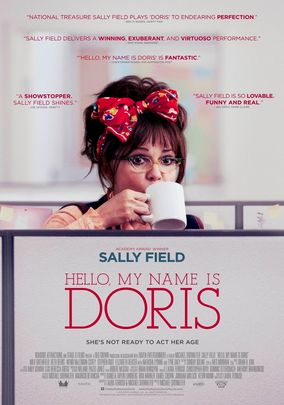
Hello, My Name Is Doris-2016

Hello, My Name Is Doris-2016

Director Michael Showalter

Starring Sally Field, Max Greenfield

Scott’s Review #390

80050896

Reviewed April 1, 2016

Grade: B

Sally Field shines in Hello, My Name Is Doris (2016), a sweet-natured indie romantic comedy that tells of a lonely Staten Island woman and her mostly fantasy-laden relationship with her colleague, a much younger, hunky man (Max Greenfield).

The film is somewhat predictable but sweet and honest and works well. It hardly reinvents the wheel, but it is a lovely character-oriented story about a woman’s reawakening from a dull life.

This is refreshing in a world of retreads and superhero flicks.

Doris Miller meanders through life at her crappy data entry job at an Advertising Agency in mid-town Manhattan. Having worked in the same role for decades, she is overlooked and more or less invisible to colleagues.

She is the “weird old lady” or the “wallflower” who goes unnoticed. Her personal life is a dud. She lives with her recently deceased mother, who is a hoarder and severely marginalized. She has no dating possibilities.

One day, on the elevator heading to the office, a kind young man named John Fremont innocently pays attention to her, and she becomes enamored with him.

Later, she is stunned to realize that John is the new Art Director at her job.

Her crush escalates as she and John become friends, and a series of misunderstandings ensue, with the added conflict of her friends thinking she is living in a fantasy world, worried she will wind up hurt.

Sally Field carries this film in every way. It is nice to see her in a lead role again, which, sadly, is a rarity these days for a seventy-year-old actress.

She convincingly plays quirky, shy, and awkward and has one melt-down scene that is a powerful testament to her continued acting ability.

The character of Doris slowly blossoms and becomes rich with zest. We discover she is much more than meets the eye, and these moments in the film are wonderful to experience, thanks to Field’s charisma.

My favorite scenes involve the lovely bond between Doris and the thirteen-year-old granddaughter of her best pal, Roz, played by Tyne Daly.

Despite the age difference, the granddaughter views her as a peer, giving daring dating advice to the inept Doris. This leads to a nice portion of the plot and some funny moments.

One unique aspect of Hello, My Name Is Doris is that it is not a film about a May-December romance between a man and a woman—at least, I did not see it that way. Instead, it is about a woman who finally decides to live regardless of age.

I felt her stifled and smothered by her brother and sister-in-law, who clearly did not understand that she hoarded “stuff” in her home to cope with her loneliness, and to be surrounded by things that gave her comfort helped her deal.

Granted, Doris clinging to one broken wooden ski from the Dark Ages was amusing in its cuteness.

Tyne Daly, who can recite the phone book, is worth a considerable note from an acting standpoint. I’d be happy to do that. She is one of those natural, confident, engaging, real actresses, and her scenes with Field glistened with raw talent and emotion.

Perhaps a female buddy movie with Field and Daly?

The remainder of the supporting characters are capable but not spectacular. They are somewhat clichéd and one-note.

For example, Doris’s colleagues view her as invisible with the classic office jokes, especially the female boss thrown into the film- possessing a hard-as-nails personality and coldness.

I have seen these characters time after time in comedy films.

Supporting actors from Orange is the New Black (2013-2019) and Mad Men (2007-2015) are featured as a couple of the colleagues.

Indie, fun, and with a freshness made in large part by Sally Field, Hello, My Name Is Doris (2016) is an innocent comedy with a romantic edge and some nice laughs.

It is far from a masterpiece but a good-natured escape, which is refreshing, especially for the middle-aged or senior crowd craving a non-stereotypical female character.

Independent Spirit Award Nominations: 1 win-Piaget Producers Award (won)

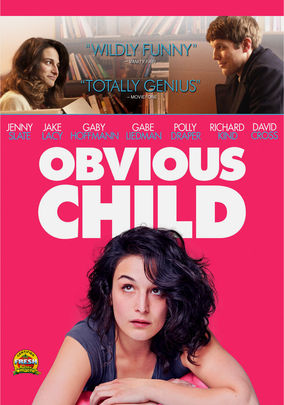
Obvious Child-2014

Obvious Child-2014

Director Gillian Robespierre

Starring Jenny Slate

Scott’s Review #387

70301275

Reviewed March 22, 2016

Grade: C+

Obvious Child is a 2014 independent comedy/drama nominated for a couple of independent spirit awards, that has mixed results.

It works on some levels but has an irritating underbelly and some unneeded components that ultimately give it a thumbs down.

The major success is star Jenny Slate, a real-life Brooklyn stand-up comic with immeasurable comic timing, who will hopefully become a rising star.

Slate starred in a 2009 short film of the same name before said film graduated to a full-length feature.

Slate stars as a twenty-eight-year-old Brooklyn-ite, who moonlights as a stand-up comic in a dingy bar while working in a desolate bookstore that is soon closing.

Conversely, her parents are successful- her mother is a famed professor. When she is unceremoniously dumped by her steady, she takes up with a handsome young man for a one-night stand filled with fun.

Predictably, she winds up pregnant and forges ahead with a plan to abort their child.

The abortion story is quite interesting since there is never a doubt about what will happen. Unlike films that make abortion the main focus of conflict, Obvious Child wisely does not- every character supports, and even encourages her to have the procedure, including her mother and best friend.

Having been written and directed by women, this is intentional and a way of empowering women, which is one of the high points. If one is on the fence about the topic of abortion or is a pro-life stance, this film may be very tough to watch as its slant is made crystal clear.

Slate is the other high point of the film.

She exudes confidence and comic range. Jewish and slightly awkward looking, she is not the leading-lady type and this arguably makes her wit and sarcastic language all the more comical. She is a natural in the comedy department and hope she will go far.

Two slight props for me worth mentioning are the wonderful mention of the classic film Gone with the Wind (1939) and the setting of Brooklyn. This was a great nod to film history and the setting gave Obvious Child an authentic New York City feel.

On the other hand, an utter annoyance about Obvious Child is the shameless and constant use of blatant and off-putting bathroom humor- not just once or twice, but numerous times.

How is this necessary to the plot? I can’t say, but surmise that it was deemed necessary by the filmmakers to show that females can give as good as males can.

Almost saying, “men can make poop jokes, why can’t women”? Why this is necessary for any film is beyond me and it gives Obvious Child a crass, ugly feel.

The film also has an unrealistic quality to it. Max is portrayed as prince charming. He can do no wrong, supports Donna in any decision she makes, is enamored by her sole being, and loves her unconditionally after only a one-night stand.

This would not happen in real life.

The fact that Donna is Jewish and quirky and Max is Christian and straight-laced is not explored. What conflicts would they undoubtedly face? Why were his parents not featured?

Highly uneven, with a great premise and an interesting slant on a still-controversial social issue, Obvious Child (2014) succeeds in the story department but fails in its uncalled-for use of potty humor to elicit cheap laughs.

Independent Spirit Award Nominations: Best Female Lead-Jenny Slate, Best First Feature

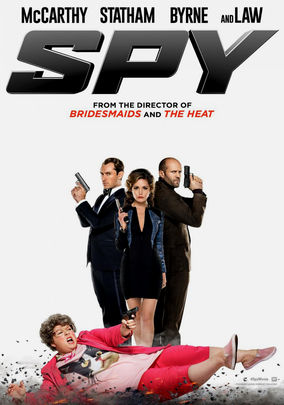
Spy-2015

Spy-2015

Director Paul Feig

Starring Melissa McCarthy, Jason Statham

Scott’s Review #386

80027379

Reviewed March 20, 2016

Grade: C+

Spy is a 2015 comedy spy spoof starring funny lady Melissa McCarthy as a loser desk CIA analyst suddenly thrown into the field and assigned to rescue a missing agent with whom she is also in love.

Carrying the film in every way, McCarthy is funny and adds to an otherwise formulaic, by-numbers, comedy.

As, admittedly, the “action-comedy” genre is not my favorite, I have seen much worse than Spy, and the premise is quite nice, but the second half of the film sinks into the ridiculous and is very loud and overly long.

McCarthy plays Susan Cooper, a frumpy forty-year-old woman with a decent job as a CIA analyst (she tracks the field agents’ cameras and warns them of impending peril), an important job, but is deemed dispensable and a loser by the higher-ups at her job, with more important duties.

She is single, overweight, and lonely, pining after her sophisticated partner Bradley Fine (Jude Law), a field agent and stylish James Bond-type.  After a mishap with Bradley thought dead, Susan goes undercover in France, Rome, and Budapest to solve the case since she will be unnoticed.

Spy is a film with a star that completely carries the film.  Being a big fan of McCarthy’s and enjoying her performance in whatever she appears in (comedy or drama), this film needs her charisma and comic timing.

Spy contains a few laugh-out-loud moments, especially when McCarthy is forced to take on the persona of one loser after another- a divorcee with multiple cats and a wardrobe to cringe over-throw in a 1980s perm and got a great SNL-type moment.

The film itself reminds me of a long SNL skit. When McCarthy delivers her one-liners they connect and amuse.

An apparent homage to spy films and James Bond films, Spy seems closer to an Austin Powers film as it goes for more silliness, but not quite as over the top.

Still, the European locales offered added elements of Bond films pleasantly. McCarthy as an apparent female James Bond is also cute.

A noticeable negative is the unnecessary two-hour running time. With a genre of this nature, a ninety to one-hundred-minute running time is all that is necessary, and any more than that the jokes wane, become redundant, and usually go into the ridiculous.

Another problem with Spy is the supporting characters. A well-known cast including Rose Byrne, Allison Janney, Jason Statham,  and Bobby Cannavale, each of these actors are cast in cartoon-like, one-note roles.

Cannavale and Byrne are the villains (Sergio and Rayna) in the plot and they play their roles in a one-dimensional way,  as evil as possible, but perhaps also over-acting the parts.

This could be the fault of the director or simply what is accepted in the genre that this is. Janney-  as the tough-as-nails CIA director and Statham as the dumb, temperamental, field agent also overplay their roles.

Why are all of these characters loud, unpleasant, insulting, or all of the above? The answer is it might allow better comedy to have caricatures instead of characters, but that is a debate for another time.

On the other hand, Miranda Hart as McCarthy’s sidekick Nancy, a very tall, awkward woman, and Susan’s best friend is great and shares equally in the comic success that McCarthy brings.

Their chemistry is evident and a recommended second pairing would be worth exploring. Unlike the other characters, I felt myself rooting for her and wished her a love interest, though the 50 Cent’s romantic introduction was strange.

The plot is more or less trivial and unimportant in a film like this. Rationally speaking, almost everything that transpires would never happen in real life, but alas, this is the movie, so one must suspend disbelief big time.

Spy is escapist fare to the max.

A hot mess if not for the wit and comic timing that McCarthy brings, Spy (2015) has an interesting premise but doesn’t deliver anything more than the silly formula that has existed for decades in the film comedy world.

I finished the film with mixed emotions.

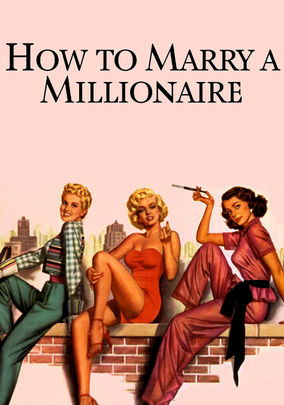
How to Marry a Millionaire-1953

How to Marry a Millionaire-1953

Director Jean Negulesco

Starring Lauren Bacall, Marilyn Monroe, Betty Grable

Scott’s Review #381

60004541

Reviewed February 28, 2016

Grade: B

How to Marry a Millionaire (1953) is a light-hearted, fun, romantic comedy featuring three famous leading ladies: Lauren Bacall, Betty Grable, and the legendary Marilyn Monroe.

The film’s backdrop is warm, sophisticated, and pleasing: 1950s New York City. This setting is appropriate, as all three women featured are models searching for wealthy suitors.

Schatze (Bacall), Loco (Grable), and Pola (Monroe) are blatant gold-diggers. They are set on using their looks and charms to seduce wealthy men into marriage. They rent an enormous and lavish apartment (the owner is out of the country and avoiding the IRS) and slowly sell the furniture to pay the rent.

Each woman encounters potential beaus, rich and poor, and must choose between true love and marriage for money. Or can they achieve both?

I noticed similarities to the 1980s television sitcom The Golden Girls. The ladies on The Golden Girls constantly pursued men—albeit not always rich men. Schatze resembles Dorothy in her directness, leadership skills, and height.

Loco has qualities attributed to Blanche, such as sexiness and a flirty manner. Finally, Pola is dizzy and blonde, a close match for Rose. Unquestionably, How to Marry a Millionaire influenced the iconic television series.

How wonderful the setting is. Interspersed throughout the film are shots of Manhattan, not to mention the visible New York City skyline from the lady’s luxurious apartment where men come and go in attempts to pursue the eligible women.

The city skyline is a set. However, other locales are not.

Numerous cinematic shots include the Empire State Building, Central Park, the Brooklyn Bridge, the lights of Times Square, Rockefeller Center, and the United Nations Building.

As a lover of New York City, it struck me as both fantastic and melancholy to think about how many people have come and gone throughout the iconic city, yet here it remains and always will. A slice of 1950’s Manhattan- another time entirely- was terrific.

The film itself is arguably fluff—lightweight, to be sure. But How to Marry a Millionaire has a 1950s innocence and a sense of fun that has become tainted and is missing in today’s romantic comedy genre. Everything is now so crude and cynical, which is why this film works for me. There is a wholesomeness to it.

Sure, the women are manipulative (specifically  Schatze), but they yearn for true love and are kind women. Their escapades are humorous. Pola- frightened of being seen by a man wearing her glasses- and blind as a bat without them- constantly bumps into walls and navigates rooms by feeling her way around.

More humorous still is when she mistakes a flight to Atlantic City for Kansas City, thereby changing the course of her life.

Loco (Grable), clearly the oldest of the three, and, by this time, Grable was looking flat out matronly, decides to go on a trip to Maine with her married beau, expecting to attend a convention filled with rich and eligible men.

Misunderstanding the situation, she engages in hilarious hijinks with her beau and meets dashing but poor Eban.

Light, fun, with bright colors and sets, How to Marry a Millionaire (1953), when watched now, brings me back to a more pure day when films were innocent and fresh- filled with glamour and sophistication.

A trip down memory lane in the film is a nice thing.

Oscar Nominations: Best Costume Design, Color

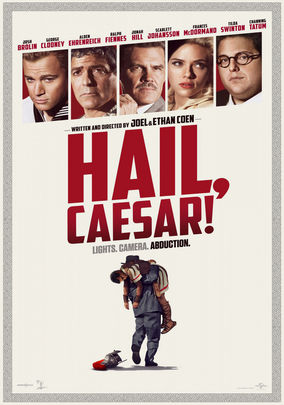
Hail, Caesar!-2016

Hail, Caesar! -2016

Director Ethan Coen, Joel Coen

Starring George Clooney, Channing Tatum

Scott’s Review #377

80074084

Reviewed February 16, 2016

Grade: B+

Hail, Caesar! (2016) is a quirky film created and directed by the Coen Brothers, who are known for offbeat films such as Fargo (1996), No Country for Old Men (2007), and Raising Arizona (1987).

Hail, Caesar is a satirical comedy about the Hollywood film industry during the post-World War II period of the 1950s.

The film features a bevy of current Hollywood talent, including George Clooney, Channing Tatum, Josh Brolin, and Scarlett Johannsen, including singing, dancing, and scandalous matters.

All give fine performances and add humor and wit to the film.

The plot centers on the character of Eddie Mannix (Brolin), a celebrity “fixer” and real-life person who works as an executive for Capitol Pictures and whose primary responsibility is to ensure that famous Hollywood stars remain out of trouble.

The period is 1951, a particularly scandalous time in pictures. One of the biggest stars of the time, Baird Whitlock (Clooney), is suddenly kidnapped and held for ransom while completing a big epic film for the studio.

Mannix must race to keep the crisis out of the news and safely get Whitlock back.

Indeed, there are interesting subplots, including handsome yet talent-less Western actor Hobie Doyle, hired by the studio to appear in a sweeping period piece directed by suave Laurence Laurentz (Ralph Fiennes), and DeeAnna Moran (Johannsen), unmarried and with a “bun in the oven,” determined to keep herself out of the tabloids.

I loved the look of the film, as numerous films occur within it. The 1950s set pieces and designs are exquisite, particularly the period piece set, lavishly designed with classic doors, a staircase, flowers, and a cast dressed to the nines.

It brings back an extravagant time.

The film is a satire, to be sure. Still, it also addresses the serious subject of communism (especially for that period), Russia, and Russian defectors, all involved in a plot to prove a valuable point.

Despite the film being a comedy, this is worth serious consideration. Many Hollywood writers make money for the studios and are rewarded with underwhelming salaries.

The same holds true in Hollywood today.

This point can spill over into other walks of life as well, and the point of the “little man gets screwed” is explored. Communism is also explored throughout the film as the central message- an important message that resonates.

Another interesting tidbit that Hail, Caesar!Mentionss, though only on the surface, is the burgeoning onslaught of television programming.

Suddenly, an increasing number of people were purchasing TVs and avoiding the glamour of films, opting instead for the comfort of their couches.

What a different time it was!

An intriguing, favorite character of mine belongs to Channing Tatum’s portrayal of Burt Gurney, a Gene Kelly-like character famous for singing and dancing numbers. A sizzling sailor dance gives edge and sexuality to the film.

A revealing scandal involving Burt and Laurence is fantastic and delicious.

My favorite scene belongs to Frances McDormand, who shamefully only appears in one scene- quite memorable. As film editor C.C. Calhoun, she diligently shows Mannix film dailies in the hopes of discovering a clue in the disappearance of Whitlock. When her scarf gets caught in the projector, hilarity and grotesqueness ensue.

It is a classic Coen Brothers comedy.

Hail Caesar! (2016) succeeds as a witty, comical throwback to a wonderful time in film history, with a political edge that historians will appreciate and Coen Brothers fans will relish.

Perhaps not their most creative or memorable, but enjoyable all the same.

Oscar Nominations: Best Production Design

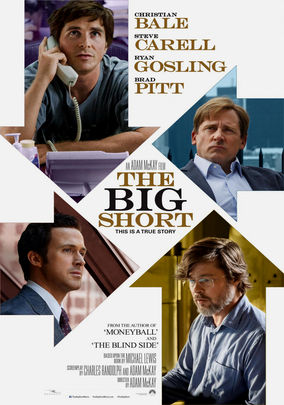
The Big Short-2015

The Big Short-2015

Director Adam McKay

Starring Christian Bale, Steve Carell

Scott’s Review #369

80075560

Reviewed January 10, 2016

Grade: A-

The Big Short (2015) is a confusing film and is its intention and also its genius.

Throughout some of the film, I was uncertain how much I liked it (or got it) and found many of the characters unlikeable, but at the conclusion, I realized that is exactly what the filmmakers intended is a clever tactic and makes The Big Short a success.

On the surface, the film has some humor but a very dark story at its core and left me a bit depressed and terrified at the conclusion.

I am happy that the film is receiving accolades and is the “thinking man’s” hit movie of the season.

To attempt to summarize the film, the film begins in 2005, approximately two years before the financial crisis of 2007-2008.

Eccentric hedge fund manager Michael Burry (Christian Bale), realizes the U.S. housing market is unstable and predicts a crash.

He attempts to profit by betting against the market, a move laughable to all around him, especially the banks who anticipate a windfall at Michael’s expense. Trader and fellow market managers, Jared Vennett and Mark Baum (played by Ryan Gosling and Steve Carrell) catch wind of Michael’s theory and try to get in on the action.

There is a sub-plot involving two younger investors also attempting to profit through the guidance of a retired banker (played by Brad Pitt).

The financial collapse is a tender subject and certainly no laughing matter, especially since it is so recent and affects many people.

The Big Short is touted as a comedy, which is strange. I found the audience didn’t know exactly what to laugh at or when. The film’s “laughs” were cynical, witty, and sometimes wicked. Many people do not get this type of humor.

In real life, people were kicked out of their homes and lost their jobs, pensions, etc. and it was all the result of greed, which The Big Short hammers home.

Several scenes include frat-boy investor/trader types getting rich by enabling almost anyone to afford a new house. Little did these people realize that there was a catch.

The film paints a jaded picture of Wall Street. The rich get richer at the expense of the middle class and the poor. It is an age-old sad tale.

Performance-wise, Carrell and Bale are the standouts. They both play characters who are damaged. Bale’s Michael is socially awkward, and has a false eye, but is also a genius. Carrell’s Mark is angry, grizzled, and is in therapy as a result of his brother’s suicide.

Both actors are great and have developed into worthy, credible acting talents. Worth mentioning, are small, but meaningful roles by Melissa Leo and Marisa Tomei.

The Big Short is shot interestingly, and highly unusual. From time to time, the action will stop and a famed celebrity (Selena Gomez, a world-renowned chef, or a model in a bubble bath) will explain the events, thus far, or give some review.

Also, more than once the actors will turn to the camera and speak directly to the audience. A personal touch that I found effective.

In the end, not much in life has changed, which is the message, and a frightening one. As one character brilliantly puts it “people will go back to blaming the poor and the immigrants”, which is a sad message.

After millions lost everything, not much has changed in the world and The Big Short makes that very clear. The people responsible have gotten away with crime, the banks bailed out, and a new scheme is undoubtedly in place.

It’s a sad world.

The Big Short (2015) is a gritty, harsh look at reality and a terrific film.

Oscar Nominations: 1 win-Best Picture, Best Director-Adam McKay, Best Supporting Actor-Christian Bale, Best Adapted Screenplay (won), Best Film Editing

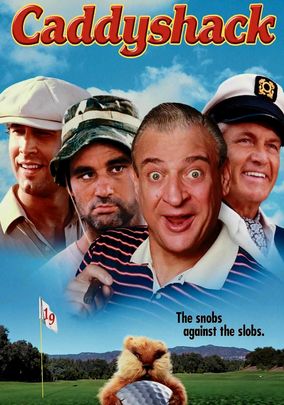
Caddyshack-1980

Caddyshack-1980

Director Harold Ramis

Starring Chevy Chase, Rodney Dangerfield, Bill Murray

Scott’s Review #353

343044

Reviewed January 9, 2016

Grade: A

Caddyshack is one of the funniest slapstick comedy films of the 1980s, arguably the decade of the “mindless comedy”.

Made in 1980, the cusp of the decade, it led the pack during a time when one after the other, comedy films were churned out out-cookie cutter style- based largely on the success of Caddyshack.

While not every aspect of the film works, the parts that do are hysterical and its influence in film history is unquestionable. More than merely a “dumb comedy”, Caddyshack features funnymen of the day (Bill Murray, Chevy Chase, and Rodney Dangerfield), and the talent and timing are well.

Clean-cut teenager Danny Noonan works as a caddy at a posh resort named Bushwood Country Club. An “underachiever”, he lacks direction in life while being pressured by his parents to attend college.

While spending the summer at work pondering his future, high jinks ensue as a rivalry develops between the club co-founder, Judge Smails (Ted Knight), and the outrageous Al Czervik (Rodney Dangerfield), who is a nouveau riche real estate developer.

Meanwhile, bordering on psychotic, Bill Murray as groundskeeper Carl Spackler is engrossed in his feud with a gopher running rampant on the golf course.

Mixed in with all of this are the standard teen romance themes, bathroom gags, and sexual jokes.

Caddyshack is not high art nor does it need to, or intend to be. It is simply pure juvenile fun. It is not even that well written, but it works. The portions that work so well do not even involve the caddies featured in the film- originally set to be the focal point.

Rather, the real scene-stealers are the two oldest members of the cast- Rodney Dangerfield and Ted Knight. The bickering and barbs traded between the two characters are delicious and downright funny.

When Al mocks Smail’s hat, or dances with his snobbish wife, or crashes into his new boat, each scene is rich with goofy comic timing.

Without a doubt, my favorite scene is the “doody” scene in the resort pool. It is laugh-out-loud raucous as a candy bar tossed into the water is thought to be something else.

The star of this scene is Lois Kibbee, who plays Judge Smail’s wife.

Her comic mannerisms and upper-crust looks make her a perfect choice for the role and she arguably steals the show in her limited appearances.

When Al jokes that she must have been something before electricity, her facial expressions perfectly emit comic horror.

There are points of the film that really are unnecessary and do not work well- I have never understood Bill Murray’s character of Carl. Bordering on silly, with a stuffed animal as the gopher, Murray himself is fantastic- improvising, but the role does not seem necessary to the rest of the film.

More scenes between the Judge and Al, or more from Chevy Chase’s character of Ty, and of the Judge’s wife would have been preferable.

Also, the attempted teen triangle between Danny, Maggie, and Lacey is dullsville- plain Maggie cannot compete with gorgeous and slutty Lacey.

These criticisms, however, are small gripes when compared to the hilarity and perfect timing of the rest of the film and that is why it ranks among one of my favorites.

Caddyshack, along with Animal House, paved the way for the plethora of slapstick comedies to follow- a few good, most bad, but must be recognized as the influence that it was, and a must-see for fans of golf, sports, and good, clean fun.

The elements of Caddyshack (1980) come together and work so well.

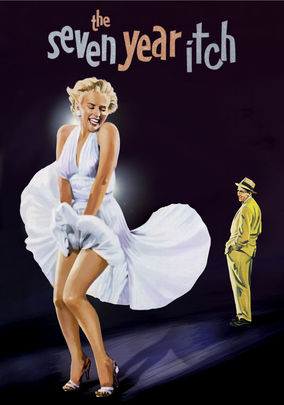
The Seven Year Itch-1955

The Seven Year Itch-1955

Director Billy Wilder

Starring Marilyn Monroe, Tom Ewell

Scott’s Review #302

60004542

Reviewed December 18, 2015

Grade: B

Following a string of successful hits by director Billy Wilder (primarily famous for films in the 1940s and 1950s), The Seven Year Itch features Marilyn Monroe in her prime and at her finest.

It is a cute film made charming by the likable legend. While not high art, it is a fun experience in classic romantic comedy cinema, and its innocence is undoubtedly lost in today’s genre.

Playing a familiar character to what she was known for (sexy, flirty, sweet blondes), it is arguably Monroe’s best role (though Some Like it Hot still wins out for me as her best film role).

Richard Sherman, a successful New York publisher, finds himself alone for the summer when his wife and son leave for a vacation in the country. Middle-aged and bored, he immediately is enamored with his gorgeous new upstairs neighbor, known as The Girl, played by Marilyn Monroe.

The Girl is a commercial actress and former model and is quite friendly and bubbly. She is conveniently staying in New York City while filming a new television ad for toothpaste. Richard finds himself awkwardly tempted by the curvaceous Girl in one situation after another.

The Seven Year Itch is pure innocence and fantasy. The Girl has no designs on Richard, and his flirtation with her is harmless and juvenile. Richard is nerdy and socially awkward, not to mention fearful of his wife’s stern nature if she discovers that he is even spending a moment with The Girl.

Much of the film includes scenes where Richard imagines conversations with his wife or imagines her with another man, justifying his attraction for The Girl. These scenes are done hilariously as he imagines conversations with his wife, and his thoughts are exaggerated.

Humorous scenes transpire, such as the “champagne scene,” in which The Girl and Richard attempt to open a champagne bottle while cooling off with Richard’s new state-of-the-art air conditioner.  The Girl keeps her underpants in a freezer to cool off.

The Girl appearing in her toothpaste commercial, comically, is also a treat. And who can forget Marilyn Monroe’s famous scene in which she stands over a subway grate, clad in a sexy white dress and high heels, the wind from the subway blowing her dress in the air, is one of the most memorable in film history and priceless.

Some would argue that The Seven Year Itch (1955) is nothing but fluff, and they essentially are correct. Still, in an age of crude and obnoxious films disguised as romantic comedies, with cheesy jokes and canned humor, it is refreshing to look back to the 1950s culture, primarily an innocent era, and enjoy a fun film romp with one of cinema’s forever stars.

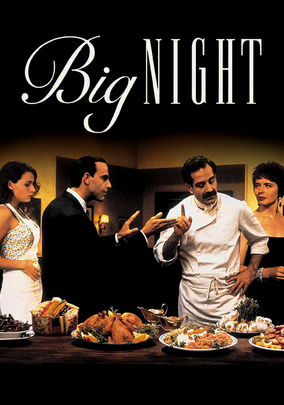
Big Night-1996

Big Night-1996

Director Stanley Tucci, Campbell Scott

Starring Stanley Tucci, Tony Shalhoub

Scott’s Review #300

305300

Reviewed December 16, 2015

Grade: B+

Big Night (1996) is a sweet, whimsical little film that is a food lover’s dream come true since that is the focal point of the story with more than one dish being prepared on-screen giving it realism.

It centers on the restaurant business and, specifically, how two brothers struggle to keep their failing restaurant afloat through their love and passion for food.

The story tells of two Italian immigrant brothers, Primo and Secondo, played by Tony Shalhoub and Stanley Tucci, respectively.

The time is the 1950s and they reside in blue-collar New Jersey. Times are tough for them as they try to succeed in the difficult restaurant business- they specialize in Italian food of course.

Secondo is a playboy of sorts- suave and handsome, he dates Phyllis (Minnie Driver) while galavanting with a sophisticated older woman named Gabriela, the wife of a competitor.

Primo, on the other hand, is quiet, and serious, yet an all-star chef. The food he prepares is wonderful and his talent is evident.

But how can they market themselves to be successful?

At this point, their restaurant is dying and they risk being reduced to returning to Italy or eke out a meager existence working for someone else.

An idea is announced to have a celebrity singer (Louis Prima) perform for a one-night extravaganza at their restaurant, where they will make the meal of their lives and impress the town, thus achieving success.

The film is charming and my favorite parts are on the “big night”. As the duo prepared the liquor order and shopped for flowers and other decorations in preparation, the mood and spirit left me with a warm feeling.

What a sense of togetherness Primo and Secondo, along with friends, felt to achieve this challenging goal. Inevitably, there is tension between the brothers, and between Secondo and Phyllis, but truthfully, these are merely sub-plots, and the heart of the film is in the food.

The scenes that take place in the kitchen left my mouth watering. As Secondo prepares a baked pasta dish (Timpano), the meal oozes with love and tastiness. The entire story arc is grand and magnificent.

The group of diners revels in the dining room of the restaurant enjoying spirits and dancing the night away. By morning everyone is full and drunk, both with love and alcohol, but most are happy. They get merry as they eat the night away.

I could almost taste the main course!

A subplot that works for me is the burgeoning romance between reserved Primo and equally reserved flower shop owner, Ann. Both very timid, they finally muster the courage to admit their feelings for each other while enjoying (what else?) wine and food- what better way to begin a romance?

The tenderness and chemistry between these two are very innocent and captivated me while watching the film.

The final scene of the brothers making an omelet is also wonderful and a fitting way to stress togetherness and perseverance, which is what the small film is really about.

For lovers of food, Big Night (1996) is a shining moment.

Independent Spirit Award Nominations: 1 win-Best Male Lead-Tony Shalhoub, Stanley Tucci, Best First Screenplay (won), Best First Feature

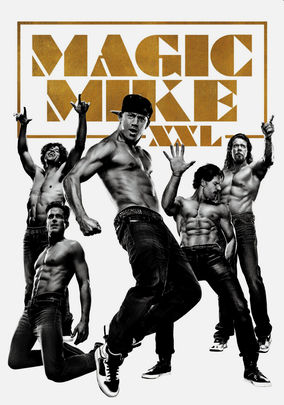
Magic Mike XXL-2015

Magic Mike XXL-2015

Director Gregory Jacobs

Starring Channing Tatum, Amber Heard 

Scott’s Review #290

80031499

Reviewed November 27, 2015

Grade: F

Magic Mike XXL might be the worst film of 2015.

In the follow-up to 2012’s Magic Mike (a predictable yet decent flick), this version has neither novelty nor the basic storyline that the original contained.

Instead, audiences are treated to a lame mess of nonsense, lack of a story that makes sense or is realistic, plot holes galore, and, to nitpick a bit given the subject matter at hand, scarcely any skin!

A road trip kind of movie, I can’t quite decide if the film was targeting frat guys looking for a buddy movie or teen girls and soccer moms looking for escapism.

Even in a less-than-adequate film, I always try to find something positive to mention, whether the characters, the story, or the cinematic elements, I cannot find any redeeming value to Magic Mike XXL.

Fortunately, Matthew McConaughey had the good sense not to sign on to appear in this drivel. The same is not the case with Channing Tatum as he is the star of this installment.

Poor guy. I hope the paycheck was worth it.

The premise is as follows: Mike (Tatum), who is out of the stripper business and now runs a furniture business, receives a call that his former boss is “gone”. Mistaking this to mean he has died, Mike returns to Florida to see his old buddies, who convince him to join a stripper convention in Myrtle Beach, South Carolina, to end their careers on a high note.

While on the road en route to the convention, problems, secrets, and past faces resurface to add to the drama.

Mike’s love interest from the first film is barely mentioned and dismissed in a weak story-dictated explanation. This is an attempt for Mike to have a new love interest in the character of Zoe, a photographer headed to New York, played by Amber Heard.

The film is messy from start to finish, but here are highlights (or low-lights). The silliness in conflict over coming up with a new routine fails miserably.

The character of Richie (Joe Manganiello) slinks into a convenience store and razzle dazzles a brooding cashier, making her burst with delight because she thinks he is dancing for her.

This scene is completely juvenile, watered down,  and unrealistic.

The stereotypes flow from Magic Mike XXL. En route to Myrtle Beach, the fellas make two stops that are the most ridiculous parts of the film and feature name actresses in silly roles.

When their van breaks down after an accident, a plot-driven way to allow the group to be sans vehicle,  Mike looks up an ex named Rome (a severely miscast and unappealing Jada Pinkett Smith), who runs a weird male stripper house for bachelorette’s in the middle of nowhere.

After a lame strip scene (PG-rated at best) to impress Rome, the boys are on their way again.

What was the point of introducing Rome to the story at all? And there is zero chemistry between Tatum and Smith. It seems like complete filler and the dancing scene is endless.

As if the film wasn’t bad enough already, one of the dancers looks up his love interest and the group winds up at her mother’s house.

Andie MacDowell plays a boozy fifty-something, sophisticate who is the mother of Nancy. With her group of cougar friends in tow, they flirt with the boys conjuring up every negative female stereotype imaginable.

The women are misunderstood by their husbands and feel needy and desperate.

And of course, they are all horny and drooling over the guys.

And what is with the lack of nudity or much skin? Is Magic Mike XXL not a stripper film?  Besides  Manganiello’s bare bum in one brief pool scene, there is nothing else and barely any stripping going on.

This truly makes the film weak.

Magic Mike XXL is a complete dud and I hope against hope that there will not be a third installment. If the target audience is giggly teen girls, the horrific bad writing does not say much for society these days.

Sexy Beast-2001

Sexy Beast-2001

Director Jonathan Glazer

Starring Ray Winstone, Ben Kingsley

Scott’s Review #286

60020863

Reviewed November 13, 2015

Grade: B+

Sexy Beast is an interesting little indie gem that has garnered quite a cult following, deservedly so,  since the year of its release- 2001 and that I have recently viewed for the first time.

In large part, the film belongs to Ben Kingsley as he gives a bravura, and frightening,  performance as a crime lord attempting to convince a retired hitman, now sworn to the straight and narrow, to resurrect his career for one last heist.

The other principal characters are wonderful in their own right, as the film successfully mixes elements of Quentin Tarantino with Ocean’s Eleven- bank heist meets quirkiness, with smart and witty dialogue sprinkled in.

Gary Dove is happily retired and living a life of contentment with his ex-porn star wife, Deedee, and best friends Aitch and Jackie.  Having all been involved in “the biz”, they are long since removed from their respective careers. They now enjoy evening parties of wine and martinis, and days relaxing by the pool in their Spanish villas.

One day, a former criminal associate, Don Logan (Kingsley), who is also a sociopath, arrives to disrupt their peaceful lives and coordinate a bank heist in London, in hopes of luring Gary into the game once again.

As Gary and company nervously decide to decline Don Logan’s offer to participate in his sinister plan, a wonderful and important scene occurs early in the film. The quartet sits around the dinner table at a swanky Spanish restaurant anticipating a scrumptious meal.

Jackie reveals the news that Don has contacted her and the tone of the scene immediately changes to one of dread. All of them both fear and despise Logan.

They agonize over this sudden disruption to their lives and we, the audience, fear Don Logan before he ever appears on-screen. What fantastic story-telling.

Kingsley portrays a menacing character and brilliantly so. The character contains frightening brutality bubbling beneath his normally calm demeanor, which makes the viewer shudder when he appears on-screen.

Lest we forget, Ian McShane also gives a nuanced performance as Teddy Bass, Logan’s right-hand man, and wise businessman.

The cat and mouse scene towards the end as Teddy and Gary have an important discussion in a car is both chilling and important to the plot of the film. As Teddy slowly figured out certain events I was left intensely anticipating his reactions.

The film introduces an intriguing sub-plot involving Don’s long-ago fling with Jackie and subsequent love for her which adds layers to the plot and the dynamic and tension between Don and Gary.

Upon finishing the film, I loved the effect of foreshadowing that the film contains. I found myself rewinding the events in my mind, pleasurably so.  From the pool to the young Hispanic kid to the thunderous boulder- all of these elements were crucial to the conclusion and fit like a puzzle.

A dark comedy of sorts, I chuckled after the film as the final reveal involving a double-heart insignia and a pool that gives comeuppance to the villain and pleases the viewer.

Having alluded to viewing Sexy Beast (2001) over the years, I am glad that I finally found the time to witness a darkly comical gem that, admittedly, may take repeated viewings to absorb and therefore fully “get”, and I look forward to doing just that.

Oscar Nominations: Best Supporting Actor-Ben Kingsley

Independent Spirit Award Nominations: Best Foreign Film

The Lego Movie-2014

The Lego Movie-2014

Director Phil Lord, Chris Miller

Starring Chris Pratt, Elizabeth Banks

Scott’s Review #284

70289949

Reviewed October 24, 2015

Grade: D

A child’s movie in every sense of the word, The Lego Movie (2014) is silly and amateurish. It contains a hackneyed plot and a fast pace that makes the viewing experience quite unpleasant.

Computer-animated and primarily created by imagery, a scene involving two human beings interspersed among all the animations only makes the plot more sappy, overwrought, and predictable.

The film is a complete dud and a waste of energy save for one lone catchy song appearing throughout the film. I am perplexed why this film received mostly positive reviews as I did not share the same sentiment.

The premise is too complex for the target audience, in a Lego universe, where all of the characters are Lego pieces, a mysterious wizard- Vitruvius, attempts to protect a superweapon (Kragle) from the evil Lord Business.

While he fails, he prophesies that a person named “The Special” will one day find the Piece of Resistance capable of stopping the Kragle.

Kragle turns out to be superglue in the human world, as a cameo with Will Ferrell reveals he is the human version of Lord Business and refuses to let his young son play with Dad’s Lego set, thereby threatening to keep the set stationery with glue.

Inevitably, this leads to a tender scene with Dad and his son.

I did not find The Lego Movie engaging story-wise or visually and I was bored during most of the experience.

Admittedly, modern animated films are not my favorite genre- I miss the days of the classic Disney drawing-style films like Bambi or Dumbo both in the 1940s.

The major flaw is the frenetic pacing of the film. Did the powers that be think that all youngsters and parents dragged along suffer from attention deficit disorder? There was no time to pause and ponder what was going on in the story since immediately it was on to the next scene.

The action is non-stop so the film seemed like one long action sequence.

The main character of Emmett, a young Lego piece characterized by everyone as dull is voiced by Chris Pratt. Emmet stumbles upon a young woman named Wyldestyle looking for something at his construction site- she assumes he is The Special and they race to save the world from Lord Business.

Emmet, as far as a lead character goes, is likable enough, and predictably, a romance develops between him and Wyldestyle. We meet various creative characters like Batman and Princess Unikitty.

The film contains a sickeningly catchy song called “Everything Is Awesome” that will stick in the viewer’s head whether desired or not and that is the strongest part. It is not that the song is lyrically great or anything, but it is fun and hum along.

Overly high octane and an uninteresting plot make The Lego Movie (2014) perhaps appealing to young kids in the seven to ten range, but it is a forgettable and tedious experience for this grown-up.

The ending of the film leaves room for the inevitable sequel.

Oscar Nominations: Best Original Song-“Everything Is Awesome”

The Visit-2015

The Visit-2015

Director M. Night Shyamalan

Starring Olivia DeJonge, Ed Oxenbould, Kathryn Hahn

Scott’s Review #276

80045505

Reviewed September 24, 2015

Grade: B

A modern-day thriller/horror/comedy hybrid (admittedly it is tough to classify this film as exclusive horror with the dreaded and watered-down PG-13 rating) directed by M. Night Shyamalan, The Visit (2015) has its moments of genuine scary frights and surprises.

It contains a wonderful twist at the end but suffers from some clichés, one severely unlikeable character, and suspensions of disbelief.

Bringing grandparents to the forefront of the film is a clever idea, albeit, stereotypically, The Visit is a decent watch, but laden with a few misfires.

Paula (Kathryn Hahn), a single mother on the outs with her parents for some years, but recently reunited, sends her two children- Rebecca and Tyler, for a week, to stay at their grandparent’s farmhouse, whom they have never met.

At the kids prompting, Paula decides to go on a romantic vacation with her new boyfriend.

Naturally, when the kids arrive at Grandma and Grandpa’s strange events happen. The children are warned never to go into the basement, not to leave their bedrooms after nine-thirty pm, plus the grandparents have a creepy, weird, look to them.

Rebecca and Tyler, in true modern horror fashion, arguably contrived at this point, record all the events (think Paranormal Activity from 2007) and begin to realize there is something rotten in the state of Denmark.

The Visit contains positives and negatives.

The mother and the two kids live in New Jersey and the grandparents in Pennsylvania. That is one state away, yet Rebecca and Tyler have never met, seen photographs, spoken to their grandparents on the phone, not even to discuss the impending visit.

The kids constantly use Skype to communicate with Mom throughout their visit, but doesn’t occur to anyone to chat with the grandparents before embarking on a week-long visit to introduce themselves.

This is a convenient plot manipulation.

Another negative is the film contains one of the most annoying characters in recent memory, Tyler. I am baffled as to whether this was intentional or unintentional.

The kid is about twelve years old and is written as dumb as possible. There are at least three to four endless scenes of him rapping, mostly to the video camera, that I found to be an utter waste of valuable screen time and lends nothing to the plot.

Filler and for a ninety-minute movie, unnecessary.

In the end, though, I got the last laugh, as the character, a germophobe, has his face smeared with human excrement.

The third negative I observed is the constant “old people jokes”, which bordered on the offensive after a while. The grandparent’s unusual behavior was blamed numerous times on their age as if all elderly people were scatterbrained, daffy, or just downright strange.

Many seniors are intelligent, useful, and lively so there was a feeling of disrespect towards the elderly that I could not shake. The film could have portrayed the grandparents with more dignity than it chose to.

Now for some positives, the compelling twist at the end of the film I did not see coming and I loved that about The Visit.

Rarely is the audience surprised anymore, especially in the horror genre, and I was. Having replayed the film in my mind the plot makes perfect sense, but is a positive in the heart of the climax.

On the subject of the conclusion, The Visit has a unique slow-motion/dreamlike feel and an odd, classical-type musical score playing throughout the ending that adds much depth to the typical thriller-type music heard in most genre films.

The oven scene inevitably viewed by all during early trailers for The Visit is excellent. When Grandma convinces Rebecca to crawl completely inside her oven to clean it we know this will not end well.

Additionally, the look and texture of the setting, an old deserted farmhouse in a small, rural town in the middle of nowhere has a feeling of being trapped.

This successfully provides a scary backdrop for the film and all the elements scream horror.

The Visit (2015) has genuine scares and will make the viewer jump, and perhaps even shriek. That is what good horror does yet I am still unsure if this film is more horror or comedy.

Unintentionally so, perhaps.

Grandma-2015

Grandma-2015

Director Paul Weitz

Starring Lily Tomlin, Marcia Gay Harden

Scott’s Review #275

Grandma_Movie_Poster

Reviewed September 21, 2015

Grade: B+

Grandma (2015) is clearly and deservedly, a showcase for the talented and interesting legendary Hollywood actress Lily Tomlin.

Years (twenty-seven to be precise) since she has had a starring turn in a film, the role of Grandma is custom-made for Tomlin, with the character’s sarcasm, wit, and downright bluntness emerging to the forefront.

The film is labeled a comedy/drama, which it is. It’s themed around a heavy topic of abortion and runs the risk of offending pro-life individuals, as the film undoubtedly contains a pro-choice slant.

Ellie (Tomlin) is a poet and former college professor in her seventies living in California. She is a lesbian and is mourning the recent death of her long-time partner. She has recently been dating a lovely young woman named Olivia (played by Judy Greer), whom she unceremoniously, and cruelly dumps, referring to Olivia as little more than a footnote in her life.

Afterward, Ellie breaks down in tears of guilt while showering.

One day her granddaughter, Sage, (her daughter Judy being the product of a one-night stand), appears on her doorstep asking for money for an abortion. Having just paid off her debts and destroyed her credit cards, Ellie is therefore broke.

The duo embarks on a quest for cash, and race against time to make the appointment in time for the scheduled procedure.

The film belongs to Tomlin but is enhanced by excellent supporting turns, specifically by Marcia Gay Harden as daughter Judy, and veteran actor Sam Elliot, as Ellie’s former flame Karl, to cite examples.

Judy and Ellie have experienced a tumultuous relationship their entire lives while Karl harbors resentment for Ellie for long-ago aborting their child. Harden is thrilling as a borderline, one-dimensional bitch character.

She is driven, angry, and self-centered, and it is mentioned that she has gone through numerous administrative assistants in her high-level corporate role.

I have not seen Harden in a role quite like this before. As unsympathetic as the character is, one cannot help wondering if Ellie’s mothering skills may have made Judy turn out this way.

Karl on the other hand is sympathetic. He is still wounded from his ages-ago relationship with Ellie and may still hold a flame for her, as unlikely a romance between them would be.

The film is darker than expected and is not the syrupy, mainstream, family story one might expect from the fuzzy one-word title.

Still, Tomlin’s cantankerous, sarcasm kept me in stitches and perfectly balanced the tough subject matter displayed in Grandma.

The relationships between the main characters are complex and tough to watch as they argue, swear, and insult each other.

Love is mixed in but complexities arise due to the controversial subject matter. The history of and, in many cases, painful memories are dredged up between characters.

Impressively, Grandma is not a film that debates the hot-button issue of abortion as one might assume. Sage never really considers keeping her baby and will have the procedure done as quickly as possible.  Ellie and Judy never try to persuade Sage to keep the child nor does Sage seriously contemplate keeping the baby.

The only instance of a pro-life perspective is when two ridiculous characters- a young mother and her ten-year-old daughter- suggest Sage not kill her baby. When Ellie steps in the young girl punches her in the face. Is this intended as comic relief or to make these characters appear as buffoons?

These characters are laughable.

The father of Sage’s baby is unsympathetic and a very minor blip on the radar. My theory is that the film chooses to go this route intentionally to avoid a debate over the abortion issue.

A debate is not the point, but the relationships between the characters are.

The scenes involving Ellie becoming irritated and sarcastic are priceless, successfully utilizing Tomlin. As she hilariously goes from situation to situation in an attempt to earn the $600 for Sage she resorts to various means as diverse as selling books, giving a kiss, or collecting an old debt.

This is the main draw of the witty little film, Grandma (2015).

Dear White People-2014

Dear White People-2014

Director Justin Simien

Starring Tyler James Williams, Tessa Thompson

Scott’s Review #274

70298948

Reviewed September 18, 2015

Grade: B+

Dear White People (2014) is a highly creative, independent satire that begs to be watched for no reason other than for its message of existing racism in present times, homophobia, and class distinction.

Set at an Ivy League college and written tongue and cheek, but also with a direct message from newly discovered director Justin Simien, it is a meaningful gem that challenges audiences to think and be entertained and emit an occasional chuckle at the wit and comical lines presented.

Set in the present day- assuming 2013 or 2014, and well beyond the Civil Rights era, the film features a hip, sharp look and a myriad of characters, all with differing perspectives, all Caucasian or black in racial identities.

All the characters attend the affluent and sophisticated Winchester University, a mostly white, conservative school with a small community of black students, who curiously all seem to reside in the same dorm house.

In addition, the Dean is a black man (played by Dennis Haysbert).

Sam White is a rebellious female student, of mixed race, who runs a radio show entitled “Dear White People”, which challenges the current state of racism in America, specifically at Winchester University.

Supporting characters include Lionel Higgins, a gay, bookish student with an enormous afro, excluded from almost all the sub-groups. Lionel is intrigued by Sam’s radio show.

Other characters include Coco- an attractive black girl with typically “white” mannerisms and friends, who try to fit in with the white culture. Troy, a very handsome black student (who tries to act “white”), dates a white girl (who tries to act “black”).

Finally, the film features Kirk, a white student whose father is the school president, who values an old-style way of thinking. Kirk, shockingly, hosts a blackface party, which leads to major controversy at the school and is the focus of much of the film’s drama.

The main theme is race, but different characters have different viewpoints on the subject matter, and all are explored, which makes the film unique and interesting.

Sam, for example, is a true advocate for racial equality and constantly challenges white people’s motivations and actions, blatantly so.

Coco, on the other hand, is resistant to being stereotyped as a woman of color and, in one scene is incorrectly assumed to be from the hood by a reality television producer she is auditioning for.

She is envious of white people and the advantages they have, even going so far as having straight hair and blue contact lenses. Then we have Lionel, who is both gay and black, and considered an outcast. He fits in with no group and curiously seems okay with being his own person.

What is unique and compelling about Dear White People is that it brings up a controversial issue, mixes it in satire, humorously, but presents compelling arguments against stereotypes, also bringing those stereotypes center stage, which most films avoid like the plague.

One black character is frustrated that, in their mind, most black people are content watching dumb black comedies, thereby supporting a negative racial stereotype.

One interesting aspect regarding the score is the use of lily-white classic film music- such as Barry Lyndon (1975)- the most lily-white of lily-white films (British and Irish).

Famous film director, Quentin Tarantino, is called out as being a racist director. What wonderful irony!

Dear White People (2014) is a witty, intelligent slice of inventive filmmaking that is worth seeing if only for its controversial subject of inequality and racism, which is too often forgotten.

An indie treat for those inclined to think a little.

Independent Spirit Award Nominations: 1 win-Best First Screenplay (won), Best First Feature

Lake Placid vs. Anaconda- 2015

Lake Placid vs. Anaconda- 2015

Director A.B. White

Starring Robert Englund

Scott’s Review #267

80058483

Reviewed August 16, 2015

Grade: D

To say that Lake Placid vs. Anaconda (2015) is a bad film is being generous. It is poorly made, written, and acted.

Containing every horror and comedy cliché in the book, it is not a film to take seriously and is best watched late at night amongst adult spirits.

The premise is ludicrous, the acting way overdone, and all characters are “types” and one-dimensional.

Having seen the original Lake Placid (1999) and Anaconda (1999) films (and they were not so great themselves), I was unaware that this is the fifth film for both franchises and is a crossover.

Premiering on the Syfy network in mid-2015, it is a made-for-television feature, and the lack of any real gore is apparent for this reason.

Robert Englund and Yancy Butler, stars of other franchise installments, make return appearances. Sadly, this one has no Betty White or Jennifer Lopez (stars of the original Lake Placid and Anaconda, respectively).

Lake Placid vs. Anaconda is not trying to be great or necessarily art, but rather an idiotic late-night experience. I did not rate the film a solid ‘F’ since it knew what it was and did not try to take itself too seriously, which I respect at least.

The story begins in the middle of the woods near Clear Lake, Maine, as an illegal experiment occurs inside a truck. The serum is being illegally extracted from a sedated crocodile to sell to a giant corporation for profit.

Jim Bickerman (played by horror legend Englund) has been paid handsomely to provide information for the plot to happen.

A villainous corporate schemer is on hand to oversee the events. Inevitably, something goes wrong and the crocodile wakes up and gets loose, encountering large anacondas, also on the loose.

From this point, we are introduced to other inane characters that round out the film, including a group of bitchy sorority sisters on their way to Clear Lake presumably to pledge and party, and Sheriff Reba (Yancy Butler) and her bumbling team of police officers.

Also integral to the story is one of the sorority sisters (Bethany) fathers, Will, who attempts to help Sheriff Reba rescue everyone from the killer reptiles.

Side stories include the laugh-out-loud pledge attempts by some of the sorority wannabees (one is forced to dig a hole in the sand large enough for her to hide in within twenty minutes), a friendship between the only two sensible girls, Bethany and Margot, a high leveled female executive intent on capturing the serum for riches, and a burgeoning romance between Reba and Will.

Silly personified, the film is meant to be goofy and the actors play their roles as they are foolishly written. There is not a shred of realism to the film and none of the characters have any depth.

The worst offender from a character standpoint is humorously my favorite. Tiffani is the comically vicious sorority queen. With her constant berating of the new pledges, she regularly demands that they get in the water and swim for her entertainment.

Ultimately, the girls are attacked by the crocodile in the water, allowing for multiple camera shots of the girls swimming underwater while scantily clad.

Is this a 1980s low-budget horror throwback? When the crocodile emerges to land the remaining girls flee for safety.

In a hilarious scene, Tiffani and one of her minions are cornered by the vicious crocodile. The minion asks what they should do and Tiffani replies with, “I have an idea”, and promptly pushes the minion towards the crocodile where she is chewed to bits allowing Tiffani to escape.

Later, predictably, Tiffani receives her comeuppance.

I find myself perplexed as to why this film was even made. With a shoestring budget, dated CGI effects, little blood, and a silly plot one assumes that the franchise’s predecessors were similar ventures.

Laced with one dumb scene after another and tough to take seriously, Lake Placid vs. Anaconda (2015) is as poor filmmaking as they come, but certainly to be taken with a grain of salt and enjoyed for its campy badness.

Horror-comedy for a boozy Saturday night.

Inherent Vice-2014

Inherent Vice-2014

Director Paul Thomas Anderson

Starring Joaquin Phoenix, Josh Brolin

Scott’s Review #255

80013545

Reviewed July 7, 2015

Grade: A-

Inherent Vice (2014) is a bizarre detective film noir-type experience, set in 1970 Los Angeles.

Directed by the superb Paul Thomas Anderson (Boogie Nights-1997 and Magnolia-1999), the film has weirdness and incoherence that is a marvel to experience.

Fans of a straightforward plot will not be thrilled with this film, but for fans of Anderson, this will not disappoint. It has a complex plot, but the payoff is grand and a thinking man’s film.

The protagonist is Larry “Doc” Sportello (Joaquin Phoenix), a stoner private detective, contacted by his mysterious ex-girlfriend Shasta. She is worried about attempts by her boyfriend’s ex-wife and new lover to kidnap him and have him committed.

Mickey, Shasta’s boyfriend, is a wealthy real-estate developer.

Doc is also hired by two other people- one a former heroin addict looking for her missing husband, and the other a former convict looking for a prison mate who owes him money and is a former henchman of Mickey’s.

All of the stories intersect and such oddities as a peculiar massage parlor and a ship named the Golden Fang come into play throughout.

The intersecting stories lead to the revelation of a drug ring. I had little idea what was happening but was still enthralled by it.

There is an unpredictability surrounding Inherent Vice that is so pleasing and captivating. Joaquin Phoenix is compelling as Doc, a damaged character whose past is unclear.

When Doc is, by all accounts, framed for the murder of a convict and interrogated by the police, we wonder what history he has with them and what led him to branch out on his own as a private investigator.

Detective “Bigfoot” Bjornsen, wonderfully played by Josh Brolin, is a rival of Doc’s, though it is unclear why. “Bigfoot” is frequently seen with chocolate-covered phallic objects in his mouth and is married to a severe, overbearing woman.

Most characters are peculiar and have strange nuances, yet are never fully fleshed out, instead of remaining curious and thought-provoking.

Reese Witherspoon, Benicio Del Torro, and Owen Wilson appear in small yet pivotal roles.

Quite reminiscent of Roman Polanski’s Chinatown (1974) and Robert Altman’s The Long Goodbye (1973), in both the California setting and the plodding, slow-paced, magnificent storytelling, Inherent Vice is a confusing gem, but by all means a gem worth seeing and reveling among the intrigue.

Just don’t try to make too much sense of it all.

Oscar Nominations: Best Adapted Screenplay, Best Costume Design

Independent Spirit Award Nominations: 1 win-Robert Altman Award (won)

St. Vincent-2014

St. Vincent-2014

Director Theodore Melfi

Starring Bill Murray, Naomi Watts, Melissa McCarthy

Scott’s Review #246

70295665

Reviewed June 5, 2015

Grade: B-

St. Vincent (2014) succeeds only due to the charming, funny appeal of its star Bill Murray, who fronts this cute, mainstream comedy.

Set in blue-collar Brooklyn, New York, it tells the story of a curmudgeonly old man (the title character, Vincent), who befriends a lonely young boy named Oliver, new to the neighborhood.

Mixed in with the cast of characters are Oliver’s struggling mother Maggie (played by Melissa McCarthy) and Vincent’s pregnant, stripper girlfriend, Daka, played by Naomi Watts.

I found intrigue in how we get to know Vincent first and then watch him evolve from a grumpy, cutting old man to a begrudging babysitter of the neighbor boy while clashing with Maggie and fighting with Daka.

Murray returns to comic wit using his now-legendary flawless dry, sarcastic humor and perfect timing and displays much of that in St. Vincent. Throughout all of this Vincent remains brutally honest with his snarky remarks (mainly aimed at Maggie) yet heartwarming and I love this aspect of the film.

Thanks to Murray, Vincent is lovable, making the film, which with lesser talent, would be overly sentimental

As the film progresses we see Vincent’s struggles- his wife suffers from Alzheimer’s, and he is indebted to bookies (primarily Terence Howard- in a bit of a throwaway role).

The film staggers with some predictability issues and is formulaic and easy to predict a warm finale.

Of course, in true form, Vincent is a Vietnam vet who drinks and gambles and is angry at the world, but has a heart of gold so, despite being temperamental, the audience falls in love with him (patriotism helps).

The character contains every cliche in the book. A mean old man- who rises to new heights and becomes a nice grandfather figure to a bullied boy is what this film is going for.

The bullying of Oliver is also contrived- during one scene Oliver, after being picked on once again by the prominent bully, flies into a seething rage and breaks the bully’s nose.

The audience is supposed to buy that the waif-ish, shy kid triumphs over the bully. If only life were that simple. Inevitably, after both serve after-school detention, they bond over bathroom cleaning and become best friends.

Who did not see that coming?

In addition, most of the characters are one-note.

Naomi Watts is a sexy, and aging Russian (not sure I bought that accent) stripper with a soft spot- she comes across as uptight but is caring- another cliche.

Melissa McCarthy is a hard-working, soon-to-be divorcee, trying to raise her kid right- one-dimensional. Even Vincent is seemingly tough as nails, but of course, has a soft spot for the neighbor kid.

The casting of Watts, McCarthy, and Howard is okay, and I surmise the film was going for casting “name” actors, but these parts might have been played by unknowns and had the same effect.

The gem is Murray.

Murray effortlessly breathes life into a character who otherwise would have been as dull as dishwater. I found the writing the weakest point of the film.

A major incident brings the cast together united as one (yawn). The film closes with the family all happily eating dinner together. I do not see this as a spoiler as this ending can be seen a mile away.

Despite the flaws and sentimentality of the film, it is admittedly sweet, and humorous at times, and sends a nice message to the audience- be kind to one another and help each other get through life.

Without Bill Murray, this film would have been completely bland and unlikeable.

St. Vincent (2014) is a feel-good film that is perhaps too feel-good.

Annie-2014

Annie-2014

Director Will Gluck

Starring Quvenzhane Wallis, Jamie Foxx

Scott’s Review #231

220px-Annie2014Poster

Reviewed March 25, 2015

Grade: D-

The latest remake of the film version of Annie, the last film production in 1982, though at least one variation in television exists, and all based on the Broadway hit of the same name, is a saccharin-laden mess of a film.

Annie stars Quvenzhane Wallis, Jamie Foxx, and Cameron Diaz as Annie, William Sparks (changed from Daddy Warbucks), and Miss Hannigan, respectively, and features Rose Byrne and Bobby Cannavale in supporting roles.

Let me begin with the one redeeming quality of the film, though admittedly a bit of a stretch. I found the musical numbers okay, not great, but far from the worst parts of the film.

The numbers are remixed into hip-hop-type songs with a trendy approach, presumably to add a modern element. While not great, some songs are catchy and not dreadful, especially “It’s A Hard Knock Life” over the closing credits.

Whether the actors sing their songs is another question, which I might not want to know the answer to.

The rest of Annie is terrible.

The casting is poor. Wallis, very believable in Beasts of the Southern Wild (2012), portrays Annie as an intelligent, social-climbing child and I sensed awkwardness to the part. Regardless it did not work.

I did not buy her in the role and how she was awarded a Golden Globe nomination for Best Actress in a Musical Comedy speaks volumes for the limited choices in 2014.

Jamie Foxx completely phones in his performance as Cell-phone technical mogul, running for mayor, William Sparks. Why the film changed the character from Daddy Warbucks is a mystery. He is unbelievable as a germaphobe, an aggressive yet sensitive, powerful man who amazingly develops a soft spot for Annie.

Cameron Diaz completely overacts and turns Miss Hannigan into an obnoxious, hysterical shrew, who towards the end of the movie somehow “turns good”, with no real motivation for doing so.

Rose Byrne and Bobby Cannavale give uninteresting, very one-note performances in their respective roles of Sparks’s assistant, love interest, and right-hand man.

The film chooses to change so many aspects of the original stage version of Annie, that it is barely recognizable.

It takes place in present times rather than the Depression-era 1930s, Annie is no longer an orphan but is in foster care. Miss Hannigan’s first name is changed to Colleen instead of Agatha and now a former pop performer whose career subsequently died.

Hannigan’s brother Rooster and his girlfriend Lily are not featured at all.

The story has zero interest and zero believability.

But the worst part of the film is the corniness of it. It is so overwrought with contrived scenes that it is tough to take seriously.

At a Mayoral function, Annie (an untrained singer) suddenly leaps onstage and belts out a perfectly sung, choreographed number melting the hearts of the wealthy powerhouses in attendance.

The film is pure fantasy with no realism to speak of.

Miss Hannigan fosters an apartment full of children that she hates, to collect $150 a week, but her apartment is pretty spacious and beautiful by Manhattan standards.

The film contains one inconsistency after another and is a horrendous modern take of a long-loved treasure, the 2014 version of Annie should be seen once, snarled at, and put back on the shelf, and forgotten for good.

Neighbors-2014

Neighbors-2014

Director Nicholas Stoller

Starring Zac Efron, Seth Rogan

Scott’s Review #229

70297085

Reviewed March 15, 2015

Grade: F

By far one of the worst movies I have seen, Neighbors (2014) is a silly, redundant, nonsensical, and plain old bad film. Whoever thought this film was a good idea and green-lit it should be examined.

Successful comedies- even raunchy, slapstick comedy, contain perfect comic timing and likable characters that the audience roots for, and at least a shred of creativity and originality.

Neighbors has none of these qualities.

Bridesmaids (2011) is an example of a modern raunchy comedy that works and is hysterical, sadly, Neighbors is a far cry from Bridesmaids.

Neighbors stars Seth Rogan, a familiar face in the slapstick comedy genre, and Rose Byrne as Mac and Kelly Radner, a married couple in their thirties with a newborn baby named Stella.

Former party animals in their college days, the two live in a college town and attempt to raise their daughter.

One day, Delta Psi Beta, a fraternity known as one of the rowdiest of frats, moves into the house next door to the Radners and begins causing chaos with their never-ending parties.

The frat is led by Teddy (Zac Efron).

Initially striking up mutual respect, the Radner’s relationship with Teddy is ruined due to a misunderstanding involving the police being called one night.

The remainder of the film focuses on Mac and Kelly’s attempts at getting the fraternity out of their house by sabotaging parties and pitting various frat brothers against each other, causing hijinks and war between parents and college kids.

If Neighbors is an attempt to harken back to the days of delicious college comedies such as Animal House (1978) or American Pie (1999), the film fails on every level.

It is simply not funny.

It contains a plot that is so unoriginal and the jokes featured to death in similar films (bathroom humor, frat jokes, drug jokes, male and female anatomy jokes) by this point, if you have seen one Seth Rogan film you have seen them all.

He is a one-trick pony and has become what Adam Sandler became- tired and dull.

Rose Byrne’s annoying character had me believing the actress was using a poor Australian accent only to realize that the actress is Australian. This is not a testament to Ms. Byrne’s acting ability.

The protagonists are quite irritating and not likable at all. What is the rooting value? Mac and Kelly are irresponsible parents.

They presumably leave Stella at home to visit the frat house and wind up getting drunk and high, stay out late, and wake up early the next day when Kelly attempts to feed Stella using tainted breast milk, which leads us to an unfunny scene between Mac and Kelly focusing on Kelly’s vein-popping breasts, which makes no sense anyway.

Other suspensions of disbelief and logic pop up left and right. Why would the police reveal to the fraternity the names of those who had called to complain about them and after catching the Radner’s in a lie, tell them never to call the police again?

How unrealistic.

Mac and Kelly live in a college town, and the risk of a fraternity or sorority being close never occurred to them. They acted surprised that college students existed at all.

The wonderful Lisa Kudrow is cast in a ridiculous role as the college Dean but is completely wasted in a hysterical, bubble-headed, dumb role.

If I had to give a positive to Neighbors (2014), it would be that Zac Efron does a halfway decent job portraying his character Teddy and Efron does possess a good deal of acting talent (think The Paperboy from 2012).

I am being quite generous and looking for a bright side to a train wreck.

The film is poor.

101 Dalmatians-1961

101 Dalmatians-1961

Directors Wolfgang Reitherman, Hamilton Luske, Clyde Geronimi

Voices Rod Taylor

Scott’s Review #226

205524

Reviewed March 8, 2015

Grade: A-

101 Dalmatians (1961) is a darling Walt Disney film that encompasses wholesomeness, love, and devotion.

Set in London, which adds a level of sophistication to the film, it tells the story of a lonely songwriter named Roger Radcliffe, who lives in a flat with his faithful and devoted Dalmatian, Pongo. Theirs is a happy existence, but something is missing.

Pongo, voiced by Rod Taylor (of The Birds-1963, fame), is determined to find a mate for himself and Roger and sets about to do just that by watching ladies and their dogs walk the streets in front of their homes.

He finds the perfect match for both (Anita for Roger and Perdita for him). The four of them look forward to years of happiness together until a sinister friend of Anita’s, Cruella De Vil, enters the story.

Cruella sees profit in the Dalmatians and attempts to steal and destroy them.

Cruella De Vil is a delicious villain and certainly one of the most entertaining in animated film history, but more than that, she is comically devious. Her maniacal laugh and witty language make her a perfect foil for a wholesome couple and wonderful, cute little pups.

The audience does not root for her, but there is something wicked and fun about her over-the-top character.

The 1961 film has an incredible artistic direction that animation today lacks —the scenes look like beautiful drawings.

There is a Mad Men quality to the design.

The “look” differs from current animation in that it is sleek and constructed skillfully, not loud, fast, and bombastic.

I love that the film is told from the perspective of the Dalmatian Pongo and Perdita, not from the perspective of human beings. The central characters, Pongo and Perdita, tell the story about their dogs, which adds to their empathy for the animals. We see their attempts to rescue all of the stolen dogs.

Also outstanding is how all of London’s dogs (and various other species of animals) band together in rescue. They work as a team to save and protect their own, who are being mistreated and sent to slaughter.

An enjoyable scene involves the climactic car chase between Cruella’s gaudy luxury car and a furniture van. As the pups use the van to escape, a cat-and-mouse game ensues, providing comedy and dramatic flair.

The scene is among the most suspenseful in the film, as the vehicles weave along dirt and back roads toward London.

In addition to this riveting scene are others involving the dogs tiptoeing past their captives as we cross our fingers they will not be heard and subsequently caught, and an adorable scene showcasing the dogs’ cleverness at covering their spots with soot to escape.

A heartwarming, inspirational film for the entire family to enjoy many times over, 101 Dalmatians (1961) will leave you smiling and humming.

It is a truthful, fantastic film about love for animals.

Bring Me the Head of Alfredo Garcia-1974

Bring Me the Head of Alfredo Garcia-1974

Director Sam Peckinpah

Starring Warren Oates

Scott’s Review #222

70020328

Reviewed February 20, 2015

Grade: B+

Bring Me the Head of Alfredo Garcia is a Mexican, cult-action film from 1974, directed by Sam Peckinpah, that influenced famed modern movie director Quentin Tarantino in multiple ways.

The film itself is violent, bloody, and traditionally Peckinpah in tone and look, similar to his other films (Straw Dogs from 1971 and The Wild Bunch from 1967).

The premise of the film is intriguing- a powerful man known simply as “The Boss”, turns furious and places a bounty on the head of the man who impregnated his daughter, whom he, by the way, tortures to garner this information out of.

He offers the enormous sum of 1 million dollars to the person who can “bring him the head of Alfredo Garcia”.

From this point, the action centers mostly on Bennie, a retired military officer who is intrigued by the bounty up for grabs.

Bennie, along with his prostitute girlfriend, Elita, traverses the lands of Mexico in search of Alfredo Garcia, whether he already be dead or still alive, which is a mysterious and fun element of the film.

I have a tough time taking the film too seriously as much as I enjoyed it- it seems an action farce and, without giving too much away, the scenes involving the carrying of a severed head, arguably the lead character, are as much comical as ghastly.

The illustrious lighting is a major focal point, especially during the outdoor scenes and specifically the nighttime desert scenes when Elita is almost raped by two bikers. The moonlight radiates onscreen.

The character of Elita is a fascinating one for me. On the one hand, she is an aging prostitute madly in love with Bennie and intrigued by a life with him living off their spoils. However, she almost enjoys the sexual experience with one of the bikers, played wonderfully by Kris Kristofferson, despite being roughed up by him.

The scene, while certainly violent, is in a way, almost tender as the biker and Elita realize their attraction for one another. It’s a surreal scene and has almost a sense of clarity for both characters. Are they in lust?

Peckinpah women are traditionally not treated well, but Elita borders on the exception.

The Tarantino influence is undeniable- the mixture of humor amid violence- a severed head being treated as a comical prop, is immeasurable in its comparison to later Tarantino films such as the Kill Bill chapters.

Daring and pure genius, the film contains a dark tone but does not take itself too seriously by going for any sort of melodrama or being overwrought.

It is only a film and has fun with that fact. It tries to be nothing more and embraces being bizarre.

Tarantino films are like Peckinpah films just made 20-30 years apart.

Bring Me the Head of Alfredo Garcia has evolved into a cult classic after having flopped commercially and critically in 1974.

How wonderful when a gem is rediscovered and laden with influence, in this case as much stylistically as otherwise.

The One I Love-2014

The One I Love-2014

Director Charlie McDowell

Starring Mark Duplass, Elisabeth Moss

Scott’s Review #221

70299863

Reviewed February 18, 2015

Grade: C+

Reminiscent of a modern-day Twilight Zone episode, The One I Love (2014) tells the story of a young married couple (Ethan and Sophie), played by Mark Duplass and Elisabeth Moss, who seek the assistance of a therapist, played by Ted Danson.

The therapist realizes the couple is out of sync and recommends a weekend away. The therapist has an excellent reputation for rekindling faltering marriages and turning them into successful ones.

He sends them to a sunny, beachfront house with a guest house, pool, and various trails along the water. It is simply a paradise.

I admire the creativity of the screenplay.

The couple meets their ideal, perfect versions of each other while basking at the vacation house. Ethan’s alter-ego is suave, athletic, and sensitive to Sophie’s needs while Sophie’s is sexy, flirtatious, and invested in Ethan’s life.

The real versions are bored, lazy, and a bit disheveled.

The flaws they once saw in each other are replaced with the perfect spouses. It is fantasy-like. As one half of the couple slowly falls in love with the fantasy version, the other half begins to get jealous and the film dives into a tale of who winds up with whom.

But is it a fantasy? Are the perfect versions real people or something reminiscent of Invasion of the Body Snatchers?

It is tough to know the intentions of the film.

A weakness I felt the film has is it plods too much. At a brief ninety minutes, the film somehow has a sleepy, slow-moving undertone and could have easily been a short film or wrapped up within forty-five or fifty minutes.

I did not feel the chemistry between Duplass and Moss as strongly as I would have liked. Individually fine actors, the spark did not ignite for me.

I wish Ted Danson had a larger role. The focal point was the young couple, but the mysteriousness surrounding the paradise was never really explained and Danson’s character could have been the key to the story. Did he contrive the entire situation? Was it fantasy? His brief part left many plot holes unexplained.

The One I Love (2014) is a creative effort and an imaginative angle, but I wanted more clarity than I was served up.

The film is mysterious, yes, but also confusing and slightly dull and uneven.

Independent Spirit Award Nominations: Best First Screenplay

Pride-2014

Pride-2014

Director Matthew Warchus

Starring Bill Nighy, Imelda Staunton

Scott’s Review #215

80013480

Reviewed January 17, 2015

Grade: B-

Pride (2014), based on a true story, deserves props for delivering a nice message about inclusion and groups of vastly different people coming together as human beings.

While it’s a nice film, the filmmakers play it a bit too safe and it has a definite formulaic feel to it.

Surely, the real story of Pride was not as simplistic as this film felt at times.

The setting is 1984 England. A group of British miners goes on strike over wages. A group named Lesbians and Gays Support the Miners made up of gay men and women developed an interest in the strike and decided to help the miners and families.

Why they decided to take on this cause is not fully explained. The National Union of Mineworkers is hesitant to accept funds as they worry about the publicity caused by a group thought to be perverts.

The film is riddled with clichés- the macho miners resist the help from the gays, many of whom are portrayed as effeminate. The characters who are lesbians look as though the filmmakers wanted to “butch them up”, thereby overdoing the stereotype.

There is a subplot of one gay young man who has not come out to his parents, a well-to-do, pretentious couple. When inevitably the truth is revealed, the parents are angry and turn their backs on the teen.

He leaves home to join the gays and lesbians who accept him into their lives with open arms.

The female head of the committee is homophobic and vows to do everything in her power to make sure the gay and lesbian group does not succeed in aligning with the miners.

These clichés seemed way too overdone to make the film more dramatic. Some of the characters, therefore, come across as one-dimensional.

Even the story revolving around a character with AIDS seems watered down and soft.

On the plus side, casting the brilliant Imelda Staunton as the sympathetic, maternal, Hefina is a plus.

A huge supporter of gays and lesbians she comically befriends all of them and is curious about their lifestyles. Bill Nighy is also excellent as Cliff, the older miner who turns out to be gay.

Margaret Thatcher, Prime Minister at the time, is presented as greedy and selfish with little regard or use for the miners or labor unions.

Pride (2014) is an earnest, sentimental, feel-good film that deserves adoration for the coming together of different communities.

I would have liked to see more risks taken by the film.

Heathers-1989

Heathers-1989

Director Michael Lehman

Starring Winona Ryder, Christian Slater

Scott’s Review #207

580335

Reviewed December 25, 2014

Grade: B

My gut tells me that Heathers was quite controversial and influential upon release in 1989 and has sustained a cult following that continues to this day- 2014.

Having seen the film for only the first time, in 2014, the film is good, but now suffers from a slightly dated look and feel. Still, it is a brave and unique expression of creativity.

It is a film that sends the message that the popular kids are bad and that the meek shall inherit the earth. The uncool kids will rise.

To summarize the plot, Heathers is told from the perspective of high school student Veronica Sawyer, played by a young Winona Ryder. She is a second-tier popular girl- she is lieutenant to the generals if you will.

The school is run by three popular girls named Heather. As popular as they are, they are also despised and feared by the other students but carry great influence. They enjoy playing cruel jokes on other students and ridiculing anyone beneath them.

A rebellious male student, J.D., played by Christian Slater, befriends Veronica and they hatch a plan to destroy the popular clique, including another pair of popular jocks.

Shannon Doherty plays second in command Heather.

The tone of Heather’s is surreal and dream-like. For example, in the opening scene all three Heathers- along with Veronica- are on a perfectly manicured lawn in the suburbs playing croquet.

The hierarchy is established as Veronica seems to be buried up to her neck and is the target of the croquet balls making her, without question, the lowest of the four girls. Whether or not this is a dream or real is unclear.

The film is well-written and edgy. It reminds me at times of The Ice Storm and American Beauty, which Heathers preceded, and are superior in my opinion.

Heathers is a teen angst film and quite dark at times- the various deaths are committed viciously (drain cleaner poisoning, concocting a setup for the jocks to appear to be having a love affair with each other and then passionately shooting each other), but with sly wit and humor.

Veronica is, at heart, a good girl, albeit misguided and heavily influenced by J.D., but her intentions of having a fair, just school society are noble. The character is likable.

All the parents are hilariously portrayed as buffoons and have no idea of the darkness that exists in their kid’s lives- Veronica’s parents in particular.

Fearing that Veronica has committed or soon will attempt suicide, they fret that it is their fault stemming from childhood negligence, however, their concern has more to do with themselves than with Veronica’s well-being.

Small gripes about the film are the 1980s style outfits and hairstyles, which, since made in the 1980s is not a particular fault of the films- though it does contain a slightly dated feel to it while watching in present times.

Also, Christian Slater mimicking Jack Nicholson’s voice is odd- was this a decision by the film or by the actor himself? Either way, the imitation is both distracting and confusing. What is the point?

The ending of the film is a happy and satisfying conclusion- however, different from the dark tone of the rest of the movie- rumor has it the studio had some influence in toning down the original ending.

1989 was not a stellar year for film so Heathers deserves major props for thinking outside the box and doing something dark and creative.

Brave, inventive, and unique, Heathers is a cult classic worth a look.

Independent Spirit Award Nominees: 1 win-Best Female Lead-Winona Ryder, Best Screenplay, Best First Feature (won)