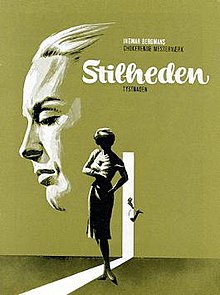
The Silence-1963

The Silence-1963

Director Ingmar Bergman

Starring Gunnel Lindblom, Ingrid Thulin

Scott’s Review #1,435
Reviewed July 28, 2024

Grade: A

Like most Ingmar Bergman films, careful concentration is highly recommended. Consistently in the art film genre, his films are rich with substance and deep thought. Being alert and focused makes his films most rewarding.

The Silence (1963) is not one of his best-known films, taking a backseat to The Seventh Seal (1957), The Virgin Spring (1960), and Wild Strawberries (1963), three of his more recognizable works.

It is no slouch and is quite excellent resembling Persona (1966) a Bergman film yet to be released.

The Silence is sometimes considered the third film in a trilogy that includes Through a Glass Darkly (1961) and Winter Light (1963). The trilogy focuses on spiritual issues, but the films need not be watched sequentially.

His films often center on one character caring for another character who is brewing anger, conflict, or self-reflection about life, death, and the existence of God.

Traveling through an unnamed European country on the brink of war, sickly, intellectual Ester (Ingrid Thulin), her sister Anna (Gunnel Lindblom), and Anna’s young son, Johan (Jorgen Lindstrom), check into a near-empty hotel for shelter.

Even though Ester is a linguist, they cannot verbally communicate with the locals. They also have trouble communicating with each other due to their estrangement.

Anna provokes her sister by enjoying a dalliance with a local waiter, while Johan, left to himself, has a series of strange encounters that heighten their growing isolation.

There is also an elderly hotel porter and a group of Spanish dwarfs who are part of a traveling show.

One gorgeous scene occurs when Anna ventures into the city alone and is openly advanced by a waiter in a cafe. He places her change on the table and knocks a coin to the floor. When he crouches down to retrieve it, he quickly brushes her leg.

Later, she watches a show in an uncrowded theatre and is both repelled and fascinated when a young couple begins to have sex in a seat nearby.

Anna returns to the cafe, brushes past the waiter, and returns to the hotel.

The scenes exude sexuality since Anna is cautiously but certainly on the prowl for sex. She and the unnamed waiter have an instant, animalistic attraction that smolders onscreen.

Some say the relationship between Anna and Ester can be interpreted as a push and pull between the same person. That impacts me as much as two separate people, and I kept thinking about this point throughout the film.

Bergman incorporates several shots of the two women either side by side or their faces very close. This enhances the idea that they could be one person with deep psychological conflict.

There is no question that The Silence was influential to other films to come. Three Women (1977) and Mulholland Drive (2001) immediately come to mind since both delve into cerebral and dreamlike relationships between two women.

The film is shot in black and white like most, if not all, of his other films. This creates a stark mood and supports the conflict in the storyline, especially Ester’s illness.

Furthermore, because of the language barrier and emotional drama, there is little dialogue, making the film almost like a silent movie.

It’s an incredible work with familiar storylines created by Bergman that question the complexity of relationships, thoughts, and emotions.

I was left with the message from The Silence (1963) that human beings are incredibly complex, and it’s terrific that it’s explored in cinema.

Thanks to ownership of a robust Criterion Collection set of thirty-nine of Bergman’s films, I look forward to seeing more of the brilliant Swedish director’s works.
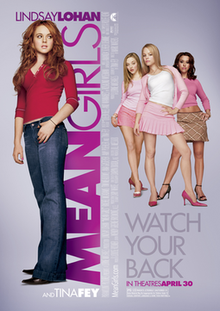
Mean Girls-2004

Mean Girls-2004

Director Mark Waters

Starring Lindsay Lohan, Rachel McAdams, Tina Fey

Scott’s Review #1,433

Reviewed July 21, 2024

Grade: B+

Upon its release, I doubt that the creators of Mean Girls (2004) knew how big of an influence the film would become. Not only becoming a box office hit it also became a Broadway musical with a reboot twenty years later.

It’s also one of those films everyone has heard of and immediately knows what it’s about.

After reading a self-help book about high school social cliques, Tina Fey, who stars in it, wrote the screenplay. The book also delved into school bullying and its damaging effects.

Mean Girls the film is intended to be a comedy and skirts over the horror and contempt that is the reality of vulnerable students being picked on by mean girls. I doubt that in real life ‘mean girls’ victims’ would appreciate a comedy based on their terror and ridicule.

A darker version while depressing would also be closer to reality. I took Mean Girls as a fantasy.

Nonetheless, the film is a roaring success if for no other reason than examining the insecurities and hierarchies of the high school (and middle school years) which ninety percent of adults would likely soon forget forever.

This is powerfully done via comedy so that we can all laugh at the over-the-top and hypocritical actions of the characters in different scenarios.

It’s fun to watch because it takes us back to a time in cinema when its star Lindsay Lohan was an up-and-coming sensation, and before co-stars Rachel McAdams and Amanda Seyfried were Oscar-nominated actors.

Cady Heron (Lohan) is a sophisticated yet naïve student, educated in Africa by her scientist parents. When her family moves to the suburbs of Illinois, Cady gets to experience public school and experiences the cruel laws of popularity that divide her fellow students into tightly-knit cliques.

She unwittingly finds herself in the good graces of an elite group of cool students dubbed “the Plastics,” but soon realizes how her shallow group of new friends earned this nickname. They are led by Regina (McAdams), a rich, popular mean girl.

Things quickly go south after Cady becomes smitten with Regina’s ex, Aaron (Jonathan Bennett).

Despite the title, the film is for anyone with teenage angst, a crush on a fellow student, or feeling either left out or part of a group at the expense of other unpopular kids.

The message of mean girls is universal and therapeutic since audiences can cheer along with Cady especially when she exacts her revenge on queen bee Regina in hilarious form.

The cat-and-mouse play between the two characters is merciless and delightful in the cruel measures to one-up the other in pure comical fashion.

Lohan and McAdams deserve kudos for energetically infusing the characters with likability even during scenes when they should be hated.

Cheering when Regina gets hit by a bus never felt so good.

The writing is astounding and surprisingly good with vicious quick wit and humorous scene after scene.

Wisely, the film ends after one hour and thirty-seven minutes which is a perfect length for a teenage comedy. Anything longer might have made it drag because the ending isn’t unexpected or a huge surprise.

Since we assume Cady will emerge victorious, which she does, the conclusion is satisfying and the event hints at a sequel.

The film is peppered with diversity which is also an enormous win. The principal of North Shore High School, Mr. Duvall (Tim Meadows) is black while other ethnic characters appear.

This provides a nice progressive message.

Watching the film twenty years following its release I never expected to enjoy it quite so much as I did. This is a testament to the power of Mean Girls (2004), director Mark Waters, and Tina Fey who create something that holds up well.

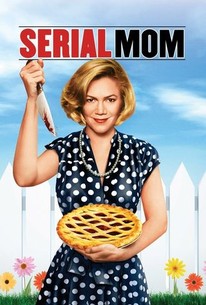
Serial Mom-1994

Serial Mom-1994

Director John Waters

Starring Kathleen Turner

Scott’s Review #1,432

Reviewed July 8, 2024

Grade: A-

An uproarious performance leads Serial Mom (1994) by Kathleen Turner, still in her cinematic heyday in the 1990s; the latter-day John Waters comedy fires on all cylinders.

She wickedly goes full steam ahead in a pulsating performance, one that is deliciously deserving of an Oscar nomination.

The film is directed by Waters, known for perverse and gross-out fare like Pink Flamingos (1972) and Female Trouble (1975), so any chance for an Academy Award is laughable.

Though Serial Mom is much safer than those films, it chooses slick 1990s mainstream camerawork over raw shots of dogshit on the sidewalk.

Still, Turner hits it out of the park playing a ‘June Cleaver’ character with a murderous dark side.

Beverly Sutphin (Turner) appears to be an unassuming upper-middle-class housewife living with her dentist husband Eugene (Sam Waterston) and their teenage children, Misty (Ricki Lake) and Chip (Matthew Lillard), in suburban Maryland.

She is secretly a serial killer who kills people over trivial slights or offenses like insulting her son or blowing off her daughter. The dastardly mom uses creative weapons like her station wagon and a fire poker to kill her prey.

Serial Mom is strictly for ravenous fans of Waters, and I’m not sure it will win over any new fans. But I’ll stress how much of a mainstream affair it is compared to his more dangerous 1970s films.

It pairs well in look and feel with Hairspray from 1988, and both films star Ricki Lake.

Some have referred to it as a slasher film, but that would steer it in the horror vein or knife-wielding maniac territory. Beverly isn’t Freddie, Jason, or Michael Myers.

She is fun and does as much damage with a sneer or a smirk as with a weapon.

Beverly is also the type of woman you’d like to be friends with, but are terrified of crossing. After all, she kills in the defense of her kids, so she’s a good mother with a wicked sense of humor.

When she delights in crank-calling her neighbor, Dottie Hinkle (deliciously played by Waters’s regular, Mink Stole), to get a rise out of her, we cheer her on.

Later, when charged and sent to trial for her dirty deeds, she fires her attorney and takes over her case amid rabid fan response. Beverly becomes a local hero.

She’s a cinema villain to remember.

Waters is great because he finds the perfect balance of camp and wit to make a smart film, not merely a slapstick one. Many cinema comedies don’t work because the laughs feel canned instead of fresh.

The writing and the cast make Serial Mom a winner.

The ridiculous antics and situations Beverly gets into make the audience want to know what she’ll do next. Who doesn’t love a well-to-do character who turns sinister?

It’s fun to watch a rich suburban town turn into a shit show of high entertainment.

Besides Stole, my favorite supporting actors are Mary Jo Catlett and Matthew Lillard. Catlett has brilliant comic timing as a neighbor, Rosemary, while Lillard was on the cusp of becoming a horror/comedy star with 1996’s Scream.

Regarding cameos, I could have done without the Suzanne Somers cameo playing herself, which didn’t land all that funny, but Patty Hearst as juror #8 is a winner.

The ‘white shoes after Labor Day’ sequence is hysterical.

Serial Mom (1994) is a cult classic for the ages and is on par with most of John Waters’s earlier classic raunchy comedies.

The Bikeriders-2024

The Bikeriders-2024

Director Jeff Nichols

Starring Austin Butler, Jodie Comer, Tom Hardy

Scott’s Review #1,431

Reviewed July 1, 2024

Grade: A-

The Bikeriders (2024) immediately informs the audience of the time and place the film will be told. A dry and dusty midwestern USA between 1965-1973 is the window explored and the defiance of the characters drawn.

This period is the Vietnam War, Civil Rights, assassinations, Woodstock, and many other historical moments. Dangerous, the culture and people were changing and very rebellious.

Director Jeff Nichols, who also wrote the screenplay based on ‘The Bikeriders’ by Danny Lyon, wonderfully presents a time capsule of a group of bikers who forged their subculture away from the uncertainty of the rest of the world.

After a chance encounter at a local biker bar, strong-willed Kathy (Jodie Comer) is drawn to handsome and mysterious Benny (Austin Butler), the newest member of the Midwestern motorcycle club, the Vandals, led by the enigmatic Johnny (Tom Hardy).

Much like the country around it, the club changes with time, transforming from an essential gathering place for local outsiders into an underworld of violence. This forces Benny to choose between Kathy and his loyalty to the club.

The most vital parts of The Bikeriders are the beginning and end, with portions in the middle section, making it drag and lowering a potential ‘A’ rating to an ‘A-.’

But the other sections are so rich with characterization and events that they usurp the dull parts.

Nichols, who has also directed Take Shelter (2011), Mud (2012), and Loving (2016), likes to focus on the decade of the 1960s in America with conflicted characters. He likes to work with Michael Shannon, who has a small yet pivotal role as a man who ponders life.

We meet Benny in a bar, where he sips a drink. Two local thugs hastily tell him to remove his biker jacket. After a bloody fight in the parking lot, we realize how much the biker club means to him and what it symbolizes.

It’s a club where the vermin, weirdos, undesirables, and those cast aside by society find a place and are cared for by one another. That is until the years pass and things change by meaner and less loyal bikers.

The symbolism resonates with all because time never stands still, and good things always come to an end.

The Bikeriders is told from Kathy’s perspective through interviews with her friend Danny (Mike Faist). He is the real-life author of the book on which the film is based.

Comer is outstanding in the lead female role. She is strong and resilient, attracted to the dangerous lifestyle and the bikers, but only has eyes for Benny and will not be taken advantage of.

She chronicles specific events like fights, death, and rape in painful yet thoughtful detail, inviting the audience into her dark world.

Butler and Hardy are also terrific. Arguably co-leads, Butler’s Benny is childless and more accessible than Hardy’s Johnny, a family man. Johnny sees Benny as the next leader of the Vipers, but Benny wants none of that.

Comparisons to the club and life outside the club torture both men. During a long homoerotic scene, Johnny and Benny are dangerously close to kissing as Johnny discloses the reasons why Benny should lead the club.

The scene is smoldering as the unspoken connection can be felt in raw form. Nichols doesn’t dare to make the film into anything LGBTQ+ related, but the nuances and subtleties exist.

Besides the acting, the gritty environment oozes with richness. The soiled biker bars, sticky floors laden with blood, beer, and vomit, emit from the silver screen.

You can almost smell the environment.

The bad teeth, foul language, and tacky Midwestern accents all portray the loneliness of these characters and their clinging to the club for dear life.

Nichols and the author Lyon depict a fresh look into the world of motorcyclists and the culture they lived and died in for a brief time. The Bikeriders (2024) presents violence mixed with brotherhood and loyalty, which is fascinating to watch.