Category Archives: Comedy

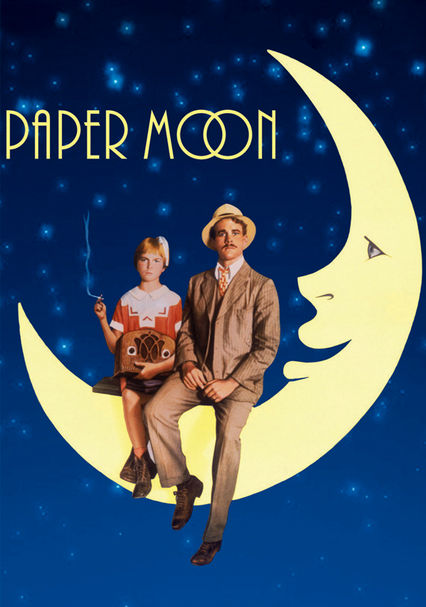
Paper Moon-1973

Paper Moon-1973

Director Peter Bogdanovich

Starring Ryan O’Neal, Tatum O’Neal, Madeline Kahn

Scott’s Review #1,352

Reviewed March 23, 2023

Grade: A-

Peter Bogdanovich’s follow-up to the 1971 brilliance of The Last Picture Show is a film called Paper Moon (1973), named after a song introduced during the opening sequence.

While similar in texture and tone to the former, the latter takes much more time to become absorbed in. But the payoff finally arrives. There are also hints of comedy in Paper Moon, which The Last Picture Show had virtually none of, but they are companion pieces for sure.

The cinematography could even be classified as a carbon copy, and the isolated Midwest (this time, Kansas and Missouri rather than Texas) is on full display, rather than a 1950s Korean War dilemma.

In Paper Moon, the time is the 1930s Depression Era United States, when everyone and their brother was looking for a way to survive.

To make things interesting, real-life father and daughter star together. Ryan O’Neal and Tatum O’Neal are a remarkable dynamic duo, and the connection is evident.

They portray slick con artists Moses Pray (Ryan) and Addie Loggins (Tatum), who play off each other in a relaxed, easy manner.

When “Moze” is unexpectedly saddled with getting the nine-year-old Addie to relatives in Missouri after her mother’s death, his attempt to dupe her out of her money backfires, and he’s forced to take her on as a partner.

Swindling their way through farm country, the pair is nearly done in by a burlesque dancer (Madeline Kahn) and an angry bootlegger (John Hillerman).

Knowing that years later, Ryan would unwittingly proposition his daughter at a funeral, unaware of who she was, is both comical and sad.

But, I digress.

The chemistry makes Paper Moon work, though Bogdanovich’s direction is second to none in creating the proper mood, as he did so well two years earlier. The muddy, crusty atmosphere is palpable with miles and miles of desolate land on full display for the viewer.

Everything looks dirty, dusty, and depressing, which is to the film’s credit.

The small characters are a winning formula as they hope against hope that the scheme Moze is selling (a first-rate Holy Bible inscribed to them by their recently deceased loved one) could be true, and it is heartbreaking.

I’d give the first half a B or a B+, but the second half earns a solid A. The events start slowly and are a bit tough to get into from a storyline perspective.

I wasn’t so enamored of Madeline Khan’s character, though the actress is one of the film’s strongest aspects. Moze is hot and heavy for Miss Trixie Delight, but besides being busty, she has little else to offer.

She doesn’t treat her downtrodden teenage maid, Imogene (P.J. Johnson), very well and makes a spectacle of herself wherever she goes.

Satisfyingly, Addie and Imogene make quick work of her when they conspire to have Moze catch Trixie in bed with a hotel clerk. Khan is a hoot, but Trixie is mediocre.

When events get back to the Moze and Addie story, it’s off to the races. An enthralling final sequence occurs when the pair uncovers a bootlegger’s store full of whiskey, steals some of it, and sells it back to the bootlegger.

Unfortunately, the bootlegger’s twin brother is the local sheriff, and he quickly arrests Addie and Moze. The climax is on par with 1967’s Bonnie and Clyde without the killings- instead, the pair are on the run and foraging for an uncertain future.

The characters may not have the best morals, but they are survivors, and that makes them appealing. I’d venture to say Tatum O’Neal is the standout, though Ryan’s good looks are hard to ignore.

Paper Moon (1973) starts slow but becomes infectious during the final thirty minutes or so.

Oscar Nominations: 1 win-Best Supporting Actress-Madeline Kahn, Tatum O’Neil (won), Best Screenplay-Based on Material from Another Medium, Best Sound

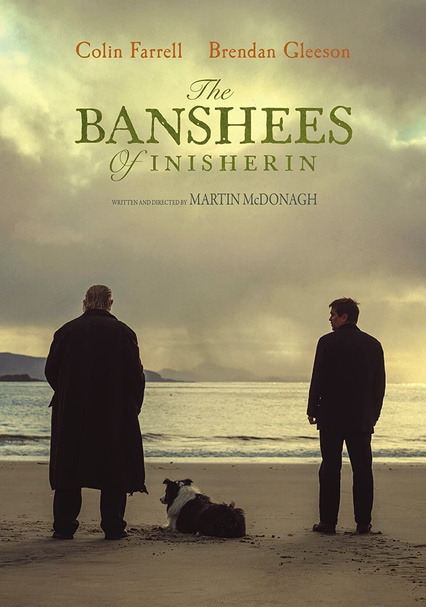
The Banshees of Inisherin-2022

The Banshees of Inisherin-2022

Director Martin McDonagh

Starring Colin Farrell, Brendan Gleeson, Kerry Condon

Scott’s Review #1,348

Reviewed March 2, 2023

Grade: A

Martin McDonagh, who directed The Banshees of Inisherin (2022), is known for films such as In Bruges (2008) and Three Billboards Outside Ebbing, Missouri (2017).

His films typically feature dark humor stories about humanity and unpleasantness, and require some reflection to consider the characters’ true nature.

This film stars Colin Farrell and Brendan Gleeson, who reunite after their collaboration in In Bruges for another turn playing men dealing with depression, loneliness, and the complexities of friendship.

McDonagh is British/Irish, so the period and surroundings likely resonate well with him. The gorgeous islands off the coast of Ireland are integral to the story and serve as a counterbalance to the troubles and tribulations of the characters.

Pádraic (Farrell) and Colm (Gleeson), are lifelong friends and inhabitants of an island off of mainland Ireland. They find themselves embroiled in a feud after Colm one day announces he is ending their friendship.

This confuses Pádraic, who vows to mend the relationship at all costs.

Their reunion is thwarted by severed fingers, a fire, and the mysterious death of Pádraic’s beloved pet donkey, Jenny.

Mixed into the events are Pádraic’s sister, Siobhán (Kerry Condon), and the troubled young islander, Dominic (Barry Keoghan), who have their own problems to face.

The Banshees of Inisherin is a slow-paced and cerebral film, and many questions will be pondered but left unanswered. This will likely disappoint viewers who prefer a clear conclusion to the characters’ lives.

However, this is a key part of the film’s beauty. I might have liked a big, no-holds-barred argument scene between Pádraic and Colm, or more closure in Dominic’s or Siobhán’s stories. Instead, McDonagh challenges the audience to feel perplexed or unsure and use their interpretations.

For example, I wonder if Dominic was being sexually abused by his policeman father, who has a penchant for sitting naked in the living room chair and masturbating.

Or, what does Siobhán leave the island for, and will she ever return?

On a separate note, I wonder if McDonagh was influenced by the epic 1970 gem Ryan’s Daughter, directed by David Lean. The flowing Irish landscapes and unpleasant, embittered townspeople have key similarities.

The winning formula is ambiguity. The audience is treated to terrific acting all around, particularly among the four principals (Farrell, Gleeson, Condon, and Keoghan), all of whom were awarded Academy Award nominations.

Each provides subdued performances dripping with contained emotion and complexities buried beneath the surface.

Audiences can draw their conclusions, but my takeaways were loneliness, longing for new adventures, depression, and begrudgingly accepting a meager existence amid the most lavish countryside one can find.

The 1920s Irish Civil War serves as the backdrop, although those events are not central to the plot.

Since Colm’s desire to create music is a central part of the story, the accompanying music is crucial to the film. The use of fiddles is incorporated rather than traditional Irish music, except in the sprinkling of pub scenes.

A hearty round of applause is due to McDonagh and company for crafting and performing a thinking man’s film. The comic bits are not syrupy but tragic in their honesty and cadence.

The Banshees of Inisherin (2022) separates cinematic thinkers from passive viewers with a quiet story about the friendship between two men and the layers that exist beneath the surface.

Oscar Nominations: Best Picture, Best Director-Martin McDonagh, Best Actor-Colin Farrell, Best Supporting Actor-Brendan Gleeson, Barry Keoghan, Best Supporting Actress-Kerry Condon, Best Original Screenplay, Best Film Editing, Best Original Score

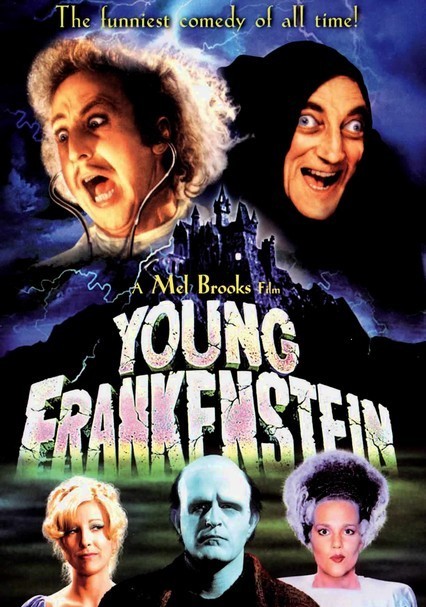
Young Frankenstein-1974

Young Frankenstein-1974

Director Mel Brooks

Starring Gene Wilder, Peter Boyle, Teri Garr

Scott’s Review #1,347

Reviewed February 27, 2023

Grade: A

Young Frankenstein (1974) is one of the funniest, most authentic examples of slapstick comedy done right. The physical timing, facial expressions, and dialogue delivery are sheer perfection from the well-known cast.

Many of whom are stars of the comedy genre.

The fact that director Mel Brooks took a classic horror film as distinguished as Frankenstein (1931), and made a cross-genre sequel, is pure brilliance.

Even better is the incorporation of black-and-white filmmaking, resembling the 1930s masterpiece, so the setting feels similar. This is aided by the recreation of the lab equipment designed by the original set designer, Kenneth Strickfaden, from the 1931 film. 

Brooks co-wrote the screenplay with star Gene Wilder, a comic legend, and the writing is brilliant, crackling with wit and energy.

The 1970s film, watched decades later, has lost none of its original appeal, holding up astoundingly well even after most of the cast and the director have left this world. It can be watched over the Halloween season for the proper atmosphere or at any time.

Ideally, recommended to watch Frankenstein either before or after seeing Young Frankenstein for ideal pleasure.

Respected medical lecturer Dr. Frederick Frankenstein (Wilder) learns, much to his chagrin, that he has inherited his infamous grandfather’s estate in Transylvania, Romania.

The original Frankenstein’s reputation is so tarnished that Frederick wants nothing to do with the name, even going so far as to change the pronunciation of his surname to “Fronkensteen”.

Begrudgingly arriving at the castle, Dr. Frankenstein soon begins to recreate his grandfather’s experiments with the help of servants Igor (Marty Feldman), Inga (Teri Garr), and the rigid Frau Blücher (Cloris Leachman).

After he creates his monster (Peter Boyle), a new set of complications ensues with the arrival of the doctor’s fiancée, Elizabeth (Madeline Kahn), and the unleashing of the frightening beast on the small town.

Comedy and horror are worlds apart, but Brooks and Wilder pay tribute to the classic horror film by not mocking it but instead embracing it and enhancing the story in Young Frankenstein.

You could say it’s a sequel in addition to a spoof made over forty years later.

The characters are the best part, and each one is brought to fine form by its actor. Wilder, as the mad scientist, is led by ug-eyed Igor (pronounced ‘Eyegor’ naturally), who is revealed to be the grandson of Igor in Frankenstein, my personal favorite, followed by Garr as Wilder’s secret romantic interest.

My favorite scenes are when Igor reveals that he took the wrong brain for Frankenstein’s experiment, belonging to ‘Abby Normal’ instead of ‘Abnormal’ as the label read.

Inga and Frederick have instant chemistry, leaving Kahn’s Elizabeth in the dust as far as a romantic triangle. Hilarity between the pair occurs in the final sequence when, after a lobotomy, she is delighted to realize that Frederick has received the monster’s “enormous Schwanzstucker”.

This is not to diminish Boyle, Leachman, or Kahn, who each do their part to make Young Frankenstein an ensemble. Apt viewers will spot Gene Hackman as Harold, the blind man.

As an aside, Brooks brilliantly pays tribute to Bride of Frankenstein (1934) by giving Elizabeth the same hairstyle.

The double entendre is fast and furious from knockers to the male anatomy.

The only scene that didn’t wow me was the sequence where Frankenstein and his creation perform “Puttin’ on the Ritz”. The monster singing and dancing was too amateurish for me, but for some, it’s a favorite scene.

A parody that works on nearly every level and is the best of all the Brooks films (even barely usurping my forever fondness for 1977’s High Anxiety), Young Frankenstein (1974) is a treasure.

Silly, devoted, and creative, it revives a classic in the best possible way and is filmmaking 101 on how to create a proper spoof.

Oscar Nominations:  Best Adapted Screenplay, Best Sound

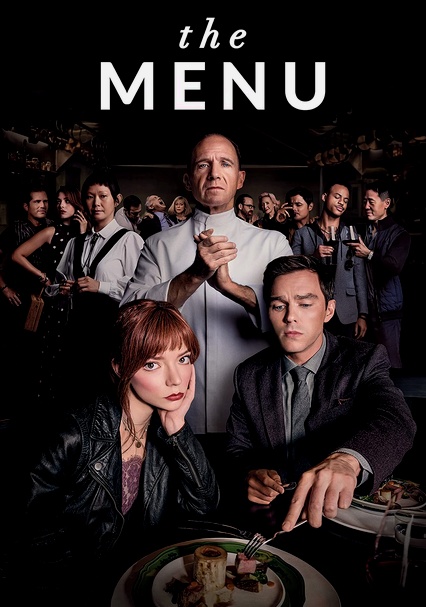
The Menu-2022

The Menu-2022

Director Mark Mylod

Starring Ralph Fiennes, Anya Taylor-Joy

Scott’s Review #1,345

Reviewed February 20, 2023

Grade: B+

The premise of The Menu (2022) immediately elicited my utmost pleasure. A self-proclaimed ‘foodie’ with a long way to go in being an expert, a film about a high-caliber restaurant with an extravagant and sophisticated tasting menu was impossible to ignore.

Throw in the horror and dark humor genres, and you’ve got the icing on the cake.

After all, being fortunate enough to have experienced fine dining, as depicted in the film, makes me repeatedly reminisce about those adventures. Those enchanted by such tasting menus, rich in flavor and style, must see The Menu.

Cinematically, the film reminds me of parts of Saw (2004) and Knives Out (2018), with a dash of novelist Agatha Christie’s Ten Little Indians story and a sprinkling of a Jordan Peele project for its social commentary.

A young couple Margot (Anya Taylor-Joy) and Tyler (Nicholas Hoult) travels to a sunny coastal island to eat at an exclusive restaurant named Hawthorn, where the chef (Ralph Fiennes) has prepared a lavish menu.

They are joined by other guests, including a food critic, her editor, wealthy regulars, three business people, a washed-up movie star and his assistant, and the chef’s alcoholic mother.

As the evening commences and the dishes are served, the chef has some diabolical surprises in store for the guests. Secrets are soon revealed as it becomes apparent they have been summoned to the island for a reason.

Mark Mylod, a new director to me, peppers the film with dark, macabre humor, mostly related to the food, which is slyly placed and pairs well. Those who savor fine dining and tasty ingredients will smirk with delight.

The title and ingredients of each course are named, and by the third course, the sins of the diners are revealed on tortilla shells for all to see. The audience knows they are not innocent people, and the chef and his team are intent on punishing them a la carte style.

The revelation that Margot is not supposed to be there is satisfying because, so far, the chef, his assistant, and a guest have been eying her mysteriously. Tyler was initially scheduled to bring another woman with him.

Instead of limiting the story, this only enhances it. Could Margot be convinced to align with the chef, or does she hate him? Jealousy among the staff and guests quickly spirals out of control.

Another win for The Menu is the incorporation of class distinction. The haves and the have-nots, and how they feel about each other, is a crucial sidebar, and it is easy to understand the motivations of the characters.

The Menu loses its way during the final thirty minutes, with an unsatisfying and perplexing ending that hardly wraps up the story for the audience in a neat doggy bag.

I was left with more questions than answers regarding the plot.

The analysis can be somewhat forgiven with a deathly serving of s’mores for dessert, with the bodies of the guests as the marshmallows and their heads mirroring the chocolate tops.

A laugh-out-loud moment occurs when a spoiled guest fails to understand the quality difference between cod and halibut. Every foodie should be aware of the superiority of halibut.

It’s not all polish and high cuisine, as the preparation and consumption of a good old-fashioned greasy cheeseburger are made with such precision that I could nearly smell the wonderful indulgence.

The sizzling meat, combined with the heavenly melted American cheese, made me want to reach for my phone and order Grubhub.

Fiennes and Taylor-Joy are the standouts as their complex relationship and chemistry are palpable. Special notice must be given to Hung Chau, Judith Light, Janet McTeer, and John Leguizamo, who make the ensemble quite good.

With a terrific idea and enough tastes and smells that almost emerge from the screen, The Menu (2022) is a winner. It’s unsatisfying at the conclusion, but the experience is enjoyable and the creativity is championed.

I felt like a guest at a restaurant myself.

M3GAN-2023

M3GAN-2023

Director Gerard Johnstone

Starring Allison Williams, Violet McGraw

Scott’s Review #1,338

Reviewed January 31, 2023

Grade: B+

M3GAN (2023) is the sleeper hit of the year, quickly becoming a ‘water-cooler’ topic (remember that phrase?) after getting stagnant cinema lovers back into theaters in droves.

Released in the traditionally dismal month of January when studios usually ‘dump’ film releases with little or no bang for their buck M3GAN is already set to spawn a sequel. The possibilities for a different story to correlate with the original are endless.

The poster (see above) and the movie trailer are instantly grabbing. We see a doll-like/robotic little girl with long flowing blonde hair and mesmerizing, sparkling eyes that are cat-like and creepy.

Almost life-like, it doesn’t take a genius to conjure images of the Chucky doll from the Child’s Play franchise (1988-2019). Seemingly lovable but turning sinister, the concepts are more or less the same.

When robotics engineer Gemma (Allison Williams) takes in her orphaned niece, Cady (Violet McGraw), she creates the perfect companion for her, a lifelike doll named M3GAN, who serves as a friend, confidante, and sensible role model.

Cady and M3GAN immediately bond and become inseparable pals.

M3GAN can listen, watch, and learn from other people and objects as they relate to Cady, using advanced Artificial Intelligence to store their idiosyncrasies.

As expected, things soon go awry when M3GAN uses her superior intelligence to destroy anyone whom she perceives as a threat to Cady.

I’m not one to suggest a film tone down the blood and gore in a horror film but in the case of M3GAN, it works to the film’s advantage as proven by tremendous box-office receipts.

Far from kid-friendly, one of the main characters is eight to ten years old which might encourage parents, especially parents who are horror fans, to take their youngsters to see the film. At first, Cady and M3GAN invoke an idealized pre-teen female relationship, and a bully intent on harming Cady gets his comeuppance.

Most of the other characters who suffer dire fates are unlikeable. A boorish neighbor, a vicious dog, Gemma’s obnoxious boss, and his conniving assistant all get their due one way or another at the hands of M3GAN.

She’s not exactly a ‘hero’ but the fun is watching hated characters suffer at her hands. The setup is perfected as each character reveals their obnoxiousness to the rabid audience thirsting for a slashed throat or two.

My point is that parents and kids alike can enjoy this film and simultaneously share a startle and a giggle.

The campy nature of the film is another win since the humor evens out the horror elements. There are enough funny lines, mostly delivered by the supporting players, to evoke laugh-out-loud moments.

The grand finale is inevitably predictable but enjoyable because it’s what the audience can’t wait for. M3GAN, once prim and proper in her little girl dress, shrieks and spits curses at her former friends as her now disfigured face and ravaged hair make her look disheveled and monstrous.

M3GAN’s true colors are revealed and the audience will hoot and holler with delight.

Unlike many films, M3GAN goes right for the jugular in the first scene with a deadly car accident and keeps the fast pace for the entire one hour and forty-two minute running time.

Williams, well-known for starring in Jordan Peele’s 2017 masterpiece Get Out scores another win in the central role. She capably plays a loving yet inexperienced surrogate parent and carries the film, along with M3GAN of course.

Incorporated is a relevant knock on mass consumption of technology gadgets and a robot replacing good parenting. This is more evidence that parents should see M3GAN.

I can’t wait to see what the writers next have in store for the little terror when the sequel drops.

Everything Everywhere All at Once-2022

Everything Everywhere All at Once-2022

Director Daniel Scheinert, Daniel Kwan (Daniels)

Starring Michelle Yeoh, Ke Huy Kwan, Stephanie Hsu

Scott’s Review #1,337

Reviewed January 26, 2023

Grade: A

Released in March 2022, Everything Everywhere All at Once is a film that built momentum throughout the year, resulting in an astonishing eleven Academy Award nominations.

Traditionally, films vying for awards season attention and subsequent praise and honors are released in the fourth quarter, while earlier releases are relegated to the discount racks.

But Everything Everywhere All at Once breaks the mold thanks to being a visionary, absurd comedy that demands the appreciation it has received.

As of this writing, it is the highest-grossing film released by A24, a champion of independent and quality cinema.

Evelyn Wang (Michelle Yeoh) plays a flustered and bedraggled immigrant mother who runs a laundromat along with her goofy husband Waymond (Ke Huy Kwan).

They reside in the laundromat with Evelyn’s irritable father, Gong Gong (James Hong), and daughter Joy (Stephanie Hsu), who is gay.

In trouble with an IRS inspector, Deirdre (Jamie Lee Curtis), Evelyn is contacted from a parallel universe and told that only she could save the world. She must quickly learn to channel her newfound powers and fight through the timelines of the multiverse to save her home, her family, and herself.

Everything Everywhere All at Once is not conventional and is admittedly a complete mess, meant in the finest of ways.

It takes the cinematic formula and tips it on its ass, but intelligently incorporates heartfelt scenes and gripping performances so that the viewer falls in love with the characters before knowing what’s hit them.

I semi-cried when I heard the film was an action mix with science fiction and superhero multiverses, none of which are my genre of choice. The film goes beyond that with a sensory overload, a warped onslaught of colorful wackiness that includes hot dog fingers, butt plugs, and a drag performance.

You can’t make this up, kids.

Michelle Yeoh kicks ass (literally!) and gets the role of a lifetime. At sixty years old, she has played a Bond girl in Tomorrow Never Dies (1997) and a rich bitch Mom in Crazy Rich Asians (2018), decent roles, but nothing like Evelyn.

Directors, the Daniels, show through Evelyn’s character how her life has disappointed her. Never appreciated by her father and living in a state of doldrums, she becomes an angry and frustrated young woman, but eventually develops into a person who enjoys the small moments of human connection in her life.

We can all learn from Evelyn.

What a treat to see Jamie Lee Curtis chew up the scenery playing Deirdre. Displaying her gut, wearing a bizarre grey wig, she plays part IRS agent, part lesbian lover, depending on which universe she inhabits, and is a hoot.

Ke Huy Kwan is famous as the child actor from Indiana Jones and the Temple of Doom in 1984, and not much since. He somersaults back into the acting spotlight in the role of Evelyn’s kind husband.

Finally, Stephanie Hsu is a gem as Stephanie, who wants to be loved by her mother. The actor has a bright future ahead of her.

These actors get to play four or five different characters, showcasing their acting chops.

Stylistically, the film is off the wall. Dizzying special effects and absurd editing bombard the viewer with ‘stuff’ that can be analyzed from a technical perspective for weeks.

But at the end of the film, you will shed a tear or two at the emotion that sneaks up from behind in the most wonderful way. Quiet scenes between the noisy ones show humanity and love for one another.

Everything Everywhere All at Once (2022) has reaffirmed my appreciation of film and the creativity and beauty that can be mastered.

Oscar Nominations: 7 wins-Best Picture (won), Best Director-Daniel Kwan and Daniel Scheinert (won), Best Actress-Michelle Yeoh (won), Best Supporting Actor-Ke Huy Kwan (won), Best Supporting Actress-Stephanie Hsu, Jamie Lee Curtis (won), Best Original Screenplay (won), Best Original Score, Best Original Song-“This is a Life”, Best Costume Design, Best Editing (won)

Independent Spirit Award Nominations: 6 wins-Best Feature (won), Best Director-Daniel Kwan and Daniel Scheinert (won), Best Lead Performance-Michelle Yeoh (won), Best Supporting Performance-Ke Huy Kwan (won), Jamie Lee Curtis, Best Breakthrough Performance-Stephanie Hsu (won), Best Screenplay (won), Best Editing (won)

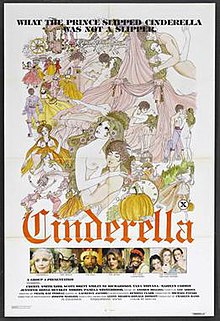
Cinderella-1977

Cinderella-1977

Director Michael Pataki

Starring Cheryl Smith, Brett Smiley

Scott’s Review #1,333

Reviewed January 14, 2023

Grade: B

This telling of the legendary fairy tale Cinderella (1977) differs significantly from the sentimental, wholesome story of a rags-to-riches Disney princess we all know and love.

It’s for adults only; even many adults will scurry to grab the remote and turn it off before their significant other or, god forbid, children, catch them slyly peeking at what emerges from the screen.

The film is pornographic. This fact doesn’t offend me or influence my critique, and in reality, piques my interest tremendously in how the filmmakers turn Cinderella into a porn film.

It’s 1970s-style pornography with the bulk of the nudity going to the female characters, with barely any male flesh to view, though there is some.

During the fleshy numbers, there is music and dancing to be had, usually with the female performers singing while topless.

The familiar story involves a lonely prince (Brett Smiley) who tries several young women in his kingdom in his search for the one he met at a royal ball. Naturally, it’s Cinderella (Cheryl Smith), the gorgeous yet abused waif who sings and dances while doing her chores, longing for a better life.

The prince is jaded and feels no satisfaction from traditional sex as he boldly reveals in the musical number ‘My Kingdom Won’t Come’. His sex-crazed father the King (Boris Moris) decides to host a lavish ball so that his son can find what he wants.

You see, the weapon that Cinderella possesses is a special snapping female genitalia that the prince experiences at the ball while blindfolded and in an orgy. This quality is irresistible to him and he must find and be with the woman who is the one who has the magic vagina.

The film is naughtily personified, and the fun is seeing how far out director Michael Pataki and screenwriter Frank Ray Perilli will go for a shock. Pataki was mostly an actor who dabbled in directing, which makes sense since Cinderella feels widely experimental.

Events get off to a perfectly indecent start when the royal chamberlain, played by Kirk Scott, wanders the forest, encountering nude females who coquettishly make out with each other for fun and the affection of the handsome man.

There is more than the sex scenes to keep one thrilled. The costumes and makeup, especially the disgraceful pancake colors applied to Cinderella’s devilish stepsisters, are in-your-face and gratifying. The gowns at the ball are professional and stylish.

The film teeters into art-film territory at times, like when Cinderella performs a musical number while soaping in the tub and parading through the forest.

Her wacky Fairy Godmother is a black man played by Sy Richardson, who is just a burglar intent on robbing Cinderella’s home, but he does provide her with her special ‘gift’.

These many idiosyncrasies make the film Cinderella a cross between a lewd John Waters film and a bombastic Russ Meyers party film.

Cheryl Smith is excellent in the title role, providing a gorgeous face and figure with a lovely voice. She perfectly delivers the numbers and carries the film.

Among all the many incarnations of Cinderella, circa 1977 is the most outrageous and courageous. How this film was even made, and with an R rating, baffles me. It’s nearly impossible to find on streaming platforms or in stores, and it was only a spontaneous purchase that let me see it.

My suggestion is for cinematically creative film fans to give Cinderella (1977) a whirl, but with extreme caution. Viewed with the wrong companions could be disastrous, and a 3 am start time with adult nibbles is highly encouraged.

No kiddies allowed.

Single All the Way-2021

Single All the Way-2021

Director Michael Mayer

Starring Michael Urie, Philemon Chambers, Luke Macfarlane

Scott’s Review #1,325

Reviewed December 21, 2022

Grade: C+

Single All the Way (2021) is an LGBTQ+ romantic comedy film released by the streaming behemoth Netflix. However, I swear the film feels like a Hallmark or Lifetime television movie of the week offering.

The film, a Christmas-themed romantic comedy about gay men, is the streaming service’s first gay holiday film.

As inspired and momentous as this may sound, please hold the accolades and champagne for just a hot second. I had hoped for a bit more danger, complexity, or even darker drama from Single All the Way, given it’s the first of its kind.

Instead, I was presented with a childish, cliched, saccharine-induced, run-of-the-mill story that swaps the standard straight-laced, blue-eyed, blonde-haired straight couple from the Midwest, USA, with gay characters.

Everything else remains the same.

Since the LGBTQ+ is to be celebrated, the result is a marginally enjoyable romantic comedy featuring gay men and a timid triangle where the audience knows all along how it’s going to play out.

Desperate to avoid his family’s judgment about his perpetual single status, Peter (Michael Urie), who lives in Los Angeles, convinces his best friend Nick (Philemon Chambers) to join him for the holidays in snowy New Hampshire and pretend that they’re now in a relationship.

But when Peter’s mother (Kathy Najimy) sets him up on a blind date with her hunky trainer James (Luke Macfarlane), the plan goes awry. Peter becomes caught in a quandary about either confessing his feelings for Nick or pursuing relations with James while his family schemes to unite Peter and Nick.

Let me make clear that the only reason Single All the Way rates as high as a ‘C+’ is that I applaud the decision to write, produce, and release an LGBTQ+-themed film. It’s about damn time, but I wish it were a better film.

Nick being light-skinned black is also a way to promote at least a bit of diversity, although the other characters and environment feel as white as the fake snow draping the wintry set design.

Despite being slightly effeminate, he works as a rugged handyman, which somehow doesn’t quite work out.

The main issue is that there is no chemistry between any of the three men. It’s unbelievable that Nick and Peter have been roommates for years, and it takes a trip to New Hampshire for them to realize their undying love for one another.

Macfarlane, well-known for appearing in Bros. (2022), the first gay romantic comedy released by a major studio, is almost distractingly good-looking. Hunky and drop-dead gorgeous, it’s laughable to think his character would be the odd man out against the semi-cute Peter and Nick.

It’s as if someone wanted the average Joe to beat out the hunk, finally.

Realistically,  Peter would have at least slept with James instead of hemming and hawing before declining an invitation to James’s apartment after a date.

The family, led by Peter’s mother Carole (Najimy), is beyond irritating. Wanting desperately for her son to find love, she is what every gay man doesn’t want his mother to be.

Landing Jennifer Coolidge, a gay icon, is a significant win wasted by casting her in the cliche-riddled role of Aunt Sandy, a man-hungry diva.

If that isn’t bad enough, Peter’s two sisters’ scheming to separate Peter and James’s burgeoning romance and unite Peter and Nick is silly and not worthy of a daytime soap opera.

At the end of the day, Single All the Way (2021) is barely even a cute film. It’s as safe as can be with every cliche (straight and gay) imaginable, as if someone was so thrilled to be making an LGBTQ+ film that they didn’t dare take one single risk.

Bodies Bodies Bodies-2022

Bodies Bodies Bodies-2022

Director Halina Reijn

Starring Amandla Sternberg, Maria Bakalova

Scott’s Review #1,321

Reviewed December 11, 2022

Grade: B

Bodies Bodies Bodies (2022) is an admirable attempt at merging straight-ahead slasher whodunit with a good dose of dark comedy and camp. It doesn’t always hit the mark, but it provides entertainment and is thought-provoking.

The film is never dull and will keep the viewer guessing. There is plenty of diversity with a twist at the end, which I’m still not sure is satisfying or not.

While watching the film, I wasn’t always sure if the dialogue was intended to be played for laughs (it’s sometimes terrible). I’m still uncertain whether the debut director, Halina Reijn, was poking fun at 1980s-style slasher flicks or paying homage to them.

The inclusion of Saturday Night Live alumnus Pete Davidson provides a bit of humor. He pushes the film toward comedy territory, though his character is more of an asshole than comic relief. It’s other characters who deliver the funny lines.

Having not heard of the film before, the premise was intriguing and made me watch it during a long international flight. I needed to spend about ninety minutes.

When a group of wealthy twenty-somethings plans a dubious hurricane party at a remote family mansion, they drink and use drugs. A party game goes awry.

I knew right away that an incident would occur, one that would see them knocked off unceremoniously, one by one.

A hefty dose of cattiness between both the male and female characters will make the viewer smirk with pleasure. The backstabbing and fake friends angle is as delicious as the offing of several characters.

I love that Sophie (Amandla Sternberg) and Bee (Maria Bakalova), the central characters, are a lesbian couple. Bee is from Eastern Europe, while Sophie is of mixed race and affluent, and Bee is working class.

There are many differences to explore, which can lead to an insecure relationship.

It’s suggested that they are a new couple, early in their relationship, and one of the other girls, Jordan (Myha’la Herrold), has previously had a relationship with Sophie. On top of all that, Sophie is a recovering drug addict.

I’m not sure the myriad of drama elements is all that necessary, but it does reinforce the complexities of the characters. At the end of the day, what the audience wants to see is violence and dripping blood, and I felt a bit cheated in that department.

Don’t get me wrong, people do die, but nobody is shown squealing or running for their life. Because they are playing a game, aptly titled ‘bodies bodies bodies’, the victims pretend to die but then wind up dead.

Besides Bree and Sophie, the other characters are unlikable. I slowly realized that’s the fun of Bodies Bodies Bodies. Since the characters are whiny, rich, and spoiled rotten, we want them to get their just desserts.

My main criticism of Bodies Bodies Bodies is that its intention is not always clear, which can be confusing. Is it a message movie, a slasher flick, or an argument over a spoiled and clueless generation?

As the credits rolled, I wasn’t even sure who the killer was or why. Turns out, my immediate hunch was correct, but I second-guessed myself.

In hindsight, I like the ultimate twist, but there are so many aspects to Bodies Bodies Bodies. Generation Z hatred, societal clashes, love triangles, and a potential serial killer all rolled into one. That’s a bit much for a ninety-minute affair.

Comparisons to April Fool’s Day (1986) and Scream (1996) come to mind. And, Agatha Christie’s novels, in which a group of characters flocks to a remote locale for a good whodunit, also occur.

As I absorb Bodies Bodies Bodies (2022) more and more, I realize that Reijn brings a fresh perspective to a sorely oversaturated genre, and that’s a good thing.

The film could have been fleshed out more.

Independent Spirit Award Nominations: Best Director-Halina Reijn, Best First Screenplay

The Witches-2020

The Witches-2020

Director Robert Zemeckis

Starring Anne Hathaway, Octavia Spencer

Scott’s Review #1,314

Reviewed November 16, 2022

Grade: B

A remake of the 1990 film starring Anjelica Huston, The Witches (2020) sometimes delivers the goods and occasionally derails off the tracks into campy, over-the-top, wackadoo.

Mostly, on the part of the star Anne Hathaway, who plays an evil and powerful witch.

But, regardless of what this adult thinks, it will please, surprise, and fascinate youngsters who see it. There’s a comforting and vital message of friendship and family roots ingrained in the story, which is a nice touch.

In 1968, seven-year-old orphan Charlie Hansen (Jahzir Bruno) travels from Chicago to Alabama to live with his grandmother, Agatha (Octavia Spencer), after his parents are killed in a car accident.

After a dastardly witch approaches him in a grocery store, they flee to a seaside resort to avoid the child-hating witches. Agatha has a troubled past with the witches who long ago turned her best friend into a chicken.

When the two arrive at their hotel, they find a coven with villainous plans. They are accompanied by a mouse named Daisy and an English boy named Bruno (Codie-Lei Eastick).

I much prefer the first half of The Witches to the last.

The wonderful and caring relationship between Agatha and Charlie is a beautiful dynamic. When she envelops him with love and southern cooking in her cozy home, understanding the trauma he has endured, it is heartwarming and genuine.

Spencer is terrific in any role she plays, of course, but her calm and stoic demeanor when paired against the witches is lovely. She is prepared for trouble and sneaks to a back room where she keeps crystals and other anti-witch weaponry.

But the relationship with the little boy is darling and top-notch. I wish they would have just stayed at home and nurtured their relationship with Daisy and Bruno.

The weakest section of the film involves the witches themselves. As they flock to the hotel for a convention to plot the destruction of children everywhere, they appear more silly than scary, especially when they remove their wigs and reveal bald, scabby heads.

Director Robert Zemeckis must have given Hathaway free rein to ham it up because she certainly does just that.

I’m a fan of hers, so it’s not a personal knock, but she teeters toward ridiculous pretty quickly. I understand the need to make a children’s film villain colorful, memorable, and loud, but there is no restraint, which causes the character to feel more silly than terrifying.

On the plus side, Hathaway must have had a ball letting loose and leaving all constraints on the sidelines.

Inevitably, the kids are changed into cute mice and must convince their loved ones that they are themselves while figuring out how to change back to human children.

Not much has changed from the 1990 version, except for a few tweaks here and there, and the story remains the same. However, I prefer the original by a hair.

Huston beats Hathaway in a comparison.

Some inconsistencies emerge, such as how Agatha can afford to stay in a grand hotel. She knows someone connected to the hotel, but the who’s and why’s aren’t clear.

It’s never explained what happened to Agatha’s friend who wound up as a chicken, and I wanted more from Stanley Tucci than an uninteresting hotel manager role with little to do.

However, the action sequences are adventurous and energetic, and it’s fun cheering as the Grand High Witch (Hathaway) is transformed into a rat.

I wanted more of the homespun love between Agatha and Charlie, as well as the simple Southern town that felt so lovely and welcoming. Still, The Witches (2020) provides family-friendly entertainment that many can enjoy.

I Love You, Man-2009

I Love You, Man-2009

Director John Hamburg

Starring Paul Rudd, Jason Segal, Rashida Jones

Scott’s Review #1,311

Reviewed October 24, 2022

Grade: B

I Love You, Man (2009) is another one of these ‘feel-good’ types of ‘bromance’ comedies to grace the silver screen in the 2000s. It takes a familiar storyline of two male friends bonding, usually involving a female in the mix to complicate matters, with hilariously awkward moments thrown in.

It’s nothing groundbreaking or overly severe but rather a mildly satisfying ‘guy film’ that a female audience can also enjoy too because there exists a romance and a happily ever after.

I’m simplifying the specific gender tastes quite a bit but what I mean is the film is light and there can be something for everyone to enjoy.

While there are some innocent homoerotic playful moments between the men, for laughs, of course, the genre avoids anything LGBTQ+ related other than a gay supporting character who cleverly teaches the straight male how to ‘meet’ men.

Director, John Hamburg, is involved in similarly themed projects like Meet the Parents (2000) and Along Came Polly (2004) so he knows the common premise required for a film like I Love You, Man as well as what the audience wants.

As his wedding day approaches, nerdy Peter Klaven (Paul Rudd) realizes he has no one to serve as his best man. Through a series of “man-dates,” he finds abrasive Sydney Fife (Jason Segel), and the pair become instant friends.

But as Peter’s “bromance” with Sydney grows stronger, it threatens his relationship with his intended, Zooey (Rashida Jones), forcing Peter to make a choice.

It’s not a bad effort and Rudd and Segal have good chemistry as polar opposite characters. The differences are a big part of the laughs but Jones is somewhat unnecessary to the plot other than the required female component to satisfy the formula.

She dutifully plays her role as the straight woman immersed between two goofballs but has very little to do other than get in the way and be a roadblock to the guy’s fun.

It’s not a great role for her and the chemistry is lacking between her and Rudd but maybe that’s just the point. I’m not too sure but I found the humorous moments entirely left to the boys to provide.

My favorite section of the film is one that many may dismiss or deem secondary. The legendary progressive rock band Rush makes an appearance as a way that Peter and Sydney ultimately bond.

Any fan of music, especially a thinking man’s band like Rush, can attest to the genuine bond that can be created between followers of a specific group.

Rush is legendary for just that and it makes I Love You, Man feel fresher than it otherwise would have. Besides, other than Led Zeppelin is there a better example of a ‘guy’s band’?

Otherwise, the film is particularly run-of-the-mill. There are familiar arguments, misunderstandings, breakups, and makeup to be endured.

Events start with a marriage proposal and unsurprisingly end with a wedding ceremony so anything in between is rather superfluous since we can see the outcome a mile away.

Naturally, as much as Zooey wants Peter to have more male friends she becomes suspicious and otherwise threatened by the new blood, feeling left out.

There is a hint that Sydney may be trying to manipulate and pull the wool over Peter’s eyes over a financial loan but things work themselves out just fine.

As predictable as I Love You, Man (2009) is there is a sentimental, even heartwarming sensation to be left with, and a few good chuckles along the way.

Up the Sandbox-1972

Up the Sandbox-1972

Director Irvin Kershner

Starring Barbra Streisand, David Selby

Scott’s Review #1,308

Reviewed October 18, 2022

Grade: B

Up the Sandbox (1972) is likely the least successful film in the Barbra Streisand collection and more obscure than likely desired. The star performs no songs, and the film is experimental, but it’s unclear whether it was intended to be.

Streisand takes a break from comedies and musicals to venture into unknown territory, risking a payoff that doesn’t always come through.

On the flip side, she never looked more beautiful in a film.

The film has its moments. It’s shrouded in early progressive feminism, which provides intrigue, and it’s tough to go wrong with a bankable star like Streisand in a lead role.

Still, the fantasy sequences get too weird and sometimes unnecessary, and the film doesn’t always make a lot of sense.

The film gets taken down at least a notch for two anti-gay slurs that are shamefully unnecessary to any plot direction.

I award Up the Sandbox credit for thinking outside the box and being unconventional. Still, the parts don’t come together into a cohesive unit, leaving me unfulfilled while recognizing the superior qualities.

The cover art (see above) is wacky and thought-provoking.

Margaret (Streisand) is a young wife and mother who is bored with her day-to-day life in New York City, playing second fiddle to her successful and too-busy husband, Paul (David Selby).

He is a professor at Columbia University, and they reside in a cramped yet fairly sophisticated apartment.

To combat boredom, she regularly escapes into increasingly outrageous fantasies: her mother breaking into the apartment, an explorer’s demonstration of tribal fertility music at a party causing strange transformations, and somehow joining terrorists to plant explosives in the Statue of Liberty.

Streisand is well cast, and while other actresses could have given a fine performance, she plays New York Jewish better than anyone. Her struggle to break out of her life of doldrums is perfectly conveyed as she yearns to achieve a balance between men and women.

She resents going down the path of a housewife, just like her mother did, and vows to be nothing like her, as the women bicker and feud throughout the film.

The sequences involving her mother are the best in the film. Played by Jane Hoffman, Margaret’s mother provides all of the expected Jewish mother stereotypes, like nagging and judging, hilariously.

The funniest mother/daughter sequence sees Margaret smash her mother’s head into a giant birthday cake. Naturally, it’s just her fantasy.

Up the Sandbox wins big for the large number of location sequences set in early 1970s New York City, which is absolutely fascinating to watch. One with an appreciation for Manhattan can be assured of a pleasant viewing experience.

The most heartfelt and sentimental moments occur during a long shot of the still-under-construction World Trade Center. Seeing the Twin Towers still being erected brings back teary memories of 9/11.

Lavish sequences are set in and around Columbia University in upper Manhattan, and the campus is frequently seen as Margaret and her friends trudge their baby strollers through the campus and surrounding areas.

Where the film fails is when it teeters too far out in fantasy land. It makes little sense why Margaret would join terrorists intent on blowing up Lady Liberty, or what the group’s intentions are.

Perhaps it is a metaphor for something that went over my head.

Even when the screenplay is a dud, Ms. Streisand holds her head high and plays the comedy or drama with sincerity and professionalism. With her well-known perfectionism, she would have been aware when things were not working.

A film not remembered well, Up the Sandbox (1972) scores some points with its locales, progressivism, and star power, but stumbles off course too many times to recommend.

If only Streisand had belted out a number or two amid her scripted fantasies, the film might have worked better.

Kindergarten Cop-1990

Kindergarten Cop 1990

Director Ivan Reitman

Starring Arnold Schwarzenegger, Penelope Ann Miller

Scott’s Review #1,306

Reviewed October 12, 2022

Grade: C+

Before Arnold Schwarzenegger found politics and after he left professional bodybuilding, he starred in a string of films during the 1980s and 1990s.

At first solely a bankable action figure due to his bulky frame, he delved into more comedic and friendlier film roles.

Kindergarten Cop (1990) is one of those films yet there is enough mild violence to draw in the male crowd too.

Some of his films were better than others with the best of the bunch being The Terminator (1984) and True Lies (1994).

Kindergarten Cop is fair to a middling effort that attempts to transport the brawny star into a likable teacher but the result feels more forced than genuine. Naturally, the main character ends up in a quandary over whether he wants to fight crime or teach youngsters after he falls in love with them and another teacher.

The setup is way too similar to other films in the action-comedy genre and the film is very standard fare. The bad guy and love interest are tired and cliched, and the gags involving the kids are overly juvenile and mostly fall flat.

Despite these trite characteristics, Kindergarten Cop is not a terrible film and this is thanks to Schwarzenegger’s appeal. He is good-natured and his transition from grizzled cop to a kindly teacher is not unfun.

It provides some family-friendly light entertainment that can be enjoyed on a rainy Saturday afternoon.

Unusual circumstances find cop John Kimble (Schwarzenegger) forced to pose as a kindergarten teacher to apprehend major drug lord Cullen Crisp (Richard Tyson) and his accomplice and mother, Eleanor, played by Carroll Baker.

While pretending to be a kid-friendly instructor, Kimble falls for pretty fellow teacher Joyce Palmieri (Penelope Ann Miller) as he tries to balance unruly children with the dangerous bad guys.

In a twist seen coming a mile away, Joyce and her son are the people that Cullen is pursuing.

Kindergarten Cop all seems so perfectly thought out. It’s like a bunch of suits were sitting at a round table making sure the elements were all included: hero, bad guy, love interest, kids, enough action sequences, and a chase finale.

There is even one standard black kid and one Asian kid to check off the diversity box.  And enough precociousness to last a lifetime.

The comedy mostly comes in the classroom where it’s frequently humorous to watch a gigantic man teach little kids especially when he has no idea what to do. Careful not to be too silly there are a couple of sentimental moments and social situations like when Kimble threatens a father who is abusing his son.

Director Ivan Reitman, quite familiar with screwball comedies, directed funnies such as Meatballs (1979) and Stripes (1981) so he knows what provides chuckles.

The action sequences do not work well other than providing a reason for Kimble to run around and protect the kids and Joyce. We all know he will eventually best Cullen which he does.

Even the amazing Linda Hunt is wasted as a one-dimensional principal who at first hates Kimble but then comes around to accept him.

Kindergarten Cop (1990) is too blueprint-ready to recommend since it contains elements used in hundreds of other films. But for fans of the hulking Schwarzenegger, the film is a safe offering that sees the film star more softly.

Bros-2022

Bros-2022

Director Nicholas Stoller

Starring Billy Eichner, Luke Macfarlane 

Scott’s Review #1,304

Reviewed October 5, 2022

Grade: A

Even if Bros (2022) were a bad film, it would still hold the monumental distinction of being the first LGBTQ+-themed romantic comedy released and supported by a major distributor.

In 2022, years after the legalization of same-sex marriage in the United States and various other milestones that would take too long to list, Bros is the first of its kind.

Fortunately, Bros is not a poor film but an exceptional one with brazen confidence and a lot to say.

Led by crisp and intelligent dialogue, lovable lead actors, a cast comprised solely of the LGBTQ+ community, strong characters, and hilarious moments, it has something for everyone, whether gay, straight, or otherwise.

Before readers pigeonhole the film as one only to be seen by the  LGBTQ+ community, I will cry bullshit.

Straight audiences will fall in love with the characters and learn valuable lessons about stereotypes and deep-seated emotions of gay men who are not always comfortable in their skin.

Unfortunately, Bros was not the box office smash hit the studio had hoped it would be. Some straight viewers felt the film was not for them, and that’s a shame.

There is still more work to be done to eliminate conscious and unconscious bias and educate others to embrace differences.

Billy Eichner, who co-wrote the Bros screenplay along with director Nicholas Stoller, stars in the film, alongside Luke Macfarlane.

Eichner plays a sardonic, gay Jewish male named Bobby Leiber who resides in New York City.  We meet Bobby while he is recording another episode of his New York podcast and radio show, The Eleventh Brick at Stonewall, where he talks to callers about his written works on gay history and gay icons.

He claims to be okay with being single and not having found love, instead hooking up with random men through a dating application called Grindr, although he is successful in his career and has good friends.

He awkwardly meets Aaron Shepard (Macfarlane), a hunky, masculine guy deemed ‘hot but boring’ by those in Bobby’s circle, in a gay club.

The two men slowly develop a romantic relationship despite their commitment problems and hectic schedules, which seem designed to put the kibosh on love.

Despite all the other aforementioned wins, what makes this LGBTQ+ film stand out is that the screenwriting feels fresh and intelligent. Above all else, it wisely paints the struggles that most gay men seeking a relationship of substance face.

As in other romantic comedies, specific setups and situations create conflict that risks preventing Bobby and Aaron from getting together. Bobby feels Aaron is out of his league, preferring other muscular men to his overbearing and critical approach.

One can understand Bobby’s angst, but in one of the film’s most poignant and beautiful scenes, Aaron tearfully reveals that Bobby constantly challenges him, and it feels good.

He needs to be with Bobby because it is right. Bobby serves as a mentor to Aaron as he wrestles with being true to himself. Stuck in a depressing yet financially secure job, Aaron longs to be a chocolate maker instead.

Beauty is only skin deep. Regardless of occasional insecurities, the two men are firmly connected, and that beats everything else.

On a personal level, both characters resonated with me, evoking their angst. One would assume that Aaron the hunk would be more confident, but is that the case? Both men teach and learn from each other, which makes their relationship powerful.

In addition to the romantic moments, Bros has its share of raunchy and comical scenes, which justify its ‘R’ rating. In typical Judd Apatow (the film’s producer) form, the sex scenes are revealing.

There are enough orgies, toe-sucking, and fist-sucking to make the prudish blush. The planned ‘rimming’ scene was cut from the final cut. One wonders what that would have been like.

The film follows a distinct comedy formula and includes a helping of standard annoying, clueless, or over-the-top colorful characters that appear to justify its mainstream comedy placement.

The genius is that Bros works.

I implore straight audiences to give the film a chance, if for no other reason than to show that gay people are as different from each other as apples and oranges. As Bobby makes clear, some are nice and some are assholes.

Bros (2022) treads conventional but with a twist, and shows that gay characters are as genuinely funny as straight characters. It provides laugh-out-loud moments and teary sentimental ones.

I’m eager for the next project from Billy Eichner.

Magic Mike-2012

Magic Mike-2012

Director Steven Soderbergh

Starring Channing Tatum, Matthew McConaughey

Scott’s Review #1,302

Reviewed September 28, 2022

Grade: B

In 2012, Channing Tatum was a major Hollywood star. He was cast in starring roles focused on his looks but parts that also allowed him to showcase sensitivity and even some acting chops.

Magic Mike (2012) takes Tatum’s beefcake body and makes a likable hero out of his title character. He is not just brawn but possesses intelligence and a worldly quality that is sometimes lacking in comedic roles.

Unfortunately, the screenplay isn’t developed well and we get just a glimpse of what Tatum, the good actor, could do. Fortunately, two years later he would play his best role to date in Foxcatcher (2014).

Magic Mike teeters a tad too soft for my liking and gives the stripper world a glossy, lightweight haze. Given the subject matter and the director, Steven Soderbergh, the film could have gone much darker as Boogie Nights did with the porn industry in the late 1990s.

Still, Tatum is a star and boogies and shakes his muscular body enough to warrant the price of admission. Matthew McConaughey is also appealing and shockingly plays against type as an older and wiser former stripper, now the manager of club Xquisite.

By day, Mike (Tatum) works as a struggling employee of odd jobs-handyman, car detailing, or designing furniture. But when the sun goes down and the hot spotlight comes on Mike is the star attraction in an all-male revue.

Mike mentors a nineteen-year-old named the Kid (Alex Pettyfer) and teaches him the tricks of the trade. However, Mike’s blossoming romance with the Kid’s sister Joanna (Olivia Munn) is threatened when the drama begins.

Most viewers are not going to see a film like Magic Mike for the dramatic bits or any other measure of story. We’re not discussing The Conversation (1974), Chinatown (1974), or other heady and smartly written dialogue.

That’s a relief because the plot is banal. Who cares if Mike and the Kid are at odds or if Mike and Joanna break up, make up, or launch a mission to the moon?

No, the recipe of the day is flesh and there is plenty of it. Nobody goes full monty or anything but between Tatum, McConaughey, Matt Bomer, and Joe Manganiello, who plays a character aptly named Big Dick Richie, the audience will be left aflutter and quite satisfied.

Soderbergh, an impressive director, knows this and the best sequences occur on the stage. There is music, lights, and razzle-dazzle, as the troupe dance and strips with gusto. With each tie or vest shed amid a shimmering dance routine, pulsating energy makes the sequences appealing.

As showy as these numbers are, and there are plenty of them, I longed for some down-and-dirty drug use or ‘gay for pay’ situations but Soderbergh doesn’t dare copy Boogie Nights with any seriousness.

He intends to entertain and he does.

I wanted more darkness and more investment in the characters. We know little about the supporting characters except for McConaughey’s Dallas, who sadly will never leave the industry.

In the end, I was okay with the stories being secondary. This one has plenty of buff dudes taking their shirts off, and more, for the camera.

And who doesn’t like that?

Magic Mike (2012) was followed by the disastrous and stupid Magic Mike XL (2015) which makes the former seem like a masterpiece.

Mrs. Harris Goes to Paris-2022

Mrs. Harris Goes to Paris-2022

Director Anthony Fabian

Starring Lesley Manville, Isabelle Huppert

Scott’s Review #1,301

Reviewed September 24, 2022

Grade: B+

Mrs. Harris Goes to Paris (2022) is an endearing film enveloping the viewer in warmth and good cheer. It exudes empathy and heart while sprinkling in some good luck, chance, and a big dream.

It shows that, every once in a while, a reasonable person prevails in life.

It is the third film adaptation of the 1958 novel Mrs. Arris Goes to Paris, written by Paul Gallico. Angela Lansbury played the role in an earlier incarnation.

British actress Lesley Manville stars in the film as the title role. A talented cast surrounds her, delivering good performances, notably from the legendary French actress Isabelle Huppert in the role of the foil.

Unsurprisingly, in a film where good fortunes are the theme of the day, even she comes around in the end, though, where most characters dutifully assist in the ultimate happiness of Mrs. Harris.

There is drama encircling this film, but in the lightest of ways. The comedy elements pair well, and the romanticism aligned with Paris is palpable, as seen in other characters like young lovebirds André (Lucas Bravo), the Dior accountant, and Natasha (Alba Baptista), a Dior model, who find love for each other.

Everyone gets a happy ending.

It all begins in 1957 London, where Ada Harris, a widowed cleaning lady, becomes obsessed with one client’s haute couture Dior dress. She is impulsively inspired to buy her Dior dress one day. However, finding the money is the biggest challenge.

As fate would have it, she suddenly receives a war widow’s pension and travels to Paris to buy her dress. She stumbles into a showing of Dior’s 10th-anniversary collection and is befriended by André and Natasha.

However, the Dior director, Claudine (Huppert), resents Ada’s intrusion into the exclusive world of haute couture and schemes to prevent her purchase.

Director Anthony Fabian, who is very new to directing, wisely provides a hefty dose of the British way of living, counterbalanced with the glamour of the Parisian lifestyle that works. The character, and thus the viewer, alternates between London and Paris.

The film is a safe experience and will not ruffle even the slightest of feathers or the tightest of asses.

It’s all pure, silly fantasy, of course, but done in the best possible way.

I was immediately immersed in the film and instantly wanted to champion happiness for Ada.

Manville is perfectly cast, though I could easily see other actresses in the role. Imelda Staunton, Emma Thompson, or Helen Mirren would have been terrific. Taking nothing away from Manville, who’s got charisma and acting chops, it’s a role that others could also successfully play.

I can’t say the same for Claudia’s role. At the risk of merely being a throwaway role as the heavy, Huppert, whom I adore in films like Amour (2012) and Elle (2016), instead brings her from a full-on bitch to a sympathetic character.

Huppert is one of the greatest actresses in the world and can and has made the most despicable characters worthy. That’s tough to do.

Naturally, there is a hefty dose of exterior scenes that I find pleasing. Having visited both Paris and London, as well as the surrounding areas, it’s lovely and reminiscent to catch glimpses of the Eiffel Tower or see cobblestone streets lined with bakeries or pubs.

The musical score is fresh and atmospheric, especially during the Parisian sequences. Boisterous and cultured French music emerges from the screen.

Besides all of the pleasant trimmings, romance blossoms for Ada as well as the youngsters. Encouraged to find the love she thinks she might have with the rich and sophisticated Marquis de Chassagne (Lambert Wilson), who takes a shine to her.

But when he awkwardly tells her she reminds him of his childhood nanny, she is crushed.

I secretly enjoyed this heartbreak only because I was never convinced Ava truly belonged in that world daily.

True to form, the filmmakers teeter towards a setup between Ava and regular, beer-drinking, local friend Archie (Jason Isaacs).

Box-office receipts will likely determine whether Mrs. Harris Goes to Paris (2022) receives a sequel. But I’ll be keen to follow this richly drawn character as she lands in New York City or other interesting geographies.

Oscar Nominations: Best Costume Design

National Lampoon’s Vacation-1983

National Lampoon’s Vacation-1983

Director Harold Ramis

Starring Chevy Chase, Beverly D’Angelo

Scott’s Review #1,300

Reviewed September 19, 2022

Grade: A-

The film that spawned a slew of sequels, remakes, spoofs, and other things, National Lampoon’s Vacation (1983) had more influence on 1980s movies than it probably should have.

The slapstick road trip became overused familiar territory, a situation comedy rife with silly scenarios and possibilities.

Despite having started it all, my favorite National Lampoon will always be the Christmas Vacation installment from 1989 but for some snickers, hoots, and belly laughs, Vacation is fresh and authentic. holding up well in the nostalgia category.

So what if Chevy Chase was a douchebag in real life? His portrayal of Clark Griswold is his finest achievement and is firmly placed in the annals of slapstick comedy’s greatest characters. Endless quotes and impersonations of the bumbling dad have emerged over the years.

Great fun is looking for other comedy actors like Eugene Levy and  John Candy who later would forge their path into comedy legend.

Accompanied by their children Audrey and Rusty, played by Dana Barron and Anthony Michael Hall, Clark Griswold (Chase) and his wife, Ellen (Beverly D’Angelo), decide to drive instead of fly from Illinois to a California amusement park named Walley World to enjoy a much-needed summer break.

Clark is convinced that some togetherness is just what the family needs.

As Clark increasingly fixates on a mysterious, sexy woman (the acting debut of Christie Brinkley) driving a red sports car, the Griswolds deal with car problems and the death of a family member, Aunt Edna (Imogene Coca) as they face hi-jinks on the way to their vacation.

Exhausted, they finally reach Los Angeles, but, when Clark worries that the trip is being derailed again, he acts impulsively to get his family to the park.

National Lampoon’s Vacation is a rarity in screwball comedy where almost all of the setups and gimmicks work. Typically, the situations feel stale and tried and true but there is an authenticity brimming over its cup, and that’s largely thanks to Chase.

Don’t get me wrong. The film is hardly worthy of study in film school and the script is polished and patterned out but like other screwball comedies I love like Caddyshack (1980) and Clue (1985), it’s got something solid.

I think it’s because the characters are very relatable. Who doesn’t have a wacky Aunt Edna or a Cousin Eddie (Randy Quaid) somewhere in their family tree?

Long-suffering, suburban housewife Mom Ellen has a heart of gold and represents the classic 1970s or 1980s homemaker with a glimmer of progressiveness.

She dutifully scrambles eggs for breakfast and shops for cereal and dog food but also keeps Clark at bay before he does something ridiculous.

Chase and D’Angelo have tremendous chemistry bouncing one-liners off each other as naturally as a real-life conversation so that we buy them as husband and wife.

What kid who grew up in this period can’t relate to the horrid paneled oversized station wagon that ran rampant in suburbia? I sure remember those gas guzzlers eventually replaced by the minivan.

It’s perfection to see that style of car represented in this film as it adds to the hilarity and is a character in itself.

The fun continues because the Griswolds embark on travel across the United States. So, the film provides a slice of Americana and harkens back to a time when if you were an American you were united and bonded even if you had differences.

What National Lampoon’s Vacation (1983) does so well watching in modern times is remind us what that felt like. An adventure across the good ‘ole USA was not such a bad thing and the folks you met along the way were friendly and warm without suspicion.

The film is like a dear old friend who has emerged from the woodwork, dusty, but still full of life.

Stranger Than Fiction-2000

Stranger Than Fiction-2000

Director Eric Bross

Starring Mackenzie Astin, Todd Field, Dina Meyer

Scott’s Review #1,298

Reviewed September 14, 2022

Grade: B+

An interesting note about Stranger Than Fiction (2000) is that it stars director Todd Field in a dual-acting role. The director is not a household name, at least not yet, but is known for directing two gems-In the Bedroom (2001) and Little Children (2006). Rewarded with Oscar nominations for both, he acts too.

This is not a set-up to a joke that he should not act and stick to directing because he does a decent job.

The irony is that he doesn’t direct the featured film Stranger Than Fiction, Eric Bross does.

The film has its share of intrigue which carries through until the end when the plot gets messy and ridiculous. I mean messy and ridiculous.  I’m all for twists and turns in a good film but sometimes a speeding train can derail and that’s what ultimately happens with Stranger Than Fiction.

But for most of the running time, it’s solid entertainment, black humor, and thrills.

I was immediately interested in the story when an author named Donovan Miller, with hours to kill at an airport bar because of a delayed flight, explains the story of his novel, Stranger Than Fiction, to a curious patron.

As I drifted off to the world of Salt Lake City where the events of the book take place I anticipated juicy drama.

An interesting bit of advice is to pay very close attention to this first bar scene.

Four twenty-something friends, Jared (Mackenzie Astin), Austin (Todd Field), Emma (Dina Meyer), and Violet (Natasha Gregson Wagner) meet for drinks at the local bar. They pull a prank on Violet’s boss for fun and call it a night.

Later, Jared shows up at Austin’s place injured and covered in blood, declares he’s gay, and spews a strange story about a dead guy in his apartment. The foursome investigates and things get interesting.

The cinematography has a muted, dull style that feels sort of like an independent film but also looks amateurish and made for television. Even though it was made in 1999 it feels quite 1980s to me.

Unclear is if or why this style was used or if the budget was just low. I love independent filming but this didn’t do Stranger Than Fiction any favors.

None of the characters are fascinating, and writers Tim Garrick and Scott Russell unsuccessfully try to give the camaraderie between the four principals a sitcom feel. The constant bantering and bickering get tired fast.

It feels like NBC’s Will and Grace meets Friends.

Where Stranger Than Fiction excels is at the twists and this makes me forgive the other mistakes and forced chemistry between the actors. I salivated for the next plot reveal and couldn’t wait to see how the events would unfold.

Once the friends agreed and made the foolish decision to dispose of the dead guy instead of calling the police, I knew I was in for hijinks or a caper.

As the gang gets deeper and deeper into shit like hitting a homeless guy with their car and parking illegally and getting their car towed, more characters are introduced and threaten their plans.

This is all well and good until things spiral out of control with a dizzying explanation of events that involve blackmail, suicide, backstabbing, and jealousy. Since the author is explaining a fictitious novel this might have been okay until it’s revealed that the events might have occurred.

By that time I didn’t care anymore.

Nice effort for a while by Stranger Than Fiction (2000) and fans of black comedy should take notice. With a strong premise and mostly good build-up, the follow-through failed and I was left bewildered rather than completely satisfied.

The Pajama Game-1957

The Pajama Game-1957

Director George Abbott, Stanley Donen

Starring Doris Day, John Raitt

Scott’s Review #1,292

Reviewed August 19, 2022

Grade: B+

Doris Day, the queen of the romantic comedy film during the 1950s and 1960s, was riding high in 1957 when The Pajama Game was adapted into film production. It had taken Broadway by storm in 1954 and achieved immeasurable success.

The actress/singer did not star in it; Janis Paige did. The film version required a Hollywood star in one of the lead roles, and since Frank Sinatra turned down the male lead role, Paige was fired in favor of Day.

This hurts a bit, but how does the Hollywood world of box office receipts work?

Fortunately, Day can sing, as evidenced by her startling good rendition of “Que Sera, Sera” from Hitchcock’s The Man Who Knew Too Much, which won her an Oscar just a year earlier.

Set in the midwest, USA, the boss of an Iowa pajama factory hires superintendent Sid Sorokin (John Raitt) to help oppose the workers’ demand for a seven-and-a-half-cent raise.

Sid’s presence stirs the jealousy of foreman Vernon Hines, who is dating bookkeeper Gladys Hotchkiss (Carol Haney), and attracts worker “Babe” Williams (Day), a strong advocate for the pay increase.

Despite liking Babe, Sid resists the workers’ sabotage attempt and must decide whether to fire activist Babe. Predictably, the two fall madly in love amid catchy song and dance numbers.

I’m a massive fan of the musical genre, especially during the 1950s and 1960s heyday. The Pajama Game falls somewhere in the middle for me, inferior to the brilliant West Side Story (1961) and Gypsy (1962) but holding its own with other fun musicals like Guys and Dolls (1955).

Fun is a perfect adjective to describe The Pajama Game with its bright, fluffy, colorful pajama element, midwestern polite charm, and the romantic comedy bits between Babe and Sid.

This shouldn’t mean that The Pajama Game is juvenile or fluff because it’s solidly crafted and professionally made. Every musical number sounds good and is choreographed well.

It is unsurprising to learn that Bob Fosse is the choreographer, returning to the job he did on the stage production. The principal cast of the Broadway musical reprises their roles for the movie, except Paige and Stanley Prager, whose roles are played by Jack Straw.

As a result, it’s very similar to watching a stage production. Cinema performing is different from stage performing, so there are many giant voices and theatrical-style acting, which I didn’t mind at all.

This is never showcased better than when they all go on the factory picnic.

It’s important to remember that the singing and dancing shouldn’t let the viewer forget that a sneaky liberal slant emerges in the story and that a women’s liberation/progressive woman slant is exposed if the viewer looks carefully enough.

This is an excellent way to add a tidbit of worth to an otherwise story about romance.

Babe is a strong female character, but it’s not bashed over our heads; it’s simmering below the surface. Unfortunately, this may be missed by those focused only on the most prominent elements.

As entertaining as the film is, it lacks something that ranks it below other productions like West Side Story, Singin’ in the Rain, or The Music Man. This might be a lack of serious drama replaced by a corny element or the need for one significant, memorable music number.

The Pajama Game (1957) may not be the most fabulous musical, but it has enough songs and dances to satisfy a musical fan. Day envelopes the role just fine, but I’ll always wonder how Janis Paige would have done in the film role.

Yellow Submarine-1968

Yellow Submarine-1968

Director John Clive, Geoffrey Hughes

Starring John Lennon, George Harrison, Ringo Starr, Paul McCartney (*singing only)

Scott’s Review #1,291

Reviewed August 18, 2022

Grade: B+

By 1968, The Beatles, or the ‘Fab Four’ as they were commonly nicknamed, were household names, and their music was played all around the world.

Instead of their earlier 1960s pop and radio-ready songs, the band was beginning to branch out into far more daring and creative territory.

Yellow Submarine (1968), also a song, is a bright and colorful journey into the weird and wonderful psychedelic sensibilities the band had created. It’s fabulous and edgy, though sometimes it doesn’t make complete sense.

The target audience was likely adolescents, but since ‘Yellow Submarine is a children’s song, there is a Sesame Street educational factor to it, which is hard to explain well, but I felt that vibe.

A thought for adults might be to concoct a potent libation for maximum enjoyment while watching Yellow Submarine. One’s mind must be kept open to the Blue Meanies and the odd world of Pepperland that are featured as the gang traverses the land in a Candy Land-like maze of events.

Adults might be best suited to foraging into the world of silly while watching.

The film is The Beatles’ only animated project.

The music-loving inhabitants of Pepperland are under siege by the Blue Meanies, an unpleasant group of music-hating creatures.

The Lord Mayor of Pepperland (Dick Emery) dispatches sailor Old Fred (Lance Percival) to Liverpool, England, where he is to recruit the help of the Beatles (John Lennon, Paul McCartney, George Harrison, Ringo Starr).

The sympathetic Beatles ride a yellow submarine to the occupied Pepperland, where the Blue Meanies have no chance against the Fab Four’s charisma and groovy tunes.

As bizarre as Yellow Submarine is to an adult’s frame of mind, I can only imagine the joy and energy a child would take from the film, though perhaps not fully understand it. I tried to keep this in mind while watching it.

The colors are dazzling and vibrant, one of the film’s biggest strengths. The delightful and vivid greens and blues mix well with the lighter pinks and yellows of the famous submarine.

I confess I had a difficult time with the plot of Yellow Submarine at the beginning and struggled to make sense of what was going on. This might have been because of the distraction of the beautiful animation and color direction.

I finally began to piece together clues and characters from Beatles songs, and my realization turned into one of pleasure and anticipation.

Once the band meets the lonely Jeremy Hillary Boob Ph.D., also known as the ‘Nowhere Man, I got the point of the film. I began to look for other characters like Eleanor Rigby and Lucy from the song ‘Lucy in the Sky with Diamonds’.

The fun commences with speculation of what the famous Beatles tune could be next. Speaking of ‘Lucy in the Sky with Diamonds’, this number is the trippiest and most interesting of them all as a spirit-like creature dances around with weird shapes and styles.

Other treats like the tremendous ‘All You Need Is Love, the charming ‘When I’m Sixty-Four’, and naturally ‘Sgt. Pepper’s Lonely Hearts Club Band and ‘Yellow Submarine’ are featured.

Yellow Submarine (1968) is a must-see for fans of The Beatles and for those with an appreciation for the arthouse magic it contains. Intelligent kids who are exposed to the project will surely fall in love with it and reminisce about it years later.

Zola-2021

Zola-2021

Director Janicza Bravo

Starring Taylour Paige, Riley Keough, Colman Domingo

Scott’s Review #1,290

Reviewed August 16, 2022

Grade: A-

I’ve said this before when speaking about cinema, but it bears repeating. I treasure the independent film genre and the creativity it allows. Usually, it’s a small group or sometimes even only one person with a vision and the ability to bring it to the big screen.

Budgets are almost always tight, but that’s a good thing. Remember how 1978’s Halloween was made on a shoestring budget and took over the world?

Zola (2021) is an outstanding example of the freedom allowed in independent filmmaking.

The film is not for everyone, and I think it knows this. Marketed as a black comedy, it’s a blend of drama, humor, and a dark story that can be difficult to watch at times.

Comic moments are contained within, but sometimes it’s unclear whether we are supposed to laugh or cringe.

I was enthralled by the film, not only for its compelling story but also for its instances of visual magnificence, such as the dazzling opening shot of lead character Zola (Taylour Paige) in multiple forms of bubbles and sparkles, surrounded by quick editing shots.

She boldly asks the audience, “Y’all wanna hear a story about why me and this bitch here fell out? It’s long but full of suspense.”

From the moment the first line is uttered, we know we are in for something sassy, salty, and dangerous.

Gorgeous and technically superior cinematography mixed with sex, drugs, and foul language would resurface throughout the film.

The story is loosely based on a viral Twitter thread from 2015 by Aziah “Zola” King and the resulting Rolling Stone article “Zola Tells All: The Real Story Behind the Greatest Stripper Saga Ever Tweeted” by David Kushner.

Eventually, portions of the tale would prove to be embellished.

Zola (Paige) is a Detroit waitress who strikes up a new friendship with a customer, Stefani (Riley Keough), who convinces her to join a road trip weekend of dancing and partying in Florida.

What at first seems like a fun trip quickly turns into a deadly journey involving a pimp, Stefani’s clueless boyfriend, some Tampa gangsters, and other unexpected adventures.

Director Janicza Bravo, a New York University graduate, is someone to watch out for. Zola is her first full-length feature and reminds me quite a bit of Tangerine (2015) and American Honey (2016), two superior independent films.

At other times, the film contains a sprinkling of the underappreciated 2019 film Hustlers starring Jennifer Lopez.

Bravo is not afraid to delve into the down-and-dirty lives of characters that most people would quickly dismiss or avoid altogether. Stories about strippers, prostitutes, and pimps can be a tough sell.

The sex work industry is not always pretty.

Zola contains the raunchiest scene I have ever seen. As Zola and Stefani sit on the toilet, going to the bathroom, the camera pans from overhead, revealing not only their naked bums but also the waste excreted into the toilet.

The setting of Florida, where much of the action takes place, hits home to me, as I recall several boozy vacations in various parts of the state. A somber gloominess enshrouds the characters as they traverse an otherwise bright and sunny landscape.

I love the detail and mixture of pretty and poisonous, but I was left knowing very little about the personal lives of the characters. I wanted to know how Zola and Stefani ended up where they did.

Considering the subject matter, Bravo thankfully doesn’t make the film violent or abusive. Instead, she peppers the dark comedy and over-the-top turns with her characters, especially the pimp (Domingo) and Stefani.

When Zola (2021) ends, I am left with an unsettling feeling of uncertainty and a lack of conclusion that I wish were different. Still, the creativity and the ability to create desperate characters willing to do anything to make some cash is fascinating.

Independent Spirit Award Nominations: 1 win-Best Film, Best Director-Janicza Bravo, Best Female Lead-Taylour Paige (won), Best Supporting Male-Colman Domingo, Best Screenplay, Best Cinematography, Best Editing

An American Werewolf in Paris-1997

An American Werewolf in Paris-1997

Director Anthony Waller

Starring Thomas Everett Scott, Julie Delpy

Scott’s Review #1,289

Reviewed August 12, 2022

Grade: C+

While fun, An American Werewolf in London (1981) is not in my top 10 best horror films ever. Werewolf flicks were never my go-to film in the genre, and appreciating the incorporated humor, the product is entertaining but not much more.

I’ve gained more appreciation for that film when compared to the follow-up, the haphazard and goofy An American Werewolf in Paris (1997).

The only elements it gets right are culturally satisfying locale shots of Paris, France, and an underappreciated starring role by charismatic actor Thomas Everett Scott.

An American Werewolf in Paris is a completely watered-down version of An American Werewolf in London but with little to no connection to it. Considering the sister European cities it’s a missed opportunity and quite a shame that cross-connection wasn’t utilized.

Three handsome young American male tourists traverse Europe for some fun and naturally to meet females. The main focal point is Andy (Everett Scott) who is virginal and serious.

The group arrives in Paris and witnesses an attempted suicide by Parisian Serafine Pigot (Julie Delpy). Andy can amazingly save her jump from the Eifel Tower by diving after her and catching her in the nick of time.

He is injured and transported to the hospital but eventually locates Serafine.

While on a date at a nightclub with her, Andy is suddenly attacked and bitten by a werewolf. The next day he discovers that Serafine is also a lycanthrope and that he is beginning his transformation into one of the beasts.

The overall tone of An American Werewolf in Paris is silly and amateurish. The situations work poorly, like when Andy and Serafine are having coffee at a Paris cafe and he pretends a condom he is chewing is bubblegum.

Later he stumbles upon ditzy American Amy Finch (Julie Bowen) and they have a graveyard adventure that leaves her un-dead and vowing revenge on Andy.

Anyone expecting authenticity like the full nudity of the human/werewolf during the transformation will be severely disappointed with the decided lack of skin-only actress Delpy bares her breasts.

Otherwise, it’s bare chests only for the males which is unfair to viewers expecting the running through the forest naked sequences as An American Werewolf in London had.

It’s a stretch that both Andy and Serafine catapult from both the Eifel Tower and later the Statue of Liberty with barely more than a scratch and very little peril to enjoy.

The wacky plot involves bad guy Claude (Pierre Cosso), his henchmen, and a transforming-inducing drug. They hold a Fourth of July party to attract American tourists to slaughter, and Serafine’s stepfather is revealed to have created a drug with the opposite intention that led Serafine to accidentally kill her mother.

It’s all weak and uninspired causing an overcomplicated storyline to become more and more contrived as the film moves along.

The makeup during the transformation sequences is lacking, especially compared with the superior special effects of An American Werewolf in London. The CGI used looks fake.

And, how could you not compare the two films?

Despite all of the negatives, An American Werewolf in Paris has a moderate presence of fun but only when Everett Scott appears. He, as Andy, is such a likable guy, wearing his heart on his sleeve, that we root for him to ride off into the sunset with Serafine.

Everett Scott and Delpy don’t have the greatest chemistry but this can be forgiven because the film is really about the werewolves.

There are no characters to root for besides Andy and every Parisian character is written as inflexible, or as any other number of French stereotypes. The only relevant Parisian references are the locales though most are built sets to replicate the real places.

There is little need to ever see An American Werewolf in Paris (1997) again since it pales tremendously to the superior An American Werewolf in London (1981).

A Countess From Hong Kong-1967

A Countess From Hong Kong-1967

Director Charlie Chaplin

Starring Marlon Brando, Sophia Loren, Tippi Hedren

Scott’s Review #1,287

Reviewed August 8, 2022

Grade: B-

I hesitated to list Tippi Hedren among the main cast above, since she only appears in the final ten minutes of A Countess From Hong Kong (1967). I then realized that her appearance also helped make the film better than it would have been without her, so I decided to give her some deserved props.

A Countess From Hong Kong needs all the help it can get to lift it above mediocrity, which it only does by a hair. This is surprising, given the directorial talent of Charlie Chaplin and the marquee-name recognition of heavyweights like Marlon Brando and Sophia Loren.

Somehow, the stars agreed to appear in the film. Maybe they hadn’t read the script before signing on the dotted line.

Perhaps the incessant door-opening and shutting sequences that go on endlessly are symbolic of the stars attempting to flee from this film.

It’s not all drivel and doom as the set decoration is flawless in beauty and style, and, of course, Miss Hedren’s appearance in the final act is splendid stuff.

The trivial storyline features a Russian countess named Natascha (Loren) who stows away in the stateroom of a married United States diplomat Ogden, (Brando) bound for New York. They must scheme to ensure she arrives safely and undetected in Hawaii by marrying her off to another man.

Predictably, Natascha and Ogden fall madly in love.

Let’s feature a couple of positives before delving into the shit.

Whoever dressed and decorated the sets for A Countess From Hong Kong practically deserves an Oscar nomination for their work. Brimming with the relevant mid-1960s style and sophistication, the sets are right out of television’s Mad Men.

The colorful yellows and navy blues pair perfectly with black and grey furniture and whatever costume Loren is wearing, especially when she is clad in an ill-fitting green getup during one hijink scene.

Especially noteworthy is any scene set away from one of the ship’s cabins, which is completely overused to enhance the farcical elements.

The open-set ball sequence is like a breath of fresh air, and it immediately flourishes with wide-open brightness. Easy to do (and recommended) is to forget the plot altogether and escape with pleasure into each artistic design of the dance number.

When Hedren appears dressed to the nines in glittery, royal outfits, it showcases both her star power and the costume team’s talent. She is given little to do as Martha, Ogden’s suspicious wife, except to be jealous, but she knocks it out of the park with her bit of screen time.

Loren and Brando surprisingly have little chemistry, even when Natascha and Ogden bark and banter with each other endlessly. Their characters are hardly developed, and hers turns into a bitch before too long, while he does enough fuming and pouting to last a lifetime.

Based on the title, you’d expect Natascha to be Asian, but instead, the character is Russian and being played by an Italian actress.

I understand the need for big Hollywood stars to be incorporated into a film to achieve solid box-office returns, but Chaplin seems to be without a clue how to make the pair connect.

A feeble attempt to add sophistication by giving English actress Margaret Rutherford one scene as a dotty, bedridden older woman does nothing other than waste the legendary actress’s time.

Though I shudder at the thought of how poor the film would have been without these talented actors.

A Countess From Hong Kong (1967) is a botched effort at creating what undoubtedly was supposed to be a fun romantic comedy romp. The film might have worked in the silent film era, but forty years later, it feels tired.

Instead, we must traverse the tedious story to find glimpses of brightness just beneath the surface.

Raising Arizona-1987

Raising Arizona-1987

Director Joel Coen

Starring Nicholas Cage, Holly Hunter

Scott’s Review #1,286

Reviewed August 5, 2022

Grade: B+

Raising Arizona (1987) is the second film to be created by the Coen brothers (Joel and Ethan) with the independent offering, Blood Simple (1984) being the first.

The siblings would later become household names and trailblazers in the world of cinema.

It’s rough around the edges storytelling with the severe desire to create something different. Maybe too different since sometimes Raising Arizona works and sometimes it doesn’t.

The film is to be championed mostly for its creativity though it’s not on par at all with the Coen brothers’ best films, Fargo (1996) and No Country for Old Men (2007). However, it does serve as a blueprint for films to come, if one is to look at it in hindsight.

I’m not the biggest Nicholas Cage fan of all time so it doesn’t help that he stars in Raising Arizona. The actor was achieving enormous recognition the same year for his appearance in Moonstruck (1987) which won Cher the Best Actress Oscar.

The film mostly gets props for its original writing and quirkiness in the sets and visual effects, but the comedy is way out in the left field and difficult to make sense of.

As with many Coen Brothers films, the plot centers on a crime and people on the run desperately trying to evade capture.

Hi McDunnough (Cage) is a convenience store robber who meets and falls in love with an ex-cop named Edwina “Ed” (Holly Hunter) during a stint in prison. After they move to a mobile home in the middle of the desert they decide to kidnap a baby since they cannot have one of their own.

While keeping their secret, friends, co-workers, and a bounty hunter look to use the child for their purposes.

The setting works quite well and is an important part of the film like other Coen offerings. The blazing hot desert is a familiar sight and pivotal to the story events with sizzling highways and roadside dives a focal point throughout. Hi and Ed’s tacky mobile home is dusty and cracked which enhances the extreme heat.

Cage and Hunter have tremendous chemistry which kept me invested in their characters. Both quirky-looking, they act well against each other and invoke sympathy from the audience- at least I did. Despite being kidnappers, they have the best of intentions of keeping their stolen baby safe and cared for.

Delightful to see is actress Frances McDormand in an early role as Dot. She would become a frequent star and collaborator in later Coen Brothers films.

Forgetting the uneven storytelling for a minute, Raising Arizona’s finest moment comes at the very end. Through a series of prophetic dreams about the future, the fates of all the characters are determined.

It’s a trippy and magnificent sequence and quite well-known to fans.

A clever offering that at times spins out of control with ridiculousness, Raising Arizona (1987) is nonetheless recommended to view and absorb the zany characters that the Coen Brothers are famous for creating.

Viva Las Vegas-1964

Viva Las Vegas-1964

Director George Sidney

Starring Elvis Presley, Ann-Margret

Scott’s Review #1,280

Reviewed July 24, 2022

Grade: B

A lightweight romp created exclusively as a vehicle for superstar Elvis Presley and his lofty success, Viva Las Vegas (1964) is one of the better Elvis film entries.

This may not be saying much because he’s not the greatest actor in the world. He doesn’t need to be, though. He has enough charisma and chemistry with co-star Ann Margret to elicit a smile or two, and the musical numbers together and separately are entertaining.

That’s really what Viva Las Vegas is about.

Elvis was at his peak in 1964, both musically and physically, so watching the hunky singer croon, dance, and writhe with style on the big screen is not the most daunting task in the world.

The silly story feels forced, obvious, and created on the fly to provide humor, hijinks, and a bit of drama for the leads. It’s not the most substantial part of the film.

The opening camera shots of ‘old Las Vegas’ in the 1960s appeal. The lights and glitter are colorful and attractive, as is the Vegas setting. However, most of the films are disappointingly shot on a studio soundstage.

The sloppily conjured-up story involves a musically gifted race car driver named Lucky Jackson (Presley, naturally). He arrives in Las Vegas to earn enough money for a new car motor so he can win the upcoming Grand Prix race. He befriends a cagey racing rival named Elmo (Cesare Danova).

When he encounters sexy swimming instructor Rusty (Ann-Margret), he considers staying around longer to get better acquainted with the dame. After Lucky loses his winnings in the hotel pool, he’s forced to remain in Vegas, working as a waiter.

He wants to recoup his financial losses but is determined to win Rusty’s heart. Unfortunately, so does Elmo, setting off a chain of events that culminates with the Grand Prix race. Elmo and Lucky try to outwit each other.

To say the events in Viva Las Vegas are predictable is an understatement, as a meager attempt at an invested triangle between Lucky, Rusty, and Elmo is laughable. There is no doubt that Lucky and Rusty will ride off into the sunset together.

Unintentionally I am sure, director George Sidney is no Alfred Hitchcock after all, there exists homoeroticism between Lucky and Elmo. As they lie side by side under the wheels of a broken-down greaser, a titillating thought is, what if the men were to kiss?

Elvis’s enormous fan base was not ready for that scandal in 1964, so the result is a by-numbers boy meets girl, boy intends to conquer girl, a traditional love story.

Sigh.

Expecting a grand musical finale is disappointing because there isn’t one. There is only the race itself, which Rusty and company tepidly watch from an overhead helicopter.

The sequence is adequate, with enough suspense and car wrecks to enthrall the viewer, and Lucky wins the race.

In a rushed final scene, Lucky and Rusty happily emerge from a church on their wedding day. A bouquet is in Rusty’s hand, and everyone is smiling big.

The chemistry between Presley and Ann-Margret is strong and endearing. This is no surprise, given the real-life affair the pair reportedly had. Nonetheless, the sweetest number occurs early on when Lucky tries to convince Rusty, through song, that she is in love with him but doesn’t know it yet.

I gushed at the thought of Marilyn Monroe in the Rusty role, which may have been the original intent. The blonde bombshell died less than two years before the film’s release, likely after the idea was born.

No disrespect to Ann-Margret.

Of course, the main reason to watch Viva Las Vegas is for the tunes. The title track is a super-charged song about enjoying the city of sin, and other numbers appear throughout the film at breakneck speed.

This is a relief since there is little time to invest in the paper-thin plot.

Viva Las Vegas (1964) is a film mainly recommended to Elvis fans who want to see the star in his prime.