Category Archives: James Brolin

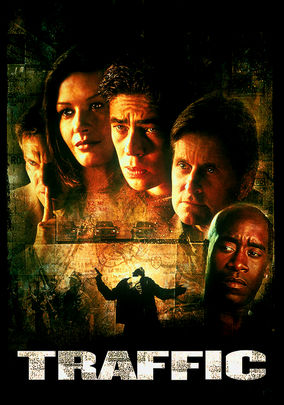
Traffic-2000

Traffic-2000

Director Steven Soderbergh

Starring Michael Douglas, Catherine Zeta-Jones, Benicio del Toro

Top 250 Films #143

Scott’s Review #333
60003243

Reviewed January 8, 2016

Grade: A

Simply put, I adore this film. I loved Traffic when it was first released in 2000 and I still love it in present times.

During an age where the overlapping stories with hefty casts were still in the infancy stage (Crash-2006, and Babel-2006, similar films, would not be released for several years), Traffic was groundbreaking, compelling, thought-provoking, and just a damned good drama!

With drug use still a continuing problem in the United States, the film remains both relevant and important.

Featuring three main, intersecting stories with a central theme of drug trafficking, each is told from various perspectives: users, political figures, law enforcement, and criminal traffickers.

Traffic also wisely shows how the drug problem knows no specific classes- affluent, middle-class, and poor are all represented in the film.

A strong political story is represented- led by conservative Ohio judge Robert Wakefield (Michael Douglas), who is appointed “drug czar” as the President’s Office of National Drug Policy leader, he vows to end all drug trafficking and is the moral center of the film.

However, his prep school daughter, Caroline, (played exceptionally well by Erika Christensen) and her equally affluent friends are dabbling in cocaine, heroin, and other drugs, so much so that their lives are slowly spiraling out of control.

The Mexico story involves the riveting tale of Mexican police office Javier Rodriguez (played convincingly by Benicio del Toro). He becomes heavily involved in a web of deceit, money, and drugs. His partner, Sanchez, makes a deal with the devil and his fate is thereby sealed. Javier has moral questions to ask himself and only wants to do right by some local, neighborhood boys.

Finally, San Diego is the setting for a story of corruption involving the DEA’s investigation of a drug lord, Carl Ayala. After being arrested, his wife Helena (Catherine Zeta-Jones) faces a moral dilemma- either carry on the illegal proceedings or come clean. She,  up until this point unaware of her husband’s business, faces enormous pressure, both financially and through the threat of violence.

My favorite aspect of Traffic is that all of the aforementioned stories are fascinating in their own right- and could make terrific films on their own, but as the film progresses they begin to intersect and keys to the puzzle slowly unlock themselves.

I love how many of the central characters (Helena, Javier, and Wakefield) begin as “good” people only to have their moral intentions challenged, and in some cases, threatened.

They are each conflicted in some way.

The film poses an interesting, crucial question of what can be done about the United States drug trafficking problem. The answer at the end of the film is a disappointing and perhaps even depressing realization.

Drugs will never stop being a problem and Traffic wisely explains how drugs show no barriers when it comes to either wealthy or more financially challenged individuals.

How wonderful to see a stellar cast, even in smaller roles (Dennis Quaid and Amy Irving immediately come to mind) with all of the characters having a purpose in a wonderful example of how a mainstream Hollywood film can achieve a true ensemble effort that works.

Great job Steven Soderbergh!

Oscar Nominations: 4 wins-Best Picture, Best Director-Steven Soderbergh (won), Best Supporting Actor-Benicio del Toro (won), Best Adapted Screenplay (won), Best Film Editing (won)
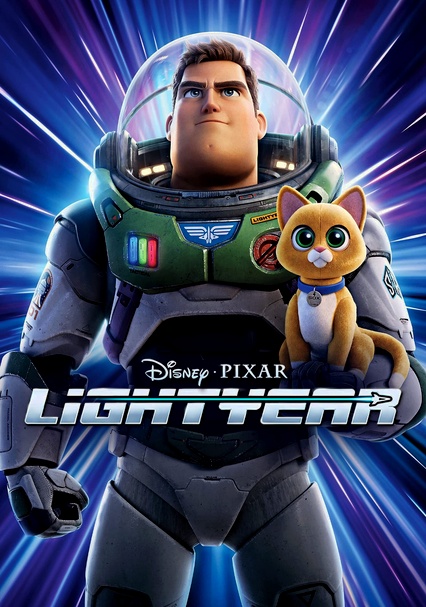
Lightyear-2022

Lightyear-2022

Director Angus Maclane

Voices Chris Evans, Keke Palmer

Scott’s Review #1,322

Reviewed December 13, 2022

Grade: B

The popular Toy Story (1995-2019) franchise spawns a new child with Lightyear (2022), a spin-off prequel film within the franchise. Box office receipts will determine if Lightyear has any children of its own.

It’s a pleasant and fairly conventional offering, as it focuses solely on one ‘toy’, the masculine Buzz Lightyear, and tells his story. The visuals are delightful and colorful, and there is enough adventure to keep the whole family engaged.

Unfortunately, there isn’t much in the way of legacy or connection to the Toy Story characters, and even the voice of Buzz is replaced by Tim Allen and Chris Evans.

One’s enjoyment of the film predominantly depends on one’s preference for the franchise in general or the hero in question. Better satisfied may now be adults who were kids in 1995, harkening back to a nostalgic film featuring a favorite childhood character.

As a semi-fan, but not a diehard fan, of the Toy Story films, I found the overall result pretty good, but not astounding.

It doesn’t explain why Lightyear went from a living and thriving action hero to becoming a suburban kid’s possession, but it also doesn’t matter much, at least to me.

For fans of the series, it’s a nice trip down memory lane, more than anything groundbreaking or breathtaking.

Sometimes familiarity breeds comfort.

The film follows Buzz Lightyear (Evans), a space ranger, as he is marooned on a hostile planet with his commander and crew. He attempts to find a way back home while confronting a threat to the universe’s safety.

His ambitious recruits, Izzy, Mo, Darby, and his robot companion, Sox, serve as new characters following Lightyear’s every move. As this motley crew tackles its most challenging mission yet, they must learn to work together as a team to escape the evil Zurg and his dutiful robot army, which is never far behind.

Possibly the most interesting, and I’ll confess the primary reason why I saw Lightyear, was the notorious same-sex kiss that unceremoniously got the film banned in some Middle Eastern countries.

It also pissed off conservatives who found the kiss too much for them and the potential damnation and ruination of young children everywhere.

In truth, the kiss is timid and a non-issue. The issue is more likely a prominent female lesbian character and her wife, and best friend, Buzz. It’s like, how dare the all-American Lightyear have a black lesbian for a best friend?

Alisha (Uzo Aduba) is strong, confident, and black. She is a commanding officer and arguably the most interesting character in the film.

What an inspiration for young girls everywhere to see such representation and potential. The kicker is that she is in a relationship with a woman who has a granddaughter named Izzy (played by Keke Palmer), one of Buzz’s recruits.

Despite the addition of inclusion and diversity, Lightyear is nonetheless a by-the-numbers offering. The message is one of a robust adventure, though I appreciate the social importance of such a good character.

Once Buzz is in flight and soaring for the stars, Lightyear turns into action/adventure in a hurry. The filmmakers intend to create a popcorn summer blockbuster, with our hero saving the day, and this intention is fulfilled.

The time travel and aging of characters are interesting because we see their life cycles and the generations that follow. For example, Buzz is close to Izzy.

He cares deeply for Alisha, whom he misses terribly, because he has been far away and hasn’t aged, while she has aged like a normal human.

Lightyear (2022) offers a safe flight plan, despite being brave enough to include diverse characters. It doesn’t connect to the origin of Toy Story as much as I’d like it to, and feels somewhat like a stand-alone.

Time will tell if a sequel is made, but it would be unnecessary.

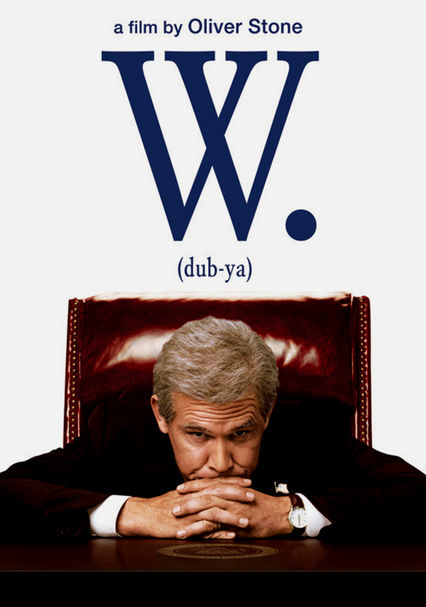
W.-2008

W.-2008

Director Oliver Stone

Starring Josh Brolin, Elizabeth Banks

Scott’s Review #1,130

Reviewed April 7, 2021

Grade: B+

I’ve said it once and I’ll say it again- the United States political landscape forever changed with the dastardly 2016 presidential election. Presidents pre and post-2016 are held to a completely different standard.

We didn’t see this coming.

That said, the film W. (2008) is a biography and satire of George W. Bush, the forty-third president of the United States, who held office during the deadly 9/11 attacks.

Thought by some to be a moron, director Oliver Stone is careful to ease up on the obvious mockery and barbs that are usually thrown at Bush. There is some of that but surprisingly the film contains some sympathetic moments.

For example, a clever addition is a complex relationship between father and son, something shadowed from the spotlight. At least I was never aware there was any friction between Dad and Son.

Fans who lean or are conservative may not like the film. It’s not exactly pro-Bush but neither is it anti. It simply tells a good and accurate story.

Stone wisely features an all-star cast and offers a retrospective chronicling the life and political career of George W. Bush, from his troubles as a young adult through his governorship of Texas and to the Oval Office.

It’s well-made because it provides the uninformed viewer with an important history lesson.

The lineup is juicy featuring an array of elite Hollywood stars. Josh Brolin sinks his teeth into the title role while Elizabeth Banks is more low-key as former First Lady Laura Bush.

In support, James Cromwell and Ellen Burstyn play George H.W. Bush and Barbara, while Richard Dreyfuss is fantastic as Dick Cheney.

Finally, Thandie Newton is as delicious as Condoleeza Rice.

Flashbacks are key to his life events revealing the rise of George W. Bush from ne’er-do-well party boy and son of privilege to president of the United States. After giving up booze for religion, George mends his restless ways and sets his sights first on the Texas governorship, which he achieves, then on the presidency.

By a fluke, he achieved this too but lost the popular vote, forever a bee in his bonnet.

However, the country’s involvement in the Iraq war affects his reign and decreases his approval rating.

The historical accuracy appears to be valid and most details are taken from non-fiction books. That’s why the film is perfect for those who wish to brush up on their history or who are intrigued about the life and times of a modern president.

Just be prepared for a bit of comedy.

To be fair, there are moments in W. when it feels like a long Saturday Night Live sketch and the characters are caricatures. It’s not exactly a parody nor is it a documentary either.

Sort of a hybrid.

The heart of the film belongs to Josh Brolin (reportedly he stepped in for Christian Bale at the last minute). Major props go to Brolin for a nuanced, spot-on characterization of the former president.

He’s got the mannerisms down and turns of the head, his walk, and speech patterns. He is careful to take a controversial public persona and portray him with both humor and humanity. Never completely silly but not as a straight man either. The real Bush always had a bit of a devilish aww shucks persona.

Post 2016 it’s tough to care much about W. (2008) though. It’s sort of an “of its time” film.  Too much has happened since the Bush years, or even since 2008 when the film was made.

Donald Trump made so many things irrelevant. I can’t wait until a satire emerges about him. You know one is coming.

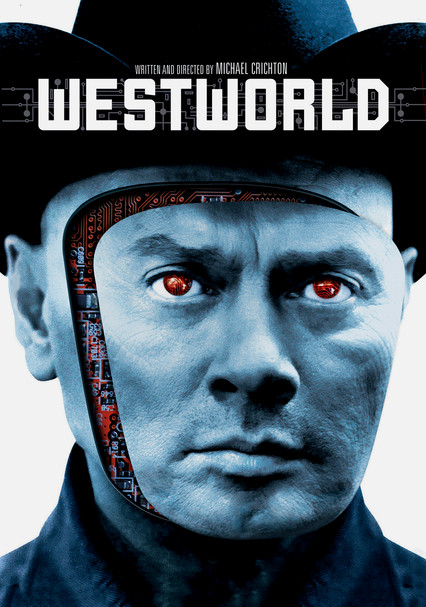
Westworld-1973

Westworld-1973

Director Michael Crichton

Starring Richard Benjamin, James Brolin, Yul Brynner

Scott’s Review #1,056

Reviewed August 25, 2020

Grade: A-

I have seen the film version of Westworld (1973) before and after having watched the current hit HBO television series, brilliant in its complexities.

Many are not even aware that the series is based on a film and that is a pity because the film is good stuff with lots to digest in a short time.

Admittedly, watching it in present times given the extreme psychology that the series offers, the film has so much more it could have offered but it’s still a great watch.

One must always remember the time-period a film is made for proper context and comparison.

Yul Brynner nearly steals the film in a spectacular and creepy performance as a wide-eyed futuristic android cowboy to Richard Benjamin and James Brolin’s regular guys out for an escapist good time.

Much of the film could be conceived as a buddy film with a bevy of homoerotic elements brimming beneath the surface if one is aware. These tidbits spice things up in an already escapist and futuristic world.

A titillating high-tech adult-themed amusement park is the backdrop of the film. Participants can choose any of the three worlds to embark on Western World, Medieval World, or Roman World. All contain lavish and realistic trimmings and ooze realism.

The inhabitants are robots, not real people, so they can be shot, stabbed, or made love to depending on the personal tastes of those who wish to indulge in their wildest fantasies.

The island is very exclusive, and the experience comes at a high cost.

Peter (Benjamin) and John (Brolin) are businessmen who adore the Wild West, so they select the Western World. They enjoy frolicking with desperadoes, gunslingers, and dance-hall girls who appear as if they are human beings.

Enjoying their adventures, the technicians notice odd behavior from the androids. Small at first, events escalate quickly when a gunslinger (Brynner) goes on a rampage with Peter and John as his targets.

Since the television series is fleshed out so well and the motivations and the stories of the androids are examined at length, it makes it easy to ask why the film does not, or rather, wish it had.

On the one hand, it is creepy not knowing what makes Brynner’s gunslinger tick, on the other hand, I want to know what makes him tick.

I also wanted to know more about the guests. Why were they there and what are their lives in the real world like?

One way in which the film is superior to the series is the way Peter and John are written.

Is it my imagination or do the pair seem a little closer than merely friends? Do they wish to escape their lives to be together? Are the wives and children waiting at home for them?

A scene of Peter bathing is erotic especially as he must abandon the tub mid-soak to battle a foe. He is the Marlboro man personified, though Benjamin’s too recent turn as the twit father from Diary of a Mad Housewife (1970) ruins any masculinity he has.

The climax is riveting.

Since we are unsure of the gunslinger’s motivations we are unsure what he will do. A frightening scene occurs when the gunslinger intently walks down a corridor with his expressionless eyes attentively stalking his prey. This still gives me the chills.

When the android is sprayed with acid his face becomes freakish and psychotic-looking this adds fright to an already frightening character. When Peter frantically traverses the park looking for help his peril is terrific as he finds dead guests and damaged robots everywhere.

The severity of the situation is finally realized.

Crichton deserves much of the credit since he not only directed but wrote the screenplay, and this was his debut! The pacing is excellent and something is going on all the time making the film feel as entertaining as it is intelligent.

The dazzling cinematography of the world allows the viewer to see the differences.

Westworld is riddled with intriguing questions that are left unanswered and this adds to the tension.

Impossible not to compare the film to the series as much as we might like not to, Westworld (1973) is a freakish, creative, adventure that I wanted so much more from having seen the complexities and story possibilities crafted for the series.

I am not a fan of remakes but in this case, a modern retelling is not a bad idea. Some accuse the film of being cheesy, over-the-top, or “too 70’s”, but I disagree.

I like the hidden trimmings and messages mixed with the good fun.

Sisters-2015

Sisters-2015

Director Jason Moore

Starring Tina Fey, Amy Poehler

Scott’s Review #458

80063604

Reviewed July 31, 2016

Grade: B-

Slapstick comedy is admittedly not my genre of choice, though I will watch some for light entertainment or to see just how bad (or good) current offerings are.

Nonetheless, I have tried to put myself in a mindset of low expectations for these films that are usually fluff and plot-driven.

In the case of Sisters (2015), the film is pretty much as one would expect: vulgar, crass and raunchy. Yet, due to the chemistry between the leads (Amy Poehler and Tina Fey) and a few heartfelt romantic moments, something does work. It is not as mean as one might think.

This is not to say that Sisters is a great film. Hardly. But not as bad as I feared.

Poehler and Fey play Maura and Kate Ellis, respectively, two late thirties sisters, living in other areas of the country, who return home to Orlando, Florida, when their parents (James Brolin and Dianne Wiest) sell their childhood home.

Maura and Kate have been tasked with cleaning their bedrooms in time for the sale.

The sisters have an idea to throw one final bash and invite their high school classmates, who all conveniently still live in the same town. Events go awry and the party gets way out of hand.

Mixed in with the main plot are sub-plots consisting of a romantic interest for Maura, and a rival for Kate, played by Maya Rudolph.

The best part is the chemistry between Poehler and Fey. They “have it” whether it is a Saturday Night Live sketch, hosting the Golden Globe awards, or starring in Sisters. The banter and the jokes work well because the two comics work well together and it shows on-screen.

They are believable as sisters despite looking nothing alike.

Otherwise, Sisters is a traditional vulgar comedy. One irksome recent trend (now more female-driven than in years past) is the leading ladies being classless. This must be an attempt at female empowerment or the assumption that since adult comedies were once a man’s world, female characters should be written like men.

Do we need Kate and Maura swearing like sailors, making poop jokes, and being so raunchy? Behaving like ladies would now be the exception, not the norm (Bridesmaids, 2011, set this precedent).

Not surprisingly, the supporting characters are all caricatures as is typically the case in films of this genre. The parents are a bit clueless and have kinky sex much to the girl’s chagrin.

Brinda, bitchy, judgmental, yet insecure, the Korean (big stereotype) nail technician who cannot properly pronounce English words, the new owners of the house are snobbish, uptight, and clueless, and finally, James, the guy next door, who are Mr. Fix-it and the straight man in the high-jinks. He is sugar-sweet and the male hero.

The romantic scenes between Maura and James are sweet and sentimental, nicely balancing the vulgarity and raunchiness that the rest of the film encompasses. They are a nice couple and have a rich rooting value.

Most of the action takes place at Kate and Maura’s childhood home where posters of such 1980s films as E.T. and Out of Africa, and a poster of heartthrob Tom Cruise, hang on the walls.

This, and many other references that Generation X will delight from in this film are pointed out, so that is a treat and a positive of the film.

As the party gets off to a slow start, the thirty and forty-somethings appear dull and either talk about their kids or their various maladies and suddenly, after being fed drugs, are back to their college party days, are both dumb and cute at the same time.

Sisters (2015) (hopefully) knows what it is. It is a late Saturday night, raunchy comedy affair, meant as fluff and escapist fun. It is not a masterpiece nor does it intend to be one.

Rather, a full-length SNL sketch including many alumni. It is harmless fun.

The Amityville Horror-1979

The Amityville Horror-1979

Director Stuart Rosenberg

Starring James Brolin, Margot Kidder

Scott’s Review #60

60002141

Reviewed June 23, 2014

Grade: B-

The Amityville Horror was undoubtedly more thrilling upon its original release in 1979, but sadly, the time has not been kind to this particular film, as it does not hold up well any longer.

It feels dated, but that is not to say it is at all un-enjoyable.

The atmosphere of the movie and the building tension and sense of dread are effective. The audience knows bad things will eventually occur.

The look of the film is dark and creepy and actors James Brolin and Margot Kidder are adequate in the lead roles.

The main problem with the film is all along there is a feeling that I am watching a pale version of The Exorcist (1973) or The Omen (1976), far superior films, with the religious theme that was heavily used in the horror genre throughout the 1970s.

Also, horror in 1970’s cinema was at its best, and by 1979, horror had shifted into the knife-wielding maniac vein.

Add to this the fact that the supposedly “true story” has since been proven a silly hoax, so it takes away any shred of seriousness.

To be fair, the scene involving the herd of flies is scary, but other scenes seem silly and inconsequential.

The Amityville Horror (1979) is not a bad movie, but similar films are far superior.

Oscar Nominations: Best Original Score