Category Archives: Nicolas Cage

Longlegs-2024

Longlegs-2024

Director Oz Perkins

Starring Maika Monroe, Blair Underwood, Nicolas Cage

Scott’s Review #1,487

Reviewed August 1, 2025

Grade: A-

Oz Perkins, already making his mark in the modern horror genre with films like The Blackcoat’s Daughter (2015) and The Monkey (2025), offers an eerie little gift sure to creep many viewers out.

Add-ons like nuns, sacrifices, satan, and the like usually freak religious church-goers out, which is a testament to the achievement Perkins makes.

Giving credibility to Perkins is being the son of Anthony Perkins, aka Norman Bates from the 1960s Hitchcock masterpiece, Psycho.

That’s some horror legacy, and he gets more and more comfortable with the genre.

The story follows Lee Harker (Maika Monroe), a quiet FBI agent in the 1990s, who is tasked with tracking down an occultist serial killer responsible for murdering multiple families throughout Oregon.

Harker, reminiscent of Jodie Foster’s Clarice from The Silence of the Lambs (1991), is serious and grounded with a tinge of tension and insecurity. She has been through some trauma that could be a key to unlocking the mystery.

Does she have a secret connection to the tragic events that includes the victims sharing a birthday pattern? With her birthday approaching, things become more and more perilous.

Besides the disquieting tone of the film being filled with terror, Nicolas Cage, who produced, plays Longlegs (also known as Dale Kobble), an elusive Satanic serial killer.

On screen for only a short amount of time, Longlegs/Cage leaves an impression. With long hair and a pasty face, he looks like a cross between the Joker and Pennywise the Clown, with lipstick and a super-creepy, demonic voice.

There is something very off about him.

Buffalo Bill, the serial killer from The Silence of the Lambs, also bears a resemblance to Longlegs.

The first sequence leaves an indelible impression—a young girl on a snowy afternoon peers across her vast front yard to her family’s paneled station wagon. It is the 1970s.  Suddenly, Longlegs appears and charmingly announces he forgot his long legs.

The scene made the chills run down my spine.

The atmosphere makes the film as good as it is. There is a lonely, isolated feeling throughout, like events take place in a secluded, middle-of-nowhere setting. And, this consists of both interior and exterior scenes.

Set in the Pacific Northwest, United States, specifically Oregon, the geography is perfect for a rash of patriarchal killings. Mysteriously, a seemingly normal father kills his wife and kids without hesitation. A pattern develops involving an upcoming birthday of the family’s daughter.

In an effective sequence, one of the family deaths is featured on-screen, mirroring Stanley Kubrick’s The Shining (1980). A long camera shot from far away makes the viewer feel like they’re in the room and watching voyeuristically.

Blood splays, an ax impales a victim from behind, and death and destruction have never looked finer in cinema.

Perkins incorporates a visual satisfaction that makes the film work, especially given the horror genre.

The fact that Longlegs, the villain, is frightening to look at makes the film a significant win and probably Perkins’ best work.

Yes, the story has a surprise ending, including one character’s deal with the devil. The final plot summation is shocking but rather far-fetched. While gripping, it doesn’t seem possible, and a supernatural suspension of disbelief is required.

The occult and spiritual possession are the ingredients that make Longlegs startling but not realistic.

Special shout-outs to actors Kiernan Shipka and Alicia Witt, who brilliantly portray their minor yet monumental characters with top-notch acting.

What Longlegs (2024) lacks in making sense—a common theme among modern horror films with camera-heavy trimmings over storyline plausibility, if I’m being honest—it succeeds with a visual wizardry.

The mood of terror is the film’s most significant victory.

Raising Arizona-1987

Raising Arizona-1987

Director Joel Coen

Starring Nicholas Cage, Holly Hunter

Scott’s Review #1,286

Reviewed August 5, 2022

Grade: B+

Raising Arizona (1987) is the second film to be created by the Coen brothers (Joel and Ethan) with the independent offering, Blood Simple (1984) being the first.

The siblings would later become household names and trailblazers in the world of cinema.

It’s rough around the edges storytelling with the severe desire to create something different. Maybe too different since sometimes Raising Arizona works and sometimes it doesn’t.

The film is to be championed mostly for its creativity though it’s not on par at all with the Coen brothers’ best films, Fargo (1996) and No Country for Old Men (2007). However, it does serve as a blueprint for films to come, if one is to look at it in hindsight.

I’m not the biggest Nicholas Cage fan of all time so it doesn’t help that he stars in Raising Arizona. The actor was achieving enormous recognition the same year for his appearance in Moonstruck (1987) which won Cher the Best Actress Oscar.

The film mostly gets props for its original writing and quirkiness in the sets and visual effects, but the comedy is way out in the left field and difficult to make sense of.

As with many Coen Brothers films, the plot centers on a crime and people on the run desperately trying to evade capture.

Hi McDunnough (Cage) is a convenience store robber who meets and falls in love with an ex-cop named Edwina “Ed” (Holly Hunter) during a stint in prison. After they move to a mobile home in the middle of the desert they decide to kidnap a baby since they cannot have one of their own.

While keeping their secret, friends, co-workers, and a bounty hunter look to use the child for their purposes.

The setting works quite well and is an important part of the film like other Coen offerings. The blazing hot desert is a familiar sight and pivotal to the story events with sizzling highways and roadside dives a focal point throughout. Hi and Ed’s tacky mobile home is dusty and cracked which enhances the extreme heat.

Cage and Hunter have tremendous chemistry which kept me invested in their characters. Both quirky-looking, they act well against each other and invoke sympathy from the audience- at least I did. Despite being kidnappers, they have the best of intentions of keeping their stolen baby safe and cared for.

Delightful to see is actress Frances McDormand in an early role as Dot. She would become a frequent star and collaborator in later Coen Brothers films.

Forgetting the uneven storytelling for a minute, Raising Arizona’s finest moment comes at the very end. Through a series of prophetic dreams about the future, the fates of all the characters are determined.

It’s a trippy and magnificent sequence and quite well-known to fans.

A clever offering that at times spins out of control with ridiculousness, Raising Arizona (1987) is nonetheless recommended to view and absorb the zany characters that the Coen Brothers are famous for creating.

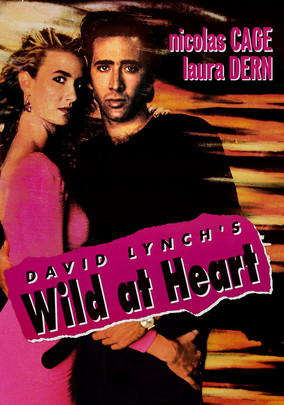
Wild at Heart-1990

Wild at Heart-1990

Director David Lynch

Starring Nicolas Cage, Laura Dern

Scott’s Review #1,230

Reviewed February 19, 2022

Grade: B+

David Lynch has created some weird films. Blue Velvet (1986) and Mulholland Drive (1992) are masterpieces that skew the odd and peculiar facets of human behavior. But Wild at Heart (1990) takes the cake as the strangest in the lot.

Fascinatingly unhinged, yet hard to understand, it’s got the Lynch handprint from start to finish, but only a warm-up act as stacked against those other films.

Somehow the film is classified as a comedy. It’s got to be one of the darkest of dark comedies. Anyone who is not a Lynch fan will not appreciate or get this film- I am a Lynch fan and I’m not sure I even got it. I do appreciate it though.

It’s also the best role of Diane Ladd’s career in which she plays a fiendish, witchy mama. The graceful actress belts a home run in her storied performance.

A situation occurs during the opening sequence that sets the tone for the rest of the film. Sailor Ripley (Nicolas Cage) serves prison time for a self-defense killing and reunites with his girlfriend Lula Fortune (Laura Dern) when he is released.

Lula’s mother, Marietta (Diane Ladd), is desperate to keep them apart and hires a hitman to kill Sailor. But those are only the start of his troubles when he and Bobby Peru, played by Willem Dafoe, an old buddy who’s also out to get Sailor, try to rob a store.

When Sailor lands in jail again, he may be destined never to reunite with Lula ever again.

Wild at Heart is a love story about Sailor and Lula and the many obstacles they must overcome to live happily ever after.

Cage and Dern are terrific though I fantasized while watching how nice it would have been to see Kyle MacLachlan in the role of Sailor. A Blue Velvet reunion would have been splendid since his chemistry with Dern in that film was top-notch. Nonetheless, I enjoyed watching Cage and Dern as the romantic leads.

The many references to The Wizard of Oz are delightful like when an image of Marietta flying through the air on a haggard broomstick appears just like the Wicked Witch of the West. When Lula desperately clicks her red heels three times to no avail we strangely wonder where the home she wants to return to is.

The film is one of those that is hard to take seriously or focus on the plot too much. This is evidenced by the inclusion of Twin Peaks (1990-1991; 2017) alumni Sheryl Lee, Sherilyn Fenn, and Grace Zabriskie. They play The Good Witch, Girl in Accident, and Juana Durango, respectively.

Each character is indescribable in their strangeness.

The nuttiness continues with bizarre turns from Crispin Glover and Harry Dean Stanton.

Interesting is how Wild at Heart was released the same year as Twin Peaks was. The inclusion of a seedy bar named One-Eyed Jacks which appears in both productions is about all that is comparable with each other. The main events in Wild at Heart are in Texas and Washington for Twin Peaks.

Forgetting the storylines, the best part about Wild at Heart is the cinematography. Enough dark and dusty highway sequences emerge using glowing and moody lighting and foreboding cracks and crevices in other visceral scenes. Cigarette smoking has never looked as sexy or dangerous as it does in this film.

Despite there being admirable and perfectly Lynch-y elements to Wild at Heart (1990) the film is just too far overboard for me to fall in love with.

I’ll pull out my copies of Blue Velvet and Mulholland Drive any day before Wild at Heart.

Oscar Nominations: Best Supporting Actress-Diane Ladd

Independent Spirit Award Nominations: 1 win-Best Supporting Male-Willem Dafoe, Best Cinematography (won)

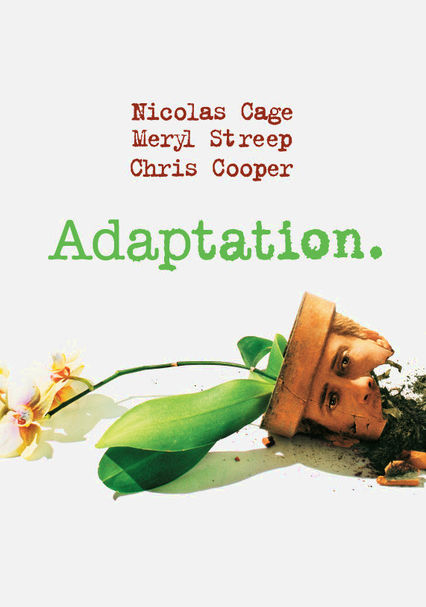
Adaptation-2002

Adaptation-2002

Director Spike Jonze

Starring Nicolas Cage, Meryl Streep, Chris Cooper

Scott’s Review #1,064

Reviewed September 24, 2020

Grade: B+

Adaptation (2002) is a kooky film that is recommended for all writers or lovers of the written word, especially for those ever having suffered from writer’s block.

The film is wonderful for people who are either curious or obsessed (me!) with how a novel is turned into a screenplay.

With an A-list cast featuring Nicolas Cage and Meryl Streep, the offering is credible and not just a bumbling indie experiment with no budget. Stars must get paid, which allows the film a mainstream audience, and awards.

The film will be too weird for some. There is a measure of conceit and self-indulgence (it’s set in Los Angeles after all!) that is sometimes off-putting, but I adored the premise too much and chomped at the bit at what I was offered.

It’s quite non-linear and the characters sometimes do things that are weird or out of turn.

Adaptation is different (in a good way) and is recommended for its oddness as I cannot think of another film like it, though Being John Malkovich (1999) would be close. Director, Spike Jonze would later create Her (2013) and, of course, directed Malkovich too.

Charlie Kaufman wrote the screenplay and the central character is Charlie Kaufman, played by Cage, who also plays Kaufman’s brother Donald, a mooch. Charlie is self-loathing and disheveled but somehow likable. He struggles mightily to bring words into his head as he nervously sits at his typewriter day after day when he is tasked to adapt the novel, The Orchid Thief, into a film.

The novel’s author, Susan Orlean, played by Meryl Streep, intimidates Charlie, who decides to pay her a visit to New York City.

This film features the best work of Cage’s career. An actor who is “not for everybody”, the performance rivals that of Leaving Las Vegas (1995), in which he won an Academy Award.

A dual role is tough to play, but the actor does so with bombast and confidence, making the characters very different from each other and making me forget they were Cage.

Too often sinking to inferior action films like Face/Off (1997) or Con Air (1997), the actor wisely had an epiphany or something and made a wise decision. Cage does best when he goes for wacky- Raising Arizona (1987) is proof of that.

The supporting players, specifically Streep and Cooper are fantastic. Streep could fart through a film and still give a great performance and you can tell she enjoys the part of Susan, allowed to let loose. Her character loves sex and drugs and is not above devious shenanigans to get her way.

Cooper, who won the Oscar, is delicious as John Laroche, a theatrical character with missing front teeth, who is the secret lover of Susan.

Both provide great entertainment.

Adaptation simply feels good for a thought-provoking writer providing oodles of “writer things” to ponder and discuss with friends after the credits roll. Many scenes are rich with layered dialogue and rife with originality making the words sparkle with pizzazz.

And there are enough twists and turns to keep viewers guessing.

One of the most original and kooky films you will ever see, Adaptation (2002) pairs well with Being John Malkovich (1999) for an evening of the odd and absurd, but also films not altogether hard to follow.

The satirical Hollywood theme will both please and annoy but it’s all good fun and a lesson in creative art cinema.

Oscar Nominations: 1 win-Best Actor-Nicholas Cage, Best Supporting Actor-Chris Cooper (won), Best Supporting Actress-Meryl Streep, Best Adapted Screenplay

Spider-Man: Into the Spider-Verse-2018

Spider-Man: Into the Spider-Verse-2018

Director Peter Ramsey, Rodney Rothman, Bob Persichetti

Voices Shameik Moore, Hailee Steinfeld, Lily Tomlin

Scott’s Review #881

Reviewed March 30, 2019

Grade: B+

There have been many film versions of Spider-Man.

To my recollection, the first series consisted of three installments, directed by Sam Raimi: Spider-Man (2002), Spider-Man 2 (2004), and Spider-Man 3 (2007), all starring Tobey Maguire in the title role.

These were the good old days.

Andrew Garfield took over in 2012 and 2014 to mixed reviews before the superhero was merged into Captain America and The Avengers films, as well as one or two additional solo outings. This is where I lose track.

Finally, through all the incarnations comes the very first computer-animated film based on the Marvel Comics character.

Spider-Man: Into the Spider-Verse (2018) was an enormous box-office success as well as a critical success, winning the coveted Best Animated Feature Oscar.

My choice would have been for the dark and sarcastic Isle of Dogs, but the former has impressive merits and grand animation that are astounding to the eyes.

Towards the climax, the film teeters into familiar and predictable territory from a story perspective, though admittedly, the superhero and animated genres are not my favorites.

Miles Morales is a Brooklyn teenager, bright, energetic, and likened to an average city kid. His father, Jefferson Davis, is a muscled policeman who is no fan of Spider-Man, the heroic masked man who prevents city crime, outshining the cops daily.

While close to his father, Miles is much more connected to his uncle, Aaron Davis, despite his father and uncle having a distant relationship.

When a hungry spider bites Miles, he immediately begins exhibiting Spider-Man-like abilities and stumbles upon others with similar stories.

The teen meets super-villain Wilson Frisk (a not-so-subtle Donald Trump parody if ever I saw one), who is intent on accessing a parallel universe to retrieve his deceased wife and son. Events involving a USB drive and the “real” Spider-Man, Peter Parker, also living in a parallel universe, come into play.

The overly complex story is not the best part of the experience, and I began to lose interest in the hows and whys, especially when compared to the escapist and marvelous, super-cool animations.

Spider-Man: Into the Spider-Verse deserves great praise for making the film’s central character ethnically mixed (Hispanic and Black), a first in the franchise’s history.

This diversity, evident in Black Panther (2018), is all the rage now in the superhero genre, along with gender equality, a slogan once deemed a “guy’s movie.”

This is a delight to witness, with hopefully even more of a slant towards richer diversity. Are Asian, gay, or physically impaired characters coming next?

The film looks fantastic, with creative and slick modern animation and graphics that never waver throughout the nearly two-hour running time, which is lengthy for an animated feature.

Styled and bright, the film’s most striking appeal lies in its colors, shapes, and sizes. The metropolitan New York City is a treat to witness, as the creators not only focus on Manhattan, but also on Queens and Brooklyn, boroughs that are often forgotten in favor of Manhattan’s glitz and bustle.

The clever re-titling of FedEx trucks to Red Ex is worthy of mention.

With its glitzy look, fast-paced action, and interesting villains, Spider-Man: Into the Spider-Verse (2018) is an impressive feat and a deep dive into the possibilities of combining the superhero and animated genres.

This is around the corner due to the critical, audience, and award notices that surround this film. If only the story contained more twists and turns and fewer standard genre-pleasing qualities, the possibilities would be endless.

Oscar Nominations: 1 win- Best Animated Feature Film (won)