Tag Archives: Action

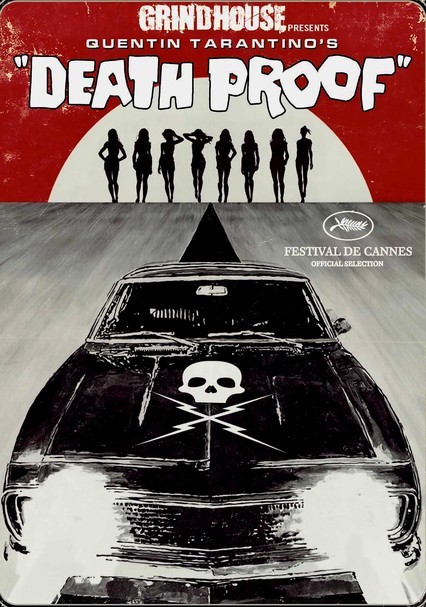
Grindhouse: Death Proof-2007

Grindhouse: Death Proof-2007

Director Quentin Tarantino

Starring Kurt Russell, Rosario Dawson, Zoe Bell

Scott’s Review #1,344

Reviewed February 13, 2023

Grade: A

It’s tough to go wrong with a Quentin Tarantino film recognizing that one needs to be a Tarantino fan. His films are for specific tastes that indulge in stylized violence, dark humor, and cartoonish characters.

Grindhouse: Death Proof (2007) is an easy victory for the director and incorporates his trademark qualities with beautiful female race car drivers and a sadistic stuntman.

As usual, revenge is the name of the game and results in a satisfying ending. The thrill is in the chase that occurs mainly midway through and plenty of B movie references and old songs are on display.

The experience is a pure pleasure for any cinema lover that appreciates aspects of the film like editing that too often falls beneath the surface. The scratchy film texture and retro title sequence all help to encompass another Tarantino opus.

The film is part of a double feature along with Robert Rodriguez’s Planet Terror and includes a series of mock exploitive trailers.

Both, specifically Tarantino’s, harken back to when exploitative films were shown in dusty movie houses with grainy video and a stale popcorn stench. The mood was immediately set for me while watching the film which enhanced my enjoyment tremendously.

Psychotic stuntman Mike (Kurt Russell) is a professional body double who likes to meet unsuspecting women at bars and take them for deadly drives for fun. He has a specially made car which he calls ‘Death Proof’ but only for the driver and not the passenger.

The first half of the film involves a group of girls out for a good time in a dive bar. Abbie (Rosario Dawson), Pam (Rose McGowan), and others ultimately fall victim to his shenanigans during a dastardly head-on collision exceptionally filmed.

Later, he meets a tough group of female race car drivers led by real-life stuntwoman Zoe Bell who vows to make him pay for causing them trouble. Their hell-bent vengeance just may be what the doctor ordered to cause Mike’s downfall.

Death Proof is often overlooked by fans of Tarantino and it might be because it’s paired with another film. But, it’s not half a movie either and at one hour and fifty-four minutes, it’s got legs. The film flies under the radar for me too but it’s a high-octane mile-minute experience.

One great part of Death Proof is the throwback to cult films of the 1960s and 1970s, especially Faster Pussycat! Kill! Kill!, a 1965 exploitative masterpiece by Russ Meyer.

These girls are no shrinking violets or damsels in distress who need a man to save the day. Quite the contrary. They kick ass and take names, especially in the flawless second half. Out for blood, the girls assuredly put Mike firmly in his place.

Juxtapositioned with the first half which has a dire ending for the group of girls, the second half is more upbeat and satisfactory. The lighting is also different in the two halves. The first takes place well beyond midnight while the second is in the bright afternoon.

Tarantino produces a brilliant piece of feminist progressivism with nasty muscle and female characters not to be messed with. Death Proof (2007) shows badass characters with hints of humor and discussions about men.

The girlie action flick blends perfectly with the 1970s race cars and the sexploitation theme Tarantino is recreating while still making the film feel modern and relevant.

Everything Everywhere All at Once-2022

Everything Everywhere All at Once-2022

Director Daniel Scheinert, Daniel Kwan (Daniels)

Starring Michelle Yeoh, Ke Huy Kwan, Stephanie Hsu

Scott’s Review #1,337

Reviewed January 26, 2023

Grade: A

Released in March 2022, Everything Everywhere All at Once is a film that built momentum throughout the year, resulting in an astonishing eleven Academy Award nominations.

Traditionally, films vying for awards season attention and subsequent praise and honors are released in the fourth quarter, while earlier releases are relegated to the discount racks.

But Everything Everywhere All at Once breaks the mold thanks to being a visionary, absurd comedy that demands the appreciation it has received.

As of this writing, it is the highest-grossing film released by A24, a champion of independent and quality cinema.

Evelyn Wang (Michelle Yeoh) plays a flustered and bedraggled immigrant mother who runs a laundromat along with her goofy husband Waymond (Ke Huy Kwan).

They reside in the laundromat with Evelyn’s irritable father, Gong Gong (James Hong), and daughter Joy (Stephanie Hsu), who is gay.

In trouble with an IRS inspector, Deirdre (Jamie Lee Curtis), Evelyn is contacted from a parallel universe and told that only she could save the world. She must quickly learn to channel her newfound powers and fight through the timelines of the multiverse to save her home, her family, and herself.

Everything Everywhere All at Once is not conventional and is admittedly a complete mess, meant in the finest of ways.

It takes the cinematic formula and tips it on its ass, but intelligently incorporates heartfelt scenes and gripping performances so that the viewer falls in love with the characters before knowing what’s hit them.

I semi-cried when I heard the film was an action mix with science fiction and superhero multiverses, none of which are my genre of choice. The film goes beyond that with a sensory overload, a warped onslaught of colorful wackiness that includes hot dog fingers, butt plugs, and a drag performance.

You can’t make this up, kids.

Michelle Yeoh kicks ass (literally!) and gets the role of a lifetime. At sixty years old, she has played a Bond girl in Tomorrow Never Dies (1997) and a rich bitch Mom in Crazy Rich Asians (2018), decent roles, but nothing like Evelyn.

Directors, the Daniels, show through Evelyn’s character how her life has disappointed her. Never appreciated by her father and living in a state of doldrums, she becomes an angry and frustrated young woman, but eventually develops into a person who enjoys the small moments of human connection in her life.

We can all learn from Evelyn.

What a treat to see Jamie Lee Curtis chew up the scenery playing Deirdre. Displaying her gut, wearing a bizarre grey wig, she plays part IRS agent, part lesbian lover, depending on which universe she inhabits, and is a hoot.

Ke Huy Kwan is famous as the child actor from Indiana Jones and the Temple of Doom in 1984, and not much since. He somersaults back into the acting spotlight in the role of Evelyn’s kind husband.

Finally, Stephanie Hsu is a gem as Stephanie, who wants to be loved by her mother. The actor has a bright future ahead of her.

These actors get to play four or five different characters, showcasing their acting chops.

Stylistically, the film is off the wall. Dizzying special effects and absurd editing bombard the viewer with ‘stuff’ that can be analyzed from a technical perspective for weeks.

But at the end of the film, you will shed a tear or two at the emotion that sneaks up from behind in the most wonderful way. Quiet scenes between the noisy ones show humanity and love for one another.

Everything Everywhere All at Once (2022) has reaffirmed my appreciation of film and the creativity and beauty that can be mastered.

Oscar Nominations: 7 wins-Best Picture (won), Best Director-Daniel Kwan and Daniel Scheinert (won), Best Actress-Michelle Yeoh (won), Best Supporting Actor-Ke Huy Kwan (won), Best Supporting Actress-Stephanie Hsu, Jamie Lee Curtis (won), Best Original Screenplay (won), Best Original Score, Best Original Song-“This is a Life”, Best Costume Design, Best Editing (won)

Independent Spirit Award Nominations: 6 wins-Best Feature (won), Best Director-Daniel Kwan and Daniel Scheinert (won), Best Lead Performance-Michelle Yeoh (won), Best Supporting Performance-Ke Huy Kwan (won), Jamie Lee Curtis, Best Breakthrough Performance-Stephanie Hsu (won), Best Screenplay (won), Best Editing (won)

The Enforcer-1976

The Enforcer-1976

Director James Fargo

Starring Clint Eastwood, Tyne Daly, John Mitchum

Scott’s Review #1,330

Reviewed January 2, 2023

Grade: B+

The Dirty Harry film series is pure, gooey 1970s machismo entertainment.

Featuring a vigilante-type police detective who rids the world of the bad guys is pleasure personified if not all that realistic. In these films there exists only the good versus the destructive and social issues, if they are explored, are not the most relevant part of the film but more reasoning as to why the events are occurring.

Nonetheless, the films are top-notch in action with quality gun fights and violence creating a powerful crime thriller film franchise that still holds up well.

They are much better than the similar yet uninspired and poorly acted Death Wish films featuring Charles Bronson.

The Enforcer (1976) is a third of five films from 1971 until 1988 following the 1971 masterpiece Dirty Harry and the nearly as good Magnum Force in 1973.

This one provides a slightly progressive and feminist approach that would also continue in 1983’s Sudden Impact and adds some much-needed humor creating a lighter touch.

Feminism is the inclusion of a female cop due to a new affirmative action initiative who goes toe to toe with the masculinity and conservatism of our main character.

Officer “Dirty Harry” Callahan (Clint Eastwood) is reassigned from homicide to personnel after his latest use of excessive force exhausts his outranking superiors. Demoralized, he angrily assumes his duties while a new case disrupts the San Francisco Bay Area.

A new terrorist group calling themselves the People’s Revolutionary Strike Force organizes a series of crimes in San Francisco, hoping to enrich themselves. Led by Bobby Maxwell (DeVeren Bookwalter) they wreak havoc and create fear.

When they kidnap the mayor (John Crawford) and steal rockets and rifles for their next attack, Harry and his new female partner, Inspector Kate Moore (Tyne Daly), must stop the terrorists.

To measure up to 1971’s Dirty Harry is a nearly impossible feat but The Enforcer continues the rhythm with largely the same basic script. A main part of the fun is watching the grizzled Callahan feud with his superiors and being reduced to working with a female cop.

Naturally, he and Moore eventually become buddies and I like the lack of sexual chemistry. She’s not interested in his affection and neither is he so their relationship is focused on serving and protecting the public.

Daly is terrific in the role of Moore which led to her career-defining role in the television series Cagney and Lacey. Rather than playing her as a bitch she is warm and determined to immerse into a man’s world.

She’s a great character but unfortunately is not explored as much as she could have been.

The filmmakers also keep the setting of San Francisco intact which is a wise move and a treat for those moviegoers that love a good exterior sequence or two.

A fabulous final sequence finds the events of the film heading to a Giants game at the historic Candlestick Park and finally a showdown at Alcatraz Island. These trimmings are so necessary to fans anticipating the juicy and pulsating locales of the populous city.

No, Eastwood is not the greatest actor in the film but he is the best at playing Callahan. He carries the film seamlessly and will make conservatives smirk as he endures the irritations of liberal-minded decision-makers.

A weak explanation of the real motives of the terrorist group is unimportant. It’s the violence, the thrills, the chases, and Eastwood and Daly that make this movie pure fun.

The Enforcer (1976) doesn’t challenge or add to the creativity of cinematic art but provides a shoot-em-up experience featuring a confident and charismatic main character.

Forever immersed in the good tidings of 1970s cinema is enough to continue the successful string of Dirty Harry films.

Death Wish 4: The Crackdown-1987

Death Wish 4: The Crackdown-1987

Director J. Lee Thompson

Starring Charles Bronson, Kay Lenz

Scott’s Review #1,319

Reviewed November 29, 2022

Grade: C+

I have an interesting relationship with the Death Wish films. Besides the first and maybe its follow-up, they pretty much suck, and that’s being kind.

They possess a machismo and right-wing, pro-National Rifle Association stance that’s just not my cup of tea.

To make matters worse, poor acting, stagey action sequences, an explosive overuse of smokey ammunition, and endless cliches riddle the screen throughout nearly every scene.

Sure there’s usually some heartwarming romantic moment or a justification for the killings but the series is solidly amateurish.

With my nose to the grindstone I somehow, someway, plodded through all five of the Charles Bronson film series installments and lived to tell.

I refuse to see the tepidly reviewed unrelated 2018 incarnation starring Brice Willis.

But, the funny thing is with all the cinematic negatives the Death Wish films are fun in a campy, silly way. Hardly high art, they instead provide the viewer with fluff and a quick ninety-minute experience in shoot ’em-up revenge-seeking bloodletting.

With Death Wish 4: The Crackdown (1987) the filmmakers cleverly leverage the 1980s excess with a witty subtitle channeling the crack epidemic of the day set against the backdrop of lusty Los Angeles and the drug carnage seeping over the United States border from neighboring countries.

Some thirty-five years later the premise is dated to say nothing of riddled with stereotypes but at the time the plot must have seemed downright modern.

Paul Kersey (Bronson), who is no stranger to vigilante justice, is pulled back into the underworld of gritty Los Angeles when the daughter of his new girlfriend, Karen (Kay Lenz), dies after an overdose of crack cocaine.

Intent on dishing out a healthy dose of vigilante justice, he goes after the drug lord who ultimately supplied the crack, apparently forgetting to focus on the social issue of why the young girl was taking drugs in the first place.

The First Lady Nancy Reagan’s famous anti-drug slogan, ‘Just say no’ fell on deaf ears.

As he hunts down the kingpin’s henchmen, Paul starts taking out a large part of the city’s drug-dealing population on a violent killing spree while posing as a dimwitted bartender.

The acting is laughably bad from Bronson on down to the bit players.

My favorite bad scene is when an interracial couple squabbles on their way out to dinner from the luxurious highrise apartment they inhabit.

As she sits in the limo brooding and cursing her mate who forgot something from the apartment, he is suddenly hurled from his penthouse onto the limo as she shrieks with anguish, after wishing him dead only seconds prior.

Director, J. Lee Thompson, well past his prime in the late 1980s forgot to tell his actors to add a bit of humor to the horrendous line delivery.

Or, he might have just phoned the whole thing in himself.

The film is by the numbers and one attempt at a twist toward the end is an inspired effort. A pivotal character is shockingly killed and it ain’t Paul who meets his maker either.

I didn’t see this surprise coming.

Nonetheless, despite the myriad of bad qualities contained within Death Wish 4: The Crackdown, the bad guys do get their just desserts which are delightful to witness.

Death Wish 4: The Crackdown (1987) is best served up on a rainy afternoon when the viewer can munch on popcorn and lazily escape the day away with solid cinema trash.

Minority Report-2002

Minority Report-2002

Director Steven Spielberg

Starring Tom Cruise, Colin Farrell, Samantha Morton

Scott’s Review #1,318

Reviewed November 27, 2022

Grade: B+

If you study his body of film work, the fascinating thing about acclaimed director Steven Spielberg is the growth and groundbreaking cross-genre categorization of many of his films.

Traversing blockbuster popcorn films like Close Encounters of the Third Kind (1977) and E.T. the Extra-terrestrial (1982) to heavy drama with the 1993 masterpiece Schindler’s List, the man can do it all.

With 2002’s Minority Report, he bravely delves into science-fiction territory with a crime thriller and action tint. The film is tough to follow and mostly reminds me of Inception (2010), a Christopher Nolan vehicle influenced by this film.

Despite the cerebral tone, Minority Report is a fascinating study of futuristic crime-fighting styles with enough twists and turns to keep me engaged though I confess at times having no real idea what was going on plot-wise.

The casting of Tom Cruise is a major win. Who better to carry a film like this except maybe Bruce Willis though Cruise is a better actor. Nonetheless, he is believable as a crime chief with a slick edge and a wicked smile.

Unsure whether or not to trust him he remains at the heart of the success of the film.

Based on a story by science fiction writer Philip K. Dick, ‘Minority Report’ contains a perfect premise to bring to the big screen. Set in Washington D.C. in 2054, police are now intelligent enough to utilize psychic technology to arrest and convict murderers before they commit their crimes.

The setup is fabulous and rife with possibility.

Cruise plays Chief John Anderton, the head of this Precrime unit, and is himself accused of the future murder of a man he hasn’t even met. Following an audit, it is predicted that in thirty-six hours, Anderton will kill a man who is a stranger to Anderton.

Anderton flees, prompting a manhunt led by Witwer (Colin Farrell).

It is revealed that Anderton joined the Precrime program after his son was kidnapped and never found. He is depressed, withdrawn, and addicted to hard drugs, and his wife Lara (Kathryn Morris) has since left him.

But is this all a setup and are others involved in the conspiracy?

The plot goes way off the rails in terms of explanation or logic but the fun is in trying to put the never-ending puzzle pieces together. Truthfully, after a while, I simply gave up this approach and enjoyed the visual eye candy and terrific futuristic style.

I rarely am a proponent of visuals over storytelling but the intelligence of the sequences and the thrilling nature of the acting assured me there was something there. I just wasn’t completely getting it.

Since it’s directed by Spielberg I was confident that the complexities I was being served were not shit. I was comforted by this knowledge and my enjoyment escalated.

Enough props can’t be handed out for Cruise’s dynamic performance parlayed by the coldness and harshness of the overall tone of the film.

Many of Spielberg’s films are heartwarming but this was not to be found in Minority Report (2002) and I liked it even more for that reason.

Spielberg gets another win by suckering me into a cinematic world that he magically can create. This time with perplexities and perhaps even some influence from the Matrix (1999) movies.

Oscar Nominations: Best Sound Editing

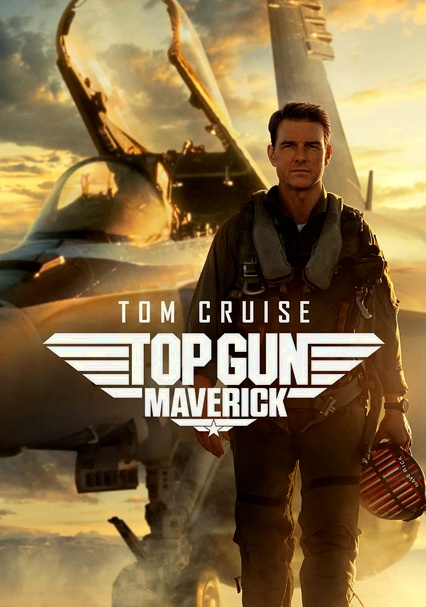
Top Gun: Maverick-2022

Top Gun: Maverick-2022

Director Joseph Kosinski

Starring Tom Cruise, Miles Teller, Jennifer Connelly

Scott’s Review #1,316

Reviewed November 23, 2022

Grade: B

I made the mistake of watching Top Gun: Maverick (2022) in the worst possible setting imaginable – inside an airplane at 35,000 feet! And I wasn’t inside the cockpit either, which would have fulfilled the appropriate thrills and perhaps even elicited terror.

Being chastised repeatedly for not seeing the film on the biggest movie theater screen imaginable, I watched this offering on the plane primarily out of curiosity to see what all the fuss was about.

In a nutshell, I thought the visuals and action/adventure sequences up in the sky were second to none. The use of sound and cinematography effectively conveyed the peril and anticipation of the film’s events.

Even on a teenie tiny screen with earbuds, I could sense and appreciate the bombastic trimmings.

To bury myself even further, I hadn’t even seen the original Top Gun, made in 1986. Of course, I was familiar with the popular soundtrack, featuring the enormous Kenny Loggins hit, ‘Danger Zone,’ which is reprised in the new film, and the syrupy ballad, ‘Take My Breath Away,’ by Berlin.

I suppose I felt I knew the predictable story well enough not to bother watching the film.

So, I’ll chalk this review up to lessons learned. However, I can still provide a critical opinion, as I asked myself repeatedly over the two hours and eleven minutes of running time, why people love Top Gun: Maverick so much, and why it was such a box-office hit.

But in the end, I’m glad it was because in 2022, we desperately need butts in movie theater seats.

After more than thirty years of service as one of the Navy’s top aviators, Pete “Maverick” Mitchell (Tom Cruise) pushes the envelope. He challenges his superiors as a courageous test pilot. This subsequently hinders his chances of advancing up the ranks of status.

When he finds himself training a group of All-American-looking Top Gun graduates for a specialized mission, Maverick encounters Lt. Bradley Bradshaw (Miles Teller), call sign “Rooster,” the son of Maverick’s late friend and Radar Intercept Officer, Lt. Nick Bradshaw, also known as “Goose.”

Rooster blames Maverick for his father’s death.

Facing an uncertain future and confronting the ghosts of his past, Maverick is drawn into a confrontation with his own deepest fears, culminating in a mission that demands the ultimate sacrifice from those who will be chosen to fly it.

This summary equates to a limited story with plenty of flaws, but Top Gun: Maverick is primarily about entertainment. A cohesive and edgy tale is not to be found.

Let’s get the storyline woes out of the way in short order.

I was disappointed that superb actress Jennifer Connelly (if anyone has missed her fantastic turn in 2006’s Little Children, check it out asap) was reduced to playing Penny Benjamin, a girlfriend who owns a dive bar role.

I mean, Connelly looks terrific, but she has no deep story to speak of. She flirts with, sleeps with, and hopes to live happily ever after with him. A single Mom, her daughter frets that Maverick will break her heart.

It’s the romantic angle of the story, but quite banal and uninteresting.

The ‘recruits’ are written as one-dimensional. There is rivalry and teamwork to be had, but they are all so good-looking that it’s tough not to see a lack of realism.

Finally, Jon Hamm suffers through an uninteresting role as the heavy. Cast as Vice Admiral Simpson, he doesn’t like Maverick, and that’s about all there is to his part.

The same can be said for Ed Harris and his role.

On the upside, Cruise delivers a wonderfully emotional scene that reminds audiences of his exceptional acting abilities. He says a teary goodbye to his long-time friend Kazansky (Val Kilmer), and it’s a beautifully written, rich scene that I adored.

Top Gun: Maverick (2022) fails in the story department, but I realize the main draw is Cruise, the action star. The film wins as a loud, thrilling, summer popcorn visual and sensory treat, and thankfully, it was an enormous success.

Oscar Nominations: 1 win-Best Picture, Best Adapted Screenplay, Best Original Song-“Hold My Hand”, Best Film Editing, Best Sound (won), Best Visual Effects

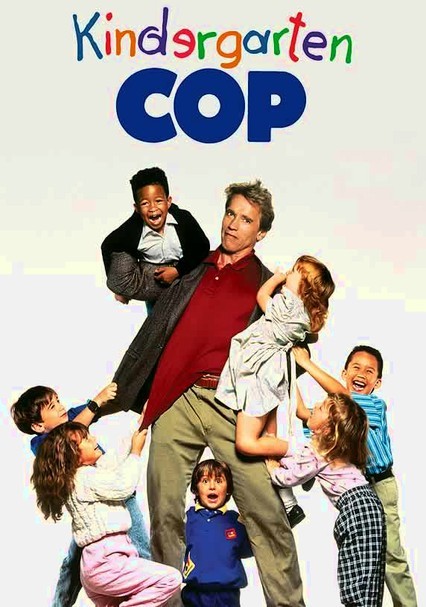
Kindergarten Cop-1990

Kindergarten Cop 1990

Director Ivan Reitman

Starring Arnold Schwarzenegger, Penelope Ann Miller

Scott’s Review #1,306

Reviewed October 12, 2022

Grade: C+

Before Arnold Schwarzenegger found politics and after he left professional bodybuilding, he starred in a string of films during the 1980s and 1990s.

At first solely a bankable action figure due to his bulky frame, he delved into more comedic and friendlier film roles.

Kindergarten Cop (1990) is one of those films yet there is enough mild violence to draw in the male crowd too.

Some of his films were better than others with the best of the bunch being The Terminator (1984) and True Lies (1994).

Kindergarten Cop is fair to a middling effort that attempts to transport the brawny star into a likable teacher but the result feels more forced than genuine. Naturally, the main character ends up in a quandary over whether he wants to fight crime or teach youngsters after he falls in love with them and another teacher.

The setup is way too similar to other films in the action-comedy genre and the film is very standard fare. The bad guy and love interest are tired and cliched, and the gags involving the kids are overly juvenile and mostly fall flat.

Despite these trite characteristics, Kindergarten Cop is not a terrible film and this is thanks to Schwarzenegger’s appeal. He is good-natured and his transition from grizzled cop to a kindly teacher is not unfun.

It provides some family-friendly light entertainment that can be enjoyed on a rainy Saturday afternoon.

Unusual circumstances find cop John Kimble (Schwarzenegger) forced to pose as a kindergarten teacher to apprehend major drug lord Cullen Crisp (Richard Tyson) and his accomplice and mother, Eleanor, played by Carroll Baker.

While pretending to be a kid-friendly instructor, Kimble falls for pretty fellow teacher Joyce Palmieri (Penelope Ann Miller) as he tries to balance unruly children with the dangerous bad guys.

In a twist seen coming a mile away, Joyce and her son are the people that Cullen is pursuing.

Kindergarten Cop all seems so perfectly thought out. It’s like a bunch of suits were sitting at a round table making sure the elements were all included: hero, bad guy, love interest, kids, enough action sequences, and a chase finale.

There is even one standard black kid and one Asian kid to check off the diversity box.  And enough precociousness to last a lifetime.

The comedy mostly comes in the classroom where it’s frequently humorous to watch a gigantic man teach little kids especially when he has no idea what to do. Careful not to be too silly there are a couple of sentimental moments and social situations like when Kimble threatens a father who is abusing his son.

Director Ivan Reitman, quite familiar with screwball comedies, directed funnies such as Meatballs (1979) and Stripes (1981) so he knows what provides chuckles.

The action sequences do not work well other than providing a reason for Kimble to run around and protect the kids and Joyce. We all know he will eventually best Cullen which he does.

Even the amazing Linda Hunt is wasted as a one-dimensional principal who at first hates Kimble but then comes around to accept him.

Kindergarten Cop (1990) is too blueprint-ready to recommend since it contains elements used in hundreds of other films. But for fans of the hulking Schwarzenegger, the film is a safe offering that sees the film star more softly.

The Pacifier-2005

The Pacifier-2005

Director Adam Shankman

Starring Vin Diesel, Lauren Graham

Scott’s Review #1,251

Reviewed May 1, 2022

Grade: C

The Pacifier (2005) is the kind of film that has been made for decades in one form or another. The setup is familiar and puts its macho movie star in situations that go against type or are deemed a bit feminine, and lightweight, all for the sake of a laugh.

As far back as the 1950s when Jack Lemmon and Tony Curtis donned lady’s clothing in Some Like it Hot (1959), to Michael Keaton in Mr. Mom (1983), to the 1990s when Arnold Schwarzenegger entertained audiences in Kindergarten Cop (1995), there is a pattern to follow.

And those are just decent films.

In 2005, the sexy Vin Diesel was one of the highest-grossing leading men in Hollywood churning out hits like Boiler Room (2000) and The Fast and the Furious (2001) to rabid audiences.

Known primarily for his action films, someone had the bright idea to domesticate the muscular star and put him in a situation where he would comically change baby diapers or vacuum a living room.

Unfortunately, The Pacifier is juvenile in nearly every way with canned gags and predictability for miles. Diesel is terrific to look at but isn’t the best actor in the world which causes the film to lose credibility.

Despite cliche after cliche and ridiculous situations, the film occasionally will elicit a chuckle or two from anyone brave enough to watch it.

That’s mostly because Diesel is willing to emerge in one scene covered in shit.

But don’t expect much more from The Pacifier.

Shane Wolfe (Diesel) is an elite Navy SEAL with muscles and charisma for miles. He is the type of man who would run into a fire and save a baby or swim out to sea to save a drowning child.

One day he makes a grave error in judgment when he fails to keep scientist Howard Plummer (Tate Donovan) safe from assassination and the man is killed.

Riddled with guilt, he is assigned to protect Plummer’s five children when the mother played by Faith Ford needs to leave the country temporarily. The kids include rebellious Zoe (Brittany Snow), Seth (Max Thieriot), and clingy Lulu (Morgan York).

The kid’s pet duck is along for the ride pushing the seasoned veteran to his breaking point.

Predictably, when Shane is not busy tending to the kids there is a secret project contained somewhere in the household that he must uncover.

Of course, a film like The Pacifier requires some romance so the inclusion of Principal Claire Fletcher (Lauren Graham) is for the sole purpose of having someone for Shane to fall in love with.

There is not great chemistry between Diesel and Graham so I wasn’t invested in them. The casting of the children is so one-dimensional with standard characteristics that it would be easy to laugh at.

I chose not to do this but rather strove to find something enjoyable in The Pacifier.

It’s a cute film but it’s so mainstream, dull, fluffy, and whatever generic adjective one would choose to describe it that it deserves the bland grade of C I am awarding it.

Diesel is the only appealing factor to The Pacifier.

Why make the bad guys as stereotypical as possible? They are North Korean and the ‘twist’ that Shane’s boss is in cahoots with them is as surprising as realizing the two-week-old Chinese leftovers in the fridge have gone bad.

The film has a small comparison to the superior The Sound of Music (1965) which the filmmakers must have realized since they incorporate it into the story. The kids that Shane is in charge of are behaving badly and attempting to play a practical joke on him.

In the end, there is a chase sequence, a reveal, peril, and a happy ending in more or less that order.

The Pacifier (2005) is a Disney film so there is a safe, family-friendly vibe throughout. It marginally entertains largely on the strength of Diesel.

He is sexy, and macho, and provides enough charisma to forget the bevy of standard gags and silly situations that he, and the audience, must endure.

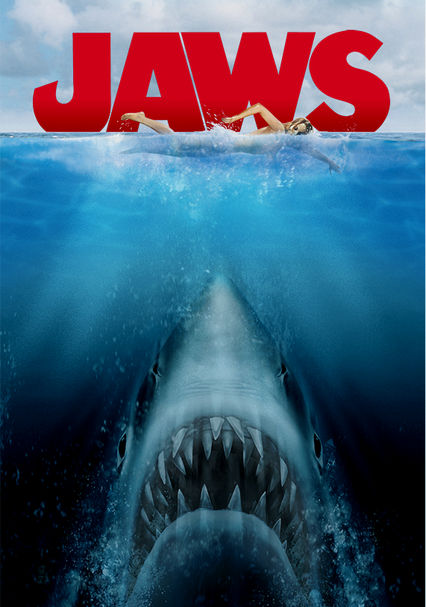
Jaws-1975

Jaws-1975

Director Steven Spielberg

Starring Roy Scheider, Richard Dreyfuss, Robert Shaw

Scott’s Review #1,240

Reviewed March 28, 2022

Grade: A

The directorial breakthrough by the iconic Steven Spielberg is Jaws (1975). The film is such a legendary and familiar project that even stating the name to pretty much any human being immediately conjures images of a man-eating great white shark and the unforgettable ‘duh-duh, duh-duh’ musical score.

It’s the film that famously made people afraid to go into the water just as Hitchcock’s 1960 masterpiece Psycho made people afraid to take a shower. When I have to be near the ocean I always think of this film.

Jaws is a hybrid horror/thriller/adventure/action film whereas the subsequent sequels were all straight-ahead horror films that cast more teenagers, and some better than others.

Spielberg teaches a valuable lesson that much can come from very little and that a small budget can create greatness. What he accomplishes with Jaws is admirable, to say the least.

With Jaws, the story is more about the attempts of three men to destroy a killer shark and their relationship with the shark itself. The scary aspect, always terrific in horror, is we do not know what the shark’s motivation is. Why does it kill?

It’s a brilliant film that holds up well decades later despite the shark feeling less authentic as the years go by. But, the time a film is made must always be kept in mind.

When one summer day a young woman is killed by a shark while skinny-dipping near the New England tourist town of Amity Island, police chief Martin Brody (Roy Scheider) wants to close the beaches. He comes into conflict with the mayor, Larry Vaughn (Murray Hamilton) who overrules him, fearing that the loss of tourist revenue will negatively affect the town during its summer season.

Dismissed as a mere boating accident, the great white shark then kills a young boy in full view of a beach crowd resulting in panic and mayhem. It’s as if the shark is determined to be taken seriously.

Oceanographer, Matt Hooper (Richard Dreyfuss) and grizzled ship captain Quint (Robert Shaw) offer to help Brody capture the killer shark, and the trio engages in an epic battle with the beast.

Jaws is a film that can be viewed multiple times and provides sheer pleasure each time. Forgetting the horror elements, the film provides adventure and heart-pounding thrills per minute once the men dare to try and foil the shark.

The fun, as in any film of this kind, is not knowing when or where danger will strike, only that it inevitably will come.

Scheider excels in his household name-making role as the determined police chief. He cares deeply about the townspeople and is therefore a likable hero. During frequent scenes, he gazes out to the water, a troubled look on his face, pained and feeling responsible for the deaths.

The audience empathizes with him.

Lorraine Gary, who would have a lead role in later films with poor results, is terrific as the supportive yet challenging wife, Ellen. She is the yin to his yang and it comes across on-screen.

The best scenes of the film are the very first one when the girl is eaten by the shark and the later one when Brody yells at everyone on a crowded beach to flee the water. Munching on the first victim, this is the scene where the dreaded music makes its debut. From this point, the audience knows that once this music is heard it means the shark is nearby.

In the other scene, the panic caused is breathtaking and palpable and sympathy is felt for Brody. He obediently takes the blame for the chaos and the deaths and makes it personal when his son is victimized. The scene sets the tone for the scramble and mayhem.

Jaws (1975) has it all: adventure, thrills, horror, action, a hero, and blood. The technical aspects are astounding with underwater sequences and effects that remain viable.

It arguably created what has come to be known as the summer blockbuster.

Oscar Nominations: 2 wins-Best Picture, Best Film Editing (won), Best Original Dramatic Score (won), Best Sound (won)

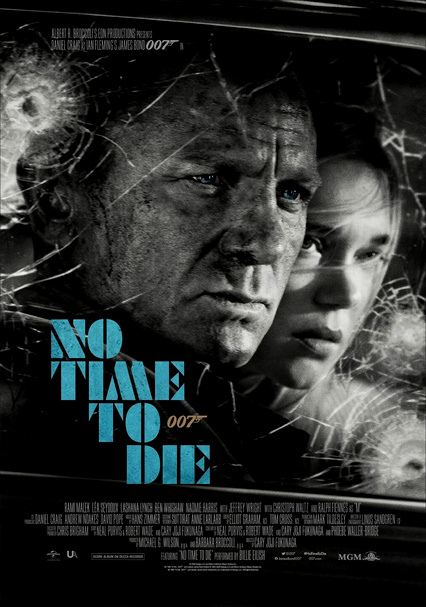
No Time to Die-2021

No Time to Die-2021

Director Cary Joji Fukunaga

Starring Daniel Craig, Léa Seydoux, Rami Malek

Scott’s Review #1,236

Reviewed March 6, 2022

Grade: A-

Celebrating the twenty-fifth in the iconic James Bond film franchise, No Time to Die (2021) is Daniel Craig’s fifth and final appearance as the British MI6 agent.

As of this writing, it is yet to be determined who will next step into the shoes of the legendary character, but Craig was able to make the character his own since his debut in Casino Royale (2006).

He retains his hunky and muscular portrayal with a sullen and serious tone.

No Time to Die is visually and stylistically similar to the recent handful of films that came before it, with a slick and modern look and feel.

The difference is that the film is about relationships and has a shocking conclusion that nearly rivals Mrs. James Bond’s death in On Her Majesty’s Secret Service way back in 1969.

James Bond utters a few quips or one-liners, and we can agree that Craig does not play the character in the same way that Roger Moore did. But, there exists a dark and dreary tone throughout and more than one surprising death.

It’s a serious affair.

I love the parallels to On Her Majesty’s Secret Service that emerge mainly in the beginning and end of the film.

The inclusion of the famous Louis Armstrong song ‘We Have All the Time in the World’ recalls both love and loss experienced by Bond and is played in full during the closing credits.

This is a special treat for fans of that film, myself included. I felt emotionally connected to No Time to Die, which was a significant score for it.

In an extended opening sequence, a young girl named Madeleine witnesses the murder of her mother by terrorist Lyutsifer Safin in a failed attempt to murder her father, Mr. White (appearing in Casino Royale). Madeleine shoots Safin (Rami Malek), but he survives and rescues her after she falls into a frozen lake. This connects them for life.

In the present, after the capture of villain Blofeld, Madeleine (Léa Seydoux) is vacationing in Southern Italy with Bond when Spectre’s assassins ambush him. He incorrectly assumes Madelaine has betrayed him, and he ends their relationship after they escape death.

Depressed, Bond retires to Jamaica but returns to action after his friend Felix Leiter (Jeffrey Wright) from the CIA turns up asking for help. The mission to rescue a kidnapped scientist turns out to be far more treacherous than expected, leading Bond onto the trail of a mysterious villain armed with dangerous new technology.

With the emotional and relationship investments successfully sealed, any worthy Bond film should have great action with interesting locales, stellar villains, and relevant Bond girls. In this regard, the film gets a solid B+ with those as mentioned earlier, bumping it up a notch.

The chase throughout southern Italy is fabulous, with delicious scenery of the culturally lavish country getting the film off to a fast start.

Other sequences in Chile and Cuba show the sophistication and investment in quality locales. Naturally, London is heavily featured, and I adore the grand and frequent aerial views that allow prominent landmarks to be discovered.

Although actor Malek can be creepy in his roles and play a dastardly villain, I wasn’t delighted with the character of Safin. Not appearing in an obvious fashion until midway through his screen time is limited, and his motivations murky- I wanted more.

The casting is terrific, but the character is underwhelming and not explored to his full potential.

Christoph Waltz’s limited appearance as an imprisoned Blofeld is excellent, and double agent Logan Ash (Billy Magnussen) and scientist Obruchev (David Dencik) prove quality secondary villains.

The storyline with Felix and the returns of Moneypenny, Q, and M (now played by Ralph Fiennes) is solid.

Main Bond girl Madelaine did not win me over at first, but by the end, I was heavily invested, especially since she is a powerful female character and a true romantic partner to Bond. A new female 007, played by Lashana Lynch, is a progressive inclusion that breathes new life into MI6.

May both appear in the future?

Time, and perhaps another viewing, will determine how No Time to Die (2021) ranks compared to other Bond films. At a hefty two hours and forty-three minutes, the film drags in the middle section, and some characters receive limited exploration.

The nods to history and the heavy emotional investment kept me glued to my seat.

Oscar Nominations: 1 win-Best Original Song-“No Time to Die” (won), Best Sound, Best Visual Effects

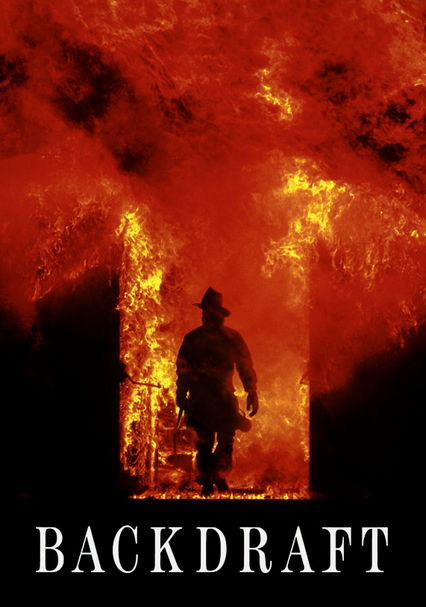
Backdraft-1991

Backdraft-1991

Director Ron Howard

Starring Kurt Russell, William Baldwin

Scott’s Review #1,216

Reviewed January 2, 2022

Grade: B

Backdraft (1991) is a highly entertaining yet completely implausible action, thriller film directed by Ron Howard. If made today it would be on par with Chicago Fire or any other of the slew of similar procedural NBC television shows that currently exist.

The film is even set in Chicago just like the television series.

The story involves an arsonist on the loose and the subsequent investigation to catch them.

Howard is an influential and respectable director but his films frequently harbor the safe territory rarely veering too left of center. With Backdraft, I assumed I would get a by-the-numbers masculine film and that is exactly what I received.

The beefy cast includes Kurt Russell, Billy Baldwin (brother of Alec), and Robert De Niro with Jennifer Jason Leigh and Rebecca De Mornay serving as secondary female characters.

Chicago firefighting brothers Stephen (Russell) and Brian (Baldwin) have been rivals since childhood. Brian, struggling to prove himself as a worthy firefighter, transfers to the arson unit where he aids Inspector Don Rimgale (De Niro) in his current investigation. There is a rash of fires involving oxygen-induced infernos called backdrafts.

But when a conspiracy implicating a crooked politician and an arsonist leads Brian back to Stephen, he is forced to overcome his brotherly competitiveness to crack the case.

Anyone involved in their local fire department or who has a strong sense of loyalty or brotherhood in a blue-collar vein will love Backdraft for its message. The strong family unit that shrouds most firehouses or police stations is prevalent throughout the film which brings a united and community feeling.

It’s a nice feeling and sets the tone for the viewer to feel a part of things and root for the heroes to defeat whoever is responsible for the arsons. Could it be an unstable member of the fire community or an outsider harboring a grudge?

The story, despite being somewhat of a whodunit is not the strongest aspect of Backdraft nor much of a reason to tune in and follow. Too often the writing is lazy or languishes in television drama territory with obvious and melodramatic situational setups.

The realism is not there. The fire sequences are completely stagey and meant to perfectly parlay the story elements rather than have an identity of their own.

With all that said, the star of the film is the visuals that give Backdraft its adventure and edge-of-your-seat thrills. Even though I knew the fires and explosions were manipulated I felt like I was inside a burning room with the hissing and crackling sounds of the fire and wind enveloping me.

It’s all for dramatic purposes of course but the state-of-the-art special effects are cool to experience.

This is the key to the success of a film like Backdraft and enough for me to keep watching and become invested in the entire work.

Yes, many characters are types and despite the big A-list stars Russell and Baldwin are the only ones who have much of anything to do. Their brotherly relationship though fraught with friction is at the heart of the characters though sometimes the corny dialogue slips into soap opera territory.

Backdraft (1991) is a cinematic Hollywood mainstream film that works on many levels. Forget the lazy storylines and the predictability factors for a minute. It provides a blazing-hot inferno of sharp visuals that are to be commended and appreciated for their merits.

Oscar Nominations: Best Sound Effects Editing, Best Visual Effects, Best Sound

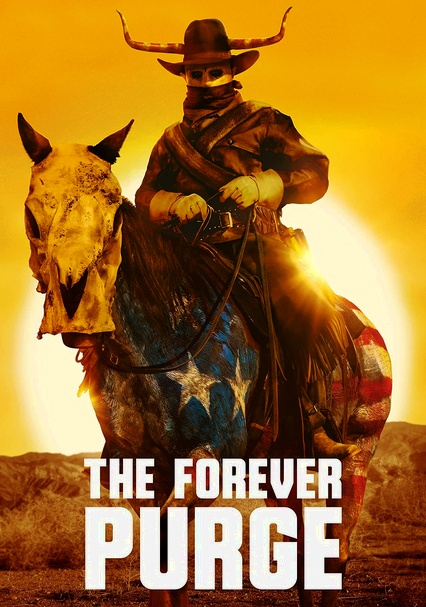
The Forever Purge-2021

The Forever Purge-2021

Director Everardo Valerio Gout

Starring Tenoch Huerta, Josh Lucas, Ana de la Reguera

Scott’s Review #1,209

Reviewed December 18, 2021

Grade: B+

To date, I’ve seen two of the four installments of The Purge film franchise.

The first one, The Purge (2013), was an edgy, creative concept that brought fresh energy to the horror genre. The sequel, The Purge: Anarchy (2014), was a decent follow-up but nothing to write home about either.

I skipped the next two: The Purge: Election Year (2016) and The First Purge (2018).

My expectations were low for the latest effort, The Forever Purge (2021). I’ve seen way too many ‘part five’ of various horror films to be tricked into thinking anything different will be offered to me.

I was pleasantly surprised.

While the film doesn’t rewrite the rulebooks and sticks to a familiar formula for this type of film, a timely political plot surrounding immigration emerges, mirroring the deadly ‘Trump era’ that the United States is still in the midst of, ever since the 2016 presidential election.

After the film ended, I first chuckled, but then felt sad at the message that perhaps at some point, citizens of the United States will flee to Mexico instead of the other way around.

It’s a somber message worth taking seriously.

In the first scene, we see Adela (Ana de la Reguera) and her husband, Juan (Tenoch Huerta), crossing the border from Mexico to live in Texas, where Juan is working as a ranch hand for the wealthy Tucker family. We presume they are illegal immigrants.

Juan impresses the Tucker patriarch, Caleb (Will Patton), but that fuels the jealous anger of Caleb’s son, Dylan (Josh Lucas). The residents of the small town prepare for the annual Purge, where all crime, including murder, is legal for one night only.

On the morning after The Purge, a masked gang of killers attacks the Tucker family including Dylan’s pregnant wife (Cassidy Freeman), and his sister (Leven Rambin), forcing both families to band together and fight back as the country spirals into chaos and the United States begins to crumble around them.

The insurrectionist movement continues committing crimes and murders nationwide after the Purge’s ending. The gang and their supporters spread throughout the United States as a Civil War eventually erupts, causing many residents of Texas to flee to neighboring Mexico.

Unusual for a horror film, the premise and screenplay are well-written. The social message is a unique one, solidifying the importance of the action being taken. Rather than feeling superfluous, I instead imagined that the events could occur in the real-life current United States.

It was an unsettling feeling that made me focus on the film even more than I would have otherwise.

I love that James DeMonaco (director of the first three and writer of all five) is so heavily involved with the franchise. This consistency brings continuity and a good flow to the series. A sixth film is already in the works.

Too often in horror films, a new regime emerges and changes everything we knew from the preceding films.

The progressive slant of DeMonaco and director Everardo Gout won me over, and I champion that the Mexican characters are the heroes of the film. Not to be forgotten, the caucasian Tucker family is written as sympathizing with and supporting their Mexican friends, becoming strong allies.

Where The Forever Purge lags a bit is with the traditionally standard action sequences. Numerous occurrences of shootouts between the Tuckers and Mexican family (they are never given a last name) and the radical movement become tired and standard after a while.

I sometimes felt like I was watching an episode of The Walking Dead.

The insurrectionists are portrayed as your basic dumb rednecks with primitive ideals and racist viewpoints, but you never hear the current government’s side of the story. It is explained that the New Founding Fathers of America (NFFA) have regained control of the U.S. government; however, the explanations provided are limited.

It is supposed to be 2048, but this point feels silly since it is present times as far as hairstyles, clothing, and automobiles go.

I credit the thoughtful and forward-thinking approach that DeMonaco provides to The Forever Purge (2021). The political commentary is a huge win in an otherwise entertaining yet standard dystopian action horror film.

The film may be dated in ten or twenty years, but in 2021, the message is pretty damned frightening.

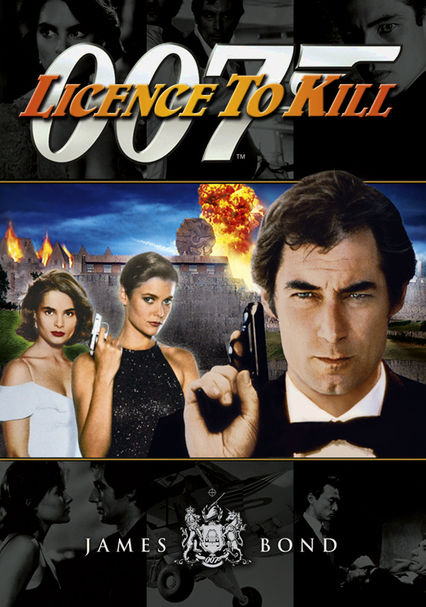
Licence to Kill-1989

Licence to Kill-1989

Director John Glen

Starring Timothy Dalton, Carey Lowell

Scott’s Review #1,196

Reviewed November 14, 2021

Grade: B

Of the two turns 007 that Timothy Dalton gave us License to Kill (1989) ranks as the weakest with The Living Daylights (1987) being superior. But that doesn’t mean the film has no good qualities.

It’s an okay film and director John Glen, now returning for his fifth James Bond film seems a little out of gas. Many of the stunts and sequences are very familiar territory and the dialogue is far from crackling or exciting.

The James Bond film franchise would go on a six-year hiatus after Licence to Kill and return refreshed in 1995. Perhaps it needed to.

Dalton does his best but his heart doesn’t quite seem in it and the serious tone of the film gets even darker than The Living Daylights. I don’t think this is a bad thing and I love how the franchise regular Felix Leiter (David Hedison) gets more of a storyline. But the wit and charm are lacking.

Events begin in sunny Key West at the impending nuptials of former CIA agent and Bond friend, Leiter. Pursuing one of the international drug cartel’s most brutal and powerful leaders, Franz Sanchez (Robert Davi), events quickly escalate.

After a double-crossing poor Felix is fed to the sharks. While he survives the attack his now wife is murdered. Bond goes rogue and seeks personal vengeance.

What separates Licence to Kill from other Bond entries is the limited locales. Though exquisite, they only take place in North America. The Florida Keys, the Bahamas, and Mexico are used in fine form, especially the latter.

The gorgeous coastline feels European and I surmised that it was shot and set in Spain when in fact it was Mexico.

Also enjoyable is the Latin flair with lots of cultures throughout. Davi is powerful and dangerous as the Latin drug lord and he exudes violence and treachery. He is gleeful when a nemesis falls victim to his pet shark and loses a limb or two before succumbing to death.

A great kill is when dastardly Milton Krest (Anthony Zerbe) topples into a giant microwave oven and explodes into bloody bits. His death is deserved and satisfying.

To build on this, the inevitable death of Sanchez himself is a crowd-cheering moment. Before he explodes into a giant ball of flames Bond is certain to let the villain know that his death is courtesy of Leiter. This is an exciting and fulfilling moment.

The Bond girls are not at their finest in Licence to Kill. Carey Lowell plays Pam Bouvier, an ex-Army pilot, and DEA informant. While sometimes portrayed as a tough-minded and brazen female character she is also written as simpering and pining over Bond.

She can also be silly and foolhardy like when she carelessly plays with dangerous gadgets that Q creates. I would expect more intelligence and wherewithal based on her credentials.

Secondary Bond girl Lupe Lamora (Talisa Soto) girlfriend of Sanchez, lacks much depth. Beautiful, she is quite wooden in the acting department and suddenly falls in love with Bond insisting on her powerful feelings for the man she barely knows.

It’s a bit far-fetched even for Bond standards but she is nice to look at. So there’s that.

License to Kill (1989) usually gets either lost in the shuffle or derided completely and this is unfair. It’s not one of the greats but neither is it garbage.

It feels a bit tired of its time. Truth be told, it’s grown on me since I first saw it and even the title song performed by Gladys Knight has enamored me over the years.

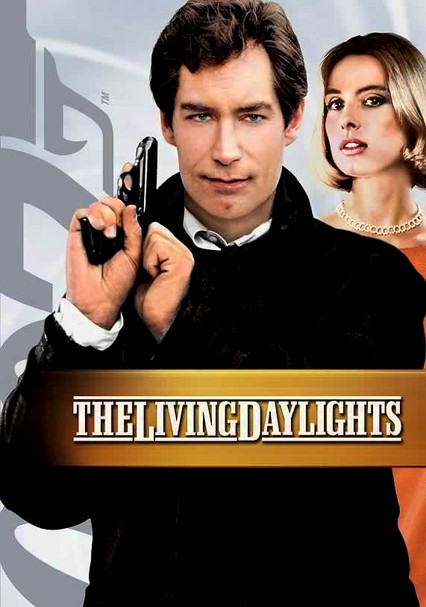
The Living Daylights-1987

The Living Daylights-1987

Director John Glen

Starring Timothy Dalton, Maryam d’Abo

Scott’s Review #1,194

Reviewed November 12, 2021

Grade: B+

It’s 1987 and Timothy Dalton is the new James Bond having replaced the aging Roger Moore. Moore made seven Bond films.

Dalton’s reign was to be brief and made only two films- The Living Daylights (1987) and License to Kill (1989).

The Living Daylights is a fine Bond film ranking somewhere midstream with Best Of lists. I completely agree with this sentiment as it mostly borrows from other Bond films or stays true to the course, providing a quality action film with all of the typical trimmings a fan would expect from the franchise.

Nothing wrong with that.

This is unsurprising since director John Glen is at the helm once again. Responsible for directing the three prior Bond films- For Your Eyes Only (1981), Octopussy (1983), and A View To A Kill (1985) he knows how to create a decent picture and he does just that.

The main issue is with Dalton himself. Handsome, dashing, and British, he doesn’t quite possess the charisma that other Bonds like Moore, Connery, or Lazenby had. There is a seriousness to the actor and a lack of a smirk or wink in his eye that makes fans melt like putty in his hands.

The action commences with British secret agent James Bond (Dalton) helping KGB officer Georgi Koskov (Jeroen Krabbé) defect during a symphony performance. A mysterious blonde woman who plays cello immediately catches Bond’s attention for more than one reason.

She is Russian assassin Kara Milovy (Maryam d’Abo). Predictably, as events unfold they become madly in love (or lust).

Koskov reveals that a policy of assassinating defectors has been instated by new KGB head Leonid Pushkin (John Rhys-Davies). But as Bond explores this threat, counterplot surfaces, involving a shady American arms dealer (Joe Don Baker). Bond must thwart the evildoer’s fiendish plans and save the world from disaster.

The plot is secondary and difficult to follow but the gist is the same as any other Bond film.

The fun (for me anyway) is enjoying the exquisite locales that the film takes Bond to. I salivated at the gorgeous concert hall and surrounding areas of Czechoslovakia (pre-Czech Republic) and was mesmerized as the action went to the stark desert lands of Afghanistan, Morocco, and finally into historic Austria.

The pre-title sequence was filmed on the Rock of Gibraltar and is utterly fabulous.

With every Bond film, this is a real treat and much of the enjoyment. The Living Daylights doesn’t disappoint in this regard.

The thrilling finale aboard a speeding airplane is thrilling and pulsating, edge-of-your-seat fun. Fights, ticking time bombs, and impending peril keep the action moving at a breakneck speed.

The villains lack much gusto save for a hunky blonde assassin named Necros (Andreas Wisniewski) who enjoys prancing around in skimpy swimwear and who may or may not be gay.

In a more progressive Bond, they might have had a dalliance.  The main antagonists, Brad Whitaker, an arms dealer General, and Koskov are too goofy to present any real danger or feel diabolical.

Also forgettable is the main Bond girl. Maryam d’Abo is an okay actress but lacks much chemistry with Dalton. Their adventures are appealing but more as buddies and the romance didn’t work for me. He does respect her more than other Bonds would so that is a win.

Delightful is the title theme song performed by the band A-Ha, which is catchy enough to stick in my head as I write this review. It is exotic and upbeat. Its standard inclusion in the opening credits makes the cheesy sequence more bearable.

Undoubtedly intended to launch a long and storied career as the new James Bond, Dalton lasted only briefly in the role.

The Living Daylights (1987) presents a Cold War theme still relevant but slightly tired for the times. As usual, unless we’re talking about one of the superior Bond films, the locales are the real highlight.

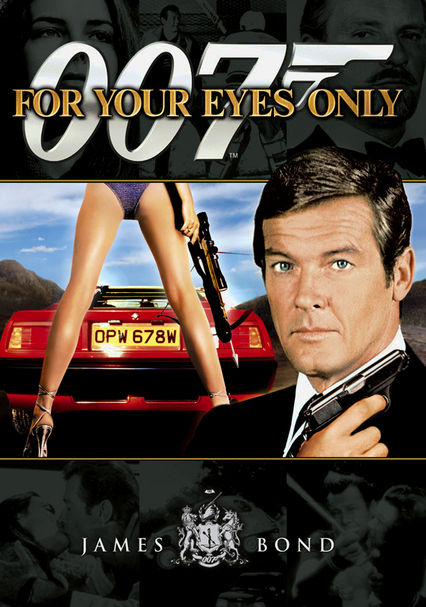
For Your Eyes Only-1981

For Your Eyes Only-1981

Director John Glen

Starring Roger Moore, Carole Bouquet

Scott’s Review #1,185

Reviewed October 10, 2021

Grade: B+

Following the outrageousness of 1979’s Moonraker, a film I nonetheless find enjoyable, the decision was made to bring James Bond back to earth in the next chapter.

For Your Eyes Only (1981) has matured well over the years and is an above-average entry among my all-time James Bond list.

The main Bond girl and the villain are not as top-notch as other Bond films but the action, suspense, and nods to Bond history are fantastic as is the grittier look and feel.

And, the locales of Italy and Greece are breathtaking.

The title song, a sleek and syrupy love ballad performed by Sheena Easton, is a favorite of mine and is instantly recognizable in association with the film. It charted at number one on the charts and sold a gazillion copies.

The plot is typical of a James Bond film.

After a British ship is sunk in foreign waters, the world’s superpowers begin a feverish race to find its cargo: a nuclear submarine control system.

And 007 (Roger Moore) is thrust into the middle of the action as he aligns with Melina Havelock (Carole Bouquet), Milos Columbo (Topol), and others to thwart the fiendish plans of the villainous Kristatos (Julian Glover).

The story is rather secondary to the enjoyment of the film and I quickly stopped trying to follow every plot point or detail. It’s not that important to know who every bad guy is or their motivations. There is a plot to take over the world and there you have it.

I adore the opening sequence when Bond visits the gravestone of his deceased wife Teresa. This tender moment immediately made me reflect on the goodness of On Her Majesty’s Secret Service (1969) and the humanistic tone that the film brought.

Bond then engages in a thrilling helicopter chase with arch-rival Blofeld which parlays into the opening credits with the title song as a backdrop.

This first sequence has nothing to do with the rest of the film but fabulous is the London shots of Big Ben and other historical treats. And it’s just dessert to see Blofeld dumped into a massive chimney and presumably to his death.

Bond historians will love this.

The film is recommended to be watched in the winter months since the snowy and icy scenes fare better in the appropriate calendar months. It could be a warmup act to On Her Majesty’s Secret Service or From Russia With Love (1963) also cold-feeling Bond films.

I didn’t perceive much chemistry between Moore and Bouquet but neither did their lack of chemistry ruin the film for me. The thirty-year age difference didn’t help matters but at least James Bond had the decency not to bed the horny underaged figure skater, Bibi Dahl (Lynn-Holly Johnson).

Her character is played for laughs and her schoolgirl crush on Bond is cute.

Kristatos isn’t the most memorable villain either. His true colors aren’t revealed until late in the game and his motivations are a stretch. I didn’t buy him as a former war hero and ally turned smuggler.

Nonetheless, Glover plays him straightforwardly and a compelling sequence occurs when he attempts to kill Bond and Melina with his massive boat and hungry sharks.

Topol, well-known for his role as Tevye in Fiddler on the Roof (1971) is great to see as one of Bond’s allies. The actor’s distinctive voice is tough to miss though I half-expected him to break into “If I Were a Rich Man” at any moment.

The final sequence atop the Monastery of the Holy Trinity, and Eastern Orthodox monastery in Greece is terrific and quite justifiably the highlight. Bond dangles for his life as a henchman slowly breaks each of Bond’s rock climbing stakes is a nail-biting and suspenseful scene even though you know that Bond will find his escape.

Flying under the radar, For Your Eyes Only (1981) is delightful for the locales and action sequences alone.

Dragging slightly midway and not featuring a memorable Bond girl or villain, it offers a darker story and contains fewer cheeky moments. This is refreshing following a silly trip to the moon.

The villains are more dangerous than cartoonish and the extreme locales and throwback to history make this an appreciated effort.

Oscar Nominations: Best Original Song-“For Your Eyes Only”

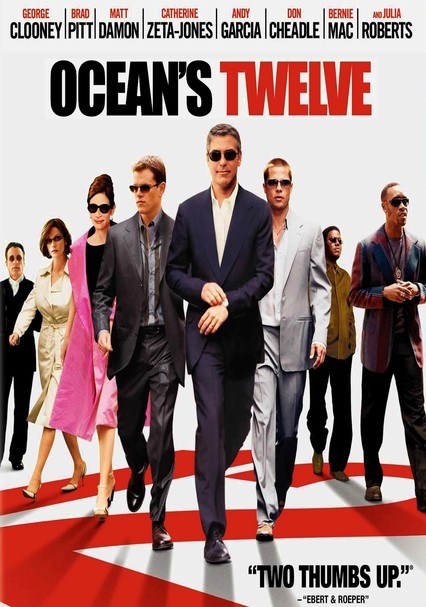
Ocean’s Twelve-2004

Ocean’s Twelve-2004

Director Steven Soderbergh

Starring George Clooney, Brad Pitt, Matt Damon

Scott’s Review #1,157

Reviewed June 30, 2021

Grade: B-

The casino heist gang is back together again for more action and adventure in a film that was only made because of the success of its predecessor, Ocean’s Eleven (2001).

The uninspiring title of the film, Ocean’s Twelve (2004) is a letdown as compared to the fantastic and enthralling 2001 film.

What felt like a purely original idea, even though it was a remake, now feels like stale bread that was fresh only yesterday.

Thankfully, Steven Soderbergh returns to the fold which adds some style and general good direction.

The story is slow to kick off and provides an implausible and unconventional ending that doesn’t work nearly negating most of the previous activity. There is something a bit irritating about watching a film with the knowledge that it was only made for one reason and the plot seems to be rushed and poorly thought out.

But that’s Hollywood.

Undoubtedly, George Clooney, Brad Pitt, Matt Damon, Julia Roberts, Catherine Zeta-Jones, and other top talent enjoyed the hefty paychecks they received. This is also perturbing as the performances seem ho-hum and inspired by the big bucks being deposited into big bank accounts for services rendered.

The inauthenticity all around is evident in lazy acting and writing.

The foil and mark, Terry Benedict, once again played by Andy Garcia realizes that the gang has robbed him of millions and demands the money back with interest. Unfortunately, much of it has already been spent.

Unable to come up with the cash, the crew must come together to pull off another series of heists, this time in Europe. Presumably, they are not well known there.

Being “forced” to do what the career criminals love to do is far-fetched.

Danny (George Clooney) and the gang hatch a plan to swap a Fabergé Imperial Coronation Egg for a holographic recreation. Linus (Damon) comes up with a second plan involving Danny’s wife, Tess (Julia Roberts), posing as a pregnant Julia Roberts to get close to the Egg and swap it.

They are foiled by Lahiri (Catherine Zeta-Jones) and a coincidentally present Bruce Willis, and the rest of the group are captured.

While it’s slightly clever having Bruce Willis and Julia Roberts appear as themselves especially when Julia Roberts plays another character in the film, it doesn’t work as well as it sounds on paper.

The story is way too convoluted and Ocean’s Twelve quickly turns into the sort of film you tune out of enjoying the non-story points more than the written word. In this case, that’s not a positive aspect.

The film’s successes, mainly the returning A-list cast, are also negative. While it’s fun to reconnect with familiar characters like Danny Ocean, Rusty (Pitt), and Linus, we know the characters too well and they become caricatures. Meaning, they behave exactly as one would expect them to.

Still, it is admittedly juicy and exciting to witness so many A-listers on one big screen especially when there is trickery, scheming, and just a hint of romance to be had.

I’ll also partake in just about any film that goes on location to Paris, Rome, Monte Carlo, and Amsterdam. It’s an orgy of European history and goodness adding cultural trimmings to a sub-par storyline.

Particularly inviting are the villa scenes in luscious Lake Como.

Ocean’s Twelve (2004) will please only those who are obsessed enough with the franchise to enjoy what is a retread of the 2001 film set in various parts of Europe instead of Las Vegas.

It isn’t nearly enough for me as most cleverness and bright and crisp writing are gone.

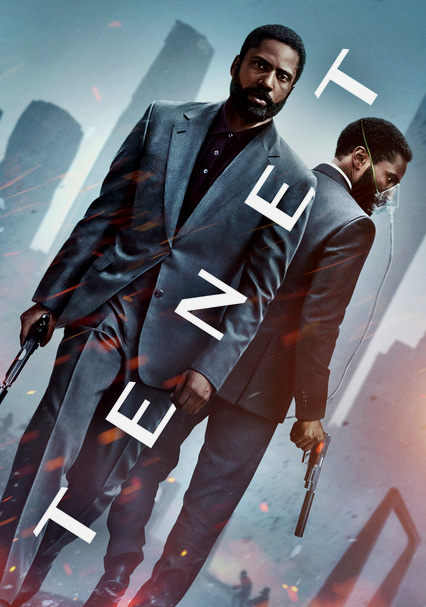
Tenet-2020

Tenet-2020

Director Christopher Nolan

Starring John David Washington, Robert Pattinson

Scott’s Review #1,149

Reviewed June 4, 2021

Grade: C

For those film lovers craving a plot that serves as a weaving puzzle that can never be figured out, Tenet (2020) is highly recommended. Others who desire a more defined and linear story and character development will be disappointed by the film.

Tenet is a visuals-only experience as I tuned in and out of the actual plot points after realizing they intersect past, present, and future elements.

I did try from the outset to understand, but ended up falling flat.

One’s enjoyment will depend on one’s cinematic desires and expectations.

I lean more towards a compelling story with excellent acting and a strong emotional connection to the project. I’m not as focused on brilliant CGI or dazzling visuals as some, but I recognize that Tenet has these elements.

However, I’m not sure I agree with the film’s Oscar win for Best Visual Effects or nomination for Best Production Design- thank goodness the terrific Mank (2020) won the latter award.

I’ll try to summarize the plot.

A secret agent named the Protagonist (John David Washington) embarks on a dangerous, time-bending mission to prevent the start of World War III.

The villainous Andrei Sator (Kenneth Branagh) is a Russian oligarch who communicates with the future and is intent on destroying the world. His wife, Kat Barton (Elizabeth Debicki), despises her husband and aligns with the Protagonist to stop him. They fall in love.

Along for the ride are an arms dealer, Priya Singh (Dimple Kapadia), and Robert Pattinson plays the Protagonist’s handler who may or may not be trusted.

Let’s start with the positives.

Tenet gets off to a terrific start with a scene at the Kyiv opera house in Ukraine. Though silly, the invasion of the theater and the massive sleeping effect of the theater attendees and performers is like a domino effect. The scene is fast and exciting.

Later, a daring car chase featuring a car speeding down a highway in reverse gear is pretty exciting. Add a character bound and tied in the passenger seat with no driver and no way to get out, which provides an incredible James Bond moment.

Another positive is the luscious locales like Estonia, Oslo, Norway, London, and the Amalfi coast.

That’s where the fun ends.

I have to admit that I expected more from Christopher Nolan, who wrote and directed the project. The man has churned out superlative efforts like The Dark Knight (2008) and Dunkirk (2017), but Tenet will not rank among his finest moments.

To that end, it’s a Nolan film. Sound and visuals are his trademarks, and the bombastic, booming score is tight and familiar. The mixing of loud, techy, thundering beats is commonplace, but sadly does little for the film. They almost become annoying.

The cast is seasoned and capable. With Washington, Pattinson, Branaugh, and Debicki onboard, there is a talent to be found. Even Michael Caine is cast in one wasteful scene.

Nonetheless, the actors drift through their scenes looking perplexed and stiff. Probably because they didn’t know what the hell was going on in the scenes.

Just like the viewer.

The dialogue is an issue because it’s not written well. Why would Kat want to kill a man who is already dying of terminal cancer? Why not wait out his demise? And the time travel was lost on me from the first sequence. I didn’t care.

The most laugh-out-loud line occurs when Kat exclaims to the Protagonist, “I just knew you’d have a backup plan. Wait, you do have a backup plan, right?” With juicy dialogue like this, it’s a wonder Tenet didn’t receive a Best Screenplay nomination. I jest, of course.

Minor details, such as the Protagonist and Kat having zero chemistry, despite the interracial romance having so much potential, are disappointing.

I can’t say I’d recommend Tenet (2020), but I can provide details of what you can expect from the experience. Some incredible visual moments can’t overcome the lack of any storyline, and the viewer will become lost in the tired moments.

By the final sequence, I thought I had watched a generic episode of a network television series like NCIS.

Ouch.

Oscar Nominations: 1 win-Best Visual Effects (won), Best Production Design

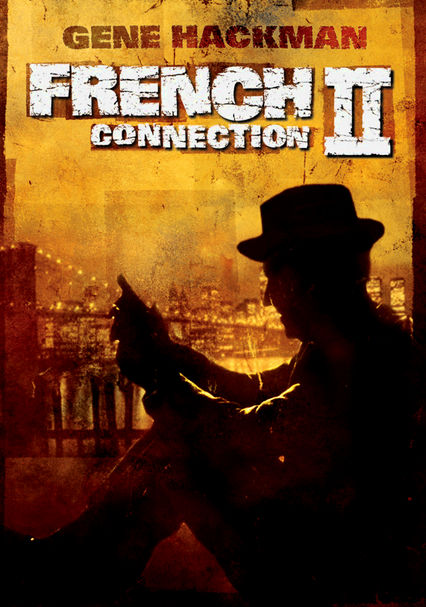
The French Connection II-1975

The French Connection II-1975

Director John Frankenheimer

Starring Gene Hackman, Fernando Rey

Scott’s Review #1,148

Reviewed June 2, 2021

Grade: B

The French Connection, the winner of the coveted Best Picture Academy Award for pictures released in 1971, is a brilliant film, holding up well as a cream-of-the-crop cop film.

An action film winning an Oscar is as rare as a horror film winning it. It’s rare.

The decision to make a sequel is debatable but The French Connection II (1975) forges as a decent action crime thriller but hardly on par with the original.

Is anyone surprised?

Sequels rarely usurp their predecessors especially when The French Connection is such a superior genre film. In a way, Part II didn’t have much of a chance measured up against Part I.

Films like The Godfather only come around once in a lifetime.

Unfortunately, William Friedkin did not return to the fold to direct, replaced by John Frankenheimer, best known for the nail-biting The Manchurian Candidate (1962).

Thankfully, Gene Hackman did return. He helps the film from an acting perspective and gives his all in a tough role. His partner, played by Roy Scheider does not appear and is not mentioned.

Picking up a couple of years after the first one ended, Detective “Popeye” Doyle (Hackman) is still hot on the heels of cagey and sophisticated drug trafficker Charnier (Fernando Rey).

Doyle hops a flight to lovely Marseilles, France. Away from his familiar New York City territory, he struggles to assimilate himself in a strange city and conquer the drug ring to bring Charnier down.

Doyle is accosted and spends time as a dreary heroin addict in rough confines before being tossed away and forced to recover cold turkey style. He becomes even more determined to bring the bad guys to justice- dead or alive.

As a stand-alone action film, The French Connection II is not a bad experience. It is certainly better than the still-to-come 1980s doldrums like the Die Hard and Lethal Weapon cop/buddy films that marginalized the genre into cookie-cutter popcorn films.

The gripping New York City is replaced by the equalling compelling French landscape. Gorgeous locales like the French Riviera and the Meditteranean Sea are featured but Marseilles is not Paris. There exists a seediness and dirtiness that helps the film a bit.

Hackman acts his ass off, especially as a drug addict. I shudder to think of a weaker actor trying to pull off this acting extravaganza. From scenes featuring his withdrawals to his drug cravings is exciting to watch and showcase Hackman’s wonderful acting chops.

But the intent is to produce a good action film after all and that effort is mediocre. The French Connection II is simply not as compelling as The French Connection and despite some decent chase scenes and a cool finale where Doyle gets his satisfaction, there is little else but by-the-numbers activity.

To be fair, the final fifteen minutes is the best part of the film.

Remember the frightening car chasing a subway sequence? Or the delicious cat-and-mouse subway sequence between Doyle and Charnier?

Brilliant scenes like this do not exist.

A few clichés are bothersome. Predictably, Doyle stands out like a sore thumb in France and his hot-headedness emerges quickly, offending or pissing off the French authorities. He is not the most likable character and I frequently found myself rooting for the bad guys!

I don’t think I was supposed to.

Other implausibilities occur like the boneheaded decision to send Doyle to Marseilles, to begin with. Was he the only detective, including the French authorities, capable of catching Charnier?

What was the point of the old-lady heroin addict stealing Doyle’s watch?

A shadow of The French Connection, The dull titled The French Connection II (1975) is a weaker effort but still respectable as compared to other genre films.

This is mostly because of the French landscape and the return of Gene Hackman.

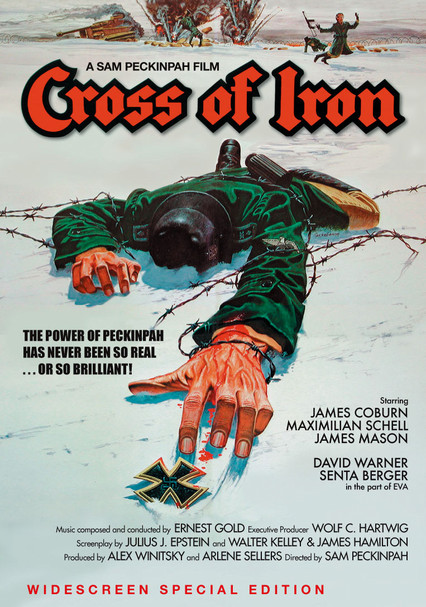
Cross of Iron-1977

Cross of Iron-1977

Director Sam Peckinpah

Starring James Coburn, Maximilian Schell

Scott’s Review #1,140

Reviewed May 8, 2021

Grade: B+

Cross of Iron (1977) is a film that sticks with you. I appreciate that it’s not a standard, cookie-cutter war film that too often graces the big screen decade after decade featuring different wars but applying virtually the same message. The tone is usually pro-United States with little explanation or defense of the other guys.

This is not one of those films.

That said, I could have used more of a straightforward approach because Cross of Iron is all over the place. It’s like a fragmented puzzle that doesn’t add up or come together but the experience is something both mind-blowing and unforgettable.

Sometimes confusing and unpleasant, it’s directed by Sam Peckinpah so anyone possessing knowledge of some of his other works knows what the experience will be like.

His best films, Straw Dogs (1971) and The Getaway (1972) are famous for their lightning-fast editing sequences galore and sudden still frames. Violence and mistreatment of female characters are also Peckinpah staples and Cross of Iron sure has those elements.

But it’s not on the level that Straw Dogs and The Getaway is as far as a solid storyline. Not even close.

The synopsis goes something like this. The time is World War II and Corporal Rolf Steiner (James Coburn) is a well-respected member of the German military and a recipient of the Iron Cross, Germany’s highest military honor. He leads a group of soldiers to battle somewhere in Russia, presumably.

Envious of Steiner’s Iron Cross award, Captain Hauptmann Stransky (Maximilian Schell), a Prussian officer clashes with Steiner when he joins the unit near the Russian front. Desperate to receive his own Iron Cross, Stransky takes the credit for a significant attack and sparks a heated rivalry with Steiner.

Mixed in with all this machismo drama between Stransky and Steiner are several brooding German soldiers, one French soldier, and a rescued Russian boy. A homosexual relationship between the French soldier and another soldier is discovered by Stransky and used as blackmail while Stransky himself may also be gay. Yet another soldier kisses a fellow soldier on the mouth.

Sadly, these story points go nowhere. And I didn’t care one iota about the Iron Cross.

To add to the confusion, a few of the German soldiers appear to be German while the others, especially Steiner, seem American. They frequently denounce Hitler which makes the viewer wonder why they are fighting for him. Are they forced to? Were many German soldiers not pro-Hitler but had to fight to avoid execution?

Again, these points are not explained.

The film introduction features children singing German songs amidst real-life footage of Hitler and Nazis and the conclusion also features children singing and still frames of children suffering during the war.

The sequences, while powerful, have nothing to do with the story since the story has nothing to do with children except the one lone Russian boy.

If you can get past the cloudy storylines Cross of Iron has some delicious stuff to chew on. Besides the fantastic editing, the film features one of the most intense and interesting scenes I’ve witnessed in a long time.

When the soldiers stumble upon a group of female Russian detachments things heat up. A despised Nazi Party member takes one of the women into a barn and rapes her. She bites off his penis and he kills her. Steiner allows the remaining women to exact revenge on the rapist and they beat him to death.

A couple of things stand out in this scene. As much as Peckinpah usually reduces his female characters to victims, in this scene there is a strong feminist angle which I love.

Were there Russian female soldiers in real life including a high-ranking major? Steiner allowing the women to kill the Nazis would make his group anti-Nazi?

There is a lot to ponder throughout and after watching Cross of Iron (1977). I’m not sure if I’m a huge fan of the film or ever need to see it again but maybe I should. So much goes on throughout the film that either adds or detracts from the experience that it’s a perplexing watch.

I’d add much more to the relationships between the characters, especially the male-male sexual dynamic to bring more substance.

The dynamic of Steiner taking the Russian boy under his wing had more to offer and I’d also reduce the number of battle scenes seemingly thrown in every so often to prove or justify that Cross of Iron is a war film.

U-571-2000

U-571-2000

Director Jonathan Mostow

Starring Matthew McConaughey, Bill Paxton

Scott’s Review #1,126

Reviewed March 25, 2021

Grade: B-

U-571 (2000) is a film that entertains. It’s got excellent cinematography, some thrills, and a clear good guys vs. bad guys mentality with machismo for days.

It’s an American film if there ever was one and will please American audiences seeking cookie-cutter material with loud noise and a satisfying ending.

It’s also got some scenes of guy peril that will please a certain type of audience demographic- think blue-collar males.

The modus operandi is that all the Americans are good and the Germans are bad. It is World War II after all. It wasn’t that simple folks but according to the film, it’s pretty cut and dry.

But that’s entertainment and a box-office hit.

It’s not a bad film at all but a beer and pizza-style film, not a martini and avocado dip film.

For those seeking something more authentic versus formulaic and riddled with cliches, U-571 will disappoint. It’s also shamefully inaccurate and severely muddies waters. The film does not portray a historical event so there is a lot it gets away with.

But it’s a fictionalized film and is meant to entertain so my suggestion is to sit back, grab some popcorn (or beer and pizza), and enjoy it for what it is. Don’t look for any rationale other than the studio wanting to make a ton of money.

And there is the exceptional cinematography and cool locales to keep us marginally happy. The story is inane but the trimmings work.

When a German U-571 submarine (hence the title of the film!) with a sophisticated encryption machine onboard is presumed lost and buried during a World War II battle at sea, the Allies send an American Navy force led by Lieutenant Andrew Tyler (Matthew McConaughey) to retrieve it for study.

Boarding the German ship, the Americans’ cover as a rescue force is quickly blown. Forced to take the crew hostage, the Americans lay their explosives and prepare to destroy the German vessel before the Nazis can send naval backup.

It’s a race against time routine seen frequently in masculine thrillers.

About those historical inaccuracies.

The American portrayal is skewed and slanted to be pro-American and this point offended many of the British military and public. Even Prime Minister Tony Blair got involved. The Allies captured Enigma-related codebooks and machines about fifteen times during the War; all but two of these by British forces.

Watching the film one would think the Americans did everything and the British were incompetent.

Let’s ponder for a moment why filmmakers, especially screenwriter David Ayer and director Jonathan Mostow would embrace such inconsistencies. My hunch is that they were attempting to target their film to male American moviegoers. The tactic worked and the film was a hit.

A cool tidbit is the casting of rock star Jon Bon Jovi in the supporting role of Lieutenant Pete Emmett. At this time launching an acting career that included a role on television’s Ally McBeal, it’s impressive to see him on the big screen and not playing himself.

I’m not sure he pulls it off but as a fan of the 1980s hitmaker, I enjoyed this aspect.

McConaughey carries the film well and is his usual dashing and charismatic self. Before the actor started doing more quality and character-representative films nearly a decade later, he would later state that several roles he took he disliked and did completely for the cash payday.

One wonders if U-571 is one of those films.

Bill Paxton and Harvey Keitel have little more to do than to act tense and play second fiddle to McConaughey.

From an inclusive perspective, and I kid because there is nary a strong female to be found, there are no strong women characters. A shame because being the year 2000 Mostow should have known better.

Couldn’t one of the high-ranking majors or lieutenants have been a woman? If nothing else it could have added some sexual tension. Or perhaps a same-sex relationship. The film does nothing for diversity.

It’s a very intense and exciting war film that accomplishes what it sets out to do. It’s well-executed and a crowd-pleaser, U-571 (2000) doesn’t contain much more than that and will be remembered as a slick entertaining thriller with a big movie star.

Oscar Nominations: 1 win-Best Sound Editing, Best Sound (won)

Ocean’s Eleven-2001

Ocean’s Eleven-2001

Director Steven Soderbergh

Starring George Clooney, Matt Damon, Brad Pitt

Scott’s Review #1,105

Reviewed January 28, 2021

Grade: A-

Steven Soderbergh was awarded the Best Director Academy Award for his exceptional direction in Traffic (2000) one of my all-time favorite films.

He follows up that gem with a slick, commercial film that is stylish and looks cool. It’s fast-paced with quick editing and is set in the dangerously appealing world of casinos as a group of sophisticated thieves attempt to steal $160 million from a casino owner with whom they have a vendetta.

I expected a film of this type to be generic and by the numbers, but instead, it’s unpredictable and unexpected.

Ocean’s Eleven (2001) is the first (and best) installment of the popular Ocean’s franchise and a remake of the 1960 Rat Pack film of the same name.

George Clooney was in his film prime and led the pack of A-list stars like Brad Pitt, Julia Roberts, and Matt Damon in a packed and brimming two-hour entertainment fest.

A nice touch is inviting two stars from the original, Henry Silva and Angie Dickinson, to appear as themselves.

Clooney leads the charge and embraces his leading role status with charm, polish, and style. He plays a handsome Danny Ocean, a man with a plan. Less than one day into his parole from a New Jersey penitentiary, the thief is already traveling to California to arrange his next plan with his partner-in-crime Rusty (Brad Pitt). It’s tinged with revenge.

They abide by three rules: Don’t hurt anybody, don’t steal from anyone who doesn’t deserve it, and play the game like you’ve got nothing to lose. Danny orchestrates his charges into creating the most sophisticated, elaborate casino heist in history. And it will take place in glitzy Las Vegas on the night of a boxing match.

By providing the rules it makes me think fondly of a similar proclamation in David Fincher’s 1999 film Fight Club, Danny and the gang immediately feel sympathetic to me.

After all, they don’t intend to hurt anyone, and the money stolen will be from folks who are dastardly and might even deserve to be penniless.

Didn’t JigSaw from the Saw films only kill those who harmed other people? Suddenly their motives are clear and justified making them the good guys.

As a bonus, the “victim” of the heist is the unlikable Terry Benedict (Andy Garcia), who owns three casinos and is worth billions. Making the bad guys the heroes and Benedict the bad guy is clever and situates the players properly so the audience is sure who to root for.

As if the film doesn’t have enough treats some drama is thrown in.  Danny’s ex-wife, Tess (Julia Roberts), is Benedict’s girlfriend. Is she loyal to Danny or Benedict or might she be playing both sides?

Loyalties are tested and questioned and the intricate bank heist sequence is titillating and an edge-of-your-seat thrill-ride. The Las Vegas backdrop with the casino’s bright lights, bells, and like elements cement Ocean’s Eleven as one of the best of its genre.

It’s also tough not to root for Clooney, Pitt, and Damon in or out of character.

Ted Griffin writes the screenplay and adds some nice characters, more than one-note bank robbers or thieves. Along with Soderbergh’s direction, which adds the nice atmospheric trimmings like the razzle-dazzle casino scenes they make a great pair.

I love how Danny and Rusty recruit a team with specialized skills like mechanics, pickpockets, and an electronics and surveillance specialist. There’s even an acrobat!

This seems an ode to the 1960s television series Mission: Impossible as the team is carefully selected based on skill.

A highly entertaining popcorn film just perfect for a summer night, Ocean’s Eleven (2001) is sure to satisfy. The intention is to sit back and enjoy what is offered and all the elements come together perfectly.

The culminating main event boxing match and subsequent twist catapults the film from pure entertainment to something more nuanced and exciting.

The film was a success at the box office and with critics leading to two sequels directed by Soderbergh and a spin-off with an all-female lead cast, was released in 2018.

Air Force One-1997

Air Force One-1997

Director Wolfgang Petersen

Starring Harrison Ford, Gary Oldman, Glenn Close

Scott’s Review #1,085

Reviewed November 21, 2020

Grade: B+

If ever a straight-ahead, summer blockbuster, popcorn flick existed, Air Force One (1997) is it. Surprisingly, this is not a bad thing. It’s not cerebral, but it’s never dull.

The film has hooks and muscle and assembles a thrill ride, edge-of-your-seat action fest. Some would say this is just what the doctor ordered, and they’d be right, provided the mood is for a mind-escaping, meat-and-potatoes affair.

Air Force One is pure Americana. With a patriotic musical score and a clear hero and villain, it’s easy to know who to root for. Suspension of disbelief is mandatory since some scenes are as implausible as Santa Claus shimmying down a chimney on Christmas Eve, but the film is entertaining.

The action is non-stop.

At the tail end of his prime action star years (the 1980s and 1990s), Harrison Ford stars as the president of the United States of America, James Marshall.

After making a bombastic speech in Moscow vowing never to negotiate with terrorists, a group of them led by the dastardly Ivan (Gary Oldman) hijacked Air Force One with the president and his family on board.

Marshall, a former soldier, hides in the cabin of the plane and races against time to save his family and those aboard the flight from the terrorists.

The plot is implausible and hokey and reeks of plot points to carry the story along, but surprisingly, the film works. There is no way a president would ever race around performing stunts aboard an airplane, conquering the villains like clockwork.

But Ford has the charisma to make us believe it could happen, and his character is a family man, a Vietnam veteran, and a Medal of Honor recipient. Can this guy be any more perfect?

Oldman, always reliable as a villain, is perfectly cast. His character’s motivations are simplistic and nationalistic. Ivan believes that the collapse of the Soviet Union has ruined his country and somehow it’s the fault of the United States.

The reasoning is silly, but it’s in keeping with the patriotic nature of Air Force One- the ‘us versus them’ mentality. The United States is good; Russia is bad. It’s what middle America wants, and the target audience of this film is clear. Back to the Cold War.

Wolfgang Petersen, who directs the film, knows his way around the action genre. After all, he crafted the memorable Das Boot (1981) and Outbreak (1995). The film has a Tom Clancy-Patriot Games meets Die Hard (1988) style.

Petersen meshes the score with the quick editing style to layer the film with more action than slowed-down conversational scenes. We know how it’s going to end but enjoy the ride.

Looking closely, the film is not just for the guys.

Glenn Close is cast as a female Vice President and a strong gender-twisting presence. Kathryn Bennett is a bold, careful woman and the implication is that she is more than capable of taking over should anything happen to the president.

Her scenes mostly take place in the White House Situation Room and provide a nice calm as she is pressured by the Defense Secretary (Dean Stockwell) to declare the president incapable.

The scenes between Stockwell and Close are very strong.

Air Force One (1997) is a cliché-riddled and mainstream Hollywood creation to the max. Both the pacing and the pulsating style make the film a guilty pleasure and quite enjoyable.

When the mood strikes to kick back and relax with a fun, action-packed affair, this one is your choice. Just don’t dissect the details too much or expect real-life to mimic art.

Oscar Nominations: Best Sound, Best Film Editing

The Great Escape-1963

The Great Escape-1963

Director John Sturges

Starring Steve McQueen, James Garner, Richard Attenborough

Scott’s Review #1,053

Reviewed August 17, 2020

Grade: B

Often heralded as one of the great World War II action films of all time, there is little great about the first half of the interminable two-hour and fifty-three-minute running time.

With enough military silliness to make television’s Hogan’s Heroes seem like high drama, the first half of The Great Escape (1963) would be graded a mediocre C or a C- and that’s being generous.

The final hour is entirely different. The film kicks into high gear when the actual “great escape” is launched. Not only does the action begin, but the characters become more layered, emotional, and compelling.

Killer location shots of Germany and Switzerland occur at a zooming pace, and the comedy soon turns to tragedy.

I don’t understand why the decision was made to save all the goodies for the final act instead of dispersing them throughout the film, but I am glad it took off.

Directed by John Sturges, known for creating a similarly masculine and muscular offering from 1960, The Magnificent Seven,  he once again is lucky to cast several of Hollywood’s then hot, young stars like Steve McQueen and James Garner, and more relatable character actors like Donald Pleasence and Richard Attenborough who provide the acting grit.

While not on my list of great World War II films (Schindler’s List (1993) gets top honors), the film is recommended for the enthralling finale alone.

The film is based on Paul Brickhill’s 1950 nonfiction book of the same name, a firsthand account of the mass escape by British Commonwealth prisoners of war from German POW camp Stalag Luft III in Nazi Germany.

Unsurprisingly and shockingly, the actual events are significantly modified from the historical record, depicting a starkly fictionalized version of the escape, including Americans among the escapees.

Let’s discuss both portions, warts and all.

The changes are most irritating and done to make it more “Americanized” and, therefore, more appealing to mainstream audiences. This manipulation gnawed at me during most of the film since it’s factually incorrect.

There is a brief disclaimer at the beginning with a note saying the story is a work of fiction save for the escape portion, but this will inevitably be unnoticed or forgotten by the casual viewer.

Most of the first arc action is spent within the confinement of a massive, high-security, prisoner-of-war camp where the group of men is huddled, having escaped other camps or prisons. You would think the camp would be the equivalent of Alcatraz, but besides some barbed wire and not-so-threatening German soldiers with guns they rarely use, it’s not so intimidating.

Nonetheless, the group plots their elaborate, mostly underground escape upon arriving.

Whoever composed the musical score for the first section wanted to create a campy, situational comedy-style tone with brassy, patriotic tunes worthy of Gilligan’s Island.

This does nothing to create tension or danger, nor do the Nazi soldiers.

The men would be terrifying and rely on torture, but there is none of that to be found. Safe, but trying to be stern, this does not work as the German soldiers are played more like foils than those to be feared.

When the “great escape” is upon us, The Great Escape gets an A-plus for its thrills, action, and emotion.

A harrowing plane ride by Robert Hendley (Garner) and Colin Blythe (Pleasence) is juicy with tension and atmosphere. The plane exhibits trouble as the duo flies low across the German terrain, heading over the Swiss Alps for safety.

Meanwhile, Hilts (McQueen) steals a motorcycle and traverses the Germany/Switzerland border in a frantic chase scene while the Germans are in hot pursuit.

In a third sequence, other men flee via train in a cat-and-mouse pursuit.

Seventy-six POWs flee the camp, and a startling fifty are killed. Twenty-three are returned to the camp, and only three successfully escape.

If Sturges had built around the final hour and reduced the silly comedy style, probably attempting a contrasting theme to make the drama more imbalanced, he might have had a masterpiece.

Instead, The Great Escape (1963) is a twofold experience.

The comedy develops into a nail-biting, edge-of-your-seat thriller but suffers from too much historical inaccuracy to reach the depths of cinematic greatness.

Oscar Nominations: Best Film Editing

Ford v Ferrari-2019

Ford v Ferrari-2019

Director James Mangold

Starring Matt Damon, Christian Bale

Scott’s Review #1,041

Reviewed July 18, 2020

Grade: B-

Ford v Ferrari (2019) is a film based on a real-life situation in the world of race car driving featuring two of Hollywood’s most recognizable leading men, Matt Damon and Christian Bale.

Co-leads share equal screen time and independent storylines that merge nicely. Bale gives the best performance and is the best part of an otherwise mediocre film.

The rest is quite formulaic and traditional in plot and filmmaking sensibilities.

Receiving several Academy Award nominations, I expected more from the experience. Granted, car racing isn’t the subject I’m most intrigued by.

Carroll Shelby (Damon) is an American car designer and entrepreneur, who the Ford Motor Company hires to build a car that will beat the Italian-owned Ferrari after a feud erupts between the two owners.

Shelby is tasked with building the car to debut at the upcoming 1966 24 Hours of Le Mans car race in France.

The rebellious race car driver, Ken Miles (Bale), who has no fear, is chosen to drive the new car. He and his wife have money troubles and need the payday.

Director James Mangold certainly adds his share of pomp and circumstance, making this a testosterone-fueled guy’s film. Traditional styles ensue as the climactic race fills the last act of the way-too-long production.

There is a story of loyalty and brotherhood between Carroll and Ken that feels forced and dated.

Ford v Ferrari is formulaic to a tee, with a clear modus operandi of providing entertainment and action.

The pieces are all in play. The Ford corporation is pissed at being tricked into a deal by a foreign country (Italy). They vow revenge with a big, American car that can defeat the foreign vehicle. There is a climactic finish, with the American car emerging as the clear victor.

However, first, there are hurdles to overcome to increase the tension and drama. Ken’s driver door malfunctions, causing him to have to gain laps to catch up to Ferrari.

Ford is written as the underdog, which is a tough sell.

Since the real-life events took place during the Cold War, Mangold spins a definitive Americana, good old boys’ creation that feels too patriotic to be genuine.

Many other films share a similar vibe, such as Apollo 13 (1995), The Martian (2015), and especially Rush (2013), which is similarly themed.

The Ford guys, though cagey and gruff, are meant to be the characters the audience roots for, and the Italian characters are not.

And is there a need to still show the cliched scene of a dedicated wife obediently watching television at home and cheering on her husband as he races?

The gripes are not to say the film is a bad experience- it’s not. It’s just that it’s on par with good Mexican takeout from your favorite restaurant.

You know precisely what you are going to get, and there is some comfort and satisfaction in that. Ford v Ferrari is an easy watch, and one can sink into their sofa and enjoy the revving engines, squealing tires, and smoking mufflers.

The film is machismo at its finest. Think of a better version of The Fast and the Furious (2001-present) franchise.

Let’s talk Oscar nominations.

There is no way Ford v Ferrari should have received a Best Picture nomination. Either Us (2019), Hustlers (2019), or A Beautiful Day in the Neighborhood (2019) could have deservedly taken its spot.

Warranted are nominations for Film Editing, Sound Editing, and Sound Mixing, for which it won the first two. More realistic is for Christian Bale to have been awarded a Best Supporting Actor nomination, which he did not receive.

Sometimes the Academy gets it right, sometimes they don’t.

Being a non-race car enthusiast might have hindered my enjoyment of the film compared to a more passionate viewer.

For those seeking a standard, rev ’em up, male-driven race car film, kick up your heels and enjoy the ride —you’ll love it. Ford v Ferrari (2019) will only marginally please those seeking a deeper meaning in film or film as an art form.

The film will undoubtedly be remembered as one of the most mainstream and Hollywood-produced films possible.

Oscar Nominations: 2 wins- Best Picture, Best Sound Editing (won), Best Sound Mixing, Best Film Editing (won)

A History of Violence-2005

A History of Violence-2005

Director David Cronenberg

Starring Viggo Mortensen, Mario Bello, Ed Harris

Scott’s Review #1,016

Reviewed April 28, 2020

Grade: B+

David Cronenberg has directed films such as Videodrome (1983), The Fly (1986), and Crash (1996), stories safely classified as “off the beaten path”.

With A History of Violence (2005), he creates a film that on the surface appears conventional and even wholesome at the onset, a family drama or thriller, that turns sinister and bloody as it lumbers along.

The Christian-like small Indiana town is the perfect backdrop to quietly inflict mayhem and terror on its characters. Stars Viggo Mortensen and Ed Harris give tremendous portrayals.

Tom Stall (Mortensen) lives a quiet mid-western life and owns a quaint, little diner nestled in the center of town. He is a popular man and quite neighborly, befriending the many patrons who visit his lovely eatery. At his side are his adoring wife Edie (Maria Bello), and children, Jack and Sarah.

If they owned a golden retriever and resided in a house with a white picket fence, they would define the all-American family.

Late one night, two men attempt to rob the restaurant and when they attack a waitress, Tom kills both robbers with surprising ease and skill barely blinking at his violent tendencies. He is professed a hero by the townspeople and the incident makes him a local celebrity.

Tom is then visited by the frightening scarred gangster Carl Fogarty (Harris), who insists that Tom is a notorious gangster from Philadelphia named Joey Cusack. Tom is perplexed and vehemently denies the claims, but Fogarty begins to stalk the Stall family.

Because of the pressure, Tom’s family life hits crisis mode.

As the film ticks along the plot becomes thicker and thicker as the puzzle pieces are rife with mystery. Is Fogarty merely a liar, holding a vendetta against the person who killed his men? Does Tom suffer from amnesia, having forgotten his past life due to an accident?

Has Tom fled the criminal life seeking refuge and a new life in middle America, safely leaving his troubles behind? Does the truth lie somewhere in the middle of these possibilities?

Bello is cast in the role of Edie, Tom’s loyal wife. Bello is a stellar actor and does a wonderful job in the complicated role. Far too often, especially in thrillers, the wife role is as lacking in the challenge as it is in glamour. The ever-supportive wife must be a drag to play but pays the bills.

Edie is different, and as soon as the viewer has her figured out, she acts out of the blue which will surprise this type of character. This has a lot to do with Bello’s pizzazz and acting chops.

I adore the setting of the film. A far cry from the bustling City of Brotherly Love, Philadelphia, when the action eventually flows to the city, the rural setting of Indiana becomes even more important.

The quiet mornings, the imagined smell of fresh-brewed coffee, the crackling of sizzling bacon on the grill at Tom’s Diner, and finally, crickets chirping in the distance, all provoke the potent atmosphere and surroundings that work in this film.

A History of Violence (2005) is a superior film that contains excellent writing, the best aspect of the rich experience. A top-notch screenplay written by Josh Olson leaves the viewer not only with mounting tension but the mysterious unknown as to what will happen next and what the truth is.

Mortensen, commonplace in recent Cronenberg films, has found his niche playing complex yet humanistic characters, which must be a challenge for the actor and a splendid reward for the audience.

Oscar Nominations: Best Supporting Actor-William Hurt, Best Adapted Screenplay